EP0157939A2 - Procédé de production d'oxygène, ayant une faible teneur en argon, à partir d'air - Google Patents
Procédé de production d'oxygène, ayant une faible teneur en argon, à partir d'air Download PDFInfo
- Publication number
- EP0157939A2 EP0157939A2 EP84115814A EP84115814A EP0157939A2 EP 0157939 A2 EP0157939 A2 EP 0157939A2 EP 84115814 A EP84115814 A EP 84115814A EP 84115814 A EP84115814 A EP 84115814A EP 0157939 A2 EP0157939 A2 EP 0157939A2
- Authority
- EP
- European Patent Office
- Prior art keywords
- adsorption unit
- gas
- adsorption
- molecular sieve
- oxygen
- Prior art date
- Legal status (The legal status is an assumption and is not a legal conclusion. Google has not performed a legal analysis and makes no representation as to the accuracy of the status listed.)
- Granted
Links
Images

Classifications
-
- B—PERFORMING OPERATIONS; TRANSPORTING
- B01—PHYSICAL OR CHEMICAL PROCESSES OR APPARATUS IN GENERAL
- B01D—SEPARATION
- B01D53/00—Separation of gases or vapours; Recovering vapours of volatile solvents from gases; Chemical or biological purification of waste gases, e.g. engine exhaust gases, smoke, fumes, flue gases, aerosols
- B01D53/02—Separation of gases or vapours; Recovering vapours of volatile solvents from gases; Chemical or biological purification of waste gases, e.g. engine exhaust gases, smoke, fumes, flue gases, aerosols by adsorption, e.g. preparative gas chromatography
- B01D53/04—Separation of gases or vapours; Recovering vapours of volatile solvents from gases; Chemical or biological purification of waste gases, e.g. engine exhaust gases, smoke, fumes, flue gases, aerosols by adsorption, e.g. preparative gas chromatography with stationary adsorbents
- B01D53/047—Pressure swing adsorption
- B01D53/0476—Vacuum pressure swing adsorption
-
- B—PERFORMING OPERATIONS; TRANSPORTING
- B01—PHYSICAL OR CHEMICAL PROCESSES OR APPARATUS IN GENERAL
- B01D—SEPARATION
- B01D2253/00—Adsorbents used in seperation treatment of gases and vapours
- B01D2253/10—Inorganic adsorbents
- B01D2253/106—Silica or silicates
- B01D2253/108—Zeolites
-
- B—PERFORMING OPERATIONS; TRANSPORTING
- B01—PHYSICAL OR CHEMICAL PROCESSES OR APPARATUS IN GENERAL
- B01D—SEPARATION
- B01D2253/00—Adsorbents used in seperation treatment of gases and vapours
- B01D2253/10—Inorganic adsorbents
- B01D2253/116—Molecular sieves other than zeolites
-
- B—PERFORMING OPERATIONS; TRANSPORTING
- B01—PHYSICAL OR CHEMICAL PROCESSES OR APPARATUS IN GENERAL
- B01D—SEPARATION
- B01D2253/00—Adsorbents used in seperation treatment of gases and vapours
- B01D2253/25—Coated, impregnated or composite adsorbents
-
- B—PERFORMING OPERATIONS; TRANSPORTING
- B01—PHYSICAL OR CHEMICAL PROCESSES OR APPARATUS IN GENERAL
- B01D—SEPARATION
- B01D2256/00—Main component in the product gas stream after treatment
- B01D2256/10—Nitrogen
-
- B—PERFORMING OPERATIONS; TRANSPORTING
- B01—PHYSICAL OR CHEMICAL PROCESSES OR APPARATUS IN GENERAL
- B01D—SEPARATION
- B01D2256/00—Main component in the product gas stream after treatment
- B01D2256/12—Oxygen
-
- B—PERFORMING OPERATIONS; TRANSPORTING
- B01—PHYSICAL OR CHEMICAL PROCESSES OR APPARATUS IN GENERAL
- B01D—SEPARATION
- B01D2257/00—Components to be removed
- B01D2257/10—Single element gases other than halogens
- B01D2257/102—Nitrogen
-
- B—PERFORMING OPERATIONS; TRANSPORTING
- B01—PHYSICAL OR CHEMICAL PROCESSES OR APPARATUS IN GENERAL
- B01D—SEPARATION
- B01D2257/00—Components to be removed
- B01D2257/10—Single element gases other than halogens
- B01D2257/104—Oxygen
-
- B—PERFORMING OPERATIONS; TRANSPORTING
- B01—PHYSICAL OR CHEMICAL PROCESSES OR APPARATUS IN GENERAL
- B01D—SEPARATION
- B01D2257/00—Components to be removed
- B01D2257/10—Single element gases other than halogens
- B01D2257/11—Noble gases
-
- B—PERFORMING OPERATIONS; TRANSPORTING
- B01—PHYSICAL OR CHEMICAL PROCESSES OR APPARATUS IN GENERAL
- B01D—SEPARATION
- B01D2257/00—Components to be removed
- B01D2257/80—Water
-
- B—PERFORMING OPERATIONS; TRANSPORTING
- B01—PHYSICAL OR CHEMICAL PROCESSES OR APPARATUS IN GENERAL
- B01D—SEPARATION
- B01D2259/00—Type of treatment
- B01D2259/40—Further details for adsorption processes and devices
- B01D2259/40001—Methods relating to additional, e.g. intermediate, treatment of process gas
-
- B—PERFORMING OPERATIONS; TRANSPORTING
- B01—PHYSICAL OR CHEMICAL PROCESSES OR APPARATUS IN GENERAL
- B01D—SEPARATION
- B01D2259/00—Type of treatment
- B01D2259/40—Further details for adsorption processes and devices
- B01D2259/40011—Methods relating to the process cycle in pressure or temperature swing adsorption
- B01D2259/40028—Depressurization
- B01D2259/4003—Depressurization with two sub-steps
-
- B—PERFORMING OPERATIONS; TRANSPORTING
- B01—PHYSICAL OR CHEMICAL PROCESSES OR APPARATUS IN GENERAL
- B01D—SEPARATION
- B01D2259/00—Type of treatment
- B01D2259/40—Further details for adsorption processes and devices
- B01D2259/40011—Methods relating to the process cycle in pressure or temperature swing adsorption
- B01D2259/40028—Depressurization
- B01D2259/40032—Depressurization with three sub-steps
-
- B—PERFORMING OPERATIONS; TRANSPORTING
- B01—PHYSICAL OR CHEMICAL PROCESSES OR APPARATUS IN GENERAL
- B01D—SEPARATION
- B01D2259/00—Type of treatment
- B01D2259/40—Further details for adsorption processes and devices
- B01D2259/40011—Methods relating to the process cycle in pressure or temperature swing adsorption
- B01D2259/40043—Purging
- B01D2259/4005—Nature of purge gas
- B01D2259/40052—Recycled product or process gas
-
- B—PERFORMING OPERATIONS; TRANSPORTING
- B01—PHYSICAL OR CHEMICAL PROCESSES OR APPARATUS IN GENERAL
- B01D—SEPARATION
- B01D2259/00—Type of treatment
- B01D2259/40—Further details for adsorption processes and devices
- B01D2259/40011—Methods relating to the process cycle in pressure or temperature swing adsorption
- B01D2259/40058—Number of sequence steps, including sub-steps, per cycle
- B01D2259/4006—Less than four
-
- B—PERFORMING OPERATIONS; TRANSPORTING
- B01—PHYSICAL OR CHEMICAL PROCESSES OR APPARATUS IN GENERAL
- B01D—SEPARATION
- B01D2259/00—Type of treatment
- B01D2259/40—Further details for adsorption processes and devices
- B01D2259/40011—Methods relating to the process cycle in pressure or temperature swing adsorption
- B01D2259/40058—Number of sequence steps, including sub-steps, per cycle
- B01D2259/40064—Five
-
- B—PERFORMING OPERATIONS; TRANSPORTING
- B01—PHYSICAL OR CHEMICAL PROCESSES OR APPARATUS IN GENERAL
- B01D—SEPARATION
- B01D2259/00—Type of treatment
- B01D2259/40—Further details for adsorption processes and devices
- B01D2259/401—Further details for adsorption processes and devices using a single bed
-
- B—PERFORMING OPERATIONS; TRANSPORTING
- B01—PHYSICAL OR CHEMICAL PROCESSES OR APPARATUS IN GENERAL
- B01D—SEPARATION
- B01D2259/00—Type of treatment
- B01D2259/40—Further details for adsorption processes and devices
- B01D2259/402—Further details for adsorption processes and devices using two beds
-
- B—PERFORMING OPERATIONS; TRANSPORTING
- B01—PHYSICAL OR CHEMICAL PROCESSES OR APPARATUS IN GENERAL
- B01D—SEPARATION
- B01D2259/00—Type of treatment
- B01D2259/40—Further details for adsorption processes and devices
- B01D2259/403—Further details for adsorption processes and devices using three beds
-
- B—PERFORMING OPERATIONS; TRANSPORTING
- B01—PHYSICAL OR CHEMICAL PROCESSES OR APPARATUS IN GENERAL
- B01D—SEPARATION
- B01D53/00—Separation of gases or vapours; Recovering vapours of volatile solvents from gases; Chemical or biological purification of waste gases, e.g. engine exhaust gases, smoke, fumes, flue gases, aerosols
- B01D53/26—Drying gases or vapours
- B01D53/261—Drying gases or vapours by adsorption
Definitions
- the invention relates to a method for obtaining oxygen with a low argon content from air according to the preamble of claim 1.
- Oxygen with a high purity of at least 99.5% by volume is required in many applications in technology, for example in welding technology for flame cutting, or in medicine.
- the most common method of extracting oxygen is by low-temperature air separation.
- this process requires high investment costs, so that it is only of interest from an energy point of view for systems with large amounts of product gas.
- oxygen is usually supplied in liquid form and stored in a cold water gasifier at the consumer.
- This supply principle has the disadvantage for customers that the oxygen price depends heavily on the transport costs, which is particularly noticeable in countries with little industrialization.
- this type of supply can easily, for. B. bad traffic situations, riots, etc., are at risk ..
- a process for the recovery of oxygen from gas mixtures consisting of N 2 is already / 0 2 / Ar having a purity greater than 99.5 vol .-% is known.
- This process is operated in pressure swing mode in a carbon molecular sieve adsorption unit.
- the carbon molecular sieve adsorption unit preferably has two adsorption beds, the working cycles of which each comprise a loading and a desorption phase, the working cycles in both adsorption beds being phase-shifted with respect to one another.
- the adsorption beds of this first unit are filled with a carbon molecular sieve and produce an intermediate product which is enriched in oxygen compared to the applied N 2 / O Z / Ar mixture, but is poor in argon.
- This gas mixture is obtained in the carbon molecular sieve adsorption unit during the desorption phase.
- the nitrogen is removed from the gas mixture, while the argon fraction is not adsorbed when passing through the zeolite adsorption unit.
- oxygen with a purity of 99.7% by volume is obtained.
- This product gas is obtained in the zeolite adsorption unit in the adsorption phase. Since the drying of the air is only carried out selectively, but as a rule can apparently be omitted, the amount of waste gas is greater at the expense of a smaller amount of product gas.
- the invention is therefore based on the object of improving a method of the type mentioned at the outset so that a large amount of the highest purity oxygen is obtained from air while reducing the amount of exhaust gas.
- the invention brings technical progress in that, by integrating the drying of the air, a highly pure oxygen product is obtained in a large amount of product gas.
- the measures according to the invention make it possible to dispense with intermediate stores; only small adsorbers and only one vacuum pump are required.
- the vacuum pump can be switched off for 1 to 2 minutes in the meantime without the regeneration of the adsorbent being significantly impaired if the pressure in the adsorber within 1 min already changes from 1 bar to values below 100 mbar. This leads to a slight increase in pressure in the adsorber, which remains below 20 mbar. This increase is due to the desorption of other molecules. During a subsequent further evacuation beyond 1 min, only slightly less gas is drawn off than with an uninterrupted suction over the downtime and the subsequent suction phase.
- the obviously very slow desorption of zeolitic molecular sieves is surprising in that the greatest possible regeneration of carbon molecular sieves can be achieved in a much shorter time.
- the possibility of temporarily interrupting the evacuation of an adsorber with zeolitic molecular sieves has two major advantages: firstly, the evacuation work during a regeneration step can be reduced compared to the uninterrupted evacuation and, in addition, the vacuum pump can be used for another task during the interruption.
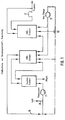
- Fig. 1 the basic structure of the plant for oxygen production is shown in a simplified form.
- a mixture of moist air supplied through line 8 and a mixture of oxygen-enriched and argon-depleted exhaust gas from the return line 15 is fed via the compressor 7 to a pressure swing drying unit, where the water vapor is removed from the gas mixture after the water vapor content has already decreased after compression becomes.
- Pressure swing drying can thus be integrated into the extraction process without any effort.
- the drying unit is regenerated in the relaxed state (at ambient pressure), an exhaust gas from the coal adsorption unit being used as the purge gas, while the dried gas mixture enters it.
- a substantial oxygen enrichment is achieved in the carbon molecular sieve adsorption unit with a simultaneous decrease in the argon content.
- the gas mixture then passes into the zeolite adsorption unit, which is filled with a 13X zeolite, where an oxygen gas with over 99.5% by volume oxygen is generated.
- Three exhaust gas flows occur in both adsorption units, one of which mainly contains nitrogen and argon, but relatively little oxygen, is used for regeneration in the drying unit becomes.
- the other two exhaust gases contain relatively more oxygen and less argon than air.
- One is returned to the return line 15 with the vacuum pump 9 via the valve 10.
- the other occurs during the direct current relaxation of the carbon molecular sieve unit and likewise arrives in the return line 15.
- a gas mixture flows into the pressure swing adsorber, which is already enriched with oxygen in relation to air and whose argon content is reduced.
- the pressure build-up in the zeolite adsorption unit takes place with oxygen clean gas on the pressure build-up store 17.
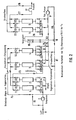
- FIG. 2 shows an exact flow diagram of the system, while FIG. 3 shows the operation of this system.
- the system contains adsorbers 1 to 6, adsorbers 1 and 2 representing the drying stage. They are filled with adsorbents for water vapor absorption, such as silica gel or aluminum oxide.
- the adsorbers 3 and 4 serve to enrich oxygen and reduce argon in the gas stream. They contain a carbon molecular sieve. Then the gas stream passes through the buffer container 16 into the adsorbers 5 and 6, which serve to remove the nitrogen from the gas mixture and which are filled with a zeolitic molecular sieve.
- the way it works is very complex since the gas obtained in each of the three stages is obtained in different ways.
- the dried gas mixture leaves the drying stage during the adsorption phase, the oxygen-enriched, low-argon gas is obtained in the carbon molecular sieve stage during the desorption phase.
- the nitrogen is separated off in the zeolite molecular sieve stage during the adsorption phase.
- the timing of the pressure swing drying is essentially freely selectable, that is, it is only subject to the requirements of drying and the requirement for continuous delivery of dried gas in the subsequent stages.
- the carbon and zeolite molecular sieve stages are temporally related to one another it is true that two cycles take place in the carbon molecular sieve stage, whereas only one occurs in the zeolite stage.
- oxygen-enriched gas from the return line 15 is mixed with air via line 8 and brought to increased pressure via the compressor 7.
- this gas flows through the adsorber 1, water vapor from the gas mixture being taken up by the drying agent.
- adsorber 2 is regenerated.
- the valves 22 and 24 are first opened simultaneously, so that the pressure in the adsorber relaxes and the exhaust gas flows out via line 71 into the environment.
- exhaust gas flows via line 72 from one of the two adsorbers 3 or 4 through valve 22 into adsorber 2, so that pressure reduction and purging overlap in adsorber 2.
- the purging is therefore carried out with a dry gas from the entire process. This occurs at a high pressure, so that when gas is released from the adsorber 2, gas only flows out via the valve 24.
- the rinse is ended after a predetermined time.
- the next drying phase then begins while adsorber 1 is being regenerated.
- an oxygen-enriched gas is obtained.
- the gas flows from the adsorber 3 into the zeolite molecular sieve stage via the valve 35 and the line 75, the buffer container 16 and the line 76.
- the pressure in the adsorber 3 decreases from the final pressure of the DC relaxation to a pressure close to the ambient pressure.
- the counter current relaxation is completed after a predetermined time.
- the adsorber 3 is then evacuated, for which purpose valve 36 is opened. About the Line 79 sucks the vacuum pump 9 gas from the adsorber 3 and presses this gas via lines 80, 82 and 76 via a valve 10 and a buffer tank 16 into the zeolite molecular sieve stage.
- This gas has an even higher oxygen content and a lower argon content than the gas released during countercurrent expansion.
- a pressure build-up to normal pressure of the adsorber 3 begins.
- the gas required for this is obtained during one of the evacuation phases of a downstream zeolite adsorber (as explained again below for the operational management of the zeolite adsorbers): a gas with a higher gas is extracted from the adsorber 5 via valve 54 Oxygen content (as the gas provided via compressor 7) is sucked off by the vacuum pump 9 and conveyed via line 80, valve 10, line 81 and valve 34 into adsorber 3.
- the next cycle then begins with loading.
- the adsorbers 3 and 4 work at different times so that the zeolite stage is continuously supplied with oxygen-enriched gas. This takes place in such a way that the countercurrent relaxation and subsequent evacuation of the adsorber 3 are immediately followed by the countercurrent relaxation and evacuation of the adsorber 4.
- the residual nitrogen content is removed from the gas mixture.
- the cycle time of the zeolite stage is twice as long as the cycle time of the carbon molecular sieve stage. The consequence of this is that a zeolite adsorber is loaded over an entire pressure change cycle of the carbon molecular sieve stage. The same applies to the regeneration of the zeolite stage.
- the zeolite stage is loaded in such a way that the adsorber 5, which is initially filled with oxygen rich gas to a pressure which corresponds to the ambient pressure, is flowed through with gases which are obtained as oxygen-enriched gases during a full cycle of the carbon molecular sieve stage.
- the loading is stopped at a predetermined point in time, which is determined by the length of the entire pressure change cycle of the carbon molecular sieve stage. At the end of this loading, therefore, no traces of nitrogen have broken through the adsorber 5.
- oxygen-enriched gas flows into the adsorber 5 via line 76 and the valve 53, and oxygen-rich gas leaves the adsorber 5 via valve 52 and line 77.
- the adsorber 5 is evacuated with the vacuum pump 9 for regeneration. Since the vacuum pump 9 is used at the same time for the evacuation of the adsorbers 3 and 4, it is only available for the evacuation of the adsorbers 5 and 6 if it is not required for the adsorbers 3 and 4.
- the gas that is sucked out of the adsorber 5 with the vacuum pump 9 contains more oxygen than the raw gas. It is therefore used via valve 10 and lines 80 and 81 to build up the pressure of the respective adsorbers 3 and 4 of the carbon molecular sieve stage. Excess gas can flow via line 15 to line 8 and thus reaches the compressor 7, from which it is pressed back into the process. After completion of the evacuation of the adsorber 5, a pressure build-up with oxygen clean gas takes place. Produced flows to it Oxygen pure gas from the pressure build-up store 17 via line 78 with valve 51 open into the adsorber 5. The pressure build-up is complete after a predetermined time. Then the pressure in the adsorber 5 is approximately at ambient pressure.
- Product gas oxygen content 99.6% by volume and argon content 0.4% by volume at a rel. Humidity of 0.01%, temperature of 24 ° C and a pressure of 1030 mbar. The amount of product gas is 6.0 m 3 / h (in general)
- the average composition of the partial gas flows is:
- Zeolite molecular sieve stage adsorbent Zeolite 13 X in a volume of 125 l at an operating pressure for the loading of 1.2 bar and for the evacuation of 40 mbar and a cycle time of 3 min.
- the average composition of the partial gas flows is:
Landscapes
- Chemical & Material Sciences (AREA)
- Engineering & Computer Science (AREA)
- Analytical Chemistry (AREA)
- General Chemical & Material Sciences (AREA)
- Oil, Petroleum & Natural Gas (AREA)
- Chemical Kinetics & Catalysis (AREA)
- Separation Of Gases By Adsorption (AREA)
- Oxygen, Ozone, And Oxides In General (AREA)
Applications Claiming Priority (2)
| Application Number | Priority Date | Filing Date | Title |
|---|---|---|---|
| DE3402533 | 1984-01-26 | ||
| DE19843402533 DE3402533A1 (de) | 1984-01-26 | 1984-01-26 | Verfahren zur gewinnung von sauerstoff mit einem argon-anteil unter o,5 % aus feuchter luft |
Publications (3)
| Publication Number | Publication Date |
|---|---|
| EP0157939A2 true EP0157939A2 (fr) | 1985-10-16 |
| EP0157939A3 EP0157939A3 (en) | 1986-12-03 |
| EP0157939B1 EP0157939B1 (fr) | 1988-10-12 |
Family
ID=6225892
Family Applications (1)
| Application Number | Title | Priority Date | Filing Date |
|---|---|---|---|
| EP84115814A Expired EP0157939B1 (fr) | 1984-01-26 | 1984-12-19 | Procédé de production d'oxygène, ayant une faible teneur en argon, à partir d'air |
Country Status (7)
| Country | Link |
|---|---|
| US (1) | US4566881A (fr) |
| EP (1) | EP0157939B1 (fr) |
| JP (1) | JPS60200805A (fr) |
| AU (1) | AU576213B2 (fr) |
| BR (1) | BR8500230A (fr) |
| DE (2) | DE3402533A1 (fr) |
| ZA (1) | ZA85645B (fr) |
Cited By (1)
| Publication number | Priority date | Publication date | Assignee | Title |
|---|---|---|---|---|
| DE4033140A1 (de) * | 1989-10-18 | 1991-05-02 | Airsep Corp | Druckschwingadsorptionsverfahren und einrichtung zur gastrennung |
Families Citing this family (30)
| Publication number | Priority date | Publication date | Assignee | Title |
|---|---|---|---|---|
| DE3511320C1 (de) * | 1985-03-28 | 1986-10-09 | Max-Planck-Gesellschaft zur Förderung der Wissenschaften e.V., 3400 Göttingen | Vorrichtung zur Reinigung der Gasatmosphaeren mehrerer Arbeitsraeume |
| JPS62241524A (ja) * | 1986-04-14 | 1987-10-22 | Kawasaki Steel Corp | 純度安定化に優れる一酸化炭素の分離精製方法 |
| US4869733A (en) * | 1986-05-22 | 1989-09-26 | Vbm Corporation | Super-enriched oxygen generator |
| JPS63166702A (ja) * | 1986-12-26 | 1988-07-09 | Osaka Oxygen Ind Ltd | 酸素ガス濃縮法 |
| JP2562326B2 (ja) * | 1987-08-07 | 1996-12-11 | 住友精化株式会社 | 空気から高濃度酸素を取得する方法 |
| US4813979A (en) * | 1988-02-02 | 1989-03-21 | The United States Of America As Represented By The Secretary Of The Air Force | Secondary oxygen purifier for molecular sieve oxygen concentrator |
| GB8812642D0 (en) * | 1988-05-27 | 1988-06-29 | Boc Group Plc | Separation of gas mixtures |
| US4880443A (en) * | 1988-12-22 | 1989-11-14 | The United States Of America As Represented By The Secretary Of The Air Force | Molecular sieve oxygen concentrator with secondary oxygen purifier |
| FR2647431B1 (fr) * | 1989-05-24 | 1991-08-16 | Air Liquide | Procede et installation de production d'oxygene gazeux sous haute pression |
| US5154737A (en) * | 1990-01-12 | 1992-10-13 | Vbm Corporation | System for eliminating air leakage and high purity oxygen of a PSA oxygen concentrator |
| US5226933A (en) * | 1992-03-31 | 1993-07-13 | Ohio State University | Pressure swing adsorption system to purify oxygen |
| WO1994006541A1 (fr) * | 1992-09-22 | 1994-03-31 | Arbor Research Corporation | Systeme pour separer de l'oxygene contenu dans un melange argon/oxygene |
| US5354346A (en) * | 1992-10-01 | 1994-10-11 | Air Products And Chemicals, Inc. | Purge effluent repressurized adsorption process |
| US5248322A (en) * | 1992-10-01 | 1993-09-28 | Air Products And Chemicals, Inc. | Depressurization effluent repressurized adsorption process |
| US5429664A (en) * | 1993-02-22 | 1995-07-04 | Air Products And Chemicals, Inc. | Pressure swing absorption with recycle of void space gas |
| US5395427A (en) * | 1994-01-12 | 1995-03-07 | Air Products And Chemicals, Inc. | Two stage pressure swing adsorption process which utilizes an oxygen selective adsorbent to produce high purity oxygen from a feed air stream |
| US5766310A (en) * | 1996-07-19 | 1998-06-16 | Litton Systems Incorporated | Single stage secondary high purity oxygen concentrator |
| US5762686A (en) * | 1996-09-04 | 1998-06-09 | Special Gas System, Inc. | Process for determining amount of argon contamination in oxygen and related apparatus therefor |
| US6475265B1 (en) * | 1998-10-22 | 2002-11-05 | Praxair Technology, Inc. | Pressure swing adsorption method for production of an oxygen-enriched gas |
| CN1104927C (zh) * | 1998-10-22 | 2003-04-09 | 中国人民解放军军事医学科学院卫生装备研究所 | 一种从空气中变压吸附制取高浓度氧气的方法 |
| US6394089B1 (en) * | 2000-01-18 | 2002-05-28 | Northrop Grumman Corporation | Patient ventilator oxygen concentration system |
| JP3891773B2 (ja) * | 2000-10-20 | 2007-03-14 | 大陽日酸株式会社 | ガスの分離精製方法及びその装置 |
| JP3902416B2 (ja) * | 2001-04-16 | 2007-04-04 | 大陽日酸株式会社 | ガス分離方法 |
| FR2853257B1 (fr) * | 2003-04-02 | 2006-05-26 | Air Liquide | Systeme embarque de production de flux gazeux enrichi en oxygene et procede pour alimenter les voies aeriennes d'occupants d'un aeronef |
| US7468096B2 (en) * | 2003-05-23 | 2008-12-23 | Yonsei University | Apparatus for producing oxygen and method for controlling the same |
| CN1250322C (zh) | 2004-06-11 | 2006-04-12 | 成都天立化工科技有限公司 | 采用三段变压吸附装置从空气中分离氮气和氧气的方法 |
| DE102008007929A1 (de) * | 2008-02-07 | 2009-08-13 | Linde Aktiengesellschaft | Adsorptionsverfahren |
| US8343259B2 (en) * | 2010-03-29 | 2013-01-01 | Wearair Oxygen, Inc. | Moisture mitigation in PSA air fractionation |
| FR3028188A1 (fr) * | 2014-11-07 | 2016-05-13 | Novair | Dispositif de production d’oxygene purifie |
| CN111989149A (zh) * | 2020-04-14 | 2020-11-24 | 成都盈辰科技有限公司 | 一种移动式变压吸附氧气生产装置的方法 |
Family Cites Families (13)
| Publication number | Priority date | Publication date | Assignee | Title |
|---|---|---|---|---|
| US3102013A (en) * | 1960-08-02 | 1963-08-27 | Exxon Research Engineering Co | Heatless fractionation utilizing zones in series and parallel |
| NL288999A (fr) * | 1962-02-26 | |||
| US3225516A (en) * | 1963-04-15 | 1965-12-28 | C M Kemp Mfg Co | Method and apparatus for purifying gaseous mixtures by cyclic adsorption |
| DE1544064A1 (de) * | 1965-10-01 | 1969-07-03 | Von Linde Dr Joachim | Verfahren zur Adsorption von Gasen durch zweistufige Adsorption mit nur Teilregenerierung der 1. Stufe |
| US4013429A (en) * | 1975-06-04 | 1977-03-22 | Air Products And Chemicals, Inc. | Fractionation of air by adsorption |
| US4190424A (en) * | 1975-07-17 | 1980-02-26 | Boc Limited | Gas separation |
| JPS5299973A (en) * | 1976-02-18 | 1977-08-22 | Toray Ind Inc | Adsorption and separation apparatus of mixed gas |
| JPS5399091A (en) * | 1977-02-10 | 1978-08-30 | Osaka Sanso Kougiyou Kk | Method of concentrating oxygen gas |
| US4153428A (en) * | 1977-08-30 | 1979-05-08 | Union Carbide Corporation | Prepurification of toluene dealkylation effluent gas |
| GB2011272A (en) * | 1977-12-28 | 1979-07-11 | Boc Ltd | Air separation by adsorption |
| US4386945A (en) * | 1982-02-01 | 1983-06-07 | Litton Systems, Inc. | Process and compound bed means for evolving a first component enriched gas |
| JPS5992907A (ja) * | 1982-11-19 | 1984-05-29 | Seitetsu Kagaku Co Ltd | 高濃度アルゴンの製造方法 |
| US4472178A (en) * | 1983-07-05 | 1984-09-18 | Air Products And Chemicals, Inc. | Adsorptive process for the removal of carbon dioxide from a gas |
-
1984
- 1984-01-26 DE DE19843402533 patent/DE3402533A1/de not_active Withdrawn
- 1984-12-19 EP EP84115814A patent/EP0157939B1/fr not_active Expired
- 1984-12-19 DE DE8484115814T patent/DE3474542D1/de not_active Expired
-
1985
- 1985-01-18 BR BR8500230A patent/BR8500230A/pt unknown
- 1985-01-21 AU AU37942/85A patent/AU576213B2/en not_active Ceased
- 1985-01-25 JP JP60011169A patent/JPS60200805A/ja active Granted
- 1985-01-28 US US06/695,394 patent/US4566881A/en not_active Expired - Fee Related
- 1985-01-28 ZA ZA85645A patent/ZA85645B/xx unknown
Cited By (1)
| Publication number | Priority date | Publication date | Assignee | Title |
|---|---|---|---|---|
| DE4033140A1 (de) * | 1989-10-18 | 1991-05-02 | Airsep Corp | Druckschwingadsorptionsverfahren und einrichtung zur gastrennung |
Also Published As
| Publication number | Publication date |
|---|---|
| ZA85645B (en) | 1985-09-25 |
| JPS60200805A (ja) | 1985-10-11 |
| DE3402533A1 (de) | 1985-08-01 |
| US4566881A (en) | 1986-01-28 |
| AU3794285A (en) | 1985-08-01 |
| DE3474542D1 (en) | 1988-11-17 |
| EP0157939B1 (fr) | 1988-10-12 |
| JPH035202B2 (fr) | 1991-01-25 |
| AU576213B2 (en) | 1988-08-18 |
| BR8500230A (pt) | 1985-09-03 |
| EP0157939A3 (en) | 1986-12-03 |
Similar Documents
| Publication | Publication Date | Title |
|---|---|---|
| EP0157939B1 (fr) | Procédé de production d'oxygène, ayant une faible teneur en argon, à partir d'air | |
| DE69410402T2 (de) | Vakuumdruckwechseladsorptionsprozess | |
| DE60116034T2 (de) | Einzelbett Druckwechseladsorptionsverfahren | |
| DE68924805T2 (de) | Verfahren zur Behandlung eines Gasgemisches durch Adsorption. | |
| EP0291975B1 (fr) | Procédé d'enrichissement d'hélium | |
| DE69126397T2 (de) | Doppeladsorptionsverfahren | |
| DE69627104T2 (de) | Druckwechseladsorptionsverfahren mit einzigem Bett zur Gewinnung von Sauerstoff aus Luft | |
| DE2604305C2 (fr) | ||
| DE2443072C2 (de) | Verfahren zur Erzeugung eines mit Sauerstoff angereicherten Gases | |
| DE3485922T2 (de) | Stickstoff-generator-verfahren zur herstellung von kleinen volumina hochreinen stickstoffs aus pressluft. | |
| DE69915983T2 (de) | Druckwechseladsorptionsverfahren zur Gastrennung und Vorrichtung unter Verwendung eines einzelnen Adsorbers und von Produktrückführung | |
| DE3886297T2 (de) | Verfahren zur Herstellung von hochreinem Sauerstoffgas aus Luft. | |
| DE19528561C2 (de) | Druckwechsel-Adsorption für hochreinen Stickstoff unter Verwendung geregelter innerer Ströme | |
| DE3716899C1 (de) | Verfahren und Vorrichtung zur Heliumgewinnung | |
| DE3830506C2 (fr) | ||
| DE2916585A1 (de) | Druckwechsel-adsorptionsverfahren | |
| DE3007427A1 (de) | Druckwechsel-adsorptionsverfahren und einrichtung zum abtrennen einer gasgemischkomponente aus einem mindestens zwei gase und wasserdampf enthaltenden gasgemisch | |
| EP0103070A2 (fr) | Procédé et dispositif pour la séparation de gaz par des adsorbants | |
| DE2631890A1 (de) | Verfahren und vorrichtung zur anreicherung einer hauptkomponente eines mindestens zwei hauptkomponenten enthaltenden gasgemisches | |
| DE60112518T2 (de) | Druckwechseladsorptionsverfahren mit Produktgasabgabe bei sinkendem Druck im Adsorptionsbett | |
| EP0015413B1 (fr) | Procédé d'adsorption à pression alternée pour la décomposition ou la purification de mélanges de gaz | |
| DE69507227T2 (de) | Verfahren zur herstellung eines gases mittels adsorption | |
| EP0146646B1 (fr) | Procédé pour séparer et produire des gaz ayant des propriétés adsorbables relativement élevées, par des adsorbants préparés à partir de mélanges gazeux contenant également des gaz moins adsorbants | |
| DE19602450C1 (de) | Vakuumdruckwechseladsorptionsverfahren und -vorrichtung | |
| DE3345379A1 (de) | Verfahren zur abtrennung und gewinnung von relativ stark an adsorptionsmitteln adsorbierbaren gasen aus ansonsten im wesentlichen nur schwaecher adsorbierbare gase enthaltenden gasgemischen |
Legal Events
| Date | Code | Title | Description |
|---|---|---|---|
| PUAI | Public reference made under article 153(3) epc to a published international application that has entered the european phase |
Free format text: ORIGINAL CODE: 0009012 |
|
| AK | Designated contracting states |
Designated state(s): BE DE FR GB IT NL |
|
| PUAL | Search report despatched |
Free format text: ORIGINAL CODE: 0009013 |
|
| AK | Designated contracting states |
Kind code of ref document: A3 Designated state(s): BE DE FR GB IT NL |
|
| 17P | Request for examination filed |
Effective date: 19861217 |
|
| 17Q | First examination report despatched |
Effective date: 19880308 |
|
| ITF | It: translation for a ep patent filed | ||
| GRAA | (expected) grant |
Free format text: ORIGINAL CODE: 0009210 |
|
| AK | Designated contracting states |
Kind code of ref document: B1 Designated state(s): BE DE FR GB IT NL |
|
| GBT | Gb: translation of ep patent filed (gb section 77(6)(a)/1977) | ||
| REF | Corresponds to: |
Ref document number: 3474542 Country of ref document: DE Date of ref document: 19881117 |
|
| ET | Fr: translation filed | ||
| PLBE | No opposition filed within time limit |
Free format text: ORIGINAL CODE: 0009261 |
|
| STAA | Information on the status of an ep patent application or granted ep patent |
Free format text: STATUS: NO OPPOSITION FILED WITHIN TIME LIMIT |
|
| 26N | No opposition filed | ||
| ITTA | It: last paid annual fee | ||
| PGFP | Annual fee paid to national office [announced via postgrant information from national office to epo] |
Ref country code: GB Payment date: 19951201 Year of fee payment: 12 |
|
| PGFP | Annual fee paid to national office [announced via postgrant information from national office to epo] |
Ref country code: FR Payment date: 19951214 Year of fee payment: 12 |
|
| PGFP | Annual fee paid to national office [announced via postgrant information from national office to epo] |
Ref country code: BE Payment date: 19951219 Year of fee payment: 12 |
|
| PGFP | Annual fee paid to national office [announced via postgrant information from national office to epo] |
Ref country code: NL Payment date: 19951220 Year of fee payment: 12 Ref country code: DE Payment date: 19951220 Year of fee payment: 12 |
|
| PG25 | Lapsed in a contracting state [announced via postgrant information from national office to epo] |
Ref country code: GB Effective date: 19961219 |
|
| PG25 | Lapsed in a contracting state [announced via postgrant information from national office to epo] |
Ref country code: BE Effective date: 19961231 |
|
| BERE | Be: lapsed |
Owner name: BERGWERKSVERBAND G.M.B.H. Effective date: 19961231 |
|
| PG25 | Lapsed in a contracting state [announced via postgrant information from national office to epo] |
Ref country code: NL Effective date: 19970701 |
|
| GBPC | Gb: european patent ceased through non-payment of renewal fee |
Effective date: 19961219 |
|
| PG25 | Lapsed in a contracting state [announced via postgrant information from national office to epo] |
Ref country code: FR Effective date: 19970829 |
|
| NLV4 | Nl: lapsed or anulled due to non-payment of the annual fee |
Effective date: 19970701 |
|
| PG25 | Lapsed in a contracting state [announced via postgrant information from national office to epo] |
Ref country code: DE Effective date: 19970902 |
|
| REG | Reference to a national code |
Ref country code: FR Ref legal event code: ST |