EP0161206A2 - Methode zur Regenerierung eines Denitrierungskatalysators - Google Patents
Methode zur Regenerierung eines Denitrierungskatalysators Download PDFInfo
- Publication number
- EP0161206A2 EP0161206A2 EP85730044A EP85730044A EP0161206A2 EP 0161206 A2 EP0161206 A2 EP 0161206A2 EP 85730044 A EP85730044 A EP 85730044A EP 85730044 A EP85730044 A EP 85730044A EP 0161206 A2 EP0161206 A2 EP 0161206A2
- Authority
- EP
- European Patent Office
- Prior art keywords
- catalyst
- tungsten
- vanadium
- titania
- acid solution
- Prior art date
- Legal status (The legal status is an assumption and is not a legal conclusion. Google has not performed a legal analysis and makes no representation as to the accuracy of the status listed.)
- Withdrawn
Links
- 239000003054 catalyst Substances 0.000 title claims abstract description 118
- 238000000034 method Methods 0.000 title claims abstract description 26
- 230000001172 regenerating effect Effects 0.000 title 1
- MUBZPKHOEPUJKR-UHFFFAOYSA-N Oxalic acid Chemical compound OC(=O)C(O)=O MUBZPKHOEPUJKR-UHFFFAOYSA-N 0.000 claims abstract description 120
- 229910052720 vanadium Inorganic materials 0.000 claims abstract description 46
- 235000006408 oxalic acid Nutrition 0.000 claims abstract description 40
- GWEVSGVZZGPLCZ-UHFFFAOYSA-N titanium dioxide Inorganic materials O=[Ti]=O GWEVSGVZZGPLCZ-UHFFFAOYSA-N 0.000 claims abstract description 32
- 238000005406 washing Methods 0.000 claims abstract description 26
- 239000000428 dust Substances 0.000 claims abstract description 15
- 238000001354 calcination Methods 0.000 claims abstract description 13
- 238000001035 drying Methods 0.000 claims abstract description 13
- 150000003658 tungsten compounds Chemical class 0.000 claims abstract description 12
- 239000000243 solution Substances 0.000 claims description 39
- XLYOFNOQVPJJNP-UHFFFAOYSA-N water Substances O XLYOFNOQVPJJNP-UHFFFAOYSA-N 0.000 claims description 14
- 238000009825 accumulation Methods 0.000 claims description 4
- 150000007522 mineralic acids Chemical class 0.000 claims description 4
- 238000005470 impregnation Methods 0.000 claims description 2
- 239000012266 salt solution Substances 0.000 claims 1
- PBYZMCDFOULPGH-UHFFFAOYSA-N tungstate Chemical class [O-][W]([O-])(=O)=O PBYZMCDFOULPGH-UHFFFAOYSA-N 0.000 claims 1
- 230000001590 oxidative effect Effects 0.000 abstract description 9
- LEONUFNNVUYDNQ-UHFFFAOYSA-N vanadium atom Chemical compound [V] LEONUFNNVUYDNQ-UHFFFAOYSA-N 0.000 description 28
- 238000007254 oxidation reaction Methods 0.000 description 25
- 239000007789 gas Substances 0.000 description 23
- WFKWXMTUELFFGS-UHFFFAOYSA-N tungsten Chemical compound [W] WFKWXMTUELFFGS-UHFFFAOYSA-N 0.000 description 19
- 229910052721 tungsten Inorganic materials 0.000 description 19
- 239000010937 tungsten Substances 0.000 description 19
- 238000010828 elution Methods 0.000 description 18
- 238000011282 treatment Methods 0.000 description 14
- 230000000052 comparative effect Effects 0.000 description 12
- MWUXSHHQAYIFBG-UHFFFAOYSA-N Nitric oxide Chemical compound O=[N] MWUXSHHQAYIFBG-UHFFFAOYSA-N 0.000 description 6
- QGZKDVFQNNGYKY-UHFFFAOYSA-N Ammonia Chemical compound N QGZKDVFQNNGYKY-UHFFFAOYSA-N 0.000 description 5
- 239000000843 powder Substances 0.000 description 5
- 150000003682 vanadium compounds Chemical class 0.000 description 5
- XEEYBQQBJWHFJM-UHFFFAOYSA-N Iron Chemical compound [Fe] XEEYBQQBJWHFJM-UHFFFAOYSA-N 0.000 description 4
- PXHVJJICTQNCMI-UHFFFAOYSA-N Nickel Chemical compound [Ni] PXHVJJICTQNCMI-UHFFFAOYSA-N 0.000 description 4
- QAOWNCQODCNURD-UHFFFAOYSA-N Sulfuric acid Chemical compound OS(O)(=O)=O QAOWNCQODCNURD-UHFFFAOYSA-N 0.000 description 4
- 150000001875 compounds Chemical class 0.000 description 4
- 238000006243 chemical reaction Methods 0.000 description 3
- 239000003638 chemical reducing agent Substances 0.000 description 3
- XAYGUHUYDMLJJV-UHFFFAOYSA-Z decaazanium;dioxido(dioxo)tungsten;hydron;trioxotungsten Chemical compound [H+].[H+].[NH4+].[NH4+].[NH4+].[NH4+].[NH4+].[NH4+].[NH4+].[NH4+].[NH4+].[NH4+].O=[W](=O)=O.O=[W](=O)=O.O=[W](=O)=O.O=[W](=O)=O.O=[W](=O)=O.O=[W](=O)=O.[O-][W]([O-])(=O)=O.[O-][W]([O-])(=O)=O.[O-][W]([O-])(=O)=O.[O-][W]([O-])(=O)=O.[O-][W]([O-])(=O)=O.[O-][W]([O-])(=O)=O XAYGUHUYDMLJJV-UHFFFAOYSA-Z 0.000 description 3
- 238000007598 dipping method Methods 0.000 description 3
- 238000000605 extraction Methods 0.000 description 3
- 239000000295 fuel oil Substances 0.000 description 3
- 238000011084 recovery Methods 0.000 description 3
- AKEJUJNQAAGONA-UHFFFAOYSA-N sulfur trioxide Chemical compound O=S(=O)=O AKEJUJNQAAGONA-UHFFFAOYSA-N 0.000 description 3
- IJGRMHOSHXDMSA-UHFFFAOYSA-N Atomic nitrogen Chemical compound N#N IJGRMHOSHXDMSA-UHFFFAOYSA-N 0.000 description 2
- NINIDFKCEFEMDL-UHFFFAOYSA-N Sulfur Chemical compound [S] NINIDFKCEFEMDL-UHFFFAOYSA-N 0.000 description 2
- 229910021529 ammonia Inorganic materials 0.000 description 2
- 239000011230 binding agent Substances 0.000 description 2
- 159000000011 group IA salts Chemical class 0.000 description 2
- 229910001385 heavy metal Inorganic materials 0.000 description 2
- 230000002401 inhibitory effect Effects 0.000 description 2
- 229910052742 iron Inorganic materials 0.000 description 2
- 230000007774 longterm Effects 0.000 description 2
- 239000010446 mirabilite Substances 0.000 description 2
- 238000002156 mixing Methods 0.000 description 2
- 238000000465 moulding Methods 0.000 description 2
- 229910052759 nickel Inorganic materials 0.000 description 2
- 229910052700 potassium Inorganic materials 0.000 description 2
- 239000011369 resultant mixture Substances 0.000 description 2
- 229910052708 sodium Inorganic materials 0.000 description 2
- 239000011734 sodium Substances 0.000 description 2
- RSIJVJUOQBWMIM-UHFFFAOYSA-L sodium sulfate decahydrate Chemical compound O.O.O.O.O.O.O.O.O.O.[Na+].[Na+].[O-]S([O-])(=O)=O RSIJVJUOQBWMIM-UHFFFAOYSA-L 0.000 description 2
- 239000000126 substance Substances 0.000 description 2
- 229910052717 sulfur Inorganic materials 0.000 description 2
- 239000011593 sulfur Substances 0.000 description 2
- HZAXFHJVJLSVMW-UHFFFAOYSA-N 2-Aminoethan-1-ol Chemical compound NCCO HZAXFHJVJLSVMW-UHFFFAOYSA-N 0.000 description 1
- QGZKDVFQNNGYKY-UHFFFAOYSA-O Ammonium Chemical compound [NH4+] QGZKDVFQNNGYKY-UHFFFAOYSA-O 0.000 description 1
- -1 Glauber's salt Chemical class 0.000 description 1
- DGAQECJNVWCQMB-PUAWFVPOSA-M Ilexoside XXIX Chemical compound C[C@@H]1CC[C@@]2(CC[C@@]3(C(=CC[C@H]4[C@]3(CC[C@@H]5[C@@]4(CC[C@@H](C5(C)C)OS(=O)(=O)[O-])C)C)[C@@H]2[C@]1(C)O)C)C(=O)O[C@H]6[C@@H]([C@H]([C@@H]([C@H](O6)CO)O)O)O.[Na+] DGAQECJNVWCQMB-PUAWFVPOSA-M 0.000 description 1
- ZLMJMSJWJFRBEC-UHFFFAOYSA-N Potassium Chemical compound [K] ZLMJMSJWJFRBEC-UHFFFAOYSA-N 0.000 description 1
- LSNNMFCWUKXFEE-UHFFFAOYSA-N Sulfurous acid Chemical compound OS(O)=O LSNNMFCWUKXFEE-UHFFFAOYSA-N 0.000 description 1
- 230000002378 acidificating effect Effects 0.000 description 1
- BFNBIHQBYMNNAN-UHFFFAOYSA-N ammonium sulfate Chemical compound N.N.OS(O)(=O)=O BFNBIHQBYMNNAN-UHFFFAOYSA-N 0.000 description 1
- 229910052921 ammonium sulfate Inorganic materials 0.000 description 1
- 235000011130 ammonium sulphate Nutrition 0.000 description 1
- 239000007864 aqueous solution Substances 0.000 description 1
- 238000010531 catalytic reduction reaction Methods 0.000 description 1
- 238000002485 combustion reaction Methods 0.000 description 1
- 230000008021 deposition Effects 0.000 description 1
- 230000006866 deterioration Effects 0.000 description 1
- 230000000694 effects Effects 0.000 description 1
- 239000008187 granular material Substances 0.000 description 1
- 238000011866 long-term treatment Methods 0.000 description 1
- 239000000203 mixture Substances 0.000 description 1
- 229910052757 nitrogen Inorganic materials 0.000 description 1
- 229910000069 nitrogen hydride Inorganic materials 0.000 description 1
- OGUCKKLSDGRKSH-UHFFFAOYSA-N oxalic acid oxovanadium Chemical compound [V].[O].C(C(=O)O)(=O)O OGUCKKLSDGRKSH-UHFFFAOYSA-N 0.000 description 1
- 230000003647 oxidation Effects 0.000 description 1
- 239000002574 poison Substances 0.000 description 1
- 231100000614 poison Toxicity 0.000 description 1
- 239000011591 potassium Substances 0.000 description 1
- 230000002265 prevention Effects 0.000 description 1
- 238000011160 research Methods 0.000 description 1
- 238000005507 spraying Methods 0.000 description 1
- 238000003756 stirring Methods 0.000 description 1
- 229910052815 sulfur oxide Inorganic materials 0.000 description 1
Images
Classifications
-
- B—PERFORMING OPERATIONS; TRANSPORTING
- B01—PHYSICAL OR CHEMICAL PROCESSES OR APPARATUS IN GENERAL
- B01D—SEPARATION
- B01D53/00—Separation of gases or vapours; Recovering vapours of volatile solvents from gases; Chemical or biological purification of waste gases, e.g. engine exhaust gases, smoke, fumes, flue gases, aerosols
- B01D53/34—Chemical or biological purification of waste gases
- B01D53/74—General processes for purification of waste gases; Apparatus or devices specially adapted therefor
- B01D53/86—Catalytic processes
- B01D53/8621—Removing nitrogen compounds
- B01D53/8625—Nitrogen oxides
-
- B—PERFORMING OPERATIONS; TRANSPORTING
- B01—PHYSICAL OR CHEMICAL PROCESSES OR APPARATUS IN GENERAL
- B01J—CHEMICAL OR PHYSICAL PROCESSES, e.g. CATALYSIS OR COLLOID CHEMISTRY; THEIR RELEVANT APPARATUS
- B01J23/00—Catalysts comprising metals or metal oxides or hydroxides, not provided for in group B01J21/00
- B01J23/90—Regeneration or reactivation
- B01J23/92—Regeneration or reactivation of catalysts comprising metals, oxides or hydroxides provided for in groups B01J23/02 - B01J23/36
-
- B—PERFORMING OPERATIONS; TRANSPORTING
- B01—PHYSICAL OR CHEMICAL PROCESSES OR APPARATUS IN GENERAL
- B01J—CHEMICAL OR PHYSICAL PROCESSES, e.g. CATALYSIS OR COLLOID CHEMISTRY; THEIR RELEVANT APPARATUS
- B01J38/00—Regeneration or reactivation of catalysts, in general
- B01J38/48—Liquid treating or treating in liquid phase, e.g. dissolved or suspended
- B01J38/485—Impregnating or reimpregnating with, or deposition of metal compounds or catalytically active elements
-
- B—PERFORMING OPERATIONS; TRANSPORTING
- B01—PHYSICAL OR CHEMICAL PROCESSES OR APPARATUS IN GENERAL
- B01J—CHEMICAL OR PHYSICAL PROCESSES, e.g. CATALYSIS OR COLLOID CHEMISTRY; THEIR RELEVANT APPARATUS
- B01J38/00—Regeneration or reactivation of catalysts, in general
- B01J38/48—Liquid treating or treating in liquid phase, e.g. dissolved or suspended
- B01J38/60—Liquid treating or treating in liquid phase, e.g. dissolved or suspended using acids
- B01J38/62—Liquid treating or treating in liquid phase, e.g. dissolved or suspended using acids organic
-
- Y—GENERAL TAGGING OF NEW TECHNOLOGICAL DEVELOPMENTS; GENERAL TAGGING OF CROSS-SECTIONAL TECHNOLOGIES SPANNING OVER SEVERAL SECTIONS OF THE IPC; TECHNICAL SUBJECTS COVERED BY FORMER USPC CROSS-REFERENCE ART COLLECTIONS [XRACs] AND DIGESTS
- Y10—TECHNICAL SUBJECTS COVERED BY FORMER USPC
- Y10S—TECHNICAL SUBJECTS COVERED BY FORMER USPC CROSS-REFERENCE ART COLLECTIONS [XRACs] AND DIGESTS
- Y10S502/00—Catalyst, solid sorbent, or support therefor: product or process of making
- Y10S502/515—Specific contaminant removal
-
- Y—GENERAL TAGGING OF NEW TECHNOLOGICAL DEVELOPMENTS; GENERAL TAGGING OF CROSS-SECTIONAL TECHNOLOGIES SPANNING OVER SEVERAL SECTIONS OF THE IPC; TECHNICAL SUBJECTS COVERED BY FORMER USPC CROSS-REFERENCE ART COLLECTIONS [XRACs] AND DIGESTS
- Y10—TECHNICAL SUBJECTS COVERED BY FORMER USPC
- Y10S—TECHNICAL SUBJECTS COVERED BY FORMER USPC CROSS-REFERENCE ART COLLECTIONS [XRACs] AND DIGESTS
- Y10S502/00—Catalyst, solid sorbent, or support therefor: product or process of making
- Y10S502/515—Specific contaminant removal
- Y10S502/516—Metal contaminant removal
Definitions
- the present invention relates to a method for recovering a catalyst (hereinafter referred to as the denitrating catalyst) for removing a nitrogen oxide from an exhaust gas, and more specifically to a method for recovering a tungsten-titania or tungsten-titania-vanadium catalyst for removing a nitrogen oxide (hereinafter referred to as NOx) from an exhaust gas by the use of ammonia as a reducing agent.
- a catalyst hereinafter referred to as the denitrating catalyst
- NOx nitrogen oxide
- an oxidizing reaction of SO 2 to sulfur trioxide (hereinafter referred to as S0 3 ) occurs to generate a high concentration of 50 3 .
- S0 3 sulfur trioxide
- the latter compound easily bonds to an unreacted content of NH 3 which has been employed as a reducing agent, in a low-temperature zone in order to produce acidic ammonium sulfate and others, so that a heat exchanger and the like tend to be clogged with the product. If the prevention against such a clogging is contemplated, a dust collector must be powered up.
- the inventors of the present application have intensively'researched the performance drop of the denitration and the rise phenomenon of the S0 2 -oxidizing ability on the catalyst used practically in a plant, and it has resultantly been found that the performance deterioration of the catalyst would mainly be attributable to the accumulation of alkaline components such as Na and K contained in the dust in the exhaust gas on the catalyst, and the rise of the S0 2 -oxidizing power would chiefly be caused thereon by the deposition of vanadium present in the dust in the exhaust gas.
- the catalyst in which the denitrating performance has thus deteriorated and the S0 2 -oxidizing power has risen is generally subjected to a dust removal treatment by the blast of compressed air and water washing or washing with an aqueous inorganic acid solution in order to lower the SO 2 -oxidizing power.
- the above-mentioned washing treatment permits removing water-soluble accumulated components and the dust, and thus recovering the denitrating power appreciably. Indeed, such a washing treatment is effective to some extent.
- most of vanadium compounds which will raise the SO 2 -oxidizing power remain on the catalyst, therefore its recovery degree is not so much as a level of the unused new catalyst.
- the present inventors have investigated into a recovery method of the tungsten-titania catalyst and the tungsten-titania-vanadium catalyst, and they have eventually found that when the tungsten-titania catalyst having a risen SO 2 - oxidizing power and the tungsten-titania-vanadium catalyst having a dropped denitrating performance and the risen S0 2 - oxidizing power are brought into contact with an aqueous oxalic acid solution, most of the vanadium compounds which will raise the S0 2 -oxidizing power can be eluted forcedly.
- the S0 2 -oxidizing power can be recovered to a level comparable to that of the unused catalyst, but the denitrating ability will deteriorate since a part of the tungsten which is an active component is eluted during the above-mentioned treatment.
- the present inventors have further gripped through their researches that if the catalyst, after washing, is supportingly impregnated with the tungsten compound, which is the active component, and is then dried and calcined, the catalyst can be recovered satisfactorily, and the present invention has now been completed.
- the present invention is directed to a method for recovering a used tungsten-titania denitrating catalyst in which an S0 2 -oxidizing power has risen by adhesion or accumulation of dust components, the method being characterized by washing the used denitrating catalyst with an aqueous oxalic acid solution; impregnating the catalyst with a tungsten compound supportingly; and drying and calcining it.
- the present invention is directed to a method for recovering a used tungsten-titania-vanadium denitrating catalyst in which a denitrating performance has dropped and an S0 2 -oxidizing power has risen by adhesion or accumulation of dust components, the method being characterized by washing the catalyst with water or an aqueous dilute inorganic acid solution; further washing it with an aqueous oxalic acid solution; impregnating the catalyst with a tungsten compound supportingly; and drying and calcining it.
- a used tungsten-titania catalyst to which the present invention can be applied means a catalyst in which an S0 2 - oxidizing power has risen as a result of a long-term service as a denitrating catalyst for an NOx-containing exhaust gas.
- a used tungsten-titania-vanadium catalyst means a catalyst in which a denitrating power has deteriorated and the S0 2 -oxidizing power has risen as a result of a long-term service as the denitrating catalyst for the NOx-containing exhaust gas.
- the present invention can be effectively applied to the used tungsten-titania catalyst in which the S0 2 -oxidizing power has risen owing to the denitration treatment of a dirty exhaust gas containing SOx and a dust from a COM-fired or a heavy oil-fired boiler, or the used tungsten-titania-vanadium catalyst in which the performance has deteriorated and the S0 2 -oxidizing power has risen owing to the denitration treatment.
- the above-mentioned tungsten-titania catalyst can be prepared by a method of supportingly impregnating a molded titania carrier with a tugnsten compound, a method of mixing a titania powder with a tungsten compound powder in the presence of a binder and molding the resultant mixture, or another method.
- the tungsten-titania-vanadium catalyst can be prepared by a method of supportingly impregnating a molded titania carrier with a vanadium compound and a tugnsten compound, a method of mixing a titania powder with a tungsten compound powder and a vanadium compound powder in the presence of a binder and molding the resultant mixture, or another method.
- the vanadium component and the tungsten component are generally contained in amounts of 0.1 to 2.0 wt% and 5 to 24 wt%, respectively.
- Active components other than vanadium and tungsten may be contained in the catalyst, and the method of the present invention can be applied to the used tungsten-titania and tungsten-titania-vanadium catalysts comprising any composition.
- the present invention is also applicable to catalysts having optional shapes such as granule, cylinder, ellipse, plate, pipe, lattice and honeycomb.
- a dust adheres to and accumulates on the used tungsten-titania or tungsten-titania-vanadium catalyst, therefore it must be previously removed by washing the catalyst with water or a dilute aqueous inorganic acid solution.
- water-soluble catalyst poisons for example, heavy metals such as iron and nickel and an alkaline salt such as Glauber's salt contained in the dust are removed together, which fact is convenient and effective.
- a fact is effective for the recovery of a denitration performance.
- such a pretreatment is not a necessary requirement.
- the extraction of a vanadium component from the used tungsten-titania catalyst with an aqueous oxalic acid solution is carried out by dipping it into the aqueous oxalic acid solution having an oxalic acid concentration of 0.1 to 5.0 wt%, preferably 0.5 to 3.0 wt% at a temperature of ordinary temperature to 100°C, preferably 40 to 70°C.
- the extraction of a vanadium component from the used tungsten-titania-vanadium catalyst with an aqueous oxalic acid solution is carried out by dipping it into the aqueous oxalic acid solution having an oxalic acid concentration of 0.1 to 5.0 wt%, preferably 0.5 to 3.0 wt% at a temperature of ordinary temperature to 80°C, preferably 20 to 60°C, and in both the cases, the vanadium component can be extracted as vanadyl oxalate.
- a period of time taken to carry out the extraction treatment is generally 30 to 120 minutes, depending on a temperature, a concentration and an amount of the aqueous oxalic acid solution, a degree of stirring and a kind of used vanadium compound.
- the catalyst in which the dust and the accumulated components have been removed by the above-mentioned washing is then impregnated with a tungsten compound.
- This impregnation of the tungsten compound is carried out by dipping the titania carrier into an aqueous monoethanolamine or monomethanol solution of ammonium paratungstate, ammonium metatungstate or the like, alternatively spraying it with such an aqueous solution.
- the titania carrier thus impregnated with the tungsten compound is then dried and calcined in order to thereby prepare the recovered tungsten-titania-vanadium catalyst.
- the present invention permits recovering the tungsten-titania catalyst, in which the S0 2 -oxidizing power has risen, to a level equivalent to the unused catalyst without impairing its shape, and also recovering the tungsten-titania-vanadium catalyst, in which the denitration performance has deteriorated and the S0 2 - oxidizing power has risen, to a level equivalent to the unused catalyst without impairing its shape.
- This catalyst in which an S0 2 -oxidizing power had risen was dipped into water and warm water a volume of which was 4 times as much as an apparent volume (calculated from an outside size) of the catalyst, and was washed for a period of 30 to 90 minutes.
- the used washing water was colored orange due to the elution of vanadium. Chemical analysis was then carried out and the results indicate that vanadium was eluted as much as 10 to 20% in the washing water. However, tungsten was scarcely eluted under any condition. After the washing operation, the catalyst was dried (Comparative Example 1).
- the catalyst which had been used in Comparative Example 2 was then impregnated with an aqueous ammonium paratungstate solution which was prepared so as to be impregnated with 5 wt% of a tungsten component in terms of W0 3 , and drying and calcination were then carried out.
- the S0 2 oxidization rate and the NOx'removal rate were measured, and the results are set forth in the column of Example 1 in Table 1. As be apparent from Table 1, the S0 2 oxidization rate and the NOx removal rate were recovered up to levels equal to initial values.
- a catalyst prepared in the same manner as in Example 1 in which an SO 2 -oxidizing power had risen was dipped into a 0.1 N aqueous sulfuric acid solution (20°C) for 60 minutes a volume of which was 4 times as much as an apparent volume of the catalyst, and was washed. Afterward, washing was further carried out with an oxalic acid solution in the same manner as in Example 1, and the catalyst was impregnated with tungsten, followed by drying and calcination.
- An S0 2 oxidization rate and an NOx removal rate were measured under the same conditions as in Example 1, and their values obtained as results were 0.2% and 79%, respectively.
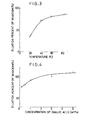
- a catalyst prepared in the same manner as in Example 1 in which an S0 2 -oxidizing power had risen was dipped into a 1.0 wt% aqueous oxalic acid solution (60°C) a volume of which was 4 times as much as an apparent volume of the catalyst, and was washed for a predetermined period of time.
- elution percents of vanadium and tungsten from the catalyst varied as shown in Fig. 2.
- a curve having white circles and a curve having half-blackened circles represent elution rate curves of vanadium and tungsten, respecitvely.
- the thus washed catalyst was impregnated with tungsten, followed by drying and calcination.
- An SO 2 oxidization rate and an NOx removal rate were then measured under the same conditions as in Example 1, and the results shown in Table 2 indicate that the S0 2 oxidization rate and the NOx removal rate were both recovered up to a level equal to initial values.
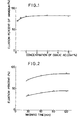
- a catalyst prepared in the same manner as in Example 1 in which an SO 2 -oxidizing power had risen was dipped into a 1.0 wt% aqueous oxalic acid solution for 60 minutes a volume of which was 4 times as much as an apparent volume of the catalyst, and was washed. At this time, an elution percent of vanadium varied as shown in Fig. 3.
- the thus washed catalyst was impregnated with tungsten, followed by drying and calcination.
- This catalyst in which the NOx removal rate had deteriorated and the SO 2 -oxidizing power had risen was dipped into water and warm water a volume of which was 4 times as much as an apparent volume (calculated from an outside size) of the catalyst, and was washed for a period of 30 to 90 minutes.
- the catalyst which had been used in Comparative Example 4 was impregnated with an aqueous ammonium paratungstate solution which was prepared so as to be impregnated with 5 wt% of a tungsten component in terms of W0 3 , and drying and calcination were then carried out.
- the S0 2 oxidization rate and the NOx removal rate were then measured, and the results are set forth in the column of Example 4 in Table 4. As be apparent from Table 4, the SO 2 oxidization rate and the NOx removal rate were recovered up to levels equal to initial values.
- a catalyst prepared in the same manner as in Example 5 in which an 50 2 -oxidizing power had risen was dipped into a 0.1 N aqueous sulfuric acid solution (20°C) for 60 minutes a volume of which was 4 times as much as an apparent volume of the catalyst, and was washed. Afterward, washing was further carried out with 1.0 wt% of an oxalic acid solution (60°C) for 60 minutes in the same manner as in Example 4, and the catalyst was impregnated with tungsten, followed by drying and calcination.
- An SO 2 oxidization rate and an NOx removal rate were measured under the same exhaust gas treatment conditions as in Example 4, and values obtained as the results were 0.5% and 81%, respectively.
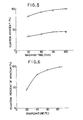
- a catalyst prepared in the same manner as in Example 5 in which an NOx removal rate had deteriorated and an SO 2 - oxidizing power had risen was dipped into water for 60 minutes a volume of which was 4 times as much as an apparent volume of the catalyst, and it was further dipped into a 1.0 wt% aqueous oxalic acid solution (60°C) a volume of which was 4 times as much as an apparent volume of the catalyst, and was washed for a predetermined period of time. At this time, elution percents of vanadium and tungsten from the catalyst varied as shown in Fig. 5. In Fig.
- a catalyst prepared in the same manner as in Example 5 in which an NOx removal rate had deteriorated and an SO 2 - oxidizing power had risen was dipped into water for 60 minutes a volume of which was 4 times as much as an apparent volume of the catalyst, and it was further dipped into a 1.0 wt% aqueous oxalic acid solution a volume of which was 4 times as much as an apparent volume of the catalyst to wash it.
- elution percents of vanadium and tungsten from the catalyst varied as shown in Fig. 6.
- the thus washed catalyst was impregnated with tungsten, followed by drying and calcination.
Landscapes
- Chemical & Material Sciences (AREA)
- Engineering & Computer Science (AREA)
- Chemical Kinetics & Catalysis (AREA)
- Materials Engineering (AREA)
- Organic Chemistry (AREA)
- Environmental & Geological Engineering (AREA)
- Health & Medical Sciences (AREA)
- Biomedical Technology (AREA)
- Analytical Chemistry (AREA)
- General Chemical & Material Sciences (AREA)
- Oil, Petroleum & Natural Gas (AREA)
- Catalysts (AREA)
- Exhaust Gas Treatment By Means Of Catalyst (AREA)
Applications Claiming Priority (4)
| Application Number | Priority Date | Filing Date | Title |
|---|---|---|---|
| JP59065269A JPS60209252A (ja) | 1984-04-03 | 1984-04-03 | 脱硝触媒の再生方法 |
| JP65269/84 | 1984-04-03 | ||
| JP65268/84 | 1984-04-03 | ||
| JP59065268A JPS60209251A (ja) | 1984-04-03 | 1984-04-03 | 脱硝触媒の再生法 |
Publications (2)
| Publication Number | Publication Date |
|---|---|
| EP0161206A2 true EP0161206A2 (de) | 1985-11-13 |
| EP0161206A3 EP0161206A3 (de) | 1987-11-04 |
Family
ID=26406396
Family Applications (1)
| Application Number | Title | Priority Date | Filing Date |
|---|---|---|---|
| EP85730044A Withdrawn EP0161206A3 (de) | 1984-04-03 | 1985-03-25 | Methode zur Regenerierung eines Denitrierungskatalysators |
Country Status (2)
| Country | Link |
|---|---|
| US (1) | US4615991A (de) |
| EP (1) | EP0161206A3 (de) |
Cited By (5)
| Publication number | Priority date | Publication date | Assignee | Title |
|---|---|---|---|---|
| DE3834034A1 (de) * | 1988-05-14 | 1989-11-23 | Huels Chemische Werke Ag | Verfahren zur regeneration arsenkontaminierter sorbentien |
| EP0499351A1 (de) * | 1991-02-15 | 1992-08-19 | Mitsubishi Jukogyo Kabushiki Kaisha | Verfahren zur Behandlung einer Lösung, angewendet zum Regenerieren eines Denitrierungskatalysators |
| AT400114B (de) * | 1994-04-15 | 1995-10-25 | Integral Umwelt Und Anlagentec | Anlage und verfahren zur katalytischen reduktion von in den rauchgasen einer feuerung mit flüssigen brennstoffen enthaltenen stickoxiden mit ammoniak, anlage zur verfeuerung von flüssigen fossilen brennstoffen und verfahren zur regenerierung eines katalysators |
| EP0815924A1 (de) * | 1996-06-25 | 1998-01-07 | Mitsubishi Heavy Industries, Ltd. | Stickstoffoxidentfernungskatalysator |
| WO2011090513A3 (en) * | 2009-12-30 | 2012-01-19 | Coalogix Technology Holdings, Inc | Method for removing calcium material from substrates |
Families Citing this family (24)
| Publication number | Priority date | Publication date | Assignee | Title |
|---|---|---|---|---|
| US5308810A (en) * | 1992-12-28 | 1994-05-03 | Atlantic Richfield Company | Method for treating contaminated catalyst |
| DE19617081C2 (de) * | 1996-04-29 | 2003-02-06 | Kerr Mcgee Pigments Gmbh & Co | Verfahren zur Herstellung von Mischoxidpulvern aus desaktivierten DENOX-Katalysatoren |
| JP3377715B2 (ja) * | 1997-02-27 | 2003-02-17 | 三菱重工業株式会社 | 脱硝触媒の再生方法 |
| US6395665B2 (en) * | 1998-07-24 | 2002-05-28 | Mitsubishi Heavy Industries, Ltd. | Methods for the regeneration of a denitration catalyst |
| KR100626925B1 (ko) * | 1998-08-26 | 2006-09-20 | 인테크랄 엔지니어링 운트 움벨테크니크 게엠베하 | 사용된 탈NOx 또는 탈다이옥신 촉매의 재생방법 |
| US6342462B1 (en) * | 1999-03-22 | 2002-01-29 | Uop Llc | Process for regenerating an adsorbent |
| US6482762B1 (en) * | 2000-08-14 | 2002-11-19 | Atlantic Richfield Company | NOx conversion catalyst rejuvenation process |
| DE10241004A1 (de) * | 2002-09-05 | 2004-03-11 | Envica Gmbh | Verfahren zur Regeneration von eisenbelasteten Denox-Katalysatoren |
| DE102005000873A1 (de) * | 2005-01-05 | 2006-07-13 | Blohm, Maik | Verfahren und Vorrichtung zur Reinigung von SCR-Katalysatoren zwecks Wiedererlangung der Aktivität |
| DE502005010940D1 (de) * | 2005-12-16 | 2011-03-17 | Evonik Energy Services Gmbh | Verfahren zum Behandeln von Rauchgas-Katalysatoren |
| DE102007020855A1 (de) * | 2007-05-02 | 2008-11-06 | Evonik Energy Services Gmbh | Verfahren zum Reinigen von Rauchgasen aus Verbrennungsanlagen |
| DK2033702T3 (da) * | 2007-09-04 | 2011-05-02 | Evonik Energy Services Gmbh | Fremgangsmåde til fjernelse af kviksølv fra forbrændingsgasser |
| US7723251B2 (en) * | 2008-03-11 | 2010-05-25 | Evonik Energy Services Llc | Method of regeneration of SCR catalyst |
| US7741239B2 (en) * | 2008-03-11 | 2010-06-22 | Evonik Energy Services Llc | Methods of regeneration of SCR catalyst poisoned by phosphorous components in flue gas |
| US20110015055A1 (en) * | 2009-07-17 | 2011-01-20 | Cooper Michael D | Method for removing a catalyst inhibitor from a substrate |
| US20110015056A1 (en) * | 2009-07-17 | 2011-01-20 | Coalogix Technology Holdings Inc. | Method for removing a catalyst inhibitor from a substrate |
| KR101199477B1 (ko) | 2010-09-20 | 2012-11-09 | 한국전력공사 | 선택적촉매환원용 촉매의 재생방법 |
| US8389431B2 (en) | 2011-02-03 | 2013-03-05 | Steag Energy Services Gmbh | Method for treating SCR catalysts having accumulated iron compounds |
| US9051862B2 (en) | 2013-09-06 | 2015-06-09 | Cummins Ip, Inc. | Diagnosis and treatment of selective catalytic reduction catalyst |
| WO2016172040A1 (en) * | 2015-04-21 | 2016-10-27 | Cummins Emission Solutions, Inc. | Systems and methods for enhancing catalytic efficiency of scr catalysts |
| CA3008612C (en) * | 2018-06-18 | 2026-04-21 | Nova Chemicals Corporation | Removing and cleaning dehydrogenation catalysts |
| CN117205914A (zh) * | 2023-06-12 | 2023-12-12 | 浙江工业大学 | 一种低so2氧化率scr脱硝催化剂及其制备方法和应用 |
| CN116809125A (zh) * | 2023-06-19 | 2023-09-29 | 陈爱平 | 脱硝催化剂再生装置以及工艺 |
| CN120790245A (zh) * | 2025-08-14 | 2025-10-17 | 美斯顿(天津)催化剂有限公司 | 一种波纹板脱硝催化剂的再生液及再生方法 |
Family Cites Families (4)
| Publication number | Priority date | Publication date | Assignee | Title |
|---|---|---|---|---|
| US2380731A (en) * | 1941-12-09 | 1945-07-31 | Socony Vacuum Oil Co Inc | Restoration of catalysts |
| JPS5227091A (en) * | 1975-08-27 | 1977-03-01 | Kobe Steel Ltd | Reproduction process of catalyst for removing nitrogen oxides in waste gas |
| JPS553872A (en) * | 1978-06-27 | 1980-01-11 | Mitsubishi Heavy Ind Ltd | Preparing denitrification catalyst |
| US4522928A (en) * | 1982-10-18 | 1985-06-11 | Exxon Research And Engineering Co. | Removal of metal comtaminants from catalysts using buffered oxalic acid |
-
1985
- 1985-03-25 EP EP85730044A patent/EP0161206A3/de not_active Withdrawn
- 1985-04-02 US US06/719,163 patent/US4615991A/en not_active Expired - Lifetime
Non-Patent Citations (3)
| Title |
|---|
| PATENT ABSTRACTS OF JAPAN, unexamined applications, C field, vol. 7, no. 22, January 28, 1983 THE PATENT OFFICE JAPANESE GOVERNMENT page 120 C 148 * JP-A-57 180 433 ( MITSUBISHI HEAVY IND. ) * * |
| PATENT ABSTRACTS OF JAPAN, unexamined applications, C section, vol. 3, no. 37, March 29, 1979 THE PATENT OFFICE JAPANESE GOVERNMENT page 19 C 41 * JP-A-54 010 294 ( MITSUBISHI CHEM. IND. ) * * |
| PATENT ABSTRACTS OF JAPAN, unexamined applications, C section, vol. 5, no. 160, October 15, 1981 THE PATENT OFFICE JAPANESE GOVERNMENT page 3 C 75 * JP-A-56 088 829 ( MITSUBISHI HEAVY IND. ) * * |
Cited By (7)
| Publication number | Priority date | Publication date | Assignee | Title |
|---|---|---|---|---|
| DE3834034A1 (de) * | 1988-05-14 | 1989-11-23 | Huels Chemische Werke Ag | Verfahren zur regeneration arsenkontaminierter sorbentien |
| EP0499351A1 (de) * | 1991-02-15 | 1992-08-19 | Mitsubishi Jukogyo Kabushiki Kaisha | Verfahren zur Behandlung einer Lösung, angewendet zum Regenerieren eines Denitrierungskatalysators |
| AT400114B (de) * | 1994-04-15 | 1995-10-25 | Integral Umwelt Und Anlagentec | Anlage und verfahren zur katalytischen reduktion von in den rauchgasen einer feuerung mit flüssigen brennstoffen enthaltenen stickoxiden mit ammoniak, anlage zur verfeuerung von flüssigen fossilen brennstoffen und verfahren zur regenerierung eines katalysators |
| EP0815924A1 (de) * | 1996-06-25 | 1998-01-07 | Mitsubishi Heavy Industries, Ltd. | Stickstoffoxidentfernungskatalysator |
| US5869419A (en) * | 1996-06-25 | 1999-02-09 | Mitsubishi Heavy Industries, Ltd. | Nitrogen oxide removal catalyst |
| WO2011090513A3 (en) * | 2009-12-30 | 2012-01-19 | Coalogix Technology Holdings, Inc | Method for removing calcium material from substrates |
| US8906819B2 (en) | 2009-12-30 | 2014-12-09 | Coalogix Technology Holdings Inc. | Method for removing calcium material from substrates |
Also Published As
| Publication number | Publication date |
|---|---|
| EP0161206A3 (de) | 1987-11-04 |
| US4615991A (en) | 1986-10-07 |
Similar Documents
| Publication | Publication Date | Title |
|---|---|---|
| US4615991A (en) | Method for recovering denitrating catalyst | |
| US6395665B2 (en) | Methods for the regeneration of a denitration catalyst | |
| US4466947A (en) | Denitration catalyst and denitrating method | |
| JP5495001B2 (ja) | 触媒の再生方法 | |
| EP0159959A2 (de) | Verfahren zum Regenerieren eines Denitrierkatalysators für die katalytische Reduktion mit Ammoniak | |
| US4141959A (en) | Process for removing nitrogen oxides from combustion flue gas | |
| WO2007011101A1 (en) | Scr catalyst for removal of nitrogen oxides | |
| JP3059136B2 (ja) | 脱硝触媒の再生方法 | |
| KR20170129200A (ko) | 사용이 완료된 탈질 촉매의 재생 방법 | |
| CN113840655A (zh) | 具有优异的耐硫性的scr催化剂 | |
| US4225462A (en) | Catalyst for reducing nitrogen oxides and process for producing the same | |
| JPH0244581B2 (de) | ||
| KR20110116454A (ko) | 판형 배연탈질 폐촉매의 재생방법 | |
| CN107552063B (zh) | 一种协同脱除n2o的烟气脱硝脱汞催化剂及其制备方法 | |
| JPS6248537B2 (de) | ||
| JP3150519B2 (ja) | 脱硝触媒の再生方法 | |
| JP3815813B2 (ja) | 排ガス中の一酸化窒素酸化触媒、およびこれを用いた排ガス中の窒素酸化物除去方法 | |
| JPS61153139A (ja) | 脱硝触媒の再生法 | |
| JP3219613B2 (ja) | アンモニア分解触媒及びアンモニアの分解除去方法 | |
| JPH0534057B2 (de) | ||
| JPH0421545B2 (de) | ||
| JPH1076142A (ja) | 低温排ガスの脱硝方法 | |
| JPH0446621B2 (de) | ||
| JPH038820B2 (de) | ||
| CN108067295A (zh) | 一种低温烟道气脱销催化剂及其制备方法 |
Legal Events
| Date | Code | Title | Description |
|---|---|---|---|
| PUAI | Public reference made under article 153(3) epc to a published international application that has entered the european phase |
Free format text: ORIGINAL CODE: 0009012 |
|
| AK | Designated contracting states |
Designated state(s): AT DE GB NL |
|
| 17P | Request for examination filed |
Effective date: 19851012 |
|
| PUAL | Search report despatched |
Free format text: ORIGINAL CODE: 0009013 |
|
| AK | Designated contracting states |
Kind code of ref document: A3 Designated state(s): AT DE GB NL |
|
| 17Q | First examination report despatched |
Effective date: 19890217 |
|
| STAA | Information on the status of an ep patent application or granted ep patent |
Free format text: STATUS: THE APPLICATION IS DEEMED TO BE WITHDRAWN |
|
| 18D | Application deemed to be withdrawn |
Effective date: 19890628 |
|
| RIN1 | Information on inventor provided before grant (corrected) |
Inventor name: MITSUOKA, SHIGEAKIHIROSHIMA TECHN. INST. Inventor name: OBAYASHI, YOSHIAKIHIROSHIMA TECHN. INST. |