EP0161578A2 - Glasüberzogene keramische Partikeln - Google Patents
Glasüberzogene keramische Partikeln Download PDFInfo
- Publication number
- EP0161578A2 EP0161578A2 EP85105287A EP85105287A EP0161578A2 EP 0161578 A2 EP0161578 A2 EP 0161578A2 EP 85105287 A EP85105287 A EP 85105287A EP 85105287 A EP85105287 A EP 85105287A EP 0161578 A2 EP0161578 A2 EP 0161578A2
- Authority
- EP
- European Patent Office
- Prior art keywords
- glass
- alumina
- ceramic
- weight
- composition
- Prior art date
- Legal status (The legal status is an assumption and is not a legal conclusion. Google has not performed a legal analysis and makes no representation as to the accuracy of the status listed.)
- Withdrawn
Links
- 239000011521 glass Substances 0.000 title claims abstract description 77
- 239000000919 ceramic Substances 0.000 title claims abstract description 41
- 239000002245 particle Substances 0.000 title claims abstract description 22
- PNEYBMLMFCGWSK-UHFFFAOYSA-N aluminium oxide Inorganic materials [O-2].[O-2].[O-2].[Al+3].[Al+3] PNEYBMLMFCGWSK-UHFFFAOYSA-N 0.000 claims abstract description 55
- 239000000463 material Substances 0.000 claims abstract description 32
- 239000000203 mixture Substances 0.000 claims description 33
- 238000000034 method Methods 0.000 claims description 23
- 239000002131 composite material Substances 0.000 claims description 20
- 239000008187 granular material Substances 0.000 claims description 18
- VYPSYNLAJGMNEJ-UHFFFAOYSA-N Silicium dioxide Chemical compound O=[Si]=O VYPSYNLAJGMNEJ-UHFFFAOYSA-N 0.000 claims description 16
- 238000007569 slipcasting Methods 0.000 claims description 10
- XLYOFNOQVPJJNP-UHFFFAOYSA-N water Substances O XLYOFNOQVPJJNP-UHFFFAOYSA-N 0.000 claims description 10
- 239000000377 silicon dioxide Substances 0.000 claims description 8
- 230000008569 process Effects 0.000 claims description 7
- 238000002791 soaking Methods 0.000 claims description 6
- 238000000498 ball milling Methods 0.000 claims description 4
- 229910010293 ceramic material Inorganic materials 0.000 claims description 4
- 239000002270 dispersing agent Substances 0.000 claims description 3
- 238000007580 dry-mixing Methods 0.000 claims description 3
- BRPQOXSCLDDYGP-UHFFFAOYSA-N calcium oxide Chemical compound [O-2].[Ca+2] BRPQOXSCLDDYGP-UHFFFAOYSA-N 0.000 claims description 2
- 239000000292 calcium oxide Substances 0.000 claims description 2
- ODINCKMPIJJUCX-UHFFFAOYSA-N calcium oxide Inorganic materials [Ca]=O ODINCKMPIJJUCX-UHFFFAOYSA-N 0.000 claims description 2
- 239000011248 coating agent Substances 0.000 claims description 2
- 238000000576 coating method Methods 0.000 claims description 2
- 239000011246 composite particle Substances 0.000 claims description 2
- 238000012216 screening Methods 0.000 claims description 2
- 239000002002 slurry Substances 0.000 claims description 2
- KKCBUQHMOMHUOY-UHFFFAOYSA-N sodium oxide Chemical compound [O-2].[Na+].[Na+] KKCBUQHMOMHUOY-UHFFFAOYSA-N 0.000 claims description 2
- 229910001948 sodium oxide Inorganic materials 0.000 claims description 2
- QVQLCTNNEUAWMS-UHFFFAOYSA-N barium oxide Chemical compound [Ba]=O QVQLCTNNEUAWMS-UHFFFAOYSA-N 0.000 claims 2
- 238000001816 cooling Methods 0.000 claims 1
- 238000001035 drying Methods 0.000 claims 1
- 238000005549 size reduction Methods 0.000 claims 1
- 239000000843 powder Substances 0.000 abstract description 4
- 230000008018 melting Effects 0.000 abstract 2
- 238000002844 melting Methods 0.000 abstract 2
- 239000000725 suspension Substances 0.000 description 14
- 238000005266 casting Methods 0.000 description 10
- 238000010304 firing Methods 0.000 description 8
- 239000007787 solid Substances 0.000 description 8
- 238000000227 grinding Methods 0.000 description 6
- 238000007792 addition Methods 0.000 description 5
- 238000009826 distribution Methods 0.000 description 5
- 229910000831 Steel Inorganic materials 0.000 description 3
- 238000005054 agglomeration Methods 0.000 description 3
- 230000002776 aggregation Effects 0.000 description 3
- 238000010586 diagram Methods 0.000 description 3
- 239000011505 plaster Substances 0.000 description 3
- 239000002994 raw material Substances 0.000 description 3
- FQENQNTWSFEDLI-UHFFFAOYSA-J sodium diphosphate Chemical compound [Na+].[Na+].[Na+].[Na+].[O-]P([O-])(=O)OP([O-])([O-])=O FQENQNTWSFEDLI-UHFFFAOYSA-J 0.000 description 3
- 239000010959 steel Substances 0.000 description 3
- 235000019818 tetrasodium diphosphate Nutrition 0.000 description 3
- IXPNQXFRVYWDDI-UHFFFAOYSA-N 1-methyl-2,4-dioxo-1,3-diazinane-5-carboximidamide Chemical compound CN1CC(C(N)=N)C(=O)NC1=O IXPNQXFRVYWDDI-UHFFFAOYSA-N 0.000 description 2
- 238000006243 chemical reaction Methods 0.000 description 2
- 239000003795 chemical substances by application Substances 0.000 description 2
- 239000006185 dispersion Substances 0.000 description 2
- 230000000694 effects Effects 0.000 description 2
- 230000005484 gravity Effects 0.000 description 2
- 238000005259 measurement Methods 0.000 description 2
- 238000003801 milling Methods 0.000 description 2
- 238000002156 mixing Methods 0.000 description 2
- 238000010951 particle size reduction Methods 0.000 description 2
- 238000002360 preparation method Methods 0.000 description 2
- 235000010413 sodium alginate Nutrition 0.000 description 2
- 239000000661 sodium alginate Substances 0.000 description 2
- 229940005550 sodium alginate Drugs 0.000 description 2
- 239000000243 solution Substances 0.000 description 2
- 229910001220 stainless steel Inorganic materials 0.000 description 2
- 239000010935 stainless steel Substances 0.000 description 2
- 229910001369 Brass Inorganic materials 0.000 description 1
- 239000004698 Polyethylene Substances 0.000 description 1
- 239000000853 adhesive Substances 0.000 description 1
- 230000001070 adhesive effect Effects 0.000 description 1
- 239000007864 aqueous solution Substances 0.000 description 1
- 238000010420 art technique Methods 0.000 description 1
- 230000015572 biosynthetic process Effects 0.000 description 1
- 229910052810 boron oxide Inorganic materials 0.000 description 1
- 239000010951 brass Substances 0.000 description 1
- 230000008859 change Effects 0.000 description 1
- 239000004927 clay Substances 0.000 description 1
- 239000000470 constituent Substances 0.000 description 1
- 239000002182 crystalline inorganic material Substances 0.000 description 1
- 230000003247 decreasing effect Effects 0.000 description 1
- 239000008367 deionised water Substances 0.000 description 1
- 229910021641 deionized water Inorganic materials 0.000 description 1
- JKWMSGQKBLHBQQ-UHFFFAOYSA-N diboron trioxide Chemical compound O=BOB=O JKWMSGQKBLHBQQ-UHFFFAOYSA-N 0.000 description 1
- 238000004090 dissolution Methods 0.000 description 1
- 238000002474 experimental method Methods 0.000 description 1
- 239000000835 fiber Substances 0.000 description 1
- 239000010419 fine particle Substances 0.000 description 1
- 238000005189 flocculation Methods 0.000 description 1
- 230000016615 flocculation Effects 0.000 description 1
- 229910052732 germanium Inorganic materials 0.000 description 1
- GNPVGFCGXDBREM-UHFFFAOYSA-N germanium atom Chemical compound [Ge] GNPVGFCGXDBREM-UHFFFAOYSA-N 0.000 description 1
- 239000005283 halide glass Substances 0.000 description 1
- 238000010348 incorporation Methods 0.000 description 1
- 229910052500 inorganic mineral Inorganic materials 0.000 description 1
- 239000011872 intimate mixture Substances 0.000 description 1
- 238000011835 investigation Methods 0.000 description 1
- 239000005355 lead glass Substances 0.000 description 1
- 238000011068 loading method Methods 0.000 description 1
- 238000004519 manufacturing process Methods 0.000 description 1
- 239000007769 metal material Substances 0.000 description 1
- 239000011707 mineral Substances 0.000 description 1
- -1 polyethylene Polymers 0.000 description 1
- 229920000573 polyethylene Polymers 0.000 description 1
- 238000003825 pressing Methods 0.000 description 1
- 238000012545 processing Methods 0.000 description 1
- 230000009257 reactivity Effects 0.000 description 1
- GCLGEJMYGQKIIW-UHFFFAOYSA-H sodium hexametaphosphate Chemical compound [Na]OP1(=O)OP(=O)(O[Na])OP(=O)(O[Na])OP(=O)(O[Na])OP(=O)(O[Na])OP(=O)(O[Na])O1 GCLGEJMYGQKIIW-UHFFFAOYSA-H 0.000 description 1
- 235000019982 sodium hexametaphosphate Nutrition 0.000 description 1
- HUAUNKAZQWMVFY-UHFFFAOYSA-M sodium;oxocalcium;hydroxide Chemical compound [OH-].[Na+].[Ca]=O HUAUNKAZQWMVFY-UHFFFAOYSA-M 0.000 description 1
- 230000009897 systematic effect Effects 0.000 description 1
- 239000000454 talc Substances 0.000 description 1
- 229910052623 talc Inorganic materials 0.000 description 1
- 238000012360 testing method Methods 0.000 description 1
- 239000001577 tetrasodium phosphonato phosphate Substances 0.000 description 1
- 230000007704 transition Effects 0.000 description 1
Images



Classifications
-
- C—CHEMISTRY; METALLURGY
- C04—CEMENTS; CONCRETE; ARTIFICIAL STONE; CERAMICS; REFRACTORIES
- C04B—LIME, MAGNESIA; SLAG; CEMENTS; COMPOSITIONS THEREOF, e.g. MORTARS, CONCRETE OR LIKE BUILDING MATERIALS; ARTIFICIAL STONE; CERAMICS; REFRACTORIES; TREATMENT OF NATURAL STONE
- C04B35/00—Shaped ceramic products characterised by their composition; Ceramics compositions; Processing powders of inorganic compounds preparatory to the manufacturing of ceramic products
- C04B35/622—Forming processes; Processing powders of inorganic compounds preparatory to the manufacturing of ceramic products
- C04B35/626—Preparing or treating the powders individually or as batches ; preparing or treating macroscopic reinforcing agents for ceramic products, e.g. fibres; mechanical aspects section B
- C04B35/628—Coating the powders or the macroscopic reinforcing agents
- C04B35/62802—Powder coating materials
- C04B35/62805—Oxide ceramics
-
- C—CHEMISTRY; METALLURGY
- C03—GLASS; MINERAL OR SLAG WOOL
- C03C—CHEMICAL COMPOSITION OF GLASSES, GLAZES OR VITREOUS ENAMELS; SURFACE TREATMENT OF GLASS; SURFACE TREATMENT OF FIBRES OR FILAMENTS MADE FROM GLASS, MINERALS OR SLAGS; JOINING GLASS TO GLASS OR OTHER MATERIALS
- C03C8/00—Enamels; Glazes; Fusion seal compositions being frit compositions having non-frit additions
- C03C8/02—Frit compositions, i.e. in a powdered or comminuted form
-
- C—CHEMISTRY; METALLURGY
- C04—CEMENTS; CONCRETE; ARTIFICIAL STONE; CERAMICS; REFRACTORIES
- C04B—LIME, MAGNESIA; SLAG; CEMENTS; COMPOSITIONS THEREOF, e.g. MORTARS, CONCRETE OR LIKE BUILDING MATERIALS; ARTIFICIAL STONE; CERAMICS; REFRACTORIES; TREATMENT OF NATURAL STONE
- C04B33/00—Clay-wares
- C04B33/28—Slip casting
-
- C—CHEMISTRY; METALLURGY
- C04—CEMENTS; CONCRETE; ARTIFICIAL STONE; CERAMICS; REFRACTORIES
- C04B—LIME, MAGNESIA; SLAG; CEMENTS; COMPOSITIONS THEREOF, e.g. MORTARS, CONCRETE OR LIKE BUILDING MATERIALS; ARTIFICIAL STONE; CERAMICS; REFRACTORIES; TREATMENT OF NATURAL STONE
- C04B35/00—Shaped ceramic products characterised by their composition; Ceramics compositions; Processing powders of inorganic compounds preparatory to the manufacturing of ceramic products
- C04B35/01—Shaped ceramic products characterised by their composition; Ceramics compositions; Processing powders of inorganic compounds preparatory to the manufacturing of ceramic products based on oxide ceramics
- C04B35/10—Shaped ceramic products characterised by their composition; Ceramics compositions; Processing powders of inorganic compounds preparatory to the manufacturing of ceramic products based on oxide ceramics based on aluminium oxide
- C04B35/111—Fine ceramics
- C04B35/117—Composites
-
- C—CHEMISTRY; METALLURGY
- C04—CEMENTS; CONCRETE; ARTIFICIAL STONE; CERAMICS; REFRACTORIES
- C04B—LIME, MAGNESIA; SLAG; CEMENTS; COMPOSITIONS THEREOF, e.g. MORTARS, CONCRETE OR LIKE BUILDING MATERIALS; ARTIFICIAL STONE; CERAMICS; REFRACTORIES; TREATMENT OF NATURAL STONE
- C04B35/00—Shaped ceramic products characterised by their composition; Ceramics compositions; Processing powders of inorganic compounds preparatory to the manufacturing of ceramic products
- C04B35/622—Forming processes; Processing powders of inorganic compounds preparatory to the manufacturing of ceramic products
- C04B35/626—Preparing or treating the powders individually or as batches ; preparing or treating macroscopic reinforcing agents for ceramic products, e.g. fibres; mechanical aspects section B
- C04B35/62605—Treating the starting powders individually or as mixtures
- C04B35/6261—Milling
-
- C—CHEMISTRY; METALLURGY
- C04—CEMENTS; CONCRETE; ARTIFICIAL STONE; CERAMICS; REFRACTORIES
- C04B—LIME, MAGNESIA; SLAG; CEMENTS; COMPOSITIONS THEREOF, e.g. MORTARS, CONCRETE OR LIKE BUILDING MATERIALS; ARTIFICIAL STONE; CERAMICS; REFRACTORIES; TREATMENT OF NATURAL STONE
- C04B35/00—Shaped ceramic products characterised by their composition; Ceramics compositions; Processing powders of inorganic compounds preparatory to the manufacturing of ceramic products
- C04B35/622—Forming processes; Processing powders of inorganic compounds preparatory to the manufacturing of ceramic products
- C04B35/626—Preparing or treating the powders individually or as batches ; preparing or treating macroscopic reinforcing agents for ceramic products, e.g. fibres; mechanical aspects section B
- C04B35/62605—Treating the starting powders individually or as mixtures
- C04B35/62625—Wet mixtures
- C04B35/6263—Wet mixtures characterised by their solids loadings, i.e. the percentage of solids
-
- C—CHEMISTRY; METALLURGY
- C04—CEMENTS; CONCRETE; ARTIFICIAL STONE; CERAMICS; REFRACTORIES
- C04B—LIME, MAGNESIA; SLAG; CEMENTS; COMPOSITIONS THEREOF, e.g. MORTARS, CONCRETE OR LIKE BUILDING MATERIALS; ARTIFICIAL STONE; CERAMICS; REFRACTORIES; TREATMENT OF NATURAL STONE
- C04B35/00—Shaped ceramic products characterised by their composition; Ceramics compositions; Processing powders of inorganic compounds preparatory to the manufacturing of ceramic products
- C04B35/622—Forming processes; Processing powders of inorganic compounds preparatory to the manufacturing of ceramic products
- C04B35/626—Preparing or treating the powders individually or as batches ; preparing or treating macroscopic reinforcing agents for ceramic products, e.g. fibres; mechanical aspects section B
- C04B35/62605—Treating the starting powders individually or as mixtures
- C04B35/62685—Treating the starting powders individually or as mixtures characterised by the order of addition of constituents or additives
-
- C—CHEMISTRY; METALLURGY
- C04—CEMENTS; CONCRETE; ARTIFICIAL STONE; CERAMICS; REFRACTORIES
- C04B—LIME, MAGNESIA; SLAG; CEMENTS; COMPOSITIONS THEREOF, e.g. MORTARS, CONCRETE OR LIKE BUILDING MATERIALS; ARTIFICIAL STONE; CERAMICS; REFRACTORIES; TREATMENT OF NATURAL STONE
- C04B35/00—Shaped ceramic products characterised by their composition; Ceramics compositions; Processing powders of inorganic compounds preparatory to the manufacturing of ceramic products
- C04B35/622—Forming processes; Processing powders of inorganic compounds preparatory to the manufacturing of ceramic products
- C04B35/626—Preparing or treating the powders individually or as batches ; preparing or treating macroscopic reinforcing agents for ceramic products, e.g. fibres; mechanical aspects section B
- C04B35/628—Coating the powders or the macroscopic reinforcing agents
-
- C—CHEMISTRY; METALLURGY
- C04—CEMENTS; CONCRETE; ARTIFICIAL STONE; CERAMICS; REFRACTORIES
- C04B—LIME, MAGNESIA; SLAG; CEMENTS; COMPOSITIONS THEREOF, e.g. MORTARS, CONCRETE OR LIKE BUILDING MATERIALS; ARTIFICIAL STONE; CERAMICS; REFRACTORIES; TREATMENT OF NATURAL STONE
- C04B35/00—Shaped ceramic products characterised by their composition; Ceramics compositions; Processing powders of inorganic compounds preparatory to the manufacturing of ceramic products
- C04B35/622—Forming processes; Processing powders of inorganic compounds preparatory to the manufacturing of ceramic products
- C04B35/626—Preparing or treating the powders individually or as batches ; preparing or treating macroscopic reinforcing agents for ceramic products, e.g. fibres; mechanical aspects section B
- C04B35/63—Preparing or treating the powders individually or as batches ; preparing or treating macroscopic reinforcing agents for ceramic products, e.g. fibres; mechanical aspects section B using additives specially adapted for forming the products, e.g.. binder binders
- C04B35/6303—Inorganic additives
-
- C—CHEMISTRY; METALLURGY
- C04—CEMENTS; CONCRETE; ARTIFICIAL STONE; CERAMICS; REFRACTORIES
- C04B—LIME, MAGNESIA; SLAG; CEMENTS; COMPOSITIONS THEREOF, e.g. MORTARS, CONCRETE OR LIKE BUILDING MATERIALS; ARTIFICIAL STONE; CERAMICS; REFRACTORIES; TREATMENT OF NATURAL STONE
- C04B2235/00—Aspects relating to ceramic starting mixtures or sintered ceramic products
- C04B2235/02—Composition of constituents of the starting material or of secondary phases of the final product
- C04B2235/30—Constituents and secondary phases not being of a fibrous nature
- C04B2235/32—Metal oxides, mixed metal oxides, or oxide-forming salts thereof, e.g. carbonates, nitrates, (oxy)hydroxides, chlorides
- C04B2235/3201—Alkali metal oxides or oxide-forming salts thereof
-
- C—CHEMISTRY; METALLURGY
- C04—CEMENTS; CONCRETE; ARTIFICIAL STONE; CERAMICS; REFRACTORIES
- C04B—LIME, MAGNESIA; SLAG; CEMENTS; COMPOSITIONS THEREOF, e.g. MORTARS, CONCRETE OR LIKE BUILDING MATERIALS; ARTIFICIAL STONE; CERAMICS; REFRACTORIES; TREATMENT OF NATURAL STONE
- C04B2235/00—Aspects relating to ceramic starting mixtures or sintered ceramic products
- C04B2235/02—Composition of constituents of the starting material or of secondary phases of the final product
- C04B2235/30—Constituents and secondary phases not being of a fibrous nature
- C04B2235/32—Metal oxides, mixed metal oxides, or oxide-forming salts thereof, e.g. carbonates, nitrates, (oxy)hydroxides, chlorides
- C04B2235/3205—Alkaline earth oxides or oxide forming salts thereof, e.g. beryllium oxide
- C04B2235/3208—Calcium oxide or oxide-forming salts thereof, e.g. lime
-
- C—CHEMISTRY; METALLURGY
- C04—CEMENTS; CONCRETE; ARTIFICIAL STONE; CERAMICS; REFRACTORIES
- C04B—LIME, MAGNESIA; SLAG; CEMENTS; COMPOSITIONS THEREOF, e.g. MORTARS, CONCRETE OR LIKE BUILDING MATERIALS; ARTIFICIAL STONE; CERAMICS; REFRACTORIES; TREATMENT OF NATURAL STONE
- C04B2235/00—Aspects relating to ceramic starting mixtures or sintered ceramic products
- C04B2235/02—Composition of constituents of the starting material or of secondary phases of the final product
- C04B2235/30—Constituents and secondary phases not being of a fibrous nature
- C04B2235/32—Metal oxides, mixed metal oxides, or oxide-forming salts thereof, e.g. carbonates, nitrates, (oxy)hydroxides, chlorides
- C04B2235/3205—Alkaline earth oxides or oxide forming salts thereof, e.g. beryllium oxide
- C04B2235/3215—Barium oxides or oxide-forming salts thereof
-
- C—CHEMISTRY; METALLURGY
- C04—CEMENTS; CONCRETE; ARTIFICIAL STONE; CERAMICS; REFRACTORIES
- C04B—LIME, MAGNESIA; SLAG; CEMENTS; COMPOSITIONS THEREOF, e.g. MORTARS, CONCRETE OR LIKE BUILDING MATERIALS; ARTIFICIAL STONE; CERAMICS; REFRACTORIES; TREATMENT OF NATURAL STONE
- C04B2235/00—Aspects relating to ceramic starting mixtures or sintered ceramic products
- C04B2235/02—Composition of constituents of the starting material or of secondary phases of the final product
- C04B2235/30—Constituents and secondary phases not being of a fibrous nature
- C04B2235/32—Metal oxides, mixed metal oxides, or oxide-forming salts thereof, e.g. carbonates, nitrates, (oxy)hydroxides, chlorides
- C04B2235/3217—Aluminum oxide or oxide forming salts thereof, e.g. bauxite, alpha-alumina
-
- C—CHEMISTRY; METALLURGY
- C04—CEMENTS; CONCRETE; ARTIFICIAL STONE; CERAMICS; REFRACTORIES
- C04B—LIME, MAGNESIA; SLAG; CEMENTS; COMPOSITIONS THEREOF, e.g. MORTARS, CONCRETE OR LIKE BUILDING MATERIALS; ARTIFICIAL STONE; CERAMICS; REFRACTORIES; TREATMENT OF NATURAL STONE
- C04B2235/00—Aspects relating to ceramic starting mixtures or sintered ceramic products
- C04B2235/02—Composition of constituents of the starting material or of secondary phases of the final product
- C04B2235/30—Constituents and secondary phases not being of a fibrous nature
- C04B2235/34—Non-metal oxides, non-metal mixed oxides, or salts thereof that form the non-metal oxides upon heating, e.g. carbonates, nitrates, (oxy)hydroxides, chlorides
- C04B2235/3409—Boron oxide, borates, boric acids, or oxide forming salts thereof, e.g. borax
-
- C—CHEMISTRY; METALLURGY
- C04—CEMENTS; CONCRETE; ARTIFICIAL STONE; CERAMICS; REFRACTORIES
- C04B—LIME, MAGNESIA; SLAG; CEMENTS; COMPOSITIONS THEREOF, e.g. MORTARS, CONCRETE OR LIKE BUILDING MATERIALS; ARTIFICIAL STONE; CERAMICS; REFRACTORIES; TREATMENT OF NATURAL STONE
- C04B2235/00—Aspects relating to ceramic starting mixtures or sintered ceramic products
- C04B2235/02—Composition of constituents of the starting material or of secondary phases of the final product
- C04B2235/30—Constituents and secondary phases not being of a fibrous nature
- C04B2235/34—Non-metal oxides, non-metal mixed oxides, or salts thereof that form the non-metal oxides upon heating, e.g. carbonates, nitrates, (oxy)hydroxides, chlorides
- C04B2235/3418—Silicon oxide, silicic acids or oxide forming salts thereof, e.g. silica sol, fused silica, silica fume, cristobalite, quartz or flint
-
- C—CHEMISTRY; METALLURGY
- C04—CEMENTS; CONCRETE; ARTIFICIAL STONE; CERAMICS; REFRACTORIES
- C04B—LIME, MAGNESIA; SLAG; CEMENTS; COMPOSITIONS THEREOF, e.g. MORTARS, CONCRETE OR LIKE BUILDING MATERIALS; ARTIFICIAL STONE; CERAMICS; REFRACTORIES; TREATMENT OF NATURAL STONE
- C04B2235/00—Aspects relating to ceramic starting mixtures or sintered ceramic products
- C04B2235/02—Composition of constituents of the starting material or of secondary phases of the final product
- C04B2235/30—Constituents and secondary phases not being of a fibrous nature
- C04B2235/36—Glass starting materials for making ceramics, e.g. silica glass
-
- C—CHEMISTRY; METALLURGY
- C04—CEMENTS; CONCRETE; ARTIFICIAL STONE; CERAMICS; REFRACTORIES
- C04B—LIME, MAGNESIA; SLAG; CEMENTS; COMPOSITIONS THEREOF, e.g. MORTARS, CONCRETE OR LIKE BUILDING MATERIALS; ARTIFICIAL STONE; CERAMICS; REFRACTORIES; TREATMENT OF NATURAL STONE
- C04B2235/00—Aspects relating to ceramic starting mixtures or sintered ceramic products
- C04B2235/02—Composition of constituents of the starting material or of secondary phases of the final product
- C04B2235/50—Constituents or additives of the starting mixture chosen for their shape or used because of their shape or their physical appearance
- C04B2235/54—Particle size related information
- C04B2235/5418—Particle size related information expressed by the size of the particles or aggregates thereof
- C04B2235/5436—Particle size related information expressed by the size of the particles or aggregates thereof micrometer sized, i.e. from 1 to 100 micron
-
- C—CHEMISTRY; METALLURGY
- C04—CEMENTS; CONCRETE; ARTIFICIAL STONE; CERAMICS; REFRACTORIES
- C04B—LIME, MAGNESIA; SLAG; CEMENTS; COMPOSITIONS THEREOF, e.g. MORTARS, CONCRETE OR LIKE BUILDING MATERIALS; ARTIFICIAL STONE; CERAMICS; REFRACTORIES; TREATMENT OF NATURAL STONE
- C04B2235/00—Aspects relating to ceramic starting mixtures or sintered ceramic products
- C04B2235/60—Aspects relating to the preparation, properties or mechanical treatment of green bodies or pre-forms
- C04B2235/602—Making the green bodies or pre-forms by moulding
- C04B2235/6027—Slip casting
-
- C—CHEMISTRY; METALLURGY
- C04—CEMENTS; CONCRETE; ARTIFICIAL STONE; CERAMICS; REFRACTORIES
- C04B—LIME, MAGNESIA; SLAG; CEMENTS; COMPOSITIONS THEREOF, e.g. MORTARS, CONCRETE OR LIKE BUILDING MATERIALS; ARTIFICIAL STONE; CERAMICS; REFRACTORIES; TREATMENT OF NATURAL STONE
- C04B2235/00—Aspects relating to ceramic starting mixtures or sintered ceramic products
- C04B2235/60—Aspects relating to the preparation, properties or mechanical treatment of green bodies or pre-forms
- C04B2235/604—Pressing at temperatures other than sintering temperatures
-
- C—CHEMISTRY; METALLURGY
- C04—CEMENTS; CONCRETE; ARTIFICIAL STONE; CERAMICS; REFRACTORIES
- C04B—LIME, MAGNESIA; SLAG; CEMENTS; COMPOSITIONS THEREOF, e.g. MORTARS, CONCRETE OR LIKE BUILDING MATERIALS; ARTIFICIAL STONE; CERAMICS; REFRACTORIES; TREATMENT OF NATURAL STONE
- C04B2235/00—Aspects relating to ceramic starting mixtures or sintered ceramic products
- C04B2235/65—Aspects relating to heat treatments of ceramic bodies such as green ceramics or pre-sintered ceramics, e.g. burning, sintering or melting processes
- C04B2235/656—Aspects relating to heat treatments of ceramic bodies such as green ceramics or pre-sintered ceramics, e.g. burning, sintering or melting processes characterised by specific heating conditions during heat treatment
-
- C—CHEMISTRY; METALLURGY
- C04—CEMENTS; CONCRETE; ARTIFICIAL STONE; CERAMICS; REFRACTORIES
- C04B—LIME, MAGNESIA; SLAG; CEMENTS; COMPOSITIONS THEREOF, e.g. MORTARS, CONCRETE OR LIKE BUILDING MATERIALS; ARTIFICIAL STONE; CERAMICS; REFRACTORIES; TREATMENT OF NATURAL STONE
- C04B2235/00—Aspects relating to ceramic starting mixtures or sintered ceramic products
- C04B2235/65—Aspects relating to heat treatments of ceramic bodies such as green ceramics or pre-sintered ceramics, e.g. burning, sintering or melting processes
- C04B2235/656—Aspects relating to heat treatments of ceramic bodies such as green ceramics or pre-sintered ceramics, e.g. burning, sintering or melting processes characterised by specific heating conditions during heat treatment
- C04B2235/6562—Heating rate
-
- C—CHEMISTRY; METALLURGY
- C04—CEMENTS; CONCRETE; ARTIFICIAL STONE; CERAMICS; REFRACTORIES
- C04B—LIME, MAGNESIA; SLAG; CEMENTS; COMPOSITIONS THEREOF, e.g. MORTARS, CONCRETE OR LIKE BUILDING MATERIALS; ARTIFICIAL STONE; CERAMICS; REFRACTORIES; TREATMENT OF NATURAL STONE
- C04B2235/00—Aspects relating to ceramic starting mixtures or sintered ceramic products
- C04B2235/65—Aspects relating to heat treatments of ceramic bodies such as green ceramics or pre-sintered ceramics, e.g. burning, sintering or melting processes
- C04B2235/656—Aspects relating to heat treatments of ceramic bodies such as green ceramics or pre-sintered ceramics, e.g. burning, sintering or melting processes characterised by specific heating conditions during heat treatment
- C04B2235/6565—Cooling rate
-
- C—CHEMISTRY; METALLURGY
- C04—CEMENTS; CONCRETE; ARTIFICIAL STONE; CERAMICS; REFRACTORIES
- C04B—LIME, MAGNESIA; SLAG; CEMENTS; COMPOSITIONS THEREOF, e.g. MORTARS, CONCRETE OR LIKE BUILDING MATERIALS; ARTIFICIAL STONE; CERAMICS; REFRACTORIES; TREATMENT OF NATURAL STONE
- C04B2235/00—Aspects relating to ceramic starting mixtures or sintered ceramic products
- C04B2235/70—Aspects relating to sintered or melt-casted ceramic products
- C04B2235/72—Products characterised by the absence or the low content of specific components, e.g. alkali metal free alumina ceramics
-
- C—CHEMISTRY; METALLURGY
- C04—CEMENTS; CONCRETE; ARTIFICIAL STONE; CERAMICS; REFRACTORIES
- C04B—LIME, MAGNESIA; SLAG; CEMENTS; COMPOSITIONS THEREOF, e.g. MORTARS, CONCRETE OR LIKE BUILDING MATERIALS; ARTIFICIAL STONE; CERAMICS; REFRACTORIES; TREATMENT OF NATURAL STONE
- C04B2235/00—Aspects relating to ceramic starting mixtures or sintered ceramic products
- C04B2235/70—Aspects relating to sintered or melt-casted ceramic products
- C04B2235/96—Properties of ceramic products, e.g. mechanical properties such as strength, toughness, wear resistance
Definitions
- One of the conventionally desirable techniques for producing large ceramic articles is the technique of slip casting.
- This technique requires extended particle size distributions in order to form a rheologically stable suspension. This goal can be easily attained in single phase suspensions by controlling the particle size distribution and the flocculant requirements.
- a second particle phase may be added. Unfortunately however, the addition of such a second phase increases the complexity of a suspension due to competing surface charge effects, different degrees of solubility and variations in the particles size distribution with constituents comprising the suspension which results in rheologically unstable slips. Even in rheologically stable systems, these competing effects are not conducive to intimate mixing. This in turn gives rise to a microstructure of the final ceramic which contains agglomeration, porosity and regions of isolated second and third phases which inherently decrease the properties of the material.
- novel material comprising composite particles of glass and ceramic wherein a glass coating of homogeneous composition partially covers the ceramic portion of a majority of the particles in said composition.
- the novel materials of the present invention are formed by dry mixing ceramics and glass frit suspending said intimate mixture in an aqueous slurry which is then screened to provide granules of a predetermined size range. These granules are dried and fired to a temperature of between about 925 0 C and about 1600 o C, soaked at a slightly lower temperature and then cooled to room temperature.
- the granules which comprise agglomerations of ceramic coated with glass are then reduced in size, suitably by sequential jaw crushing and ball milling in water to provide a fine suspension of the order of about 5 to 10 microns which is then screened and dried.
- These particles have exposed surfaces of glass and ceramic, thus they may form glass/glass, ceramic/ceramic and ceramic/glass bondings; after subsequent, say, casting and firing.
- Such products have greater transverse strength than prior art products.
- the invention described herein provides novel composite ceramic materials which contain second phase particles in addition to the finely divided alumina particles and methods of making them. Improvements on and changes in the prereaction process revealed in U. S. Patent No. 3,360,203, described above, enable second phase glass particles to be added to alumina or other ceramic raw materials so that composite materials with superior properties can be formed by slip casting and other methods of forming ceramics.
- the ceramics included in the scope of this invention include all inorganic non-metallic materials of crystalline structure which are solids in the temperature range of about 500 to 2000 o C.
- glass can be broadly defined as non-crystalline inorganic materials which are solid, that is to say, have substantially no flow properties in at least part of the temperature range between 500°C and 2000 o C. It will be understood by those skilled in the art that a very large number of materials fall in both of the foregoing categories.
- the most commonly used ceramics contain alumina in some form. It is not necessary for the purposes of this invention that the ceramic be chemically pure.
- the general standards of materials purity in the ceramic art are to be considered as being applicable herein.
- the exemplification of this disclosure has been carried out on substantially pure alumina merely because such materials are readily obtainable and scientific measurement upon the properties of pure materials are simpler. This purity however should in no way be considered as limiting upon the invention. Any conventionally available ceramic materials may be employed.
- the glasses those skilled in the art are well aware of available compositions of glass and the properties which are associated with various glass compositions. It is the intention of the present invention to make this invention available for use with any glass, depending upon the properties of the final material which it is desirable to obtain.
- the glasses which may be used include fused silics, borosilicates, soda lime silica, germanium glasses, lead glasses, halide glasses and the like. This list is intended to be inclusive but not limiting.
- the experiments set forth in the present specification have been carried out using glasses which are substantially silica based, that is to say, they contain between about 45 and 100, suitably about 70% by are substantially silica based, that is to say, they contain between about 45 and 100, suitably about 70% by weight of silica.
- glasses which are substantially silica based, that is to say, they contain between about 45 and 100, suitably about 70% by weight of silica.
- they also contain between about 5.5 and about 25 % by weight of boron oxide, between about 5 and about 25% by weight of calcium oxide and between about 3.5 and about 25% by weight of sodium oxide.
- the glass utilized in this invention may contain between 0 and 100% by weight of silica.
- alumina compositions consisting of varied amounts of powders of both alumina and glass frit were first dried in an oven to no less than 300 o C, but below the softening point of the glass for no less than 3 hours. These powders were then dry mixed in a twin shell mixer for a period of from .5 to 2 hours, suitably about I hour producing a mixed composition.
- the mixed compositions tested range from 95 to 50% by weight alumina, with the remainder being glass frit. While the specific ratio of Al 2 0 3 or other ceramic to glass frit is not critical, it does represent the ranges tested. It should be noted that depending on the desired firing temperature and the desired resulting properties this ratio may change significantly.
- this material was wet mixed in a Muller or other type mixer with about 10 to about 30% by weight, suitably about 20% of water containing from about 1 to about 5, suitably about 3% by weight of a water retaining agent, forming a wet mixture suitable for screening.
- water retaining agents there may be mentioned sodium alginate.
- This wet mixture was then screened through a sieve resulting in granules ranging between 6 and 12 mesh. It has been found that if the above mix has additional water added it can be extruded into small rods of approximately the same 6 to 12 mesh size. These granules were then collected in alumina or other saggers and dried.
- the saggers containing the agglomerated alumina or other ceramic/glass granules were then loaded into an electric or other furnace and fired at an increasing firing temperature such as a rate of 100-500°C/hr, suitably about 300 o C/hr. to a soaking temperature between about 925 and about 1600°C depending on the composition.
- This soaking temperature is about 100°C less than the temperature to be used to fire products, i.e., formed by slip casting. This latter temperature is referred to as the final firing temperature.
- the relationship between the final firing temperature on composition expressed as the percentage of glass addition to the composition in the preferred embodiment is shown in Table A.
- the particle size of the 6-12 mesh granules must be reduced to an average particle size between 5 and 10 microns. This particle size reduction was accomplished by ball milling. Small three gallon capacity high alumina pebble mills were utilized. The grinding media consisted of three different sized 96% alumina pebbles. The mill charge consisted of 60% by volume 1-1/2' balls, 25% by volume 1" balls and 15% by volume 1/2" balls. The mill was filled between 1/2 and 5/8 full with grinding media. Additions of the alumina/ glass composition were based on 1750 cm 3 of solids and a deionized water volume that would maintain a 78% by weight solids water for the 3 gallon mill. Dispersants successfully utilized include such materials as sodium hexametaphosphate, tetrasodium pyrophosphate.
- Milling times ranged from 36 to 48 hours depending on the percent of glasds present or until the specific gravity of the suspension indicated that the minus 325 mesh fraction was at least 76% by weight solids.
- the resulting suspension was then screened through a 325 mesh stainless steel sieve, dried and stored until subsequent casting.
- the resulting prereacted ceramic composite material is highly uniform and rheologically behaves as a single material, i.e., single surface charge. Flocculation problems arising from the solubility of various glasses in water are reduced and/or eliminated as alumina is incorporated into the glass.
- the prereacted alumina or other ceramic forms a homogeneous material, making control of particle size distribution less complex.
- the second. firing allows the glass to wet the alumina particles more intimately resulting in a highly uniform material.
- alumina/glass compostiions consisting of systematic proportions, from 95 wt. % to 50 wt. % A1 2 0 3 and various glass frits, were dried in an oven for 3 hours at 300 o C. The characteristics of these materials are shown on Tables 1, 2 and 3 below. These powders were then cooled to room temperature and dry mixed in a twin shell mixer for a period of 1 hour. After these materials were thoroughly dry mixed, they were wet mixed in a muller type mixer for 30 minutes with 20% by wt. of an aqueous solution of sodium alginate.
- This mix was then screened through a sieve resulting in granules ranging between 6 and 12 mesh. These granules were dried in alumina saggers, and subsequently fired in a 12 cu. ft. bottom loading elevator kiln. The furnace was heated at a rate of approximately 300 o C/hr. and soaked for 2 hours at a temperature approximately 100°C below the final firing temperatures. Table 4 shows the soaking prereaction temperatures used for the various alumina/glass composites. The furnace was cooled at a rate of 500°C/hr. The prereacted material was removed from the saggers and stored in double polyethylene bags.
- the glass frit softens at temperature well below those realized in the prereaction process, it was found that in some cases the granules of alumina/glass formed large agglomerates.
- the agglomerations of granules were jaw crushed providing a material that ranged between 6 and 18 mesh.
- alumina/glass composition Additions of the alumina/glass composition were based on a ratio of 78% by wt. solids to water for the three gallon mill. Tetrasodium pyrophosphate was added at 0.02% by wt. of the solids as dispersant.
- Milling times ranged from 72 to 76 hours depending on the percent glass present.
- the resulting suspension was then screened through a 325 mesh stainless steel sieve and stored.
- the specific gravity was adjusted to provide a 77-78% by weight solids suspension.
- the apparent viscosity was adjusted using 1% solution of tetrasodium pyrophosphate to 150-180 centipoise.
- the volume of slip to be cast was passed through a 20 mesh sieve to remove entrapped air developed during prior processing.
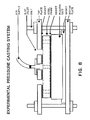
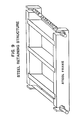
- the pressure casting system was assembled as shown in Figures 8 and 9. This included premoistening the plaster batts, evenly torquing the support bolts and, finally, pressure testing the system. Provided that no leaks were audibly detected, the alumina/glass suspension was then poured into the two separate slip inlets. The inlets were subsequently capped with threaded brass plugs and the pressure applied through the air inlet. Nominally pure N 2 at a pressure of 30 psi was used for the entirety of the investigation. The casting time range from 30-60 minutes depending on the composition and condition of the mold.
- Transverse strengths were determined for 95% by wt. through 70% by wt. alumina/glass C composites.
- Table 6 lists the strengths of dry pressed and slip cast prereacted and prereacted composites.
- Figure 5 illustrates the statistical differences between methods. As was observed previously, there were two strength domains in terms of percent alumina. While not as distinct, the first domain, 95 through 75 wt. % alumina, differs from the second or lower percent alumina domain. Maximum strength for both the dry pressed and unprereacted slip cast composites occurred for the 95% alumina composites with values of 37 Kpsi (255 MPa) and 63 Kpsi (435 MPa) respectively. When compared to the strength of the prereacted material, a factor of two increase was observed over similar dry pressed composites.
- the transverse strength relative to alumina content is shown in Table 5 and Figure 5.
Landscapes
- Chemical & Material Sciences (AREA)
- Engineering & Computer Science (AREA)
- Ceramic Engineering (AREA)
- Manufacturing & Machinery (AREA)
- Materials Engineering (AREA)
- Organic Chemistry (AREA)
- Structural Engineering (AREA)
- Inorganic Chemistry (AREA)
- Composite Materials (AREA)
- Life Sciences & Earth Sciences (AREA)
- Chemical Kinetics & Catalysis (AREA)
- General Chemical & Material Sciences (AREA)
- Geochemistry & Mineralogy (AREA)
- Mechanical Engineering (AREA)
- Dispersion Chemistry (AREA)
- Compositions Of Oxide Ceramics (AREA)
- Glass Compositions (AREA)
Applications Claiming Priority (4)
| Application Number | Priority Date | Filing Date | Title |
|---|---|---|---|
| US60629984A | 1984-05-02 | 1984-05-02 | |
| US606299 | 1984-05-02 | ||
| US70522585A | 1985-02-25 | 1985-02-25 | |
| US705225 | 1985-02-25 |
Publications (2)
| Publication Number | Publication Date |
|---|---|
| EP0161578A2 true EP0161578A2 (de) | 1985-11-21 |
| EP0161578A3 EP0161578A3 (de) | 1987-11-19 |
Family
ID=27085212
Family Applications (1)
| Application Number | Title | Priority Date | Filing Date |
|---|---|---|---|
| EP85105287A Withdrawn EP0161578A3 (de) | 1984-05-02 | 1985-04-30 | Glasüberzogene keramische Partikeln |
Country Status (1)
| Country | Link |
|---|---|
| EP (1) | EP0161578A3 (de) |
Cited By (7)
| Publication number | Priority date | Publication date | Assignee | Title |
|---|---|---|---|---|
| US4737411A (en) * | 1986-11-25 | 1988-04-12 | University Of Dayton | Controlled pore size ceramics particularly for orthopaedic and dental applications |
| EP0237047A3 (de) * | 1986-03-12 | 1988-12-28 | Olin Corporation | Cermetsubstrat mit einer adhäsiven Glaskomponente |
| EP0631995A1 (de) * | 1993-06-24 | 1995-01-04 | Dentsply GmbH | Zahnprothese |
| DE102004021729A1 (de) * | 2004-04-30 | 2005-11-24 | Mann + Hummel Gmbh | Hohlfasermembranmodul |
| CN105801079A (zh) * | 2014-12-29 | 2016-07-27 | 优克材料科技股份有限公司 | 三维打印用陶瓷玻璃复合材料及其制备方法、三维成型物 |
| US11214718B2 (en) | 2016-12-29 | 2022-01-04 | Saint-Gobain Ceramics & Plastics, Inc. | Abrasive particles with vitrified bond and filler |
| CN116854500A (zh) * | 2023-07-03 | 2023-10-10 | 优钢新材料科技(湖南)有限公司 | 一种zta颗粒表面涂覆高膨胀系数薄膜的方法 |
Family Cites Families (4)
| Publication number | Priority date | Publication date | Assignee | Title |
|---|---|---|---|---|
| US3261702A (en) * | 1966-07-19 | Method of preparing alumina casting slips | ||
| BE556280A (de) * | ||||
| US3360203A (en) * | 1965-06-28 | 1967-12-26 | Edward J Smoke | Prereacted raw materials technique for attaining high quality ceramics |
| JPS4949165B1 (de) * | 1970-08-07 | 1974-12-25 |
-
1985
- 1985-04-30 EP EP85105287A patent/EP0161578A3/de not_active Withdrawn
Cited By (9)
| Publication number | Priority date | Publication date | Assignee | Title |
|---|---|---|---|---|
| EP0237047A3 (de) * | 1986-03-12 | 1988-12-28 | Olin Corporation | Cermetsubstrat mit einer adhäsiven Glaskomponente |
| US4737411A (en) * | 1986-11-25 | 1988-04-12 | University Of Dayton | Controlled pore size ceramics particularly for orthopaedic and dental applications |
| EP0631995A1 (de) * | 1993-06-24 | 1995-01-04 | Dentsply GmbH | Zahnprothese |
| US5849068A (en) * | 1993-06-24 | 1998-12-15 | Dentsply G.M.B.H. | Dental prosthesis |
| DE102004021729A1 (de) * | 2004-04-30 | 2005-11-24 | Mann + Hummel Gmbh | Hohlfasermembranmodul |
| DE102004021729B4 (de) * | 2004-04-30 | 2017-01-19 | Mann + Hummel Gmbh | Verfahren zur Herstellung eines hochtemperaturbeständigen Hohlfasermembranmoduls |
| CN105801079A (zh) * | 2014-12-29 | 2016-07-27 | 优克材料科技股份有限公司 | 三维打印用陶瓷玻璃复合材料及其制备方法、三维成型物 |
| US11214718B2 (en) | 2016-12-29 | 2022-01-04 | Saint-Gobain Ceramics & Plastics, Inc. | Abrasive particles with vitrified bond and filler |
| CN116854500A (zh) * | 2023-07-03 | 2023-10-10 | 优钢新材料科技(湖南)有限公司 | 一种zta颗粒表面涂覆高膨胀系数薄膜的方法 |
Also Published As
| Publication number | Publication date |
|---|---|
| EP0161578A3 (de) | 1987-11-19 |
Similar Documents
| Publication | Publication Date | Title |
|---|---|---|
| US4717695A (en) | High strength feldspathic porcelain | |
| US5028569A (en) | Ceramic article, raw batch formulation, and method | |
| US4407967A (en) | Method for producing spheroidal ceramics | |
| US4882304A (en) | Liquification of highly loaded composite systems | |
| EP0893418A1 (de) | Wärmedammende bauteile | |
| US5518969A (en) | Process for producing low shrink ceramic composition | |
| US3802901A (en) | Method of forming granular alkaline earth carbonates | |
| DE68908415T2 (de) | Feuerfestes material mit niedrigem zementgehalt. | |
| EP0778816A2 (de) | Hochfestes porzellan und verfahren zu seiner herstellung | |
| US5389591A (en) | Mixture of grains and particles of vitreous silica, and new material made of sintered vitreous silica | |
| US2425151A (en) | Method of preparing air-setting refractory mortars | |
| US5769917A (en) | Process for producing low shrink ceramic bodies | |
| Budnikov et al. | Quartz ceramics | |
| US4061502A (en) | Ball clay | |
| CN1005841B (zh) | 添加蓝晶石制造高级耐火制品的方法 | |
| EP4361118A1 (de) | Leichtkeramik | |
| US4310480A (en) | Process for fabrication of dense-structure refractories which have resistance to spalling | |
| US3360203A (en) | Prereacted raw materials technique for attaining high quality ceramics | |
| Khomenko et al. | Impact of kaolin addition on properties of quartz ceramics | |
| US2652338A (en) | Preparation of ceramic bodies for plastic forming | |
| Hay et al. | Sintering behavior of uniform-sized α-Al2O3 powder | |
| JPS5825070B2 (ja) | 低収縮性石英ガラス系耐火物の製造法 | |
| RU2303583C2 (ru) | Способ получения огнеупорных изделий для футеровки тепловых агрегатов, преимущественно, в цветной металлургии | |
| RU2303582C2 (ru) | Способ получения сухой огнеупорной керамобетонной массы для футеровки тепловых агрегатов, преимущественно, в цветной металлургии | |
| Dobrodon et al. | Fabrication and properties of binders for high-alumina suspensions. 1. HCBS based on bauxite |
Legal Events
| Date | Code | Title | Description |
|---|---|---|---|
| PUAI | Public reference made under article 153(3) epc to a published international application that has entered the european phase |
Free format text: ORIGINAL CODE: 0009012 |
|
| AK | Designated contracting states |
Designated state(s): AT BE CH DE FR GB IT LI LU NL SE |
|
| PUAL | Search report despatched |
Free format text: ORIGINAL CODE: 0009013 |
|
| AK | Designated contracting states |
Kind code of ref document: A3 Designated state(s): AT BE CH DE FR GB IT LI LU NL SE |
|
| STAA | Information on the status of an ep patent application or granted ep patent |
Free format text: STATUS: THE APPLICATION IS DEEMED TO BE WITHDRAWN |
|
| 18D | Application deemed to be withdrawn |
Effective date: 19870502 |
|
| RIN1 | Information on inventor provided before grant (corrected) |
Inventor name: HABER, RICHARD A. Inventor name: SMOKE, EDWARD J. Inventor name: GREENHUT, VICTOR A. |