EP0162533A2 - Détection d'IgM spécifique pour le cytomégalovirus humain - Google Patents
Détection d'IgM spécifique pour le cytomégalovirus humain Download PDFInfo
- Publication number
- EP0162533A2 EP0162533A2 EP85301058A EP85301058A EP0162533A2 EP 0162533 A2 EP0162533 A2 EP 0162533A2 EP 85301058 A EP85301058 A EP 85301058A EP 85301058 A EP85301058 A EP 85301058A EP 0162533 A2 EP0162533 A2 EP 0162533A2
- Authority
- EP
- European Patent Office
- Prior art keywords
- hcmv
- antigens
- monoclonal antibody
- antibody
- cells
- Prior art date
- Legal status (The legal status is an assumption and is not a legal conclusion. Google has not performed a legal analysis and makes no representation as to the accuracy of the status listed.)
- Granted
Links
Images


Classifications
-
- G—PHYSICS
- G01—MEASURING; TESTING
- G01N—INVESTIGATING OR ANALYSING MATERIALS BY DETERMINING THEIR CHEMICAL OR PHYSICAL PROPERTIES
- G01N33/00—Investigating or analysing materials by specific methods not covered by groups G01N1/00 - G01N31/00
- G01N33/48—Biological material, e.g. blood, urine; Haemocytometers
- G01N33/50—Chemical analysis of biological material, e.g. blood, urine; Testing involving biospecific ligand binding methods; Immunological testing
- G01N33/53—Immunoassay; Biospecific binding assay; Materials therefor
- G01N33/543—Immunoassay; Biospecific binding assay; Materials therefor with an insoluble carrier for immobilising immunochemicals
- G01N33/544—Immunoassay; Biospecific binding assay; Materials therefor with an insoluble carrier for immobilising immunochemicals the carrier being organic
- G01N33/548—Carbohydrates, e.g. dextran
-
- C—CHEMISTRY; METALLURGY
- C07—ORGANIC CHEMISTRY
- C07K—PEPTIDES
- C07K16/00—Immunoglobulins [IG], e.g. monoclonal or polyclonal antibodies
- C07K16/08—Immunoglobulins [IG], e.g. monoclonal or polyclonal antibodies against material from viruses
- C07K16/081—DNA viruses
- C07K16/085—Orthoherpesviridae (F), e.g. pseudorabies virus or Epstein-Barr virus
- C07K16/089—Cytomegalovirus
-
- Y—GENERAL TAGGING OF NEW TECHNOLOGICAL DEVELOPMENTS; GENERAL TAGGING OF CROSS-SECTIONAL TECHNOLOGIES SPANNING OVER SEVERAL SECTIONS OF THE IPC; TECHNICAL SUBJECTS COVERED BY FORMER USPC CROSS-REFERENCE ART COLLECTIONS [XRACs] AND DIGESTS
- Y10—TECHNICAL SUBJECTS COVERED BY FORMER USPC
- Y10S—TECHNICAL SUBJECTS COVERED BY FORMER USPC CROSS-REFERENCE ART COLLECTIONS [XRACs] AND DIGESTS
- Y10S435/00—Chemistry: molecular biology and microbiology
- Y10S435/969—Multiple layering of reactants
-
- Y—GENERAL TAGGING OF NEW TECHNOLOGICAL DEVELOPMENTS; GENERAL TAGGING OF CROSS-SECTIONAL TECHNOLOGIES SPANNING OVER SEVERAL SECTIONS OF THE IPC; TECHNICAL SUBJECTS COVERED BY FORMER USPC CROSS-REFERENCE ART COLLECTIONS [XRACs] AND DIGESTS
- Y10—TECHNICAL SUBJECTS COVERED BY FORMER USPC
- Y10S—TECHNICAL SUBJECTS COVERED BY FORMER USPC CROSS-REFERENCE ART COLLECTIONS [XRACs] AND DIGESTS
- Y10S436/00—Chemistry: analytical and immunological testing
- Y10S436/804—Radioisotope, e.g. radioimmunoassay
-
- Y—GENERAL TAGGING OF NEW TECHNOLOGICAL DEVELOPMENTS; GENERAL TAGGING OF CROSS-SECTIONAL TECHNOLOGIES SPANNING OVER SEVERAL SECTIONS OF THE IPC; TECHNICAL SUBJECTS COVERED BY FORMER USPC CROSS-REFERENCE ART COLLECTIONS [XRACs] AND DIGESTS
- Y10—TECHNICAL SUBJECTS COVERED BY FORMER USPC
- Y10S—TECHNICAL SUBJECTS COVERED BY FORMER USPC CROSS-REFERENCE ART COLLECTIONS [XRACs] AND DIGESTS
- Y10S436/00—Chemistry: analytical and immunological testing
- Y10S436/811—Test for named disease, body condition or organ function
Definitions
- the present invention is concerned with monoclonal antibodies, and especially with antibodies against proteins or glycoproteins which are constituents of human cytomegalovirus (HCMV).
- cytomegalovirus encompasses a wide variety of closely related viruses of different strains isolated independently from clinical samples. Current technology cannot clearly establish the relationship between different independently isolated strains. Cytomegaloviruses are therefore defined as those viruses derived from human samples or natural sources which exhibit the properties of:
- CMV infection is the most important congenital virus infection medically (CID, intrauterine death, prematurity, malformations, somatic and mental retardation).
- CID congenital virus infection medically
- the symptomology of CMV infection is:
- Reactivated infection - transfusion fever, post-operative fever, interstitial pneumonia, chorioretinitis, complication of a malignant disease Reactivated infection - transfusion fever, post-operative fever, interstitial pneumonia, chorioretinitis, complication of a malignant disease.
- a monoclonal antibody of the present invention can be produced by a hybridoma formed by fusion of cells from a mouse myeloma cell line and cells from a mouse previously immunised with HCMV.
- a cocktail of different monoclonal antibodies may (1) recognise different antigens, or (2) recognise different epitopes, or (3) differ in isotype.
- CMV-infected patients excrete virus for a long time in saliva, urine, sperm, cervical secretions and faeces. Demonstration of the virus requires 3-6 weeks infection of human cells in vitro, often too long a time to delay therapy.
- the serological methods do not successfully distinguish between CMV-specific IgM and IgG antibody.
- IgM antibody is indicative of recent infection and hence specific tests for this antibody are essential.
- monoclonal antibodies have been demonstrated to provide excellent methods for the rapid detection of CMV infection, the specific detection of CMV-specific IgM as well as suitable reagents for general serological methods.
- a further feature of the present invention is that these monoclonals, either separately or as a collection may be used directly to detect virus particles or antigens in clinical samples by the "immunodot" test or any similar modification relating to direct detection of viral antigens.
- the present invention provides a method of preparing monoclonal antibodies reactive to immediate early and/or early H CM V antigens, such monoclonal antibodies per se, and their use in detecting HCMV; methods for detecting viral antigens, especially HCMV antigens, using monoclonal antibodies, and the use of monoclonal antibodies to distinguish between HCMV-specific IgM and HCMV-specific IgG.
- the preparation of monoclonal antibodies is effected according to cell fusion technology known per se, in which myeloma cells are fused with spleen cells of mice which have been immunised with HCMV antigens.
- the type of monoclonal antibodies raised, and the spectrum of their reactivity against different HCMV antigens is determined by the nature of antigen preparation used to immunise mice.
- a variety of different antigen preparations derived by extraction of HCMV infected human cell extracts at different stages of infection and by different extraction techniques were used to derive a variety of monoclonal antibodies reactive against different HCMV antigens.
- HCMV AD169 and Davis were grown in tissue culture of human embryo fibroblasts (HEF). The viruses were harvested when complete cytopathic effect was observed. This took 8-10 days post-infection (p.i.). After clarification of cellular debris from the supernatants at 2,000 rpm for 10 min, the virus was pelleted at 25,000 rpm (T35 fixed angle rotor) for 3 hours or at 35,000 rpm for 2 hours. The concentrated virus was partially purified between 70% and 20% sucrose cushions. The cushion layering was done at 28,000 rpm (SW 28.1 rotor) for 3 hours.
- the virus band layered onto 70% sucrose cushion was dialysed against phosphate buffered saline (PBS, pH 7.2, 0.01 M) and the amount of protein is determined by reading the absorbance at 280 nm. Amount of protein was about 670 ug/ml from 2 x 175 cm 2 flasks of Davis infected HEF cells. The samples were allowed to retain their infectivity. The reasoning for the latter is the allowance of the induction of immediate early and early antigens of HCMV in the mouse cells in vivo.
- PBS phosphate buffered saline
- mice Fifteen eight week old Balb/c/J female mice were immunised with sucrose cushion purified HCMV antigens. Single intraperitoneal injection is given using HCMV proteins without and with incomplete Freund's adjuvant in a form of a stable emulsion. The protein concentration varies from 45 ug to 165 ug and is indicated in Table 1. Mice were test bled from the tail vein on days 20-23 post- immunisation. The mouse sera were tested by indirect immunofluorescence at 1/40 dilutions against a range of HCMV antigens immediate early (a), early (6) and late (y).
- HCMV antigens were blocked with undiluted rabbit serum to eliminate non-specific binding through Fc receptors induced by HCMV strains.
- the reactivity in mouse sera was detected with anti-mouse IgG fluorescein isothiocyanate (FITC) conjugates at a pre-determined dilution specific to each batch of conjugates.
- FITC anti-mouse IgG fluorescein isothiocyanate
- mice pre-selection More detailed description of immunising antigens and the results of mice pre-selection is given in Table 1. These mice were finally used in the cell fusions. All mice selected showed a preferential response to HCMV (AD 169 or Davis) infected cells compared to uninfected cellular antigens at this stage. Seventy-one to 198 days (Table 1) after the first injection the mice were boosted with twice the amount of protein/mouse. No adjuvant was used for this second inoculation. Four days after the booster mice were killed and the spleen was removed for the preparation of the monoclonal antibodies.
- HCMV AD 169 or Davis
- RPMI 1640 was obtainable from Flow. It was made up freshly with sodium pyruvate (1.8 mM), glutamine (2.0 mM), penicillin (100 units/ml) and streptomycin (100 ug/ml). Complete HAT medium consists thus, completed RMPI 1640 as well as hypoxanthine (10- 4 M), aminopterin (4 x 10- 7 M), thymidine (1.5 x 10- 5 M) and 10% foetal calf serum (FCS). A 50% (w/v) solution of polyethyleneglycol 4,000 (PEG 4,000, Merck) in RPMI 1640 was prepared.
- the fusion with an azaguanine-resistant P3 x 63.Ag 8/NS-1, HAT medium sensitive cell line was carried out with small modifications according to the methods described by Fazekas de St. Groth and Schommeger, J. Immunol. methods, 35, 1-25 (1980).
- the spleen cells were harvested by pressing splenocytes through a wire mesh into serum-free RPMI 1640 medium.
- Myeloma cells were harvested at an exponential phase of their growth (10 5- 10 6 c ells/ml) and the growth medium removed.
- fusion A ratio was made up from 7.2x10 7 splenocytes and 10 7 P3x63.Ag8/NS-1 myeloma cell line) and sedimented in 20 ml of serum-free medium in a 30 ml conical universal container. 200 x g for 15 min to pellet all the cells.
- the mixture of cells was pelleted and serum-free medium was replaced by 10 ml of medium supplemented with 10% FCS.
- 10 ml of normal splenocytes from 1 mouse were added as feeder cells.
- the cells were left at 37°C for 1 hour. this medium was replaced with 60 ml of complete HAT medium and then placed in six 96 well plates (100 ug/well).
- the cultures were fed twice a week by initially adding 100 ul of complete HAT medium and then replacing half of the medium with fresh HAT medium.
- the HCMV cells were scraped with 3-4 mm glass balls at 14 hours p.i. after 12 hours of 100 ug/ml cycloheximide and 2 hours release of the block for immediate early antigens (a) and 24 hours of 40 ug/ml phosphonoformic acid block for early antigens (8) and at 5 days p.i. for late HCMV antigens (y).
- 3x10 4 cells/spot were air dried and fixed in cold acetone. The slides were stored at -20°C with silica gel for continuous use. The HCMV infected cells were blocked with undiluted rabbit serum to block the non-specific Fc-receptor binding. Supernatants from all hybrids were scored for the reaction with infected and uninfected cells. This is monitored with anti-mouse IgG FITC conjugate and microscope with UV attachments. Anti-mouse IgG FITC was required not to cross-react with rabbit or foetal calf sera.
- mice Initially five mice were selected to use their spleens in fusions with mouse myeloma cell line. Table 1 illustrates the antibody response in these mice. They all showed more reactivity with viral polypeptides compared to cellular antigens prior to fusion.
- HCMV specific hybridomas were expanded from their 96 well plates to 2 x 1 ml cultures in 24 well plates (Costar). Eighty-five/99 specific cultures grew and were placed in liquid nitrogen storage at this stage. Forty- nine HCMV specific hybridomas were cloned successfully by limiting dilution in microtitre plates with mouse splenocytes as the feeder layer. The cloning was begun at the point of expansion to 2 x 1 ml 24 cultures and was repeated if necessary directly with hybridomas stored in liquid nitrogen. An example of the results of cloning of the hybridomas is given in Table 3. These hybridomas were selected randomly to illustrate the procedure of cloning.
- Hybridoma supernatants were concentrated 20x using Amicon protein concentrators. These were reached with a panel of chain specific anti-mouse Ig reagents (Miles Lab. Ltd.) to form a precipitin line in an Ouchterlony test.
- the plates were then blocked with 3k ovalbumin solution in PBS and the polyclonal reagents was reacted with hybridoma supernatants which were not concentrated. After washing five times with PBS + 0.1% Tween 80 the mouse immunoglobulin bound was detected with a general anti-mouse immunoglobulin labelled with alkaline phosphatase (Miles Lab. Ltd.).
- HEF cells were infected with AD-169 virus at 5 p.f.u./cell in 75 cm 2 plastic flask (Nunc). After 5 days the infected and control cells were exposed to 50 uCi/ml of 35 S-methionine (800 mCi/mmol; Amersham) in medium containing 1/5th of the concentration of unlabelled methionine.
- Tris-buffered saline 0.1 M pH 7.4
- TT buffer 1% Triton X-100, 0.1% SDS, 50 mM Tris, 150 mM NaCll, 100 KIU aprotinin, pH 7.2
- NT buffer 1% Nonidet P40, 40 mM Tris, 0.6 M NaCl, 2% glycerol, 2 mM CaCl 2 , 1 mM MgCl 2 , 4 mM EDTA, pH 9.0 (Blanton and Tevethia, 1981) for 20 min.
- the cells were sonicated for 30 s and centrifuged at 30,000 rpm for 1 h in Beckman SW50 rotor. 600,000 cpm of the solubilised cellular antigens were mixed with 0.5 ml samples of monoclonal antibodies (tissue culture supernatants) and the mixtures were incubated at 4°C overnight. 1/200 dilution of anti-mouse IgG (Dakopatts) aids immune precipitation.
- the precipitates were collected with 5 mg of Protein A - Sepharose (Pharmacia, Sweden) and pellets were washed extensively in (1) TT buffer three times, TBS once and TB ( pH 7.2) once or (2) with NT washing buffer (1% Nonidet P40, 40 mM Tris, 0.5 M LiCl, 0.1 M NaCl, pH 7.2) three times, TBS and TB once.
- NT washing buffer 1% Nonidet P40, 40 mM Tris, 0.5 M LiCl, 0.1 M NaCl, pH 7.2
- the pellets were then heated at 85°C for 5 min in electrophoresis sample buffer and analysed by SDS- polyacrylamide slab-gel electrophoresis (Laemmli, 1970). Protein markers were phosphorylase B 94,000; bovine serum albumin 67,000; soybean trypsin inhibitor 20,100) (Pharmacia, Sweden).
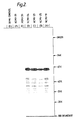
- the examples shown in the figure 2 include HCMV-19, HCMV-23, HCMV-24, HCMV-25 (tracks a, b, c, d) monoclonal antibodies which react preferentially with the 66K peptide thought to be matrix HCMV major peptide.
- Other HCMV peptides were brought down in the immunoprecipitates (Table 6). This contrast with another major group of monoclonal antibodies illustrated by HCMV-29 monoclonal (track f) showing a weaker but completely different pattern.
- Control (track g) using RPMI 1640 medium and identical number of counts extracted from HCMV infected cells did not bring down any HCMV polypeptides. Control uninfected cells also did not react with these monoclonal antibodies (not illustrated). This confirms their specificity for HCMV specific polypeptides.
- HCMV-29 or HCMV-31 in contrast brought down a small number of polypeptides (Table 6) from the same extract preparation.
- HCMV-19, HCMV-23 and HCMV-24 were shown to react with immediate early (a), early (6) and late (y) antigens and two HCMV strains AD169 and Davis, while others (HCMV-39) showed no immunofluorescence with a and ⁇ antigens and react specifically with Y antigens of AD169 only.
- HCMV-19, HCMV-23 and HCMV-24 monoclonal cocktail was proving useful in detection of antigens of clinical isolates. Seventeen clinical samples of urine or throat swabs were passed in HEF cells and fixed at 24 h. The appearance of positive nuclear imnunofluorescence in six of the samples correlates with positivity as determined by classical diagnostic virology isolations of HCMV (Table 8).
- the monoclonal cocktail HCMV-19, HCMV-23 and HCMV-24 was also used in rapid titration techniques of all HCMV strains and in estimation of the reduction of HCMV infectivity (i.e. neutralisation or anti-viral drugs).
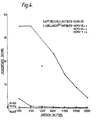
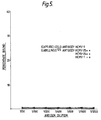
- HCMV-24 and HCMV-25 monoclonal antibodies detect the same antigen and if so do they react with different epitopes. This was achieved by coating polyvinyl plates with HCMV-24 ( Figure 3) and with HCMV-25 ( Figure 4). The control plate was coated with HCMV-1 ( Figure 5) known to react with a different set of HCMV polypeptides (141K, 60K and 36K).
- HCMV-25 MoAb binds to HCMV-24 captured antigen. This trend was reversed in Figure 4, confirming the MoAbs HCMV-24 and HCMV-25 reacted with same antigen but different epitopes.
- polystyrene beads (6 mm, Northumbria Limited) with HCMV-25 monoclonal. This was used in capture of laboratory strain AD169 antigens in urine samples and on a collection of clinical specimens. The capture of CMV antigens was detected with HCMV-24 monoclonal (Table 9).
- the MoAb HCMV-24 and HCMV-25 were used as a last detection system in a IgM-antibody capture radioimmunoassay (MACRIA) modified from the description of Sutherland and Briggs (1983) J. Med. Virology, 11, 147-159. Briefly, microtitre plates or polystyrene beads (Northumbria Ltd.) were coated with anti-human IgM antibody (Seward 1/200-1/400 dilution) to capture specifically IgM. This was allowed to react with glycine buffer extracted HCMV antigen (1/10 - 1/40 dilution). This reaction was detected with the specific HCMV MoAb.
- MACRIA IgM-antibody capture radioimmunoassay
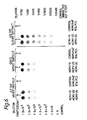
- the immunodot technique is based on non-specific protein binding to nitrocellulose membranes using Hybridot filtration apparatus. This allows handling of 96 samples simultaneously. Test urine samples (up to 1 ml. in volume) were trapped, air dried for 2-3 hours, and the membranes blocked with 3% ovalbumin solution. Specific monoclonal HCMV antibodies were allowed to react with the protein dots. The binding of monoclonal antibodies was detected with anti-mouse immunoglobulin labelled with immunoperoxidase. (Bio-Rad or Inveresk Research International.) The enzyme reactivity was detected with 3-amino-9-ethylcarbazole; and specific reaction appears as a brown coloured dot.
- HCMV MoAb collection is illustrated in an immunodot assay using whole viral particles as well as glycine buffer (pH 9.6) extracts of infected cells ( Figure 6).
- a cocktail of HCMV-19, HCMV-23 and HCMV-24 reacted with both.
- Control RPMI 1640 medium was negative.
- MoAb cocktail can detect down to 10 4 particles/dot and should be useful in a direct evaluation of clinical samples for the presence of HCMV antigens.
- Non-specific immunoperoxidase activity was seen in some normal urine samples which was linked to the use of anti-mouse IgG IP. It was destroyed with 2% SDS pretreatment of urine samples which retained some CMV monoclonal antibody activity. With such pretreatment the monoclonal antibodies used have to be positive in Western transfer (Towbin et al, 1979) for these to work in immunodot. (In the Western transfer, antigen protein is treated with reducing agent and SDS-PAGE transferred to a nitrocellulose membrane, and reacted with antibodies. These antibodies which react are recognising the primary amino-acid structure, and hence can be used for the pretreated samples herein.) HCMV-25 and HC MV -1, for example, were found to be suitable.
Landscapes
- Health & Medical Sciences (AREA)
- Life Sciences & Earth Sciences (AREA)
- Immunology (AREA)
- Chemical & Material Sciences (AREA)
- Molecular Biology (AREA)
- Engineering & Computer Science (AREA)
- Biochemistry (AREA)
- Organic Chemistry (AREA)
- General Health & Medical Sciences (AREA)
- Biomedical Technology (AREA)
- Medicinal Chemistry (AREA)
- Hematology (AREA)
- Urology & Nephrology (AREA)
- Biophysics (AREA)
- Physics & Mathematics (AREA)
- Genetics & Genomics (AREA)
- Biotechnology (AREA)
- Cell Biology (AREA)
- Virology (AREA)
- Microbiology (AREA)
- Tropical Medicine & Parasitology (AREA)
- Food Science & Technology (AREA)
- Proteomics, Peptides & Aminoacids (AREA)
- Analytical Chemistry (AREA)
- General Physics & Mathematics (AREA)
- Pathology (AREA)
- Preparation Of Compounds By Using Micro-Organisms (AREA)
- Peptides Or Proteins (AREA)
- Medicines Containing Antibodies Or Antigens For Use As Internal Diagnostic Agents (AREA)
- Geophysics And Detection Of Objects (AREA)
Priority Applications (1)
| Application Number | Priority Date | Filing Date | Title |
|---|---|---|---|
| AT85301058T ATE67313T1 (de) | 1984-02-20 | 1985-02-18 | Nachweis von menschlichem cytomegalovirusspezifischem igm. |
Applications Claiming Priority (2)
| Application Number | Priority Date | Filing Date | Title |
|---|---|---|---|
| GB8404368 | 1984-02-20 | ||
| GB848404368A GB8404368D0 (en) | 1984-02-20 | 1984-02-20 | Monoclonal antibodies to human cytomegalovirus |
Publications (3)
| Publication Number | Publication Date |
|---|---|
| EP0162533A2 true EP0162533A2 (fr) | 1985-11-27 |
| EP0162533A3 EP0162533A3 (en) | 1987-08-19 |
| EP0162533B1 EP0162533B1 (fr) | 1991-09-11 |
Family
ID=10556863
Family Applications (1)
| Application Number | Title | Priority Date | Filing Date |
|---|---|---|---|
| EP85301058A Expired - Lifetime EP0162533B1 (fr) | 1984-02-20 | 1985-02-18 | Détection d'IgM spécifique pour le cytomégalovirus humain |
Country Status (6)
| Country | Link |
|---|---|
| US (1) | US4716104A (fr) |
| EP (1) | EP0162533B1 (fr) |
| JP (1) | JPH0614053B2 (fr) |
| AT (1) | ATE67313T1 (fr) |
| DE (1) | DE3584035D1 (fr) |
| GB (2) | GB8404368D0 (fr) |
Cited By (10)
| Publication number | Priority date | Publication date | Assignee | Title |
|---|---|---|---|---|
| EP0179152A4 (fr) * | 1984-05-04 | 1988-03-07 | Scripps Clinic Res | Systeme de diagnostic pour la detection de cytomegalovirus. |
| EP0281477A1 (fr) * | 1987-03-03 | 1988-09-07 | Biosys S.A. | Procédé de détection et de dénombrement d'antigènes particulaires dans un échantillon liquide, notamment des spores de clostridium tyrobutyricum dans le lait |
| WO1989001628A1 (fr) * | 1987-08-07 | 1989-02-23 | The Children's Hospital, Incorporated | Anticorps monoclonaux reagissant avec la glycoproteine a du cytomegalovirus |
| US4818678A (en) * | 1984-05-04 | 1989-04-04 | Scripps Clinic And Research Foundation | Diagnostic system for the detection of cytomegalovirus |
| WO1991004277A1 (fr) * | 1989-09-14 | 1991-04-04 | Children's Biomedical Research Institute | Anticorps monoclonaux specifiques contre une glycoproteine de cytomegalovirus |
| US5153311A (en) * | 1986-11-24 | 1992-10-06 | The Children's Hospital, Incorporated | Immunogenic glycoproteins of human cytomegalovirus gCII |
| US7947274B2 (en) | 2007-01-04 | 2011-05-24 | Humabs, LLC. | Human cytomegalovirus neutralising antibodies and use thereof |
| US7955599B2 (en) | 2007-01-04 | 2011-06-07 | Humabs, LLC | Human cytomegalovirus neutralizing antibodies and use thereof |
| US8124093B2 (en) | 2008-07-16 | 2012-02-28 | Institute For Research In Biomedicine | Human cytomegalovirus neutralizing antibodies and use thereof |
| CN109082413A (zh) * | 2018-09-18 | 2018-12-25 | 四川迈克生物新材料技术有限公司 | 抗人IgG单克隆抗体、其杂交瘤细胞株及应用 |
Families Citing this family (12)
| Publication number | Priority date | Publication date | Assignee | Title |
|---|---|---|---|---|
| US6242567B1 (en) | 1984-07-27 | 2001-06-05 | City Of Hope | Method for detection and prevention of human cytomegalovirus infection |
| US6133433A (en) * | 1984-07-27 | 2000-10-17 | City Of Hope | Method for detection and prevention of human cytomegalovirus infection |
| AU590656B2 (en) * | 1985-12-06 | 1989-11-09 | Teijin Limited | Anti cytomegaloviral human monoclonal antibody and process for its preparation |
| DE3782867D1 (en) * | 1986-06-12 | 1993-01-14 | Behringwerke Ag, 3550 Marburg, De | Human cytomegalovirus phospho-protein |
| US5248768A (en) * | 1986-11-24 | 1993-09-28 | The Children's Hospital, Incorporated | Immunogenic glycoproteins of human cytomegalovirus |
| US5030555A (en) * | 1988-09-12 | 1991-07-09 | University Of Florida | Membrane-strip reagent serodiagnostic apparatus and method |
| US5180813A (en) * | 1989-03-24 | 1993-01-19 | University Of Iowa Research Foundation | Early envelope glycoprotein of human cytomegalovirus (hmcv) and monoclonal antibodies to the glycoproteins |
| US5750106A (en) * | 1993-01-28 | 1998-05-12 | Novartis Ag | Human monoclonal antibodies to cytomegalovirus |
| US6562345B1 (en) * | 1996-11-12 | 2003-05-13 | City Of Hope | Immuno-reactive peptide CTL epitopes of human cytomegalovirus |
| US6835383B2 (en) | 2000-03-23 | 2004-12-28 | City Of Hope | Protein kinase deficient, immunologically active CMVpp65 mutants |
| EA201270662A1 (ru) | 2009-12-23 | 2013-01-30 | 4-Антибоди Аг | Связывающие элементы для человеческого цитамегаловируса |
| CN113788892B (zh) * | 2021-11-16 | 2022-02-18 | 南京黎明生物制品有限公司 | 一种应用抗单纯疱疹病毒单克隆抗体的快速检测试剂盒 |
Family Cites Families (9)
| Publication number | Priority date | Publication date | Assignee | Title |
|---|---|---|---|---|
| US4264766A (en) * | 1877-09-19 | 1981-04-28 | Hoffmann-La Roche Inc. | Immunological diagnostic reagents |
| US4407943A (en) * | 1976-12-16 | 1983-10-04 | Millipore Corporation | Immobilized antibody or antigen for immunoassay |
| US4196265A (en) * | 1977-06-15 | 1980-04-01 | The Wistar Institute | Method of producing antibodies |
| US4313927A (en) * | 1979-10-19 | 1982-02-02 | Ames-Yissum Ltd. | Immunoassay method for detecting viral antibodies in whole blood samples |
| US4376110A (en) * | 1980-08-04 | 1983-03-08 | Hybritech, Incorporated | Immunometric assays using monoclonal antibodies |
| DE3274017D1 (en) * | 1981-03-07 | 1986-12-04 | Colin Henry Self | Assay and use |
| JPS58501733A (ja) * | 1981-07-31 | 1983-10-13 | マウント シナイ スク−ル オブ メデイシン オブ ザ シテイ ユニバ−シテイ オブ ニユ−ヨ−ク | ウイルス試験法 |
| FR2519650B1 (fr) * | 1982-01-13 | 1985-07-12 | Univ Paris Curie | Lignees cellulaires hybrides murines anti-herpes, procede d'obtention, anticorps monoclonaux anti-herpes, applications biologiques |
| FR2543570B1 (fr) * | 1983-03-31 | 1985-08-09 | Pasteur Institut | Anticorps monoclonaux anticytomegalovirus humains, hybridomes secreteurs de ces anticorps et polypeptides porteurs d'un determinant antigenique sequentiel de cytomegalovirus humains |
-
1984
- 1984-02-20 GB GB848404368A patent/GB8404368D0/en active Pending
-
1985
- 1985-02-18 EP EP85301058A patent/EP0162533B1/fr not_active Expired - Lifetime
- 1985-02-18 AT AT85301058T patent/ATE67313T1/de not_active IP Right Cessation
- 1985-02-18 DE DE8585301058T patent/DE3584035D1/de not_active Expired - Lifetime
- 1985-02-18 GB GB08504104A patent/GB2154609B/en not_active Expired
- 1985-02-19 JP JP60029485A patent/JPH0614053B2/ja not_active Expired - Lifetime
- 1985-02-20 US US06/703,535 patent/US4716104A/en not_active Expired - Lifetime
Cited By (39)
| Publication number | Priority date | Publication date | Assignee | Title |
|---|---|---|---|---|
| US4783399A (en) * | 1984-05-04 | 1988-11-08 | Scripps Clinic And Research Foundation | Diagnostic system for the detection of cytomegalovirus |
| EP0179152A4 (fr) * | 1984-05-04 | 1988-03-07 | Scripps Clinic Res | Systeme de diagnostic pour la detection de cytomegalovirus. |
| US4818678A (en) * | 1984-05-04 | 1989-04-04 | Scripps Clinic And Research Foundation | Diagnostic system for the detection of cytomegalovirus |
| US5153311A (en) * | 1986-11-24 | 1992-10-06 | The Children's Hospital, Incorporated | Immunogenic glycoproteins of human cytomegalovirus gCII |
| FR2611912A1 (fr) * | 1987-03-03 | 1988-09-09 | Biosys Sa | Procede de detection et de denombrement d'antigenes particulaires dans un echantillon liquide, notamment des spores de clostridium tyrobutyricum dans le lait |
| WO1988006734A1 (fr) * | 1987-03-03 | 1988-09-07 | Biosys S.A. | Determination qualitative et quantitative d'antigenes particulaires; notamment de spores de clostridium tyrobutyricum |
| EP0281477A1 (fr) * | 1987-03-03 | 1988-09-07 | Biosys S.A. | Procédé de détection et de dénombrement d'antigènes particulaires dans un échantillon liquide, notamment des spores de clostridium tyrobutyricum dans le lait |
| WO1989001628A1 (fr) * | 1987-08-07 | 1989-02-23 | The Children's Hospital, Incorporated | Anticorps monoclonaux reagissant avec la glycoproteine a du cytomegalovirus |
| WO1991004277A1 (fr) * | 1989-09-14 | 1991-04-04 | Children's Biomedical Research Institute | Anticorps monoclonaux specifiques contre une glycoproteine de cytomegalovirus |
| US7955599B2 (en) | 2007-01-04 | 2011-06-07 | Humabs, LLC | Human cytomegalovirus neutralizing antibodies and use thereof |
| US7947274B2 (en) | 2007-01-04 | 2011-05-24 | Humabs, LLC. | Human cytomegalovirus neutralising antibodies and use thereof |
| US9611316B2 (en) | 2007-01-04 | 2017-04-04 | Institute For Research In Biomedicine | Human cytomegalovirus neutralising antibodies and use thereof |
| US9217028B2 (en) | 2007-01-04 | 2015-12-22 | Institute For Research In Biomedicine | Human cytomegalovirus neutralising antibodies and use thereof |
| US9149524B2 (en) | 2007-01-04 | 2015-10-06 | Institute For Research In Biomedicine | Human cytomegalovirus neutralising antibodies and use thereof |
| US8298538B2 (en) | 2007-01-04 | 2012-10-30 | Institute For Research In Biomedicine | Human cytomegalovirus neutralising antibodies and use thereof |
| US8309089B2 (en) | 2007-01-04 | 2012-11-13 | Institute For Research In Biomedicine | Human cytomegalovirus neutralising antibodies and use thereof |
| US8545848B2 (en) | 2007-01-04 | 2013-10-01 | Institute For Research In Biomedicine | Human cytomegalovirus neutralising antibodies and use thereof |
| US8603480B2 (en) | 2008-07-16 | 2013-12-10 | Institute For Research In Biomedicine | Human cytomegalovirus neutralizing antibodies and use thereof |
| US9527902B2 (en) | 2008-07-16 | 2016-12-27 | Institute For Research In Biomedicine | Human cytomegalovirus neutralizing antibodies and use thereof |
| US8765132B2 (en) | 2008-07-16 | 2014-07-01 | Institute For Research In Biomedicine | Human cytomegalovirus neutralizing antibodies and use thereof |
| US9127049B2 (en) | 2008-07-16 | 2015-09-08 | Institute For Research In Biomedicine | Human cytomegalovirus neutralizing antibodies and use thereof |
| US8298539B2 (en) | 2008-07-16 | 2012-10-30 | Institute For Research In Biomedicine | Human cytomegalovirus neutralizing antibodies and use thereof |
| US8287870B2 (en) | 2008-07-16 | 2012-10-16 | Institute For Research In Biomedicine | Human cytomegalovirus neutralizing antibodies and use thereof |
| US9221897B2 (en) | 2008-07-16 | 2015-12-29 | Institute For Research In Biomedicine | Human cytomegalovirus neutralizing antibodies and use thereof |
| US9249213B2 (en) | 2008-07-16 | 2016-02-02 | Institute For Research In Biomedicine | Human cytomegalovirus neutralizing antibodies and use thereof |
| US9365636B1 (en) | 2008-07-16 | 2016-06-14 | Institute For Research In Biomedicine | Human cytomegalovirus neutralizing antibodies and use thereof |
| US9371372B2 (en) | 2008-07-16 | 2016-06-21 | Institute For Research In Biomedicine | Human cytomegalovirus neutralizing antibodies and use thereof |
| US9491906B2 (en) | 2008-07-16 | 2016-11-15 | Institute For Research In Biomedicine | Human cytomegalovirus neutralizing antibodies and use thereof |
| US8435524B2 (en) | 2008-07-16 | 2013-05-07 | Institute For Research In Biomedicine | Human cytomegalovirus neutralizing antibodies and use thereof |
| US8124093B2 (en) | 2008-07-16 | 2012-02-28 | Institute For Research In Biomedicine | Human cytomegalovirus neutralizing antibodies and use thereof |
| US9725502B2 (en) | 2008-07-16 | 2017-08-08 | Institute For Research In Biomedicine | Human cytomegalovirus neutralizing antibodies and use thereof |
| US9796771B2 (en) | 2008-07-16 | 2017-10-24 | Institute For Research In Biomedicine | Human cytomegalovirus neutralizing antibodies and use thereof |
| US9796772B2 (en) | 2008-07-16 | 2017-10-24 | Institute For Research In Biomedicine | Human cytomegalovirus neutralizing antibodies and use thereof |
| US9803000B1 (en) | 2008-07-16 | 2017-10-31 | Institute of Research in Biomedicine | Human cytomegalovirus neutralizing antibodies and use thereof |
| US10040845B2 (en) | 2008-07-16 | 2018-08-07 | Institute For Research In Biomedicine | Human cytomegalovirus neutralizing antibodies and use thereof |
| US10889632B2 (en) | 2008-07-16 | 2021-01-12 | Institute For Research In Biomedicine | Human cytomegalovirus neutralizing antibodies and use thereof |
| US10414817B2 (en) | 2008-07-16 | 2019-09-17 | Institute For Research In Biomedicine | Human cytomegalovirus neutralizing antibodies and use thereof |
| CN109082413A (zh) * | 2018-09-18 | 2018-12-25 | 四川迈克生物新材料技术有限公司 | 抗人IgG单克隆抗体、其杂交瘤细胞株及应用 |
| CN109082413B (zh) * | 2018-09-18 | 2023-01-10 | 四川安可瑞新材料技术有限公司 | 抗人IgG单克隆抗体、其杂交瘤细胞株及应用 |
Also Published As
| Publication number | Publication date |
|---|---|
| EP0162533A3 (en) | 1987-08-19 |
| ATE67313T1 (de) | 1991-09-15 |
| DE3584035D1 (de) | 1991-10-17 |
| JPS60252498A (ja) | 1985-12-13 |
| GB8504104D0 (en) | 1985-03-20 |
| EP0162533B1 (fr) | 1991-09-11 |
| GB2154609B (en) | 1988-06-08 |
| GB8404368D0 (en) | 1984-03-28 |
| GB2154609A (en) | 1985-09-11 |
| US4716104A (en) | 1987-12-29 |
| JPH0614053B2 (ja) | 1994-02-23 |
Similar Documents
| Publication | Publication Date | Title |
|---|---|---|
| US4716104A (en) | Detecting presence of HCMV-specific IgM | |
| Pereira et al. | Type-common and type-specific monoclonal antibody to herpes simplex virus type 1 | |
| USRE33897E (en) | Synthetic polypeptides and antibodies related to Epstein-Barr virus nuclear antigen | |
| EP0179152B1 (fr) | Systeme de diagnostic pour la detection de cytomegalovirus | |
| JPS5942397A (ja) | モノクロ−ナルIgM抗体及びその製法 | |
| CA2126247A1 (fr) | Anticorps monoclonal contre le vih-2 et ses utilisations | |
| AU735981B2 (en) | Peptide reagent for the detection of human cytomegalovirus (CMV) | |
| JP3506252B2 (ja) | Htlv−i/htlv−iiの分析及び方法 | |
| CA1240937A (fr) | Anticorps igm monoclonaux et methode de preparation | |
| JPH05260960A (ja) | C型肝炎ウイルスに対するモノクローナル抗体 | |
| US4818678A (en) | Diagnostic system for the detection of cytomegalovirus | |
| Amadei et al. | Kinetic study of the development and localization of human cytomegalovirus-induced antigens using monoclonal antibodies | |
| US5130232A (en) | Monoclonal antibody immunoassay kit for avian reticuloendotheliosis virus | |
| CA1320160C (fr) | Anticorps monoclonaux contre ifn-omega, procedes de preparation de ceux-ci et leur utilisation dans la purification et la detection d'ifn-omega | |
| JP3292728B2 (ja) | C型肝炎ウイルスに対するモノクローナル抗体およびその使用法 | |
| US4572896A (en) | Monoclonal antibodies to herpes simplex virus type I polypeptides | |
| KR20240097988A (ko) | 신규한 일본뇌염 바이러스 항원과 일본뇌염 특이 항체 및 이의 용도 | |
| US5830636A (en) | HEV orf-2 monoclonal antibodies and methods for using same | |
| US5556746A (en) | Antibodies specific for the group antigen of astroviruses | |
| US5667966A (en) | Mouse monoclonal antibodies to Hepatitis E virus and methods for using same | |
| Collins | Virus-ligand interactions of OC43 coronavirus with cell membranes | |
| WO1989009789A1 (fr) | Anticorps monoclonaux humains contre le virus de la rage | |
| CA2259967C (fr) | Reactif de peptides permettant la detection de cytomegalovirus (cmv) humain | |
| Collins | Department of Microbiology |
Legal Events
| Date | Code | Title | Description |
|---|---|---|---|
| PUAI | Public reference made under article 153(3) epc to a published international application that has entered the european phase |
Free format text: ORIGINAL CODE: 0009012 |
|
| AK | Designated contracting states |
Designated state(s): AT BE CH DE FR GB IT LI LU NL SE |
|
| PUAL | Search report despatched |
Free format text: ORIGINAL CODE: 0009013 |
|
| AK | Designated contracting states |
Kind code of ref document: A3 Designated state(s): AT BE CH DE FR GB IT LI LU NL SE |
|
| 17P | Request for examination filed |
Effective date: 19870807 |
|
| 17Q | First examination report despatched |
Effective date: 19890830 |
|
| GRAA | (expected) grant |
Free format text: ORIGINAL CODE: 0009210 |
|
| AK | Designated contracting states |
Kind code of ref document: B1 Designated state(s): AT BE CH DE FR IT LI LU NL |
|
| REF | Corresponds to: |
Ref document number: 67313 Country of ref document: AT Date of ref document: 19910915 Kind code of ref document: T |
|
| REF | Corresponds to: |
Ref document number: 3584035 Country of ref document: DE Date of ref document: 19911017 |
|
| ITF | It: translation for a ep patent filed | ||
| ET | Fr: translation filed | ||
| PLBE | No opposition filed within time limit |
Free format text: ORIGINAL CODE: 0009261 |
|
| STAA | Information on the status of an ep patent application or granted ep patent |
Free format text: STATUS: NO OPPOSITION FILED WITHIN TIME LIMIT |
|
| 26N | No opposition filed | ||
| EPTA | Lu: last paid annual fee | ||
| REG | Reference to a national code |
Ref country code: FR Ref legal event code: TP |
|
| REG | Reference to a national code |
Ref country code: CH Ref legal event code: PUE Owner name: COGENT LIMITED TRANSFER- COGENT DIAGNOSTICS LIMITE |
|
| NLS | Nl: assignments of ep-patents |
Owner name: COGENT DIAGNOSTICS LIMITED |
|
| PGFP | Annual fee paid to national office [announced via postgrant information from national office to epo] |
Ref country code: FR Payment date: 20030219 Year of fee payment: 19 Ref country code: CH Payment date: 20030219 Year of fee payment: 19 |
|
| PGFP | Annual fee paid to national office [announced via postgrant information from national office to epo] |
Ref country code: LU Payment date: 20030220 Year of fee payment: 19 Ref country code: AT Payment date: 20030220 Year of fee payment: 19 |
|
| PGFP | Annual fee paid to national office [announced via postgrant information from national office to epo] |
Ref country code: DE Payment date: 20030224 Year of fee payment: 19 |
|
| PGFP | Annual fee paid to national office [announced via postgrant information from national office to epo] |
Ref country code: NL Payment date: 20030225 Year of fee payment: 19 |
|
| PGFP | Annual fee paid to national office [announced via postgrant information from national office to epo] |
Ref country code: BE Payment date: 20030226 Year of fee payment: 19 |
|
| PG25 | Lapsed in a contracting state [announced via postgrant information from national office to epo] |
Ref country code: LU Free format text: LAPSE BECAUSE OF NON-PAYMENT OF DUE FEES Effective date: 20040218 Ref country code: AT Free format text: LAPSE BECAUSE OF NON-PAYMENT OF DUE FEES Effective date: 20040218 |
|
| PG25 | Lapsed in a contracting state [announced via postgrant information from national office to epo] |
Ref country code: BE Free format text: LAPSE BECAUSE OF NON-PAYMENT OF DUE FEES Effective date: 20040228 |
|
| PG25 | Lapsed in a contracting state [announced via postgrant information from national office to epo] |
Ref country code: LI Free format text: LAPSE BECAUSE OF NON-PAYMENT OF DUE FEES Effective date: 20040229 Ref country code: CH Free format text: LAPSE BECAUSE OF NON-PAYMENT OF DUE FEES Effective date: 20040229 |
|
| BERE | Be: lapsed |
Owner name: *COGENT DIAGNOSTICS LTD Effective date: 20040228 |
|
| PG25 | Lapsed in a contracting state [announced via postgrant information from national office to epo] |
Ref country code: NL Free format text: LAPSE BECAUSE OF NON-PAYMENT OF DUE FEES Effective date: 20040901 Ref country code: DE Free format text: LAPSE BECAUSE OF NON-PAYMENT OF DUE FEES Effective date: 20040901 |
|
| REG | Reference to a national code |
Ref country code: CH Ref legal event code: PL |
|
| PG25 | Lapsed in a contracting state [announced via postgrant information from national office to epo] |
Ref country code: FR Free format text: LAPSE BECAUSE OF NON-PAYMENT OF DUE FEES Effective date: 20041029 |
|
| NLV4 | Nl: lapsed or anulled due to non-payment of the annual fee |
Effective date: 20040901 |
|
| REG | Reference to a national code |
Ref country code: FR Ref legal event code: ST |