EP0164813A2 - Verfahren zur Züchtung tierischer oder pflanzlicher Zellen - Google Patents
Verfahren zur Züchtung tierischer oder pflanzlicher Zellen Download PDFInfo
- Publication number
- EP0164813A2 EP0164813A2 EP85201026A EP85201026A EP0164813A2 EP 0164813 A2 EP0164813 A2 EP 0164813A2 EP 85201026 A EP85201026 A EP 85201026A EP 85201026 A EP85201026 A EP 85201026A EP 0164813 A2 EP0164813 A2 EP 0164813A2
- Authority
- EP
- European Patent Office
- Prior art keywords
- cultivation
- cells
- liquid
- fluorocarbon
- liquor
- Prior art date
- Legal status (The legal status is an assumption and is not a legal conclusion. Google has not performed a legal analysis and makes no representation as to the accuracy of the status listed.)
- Granted
Links
Images


Classifications
-
- C—CHEMISTRY; METALLURGY
- C12—BIOCHEMISTRY; BEER; SPIRITS; WINE; VINEGAR; MICROBIOLOGY; ENZYMOLOGY; MUTATION OR GENETIC ENGINEERING
- C12N—MICROORGANISMS OR ENZYMES; COMPOSITIONS THEREOF; PROPAGATING, PRESERVING, OR MAINTAINING MICROORGANISMS; MUTATION OR GENETIC ENGINEERING; CULTURE MEDIA
- C12N5/00—Undifferentiated human, animal or plant cells, e.g. cell lines; Tissues; Cultivation or maintenance thereof; Culture media therefor
- C12N5/04—Plant cells or tissues
-
- C—CHEMISTRY; METALLURGY
- C12—BIOCHEMISTRY; BEER; SPIRITS; WINE; VINEGAR; MICROBIOLOGY; ENZYMOLOGY; MUTATION OR GENETIC ENGINEERING
- C12M—APPARATUS FOR ENZYMOLOGY OR MICROBIOLOGY; APPARATUS FOR CULTURING MICROORGANISMS FOR PRODUCING BIOMASS, FOR GROWING CELLS OR FOR OBTAINING FERMENTATION OR METABOLIC PRODUCTS, i.e. BIOREACTORS OR FERMENTERS
- C12M27/00—Means for mixing, agitating or circulating fluids in the vessel
- C12M27/02—Stirrer or mobile mixing elements
-
- C—CHEMISTRY; METALLURGY
- C12—BIOCHEMISTRY; BEER; SPIRITS; WINE; VINEGAR; MICROBIOLOGY; ENZYMOLOGY; MUTATION OR GENETIC ENGINEERING
- C12M—APPARATUS FOR ENZYMOLOGY OR MICROBIOLOGY; APPARATUS FOR CULTURING MICROORGANISMS FOR PRODUCING BIOMASS, FOR GROWING CELLS OR FOR OBTAINING FERMENTATION OR METABOLIC PRODUCTS, i.e. BIOREACTORS OR FERMENTERS
- C12M29/00—Means for introduction, extraction or recirculation of materials, e.g. pumps
- C12M29/04—Filters; Permeable or porous membranes or plates, e.g. dialysis
-
- C—CHEMISTRY; METALLURGY
- C12—BIOCHEMISTRY; BEER; SPIRITS; WINE; VINEGAR; MICROBIOLOGY; ENZYMOLOGY; MUTATION OR GENETIC ENGINEERING
- C12N—MICROORGANISMS OR ENZYMES; COMPOSITIONS THEREOF; PROPAGATING, PRESERVING, OR MAINTAINING MICROORGANISMS; MUTATION OR GENETIC ENGINEERING; CULTURE MEDIA
- C12N5/00—Undifferentiated human, animal or plant cells, e.g. cell lines; Tissues; Cultivation or maintenance thereof; Culture media therefor
- C12N5/0018—Culture media for cell or tissue culture
-
- C—CHEMISTRY; METALLURGY
- C12—BIOCHEMISTRY; BEER; SPIRITS; WINE; VINEGAR; MICROBIOLOGY; ENZYMOLOGY; MUTATION OR GENETIC ENGINEERING
- C12N—MICROORGANISMS OR ENZYMES; COMPOSITIONS THEREOF; PROPAGATING, PRESERVING, OR MAINTAINING MICROORGANISMS; MUTATION OR GENETIC ENGINEERING; CULTURE MEDIA
- C12N2500/00—Specific components of cell culture medium
- C12N2500/02—Atmosphere, e.g. low oxygen conditions
-
- C—CHEMISTRY; METALLURGY
- C12—BIOCHEMISTRY; BEER; SPIRITS; WINE; VINEGAR; MICROBIOLOGY; ENZYMOLOGY; MUTATION OR GENETIC ENGINEERING
- C12N—MICROORGANISMS OR ENZYMES; COMPOSITIONS THEREOF; PROPAGATING, PRESERVING, OR MAINTAINING MICROORGANISMS; MUTATION OR GENETIC ENGINEERING; CULTURE MEDIA
- C12N2501/00—Active agents used in cell culture processes, e.g. differentation
- C12N2501/999—Small molecules not provided for elsewhere
Definitions
- This invention relates to a method of cultivating animal and plant cells. More specifically, it relates to a method of cultivating animal and plant cells in a cultivation system into which oxygen is easily and efficiently supplied, whereby their growth is markedly increased.
- Cultivation of animal cells is essential to the production of antiviral agents such as viral vaccines and interferon or biologically active chemicals such as hormones.
- antiviral agents such as viral vaccines and interferon or biologically active chemicals such as hormones.
- monoclonal antibodies having the ability to bind to a specified protein as a target relies on the cultivation of a large quantity of a hybridoma obtained by fusing antibody-producing cells with myeloma cells, and the solution of problems associated with this technique is an industrially important subject.
- cell culture has been carried out on a laboratory scale by using a Petri dish, a test tube, a cultivation bottle, etc.
- the cell culture is classified into anchorage dependent cell culture and suspension culture depending upon the cells to be cultivated.
- the suspension culture would be an industrially advantageous method since it has a possibility of cultivating cells at a high density.
- Cell cultures usually demand supply of oxygen t0 2 ), and for this purpose, the concentration of oxygen in the suspension is maintained constant by, for example, supplying an oxygen-containing gas from the gaseous phase above the liquid surface of the suspension and dissolving it in the suspension, or by blowing an oxygen-containing gas into the suspension.
- the supply of oxygen by these methods does not particularly give rise to any problem in the cultivation of cells on a small scale.
- This patent document discloses a method of cultivating cells which comprises adhering cells to the surface of a semipermeable containing a quaternary ammonium salt having a water content of 20 to 90 %, and passing a cultivation fluid over at least the opposite side to the cell- adhering surface of the membrane.
- This method is characterized by the fact that nutrients and oxygen are supplied to the cells through the semipermeable membrane without direct contact of the cells with the cultivation fluid.
- the cultivation of plant cells has the same problem as the cultivation of animal cells. It is known that the cultivation of plant cells can give the same substances as primary or seconday metabolites obtained from the parent plants, such as enzymes, terpenoids, flavonoids, steroids, alkaloids, quinones and phenols, and useful substances in the fields of medicines, foods, cosmetics and tine cnemicais. It is very important therefore to solve the same problem of the cultivation of plant cells as in the case of the cultivation of animal cells.
- U. S. Patent No. 3,850,753 discloses a method of cultivating an aerobic microorganism in the presence of a water-immisicible inert liquid fluorocarbon under aeration, agitation and/or shaking.
- Another object of this invention is to provide an industrially advantageous cultivation method whereby an amount of oxygen necessary and sufficient for the proliferation of animal and plant cells can be supplied to a suspension cultivation system even at a considerably high cell density, for example, at least 4 x 10 6 cells/ml for animal cells, by the presence of a liquid fluorocarbon showing a specific range of surface area in the suspension cultivation system, and the liquid fluorocarbon which has supplied oxygen can be easily separated and recovered from the animal or plant cells.
- Still another object of this invention is to provide a novel cultivation method whereby an amount of oxygen necessary and sufficient for proliferation can be supplied very smoothly and easily to animal or plant cells substantially without any deleterious effect on the cells.
- Yet another object of this invention is to provide a high density cultivation method in which oxygen can be supplied smoothly to a cultivation fluid having animal or plant cells suspended therein whereby the cell density can be increased to at least 10 times, for example, in comparison with a conventional method.
- a further object of this invention is to provide an industrially advantageous cultivation method in which oxygen can be supplied to a cultivation fluid having animal or plant cells suspended therein without vigorously bubbling the cultivation fluid whereby deactivation of a useful metabolite accumulated in the cultivation fluid can be inhibited.
- a still further object of this invention is to provide a method useful for industrial cultivation, in which a fluorocarbon which has supplied molecular oxygen is withdrawn from the cultivation system, and after blowing molecular oxygen into it, recycled to the cultivation system.
- An additional object of this invention is to provide a method of cultivating animal or plant cells susceptible to damage by agitation or the like in which without performing an external operation of positively agitating the cultivation system, the cultivation fluid moves incident to the falling of a fluorocarbon through the cultivation system and a gentle but effective agitating action occurs in the cultivation system whereby the animal or plant cells can be cultivated without damage by the agitation.
- a method of cultivating animal or plant cells which comprises contacting a cultivation liquor having animal or plant cells suspended therein with a liquid fluorocarbon having molecular oxygen dissolved therein while one of the cultivation liquor and the liquid fluorocarbon is present in a continuous phase of the other such that 1 ml of it shows a surface area of about 2 to about 600 cm2 .
- the cultivation liquor having animal or plant cells suspended therein and the liquid fluorocarbon having molecular- oxygen dissolved therein are directly contacted with each other whereby through the contacting surfaces of the two phases, oxygen from the liquid fluorocarbon phase dissolves in the cultivation liquor and an amount of oxygen necessary and sufficient for cultivation of the animal cells can be supplied.
- either one of the cultivation liquor and the liquid fluorocarbon may form a continuous phase.
- the other forms a phase separated by the continuous phase.
- the cultivation liquor or the liquid fluorocarbon as the separated phase should be present in the other continuous phase such that 1 ml of the separated phase shows a surface area of about 2 to about 600 cm 2 .
- the surface area shown by 1 ml of the separated phase is preferably about 6 to about 300 cm 2 , more preferably 10 to 200 cm 2 .
- the surface area of the separated phase does not include that of an interface between the continuous phase and a precipitated phase (when the separated phase is the fluorocarbon) formed after it has gone past the continuous phase or a floating phase (when the separated phase is the cultivation liquor). The formation of the precipitated phase and the floating phase will be described hereinafter.
- the liquid fluorocarbon used in the method of this invention has an excellent ability to dissolve molecular oxygen in regard to the amount and the speed in and at which it dissolves molecular oxygen.
- the liquid fluorocarbon is not miscible with the cultivation liquor, and is substantially nontoxic to animal or plant cells.
- the liquid fluorocarbon used in the method of this invention is a liquid perfluorocarbon.
- liquid fluorocarbon examples include perfluoroalkanes having 6 to 20 carbon atoms, perfluorocycloalklanes having 5 to 14 carbon atoms which may be substituted by perflluoroalkyl groups having 1 to 5 carbon atoms, perfluorotetrahydrofurans substituted by perfluoroalkyl groups having 1 to 5 carbon atoms, perfluorotetrahydropyrans substituted by perfluoroalkyl groups having 1 to 5 carbon atoms, perfluoroadamantanes which may be substituted by perfluoroalkyl groups having 1 to 5 carbon atoms, and tertiary amino group-substituted products of the above fluorocarbons.
- perfluoroalkanes having 6 to 20 carbon atoms are linear or branched perfluoro-n-heptane, perfluorooctane and perfluorononane.
- perfluorocycloalkanes having 5 to 14 carbon atoms which may be substituted by perfluoroalkyl groups having 1 to 5 carbon atoms are perfluoro-I-trimethyldecalin and perfluorodecalin.
- perfluorofurans or perfluorotetrahydrofurans substituted by perfluoroalkyl groups having 1 to 7 carbon atoms are perfluoro-2-butyl- perfluorofuran, perfluoro-2-butyltetrahydrofuran, perfluoropentyl perfluorofuran, perfluoropentyl tetrahydrofuran, perfluorohexyl perfluorofuran, perfluorohexyl tetrahydrofuran, perfluoroheptyl perfluorofuran, and perfluoroheptyl tetrahydrofuran.
- perfluorfurans or tetrahydropyrans substituted by perfluoroalkyl groups having 1 to 6 carbon atoms include perfluorobutyl perfluoropyran, perfluorobutyl tetrahydropyran, perfluoropentyl perfluoropyran, perfluoropentyl tetrahydropyran, perfluorohexyl perfluoropyran, and perfluorohexyl tetrahydropyran.
- perfluoroadamantanes which may be substituted by perfluoroalkyl groups having 1 to 5 carbon atoms are perfluoroadamantane, perfluoro- methylperfluoroadamantane, perfluorodimethylperfluoroadamantane, perfluoromethylperfluoroethylperfluoro- adamantane and perfluorodimethylperfluoroadamantane.
- tertiary amino group substituted products of these fluorocarbons are perfluorotributylamine-substituted products and perfluoro-N-methylmorpholine substituted products of these fluorocarbon.
- liquid fluorocarbons may be used singly or in combination.
- the method of this invention is carried out while one of the cultivation liquor and the liquid fluorocarbon is used as a continuous phase and the other, as a separated phase.
- the method of this invention includes a first embodiment in which the cultivation liquor is the continuous phase and the fluorocarbon is the separated phase, and a second embodiment in which the fluorocarbon is the continuous phase and the cultivation liquor is the separated phase.
- the separated phase is present in the continous phase while it shows the surface area specified hereinabove. In such a state, the separated phase may be in the form of, for example, a liquid droplet, a liquid column, or a liquid film.
- the separated phase When the separated phase is in the form of a liquid phase, it is preferred that 1 ml of it forms a liquid droplet showing a surface area of about 3 to about 600 cm 2 , especially 15 to 100 cm 2 .
- 1 ml of it When the separated phase is in the form of a liquid column, it is preferred that 1 ml of it forms a liquid column showing a surface area of about 4 to about 100 cm 2 .
- 1 ml of it forms a liquid film showing a surface area of about 2 to about 5 0 cm 2 .
- the liquid fluorocarbon shows a specific gravity about 1.6 to about 2 times that of water. Accordingly, in the practice of the method of this invention, it is advantageous to utilize this high specific gravity of the liquid fluorocarbon.
- the liquid fluorocarbon having molecular oxygen dissolved therein may be fed into the continuous phase from above the continuous phase whereby the liquid fluorocarbon, in the form of, for example, a liquid droplet, column or film, falls by gravity through the continuous phase.
- the cultivation liquor may be fed into the continuous phase from below the continuous phase whereby the cultivation liquor, in the form of a liquid droplet, column or film, can rise by the difference in specific gravity through the liquid fluorocarbon
- the liquid fluorocarbon which has fallen by gravity through the cultivation liquor supplies molecular oxygen to the cultivation liquor and forms a precipitated phase upon arrival at the bottom of the cultivation tank.
- the precipitated phase can be separated from the cultivation liquor by a suitable operation.
- the cultivation liquor which rises through the liquid fluorocarbon by the difference in gravity receives the supply of molecular oxygen from the liquid fluorocarbon and forms a floating phase on the fluorocarbon continuous phase upon arrival at the top of the cultivation tank.
- the precipitated phase in the first embodiment and the floating phase in the second embodiment can be recycled to the cultivation system.
- the cultivation method involving recycling of the precipitated phase can be advantageously carried out by a combination of the following four steps.
- a light phase (floating phase) composed of the cultivation liquor is taken out from the top of the cultivation tank, and recycled and fed from below into the fluorocarbon phase forming a continuous phase. Recycling is carried out until the desired cultivation proceeds, and in the meanwhile, moleuclar oxygen is supplied continuously or stepwise to the fluorocarbon phase.
- the method of this invention can be conveniently carried out by a perfusion method which comprises separating and withdrawing the cultivation liquor from the cultivation system composed substantially of the liquid fluorocarbon, the cultivation liquor and the animal or plant cells, continuously or stepwise, and supplying a fresh liquid medium in an amount corresponding to the withdrawn cultivation liquor to the cultivation system continuously or stepwise.
- the fresh liquid medium contains nutrients, salts, etc. required for cultivation.
- the fresh liquid medium is formed by adding components normally used in cell cultures, such as various inorganic salts, vitamins, coenzymes, glucose, amino acids and antibiotics to an aqueous medium composed substantially of water. Serum may be added to the culture medium. It is also possible to use a so-called serum-free medium for cultivation.
- the fresh liquid medium is formed by adding components normally used in plant cell cultures, such as various inorganic salts, vitamins, inositol, sucrose, and plant hormones (such as auxin and cytokinin). It is also possible to add amino acids, coconut milk, casein hydrolyzate, yeast extracts and glucose to the cultivation liquor.
- the cultivation liquor is used in a pH range of 4.0 to 6.5.
- the cultivation liquor may be separated from the cultivation system by, for example, using a microfilter, a semipermeable membrane, etc. Since the cultivation liquor withdrawn from the cultivation system contains wastes and metabolites of the cells, etc. and other growth inhibiting substances, its withdrawing from the cultivation tank is desirable for efficient proliferation of cells. It is particularly advantageous to grow the cells at a high density.
- the cultivation method of this invention can be applied both to animal and plant cells.
- animal cells to which the method of this invention can be applied include cells capable of producing useful substances, such as BALL-1 cells, TALL-1 cells, NALL-1 cells (I. Miyoshi, Nature, 267, 843, 1977), Namalwa cells (Journal of Clinical Microbiology, 1, 116, 1975), M-7002 cells, B-7101 cells (Journal of Immunology, 113, 1334, 1974), Flow 7000 cells (Flow Company, U. S.
- JBL cells JBL cells, EBV-SA cells, EBV-WA cells, and FBV-HO cells ("Tissue Culture", 6, 527, 1980) which are lymphotoxin-producing cells; JAX cells such as Jurket cells or Jurket-FHCRC cells, JP111 (ATCC CRL 8120) which are interleukin 2-producing cells; Namalwa cells which are IFN-producing cells; and hybridomas, transformed cells, cancer cells, and genetically manipulated cells.
- JAX cells such as Jurket cells or Jurket-FHCRC cells, JP111 (ATCC CRL 8120) which are interleukin 2-producing cells
- Namalwa cells which are IFN-producing cells
- hybridomas transformed cells, cancer cells, and genetically manipulated cells.
- hybridomas examples are mouse-mouse hybridoma, mouse-human hybridoma, human-human hybridoma and (mouse-human)-human hybridoma.
- Parent strains of these hybridomas are for example, P3-NS1-1-AG4-1, P3-X63-Ag8, P3-X63-Ag8-Ul, MPC11-45.6.TG1.7, SP2/0-Ag14X63-Ag8-6.5.3, 210RCY.Ag1.2.3, SKO-007GM15006 TG-Al2, and cells transfected with viruses.
- Examples of cells to be fused with these parent strains are B cells, T cells and macrophage.
- Examples of the transformed cells are cells transformed with E B virus and SV40 transformed human fetal lungs.
- cancer cells examples include myeloma, hepatoma, carcinosarcoma, osteosarcoma, melanoma, colon adenocarcinoma andmedulloblastoma.
- the genetically manipulated cells include, for example, those in which the host cells are mouse L cells, NIH/3T3, CHO (ovary cells of Chinese hamster), ovary cells of armyworms, mouse myeloma, and C127 (epithelial cells derived from mouse breast cancer).
- anchorage-independent animal cells can be directly suspended in the liquid cultivation medium without carrying them on a carrier. Or they may be immobilized with a gel before suspending them in the liquid cultivation medium. On the other hand, anchorage-dependent animal cells can be suspended in the cultivation liquor while carrying them on a carrier.
- anchorage-dependent cells are, for example, vero cells, and human diploid foreskin fibroblasts.
- animal cell densities of at least 4 x 10 6 cells/ml in the cultivation liquor may be preferably employed in the cultivation of these animal cells.
- the plant cells to which the method of this invention can be applied include, for example, those derived from higher plants or phanerogamous plants. These cells include those modified artificially or by gene manipulation. Modification may be performed between cells of the same kind having different cell properties with respect to, for example, the content of a useful substance and the speed of cell proliferation, or between cells of taxonomically different plants in terms of species, genus and family.
- Specific examples include cells of Nicotiana tabacum, Nicotiana rustica, Atropa belladonna, Datura stramonium, Datura innoxia, Datura meteloides, Datura tatula, Datura metel, Hyoscyamus niqer, Duboisia myoporoides, Scopolia, japonica, Scopolia poruiflora, Peganum harmala, Conium maculatusm, Catharanthus roseus, Rauwolfia serpentian, Digitalis purpurea, Digitalis lanata, Papauer somniferum, Papaver bracteatum, Vincaminr, Coptis japonica, Phellodendron amurense, Phaseolus vulgaris, Camptotheca acuminate, Cephalotaxus harringtonia, Triptergium wilfordii, Ruta graveolens, Ph y tolacca americana, Agrostemma githago, Beta vulgaris, Cucurma longa, Chen
- These cells may be fused cells obtained between cells or cultivated cells, or between cultivated cells and cells directly obtained from plant tissues, or between cells obtained directly from plant tissues.
- the surface area of a separated phase in a continuous phase in the cultivation system was measured by the following method.
- the size of the separated phase is examined from the side of the cultivation tank (preferably when the separated phase begins to form), and the surface area is calculated from the examined size.
- the cultivation system is photographed from the side of the cultivation tank.
- the sizes of all of the liquid droplets (separated phase) having a clear contour in the photograph are calculated, and the average surface area of the separated phase is calculated from the calculated sizes.
- the cultivation system is photographed from the side of the cultivation tank at various angles so that its sectional area taken in a direction perpendicular to the vertical direction can be calculated as accurately as possible.
- the sectional areas are calculated from the resulting photographs, and the average surface area of the separated phase is calculated from the calculated values.
- a device shown in Figure 1 of the accompanying drawings was used.
- a glass fermentor 1 (having a diameter of 80 mm and a height of 140 mm) including a cylindrical rotating filter having a height of 35 mm and an outside diameter of 60 mm (impermeable to cells but permeable to liquid components; G-5 glass fiber in the present example) was sterilized in an autoclave.
- the fermentor was then charged with 225 ml of RPMI 1640 medium containing 10% fetal bovine serum, and mouse-mouse hybridoma 4C10B6 cells (parent strain: P3U1) were seeded at a density of 1.5 x 10 5 cells/ml (these cells produce IgG2b antibody).
- Air containing 5% C0 2 was passed through the top portion of the fermentor, and the cells were cultivated at 37 °C while rotating the rotating filter at 150 rpm.
- the cell density was measured. Living cells were found to exist at a density of 9.2 x 10 5 cells/ml, and no dead cells were observed.
- the antibody concentration was 45 micrograms/ml.
- Fluorinert F C-40 (a trade name for a fluorocarbon produced by 3M Company) having oxygen dissolved therein was added dropwise from the top of the fermentor so that the amount of dissolved oxygen in it became 3 ppm.
- the average surface area of the fluorocarbon at this time was 11 cm 2 /ml.
- the fluorocarbon settled to the bottom of the fermentor, but was taken out of the system through line 6 so that the interface between it and the cultivation liquor was maintained at a constant level. On the 6th day and thereafter, the rate of feeding the fresh medium from line 1 was changed to 675 ml/day.
- the operability of the above high-density continuous cultivation by the perfusion method was good.
- the cell densities and the antibody concentrations in the cultivation liquor were as follows.
- a device shown in Figure 2 was used.
- a gas blowing tube (a glass tube fitted at its tip with a G-3 glass filter) was fitted to a fermentor of the same size as used in Example 1, and the device was sterilized in an autoclave. Thereafter, 225 ml of RPMI 1640 medium containing 10% fetal bovine serum was charged into the fermentor, and mouse-mouse hybridoma 4C10B6 strain (parent strain: P3U1) was seeded in the medium at a cell density of 1.5 x 10 5 cells/ml. This cell was capable of producing IgG 2b antibody.
- Air containing 5% of C0 2 was passed through the upper portion of the fermentor, and the cultivation was carried out at 37 °C while the rotating filter was rotated at 150 rpm.
- the cell density measured on the third day was 1.1 x 10 6 cells/ml, and no dead cell was observed.
- the concentration of the antibody produced was 48 micrograms/ml.
- a bubble layer having a thickness of about 10 mm was formed in the upper portion of the cultivation liquor.
- the cell densities were measured, The density of living cells was 1.7 x 10 6 cells/ml, and the density of dead cells was 3.0 x 10 5 cells/ml.
- the height of the bubble layer became about 30 mm.
- the density of living cells was 3.8 x 10 6 cells/ml, and the density of dead cells was 1.2 x 10 6 cells/ml.
- the concentration of the antibody was 58 micrograms/ml.
- the bubble layer became high, and flowed out into gas discharging line 6 to make the continuous operation impossible. Therefore, the experiment was stopped. At this time, the density of living cells was 5.1 x 10 6 cells/ml, and the density of dead cells was 2.1 x 10 6 cells/ml.
- the concentration of the antibody was 80 micrograms/ml.
- a 4-liter fermentation spinner flask made by Shibata Haio Company was charged with 4 liters of RPMI 1640 medium containing 10% fetal bovine serum.
- Human T-cell line MLT 2.2 was seeded at a cell density of 1 x 10 5 cells/ml, and the cultivation was started at 37 °C at a speed of 60 rpm. Air containing 5% C0 2 was passed through the upper portion of the fermentor, and beginning on the second day after the start of the fermentation, a fluorocarbon (Fluorinert FC-40) saturated in advance with oxygen was added dropwise so that the concentration of dissolved oxygen in the fermentor became 3 ppm. The cultivation was continued. The average surface area of the fluorocarbon at this time was 10 cm 2 /ml. On the second day, the density of living cells was 3.2 x 10 5 cells/ml, and on the 5th day, it was 9.8 x 10 5 cells/ml.
- Example 2 Cultivation was started under the same conditions as in Example 2 except that the feeding of the fluorocarbon to the cultivation system was not effected.
- the density of living cells on the 2nd day was 2 x 10 5 cells/ml, and on the 5th day, it was 1.8 x 10 5 cells/ml.
- a 100 ml fermentation spinner flask 1' made by Shibata Haio Company is shown in Figure 3. Lines 10' and 6' were attached to the flask, and it was used as a fermentor.
- mice-mouse hybridoma 4Cl0B6 was seeded at a density of 5 x 10 4 cells/ml, and cultivated at 37 °C with stirring at 60 rpm.
- the atmosphere of the space in the fermentor was as shown in Table 2.
- each of the fluorocarbons indicated in Table 2 was introduced into the fermentor through line 14' so that the concentration of dissolved oxygen in the cultivation liquor became 3 ppm.
- the amount of the fluorocarbon residing in the fermentor exceeded a certain limit, it was automatically discharged out of the system through line 6'.
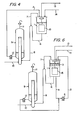
- a device shown in Figure 4 of the accompanying drawings was used.
- a glass fermentor 1 having a diameter of 80 mm and a height of 140 mm including a cylindrical rotating filter having a height of 35 mm and an outside diameter of 60 mm (impermeable to cells but permeable to liquid components; G-5 glass fiber in the present example) was sterilized in an autoclave.
- the fermentor was then charged with 225 ml of RPMI 1640 medium containing 10% fetal bovine serum, and mouse-mouse hybridoma 4C10B6 cells (parent strain: P3U1) were seeded at a density of 1.5 x 10 5 cells/ml (these cells produce IgG2b antibody).
- Air containing 5% CO 2 was passed through the upper portion of the fermentor, and the cells were cultivated at 37 °C while rotating the rotating filter at 150 rpm.
- a fluorocarbon-withdrawing line 6 is attached to the bottom of the fermentor 1, and a communication line 7 leading to the fermentor is connected to this line so that the position of the interface between the fluorocarbon and the cultivation liquor can be controlled automatically at a fixed position.
- the position of the interface between the cultivation liquor and the fluorocarbon in the fermentor 1 can be set at a desired level by changing the position of the connecting part between the lines 6 and 7.
- the fluorocarbon introduced into the cultivation system was automatically supplied to a bubble tower 9 through lines 6 and 8 while its amount residing in the system was maintained constant. Oxygen gas containing 5% C0 2 sterilized through a filter was continuously blown into the bubble tower 9 from its bottom portion through line 10.
- the fluorocarbon which had oxygen fully dissolved in it in the inside member of the bubble tower 9 resided at the bottom portion of the outside member of the tower.
- the fluorocarbon was supplied to the cultivation system through line 2 by means of a pump 12 so that the concentration of dissolved oxygen in the cultivation system became 3 ppm.
- Fluorinert FC-40 having dissolved oxygen in it by aseptic aeration was circulated by means of a peristatic pump by harmonizing introduction into the fermentor with discharging from it.
- the introduction of the fluorocarbon was effected by dropping droplets of the fluorocarbon from the dropping port at the upper portion of the flask, and the liquid was discharged from the discharge portion located in the fluorocarbon layer.
- the average surface area of the fluorocarbon was 20 cm 2 /ml.
- the fermentor was rotated by a rotary shaker at a speed of 120 rpm, and the cultivation was cultivated for 10 days at 25 °C under the illumination of a fluorescence lamp at about 3000 luxes.
- Cultivated cells (green) of Catharanthus roseus were cultivated for 10 days under the same conditions as in Example 1 except that in the culture medium 2,4-dichloroacetic acid was used as the hormone in a concentration of 0.1 mg/liter.
- the grown cells were harvested from the fermentor. Green cells were obtained in an amount of 11.3 g as fresh weight.
- the cells were lyophilized and alkaloids were extracted from the cells in a customary manner, and the residue was analyzed by high-performance liquid chromatography. Both qualitatively and quantitatively, hardly any effect by the use of Fluorinert FC-40 was observed.
- Cultivated cells (white) of soybean (Glycine max) were cultivated for 10 days using Fluorinert FC-75 (a fluorocarbon manufactured by Sumitomo 3M Company) (average surface area 23 cm2/ml) under the same conditions as in Example 1 except that the cultivation was carried out in the dark.
- Fluorinert FC-75 a fluorocarbon manufactured by Sumitomo 3M Company
- the grown cells were harvested from the fermentor, and 10.5 g, as fresh weight, of white cells were obtained. They showed the same proliferating ability as in an ordinary cultivation.
- Cytodex 1 (Pharmacia Fine Chemicals) (a microcarrier equilibrated with a medium by the method described at page 44 of the Japanese version of Microcarrier Cell Culture Principles & Methods of Pharmacia Fine Chemicals) was introduced into 100 ml of the same culture medium as used in Example 1 charged into the same spinner flask as used in Example 3, and incubated for 1 hour at 37 0 C while passing a gaseous mixture composed of 95 % of air and 5 % of CO 2 . Thereafter, 5 x 10 Vero cells (monkey kidney cells) which had been cultivated in an incubator were seeded. The air in the space in the fermentor was replaced by nitrogen.
- Vero cells monkey kidney cells
- the cultivation was carried out by supplying oxygen to the cultivation system by Fluorinert FC-40 in the same manner as in Example 3 so that the concentration of dissolved oxygen in the cultivation liquor reached 3 ppm. During this time, the average surface area of the fluorocarbon was 19 cm 2 /ml.
- the cultivation system was sampled properly, and the number of cells was measured by the method described at page 64 of the above-cited technical literature of Pharmacia Fine Chemicals.
- a device shown in Figure 5 was used.
- a fermentor 1 was made of glass and had an inside diameter of 15 mm-and a height of 1,000 mm. It included a sparger 3 (made of SUS 316 stainless steel) for dispersion of a fluorocarbon which had four nozzles with a diameter of 1 mm.
- the fluorocarbon which absorbed oxygen was fed into the fermentor automatically through pump 12, line 13, line 4, pump 5 and line 2 so that the concentration of dissolved oxygen in the fermentor became 3 ppm.
- the fluorocarbon which gathered at the bottom of the fermentor was sent to the bubble tower 9 through lines 6 and 8. Since a communication pipe 7 is attached to the fermentor and the lines 6 and 8, the liquid level of the fluorocarbon in the fermentor was maintained constant.
- mouse-human hybridoma H-2 (a human IgG-producing hybridoma obtained by fusing mouse myeloma cells P3-X63-Ag8-Ul with human B cells) was seeded at a cell density of 1.5 x 1 0 5 cells/ml, and continuously cultivated at 37 °C. The results are shown in Table 6.
- a device shown in Figure 6 was used.
- the same fermentor 1 as used in Example 1 was used.
- a fluorocarbon dispersing sparger 3 (made of SUS 316 stainless steel) in the fermentor 1 had four holes with a diameter of 2 mm. Each hole was bored so that its distance from the central axis of a rotating filter equalled the arithmetic average of the inside diameter of the fermentor and the outside diameter of the rotating filter 3.
- the fermentor was entirely sterilized in an autoclave.
- the same culture medium as used in Example 1 which had been sterilized by filtration was charged into the fermentor so that the volume of the cultivation liquor became about 225 ml, and mouse-mouse hybridoma 4C10B6 was seeded at a cell density of 1.5 x 10 5 cells/ml.
- a fluorocarbon (Fluorinert FC-70) sterilized by filtration was charged into the cultivation system in the same manner as in Example 8.
- the rotating filter was rotated at 30 rpm. By operating pumps 5 and 12, the fluorocarbon was fed into the cultivation system, and a gas composed of 5 % of C0 2 and 95 % of 0 2 was continuously blown into bubble tower 9 through line 10.
- the density of living cells was 8.1 x 10 5 cells/ml, and no dead cells were observed.
- the same culture medium as in Example 1 was continuously fed at a rate of 450 ml/day from line 14.
- the cultivation liquor was continuously separated from the cells, and taken out of the cultivation system through the rotating filter 15 and line 13 by means of a pump fitted to the end of line 13 so that the volume of the cultivation liquor in the fermentor was maintained constant at 225 ml.
- the rate of feeding the fresh medium fed from line 14 was changed to 675 ml/day.
- Example 15 The same cultivation as in Example 15 was carried out except that a sparger 3 having a slit, 1.5 mm wide and 2 cm long, provided at the same position as the nozzle used in Example 15 was used. By using this sparger, a fluorocarbon (Fluorinert FC-70) was formed into a liquid film having a surface area of 19 cm 2 /ml.
- a fluorocarbon Fluorinert FC-70
- Example 15 The same cultivation as in Example 15 was carried out except that Fluorinert FC-77 was used as the fluorocarbon, and the hole diameter of the sparger 3 was changed to 0.1 mm.
- the average surface area of the fluorocarbon was 2 70 cm 2 /ml.
Landscapes
- Life Sciences & Earth Sciences (AREA)
- Health & Medical Sciences (AREA)
- Engineering & Computer Science (AREA)
- Wood Science & Technology (AREA)
- Organic Chemistry (AREA)
- Chemical & Material Sciences (AREA)
- Zoology (AREA)
- Bioinformatics & Cheminformatics (AREA)
- Biomedical Technology (AREA)
- Biotechnology (AREA)
- Genetics & Genomics (AREA)
- Microbiology (AREA)
- Biochemistry (AREA)
- General Engineering & Computer Science (AREA)
- General Health & Medical Sciences (AREA)
- Cell Biology (AREA)
- Sustainable Development (AREA)
- Botany (AREA)
- Micro-Organisms Or Cultivation Processes Thereof (AREA)
Applications Claiming Priority (6)
| Application Number | Priority Date | Filing Date | Title |
|---|---|---|---|
| JP120724/84 | 1984-06-14 | ||
| JP59120724A JPS611383A (ja) | 1984-06-14 | 1984-06-14 | 細胞培養方法 |
| JP15542484A JPS6135782A (ja) | 1984-07-27 | 1984-07-27 | 細胞培養方法 |
| JP155424/84 | 1984-07-27 | ||
| JP251972/84 | 1984-11-30 | ||
| JP59251972A JPS61132180A (ja) | 1984-11-30 | 1984-11-30 | 植物細胞又は組織の培養方法 |
Publications (3)
| Publication Number | Publication Date |
|---|---|
| EP0164813A2 true EP0164813A2 (de) | 1985-12-18 |
| EP0164813A3 EP0164813A3 (en) | 1988-04-27 |
| EP0164813B1 EP0164813B1 (de) | 1991-10-09 |
Family
ID=27314108
Family Applications (1)
| Application Number | Title | Priority Date | Filing Date |
|---|---|---|---|
| EP19850201026 Expired EP0164813B1 (de) | 1984-06-14 | 1985-06-12 | Verfahren zur Züchtung tierischer oder pflanzlicher Zellen |
Country Status (3)
| Country | Link |
|---|---|
| EP (1) | EP0164813B1 (de) |
| DE (1) | DE3584317D1 (de) |
| DK (1) | DK268585A (de) |
Cited By (10)
| Publication number | Priority date | Publication date | Assignee | Title |
|---|---|---|---|---|
| EP0229289A3 (en) * | 1985-12-06 | 1989-02-08 | Teijin Limited | Method of culturing animal cells |
| EP0317854A3 (en) * | 1987-11-23 | 1990-05-23 | Hoechst Aktiengesellschaft | Method for aerating fermentation agents without producing waste gases |
| EP0387065A3 (de) * | 1989-03-08 | 1991-10-16 | Mitsui Petrochemical Industries, Ltd. | Vorrichtung und Verfahren zur Kultur von Pflanzengewebe und Verfahren zur Herstellung von Metaboliten |
| WO1992019715A1 (en) * | 1991-04-26 | 1992-11-12 | Life Technologies, Inc. | A system and method for delivering oxygen to a cell culture medium |
| US5250432A (en) * | 1985-12-06 | 1993-10-05 | Teijin Limited | Method of culturing animal cells |
| WO1994001530A1 (en) * | 1992-07-07 | 1994-01-20 | Public Health Laboratory Service Board | Process for modulating the concentration of dissolved gases in liquid media |
| WO2004033673A3 (en) * | 2002-10-10 | 2007-12-27 | I R B Istituto Di Ricerche Bio | Production process for plant biomass and its use |
| USRE41974E1 (en) | 1990-10-17 | 2010-11-30 | Glaxosmithkline Llc | Method for culturing Chinese hamster ovary cells |
| EP2402433A1 (de) * | 2010-07-01 | 2012-01-04 | BioSilta Oy | Verfahren zur Erhöhung der Expression von rekombinanten Proteinen und Ausbeute von Plasmiden durch Kultivierung von eukaryotischen oder prokaryotichen Zellen in hohen Dichten |
| WO2020188277A1 (en) * | 2019-03-19 | 2020-09-24 | Oxford University Innovation Limited | Method and system for manufacturing a microfluidic arrangement, method of manufacturing a liquid, method of performing a biological assay |
Family Cites Families (2)
| Publication number | Priority date | Publication date | Assignee | Title |
|---|---|---|---|---|
| JPS50908B2 (de) * | 1972-03-23 | 1975-01-13 | ||
| FR2513264A1 (fr) * | 1981-09-22 | 1983-03-25 | Pasteur Institut | Procede d'agitation de cultures cellulaires et dispositif pour sa mise en oeuvre |
-
1985
- 1985-06-12 EP EP19850201026 patent/EP0164813B1/de not_active Expired
- 1985-06-12 DE DE8585201026T patent/DE3584317D1/de not_active Expired - Lifetime
- 1985-06-13 DK DK268585A patent/DK268585A/da not_active Application Discontinuation
Cited By (16)
| Publication number | Priority date | Publication date | Assignee | Title |
|---|---|---|---|---|
| EP0480245A1 (de) * | 1985-12-06 | 1992-04-15 | Teijin Limited | Verfahren zur Züchtung von Tierzellen |
| EP0229289A3 (en) * | 1985-12-06 | 1989-02-08 | Teijin Limited | Method of culturing animal cells |
| US5250432A (en) * | 1985-12-06 | 1993-10-05 | Teijin Limited | Method of culturing animal cells |
| EP0317854A3 (en) * | 1987-11-23 | 1990-05-23 | Hoechst Aktiengesellschaft | Method for aerating fermentation agents without producing waste gases |
| EP0387065A3 (de) * | 1989-03-08 | 1991-10-16 | Mitsui Petrochemical Industries, Ltd. | Vorrichtung und Verfahren zur Kultur von Pflanzengewebe und Verfahren zur Herstellung von Metaboliten |
| USRE41974E1 (en) | 1990-10-17 | 2010-11-30 | Glaxosmithkline Llc | Method for culturing Chinese hamster ovary cells |
| WO1992019715A1 (en) * | 1991-04-26 | 1992-11-12 | Life Technologies, Inc. | A system and method for delivering oxygen to a cell culture medium |
| US5364784A (en) * | 1991-04-26 | 1994-11-15 | Life Technologies, Inc. | Method for delivering oxygen to a cell culture medium |
| US5268298A (en) * | 1991-04-26 | 1993-12-07 | Life Technologies, Inc. | System for delivering oxygen to a cell culture medium |
| WO1994001530A1 (en) * | 1992-07-07 | 1994-01-20 | Public Health Laboratory Service Board | Process for modulating the concentration of dissolved gases in liquid media |
| GB2284216A (en) * | 1992-07-07 | 1995-05-31 | Health Lab Service Board | Process for modulating the concentration of dissolved gases in liquid media |
| GB2284216B (en) * | 1992-07-07 | 1996-04-17 | Health Lab Service Board | Process for modulating the concentration of dissolved gases in liquid media |
| WO2004033673A3 (en) * | 2002-10-10 | 2007-12-27 | I R B Istituto Di Ricerche Bio | Production process for plant biomass and its use |
| EP2402433A1 (de) * | 2010-07-01 | 2012-01-04 | BioSilta Oy | Verfahren zur Erhöhung der Expression von rekombinanten Proteinen und Ausbeute von Plasmiden durch Kultivierung von eukaryotischen oder prokaryotichen Zellen in hohen Dichten |
| WO2020188277A1 (en) * | 2019-03-19 | 2020-09-24 | Oxford University Innovation Limited | Method and system for manufacturing a microfluidic arrangement, method of manufacturing a liquid, method of performing a biological assay |
| CN114007748A (zh) * | 2019-03-19 | 2022-02-01 | 牛津大学科技创新有限公司 | 用于制造微流体装置的方法和系统、制造液体的方法、进行生物试验的方法 |
Also Published As
| Publication number | Publication date |
|---|---|
| EP0164813A3 (en) | 1988-04-27 |
| DE3584317D1 (de) | 1991-11-14 |
| DK268585D0 (da) | 1985-06-13 |
| EP0164813B1 (de) | 1991-10-09 |
| DK268585A (da) | 1985-12-15 |
Similar Documents
| Publication | Publication Date | Title |
|---|---|---|
| Ozeki et al. | Induction of anthocyanin synthesis in relation to embryogenesis in a carrot suspension culture: correlation of metabolic differentiation with morphological differentiation | |
| Fujimura et al. | Synchronization of somatic embryogenesis in a carrot cell suspension culture | |
| EP0164813B1 (de) | Verfahren zur Züchtung tierischer oder pflanzlicher Zellen | |
| Khan et al. | Bioreactors for hairy roots culture: A review | |
| US5262320A (en) | Cell-culturing apparatus and method employing a macroporous support | |
| US5180676A (en) | Method of cultivating animal or plant cells | |
| US6306644B1 (en) | Device for cultivating different mammal cells at the same time | |
| Kitano et al. | Production of human monoclonal antibodies by heterohybridomas | |
| Hasezawa et al. | Hormonal control of elongation of tobacco cells derived from protoplasts | |
| Spier et al. | The production of foot‐and‐mouth disease virus from BHK 21 C 13 cells grown on the surface of glass spheres | |
| Heidemann et al. | The super-spinner: a low cost animal cell culture bioreactor for the CO2 incubator | |
| Hülscher et al. | Selective recycle of viable animal cells by coupling of airlift reactor and cell settler | |
| Shintani et al. | Polyethylene glycols for promoting the growth of mammalian cells | |
| Osuga et al. | Cell density is an important factor for synchronization of the late stage of somatic embryogenesis at high frequency | |
| Su et al. | Perfusion strategy for rosmarinic acid production by Anchusa officinalis | |
| NISHI et al. | Growth and division of carrot cells in suspension culture | |
| Shimazu et al. | Relationship between production of carrot somatic embryos and dissolved oxygen concentration in liquid culture | |
| Matsuura | Bioreactors for 3-dimensional high-density culture of human cells | |
| Israel et al. | Pigments and plastids in cultures of totipotent carrot cells | |
| Thanh et al. | Effect of carbon dioxide on cell growth and saponin production in suspension cultures of Panax ginseng | |
| JPH0416153B2 (de) | ||
| Hu | Quantitative and mechanistic analysis of mammalian cell cultivation on microcarriers | |
| Hagedorn et al. | Production of monoclonal antibodies by hybridoma cells in a flat sheet membrane bioreactor | |
| Kitamura et al. | Isolation and culture of protoplasts from cell suspension cultures of Duboisia myoporoides with subsequent plant regeneration | |
| JPH0870859A (ja) | 動物細胞培養用の無血清培地、および生理活性ペプチドまたは蛋白質の製造法 |
Legal Events
| Date | Code | Title | Description |
|---|---|---|---|
| PUAI | Public reference made under article 153(3) epc to a published international application that has entered the european phase |
Free format text: ORIGINAL CODE: 0009012 |
|
| AK | Designated contracting states |
Designated state(s): CH DE FR GB LI SE |
|
| PUAL | Search report despatched |
Free format text: ORIGINAL CODE: 0009013 |
|
| AK | Designated contracting states |
Kind code of ref document: A3 Designated state(s): CH DE FR GB LI SE |
|
| 17P | Request for examination filed |
Effective date: 19880829 |
|
| 17Q | First examination report despatched |
Effective date: 19900607 |
|
| GRAA | (expected) grant |
Free format text: ORIGINAL CODE: 0009210 |
|
| AK | Designated contracting states |
Kind code of ref document: B1 Designated state(s): CH DE FR GB LI SE |
|
| REF | Corresponds to: |
Ref document number: 3584317 Country of ref document: DE Date of ref document: 19911114 |
|
| ET | Fr: translation filed | ||
| PLBE | No opposition filed within time limit |
Free format text: ORIGINAL CODE: 0009261 |
|
| STAA | Information on the status of an ep patent application or granted ep patent |
Free format text: STATUS: NO OPPOSITION FILED WITHIN TIME LIMIT |
|
| 26N | No opposition filed | ||
| PGFP | Annual fee paid to national office [announced via postgrant information from national office to epo] |
Ref country code: SE Payment date: 19940321 Year of fee payment: 10 |
|
| EAL | Se: european patent in force in sweden |
Ref document number: 85201026.3 |
|
| PG25 | Lapsed in a contracting state [announced via postgrant information from national office to epo] |
Ref country code: SE Effective date: 19950613 |
|
| EUG | Se: european patent has lapsed |
Ref document number: 85201026.3 |
|
| PGFP | Annual fee paid to national office [announced via postgrant information from national office to epo] |
Ref country code: FR Payment date: 19980320 Year of fee payment: 14 |
|
| PGFP | Annual fee paid to national office [announced via postgrant information from national office to epo] |
Ref country code: GB Payment date: 19980414 Year of fee payment: 14 |
|
| PGFP | Annual fee paid to national office [announced via postgrant information from national office to epo] |
Ref country code: CH Payment date: 19980422 Year of fee payment: 14 |
|
| PGFP | Annual fee paid to national office [announced via postgrant information from national office to epo] |
Ref country code: DE Payment date: 19980630 Year of fee payment: 14 |
|
| PG25 | Lapsed in a contracting state [announced via postgrant information from national office to epo] |
Ref country code: GB Free format text: LAPSE BECAUSE OF NON-PAYMENT OF DUE FEES Effective date: 19990612 |
|
| PG25 | Lapsed in a contracting state [announced via postgrant information from national office to epo] |
Ref country code: LI Free format text: LAPSE BECAUSE OF NON-PAYMENT OF DUE FEES Effective date: 19990630 Ref country code: FR Free format text: THE PATENT HAS BEEN ANNULLED BY A DECISION OF A NATIONAL AUTHORITY Effective date: 19990630 Ref country code: CH Free format text: LAPSE BECAUSE OF NON-PAYMENT OF DUE FEES Effective date: 19990630 |
|
| GBPC | Gb: european patent ceased through non-payment of renewal fee |
Effective date: 19990612 |
|
| REG | Reference to a national code |
Ref country code: CH Ref legal event code: PL |
|
| PG25 | Lapsed in a contracting state [announced via postgrant information from national office to epo] |
Ref country code: DE Free format text: LAPSE BECAUSE OF NON-PAYMENT OF DUE FEES Effective date: 20000503 |
|
| REG | Reference to a national code |
Ref country code: FR Ref legal event code: ST |