EP0165791A2 - Films composites et leur fabrication - Google Patents
Films composites et leur fabrication Download PDFInfo
- Publication number
- EP0165791A2 EP0165791A2 EP85304292A EP85304292A EP0165791A2 EP 0165791 A2 EP0165791 A2 EP 0165791A2 EP 85304292 A EP85304292 A EP 85304292A EP 85304292 A EP85304292 A EP 85304292A EP 0165791 A2 EP0165791 A2 EP 0165791A2
- Authority
- EP
- European Patent Office
- Prior art keywords
- rubber
- polyolefin
- composite film
- layer
- film
- Prior art date
- Legal status (The legal status is an assumption and is not a legal conclusion. Google has not performed a legal analysis and makes no representation as to the accuracy of the status listed.)
- Granted
Links
Images
Classifications
-
- B—PERFORMING OPERATIONS; TRANSPORTING
- B32—LAYERED PRODUCTS
- B32B—LAYERED PRODUCTS, i.e. PRODUCTS BUILT-UP OF STRATA OF FLAT OR NON-FLAT, e.g. CELLULAR OR HONEYCOMB, FORM
- B32B25/00—Layered products comprising a layer of natural or synthetic rubber
- B32B25/04—Layered products comprising a layer of natural or synthetic rubber comprising rubber as the main or only constituent of a layer, which is next to another layer of the same or of a different material
- B32B25/08—Layered products comprising a layer of natural or synthetic rubber comprising rubber as the main or only constituent of a layer, which is next to another layer of the same or of a different material of synthetic resin
-
- B—PERFORMING OPERATIONS; TRANSPORTING
- B29—WORKING OF PLASTICS; WORKING OF SUBSTANCES IN A PLASTIC STATE IN GENERAL
- B29C—SHAPING OR JOINING OF PLASTICS; SHAPING OF MATERIAL IN A PLASTIC STATE, NOT OTHERWISE PROVIDED FOR; AFTER-TREATMENT OF THE SHAPED PRODUCTS, e.g. REPAIRING
- B29C48/00—Extrusion moulding, i.e. expressing the moulding material through a die or nozzle which imparts the desired form; Apparatus therefor
- B29C48/03—Extrusion moulding, i.e. expressing the moulding material through a die or nozzle which imparts the desired form; Apparatus therefor characterised by the shape of the extruded material at extrusion
- B29C48/07—Flat, e.g. panels
- B29C48/08—Flat, e.g. panels flexible, e.g. films
-
- B—PERFORMING OPERATIONS; TRANSPORTING
- B29—WORKING OF PLASTICS; WORKING OF SUBSTANCES IN A PLASTIC STATE IN GENERAL
- B29C—SHAPING OR JOINING OF PLASTICS; SHAPING OF MATERIAL IN A PLASTIC STATE, NOT OTHERWISE PROVIDED FOR; AFTER-TREATMENT OF THE SHAPED PRODUCTS, e.g. REPAIRING
- B29C48/00—Extrusion moulding, i.e. expressing the moulding material through a die or nozzle which imparts the desired form; Apparatus therefor
- B29C48/25—Component parts, details or accessories; Auxiliary operations
- B29C48/88—Thermal treatment of the stream of extruded material, e.g. cooling
- B29C48/911—Cooling
- B29C48/9135—Cooling of flat articles, e.g. using specially adapted supporting means
- B29C48/914—Cooling drums
-
- B—PERFORMING OPERATIONS; TRANSPORTING
- B29—WORKING OF PLASTICS; WORKING OF SUBSTANCES IN A PLASTIC STATE IN GENERAL
- B29C—SHAPING OR JOINING OF PLASTICS; SHAPING OF MATERIAL IN A PLASTIC STATE, NOT OTHERWISE PROVIDED FOR; AFTER-TREATMENT OF THE SHAPED PRODUCTS, e.g. REPAIRING
- B29C48/00—Extrusion moulding, i.e. expressing the moulding material through a die or nozzle which imparts the desired form; Apparatus therefor
- B29C48/25—Component parts, details or accessories; Auxiliary operations
- B29C48/88—Thermal treatment of the stream of extruded material, e.g. cooling
- B29C48/911—Cooling
- B29C48/9135—Cooling of flat articles, e.g. using specially adapted supporting means
- B29C48/915—Cooling of flat articles, e.g. using specially adapted supporting means with means for improving the adhesion to the supporting means
- B29C48/917—Cooling of flat articles, e.g. using specially adapted supporting means with means for improving the adhesion to the supporting means by applying pressurised gas to the surface of the flat article
-
- B—PERFORMING OPERATIONS; TRANSPORTING
- B29—WORKING OF PLASTICS; WORKING OF SUBSTANCES IN A PLASTIC STATE IN GENERAL
- B29C—SHAPING OR JOINING OF PLASTICS; SHAPING OF MATERIAL IN A PLASTIC STATE, NOT OTHERWISE PROVIDED FOR; AFTER-TREATMENT OF THE SHAPED PRODUCTS, e.g. REPAIRING
- B29C59/00—Surface shaping of articles, e.g. embossing; Apparatus therefor
- B29C59/02—Surface shaping of articles, e.g. embossing; Apparatus therefor by mechanical means, e.g. pressing
- B29C59/04—Surface shaping of articles, e.g. embossing; Apparatus therefor by mechanical means, e.g. pressing using rollers or endless belts
- B29C59/046—Surface shaping of articles, e.g. embossing; Apparatus therefor by mechanical means, e.g. pressing using rollers or endless belts for layered or coated substantially flat surfaces
-
- B—PERFORMING OPERATIONS; TRANSPORTING
- B32—LAYERED PRODUCTS
- B32B—LAYERED PRODUCTS, i.e. PRODUCTS BUILT-UP OF STRATA OF FLAT OR NON-FLAT, e.g. CELLULAR OR HONEYCOMB, FORM
- B32B15/00—Layered products comprising a layer of metal
- B32B15/20—Layered products comprising a layer of metal comprising aluminium or copper
-
- B—PERFORMING OPERATIONS; TRANSPORTING
- B32—LAYERED PRODUCTS
- B32B—LAYERED PRODUCTS, i.e. PRODUCTS BUILT-UP OF STRATA OF FLAT OR NON-FLAT, e.g. CELLULAR OR HONEYCOMB, FORM
- B32B25/00—Layered products comprising a layer of natural or synthetic rubber
- B32B25/16—Layered products comprising a layer of natural or synthetic rubber comprising polydienes homopolymers or poly-halodienes homopolymers
-
- B—PERFORMING OPERATIONS; TRANSPORTING
- B32—LAYERED PRODUCTS
- B32B—LAYERED PRODUCTS, i.e. PRODUCTS BUILT-UP OF STRATA OF FLAT OR NON-FLAT, e.g. CELLULAR OR HONEYCOMB, FORM
- B32B27/00—Layered products comprising a layer of synthetic resin
- B32B27/06—Layered products comprising a layer of synthetic resin as the main or only constituent of a layer, which is next to another layer of the same or of a different material
- B32B27/08—Layered products comprising a layer of synthetic resin as the main or only constituent of a layer, which is next to another layer of the same or of a different material of synthetic resin
-
- B—PERFORMING OPERATIONS; TRANSPORTING
- B32—LAYERED PRODUCTS
- B32B—LAYERED PRODUCTS, i.e. PRODUCTS BUILT-UP OF STRATA OF FLAT OR NON-FLAT, e.g. CELLULAR OR HONEYCOMB, FORM
- B32B27/00—Layered products comprising a layer of synthetic resin
- B32B27/30—Layered products comprising a layer of synthetic resin comprising vinyl (co)polymers; comprising acrylic (co)polymers
- B32B27/304—Layered products comprising a layer of synthetic resin comprising vinyl (co)polymers; comprising acrylic (co)polymers comprising vinyl halide (co)polymers, e.g. PVC, PVDC, PVF, PVDF
-
- B—PERFORMING OPERATIONS; TRANSPORTING
- B32—LAYERED PRODUCTS
- B32B—LAYERED PRODUCTS, i.e. PRODUCTS BUILT-UP OF STRATA OF FLAT OR NON-FLAT, e.g. CELLULAR OR HONEYCOMB, FORM
- B32B27/00—Layered products comprising a layer of synthetic resin
- B32B27/30—Layered products comprising a layer of synthetic resin comprising vinyl (co)polymers; comprising acrylic (co)polymers
- B32B27/306—Layered products comprising a layer of synthetic resin comprising vinyl (co)polymers; comprising acrylic (co)polymers comprising vinyl acetate or vinyl alcohol (co)polymers
-
- B—PERFORMING OPERATIONS; TRANSPORTING
- B32—LAYERED PRODUCTS
- B32B—LAYERED PRODUCTS, i.e. PRODUCTS BUILT-UP OF STRATA OF FLAT OR NON-FLAT, e.g. CELLULAR OR HONEYCOMB, FORM
- B32B27/00—Layered products comprising a layer of synthetic resin
- B32B27/32—Layered products comprising a layer of synthetic resin comprising polyolefins
-
- B—PERFORMING OPERATIONS; TRANSPORTING
- B32—LAYERED PRODUCTS
- B32B—LAYERED PRODUCTS, i.e. PRODUCTS BUILT-UP OF STRATA OF FLAT OR NON-FLAT, e.g. CELLULAR OR HONEYCOMB, FORM
- B32B7/00—Layered products characterised by the relation between layers; Layered products characterised by the relative orientation of features between layers, or by the relative values of a measurable parameter between layers, i.e. products comprising layers having different physical, chemical or physicochemical properties; Layered products characterised by the interconnection of layers
- B32B7/04—Interconnection of layers
- B32B7/12—Interconnection of layers using interposed adhesives or interposed materials with bonding properties
-
- C—CHEMISTRY; METALLURGY
- C08—ORGANIC MACROMOLECULAR COMPOUNDS; THEIR PREPARATION OR CHEMICAL WORKING-UP; COMPOSITIONS BASED THEREON
- C08L—COMPOSITIONS OF MACROMOLECULAR COMPOUNDS
- C08L23/00—Compositions of homopolymers or copolymers of unsaturated aliphatic hydrocarbons having only one carbon-to-carbon double bond; Compositions of derivatives of such polymers
- C08L23/02—Compositions of homopolymers or copolymers of unsaturated aliphatic hydrocarbons having only one carbon-to-carbon double bond; Compositions of derivatives of such polymers not modified by chemical after-treatment
- C08L23/04—Homopolymers or copolymers of ethene
- C08L23/06—Polyethylene
-
- C—CHEMISTRY; METALLURGY
- C08—ORGANIC MACROMOLECULAR COMPOUNDS; THEIR PREPARATION OR CHEMICAL WORKING-UP; COMPOSITIONS BASED THEREON
- C08L—COMPOSITIONS OF MACROMOLECULAR COMPOUNDS
- C08L23/00—Compositions of homopolymers or copolymers of unsaturated aliphatic hydrocarbons having only one carbon-to-carbon double bond; Compositions of derivatives of such polymers
- C08L23/02—Compositions of homopolymers or copolymers of unsaturated aliphatic hydrocarbons having only one carbon-to-carbon double bond; Compositions of derivatives of such polymers not modified by chemical after-treatment
- C08L23/10—Homopolymers or copolymers of propene
-
- C—CHEMISTRY; METALLURGY
- C08—ORGANIC MACROMOLECULAR COMPOUNDS; THEIR PREPARATION OR CHEMICAL WORKING-UP; COMPOSITIONS BASED THEREON
- C08L—COMPOSITIONS OF MACROMOLECULAR COMPOUNDS
- C08L23/00—Compositions of homopolymers or copolymers of unsaturated aliphatic hydrocarbons having only one carbon-to-carbon double bond; Compositions of derivatives of such polymers
- C08L23/02—Compositions of homopolymers or copolymers of unsaturated aliphatic hydrocarbons having only one carbon-to-carbon double bond; Compositions of derivatives of such polymers not modified by chemical after-treatment
- C08L23/10—Homopolymers or copolymers of propene
- C08L23/12—Polypropene
-
- C—CHEMISTRY; METALLURGY
- C08—ORGANIC MACROMOLECULAR COMPOUNDS; THEIR PREPARATION OR CHEMICAL WORKING-UP; COMPOSITIONS BASED THEREON
- C08L—COMPOSITIONS OF MACROMOLECULAR COMPOUNDS
- C08L23/00—Compositions of homopolymers or copolymers of unsaturated aliphatic hydrocarbons having only one carbon-to-carbon double bond; Compositions of derivatives of such polymers
- C08L23/02—Compositions of homopolymers or copolymers of unsaturated aliphatic hydrocarbons having only one carbon-to-carbon double bond; Compositions of derivatives of such polymers not modified by chemical after-treatment
- C08L23/16—Ethylene-propylene or ethylene-propylene-diene copolymers
-
- C—CHEMISTRY; METALLURGY
- C08—ORGANIC MACROMOLECULAR COMPOUNDS; THEIR PREPARATION OR CHEMICAL WORKING-UP; COMPOSITIONS BASED THEREON
- C08L—COMPOSITIONS OF MACROMOLECULAR COMPOUNDS
- C08L23/00—Compositions of homopolymers or copolymers of unsaturated aliphatic hydrocarbons having only one carbon-to-carbon double bond; Compositions of derivatives of such polymers
- C08L23/02—Compositions of homopolymers or copolymers of unsaturated aliphatic hydrocarbons having only one carbon-to-carbon double bond; Compositions of derivatives of such polymers not modified by chemical after-treatment
- C08L23/18—Homopolymers or copolymers of hydrocarbons having four or more carbon atoms
- C08L23/20—Homopolymers or copolymers of hydrocarbons having four or more carbon atoms having four to nine carbon atoms
- C08L23/22—Copolymers of isobutene; Butyl rubber; Homopolymers or copolymers of other iso-olefins
-
- B—PERFORMING OPERATIONS; TRANSPORTING
- B29—WORKING OF PLASTICS; WORKING OF SUBSTANCES IN A PLASTIC STATE IN GENERAL
- B29C—SHAPING OR JOINING OF PLASTICS; SHAPING OF MATERIAL IN A PLASTIC STATE, NOT OTHERWISE PROVIDED FOR; AFTER-TREATMENT OF THE SHAPED PRODUCTS, e.g. REPAIRING
- B29C48/00—Extrusion moulding, i.e. expressing the moulding material through a die or nozzle which imparts the desired form; Apparatus therefor
-
- B—PERFORMING OPERATIONS; TRANSPORTING
- B29—WORKING OF PLASTICS; WORKING OF SUBSTANCES IN A PLASTIC STATE IN GENERAL
- B29K—INDEXING SCHEME ASSOCIATED WITH SUBCLASSES B29B, B29C OR B29D, RELATING TO MOULDING MATERIALS OR TO MATERIALS FOR MOULDS, REINFORCEMENTS, FILLERS OR PREFORMED PARTS, e.g. INSERTS
- B29K2023/00—Use of polyalkenes or derivatives thereof as moulding material
- B29K2023/04—Polymers of ethylene
- B29K2023/06—PE, i.e. polyethylene
- B29K2023/0608—PE, i.e. polyethylene characterised by its density
- B29K2023/0625—LLDPE, i.e. linear low density polyethylene
-
- B—PERFORMING OPERATIONS; TRANSPORTING
- B29—WORKING OF PLASTICS; WORKING OF SUBSTANCES IN A PLASTIC STATE IN GENERAL
- B29K—INDEXING SCHEME ASSOCIATED WITH SUBCLASSES B29B, B29C OR B29D, RELATING TO MOULDING MATERIALS OR TO MATERIALS FOR MOULDS, REINFORCEMENTS, FILLERS OR PREFORMED PARTS, e.g. INSERTS
- B29K2023/00—Use of polyalkenes or derivatives thereof as moulding material
- B29K2023/04—Polymers of ethylene
- B29K2023/08—Copolymers of ethylene
- B29K2023/083—EVA, i.e. ethylene vinyl acetate copolymer
-
- B—PERFORMING OPERATIONS; TRANSPORTING
- B29—WORKING OF PLASTICS; WORKING OF SUBSTANCES IN A PLASTIC STATE IN GENERAL
- B29K—INDEXING SCHEME ASSOCIATED WITH SUBCLASSES B29B, B29C OR B29D, RELATING TO MOULDING MATERIALS OR TO MATERIALS FOR MOULDS, REINFORCEMENTS, FILLERS OR PREFORMED PARTS, e.g. INSERTS
- B29K2023/00—Use of polyalkenes or derivatives thereof as moulding material
- B29K2023/04—Polymers of ethylene
- B29K2023/08—Copolymers of ethylene
- B29K2023/086—EVOH, i.e. ethylene vinyl alcohol copolymer
-
- B—PERFORMING OPERATIONS; TRANSPORTING
- B29—WORKING OF PLASTICS; WORKING OF SUBSTANCES IN A PLASTIC STATE IN GENERAL
- B29K—INDEXING SCHEME ASSOCIATED WITH SUBCLASSES B29B, B29C OR B29D, RELATING TO MOULDING MATERIALS OR TO MATERIALS FOR MOULDS, REINFORCEMENTS, FILLERS OR PREFORMED PARTS, e.g. INSERTS
- B29K2023/00—Use of polyalkenes or derivatives thereof as moulding material
- B29K2023/10—Polymers of propylene
- B29K2023/12—PP, i.e. polypropylene
-
- B—PERFORMING OPERATIONS; TRANSPORTING
- B29—WORKING OF PLASTICS; WORKING OF SUBSTANCES IN A PLASTIC STATE IN GENERAL
- B29K—INDEXING SCHEME ASSOCIATED WITH SUBCLASSES B29B, B29C OR B29D, RELATING TO MOULDING MATERIALS OR TO MATERIALS FOR MOULDS, REINFORCEMENTS, FILLERS OR PREFORMED PARTS, e.g. INSERTS
- B29K2023/00—Use of polyalkenes or derivatives thereof as moulding material
- B29K2023/16—EPM, i.e. ethylene-propylene copolymers; EPDM, i.e. ethylene-propylene-diene copolymers; EPT, i.e. ethylene-propylene terpolymers
-
- B—PERFORMING OPERATIONS; TRANSPORTING
- B29—WORKING OF PLASTICS; WORKING OF SUBSTANCES IN A PLASTIC STATE IN GENERAL
- B29K—INDEXING SCHEME ASSOCIATED WITH SUBCLASSES B29B, B29C OR B29D, RELATING TO MOULDING MATERIALS OR TO MATERIALS FOR MOULDS, REINFORCEMENTS, FILLERS OR PREFORMED PARTS, e.g. INSERTS
- B29K2105/00—Condition, form or state of moulded material or of the material to be shaped
- B29K2105/0088—Blends of polymers
-
- B—PERFORMING OPERATIONS; TRANSPORTING
- B29—WORKING OF PLASTICS; WORKING OF SUBSTANCES IN A PLASTIC STATE IN GENERAL
- B29K—INDEXING SCHEME ASSOCIATED WITH SUBCLASSES B29B, B29C OR B29D, RELATING TO MOULDING MATERIALS OR TO MATERIALS FOR MOULDS, REINFORCEMENTS, FILLERS OR PREFORMED PARTS, e.g. INSERTS
- B29K2995/00—Properties of moulding materials, reinforcements, fillers, preformed parts or moulds
- B29K2995/0018—Properties of moulding materials, reinforcements, fillers, preformed parts or moulds having particular optical properties, e.g. fluorescent or phosphorescent
- B29K2995/0022—Bright, glossy or shiny surface
-
- B—PERFORMING OPERATIONS; TRANSPORTING
- B29—WORKING OF PLASTICS; WORKING OF SUBSTANCES IN A PLASTIC STATE IN GENERAL
- B29K—INDEXING SCHEME ASSOCIATED WITH SUBCLASSES B29B, B29C OR B29D, RELATING TO MOULDING MATERIALS OR TO MATERIALS FOR MOULDS, REINFORCEMENTS, FILLERS OR PREFORMED PARTS, e.g. INSERTS
- B29K2995/00—Properties of moulding materials, reinforcements, fillers, preformed parts or moulds
- B29K2995/0018—Properties of moulding materials, reinforcements, fillers, preformed parts or moulds having particular optical properties, e.g. fluorescent or phosphorescent
- B29K2995/0026—Transparent
-
- B—PERFORMING OPERATIONS; TRANSPORTING
- B32—LAYERED PRODUCTS
- B32B—LAYERED PRODUCTS, i.e. PRODUCTS BUILT-UP OF STRATA OF FLAT OR NON-FLAT, e.g. CELLULAR OR HONEYCOMB, FORM
- B32B2439/00—Containers; Receptacles
- B32B2439/80—Medical packaging
-
- C—CHEMISTRY; METALLURGY
- C08—ORGANIC MACROMOLECULAR COMPOUNDS; THEIR PREPARATION OR CHEMICAL WORKING-UP; COMPOSITIONS BASED THEREON
- C08L—COMPOSITIONS OF MACROMOLECULAR COMPOUNDS
- C08L2205/00—Polymer mixtures characterised by other features
- C08L2205/03—Polymer mixtures characterised by other features containing three or more polymers in a blend
-
- C—CHEMISTRY; METALLURGY
- C08—ORGANIC MACROMOLECULAR COMPOUNDS; THEIR PREPARATION OR CHEMICAL WORKING-UP; COMPOSITIONS BASED THEREON
- C08L—COMPOSITIONS OF MACROMOLECULAR COMPOUNDS
- C08L2207/00—Properties characterising the ingredient of the composition
- C08L2207/53—Core-shell polymer
-
- C—CHEMISTRY; METALLURGY
- C08—ORGANIC MACROMOLECULAR COMPOUNDS; THEIR PREPARATION OR CHEMICAL WORKING-UP; COMPOSITIONS BASED THEREON
- C08L—COMPOSITIONS OF MACROMOLECULAR COMPOUNDS
- C08L23/00—Compositions of homopolymers or copolymers of unsaturated aliphatic hydrocarbons having only one carbon-to-carbon double bond; Compositions of derivatives of such polymers
- C08L23/02—Compositions of homopolymers or copolymers of unsaturated aliphatic hydrocarbons having only one carbon-to-carbon double bond; Compositions of derivatives of such polymers not modified by chemical after-treatment
- C08L23/04—Homopolymers or copolymers of ethene
- C08L23/08—Copolymers of ethene
- C08L23/0807—Copolymers of ethene with unsaturated hydrocarbons only containing four or more carbon atoms
- C08L23/0815—Copolymers of ethene with unsaturated hydrocarbons only containing four or more carbon atoms with aliphatic 1-olefins containing one carbon-to-carbon double bond
Definitions
- Plasticized polyvinyl chloride pouches are commonly stored in plasticized polyvinyl chloride pouches and transferred directly from the pouch to the patient-user.
- the advantage of plasticized PVC for such applications is that it is clear and can be autoclaved for sterilization without damage to the pouch.
- the plasticized PVC pouch has a sufficiently high burst strength so as to withstand dropping or other rough handling.
- plasticized PVC has a high water vapor transmission rate (WVTR) at the thickness of film used for the pouches, e.g., 15g/m 2 /day for a 14 mil film.
- WVTR water vapor transmission rate
- the pouch must therefore be overwrapped to reduce water loss to minimize the drug concentration variation which would otherwise occur.
- the overwrap is generally a blend of polyisobutylene (PIB) and high density polyethylene (HDPE) comprising about 30 wt% PIB and 70 wt% HDPE.
- PIB polyisobutylene
- HDPE high density polyethylene
- a further disadvantage of PVC is that it requires liquid plasticizers such as phthalates which can be leached from the bag and are suspected carcinogens.
- U.S. Patent No. 4,140,162 discloses an autoclavable composition which is a polymer blend comprising (a) about 10 to 40 wt% polypropylene, (b) 40 to 85 wt% of a block copolymer comprising (1) a central block comprising 50-85 wt% of the polymer of an ethylene-butylene copolymer and (2) terminal blocks of polystyrene, and (3) 0 to 40 wtZ of polyethylene, poly (ethylene/vinyl acetate), or poly (ethylene-propylene).
- the composition is suggested for use in blood containing bags, tubing and medical solution containers. It is deficient from the standpoint of water vapor transmission rate to be made economically into an overwrap-free container and does not heat seal readily.
- Enteral feeding bags used to administer liquid diets are prepared from a sandwich laminate comprising an inner heat seal layer of about 40 wt% polyisobutylene and about 60 wt% polypropylene.
- the first outer layer of the laminate comprises about 0.5 mils of polyester and the second layer about 0.5 mils of polyvinylidene chloride.
- a tie layer of adhesive is required.
- the laminate has a thickness of about 5 mils. It lacks the flexibility, softness and "feel" of the plasticized PVC bags and does not have sufficient burst strength or drop impact strength for use as blood or parenteral drug bags.
- U.S. Patent No. 4,399,181 discloses laminates of two or more polymer compositions which have utility as shrink films.
- One of the blends disclosed includes inter alia butyl rubber with polypropylene.
- the butyl rubber is equated to ethylene-alpha olefin copolymers and block copolymerized thermoplastic elastomers of styrene-conjugated diene, the preferred polymer being ethylene-alpha-olefin copolymer.
- the laminates have one layer which comprises 50-100% crystalline polybutene or a sandwich constitution wherein the crystalline polybutene comprises 50% to 100% of the core.
- the outer layer of the "sandwich” comprises a blend of at least two polymers, one of which is a soft polymer, e.g., butyl rubber.
- Japanese Published Patent Application 51097649 discloses blends of ethylene-alpha--olefin copolymers with polypropylene for use as a substitute for plasticized PVC.
- U.S. Patent 4,203,876 discloses blends of a thermoplastic polymer, vegetable fibrous material and a synthetic elastomer.
- the blend can comprise polypropylene with ethylene/alpha olefin copolymer and wood fibers.
- U.S. Patent No. 4,500,681 discloses a monolayer packaging film comprising polypropylene, polyisobutylene and ethylene/vinyl acetate copolymer.
- the film lacks clarity and has a high internal haze.
- the composition comprises about 20-60 wt% PIB, 20-65 wt% of polypropylene or RCPP and 7 to about 40 wt% of EVA.
- composition having a low water vapor transmission rate, good clarity and a high burst strength when formed into bags. Additionally, the composition should be free of leachable components such as liquid plasticizers, e.g., dioctylphthalate, and have high tear resistance, high flexibility and be autoclavable at steam temperatures of 121°C.
- liquid plasticizers e.g., dioctylphthalate
- flexible polymer compositions of high clarity with acceptable burst strength which are steam autoclavable can be prepared by forming a multi-layered structure of a polyolefin and an elastomeric composition wherein the elastomeric composition has a low water vapor. transmission rate.
- the preferred elastomeric composition contains an isobutylene elastomer which has a low water vapor transmission rate, for example, polyisobutylene, butyl rubber or halogenated butyl rubber.
- the polyolefin can be semi crystalline or crystalline resins which have melting points in excess of 110°C to permit steam autoclaving, e.g., polypropylene, reactor polypropylene, linear low density polyethylene and polybutene-1.
- This invention relates- to a composite film suitable for use in parenteral drug or blood container applications.
- it relates to a clear, flexible, autoclavable film which when formed in to a parenteral drug or blood bag has a high burst strength.
- a 7 mil film has a water vapor transmission rate of less than 2.5g/m2/day.
- the composite film of this invention comprises at least one layer of polyolefin and at least one layer of an elastomeric composition.
- the elastomeric composition is sandwiched between two layers of polyolefin composition. Since the film must withstand autoclaving at about 121°C it is preferred that it not shrink when heated in an autoclave. Shrinkage can result in rupture of the bag formed from the film.
- the elastomeric composition is blended with a minor amount of polyolefin, e.g., at least 15 wt%.
- polystyrene resins which are suitable for use in the practice of this invention for blending with the elastomer are those which have a semi-crystalline or crystalline melting point of at least l10°C.
- polypropylene PP
- LLDPE linear low density polyethylene
- PB polybutylene
- polypropylene includes homopolymers of propylene as well as reactor copolymers of polypropylene (RCPP) which can contain about 1 to about 20 wtZ ethylene or an alpha olefin comonomer of 4 to 16 carbon atoms.
- the polypropylene can be highly crystalline isotactic or syndiotactic polypropylene.
- the RCPP can be either a random or block copolymer.
- the density of the PP or RCPP can be about 0.89 to about 0.91g/cc.
- High density polyethylene useful as the polyolefin resin layer of the multi-layer film of this invention, has a density of about 0.941 to about 0.965 g/cc.
- High density polyethylene is an established product of commerce and its manufacture and general properties are well known to the art.
- HDPE has a relatively broad molecular weight distribution, characterized by the ratio of weight average molecular weight to number average molecular weight of from about 20 to about 40.
- polybutylene generally refers to thermoplastic resins of both poly (1-butene) homopolymer and the copolymer with, for example, ethylene, propylene, pentene-1, etc.
- Polybutylene is manufactured via a stereospecific Ziegler-Natta polymerization of monomer(s).
- Commercially useful products are of high molecular weight and isotacticity.
- a variety of commercial grades of both homopolymer and ethylene copolymer are available with melt indices that range from about 0.3 to about 20 g/lOmin.
- low density polyethylene or "LDPE” as used in the specification and claims mean both low and medium density polyethylene having densities of about'0.910 to about 0.940 g/cc.
- the terms include linear polyethylene as well as copolymers of ethylene which are thermoplastic resins.
- Linear low density polyethylene is a relatively new class of low density polyethylene characterized by little, if any, long chain branching, in contrast to conventional LDPE.
- the processes for producing LLDPE are well known in the art and commercial grades of this polyolefin resin are available. Generally, it is produced in gas-phase fluidized bed reactors or liquid- phase solution process reactors; the former process can be carried out at pressures of about 700 to 2100 kPa and temperatures as low as 100°C.
- Polyethylene copolymers suitable as the polyolefin resins of this invention include copolymers of ethylene with unsaturated esters of lower carboxylic acids as well as the carboxylic acids per se.
- copolymers of - ethylene- with vinylacetate or alkyl acrylates, for example, methyl acrylate and ethyl acrylate can be employed.
- These ethylene copolymers typically comprise about 60 to about 97 wt% ethylelne, preferably about 70 to 95 wt% ethylene, more preferably about 75 to about 90 wt% ethylene.
- ethylene copolymer resin as used in the specification and claims means, generally, copolymers of ethylene with unsaturated esters of lower (C 1 -C 4 ) monocarboxylic acids and the acids themselves; e.g., acrylic acid, vinyl esters or alkyl acrylates, while the expression “EVA” means, specifically, ethylene-vinylacetate copolymers.
- acrylates which can be utilized are methyl acrylate and ethyl acrylate.
- polyolefin includes PVDC.
- the rubbers which can be used in the practice of this invention include both synthetic and natural rubbers; preferably the rubbers have a glass transition temperature (Tg) of less than 0°C.
- PIB polyisobutylene
- EPM ethylene propylene rubber
- EPDM ethylene-propylene- diene rubber
- polyisoprene polyisoprene
- polychloroprene polychloroprene
- styrene-butadiene rubber polybutene copolymers
- nitrile rubbers chlorosulfonated polyethylene, etc.
- PIB polyisobutylene
- Flory viscosity average molecular weight
- rubber as used in the specification and claims means any natural or synthetic polymer which can be vulcanized or cured so as to exhibit elastomeric properties.
- PIB is considered a rubber although it cannot be vulcanized.
- EPM and EPDM are used in the sense of their ASTM designations (ASTMD-1418-72a).
- EPM is an ethylene-propylene copolymer which can be cross-linked by radiation curing or peroxide curing.
- EPDM terpolymers of ethylene and alpha-olefin and a non-conjugated diene.
- the non-conjugated diolefin can be straight chain, branched chain or cyclic hydrocarbon di-olefins having about 6 to about 15 carbon atoms such as:
- the preferred dienes are dicyclopentadiene, 1-,4-hexadiene, 5-methyl-2-norbomene and 5-ethylidene-2-norbornene.
- Particularly preferred diolefins are 5-ethylidene-2-norbornene (ENB) and 1,4-hexadiene.
- EPDM elastomers and their general method of manufacture are well known in the art.
- the preferred EPDM elastomers contain about 20 to about 90 wt% ethylene, more preferably about 30 to 80 wt% ethylene, most preferably about 35 to about 75 wt% ethylene.
- the alpha-olefins suitable for use in the preparation of EPDM are preferably C 3 -C 16 alpha olefins.
- Illustrative non-limiting examples of such alpha olefins are propylene, 1-butene, 1-pentene, I-hexane, 1-octene and 1-dodecene.
- the alpha olefin is generally incorporated into the EPDM polymer at about 10 to about 80 wtZ, more preferably at about 20 to about 70 wtZ.
- the non-conjugated diene is incorporated into the EPDM at about 0.5 to about 15 wt%; more preferably about 1 to about 5 wt%, e.g., 3 wt%.
- nitrile rubber means an acrylonitrile copolymer rubber. Suitable nitrile rubbers comprise rubbery polymers of 1,3-butadiene or isoprene and acrylonitrile. Preferred nitrile rubbers comprise polymers of 1,3-butadiene and about 20-50 wtZ acrylonitrile. Any nitrile rubber, which is a “solid” rubber having an average molecular weight of at least 50,000, and preferably between about 100,000-1,000,000 can be used. Commercially available nitrile rubbers suitable for the practice of the invention are described in Rubber World Blue Book, 1980 Edition, "Materials and Compounding Ingredients for Rubber," pages 386-406.
- Butyl rubber is a copolymer of an isoolefin -and a conjugated multiolefin.
- the useful copolymers comprise a major portion of isoolefin and a minor amount, preferably not more than 30 wt%, of a conjugated multiolefin.
- the preferred copolymers comprise about 85-99.5 wt% (preferably 95-99.5 wt%) of a C 4 -C 7 isoolefin, such as isobutylene, and about 15-0.5 wt% (preferably about 5-0.5 wt%) of a multiolefin of about 4-14 carbon atoms.
- butyl rubber as used in the specification and claims includes the aforementioned copolymers of an isoolefin having 4-7 carbon atoms and about 0.5 to 20 wt% of a conjugated multiolefin of about 4-10 carbon atoms. Preferably these copolymers contain about 0.5 to about 5% conjugated multiolefin.
- the preferred isoolefin is isobutylene. Suitable conjugated multiolefins include isoprene, butadiene, dimethyl butadiene, piperylene, etc.
- butyl rubber is a copolymer of isobutylene and minor amounts of isoprene. It is generally prepared in a slurry process using methyl chloride as a vehicle and a Friedel-Crafts catalyst as the polymerization initiator.
- the methyl chloride offers the advantage that AlCl 3 , a relatively inexpensive Friedel-Crafts catalyst is soluble in it, as are the isobutylene and isoprene comonomers.
- the butyl rubber polymer is insoluble in the methyl chloride and precipitates out of solution as fine particles. The polymerization is generally carried out at temperatures of about -90°C to -100°C. See U.S. Patent Nos. 2,356,128 and 2,356,129 incorporated herein by reference.
- the rubbers used in the practice of this invention are preferably utilized in their unvulcanized state.
- the preferred rubber is PIB.
- the rubber is blended with about 15 to 40 wt% of a polyolefin, preferably about 15 to 35 wt% of polyolefin.
- about 55 to about 70 wt% rubber is blended with about 30 to about 45 wt% polyolefin.
- the preferred polyolefins suitable for blending with the rubbers are polypropylene (PP), and reactor copolymers of polypropylene (RCPP); more preferably RCPP are blended with the rubber.
- Blending of the rubber with a polyolefin eliminates or substantially reduces shrinkage of the composite film of this invention upon heating.
- a laminate of sandwich construction prepared having outer surfaces of PP and a core of 100% PIB will shrink when formed into a bag, filled with a liquid and autoclaved. The shrinkage is sufficient to occasionally cause the bag to rupture.
- Blending the PIB with a - polyolefin eliminates this problem.
- the rubber component of the rubber composition comprises about 50 to about 85 wt% of the composition, preferably about 60 to about 85 wt%, . more preferably about 65 to about 85 wtZ, the balance being polyolefin.
- compositions of this invention can include rubber extender oils whose refractive index is about the same as that of the elastomeric compounds as well as processing aids and stabilizers.
- Parenteral drugs are generally steam autoclaved at about 121°C in order to sterilize the drug.
- the bag prepared from the composite film of this invention must not only withstand the autoclave conditions, it must also exhibit a low water loss both during autoclaving and in storage. Rubbers based on isobutylene, e.g., PIB and butyl rubber, have the lowest water vapor transmission rate among polymers. Hence, they are the preferred rubbers of this invention.
- the PIB, butyl rubbers and halogenated butyl rubbers are most advantageously used in composite films of the sandwich type wherein the rubber core is encased in outer faces of polyolefin resin since these isobutylene containing polymers are amorphous in character and have a surface tack which results in blocking of the film when wrapped on a mandrel or core.
- the preferred rubbers are EPM or EPDM.
- the rubbers of this invention are generally used in the unvulcanized or "gum" state.
- the thickness of the composite film is not critical, however, it must be sufficient to provide adequate vapor barrier properties and bursting strength.
- the water vapor transmission rate is preferably less than 2.5g/m 2 /day.
- This WVTR can be achieved using'composite films of less than 275 microns, preferably less than 175 microns. While the thickness of the film can vary over a wide range, its thickness will depend in part on the size of the container to be fabricated from it. Film thickness of 25-to 300 microns can advantageously be used in the practice of this invention, preferably the composite films of this invention are about 100 to about 300 microns, more preferably about 150. to 300 microns. Thicker films can be used but they offer no technical advantage and are uneconomical.
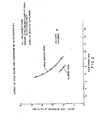
- Plasticized PVC has a WVTR of about 15g/m /day for a 350 micron film.
- WVTR is reduced to 2.5 for an equivalent of 45-0 microns of barrier material.
- the Kraton/RCPP curve is indicative of the WVTR for the product of U.S. Patent No. 4,140,162 while the VX/RCPP curve is indicative of the WVTR of the film of this invention. It is noted that at 175 microns the films of this invention are more effective vapor barriers than the best prior art compositions at about 250 microns.
- the polyolefin layer component of the composite film represents about 2 to about 40Z of the film thickness, preferably about 5 to 30%, more preferably about 8 to 20%. Generally the polyolefin component will be about 5 to 50 microns in thickness, preferably about 1C to about 40 microns.
- substantially clear films can be prepared by using processing techniques which result in smooth surfaced film.
- the process of the present invention may be carried out by utilizing conventional extruders and slotted dies used in the manufacture of films.
- the counterrotating rollers through which the web is passed may consist of a chrome plated chill roll for quenching the film and a resilient roller preferably having a glossy rubber surface.
- the resilient roller may be of the type described in U.S. Patent 4,368,240, the disclosure of which is incorporated herein by reference.
- the roller may include a metal core provided with an intermediate layer- of resilient material such as 60-80 Shore A durometer rubber and finally by a skin layer of glossy rubber such as silicone rubber.
- the skin layer and intermediate layer in combination impart a Shore A hardness value in the range of 65 to 95.
- Suitable silicones for coating the roller include silicone resins sold by General Electric under the trade designation RTU 670 and sold by Dow Corning Corporation under the trade designation Sylastic and Sylgard. These resins can be used in the manufacture of a rubber roll having a high gloss and durable surface as described in U.S. Patent 4,368,240. Moreover, silicone rubber rolls of this type may be purchased from Nauta Roll Corporation of Kensington, Conn.
- An air knife may be used to assist in cooling the web between the die and the nip of the counterrotating rollers.
- the cooling effects aid in eliminating draw resonance and also in preventing the web from sticking to the. rubber roll.
- compositions usable in this invention can be achieved in several different ways.
- the various components may be brought into intimate contact by, for example, dry blending these materials and then passing the overall composition through a compounding extruder.
- the components may be fed directly to a mixing device such as a compounding extruder, high shear continuous-mixer, two roll mill or an internal mixer such as a Banbury mixer.
- the optional ingredients previously described can be added to the composition during this mixing operation.
- the objective is to obtain a uniform dispersion of all-ingredients and this is readily achieved by inducing sufficient shear and heat to cause the melting of the plastics component(s) controlled as is normally done by one skilled in the art so as to avoid molecular weight degradation.
- the elastomer/polyolefin blend is extruded from a slotted die to form a molten web which is passed through the nip of the counterrotating chill roll and resilient roll.
- An air knife may be used on either or both sides of the web to assist in the cooling action if the drawdown is sufficient to cause draw resonance.
- the web enters the nip at a temperature above the melting point of the blend.
- the resilient roller presses the web into intimate contact with the chill roll causing the web to cool and solidify.
- the web is carried around a circumferential portion of the chill roll and withdrawn and formed into a roll in the conventional manner.
- the rubber composition of the composite film generally represents about 60 to about 98% of the film thickness. While the rubber compositions of this invention cast using prior art techniques are not clear, when they are used in conjunction with the polyolefin component, relatively haze free composites are formed.
- the term "clear" as used in the specification and claims with respect to the composite films of this invention mean films having a haze of less than 30% as measured on a Gardner Instrument XL-211 hazemeter (ASTM D1003). Preferably, the film has a haze of less than 20%, more preferably less than 10%.
- the resin of Film Blend C was extruded from a conventional slotted die using a conventional extruder and cast, - or processed through the nip of the rubber roll arrangement.
- the composite films of this invention be prepared using the aforedescribed polished silicone rolls, it is not essential to do so where the film is used to package liquids. So long as a polished metal chill roll is used as one of the rolls, the rubber roll can be a conventional uncoated or matte finish rubber roll. In that event, however, the composite film must be utilized in making the medical container bags of this invention so that the surface which was in contact with the rubber roll is the internal surface of the bag. When filled with liquid, haze due to the rough (rubber roll contacted) surface is eliminated as a result of fluid filling the textured surface and eliminating the light scatter which causes haze.
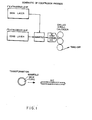
- the composite film of this invention is produced by extruding a "rod" of core material comprising the rubber composition, passing it through a manifold and extruding a skin layer of polyolefin over the core and subsequently flattening the coated "rod" into a sheet using a coat hanger die. This flattened sheet is then passed through the nip formed between a rubber roll and a polished metal chill roll. The resulting product is a "sandwich" of rubber core encased in a polyolefin "skin.” A schematic of this extrusion process is shown in Figure I.
- Film composites were prepared using the formulations shown in Table V. Their physical properties are shown in Table VI. In general, the clarity of each sheet was very good. The haze was particularly low (5.3%), as in Example 3, where the elastomer component of the core was Vistalon 1721, an EPDM having a 15 Mooney (1+8 @ 127°C) and 80 wt% ethylene content. While the PIB composition (Example 7) showed a relatively high haze, when-a bag was prepared from this composition with the rubber roll contacted surface facing inward and the bag filled with water, the bag exhibited outstanding contact clarity and very high gloss. Hence, when care is taken to use the film composite as described above. where only one surface of the composite contributes to the high haze, even haze levels in excess of 251 can be tolerated. Such is not the case where both surfaces of the composite are par in smoothness.
- Example 3 The film compositions wherein the core was comprised of rubber alone, Examples 3, 4 and 5 had the greatest flexibility. Nonetheless, the composite films of Examples 6 and 7 (cores containing butyl rubber and PIB respectively), were significantly less stiff than the other films, even in the case of Example 8 where no skin was used.
- the cores containing butyl and PIB had exceptional tear resistance. This is surprising since these uncured rubbers exhibit cold flow in the gum state and have poor physical properties when used as such.
- Nominal 200 micron composite films were prepared by conventional co-extrusion.
- the equipment used comprised a main 65mm extruder for the core material and one 37.5mm extruder for the film skin. -The flow from the 37.5mm extruder was split to form skins on each face of the elastomer film.
- Composites of the A/B and A/B/A type were prepared wherein A represents the polyolefin skin and B represents the rubber containing core material.
- the films were extruded through a set of nip rolls comprising a matte finish silicone rubber roll (55 Shore A) and a polished chrome chill roll.
- the surface of the film composite intended to be heat sealed to form the inner surface of the bag was placed against the silicone roll of the 3-roll stack and consequently had a matte finish which was the source of most of the observed haze.
- the formulations are shown in Table VIII and the structure of the film is described in Table IX.
- Reference to embossing relates to whether or not silicone rubber contact pressure was used. No embossing indicates that an air knife rather than the rubber roll was used as an assist in contacting the film with the metal roll.
- the film properties are listed in Table X.
- Monolayer "F” is a softer, tougher (tear/dart drop) film than the monolayer "E” film composition.
- the softness, outstanding water impermeability and excellent toughness of the A/B/A composite film using RCPP as the skin and a PIB/RCPP core suggest that it is a useful film material for parenteral drug use (Examples 19 and 20). Relative to the EPM compositions, this material has about a 35% better WVTR and 50% greater flexibility.
- the "hand" of the water filled bags was similar to that of PVC. This film neither tore in the Elmendorf tear tester nor ruptured in the dart test. Adequate clarity can be achieved by replacing the matte finish of the rubber roll with a silicone polished rubber roll. As can be seen from a comparison of runs 19 and 20, a substantial amount of the haze is a result of embossing of the matte finish cut of the film.
- the films of this invention have particular utility in parenteral drug container use, it will be evident from the aforegoing disclosure that the compositions can be used in any food application.
- the aforedescribed A/B/A polyolefin-rubber composition core laminate can be overlayered with a polyvinylidene chloride film on one surface, using a polyurethane adhesive tie layer to give the film greater impermeability to oxygen.
- This PVDC coated film can be used as a wrapping for "canless" meats, e.g., ham, since the cooking of the meats can be accomplished after the meat is packaged.
- This oxygen impermeable film also will find application as containers for oxygen sensitive parenteral or enteral drugs.
- the PVDC can be co-extruded with the core layer to form one surface of an A/B/C composite film.
- the film structure can comprise one skin of PVDC, another of RCPP, sandwiching a core of rubber composition wherein the rubber is a halogenated rubber or a blend of unhalogenated and halogenated rubbers.
- the halogenated rubber can be halogenated butyl rubber or polychloroprene.
- the rubber comprises about 40 to 60 wt% PIB, about 20 to 40 wt2 of butyl rubber and about 20 to 40 wt% of polychloroprene.
- the co-extrusion can be accomplished with unhalogenated rubbers by using a tie layer between the PVDC and the rubber core.
- haze is an important criterion for determining the usefulness of a film for parenteral drug use, it is apparent that the important haze value is that for internal haze.
- the elastomeric compositions of this invention have internal haze values of 30% or less. They can be used to prepare useful films having adequate clarity so long as at least one surface of the film has a 45° gloss of at least 40, preferably at least 50, more preferably at least 60, most preferably at least 75.
- the parenteral drug pouch must be manufactured using the film so that the surface having the lower gloss forms the inside of the pouch so that it will be in contact with the drug fluid.
- at least one surface of the film has a gloss of at least 60, more preferably at least 75 as measured at 45° reflected light.
- HDPE cannot be used for blending with the elastomer component since it forms compositions with high internal haze.
- EVA or LDPE cannot be used as the polyolefin component of the rubber olefin blend except in conjunction with at least 15 wt% of PP or RCPP which is required for dimensional thermal stability of the film.
- the film In order to achieve the desired gloss, the film must be brought into contact with the chill roll using the rubber roll (matte or polished).Otherwise there is insufficient contact with the roll to generate the high gloss surface. Air knives of the prior art are inadequate to cause the necessary roll contact.
- the skin surface which is the inside of the pouch, and hence the heat sealed surface comprises a minor amount of ethylene-vinyl acetate copolymer to improve heat sealing characteristics of the PP or RCPP.
- the ethylene-vinyl acetate copolymer can comprise about 5 to 40 wt% of the film.
- the PP or RCPP will comprise about 15 to about 85 wt% of the polyolefin ethylene-vinyl acetate blend.
- each of the polyolefin layers of the composite film can comprise the same or different polyolefin.
- the polyolefin layers can be blends of polyolefins, e.g., PP/LLDPE; RCPP/LDPE; RCPP/ethylene-vinyl acetate copolymer, etc.
- the term "highly polished” means that the roll surface has a root mean square (RMS) of less than 4 microns.
- composite films described herein will have utility, even where they are not transparent, because of their high burst strength and water vapor barrier properties as well as their heat resistance in retorting.
- ethylene-vinyl alcohol copolymers While in the past PVDC has been the oxygen barrier film of choice, more recently ethylene-vinyl alcohol copolymers have been used as oxygen barrier copolymers. It is within the scope of this invention to utilize ethylene-vinyl alcohol copolymers as the skin layer of the composite films of this invention with or without an adhesive tie layer. Additionally, the ethylene-vinyl alcohol (EVOH) copolymers may be utilized as an overlayer adhered to the skin of the composite film by an adhesive tie layer.
- EVOH ethylene-vinyl alcohol
- overlayers other than polyolefins can be utilized to achieve beneficial results.
- paper or metal foil e.g., aluminum, copper, etc. can be adhered to the composite film by use of an adhesive tie layer.
- Such-metal foil compositions will have enhanced oxygen and water vapor barrier properties.
- the composite films of this invention have a wide range of applications for packaging both solids and liquids. For example, they can be used to prepare containers for fruit juices which can be aseptically packaged. The juices can pasteurized after packaging. Solid materials, e.g., drugs, reactive chemicals, etc., which need to be protected from air or water can also be advantageously packaged in containers made from the composite films of this invention.
- retort pouch as used in the specifications and claims means a container for liquids or solids which can be autoclaved for sterilization, pasteurization or cooking without damage to the pouch.
- polyolefin includes EVOH.
- two sheets of film can be adhesively bonded or heat sealed together to form the pouch or container.
- the pouch or container is to-be subjected to heat, e.g., sterilization
- the pouch or other container is preferably formed by heat sealing.
- the composite film can be coextruded in tubular form and the pouch or bag formed therefrom.
- the tubular composite film can be placed in a mold and blow- molded into the desired bag, pouch or container form.
- Enteral feeding bags, blood bags, parental drug bags and the like can have valves or outlet fittings molded or bonded into the bag or pouch structure.
Landscapes
- Chemical & Material Sciences (AREA)
- Engineering & Computer Science (AREA)
- Mechanical Engineering (AREA)
- Health & Medical Sciences (AREA)
- Chemical Kinetics & Catalysis (AREA)
- Medicinal Chemistry (AREA)
- Polymers & Plastics (AREA)
- Organic Chemistry (AREA)
- Physics & Mathematics (AREA)
- Thermal Sciences (AREA)
- Laminated Bodies (AREA)
Applications Claiming Priority (6)
| Application Number | Priority Date | Filing Date | Title |
|---|---|---|---|
| US62117984A | 1984-06-15 | 1984-06-15 | |
| US621179 | 1984-06-15 | ||
| US69673885A | 1985-01-31 | 1985-01-31 | |
| US69983285A | 1985-02-08 | 1985-02-08 | |
| US696738 | 2000-10-26 | ||
| US699832 | 2000-10-30 |
Publications (3)
| Publication Number | Publication Date |
|---|---|
| EP0165791A2 true EP0165791A2 (fr) | 1985-12-27 |
| EP0165791A3 EP0165791A3 (en) | 1987-05-20 |
| EP0165791B1 EP0165791B1 (fr) | 1990-09-19 |
Family
ID=27417283
Family Applications (1)
| Application Number | Title | Priority Date | Filing Date |
|---|---|---|---|
| EP85304292A Expired - Lifetime EP0165791B1 (fr) | 1984-06-15 | 1985-06-14 | Films composites et leur fabrication |
Country Status (4)
| Country | Link |
|---|---|
| EP (1) | EP0165791B1 (fr) |
| AU (1) | AU591062B2 (fr) |
| CA (1) | CA1264517A (fr) |
| DE (1) | DE3579758D1 (fr) |
Cited By (21)
| Publication number | Priority date | Publication date | Assignee | Title |
|---|---|---|---|---|
| EP0276908A1 (fr) * | 1987-01-08 | 1988-08-03 | Exxon Chemical Patents Inc. | Sachet pouvant être chauffé et feuille coextrudée utilisée à cet effet |
| US4892911A (en) * | 1985-11-29 | 1990-01-09 | American National Can Company | Films using blends of polypropylene and polyisobutylene |
| US4938815A (en) * | 1986-10-15 | 1990-07-03 | Advantage Production Technology, Inc. | Semiconductor substrate heater and reactor process and apparatus |
| EP0322189A3 (fr) * | 1987-12-23 | 1990-08-29 | American National Can Company | Feuilles multicouches et matériel d'emballage fabriqué à partir de celles-ci |
| US4966795A (en) * | 1985-11-29 | 1990-10-30 | American National Can Company | Multiple layer sheet structures and package |
| AU602873B2 (en) * | 1985-11-29 | 1990-11-01 | American National Can Company | Films using blends of polypropylene and polyisobutylene |
| EP0399113A1 (fr) * | 1989-05-25 | 1990-11-28 | American National Can Company | Films polymères multicouches, procédé pour leur fabrication et emballages utilisant ces films, méthode d'emballage et produits |
| US4986053A (en) * | 1988-11-22 | 1991-01-22 | American National Can Company | Methods of making improved packages |
| US5011719A (en) * | 1985-11-29 | 1991-04-30 | American National Can Company | Polymeric compositions and films |
| WO1991006426A1 (fr) * | 1989-11-07 | 1991-05-16 | Exxon Chemical Patents Inc. | Pellicule adhesive d'emballage de denrees alimentaires |
| EP0374629A3 (fr) * | 1988-12-21 | 1991-09-18 | Bayer Ag | Stratifié transparent |
| DE4117411A1 (de) * | 1990-05-31 | 1991-12-05 | Nok Corp | Laminierter flaechenhafter koerper |
| US5073599A (en) * | 1985-11-29 | 1991-12-17 | American National Can Company | Films using blends of polypropylene and polyisobutylene |
| US5093164A (en) * | 1985-11-29 | 1992-03-03 | Bauer Frank T | Multiple layer packaging sheet material |
| EP0448400A3 (en) * | 1990-03-23 | 1992-03-04 | W.R. Grace & Co.-Conn. | Oriented film of high clarity and gloss |
| US5098794A (en) * | 1987-12-14 | 1992-03-24 | American National Can Company | Laminates and laminated tubes and packages for hard-to-hold products having volatile components |
| US5137763A (en) * | 1985-11-29 | 1992-08-11 | American National Can Company | Multiple layer packaging sheet material |
| US5165988A (en) * | 1987-12-14 | 1992-11-24 | American National Can Company | Laminates and laminated tubes and packages |
| US5389448A (en) * | 1990-08-13 | 1995-02-14 | W.R. Grace & Co.-Conn. | Blends of polypropylene and ethylene copolymer and films made from the blend |
| WO1995014566A1 (fr) * | 1993-11-24 | 1995-06-01 | Wastecorp. International Investments Inc. | Film de polyolefine anti-glissement et procede de preparation |
| EP1108531A1 (fr) * | 1999-12-17 | 2001-06-20 | Shin-Etsu Polymer Co., Ltd. | Film plastique laminé pour l'emballage d'aliments |
Families Citing this family (1)
| Publication number | Priority date | Publication date | Assignee | Title |
|---|---|---|---|---|
| US4643926A (en) * | 1985-04-29 | 1987-02-17 | W. R. Grace & Co., Cryovac Div. | Flexible medical solution pouches |
Family Cites Families (8)
| Publication number | Priority date | Publication date | Assignee | Title |
|---|---|---|---|---|
| BE790680A (fr) * | 1971-10-28 | 1973-04-27 | Unilever Nv | Pellicule plastique stratifiee |
| DE2746492B2 (de) * | 1977-10-15 | 1980-03-13 | Maschinenfabrik Weingarten Ag, 7987 Weingarten | Vorrichtung zum Einstellen der beim Druckgießen erforderlichen unterschiedlichen Preßkolben-Geschwindigkeiten und -drücke bei einer Druckgießmaschine, insbesondere Kaltkammer-Druckgießmaschine |
| US4210686A (en) * | 1978-06-19 | 1980-07-01 | Baxter Travenol Laboratories Inc. | Multi-layered plastic sheeting having high clarity, strength, and resistance to water vapor transmission |
| NL189499C (nl) * | 1978-12-18 | 1993-05-03 | Asahi Chemical Ind | Werkwijze voor het vervaardigen van een vel of film, alsmede verpakking. |
| US4368240A (en) * | 1981-07-27 | 1983-01-11 | Nauta Roll Corporation | High gloss rubber roll |
| DE8226197U1 (de) * | 1982-09-17 | 1984-02-23 | Robert Bosch Gmbh, 7000 Stuttgart | Elastomerformteil |
| US4479989A (en) * | 1982-12-02 | 1984-10-30 | Cutter Laboratories, Inc. | Flexible container material |
| US4500681A (en) * | 1982-12-27 | 1985-02-19 | Exxon Research & Engineering Co. | Thermoplastic blend of polyolefin, isobutylene-backbone elastomer and ethylene copolymer |
-
1985
- 1985-06-05 CA CA000483233A patent/CA1264517A/fr not_active Expired - Lifetime
- 1985-06-14 EP EP85304292A patent/EP0165791B1/fr not_active Expired - Lifetime
- 1985-06-14 AU AU43713/85A patent/AU591062B2/en not_active Ceased
- 1985-06-14 DE DE8585304292T patent/DE3579758D1/de not_active Expired - Lifetime
Cited By (22)
| Publication number | Priority date | Publication date | Assignee | Title |
|---|---|---|---|---|
| US5073599A (en) * | 1985-11-29 | 1991-12-17 | American National Can Company | Films using blends of polypropylene and polyisobutylene |
| US4892911A (en) * | 1985-11-29 | 1990-01-09 | American National Can Company | Films using blends of polypropylene and polyisobutylene |
| US5137763A (en) * | 1985-11-29 | 1992-08-11 | American National Can Company | Multiple layer packaging sheet material |
| US4966795A (en) * | 1985-11-29 | 1990-10-30 | American National Can Company | Multiple layer sheet structures and package |
| AU602873B2 (en) * | 1985-11-29 | 1990-11-01 | American National Can Company | Films using blends of polypropylene and polyisobutylene |
| US5093164A (en) * | 1985-11-29 | 1992-03-03 | Bauer Frank T | Multiple layer packaging sheet material |
| US5011719A (en) * | 1985-11-29 | 1991-04-30 | American National Can Company | Polymeric compositions and films |
| US4938815A (en) * | 1986-10-15 | 1990-07-03 | Advantage Production Technology, Inc. | Semiconductor substrate heater and reactor process and apparatus |
| EP0276908A1 (fr) * | 1987-01-08 | 1988-08-03 | Exxon Chemical Patents Inc. | Sachet pouvant être chauffé et feuille coextrudée utilisée à cet effet |
| US5098794A (en) * | 1987-12-14 | 1992-03-24 | American National Can Company | Laminates and laminated tubes and packages for hard-to-hold products having volatile components |
| US5165988A (en) * | 1987-12-14 | 1992-11-24 | American National Can Company | Laminates and laminated tubes and packages |
| EP0322189A3 (fr) * | 1987-12-23 | 1990-08-29 | American National Can Company | Feuilles multicouches et matériel d'emballage fabriqué à partir de celles-ci |
| US4986053A (en) * | 1988-11-22 | 1991-01-22 | American National Can Company | Methods of making improved packages |
| EP0374629A3 (fr) * | 1988-12-21 | 1991-09-18 | Bayer Ag | Stratifié transparent |
| EP0399113A1 (fr) * | 1989-05-25 | 1990-11-28 | American National Can Company | Films polymères multicouches, procédé pour leur fabrication et emballages utilisant ces films, méthode d'emballage et produits |
| WO1991006426A1 (fr) * | 1989-11-07 | 1991-05-16 | Exxon Chemical Patents Inc. | Pellicule adhesive d'emballage de denrees alimentaires |
| EP0448400A3 (en) * | 1990-03-23 | 1992-03-04 | W.R. Grace & Co.-Conn. | Oriented film of high clarity and gloss |
| DE4117411A1 (de) * | 1990-05-31 | 1991-12-05 | Nok Corp | Laminierter flaechenhafter koerper |
| DE4117411C2 (de) * | 1990-05-31 | 1998-08-06 | Nok Corp | Membranelement und Speicherelement mit einem solchen Membranelement |
| US5389448A (en) * | 1990-08-13 | 1995-02-14 | W.R. Grace & Co.-Conn. | Blends of polypropylene and ethylene copolymer and films made from the blend |
| WO1995014566A1 (fr) * | 1993-11-24 | 1995-06-01 | Wastecorp. International Investments Inc. | Film de polyolefine anti-glissement et procede de preparation |
| EP1108531A1 (fr) * | 1999-12-17 | 2001-06-20 | Shin-Etsu Polymer Co., Ltd. | Film plastique laminé pour l'emballage d'aliments |
Also Published As
| Publication number | Publication date |
|---|---|
| AU4371385A (en) | 1985-12-19 |
| AU591062B2 (en) | 1989-11-30 |
| CA1264517C (fr) | 1990-01-23 |
| DE3579758D1 (de) | 1990-10-25 |
| EP0165791B1 (fr) | 1990-09-19 |
| EP0165791A3 (en) | 1987-05-20 |
| CA1264517A (fr) | 1990-01-23 |
Similar Documents
| Publication | Publication Date | Title |
|---|---|---|
| US4857409A (en) | Clear barrier composites containing polyisobutylene/polyolefin alloy components | |
| EP0165791B1 (fr) | Films composites et leur fabrication | |
| US4769261A (en) | Retort pouch and coextruded film therefor | |
| US5273797A (en) | Food package, retort lidding, and coextruded film therefor | |
| US4424243A (en) | Heat-shrinkable laminate film | |
| US9388306B2 (en) | Polyethylene stretch film | |
| EP0700777A1 (fr) | Film stratifié sans chlore, procédé pour sa fabrication et son utilisation | |
| CN104220512A (zh) | 聚合物、聚合物共混物和由其制造的制品 | |
| JPS6111244A (ja) | ポリイソブチレン/ポリオレフイン複合成分含有の透明バリヤー組成物 | |
| EP0564206A2 (fr) | Récipient médical | |
| JP2001162737A (ja) | 包装用多層フィルム | |
| AU752296B2 (en) | Poultry shrink bags | |
| CA1339532C (fr) | Lamines de resine | |
| JPH0976431A (ja) | レトルト用シーラントフィルム | |
| JP4392859B2 (ja) | 積層フィルム及びその製造方法 | |
| JP4588490B2 (ja) | 樹脂組成物およびそれから得られる延伸フィルム | |
| JP4393772B2 (ja) | 医療用容器 | |
| EP0165075B1 (fr) | Procédé de fabrication de films à limpidité élevée contenant des élastomères | |
| US7566485B2 (en) | Medical container | |
| WO2005047387A1 (fr) | Pellicule a base de polyethylene, stratifie, recipient, emballage destine au conditionnement d'un recipient, emballage de recipient utilisant cette pellicule et composition polymerique a base d'ethylene | |
| EP0377121A2 (fr) | Poche à usage médical | |
| EP0358465A2 (fr) | Emballage alimentaire, couvercle pouvant être chauffé et film coextrudé pour sa fabrication | |
| JP2004358683A (ja) | 加熱殺菌処理食品包装用フィルム | |
| JPH0533141B2 (fr) | ||
| JP3737217B2 (ja) | マット調ポリプロピレン二軸延伸複合フィルム |
Legal Events
| Date | Code | Title | Description |
|---|---|---|---|
| PUAI | Public reference made under article 153(3) epc to a published international application that has entered the european phase |
Free format text: ORIGINAL CODE: 0009012 |
|
| 17P | Request for examination filed |
Effective date: 19850710 |
|
| AK | Designated contracting states |
Designated state(s): BE DE FR GB IT NL SE |
|
| PUAL | Search report despatched |
Free format text: ORIGINAL CODE: 0009013 |
|
| AK | Designated contracting states |
Kind code of ref document: A3 Designated state(s): BE DE FR GB IT NL SE |
|
| 17Q | First examination report despatched |
Effective date: 19881219 |
|
| GRAA | (expected) grant |
Free format text: ORIGINAL CODE: 0009210 |
|
| AK | Designated contracting states |
Kind code of ref document: B1 Designated state(s): BE DE FR GB IT NL SE |
|
| ITF | It: translation for a ep patent filed | ||
| REF | Corresponds to: |
Ref document number: 3579758 Country of ref document: DE Date of ref document: 19901025 |
|
| ET | Fr: translation filed | ||
| PGFP | Annual fee paid to national office [announced via postgrant information from national office to epo] |
Ref country code: FR Payment date: 19910328 Year of fee payment: 7 |
|
| PGFP | Annual fee paid to national office [announced via postgrant information from national office to epo] |
Ref country code: GB Payment date: 19910402 Year of fee payment: 7 |
|
| PGFP | Annual fee paid to national office [announced via postgrant information from national office to epo] |
Ref country code: SE Payment date: 19910508 Year of fee payment: 7 |
|
| PGFP | Annual fee paid to national office [announced via postgrant information from national office to epo] |
Ref country code: BE Payment date: 19910626 Year of fee payment: 7 |
|
| ITTA | It: last paid annual fee | ||
| PGFP | Annual fee paid to national office [announced via postgrant information from national office to epo] |
Ref country code: NL Payment date: 19910630 Year of fee payment: 7 |
|
| PLBE | No opposition filed within time limit |
Free format text: ORIGINAL CODE: 0009261 |
|
| STAA | Information on the status of an ep patent application or granted ep patent |
Free format text: STATUS: NO OPPOSITION FILED WITHIN TIME LIMIT |
|
| PGFP | Annual fee paid to national office [announced via postgrant information from national office to epo] |
Ref country code: DE Payment date: 19910819 Year of fee payment: 7 |
|
| 26N | No opposition filed | ||
| PG25 | Lapsed in a contracting state [announced via postgrant information from national office to epo] |
Ref country code: GB Effective date: 19920614 |
|
| PG25 | Lapsed in a contracting state [announced via postgrant information from national office to epo] |
Ref country code: SE Effective date: 19920615 |
|
| PG25 | Lapsed in a contracting state [announced via postgrant information from national office to epo] |
Ref country code: BE Effective date: 19920630 |
|
| BERE | Be: lapsed |
Owner name: EXXON RESEARCH AND ENGINEERING CY Effective date: 19920630 |
|
| PG25 | Lapsed in a contracting state [announced via postgrant information from national office to epo] |
Ref country code: NL Effective date: 19930101 |
|
| GBPC | Gb: european patent ceased through non-payment of renewal fee |
Effective date: 19920614 |
|
| NLV4 | Nl: lapsed or anulled due to non-payment of the annual fee | ||
| PG25 | Lapsed in a contracting state [announced via postgrant information from national office to epo] |
Ref country code: FR Effective date: 19930226 |
|
| PG25 | Lapsed in a contracting state [announced via postgrant information from national office to epo] |
Ref country code: DE Effective date: 19930302 |
|
| REG | Reference to a national code |
Ref country code: FR Ref legal event code: ST |
|
| EUG | Se: european patent has lapsed |
Ref document number: 85304292.7 Effective date: 19930109 |