EP0166564B1 - Pyrimidinonderivate, deren Herstellung und Verwendung - Google Patents
Pyrimidinonderivate, deren Herstellung und Verwendung Download PDFInfo
- Publication number
- EP0166564B1 EP0166564B1 EP85304332A EP85304332A EP0166564B1 EP 0166564 B1 EP0166564 B1 EP 0166564B1 EP 85304332 A EP85304332 A EP 85304332A EP 85304332 A EP85304332 A EP 85304332A EP 0166564 B1 EP0166564 B1 EP 0166564B1
- Authority
- EP
- European Patent Office
- Prior art keywords
- compound
- salt
- formula
- alkyl
- alkoxy
- Prior art date
- Legal status (The legal status is an assumption and is not a legal conclusion. Google has not performed a legal analysis and makes no representation as to the accuracy of the status listed.)
- Expired
Links
- 0 C*N(C(C=C(/C(/C(C)(/C=C1)O)=C\CC*1O)N1C)=N*)C1=O Chemical compound C*N(C(C=C(/C(/C(C)(/C=C1)O)=C\CC*1O)N1C)=N*)C1=O 0.000 description 3
Classifications
-
- C—CHEMISTRY; METALLURGY
- C07—ORGANIC CHEMISTRY
- C07D—HETEROCYCLIC COMPOUNDS
- C07D239/00—Heterocyclic compounds containing 1,3-diazine or hydrogenated 1,3-diazine rings
- C07D239/02—Heterocyclic compounds containing 1,3-diazine or hydrogenated 1,3-diazine rings not condensed with other rings
- C07D239/24—Heterocyclic compounds containing 1,3-diazine or hydrogenated 1,3-diazine rings not condensed with other rings having three or more double bonds between ring members or between ring members and non-ring members
- C07D239/28—Heterocyclic compounds containing 1,3-diazine or hydrogenated 1,3-diazine rings not condensed with other rings having three or more double bonds between ring members or between ring members and non-ring members with hetero atoms or with carbon atoms having three bonds to hetero atoms with at the most one bond to halogen, directly attached to ring carbon atoms
- C07D239/46—Two or more oxygen, sulphur or nitrogen atoms
- C07D239/47—One nitrogen atom and one oxygen or sulfur atom, e.g. cytosine
-
- C—CHEMISTRY; METALLURGY
- C07—ORGANIC CHEMISTRY
- C07D—HETEROCYCLIC COMPOUNDS
- C07D239/00—Heterocyclic compounds containing 1,3-diazine or hydrogenated 1,3-diazine rings
- C07D239/02—Heterocyclic compounds containing 1,3-diazine or hydrogenated 1,3-diazine rings not condensed with other rings
- C07D239/24—Heterocyclic compounds containing 1,3-diazine or hydrogenated 1,3-diazine rings not condensed with other rings having three or more double bonds between ring members or between ring members and non-ring members
- C07D239/28—Heterocyclic compounds containing 1,3-diazine or hydrogenated 1,3-diazine rings not condensed with other rings having three or more double bonds between ring members or between ring members and non-ring members with hetero atoms or with carbon atoms having three bonds to hetero atoms with at the most one bond to halogen, directly attached to ring carbon atoms
- C07D239/46—Two or more oxygen, sulphur or nitrogen atoms
- C07D239/52—Two oxygen atoms
- C07D239/54—Two oxygen atoms as doubly bound oxygen atoms or as unsubstituted hydroxy radicals
-
- C—CHEMISTRY; METALLURGY
- C07—ORGANIC CHEMISTRY
- C07D—HETEROCYCLIC COMPOUNDS
- C07D239/00—Heterocyclic compounds containing 1,3-diazine or hydrogenated 1,3-diazine rings
- C07D239/02—Heterocyclic compounds containing 1,3-diazine or hydrogenated 1,3-diazine rings not condensed with other rings
- C07D239/24—Heterocyclic compounds containing 1,3-diazine or hydrogenated 1,3-diazine rings not condensed with other rings having three or more double bonds between ring members or between ring members and non-ring members
- C07D239/28—Heterocyclic compounds containing 1,3-diazine or hydrogenated 1,3-diazine rings not condensed with other rings having three or more double bonds between ring members or between ring members and non-ring members with hetero atoms or with carbon atoms having three bonds to hetero atoms with at the most one bond to halogen, directly attached to ring carbon atoms
- C07D239/46—Two or more oxygen, sulphur or nitrogen atoms
- C07D239/56—One oxygen atom and one sulfur atom
-
- C—CHEMISTRY; METALLURGY
- C07—ORGANIC CHEMISTRY
- C07D—HETEROCYCLIC COMPOUNDS
- C07D405/00—Heterocyclic compounds containing both one or more hetero rings having oxygen atoms as the only ring hetero atoms, and one or more rings having nitrogen as the only ring hetero atom
- C07D405/02—Heterocyclic compounds containing both one or more hetero rings having oxygen atoms as the only ring hetero atoms, and one or more rings having nitrogen as the only ring hetero atom containing two hetero rings
- C07D405/04—Heterocyclic compounds containing both one or more hetero rings having oxygen atoms as the only ring hetero atoms, and one or more rings having nitrogen as the only ring hetero atom containing two hetero rings directly linked by a ring-member-to-ring-member bond
Definitions
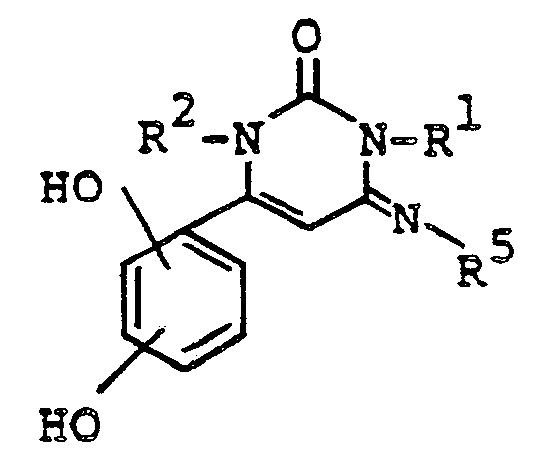
- This invention relates to new pyrimidinone derivatives. More particularly, this invention relates to new pyrimidinone derivatives and pharmaceutically acceptable salts thereof which have pharmacological activities, processes for the preparation thereof and a pharmaceutical composition comprising the same.
- one object of this invention is to provide the new and useful pyrimidinone derivatives and pharmaceutically acceptable salts thereof.
- Another object of this invention is to provide processes for preparation of the pyrimidinone derivatives and pharmaceutically acceptable salts thereof.
- a further object of this invention is to provide a pharmaceutical composition
- a pharmaceutical composition comprising said pyrimidinone derivative or pharmaceutically acceptable salt thereof as a cardiotonic agent and anti-allergic agent.
- the pyrimidinone derivatives of this invention are useful for the therapeutic treatment of heart disease and allergic disease in human beings and animals.
- EP-A-0123402 describes certain pyrimidine derivatives and their use for the treatment of heart disease, hypertension, cerebrovascular disease and thrombosis.
- the object compound [I] and their salts of the present invention can be prepared by the following processes. wherein
- Rd and Rd are each C 1 -C S alkyl, is C 1 ⁇ C 6 alkylthio and is C 1 ⁇ C 6 alkoxy.
- Suitable examples of the C 1 -C 6 alkyl for R 1 , R 2 , R 6 , R 7 , R S and R 9 may be a straight or branched one such as methyl, ethyl, propyl, isopropyl, butyl, isobutyl, tert-butyl, pentyl or hexyl.
- C 1 ⁇ C 6 alkyl moiety in the terms “C 1 ⁇ C 6 alkylthio, “C 1 ⁇ C 6 alkanesulfinyl”, “C 1 ⁇ C 6 alkanesulfonyl” and “naphthyl or phenyl optionally substituted with C 1 ⁇ C 6 alkyl” are those mentioned above.
- C 1 ⁇ C 6 alkoxy examples include methoxy, ethoxy, propoxy, isopropoxy, butoxy, t-butoxy, pentyloxy and hexyloxy.
- the C 1 ⁇ C 6 alkylene group for Y may be a straight or branched one such as methylene, ethylene, trimethylene, tetramethylene, pentamethylene, hexamethylene, propylene, ethylethylene, propylethylene, isopropylethylene or methylpentamethylene.
- the C 1 ⁇ C 6 alkylenedioxy formed by R 3 and R 4 is the group represented by the formula " ⁇ O ⁇ (C 1 ⁇ C 6 )alkylene ⁇ O ⁇ ", wherein the C 1 ⁇ C 6 alkylene moiety may be as exemplified above.
- Suitable examples of the C 1 -C 6 alkylidene group for Y include methylene, ethylidene, propylidene, isopropylidene, butylidene, sec-butylidene, isobutylidene, hexylidene and isohexylidene.
- the C 1 ⁇ C 6 alkylidenedioxy formed by R 3 and R 4 is the group represented by the formula
- the phenyl or naphthyl group of R 5 may be optionally substituted with one or more C 1 -C 6 alkyl group(s) as exemplified above.
- Suitable examples of phenyl or naphthyl groups having such substituent(s) include 4-ethylphenyl, 4-hexylphenyl, 2,6-dimethylphenyl, 3,4-dimethylphenyl and mesityl (2,4,6-trimethylphenyl).
- Suitable examples of the leaving group for X include halide [e.g. chloride, bromide and iodide] and sulfonate [e.g. methanesulfonate, benzenesulfonate and toluenesulfonate].
- halide e.g. chloride, bromide and iodide
- sulfonate e.g. methanesulfonate, benzenesulfonate and toluenesulfonate.
- Suitable pharmaceutically acceptable salts of the object compound [I] are conventional non-toxic salts and include a metal salt such as an alkali metal salt [e.g. sodium salt and potassium salt] and an alkaline earth metal salt [e.g. calcium salt and magnesium salt], an ammonium salt, an organic base salt [e.g. trimethylamine salt, triethylamine salt, pyridine salt, picoline salt, dicyclohexylamine salt and N,N'- dibenzylethylenediamine salt], an organic acid salt [e.g.
- a metal salt such as an alkali metal salt [e.g. sodium salt and potassium salt] and an alkaline earth metal salt [e.g. calcium salt and magnesium salt]
- an ammonium salt e.g. trimethylamine salt, triethylamine salt, pyridine salt, picoline salt, dicyclohexylamine salt and N,N'- dibenzylethylenediamine salt
- an organic acid salt e.g.
- formate acetate, trifluoroacetate, maleate, tartrate, methanesulfonate, benzenesulfonate, toluenesulfonate], an inorganic acid salt [e.g. hydrochloride, hydrobromide, sulfate, phosphate], and a salt with an amino acid [e.g. arginine salt, ornithine salt].
- an inorganic acid salt e.g. hydrochloride, hydrobromide, sulfate, phosphate
- salt with an amino acid e.g. arginine salt, ornithine salt.
- the object compound [la] or its salt can be prepared by subjecting the compound [II] or its salt to a cleavage reaction of the C 1 -C 6 alkyl groups for R 6 and R'.
- Suitable salts of the compound [II] may be the same as those exemplified for the compound [I].
- This reaction is usually conducted in the presence of a cleavage reagent.
- Suitable examples of the cleavage reagents include a Lewis acid such as boron trihalide [e.g. boron trichloride, boron tribromide, boron triiodide, boron trifluoride, boron trifluoride ethyl etherate], titanium tetrahalide [e.g. titanium tetrachloride], tin tetrahalide [e.g. tin tetrabromide], aluminum halide [e.g. aluminum chloride] and hydrohalogenic acid (e.g. hydrobromic acid); a combination of the abovementioned Lewis acid and a thiol compound [e.g.
- boron trihalide e.g. boron trichloride, boron tribromide, boron triiodide, boron trifluoride, boron trifluoride ethyl etherate
- titanium tetrahalide e.
- silane compound e.g. iodotrimethylsilane
- thiolate compound e.g. sodium ethanethiolate, potassium benzenethiolate, sodium thiocresolate
- a mixed acid of hydrogen halide e.g. hydrogen chloride, hydrogen bromide
- an organic acid e.g. trifluoroacetic acid, acetic acid.
- This reaction is usually carried out in a conventional solvent such as water, methanol, ethanol, propanol, tetrahydrofuran, dioxane, chloroform, methylene chloride, dimethylformamide, dimethyl sulfoxide or any other organic solvent which does not adversely influence the reaction.
- a conventional solvent such as water, methanol, ethanol, propanol, tetrahydrofuran, dioxane, chloroform, methylene chloride, dimethylformamide, dimethyl sulfoxide or any other organic solvent which does not adversely influence the reaction.
- the reaction temperature is not critical, and the reaction can be carried out under cooling to heating.
- the object compound [lb] or its salt can be prepared by reacting the compound [la] or its salt with the compound [III].
- This reaction is preferably conducted in the presence of a base such as alkali metal hydride [e.g. sodium hydride, potassium hydride], alkaline earth metal hydride [e.g. calcium hydride, magnesium hydride], alkali metal hydroxide [e.g. sodium hydroxide, potassium hydroxide], alkali metal carbonate [e.g. sodium carbonate, potassium carbonate], alkali metal bicarbonate [e.g. sodium bicarbonate, potassium bicarbonate], alkali metal fluoride [e.g. potassium fluoride, cesium fluoride], alkali metal alkoxide [e.g. sodium methoxide, sodium ethoxide, potassium tert-butoxide].
- a base such as alkali metal hydride [e.g. sodium hydride, potassium hydride], alkaline earth metal hydride [e.g. calcium hydride, magnesium hydride], alkali metal hydroxide [e.g. sodium hydroxide, potassium hydroxide
- This reaction is usually carried out in a conventional solvent such as water, methanol, ethanol, propanol, tetrahydrofuran, dioxane, acetonitrile, methylene chloride, chloroform, benzene, dimethylformamide, dimethyl sulfoxide or any other organic solvent which does not adversely influence the reaction.
- solvents can be optionally selected according to the kinds of the starting compound [la], the compound [III] and the base to be used. In case that the compound [III] is liquid, it can be also used as a solvent.
- the reaction temperature is not critical, and the reaction can be carried out under cooling to heating.
- the object compound [lc] or its salt can be prepared by reacting the compound [la] or its salt with the compound [IV] or its reactive derivative at the carbonyl group.
- the reactive derivatives at the carbonyl group of the compound [IV] may include aldehyde acetal derivative, or ketone acetal derivative.
- Suitable examples of the compound [IV] in a form of such reactive derivative may be di(C l -C 6 )alkoxysubstituted C 1 -C 6 alkane such as dimethoxymethane, diethoxymethane, 1,1-dimethoxyethane, 1-ethoxy-1-methoxyethane, 2,2-dimethoxypropane, 2,2-diethoxypropane, 2-ethoxy-2-methoxypropane, 2,2-dimethoxybutane.
- the reaction is preferably conducted in the presence of a catalyst such as hydrohalogenic acid [e.g. hydrochloric acid, hydrobromic acid], sulfonic acid [e.g. p-toluenesulfonic acid, benzenesulfonic acid], zinc halide [e.g. zinc chloride], tin tetrahalide [e.g. tin tetrachloride], ferric halide [e.g. ferric chloride], cation exchange resin (acid type) [e.g. sulfonated polystyrene resin].
- hydrohalogenic acid e.g. hydrochloric acid, hydrobromic acid
- sulfonic acid e.g. p-toluenesulfonic acid, benzenesulfonic acid
- zinc halide e.g. zinc chloride
- tin tetrahalide e.g. tin tetrachloride
- the reaction can also be conducted under dehydrating conditions such as an azeotropic dehydration, in the presence of a dehydrating agent [e.g. anhydrous magnesium sulfate, anhydrous zinc chloride, phosphorus pentoxide, anhydrous cupric sulfate, zeolite, silica gel].
- a dehydrating agent e.g. anhydrous magnesium sulfate, anhydrous zinc chloride, phosphorus pentoxide, anhydrous cupric sulfate, zeolite, silica gel.
- This reaction is usually carried out in a conventional solvent such as methanol; ethanol, tetrahydrofuran, dioxane, methylene chloride, chloroform, benzene, dimethylformamide, dimethyl sulfoxide or any other organic solvent which does not adversely influence the reaction.
- a conventional solvent such as methanol; ethanol, tetrahydrofuran, dioxane, methylene chloride, chloroform, benzene, dimethylformamide, dimethyl sulfoxide or any other organic solvent which does not adversely influence the reaction.
- the reaction temperature is not critical, and the reaction can be carried out under cooling to heating.
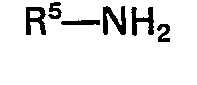
- the object compound [I] or its salt can be prepared by reacting the compound [V] or its reactive derivative at the thioxo group or a salt thereof with the compound [VI] or its salt.
- Suitable salts of the compounds [V] and [VI] can be referred to those as exemplified for the compound (I).
- Suitable reactive derivative at the thioxo group of the compound [V] may be S-alkyl derivative [e.g. S-methyl derivative, S-ethyl derivative, S-octyl derivative], or S-ar(C 1 -C 6 )alkyl derivative [e.g. S-benzyl derivative].
- These reactive derivatives can be prepared by reacting the compound [V] or its salt with an alkylating agent such as alkyl halide [e.g. methyl iodide, ethyl iodide, octyl bromide] or ar(C 1 -C 6 )alkyl halide [e.g. benzyl chloride, benzyl bromide].
- alkylating agent such as alkyl halide [e.g. methyl iodide, ethyl iodide, octyl bromide] or ar(C 1 -C 6 )alkyl halide
- the present invention is usually carried out in a conventional solvent such as methanol, ethanol, propanol, tetrahydrofuran, dioxane, methylene chloride, dimethylformamide or any other organic solvent which does not adversely influence the reaction.
- a conventional solvent such as methanol, ethanol, propanol, tetrahydrofuran, dioxane, methylene chloride, dimethylformamide or any other organic solvent which does not adversely influence the reaction.
- the compound [VI] is liquid, it can also be used as a solvent.
- the reaction temperature is not critical, and the reaction is usually carried out at ambient temperature or under warming or heating.
- the compound [le] or its salt can be prepared by oxidizing the compound [Id] or its salt.
- the present oxidation reaction can be carried out by a conventional method which is applied for the transformation of S into -SO- or -S0 2 -, for example by using an oxidizing agent such as m-chloroperbenzoic acid, perbenzoic acid, peracetic acid, ozone, hydrogen peroxide or periodic acid.
- an oxidizing agent such as m-chloroperbenzoic acid, perbenzoic acid, peracetic acid, ozone, hydrogen peroxide or periodic acid.
- the present reaction is usually carried out in a solvent such as water, acetone, dioxane, acetonitrile, dimethylformamide, chloroform, methylene chloride, ethyl acetate or any other solvents which do not adversely affect the reaction.
- a solvent such as water, acetone, dioxane, acetonitrile, dimethylformamide, chloroform, methylene chloride, ethyl acetate or any other solvents which do not adversely affect the reaction.
- reaction temperature is not critical, and the reaction is preferably carried out under cooling or at ambient temperature.
- the compound [XIII] or its salt can be prepared by reacting the compound [Xl] or its reactive derivative at the carboxy group or its salt with the compound [XII] or its salt.
- Suitable salts of the compounds [XIII], [XI] and [XII] can be referred to those as exemplified for the compound [I].
- Suitable reactive derivative at the carboxy group of the compound [XI] may include an ester, an acid halide, an acid anhydride, preferably lower alkyl ester.
- This reaction is usually carried out in a conventional solvent such as water, methanol, ethanol, propanol, tetralin, tetrahydrofuran, dioxane, chloroform, toluene, dimethylformamide, dimethylsulfoxide or any other organic solvent which does not adversely influence the reaction.
- a conventional solvent such as water, methanol, ethanol, propanol, tetralin, tetrahydrofuran, dioxane, chloroform, toluene, dimethylformamide, dimethylsulfoxide or any other organic solvent which does not adversely influence the reaction.
- This reaction is preferably conducted in the presence of an acid such as inorganic acid [e.g. hydrochloric acid, sulfuric acid, polyphosphoric acid], or organic acid [e.g. trifluoroacetic acid, benzenesulfonic acid, toluenesulfonic acid].
- an acid such as inorganic acid [e.g. hydrochloric acid, sulfuric acid, polyphosphoric acid], or organic acid [e.g. trifluoroacetic acid, benzenesulfonic acid, toluenesulfonic acid].
- the reaction can also be conducted under dehydrating condition such as an azeotropic dehydration, in the presence of a dehydrating agent [e.g. magnesium sulfate, anhydrous zinc chloride, phosphorus pentoxide, zeolite, silica gel].
- a dehydrating agent e.g. magnesium sulfate, anhydrous zinc chloride, phosphorus pentoxide, zeolite, silica gel.
- the reaction is preferably carried out in the presence of a conventional condensing agent.
- the reaction temperature is not critical, and the reaction is usually carried out at ambient temperature or under warming or heating.
- the compound [Va] or its salt can be prepared by reacting the compound [XIII] or its salt with phosphorus pentasulfide.
- This reaction is usually carried out in a conventional solvent such as benzene, tolune, xylene, pyridine, tetrahydrofuran, dioxane or any other organic solvent which does not adversely influence the reaction.
- a conventional solvent such as benzene, tolune, xylene, pyridine, tetrahydrofuran, dioxane or any other organic solvent which does not adversely influence the reaction.
- the reaction temperature is not critical, and the reaction is usually carried out under warming or heating.
- the new pyrimidinone derivatives [I] and pharmaceutically acceptable salts thereof possess a cardiotonic activity and anti-allergic activity, and are useful for the therapeutic treatment of heart disease [e.g. cardiac insufficiency] and allergic disease [e.g. asthma].
- heart disease e.g. cardiac insufficiency
- allergic disease e.g. asthma
- cardiotonic test data and anti-SRS-A test data of the representative compounds of the pyrimidinone derivatives [I] are illustrated in the following.
- Another catheter was positioned in the vena cave through right femoral vein for injection of drugs.
- Systemic blood pressure, left ventricular pressure, dp/dt max and heart rate were recorded simultaneously on a polygram (Nihonkohden, RJG-4008).
- Test compound was dissolved in distilled water (0.2 ml/kg) or dimethyl sulfoxide (0.04 ml/kg) and injected into the femoral vein. The parameters after dosing were compared with those during the predosing period.
- Test results were represented in terms of percentage of dp/dt max changes (dp/dt M.C.) calculated by following formula.
- the object compounds [I] of the present invention are useful as cardiotonic agents.
- Peritoneal exudate cells were obtained from glycogen injected SD rats and adjusted to 1 x 10 7 cells/ml with Tyrode solution. One ml of cell suspension was incubated with indomethacin (10 ug/ml) and test compound for 10 min. followed by additional 10 min. incubation with CaH-ionphore (A23187, 1 ⁇ g/ml). Supernatant was collected by centrifugation and the SRS ⁇ A (slow-reacting-substance of anaphylaxis) activity was measured as the contractile activity on isolated guinea pig ileum in the presence of mepyramine, atropine and methysergid.
- SRS ⁇ A slow-reacting-substance of anaphylaxis
- Test results were expressed in the terms of percentage of inhibition of SRS-A synthesis or release from peritoneal exudate cells.
- the object compounds [I] of the present invention are useful as anti-allergic agents.
- the object compounds [1] of the present invention and pharmaceutically acceptable salts thereof are used in a form of the conventional pharmaceutical preparation in admixture with a conventional pharmaceutically acceptable carrier such as an organic or inorganic solid or liquid excipient which is suitable for oral, parenteral or external administration.
- a conventional pharmaceutically acceptable carrier such as an organic or inorganic solid or liquid excipient which is suitable for oral, parenteral or external administration.
- the pharmaceutical preparation may be compounded in a solid form such as granule, capsule, tablet, dragee or suppository, or in a liquid form such as solution, suspension or emulsion. If needed, there may be included in the above preparation auxiliary substance such as stabilizing agent, wetting or emulsifying agent, buffer or any other commonly used additives.
- the effective ingredient may usually be administered with a unit dose of 0.01 mg/kg to 500 mg/kg, 1 to 4 times a day.
- the above dosage may be increased or decreased according to age, weight and conditions of the patient or the administering method.
Landscapes
- Chemical & Material Sciences (AREA)
- Organic Chemistry (AREA)
- Pharmaceuticals Containing Other Organic And Inorganic Compounds (AREA)
Claims (9)






Priority Applications (1)
| Application Number | Priority Date | Filing Date | Title |
|---|---|---|---|
| AT85304332T ATE49961T1 (de) | 1984-06-25 | 1985-06-17 | Pyrimidinonderivate, deren herstellung und verwendung. |
Applications Claiming Priority (6)
| Application Number | Priority Date | Filing Date | Title |
|---|---|---|---|
| GB848416140A GB8416140D0 (en) | 1984-06-25 | 1984-06-25 | Pyrimidinone derivatives |
| GB8416140 | 1984-06-25 | ||
| GB848423438A GB8423438D0 (en) | 1984-09-17 | 1984-09-17 | Pyrimidinone derivatives |
| GB8423438 | 1984-09-17 | ||
| GB8427122 | 1984-10-26 | ||
| GB848427122A GB8427122D0 (en) | 1984-10-26 | 1984-10-26 | Pyrimidinone derivatives |
Publications (3)
| Publication Number | Publication Date |
|---|---|
| EP0166564A2 EP0166564A2 (de) | 1986-01-02 |
| EP0166564A3 EP0166564A3 (en) | 1986-10-29 |
| EP0166564B1 true EP0166564B1 (de) | 1990-01-31 |
Family
ID=27262396
Family Applications (1)
| Application Number | Title | Priority Date | Filing Date |
|---|---|---|---|
| EP85304332A Expired EP0166564B1 (de) | 1984-06-25 | 1985-06-17 | Pyrimidinonderivate, deren Herstellung und Verwendung |
Country Status (3)
| Country | Link |
|---|---|
| US (1) | US4649142A (de) |
| EP (1) | EP0166564B1 (de) |
| DE (1) | DE3575721D1 (de) |
Families Citing this family (4)
| Publication number | Priority date | Publication date | Assignee | Title |
|---|---|---|---|---|
| US4708958A (en) * | 1986-09-24 | 1987-11-24 | G. D. Searle & Co. | 6-(imidazolyphenyl)-4-iminopyrimidinones useful as hypotensive agents |
| US7501429B2 (en) * | 2001-04-11 | 2009-03-10 | Queen's University At Kingston | Pyrimidine compounds as anti-ictogenic and/or anti-epileptogenic agents |
| CA2448160A1 (en) * | 2001-05-25 | 2002-12-05 | Queen's University At Kingston | Heterocyclic beta-amino acids and their use as anti-epileptogenic agents |
| CN101784532B (zh) * | 2007-06-29 | 2014-10-22 | 韩国化学研究院 | Hiv逆转录酶抑制剂 |
Family Cites Families (1)
| Publication number | Priority date | Publication date | Assignee | Title |
|---|---|---|---|---|
| US4612376A (en) * | 1983-03-25 | 1986-09-16 | Fujisawa Pharmaceutical Co., Ltd. | Substituted-3,4-dihydro-4-(2,4,6-trimethoxyphenylimino)-2(1H)-pyrimidones useful as cardiotonic, antihypertensive, cerebrovascular vasodilator and anti-platelet agent |
-
1985
- 1985-06-07 US US06/743,525 patent/US4649142A/en not_active Expired - Fee Related
- 1985-06-17 DE DE8585304332T patent/DE3575721D1/de not_active Expired - Lifetime
- 1985-06-17 EP EP85304332A patent/EP0166564B1/de not_active Expired
Also Published As
| Publication number | Publication date |
|---|---|
| DE3575721D1 (de) | 1990-03-08 |
| EP0166564A3 (en) | 1986-10-29 |
| US4649142A (en) | 1987-03-10 |
| EP0166564A2 (de) | 1986-01-02 |
Similar Documents
| Publication | Publication Date | Title |
|---|---|---|
| US5270313A (en) | Sulfonamides and uses | |
| Novinson et al. | 2-(Alkylthio)-1, 2, 4-triazolo [1, 5-a] pyrimidines as adenosine 3', 5'-monophosphate phosphodiesterase inhibitors with potential as new cardiovascular agents | |
| US3780040A (en) | 2-substituted-3,4-dihydroquinazolines | |
| US4746664A (en) | Substituted-3,4-dihydro-4-(2,4,6-trimethoxyphenylimino)-2(1H)-pyrimidones useful as cardiotonic, antihypertensive, cerebrovascular vasodilator and anti-platelet agent | |
| EP0166054B1 (de) | 3-Aminopyrazolo[3,4-d]pyrimidinderivate und deren Herstellung | |
| UA45985C2 (uk) | Похідні карбонових кислот | |
| EP0357788B1 (de) | Pyridazinonderivate | |
| SK278165B6 (en) | Bis(hydroxymethyl) cyclobuthylpurines and pyrimidines, method of their preparation and their use | |
| EP0046307B1 (de) | Uracilderivate, Verfahren zu ihrer Herstellung und eine diese enthaltende pharmazeutische Zubereitung | |
| EP0133234B1 (de) | Imidazochinazolin-2-one-Verbindungen, Verfahren zu ihrer Herstellung und diese enthaltende pharmazeutische Zubereitungen | |
| CN101528715A (zh) | 2-苯基-6-氨基羰基-嘧啶衍生物 | |
| EP0044704B1 (de) | Substituierte Pyrimidin-2-one, ihre Salze, Verfahren zu deren Herstellung und diese enthaltende Zusammensetzungen | |
| EP0129258B1 (de) | Imidazochinazolinverbindung | |
| CA1132137A (en) | Alkoxybenzylpyridopyrimidines, methods for their preparation, formulations thereof and their use in medicine | |
| US4649142A (en) | 3,4-dihydro-1,3-disubstituted-6-(substituted phenylimino)-2(1H)-pyrimidinone useful as cardiotonic agent and anti-allergic agent | |
| US4060616A (en) | Purine derivatives with repeating unit | |
| PT92793A (pt) | Processo para a preparacao de pirido(2,3-d)pirimidinas substituidas | |
| RU2083567C1 (ru) | Производные арилсульфонамида или их соли и фармацевтическая композиция, проявляющая ангиопротекторное, антигипертензивное и вазоспазмолитическое, в частности противоишемическое, действие | |
| EP0152841B1 (de) | 6-Substituierte 5-Phenyltetrazolo[1,5-a][1,2-4]triazolo-[1,5-c]pyrimidine | |
| US4565864A (en) | Substituted imidazo[1,2-c]pyrimidines | |
| US3562265A (en) | 2-methylsulfonyl-4,6,8-trisubstituted-(5,4-d)-pyrimidines | |
| EP0124810B1 (de) | Pyrimidin-Derivate, ausgestattet mit antiviraler Wirkung | |
| CA1173831A (en) | Process for the manufacture of novel polyazaheterocyclic compounds | |
| US4203980A (en) | Benzylpyrimidine derivatives | |
| US4144339A (en) | 1,2-Dithiole pyrimidines |
Legal Events
| Date | Code | Title | Description |
|---|---|---|---|
| PUAI | Public reference made under article 153(3) epc to a published international application that has entered the european phase |
Free format text: ORIGINAL CODE: 0009012 |
|
| AK | Designated contracting states |
Designated state(s): AT BE CH DE FR GB IT LI LU NL SE |
|
| PUAL | Search report despatched |
Free format text: ORIGINAL CODE: 0009013 |
|
| AK | Designated contracting states |
Kind code of ref document: A3 Designated state(s): AT BE CH DE FR GB IT LI LU NL SE |
|
| 17P | Request for examination filed |
Effective date: 19870413 |
|
| 17Q | First examination report despatched |
Effective date: 19881020 |
|
| GRAA | (expected) grant |
Free format text: ORIGINAL CODE: 0009210 |
|
| AK | Designated contracting states |
Kind code of ref document: B1 Designated state(s): AT BE CH DE FR GB IT LI LU NL SE |
|
| REF | Corresponds to: |
Ref document number: 49961 Country of ref document: AT Date of ref document: 19900215 Kind code of ref document: T |
|
| REF | Corresponds to: |
Ref document number: 3575721 Country of ref document: DE Date of ref document: 19900308 |
|
| ITF | It: translation for a ep patent filed | ||
| ET | Fr: translation filed | ||
| PGFP | Annual fee paid to national office [announced via postgrant information from national office to epo] |
Ref country code: GB Payment date: 19900605 Year of fee payment: 6 |
|
| PGFP | Annual fee paid to national office [announced via postgrant information from national office to epo] |
Ref country code: AT Payment date: 19900612 Year of fee payment: 6 |
|
| PGFP | Annual fee paid to national office [announced via postgrant information from national office to epo] |
Ref country code: FR Payment date: 19900613 Year of fee payment: 6 |
|
| PGFP | Annual fee paid to national office [announced via postgrant information from national office to epo] |
Ref country code: SE Payment date: 19900615 Year of fee payment: 6 |
|
| ITTA | It: last paid annual fee | ||
| PG25 | Lapsed in a contracting state [announced via postgrant information from national office to epo] |
Ref country code: LU Free format text: LAPSE BECAUSE OF NON-PAYMENT OF DUE FEES Effective date: 19900630 |
|
| PGFP | Annual fee paid to national office [announced via postgrant information from national office to epo] |
Ref country code: NL Payment date: 19900630 Year of fee payment: 6 |
|
| PGFP | Annual fee paid to national office [announced via postgrant information from national office to epo] |
Ref country code: CH Payment date: 19900709 Year of fee payment: 6 Ref country code: BE Payment date: 19900709 Year of fee payment: 6 |
|
| PGFP | Annual fee paid to national office [announced via postgrant information from national office to epo] |
Ref country code: LU Payment date: 19900717 Year of fee payment: 6 |
|
| PGFP | Annual fee paid to national office [announced via postgrant information from national office to epo] |
Ref country code: DE Payment date: 19900731 Year of fee payment: 6 |
|
| PLBE | No opposition filed within time limit |
Free format text: ORIGINAL CODE: 0009261 |
|
| STAA | Information on the status of an ep patent application or granted ep patent |
Free format text: STATUS: NO OPPOSITION FILED WITHIN TIME LIMIT |
|
| 26N | No opposition filed | ||
| PG25 | Lapsed in a contracting state [announced via postgrant information from national office to epo] |
Ref country code: GB Effective date: 19910617 Ref country code: AT Effective date: 19910617 |
|
| PG25 | Lapsed in a contracting state [announced via postgrant information from national office to epo] |
Ref country code: SE Effective date: 19910618 |
|
| PG25 | Lapsed in a contracting state [announced via postgrant information from national office to epo] |
Ref country code: LI Effective date: 19910630 Ref country code: CH Effective date: 19910630 Ref country code: BE Effective date: 19910630 |
|
| BERE | Be: lapsed |
Owner name: FUJISAWA PHARMACEUTICAL CO. LTD Effective date: 19910630 |
|
| PG25 | Lapsed in a contracting state [announced via postgrant information from national office to epo] |
Ref country code: NL Effective date: 19920101 |
|
| GBPC | Gb: european patent ceased through non-payment of renewal fee | ||
| NLV4 | Nl: lapsed or anulled due to non-payment of the annual fee | ||
| PG25 | Lapsed in a contracting state [announced via postgrant information from national office to epo] |
Ref country code: FR Effective date: 19920228 |
|
| REG | Reference to a national code |
Ref country code: CH Ref legal event code: PL |
|
| PG25 | Lapsed in a contracting state [announced via postgrant information from national office to epo] |
Ref country code: DE Effective date: 19920401 |
|
| REG | Reference to a national code |
Ref country code: FR Ref legal event code: ST |
|
| EUG | Se: european patent has lapsed |
Ref document number: 85304332.1 Effective date: 19920109 |