EP0168748B1 - Elektrostatographischer Suspensionsentwickler und Verfahren zu seiner Herstellung - Google Patents
Elektrostatographischer Suspensionsentwickler und Verfahren zu seiner Herstellung Download PDFInfo
- Publication number
- EP0168748B1 EP0168748B1 EP85108465A EP85108465A EP0168748B1 EP 0168748 B1 EP0168748 B1 EP 0168748B1 EP 85108465 A EP85108465 A EP 85108465A EP 85108465 A EP85108465 A EP 85108465A EP 0168748 B1 EP0168748 B1 EP 0168748B1
- Authority
- EP
- European Patent Office
- Prior art keywords
- monomers
- comonomers
- copolymer
- coor
- hydrocarbon radical
- Prior art date
- Legal status (The legal status is an assumption and is not a legal conclusion. Google has not performed a legal analysis and makes no representation as to the accuracy of the status listed.)
- Expired - Lifetime
Links
- 239000000725 suspension Substances 0.000 title claims description 30
- 238000000034 method Methods 0.000 title claims description 20
- 238000002360 preparation method Methods 0.000 title description 14
- 239000000178 monomer Substances 0.000 claims description 43
- 239000000049 pigment Substances 0.000 claims description 35
- 229920001577 copolymer Polymers 0.000 claims description 33
- 239000006185 dispersion Substances 0.000 claims description 28
- 229930195733 hydrocarbon Natural products 0.000 claims description 23
- 239000004215 Carbon black (E152) Substances 0.000 claims description 20
- 239000007788 liquid Substances 0.000 claims description 15
- MYRTYDVEIRVNKP-UHFFFAOYSA-N 1,2-Divinylbenzene Chemical compound C=CC1=CC=CC=C1C=C MYRTYDVEIRVNKP-UHFFFAOYSA-N 0.000 claims description 14
- PPBRXRYQALVLMV-UHFFFAOYSA-N Styrene Chemical compound C=CC1=CC=CC=C1 PPBRXRYQALVLMV-UHFFFAOYSA-N 0.000 claims description 12
- 150000001875 compounds Chemical class 0.000 claims description 10
- 238000006116 polymerization reaction Methods 0.000 claims description 10
- GMSCBRSQMRDRCD-UHFFFAOYSA-N dodecyl 2-methylprop-2-enoate Chemical compound CCCCCCCCCCCCOC(=O)C(C)=C GMSCBRSQMRDRCD-UHFFFAOYSA-N 0.000 claims description 9
- 125000004432 carbon atom Chemical group C* 0.000 claims description 7
- 150000001768 cations Chemical class 0.000 claims description 7
- 125000004435 hydrogen atom Chemical group [H]* 0.000 claims description 6
- 125000003158 alcohol group Chemical group 0.000 claims description 5
- 150000001450 anions Chemical class 0.000 claims description 5
- 239000002612 dispersion medium Substances 0.000 claims description 5
- 150000002430 hydrocarbons Chemical class 0.000 claims description 5
- 239000003381 stabilizer Substances 0.000 claims description 5
- 125000000391 vinyl group Chemical group [H]C([*])=C([H])[H] 0.000 claims description 5
- KAKZBPTYRLMSJV-UHFFFAOYSA-N Butadiene Chemical compound C=CC=C KAKZBPTYRLMSJV-UHFFFAOYSA-N 0.000 claims description 4
- RRHGJUQNOFWUDK-UHFFFAOYSA-N Isoprene Chemical compound CC(=C)C=C RRHGJUQNOFWUDK-UHFFFAOYSA-N 0.000 claims description 4
- 229920001400 block copolymer Polymers 0.000 claims description 4
- 125000002091 cationic group Chemical group 0.000 claims description 4
- 229910052736 halogen Inorganic materials 0.000 claims description 4
- 150000002367 halogens Chemical class 0.000 claims description 4
- HMZGPNHSPWNGEP-UHFFFAOYSA-N octadecyl 2-methylprop-2-enoate Chemical compound CCCCCCCCCCCCCCCCCCOC(=O)C(C)=C HMZGPNHSPWNGEP-UHFFFAOYSA-N 0.000 claims description 4
- 229920002554 vinyl polymer Polymers 0.000 claims description 4
- 150000001338 aliphatic hydrocarbons Chemical class 0.000 claims description 3
- 150000004945 aromatic hydrocarbons Chemical class 0.000 claims description 3
- 125000002573 ethenylidene group Chemical group [*]=C=C([H])[H] 0.000 claims description 3
- OEPOKWHJYJXUGD-UHFFFAOYSA-N 2-(3-phenylmethoxyphenyl)-1,3-thiazole-4-carbaldehyde Chemical compound O=CC1=CSC(C=2C=C(OCC=3C=CC=CC=3)C=CC=2)=N1 OEPOKWHJYJXUGD-UHFFFAOYSA-N 0.000 claims description 2
- WDQMWEYDKDCEHT-UHFFFAOYSA-N 2-ethylhexyl 2-methylprop-2-enoate Chemical compound CCCCC(CC)COC(=O)C(C)=C WDQMWEYDKDCEHT-UHFFFAOYSA-N 0.000 claims description 2
- 125000002373 5 membered heterocyclic group Chemical group 0.000 claims description 2
- 125000004070 6 membered heterocyclic group Chemical group 0.000 claims description 2
- NIXOWILDQLNWCW-UHFFFAOYSA-M Acrylate Chemical compound [O-]C(=O)C=C NIXOWILDQLNWCW-UHFFFAOYSA-M 0.000 claims description 2
- NLHHRLWOUZZQLW-UHFFFAOYSA-N Acrylonitrile Chemical compound C=CC#N NLHHRLWOUZZQLW-UHFFFAOYSA-N 0.000 claims description 2
- QGZKDVFQNNGYKY-UHFFFAOYSA-O Ammonium Chemical compound [NH4+] QGZKDVFQNNGYKY-UHFFFAOYSA-O 0.000 claims description 2
- XTXRWKRVRITETP-UHFFFAOYSA-N Vinyl acetate Chemical compound CC(=O)OC=C XTXRWKRVRITETP-UHFFFAOYSA-N 0.000 claims description 2
- BZHJMEDXRYGGRV-UHFFFAOYSA-N Vinyl chloride Chemical compound ClC=C BZHJMEDXRYGGRV-UHFFFAOYSA-N 0.000 claims description 2
- XYLMUPLGERFSHI-UHFFFAOYSA-N alpha-Methylstyrene Chemical compound CC(=C)C1=CC=CC=C1 XYLMUPLGERFSHI-UHFFFAOYSA-N 0.000 claims description 2
- 125000004429 atom Chemical group 0.000 claims description 2
- MTAZNLWOLGHBHU-UHFFFAOYSA-N butadiene-styrene rubber Chemical class C=CC=C.C=CC1=CC=CC=C1 MTAZNLWOLGHBHU-UHFFFAOYSA-N 0.000 claims description 2
- UIWXSTHGICQLQT-UHFFFAOYSA-N ethenyl propanoate Chemical compound CCC(=O)OC=C UIWXSTHGICQLQT-UHFFFAOYSA-N 0.000 claims description 2
- XYFCBTPGUUZFHI-UHFFFAOYSA-O phosphonium Chemical compound [PH4+] XYFCBTPGUUZFHI-UHFFFAOYSA-O 0.000 claims description 2
- RWSOTUBLDIXVET-UHFFFAOYSA-O sulfonium group Chemical group [SH3+] RWSOTUBLDIXVET-UHFFFAOYSA-O 0.000 claims description 2
- HRPVXLWXLXDGHG-UHFFFAOYSA-N Acrylamide Chemical compound NC(=O)C=C HRPVXLWXLXDGHG-UHFFFAOYSA-N 0.000 claims 1
- 150000001252 acrylic acid derivatives Chemical class 0.000 claims 1
- STVZJERGLQHEKB-UHFFFAOYSA-N ethylene glycol dimethacrylate Chemical compound CC(=C)C(=O)OCCOC(=O)C(C)=C STVZJERGLQHEKB-UHFFFAOYSA-N 0.000 claims 1
- YXFVVABEGXRONW-UHFFFAOYSA-N Toluene Chemical compound CC1=CC=CC=C1 YXFVVABEGXRONW-UHFFFAOYSA-N 0.000 description 36
- -1 basic metal alkyl sulfonates Chemical class 0.000 description 18
- SGVYKUFIHHTIFL-UHFFFAOYSA-N 2-methylnonane Chemical compound CCCCCCCC(C)C SGVYKUFIHHTIFL-UHFFFAOYSA-N 0.000 description 16
- GTJOHISYCKPIMT-UHFFFAOYSA-N 2-methylundecane Chemical compound CCCCCCCCCC(C)C GTJOHISYCKPIMT-UHFFFAOYSA-N 0.000 description 14
- VKPSKYDESGTTFR-UHFFFAOYSA-N isododecane Natural products CC(C)(C)CC(C)CC(C)(C)C VKPSKYDESGTTFR-UHFFFAOYSA-N 0.000 description 14
- 239000002245 particle Substances 0.000 description 14
- 239000000243 solution Substances 0.000 description 14
- YMWUJEATGCHHMB-UHFFFAOYSA-N Dichloromethane Chemical compound ClCCl YMWUJEATGCHHMB-UHFFFAOYSA-N 0.000 description 12
- 239000006229 carbon black Substances 0.000 description 9
- 239000000203 mixture Substances 0.000 description 9
- 239000007787 solid Substances 0.000 description 9
- 229920000642 polymer Polymers 0.000 description 8
- CERQOIWHTDAKMF-UHFFFAOYSA-N Methacrylic acid Chemical compound CC(=C)C(O)=O CERQOIWHTDAKMF-UHFFFAOYSA-N 0.000 description 7
- 238000003756 stirring Methods 0.000 description 7
- RUMACXVDVNRZJZ-UHFFFAOYSA-N 2-methylpropyl 2-methylprop-2-enoate Chemical compound CC(C)COC(=O)C(C)=C RUMACXVDVNRZJZ-UHFFFAOYSA-N 0.000 description 6
- UHOVQNZJYSORNB-UHFFFAOYSA-N Benzene Chemical compound C1=CC=CC=C1 UHOVQNZJYSORNB-UHFFFAOYSA-N 0.000 description 6
- OKKJLVBELUTLKV-UHFFFAOYSA-N Methanol Chemical compound OC OKKJLVBELUTLKV-UHFFFAOYSA-N 0.000 description 6
- 0 [N-][N+](*O*(N)(N)N)N Chemical compound [N-][N+](*O*(N)(N)N)N 0.000 description 6
- 238000006243 chemical reaction Methods 0.000 description 5
- 239000003921 oil Substances 0.000 description 5
- QIGBRXMKCJKVMJ-UHFFFAOYSA-N Hydroquinone Chemical compound OC1=CC=C(O)C=C1 QIGBRXMKCJKVMJ-UHFFFAOYSA-N 0.000 description 4
- NNBZCPXTIHJBJL-UHFFFAOYSA-N decalin Chemical compound C1CCCC2CCCCC21 NNBZCPXTIHJBJL-UHFFFAOYSA-N 0.000 description 4
- ZXEKIIBDNHEJCQ-UHFFFAOYSA-N isobutanol Chemical compound CC(C)CO ZXEKIIBDNHEJCQ-UHFFFAOYSA-N 0.000 description 4
- 229920005989 resin Polymers 0.000 description 4
- 239000011347 resin Substances 0.000 description 4
- 239000002904 solvent Substances 0.000 description 4
- 239000000126 substance Substances 0.000 description 4
- XLYOFNOQVPJJNP-UHFFFAOYSA-N water Substances O XLYOFNOQVPJJNP-UHFFFAOYSA-N 0.000 description 4
- RSWGJHLUYNHPMX-UHFFFAOYSA-N Abietic-Saeure Natural products C12CCC(C(C)C)=CC2=CCC2C1(C)CCCC2(C)C(O)=O RSWGJHLUYNHPMX-UHFFFAOYSA-N 0.000 description 3
- RTZKZFJDLAIYFH-UHFFFAOYSA-N Diethyl ether Chemical compound CCOCC RTZKZFJDLAIYFH-UHFFFAOYSA-N 0.000 description 3
- IMNFDUFMRHMDMM-UHFFFAOYSA-N N-Heptane Chemical compound CCCCCCC IMNFDUFMRHMDMM-UHFFFAOYSA-N 0.000 description 3
- 239000004793 Polystyrene Substances 0.000 description 3
- KHPCPRHQVVSZAH-HUOMCSJISA-N Rosin Natural products O(C/C=C/c1ccccc1)[C@H]1[C@H](O)[C@@H](O)[C@@H](O)[C@@H](CO)O1 KHPCPRHQVVSZAH-HUOMCSJISA-N 0.000 description 3
- 239000000654 additive Substances 0.000 description 3
- 239000003795 chemical substances by application Substances 0.000 description 3
- 238000004140 cleaning Methods 0.000 description 3
- 239000002270 dispersing agent Substances 0.000 description 3
- 238000000605 extraction Methods 0.000 description 3
- 239000002244 precipitate Substances 0.000 description 3
- KHPCPRHQVVSZAH-UHFFFAOYSA-N trans-cinnamyl beta-D-glucopyranoside Natural products OC1C(O)C(O)C(CO)OC1OCC=CC1=CC=CC=C1 KHPCPRHQVVSZAH-UHFFFAOYSA-N 0.000 description 3
- JKNCOURZONDCGV-UHFFFAOYSA-N 2-(dimethylamino)ethyl 2-methylprop-2-enoate Chemical compound CN(C)CCOC(=O)C(C)=C JKNCOURZONDCGV-UHFFFAOYSA-N 0.000 description 2
- IAFBRPFISOTXSO-UHFFFAOYSA-N 2-[[2-chloro-4-[3-chloro-4-[[1-(2,4-dimethylanilino)-1,3-dioxobutan-2-yl]diazenyl]phenyl]phenyl]diazenyl]-n-(2,4-dimethylphenyl)-3-oxobutanamide Chemical compound C=1C=C(C)C=C(C)C=1NC(=O)C(C(=O)C)N=NC(C(=C1)Cl)=CC=C1C(C=C1Cl)=CC=C1N=NC(C(C)=O)C(=O)NC1=CC=C(C)C=C1C IAFBRPFISOTXSO-UHFFFAOYSA-N 0.000 description 2
- NIXOWILDQLNWCW-UHFFFAOYSA-N Acrylic acid Chemical class OC(=O)C=C NIXOWILDQLNWCW-UHFFFAOYSA-N 0.000 description 2
- IJGRMHOSHXDMSA-UHFFFAOYSA-N Atomic nitrogen Chemical compound N#N IJGRMHOSHXDMSA-UHFFFAOYSA-N 0.000 description 2
- GGAITTLLLHLBKX-UHFFFAOYSA-N C(#N)C(C(=O)O)C#N.C(CCCCCCC(C)C)[Na] Chemical compound C(#N)C(C(=O)O)C#N.C(CCCCCCC(C)C)[Na] GGAITTLLLHLBKX-UHFFFAOYSA-N 0.000 description 2
- XDTMQSROBMDMFD-UHFFFAOYSA-N Cyclohexane Chemical compound C1CCCCC1 XDTMQSROBMDMFD-UHFFFAOYSA-N 0.000 description 2
- WHNWPMSKXPGLAX-UHFFFAOYSA-N N-Vinyl-2-pyrrolidone Chemical compound C=CN1CCCC1=O WHNWPMSKXPGLAX-UHFFFAOYSA-N 0.000 description 2
- SMWDFEZZVXVKRB-UHFFFAOYSA-N Quinoline Chemical compound N1=CC=CC2=CC=CC=C21 SMWDFEZZVXVKRB-UHFFFAOYSA-N 0.000 description 2
- FAPWRFPIFSIZLT-UHFFFAOYSA-M Sodium chloride Chemical compound [Na+].[Cl-] FAPWRFPIFSIZLT-UHFFFAOYSA-M 0.000 description 2
- QAOWNCQODCNURD-UHFFFAOYSA-N Sulfuric acid Chemical compound OS(O)(=O)=O QAOWNCQODCNURD-UHFFFAOYSA-N 0.000 description 2
- XLOMVQKBTHCTTD-UHFFFAOYSA-N Zinc monoxide Chemical compound [Zn]=O XLOMVQKBTHCTTD-UHFFFAOYSA-N 0.000 description 2
- 125000001931 aliphatic group Chemical group 0.000 description 2
- 150000001447 alkali salts Chemical class 0.000 description 2
- 239000007864 aqueous solution Substances 0.000 description 2
- 239000011230 binding agent Substances 0.000 description 2
- 239000012141 concentrate Substances 0.000 description 2
- 239000000975 dye Substances 0.000 description 2
- SWQJXJOGLNCZEY-UHFFFAOYSA-N helium atom Chemical compound [He] SWQJXJOGLNCZEY-UHFFFAOYSA-N 0.000 description 2
- 125000003010 ionic group Chemical group 0.000 description 2
- 239000000463 material Substances 0.000 description 2
- VLKZOEOYAKHREP-UHFFFAOYSA-N n-Hexane Chemical compound CCCCCC VLKZOEOYAKHREP-UHFFFAOYSA-N 0.000 description 2
- 229910052757 nitrogen Inorganic materials 0.000 description 2
- TVMXDCGIABBOFY-UHFFFAOYSA-N octane Chemical compound CCCCCCCC TVMXDCGIABBOFY-UHFFFAOYSA-N 0.000 description 2
- GOTKCTXVUACJJJ-UHFFFAOYSA-N pentakis(11-methyldodecyl) cyclopenta-1,3-diene-1,2,3,4,5-pentacarboxylate Chemical compound CC(C)CCCCCCCCCCOC(=O)C1C(C(=O)OCCCCCCCCCCC(C)C)=C(C(=O)OCCCCCCCCCCC(C)C)C(C(=O)OCCCCCCCCCCC(C)C)=C1C(=O)OCCCCCCCCCCC(C)C GOTKCTXVUACJJJ-UHFFFAOYSA-N 0.000 description 2
- 150000002978 peroxides Chemical class 0.000 description 2
- 238000012673 precipitation polymerization Methods 0.000 description 2
- 238000005956 quaternization reaction Methods 0.000 description 2
- 238000010526 radical polymerization reaction Methods 0.000 description 2
- 150000003254 radicals Chemical class 0.000 description 2
- 229920003048 styrene butadiene rubber Polymers 0.000 description 2
- PXXNTAGJWPJAGM-UHFFFAOYSA-N vertaline Natural products C1C2C=3C=C(OC)C(OC)=CC=3OC(C=C3)=CC=C3CCC(=O)OC1CC1N2CCCC1 PXXNTAGJWPJAGM-UHFFFAOYSA-N 0.000 description 2
- 239000008096 xylene Substances 0.000 description 2
- QGKMIGUHVLGJBR-UHFFFAOYSA-M (4z)-1-(3-methylbutyl)-4-[[1-(3-methylbutyl)quinolin-1-ium-4-yl]methylidene]quinoline;iodide Chemical compound [I-].C12=CC=CC=C2N(CCC(C)C)C=CC1=CC1=CC=[N+](CCC(C)C)C2=CC=CC=C12 QGKMIGUHVLGJBR-UHFFFAOYSA-M 0.000 description 1
- XUJLWPFSUCHPQL-UHFFFAOYSA-N 11-methyldodecan-1-ol Chemical compound CC(C)CCCCCCCCCCO XUJLWPFSUCHPQL-UHFFFAOYSA-N 0.000 description 1
- OZAIFHULBGXAKX-UHFFFAOYSA-N 2-(2-cyanopropan-2-yldiazenyl)-2-methylpropanenitrile Chemical compound N#CC(C)(C)N=NC(C)(C)C#N OZAIFHULBGXAKX-UHFFFAOYSA-N 0.000 description 1
- FWLHAQYOFMQTHQ-UHFFFAOYSA-N 2-N-[8-[[8-(4-aminoanilino)-10-phenylphenazin-10-ium-2-yl]amino]-10-phenylphenazin-10-ium-2-yl]-8-N,10-diphenylphenazin-10-ium-2,8-diamine hydroxy-oxido-dioxochromium Chemical compound O[Cr]([O-])(=O)=O.O[Cr]([O-])(=O)=O.O[Cr]([O-])(=O)=O.Nc1ccc(Nc2ccc3nc4ccc(Nc5ccc6nc7ccc(Nc8ccc9nc%10ccc(Nc%11ccccc%11)cc%10[n+](-c%10ccccc%10)c9c8)cc7[n+](-c7ccccc7)c6c5)cc4[n+](-c4ccccc4)c3c2)cc1 FWLHAQYOFMQTHQ-UHFFFAOYSA-N 0.000 description 1
- KXGFMDJXCMQABM-UHFFFAOYSA-N 2-methoxy-6-methylphenol Chemical class [CH]OC1=CC=CC([CH])=C1O KXGFMDJXCMQABM-UHFFFAOYSA-N 0.000 description 1
- IXPWKHNDQICVPZ-UHFFFAOYSA-N 2-methylhex-1-en-3-yne Chemical compound CCC#CC(C)=C IXPWKHNDQICVPZ-UHFFFAOYSA-N 0.000 description 1
- LEEDMQGKBNGPDN-UHFFFAOYSA-N 2-methylnonadecane Chemical compound CCCCCCCCCCCCCCCCCC(C)C LEEDMQGKBNGPDN-UHFFFAOYSA-N 0.000 description 1
- SQNWFKZOFAOCHM-UHFFFAOYSA-N 3-azaniumyl-2-methylprop-2-enoate Chemical class [NH3+]C=C(C)C([O-])=O SQNWFKZOFAOCHM-UHFFFAOYSA-N 0.000 description 1
- LVOJOIBIVGEQBP-UHFFFAOYSA-N 4-[[2-chloro-4-[3-chloro-4-[(5-hydroxy-3-methyl-1-phenylpyrazol-4-yl)diazenyl]phenyl]phenyl]diazenyl]-5-methyl-2-phenylpyrazol-3-ol Chemical compound CC1=NN(C(O)=C1N=NC1=CC=C(C=C1Cl)C1=CC(Cl)=C(C=C1)N=NC1=C(O)N(N=C1C)C1=CC=CC=C1)C1=CC=CC=C1 LVOJOIBIVGEQBP-UHFFFAOYSA-N 0.000 description 1
- NLZUEZXRPGMBCV-UHFFFAOYSA-N Butylhydroxytoluene Chemical compound CC1=CC(C(C)(C)C)=C(O)C(C(C)(C)C)=C1 NLZUEZXRPGMBCV-UHFFFAOYSA-N 0.000 description 1
- DORKBSASXVUOPJ-UHFFFAOYSA-O C(CCCCCCCCCC(C)C)OC(=O)[C-]1C(=C(C(=C1C(=O)OCCCCCCCCCCC(C)C)C(=O)OCCCCCCCCCCC(C)C)C(=O)OCCCCCCCCCCC(C)C)C(=O)OCCCCCCCCCCC(C)C.C(C(=C)C)(=O)OCC[NH+](C)C Chemical compound C(CCCCCCCCCC(C)C)OC(=O)[C-]1C(=C(C(=C1C(=O)OCCCCCCCCCCC(C)C)C(=O)OCCCCCCCCCCC(C)C)C(=O)OCCCCCCCCCCC(C)C)C(=O)OCCCCCCCCCCC(C)C.C(C(=C)C)(=O)OCC[NH+](C)C DORKBSASXVUOPJ-UHFFFAOYSA-O 0.000 description 1
- JAEURJVDJBHCDP-UHFFFAOYSA-N CC(C(OCC[N](C)(C)Cc1ccccc1)=O)=C Chemical compound CC(C(OCC[N](C)(C)Cc1ccccc1)=O)=C JAEURJVDJBHCDP-UHFFFAOYSA-N 0.000 description 1
- LFQSCWFLJHTTHZ-UHFFFAOYSA-N Ethanol Chemical compound CCO LFQSCWFLJHTTHZ-UHFFFAOYSA-N 0.000 description 1
- 239000001856 Ethyl cellulose Substances 0.000 description 1
- ZZSNKZQZMQGXPY-UHFFFAOYSA-N Ethyl cellulose Chemical compound CCOCC1OC(OC)C(OCC)C(OCC)C1OC1C(O)C(O)C(OC)C(CO)O1 ZZSNKZQZMQGXPY-UHFFFAOYSA-N 0.000 description 1
- WOBHKFSMXKNTIM-UHFFFAOYSA-N Hydroxyethyl methacrylate Chemical compound CC(=C)C(=O)OCCO WOBHKFSMXKNTIM-UHFFFAOYSA-N 0.000 description 1
- DGAQECJNVWCQMB-PUAWFVPOSA-M Ilexoside XXIX Chemical compound C[C@@H]1CC[C@@]2(CC[C@@]3(C(=CC[C@H]4[C@]3(CC[C@@H]5[C@@]4(CC[C@@H](C5(C)C)OS(=O)(=O)[O-])C)C)[C@@H]2[C@]1(C)O)C)C(=O)O[C@H]6[C@@H]([C@H]([C@@H]([C@H](O6)CO)O)O)O.[Na+] DGAQECJNVWCQMB-PUAWFVPOSA-M 0.000 description 1
- CTQNGGLPUBDAKN-UHFFFAOYSA-N O-Xylene Chemical compound CC1=CC=CC=C1C CTQNGGLPUBDAKN-UHFFFAOYSA-N 0.000 description 1
- 241000220317 Rosa Species 0.000 description 1
- PMZURENOXWZQFD-UHFFFAOYSA-L Sodium Sulfate Chemical compound [Na+].[Na+].[O-]S([O-])(=O)=O PMZURENOXWZQFD-UHFFFAOYSA-L 0.000 description 1
- 239000002253 acid Substances 0.000 description 1
- 238000010669 acid-base reaction Methods 0.000 description 1
- 239000000999 acridine dye Substances 0.000 description 1
- 239000000853 adhesive Substances 0.000 description 1
- 230000001070 adhesive effect Effects 0.000 description 1
- 229920000180 alkyd Polymers 0.000 description 1
- 125000000217 alkyl group Chemical group 0.000 description 1
- 229940045714 alkyl sulfonate alkylating agent Drugs 0.000 description 1
- 150000001412 amines Chemical class 0.000 description 1
- 125000003710 aryl alkyl group Chemical group 0.000 description 1
- 125000003118 aryl group Chemical group 0.000 description 1
- 239000000987 azo dye Substances 0.000 description 1
- 239000002585 base Substances 0.000 description 1
- 229910052728 basic metal Inorganic materials 0.000 description 1
- 238000010923 batch production Methods 0.000 description 1
- 239000011324 bead Substances 0.000 description 1
- CRGOPMLUWCMMCK-UHFFFAOYSA-M benzyl-dimethyl-[2-(2-methylprop-2-enoyloxy)ethyl]azanium;chloride Chemical compound [Cl-].CC(=C)C(=O)OCC[N+](C)(C)CC1=CC=CC=C1 CRGOPMLUWCMMCK-UHFFFAOYSA-M 0.000 description 1
- 230000015572 biosynthetic process Effects 0.000 description 1
- 238000012662 bulk polymerization Methods 0.000 description 1
- JMLFOZVZGFQYOT-UHFFFAOYSA-N butanedioic acid;sulfuric acid Chemical compound OS(O)(=O)=O.OC(=O)CCC(O)=O JMLFOZVZGFQYOT-UHFFFAOYSA-N 0.000 description 1
- CQEYYJKEWSMYFG-UHFFFAOYSA-N butyl acrylate Chemical compound CCCCOC(=O)C=C CQEYYJKEWSMYFG-UHFFFAOYSA-N 0.000 description 1
- 125000003178 carboxy group Chemical group [H]OC(*)=O 0.000 description 1
- 238000005119 centrifugation Methods 0.000 description 1
- PZTQVMXMKVTIRC-UHFFFAOYSA-L chembl2028348 Chemical compound [Ca+2].[O-]S(=O)(=O)C1=CC(C)=CC=C1N=NC1=C(O)C(C([O-])=O)=CC2=CC=CC=C12 PZTQVMXMKVTIRC-UHFFFAOYSA-L 0.000 description 1
- 239000000084 colloidal system Substances 0.000 description 1
- 230000000052 comparative effect Effects 0.000 description 1
- 229940125904 compound 1 Drugs 0.000 description 1
- 239000002826 coolant Substances 0.000 description 1
- 229920006037 cross link polymer Polymers 0.000 description 1
- 239000008367 deionised water Substances 0.000 description 1
- 229910021641 deionized water Inorganic materials 0.000 description 1
- 238000000151 deposition Methods 0.000 description 1
- 230000008021 deposition Effects 0.000 description 1
- 150000001993 dienes Chemical class 0.000 description 1
- 230000000694 effects Effects 0.000 description 1
- 238000001962 electrophoresis Methods 0.000 description 1
- 238000001652 electrophoretic deposition Methods 0.000 description 1
- 238000007720 emulsion polymerization reaction Methods 0.000 description 1
- 150000002148 esters Chemical class 0.000 description 1
- 229920001249 ethyl cellulose Polymers 0.000 description 1
- 235000019325 ethyl cellulose Nutrition 0.000 description 1
- 238000001704 evaporation Methods 0.000 description 1
- 230000008020 evaporation Effects 0.000 description 1
- 239000000706 filtrate Substances 0.000 description 1
- 238000010528 free radical solution polymerization reaction Methods 0.000 description 1
- 150000002314 glycerols Chemical class 0.000 description 1
- 229920000578 graft copolymer Polymers 0.000 description 1
- 229920001519 homopolymer Polymers 0.000 description 1
- 230000001771 impaired effect Effects 0.000 description 1
- 239000003112 inhibitor Substances 0.000 description 1
- 229910052500 inorganic mineral Inorganic materials 0.000 description 1
- 238000009434 installation Methods 0.000 description 1
- 238000005342 ion exchange Methods 0.000 description 1
- 150000008040 ionic compounds Chemical class 0.000 description 1
- 238000002955 isolation Methods 0.000 description 1
- 150000002605 large molecules Chemical class 0.000 description 1
- 235000010187 litholrubine BK Nutrition 0.000 description 1
- 238000005259 measurement Methods 0.000 description 1
- 239000002609 medium Substances 0.000 description 1
- 230000008018 melting Effects 0.000 description 1
- 238000002844 melting Methods 0.000 description 1
- 229910052751 metal Inorganic materials 0.000 description 1
- 239000002184 metal Substances 0.000 description 1
- 239000011707 mineral Substances 0.000 description 1
- 229940088644 n,n-dimethylacrylamide Drugs 0.000 description 1
- YLGYACDQVQQZSW-UHFFFAOYSA-N n,n-dimethylprop-2-enamide Chemical compound CN(C)C(=O)C=C YLGYACDQVQQZSW-UHFFFAOYSA-N 0.000 description 1
- JQGPHPBMULDQIO-UHFFFAOYSA-N octadecyl 2-methylprop-2-enoate;styrene Chemical compound C=CC1=CC=CC=C1.CCCCCCCCCCCCCCCCCCOC(=O)C(C)=C JQGPHPBMULDQIO-UHFFFAOYSA-N 0.000 description 1
- 150000007524 organic acids Chemical class 0.000 description 1
- 235000005985 organic acids Nutrition 0.000 description 1
- 239000012074 organic phase Substances 0.000 description 1
- 239000003960 organic solvent Substances 0.000 description 1
- 150000002903 organophosphorus compounds Chemical class 0.000 description 1
- NWVVVBRKAWDGAB-UHFFFAOYSA-N p-methoxyphenol Chemical compound COC1=CC=C(O)C=C1 NWVVVBRKAWDGAB-UHFFFAOYSA-N 0.000 description 1
- WXZMFSXDPGVJKK-UHFFFAOYSA-N pentaerythritol Chemical class OCC(CO)(CO)CO WXZMFSXDPGVJKK-UHFFFAOYSA-N 0.000 description 1
- NJNIOTQAGXGMFK-UHFFFAOYSA-N pentamethyl cyclopenta-1,3-diene-1,2,3,4,5-pentacarboxylate Chemical compound COC(=O)C1C(C(=O)OC)=C(C(=O)OC)C(C(=O)OC)=C1C(=O)OC NJNIOTQAGXGMFK-UHFFFAOYSA-N 0.000 description 1
- 229910052698 phosphorus Inorganic materials 0.000 description 1
- 239000001007 phthalocyanine dye Substances 0.000 description 1
- 229920000767 polyaniline Polymers 0.000 description 1
- 229920002223 polystyrene Polymers 0.000 description 1
- 229920002689 polyvinyl acetate Polymers 0.000 description 1
- 239000011118 polyvinyl acetate Substances 0.000 description 1
- 238000001556 precipitation Methods 0.000 description 1
- 230000005588 protonation Effects 0.000 description 1
- 239000011541 reaction mixture Substances 0.000 description 1
- 238000007717 redox polymerization reaction Methods 0.000 description 1
- 238000010992 reflux Methods 0.000 description 1
- 238000001226 reprecipitation Methods 0.000 description 1
- 150000003839 salts Chemical class 0.000 description 1
- 238000000926 separation method Methods 0.000 description 1
- 229920002545 silicone oil Polymers 0.000 description 1
- 239000011734 sodium Substances 0.000 description 1
- 229910052708 sodium Inorganic materials 0.000 description 1
- 239000011780 sodium chloride Substances 0.000 description 1
- 229910052938 sodium sulfate Inorganic materials 0.000 description 1
- 235000011152 sodium sulphate Nutrition 0.000 description 1
- 230000006641 stabilisation Effects 0.000 description 1
- 238000011105 stabilization Methods 0.000 description 1
- 239000007858 starting material Substances 0.000 description 1
- 229920006301 statistical copolymer Polymers 0.000 description 1
- 125000004079 stearyl group Chemical group [H]C([*])([H])C([H])([H])C([H])([H])C([H])([H])C([H])([H])C([H])([H])C([H])([H])C([H])([H])C([H])([H])C([H])([H])C([H])([H])C([H])([H])C([H])([H])C([H])([H])C([H])([H])C([H])([H])C([H])([H])C([H])([H])[H] 0.000 description 1
- 238000003860 storage Methods 0.000 description 1
- 125000001424 substituent group Chemical group 0.000 description 1
- 239000000758 substrate Substances 0.000 description 1
- 229910052717 sulfur Inorganic materials 0.000 description 1
- 238000010557 suspension polymerization reaction Methods 0.000 description 1
- 238000003786 synthesis reaction Methods 0.000 description 1
- 238000010189 synthetic method Methods 0.000 description 1
- 238000010998 test method Methods 0.000 description 1
- 238000012360 testing method Methods 0.000 description 1
- AAAQKTZKLRYKHR-UHFFFAOYSA-N triphenylmethane Chemical compound C1=CC=CC=C1C(C=1C=CC=CC=1)C1=CC=CC=C1 AAAQKTZKLRYKHR-UHFFFAOYSA-N 0.000 description 1
- 229920001567 vinyl ester resin Polymers 0.000 description 1
- 230000004304 visual acuity Effects 0.000 description 1
- 239000001018 xanthene dye Substances 0.000 description 1
- 150000003738 xylenes Chemical class 0.000 description 1
- 239000011787 zinc oxide Substances 0.000 description 1
Classifications
-
- G—PHYSICS
- G03—PHOTOGRAPHY; CINEMATOGRAPHY; ANALOGOUS TECHNIQUES USING WAVES OTHER THAN OPTICAL WAVES; ELECTROGRAPHY; HOLOGRAPHY
- G03G—ELECTROGRAPHY; ELECTROPHOTOGRAPHY; MAGNETOGRAPHY
- G03G9/00—Developers
- G03G9/08—Developers with toner particles
- G03G9/12—Developers with toner particles in liquid developer mixtures
- G03G9/135—Developers with toner particles in liquid developer mixtures characterised by stabiliser or charge-controlling agents
- G03G9/1355—Ionic, organic compounds
-
- G—PHYSICS
- G03—PHOTOGRAPHY; CINEMATOGRAPHY; ANALOGOUS TECHNIQUES USING WAVES OTHER THAN OPTICAL WAVES; ELECTROGRAPHY; HOLOGRAPHY
- G03G—ELECTROGRAPHY; ELECTROPHOTOGRAPHY; MAGNETOGRAPHY
- G03G9/00—Developers
- G03G9/08—Developers with toner particles
- G03G9/12—Developers with toner particles in liquid developer mixtures
- G03G9/13—Developers with toner particles in liquid developer mixtures characterised by polymer components
- G03G9/131—Developers with toner particles in liquid developer mixtures characterised by polymer components obtained by reactions only involving carbon-to-carbon unsaturated bonds
-
- Y—GENERAL TAGGING OF NEW TECHNOLOGICAL DEVELOPMENTS; GENERAL TAGGING OF CROSS-SECTIONAL TECHNOLOGIES SPANNING OVER SEVERAL SECTIONS OF THE IPC; TECHNICAL SUBJECTS COVERED BY FORMER USPC CROSS-REFERENCE ART COLLECTIONS [XRACs] AND DIGESTS
- Y10—TECHNICAL SUBJECTS COVERED BY FORMER USPC
- Y10S—TECHNICAL SUBJECTS COVERED BY FORMER USPC CROSS-REFERENCE ART COLLECTIONS [XRACs] AND DIGESTS
- Y10S430/00—Radiation imagery chemistry: process, composition, or product thereof
- Y10S430/001—Electric or magnetic imagery, e.g., xerography, electrography, magnetography, etc. Process, composition, or product
- Y10S430/105—Polymer in developer
Definitions
- the invention relates to an improved electrostatographic suspension developer which contains an ionic copolymer to produce a positive toner charge, and to a process for producing the developer.
- Dry and wet development methods are known for developing electrostatic images on electrostatographic recording materials.
- the wet development processes using suspension developers are superior to the dry development processes in terms of edge definition and resolving power.
- Suspension developers generally consist of a highly insulating carrier liquid, a pigment, a charge-determining substance (also called a control agent) and a polymer.
- the carrier liquid preferably has a volume resistance of at least 10 9 ohm.cm and a dielectric constant below 3.
- common pigments are azo dyes, xanthene dyes, phthalocyanine dyes, as described, inter alia, in DE-A-29 4 4 ? 1, but also triphenylmethane dyes , Acridine dyes or quinoline dyes. 'e used.
- Carbon black pigments are preferably used as black pigments.
- the primary function of the polymer is to impart sufficient steric stabilization to the pigment dispersion and to ensure that the pigment particles adhere or are fixed to the image carrier.
- Numerous differently structured polymers can be used as components of electrostatographic suspension developers.
- the use of statistical copolymers which are composed of less polar monomers (for example C 6 -C 20 -alkyl (meth) acrylate) and more polar monomers (for example aminomethacrylates or vinylpyrrolidone) has been widely described (for example DE-A- 19 27 592, DE-A-19 38 001, BE-A-784 367, JP-A-49 129 539 or JP-A-73 431 54).
- the use of styrene-butadiene copolymers is also possible, for example DE-A-23 37 419, DE-A-24 52 499 or JP-A-73 290 72).
- graft copolymers have also been used to build up suspension developers (for example DE-A-20 42 804, DE-A-21 03 045, DE-A-24 21 037, DE-A-25 32 281, DE-A-24 32 288, DE-A-29 35 287, GB-A-2 157 2343, GB-A-2 029 049 or US-A-40 33 890).
- the polymers contain ionic groups, these can play a role in the build-up of the toner charge.
- the charge of the toner particles is prevented by oil-soluble ionogenic compounds, e.g. by metal salts of organic acids with long aliphatic residues.
- oil-soluble ionogenic compounds e.g. by metal salts of organic acids with long aliphatic residues.
- carbon black pigments in liquid isoparaffin can be positively charged by organic phosphorus compounds (GB-A-1 151 141).
- a negative charge build-up is possible by adding basic metal alkyl sulfonates (GB-A-1 571 401).
- a disadvantage of the use of the known charge-determining substances is that the electrical properties of the liquid developers, such as conductivity and particle charge, are not stable when the concentration changes and are influenced to a large extent by traces of water (e.g. atmospheric humidity). Furthermore, liquid developers of this type generally show a high electrical conductivity of the dispersion medium, as a result of which the electrophoretic deposition of the toner particles is impaired.
- the invention has for its object to provide an electrostatographic suspension developer with positive toner charge, high charge stability and low conductivity of the dispersion medium.
- a suspension developer which contains a dispersed pigment and at least one copolymer in an electrically insulating carrier liquid with a volume resistance of at least 10 9 Ohm.cm and a dielectric constant below 3, characterized in that the coolant contains
- Hydrocarbons, fluorocarbons or silicone oils can be used as the carrier liquid with a volume resistance of at least 10 9 ohm.cm and a dielectric constant below 3; preference is given to hydrocarbon-based liquids, for example aromatic hydrocarbons such as benzene, toluene or xylenes or aliphatic C 6 ⁇ C 15 hydrocarbons such as n-hexane, cyclohexane, n-heptane, n-octane or decalin. Mixtures of different hydrocarbons can also be used. Branched aliphatic hydrocarbons such as isodecane and isododecane are particularly suitable.
- Suitable pigments are the black and color pigments mentioned above, which are usually used for suspension developers. Spirit black (CI No. 50415), aniline black (CI No. 50440), cyanine blue (CI No. 74250), brilliant carmine 6 B (CI 15850), real red (CI No. 15865), benzidine orange (CI 21110) are particularly suitable. or permanent yellow GR 52 (CI 21100). Carbon black (especially basic carbon black types), helio real blue HG (C.I. No. 74160), fanal rose B (C.I. No. 45160) and helio real yellow GRN (C.I. No. 21100) are particularly preferred.
- the copolymer contains 0.1 to 80, preferably 0.5 to 50 and particularly preferably 2 to 20% by weight of polymerized cationic monomers (A).
- hydrocarbon radicals mentioned can be linear or branched alkyl, aryl, arylalkyl or alkylaryl radicals.
- Suitable cations are: Particularly preferred cations are derivatives of acrylic acid and methacrylic acid according to formulas VII and VIII in which R 1 , R 2 , R 3 , R 4 and R 5 have the meanings given above.
- the ionic monomers are prepared from known starting compounds.
- the ionic compound can be synthesized by direct reaction in the sense of an acid-base reaction.
- the ionic monomer can be obtained from this aqueous reaction mixture in a high purity by extraction, toluene, isobutanol and mixtures of both solvents being particularly suitable extraction agents.
- Quaternized compounds are generally synthesized in a two-stage process. In the first stage, the N, P or S compound on which the cation is based is quaternized using known methods.
- the quaternization reaction is preferably carried out at temperatures from 0 to 90 ° C. in the presence of organic solvents. It is advantageous to add known polymerization inhibitors such as hydroquinone, hydroquinone monomethyl ether or 2,6-di-tert-butyl-p-methylphenol at this stage.
- the quaternized compound is reacted with an alkali salt of the desired anion in aqueous solution.
- the isolation of the ionic monomers can in turn advantageously be carried out by extraction with the solvents mentioned above.
- the preferred synthetic route for the copolymers is the radical polymerization of the ionic monomers.
- the polymerization can be initiated using conventional radical formers such as peroxides and preferably azo compounds.
- Redox polymerization for example using a peroxide / amine system, or photopolymerization is also possible.
- Suitable comonomers (B) are in principle all free-radically polymerizable, olefinically unsaturated compounds, in particular the known vinyl and vinylidene compounds.
- examples include: (meth) acrylic acid and its derivatives such as (meth) acrylic esters with C i to C 24 hydrocarbon radicals in the alcohol part, (meth) acrylic acid amide, (meth) acrylonitrile, vinyl esters such as vinyl acetate, vinyl propionate, vinyl aromatics such as Styrene or a-methylstyrene, also dienes such as butadiene and isoprene, and halogen-containing monomers such as vinyl chloride and vinylidene chloride.
- Preferred comonomers are (meth) acrylic acid esters with at least one C i to C 24 hydrocarbon radical in the alcohol part and styrene. Mixtures of different monomers are also very suitable. Good installation rates are achieved above all if (meth) acrylic acid esters are used as comonomers, at least in part. Copolymers which are not crosslinked or crosslinked by using polyfunctional monomers such as, for example, ethylenedimethylacrylate or divinylbenzene can be built up.
- the copolymer not only charges the dispersed pigment, but also increases the dispersion stability of the pigment dispersion by steric shielding.
- Comonomers which improve the dispersant properties of the copolymer are, for example, vinyl or vinylidene monomers with a C e to C 24 hydrocarbon radical, in particular (meth) acrylic acid ester with C 6 to C 24 hydrocarbon radicals in the alcohol part ; eg stearyl methacrylate, lauryl methacrylate or 2-ethylhexyl methacrylate, these comonomers preferably being used in amounts of 10 to 70% by weight (based on the copolymer): in this case it is advantageous to combine the comonomers mentioned here with those with C i - bis Combine C s hydrocarbon residues.
- the copolymer can be synthesized in the absence of the pigment by known processes, such as bulk, solution, precipitation, suspension or emulsion polymerization.
- the copolymer is synthesized in the presence of the dispersed pigment, the copolymer formed at least partially forming a firm physical or chemical bond with the pigment.
- the pigment is in shape a non-aqueous 0.5 ⁇ 40% by weight dispersion.
- Aromatic and aliphatic hydrocarbons such as, for example, benzene, toluene, xylene, linear and branched Cg-C, 5- alkanes and cyclohexane or decalin, are primarily suitable as the dispersing medium.
- a polymerization process is preferred in which the pigment dispersion, which may optionally contain a stabilizing agent, is mixed with the ionic monomers and comonomers and the polymerization is initiated as a starting component by means of a radical generator.
- Soluble, high molecular weight compounds such as homopolymers or copolymers of (meth) acrylic acid esters, for example a 1: 1 copolymer of isobutyl methacrylate and lauryl methacrylate, can be used as stabilizers.
- Copolymers with a proportion of 0.1-10% by weight of copolymerized monomers with -OH, -COOH, -NH 2 , -NHR, -NR 2 groups, such as 2-hydroxyethyl methacrylate, (meth) are also very suitable.
- Particularly suitable stabilizers are block copolymers, for example styrene-stearyl methacrylate block copolymers or mercaptan-modified styrene-butadiene block copolymers (DE-A 34 12 085).
- the polymerization reaction can be carried out according to a "batch process".
- the monomers and the starting component are added to the pigment dispersion all at once and the reaction is initiated by increasing the temperature. In this way, a largely uniform polymer shell is produced.
- the monomers and the starting components are metered in during the polymerization (feed process).
- This embodiment opens up a number of technically very interesting possibilities. You can e.g. change the monomer composition over the dosing period to achieve special effects. It has proven to be advantageous to add the above-mentioned suitable comonomers without the addition of ionic monomers at the beginning of the metering period and to add the ionic monomers in a mixture with further comonomers only after a polymerization conversion of 10 to 50%.
- the starting component is also advantageously metered in over the reaction period.
- Solid starting components are expediently dissolved in solvents or monomers.
- the copolymer is used in amounts of 10 to 300, preferably 10 to 100% by weight, based on pigment.
- polymeric additives can be used to prepare the suspension developer according to the invention, for example to increase the dispersion stability or to improve the adhesive and fixing properties of the dispersed pigment.
- the above-mentioned stabilizers based on soluble high-molecular compounds are primarily suitable for increasing the dispersion stability.
- Suitable fixing substances are resins which are compatible with the binder of the photoconductive recording material, e.g. with the binder of a photoconductive zinc oxide layer, so that good adhesion of the generated image to the substrate is obtained after development.
- suitable resins are esters of hydrogenated rosin and long-oil oil, "rosin-modified phenol-formaldehyde resin, pentaerythritol esters of rosin, glycerol esters of hydrogenated rosin, ethyl cellulose, various alkyd resins, polyacrylic and polymethacrylic resin, polystyrene, poly (vinyl acetate). Specific examples of such resins can be found in the literature on electrostatographic suspension developers, e.g. in BE-PS 699 157 and in GB-A-1 151 141.
- the suspension developers according to the invention can be prepared using conventional dispersion methods. Good results are achieved using ball mills, bead mills, colloid mills and high-speed stirrers. It may be advantageous to first produce a mixture of the pigment, the polymer and the other polymeric additives, for example by melting in a kneader, and to disperse this mixture in the carrier liquid in a second process step.
- a stable dispersion is generally obtained directly, so that an additional dispersion step can be dispensed with. It is expedient first of all to prepare a toner concentrate from carrier liquid, pigment and polymer with a content of 5 to 50% by weight, preferably 10 to 25% by weight, of solid, which is adjusted to the use concentrations of 0.05 to by adding further carrier liquid 2%, preferably 0.1 to 1%, is diluted.
- N, N-diethylaminoethyl acrylate are dissolved in 100 ml of deionized water and mixed with 100 ml of 1N HCl and 50 mg of hydroquinone. 59.2 g of diisooctyl sulfate succinate are then added with stirring at room temperature.
- the ionic monomer formed is 100 ml a mixture of equal parts of isobutanol and toluene extracted and isolated by evaporation of the solvent.
- 2-methacryloxyethyl-dimethylammonium-1,2,3,4,5-pentaisotridecyloxycarbonylcyclopentadienid is formed as a green oil; 5.45 g (quantitative).
- a copolymer is prepared from 2 g of ionic monomer from Example 3, 9 g of styrene and 9 g of lauryl methacrylate.
- the suspension developer is filled into an electrophoresis cell with 2 planar electrodes, each with a surface area of 20 cm 2 and an electrode spacing of 0.15 cm.
- the electrical current that occurs when a voltage of 500 V is applied for 0.5 s is measured.
- the integral of the current over the period of 0.5 s is the Q, value.
- O T is a measure of the charge on the toner particles.
- the deposition of the toner particles (blackening) on the negative electrode (cathode) shows that they are positively charged.
- the charge stability of the toner particles was checked by measuring O T1 immediately after the liquid developer was prepared and Q T2 after 7 days of storage:
- Example 6 was repeated using 5 g of the copolymer from Example 5 and 5 g of carbon black pigment with a BET surface area of 90 m 2 / g:
- 80 g of carbon black pigment with a BET surface area of 30 m 2 fg are mixed with 20 g of a copolymer of equal parts of lauryl methacrylate and isobutyl methacrylate with a molecular weight of 120,000 and dispersed in 100 isododecane using a ball mill.
- 250 g of the dispersion obtained are transferred to a stirred reactor and heated to 80 ° C.
- 250 mg of azoisobutyronitrile are first added with stirring, and immediately after that a solution of 75 g of toluene, 7.5 g of lauryl methacrylate, 7.5 g of isobutyl methacrylate, 5 g of divinylbenzene and 5 g of the ionic monomer from Examples 1 and 100 is added over a period of 60 minutes mg of azoisobutyronitrile evenly metered in.
- the dispersion is kept under stirring for 1 hour at 80 ° C. and 3 hours at 90 ° C.
- the dispersion is centrifuged for cleaning using a cup centrifuge; the solid formed is isolated and redispersed in 250 g of pure isododecane using a shaker. This process is repeated once. The dispersion is then adjusted to 0.4% by weight solids with the addition of further isododecane and tested: Average particle size: 314 nm
- 100 g of the dispersion obtained are diluted with 150 g of isododecane, transferred to a stirred reactor and heated to 80.degree. 250 mg of azoisobutyronitrile and then the solution are metered in uniformly over a period of 30 minutes with stirring.
- solution II is metered in.
- the dispersion is kept at 80 ° C. for 1 hour and at 90 ° C. for 3 hours with further stirring.
- the dispersion is centrifuged for cleaning using a cup centrifuge, the solid formed is isolated and redispersed in 250 g of pure isododecane using a shaker. This process is repeated once. The dispersion is then adjusted to 0.4% by weight of solid by adding further isododecane and tested. average particle size: 780 nm
- Example 9 is repeated using the ionic monomer from Example 2.
- Example 5 is repeated using the ionic monomer from Example 1.
- solution II is metered in.
- the dispersion is kept at 80 ° C. for 1 hour and at 90 ° C. for 3 hours with further stirring.
- the dispersion is centrifuged using a cup centrifuge, the solid formed is isolated and redispersed in 300 g of pure isododecane. This process is repeated one time. The dispersion is then adjusted to a solids content of 0.4% and added by adding further isododecane. average particle size: 825 nm
- a dispersion is prepared in a ball mill from 4 g of carbon black pigment with a BET surface area of 30 m 2 / g, 1 g of a copolymer made from 85% isobutyl methacrylate and 15% stearyl methacrylite with a molecular weight Mw of 170,000 and in 45 g of isododecane.
- the dispersion is diluted to 0.4% solids, mixed with 80 mg of zinc (2-butyl) octyl phosphate (preparation according to GB-PS 1 151 141) and tested.
- the table shows that the suspension developers according to the invention have no conductivity of the carrier liquid.
Landscapes
- Physics & Mathematics (AREA)
- General Physics & Mathematics (AREA)
- Chemical & Material Sciences (AREA)
- Chemical Kinetics & Catalysis (AREA)
- Liquid Developers In Electrophotography (AREA)
- Polymerisation Methods In General (AREA)
- Addition Polymer Or Copolymer, Post-Treatments, Or Chemical Modifications (AREA)
Description
- Die Erfindung betrifft einen verbesserten elektrostatographischen Suspensionsentwickler, der zur Erzeugung einer positiven Tonerladung ein ionisches Copolymerisat enthält sowie ein Verfahren zur Herstellung des Entwicklers.
- Zum Entwickeln von elektrostatischen Bildern auf elektrostatographischen Aufzeichnungsmaterialien sind Trocken- und Naßentwicklungsverfahren bekannt. Dabei sind die Naßentwicklungsverfahren unter Verwendung von Suspensionsentwicklern den Trockenentwicklungsverfahren hinsichtlich Randschärfe und Auflösungsvermögen überlegen.
- Suspensionsentwickler bestehen im allgemeinen aus einer hochisolierenden Trägerflüssigkeit, einem Pigment, einer ladungsbestimmenden Substanz (auch Steuerstoff genannt) und einem Polymer. Die Trägerflüssigkeit besitzt vorzugsweise einen Volumenwiderstand von mindestens 109 Ohm.cm und eine Dielektrizitätskonstante unter 3. Als Pigmente werden z.B. übliche Azofarbstoffe, Xanthenfarbstoffe, Phthalocyaninfarbstoffe, wie sie u.a. in der DE-A-29 44 ?1 beschrieben werden, aber auch Triphenylmethanfarbstoffe, Acridinfarbstoffe oder Chinolinfarbs. 'e verwendet. Als Schwarzpigmente werden vorzugsweise Rußpigmente verwendet.
- Das Polymer hat in erster Linie die Aufgabe, der Pigment iispersion eine ausreichende sterische Stabilisierung zu verleihen und eine Haftung bzw. Fixierung der Pigment-teilchen am Bildträger zu gewährleisten.
- Zahlreiche unterschiedlich aufgebaute Polymere können als Komponente von elektrostatographischen Suspensionsentwicklern verwendet werden. So ist die Verwendung von statistischen Copolymerisaten, die aus weniger polaren Monomeren (z.B. C6―C20-Alkyl(meth)-acrylat) und stärker polaren Monomeren (z.B. Aminomethacrylate oder Vinylpyrrolidon) aufgebaut sind, vielfach beschrieben worden (z.B. DE-A-19 27 592, DE-A-19 38 001, BE-A-784 367, JP-A-49 129 539 oder JP-A-73 431 54). Die Anwendung von Styrol-Butadien-Copolymerisaten ist ebenso möglich z.B. DE-A-23 37 419, DE-A-24 52 499 oder JP-A-73 290 72).
- Auch verschiedenartige Pfropfcopolymerisate sind zum Aufbau von Suspensionsentwicklern verwendet worden (z.B. DE-A-20 42 804, DE-A-21 03 045, DE-A-24 21 037, DE-A-25 32 281, DE-A-24 32 288, DE-A-29 35 287, GB-A-2 157 2343, GB-A-2 029 049 oder US-A-40 33 890).
- Aus der DE-OS 3 232 062 ist bekannt, die Pigmentteilchen eines Suspensionsentwicklers durch den Aufbau einer vernetzten Polymerhülle mittels Fällungspolymerisation sterisch zu stabilisieren.
- Sofern die Polymeren ionische Gruppen enthalten, können diese eine Rolle beim Aufbau der Tonerladung spielen. Im allgemeinen wird die Ladung der Tonerteilchen jedoch durch öllösliche ionogene Verbindungen, z.B. durch Metallsalze von organischen Säuren mit langen aliphatischen Resten, erzeugt. So können beispielsweise Rußpigmente in flüssigem Isoparaffin durch organische Phosphorverbindungen (GB-A-1 151 141) positiv geladen werden. Ein negativer Ladungsaufbau ist durch Zusatz von basischen Metallalkylsulfonaten möglich (GB-A-1 571 401).
- Nachteilig bei der Verwendung der bekannten ladungsbestimmenden Substanzen ist, daß die elektrischen Eigenschaften der Flüssigentwickler, wie Leitfähigkeit und Teilchenladung bei Konzentrationsänderungen nicht stabil sind und im hohen Maße von Wasserspuren (z.B. Luftfeuchtigkeit) beeinflußt werden. Weiterhin zeigen derartige Flüssigentwickler im allgemeinen eine hohe elektrische Leitfähigkeit des Dispersionsmediums, wodurch die elektrophoretische Abscheidung der Tonerteilchen beeintrachtigt wird.
- Der Erfindung liegt die Aufgabe zugrunde, einen elektrostatographischen Suspensionsentwickler mit positiver Tonerladung, hoher Ladungsstabilität und geringer Leitfähigkeit des Dispersionsmediums bereitzustellen.
- Die Aufgabe wird erfindungsgemäß durch einen Suspensionsentwickler gelöst, der in einer elektrisch isolierenden Trägerflüssigkeit mit einem Volumenwiderstand von mindestens 109 Ohm.cm und einer Dielektrizitätskonstanten unter 3 ein dispergiertes Pigment und mindestens ein Copolymerisat enthält, dadurch gekennzeichnet, daß das Coolymerisat aus
- A. kationischen Monomeren, die Ammonium-, Phosphonium- oder Sulfoniumgruppen enthalten und deren Anionen den allgemeinen Formeln


- Z ―SO3 ⊖ oder

- R2 und R3 einen Kohlenwasserstoffrest mit 1 bis 18 Kohlenstoffatomen und
- R6 einen Kohlenwasserstoffrest mit 6 bis 24 Kohlenstoffatomen,
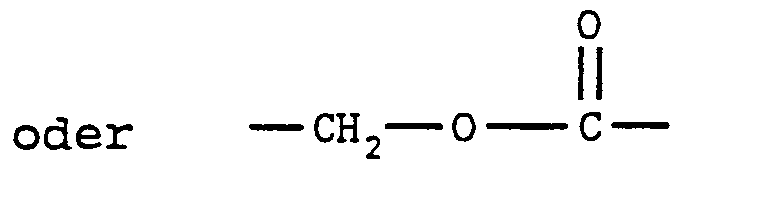
- R7 eine der Gruppen ―COOR6 oder ―SO2R6,
- Ra und R6 gleich oder verschieden sind und -CN, -N02, Halogen, -COOR oder -SO2R,
- R10―R6 oder -COOR6,
- R11―CN oder -COOR,
- R,2, R,3, R14 gleich oder verschieden sind und ein Wasserstoffatom, die Gruppen -CN, -R oder -COOR und
- R einen Kohlenwasserstoffrest mit 1 bis 24 Kohlenstoffatomen bedeuten, und
- B. radikalisch polymerisierbaren, olefinisch ungesättigten Verbindungen als Comonomeren gebildet ist.
- Als Trägerflüssigkeit mit einem Volumenwiderstand von mindestens 109 Ohm.cm und einer Dielektrizitätskonstanten unter 3 können Kohlenwasserstoffe, Fluorkohlenwasserstoffe oder Silikonöle eingesetzt werden, bevorzugt werden Flüssigkeiten auf Kohlenwasserstoffbasis, beispielsweise aromatische Kohlenwasserstoffe wie Benzol, Toluol oder Xylole oder aliphatische C6―C15-Kohlenwasserstoffe, wie n-Hexan, Cyclohexan, n-Heptan, n-Oktan oder Dekalin. Auch Mischungen unterschiedlicher Kohlenwasserstoffe können verwendet werden. Besonders geeignet sind verzweigte aliphatische Kohlenwasserstoffe wie Isodecan und Isododecan.
- Als Pigmente eignen sich die oben erwähnten üblicherweise für Suspensionsentwickler eingesetzten Schwarz- und Farbpigmente. Gut geeignet sind beispielsweise Spiritschwarz (C.I. Nr. 50415), Anilinschwarz (C.I. Nr. 50440), Cyaninblau (C.I. Nr. 74250), Brillant Carmine 6 B (C.I. 15850), Echtrot (C.I. Nr. 15865), Benzidinorange (C.I. 21110) oder Permanentgelb GR 52 (C.I. 21100). Besonders bevorzugt sind Ruß (vor allem basische Rußtypen), Helioechtblau HG (C.I. Nr. 74160), Fanalrosa B (C.I. Nr. 45160) und Helioechtgelb GRN (C.I. Nr. 21100).
- Das Copolymerisat enthält 0,1 bis 80, vorzugsweise 0,5 bis 50 und besonders bevorzugt 2 bis 20 Gew.- % polymerisierte kationische Monomere (A).
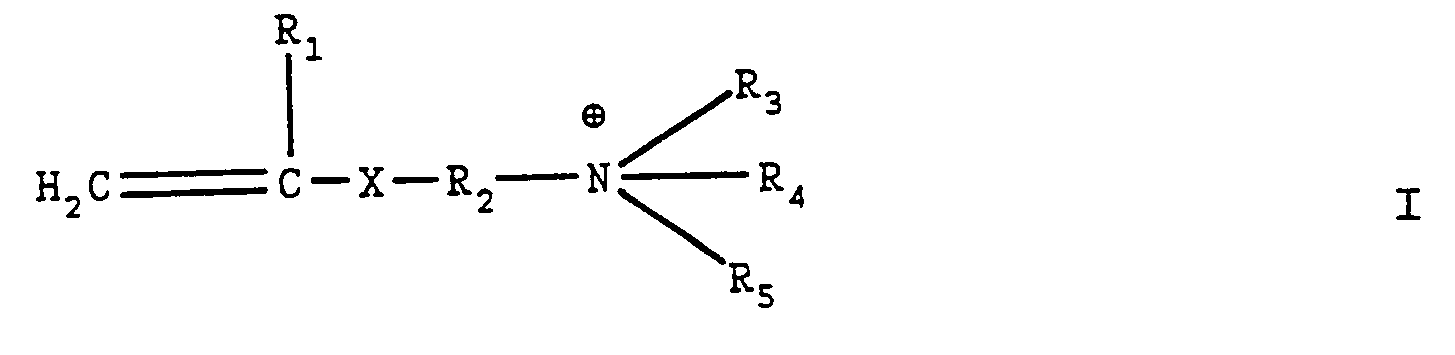
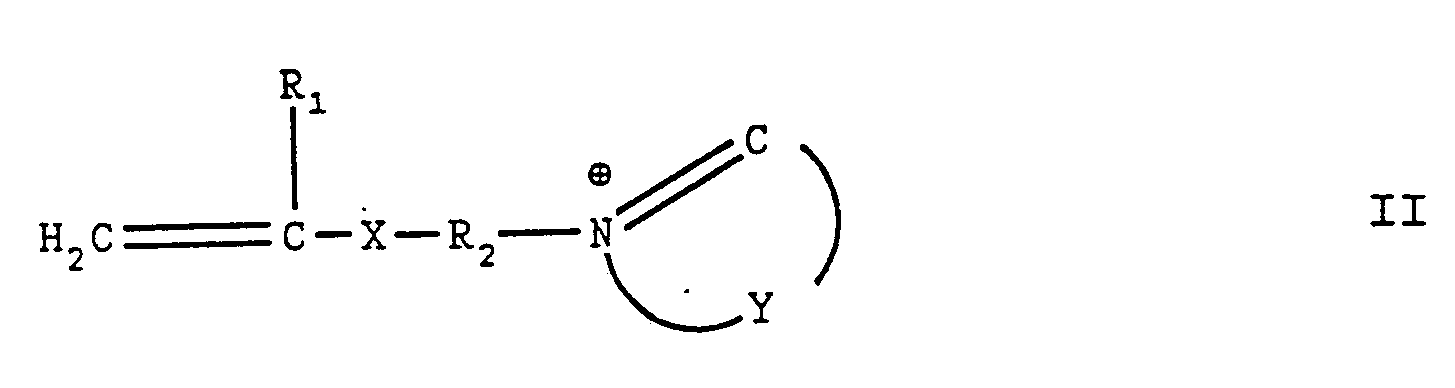
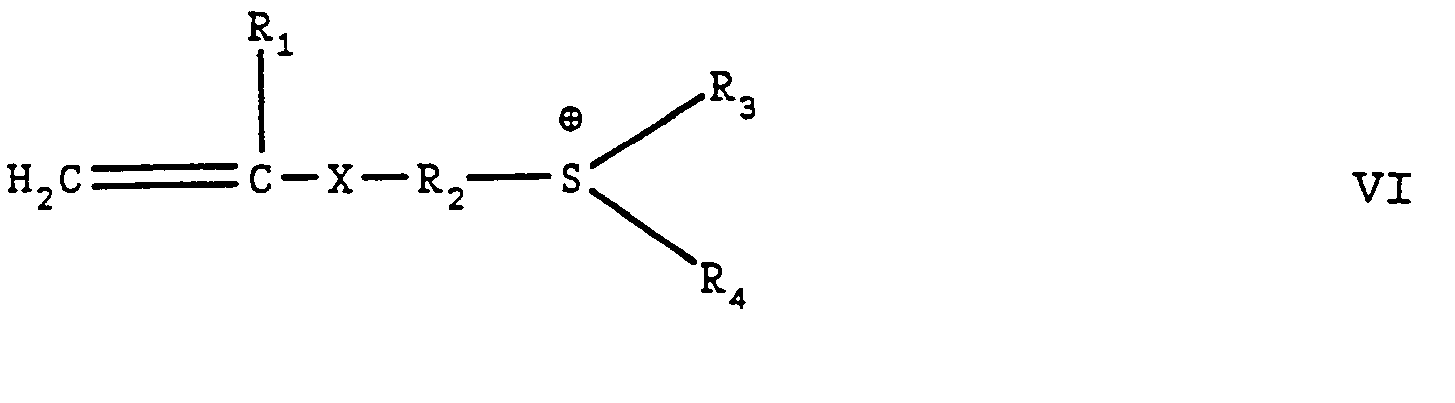
- Das Kation der ionischen Monomeren (A) entspricht vorzugsweise einer der Formeln I-VI


- R, ein Wasserstoffatom oder eine CH3-Gruppe,
- R2 einen Kohlenwasserstoffrest mit 1 bis 18 Kohlenstoffatomen,
- R3 und R4 gleich oder verschieden sind und einen Kohlenwasserstoffrest mit 1 bis 18 Kohlenstoffatomen, oder zusammen einen 5- oder 6-gliedrigen Ring,
- Rs ein Wasserstoffatom oder einen Kohlenwasserstoffrest mit 1 bis 18 Kohlenstoffatomen,


- Y die zur Vervollständigung eines 5- oder 6-gliedrigen heterocyclischen Ringes erforderlichen Atome bedeuten.
- Die genannten Kohlenwasserstoffreste können lineare oder verzweigte Alkyl-, Aryl-, Arylalkyl- oder Alkylarylreste sein.
- Als geeignete Kationen seien beispielhaft genannt:


- Zu obigel allgemeinen Formeln entsprechenden Anionen gehören z.B. folgende:


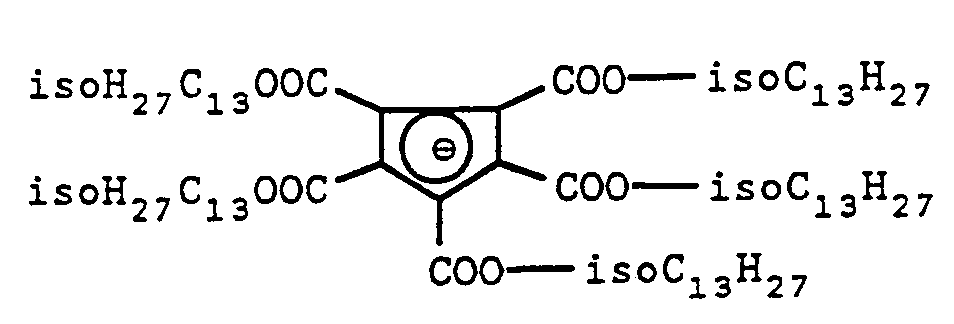
- Die folgende Tabelle I zeigt Beispiele für geeignete ionische Monomere.


- Die Herstellung der ionischen Monomeren erfolgt aus an sich bekannten Ausgangsverbindungen.
- Handelt es sich um kationische Monomere, bei denen der Substituent R5 H bedeutet, so kann die Synthese der ionischen Verbindung durch direkte Umsetzung im Sinne einer Säure-Basen-Reaktion erfolgen.
- Es hat sich dabei als besonders vorteilhaft erwiesen, die dem Kation zugrundeliegende Base, mit der äquivalenten Menge eines Alkalisalzes des gewünschten Anions in Anwesenheit der äquivalenten Menge einer Mineralsäure wie Schwefelsäure in wäßriger Lösung umzusetzen. Das ionische Monomere läßt sich aus diesem wäßrigen Reaktionsgemisch in hoher Reinheit durch Extraktion gewinnen, wobei Toluol, Isobutanol und Mischungen beider Lösungsmittel besonders geeignete Extraktionsmittel sind.
- Die Synthese quaternierter Verbindungen erfolgt im allgemeinen in einem Zweistufenprozeß. In der ersten Stufe wird die dem Kation zugrundeliegende N-, P- oder S-Verbindung nach bekannten Methoden quaterniert.
- Die Quaternierungsreaktion erfolgt dabei vorzugsweise bei Temperaturen von 0 bis 90°C, in Gegenwart von organischen Lösungsmitteln. Es ist zweckmäßig, bei dieser Stufe an sich bekannte Polymerisationsinhibitoren wie beispielsweise Hydrochinon, Hydrochinonmonomethylether oder 2,6-Di- tert.-butyl-p-methylphenol zuzusetzen.
- In einer zweiten Stufe wird die quaternierte Verbindung mit einem Alkalisalz des gewünschten Anions in wäßriger Lösung umgesetzt. Die Isolierung der ionischen Monomeren kann wiederum in vorteilhafter Weise durch Extraktion mit den oben erwähnten Lösungsmitteln erfolgen.
- Zur Herstellung der Copolymerisate können bekannte radikalische Polymerisationsmethoden unter Verwendung der ionischen Monomeren angewendet werden. Es ist jedoch auch möglich, zunächst ein Copolymerisat mit den dem Kationenteil zugrundeliegenden basischen Monomeren durchzuführen und die ionischen Gruppen durch Protonierung oder Quaternierung mit gegebenenfalls anschließendem Ionenaustausch einzuführen.
- Der bevorzugte Syntheseweg für die Copolymerisate ist die radikalische Polymerisation der ionischen Monomeren. Die Einleitung der Polymerisation kann mit üblichen Radikal-bildnern wie Peroxiden und vorzugsweise Azoverbindungen erfolgen. Auch eine Redoxpolymerisation, beispielsweise unter Verwendung eines Peroxid/Amin-Systems oder eine Fotopolymerisation ist möglich.
- Als Comonomere (B) eignen sich prinzipiell alle radikalisch polymerisierbaren, olefinisch ungesättigten Verbindungen, insbesondere die bekannten Vinyl- und Vinylidenverbindungen. Beispielhaft seien aufgeführt: (Meth)acrylsäure und ihre Derivate wie z.B. (Meth)-acrylsäureester mit Ci- bis C24-Kohlenwasserstoffresten im Alkoholteil, (Meth)-acrylsäureamid, (Meth)-acrylnitril, Vinylester wie Vinylacetat, Vinylpropionat, Vinylaromaten wie Styrol oder a-Methylstyrol, ferner Diene wie Butadien und Isopren, sowie halogenhaltige Monomere, wie Vinylchlorid und Vinylidenchlorid. Bevorzugte Comonomere sind (Methy)acrylsäureester mit mindestens einem Ci- bis C24-Kohlenwasserstoffrest im Alkoholteil und Styrol. Gut geeignet sind auch Mischungen verschiedener Monomere. Gute Einbauraten werden vor allem dann erzielt, wenn zumindest anteilmäßig (Meth)-acrylsäureester als Comonomere verwendet werden. Es können sowohl unvernetzte als auch durch Verwendung von mehrfunktionellen Monomeren wie z.B. Ethylendimethylacrylat oder Divinylbenzol vernetzte Copolymerisate aufgebaut werden.
- Es ist möglich, durch die Auswahl der Comonomeren (B) dem Copolymerisat verbesserte Dispergatoreigenschaften zu verleihen. In diesem Fall bewirkt das Copolymerisat nicht nur eine Aufladung des dispergierten Pigmentes, sondern erhöht auch die Dispersionsstabilität der Pigmentdispersion durch sterische Abschirmung. Comonomere, die die Dispergatoreigenschaften des Copolymerisates verbessern, sind beispielsweise Vinyl- oder Vinylidenmonomere mit einem Ce- bis C24-Kohlenwasserstoffrest, insbesondere (Meth)-acrylsäureester mit C6- bis C24-Kohlenwasserstoffresten im Alkoholteil; z.B. Stearylmethacrylat, Laurylmethacrylat oder 2-Ethylhexylmethacrylat, wobei diese Comonomere vorzugsweise in Mengen von 10 bis 70 Gew.-% (bezogen auf Copolymerisat) eingesetzt werden: Es ist in diesem Falle von Vorteil, die hier genannten Comonomeren mit solchen mit Ci- bis Cs-Kohlenwasserstoffresten zu kombinieren.
- Verbesserte Dispergatoreigenschaften des Comonomeren sind jedoch nicht charakteristisch für die vorliegende Erfindung. Es ist durchaus möglich, die Dispersionsstabilität, wie weiter unten ausgeführt wird, durch weitere polymere Zusätze einzustellen.
- Das Copolymerisat kann nach bekannten Verfahren, wie Masse-, Lösungs-, Fällungs-, Suspensions-oder Emulsions-polymerisation in Abwesenheit des Pigmentes synthetisiert werden.
- Nach einer bevorzugten Ausführungsform wird das Copolymerisat in Anwesenheit des dispergierten Pigmentes synthetisiert, wobei das gebildete Copolymerisat zumindest teilweise eine feste physikalische oder chemische Bindung mit dem Pigment eingeht. Bei dieser Synthesemethode wird das Pigment in Form einer nicht wäßrigen 0,5―40 gew.- %igen Dispersion eingesetzt. Als Dispergiermedium eignen sich dabei in erster Linie aromatische und aliphatische Kohlenwasserstoffe, wie beispielsweise Benzol, Toluol, Xylol, lineare und verzweigte Cg--C,5-Alkane sowie Cyclohexan oder Dekalin.
- Bevorzugt wird ein Polymerisationsverfahren, bei dem die Pigmentdispersion, die gegebenenfalls ein Stabilisierungsmittel enthalten kann, mit dem ionischen Monomeren und Comonomeren versetzt und mittels eines Radikalbildners als Startkomponente die Polymerisation eingeleitet wird.
- Als Stabilisierungsmittel können dabei lösliche, hochmolekulare Verbindungen, wie Homo- oder Mischpolymerisate aus (Meth)-acrylsäureestern, beispielsweise ein 1:1 Mischpolymerisat aus Isobutylmethacrylat und Laurylmethacrylat eingesetzt werden. Gut geeignet sind auch Mischpolymerisate mit einem Anteil von 0,1-10 Gew.-% an einpolymerisierten Monomeren mit -OH, -COOH, -NH2, -NHR, -NR2-Gruppen, wie z.B. 2-Hydroxyethylmethacrylat, (Meth)-acrylsäure, (Meth)-acrylamid, N,N-Dimethylacrylamid, N,N-Dimethylaminoethylmethacrylat und N-Vinylpyrrolidon.
- Besonders gut geeignete Stabilisierungsmittel sind Blockcopolymerisate, zum Beispiel Styrol-Stearylmethacrylat-Blockcopolymerisate oder mercaptanmodifizierte Styrol-Butadien-Blockcopolymere (DE-A 34 12 085).
- Die Polymerisationsreaktion kann nach einem "Batch-Verfahren" durchgeführt werden. In diesem Falle werden die Monomeren und die Startkomponente auf einmal der Pigmentdispersion zugesetzt und die Reaktion durch Temperaturerhöhung eingeleitet. Auf diese Weise wird eine weitgehend einheitliche Polymerisathülle erzeugt.
- In einer besonders bevorzugten Ausführungsform werden die Monomeren und die Startkomponenten während der Polymerisation zudosiert (Zulaufverfahren). Diese Ausführungsform eröffnet eine Reihe technisch sehr interessanter Möglichkeiten. Man kann z.B. die Monomerzusammensetzung über den Dosierzeitraum hinweg verändern, um besondere Effekte zu erzielen. So hat es sich als günstig erwiesen, zu Beginn des Dosierzeitraums die oben erwähnten geeigneten Comonomere ohne Zusatz von ionischen Monomeren zuzusetzen und erst nach einem Polymerisationsumsatz von 10 bis 50% die ionischen Monomeren im Gemisch mit weiteren Comonomeren zuzusetzen.
- Die Startkomponente wird mit Vorteil ebenfalls über den Reaktionszeitraum zudosiert. Feste Startkomponenten werden zweckmäßigerweise in Lösungsmitteln oder Monomeren gelöst. Das Copolymerisat wird in Mengen von 10 bis 300, vorzugsweise 10 bis 100 Gew.-%, bezogen auf Pigment, eingesetzt.
- Neben dem Copolymerisat können zur Herstellung des erfindungsgemäßen Suspensionsentwicklers weitere polymere Zusätze angewendet werden, beispielsweise um die Dispersionsstabilität zu erhöhen oder die Haft- und Fixiereigenschaften des dispergierten Pigmentes zu verbessern.
- Für die Erhöhung der Dispersionsstabilität eignen sich in erster Linie die weiter oben angeführten Stabilisierungsmittel auf Basis löslicher hochmolekularer Verbindungen.
- Als fixierende Substanzen eignen sich Harze, die mit dem Bindemittel des fotoleitfähigen Aufzeichnungsmaterials verträglich sind, z.B. mit dem Bindemittel einer fotoleitfähigen Zinkoxidschicht, damit nach der Entwicklung eine gute Haftung des erzeugten Bildes auf der Unterlage erhalten wird. Beispiele für geeignete Harze sind Ester von hydrogeniertem Kolophonium und fettem Öllack ("long-oil"), kolophoniummodifiziertes Phenol-Formaldehydharz, Pentaerythritolester von Kolophonium, Glycerinester von hydrogeniertem Kolophonium, Ethylcellulose, verschiedene Alkydharze, Polyacryl- und Polymethacrylharz, Polystyrol, Polyketonharz und Polyvinylacetat. Spezifische Beispiele solcher Harze sind in der Literatur über elektrostatographische Suspensionsentwickler zu finden, z.B. in der BE-PS 699 157 und in der GB-A-1 151 141.
- Die erfindungsgemäßen Suspensionsentwickler können mit Hilfe üblicher Dispergiermethoden hergestellt werden. Gute Ergebnisse werden unter Verwendung von Kugelmühlen, Perlmühlen, Kolloidmühlen sowie Hochgeschwindigkeitsrührern erzielt. Es kann dabei günstig sein, zunächst beispielsweise durch Aufschmelzen in einem Kneter eine Mischung aus dem Pigment, dem Polymerisat und den weiteren polymeren Zusätzen herzustellen und diese Mischung in einem zweiten Verfahrensschritt in der Trägerflüssigkeit zu dispergieren.
- Bei Anwendung des oben beschriebenen Verfahrens der Polymerisation in Anwesenheit des Pigmentes wird im allgemeinen direkt eine stabile Dispersion erhalten, so daß auf einen zusätzlichen Dispersionsschritt verzichtet werden kann. Es ist zweckmäßig, zunächst ein Tonerkonzentrat aus Trägerflüssigkeit, Pigment und Polymer mit einem Gehalt von 5 bis 50 Gew.-%, vorzugsweise 10 bis 25 Gew.-% Feststoff herzustellen, das durch Zugabe von weiterer Trägerflüssigkeit auf die Gebrauchskonzentrationen von 0,05 bis 2%, vorzugsweise 0,1 bis 1%, verdünnt wird.
- Mit den folgenden Beispielen wird die Synthese ionischer Monomerer, die Herstellung der Copolymerisate sowie die Herstellung und Prüfung erfindungsgemäßer Suspensionsentwickler im einzelnen erläutert.
- 17,1 g N,N-Diethylaminoethylacrylatwerden in 100 ml entionisiertem Wasser gelöst und mit 100 ml 1 n-HCI und 50 mg Hydrochinon versetzt. Anschließend werden unter Rühren bei Raumtemperatur 59,2 g Sulfobernsteinsäurediisooktylester-Na-Salz zugegeben. Das gebildete ionische Monomer wird mit 100 ml eines Gemisches aus gleichen Teilen Isobutanol und Toluol extrahiert und durch Abdampfen des Lösungsmittels isoliert.
- Ausbeute: 85%.
- 7,13 g (20 mmol) 1,2,3,4,5-Pentamethoxycarbonylcyclopentadien werden mit 20,0 g (100 mmol) Isotridecylalkohol versetzt. Bei 100°C werden innerhalb von 8 Stunden zunächst bei 1013 mbar, anschließend bei 363-18 mbar 3,12 g (97,5% der Theorie) Methanol abdestilliert. Man erhält 24 g 1,2,3,4,5-Pentaisotridecyloxycarbonylcyclopentadien.
- 4,79 g (4 mmol) 1,2,3,4,5-Pentaisotridecyloxycarbonylcyclopentadien werden mit 0,66 g (4 mmol) Dimethylaminoethylmethacrylat innigst vermischt.
- In exothermer Reaktion entsteht 2-Methacryloxyethyl-dimethylammonium-1,2,3,4,5-pentaisotridecyloxycarbonylcyclopentadienid als grünes Öl; 5,45 g (quantitativ).
- Zu 15,0 g (170 mmol) Natriummalodinitril in 150 ml absolutem Ethanol werden 19,5 g (88,3 mmol) Chloramiesensäureisodecylester in 20 ml Diethylether bei -10°C innerhalb von 30 Minuten getropft. Dann erwärmt man auf Raumtemperatur und erhitzt anschließend 30 Minuten am Rückfluß (68°C). Der Niederschlag von 5,7 g NaCI (Theorie 5,1 g) wird abfiltriert und das Filtrat zur Trockne eingeengt. Der Rückstand (26,8 g) wird mit Methylenchlorid versetzt, um Malodinitril herauszulösen, dann abgesaugt und mehrfach mit Methylenchlorid gewaschen. Der Niederschlag wird im Ölpumpenvakuum getrocknet. Man erhält 19,5 g (81 % der Theorie) Na-dicyanessigsäureisodecylester.
- 4,1 g (15 mmol) Na-dicyanessigsäureisodecylester, gelöst in 20 ml Wasser, werden mit 4,95 g (15 mmol) Benzyl-2-methacryloxyethyldimethylammoniumchlorid in 20 ml Wasser versetzt. Sofort fällt ein braun-grünes Öl aus, welches man mit Methylenchlorid extrahiert. Die organische Phase wird über Natriumsulfat getrocknet, filtriert und Methylenchlorid mit Stickstoff abgedampft.
- Die Ausbeute an Benzyl-2-methacryloxyethyl-dimethylammonium-dicyanessigsäureisodecylester beträgt 5,9 g (70% der Theorie).
- 2 g des ionischen Monomeren aus Beispiel 2, 9 g Styrol, 9 g Laurylmethacrylat und 20 mg Azodiisobuttersäuredinitril werden in 20 g Toluol gelöst und 6 Stunden bei 80°C gerührt. Das gebildete Polymerisat wird durch Ausfällen mit Methanol isoliert und durch Umfällen gereinigt.
- Ausbeute: 14 g, [η]: 0,62 dl/g in Toluol, bei 25°C.
- Nach der in Beispiel 4 angegebenen Arbeitsweise wird aus 2 g ionischem Monomer aus Beispiel 3, 9 g Styrol und 9 g Laurylmethacrylat ein Copolymerisat hergestellt.
- Ausbeute: 15 g, [n]: 0,72 dl/g in Toluol, bei 25°C.
- 5 g des Copolymerisats aus Beispiel 4 und 5 g Rußpigment mit einer BET-Oberfläche von 30 m2/g werden mit 5 g Isododecan versetzt und 10 Stunden lang in einer Kugelmühle gemahlen. Das erhaltene Entwicklerkonzentrat wird anschließend mit Isododecan auf eine Gewichtskonzentration von 0,4 Gew.-% verdünnt.
- Die Ladung und die Ladungsstabilität der dispergierten Pigmentteilchen (Tonerteilchen) wurde durch folgende Testmethode geprüft:
- In einer Elektrophoresezelle mit 2 planaren Elektroden mit einer Oberfläche von je 20 cm2 und einem Elektrodenabstand von 0,15 cm wird der Suspensionsentwickler eingefüllt. Der elektrische Strom, der beim Anlegen einer Spannung von 500 V für 0,5 s auftritt, wird gemessen. Das Integral des Stromes über die Periode von 0,5 s ist der Q,-Wert. OT ist ein Maß für die Ladung der Tonerteilchen.
- Die Abscheidung der Tonerteilchen (Schwärzung) an der negativen Elektrode (Kathode) zeigt, daß diese positiv geladen sind. Die Ladungsstabilität der Tonerteilchen wurde überprüft, indem der Wert OT1 unmittelbar nach Herstellung des Flüssigentwicklers und QT2 nach 7-tägiger Lagerung gemessen wurde:

- Beispiel 6 wurde unter Verwendung von 5 g des Copolymerisates aus Beispiel 5 und 5 g Rußpigment mit einer BET-Oberfläche von 90 m2/g wiederholt:

- 80 g Rußpigment mit einer BET-Oberfläche von 30 m2fg werden mit 20 g eines Mischpolymerisates aus gleichen Teilen Laurylmethacrylat und Isobutylmethacrylat mit einem Molekulargewicht von 120 000 versetzt und mit Hilfe einer Kugelmühle in 100 Isododecan dispergiert.
- 250 g der erhaltenen Dispersion werden in einen Rührreaktor überführt und auf 80°C aufgeheizt. Unter Rühren werden zunächst 250 mg Azoisobuttersäuredinitril zugesetzt und unmittelbar anschließend über einen Zeitraum von 60 Minuten eine Lösung aus 75 g Toluol, 7,5 g Laurylmethacrylat, 7,5 g Isobutylmethacrylat, 5 g Divinylbenzol, 5 g des ionischen Monomeren aus Beispiel 1 und 100 mg Azoisobuttersäuredinitril gleichmäßig zudosiert. Nach beendeter Zugabe wird die Dispersion unter weiterem Rühren 1 Stunde bei 80°C und 3 Stunden bei 90°C gehalten.
- Die Dispersion wird zur Reinigung mit Hilfe einer Becherzentrifuge zentrifugiert; der gebildete Feststoff wird isoliert und in 250 g reinem Isododecan unter Anwendung eines Schüttlers redispergiert. Dieser Vorgang wird einmal wiederholt. Die Dispersion wird anschließend unter Zugabe von weiterem Isododecan auf 0,4 Gew.-% Feststoff eingestellt und geprüft:

- 40 g Pigment Helioechtblau HG (C.I. 74 160) werden mit 40 g des in Beispiel 8 beschriebenen Mischpolymerisates mit Hilfe einer Kugelmühle in 320 g Isododecan dispergiert.
- 100 g der erhaltenen Dispersion werden mit 150 g Isododecan verdünnt, in einen Rührreaktor überführt und auf 80°C aufgeheizt. Unter Rühren werden zunächst 250 mg Azoisobuttersäuredinitril und anschließend über einen Zeitraum von 30 Minuten die Lösung gleichmäßig zudosiert.
-
- 40 g Toluol
- 2 g Divinylbenzol
- 8 g Butylacrylat
- 100 mg Azobuttersäuredinitril
- Unmittelbar nach Beendigung der Zugabe der Lösung I wird Lösung II zudosiert.
-
- 40 g Toluol
- 0,5 g Divinylbenzol
- 1 g ionisches Monomer aus Beispiel 3
- 8,5 g Stearylmethacrylat
- 100 mg Azoisobuttersäuredinitril
- Nach Beendigung der Zugabe der Lösung II wird die Dispersion unter weiterem Rühren 1 Stunde bei 80°C und 3 Stunden bei 90°C gehalten.
- Die Dispersion wird zur Reinigung mit Hilfe einer Becherzentrifuge zentrifugiert, der gebildete Feststoff wird isoliert und in 250 g reinem Isododecan unter Anwendung eines Schüttlers redispergiert. Dieser Vorgang wird einmal wiederholt. Die Dispersion wird anschließend durch Zugabe von weiterem Isododecan auf 0,4 Gew.-% Feststoff eingestellt und geprüft.

- Beispiel 9 wird unter Verwendung des ionischen Monomeren aus Beispiel 2 wiederholt.

- Beispiel 5 wird unter Verwendung des ionischen Monomeren aus Beispiel 1 wiederholt.
-

- 80 g Rußpigment mit einer BET-Oberfläche von 95 m2/g werden mit 20 g des in Beispiel 8 beschriebenen Mischpolymerisates mit Hilfe einer Kugelmühle in 300 g Isododecan dispergiert.
- 250 g der erhaltenen Dispersion werden in einen Rührreaktor überführt und auf 80°C aufgeheizt. Unter Rühren werden 250 mg Azoisobuttersäuredinitril zugesetzt und anschließend über einen Zeitraum von 30 Minuten die Lösung I gleichmäβig zudosiert.
-
- 43,75 g Toluol
- 2,5 g Laurylmethacrylat
- 2,5 g Isobutylmethacrylat
- 1,25 g Divinylbenzol
- 50 mg Azoisobuttersäuredinitril
- Unmittelbar nach Beendigung der Zugabe der Lösung I wird Lösung II zudosiert.
-
- 43,75 g Toluol
- 1,25 g Laurylmethacrylat
- 1,25 g Isobutylmethacrylat
- 1,25 g Divinylbenzol
- 2,5 g ionisches Monomer aus Beispiel 1
- Nach Beendigung der Zugabe der Lösung II wird die Dispersion unter weiterem Rühren 1 Stunde bei 80°C und 3 Stunden bei 90°C gehalten.
- Die Dispersion wird zur Reinigung mit Hilfe einer Becherzentrifuge zentrifugiert, der gebildete Feststoff wird isoliert und in 300 g reinem Isododecan redispergiert. Dieser Vorgang wird einman wiederholt. Die Dispersion wird anschließend durch Zugabe von weiterem Isododecan auf einen Feststoffgehalt von 0,4% eingestellt und geprüft.

- In einer Kugelmühle werden aus 4 g Rußpigment mit einer BET-Oberfläche von 30 m2/g, 1 g eines Mischpolymerisates aus 85% Isobutylmethacrylat und 15% Stearylmethacrylit mit einem Molekulargewicht Mw von 170 000 und in 45 g Isododecan eine Dispersion hergestellt. Die Dispersion wird auf 0,4% Feststoff verdünnt, mit 80 mg Zink(2-butyl)octylphosphat (Herstellung gemäß GB-PS 1 151 141) versetzt und geprüft.

- Nach der von Kohler et al. (Photographic Science and Engineering 22, 4 (1978) 218-227) beschriebenen Methode wurde die Leitfähigkeit des Gesamtentwicklers (Ke) und die Leitfähigkeit der Trägerflüssigkeit des Entwicklers (KM) nach Abtrennen der Pigmentteilchen durch Zentrifugieren bestimmt.
-

- Die Tabelle zeigt, daß die erfindungsgemäßen Suspensionsentwickler keine Leitfähigkeit der Trägerflüssigkeit aufweisen.
Claims (8)





Applications Claiming Priority (2)
| Application Number | Priority Date | Filing Date | Title |
|---|---|---|---|
| DE3426256 | 1984-07-17 | ||
| DE19843426256 DE3426256A1 (de) | 1984-07-17 | 1984-07-17 | Elektrostatographischer suspensionsentwickler und verfahren zu seiner herstellung |
Publications (3)
| Publication Number | Publication Date |
|---|---|
| EP0168748A2 EP0168748A2 (de) | 1986-01-22 |
| EP0168748A3 EP0168748A3 (en) | 1988-03-09 |
| EP0168748B1 true EP0168748B1 (de) | 1990-12-05 |
Family
ID=6240813
Family Applications (1)
| Application Number | Title | Priority Date | Filing Date |
|---|---|---|---|
| EP85108465A Expired - Lifetime EP0168748B1 (de) | 1984-07-17 | 1985-07-09 | Elektrostatographischer Suspensionsentwickler und Verfahren zu seiner Herstellung |
Country Status (4)
| Country | Link |
|---|---|
| US (1) | US4639403A (de) |
| EP (1) | EP0168748B1 (de) |
| JP (1) | JPS6139058A (de) |
| DE (2) | DE3426256A1 (de) |
Families Citing this family (20)
| Publication number | Priority date | Publication date | Assignee | Title |
|---|---|---|---|---|
| JP2590895B2 (ja) * | 1987-07-16 | 1997-03-12 | 富士ゼロックス株式会社 | 現像剤用キャリア |
| US4855396A (en) * | 1988-08-05 | 1989-08-08 | Eastman Kodak Company | Polyesters containing covalently bound quaternary phosphonium salts |
| US4837392A (en) * | 1988-08-05 | 1989-06-06 | Eastman Kodak Company | Dry electrostatographic developer containing toner particles comprising a vinyl addition polymer containing a covalently bound quaternary phosphonium salt |
| US4837394A (en) * | 1988-08-05 | 1989-06-06 | Eastman Kodak Company | electrostatographic toner particle comprising a polyester containing a covalently bound quaternary phosphonium salt |
| US4837391A (en) * | 1988-08-05 | 1989-06-06 | Eastman Kodak Company | Dry electrostatographic developer containing toner particles comprising a vinyl addition polymer containing a covalently bound quaternary phosphonium salt |
| US4837393A (en) * | 1988-08-05 | 1989-06-06 | Eastman Kodak Company | Electrostatographic toner particle comprising a polyester containing a covalently bound quaternary phosphonium salt |
| JP2587277B2 (ja) * | 1988-09-12 | 1997-03-05 | 富士写真フイルム株式会社 | 印刷版用液体現像剤 |
| US5035972A (en) * | 1989-10-31 | 1991-07-30 | E. I. Du Pont De Nemours And Company | AB diblock copolymers as charge directors for negative electrostatic liquid developer |
| US5130221A (en) * | 1990-03-07 | 1992-07-14 | Dximaging | Salts of acid-containing ab diblock copolymers as charge directors for positive-working electrostatic liquid developers |
| US5457002A (en) * | 1994-08-23 | 1995-10-10 | Lexmark International, Inc. | Carrier fluid for liquid electrophotographic toner |
| US5876887A (en) * | 1997-02-26 | 1999-03-02 | Xerox Corporation | Charge generation layers comprising pigment mixtures |
| US7247379B2 (en) * | 1997-08-28 | 2007-07-24 | E Ink Corporation | Electrophoretic particles, and processes for the production thereof |
| US7002728B2 (en) * | 1997-08-28 | 2006-02-21 | E Ink Corporation | Electrophoretic particles, and processes for the production thereof |
| US6771183B2 (en) * | 2000-07-03 | 2004-08-03 | Kodiak Technologies, Inc. | Advanced thermal container |
| US7230750B2 (en) | 2001-05-15 | 2007-06-12 | E Ink Corporation | Electrophoretic media and processes for the production thereof |
| US20100148385A1 (en) * | 2001-05-15 | 2010-06-17 | E Ink Corporation | Electrophoretic media and processes for the production thereof |
| JP4188091B2 (ja) * | 2001-05-15 | 2008-11-26 | イー インク コーポレイション | 電気泳動粒子 |
| US20090009852A1 (en) * | 2001-05-15 | 2009-01-08 | E Ink Corporation | Electrophoretic particles and processes for the production thereof |
| DE102009048542A1 (de) * | 2009-10-07 | 2011-04-21 | Clariant International Ltd. | Leicht dispergierbare Pigmentzubereitung auf Basis von C.I. Pigment Yellow 155 |
| WO2018092902A1 (ja) * | 2016-11-21 | 2018-05-24 | キヤノン株式会社 | 硬化型液体現像剤 |
Family Cites Families (3)
| Publication number | Priority date | Publication date | Assignee | Title |
|---|---|---|---|---|
| JPS50147722A (de) * | 1974-05-17 | 1975-11-27 | ||
| US4229513A (en) * | 1979-05-29 | 1980-10-21 | Eastman Kodak Company | Liquid electrographic developers containing polymeric quaternary salts |
| DE3371423D1 (en) * | 1983-01-20 | 1987-06-11 | Agfa Gevaert Nv | Liquid developer for development of electrostatic images |
-
1984
- 1984-07-17 DE DE19843426256 patent/DE3426256A1/de not_active Withdrawn
-
1985
- 1985-07-05 US US06/752,095 patent/US4639403A/en not_active Expired - Fee Related
- 1985-07-09 EP EP85108465A patent/EP0168748B1/de not_active Expired - Lifetime
- 1985-07-09 DE DE8585108465T patent/DE3580798D1/de not_active Expired - Fee Related
- 1985-07-12 JP JP15257285A patent/JPS6139058A/ja active Pending
Also Published As
| Publication number | Publication date |
|---|---|
| DE3426256A1 (de) | 1986-01-23 |
| JPS6139058A (ja) | 1986-02-25 |
| EP0168748A3 (en) | 1988-03-09 |
| DE3580798D1 (de) | 1991-01-17 |
| US4639403A (en) | 1987-01-27 |
| EP0168748A2 (de) | 1986-01-22 |
Similar Documents
| Publication | Publication Date | Title |
|---|---|---|
| EP0168748B1 (de) | Elektrostatographischer Suspensionsentwickler und Verfahren zu seiner Herstellung | |
| DE3138999C2 (de) | ||
| DE3218758C2 (de) | ||
| DE69023473T2 (de) | Flüssiger elektrofotografischer Entwickler. | |
| DE69121279T2 (de) | Flüssiger elektrophotographischer Entwickler mit Säure enthaltenden Polyesterharzen | |
| US4606989A (en) | Liquid developer for development of electrostatic images | |
| DE2512112C3 (de) | Elektrophotographischer Suspensionsentwickler | |
| EP0359123A2 (de) | Verfahren zur gezielten Beeinflussung des triboelektrischen Effektes von Azopigmenten | |
| DE2502933C2 (de) | Elektrostatographischer Suspensionsentwickler | |
| DE69008509T2 (de) | Farbelektrofotografie für hoch qualitative Halbtonbilder. | |
| EP0102025B1 (de) | Elektrostatographischer Suspensionsentwickler und Verfahren zu dessen Herstellung | |
| DE1254468B (de) | Photoleitfaehige Schicht fuer elektrophotographische Zwecke | |
| US4525446A (en) | Liquid developer for development of electrostatic images comprising onium salt polymer and an anion | |
| EP0157269B1 (de) | Elektrostatographischer Suspensionsentwickler | |
| EP0168747B1 (de) | Elektrostatographischer Suspensionsentwickler und Verfahren zu seiner Herstellung | |
| EP0200067A2 (de) | Elektrostatografischer Suspensionsentwickler und Verfahren zu dessen Herstellung | |
| EP0213568B1 (de) | Elektrostatographischer Suspensionsentwickler | |
| DE4239135A1 (en) | Positively chargeable liq. electrophotographic developer - based on non-aq. resin dispersion stabilised with copolymer of macro:monomer and unsatd. monomer | |
| DE1906978A1 (de) | Fluessiger Entwickler zum Entwickeln latenter Ladungsbilder und Verfahren zur Nassentwicklung | |
| DE2657918C3 (de) | Verwendung von heterocyclischen Verbindungen bestimmter Struktur als photoelektrophoretische Teilchen oder Sensibilisatoren in elektrophoretophotographischen Verfahren | |
| DE3880277T2 (de) | Lichtempfindliches elektrophotographisches material. | |
| EP0202467A2 (de) | Mit Polycyanacrylat umhülltes Pigment und ein Verfahren zur Umhüllung von Pigmenten | |
| AT246562B (de) | Registriermaterial mit einer photoleitfähigen Schicht | |
| AT246564B (de) | Registriermaterial mit einer photoleitfähigen Schicht | |
| AT246563B (de) | Photoleitende Aufnahmematerialien |
Legal Events
| Date | Code | Title | Description |
|---|---|---|---|
| PUAI | Public reference made under article 153(3) epc to a published international application that has entered the european phase |
Free format text: ORIGINAL CODE: 0009012 |
|
| 17P | Request for examination filed |
Effective date: 19850709 |
|
| AK | Designated contracting states |
Designated state(s): BE DE FR GB |
|
| RAP1 | Party data changed (applicant data changed or rights of an application transferred) |
Owner name: AGFA-GEVAERT AG |
|
| PUAL | Search report despatched |
Free format text: ORIGINAL CODE: 0009013 |
|
| AK | Designated contracting states |
Kind code of ref document: A3 Designated state(s): BE DE FR GB |
|
| 17Q | First examination report despatched |
Effective date: 19891221 |
|
| GRAA | (expected) grant |
Free format text: ORIGINAL CODE: 0009210 |
|
| AK | Designated contracting states |
Kind code of ref document: B1 Designated state(s): BE DE FR GB |
|
| REF | Corresponds to: |
Ref document number: 3580798 Country of ref document: DE Date of ref document: 19910117 |
|
| ET | Fr: translation filed | ||
| GBT | Gb: translation of ep patent filed (gb section 77(6)(a)/1977) | ||
| PG25 | Lapsed in a contracting state [announced via postgrant information from national office to epo] |
Ref country code: GB Effective date: 19910709 |
|
| PG25 | Lapsed in a contracting state [announced via postgrant information from national office to epo] |
Ref country code: BE Effective date: 19910731 |
|
| PLBE | No opposition filed within time limit |
Free format text: ORIGINAL CODE: 0009261 |
|
| STAA | Information on the status of an ep patent application or granted ep patent |
Free format text: STATUS: NO OPPOSITION FILED WITHIN TIME LIMIT |
|
| 26N | No opposition filed | ||
| BERE | Be: lapsed |
Owner name: AGFA-GEVAERT AG Effective date: 19910731 |
|
| GBPC | Gb: european patent ceased through non-payment of renewal fee | ||
| PG25 | Lapsed in a contracting state [announced via postgrant information from national office to epo] |
Ref country code: FR Effective date: 19920331 |
|
| PG25 | Lapsed in a contracting state [announced via postgrant information from national office to epo] |
Ref country code: DE Effective date: 19920401 |
|
| REG | Reference to a national code |
Ref country code: FR Ref legal event code: ST |