EP0169295A2 - Organopolysiloxane, Verfahren zu ihrer Herstellung und Verwendung dieser Organopolysiloxane - Google Patents
Organopolysiloxane, Verfahren zu ihrer Herstellung und Verwendung dieser Organopolysiloxane Download PDFInfo
- Publication number
- EP0169295A2 EP0169295A2 EP85100577A EP85100577A EP0169295A2 EP 0169295 A2 EP0169295 A2 EP 0169295A2 EP 85100577 A EP85100577 A EP 85100577A EP 85100577 A EP85100577 A EP 85100577A EP 0169295 A2 EP0169295 A2 EP 0169295A2
- Authority
- EP
- European Patent Office
- Prior art keywords
- formula
- meaning given
- radical
- substituted
- siloxane
- Prior art date
- Legal status (The legal status is an assumption and is not a legal conclusion. Google has not performed a legal analysis and makes no representation as to the accuracy of the status listed.)
- Granted
Links
Classifications
-
- D—TEXTILES; PAPER
- D21—PAPER-MAKING; PRODUCTION OF CELLULOSE
- D21H—PULP COMPOSITIONS; PREPARATION THEREOF NOT COVERED BY SUBCLASSES D21C OR D21D; IMPREGNATING OR COATING OF PAPER; TREATMENT OF FINISHED PAPER NOT COVERED BY CLASS B31 OR SUBCLASS D21G; PAPER NOT OTHERWISE PROVIDED FOR
- D21H27/00—Special paper not otherwise provided for, e.g. made by multi-step processes
- D21H27/001—Release paper
-
- C—CHEMISTRY; METALLURGY
- C08—ORGANIC MACROMOLECULAR COMPOUNDS; THEIR PREPARATION OR CHEMICAL WORKING-UP; COMPOSITIONS BASED THEREON
- C08G—MACROMOLECULAR COMPOUNDS OBTAINED OTHERWISE THAN BY REACTIONS ONLY INVOLVING UNSATURATED CARBON-TO-CARBON BONDS
- C08G77/00—Macromolecular compounds obtained by reactions forming a linkage containing silicon with or without sulfur, nitrogen, oxygen or carbon in the main chain of the macromolecule
- C08G77/04—Polysiloxanes
- C08G77/20—Polysiloxanes containing silicon bound to unsaturated aliphatic groups
-
- C—CHEMISTRY; METALLURGY
- C08—ORGANIC MACROMOLECULAR COMPOUNDS; THEIR PREPARATION OR CHEMICAL WORKING-UP; COMPOSITIONS BASED THEREON
- C08G—MACROMOLECULAR COMPOUNDS OBTAINED OTHERWISE THAN BY REACTIONS ONLY INVOLVING UNSATURATED CARBON-TO-CARBON BONDS
- C08G77/00—Macromolecular compounds obtained by reactions forming a linkage containing silicon with or without sulfur, nitrogen, oxygen or carbon in the main chain of the macromolecule
- C08G77/04—Polysiloxanes
- C08G77/22—Polysiloxanes containing silicon bound to organic groups containing atoms other than carbon, hydrogen and oxygen
- C08G77/28—Polysiloxanes containing silicon bound to organic groups containing atoms other than carbon, hydrogen and oxygen sulfur-containing groups
-
- C—CHEMISTRY; METALLURGY
- C09—DYES; PAINTS; POLISHES; NATURAL RESINS; ADHESIVES; COMPOSITIONS NOT OTHERWISE PROVIDED FOR; APPLICATIONS OF MATERIALS NOT OTHERWISE PROVIDED FOR
- C09D—COATING COMPOSITIONS, e.g. PAINTS, VARNISHES OR LACQUERS; FILLING PASTES; CHEMICAL PAINT OR INK REMOVERS; INKS; CORRECTING FLUIDS; WOODSTAINS; PASTES OR SOLIDS FOR COLOURING OR PRINTING; USE OF MATERIALS THEREFOR
- C09D183/00—Coating compositions based on macromolecular compounds obtained by reactions forming in the main chain of the macromolecule a linkage containing silicon, with or without sulfur, nitrogen, oxygen, or carbon only; Coating compositions based on derivatives of such polymers
- C09D183/04—Polysiloxanes
- C09D183/08—Polysiloxanes containing silicon bound to organic groups containing atoms other than carbon, hydrogen, and oxygen
Definitions
- organopolysiloxanes which 1. can be stored in closed and opaque containers at room temperature for at least 6 months, do not give off an unpleasant smell, and crosslink particularly quickly when exposed to high-energy radiation, the crosslinking by air Oxygen is not impaired, no noticeable post-crosslinking takes place, the extent to which sticky substances are repelled, that is to say the “release value”, which he produces with the organco-_siloxanes according to the invention or produced according to the invention, even when the organo has been left to stand for a long time Before crosslinking or when the coatings are stored for a long time, polysiloxanes remain the same or practically the same and such coatings are very transparent, flexible and abrasion-resistant.
- organopolysiloxanes according to the invention and those produced according to the invention thus differ from the organopolysiloxanes according to US Pat. No. 4,290,869 primarily in that they contain no or virtually no SiOC-bonded organic radicals. Their much longer shelf life is attributed to this fact. It is surprising that the organopolysiloxanes according to the invention and produced according to the invention, despite this absence of SiOC-bound organic residues, rapidly crosslink when exposed to high-energy radiation.
- hydrocarbon radicals R and R are alkyl radicals having 1 to 18 carbon atoms per radical, such as the methyl, ethyl, n-propyl, isopropyl, n-butyl and sec-butyl radical and octadecyl radicals; Cycloalkyl radicals with 5 to 8 carbon atoms per radical, such as the cyclohexyl and cycloheptyl radical and methylcyclohexyl radicals; Radicals with aliphatic carbon-carbon double bonds and 2 to 18 carbon atoms per radical, such as the vinyl and allyl radical; Aryl radicals with 6 to 12 carbon atoms per radical, such as the phenyl radical and xenyl radicals; Alkaryl radicals having 7 to 18 carbon atoms per radical, such as tolyl radicals; and aralkyl groups having 7 to 18 carbon atoms per group, such as the benzyl and beta-phenylethyl groups.
- halogen-substituted hydrocarbon radicals R and R 5 are the 3-chloropropyl and 3,3,3-trifluoropropyl radical and o-, p- and m-chlorophenyl radicals.
- R 1 is preferably hydrogen.
- phenyl radicals substituted by halogen are o-, m- and p-phenyl radicals.
- R 2 is preferably also hydrogen.
- R 2 can also be, for example, a methyl group.
- R 3 is preferably a radical of the formula where p is an integer from 1 to 6, usually 2 to 6, especially 3.
- R 3 can also be, for example, a branched alkylene radical, such as the radical of the formula -CH 2 C (CH 3 ) 2 CH 2 -, aryl radical, such as phenylene radicals, alkarylene radical such as radicals of the formula - (CH 2 ) 2 C 6 H 4 -, or aralkylene radical, such as tolylene radicals.
- halogen-substituted radicals R 3 are o-, p- and m-chlorophenylene radicals.
- hydrocarbon radicals R 3 also apply to the radicals R 4 , the rest of the formula - (CH 2 ) 3 - being particularly preferred because of the easy accessibility.
- radicals R 4 are those of the formula
- R and R radicals are preferably methyl radicals.
- the ratio of the units of the formula is preferably to the units of the formula 1: 1000 to 1: 1, especially 1: 100 to 1:30.
- the preferred organopolysiloxanes of the type according to the invention can be represented by the general formula are reproduced, wherein R, R 5 and p each have the meaning given above, m is an integer from 1 to 30, in particular 2 to 10 and n is an integer from 10 to 1000, in particular 50 to 300, and wherein Ratio of m: n is 1: 1000 to 1: 1, in particular 1: 100 to 1:30.
- siloxane units such as units of the formula RSiO 3/2 , where R is the above has the meaning given for it, or SiO 4/2 ' are present.
- the invention further relates to a process for the preparation of organopolysiloxanes of the preferred type according to the invention by equilibration of organo (poly) siloxanes in a manner known per se, characterized in that organo (poly) siloxane of the formula wherein R, R5 and p each have the meaning given above and x is 0 or an integer from 1 to 1000, with linear organo (poly) siloxane of the formula wherein R, m and x each have the meaning given above, or cyclic organopolysiloxane from units of the formula optionally in addition to units of the formula where R and R 5 each have the meaning given above and the total number of siloxane units in such cyclic organopolysiloxane is 3 to 6 per molecule, and optionally linear or cyclic organo (poly) siloxane of the formula where R 5 and n each have the meaning given above . and q is an integer from 3 to 6, is equilibrated.
- the reactants are used in amounts of 0.5 to 15 HS groups, preferably 1 to 5 HS groups, per acryloxy group.
- the number of R 5 2 O units in the reactants corresponds to the desired ratio of m: n in the end product.
- the organopolysiloxanes according to the invention and those produced according to the invention preferably have a viscosity of 50 to 10,000 mPa.s at 25 ° C.
- acid catalysts are preferably used as catalysts.
- Kataly catalysts are sulfuric acid, phosphoric acid, trifluoromethanesulfonic acid, phosphoronitride chlorides and acidic catalysts which are solid under the reaction conditions, such as acid-activated bleaching earth, acidic zeolites, sulfonated carbon and sulfonated styrene-divinylbenzene copolymer.
- Phosphorus nitride chlorides are preferred.
- the equilibration is preferably carried out in 5 to 20 percent by weight, based on the total weight of the organosilicon compounds used, in water-immiscible solvent, such as toluene, in order to prevent premature crosslinking of the reaction product and to facilitate the removal of water formed in the reaction.
- water-immiscible solvent such as toluene
- the method according to the invention is preferably carried out at the pressure of the surrounding atmosphere, that is to say at 1020 mbar (abs.) Or about 1020 mbar (abs.). If desired, higher or lower pressures can also be used.
- the catalyst Before working up the mixture obtained during equilibration, the catalyst can be deactivated, e.g. by adding trioctylamine or triisononylamine.
- the invention also relates to the use of the organopolysiloxanes according to the invention or those produced according to the invention for the production of coatings which can be crosslinked by high-energy radiation.
- the coatings made from the invention or erfindungsge Organopolysiloxanes are manufactured to be resistant to sticky substances and water. They are also suitable as protective covers.
- the surfaces to which the organopolysiloxanes according to the invention or those produced according to the invention can be applied for the purpose of producing coatings can be e.g. those of ceramic objects or glass, including glass fibers, which in turn include optical fibers, papers such as kraft paper or glassine paper, cardboards including those made of asbestos, cellular glass, wood, cork, plastic films, e.g. Polyethylene foils or polypropylene foils, woven or non-woven cloth made of natural fibers or synthetic organic fibers or glass fibers, metals such as aluminum foils, kraft paper coated with polyethylene or cardboard coated with polyethylene.
- polyethylene has been mentioned above, it can be high, medium or low pressure polyethylene.
- the method according to the invention is excellently suitable e.g. for the production of carriers for labels, such as price labeling labels.
- organopolysiloxanes according to the invention or those produced according to the invention can be applied to the surfaces to be coated in any manner which is suitable and widely known for the production of coatings from liquid substances, for example by dipping, brushing, pouring, spraying, rolling, printing, e.g. by means of an offset engraving coating device, knife or knife coating, including those with a Meyer rod (English: Meyer rod) or by means of an air brush. If the application is carried out by means of an offset engraving coating device, the substrate with the surface to be coated can run at a higher speed than the forme cylinder.
- the organopolysiloxanes according to the invention or those prepared according to the invention are applied to the surfaces to be coated, the organopolysiloxanes can optionally be coated in
- Solvent or in the form of an emulsion. However, there are preferably no solvents or other diluents.
- the organopolysiloxanes according to the invention or produced according to the invention also crosslink in layer thicknesses of 5 mm and more in a relatively short time when they are exposed to high-energy radiation. For this reason, and because of their transparency, they are excellent as casting compounds for electrical or electronic components.
- the high-energy radiation used to crosslink the organopolysiloxanes produced according to the invention or according to the invention is preferably ultraviolet light.
- the high-energy radiation can also e.g. X-rays, gamma or electron beams or the simultaneous use of at least two different types of such beams.
- heat input including that by means of infrared light, can be used. However, such heat input is not necessary at all. It is preferably omitted in order to reduce the expenditure for energy.
- the preferred ultraviolet light is that with wavelengths in the range from 200 to 400 nm (nanometers).
- the high-energy radiation used to crosslink the organopolysiloxanes according to the invention or those produced according to the invention is ultraviolet light
- these organopolysilxoxanes must be present in a mixture with at least one photosensitizer.
- Photosensitizers which are soluble in organopolysiloxanes such as 2-hydroxy-2-methyl-1-phenyl-propan-1-one and 2,4-bis (trimeth- ylsiloxy) benzophenone.
- suitable photosensitizers are benzophenone and substituted benzophenones, benzoin and substituted benzoins as well as benzil and substituted benzils.
- acetophenone 2-ethoxy-2-methylacetophenone, trichlorobutylacetophenone, 2-ethoxy-2-phenylacetophenone, mesityl oxide, propiophenone, benzophenone, xanthone, thioxanthone, fluorenone, benzaldehyde, fluorene, anthraquinone, methazolophenone, carbazolone -Methyl acetophenone, 3-bromoacetophenone, 4-methylbenzophenone, 4-chlorobenzophenone, 4,4-dimethoxybenzophenone, 4-chloro-4'-benzylbenzophenone, 3-chloro-xanthone, 3,9-dichloro-xanthone, 3-chloro-8-nonyl- x anthone, chloroanthraquinone, Michler's ketone, cinnamic acid, benzoin methyl
- organopolysiloxane and, if necessary, photosensitizer other substances can optionally be used in the final application.
- further substances are, in particular, agents for improving the adhesion of the crosslinked organopolysiloxanes on the substrates on which they have been crosslinked, such as butanediol diacrylate and qamma-glycidoxypropyltriacetoxysilane.
- the catalyst is rendered ineffective with 0.5 g of triisononylamine and the solution is filtered using activated carbon and diatomaceous earth.
- the solvent and low molecular weight products are distilled off at 80 ° C and 100 Pa (abs.).
- the clear, colorless oil obtained in a yield of 825 g (90% of theory) has a viscosity of 800 mPa ⁇ s at 25 ° C. Due to the nuclear magnetic resonance spectrum, it contains an average of 230 dimethylsiloxane units per molecule and 3.8 CH 3 [HS (CH 2 ) 3 ] SiO units per molecule. It can be stored in the closed and opaque container at room temperature for at least 6 months.
- a sample of the organopolysiloxane prepared according to Example 1 is mixed with 1% 2-hydroxy-2-methyl-1-phenyl-propan-1-one and 0.8% butanediol diacrylate and applied with a glass rod to kraft paper smoothed on a calender under steam.
- a medium-pressure mercury ultraviolet lamp with an output of 80 watt / cm light length and a maximum output at 366 nm at a distance of 10 cm from the organopolysiloxane surface to be crosslinked, the mixture applied to the paper crosslinks within 0.3 seconds a shiny, abrasion-resistant coating.
- organopolysiloxane prepared according to Example 1 is mixed with 1.5% gamma-glycidoxypropyltriacetoxysilane and applied to coated kraft paper with a glass rod.
- the mixture applied to the paper crosslinks within 0.1 seconds to form a glossy, abrasion-resistant coating.
Landscapes
- Chemical & Material Sciences (AREA)
- Chemical Kinetics & Catalysis (AREA)
- Organic Chemistry (AREA)
- Health & Medical Sciences (AREA)
- Medicinal Chemistry (AREA)
- Polymers & Plastics (AREA)
- Life Sciences & Earth Sciences (AREA)
- Engineering & Computer Science (AREA)
- Materials Engineering (AREA)
- Wood Science & Technology (AREA)
- Silicon Polymers (AREA)
- Paints Or Removers (AREA)
Abstract

worin R ein einwertiger, gegebenenfalls durch Halogen substituierter Kohlenwasserstoffrest, R' Wasserstoff oder ein gegebenenfalls durch Halogen substituierter Phenylrest, R2 Wasserstoff oder ein Alkylrest mit 1 bis 4 C-Atomen je Rest und R3 ein gegebenenfalls durch Halogen substituierter Kohlenwasserstoffrest ist, wobei solche Siloxaneinheiten je Molekül vorliegen,
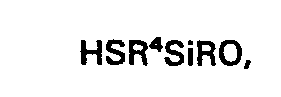
worin R die oben dafür angegebene Bedeutung hat und R4 ein zweiwertiger Kohlenwasserstoffrest ist, sowie

worin R6 die gleiche Bedeutung wie R hat oder ein durch die Gruppe HR1C=CR2COO (R' und R2 haben jeweils die oben dafür angegebene Bedeutung) substituierter Kohlenwasserstoffrest ist, aufgebaut sind, sind neu und können durch Äquilibrierung entsprechender Siloxane in an sich bekannter Weise hergestellt werden.
Description
- Aus US 4 290 869 (ausgegeben: 22. Sept. 1982, R. Pigeon, Rhône-Poulenc Industries) sind bereits photopolymerisierbare Organopolysiloxanzusammensetzungen mit SiC-gebundenen Acryloxyalkyl- oder Methacryloxygruppen sowie Mercaptoalkylgruppen bekannt. Gemäß dieser Druckschrift, Spalte 8, Zeile 36 bis 38, haben derartige Zusammensetzungen in verschlossenen und undurchsichtigen Behältern eine Beständigkeit von etwa 48 Stunden.
- Aus US 4 359 369 (ausgegeben: 16. Nov. 1982, M. Takamizawa et al., Shin-Etsu Chemical Co., Ltd.) sind photopolymerisierbare Organopolysiloxanzusammensetzungen mit SiC-gebundenen Thioacryloxyalkyl- und Merctptoalkylgruppen bekannt.
- Es bestand nun die Aufgabe, verhältnismäßig leicht zugängliche Organopolysiloxane bereitzustellen, welche 1. verschlos enen und undurchsichtigen Behältern bei Raumtemperatur mindestens 6 Monate gelagert werden können, keinen unangenehmen Geruch verbreiten, bei der Einwirkung von energiereicher Strahlung besonders rasch vernetzen, wobei die Vernetzung durch Luft-Sauerstoff nicht beeinträchtigt wird, keine merkliche Nachvernetzung stattfindet, das Ausmaß der Abweisung von klebrigen Stoffen, also der "Trennwert", er mit den erfindungsgemäßen oder erfindungsgemäß hergestellten Organcoo _ysiloxanen er- zeugton Beschichtungen auch bei langer Laarung der Organopolysiloxane vor der Vernetzung oder bei langer Lagerung der Beschichtungen gleich oder praktisch'gleich bleibt und derartige Beschichtungen sehr durchsichtig, biegsam und abriebfest sind.
- Gegenstand der Erfindung sind Organopolysiloxane, worin mindestens 95 Molprozent der Siloxaneinheiten solche der Formel

worin R ein einwertiger Kohlenwasserstoffrest, der durch Halogen substituiert sein kann, R1 Wasserstoff oder ein Phenylrest, der durch Halogen substituiert sein kann, R2 Wasserstoff oder ein Alkylrest mit 1 bis 4 Kohlenstoffatomen je Rest und R3 ein zweiwertiger Kohlenwasserstoffrest ist, der durch Halogen substituiert sein kann, wobei 2 solcher Siloxaneinheiten je Molekül vorliegen, der Formel
worin R die oben dafür angegebene Bedeutung hat und R4 ein zweiwertiger Kohlenwasserstoffrest ist, sowie der Formel
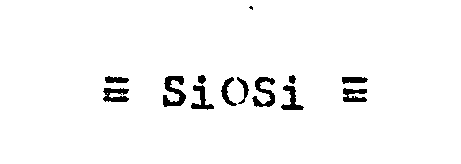
worin R5 die gleiche Bedeutung wie R hat oder ein durch die Gruppe HR1C = CR2COO (R1 und R2 haben jeweils die oben dafür angegebene Bedeutung) substituierter Kohlenwasserstoffrest ist, sind und wobei mindestens 95 % der an Silicium gebundenen Sauerstoffatome bei den Siloxaneinheiten mit der HS-Gruppe in der Gruppieruna
vorliegen. - Die erfindungsgemäßen und erfindungsgemäß hergestellten Organopolysiloxane unterscheiden sich somit von den Organopolysiloxanen gemäß US 4 290 869 vor allem dadurch, daß sie keine oder praktisch keine SiOC-gebundenen organischen Reste enthalten. Ihre viel höhere Lagerbeständigkeit wird auf diese Tatsache zurückgeführt. Es ist überraschend, daß die erfindungsgemäßen und erfindungsgemäß hergestellten Organopolysiloxane trotz dieser Abwesenheit SiOC-gebundener organischer Reste rasch vernetzen, wenn sie energiereicher Strahlung ausgesetzt werden.
- Beispiele für Kohlenwasserstoffreste R und R sind Alkylreste mit 1 bis 18 Kohlenstoffatomen je Rest, wie der Methyl-, Ethyl-, n-Propyl-, Isopropyl-, n-Butyl- und sec-Butylrest sowie Octadecylreste; Cycloalkylreste mit 5 bis 8 Kohlenstoffatomen je Rest, wie der Cyclohexyl- und Cycloheptylrest sowie Methylcyclohexylreste; Reste mit aliphatischen Kohlenstoff-Kohlenstoff-Doppelbindungen und 2 bis 18 Kohlenstoffatomen je Rest, wie der Vinyl- und Allylrest; Arylreste mit 6 bis 12 Kohlen- .stoffatomen je Rest, wie der Phenylrest und Xenylreste; Alkarylreste mit 7 bis 18 Kohlenstoffatomen je Rest, wie Tolylreste; und Aralkylreste mit 7 bis 18 Kohlenstoffatomen je'Rest, wie der Benzyl- und beta-Phenylethylrest.
- Beispiele für durch Halogen substituierte Kohlenwasserstoffreste R und R5 sind der 3-Chlorpropyl- und 3,3,3-Trifluorpropylrest sowie o-, p- und m-Chlorphenylreste.
- Vorzugsweise ist R1 Wasserstoff. Beispiele für durch Halogen substituierte Phenylreste sind o-, m- und p-Phenylreste.
- Vorzugsweise ist auch R2 Wasserstoff. R2 kann aber auch z.B. eine Methylgruppe sein. Vorzugsweise ist R3 ein Rest der Formel

- Die Beispiele für Kohlenwasserstoffreste R3 gelten alle auch für die Reste R4, wobei wieder der Rest der Formel -(CH2)3- wegen der leichten Zugänglichkeit besonders bevorzugt ist.
- Weitere Beispiele für Reste R4 sind solche der Formel
-

- Das wichtigste Beispiel für einen durch die Gruppe HR1C=CR 2COO- substituierten Kohlenwasserstoffrest R5 ist der Rest der Formel

- Vorzugsweise sind jedoch mindestens 95 % der Anzahl der Reste R und R Methylreste.
- Vorzugsweise liegen 1 bis 30, insbesondere 2 bis 10 Einheiten der Formel

und 10 bis 1000, insbesondere 50 bis 300 Einheiten der Formel
je Molekül vor. - Vorzugsweise beträgt das Verhältnis der Einheiten der Formel

zu den Einheiten der Formel
1:1000 bis 1:1, insbesondere 1:100 bis 1:30. - Die bevorzugten Organopolysiloxane der erfindungsgemäßen Art können durch die allgemeine Formel

wiedergegeben werden, worin R, R5 und p jeweils die oben dafür angegebene Bedeutung haben, m eine ganze Zahl von 1 bis 30, insbesondere 2 bis 10 und n eine ganze Zahl von 10 bis 1000, insbesondere 50 bis 300, ist und wobei das Verhältnis von m:n 1:1000 bis 1:1, insbesondere 1:100 bis 1:30 ist. - Obwohl durch die oben verwendete Formel wie üblich nicht dargestellt,können zusätzlich zu den darin angegebenen Einheiten bis zu 5 Molprozent andere, meist jedoch nur als als mehr oder weniger schwer vermeidbare Verunreinigungen vorhandene Siloxaneinheiten wie Einheiten der Formel RSiO3/2, wobei R die oben dafür angegebene Bedeutung hat, oder SiO4/2' vorliegen.
- Gegenstand der Erfindung ist weiterhin ein Verfahren zur Herstellung von Organopolysiloxanen der erfindungsgemäßen und bevorzugten Art durch Äquilibrierung von Organo(poly)silo- xanen in an sich bekannter Weise, dadurch gekennzeichnet, daß Organo(poly)siloxan der Formel

worin R, R5und p jeweils die oben dafür angegebene Bedeutung haben und x 0 oder eine ganze Zahl im Wert von 1 bis 1000 ist, mit linearem Organo(poly)siloxan der Formel
worin R , m und x jeweils die oben dafür angegebene Bedeutung haben, oder cyclischem Organopolysiloxan aus Einheiten der Formel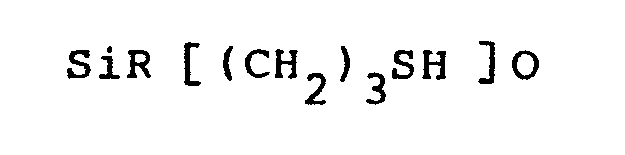
gegebenenfalls neben Einheiten der Formel
wobei R und R5 jeweils die oben dafür angegebene Bedeutung haben und die Gesamtzahl der Siloxaneinheiten in solchem cyclischem Organopolysiloxan 3 bis 6 je Molekül beträgt,und gegebenenfalls linearem oder cyclischem Organo(poly)siloxan der Formel
worin R5 und n jeweils die oben dafür angegebene Bedeutung . haben und q eine ganze Zahl im Wert von 3 bis 6 ist, äquilibriert wird. - Bei diesem Verfahren werden die Reaktionsteilnehmer in Mengen von 0,5 bis 15 HS-Gruppen, vorzugsweise 1 bis 5 HS-Gruppe(n) je Acryloxygruppe eingesetzt.
- Die Anzahl der R5 2O-Einheiten in den Reaktionsteilnehmern entspricht dem gewünschten Verhältnis von m:n im Endprodukt.
- Vorzugsweise haben die erfindungsgemäßen und erfindungsgemäß hergestellten Organopolysiloxane eine Viskosität von 50 bis 10 000 mPa.s bei 25°C.
- Bei dem Äquilibrieren werden als Katalysatoren vorzugsweise saure Katalysatoren eingesetzt. Beispiele für solche Katalysatoren sind Schwefelsäure, Phosphorsäure, Trifluormethansulfonsäure, Phosphornitridchloride und unter den Reaktionsbedingungen feste, saure Katalysatoren, wie säureaktivierte Bleicherde, saure Zeolithe, sulfonierte Kohle und sulfoniertes Styrol-Divinylbenzol-Mischpolymerisat. Bevorzugt sind Phosphornitridchloride. Phosphornitridchloride werden vorzugsweise in Mengen von 5 bis 1000 Gewichts-ppm (= Teilen je Million), insbesondere 50 bis 200 Gewichts-ppm, jeweils bezogen auf das Gesamtgewicht der eingesetzten Organosiliciumverbindungen, verwendet.
- Zur Beschleunigung der Äquilibrierung kann auf 70° bis 150°C erwärmt werden. Das Äquilibrieren wird vorzugsweise in 5 bis 20 Gewichtsprozent, bezogen auf das Gesamtgewicht der jeweils eingesetzten Organosiliciumverbindungen, an mit Wasser nichtmischbarem Lösungsmittel, wie Toluol, durchgeführt, um eine vorzeitige Vernetzung des Reaktionsprodukts zu verhindern und das Austragen von bei der Reaktion gebildetem Wasser zu erleichtern.
- ,Das erfindungsgemäße Verfahren wird der Einfachheit halber vorzugsweise beim Druck der umgebenden Atmosphäre, also bei 1020 mbar (abs.) oder etwa 1020 mbar (abs.) durchgeführt. Falls erwünscht, können aber auch höhere oder niedrigere Drücke angewendet werden.
- Vor dem Aufarbeiten des bei dem Äquilibrieren erhaltenen Gemisches kann der Katalysator unwirksam gemacht werden, z.B. durch Zugabe von Trioctylamin oder Triisononylamin.
- Gegenstand der Erfindung ist schließlich auch die Verwendung der erfindungsgemäßen oder erfindungsgemäß hergestellten Organopolysiloxane zur Herstellung von durch energiereiche Strahlung vernetzbaren Überzügen.
- Die Überzüge, die aus den erfindungsgemäß oder erfindungsgemäß hergestellten Organopolysiloxanen hergestellt werden, sind abweisend gegenüber klebrigen Stoffen und Wasser. Sie eignen sich auch als Schutzüberzüge.
- Die Oberflächen, auf welche die erfindungsgemäßen oder erfindungsgemäß hergestellten Organopolysiloxane zwecks Herstellung von Überzügen aufgebracht werden können, können sein z.B. diejenigen von keramischen Gegenständen oder Glas, einschließlich Glasfasern, wozu wiederum Lichtleitfasern gehören, Papieren, wie Kraftpapier oder Pergaminpapier, Pappen einschließlich solcher aus Asbest, Zellglas, Holz, Kork, Kunststoffolien, z.B. Polyethylenfolien oder Polypropylenfolien, gewebtem oder ungewebtem Tuch aus natürlichen Fasern oder synthetischen organischen Fasern oder Glasfasern, Metallen, wie Aluminiumfolien, mit Polyethylen beschichtetem Kraftpapier oder mit Polyethylen beschichteter Pappe. Soweit vorstehend Polyethylen genannt wurde, kann es sich dabei jeweils um Hoch-, Mittel- oder Niederdruck-Polyethylen handeln.
- Das erfindungsgemäße Verfahren eignet sich ausgezeichnet z.B. zur Herstellung von Trägern für Etiketten, wie Preisauszeichnungsetiketten.
- Das Auftragen der erfindungsgemäßen oder erfindungsgemäß hergestellten Organopolysiloxane auf die zu überziehenden Oberflächen kann in beliebiger, für die Herstellung von Überzügen aus flüssigen Stoffen geeigneter und vielfach bekannter Weise erfolgen, beispielsweise durch Tauchen, Streichen, Gießen, Sprühen, Aufwalzen, Drucken, z.B. mittels einer Offsetgravur-Überzugsvorrichtung, Messer- oder Rakelbeschichtung, einschließlich derjenigen mit einem Meyer-Stab (englisch: Meyer-rod) oder mittels einer Luftbürste. Erfolgt das Auftragen mittels einer Offsetgravur-Überzugsvorrichtung, so kann das Substrat mit der zu überziehenden Oberfläche mit höherer Geschwindigkeit laufen als der Formzylinder.
- Bei dem Auftragen der erfindungsgemäßen oder erfindungsgemäß hergestellten Organopolysiloxane auf die zu überziehenden Oberflächen können die Organopolysiloxane gegebenenfalls in
- Lösungsmittel oder in Form einer Emulsion vorliegen. Vorzuqsweise sind jedoch keine Lösungsmittel oder andere VerdünnunqsmitteJ vorhanden.
- Die erfindungsgemäßen oder erfindungsgemäß hergestellten Organopolysiloxane vernetzen auch in Schichtdicken von 5 mm und mehr in verhältnismäßig kurzer Zeit, wenn sie energiereicher Strahlung ausgesetzt werden. Sie eignen sich deshalb und wegen ihrer Durchsichtigkeit ausgezeichnet als Vergußmassen für elektrische oder elektronische Bauteile.
- Bei der zur Vernetzung der erfindungsgemäß oder erfindungsgemäß hergestellten Organopolysiloxane angewendeten energiereichen Strahlung handelt es sich vorzugsweise um Ultraviolett-Licht. Es kann sich bei der energiereichen Strahlung aber auch z.B. um Röntgen-, Gamma- oder Elektronenstrahlen oder um gleichzeitige Anwendung von mindestens zwei verschiedenen Arten solcher Strahlen handeln. Zusätzlich zu der energiereichen Strahlung kann Wärmezufuhr, einschließlich derjenigen mittels Infrarotlicht, angewendet werden. Eine solche Wärmezufuhr ist jedoch überhaupt nicht erforderlich. Vorzugsweise unterbleibt sie, um den Aufwand für Energie zu verringern.
- Bei Elektronenstrahlen als energiereicher Strahlung sind 1 bis 4 m Rad ausreichend.
- Als Ultraviolettlicht ist solches mit Wellenlängen im Bereich von 200 bis 400 nm (Nanometer) bevorzugt.
- Wenn es sich bei der zur Vernetzung der erfindungsgemäßen oder erfindungsgemäß hergestellten Organopolysiloxane angewendeten energiereichen Strahlung um Ultraviolettlicht handelt, so müssen diese Organopolysilxoxane im Gemisch mit mindestens einem Photosensibilisator vorliegen. Bevorzugt sind Photosensibilisatoren, die in Organopolysiloxanen löslich sind, wie 2-Hydroxy-2-methyl-1-phenyl-propan-1-on und 2,4-Bis-(trimeth- ylsiloxy)-benzophenon. Weitere Beispiele für geeignete Photosensibilisatoren sind Benzophenon und substituierte Benzophenone, Benzoin und substituierte Benzoine sowie Benzil und substituierte Benzile. Im einzelnen seien aufgeführt: Acetophenon, 2-Ethoxy-2-methylacetophenon, Trichlorbutylacetophenon, 2-Ethoxy-2-phenylacetophenon, Mesityloxid, Propiophenon, Benzophenon, Xanthon, Thioxanthon, Fluorenon, Benzaldehyd, Fluoren.Anthrachinon, Carbazol, 3-Methylacetophenon, 4-Methylacetophenon, 3-Bromacetophenon, 4-Methylbenzophenon, 4-Chlorbenzophenon, 4,4-Dimethoxybenzophenon, 4-Chlor-4'-benzylbenzo- phenon, 3-Chlorxanthon, 3,9-Dichlorxanthon, 3-Chlor-8-nonyl- xanthon,Chloranthrachinon, Michlers Keton, Zimtsäure, Benzoinmethylether, Anthrachinon-1,5-disulfonsäuredinatriumsalz, 2-Naphthalinsulfonylchlorid, Benzil, Benzilketale und Hydroxybenzophenone.
- Vorteilhafterweise sind Photosensibilisator-Mengen von 0,5 bis 2 Gewichtsprozent, bezogen auf das Gewicht der erfindungsgemässen oder erfindungsgemäß hergestellten Organopolysiloxane, , ausreichend.
- Zusätzlich zu Organopolysiloxan und erforderlichenfalls Photosensibilisator, können bei der endgültigen Anwendung gegebenenfalls weitere Stoffe mitverwendet werden. Beispiele für derartige weitere Stoffe sind insbesondere Mittel zur Verbesserung der Haftung der vernetzten Organopolysiloxane auf den Unterlagen, auf denen sie vernetzt wurden, wie Butandioldiacrvlsäureester und qamma-Glycidoxypropyltriacetoxysilan.
- In den folgenden Beispielen beziehen sich alle Angaben von Prozentsätzen auf das Gewicht, soweit nichts anderes angegeben ist.
- Eine Mischung aus 410,4 g eines Mischhydrolysates aus 29 Mol des Silans der Formel

und 1 Mol des Silans der Formel
das in den endständigen Einheiten je eine Si-gebundene Hydroxylgruppe enthält, 60 g des Organopolysiloxans der Formel
444g in den endständigen Einheiten ie eine Si-aebundene Hvdroxvlgruppe aufweisendem Dimethylpolysiloxan mit durchschnittlich 100 Si-Atomen je Molekül und 150 g Toluol wird nach Vermischen mit C,36 ml einer 25 %-igen Lösung von Phosphornitridchloriden in Methylenchlorid zum Sieden unter Rückfluß 2 Stunden erwärmt, wobei das bei der Reaktion gebildete Wasser in einer Dean-Stark-Falle .aufgefangen wird. Dann wird der Katalysator mit 0,5 g Triisononylamin unwirksam gemacht und die Lösung mit Hilfe von Aktivkohle und Diatomeenerde filtriert. Das Lösungsmittel und niedermolekulare Produkte werden bei 80°C und 100 Pa (abs.) abdestilliert. Das in einer Ausbeute von 825 g (90 % d.Th.) erhaltene klare, farblose Öl hat eine Viskosität von 800 mPa·s bei 25°C. Es enthält aufgrund des Kernresonanzspektrums durchschnittlich 230 Dimethylsiloxaneinheiten je Molekül und 3,8 CH3 [HS(CH2)3]SiO-Einheiten je Molekül. Es ist im verschlossenen und undurchsichtigen Behälter bei Raumtemperatur mindestens 6 Monate lagerfähig. - Eine Probe des gemäß Beispiel 1 hergestellten Organopolysiloxans wird mit 1 % 2-Hydroxy-2-methyl-1-phenyl-propan-1-on und 0,8 % Butandioldiacrylat vermischt und mit einem Glasstab auf auf einem Kalander unter Wasserdampf geglättetes Kraftpapier aufgetragen. Bei Belichtung mit einer Quecksilber-Mitteldruck-Ultraviolettlampe mit einer Leistung von 80 Watt/cm Leuchtlänge und einem Maximum der Leistung bei 366 nm in einem Abstand von 10 cm von der zu vernetzenden Organopolysiloxanoberfläche vernetzt das auf das Papier aufgebrachte Gemisch innerhalb 0,3 Sekunden zu einer glänzenden, abriebfesten Beschichtung.
- Prüfwerte nach FINAT 10 und 11, abgedruckt in "Suppliers and Users Technical Manual", Juni 1980, Seite 21 bis 24, unter Verwendung von handelsüblichem selbstklebendem (englisch: pressure sensitive) 2 cm breitem Klebeband ("Tesafilm rot Nr. 154", Beiersdorf AG, Hamburg, BRD-der Wortteil "Tesa" ist ein Registriertes Warenzeichen):

- Eine weitere Probe des gemäß Beispiel 1 hergestellten Organopolysiloxans wird mit 1,5 % gamma-Glycidoxypropyltriacetoxysilan vermischt und mit einem Glasstab auf gestrichenes Kraftpapier aufgetragen. Bei Bestrahlung in einer Elektronenstrahlungsanlage bei 3 M Rad vernetzt das auf das Papier aufgebrachte Gemisch innerhalb 0,1 Sekunden zu einer glänzenden, abriebfesten Beschichtung.
- Prüfwerte, bestimmt wie in Beispiel 2 angegeben:
-

Claims (7)


sind und wobei mindestens 95 % der an Silicium gebundenen Sauerstoffatome bei den Siloxaneinheiten mit der HS-Gruppe in der Gruppierung

vorliegen.

sind, worin R und R5 jeweils die in Anspruch 1 dafür angegebene Bedeutung haben, m eine ganze Zahl im Wert von 1 bis 30, n eine ganze Zahl von 10 bis 1000 und p eine ganze Zahl im Wert von 1 bis 6 ist.

worin R, R5 und p jeweils die in Anspruch 1 bzw. 2 dafür angegebene Bedeutung haben und x 0 oder eine ganze Zahl im Wert von 1 bis 1000 ist. mit linearem Organo(poly)siloxan der Formel

worin R5, m und x jeweils die in Anspruch 1 bzw. 2 bzw. vorstehend dafür angegebene Bedeutung haben, oder cyclischem Organopolysiloxan aus Einheiten der Formel

gegebenenfalls neben Einheiten der Formel


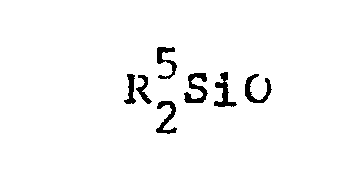

sind, worin R und R jeweils die in Anspruch 1 dafür angegebene Bedeutung haben, m eine ganze Zahl im Wert von 1 bis 30, n eine ganze Zahl von 10 bis 1000 und p eine ganze Zahl im Wert von 1 bis 6 ist, durch Aquilibrierung von Organo (poly)-siloxanen in an sich bekannter Weise,
dadurch gekennzeichnet,
daß Organo (poly) siloxan der Formel

worin R, P5 und p jeweils die in Anspruch 1 bzw. 2 dafür angegebene Bedeutung haben und x 0 oder eine ganze Zahl im Wert von 1 bis 1000 ist, mit linearem Organo (poly) siloxan der Formel

worin R5, m und x jeweils die in Anspruch 1 bzw. 2 bzw. vorstehend dafür angegebene Bedeutung haben, oder cyclischem Organopolysiloxan aus Einheiten der Formel

gegebenenfalls neben Einheiten der Formel

wobei R und R5 jeweils die in Anspruch 1 dafür angegebene Bedeutung haben und die Gesamtzahl der Siloxan-Einheiten in solchem cyclischem Organopolysiloxan 3 bis 6 je Molekül beträgt, und gegebenenfalls linearem oder cyclischem Organo-
(poly)siloxan der Formel

worin R5 und n jeweils die in Anspruch 1 bzw. 2 dafür angegebene Bedeutung haben und q eine ganze Zahl im Wert von 3 bis 6 ist, äquilibriert wird.
Priority Applications (1)
| Application Number | Priority Date | Filing Date | Title |
|---|---|---|---|
| AT85100577T ATE35143T1 (de) | 1984-01-24 | 1985-01-22 | Organopolysiloxane, verfahren zu ihrer herstellung und verwendung dieser organopolysiloxane. |
Applications Claiming Priority (2)
| Application Number | Priority Date | Filing Date | Title |
|---|---|---|---|
| DE3402317 | 1984-01-24 | ||
| DE19843402317 DE3402317A1 (de) | 1984-01-24 | 1984-01-24 | Organopolysiloxane, verfahren zu ihrer herstellung und verwendung dieser organopolysiloxane |
Publications (3)
| Publication Number | Publication Date |
|---|---|
| EP0169295A2 true EP0169295A2 (de) | 1986-01-29 |
| EP0169295A3 EP0169295A3 (en) | 1986-03-19 |
| EP0169295B1 EP0169295B1 (de) | 1988-06-15 |
Family
ID=6225749
Family Applications (1)
| Application Number | Title | Priority Date | Filing Date |
|---|---|---|---|
| EP85100577A Expired EP0169295B1 (de) | 1984-01-24 | 1985-01-22 | Organopolysiloxane, Verfahren zu ihrer Herstellung und Verwendung dieser Organopolysiloxane |
Country Status (7)
| Country | Link |
|---|---|
| US (1) | US4571349A (de) |
| EP (1) | EP0169295B1 (de) |
| JP (1) | JPS60163931A (de) |
| AT (1) | ATE35143T1 (de) |
| CA (1) | CA1226087A (de) |
| DE (2) | DE3402317A1 (de) |
| FI (1) | FI82701C (de) |
Cited By (1)
| Publication number | Priority date | Publication date | Assignee | Title |
|---|---|---|---|---|
| FR2655993A1 (fr) * | 1989-12-19 | 1991-06-21 | Rhone Poulenc Chimie | Compositions durcissables sous u.v., utilisables notamment dans le domaine de l'antiadherence papier et des fibres optiques. |
Families Citing this family (10)
| Publication number | Priority date | Publication date | Assignee | Title |
|---|---|---|---|---|
| JPS62173143A (ja) * | 1986-01-28 | 1987-07-30 | Mitsui Seiki Kogyo Kk | ヒ−トパイプ内蔵のボ−ルねじ軸 |
| DE3603738A1 (de) * | 1986-02-06 | 1987-08-13 | Wacker Chemie Gmbh | Durch strahlung zu elastomeren vernetzbare massen |
| DE3708958A1 (de) * | 1987-03-19 | 1988-09-29 | Wacker Chemie Gmbh | Durch bestrahlung vernetzbare zusammensetzungen |
| FR2634769B1 (fr) * | 1988-07-29 | 1990-10-05 | Rhone Poulenc Chimie | Diorganopolysiloxane a fonction thioalkylacrylate |
| US5240746A (en) * | 1991-02-25 | 1993-08-31 | Delco Electronics Corporation | System for performing related operations on workpieces |
| US5324550A (en) * | 1992-08-12 | 1994-06-28 | Hitachi, Ltd. | Pattern forming method |
| US5609925A (en) * | 1995-12-04 | 1997-03-11 | Dow Corning Corporation | Curing hydrogen silsesquioxane resin with an electron beam |
| JPH09249747A (ja) * | 1996-03-19 | 1997-09-22 | Toray Ind Inc | シリコーンゴム、シリコーンゴム粒子、炭素繊維用プリカーサーおよび炭素繊維 |
| JP3419314B2 (ja) * | 1998-07-08 | 2003-06-23 | 信越化学工業株式会社 | 液状放射線硬化型樹脂組成物及び光ファイバ |
| US6171698B1 (en) | 1999-08-19 | 2001-01-09 | Alcatel | Radiation curable coating composition for optical fibers and optical fibers coated thereby |
Family Cites Families (4)
| Publication number | Priority date | Publication date | Assignee | Title |
|---|---|---|---|---|
| JPS53134085A (en) * | 1977-07-18 | 1978-11-22 | Dainippon Printing Co Ltd | Photopolymerizable composition |
| FR2447386A1 (fr) * | 1979-01-24 | 1980-08-22 | Rhone Poulenc Ind | Compositions organopolysiloxaniques photopolymerisables |
| JPS5684702A (en) * | 1979-12-13 | 1981-07-10 | Shin Etsu Chem Co Ltd | Photo-curable organopolysiloxane composition |
| GB2057476B (en) * | 1979-08-29 | 1983-06-22 | Shinetsu Chemical Co | Photocurable organopolysiloxane compositions |
-
1984
- 1984-01-24 DE DE19843402317 patent/DE3402317A1/de not_active Withdrawn
- 1984-12-28 US US06/687,397 patent/US4571349A/en not_active Expired - Fee Related
-
1985
- 1985-01-03 CA CA000471464A patent/CA1226087A/en not_active Expired
- 1985-01-17 FI FI850206A patent/FI82701C/fi not_active IP Right Cessation
- 1985-01-22 JP JP60008569A patent/JPS60163931A/ja active Granted
- 1985-01-22 DE DE8585100577T patent/DE3563356D1/de not_active Expired
- 1985-01-22 AT AT85100577T patent/ATE35143T1/de not_active IP Right Cessation
- 1985-01-22 EP EP85100577A patent/EP0169295B1/de not_active Expired
Cited By (2)
| Publication number | Priority date | Publication date | Assignee | Title |
|---|---|---|---|---|
| FR2655993A1 (fr) * | 1989-12-19 | 1991-06-21 | Rhone Poulenc Chimie | Compositions durcissables sous u.v., utilisables notamment dans le domaine de l'antiadherence papier et des fibres optiques. |
| EP0434579A1 (de) * | 1989-12-19 | 1991-06-26 | Rhone-Poulenc Chimie | UV-härtbare Zusammensetzungen, insbesondere verwendbar auf dem Gebiet des Trennpapiers und der optischen Fasern |
Also Published As
| Publication number | Publication date |
|---|---|
| FI82701B (fi) | 1990-12-31 |
| FI850206A0 (fi) | 1985-01-17 |
| JPS6237655B2 (de) | 1987-08-13 |
| CA1226087A (en) | 1987-08-25 |
| EP0169295A3 (en) | 1986-03-19 |
| DE3402317A1 (de) | 1985-07-25 |
| JPS60163931A (ja) | 1985-08-26 |
| ATE35143T1 (de) | 1988-07-15 |
| US4571349A (en) | 1986-02-18 |
| FI850206L (fi) | 1985-07-25 |
| FI82701C (fi) | 1991-04-10 |
| DE3563356D1 (en) | 1988-07-21 |
| EP0169295B1 (de) | 1988-06-15 |
Similar Documents
| Publication | Publication Date | Title |
|---|---|---|
| EP0097333A2 (de) | Neue Organopolysiloxane, Verfahren zu ihrer Herstellung und Verwendung dieser Organopolysiloxane | |
| EP0336141B1 (de) | Verfahren zum Beschichten von flächigen Trägern durch Aufbringen von mit (Meth)acrylsäureestergruppen modifizierten härtbaren Organopolysiloxanen | |
| DE3820294C1 (de) | ||
| DE19649844C1 (de) | Mit Acrylatgruppen modifizierte Organosiloxanylderivate von Alkandiolmonovinylethern, Verfahren zu deren Herstellung und deren Verwendung als strahlenhärtbare Bindemittel | |
| DE19615489A1 (de) | UV-härtbare Epoxysilicon-Mischungszusammensetzungen | |
| DE2622126B2 (de) | Verwendung einer durch Bestrahlung härtbaren Beschichtungsmasse auf PoIydiorganosiloxanbasis zur Herstellung von Trennüberzügen auf Trägermaterialien | |
| EP0590020A1 (de) | Härtbare organo(poly)siloxanmassen. | |
| DE102004024009A1 (de) | Verwendung von neuen Polysiloxanen mit über SiOC-Gruppen gebundenen (Meth)acrylsäureestergruppen als Additive für strahlenhärtende Beschichtungen | |
| EP0644222A2 (de) | Mit Acrylatgruppen modifizierte Organopolysiloxane | |
| DE3032626C2 (de) | ||
| EP0169295B1 (de) | Organopolysiloxane, Verfahren zu ihrer Herstellung und Verwendung dieser Organopolysiloxane | |
| EP0186099A2 (de) | Vernetzbare Organopolysiloxane, Verfahren zu ihrer Herstellung und Verwendung dieser Organopolysiloxane | |
| WO2021058263A1 (de) | Silikon(meth)acrylate, verfahren zu ihrer herstellung und ihre verwendung in härtbaren zusammensetzungen | |
| EP0283008B1 (de) | Durch Bestrahlung vernetzbare Zusammensetzungen | |
| DE3723421A1 (de) | Durch strahlung zu elastomeren vernetzbare massen | |
| DE69527927T2 (de) | Härtbare Zusammensetzungen | |
| EP0617094B1 (de) | Abhäsive Beschichtungsmasse mit einem den Grad der Abhäsivität beeinflussenden Zusatzmittel | |
| EP0877037A1 (de) | Strahlungs- oder thermischhärtende organosiloxanmassen mit (methyl)styrolgruppen | |
| DE3603738C2 (de) | ||
| DE19832026A1 (de) | Strahlungshärtende, Copolymere enthaltende Zusammensetzungen | |
| EP0773261A1 (de) | Vernetzbare Zusammensetzungen | |
| DE3106059A1 (de) | Durch bestrahlung haertbare polyorganosiloxanmasse und ihre verwendung zur bildung von trennueberzuegen | |
| EP1020491B1 (de) | Strahlungshärtende Zusammensetzungen | |
| DE2131740C3 (de) | Klebrige Stoffe abweisende Überzugsmittel auf Basis von Organopolysiloxanen | |
| DE19525562A1 (de) | (Meth)acryloxygruppen aufweisende Organosiliciumverbindungen, deren Herstellung und Verwendung |
Legal Events
| Date | Code | Title | Description |
|---|---|---|---|
| PUAI | Public reference made under article 153(3) epc to a published international application that has entered the european phase |
Free format text: ORIGINAL CODE: 0009012 |
|
| PUAL | Search report despatched |
Free format text: ORIGINAL CODE: 0009013 |
|
| 17P | Request for examination filed |
Effective date: 19850122 |
|
| AK | Designated contracting states |
Designated state(s): AT BE DE FR GB IT NL SE |
|
| AK | Designated contracting states |
Kind code of ref document: A3 Designated state(s): AT BE DE FR GB IT NL SE |
|
| 17Q | First examination report despatched |
Effective date: 19870812 |
|
| GRAA | (expected) grant |
Free format text: ORIGINAL CODE: 0009210 |
|
| AK | Designated contracting states |
Kind code of ref document: B1 Designated state(s): AT BE DE FR GB IT NL SE |
|
| REF | Corresponds to: |
Ref document number: 35143 Country of ref document: AT Date of ref document: 19880715 Kind code of ref document: T |
|
| REF | Corresponds to: |
Ref document number: 3563356 Country of ref document: DE Date of ref document: 19880721 |
|
| ITF | It: translation for a ep patent filed | ||
| GBT | Gb: translation of ep patent filed (gb section 77(6)(a)/1977) | ||
| ET | Fr: translation filed | ||
| R20 | Corrections of a patent specification |
Effective date: 19880813 |
|
| ET1 | Fr: translation filed ** revision of the translation of the patent or the claims | ||
| PLBE | No opposition filed within time limit |
Free format text: ORIGINAL CODE: 0009261 |
|
| STAA | Information on the status of an ep patent application or granted ep patent |
Free format text: STATUS: NO OPPOSITION FILED WITHIN TIME LIMIT |
|
| 26N | No opposition filed | ||
| PGFP | Annual fee paid to national office [announced via postgrant information from national office to epo] |
Ref country code: FR Payment date: 19921210 Year of fee payment: 9 |
|
| PGFP | Annual fee paid to national office [announced via postgrant information from national office to epo] |
Ref country code: SE Payment date: 19921211 Year of fee payment: 9 |
|
| PGFP | Annual fee paid to national office [announced via postgrant information from national office to epo] |
Ref country code: AT Payment date: 19921215 Year of fee payment: 9 |
|
| PGFP | Annual fee paid to national office [announced via postgrant information from national office to epo] |
Ref country code: BE Payment date: 19921223 Year of fee payment: 9 |
|
| PGFP | Annual fee paid to national office [announced via postgrant information from national office to epo] |
Ref country code: GB Payment date: 19921231 Year of fee payment: 9 |
|
| PGFP | Annual fee paid to national office [announced via postgrant information from national office to epo] |
Ref country code: DE Payment date: 19930129 Year of fee payment: 9 |
|
| ITTA | It: last paid annual fee | ||
| PGFP | Annual fee paid to national office [announced via postgrant information from national office to epo] |
Ref country code: NL Payment date: 19930131 Year of fee payment: 9 |
|
| PG25 | Lapsed in a contracting state [announced via postgrant information from national office to epo] |
Ref country code: GB Effective date: 19940122 Ref country code: AT Effective date: 19940122 |
|
| PG25 | Lapsed in a contracting state [announced via postgrant information from national office to epo] |
Ref country code: SE Effective date: 19940123 |
|
| PG25 | Lapsed in a contracting state [announced via postgrant information from national office to epo] |
Ref country code: BE Effective date: 19940131 |
|
| BERE | Be: lapsed |
Owner name: WACKER-CHEMIE G.M.B.H. Effective date: 19940131 |
|
| PG25 | Lapsed in a contracting state [announced via postgrant information from national office to epo] |
Ref country code: NL Effective date: 19940801 |
|
| NLV4 | Nl: lapsed or anulled due to non-payment of the annual fee | ||
| GBPC | Gb: european patent ceased through non-payment of renewal fee |
Effective date: 19940122 |
|
| PG25 | Lapsed in a contracting state [announced via postgrant information from national office to epo] |
Ref country code: FR Effective date: 19940930 |
|
| PG25 | Lapsed in a contracting state [announced via postgrant information from national office to epo] |
Ref country code: DE Effective date: 19941001 |
|
| REG | Reference to a national code |
Ref country code: FR Ref legal event code: ST |
|
| EUG | Se: european patent has lapsed |
Ref document number: 85100577.7 Effective date: 19940810 |