EP0170169A1 - Rekombinante DNS, enthaltend ein Herpes-Simplex-Virus-Gen oder ein Fragment davon, Hefe transformiert mit dieser rekombinanten DNS und Verfahren zur Herstellung von Herpes-Simplex-Virus-Proteinen - Google Patents
Rekombinante DNS, enthaltend ein Herpes-Simplex-Virus-Gen oder ein Fragment davon, Hefe transformiert mit dieser rekombinanten DNS und Verfahren zur Herstellung von Herpes-Simplex-Virus-Proteinen Download PDFInfo
- Publication number
- EP0170169A1 EP0170169A1 EP85109042A EP85109042A EP0170169A1 EP 0170169 A1 EP0170169 A1 EP 0170169A1 EP 85109042 A EP85109042 A EP 85109042A EP 85109042 A EP85109042 A EP 85109042A EP 0170169 A1 EP0170169 A1 EP 0170169A1
- Authority
- EP
- European Patent Office
- Prior art keywords
- gene
- fragment
- yeast
- simplex virus
- herpes simplex
- Prior art date
- Legal status (The legal status is an assumption and is not a legal conclusion. Google has not performed a legal analysis and makes no representation as to the accuracy of the status listed.)
- Granted
Links
Images






Classifications
-
- C—CHEMISTRY; METALLURGY
- C12—BIOCHEMISTRY; BEER; SPIRITS; WINE; VINEGAR; MICROBIOLOGY; ENZYMOLOGY; MUTATION OR GENETIC ENGINEERING
- C12N—MICROORGANISMS OR ENZYMES; COMPOSITIONS THEREOF; PROPAGATING, PRESERVING, OR MAINTAINING MICROORGANISMS; MUTATION OR GENETIC ENGINEERING; CULTURE MEDIA
- C12N15/00—Mutation or genetic engineering; DNA or RNA concerning genetic engineering, vectors, e.g. plasmids, or their isolation, preparation or purification; Use of hosts therefor
- C12N15/09—Recombinant DNA-technology
- C12N15/63—Introduction of foreign genetic material using vectors; Vectors; Use of hosts therefor; Regulation of expression
- C12N15/79—Vectors or expression systems specially adapted for eukaryotic hosts
- C12N15/80—Vectors or expression systems specially adapted for eukaryotic hosts for fungi
- C12N15/81—Vectors or expression systems specially adapted for eukaryotic hosts for fungi for yeasts
-
- C—CHEMISTRY; METALLURGY
- C07—ORGANIC CHEMISTRY
- C07K—PEPTIDES
- C07K14/00—Peptides having more than 20 amino acids; Gastrins; Somatostatins; Melanotropins; Derivatives thereof
- C07K14/005—Peptides having more than 20 amino acids; Gastrins; Somatostatins; Melanotropins; Derivatives thereof from viruses
-
- A—HUMAN NECESSITIES
- A61—MEDICAL OR VETERINARY SCIENCE; HYGIENE
- A61K—PREPARATIONS FOR MEDICAL, DENTAL OR TOILETRY PURPOSES
- A61K39/00—Medicinal preparations containing antigens or antibodies
-
- C—CHEMISTRY; METALLURGY
- C12—BIOCHEMISTRY; BEER; SPIRITS; WINE; VINEGAR; MICROBIOLOGY; ENZYMOLOGY; MUTATION OR GENETIC ENGINEERING
- C12N—MICROORGANISMS OR ENZYMES; COMPOSITIONS THEREOF; PROPAGATING, PRESERVING, OR MAINTAINING MICROORGANISMS; MUTATION OR GENETIC ENGINEERING; CULTURE MEDIA
- C12N2710/00—MICROORGANISMS OR ENZYMES; COMPOSITIONS THEREOF; PROPAGATING, PRESERVING, OR MAINTAINING MICROORGANISMS; MUTATION OR GENETIC ENGINEERING; CULTURE MEDIA dsDNA viruses
- C12N2710/00011—Details
- C12N2710/16011—Herpesviridae
- C12N2710/16611—Simplexvirus, e.g. human herpesvirus 1, 2
- C12N2710/16622—New viral proteins or individual genes, new structural or functional aspects of known viral proteins or genes
Definitions
- the present invention relates to a novel recombi-or a fragment thereof nant DNA containing a herpes simplex virus gend, a yeast transformed with said recombinant DNA, and a method for the production of herpes simplex virus proteins, wherein a genetic engineering technique is applied to the production of the desired herpes simplex virus proteins which have a high purity and are useful for the production of herpes simplex vaccine effective for the prophylaxis of herpes simplex virus infections.
- the present invention provides a novel recombinant DNA which is obtained by inserting a gene of herpes simplex virus (hereinafter, referred to as or a fragment thereof "HSV”),specifically HSVgB gene,/into a shuttle vector which can replicate in both Escherichia coli and yeast downstream of the expression control region of the repressible acid phosphatase gene (said region being hereinafter referred to as "acid phosphatase promoter" or “acid phosphatase gene”) carried by the vector, a novel transformed yeast which is produced by transforming a yeast with said recombinant DNA, and a method for the production of HSV proteins, particularly HSV membrane proteins in a with high yield and/high purity by culturing said transformed yeastin a suitable medium.
- HSV herpes simplex virus
- glycoproteins infected by HSV produce several glycoproteins [e.g. gB, gC, gD, gE, etc., the nomenclature of gA and gB has been standardized as "gB” in International Herpes Virus Workshop (Oxford, England) in 1983]. Since it has been found that these glycoproteins show important functions as an antigen for inhibiting HSV infection, various studies have been done on component vaccines comprising these glycoproteins. For instance, Cappel et al. have reported that glycoproteins extracted from HSV-infected cells or virus particles are effective as an antigen for preventing HSV infections [cf. Cappel et al., Arch. Virol., 73, 61 (1982)].
- the component vaccine comprising such glycoproteins extracted from HSV-infected cells or virus particles contains plenty of proteins ridged from the host cells and bears the problem of side effects due to the extra proteins.
- the present inventors aimed at gB which is one of the glycoproteins and have experimentally confirmed by an experiment in mice that the highly purified gB is very effective [cf. Kino, Cellular Technology, 3, 120 (1984)].
- glycoprotein gB is usually produced by inoculating a virus into culture cells and then culturing the cells.
- this method is troublesome in the procedure because of handling infectious material and in the complicated steps, and further, it is impossible to confirm the complete removal of viral DNA carrying carcinogenic gene.
- it is very difficult to produce a practically the safe component vaccine from/natural glycoprotein gB.
- the present inventors have intensively studied on a safe vaccine containing no carcinogenic gene by isolating the gB gene and expressing said gene or a fragment thereof in yeast. They have accomplished the isolation of the gB gene and then found that when the isolated gB gene or a fragment thereof is recombined into a specific plasmid vector containing yeast gene and E. coli gene and carrying the expression control region of the repressible acid phosphatase gene of yeast under control of said phosphatase promoter, there is obtained the desired recombinant DNA which is useful for transforming a yeast. When this transformed yeast is cultured under suitable conditions it can produce the desired HSV proteins (i.e. HSVgB).
- HSVgB HSVgB
- the present inventors have further found that when a part of the 3'-region (tail) of the gB gene is removed by treating the gB gene with the restriction enzyme Sac I and the resulting DNA fragment containing about 90 % of the total gB gene is inserted into the Sac I site of the above plasmid vector, there is obtained a new recombinant DNA which is useful for transforming a yeast.
- the obtained transformed yeast can express the HSVgB proteins as a chimeric protein which shows gB activity and is useful for the preparation of herpes simplex virus vaccines.
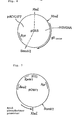
- Fig. 1 shows the structure of plasmid pG containing the BamHI-G fragment of HSV DNA.
- Fig. 2 shows the structure of the plasmid pGBX.
- Fig. 3 shows the base sequence of the/HSVgB gene and the upstream region thereof.
- Fig. 4 shows the structure of plasmid pGAB which is obtained by replacing the Apa I site of plasmid pGBX with an Xho I site.
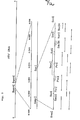
- Fig. 5 the shows a restriction enzyme map of the region containing the/gB the gene.
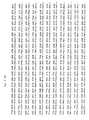
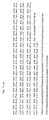
- Fig. 6 (A) - (E) show the base sequence of the/HSVgB gene.
- Fig. 7 shows the structure of shuttle vector pONY1.
- Fig. 1 shows the structure of plasmid pG containing the BamHI-G fragment of HSV DNA.
- Fig. 2 shows the structure of the plasmid pGBX.
- Fig. 3 shows the base sequence of the/HS
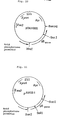
- Fig. 8 shows the structure of plasmid pAM 82 (Sac).
- Fig. 9 shows the structure of recombinant plasmid gene pONYGB containing the HSV gB gene/of the present invention.
- Fig. 10 shows the structure of recombinant plasmid pONYGBS wherein a part of the 3' -region of the g B gene is removed.
- Fig. 11 shows the structure of plasmid pAMGB1 wherein about 10% of the 3'-region the of the/gB gene is removed.
- Fig. 12 shows the base sequence of the gB gene - vector recombination site of the plasmid pAMGB1.
- the desired recombinant DNA of the present invention can be produced using a specific plasmid vector a an containing/yeast gene and/E. coli gene and carrying the expression control region of the repressible acid phosphatase gene of yeast and then recombining an HSV gene (i.e. HSVgB gene, optionally losing a part (about 10 %) of the 3'-region of the gene) into said vector under control of the phosphatase promoter.
- the recombinant DNA thus produced is used for transformation of a yeast.
- the desired HSV proteins i.e. HSVgB
- HSV chimeric proteins are synthesized.
- the HSVgB gene used in the present invention is the HSVgB DNA which is cloned in E. coli.
- the HSVgB gene to be inserted into a shuttle vector in the present invention is present in a fragment having about 8 kb (0.345 - 0.399 map units) which is obtained by treating HSV DNA with the restriction enzyme BamHI, said fragment being hereinafter referred to as "BamHI-G fragment".
- the HSVgB-containing fragment can be prepared by cleaving HSV DNA with BamHI, and cloning the obtained BamHI-G fragment as follows.
- Virus DNA is isolated from HSV which has been grown on Vero cells, the virus DNA is cleaved with the restriction enzyme BamHI, and then the resulting BamHI-G fragment is isolated and extracted by subjecting the BamHI-cleaved HSV-DNA to agarose gel electrophoresis.
- the BamHI-G fragment is ligated using T 4 ligase into the E. coli plasmid pBR322 which was previously treated with BamHI.
- E. coli X 1776 is transformed with the above reaction mixture.
- a strain having ampicillin resistance (Ap r ) and tetracycline sensitivity is selected.
- the obtained strain is amplified and plasmid pG containing the BamHI-G fragment is isolated.
- This plasmid pG has the structure shown in Fig. 1.
- the plasmid pG thus obtained is cleaved with BamHI and Xho I to give a fragment (3.5 kb) containing the HSVgB gene.
- the fragment thus obtained is isolated by agarose a gel extraction and then is ligated with T 4 ligase into/fragment (2.6 kb) of the E. coli plasmid pACYC177 ( C hang " A . C . Y ., Cohen, S.N.; J.Bacteriol.134, 1141-1156 (1978)) * which was previously treated with BamHI and Xho I.
- C hang " A . C . Y ., Cohen, S.N.; J.Bacteriol.134, 1141-1156 (1978) * which was previously treated with BamHI and Xho I.
- plasmid pGBX containing/HSVgB gene is obtained from *see European Patent Application 83 10 8091.6, page 17, lines 14-15 the amplified cells.
- This plasmid pGBX has the structure the shown in Fig. 2. According to/dideoxy method [cf. "Proteins, Nucleic acids and Enzymes", Vol. 29, No. 4, 294-306 (1984)], the base sequence of the plasmid pGBX (from the Xho I site to the side of HSV DNA, about 300 b p ) is determined (Fig. 3).
- This sequence corresponds to the base sequence reported by Bjik et al.
- the plasmid pGBX there is about 250 bp from the Xho I site to the translation initiation codon ATG of the gB gene, and at the upstream of ATG, -14 bp to -19 bp, an there is/Apa I site. Accordingly, the plasmid pGBX is partially cleaved with the restriction enzyme Apa I and is converted into flush end by treating with DNA polymerase and an then re-cyclized with/Xho I linker to give plasmid pGAB wherein only the Apa I site at -14 bp to -19 bp is converted an into/Xho I site.
- This plasmid pGAB has the structure as shown in Fig. 4.
- the HSV DNA is amplified by cloning in E. coli, and then, it is usually treated with an appropriate restriction enzyme to give a desired fragment. The fragment thus obtained is used for the subsequent construction of the plasmid as mentioned hereinafter.
- the base sequence of the Sma I - Sac I region containing gB gene is determined by dideoxy method [cf. "Proteins, Nucleic acids and Enzymes", Vol. 29, No. 4, 294-306 (1984)]. That is, as is shown in the accompanying Fig. 5, the Sma I - Sac I segment is divided into smaller segments by various restriction enzymes, and segements thus obtained (shown by the arrow symbols + ⁇ ) are each inserted an the into/M 13 vector for determining/base sequence (manufactured by Pharmacia Japan K.K.) and then the resultants are subjected to sequencing.
- the above plasmid pG is treated with the restriction enzyme Sac I to remove the 3'-region of the gene to obtain a fragment (2.7 kb), which is hereinafter referred to as "Sac I fragment" .
- Sac I fragment contains about 90 % of the gB gene and encodes 816 amino acids. It is used for the construction of a plasmid for expressing HSVgB gene as described hereinafter.
- the shuttle vector used in the present invention is a plasmid vector which contains both a yeast gene and an E. coli gene and carries the repressible acid phosphatase gene of yeast, e.g. Saccharomyces cerevi b iae.
- yeast gene and "E. coli gene” in this context in principle refer to ENA sequences which are derived from yeast and from E. coli and its plasmids, respectively.
- the yeast gene contains a DNA sequence which is necessary for replication of a plasmid in yeast independently from chromosome and contains optionally a gene useful as a selective marker of the transformed yeast. It a is found by the present inventors that, as such/DNA sequence for the replication, the combination of ars 1 and 2 uori is quite preferable since the plasmid is provided with an outstanding stability so that the plasmid copy number is very high with the least loss of the plasmid during the transformation and the culturing of the transformed yeast, thereby assuring high production of the desired herpes simplex virus proteins.
- the selective marker includes, for example, a leucine-producing gene, a histidine-producing gene, a tryptophane-producing gene, a uracil-producing gene, an adenine-producing gene, or the like, which may be used alone or in combination of two or more thereof.
- the E. coli gene contains a DNA sequence necessary for the replication of the plasmid within cells of E. coli, for example, a DNA sequence of a replication initiating region of plasmid Col EI, and preferably contains a gene useful as a selective marker of the transformed E. coli.
- the selective marker includes, for example, an ampicillin-resistant gene, a kanamycin-resistant gene, tetracycline-resistant gene, chloramphenicol-resistant gene, or the like, which may be used alone or in combination of two or more thereof.
- Commonly used E. coli DNA is pBR322 which contains an ampicillin resistant gene and tetracycline-resistant gene.
- the shuttle vector used in the present invention is characteristic in that it carries the repressible acid phosphatase promoter of the yeast.
- This acid phosphatase a gene encoding a promoter is usually a promoter of/polypeptide of 60,000 dalton (P60) which constitutes the phosphatase.
- Suitable examples of the shuttle vector are produced from shuttle vector pAT 77 wherein yeast DNA a containing ars 1, 2 uori and /leucine-producing gene (Leu 2) as the yeast gene is combined with E. coli plasmid pBR322, i.e. by treating the shuttle vector pAT 77 with exonuclease BAL 31 to delete a part or whole of the structural gene of acid phosphatase and further optionally various regions upstream therefrom up to -100 bp, preferably the from +1 to -50 bp.
- a representative example is/shuttle vector pAM 82 wherein upstream till -33 bp is deleted. The method for the production of these shuttle vectors is disclosed in Japanese Patent First Publication No.
- Saccharomyces cerevisiae i.e. Saccharomyces cerevisiae AH 22/pAT 77 and Saccharomyces cerevisiae AH 22/pAM 82, respectively
- Saccharomyces cerevisiae AH 22/pAT 77 and Saccharomyces cerevisiae AH 22/pAM 82 have been deposited at Fermentation Research Institute, Agency of Industrial Science and Technology, Japan under Budapest Treaty as "FERM BP-324" and "FERM BP-313", respectively.
- the shuttle vector pAM 82 has/Xho I site a downstream of the acid phosphatase promoter and also/Pvu II site further downstream therefrom.
- HSVgB gene i.e. Xho I - BamHI fragment
- pAM 82 is cleaved with the restriction enzyme Pvu II, and a BamHI linker is bound to the resulting flush ends,
- This plasmid pONY 1 can express / foreign gene in the pure form under the control of acid phosphatase promoter, and the site to be recombined can readily be cleaved by treating it with restriction enzymes BamHI and Xho I, and hence, this shuttle vector is suitable for recombining genes required.
- shuttle vector pAM82 when the above shuttle vector pAM82 is it the cleaved with Xho I in order to recombine/with/HSVgB gene (Sac I fragment, 2.7 kb) and then is converted into flush a end with DNA polymerase, and/Sac I linker is bound to said site, by which the combined fragment is re-cyclized, plasmid pAM 82 (Sac) results which has the structure shown in Fig.
- This plasmid pAM 82 (Sac) can express/foreign gene in the pure form under the control of acid phosphatase promoter, and the site to be recombined can readily be the cleaved by treating it with / restriction enzyme Sac I, and inserting a DNA fragment having Sac I-ends.
- the recombinant plasmid of the present invention i.e. a plasmid recombined with HSV gene
- Fig. 10 wherein at the Sac I site in the gB gene, the termination codon (TAA) is inserted, and hence, the translation of them-DNA is stopped at this site and thus about 90 % of gB gene (consisting of 816 amino acids) is expressed.
- the plasmid wherein about 10 % of the tail region of the gB gene is removed can express a larger amount of proteins having gB antigencity and immunogenicity in comparison with the plasmid pONYGB.
- the recombinant plasmid containing the HSV gene without the 3'- region can also be prepared by cleaving the above shuttle vector pAM 82 (Sac) with the restriction enzyme Sac I, linking thereto the above HSVgB gene (Sac I fragment, 2.7 kb), and amplifying the resultant in E. coli to give the desired recombinant plasmid pAMGB1 having the structure shown in Fig. 11.
- the gB gene is inserted downstream of the acid phosphatase promoter, and 816 amino acids are encoded in said gB gene, and thereafter further 4 amino acids are encoded utilizing the base sequence at the vector side in the same frame, and then the frame is stopped at TGA. Thus, totally 820 amino acids are encoded (cf. Fig. 12).
- the yeast to be transformed includes a mutant strain of yeast which is complemental with the selective marker gene of the transformed yeast carried on the plasmid, for example, a leucine-requiring mutant, Saccharomyces cerevisiae AH 22 [a, leu 2, his 4, Can 1 (Cir + )] (cf. Hinnen, A. et al., Proc. Natl. Acad. Sci., U.S.A., 75, 2157-2161, 1978) or Saccharomyces cerevisiae AH 22 pho 80 [a, leu 2, his 4, Can 1 (Cir + )] (cf. Thoe, A. et al., J. Bacteriol., 145, 221-232, 1981).
- Saccharomyces cerevisiae AH 22 [a, leu 2, his 4, Can 1 (Cir + )]
- Saccharomyces cerevisiae AH 22 pho 80 [a, leu 2, his 4, Can 1 (Cir + )
- the recombinant plasmid is applied to the mutant strain of yeast in a usual manner, for example, by mixing the plasmid DNA with cells obtained by converting into spheroplast, followed by mixing cells treated with calcium and the plasmid DNA, by which the transformation is effected.
- the desired transformed yeast is selected and isolated from the yeast culture thus treated based on the expression of a gene complemental with the mutation of the host yeast carries on the vector, for example, expression of a leucine-producing gene.
- mutant strains such as a histidine-requiring strain, tryptophane-requiring strain, uracil-requiring strain, adenine-requiring strain, or the like can be used as the yeast.
- the transformed yeast obtained above is cultured in a medium containing phosphoric acid in a usual manner, the culture cells in logarithmic growth phase are transferred to an inorganic phosphate free medium and then are cultured under a condition that the acid phosphatase promoter is not repressed. After the culture, the produced cells are collected and lysed in a usual manner to give a lysed cell solution containing a large amount of the desired HSVgB [HSV chimeric proteins in case of using the yeast transformed with the plasmid pAM 82 (Sac)].
- the culture is not necessarily required to be carried out under the condition that the acid phosphatase promoter is not repressed, but may be done under a usual condition to give directly the desired HSVgB or HSV chimeric proteins in a large amount.
- the HSVgB or HSV chimeric proteins can be purified by conventional purification methods. For instance, the proteins-containing solution is passed through a column packed with a gel bound with an anti-gB antibody, and then the adsorbed gB is eluted with 3 M KSCN.
- the gB thus obtained has the same immunological properties as those of the natural gB obtained from HSV-infected cells and can be used for the preparation of HSV vaccine and diagnostic reagents.
- HSVgB The recombinant DNA, transformed yeast, and the production of HSVgB of the present invention are illustrated by the following example, but should not be construed to be limited thereto.
- Vero cells (about 5 x 10 8 cells) is infected with 0.5-1 PFU/cell of HSV type 1 (HSV-1) KOS strain and the cells are culured at 37°C for 20-24 hours.
- HSV-1 HSV type 1
- the culture mixture is centrifuged at 28,000 r.p.m. for 1 hour to separate the infected cells and the supernatant, and thereby pellets of infected cells (2-3 ml) are isolated.
- the pellets are suspended in a phosphate buffered saline solution (hereinafter, referred to as "PBS”) (pH 7.2, 6 ml).
- PBS phosphate buffered saline solution
- the suspension is subjected to ultrasonic treatment (9 KHz, 200 W, for 5 minutes) or to freezing - thawing [repeating three times freezing at -50°C (with acetone-dry ice) and thawing at 37°C] to fracture the cells, and the cell residue is removed by centrifugation at low speed (3,000 r.p.m., 20 minutes).
- the solution thus obtained is layered on glycerol cusion (5 %, 40 %) and then centrifuged at 35,000 r.p.m. for one hour.
- the pellets (0.5-1 ml) thus obtained are suspended in PBS (1-2 ml) and are treated with DNase (10 ug/ml) and RNase (0.3 mg/ml) at 37°C for one hour, and to the reaction mixture is added 1/5 volume of 5 x STEP [a mixture of 0.5 % SDS (sodium dodecylsulfate), 50 mM Tris-HC1 (pH 7.5), 0.4 M EDTA, and 0.1 % proteinase K], and the mixture is reacted at 50°C for 30 minutes.
- the resulting solution is extracted with an equi- volume of phenol, phenol-chloroform (1 : 1) and chloroform in this order to give an aqueous layer containing DNA.
- the aqueous layer is dialyzed against TE buffer (20 mM Tris-HCl, 1 mM EDTA, pH 7.5), and thereto is added cold ethanol to precipitate the DNA.
- the DNA is separated by filtration, dried in vacuum, and then dissolved in an aqueous cesium chloride [Rf 1.3885, incorporated with ethidium bromide (0.04 %) and lauroyl sarcosinate (0.4 %), 5 ml].
- the mixture is centrifuged at 4,000 r.p.m. for 72 hours to form a band of HSV-1 DNA.
- the band is recovered and is washed with isopropyl alcohol to remove ethidium bromide, and then dialyzed against TE buffer. Cold ethanol is added thereto to precipitate HSV-1 DNA.
- the HSV-1 DNA obtained above (about 100 ug) is treated with a restriction enzyme BamHI in a mixture (0.75 ml) of 73 mM Tris-HC1 (pH 8.0), 7 mM MgCl 2 , 100 mM NaCl and 2 mM 2-mercaptoethanol at 37°C for 6 hours, and then each fragment is separated by 0.7 % agarose electrophoresis to cut out a gel corresponding to G fragment (0.345-0.399 map units), from which the G fragment is electrophoretically recovered.
- E. coli pBR322 plasmid (1/10 mole) obtained by cleavage with a restriction enzyme BamHI is reacted with the above G fragment (about 2 ⁇ g) in a mixture of 50 mM Tris-HCl (pH 7.9), 10 mM MgCl 2 , 20 mM dithiothreitol and 1 mM ATP by using T 4 DNA ligase at 16°C for about 16 hours.
- the above reaction mixture is added to a liquid of E. coli (0.1 ml) which is prepared by treating a culture broth of E. coli X 1776 (cf. Curtiss, R. III, "Molecular Cloning of Recombinant DNA” ed. Scott, W. A. and Werner, R., page 99, Academic Press, 1977) by the procedure as described in Norgard, M. V., Gene, 3, 279 (1978), and the mixture is mixed well and allowed to stand at 0°C for 45 minutes. The mixture is applied onto an agar plate containing ampicillin (100 ⁇ g/ml) and then incubated at 37°C overnight.
- the resulting colonies are applied onto both an agar plate containing ampicillin (100 ug/ml) and an agar plate containing tetracycline (100 ⁇ g/ml), and are incubated likewise.
- the colonies which grow only on the agar plate containing ampicillin are selected.
- pBR322 has an ampicillin-resistant gene and a tetracycline-resistant gene, but when it is inserted with HSV-1 DNA fragment at the BamHI site of the tetracycline-resistant gene, it loses the tetracycline-resistance. Accordingly, the selected colonies contain a recombinant DNA of BamHI-G fragment of pBR322-HSV DNA.
- plasmid pG a plasmid is prepared by the procedure as described by K. Matsubara (J. Virol., 16, 479, 1975).
- the plasmid thus prepared is subjected to cleavage pattern analysis by treating with various restriction enzymes (e.g. BamHI, Bst EII, Kpn I, Sal I, Sst I, Xho I) to obtain a recombinant DNA of pBR322-BamHI-G fragment wherein BamHI-G fragment of HSV-1 DNA is inserted into pBR322 (hereinafter, referred to as "plasmid pG").
- restriction enzymes e.g. BamHI, Bst EII, Kpn I, Sal I, Sst I, Xho I
- the base sequence of the above plasmid pG containing HSVgB gene is determined as follows:
- the plasmid pG (10 ul) is dissolved in a mixture (100 ⁇ l) of restriction enzymes Sma I and Sac I, and are reacted with Sma I (10 units) and Sac I (10 units) to give a fragment of Sma I - Sac I region containing the gB gene.
- This Sma I - Sac I fragment is treated with various restriction enzymes such as Sac I, Sac II, Sma I, Pst I, Sal I, Pvu II, Sau 3A and Nar I to obtain smaller fragments as shown in the accompanying Fig. 5 (by the symbols: + ⁇ ), and these smaller segments are each inserted into a cloning vector M 13 mp 11 (sold by Pharmacia Japan) at the Sal I site thereof.
- the plasmid pG (10 ⁇ g) obtained in the above (ii) is added to a mixture (100 ⁇ l) of 6 mM Tris-HCl (pH 7.5), 6 mM MgCl 2 , 6 mM 2-mercaptoethanol and 150 mM NaCl, and thereto are added restriction enzymes BamHI (10 units) and Xho I (10 unites), and the mixture is reacted at 37°C for 2 hours.
- 3.5 kb fragment DNA is isolated from the reaction mixture by 1 % agarose gel electrophoresis in accordance with the method disclosed by Yasusuke Takagi, "Manual for Procedure of Genetic Engineering", pages 33-34.
- E. coli plasmid pACYC 177 (which is cleaved with BamHI and Xho I) (10 ng) in a mixture (10 ⁇ l) of T 4 ligase (0.1 unit), 6.6 mM MgCl 2 and 10 mM dithiothreitol at 16°C for 8 hours.
- E. coli X 1776 is transformed in the same manner as described hereinbefore, and ampicillin resistant cells are selected from the resulting transformants. From the cells thus selected, a plasmid pGBX containing gB gene is prepared by the procedure as described by K. Matsubara (J. Virol., 16, 479, 1975).
- the above-obtained plasmid pGBX (10 ⁇ g) is dissolved in a mixture (100 ⁇ l) of 6 mM Tris-HCl (pH 7.9), 6 mM MgCl 2 and 6 mM 2-mercaptoethanol, and thereto are added restriction enzymes Sal I (10 units) and Xho I (10 units), and the mixture is reacted at 37°C for 2 hours.
- the reaction mixture is subjected to 1 % agarose gel electrophoresis as above to isolate 1.2 kb fragment.
- the thus obtained 1.2 kb fragment is inserted into a cloning vector M 13 mp 11 (sold by Pharmacia Japan) at the Sal I site thereof, and the base sequence thereof is determined by dideoxy method [cf. "Proteins, Nucleic acids and Enzymes", Vol. 29, No. 4, 294-306 (1984), Item: “Method for the Determination of Base Sequence of DNA by Dideoxy Method”].
- the base sequence shows the base sequence as is shown in the accompanying Fig. 3.
- the Xho I site is distant about 250 bp from the translation initiation codon ATG of the gB gene and further Apa I site is present at 14 bp - 19 bp upstream from the ATG.
- the above plasmid pGBX is treated in the following manner in order to convert only the Apa I site upstream of the translation initiation codon ATG of the gB gene into Xho I site.
- the resulting DNA is treated with T 4 DNA polymerase (0.1 unit) in a solution (50 ⁇ l) of 67 mM Tris-HC1 (pH 8.6), 6.7 mM MgCl 2 , 10 mM 2-mercaptoethanol, 16.7 mM (NH 4 ) 2 SO 4 which contains 200 ⁇ M aATP, aCTP, aGTP and aTTP at 37°C for 30 minutes.
- the reaction mixture is subjected to phenol extraction and ethanol precipitation.
- the resulting DNA (1 pmole) is subjected to linking reaction with Xho I linker by using T 4 ligase (0.1 unit) in a mixture (10 ⁇ l) of 66 mM Tris-HCl (pH 7.6), 6.6 mM MgCl 2 , 10 mM dithiothreitol, 66 ⁇ M ATP and Xho I linker (1 pmole) at 16 °C for 8 hours.
- E. coli X 1776 is transformed with the reaction mixture obtained above in the same manner as described hereinbefore. A plenty of clones which grow on an ampicillin-containing plate are selected, and the plasmids are prepared from the selected cells in the same manner as described above.
- the plasmids are each treated with a restriction enzyme Xho I, and thereby there is selected the desired plasmid pGAB by the patterns in electrophoresis.
- Xho I restriction enzyme
- the plasmid pG (10 ⁇ g) obtained in the above (ii) is treated with Sac I (10 units) in a mixture (100 ⁇ l) of 6 mM Tris-HCl (pH 7.5), 6 mM MgCl 2 , 6 mM 2-mercaptoethanol and 150 mM NaCl at 37°C for 2 hours.
- the reaction mixture is subjected to 1 % agarose gel electrophoresis and the desired DNA fragment (Sac I fragment) (2.7 kb, containing about 90 % of the gB gene) is extracted and isolated in the same manner as described hereinbefore.
- Shuttle vector pAM 82 as prepared in the same manner as described in Japanese Patent First Publication No. 31799/1984 is treated as follows in order to convert the Puv II site into BamHI site.
- a fragment (2 ug) prepared by cleaving the plasmid pAM 82 with Xho I is reacted with T 4 DNA polymerase (0.1 unit) in a mixture (50 ul) of 67 mM Tris-HC1 (pH 8.6), 6.7 mM MgCl 2 , 10 mM 2-mercaptoethanol, 6.7 uM EDTA and 16.7 mM (NH 4 ) 2 SO 4 which contains 200 ⁇ M aATP, aCTP, aGTP and aTTP at 37°C for 30 minutes.
- the reaction mixture is subjected to phenol extraction and ethanol precipitation.
- the resulting DNA is reacted with BamHI linker in a molar ratio of 1 : 10 by using T 4 ligase at 16°C for 8 hours, and E. coli X 1776 is transformed with the reaction mixture obtained above in the same manner as described hereinbefore.
- the ampicillin-resistant cells thus obtained are incubated, and from the cells thus obtained, there is isolated a plasmid pONY1 in the same manner as described hereinbefore.
- the Pvu II site of pAM 82 is converted into BamHI site.
- Shuttle vector pAM 82 as prepared in the same manner as described in Japanese Patent First Publication No. 31799/1984 is treated as follows in order to convert the Xho I site into Sac I site.
- a fragment (2 ⁇ g) prepared by cleaving the plasmid pAM 82 with Xho I is reacted with T 4 DNA polymerase (0.1 unit) in a mixture (50 ul) of 67 mM Tris-HC1 (pH 8.6), 6.7 mM MgCl 2 , 10 mM 2-mercaptoethanol, 6.7 uM EDTA and 16.7 mM (NH 4 ) 2 SO 4 which contains 200 ⁇ M aATP, aCTP, aGTP and aTTP at 37°C for 30 minutes.
- the reaction mixture is subjected to phenol extraction and ethanol precipitation.
- the resulting DNA is reacted with Sac I linker in a molar ratio of 1 : 10 by using T 4 ligase at 16°C for 8 hours, and E. coli x1776 is transformed with the reaction mixture obtained above in the same manner as described hereinbefore.
- the ampicillin-resistant cells thus obtained are incubated, and from the cells thus obtained, there is isolated a plasmid pAM 82 (Sac) in the same manner as described hereinbefore.
- plasmid pAM 82 (Sac) In said plasmid pAM 82 (Sac), Xho I site of pAM 82 is converted into Sac I site.
- the shuttle vector pONY1 (10 ⁇ g) obtained in the above (2), (A) is treated with restriction enzymes BamHI and Xho I in the same manner as described hereinbefore, and from the reaction mixture there is isolated a DNA fragment (10 kb) containing acid phosphatase promoter by 1 % agarose electrophoresis.
- the 3.3 kb fragement (10 ng) and the 10 kb fragment (10 ng) obtained above are reacted with T 4 ligase (0.1 unit) in a mixture (10 ul) of 66 mM Tris-HCl (pH 7.6), 6.6 mM MgCl 2 , 10 mM dithiothreitol and 66 ⁇ M ATP at 16°C for 8 hours.
- E. coli X 1776 is transformed with the reaction mixture obtained above in the same manner as described hereinbefore.
- ampicillin-resistant cells thus obtained are incubated, and from the cells thus obtained, there is isolated a recombinant plasmid pONYGB wherein HSVgB gene is inserted at the downstream of the acid phosphatase promoter in the same manner as described hereinbefore.
- the fragment (10 ng) obtained above and the 2.7 kb Sac I fragment (100 ng) obtained in the above (1), (vii) are reacted with T 4 ligase (0.1 unit) in a mixture (10 ⁇ l) of 66 mM Tris-HC1 (pH 7.6), 6.6 mM MgCl 2 , 10 mM dithiothreitol and 66 ⁇ M ATP at 16°C for 8 hours.
- E. coli X 1776 is transformed with the reaction mixture obtained above in the same manner as described hereinbefore.
- the ampicillin-resistant cells thus obtained are incubated, and from the cells thus obtained, there is isolated a recombinant plasmid pAMGB1 in the same manner as described above.
- HSVgB gene losing the tail region i.e. HSVgB gene having about 90 % of the whole gB gene, 816 amino acids
- HSVgB gene losing the tail region i.e. HSVgB gene having about 90 % of the whole gB gene, 816 amino acids
- a vector-origin gene four amino acids
- the starting yeast is Saccharomyces cerevisiae AH 22 [a, leu 2, his 4, can 1 (Cir + )], which has been deposited at Fermentation Research Institute, Agency of Industrial Science and Technology, Japan under Budapest Treaty as "FERM BP-312".
- the starting yeast is inoculated in YPD medium (100 ml) consisting of 2 % polypeptone, 1 % yeast extract and 2 % glucose, and the mixture is incubated at 30°C overnight, and thereafter, the cells are collected by centrifugation.
- the cells thus collected are washed with sterilized water (20 ml), suspended in a solution (5 ml) of 1.2 M sorbitol and Zymolyase-60,000 (manufactured by Seikagaku Kogyo K.K., Japan, 100 ⁇ g/ml), and the suspension is allowed to stand at 30°C for 30 minutes to give spheroplast.
- the spheroplast thus prepared is washed with 1.2 M sorbitol solution three times, and then suspended in a solution (0.6 ml) of 2 M sorbitol, 10 mM CaCl 2 and 10 mM Tris-HC1 (pH 7.5).
- the suspension thus prepared is divided into a small test tube in a volume of 60 ul.
- To the suspension is added the solution of the recombinant plasmid pONYGB (10 ⁇ g) as prepared in the above (3), (A).
- 0.1 M CaCl 2 (3 ⁇ l) is added thereto in a final concentration of 10 mM CaCl 2 , and the mixture is allowed to stand at room temperature for 5 to 10 minutes.
- To the resulting mixture is added each 1 ml of a solution of 20 % polyethylene glycol 4,000, 10 mM CaCl 2 and 10 mM Tris-HC1 (pH 7.5), and the mixture is allowed to stand at room temperature for about 20 minutes.
- the resulting mixture (each 0.2 ml) is added to a medium (10 ml) consisting of 22 % sorbitol, 2 % glucose, 0.7 % yeast nitrogen base amino acid, 2 % YPD, 20 ⁇ g/ml histidine and 3 % agar, which is kept at a constant temperature of 45°C.
- a medium 10 ml
- the mixture is added in a layer onto a plate of minimal medium containing 1.2 M sorbitol which is previously prepared and consists of 0.7 % yeast nitrogen base amino acid, 2 % glucose, 20 ⁇ g/ml histidine and 2 % agar and is set thereon.
- the plate is incubated at 30°C to give a colonie of a leucine-non-requiring yeast.
- the colonie is incubated in a BurkHorlder minimal medium supplemented with histidine (20 ⁇ g/ml) [cf. Tohe, A. et al; J. Bacterol., 113, 727-738, 1973J to give the desired transformed yeast: Saccharomyces cerevisiae YGB.
- the cells thus collected are washed with sterilized water (20 ml), suspended in a solution (5 ml) of 1.2 M sorbitol and Zymolyase-60,000 (manufactured by Seikagaku Kogyo K.K., Japan, 100 ⁇ g/ml), and the suspension is allowed to stand at 30°C for 30 minutes to give spheroplast.
- the spheroplast thus prepared is washed with 1.2 M sorbitol solution three times, and then suspended in a solution (0.6 ml) of 2 M sorbitol, 10 mM CaCl 2 and 10 mM Tris-HC1 (pH 7.5).
- the suspension thus prepared is divided into a small test tube in a volume of 60 ul.
- To the suspension is added the solution of the recombinant plasmid pAMGB1 (10 ug) as prepared in the above (3), (B).
- 0.1 M CaCl 2 (3 ul) is added thereto in a final concentration of 10 mM CaCl 2 , and the mixture is allowed to stand at room temperature for 5 to 10 minutes.
- To the resulting mixture is added each 1 ml of a solution of 20 % polyethylene glycol 4,000, 10 mM CaCl 2 and 10 mM Tris-HC1 (pH 7.5), and the mixture is allowed to stand at room temperature for about 20 minutes.
- the resulting mixture (each 0.2 ml) is added to a medium (10 ml) consisting of 22 % sorbitol, 2 % glucose, 0.7 % yeast nitrogen base amino acid, 2 % YPD, 20 ug/ml histidine and 3 % agar, which is kept at a constant temperature of 45°C.
- a medium 10 ml
- the mixture is added in a layer onto a plate of minimal medium containing 1.2 M sorbitol which is previously prepared and consists of 0.7 % yeast nitrogen base amino acid, 2 % glucose, 20 ⁇ g/ml histidine and 2 % agar and is set thereon.
- the plate is incubated at 30°C to give a colonie of a leucine-non-requiring yeast.
- the colonie is incubated in a BurkHorlder minimal medium supplemented with histidine (20 ⁇ g/ml) [cf. Tohe, A. et al; J. Bacterol., 113, 727-738, 1973] to give the desired transformed yeast.
- (A) The colonie of the transformed yeast obtained in the above (4), (A) is applied onto an agar plate of BurkHolder minimal medium supplemented with histidine (20 ug/ml) and incubated at 30°C to form a colonie (in order to confirm the transformant requiring no leucine).
- the resulting cells are separated from the colonie, inoculated in BurkHolder minimal medium (10 ml) supplemented with histidine (20 ⁇ g/ml) and incubated at 30°C.
- the cells in logarithmic growth phase are collected by centrifugation and are suspended in a minimal medium (10 ml) containing no phosphoric acid (which is prepared by replacing KH 2 PO 4 in BurkHolder minimal medium with KC1, followed by supplementing 20 ⁇ g/ml histidine) in a cell concentration of about 4 x 10 6 cells/ml.
- a minimal medium (10 ml) containing no phosphoric acid (which is prepared by replacing KH 2 PO 4 in BurkHolder minimal medium with KC1, followed by supplementing 20 ⁇ g/ml histidine) in a cell concentration of about 4 x 10 6 cells/ml.
- the culture broth is centrifuged at 4,000 r.p.m. for 10 minutes to cellect the cells.
- the cells thus separated are suspended in a solution (3 ml) of 1.2 M sorbitol, 50 mM phosphate buffer (pH 7.2), 14 mM 2-mercaptoethanol and 100 ⁇ g/ml Zymolyase-60,000 (manufactured by Seikagaku Kogyo K.K., Japan), and the mixture is gently shaken at 30°C for 30 minutes to give spheroplast.
- the spheroplast is collected by centrifugation and is well suspended in 50 mM phosphate buffer (pH 7.2, 1 ml) containing 1 % Tritone X-100, and the mixture is vigorously stirred with glass beads to fracture the cells.
- the resulting fractured mixture is centrifuged at 5,000 r.p.m. for 10 minutes, and the resulting supernatant is taken as the yeast-lysed solution.
- the gB antigen activity was measured by an enzyme immunoassay. The results are shown in Table 1.
Landscapes
- Life Sciences & Earth Sciences (AREA)
- Health & Medical Sciences (AREA)
- Genetics & Genomics (AREA)
- Chemical & Material Sciences (AREA)
- Organic Chemistry (AREA)
- Engineering & Computer Science (AREA)
- Bioinformatics & Cheminformatics (AREA)
- Mycology (AREA)
- Biotechnology (AREA)
- General Engineering & Computer Science (AREA)
- Molecular Biology (AREA)
- Biophysics (AREA)
- Biomedical Technology (AREA)
- General Health & Medical Sciences (AREA)
- Wood Science & Technology (AREA)
- Zoology (AREA)
- Biochemistry (AREA)
- Physics & Mathematics (AREA)
- Microbiology (AREA)
- Plant Pathology (AREA)
- Virology (AREA)
- Gastroenterology & Hepatology (AREA)
- Medicinal Chemistry (AREA)
- Proteomics, Peptides & Aminoacids (AREA)
- Micro-Organisms Or Cultivation Processes Thereof (AREA)
- Preparation Of Compounds By Using Micro-Organisms (AREA)
Priority Applications (1)
| Application Number | Priority Date | Filing Date | Title |
|---|---|---|---|
| AT85109042T ATE61819T1 (de) | 1984-07-20 | 1985-07-19 | Rekombinante dns, enthaltend ein herpes-simplex- virus-gen oder ein fragment davon, hefe transformiert mit dieser rekombinanten dns und verfahren zur herstellung von herpes-simplex- virus-proteinen. |
Applications Claiming Priority (4)
| Application Number | Priority Date | Filing Date | Title |
|---|---|---|---|
| JP15176684A JPS6128391A (ja) | 1984-07-20 | 1984-07-20 | 単純ヘルペスウイルス遺伝子を組込んだ組換えプラスミド、形質転換酵母および単純ヘルペスウイルス蛋白質の製法 |
| JP151766/84 | 1984-07-20 | ||
| JP262465/84 | 1984-12-11 | ||
| JP59262465A JPS61139391A (ja) | 1984-12-11 | 1984-12-11 | 単純ヘルペスウィルス遺伝子を組込んだ組換えプラスミドおよび形質転換酵母 |
Publications (2)
| Publication Number | Publication Date |
|---|---|
| EP0170169A1 true EP0170169A1 (de) | 1986-02-05 |
| EP0170169B1 EP0170169B1 (de) | 1991-03-20 |
Family
ID=26480900
Family Applications (1)
| Application Number | Title | Priority Date | Filing Date |
|---|---|---|---|
| EP85109042A Expired EP0170169B1 (de) | 1984-07-20 | 1985-07-19 | Rekombinante DNS, enthaltend ein Herpes-Simplex-Virus-Gen oder ein Fragment davon, Hefe transformiert mit dieser rekombinanten DNS und Verfahren zur Herstellung von Herpes-Simplex-Virus-Proteinen |
Country Status (2)
| Country | Link |
|---|---|
| EP (1) | EP0170169B1 (de) |
| DE (1) | DE3582200D1 (de) |
Cited By (9)
| Publication number | Priority date | Publication date | Assignee | Title |
|---|---|---|---|---|
| EP0216195A1 (de) * | 1985-08-30 | 1987-04-01 | Juridical Foundation The Chemo-Sero-Therapeutic Research Institute | Mit einem Herpes-simplex-Virus-Gen inseriertes rekombinantes Plasmid |
| EP0175787A4 (de) * | 1984-04-06 | 1988-02-23 | Chiron Corp | Rekombinanter herpes simplex gb-gd impfstoff. |
| EP0228080A3 (de) * | 1985-12-27 | 1988-10-26 | Juridical Foundation The Chemo-Sero-Therapeutic Research Institute | Pendelvektor |
| EP0297924A3 (de) * | 1987-07-01 | 1990-07-11 | City Of Hope | Rekombinant vaccinia Virus zur Expression von HSV 1 gB |
| US5171568A (en) * | 1984-04-06 | 1992-12-15 | Chiron Corporation | Recombinant herpes simplex gb-gd vaccine |
| US5851533A (en) * | 1983-08-30 | 1998-12-22 | Genentech, Inc. | Vaccine based on membrane bound proteins and process for making them |
| US7264817B1 (en) | 1983-08-30 | 2007-09-04 | Genentech, Inc. | Immunogenic composition based on a truncated derivative of a membrane bound protein and process for making it |
| US8541002B2 (en) | 2003-09-12 | 2013-09-24 | Agenus Inc. | Vaccine for treatment and prevention of herpes simplex virus infection |
| WO2019044927A1 (ja) * | 2017-08-30 | 2019-03-07 | Kmバイオロジクス株式会社 | 改変型HSV gBタンパク質及びこれを含むHSVワクチン |
Citations (4)
| Publication number | Priority date | Publication date | Assignee | Title |
|---|---|---|---|---|
| EP0100521A2 (de) * | 1982-07-30 | 1984-02-15 | BEHRINGWERKE Aktiengesellschaft | Verfahren zur Herstellung eines Herpes-Antigens, dazu geeignetes Mittel sowie Verfahren zu seiner Herstellung und die Verwendung dieses Antigens |
| EP0101655A2 (de) * | 1982-07-20 | 1984-02-29 | American Cyanamid Company | Herstellung von Herpes-Simplex-Virusproteinen |
| EP0105149A2 (de) * | 1982-08-16 | 1984-04-11 | Science and Technology Agency, Minister's Secretariat, Director of Finance Division | Hepatitis-B-Virus-Gen enthaltendes rekombinantes Plasmid, mit diesem rekombinanten Plasmid transformierte Hefe und Herstellung von Hepatitis-B-Virus-Oberflächenantigen |
| EP0133063A1 (de) * | 1983-06-23 | 1985-02-13 | Stanley Dr. Person | Immunologisch reaktive nicht-glycosilierte Aminosäureketten von Glycoprotein-B des Herpes-Virus Typ 1 und Typ 2 |
-
1985
- 1985-07-19 EP EP85109042A patent/EP0170169B1/de not_active Expired
- 1985-07-19 DE DE8585109042T patent/DE3582200D1/de not_active Expired - Lifetime
Patent Citations (4)
| Publication number | Priority date | Publication date | Assignee | Title |
|---|---|---|---|---|
| EP0101655A2 (de) * | 1982-07-20 | 1984-02-29 | American Cyanamid Company | Herstellung von Herpes-Simplex-Virusproteinen |
| EP0100521A2 (de) * | 1982-07-30 | 1984-02-15 | BEHRINGWERKE Aktiengesellschaft | Verfahren zur Herstellung eines Herpes-Antigens, dazu geeignetes Mittel sowie Verfahren zu seiner Herstellung und die Verwendung dieses Antigens |
| EP0105149A2 (de) * | 1982-08-16 | 1984-04-11 | Science and Technology Agency, Minister's Secretariat, Director of Finance Division | Hepatitis-B-Virus-Gen enthaltendes rekombinantes Plasmid, mit diesem rekombinanten Plasmid transformierte Hefe und Herstellung von Hepatitis-B-Virus-Oberflächenantigen |
| EP0133063A1 (de) * | 1983-06-23 | 1985-02-13 | Stanley Dr. Person | Immunologisch reaktive nicht-glycosilierte Aminosäureketten von Glycoprotein-B des Herpes-Virus Typ 1 und Typ 2 |
Cited By (14)
| Publication number | Priority date | Publication date | Assignee | Title |
|---|---|---|---|---|
| US5851533A (en) * | 1983-08-30 | 1998-12-22 | Genentech, Inc. | Vaccine based on membrane bound proteins and process for making them |
| US7264817B1 (en) | 1983-08-30 | 2007-09-04 | Genentech, Inc. | Immunogenic composition based on a truncated derivative of a membrane bound protein and process for making it |
| EP0628633A1 (de) * | 1984-04-06 | 1994-12-14 | Chiron Corporation | Rekombinanter Herpes Simplex gB-gD-Impfstoff |
| US5171568A (en) * | 1984-04-06 | 1992-12-15 | Chiron Corporation | Recombinant herpes simplex gb-gd vaccine |
| US5747039A (en) * | 1984-04-06 | 1998-05-05 | Chiron Corporation | Recombinant herpes simplex gB-gD vaccine |
| US5750114A (en) * | 1984-04-06 | 1998-05-12 | Chiron Corporation | Recombinant herpes simplex gB-gD vaccine |
| EP0175787A4 (de) * | 1984-04-06 | 1988-02-23 | Chiron Corp | Rekombinanter herpes simplex gb-gd impfstoff. |
| US5059538A (en) * | 1985-08-30 | 1991-10-22 | Juridical Foundation The Chemo-Sero-Therapeutic Research Institute | Recombinant plasmid inserted with herpes simplex virus gene |
| EP0216195A1 (de) * | 1985-08-30 | 1987-04-01 | Juridical Foundation The Chemo-Sero-Therapeutic Research Institute | Mit einem Herpes-simplex-Virus-Gen inseriertes rekombinantes Plasmid |
| EP0228080A3 (de) * | 1985-12-27 | 1988-10-26 | Juridical Foundation The Chemo-Sero-Therapeutic Research Institute | Pendelvektor |
| EP0297924A3 (de) * | 1987-07-01 | 1990-07-11 | City Of Hope | Rekombinant vaccinia Virus zur Expression von HSV 1 gB |
| US8541002B2 (en) | 2003-09-12 | 2013-09-24 | Agenus Inc. | Vaccine for treatment and prevention of herpes simplex virus infection |
| WO2019044927A1 (ja) * | 2017-08-30 | 2019-03-07 | Kmバイオロジクス株式会社 | 改変型HSV gBタンパク質及びこれを含むHSVワクチン |
| US11421002B2 (en) | 2017-08-30 | 2022-08-23 | Km Biologics Co., Ltd. | Modified HSV gB protein and HSV vaccine including same |
Also Published As
| Publication number | Publication date |
|---|---|
| EP0170169B1 (de) | 1991-03-20 |
| DE3582200D1 (de) | 1991-04-25 |
Similar Documents
| Publication | Publication Date | Title |
|---|---|---|
| US4618578A (en) | Expression of glycoprotein D of herpes simplex virus | |
| JP2511394B2 (ja) | 酵母菌中でのb型肝炎表面抗原の製造 | |
| US4939094A (en) | Fused antigen polypeptide | |
| JP3339854B2 (ja) | ウイルスワクチン | |
| US5314808A (en) | Method for the transformation of cells, particularly eukaryotes by a DNA originating from viruses of hepatitis, more particularly from virus of a B viral hepatitis, and preparations containing the expression products of said DNAs | |
| EP0198328A2 (de) | DNS-Vakzine | |
| US5612041A (en) | Recombinant herpes simplex gD vaccine | |
| EP0192902A2 (de) | Varicella-zoster-Virus-DNS-Sequenzen, diese enthaltende Vektoren und Wirtzellen, übereinstimmende Polypeptide und diese enthaltende Verbindungen | |
| EP0170169B1 (de) | Rekombinante DNS, enthaltend ein Herpes-Simplex-Virus-Gen oder ein Fragment davon, Hefe transformiert mit dieser rekombinanten DNS und Verfahren zur Herstellung von Herpes-Simplex-Virus-Proteinen | |
| US5098704A (en) | Hepatitis surface antigen particle vaccine | |
| EP0216195B1 (de) | Mit einem Herpes-simplex-Virus-Gen inseriertes rekombinantes Plasmid | |
| US4803164A (en) | Preparation of hepatitis b surface antigen in yeast | |
| EP0105149A2 (de) | Hepatitis-B-Virus-Gen enthaltendes rekombinantes Plasmid, mit diesem rekombinanten Plasmid transformierte Hefe und Herstellung von Hepatitis-B-Virus-Oberflächenantigen | |
| EP0538341B1 (de) | Ehv-4 glykoprotein vazin | |
| EP0210931A2 (de) | Impfstoff gegen Varicella-zoster-Virus | |
| US4997767A (en) | Yeast shuttle vector | |
| EP0753577B1 (de) | Gen eines zelloberflächenpolypeptids | |
| Wurch et al. | The cauliflower mosaic virus open reading frame VII product can be expressed in Saccharomyces cerevisiae but is not detected in infected plants | |
| EP0168662A1 (de) | Rekombinante DNA mit eingefügtem Herpes-Simplex-Virus-Gen, Säugetierzellen die mit dieser rekombinanten DNA transformiert sind sowie Verfahren zur Herstellung von Herpes-Simplex-Virus-Proteinen | |
| EP0400973B1 (de) | Sekretorische Expressionsvektoren für Mycobakterien sowie Transformanten | |
| JP3334076B2 (ja) | ウイルスのヌクレオチド配列 | |
| WO1988005817A1 (en) | Expression of the p. falciparum circumsporozoite protein by yeast | |
| Chikateru et al. | Expression of herpes simplex virus glycoprotein B gene in yeast | |
| US4753877A (en) | Cephalosporium acremonium | |
| US5674735A (en) | DNA encoding the EHV-4 gH or gC glycoprotein |
Legal Events
| Date | Code | Title | Description |
|---|---|---|---|
| PUAI | Public reference made under article 153(3) epc to a published international application that has entered the european phase |
Free format text: ORIGINAL CODE: 0009012 |
|
| AK | Designated contracting states |
Kind code of ref document: A1 Designated state(s): AT BE CH DE FR GB IT LI NL SE |
|
| 17P | Request for examination filed |
Effective date: 19860730 |
|
| 17Q | First examination report despatched |
Effective date: 19881230 |
|
| GRAA | (expected) grant |
Free format text: ORIGINAL CODE: 0009210 |
|
| AK | Designated contracting states |
Kind code of ref document: B1 Designated state(s): AT BE CH DE FR GB IT LI NL SE |
|
| PG25 | Lapsed in a contracting state [announced via postgrant information from national office to epo] |
Ref country code: SE Effective date: 19910320 Ref country code: NL Effective date: 19910320 Ref country code: LI Effective date: 19910320 Ref country code: IT Free format text: LAPSE BECAUSE OF FAILURE TO SUBMIT A TRANSLATION OF THE DESCRIPTION OR TO PAY THE FEE WITHIN THE PRESCRIBED TIME-LIMIT;WARNING: LAPSES OF ITALIAN PATENTS WITH EFFECTIVE DATE BEFORE 2007 MAY HAVE OCCURRED AT ANY TIME BEFORE 2007. THE CORRECT EFFECTIVE DATE MAY BE DIFFERENT FROM THE ONE RECORDED. Effective date: 19910320 Ref country code: FR Effective date: 19910320 Ref country code: CH Effective date: 19910320 Ref country code: AT Effective date: 19910320 |
|
| REF | Corresponds to: |
Ref document number: 61819 Country of ref document: AT Date of ref document: 19910415 Kind code of ref document: T |
|
| REF | Corresponds to: |
Ref document number: 3582200 Country of ref document: DE Date of ref document: 19910425 |
|
| REG | Reference to a national code |
Ref country code: CH Ref legal event code: PL |
|
| PG25 | Lapsed in a contracting state [announced via postgrant information from national office to epo] |
Ref country code: GB Effective date: 19910719 |
|
| EN | Fr: translation not filed | ||
| NLV1 | Nl: lapsed or annulled due to failure to fulfill the requirements of art. 29p and 29m of the patents act | ||
| PLBE | No opposition filed within time limit |
Free format text: ORIGINAL CODE: 0009261 |
|
| STAA | Information on the status of an ep patent application or granted ep patent |
Free format text: STATUS: NO OPPOSITION FILED WITHIN TIME LIMIT |
|
| 26N | No opposition filed | ||
| GBPC | Gb: european patent ceased through non-payment of renewal fee | ||
| PGFP | Annual fee paid to national office [announced via postgrant information from national office to epo] |
Ref country code: BE Payment date: 20040622 Year of fee payment: 20 |
|
| PGFP | Annual fee paid to national office [announced via postgrant information from national office to epo] |
Ref country code: DE Payment date: 20040802 Year of fee payment: 20 |
|
| BE20 | Be: patent expired |
Owner name: *JURIDICAL FOUNDATION THE CHEMO-SERO-THERAPEUTIC R Effective date: 20050719 |
|
| BE20 | Be: patent expired |
Owner name: *JURIDICAL FOUNDATION THE CHEMO-SERO-THERAPEUTIC R Effective date: 20050719 |