EP0173250A2 - Steuersystem für mehrere Fernsprechleitungen - Google Patents
Steuersystem für mehrere Fernsprechleitungen Download PDFInfo
- Publication number
- EP0173250A2 EP0173250A2 EP85110537A EP85110537A EP0173250A2 EP 0173250 A2 EP0173250 A2 EP 0173250A2 EP 85110537 A EP85110537 A EP 85110537A EP 85110537 A EP85110537 A EP 85110537A EP 0173250 A2 EP0173250 A2 EP 0173250A2
- Authority
- EP
- European Patent Office
- Prior art keywords
- operator
- telephone
- line
- answered
- host computer
- Prior art date
- Legal status (The legal status is an assumption and is not a legal conclusion. Google has not performed a legal analysis and makes no representation as to the accuracy of the status listed.)
- Withdrawn
Links
- 230000004044 response Effects 0.000 claims description 15
- 230000006854 communication Effects 0.000 claims description 12
- 238000004891 communication Methods 0.000 claims description 12
- 238000000034 method Methods 0.000 claims description 11
- 230000002457 bidirectional effect Effects 0.000 claims description 6
- 238000001514 detection method Methods 0.000 abstract description 8
- 238000010586 diagram Methods 0.000 description 2
- 230000000977 initiatory effect Effects 0.000 description 2
- 230000008569 process Effects 0.000 description 2
- 238000012546 transfer Methods 0.000 description 2
- 230000000007 visual effect Effects 0.000 description 2
- 230000007175 bidirectional communication Effects 0.000 description 1
- GUJOJGAPFQRJSV-UHFFFAOYSA-N dialuminum;dioxosilane;oxygen(2-);hydrate Chemical compound O.[O-2].[O-2].[O-2].[Al+3].[Al+3].O=[Si]=O.O=[Si]=O.O=[Si]=O.O=[Si]=O GUJOJGAPFQRJSV-UHFFFAOYSA-N 0.000 description 1
- 230000000694 effects Effects 0.000 description 1
- 238000005516 engineering process Methods 0.000 description 1
- 238000012986 modification Methods 0.000 description 1
- 230000004048 modification Effects 0.000 description 1
- 230000002093 peripheral effect Effects 0.000 description 1
- 238000012545 processing Methods 0.000 description 1
- 230000008707 rearrangement Effects 0.000 description 1
- 238000006467 substitution reaction Methods 0.000 description 1
Images

Classifications
-
- H—ELECTRICITY
- H04—ELECTRIC COMMUNICATION TECHNIQUE
- H04M—TELEPHONIC COMMUNICATION
- H04M3/00—Automatic or semi-automatic exchanges
- H04M3/42—Systems providing special services or facilities to subscribers
- H04M3/50—Centralised arrangements for answering calls; Centralised arrangements for recording messages for absent or busy subscribers ; Centralised arrangements for recording messages
- H04M3/51—Centralised call answering arrangements requiring operator intervention, e.g. call or contact centers for telemarketing
-
- H—ELECTRICITY
- H04—ELECTRIC COMMUNICATION TECHNIQUE
- H04M—TELEPHONIC COMMUNICATION
- H04M3/00—Automatic or semi-automatic exchanges
- H04M3/42—Systems providing special services or facilities to subscribers
- H04M3/50—Centralised arrangements for answering calls; Centralised arrangements for recording messages for absent or busy subscribers ; Centralised arrangements for recording messages
- H04M3/51—Centralised call answering arrangements requiring operator intervention, e.g. call or contact centers for telemarketing
- H04M3/5158—Centralised call answering arrangements requiring operator intervention, e.g. call or contact centers for telemarketing in combination with automated outdialling systems
-
- H—ELECTRICITY
- H04—ELECTRIC COMMUNICATION TECHNIQUE
- H04M—TELEPHONIC COMMUNICATION
- H04M3/00—Automatic or semi-automatic exchanges
- H04M3/60—Semi-automatic systems, i.e. in which the numerical selection of the outgoing line is under the control of an operator
-
- Y—GENERAL TAGGING OF NEW TECHNOLOGICAL DEVELOPMENTS; GENERAL TAGGING OF CROSS-SECTIONAL TECHNOLOGIES SPANNING OVER SEVERAL SECTIONS OF THE IPC; TECHNICAL SUBJECTS COVERED BY FORMER USPC CROSS-REFERENCE ART COLLECTIONS [XRACs] AND DIGESTS
- Y10—TECHNICAL SUBJECTS COVERED BY FORMER USPC
- Y10S—TECHNICAL SUBJECTS COVERED BY FORMER USPC CROSS-REFERENCE ART COLLECTIONS [XRACs] AND DIGESTS
- Y10S379/00—Telephonic communications
- Y10S379/904—Auto-calling
Definitions
- the present invention pertains in general to telephone and computer technology and in particular to the automated dialing of a large group of telephone numbers for operator communication.
- a selected embodiment of the present invention comprises a method for providing a continuous sequence of telephone calls to a plurality of operators, each having a display terminal and a bidirectional audio communications device.
- a plurality of records are stored in a host computer which drives the display terminals. Each of the records includes a telephone number and other relevant information for a called party.
- a first step comprises transferring a plurality of stored telephone messages from the host computer to a controller. Each of the telephone numbers is dialed in sequence.on an available one of a plurality of telephone lines in response to the controller. The number of telephone lines is typically greater than the number of"operators. After the dialing of each number, a line condition is detected for other than a busy or ring to indicate an answer.
- the telephone line For each answer the telephone line is connected to the communications device for a non-busy one of the operators. Further for each answer a status message containing the answered number and the operator connection is sent to the host computer. In response to the transferred identification of the answered number and the one operator, there is transmitted by the host computer at least a part of the stored record, which corresponds to the answered telephone number, to a display device for the one operator. Information from the record is displayed to the one operator concurrent with the one operator having audio communication through the answered line. The one operator is designated as busy until completion of the telephone call on the answered line. The described process is repeated until all of the operators are busy and then answered calls are placed on hold.
- a multiple operator telephone calling system 10 includes a host computer 12, a plurality of operator display terminals 14, 16 and 18 having respective headsets 20, 22 and 24.
- the headsets provide bidirectional audio communication.
- the computer 12 communicates with the display terminals 14, 16 and 18 through a communication line 26.
- the system 10 further includes a multi-line telephone control system 28 which is connected to a plurality of telephone lines 30.
- the control system 28 includes a central controller 36 which is connected through a bidirectional communication line 38 to the host computer 12.
- a telephone interface 40 is connected to the telphone-lines 30.
- An audio switch 42 is connected to a plurality of bidirectional audio lines 44 to the telephone interface 40.
- a voice I/O 46 is connected through a line 48 to the audio switch 42 and through a line 50 to the central controller 36.
- a signal detect circuit 52 is connected through a line 54 to the audio switch 42.
- a dialer 60 is connected through a line 62 to the audio switch 42 and through a line 64 to the central controller 36.
- An operator audio 66 is connected through a group of bidirectional audio lines 68 to the audio switch 42 and through lines 70, 72 and 74 respectively to the headsets 20, 22 and 24.
- the host computer 12 is, for example, a Wang VS100, the terminals 14, 16 and 18 are each VISUAL 50 ASCII terminals, and the headsets 20, 22 and 24 are model ACS 10030 type headsets.
- the control system 28 includes the controller 36 which can be a Compupro 68000 computer, the signal detect circuit 52 is a TBS, International disconnect detect circuit as shown in U.S. Patent No. 4,156,799 and TBS international call progress detect circuit as shown in U.S. Patent No. 4,405,833 and the voice I/O 46 is a VOTEN Inc. VMS voice management system.
- the units comprising the telephone interface 40, audio switch 42, dialer 60 and operator audio 66 are contained in Modular Switching Peripheral device available from REDCOM LABORATORIES Inc..
- the system 10 shown in FIGURE 1 serves to automatically make telephone connections through lines 30 for providing dialing and eliminating busy and unanswered signals.
- the connected calls are provided to the operators at the terminals 14, 16 and 18.
- the system 10 has approximately twice the number of telephone lines 30 as the number of operators.
- the central controller 36 directs the operation of the multi-line control system 28 to make successful calls through the lines 30 and connect these calls to the appropriate ones to the operators through terminals 14, 16 and 18.
- a call is successfully made, a non-busy operator is selected and the operator's headset is connected to the called line.
- the controller 36 then transmits an identification of the call and the selected operator to the host computer 12 which calls up a relevant display screen of information for the called party and directs it to the appropriate one of the display terminals 14, 16 and 18 for the selected operator.
- the operator is provided with an audio connection to a called party through one of the headsets 20, 22 and 24 and has displayed on one of the terminals 14', 16 and 18 detailed information concerning the called party.
- the operator's time is not consumed with the dialing of telephone numbers and the resulting time lost with busy lines and unanswered lines. There is further no time lost while the operator makes her request for display information following a successful connection to a called party.
- the host computer 12 stores a record for each party to be called. This record includes a telephone . number and additional relevant information for that party. The telephone numbers are transmitted as groups through the line 38 to the controller 36. When a called party answers, the host computer receives an indication of the successful connection from the controller 36. The host computer 12 then selects the corresponding relevant information and transmits it to the appropriate one of the display terminals.
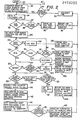
- FIGURE 2 The operational description in FIGURE 2 is described in reference to a single one of the telephone lines 30. This functional operation is carried out concurrently for each one of the telephone lines 30.
- the operation begins at a start point 80.
- a first operational block 82 there is a transfer of a group of telephone numbers from the host computer 12 to the controller 36. These telephone numbers are placed in a host que.
- a sequential operational block 84 one of the telephone lines 30 is seized ' from placing a call. From the block 84 control goes to a decision block 86 to detect a dial tone on the selected line. If no dial tone is detected a decision block 88 is entered to determine if five seconds have elapsed since looking for dial tone began.
- control is returned through a NO line to the input of the decision block 86.
- control is transferred through a YES line to an operational block 90 which indicates that there is an error due to no dial tone meaning that the line is dead.
- a report is made by the controller 36 for the selected line to the host computer 12. From block 92 control is transferred to a disconnect line operational block 94 which disconnects the interface 40 from the selected line and returns control to the operational block 84 to seize a new telephone line and start a new dialing sequence.
- control is transferred through the YES line to an operational block 100 which selects the next phone number from the host que and dials this number at the selected line. From operational block 100 control enters a decision block 102, which examines the line for a busy signal. This operation is carried out by the signal detect circuit 52. If a busy signal is detected at block 102 control is transferred through the YES line to an operational block 104 to indicate a busy line. From block 104 control is transferred to an operational block 106 to report the busy line status to the host computer 12. Control is then transferred back to block 94 to disconnect the line and resume the call sequence at block 84.
- control is transferred through the NO line to a decision block 108 for detection of a ring. If a ring is not detected control is transferred through the NO line to a decision block 110 for detection of voice.
- a voice signal is detected through the selected line by operation of the signal detect circuit 52. If a voice is not detected on the called line, control is transferred through the NO line to a decision block 112 to determine if thirty seconds has elapsed since the call has been placed. If thirty seconds has not elapsed, control is transferred through the NO line and back to the decision block 102 for further examination of the line for detection of a busy signal.
- control is transferred through the YES line to an operational brock 114 which determines that there is a dead line error and an appropriate report is sent to the host computer 12. From block 114 control is transferred to the disconnect line block 94 to resume the calling sequence with a new number starting with block 84.
- Control is transferred through the YES response to an operational block 116 for indicating detection of a recording. Control is next transferred to an operational block 118 to report the phone number and a recording status to the host computer 12. From block 118 control is passed to block 94 for line disconnect then to block 94 to start a new call sequence.
- control is transferred through the YES line to a decision block 120 for detection of an answer at the called line.
- Voice detection is carried out by the signal detect circuit 52. If there is no answer, control is transferred through the NO line to a decision block 122 to determine if four rings have occurred or if thirty seconds has elapsed. If this has not occurred, control is transferred through the NO line to reenter the examination for an answer at decision block 120. If the four rings or thirty seconds has occurred, control is transferred through the YES line to an operational block 123 to indicate no answer and then to an operational block 124 to report the status and phone number to the host computer 12 for the number that has been called but for which there has been no answer. Control is subsequently returned to the disconnect line block 94 for initiating another call sequence at the block 84.
- control is transferred through the YES response to a decision block 126 to determine if there is a free operator, that is, an operator not currently connected to a successfully placed call. If it is determined that there is no free operator, control is transferred through the NO response to an operational block 128 to play a hold message on the called line. This is carried out by the voice I/O 46. The message requests that the called party hold for a brief period until an operator is available. From block 128 control is transferred to a decision block 130 which examines to determine if the hold message has been playing for more than thirty seconds. If it has not, control is transferred through the NO response to the input of the decision block 126 to determine again if there is an operator available to service the called line.
- control is transferred through the YES response to an operational block 132 which plays a recorded message to the called party stating that the party will be called at a later time. From block 132 control is transferred to an operational block 134 which reports the status and the phone number to host computer 12 for the number of the party who was called but who was told that a call will be placed at a later time. From block 134 control is then returned to the operational block 94 to disconnect the line and resume the carling sequence of block 84.
- control is transferred through the YES response to an operational block 140 which connects a free operator through the operator audio 66 to the called line which has been answered.
- the controller 36 sends a message to the host computer 12 giving the telephone number which has been answered and the identification of the operator which has the corresponding audio headset connected to the called line.
- the next operational block 144 is carried out by host computer 12 rather than the controller 36.
- the computer 12 calls up at least a portion of the record for the called line which has been answered.
- the selected portion of the record is then sent through line 26 to the appropriate one of the terminals 14, 16 or 18 which corresponds to the operator whose headset has been connected to the called line.
- the operator is thus provided with a display screen of information that is uniquely relevant to the called party.
- the operator can then follow the sequence of information on the screen for communicating with the called party.
- the operator can directly enter responses from the called party into the displayed record which then can be returned to the host computer 12 for storage and further processing.
- control is transferred to a decision block 146 which examines the display terminal for the selected operator to determine if the operator has completed the conversation with the called party. If the operator has not indicated that the conversation is completed, the NO response transfers control back to the input of the decision block 146 to further examine if the call has been terminated.
- control is trnsferred through the YES response to an operational block 148 in which the host computer receives the termination signal from the operator and in turn transmits a report of termination specifying which operator or telephone number has completed the conversation and this information is transmitted to the controller 36.
- Blocks 146 and 148 are carried out by the host computer 12. From the operational block 148 control is then returned to the disconnect line block 94 for releasing the line for which the conversation has been completed. Control is then returned to the operational block 84 for initiating another call sequence with a new telephone line.
- the central controller 36 can request a new group of telephone numbers to be called and establish a new host que for continuing the calling operation.
- the busy and unanswered numbers can either be retried by the central controller 36 or be included in a new group of numbers to be called by the host computer 12.
- the system 10 provides optium utilization of the pool operators by queing called parties by operation of the hold message provided through operational block 128. In an optimal situation all of the operaters remain busy while the callied parties are on hold for a minimum time. Should the number of persons who receive a message for a later callback or the hold time becomes excessive, the control system 28 reduces the rate of calls by either pausing between calls or at up calling on a line. This brings the number of answered calls closer in line with the availability of operators. But if there are a number of free operators available without answered lines for servicing, the control system 28 increases the number of calls by increasing the number of phone lines or reducing the pause between outgoing calls to supply answered lines for servicing by all of the available operators.
- the present invention comprises a multi-line calling system for automatically placing calls and eliminating the operator effort with busy and unanswered numbers.
- the successfully placed calls are reported to the host computer which produces a visual display to the operator who has received an audio connection to the successfully called party. The operator can then provide unique servicing to the called party.
Landscapes
- Engineering & Computer Science (AREA)
- Signal Processing (AREA)
- Business, Economics & Management (AREA)
- Marketing (AREA)
- Telephonic Communication Services (AREA)
- Sub-Exchange Stations And Push- Button Telephones (AREA)
Applications Claiming Priority (2)
| Application Number | Priority Date | Filing Date | Title |
|---|---|---|---|
| US06/644,971 US4599493A (en) | 1984-08-28 | 1984-08-28 | Multi-line telephone control system |
| US644971 | 1984-08-28 |
Publications (2)
| Publication Number | Publication Date |
|---|---|
| EP0173250A2 true EP0173250A2 (de) | 1986-03-05 |
| EP0173250A3 EP0173250A3 (de) | 1988-06-08 |
Family
ID=24587120
Family Applications (1)
| Application Number | Title | Priority Date | Filing Date |
|---|---|---|---|
| EP85110537A Withdrawn EP0173250A3 (de) | 1984-08-28 | 1985-08-22 | Steuersystem für mehrere Fernsprechleitungen |
Country Status (3)
| Country | Link |
|---|---|
| US (1) | US4599493A (de) |
| EP (1) | EP0173250A3 (de) |
| CA (1) | CA1234940A (de) |
Cited By (7)
| Publication number | Priority date | Publication date | Assignee | Title |
|---|---|---|---|---|
| EP0336770A3 (de) * | 1988-04-07 | 1990-01-24 | Teknekron Infoswitch Corporation | Verfahren und Gerät für prädiktive Wahl |
| EP0295837A3 (en) * | 1987-06-16 | 1990-07-18 | Inventions, Inc. | Customer account online servicing system |
| EP0359757A4 (en) * | 1988-03-24 | 1990-09-05 | Creative Communications Associates Inc. | Automated interactive mass communications system |
| EP0375119A3 (de) * | 1988-12-20 | 1992-03-11 | Inventions, Inc. | Verfahren und Apparat für Abnehmerrechnungsdienst |
| EP0435449A3 (en) * | 1989-12-29 | 1993-03-03 | American Telephone And Telegraph Company | Automated booking of telecommunications calls |
| EP0426361A3 (en) * | 1989-11-03 | 1993-03-03 | International Business Machines Corporation | Coordinated voice and data display in a multiplex communication system |
| EP0564192A3 (en) * | 1992-04-01 | 1994-07-20 | At & T Corp | Network based outbound call management |
Families Citing this family (58)
| Publication number | Priority date | Publication date | Assignee | Title |
|---|---|---|---|---|
| US4845739A (en) | 1985-07-10 | 1989-07-04 | Fdr Interactive Technologies | Telephonic-interface statistical analysis system |
| US5793846A (en) | 1985-07-10 | 1998-08-11 | Ronald A. Katz Technology Licensing, Lp | Telephonic-interface game control system |
| US6678360B1 (en) | 1985-07-10 | 2004-01-13 | Ronald A. Katz Technology Licensing, L.P. | Telephonic-interface statistical analysis system |
| US5359645A (en) | 1985-07-10 | 1994-10-25 | First Data Corporation Inc. | Voice-data telephonic interface control system |
| US5828734A (en) | 1985-07-10 | 1998-10-27 | Ronald A. Katz Technology Licensing, Lp | Telephone interface call processing system with call selectivity |
| US4817130A (en) * | 1986-09-11 | 1989-03-28 | International Telesystems Corporation | Call management system with protocol converter and port controller |
| US4922520A (en) * | 1986-12-31 | 1990-05-01 | M. A. Kempner, Inc. | Automatic telephone polling system |
| WO1988005239A1 (en) * | 1986-12-31 | 1988-07-14 | M.A. Kempner, Inc. | Improved polling system |
| US4796293A (en) * | 1987-12-18 | 1989-01-03 | Communications Network Enhancement Inc. | Enhanced dedicated teleconferencing system |
| US4881261A (en) * | 1988-06-29 | 1989-11-14 | Rockwell International Corporation | Method for predictive pacing of calls in a calling system |
| US5023868A (en) * | 1988-12-29 | 1991-06-11 | At&T Bell Laboratories | Automated call handling apparatus |
| US4988209A (en) * | 1988-12-29 | 1991-01-29 | At&T Bell Laboratories | Telephone agent management information system |
| US5062103A (en) * | 1988-12-29 | 1991-10-29 | At&T Bell Laboratories | Telephone agent call management system |
| US5185787A (en) * | 1989-06-26 | 1993-02-09 | First Data Resources, Inc. | Multiple party telephone control system with random dialing for polling |
| US4933964A (en) * | 1989-07-25 | 1990-06-12 | International Telesystems Corporation | Pacing of telephone calls for call origination management systems |
| US5054055A (en) * | 1990-04-26 | 1991-10-01 | Bell Atlantic Network Services, Inc. | Telephone system and method for the intelligent use of individual calling line identification information |
| US5214688A (en) * | 1990-06-05 | 1993-05-25 | Inventions, Inc. | Method and apparatus for dynamic and interdependent processing of inbound calls and outbound calls |
| US5241584A (en) * | 1990-08-22 | 1993-08-31 | Mci Communications Corporation | Response time evaluation unit |
| US5327490A (en) * | 1991-02-19 | 1994-07-05 | Intervoice, Inc. | System and method for controlling call placement rate for telephone communication systems |
| US5097528A (en) * | 1991-02-25 | 1992-03-17 | International Business Machines Corporation | System for integrating telephony data with data processing systems |
| US5430792A (en) * | 1991-05-03 | 1995-07-04 | Electronic Information Systems, Inc. | Automated telephone calling system |
| JPH04341040A (ja) * | 1991-05-17 | 1992-11-27 | Nec Corp | 交換台紐回路方式 |
| US5295184A (en) * | 1991-05-30 | 1994-03-15 | Davox Corporation | Dynamically adjustable call pacing system |
| US5297195A (en) * | 1991-10-02 | 1994-03-22 | Teledirect International, Inc. | Method and apparatus for automatic telephone scheduling system |
| US5815566A (en) * | 1991-10-10 | 1998-09-29 | Executone Information Systems, Inc. | Apparatus and method for dynamic inbound/outbound call management and for scheduling appointments |
| US5309504A (en) * | 1991-11-18 | 1994-05-03 | Syntellect Acquisition Corp. | Automated identification of attendant positions in a telecommunication system |
| US5179589A (en) * | 1991-11-27 | 1993-01-12 | International Telesystems Corporation | Call progress pacing |
| US5329581A (en) * | 1991-12-23 | 1994-07-12 | At&T Bell Laboratories | Target area calling system |
| CA2086694C (en) * | 1992-03-05 | 1996-12-31 | Steven K. Miller | System, data processing method and program to provide a programmable interface between a workstation and an archive server to automatically store telephone transaction information |
| US5311577A (en) * | 1992-03-06 | 1994-05-10 | International Business Machines Corporation | Data processing system, method and program for constructing host access tables for integration of telephony data with data processing systems |
| US5327484A (en) * | 1992-04-30 | 1994-07-05 | At&T Bell Laboratories | Calling system for short duration data transactions |
| US5392341A (en) * | 1992-06-11 | 1995-02-21 | Wilkinson; Charles L. | Automatic telephone line monitoring and selection apparatus and method |
| US6192413B1 (en) | 1992-07-30 | 2001-02-20 | International Business Machines Corporation | Method and system for process queue communications routing |
| KR960700602A (ko) * | 1993-01-14 | 1996-01-20 | 세이버리 그레도빌레 | 전화 네트워크 수행 모니터 방법 및 시스템(telephone network performance monitoring method and system) |
| US5436965A (en) * | 1993-11-16 | 1995-07-25 | Automated Systems And Programming, Inc. | Method and system for optimization of telephone contact campaigns |
| US5533103A (en) * | 1994-04-28 | 1996-07-02 | Electronic Information Systems, Inc. | Calling system and method |
| US5559867A (en) * | 1994-06-20 | 1996-09-24 | Sigma/Micro Corporation | Automated calling system with database updating |
| US6556664B1 (en) | 1994-06-20 | 2003-04-29 | Sigma Communications, Inc. | Public notification system and method |
| US5912947A (en) * | 1994-06-20 | 1999-06-15 | Sigma/Micro Corporation | Public notification system and method |
| US6567504B1 (en) | 1994-06-20 | 2003-05-20 | Sigma Communications, Inc. | Automated calling system with database updating |
| JPH0823556A (ja) * | 1994-07-11 | 1996-01-23 | Matsushita Electric Ind Co Ltd | 構内自動交換機 |
| KR960043674A (ko) * | 1995-05-24 | 1996-12-23 | 김광호 | 키폰 시스템에서의 멀티 스피드 다이얼링(multi-speed dialing) 방법 |
| US5570419A (en) * | 1995-10-13 | 1996-10-29 | Intervoice Limited Partnership | System and method for an improved predictive dialer |
| US5867559A (en) * | 1996-02-20 | 1999-02-02 | Eis International, Inc. | Real-time, on-line, call verification system |
| US5974135A (en) * | 1997-06-11 | 1999-10-26 | Harrah's Operating Company, Inc. | Teleservices computer system, method, and manager application for integrated presentation of concurrent interactions with multiple terminal emulation sessions |
| IL121501A (en) * | 1997-08-08 | 2003-04-10 | Icq Inc | Telephone-status notification system |
| US6775378B1 (en) | 1999-10-25 | 2004-08-10 | Concerto Software, Inc | Blended agent contact center |
| US6832203B1 (en) | 1999-11-05 | 2004-12-14 | Cim, Ltd. | Skills based contact routing |
| US7230927B1 (en) | 1999-12-07 | 2007-06-12 | Aspect Software, Inc. | Non-blocking expandable call center architecture |
| US6707906B1 (en) | 2000-03-13 | 2004-03-16 | Concerto Software, Inc. | Outbound calling system in a contact center |
| US6766011B1 (en) | 2000-06-16 | 2004-07-20 | Concerto Software, Inc. | Method and apparatus for controlling a contact center |
| US7103173B2 (en) * | 2001-07-09 | 2006-09-05 | Austin Logistics Incorporated | System and method for preemptive goals based routing of contact records |
| US7142662B2 (en) | 2000-07-11 | 2006-11-28 | Austin Logistics Incorporated | Method and system for distributing outbound telephone calls |
| US6778951B1 (en) | 2000-08-09 | 2004-08-17 | Concerto Software, Inc. | Information retrieval method with natural language interface |
| US6778660B2 (en) | 2001-04-06 | 2004-08-17 | Concerto Software, Inc. | Customer interaction system |
| US7734029B2 (en) * | 2008-03-17 | 2010-06-08 | Transcend Products, Llc | Apparatus, system, and method for automated call initiation |
| US9258424B2 (en) | 2013-05-24 | 2016-02-09 | Avaya Inc. | Prioritize contact numbers of customers in real time |
| US9118764B2 (en) | 2013-08-09 | 2015-08-25 | Avaya Inc. | Method and system to determine and employ best contact opportunity |
Family Cites Families (6)
| Publication number | Priority date | Publication date | Assignee | Title |
|---|---|---|---|---|
| US3864526A (en) * | 1972-02-22 | 1975-02-04 | Communic Equip & Contract | Telephone call distribution system with trunk indentification |
| US3943289A (en) * | 1974-07-12 | 1976-03-09 | Environmental Developers, Inc. | Automatic telephone caller |
| US3989899A (en) * | 1975-04-08 | 1976-11-02 | Daniel Norwich | Telephone scheduling system |
| US4160125A (en) * | 1977-05-23 | 1979-07-03 | Digital Products Corporation | Telephone polling apparatus |
| US4201896A (en) * | 1977-05-23 | 1980-05-06 | Digital Products Corporation | Telephone polling apparatus using a plurality of timers to detect the line conditions |
| US4438296A (en) * | 1980-09-02 | 1984-03-20 | Digital Products Corporation | Multimessage automatic telephone polling methods and apparatus |
-
1984
- 1984-08-28 US US06/644,971 patent/US4599493A/en not_active Expired - Lifetime
-
1985
- 1985-08-22 EP EP85110537A patent/EP0173250A3/de not_active Withdrawn
- 1985-08-27 CA CA000489446A patent/CA1234940A/en not_active Expired
Cited By (7)
| Publication number | Priority date | Publication date | Assignee | Title |
|---|---|---|---|---|
| EP0295837A3 (en) * | 1987-06-16 | 1990-07-18 | Inventions, Inc. | Customer account online servicing system |
| EP0359757A4 (en) * | 1988-03-24 | 1990-09-05 | Creative Communications Associates Inc. | Automated interactive mass communications system |
| EP0336770A3 (de) * | 1988-04-07 | 1990-01-24 | Teknekron Infoswitch Corporation | Verfahren und Gerät für prädiktive Wahl |
| EP0375119A3 (de) * | 1988-12-20 | 1992-03-11 | Inventions, Inc. | Verfahren und Apparat für Abnehmerrechnungsdienst |
| EP0426361A3 (en) * | 1989-11-03 | 1993-03-03 | International Business Machines Corporation | Coordinated voice and data display in a multiplex communication system |
| EP0435449A3 (en) * | 1989-12-29 | 1993-03-03 | American Telephone And Telegraph Company | Automated booking of telecommunications calls |
| EP0564192A3 (en) * | 1992-04-01 | 1994-07-20 | At & T Corp | Network based outbound call management |
Also Published As
| Publication number | Publication date |
|---|---|
| US4599493A (en) | 1986-07-08 |
| CA1234940A (en) | 1988-04-05 |
| EP0173250A3 (de) | 1988-06-08 |
Similar Documents
| Publication | Publication Date | Title |
|---|---|---|
| US4599493A (en) | Multi-line telephone control system | |
| US5341412A (en) | Apparatus and a method for predictive call dialing | |
| EP0607347B1 (de) | Verfahren und vorrichtung zur automatischen ablaufsteuerung von telefonischen anrufen | |
| US5309505A (en) | Automated voice system for improving agent efficiency and improving service to parties on hold | |
| US5559878A (en) | Telephonic communications answering and callback processing system | |
| JP2927461B2 (ja) | オペレータ アシスタント呼に対するより効率的な呼処理 | |
| US4969185A (en) | Automated booking of telecommunications calls | |
| US5164981A (en) | Voice response system with automated data transfer | |
| US5070525A (en) | Method for avoiding call blocking | |
| AU671015B2 (en) | Method and apparatus for facilitating the making of collect calls | |
| US5544220A (en) | System for integrating a stand alone inbound automatic call distributor and an outbound automatic call dialer | |
| US5761289A (en) | 800 number callback | |
| EP0622938A2 (de) | Anrufteilungsnetzwerk mit Lokal-Vertreter | |
| US6198814B1 (en) | System and method for entering call outcome records in a computer database in an outbound predictive dialing application | |
| US5463684A (en) | Telecommunications system for transferring calls without a private branch exchange | |
| US5831665A (en) | Video switching system, video communications system and method for automatically establishing video communications using a telephonic switch | |
| WO1992022164A1 (en) | Hunt and seek telephone system | |
| US6181366B1 (en) | Video switching system, video communications system and method for establishing video communications with a telephonic switch | |
| JP2778774B2 (ja) | 自動呼処理装置及び呼転送装置 | |
| JPH09135299A (ja) | 呼処理制御方法及び呼処理制御装置、加入者端末装置 | |
| KR910006315B1 (ko) | 사설 자동교환기의 중역 및 비서간 통화 서비스방법 | |
| JPH01194733A (ja) | 通信システム | |
| EP0786891A2 (de) | Verfahren und automatisches Verbindungssystem zur Verbindung von ausgehenden Anrufen mit Arbeitsplätzen | |
| JPS5854771A (ja) | 加入者状態検出方式 | |
| JPH02260748A (ja) | 音声メッセージ転送方法 |
Legal Events
| Date | Code | Title | Description |
|---|---|---|---|
| PUAI | Public reference made under article 153(3) epc to a published international application that has entered the european phase |
Free format text: ORIGINAL CODE: 0009012 |
|
| AK | Designated contracting states |
Kind code of ref document: A2 Designated state(s): DE FR GB |
|
| PUAL | Search report despatched |
Free format text: ORIGINAL CODE: 0009013 |
|
| AK | Designated contracting states |
Kind code of ref document: A3 Designated state(s): DE FR GB |
|
| STAA | Information on the status of an ep patent application or granted ep patent |
Free format text: STATUS: THE APPLICATION IS DEEMED TO BE WITHDRAWN |
|
| 18D | Application deemed to be withdrawn |
Effective date: 19881209 |
|
| RIN1 | Information on inventor provided before grant (corrected) |
Inventor name: CAVE, ELLIS K. |