EP0174143B1 - Verschiedenartige Familie von menschlichen Leukozyten-Interferonen, Zusammensetzungen, die diese enthalten, Verfahren zu ihrer Herstellung, sowie DNA und transfektierte Wirte hierfür - Google Patents
Verschiedenartige Familie von menschlichen Leukozyten-Interferonen, Zusammensetzungen, die diese enthalten, Verfahren zu ihrer Herstellung, sowie DNA und transfektierte Wirte hierfür Download PDFInfo
- Publication number
- EP0174143B1 EP0174143B1 EP85306011A EP85306011A EP0174143B1 EP 0174143 B1 EP0174143 B1 EP 0174143B1 EP 85306011 A EP85306011 A EP 85306011A EP 85306011 A EP85306011 A EP 85306011A EP 0174143 B1 EP0174143 B1 EP 0174143B1
- Authority
- EP
- European Patent Office
- Prior art keywords
- human leukocyte
- dna
- human
- ifn
- leukocyte interferon
- Prior art date
- Legal status (The legal status is an assumption and is not a legal conclusion. Google has not performed a legal analysis and makes no representation as to the accuracy of the status listed.)
- Expired
Links
Images


Classifications
-
- C—CHEMISTRY; METALLURGY
- C07—ORGANIC CHEMISTRY
- C07K—PEPTIDES
- C07K14/00—Peptides having more than 20 amino acids; Gastrins; Somatostatins; Melanotropins; Derivatives thereof
- C07K14/435—Peptides having more than 20 amino acids; Gastrins; Somatostatins; Melanotropins; Derivatives thereof from animals; from humans
- C07K14/52—Cytokines; Lymphokines; Interferons
- C07K14/555—Interferons [IFN]
- C07K14/56—IFN-alpha
-
- A—HUMAN NECESSITIES
- A61—MEDICAL OR VETERINARY SCIENCE; HYGIENE
- A61P—SPECIFIC THERAPEUTIC ACTIVITY OF CHEMICAL COMPOUNDS OR MEDICINAL PREPARATIONS
- A61P31/00—Antiinfectives, i.e. antibiotics, antiseptics, chemotherapeutics
- A61P31/12—Antivirals
-
- A—HUMAN NECESSITIES
- A61—MEDICAL OR VETERINARY SCIENCE; HYGIENE
- A61P—SPECIFIC THERAPEUTIC ACTIVITY OF CHEMICAL COMPOUNDS OR MEDICINAL PREPARATIONS
- A61P35/00—Antineoplastic agents
-
- A—HUMAN NECESSITIES
- A61—MEDICAL OR VETERINARY SCIENCE; HYGIENE
- A61K—PREPARATIONS FOR MEDICAL, DENTAL OR TOILETRY PURPOSES
- A61K38/00—Medicinal preparations containing peptides
Definitions
- the present invention relates to a novel, distinct family of human leukocyte interferon proteins (designated herein by HuIFN-all or HulFN- ⁇ 11 and to species thereof as HuIFN-all.1 or HutFN-a,,1, and so forth) which are useful in the treatment of viral and neoplastic diseases, and to the means for producing such interferon proteins.
- the present invention finds its basis in the field of recombinant DNA technology which has been employed to discover and produce this novel, distinct family of human leukocyte interferons.
- a human leukocyte interferon was first discovered and prepared in the form of very crude precipitates from natural source (1). Following this work was the substantial discovery that human leukocyte interferons exist as a class or family of proteins all exhibiting close homology and varying degrees of similar in kind antiviral activity. This work has been documented in several references as follows: (2,3,4,5). This family of leukocyte interferons (commonly referred to in abbreviated form as HuIFN-a) has been reported to be composed of upwards of 15 or more individual species, having varying degrees of similar in kind antiviral activity.
- these human leukocyte interferon species have been identified by amino acid sequences consisting of from about 165 to 166 amino acids in their mature forms, by the underlying DNA sequence for each and by identification of glycosolation sites and reported antiviral activity in animal species. Indeed, at least one of these human leukocyte interferon proteins is enjoying success in certified human clinical studies. These interferon species have been and are being produced via recombinant DNA technology, notably employing the workhorse in this field, namely a transfected E. coli microorganism.
- a second class of human interferons is represented by the so called human fibroblast interferon (P-interferon, or HuIFN-B).
- P-interferon human fibroblast interferon
- HuIFN-B human fibroblast interferon
- human gamma interferon (HuIFN-y) (8, 9).
- human gamma interferon has been reported to exhibit the antiviral and antiproliferative properties characteristic of the human interferons in the leukocyte and fibroblast series, its properties are distinct in that, in contrast to the leukocyte and beta interferons, it is of shorter amino acid length and is pH 2 labile (10). Because of these distinctions, human gamma interferon is thought to be slated more for indications of antiproliferative activity with indications of substantial use in the treatment of cancer patients. Central and independent research has therefore attended the human gamma interferon molecule.
- human fibroblast interferon HuIFN-(3) and human leukocyte interferons (HuIFN-a) are similar structurally (i.e. amino acid length and homologous sequence) and biologically (i.e. antiviral activity)
- human leukocyte interferon would be composed of a family of multiple species whereas in the human fibroblast interferon case only one gene has so far been located, indicating evolutionary divergence and expansion to multiple genes within the leukocyte family but retention of a single distinct gene in the case of fibroblast interferon.
- the present invention relates to the discovery of a novel and distinct family or group within the human leukocyte interferon class of compounds.
- This new family or group of human leukocyte interferons although exhibiting substantial homology in its coding region with the previously reported human leukocyte interferon family of genes (e.g., about 70 percent), are considered distinct from the previously reported family of human leukocyte interferons inasmuch as the homology is not greater than that cited above and the length of amino acid residues is greater than those reported for the earlier class or family of human leukocyte interferons.
- the previously reported family of human leukocyte interferons comprise approximately 165 to 166 amino acids in the mature form.
- the human leukocyte interferons of the present invention representative of this second family or group of human leukocyte interferons have been found to contain approximately 172 amino acids. Similarly, associated antiviral biological activity indicates that the human leukocyte interferons of the present invention have specifities which overlap but have a broader spectrum of activity compared with those of several of the previously reported human leukocyte interferons.
- the novel interferons, encoding DNA and process hereof are as defined in the appended claims.
- the present invention relates to and teaches means for producing a new family of human leukocyte interferons which are considered distinct and novel from those human leukocyte interferons previously reported.
- the present invention enables the production of such novel, distinct human leukocyte interferons via recombinant DNA technology such that they, and each of them, can be prepared in direct, mature form or via fusion protein intermediates, and in amounts sufficient to initiate and conduct clinical testing as prerequisites to marketing approval.
- the products of this invention are suitable for use, in all of their forms, in the prophylactic or therapeutic treatment of humans, notably for viral infections and malignant and immunosuppressed or immunodeficient conditions. Their forms include various possible oligomeric forms and they may include associated glycosolation as well as allelic variations or other derivatives of individual members or species.
- the products are produced in accordance with this invention by genetically engineered microorganisms or cell culture systems.
- the present invention comprises the novel, distinct family of human leukocyte interferons thus produced and the means and methods for their production.
- the present invention is further directed to replicable DNA expression vehicles harboring gene sequences encoding the novel, distinct human leukocyte interferons in expressible form.
- the present invention is directed to microorganism strains or cell cultures transfected with the expression vehicles described above and to fermentation media comprising such transfected strains or cultures, capable of producing the novel, distinct human leukocyte interferons of the present invention.
- the present invention is directed to various processes useful for preparing said interferon gene sequences, DNA expression vehicles, microorganism strains and cell cultures and to specific embodiments thereof. Still further, this invention is directed to the preparation of the fermentation media of said microorganisms and cell cultures. Further, in certain host systems, vectors can be devised capable of producing the desired interferons hereof, secreted from the host cell in mature form.
- the present invention can be practiced utilizing a variety of bacterial, yeast, or mammalian or vertabrate cell culture systems capable of being successfully transfected with expression vectors harboring the gene sequence of a particular novel, distinct human leukocyte interferon of the present invention.
- These systems are well known in the art and have been copiously referenced.
- E. coli K-12 strain 294 ATCC No. 31446
- other known E. coli strains known in the art and deposited in various public microorganism depositories.
- These other microorganisms include for example, strains from Bacillus and Salmonella and Serratia.
- various yeast strains have been described and can be employed in the present invention.
- strain Saccharomyces cerevisiae which has been deposited with the American Type Culture Collection, specifically strain RH218 under ATCC No. 44076.
- various cell culture systems have been developed and used and can be used in the process of the present invention. For example, various cultures such as W138, BHK, T3, CHO, VERO cell lines can be employed.
- heterologous gene segment of the present invention being that encoding a novel, distinct human leukocyte interferon of the present invention.
- the operable linkage of the gene with a suitable promoter in a given expression host system can be done so as to effect the expression of the novel, distinct human leukocyte interferon of the present invention in so called mature form, that is, devoid of any presequence or other artifact of expression linked to the amino acid sequence.
- novel, distinct human leukocyte interferons of the present invention can be operably linked together with its own signal sequence so as to effect secretion of the mature form via use of the cleavage of the signal sequence upon transport through the cell membrane.
- novel, distinct human leukocyte interferon gene of the present invention can be operably linked so as to prepare a fusion protein comprising the amino acid sequence of the novel, distinct human leukocyte interferon hereof together with homologous protein linked to the N-terminus.
- the method of the present invention is illustrated by a particular, representative embodiment by which the novel, distinct leukocyte interferons of the present invention were identified by way of gene sequence, gene isolation, hook-up for expression, purification and biological ascertainment.
- This method employed the use of the gene for human beta interferon as a probe of the human genomic library, originally intended to determine whether additional beta genes existed.
- the results of these experiments identified genes which appeared initially not to be beta interferon genes, rather more associated with the leukocyte series of interferons. The work disclosed herein substantiated this conclusion.
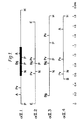
- FIG. 1 Alignment of IFN-all genes by restriction endonuclease mapping. Restriction endonuclease sites included in the sequenced regions of the genes (Fig. 2) are shown, except for the region between 0.0 kb and 0.3 kb of the IFN-all.2 gene. The thickened portion of the map of IFN-all.1 corresponds to the sequence encoding the IFN preprotein. A size scale in kilobase pairs (kb) is shown below the maps.
- Restriction endonuclease sites within the IFN-all genes are indicated as follows: Accl (A), BamHl (B), Bglll (Bg), EcoRl (E), Hindlll (H), Nco1 (N), Pstl (P), Pvull (Pv).
- FIG. 1 DNA sequence relationships between the IFN-all genes.
- the sequence of the IFN-all.1 gene is presented in detail with 250 bases of 5'-flanking sequence (sufficient to encode the region presumably required for viral induction), and 3'-flanking sequence through the putative polyadenylational site. Only those nucleotides of the IFN-all.2, all.3 and all.4 genes which differ from that of IFN-all.1 are shown.
- FIG. 3 Polypeptides encoded by the IFN-all gene family. The complete amino acid sequence of the IFN-all.1 preprotein is shown. The location of insertions/deletions within amino acid residues is indicated by underlining. The residues of the signal peptide of IFN-all.1 are numbered S1-S23, and the residues of the mature protein are numbered 1-172.
- FIG. 4 The structures of phage recombinants containing the HulFN- ⁇ II 1 genes.
- the coding region is shown cross-hatched, and is divided into the presequence (hatched left) and the restriction map of the HulFN- ⁇ II 1 gene and flanking regions from the recombinant phage ⁇ 24.1 is shown.
- FIG. 5 Southern blot analysis of human IFN-a gene families. High molecular weight human genomic DNAs (5 pg) were digested with restriction endonucleases as shown, electrophoresed through a 0.8 percent agarose gel and subsequently transferred to nitrocellulose filter paper. Hybridizations were performed under stringent conditions using probes derived from the following IFN-a coding regions, HuIFN-a,1 (lane a) and HulFN- ⁇ II 1 (lane b). Molecular size standards correspond to EcoRl-digested bacteriophage ⁇ Charon 30A and pBR322 DNAs and Rsal-digested pBR322 DNA.
- FIG. 6 Comparison of the nucleotide sequences of HulFN- ⁇ II 1 with HulFN- ⁇ I 1 and the proteins encoded by HulFN- ⁇ II 1 with the members of the class I HuIFN-a,1 gene family. Amino acid residues in HuIFN-a,1 which are underlined represent those found in all of the class I HuIFN-a species reported to date. Amino acid residues below the HulFN- ⁇ II 1 DNA sequence indicate differences between HulFN- ⁇ II 1 and HuIFN-a,1. Asterisks mark changes in the nucleotide sequence which do not result in a change in the amino acid encoded. The polyadenylation signal (AATAAA) of HulFN- ⁇ I 1 is overlined.
- AATAAA polyadenylation signal
- the proposed polyadenylation signal (ATTAAA) of HulFN- ⁇ II 1 is underlined.
- the vertical arrow indicates the messenger RNA cap site of HuIFN-a,1.
- the open triangles indicate the 5' end and 3' site of poly(A) addition found for the longest HulFN- ⁇ II 1 cDNA clone.
- Figure 7 Analysis of virally induced class I and class II IFN-a transcripts.
- Five microgram aliquots of polyA(+) RNA were analyzed in each lane.
- (A) is shown hybridization with the class I (IFN-a,2) probe and
- (B) hybridization with the class II (IFN- ⁇ II 1) probe.
- Lanes 1, 2, and 3 are samples from donor 1
- lanes 4, 5, and 6 are samples from donor 2.
- Lanes 1 and 4 are uninduced controls.
- Lanes 2 and 5 induction by Newcastle Disease virus; lanes 3 and 6: induction with Sendai virus.
- the molecular size markers are derived from an EcoRl+Pstl digestion of pLelF A25 (3.6 kb and 0.9 kb) and an EcoRl+Hindlll digestion of pHulFN- ⁇ II trp (4.3 kb and 1.2 kb; Figure 11).
- the 0.9 kb pLelF A25 fragment contains the IFN-a,2 coding region
- the 1.2 kb pHulFN- ⁇ II trp1 fragment contains the IFN- ⁇ II 1 coding region.
- FIG. 8 Structure of plasmid directing the synthesis of mature IFN-a proteins in E. coli.
- the thick segment represents the IFN-a insert, with the mature coding region shaded: HulFN- ⁇ II 1trp.
- a human genomic DNA library (11) was screened at low hybridization stringency utilizing a probe prepared from a fragment spanning the mature coding region of the HulFN- ⁇ gene. Of seven positive clones recovered by this screening procedure, four proved to contain the HulFN- ⁇ gene by restriction mapping, Southern analysis and hybridization at high stringency using the HulFN- ⁇ probe. The remaining three recombinants appeared to represent overlapping segments of the human genome containing a distantly related gene which only hybridized to the HulFN- ⁇ probe at low stringency.
- the novel HuIFN-a contains five or six additional amino acids at its carboxy terminus, three of which are identical in each protein ( Figure 6). These similarities are reflected at the level of nucleotide homology as well (Table 1). Taken together, these observations strongly suggest that this novel HuIFN-a represents a homologous gene product, distinct from the class I IFN-a gene family which includes the previously. sequenced functional HuIFN-a genes. Accordingly, we have named this gene HulFN- ⁇ II 1 to distinguish it from the class I HuIFN-a genes.
- the HulFN- ⁇ II 1 sequence contains a potential glycosylation sequence, asn-met-thr, at positions 78-80. Interestingly, a similar sequence is found at the same position in HulFN- ⁇ which is known to be modified in vivo by carbohydrate addition (20).
- HulFN- ⁇ II 1 might define a new family of IFN-a genes in the human genome
- blot-hybridization analysis was performed with human genomic DNA utilizing probes derived from the HulFN- ⁇ I 1 and HulFN- ⁇ II 1 coding region under stringent conditions which do not permit cross-hybridization of the two genes.
- the results of such an experiment, shown in Figure 5, indicate that the HulFN- ⁇ I 1 and HulFN- ⁇ II 1 probes define distinct gene families.
- the HulFN- ⁇ II 1 probe demonstrates the presence of 6-7 class II genes in the human genome.
- HulFN- ⁇ II 1 protein or related class II IFN-a gene products have not been identified in interferon preparations from virally-induced cell lines (21, 22), nor have the corresponding DNA sequences been found in cDNA libraries prepared from lymphoblastoid cell lines (3) or peripheral blood lymphocytes induced by viruses.
- RNA from the peripheral blood lymphocytes of two donors induced with either Sendai or Newcastle Disease virus was analyzed by blot hybridization.
- a complementary DNA library was constructed from polyA(+) RNA isolated from Sendai-induced peripheral blood lymphocytes.
- a HulFN- ⁇ II 1 coding region probe was employed to screen 10,000 plaques under stringent hybridization conditions. Two HulFN- ⁇ II 1 clones were recovered. DNA sequence analysis showed that the longer of the two cDNA clones extended from the poly(A) of the mRNA to within the sequence encoding the signal peptide of HulFN- ⁇ II 1. The corresponding sequence within the HulFN- ⁇ II 1 gene is indicated in Figure 6.
- Class II IFN-a genes encode proteins with antiviral activity:
- class II IFN-a genes encode active proteins and to compare their host range with those of class I IFN-a polypeptides
- bacterial vectors were constructed for the expression of HulFN- ⁇ II 1 genes.
- the resulting plasmids join a trp operon promoter, ribosome-binding site and initiator methionine codon to the first amino acid residue of each mature IFN-a coding region.
- extracts prepared from E. coli strains transformed with each of the three plasmids and grown under conditions leading to depletion of tryptophan from the growth media contain significant amounts of antiviral activity as measured by cytopathic effect inhibition assays.
- each IFN-a was compared with those of two class I HuIFN-a proteins, HuIFN-a,2 and HuIFN-a,1, on a bovine cell line (MDBK) cell line challenged with vesicular stomatitis virus and on a human lung carcinoma (A549) cell line challenged with encephalomyocarditis virus.
- HulFN- ⁇ II 1 and HuIFN-a,2 show approximately equal activity on each cell type.
- the class II IFN- ⁇ proteins therefore appear to have specificities which overlap those of several class I IFN-a gene products in these as well as other cell lines.
- HulFN- ⁇ II 1 To further characterize the antiviral activity associated with HulFN- ⁇ II 1, we examined the ability of antisera prepared against IFN-a and IFN- ⁇ to neutralize HulFN- ⁇ II 1 activity. Anti-HulFN- ⁇ did not significantly affect the activity of HuIFN-a " 1, while an antisera prepared against Sendai-virus induced interferon from human leukocyte cultures did neutralize HulFN- ⁇ II 1 antiviral activity (Table 3). Since the latter induction protocol has been shown to result primarily in the production of HuIFN-a rather than HulFN- ⁇ , these results confirm the assignment of HulFN- ⁇ II 1 to the IFN-a family, made on the basis of protein homology.
- HulFN- ⁇ II 1 Such a gene was identified, HulFN- ⁇ II 1, among a collection of clones initially isolated by screening a human genomic library with a HulFN- ⁇ cDNA probe. Comparison of DNA homologies, however, as well as antigenicity studies on the HulFN- ⁇ II 1 protein expressed in E. coli, firmly establish that this gene encodes an IFN-a rather than an IFN- ⁇ protein. HulFN- ⁇ II 1 encodes a mature polypeptide of 172 amino acid residues. These results demonstrate the existence of two homologous, but distinct IFN-a gene families in the human genome.
- Hybridizations were performed in 5xSSC (1 ⁇ SSC is 0.15 M NaCl, 0.015 M sodium citrate), 5x Denhardt's solution (12), 0.1 percent sodium dodecyl sulfate (SDS), 0.1 percent sodium pyrophosphate, 50 ⁇ g/ml sonicated, denatured salmon sperm DNA and 10 percent sodium dextran sulfate, containing either 20 percent or 50 percent formamide for non-stringent and stringent conditions, respectively. After incubation at 42°C, filters were washed at room temperature in 2xSSC, 0.2 percent SDS (non-stringent) or 42°C in 0.2xSSC, 0.1 percent SDS (stringent).
- the HulFN- ⁇ II 1 gene was isolated from a human fetal liver/bacteriophage ⁇ Charon 4A library constructed by Lawn et al. (11) utilizing a probe prepared from the 501 bp Xbal-Bg/II fragment encoding the mature HulFN- ⁇ protein.
- DNA sequences were determined as described by (16) or by subcloning DNA fragments into M13 mp8 and mp9 vectors (17) and employing the dideoxy chain termination method (18).
- Peripheral blood lymphocytes (2 ⁇ 10 9 ) were resuspended at 4x 10 6 cells per ml in RPMI 1640 containing 5 percent (heat inactivated) fetal calf serum. Cultures were incubated in T-175 flasks (Falcon) and induced cultures were treated with 25 UAU/10 6 cells of Newcastle Disease virus or Sendai virus. Following six hours of incubation with virus, the cultures were treated with 0.05 percent EDTA and cells were harvested by centrifugation, washed once with ice-cold medium, and polyA(+) RNA was prepared (19). Formaldehyde gel electrophoresis of RNA and Northern blot analysis were carried out. The peripheral blood lymphocyte cDNA library was constructed (2) except that double-stranded cDNA was ligated into the ⁇ gt1 vector (25).
- CPE cytopathic effect
- HulFN- ⁇ II 1 The antigenic identity of HulFN- ⁇ II 1 was determined by (14).
- E. coli K12 strain 294 cultures containing the appropriate expression plasmids were grown and lysates were prepared for interferon bioassay.
- Interferon antiviral activity in the lysates was determined in a cytopathic effect inhibition assay employing MDBK (bovine kidney) cells and vesicular stomatitis virus or A549 (human lung carcinoma) cells challenged with encephalomyocarditis virus. Results are expressed as the amount of antiviral activity per liter of bacterial culture grown to an optical density of 1.0 at 550 nM.
- Interferon was prepared and assayed as in the legend to Table 2.
- AntilFN- ⁇ was prepared by immunization of a rabbit with natural HuIFN-a purified.
- AntilFN- ⁇ was prepared by immunization of a calf with natural HulFN- ⁇ purified. Numbers in parentheses give the fold reduction in antiviral activity following treatment with antisera.
- the human leukocyte interferons of the present invention are characterized by having a probable broader spectrum of biological activity compared with previously reported human leukocyte interferons (see, for example, 4).
- the novel, distinct leukocyte interferons of the present invention are further characterized from those human leukocyte interferons previously reported by having less than about 70 percent (most usually in the range of about 50-60 percent) homology on the amino acid level with said previously reported human leukocyte interferons (4).
- the novel, distinct human leukocyte interferons of the present invention are characterized by having more than 166 amino acid residues in their mature form, most preferably having about 172 amino acids in their mature form.
Landscapes
- Health & Medical Sciences (AREA)
- Chemical & Material Sciences (AREA)
- Life Sciences & Earth Sciences (AREA)
- Organic Chemistry (AREA)
- General Health & Medical Sciences (AREA)
- Medicinal Chemistry (AREA)
- General Chemical & Material Sciences (AREA)
- Pharmacology & Pharmacy (AREA)
- Nuclear Medicine, Radiotherapy & Molecular Imaging (AREA)
- Animal Behavior & Ethology (AREA)
- Chemical Kinetics & Catalysis (AREA)
- Public Health (AREA)
- Veterinary Medicine (AREA)
- Communicable Diseases (AREA)
- Biophysics (AREA)
- Oncology (AREA)
- Toxicology (AREA)
- Zoology (AREA)
- Gastroenterology & Hepatology (AREA)
- Biochemistry (AREA)
- Virology (AREA)
- Genetics & Genomics (AREA)
- Molecular Biology (AREA)
- Proteomics, Peptides & Aminoacids (AREA)
- Preparation Of Compounds By Using Micro-Organisms (AREA)
- Peptides Or Proteins (AREA)
- Medicines That Contain Protein Lipid Enzymes And Other Medicines (AREA)
- Micro-Organisms Or Cultivation Processes Thereof (AREA)
- Saccharide Compounds (AREA)
Claims (12)


Priority Applications (1)
| Application Number | Priority Date | Filing Date | Title |
|---|---|---|---|
| AT85306011T ATE47864T1 (de) | 1984-08-27 | 1985-08-23 | Verschiedenartige familie von menschlichen leukozyten-interferonen, zusammensetzungen, die diese enthalten, verfahren zu ihrer herstellung, sowie dna und transfektierte wirte hierfuer. |
Applications Claiming Priority (2)
| Application Number | Priority Date | Filing Date | Title |
|---|---|---|---|
| US64474084A | 1984-08-27 | 1984-08-27 | |
| US644740 | 1984-08-27 |
Publications (2)
| Publication Number | Publication Date |
|---|---|
| EP0174143A1 EP0174143A1 (de) | 1986-03-12 |
| EP0174143B1 true EP0174143B1 (de) | 1989-11-08 |
Family
ID=24586145
Family Applications (1)
| Application Number | Title | Priority Date | Filing Date |
|---|---|---|---|
| EP85306011A Expired EP0174143B1 (de) | 1984-08-27 | 1985-08-23 | Verschiedenartige Familie von menschlichen Leukozyten-Interferonen, Zusammensetzungen, die diese enthalten, Verfahren zu ihrer Herstellung, sowie DNA und transfektierte Wirte hierfür |
Country Status (4)
| Country | Link |
|---|---|
| EP (1) | EP0174143B1 (de) |
| JP (2) | JP2597543B2 (de) |
| AT (1) | ATE47864T1 (de) |
| DE (1) | DE3574145D1 (de) |
Cited By (1)
| Publication number | Priority date | Publication date | Assignee | Title |
|---|---|---|---|---|
| US6949520B1 (en) | 1999-09-27 | 2005-09-27 | Coley Pharmaceutical Group, Inc. | Methods related to immunostimulatory nucleic acid-induced interferon |
Families Citing this family (8)
| Publication number | Priority date | Publication date | Assignee | Title |
|---|---|---|---|---|
| GB8412564D0 (en) * | 1984-05-17 | 1984-06-20 | Searle & Co | Structure and properties |
| DE3584198D1 (de) * | 1984-08-01 | 1991-10-31 | Boehringer Ingelheim Int | Neue genetische sequenzen, die durch sie codierten interferon-peptide vom typ i und diese sie produzierende organismen. |
| DE3607835A1 (de) * | 1986-03-10 | 1987-09-24 | Boehringer Ingelheim Int | Hybridinterferone, deren verwendung als arzneimittel und als zwischenprodukte zur herstellung von antikoerpern und deren verwendung sowie verfahren zu ihrer herstellung |
| DE3633323A1 (de) * | 1986-10-01 | 1988-04-07 | Boehringer Ingelheim Int | Neue monoklonale antikoerper gegen ifn-omega, verfahren zu ihrer herstellung und deren verwendung zur reinigung sowie zum nachweis von ifn-omega |
| DE3635867A1 (de) * | 1986-10-22 | 1988-05-11 | Boehringer Ingelheim Int | Neue hefeexpressionsvektoren fuer ifn-omega, verfahren zu ihrer herstellung und deren verwendung |
| AU638207B2 (en) * | 1988-03-18 | 1993-06-24 | Institut National De La Recherche Agronomique (Inra) | Isoforms of trophoblastine |
| FR2628744B1 (fr) * | 1988-03-18 | 1991-07-26 | Agronomique Inst Nat Rech | Isoformes de la trophoblastine, nouveaux interferons constitues par lesdites isoformes, leurs procedes d'obtention et leurs applications |
| GB9609932D0 (en) * | 1996-05-13 | 1996-07-17 | Hoffmann La Roche | Use of IL-12 and IFN alpha for the treatment of infectious diseases |
Family Cites Families (5)
| Publication number | Priority date | Publication date | Assignee | Title |
|---|---|---|---|---|
| CY1346A (en) * | 1980-01-08 | 1987-01-16 | Biogen Nv | Dna sequences,recombinant dna molecules and processes for producing human interferon-like polypeptides |
| FR2490675B1 (fr) * | 1980-09-25 | 1985-11-15 | Genentech Inc | Production microbienne d'interferon de fibroplaste humain |
| EP0072541A3 (de) * | 1981-08-14 | 1984-04-18 | F. HOFFMANN-LA ROCHE & CO. Aktiengesellschaft | Menschliche Leukozyten-Interferone, Verfahren zu deren Mikrobiologischer Herstellung, Zwischenprodukte und diese enthaltende Zusammensetzungen |
| AU1152983A (en) * | 1982-01-15 | 1983-07-28 | Cetus Corporation | Interferon alpha 74 |
| CA1217440A (en) * | 1982-08-18 | 1987-02-03 | Michael A. Innis | INTERFERON .alpha. 6L |
-
1985
- 1985-08-23 EP EP85306011A patent/EP0174143B1/de not_active Expired
- 1985-08-23 DE DE8585306011T patent/DE3574145D1/de not_active Expired
- 1985-08-23 AT AT85306011T patent/ATE47864T1/de not_active IP Right Cessation
- 1985-08-27 JP JP60189334A patent/JP2597543B2/ja not_active Expired - Lifetime
-
1993
- 1993-09-02 JP JP5218449A patent/JP2792813B2/ja not_active Expired - Lifetime
Cited By (2)
| Publication number | Priority date | Publication date | Assignee | Title |
|---|---|---|---|---|
| US6949520B1 (en) | 1999-09-27 | 2005-09-27 | Coley Pharmaceutical Group, Inc. | Methods related to immunostimulatory nucleic acid-induced interferon |
| US7776344B2 (en) | 1999-09-27 | 2010-08-17 | University Of Iowa Research Foundation | Methods related to immunostimulatory nucleic acid-induced interferon |
Also Published As
| Publication number | Publication date |
|---|---|
| JP2597543B2 (ja) | 1997-04-09 |
| EP0174143A1 (de) | 1986-03-12 |
| JP2792813B2 (ja) | 1998-09-03 |
| DE3574145D1 (en) | 1989-12-14 |
| JPH06234796A (ja) | 1994-08-23 |
| JPS61129200A (ja) | 1986-06-17 |
| ATE47864T1 (de) | 1989-11-15 |
Similar Documents
| Publication | Publication Date | Title |
|---|---|---|
| US5231176A (en) | Distinct family DNA encoding of human leukocyte interferons | |
| US5120832A (en) | Distinct family of human leukocyte interferons | |
| Goeddel et al. | The structure of eight distinct cloned human leukocyte interferon cDNAs | |
| Nagata et al. | The structure of one of the eight or more distinct chromosomal genes for human interferon-α | |
| EP0032134B1 (de) | DNS-Sequenzen, rekombinante DNS-Moleküle und Verfahren zur Herstellung von dem menschlichen Interferon-alpha ähnlichen Polypeptiden | |
| US4530901A (en) | Recombinant DNA molecules and their use in producing human interferon-like polypeptides | |
| EP0043980B1 (de) | Reifes menschliches Leukozyteninterferon A, Verfahren zu seiner mikrobiellen Produktion, Zwischenprodukte dazu und es enthaltende Zusammensetzungen. | |
| JP2515308B2 (ja) | ヒト免疫インタ−フエロン | |
| US4853332A (en) | Structural genes, plasmids and transformed cells for producing cysteine depleted muteins of biologically active proteins | |
| US4678751A (en) | Hybrid human leukocyte interferons | |
| USRE33653E (en) | Human recombinant interleukin-2 muteins | |
| EP0051873B1 (de) | Hybride menschliche Leukozyten-Interferone, Verfahren zu deren mikrobieller Herstellung, Zwischenverbindungen dafür und dieselben enthaltende Zusammensetzungen | |
| US4588585A (en) | Human recombinant cysteine depleted interferon-β muteins | |
| US7635466B1 (en) | DNA sequences, recombinant DNA molecules and processes for producing human fibroblast interferon-like polypeptides | |
| US4456748A (en) | Hybrid human leukocyte interferons | |
| EP0088540A2 (de) | DNS-Sequenzen, Rekombinante DNS-Moleküle und Verfahren zur Herstellung von dem immunen menschlichen Interferon ähnlichen Polypeptiden | |
| EP0089676A2 (de) | DNS und deren Verwendung | |
| JP2566909B2 (ja) | 新規遺伝子配列、それによつてコ−ドされるi型インタ−フエロンペプチドおよびそのインタ−フエロンを産生する微生物 | |
| EP0174143A1 (de) | Verschiedenartige Familie von menschlichen Leukozyten-Interferonen, Zusammensetzungen, die diese enthalten, Verfahren zu ihrer Herstellung, sowie DNA und transfektierte Wirte hierfür | |
| US6835557B1 (en) | DNA sequences, recombinant DNA molecules and processes for producing human interferon-like polypeptides | |
| EP0328061A2 (de) | Menschlicher Koloniestimulierungsfaktor | |
| EP0072541A2 (de) | Menschliche Leukozyten-Interferone, Verfahren zu deren Mikrobiologischer Herstellung, Zwischenprodukte und diese enthaltende Zusammensetzungen | |
| US5650297A (en) | DNA encoding human colony-stimulating factors | |
| KR890001828B1 (ko) | 인터페론-α형의 폴리펩티드의 제조방법 | |
| HK19189A (en) | Dna sequences, recombinant dna molecules and processes for producing human interferon-alpha like polypeptides |
Legal Events
| Date | Code | Title | Description |
|---|---|---|---|
| PUAI | Public reference made under article 153(3) epc to a published international application that has entered the european phase |
Free format text: ORIGINAL CODE: 0009012 |
|
| AK | Designated contracting states |
Kind code of ref document: A1 Designated state(s): AT BE CH DE FR GB IT LI LU NL SE |
|
| 17P | Request for examination filed |
Effective date: 19860820 |
|
| 17Q | First examination report despatched |
Effective date: 19870520 |
|
| GRAA | (expected) grant |
Free format text: ORIGINAL CODE: 0009210 |
|
| AK | Designated contracting states |
Kind code of ref document: B1 Designated state(s): AT BE CH DE FR GB IT LI LU NL SE |
|
| REF | Corresponds to: |
Ref document number: 47864 Country of ref document: AT Date of ref document: 19891115 Kind code of ref document: T |
|
| REF | Corresponds to: |
Ref document number: 3574145 Country of ref document: DE Date of ref document: 19891214 |
|
| ITF | It: translation for a ep patent filed | ||
| ET | Fr: translation filed | ||
| PLBE | No opposition filed within time limit |
Free format text: ORIGINAL CODE: 0009261 |
|
| STAA | Information on the status of an ep patent application or granted ep patent |
Free format text: STATUS: NO OPPOSITION FILED WITHIN TIME LIMIT |
|
| 26N | No opposition filed | ||
| ITTA | It: last paid annual fee | ||
| EPTA | Lu: last paid annual fee | ||
| EAL | Se: european patent in force in sweden |
Ref document number: 85306011.9 |
|
| REG | Reference to a national code |
Ref country code: GB Ref legal event code: IF02 |
|
| PGFP | Annual fee paid to national office [announced via postgrant information from national office to epo] |
Ref country code: LU Payment date: 20040624 Year of fee payment: 20 |
|
| PGFP | Annual fee paid to national office [announced via postgrant information from national office to epo] |
Ref country code: GB Payment date: 20040707 Year of fee payment: 20 Ref country code: AT Payment date: 20040707 Year of fee payment: 20 |
|
| PGFP | Annual fee paid to national office [announced via postgrant information from national office to epo] |
Ref country code: NL Payment date: 20040713 Year of fee payment: 20 |
|
| PGFP | Annual fee paid to national office [announced via postgrant information from national office to epo] |
Ref country code: FR Payment date: 20040804 Year of fee payment: 20 |
|
| PGFP | Annual fee paid to national office [announced via postgrant information from national office to epo] |
Ref country code: SE Payment date: 20040805 Year of fee payment: 20 |
|
| PGFP | Annual fee paid to national office [announced via postgrant information from national office to epo] |
Ref country code: DE Payment date: 20040831 Year of fee payment: 20 |
|
| PGFP | Annual fee paid to national office [announced via postgrant information from national office to epo] |
Ref country code: BE Payment date: 20040901 Year of fee payment: 20 |
|
| PGFP | Annual fee paid to national office [announced via postgrant information from national office to epo] |
Ref country code: CH Payment date: 20040914 Year of fee payment: 20 |
|
| PG25 | Lapsed in a contracting state [announced via postgrant information from national office to epo] |
Ref country code: GB Free format text: LAPSE BECAUSE OF EXPIRATION OF PROTECTION Effective date: 20050822 |
|
| PG25 | Lapsed in a contracting state [announced via postgrant information from national office to epo] |
Ref country code: NL Free format text: LAPSE BECAUSE OF EXPIRATION OF PROTECTION Effective date: 20050823 |
|
| BE20 | Be: patent expired |
Owner name: *GENENTECH INC. Effective date: 20050823 |
|
| REG | Reference to a national code |
Ref country code: GB Ref legal event code: PE20 |
|
| REG | Reference to a national code |
Ref country code: CH Ref legal event code: PL |
|
| EUG | Se: european patent has lapsed | ||
| NLV7 | Nl: ceased due to reaching the maximum lifetime of a patent |
Effective date: 20050823 |
|
| BE20 | Be: patent expired |
Owner name: *GENENTECH INC. Effective date: 20050823 |