EP0174669A2 - Verfahren zur Herstellung einer Hybrid-DNA, die das komplementäre Genom des Hepatitis-A-Virus enthält, diese Hybrid-DNA und den sie enthaltenden Plasmidvektor, von der Hybrid-DNA exprimierte Virus-spezifische Proteine und diese enthaltende und damit hergestellte Impfstoffe - Google Patents
Verfahren zur Herstellung einer Hybrid-DNA, die das komplementäre Genom des Hepatitis-A-Virus enthält, diese Hybrid-DNA und den sie enthaltenden Plasmidvektor, von der Hybrid-DNA exprimierte Virus-spezifische Proteine und diese enthaltende und damit hergestellte Impfstoffe Download PDFInfo
- Publication number
- EP0174669A2 EP0174669A2 EP85112101A EP85112101A EP0174669A2 EP 0174669 A2 EP0174669 A2 EP 0174669A2 EP 85112101 A EP85112101 A EP 85112101A EP 85112101 A EP85112101 A EP 85112101A EP 0174669 A2 EP0174669 A2 EP 0174669A2
- Authority
- EP
- European Patent Office
- Prior art keywords
- virus
- dna
- hybrid dna
- hepatitis
- hav
- Prior art date
- Legal status (The legal status is an assumption and is not a legal conclusion. Google has not performed a legal analysis and makes no representation as to the accuracy of the status listed.)
- Withdrawn
Links
- 241000709721 Hepatovirus A Species 0.000 title claims abstract description 25
- 239000013600 plasmid vector Substances 0.000 title claims abstract description 13
- 238000004519 manufacturing process Methods 0.000 title claims abstract description 11
- 229960005486 vaccine Drugs 0.000 title claims abstract description 10
- 230000000295 complement effect Effects 0.000 title claims abstract description 8
- 238000000034 method Methods 0.000 title claims description 21
- 108090000623 proteins and genes Proteins 0.000 title abstract description 35
- 102000004169 proteins and genes Human genes 0.000 title abstract description 31
- 241000700605 Viruses Species 0.000 title abstract description 17
- 230000001580 bacterial effect Effects 0.000 claims abstract description 17
- 108020004414 DNA Proteins 0.000 claims description 50
- 239000013612 plasmid Substances 0.000 claims description 28
- 239000002773 nucleotide Substances 0.000 claims description 10
- 125000003729 nucleotide group Chemical group 0.000 claims description 10
- 102000053602 DNA Human genes 0.000 claims description 9
- 230000003053 immunization Effects 0.000 claims description 6
- 108020000999 Viral RNA Proteins 0.000 claims description 5
- 241000588724 Escherichia coli Species 0.000 claims description 4
- 102000015636 Oligopeptides Human genes 0.000 claims description 4
- 108010038807 Oligopeptides Proteins 0.000 claims description 4
- 238000010367 cloning Methods 0.000 claims description 4
- 238000002649 immunization Methods 0.000 claims description 4
- 239000002243 precursor Substances 0.000 claims description 3
- 108091008146 restriction endonucleases Proteins 0.000 claims description 3
- 238000010839 reverse transcription Methods 0.000 claims description 3
- 102000014914 Carrier Proteins Human genes 0.000 claims description 2
- 108010078791 Carrier Proteins Proteins 0.000 claims description 2
- 125000003275 alpha amino acid group Chemical group 0.000 claims description 2
- 238000001514 detection method Methods 0.000 abstract description 3
- 239000012472 biological sample Substances 0.000 abstract description 2
- 239000000427 antigen Substances 0.000 description 14
- 102000036639 antigens Human genes 0.000 description 14
- 108091007433 antigens Proteins 0.000 description 14
- 239000002245 particle Substances 0.000 description 12
- 108020004635 Complementary DNA Proteins 0.000 description 11
- 238000010804 cDNA synthesis Methods 0.000 description 11
- 239000002299 complementary DNA Substances 0.000 description 11
- 239000000463 material Substances 0.000 description 8
- 238000003127 radioimmunoassay Methods 0.000 description 8
- 238000009396 hybridization Methods 0.000 description 7
- AIYUHDOJVYHVIT-UHFFFAOYSA-M caesium chloride Chemical compound [Cl-].[Cs+] AIYUHDOJVYHVIT-UHFFFAOYSA-M 0.000 description 6
- 238000003780 insertion Methods 0.000 description 6
- 230000037431 insertion Effects 0.000 description 6
- 230000035939 shock Effects 0.000 description 6
- 241000894006 Bacteria Species 0.000 description 5
- 208000005252 hepatitis A Diseases 0.000 description 5
- 230000003612 virological effect Effects 0.000 description 5
- 239000000020 Nitrocellulose Substances 0.000 description 4
- 238000004458 analytical method Methods 0.000 description 4
- 238000004113 cell culture Methods 0.000 description 4
- 238000005119 centrifugation Methods 0.000 description 4
- 239000012530 fluid Substances 0.000 description 4
- 229920001220 nitrocellulos Polymers 0.000 description 4
- 238000004062 sedimentation Methods 0.000 description 4
- 210000002966 serum Anatomy 0.000 description 4
- 239000007790 solid phase Substances 0.000 description 4
- 229930101283 tetracycline Natural products 0.000 description 4
- XLYOFNOQVPJJNP-UHFFFAOYSA-N water Substances O XLYOFNOQVPJJNP-UHFFFAOYSA-N 0.000 description 4
- 241000713838 Avian myeloblastosis virus Species 0.000 description 3
- 102100031780 Endonuclease Human genes 0.000 description 3
- 108010092799 RNA-directed DNA polymerase Proteins 0.000 description 3
- 239000004098 Tetracycline Substances 0.000 description 3
- 230000008901 benefit Effects 0.000 description 3
- 208000015181 infectious disease Diseases 0.000 description 3
- 229960002180 tetracycline Drugs 0.000 description 3
- 235000019364 tetracycline Nutrition 0.000 description 3
- 150000003522 tetracyclines Chemical class 0.000 description 3
- 229920001817 Agar Polymers 0.000 description 2
- 101100137549 Arabidopsis thaliana PRF5 gene Proteins 0.000 description 2
- 102000004163 DNA-directed RNA polymerases Human genes 0.000 description 2
- 108090000626 DNA-directed RNA polymerases Proteins 0.000 description 2
- ZHNUHDYFZUAESO-UHFFFAOYSA-N Formamide Chemical compound NC=O ZHNUHDYFZUAESO-UHFFFAOYSA-N 0.000 description 2
- ISWSIDIOOBJBQZ-UHFFFAOYSA-N Phenol Chemical compound OC1=CC=CC=C1 ISWSIDIOOBJBQZ-UHFFFAOYSA-N 0.000 description 2
- 229930006000 Sucrose Natural products 0.000 description 2
- CZMRCDWAGMRECN-UGDNZRGBSA-N Sucrose Chemical compound O[C@H]1[C@H](O)[C@@H](CO)O[C@@]1(CO)O[C@@H]1[C@H](O)[C@@H](O)[C@H](O)[C@@H](CO)O1 CZMRCDWAGMRECN-UGDNZRGBSA-N 0.000 description 2
- DRTQHJPVMGBUCF-XVFCMESISA-N Uridine Chemical compound O[C@@H]1[C@H](O)[C@@H](CO)O[C@H]1N1C(=O)NC(=O)C=C1 DRTQHJPVMGBUCF-XVFCMESISA-N 0.000 description 2
- 101100137778 Zea mays PRO5 gene Proteins 0.000 description 2
- 239000008272 agar Substances 0.000 description 2
- 239000011543 agarose gel Substances 0.000 description 2
- 230000015572 biosynthetic process Effects 0.000 description 2
- 238000011109 contamination Methods 0.000 description 2
- 230000009089 cytolysis Effects 0.000 description 2
- 230000000120 cytopathologic effect Effects 0.000 description 2
- SUYVUBYJARFZHO-RRKCRQDMSA-N dATP Chemical compound C1=NC=2C(N)=NC=NC=2N1[C@H]1C[C@H](O)[C@@H](COP(O)(=O)OP(O)(=O)OP(O)(O)=O)O1 SUYVUBYJARFZHO-RRKCRQDMSA-N 0.000 description 2
- RGWHQCVHVJXOKC-SHYZEUOFSA-N dCTP Chemical compound O=C1N=C(N)C=CN1[C@@H]1O[C@H](CO[P@](O)(=O)O[P@](O)(=O)OP(O)(O)=O)[C@@H](O)C1 RGWHQCVHVJXOKC-SHYZEUOFSA-N 0.000 description 2
- NHVNXKFIZYSCEB-XLPZGREQSA-N dTTP Chemical compound O=C1NC(=O)C(C)=CN1[C@@H]1O[C@H](COP(O)(=O)OP(O)(=O)OP(O)(O)=O)[C@@H](O)C1 NHVNXKFIZYSCEB-XLPZGREQSA-N 0.000 description 2
- 201000010099 disease Diseases 0.000 description 2
- 208000037265 diseases, disorders, signs and symptoms Diseases 0.000 description 2
- 238000001962 electrophoresis Methods 0.000 description 2
- ZMMJGEGLRURXTF-UHFFFAOYSA-N ethidium bromide Chemical compound [Br-].C12=CC(N)=CC=C2C2=CC=C(N)C=C2[N+](CC)=C1C1=CC=CC=C1 ZMMJGEGLRURXTF-UHFFFAOYSA-N 0.000 description 2
- 229960005542 ethidium bromide Drugs 0.000 description 2
- 239000012634 fragment Substances 0.000 description 2
- 238000001502 gel electrophoresis Methods 0.000 description 2
- 239000000203 mixture Substances 0.000 description 2
- 230000035772 mutation Effects 0.000 description 2
- 102000004196 processed proteins & peptides Human genes 0.000 description 2
- 108090000765 processed proteins & peptides Proteins 0.000 description 2
- 239000005720 sucrose Substances 0.000 description 2
- 239000000725 suspension Substances 0.000 description 2
- 238000003786 synthesis reaction Methods 0.000 description 2
- 238000012360 testing method Methods 0.000 description 2
- NWXMGUDVXFXRIG-WESIUVDSSA-N (4s,4as,5as,6s,12ar)-4-(dimethylamino)-1,6,10,11,12a-pentahydroxy-6-methyl-3,12-dioxo-4,4a,5,5a-tetrahydrotetracene-2-carboxamide Chemical compound C1=CC=C2[C@](O)(C)[C@H]3C[C@H]4[C@H](N(C)C)C(=O)C(C(N)=O)=C(O)[C@@]4(O)C(=O)C3=C(O)C2=C1O NWXMGUDVXFXRIG-WESIUVDSSA-N 0.000 description 1
- 102000040650 (ribonucleotides)n+m Human genes 0.000 description 1
- 108091032973 (ribonucleotides)n+m Proteins 0.000 description 1
- CKTSBUTUHBMZGZ-SHYZEUOFSA-N 2'‐deoxycytidine Chemical compound O=C1N=C(N)C=CN1[C@@H]1O[C@H](CO)[C@@H](O)C1 CKTSBUTUHBMZGZ-SHYZEUOFSA-N 0.000 description 1
- 241000271566 Aves Species 0.000 description 1
- 241000557626 Corvus corax Species 0.000 description 1
- CKTSBUTUHBMZGZ-UHFFFAOYSA-N Deoxycytidine Natural products O=C1N=C(N)C=CN1C1OC(CO)C(O)C1 CKTSBUTUHBMZGZ-UHFFFAOYSA-N 0.000 description 1
- 241000709661 Enterovirus Species 0.000 description 1
- 241000991587 Enterovirus C Species 0.000 description 1
- 206010019799 Hepatitis viral Diseases 0.000 description 1
- 108060003951 Immunoglobulin Proteins 0.000 description 1
- 241001465754 Metazoa Species 0.000 description 1
- 108091028043 Nucleic acid sequence Proteins 0.000 description 1
- 229910019142 PO4 Inorganic materials 0.000 description 1
- 239000004793 Polystyrene Substances 0.000 description 1
- 239000013614 RNA sample Substances 0.000 description 1
- 102000006382 Ribonucleases Human genes 0.000 description 1
- 108010083644 Ribonucleases Proteins 0.000 description 1
- 229920004890 Triton X-100 Polymers 0.000 description 1
- 239000013504 Triton X-100 Substances 0.000 description 1
- 108010067390 Viral Proteins Proteins 0.000 description 1
- 230000001154 acute effect Effects 0.000 description 1
- 150000001413 amino acids Chemical class 0.000 description 1
- 238000010171 animal model Methods 0.000 description 1
- 230000000890 antigenic effect Effects 0.000 description 1
- 238000003149 assay kit Methods 0.000 description 1
- 238000000211 autoradiogram Methods 0.000 description 1
- DRTQHJPVMGBUCF-PSQAKQOGSA-N beta-L-uridine Natural products O[C@H]1[C@@H](O)[C@H](CO)O[C@@H]1N1C(=O)NC(=O)C=C1 DRTQHJPVMGBUCF-PSQAKQOGSA-N 0.000 description 1
- 230000001413 cellular effect Effects 0.000 description 1
- 238000006243 chemical reaction Methods 0.000 description 1
- 238000004140 cleaning Methods 0.000 description 1
- 239000012568 clinical material Substances 0.000 description 1
- 239000012050 conventional carrier Substances 0.000 description 1
- 231100000676 disease causative agent Toxicity 0.000 description 1
- 230000000694 effects Effects 0.000 description 1
- 230000002068 genetic effect Effects 0.000 description 1
- 230000036541 health Effects 0.000 description 1
- 206010073071 hepatocellular carcinoma Diseases 0.000 description 1
- 231100000844 hepatocellular carcinoma Toxicity 0.000 description 1
- 229920001519 homopolymer Polymers 0.000 description 1
- 230000036039 immunity Effects 0.000 description 1
- 230000002163 immunogen Effects 0.000 description 1
- 102000018358 immunoglobulin Human genes 0.000 description 1
- 229940072221 immunoglobulins Drugs 0.000 description 1
- 238000011534 incubation Methods 0.000 description 1
- 230000002458 infectious effect Effects 0.000 description 1
- 210000004185 liver Anatomy 0.000 description 1
- 239000006166 lysate Substances 0.000 description 1
- 238000000386 microscopy Methods 0.000 description 1
- 239000013642 negative control Substances 0.000 description 1
- 235000015097 nutrients Nutrition 0.000 description 1
- 230000003287 optical effect Effects 0.000 description 1
- 239000008188 pellet Substances 0.000 description 1
- 239000012071 phase Substances 0.000 description 1
- NBIIXXVUZAFLBC-UHFFFAOYSA-K phosphate Chemical compound [O-]P([O-])([O-])=O NBIIXXVUZAFLBC-UHFFFAOYSA-K 0.000 description 1
- 239000010452 phosphate Substances 0.000 description 1
- 229920001184 polypeptide Polymers 0.000 description 1
- 229920002223 polystyrene Polymers 0.000 description 1
- 238000002360 preparation method Methods 0.000 description 1
- 230000005180 public health Effects 0.000 description 1
- 230000002285 radioactive effect Effects 0.000 description 1
- 238000011160 research Methods 0.000 description 1
- 239000000523 sample Substances 0.000 description 1
- 238000012163 sequencing technique Methods 0.000 description 1
- 238000013518 transcription Methods 0.000 description 1
- 230000035897 transcription Effects 0.000 description 1
- 239000001226 triphosphate Substances 0.000 description 1
- 235000011178 triphosphate Nutrition 0.000 description 1
- UNXRWKVEANCORM-UHFFFAOYSA-N triphosphoric acid Chemical compound OP(O)(=O)OP(O)(=O)OP(O)(O)=O UNXRWKVEANCORM-UHFFFAOYSA-N 0.000 description 1
- DRTQHJPVMGBUCF-UHFFFAOYSA-N uracil arabinoside Natural products OC1C(O)C(CO)OC1N1C(=O)NC(=O)C=C1 DRTQHJPVMGBUCF-UHFFFAOYSA-N 0.000 description 1
- 229940045145 uridine Drugs 0.000 description 1
- 238000002255 vaccination Methods 0.000 description 1
- 201000001862 viral hepatitis Diseases 0.000 description 1
- 230000009385 viral infection Effects 0.000 description 1
Images

Classifications
-
- C—CHEMISTRY; METALLURGY
- C07—ORGANIC CHEMISTRY
- C07K—PEPTIDES
- C07K14/00—Peptides having more than 20 amino acids; Gastrins; Somatostatins; Melanotropins; Derivatives thereof
- C07K14/005—Peptides having more than 20 amino acids; Gastrins; Somatostatins; Melanotropins; Derivatives thereof from viruses
-
- A—HUMAN NECESSITIES
- A61—MEDICAL OR VETERINARY SCIENCE; HYGIENE
- A61K—PREPARATIONS FOR MEDICAL, DENTAL OR TOILETRY PURPOSES
- A61K38/00—Medicinal preparations containing peptides
-
- A—HUMAN NECESSITIES
- A61—MEDICAL OR VETERINARY SCIENCE; HYGIENE
- A61K—PREPARATIONS FOR MEDICAL, DENTAL OR TOILETRY PURPOSES
- A61K39/00—Medicinal preparations containing antigens or antibodies
-
- C—CHEMISTRY; METALLURGY
- C12—BIOCHEMISTRY; BEER; SPIRITS; WINE; VINEGAR; MICROBIOLOGY; ENZYMOLOGY; MUTATION OR GENETIC ENGINEERING
- C12N—MICROORGANISMS OR ENZYMES; COMPOSITIONS THEREOF; PROPAGATING, PRESERVING, OR MAINTAINING MICROORGANISMS; MUTATION OR GENETIC ENGINEERING; CULTURE MEDIA
- C12N2770/00—MICROORGANISMS OR ENZYMES; COMPOSITIONS THEREOF; PROPAGATING, PRESERVING, OR MAINTAINING MICROORGANISMS; MUTATION OR GENETIC ENGINEERING; CULTURE MEDIA ssRNA viruses positive-sense
- C12N2770/00011—Details
- C12N2770/32011—Picornaviridae
- C12N2770/32411—Hepatovirus, i.e. hepatitis A virus
- C12N2770/32422—New viral proteins or individual genes, new structural or functional aspects of known viral proteins or genes
-
- C—CHEMISTRY; METALLURGY
- C12—BIOCHEMISTRY; BEER; SPIRITS; WINE; VINEGAR; MICROBIOLOGY; ENZYMOLOGY; MUTATION OR GENETIC ENGINEERING
- C12N—MICROORGANISMS OR ENZYMES; COMPOSITIONS THEREOF; PROPAGATING, PRESERVING, OR MAINTAINING MICROORGANISMS; MUTATION OR GENETIC ENGINEERING; CULTURE MEDIA
- C12N2770/00—MICROORGANISMS OR ENZYMES; COMPOSITIONS THEREOF; PROPAGATING, PRESERVING, OR MAINTAINING MICROORGANISMS; MUTATION OR GENETIC ENGINEERING; CULTURE MEDIA ssRNA viruses positive-sense
- C12N2770/00011—Details
- C12N2770/32011—Picornaviridae
- C12N2770/32411—Hepatovirus, i.e. hepatitis A virus
- C12N2770/32434—Use of virus or viral component as vaccine, e.g. live-attenuated or inactivated virus, VLP, viral protein
-
- Y—GENERAL TAGGING OF NEW TECHNOLOGICAL DEVELOPMENTS; GENERAL TAGGING OF CROSS-SECTIONAL TECHNOLOGIES SPANNING OVER SEVERAL SECTIONS OF THE IPC; TECHNICAL SUBJECTS COVERED BY FORMER USPC CROSS-REFERENCE ART COLLECTIONS [XRACs] AND DIGESTS
- Y02—TECHNOLOGIES OR APPLICATIONS FOR MITIGATION OR ADAPTATION AGAINST CLIMATE CHANGE
- Y02A—TECHNOLOGIES FOR ADAPTATION TO CLIMATE CHANGE
- Y02A50/00—TECHNOLOGIES FOR ADAPTATION TO CLIMATE CHANGE in human health protection, e.g. against extreme weather
- Y02A50/30—Against vector-borne diseases, e.g. mosquito-borne, fly-borne, tick-borne or waterborne diseases whose impact is exacerbated by climate change
Definitions
- the invention relates to a method for producing a hybrid DNA which contains the complementary genome which is characteristic of the heptatitis A virus (HAV), the hybrid DNA thus produced, the plasmid vector containing it, the proteins or hybrid proteins expressed in bacterial clones , as well as the use of this hybrid DNA for the detection of hepatitis A virus in a biological sample, and vaccines which contain these proteins or hybrid proteins are produced therefrom or are produced on the basis of the nucleotide sequence of the hybrid DNA.
- HAV heptatitis A virus
- Hepatitis A remains a disease of major public health concern and its cause has only recently been identified. The absenteeism is long, the health costs (for example by isolating the patient) are high. A passive, better still general active vaccination would be of great health-political and economic benefit. To do this, the causative agent of this disease, the hepatitis A virus (HAV), should be available in large quantities in order to a) conduct scientific studies, b) use the viral antigen for immunization. This is not the case at the moment. Virus material stands not even available in such an amount that an adequate biochemical-virological examination of the virus particle can be carried out.
- HAV hepatitis A virus
- Hepatitis A was first transmitted to non-human primates in 1967-1970 (an overview was given by Deinhardt, F., 1976, in "Advances in Virus Research, Vol. 20, editor FB Bang (Academic Press, New York), p. 113 , given), and virus particles were later identified in the stool of patients in the acute phase by immunoelectron microscopy by Feinstone et al 1973 (Feinstone, SM, AZ Kapikian and RH Purcell, Science 182 (1973) 1026).
- HAV hepatitis A virus
- the FAV genome is a single-stranded linear RNA (probably with poly-A regions at the 3 'end) with a size of 2.25 to 2.8 x 10 6 daltons and a sedimentation coefficient of 32.5 to 33 S in comparison to poliovirus, which corresponds to about 6500 nucleotides.
- the HAV gene map and the expression of the genes are unknown. Little is known about the structure of the gene products of the HAV proteins and their antigenicity.
- the object of the invention is therefore a method for producing a hybrid DNA which contains the complementary genome which is characteristic of the hepatitis A virus, the plasmid vector containing the hybrid DNA, HAV-specific proteins and hybrid proteins, the HAV-specific Wear antigenicity, simply available in sufficient quantities.
- the invention relates to a method for producing a hybrid DNA which contains the complementary genome which is characteristic of the hepatitis A virus and which is characterized in that double-stranded DNA is obtained by reverse transcription of the viral RNA of the hepatitis A virus is cloned in a bacterial plasmid.
- the invention also relates to double-stranded hybrid DNA molecules, of which certain restriction fragments are complementary to the RNA of the hepatitis A virus.
- the invention further relates to plasmid vectors and transformed bacteria which contain these hybrid DNA molecules.
- the invention further relates to a method for producing proteins which contain a protein fragment with an immunizing effect against hepatitis A virus, these proteins or hybrid proteins, and vaccines containing them.
- the invention relates to the use of the hybrid DNA for detecting the presence of hepatitis A virus spe specific RNA sequences.
- Most clones contained plasmid inserts that hybridize to HAV-specific RNA isolated from HAV-infected cell cultures derived from human hepatocellular carcinoma. Some clones showed expression of different amounts of viral antigens that can be used to immunize against HAV.
- the advantage of this method is the almost unlimited amount of viral material that can be produced as a bacterial suspension on a large industrial scale. Another advantage is the ability to target only that virus material, i.e. to be able to produce the viralmantigen proteins that are required for the immunity process, but not other virus material that is costly as ballast. Above all, this method of cloning avoids producing infectious material (virus genome) that would have to be removed or cleaned away with great effort. The genetic information for the viral antigens remains anchored in the bacterium, the bacteria only produce the immune material.
- the new hybrid DNA according to the invention which is produced according to the invention, can advantageously be used in various fields of application. For example, it can be used to routinely prove the presence of HAV in clinical material.
- these hybrid DNA molecules can be used, which have been radioactively labeled by known methods, or the expressed proteins can be used for this.
- novel plasmid vectors according to the invention which have been obtained by the method of the invention and whose genomes contain the hybrid DNA according to the invention, can be used to be expressed in bacteria, thereby producing a HAV-specific protein in the form of a free or hybrid protein becomes possible.
- the (hybrid) protein contains the HAV antigen and can be used to produce vaccines against hepatitis A.
- Fig. 1 Size of the inserted DNA
- HAV-specific RNA obtained from PLC / PRF5 cells infected with HAV (Alexander et al, 1978, loc.cit.) And labeled with 32 p was grown on nitrocellulose filters bacterial clones hybridized.
- HAV particles were made from a stool obtained from a patient who developed typical hepatitis A four days later. The overall yield of particles approximately corresponded to a virus mass of approximately 10 to 20 ⁇ g.
- RNA extracted from the particles was transcribed into avian myeloblastosis virus (AMV) reverse transcriptase, and analysis of the cDNA by gel electrophoresis revealed an approximate yield of 10 to 50 ng of uniformly sized DNA with the majority of population approximately 800 to 1000 base pairs.
- the DNA was cloned into the Pst I restriction site of plasmid pBR 322.
- E. coli X 1776 was then transformed by the hybrid plasmids and clones were selected in the presence of tetracycline. Plasmids were produced from individual bacterial clones. Analysis of the cloned plasmids showed that many contained a DNA insert (Fig. 1) in the range of 300 to 800 nucleotides.
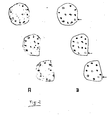
- RNA samples were prepared from a different source, namely from cells infected with HAV cell - cultures to incorrect results as a result of contamination with non-viral RNA to avoid the original, acquired from the chair viral RNA used for transcription. Most clones containing inserts hybridized to this HAV RNA (Fig. 2).
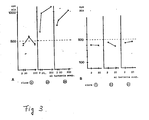
- the bacterial clones were examined for expression of antigen after water shock lysis of the bacteria (Villa- Komaroff et al, loc.cit.), And the shock fluids were tested for HAV in a solid phase radioimmunoassay (HAVAB from Abbott Laboratories, North Chicago, USA). Antigens tested. Two clones were positive, i.e. they responded at a 2 to 3-fold level above the negative background. Increasing amounts of shock fluids (2.20 or 200 ml) bound proportionally increasing amounts of radioactivity in the radioimmunoassay (Fig. 3A).
- the existing clones can now be used as hybridization probes and primers for the production of further cDNA using RNA from cell cultures infected with HAV.
- HAV particles were purified from 25 g of frozen stool as described (G. Siegl and GG Frösner, J. Virol. 26 (1978) 40 and 48). Briefly, the particles were removed from the stool on a pre-formed CsCl density gradient (density 1.25-1.50 g / cm 3 , average density 1.35 g / cm 3 ), which was a cushion of % sucrose to absorb most of the unrelated proteins was bound, and the fraction at a density of 1.34 g / cm 3 was bound by sedimentation centrifugation over a sucrose gradient. HAV antigen-positive fractions, tested with the standard radioimmunoassay of the solid phase, GG Frösner, Münch. med. Wschr.
- RNA was extracted from the particles by the guanidine-rhodanide method (A. Ullrich, J. Shine, R. Chirgivin, E. Pictet, WJ Rutter and HM Goodman, Science 196 (1977) 1313), so that it was ensured that there was no RNase activity.
- oligo-dT 12-18 was treated with 100 U of reverse myeloblastosis virus transcriptase from birds (Boehringer Mannheim) in the presence of oligo-dT 12-18 as primer, 8 mM MgAc 2 , 0.01% NP-40®, deoxyadenosine triphosphate (dATP), deoxyguanidine triphosphate (dGTP), deoxythymidine triphosphate (dTTP) 1 mM each, 0.2 mM deoxycytidine triphosphate ( dCTP) and 0.5 mCi 32p-d CTP as radioactive nucleotide precursor (NEN) for 2 hours at 42 ° C. The entire incubation mixture was heated at 80 ° C.
- Deoxycytidine was added to the DNA at the 3 'end (T. Nelson and D. Brutlag, Methods of Enzymology 68 (1979) 41, edited by R. Wu (Academic Pres New York)) using terminal transferade (P.- L. Biochemicals Inc., Milwaukee) and then hybridized with plasmid pBR 322 DNA which had been cut with the restriction enzymes PstI and had 3'-ends attached to deoxyguanidine (dG) homopolymers (Nelson and Brutlag, loc. cit.).
- dG deoxyguanidine
- coli X 1776 was then transformed with the hybrid plasmids and clones were selected in L nutrient medium in the presence of tetracycline (12 ⁇ g / cm 3 ) (HM Goodman and RJ MacDonalt, Methods of Enzymology 68 (1979) 75, publisher R Wu (Academic Press, New York).
- HAV-specific RNA was obtained from the PLC / PRF5 cells infected with HAV (J. Alexander, G. Macnab, R. Saunders, Perspectives in Virology 10 (1978) 103 (editor M. Pollard (Raven Press, New York).
- Each filter contained a negative control clip with plasmid pBR 322, which had no insertion.
- the hybrid DNA is cut out of the plasmid vector with the endodeoxiribonucelase Pst I and its nucleotide sequence determined by the methods of A.M. Maxam, Walter Gilbert (Proc.Natl.Acad.Sti. USA 74, 560, (1977)) or F. Sanger, S. Nicklen and A.R. Coulson (Proc. Natl. Acad. Sci. USA 74, 5463 (1977)). So many different overlapping clones are sequenced until the sequential nucleotide sequence of the HVA genome is established.
- the amino acid sequence of the HAV antigens is calculated on the basis of the nucleotide sequence of the HAV genome and oligopeptides with a length of 9 to 15 amino acids are synthesized by the antigenic epitopes. These oligopeptides are coupled to non-immunogenic carrier proteins (such as KLH) and these complexes are used for direct immunization or to produce antibodies against the HAV antigens in the test animal.
- non-immunogenic carrier proteins such as KLH
- the HAV-specific hybrid DNA can also be used to display artificial mutations (which cannot be carried out in the RNA genome due to the biochemical properties of the RNA), which are equivalent to natural attenuation, to produce weakened antigens.
- a method according to Anspuch characterized in that the double-stranded DNA has been prepared from the original RNA of the hepatitis A virus, which was previously prepared by means of a reverse polymerase and the corresponding precursor nucleotides.
- Plasmid vector characterized in that its genome contains the hybrid DNA according to claims.
- HAV-specific proteins Use of the HAV-specific proteins according to claim for diagnostic purposes and for the production of vaccines.
- Active vaccine against hepatitis A virus prepared by producing a hybrid DNA according to claims cloned in the plasmid vector according to claim expressed as proteins or hybrid proteins according to claim, together with conventional carriers and auxiliaries.
- Vaccine against hepatitis A virus containing proteins or hybrid proteins according to claim 6
Landscapes
- Chemical & Material Sciences (AREA)
- Organic Chemistry (AREA)
- Health & Medical Sciences (AREA)
- Life Sciences & Earth Sciences (AREA)
- Molecular Biology (AREA)
- Biophysics (AREA)
- General Health & Medical Sciences (AREA)
- Genetics & Genomics (AREA)
- Medicinal Chemistry (AREA)
- Gastroenterology & Hepatology (AREA)
- Proteomics, Peptides & Aminoacids (AREA)
- Virology (AREA)
- Biochemistry (AREA)
- Medicines Containing Antibodies Or Antigens For Use As Internal Diagnostic Agents (AREA)
- Peptides Or Proteins (AREA)
- Saccharide Compounds (AREA)
- Preparation Of Compounds By Using Micro-Organisms (AREA)
- Investigating Or Analysing Biological Materials (AREA)
- Crystals, And After-Treatments Of Crystals (AREA)
- Measuring Or Testing Involving Enzymes Or Micro-Organisms (AREA)
- Micro-Organisms Or Cultivation Processes Thereof (AREA)
Abstract
Die Erfindung betrifft ein Verfahren zur Herstellung einer Hybrid-DNA, die das für das Heptatitis-A-Virus (HAV) charakteristische komplementäre Genom enthält, die so hergestellte Hybrid-DNA, den sie enthaltenden Plasmidvektor, die in Bakterienklonen exprimierten Proteine oder Hybridproteine, sowie die Verwendung dieser Habrid-DNA zum Nachweis von Hepatitis-A-Virus in einer biologischen Probe, und Impfstoffe, die diese Proteine oder Hybridproteine enrhalten.
Description
- Die Erfindung betrifft ein Verfahren zur Herstellung einer Hybrid-DNA, die das für das Heptatitis-A-Virus (HAV) charakteristische komplementäre Genom enthält, die so hergestellte Hybrid-DNA, den sie enthaltenden Plasmidvektor, die in Bakterienklonen exprimierten Proteine oder Hybrid- proteine, sowie die Verwendung dieser Hybrid-DNA zum Nachweis von Hepatitis-A-Virus in einer biologischen Probe, und Impfstoffe, die diese Proteine oder Hybridproteine enthalten, daraus hergestellt sind oder anhand der Nucleotidsequenz der Hybrid-DNA hergestellt sind.
- Hepatitis A (HA) bleibt eine Krankheit, die im Rahmen der öffentlichen Gesundheit von großer Bedeutung ist, und ihr Verursacher wurde erst kürzlich identifiziert. Die Arbeitsausfälle sind lang, die Krankenkosten (durch z.B. Isolierung des Kranken) hoch. Eine passive, besser noch allgemeine aktive Impfung wäre von großem gesundheitspolitischem und volkswirtschaftlichem Nutzen. Dazu müsste der Erreger dieser Krankheit, das Hepatitis-A-Virus (HAV) in großer Menge zur Verfügung stehen um a) wissenschaftliche Studien zu treiben, b) das virale Antigen zur Immunisierung benutzen zu können. Das ist augenblicklich nicht der Fall. Virusmaterial steht noch nicht einmal in solcher Menge zur Verfügung, daß eine ausreichende biochemisch-virologische Untersuchung des Viruspartikels durchgeführt werden kann.
- Hepatitis A wurde 1967 - 1970 erstmals auf nicht-menschliche Primaten übertragen (ein Überblick wurde von Deinhardt, F., 1976, in "Advances in Virus Research, Vol. 20, Herausgeber F.B. Bang (Academic Press, New York), S. 113, gegeben), und Viruspartikel wurden später im Stuhl von in der akuten Phase befindlichen Patienten durch Immunelektronenmikroskopie von Feinstone et al 1973 identifiziert (Feinstone, S.M., A.Z. Kapikian und R.H. Purcell, Science 182 (1973) 1026).
- Die biophysikalischen und biochemischen Eigenschaften des Hepatitis-A-Virus (HAV) wurden von Provost et al (P.H. Provost, B.S. Wolanski, W.J. Miller, O.L. Ittensohn, W.J. McAleer und M.R. Hilleman, Proc. Soc. Exp.Biol. Med. 148 (1975). 532), Siegl und Frösner (G. Siegl und G.G. Frösner, J. Virol. 26 (1978) 40 und 48), Coulepis et al (A.G. Coulepis, S.A. Locarnini, A.A. Ferris, N.I. Lehmann und I.D. Gust, Intervirology 10 (1978) 24 und A.G. Coulepis, S.A. Locarnini und I.D. Gust, J. Virol. 35 (1980) 572), Bradley et al (D.W. Bradley, C.L. Hornbeck, E.H. Cook und J.E. Maynard, J. Virol. 22 (1978) 228 und D.W.Bradley, H.A. Fields, K.A. McCaustland, E.H. Cook, C.R. Gravelle und J.E. Maynard, J. Med.Virol. 2 (1978) 175), Feinstone et al (S.M. Feinstone, Y. Moritsugu, J.W.K. Shih, J.L. Gerin und R.H. Purcell in "Viral Hepatitis", herausgegeben von G.N. Vyas, S.N. Cohen und R. Schmidt (Abacus Press, Turnbridge Wells) 1979, S. 41), Maynard und Bradley (J.E. Maynard und D.W. Bradley (1980) in "Virus and the Liver", herausgegeben von L. Bianchi, W. Gerock, K. Sickinger und A. Stadler (MTP Press Ltd., Lancaster), S. 9) und Tratschin et al (J.D. Tratschin, G. Siegl, G.G. Frösner und F. Deinhard, 1981, J. Virol., im Druck) bestimmt, und es be- ht nun allgemeine Übereinstimmung, daß HAV ein Picornavisus mit den meisten Charakteristiken eines Enterovirus ist.
- Das Genom von FAV ist eine einsträngige lineare RNA (wahrscheinlich mit Poly-A-Regionen am 3'-Ende) mit einer Größe von 2,25 bis 2,8 x 10⁶ Dalton und einem Sedimentationskoeffizienten von 32,5 bis 33 S im Vergleich zu Poliovirus, das etwa 6500 Nucleotiden entspricht. Die Genkarte von HAV und die Expression der Gene sind unbekannt. Über die Struktur der Genprodukte der HAV-Proteine und ihre Antigenizität ist wenig bekannt.
- Obwohl HAV kürzlich in Zellkulturen gezüchtet worden ist (P.H. Provost und M.R. Hilleman, Proc.Soc.Exp.Biol.Med. 160 (1979) 231; G.G. Frösner, F. Deinhardt, R. Scheid, V. Gauss-Müller, N. Holmes, V. Messelberger, G. Siegl und J.J. Alexander, Infection 7 (1979) 303; B. Flehmig, Münch. med. Wschr. 119 (1977) 825 und F. Deinhardt, R. Scheid, V. Gauss-Müller, G.G. Frösner und G. Siegl, Progr. Med.Virol. 27 (1981) im Druck, zeigen infizierte Zellen keinen cytophatischen Effekt (CPE), d.h. sie werden durch die Virusinfektion nicht abgetötet und Viruspartikel werden nicht freigegeben. Jedoch ist der Wachstumszeitraum in der Gewebekultur ungewöhnlich lang, die Ausbeute relativ gering und stark durch die Tatsache behindert, daß das Virus nicht von den Kulturzellen freigesetzt wird, sondern durch künstliche Zerstörung dieser Zellen gewonnen werden muss, wobei die Gefahr der Kontamination von zellulärem Material außergewöhnlich hoch ist. Die Reinigung von HAV aus solchen Kulturen ist kompliziert, weil infizierte Zellen lysiert und HAV von den Zelltrümmern abgetrennt werden muss.
- Es besteht daher ein Bedürfnis, in ausreichender Menge sauberes Virusmaterial des HAV zu erhalten, um HAV-Antigene darzustellen, die eine immunisierende Wirkung gegen HAV aufweisen.
- Die Erfindung stellt sich daher die Aufgabe, ein Verfahren zur Herstellung einer Hybrid-DNA, die das für das Hepatitis-A-Virus charakteristische komplementäre Genom enthält, den die Hybrid-DNA enthaltenden Plasmidvektor, HAV-spezifische Proteine und Hybridproteine, die HAV-spezifische Antigenizität tragen, in ausreichender Menge einfach zur Verfügung zu stellen.
- Diese und andere Aufgaben, die sich aus der nachfolgenden Beschreibung ergeben, werden durch die Erfindung gelöst.
- Dementsprechend betrifft die Erfindung ein Verfahren zur Herstellung einer Hybrid-DNA, die das für das Hepatitis-A-Virus charakteristische komplementäre Genom enthält, das dadurch gekennzeichnet ist, daß man doppelsträngige DNA, die durch reverse Transkription der viralen RNA des Hepatitis-A-Virus hergestellt ist, in einem Bakterienplasmid kloniert.
- Die Erfindung betrifft außerdem doppelsträngige Hybrid-DNA-Moleküle,von denen bestimmte Restriktions-Fragmente komplementär zu der RNA des Hepatitis-A-Virus sind.
- Weiterhin betrifft die Erfindung Plasmidvektoren und transformierte Bakterien, die diese Hybrid-DNA-Moleküle enthalten.
- Die Erfindung betrifft weiterhin ein Verfahren zur Herstellung von Proteinen, die ein Proteinfragment mit immunisierender Wirkung gegen Hepatitis-A-Virus enthalten, diese Proteine oder Hybridproteine, sowie diese enthaltende Impfstoffe.
- Schließlich betrifft die Erfindung die Verwendung der Hybrid-DNA zum Nachweis der Anwesenheit von Hepatitis-A-Virus-spezifischen RNA-Sequenzen.
- Gemäss der Erfindung wird das HAV-Genom in Form einer komplementär DNA (= cDNA) in ein Bakterienplasmid kloniert (eingebaut), di- Bakterienklone werden gezüchtet, das Genom wird repliziert und einzelne Gene werden exprimiert, so daß vollständige oder teilweise Produktion von viralen Proteinen erfolgt, die HAV-spezifische Antigenizität aufweisen. Dabei wird wie folgt verfahren:
- Vom Stuhl entnommenes Hepatitis-A-Virus (HAV) wurde stark gereinigt. Die genomische RNA wurde zu cDNA mittels der AMVreversen Transcriptase transkribiert, und diese DNA wurde dann in den Pst I-Ort des Plasmid pBR 322 kloniert, und Klone wurden in Gegenwart von Tetracyclin selektiert.
- Die meisten Klone enthielten Einfügungen im Plasmid, die mit HAV-spezifischer RNA hybridisieren, die von HAV-infizierten Zellkulturen isoliert worden war, die von einem menschlichen hepatocellulären Karzinom stammten. Einige Klone zeigten Expression unterschiedlicher Mengen viraler Antigene, die verwendet werden kann zur Immunisierung gegen HAV.
- Der Vorteil dieser Methode ist die fast unbegrenzt herstellbare Menge von viralem Material, die als Bakteriensuspension in großindustriellem Maßstab erfolgen kann. Weiter liegt der Vorteil in der Möglichkeit, gezielt nur dasjenige Virusmaterial, d.h. die viralmAntigenproteine, herstellen zu können, die zum Immunitätsprozess benötigt werden, nicht aber anderes Virusmaterial, das als Ballast kostenaufwendig ist. Vor allem wird bei dieser Methode des Klonierens vermieden, infektiöses Material (Virusgenom) mit herzustellen, das unter großem Aufwand wieder entfernt oder weggereinigt werden müsste. Die genetische Information für die viralen Antigene bleibt in dem Bakterium verankert, die Bakterien produzieren nur das Immunmaterial.
- Die neue Hybrid-DNA gemäss der Erfindung, die erfindungsgemäss hergestellt wird, kann von Vorteil in verschiedenen Anwendungsgebieten verwendet werden. Beispielsweise kann man damit routinemässig diagnostisch das Vorhandensein von HAV in klinischem Material nachweisen. Beispielsweise können dazu diese Hybrid-DNA-Moleküle verwendet werden, die nach bekannten Verfahren radioaktiv markiert worden sind, oder es können die exprimierten Proteine dazu verwendet werden.
- Die erfindungsgemässen neuen Plasmidvektoren, die nach dem Verfahren der Erfindung erhalten worden sind und deren Genome die erfindungsgemässen Hybrid-DNA enthalten, können dazu verwendet werden, um in Bakterien exprimiert zu werden, wodurch die Herstellung eines HAV-spezifischen Proteins in Form eines freien oder Hybridproteins möglich wird. Das (Hybrid)Protein enthält das HAV-Antigen und kann zur Herstellung von Impfstoffen gegen Hepatitis-A eingesetzt werden.
- Die Erfindung wird nachstehend weiter anhand der Abbildungen erläutert.
- Einzelne Bakterienklone wurden gezüchtet und Plasmide hergestellt. Die Größe der Plasmide wurde durch Elektrophorese auf 1%igem Agarosegel ermittelt und Banden durch Ethidiumbromid in UV-Licht sichtbar gemacht. Die Aufnahmen 2 und 3 zeigen zwei typische Plasmide mit DNA-Einfügung, und die Aufnahmen 1 und 4 stellen das Bezugsplasmid pBR 322 ohne Einfügung dar.
- Klone wurden auf Nitrocellulosefiltern über Agar gemäß Grunstein und Hogness (loc.cit.) gezüchtet.HAV-spezifische RNA, gewonnen von mit HAV infizierten PLC/PRF5-Zellen (Alexander et al, 1978, loc.cit.) und mit 32p markiert, wurde zu den auf Nitrocellulosefiltern gezüchteten Bakterienklonen hybridisiert. A) Autoradiogramm von drei Filtern mit gewachsenen Klonen nach Hybridisierung mit HAV-spezifischer RNA; B) schematische Darstellung dieser drei Filter (die Pfeile unten rechts stellen Kontrollkolonien dar, die pBR 322-DNA ohne Einfügung enthalten); Klone 0 = Hybridisierung positiv; Klone 0 = Hybridisierung negativ.
- Wasserschock-Lysate verschiedener Mengen von aliquoten Teilen einzelner Bakterienklone wurden einem HAV-Radioimmuntest unterworfen. A) Radioimmuntests mit Kugeln, die mit Anti-HAV-positivem menschlichen Serum umhüllt sind; B) mit Kugeln, die mit Anti-HAV-negativem menschlichen Serum umhüllt sind.
- Für die Untersuchung wurden HAV-Partikel aus einem Stuhl hergestellt, der von einem Patienten, bei dem sich vier Tage später typische Hepatitis A einstellte, erhalten worden war. Die Gesamtausbeute an Partikeln entsprach ungefähr einer Virusmasse von etwa 10 bis 20 ug. Aus den Partikeln extrahierte RNA wurde mit reverser Transcriptase des Myeloblastosis-Virus von Vögeln (AMV) in cDNA transkribiert, und die Analyse der cDNA durch Gel-Elektrophorese ergab eine ungefähre Ausbeute von 10 bis 50 ng DNA von ineinheitlicher Größe mit der überwiegenden Population bei etwa 800 bis 1000 Basenpaaren. Die DNA wurde in den Pst I-Restriktionsort des Plasmids pBR 322 kloniert. E. coli X 1776 wurde dann durch die Hybridplasmide transformiert, und Klone wurden in Gegenwart von Tetracyclin selektiert. Aus einzelnen Bakterienklonen wurden Plasmide hergestellt. Die Analyse der klonierten Plasmide ergab, daß viele eine DNA-Einfügung (Fig. 1) im Bereich von 300 bis 800 Nucleotiden enthielten.
- Um zu ermitteln, ob die DNA-Einfügung HAV-spezifische Nucleotidsequenzen aufwies, wurden die rekombinierten Plasmide zu HAV-spezifischer, mit 32p markierter RNA hybridisiert. Diese RNA-Proben wurden aus einer anderen Quelle hergestellt, nämlich aus mit HAV infizierten Zell-- kulturen, um falsche Ergebnisse als Folge einer Kontamination mit nicht-viraler RNA der für die Transkription verwendeten ursprünglichen, vom Stuhl gewonnenen viralen RNA zu vermeiden. Die meisten Klone, die Einfügungen enthielten, hybridisierten zu dieser HAV-RNA (Fig. 2).
- Die Bakterienklone wurden auf Expression von Antigen nach Wasserschock-Lysis der Bakterien (Villa-Komaroff et al, loc.cit.) untersucht, und die Schockfluids wurden in einem Festphasen-Radioimmuntest (HAVAB von Abbott Laboratories, North Chicago, USA) auf HAV-Antigene getestet. Zwei Klone waren positiv, d.h. sie reagierten auf einem 2- bis 3fachen Niveau über dem negativen Hintergrund. Steigende Mengen von Schockfluids (2,20 bzw. 200 ml) banden proportional steigende Mengen von Radioaktivität beim Radioimmuntest (Fig. 3A).
- Um diese Ergebnisse zu bestätigen, wurde der Radioimmuntest unter Verwendung einer festen Phase (Kugeln) durchgeführt, die mit HAV-negativem Serum umhüllt worden waren. Fig. 3B zeigt, daß kein Schockfluid unter diesen Bedingungen reagierte, ein weiterer Beweis, daß HAV-spezifische Polypeptide in den Klonen 22 und 29 exprimiert sind.
- Die vorhandenen Klone können nunmehr als Hybridisierungssonden und Primer für die Herstellung von weiterer cDNA unter Verwendung von RNA von mit HAV infizierten Zellkulturen verwendet werden.
- HAV-Partikel wurden aus 25 g gefrorenem Stuhl gereinigt wie beschrieben (G. Siegl und G.G. Frösner, J. Virol. 26 (1978) 40 und 48). Die Partikel wurden, kurz gesagt, aus dem Stuhl entnommen, an einem vorgebildeten CsCl-Dichtegradienten (Dichte 1,25-1,50 g/cm3, mittl.Dichte 1,35 g/cm3),der oben-ein Kissen von %iger Saccharose zur Absorption des größten Teils der nicht-verwandten Proteine trug, gebandet, und die Fraktion mit einer Dichte von 1,34 g/cm3 wurde durch Sedimentationszentrifugation über einen Saccharosegradienten gebandet. HAV-Antigen-positive Fraktionen, getestet mit dem Standard-Radioimmuntest der Feststoffphase, G.G. Frösner, Münch. med. Wschr. 119 (1977) 825 unter Verwendung von HAVAB-Test-Kits der Abbott Laboratories, North Chicago) wurden zusammengegossen und dann erneut mit einem CsCl-Dichtegradienten ähnlich wie oben gebandet. Die Gesamtausbeute von Partikeln aus dieser Zentrifugation band 107 cpm von mit I125 markiertem Anti-HAV. Dies entspricht ungefähr einer Virusmasse von etwa 10 bis 20 ug.
- RNA wurde aus den Partikeln nach der Guanidin-Rhodanid-Methode extrahiert (A. Ullrich, J. Shine, R. Chirgivin, E. Pictet, W.J. Rutter und H.M. Goodman, Science 196 (1977) 1313), so daß sichergestellt wurde, daß keine RNase-Aktivität vorhanden war. Sie wurde mit 100 U reverser Transcriptase des Myeloblastosis-Virus von Vögeln (Boehringer Mannheim) in Gegenwart von Oligo-d-T12-18 als Primer, 8 mM MgAc2, 0,01% NP-40®, Desoxyadenosintriphosphat (dATP), Desoxyguanidintriphosphat (dGTP), Desoxythymidintriphosphat (dTTP) je 1 mM, 0,2 mM Desoxycytidintriphosphat (dCTP) und 0,5 mCi 32p-dCTP als radioaktiver Nucleotidvorstufe (NEN) 2 Stunden bei 42°C transkribiert. Das gesamte Inkubationsgemisch wurde 1 Minute bei 80°C erhitzt und schnell gekühlt, worauf erneut zur Doppelstrang-Synthese 50 U reverse Transcriptase zugesetzt wurden und das Gemisch 2 Stunden bei 30°C inkubiert wurde. Die Analyse der komplementär-DNA (cDNA) durch Gelelektrophorese ergab eine ungefähre Ausbeute von 10 - 50 ng DNA einer uneinheitlichen Größe zwischen einigen Hundert bis zu 2000 Basenpaaren, wobei die größere Population bei etwa 800 bis 1000 Basenpaaren lag.
- An die DNA wurde das Desoxycytidin am 3'-Ende (T. Nelson und D. Brutlag, Methods of Enzymology 68 (1979) 41, herausgegeben von R. Wu (Academic Pres New York)) unter Verwendung von terminaler Transferade (P.-L. Biochemicals Inc., Milwaukee) angehängt und dann mit Plasmid-pBR 322-DNA hybridisiert, die mit den Restriktionsenzymen PstI durchschnitten worden war, und an deren 3'-Enden Desoxyguanidin (dG)-Homopolymere angehängt worden waren (Nelson und Brutlag, loc. cit.). E. coli X 1776 wurde dann mit den Hybrid-Plasmiden transformiert und Klone wurden in L-Nährmedium in Gegenwart von Tetracyclin (12 µg/cm3) selektiert (H.M. Goodman und R.J. MacDonalt, Methods of Enzymology 68 (1979) 75, Herausgeber R. Wu (Academic Press, New York ).
- Einzelne bakterielle Klone wurden bis zu 100 ml in Gegenwart von Uridin gemäss M.V. Norgard, K. Emingholz und J. Monahan (J.Bact. 138 (1979), 270) gezüchtet und Plasmide wurden durch Lysis mit Triton X-100® und anschließende CsCI-Sedimentationszentrifugation in Gegenwart von Ethidiumbromid hergestellt (Villa-Komaroff, L., A. Efstradiadis, S. Broome, P. Lomedico, R. Tizard, S.P. Naber, W.L. Chick und W. Gilbert, Proc. Natl. Acad. Sci. USA 75 (1978) 3727 und F. Bolivar und K. Backman, Methods of Enzymology 68 (1979) 245, Herausgeber R. Wu (Academic Press, New York). Die Größe der Plasmide wurde durch Elektrophorese an 1%igem Agarosegel analysiert, und die Banden wurden mit Plasmid-Markern mit DNA-Einfügungungen von bekannter Größe verglichen.
- Einzelne Bakterienklone wurden auf Nitrocellulose-Filtern über Agar gemäß M. Grundstein und D.S. Hogness (Proc. Natl. Acad. Sci. USA 72 (1975) 3961) gezüchtet. HAV-spezifische RNA wurde von den mit HAV infizierten PLC/PRF5-Zellen gewonnen (J. Alexander, G. Macnab, R. Saunders, Perspekctives in Virology 10 (1978) 103 (Herausgeber M. Pollard (Raven Press, New York). Vier Wochen nach der Infektion mit HAV (Frösner et al, 1979, loc.cit.; Deinhardt et al, 1981, loc.cit.), wurde den Zellen das Phosphat für 12 Std. entzogen, worauf sie mit 32PO4 (NEN; 1 ci/cm3, trägerfrei ( 24 Std. lang markiert und lysiert wurden. Die HAV-Partikel wurden durch CsCl-Sedimentationszentrifugation gereinigt. Eine Bande mit der Dichte von HAV (1,34 g/cm3), die bei einem HAV-Radioimmuntest eine positive Reaktion zeigte, wurde mit Phenol behandelt, und die RNA (100 000 cpm/ Filter) wurde in 50%igem Formamid, 5 x SSC bei 40°C für 15 Stunden zu den auf Nitrocellulosefiltern gezüchteten Bakterienklonen hybridisiert. Jedes Filter enthielt einen negativen Kontroll-Klcn mit dem Plasmid pBR 322, der keine Einfüqung hatte.
- Die Hybrid-DNA wird mit der Endodesoxiribonucelase Pst I aus dem Plasmidvektor ausgeschnitten und deren Nucleotidsequenz ermittelt nach den Methoden von A.M. Maxam, Walter Gilbert (Proc.Natl.Acad.Sti. USA 74, 560, (1977)) oder F. Sanger, S. Nicklen und A.R. Coulson (Proc.Natl.Acad. Sci. USA 74, 5463 (1977)). Es werden so viele verschiedene überlappende Klone sequestiert, bis die fortlaufende Nucleotidsequenz des HVA-Genoms feststeht.
- Einzelne Bakterienklone wurden in jeweils 250 ml Suspension bis zu< einer optischen Dichte (O.D.) von 0,8 qezüchtet tet, worauf aliquote Teile von je 2, 20 und 200 ml zentrifugiert wurden. Die Bakterien-Pellets wurden mit Wasser gemäß Villa-Komaroff et al (1978, loc.cit.) lysiert, und aliquote Teile von 300 µl jedes Wasserschockfluids wurden auf HAV-Antigene in einem Festphasen-HAV-Radioimmuntest (siehe oben) untersucht. Als Kontrolle wurden die beim Radioimmuntest verwendeten Polystyrolkugeln mit Anti-HAV Negativserum umhüllt.
- Anhand der Nucleotidsequenz des HAV-Genoms wird die Aminosäuresequenz der HAV-Antigene errechnet und von den antigenen Epitopen Oligopeptide mit einer Länge von 9 bis 15 Aminosäuren synthetisiert. Diese Oligopeptide werden an nicht immunogene Trägerproteine (wie KLH) gekoppelt und diese Komplexe zur direkten Immunisierung verwendet oder um damit im Versuchstier Antikörper gegen die HAV-Antigene herzustellen.
- Man kann auch die HAV-spezifische Hybrid-DNA zur Darstellung von künstlichen Mutationen verwenden (die im RNA-Genom aufgrund biochemischer Eigenschaften der RNA nicht durchzuführen sind), die einer natürlichen Attenuierung gleichkommen, zur Herstellung von abgeschwächten Antigenen.
- Verfahren zur Herstellung einer Hybrid-DNA, die das für das Hepatitis-A-Virus charakteristische komplementäre Genom enthält, dadurch gekennzeichnet, daß man doppelsträngige DNA, die durch reverse Transkription der viralen RNA des Hepatitis-A-Virus hergestellt worden ist, in einem Bakteriumplasmid kloniert.
- Verfahren nach Anspuch dadurch gekennzeichnet, daß die doppelsträngige DNA aus der ursprünglichen RNA des Hepatitis-A-Virus hergestellt worden ist, die mittels einer reversen Polymerase und den entsprechenden Vorläufer-Nukleotiden vorher prepariert worden ist.
- Verfahren nach Ansprüchen - iadurch gekennzeichnet, daß ein Escherichia coli-Plasmid, das die doppelsträngige DNA enthält, zur Klonierung verwendet wird.
- Verfahren nach Ansprüchen dadurch gekennzeichnet, daß die klonierten Plasmidvektoren mit einer Restriktionsendonuklease gespalten werden und die doppelsträngige DNA, die der DNA des Hepatitis-A-Virus entspricht, abgetrennt wird.
- Plasmidvektor, dadurch gekennzeichnet, daß sein Genom die Hybrid-DNA nach Ansprüchen enthält.
- In Bakterienklone exprimierte Proteine oder Hybrid- - Proteine, dadurch gekennzeichnet, daß sie HAV-spezifische Antigene enthalten,und von der Hybrid-DNA nach Anspruch codiert werden.
- Verwendung der Hybrid-DNA nach Ansprüchen bzw. des Plasmidvektors nach Anspruch 5 zum Nachweis von Hepatitis-A-Virus mittels molekularer Hybridisierung.
- Verwendung der HAV-spezifischen Proteine nach Anspruch zu diagnostischen Zwecken und zur Herstellung von Impfstoffen.
- Aktiver Impfstoff gegen Hepatitis-A-Virus, dargestellt durch Herstellung einer Hybrid-DNA nach Ansprüchen kloniert im Plasmidvektor nach Anspruch exprimiert als Proteine oder Hybrid-Proteine nach Anspruch , zusammen mit üblichen Träger- und Hilfsstoffen.
- Impfstoff gegen Hepatitis-A-Virus, enthaltend Proteine oder Hybridproteine nach Anspruch 6
- Passiver Impfstoff (Imunoglobuline) gegen Hepatitis-A-Virus, dargestellt durch Immunisierung von Versuchstieren mit Proteinen, die nach Ansprüchen hergestellt wurden.
- Verwendung der HAV-spezifischen Hybrid-DNA nach Ansprüchen zur Herstellung von künstlichen Mutationen, die einer natürlichen Attenuierung gleichkommen.
Claims (6)
1. Verfahren zur Herstellung von Impfstoff, bei dem Oligopeptide als Haptene plus Trägerproteine zur Immunisierung verwendet werden, wobei die Aminosäuresequenz dieser Oligopeptide aus der Nucleotidsequenz der Hybrid-DNA nach Ansprüchen 2 - 6 hergeleitet wird.
2. Verfahren zur Herstellung einer Hybrid-DNA, die das für das Hepatitis-A-Virus charakteristische komplementäre Genom enthält, dadurch gekennzeichnet, daß man doppelsträngige DNA, die durch reverse Transkription der viralen RNA des Hepatitis-A-Virus hergestellt worden ist, in einem Bakteriumplasmid kloniert.
3. Verfahren nach Anspuch 2, dadurch gekennzeichnet, daß die doppelsträngige DNA aus der ursprünglichen RNA des Hepatitis-A-Virus hergestellt worden ist, die mittels einer reversen Polymerase und den entsprechenden Vorläufer-Nukleotiden vorher prepariert worden ist.
4. Verfahren nach Ansprüchen 2 und 3, dadurch gekennzeichnet, daß ein Escherichia coli-Plasmid, das die doppelsträngige DNA enthält, zur Klonierung verwendet wird.
5. Verfahren nach Ansprüchen 2 - 4, dadurch gekennzeichnet, daß die klonierten Plasmidvektoren mit einer Restriktionsendonuklease gespalten werden und die doppelsträngige DNA, die der DNA des Hepatitis-A-Virus entspricht, abgetrennt wird.
6. Plasmidvektor, dadurch gekennzeichnet, daß sein Genom die Hybrid-DNA nach Ansprüchen 2 - 5 enthält.
Applications Claiming Priority (2)
| Application Number | Priority Date | Filing Date | Title |
|---|---|---|---|
| DE3112338 | 1981-03-28 | ||
| DE3112338A DE3112338C2 (de) | 1981-03-28 | 1981-03-28 | Verwendung von Hybridisierungssonden zum Nachweis von HAV |
Related Parent Applications (1)
| Application Number | Title | Priority Date | Filing Date |
|---|---|---|---|
| EP82102559.0 Division | 1982-03-26 |
Publications (1)
| Publication Number | Publication Date |
|---|---|
| EP0174669A2 true EP0174669A2 (de) | 1986-03-19 |
Family
ID=6128571
Family Applications (2)
| Application Number | Title | Priority Date | Filing Date |
|---|---|---|---|
| EP82102559A Expired EP0061740B1 (de) | 1981-03-28 | 1982-03-26 | Verfahren zur Herstellung von Hybridisierungssonden |
| EP85112101A Withdrawn EP0174669A2 (de) | 1981-03-28 | 1982-03-26 | Verfahren zur Herstellung einer Hybrid-DNA, die das komplementäre Genom des Hepatitis-A-Virus enthält, diese Hybrid-DNA und den sie enthaltenden Plasmidvektor, von der Hybrid-DNA exprimierte Virus-spezifische Proteine und diese enthaltende und damit hergestellte Impfstoffe |
Family Applications Before (1)
| Application Number | Title | Priority Date | Filing Date |
|---|---|---|---|
| EP82102559A Expired EP0061740B1 (de) | 1981-03-28 | 1982-03-26 | Verfahren zur Herstellung von Hybridisierungssonden |
Country Status (5)
| Country | Link |
|---|---|
| EP (2) | EP0061740B1 (de) |
| JP (1) | JP2554612B2 (de) |
| AT (1) | ATE31733T1 (de) |
| DE (2) | DE3112338C2 (de) |
| WO (1) | WO1982003408A1 (de) |
Cited By (1)
| Publication number | Priority date | Publication date | Assignee | Title |
|---|---|---|---|---|
| US4959462A (en) * | 1984-07-31 | 1990-09-25 | Nederlandse Centrale Organisatie Voor Toegepast-Natuurwetenschappelijk Onderzoek | Desoxyribonucleic acid; microorganisms; diagnostic agent for delta infection and the use thereof |
Families Citing this family (6)
| Publication number | Priority date | Publication date | Assignee | Title |
|---|---|---|---|---|
| JPS61500053A (ja) * | 1983-09-30 | 1986-01-16 | マサチユ−セツツ インステイチユ−ト オブ テクノロジ− | A肝炎ウィルス配列順を表すcDNAの生成 |
| US5516630A (en) * | 1983-09-30 | 1996-05-14 | The United States Of America As Represented By The Department Of Health And Human Services | Methods of detecting hepatitis A virus |
| DE3582812D1 (de) * | 1984-03-02 | 1991-06-20 | Merck & Co Inc | Dns-fragmente welche fuer peptide kodieren, die faehig sind in vivo die synthese von antihepatitis-a-virus-antikoerpern zu induzieren. |
| CA1324094C (en) * | 1985-04-03 | 1993-11-09 | Dino Dina | Hepatitis a virus vaccines |
| SU1469856A1 (ru) * | 1986-07-31 | 1990-09-30 | Институт биоорганической химии им.М.М.Шемякина | Способ конструировани рекомбинантной плазмидной ДНК, кодирующей синтез полипептидных субстанций против гепатита А |
| WO1991011534A1 (en) * | 1990-01-24 | 1991-08-08 | The United States Of America, As Represented By The Secretary, U.S. Department Of Commerce | A rapid and sensitive test for detecting hepatitis a virus |
Family Cites Families (4)
| Publication number | Priority date | Publication date | Assignee | Title |
|---|---|---|---|---|
| US4237224A (en) * | 1974-11-04 | 1980-12-02 | Board Of Trustees Of The Leland Stanford Jr. University | Process for producing biologically functional molecular chimeras |
| US4357421A (en) * | 1979-04-02 | 1982-11-02 | G. D. Searle & Co. | Synthetic gene coding for influenza hemagglutinin |
| IL63224A (en) * | 1980-07-17 | 1985-05-31 | Scripps Clinic Res | Synthetic peptide specific antigenic determinant and method of manufacturing antigenic materials therefrom |
| JPS61500053A (ja) * | 1983-09-30 | 1986-01-16 | マサチユ−セツツ インステイチユ−ト オブ テクノロジ− | A肝炎ウィルス配列順を表すcDNAの生成 |
-
1981
- 1981-03-28 DE DE3112338A patent/DE3112338C2/de not_active Expired - Lifetime
-
1982
- 1982-03-26 JP JP57501141A patent/JP2554612B2/ja not_active Expired - Lifetime
- 1982-03-26 EP EP82102559A patent/EP0061740B1/de not_active Expired
- 1982-03-26 AT AT82102559T patent/ATE31733T1/de not_active IP Right Cessation
- 1982-03-26 DE DE8282102559T patent/DE3277915D1/de not_active Expired
- 1982-03-26 WO PCT/EP1982/000066 patent/WO1982003408A1/de not_active Ceased
- 1982-03-26 EP EP85112101A patent/EP0174669A2/de not_active Withdrawn
Cited By (1)
| Publication number | Priority date | Publication date | Assignee | Title |
|---|---|---|---|---|
| US4959462A (en) * | 1984-07-31 | 1990-09-25 | Nederlandse Centrale Organisatie Voor Toegepast-Natuurwetenschappelijk Onderzoek | Desoxyribonucleic acid; microorganisms; diagnostic agent for delta infection and the use thereof |
Also Published As
| Publication number | Publication date |
|---|---|
| DE3112338C2 (de) | 1995-02-23 |
| ATE31733T1 (de) | 1988-01-15 |
| WO1982003408A1 (fr) | 1982-10-14 |
| JP2554612B2 (ja) | 1996-11-13 |
| EP0061740A2 (de) | 1982-10-06 |
| DE3112338A1 (de) | 1982-10-07 |
| DE3277915D1 (en) | 1988-02-11 |
| EP0061740A3 (en) | 1982-12-15 |
| JPS58500389A (ja) | 1983-03-17 |
| EP0061740B1 (de) | 1988-01-07 |
Similar Documents
| Publication | Publication Date | Title |
|---|---|---|
| DE69327307T2 (de) | Herstellung von antigenen und impfstoffen vom mysterie-disease-virus, antigene und erworbene impfstoffe zur verhinderung dieser krankheit | |
| Delabar et al. | β amyloid gene duplication in Alzheimer's disease and karyotypically normal Down syndrome | |
| Malherbe et al. | Simian virus SA11 and the related 0 agent | |
| McClurkin et al. | Production of cattle immunotolerant to bovine viral diarrhea virus | |
| CH684892A5 (de) | DNA, welche für ein Polypeptid mit der Aktivität von menschlichem Interferon und beta 2 kodiert und Verfahren zu dessen Herstellung. | |
| DE69131903T2 (de) | Klonierung hühner-anaemia-virus-dna | |
| DE3005897A1 (de) | Genprodukt eines hoeheren organismus aus einem dieses gen enhtaltenden mikroorganismus | |
| US20110091490A1 (en) | Novel vaccine for dog | |
| EP0279460A1 (de) | Virusantigen, Verfahren zu seiner Gewinnung und Anwendung in Diagnose und Therapie (Impfstoff) | |
| DE3650676T2 (de) | Verfahren und mittel zur sortierung und bestimmung biologischer informationen | |
| DE3889138T2 (de) | Influenza-Impfstoff. | |
| DE69534993T2 (de) | Impfstoff aus abgeschwächten hundeparvoviren | |
| Blom et al. | Morphology of cells and hemagglutinogens of Bordetella species: resolution of substructural units in fimbriae of Bordetella pertussis | |
| Parrish et al. | Comparisons of feline panleukopenia virus, canine parvovirus, raccoon parvovirus, and mink enteritis virus and their pathogenicity for mink and ferrets | |
| EP0061740B1 (de) | Verfahren zur Herstellung von Hybridisierungssonden | |
| DE69122098T2 (de) | Methoden zur verhinderung von viralen replikationen | |
| Sakata et al. | Variation in field isolates of measles virus during an 8-year period in Japan | |
| EP0325768B1 (de) | Nichtzurückschlagende RNS-Viren | |
| DE2828073C2 (de) | Verfahren zum Kultivieren von Viren | |
| DE69032787T2 (de) | Mutantes pseudorabiesvirus und dasselbe enthaltende vakzine | |
| EP0284791A1 (de) | DNA- und RNA-Moleküle des westlichen Subtyps des FSME-Virus, Polypeptide, die von diesen Molekülen codiert werden, und deren Verwendung | |
| Von Der Helm et al. | Cloning of hepatitis A virus genome | |
| DE69433760T2 (de) | Gegen mumps impfstoff, das ein virus des jeryl-lynn stammes enthält | |
| JPS58109426A (ja) | サルモネラ菌による感染に対して有効な細菌ワクチンの製造法 | |
| DE68925356T2 (de) | Nicht-zurückmutierende RNA-Viren |
Legal Events
| Date | Code | Title | Description |
|---|---|---|---|
| PUAI | Public reference made under article 153(3) epc to a published international application that has entered the european phase |
Free format text: ORIGINAL CODE: 0009012 |
|
| AC | Divisional application: reference to earlier application |
Ref document number: 61740 Country of ref document: EP |
|
| AK | Designated contracting states |
Kind code of ref document: A2 Designated state(s): AT BE CH DE FR GB IT LI LU NL SE |
|
| STAA | Information on the status of an ep patent application or granted ep patent |
Free format text: STATUS: THE APPLICATION HAS BEEN WITHDRAWN |
|
| 18W | Application withdrawn |
Withdrawal date: 19870324 |