EP0175106B1 - Thermoplastische Massen auf Basis von Polyphenylenethern, Styrolhomopolymerisaten und pulverförmigem, füllstoffhaltigen Kautschuk sowie Verfahren zu ihrer Herstellung - Google Patents
Thermoplastische Massen auf Basis von Polyphenylenethern, Styrolhomopolymerisaten und pulverförmigem, füllstoffhaltigen Kautschuk sowie Verfahren zu ihrer Herstellung Download PDFInfo
- Publication number
- EP0175106B1 EP0175106B1 EP85109572A EP85109572A EP0175106B1 EP 0175106 B1 EP0175106 B1 EP 0175106B1 EP 85109572 A EP85109572 A EP 85109572A EP 85109572 A EP85109572 A EP 85109572A EP 0175106 B1 EP0175106 B1 EP 0175106B1
- Authority
- EP
- European Patent Office
- Prior art keywords
- filler
- rubber
- thermoplastic material
- material according
- pulverulent
- Prior art date
- Legal status (The legal status is an assumption and is not a legal conclusion. Google has not performed a legal analysis and makes no representation as to the accuracy of the status listed.)
- Expired
Links
- 229920001971 elastomer Polymers 0.000 title claims abstract description 60
- 239000005060 rubber Substances 0.000 title claims abstract description 60
- 239000000945 filler Substances 0.000 title claims abstract description 51
- PPBRXRYQALVLMV-UHFFFAOYSA-N Styrene Chemical compound C=CC1=CC=CC=C1 PPBRXRYQALVLMV-UHFFFAOYSA-N 0.000 title claims abstract description 48
- 239000000203 mixture Substances 0.000 title claims abstract description 29
- 229920001955 polyphenylene ether Polymers 0.000 title claims abstract description 28
- 229920001519 homopolymer Polymers 0.000 title claims abstract description 18
- 229920001169 thermoplastic Polymers 0.000 title description 11
- 239000004416 thermosoftening plastic Substances 0.000 title description 11
- 238000004519 manufacturing process Methods 0.000 title description 4
- 239000004793 Polystyrene Substances 0.000 claims abstract description 16
- 238000000034 method Methods 0.000 claims abstract description 12
- 239000000725 suspension Substances 0.000 claims abstract description 12
- 229920002223 polystyrene Polymers 0.000 claims abstract description 11
- VYPSYNLAJGMNEJ-UHFFFAOYSA-N Silicium dioxide Chemical compound O=[Si]=O VYPSYNLAJGMNEJ-UHFFFAOYSA-N 0.000 claims abstract description 10
- 239000006229 carbon black Substances 0.000 claims abstract description 10
- 229910052500 inorganic mineral Inorganic materials 0.000 claims abstract description 9
- 239000011707 mineral Substances 0.000 claims abstract description 9
- 239000002253 acid Substances 0.000 claims abstract description 8
- 235000019353 potassium silicate Nutrition 0.000 claims abstract description 8
- 239000000654 additive Substances 0.000 claims abstract description 7
- 239000000839 emulsion Substances 0.000 claims abstract description 7
- 239000000463 material Substances 0.000 claims abstract description 7
- 229920000126 latex Polymers 0.000 claims abstract description 6
- 239000000377 silicon dioxide Substances 0.000 claims abstract description 5
- 239000008346 aqueous phase Substances 0.000 claims abstract description 4
- 238000001035 drying Methods 0.000 claims abstract description 4
- NTHWMYGWWRZVTN-UHFFFAOYSA-N sodium silicate Chemical compound [Na+].[Na+].[O-][Si]([O-])=O NTHWMYGWWRZVTN-UHFFFAOYSA-N 0.000 claims abstract description 4
- 230000000996 additive effect Effects 0.000 claims abstract 4
- 159000000013 aluminium salts Chemical class 0.000 claims abstract 4
- 229910000329 aluminium sulfate Inorganic materials 0.000 claims abstract 4
- BPQQTUXANYXVAA-UHFFFAOYSA-N Orthosilicate Chemical compound [O-][Si]([O-])([O-])[O-] BPQQTUXANYXVAA-UHFFFAOYSA-N 0.000 claims abstract 2
- 238000009757 thermoplastic moulding Methods 0.000 claims abstract 2
- 239000012815 thermoplastic material Substances 0.000 claims description 14
- 239000002245 particle Substances 0.000 claims description 10
- 238000000465 moulding Methods 0.000 claims description 9
- KAKZBPTYRLMSJV-UHFFFAOYSA-N butadiene group Chemical group C=CC=C KAKZBPTYRLMSJV-UHFFFAOYSA-N 0.000 claims description 7
- 239000012744 reinforcing agent Substances 0.000 claims description 5
- 238000002360 preparation method Methods 0.000 claims 2
- 239000003340 retarding agent Substances 0.000 claims 2
- 239000000155 melt Substances 0.000 claims 1
- 125000003011 styrenyl group Chemical group [H]\C(*)=C(/[H])C1=C([H])C([H])=C([H])C([H])=C1[H] 0.000 claims 1
- 229920000642 polymer Polymers 0.000 description 8
- -1 aluminum silicates Chemical class 0.000 description 7
- 229920002959 polymer blend Polymers 0.000 description 7
- HEDRZPFGACZZDS-UHFFFAOYSA-N Chloroform Chemical compound ClC(Cl)Cl HEDRZPFGACZZDS-UHFFFAOYSA-N 0.000 description 6
- 229910052736 halogen Inorganic materials 0.000 description 6
- 150000002367 halogens Chemical class 0.000 description 6
- 239000012071 phase Substances 0.000 description 6
- 239000003063 flame retardant Substances 0.000 description 5
- 238000002156 mixing Methods 0.000 description 5
- AZDRQVAHHNSJOQ-UHFFFAOYSA-N alumane Chemical class [AlH3] AZDRQVAHHNSJOQ-UHFFFAOYSA-N 0.000 description 4
- 238000006243 chemical reaction Methods 0.000 description 4
- 239000000243 solution Substances 0.000 description 4
- OKKJLVBELUTLKV-UHFFFAOYSA-N Methanol Chemical compound OC OKKJLVBELUTLKV-UHFFFAOYSA-N 0.000 description 3
- 229910052782 aluminium Inorganic materials 0.000 description 3
- 150000001875 compounds Chemical class 0.000 description 3
- 239000008187 granular material Substances 0.000 description 3
- 229910052751 metal Inorganic materials 0.000 description 3
- 239000002184 metal Substances 0.000 description 3
- 150000002989 phenols Chemical class 0.000 description 3
- 229920003023 plastic Polymers 0.000 description 3
- 239000004033 plastic Substances 0.000 description 3
- 239000000047 product Substances 0.000 description 3
- 150000004760 silicates Chemical class 0.000 description 3
- JNUCNIFVQZYOCP-UHFFFAOYSA-N (4-methylphenyl) dihydrogen phosphate Chemical compound CC1=CC=C(OP(O)(O)=O)C=C1 JNUCNIFVQZYOCP-UHFFFAOYSA-N 0.000 description 2
- RNFJDJUURJAICM-UHFFFAOYSA-N 2,2,4,4,6,6-hexaphenoxy-1,3,5-triaza-2$l^{5},4$l^{5},6$l^{5}-triphosphacyclohexa-1,3,5-triene Chemical compound N=1P(OC=2C=CC=CC=2)(OC=2C=CC=CC=2)=NP(OC=2C=CC=CC=2)(OC=2C=CC=CC=2)=NP=1(OC=1C=CC=CC=1)OC1=CC=CC=C1 RNFJDJUURJAICM-UHFFFAOYSA-N 0.000 description 2
- NXXYKOUNUYWIHA-UHFFFAOYSA-N 2,6-Dimethylphenol Chemical compound CC1=CC=CC(C)=C1O NXXYKOUNUYWIHA-UHFFFAOYSA-N 0.000 description 2
- GVLZQVREHWQBJN-UHFFFAOYSA-N 3,5-dimethyl-7-oxabicyclo[2.2.1]hepta-1,3,5-triene Chemical compound CC1=C(O2)C(C)=CC2=C1 GVLZQVREHWQBJN-UHFFFAOYSA-N 0.000 description 2
- RTZKZFJDLAIYFH-UHFFFAOYSA-N Diethyl ether Chemical compound CCOCC RTZKZFJDLAIYFH-UHFFFAOYSA-N 0.000 description 2
- ASMQGLCHMVWBQR-UHFFFAOYSA-N Diphenyl phosphate Chemical compound C=1C=CC=CC=1OP(=O)(O)OC1=CC=CC=C1 ASMQGLCHMVWBQR-UHFFFAOYSA-N 0.000 description 2
- 244000043261 Hevea brasiliensis Species 0.000 description 2
- YNAVUWVOSKDBBP-UHFFFAOYSA-N Morpholine Chemical compound C1COCCN1 YNAVUWVOSKDBBP-UHFFFAOYSA-N 0.000 description 2
- YSMRWXYRXBRSND-UHFFFAOYSA-N TOTP Chemical compound CC1=CC=CC=C1OP(=O)(OC=1C(=CC=CC=1)C)OC1=CC=CC=C1C YSMRWXYRXBRSND-UHFFFAOYSA-N 0.000 description 2
- GWEVSGVZZGPLCZ-UHFFFAOYSA-N Titan oxide Chemical compound O=[Ti]=O GWEVSGVZZGPLCZ-UHFFFAOYSA-N 0.000 description 2
- XAGFODPZIPBFFR-UHFFFAOYSA-N aluminium Chemical compound [Al] XAGFODPZIPBFFR-UHFFFAOYSA-N 0.000 description 2
- 125000003118 aryl group Chemical group 0.000 description 2
- 125000004104 aryloxy group Chemical group 0.000 description 2
- QVGXLLKOCUKJST-UHFFFAOYSA-N atomic oxygen Chemical compound [O] QVGXLLKOCUKJST-UHFFFAOYSA-N 0.000 description 2
- 229910052799 carbon Inorganic materials 0.000 description 2
- NMAKPIATXQEXBT-UHFFFAOYSA-N didecyl phenyl phosphite Chemical compound CCCCCCCCCCOP(OCCCCCCCCCC)OC1=CC=CC=C1 NMAKPIATXQEXBT-UHFFFAOYSA-N 0.000 description 2
- 238000000605 extraction Methods 0.000 description 2
- 229930195733 hydrocarbon Natural products 0.000 description 2
- 150000002430 hydrocarbons Chemical class 0.000 description 2
- 229910052739 hydrogen Inorganic materials 0.000 description 2
- 150000002431 hydrogen Chemical class 0.000 description 2
- 239000001257 hydrogen Substances 0.000 description 2
- 238000010348 incorporation Methods 0.000 description 2
- 238000001746 injection moulding Methods 0.000 description 2
- 239000004816 latex Substances 0.000 description 2
- 239000012803 melt mixture Substances 0.000 description 2
- 229920003052 natural elastomer Polymers 0.000 description 2
- 229920001194 natural rubber Polymers 0.000 description 2
- 238000005691 oxidative coupling reaction Methods 0.000 description 2
- 229910052760 oxygen Inorganic materials 0.000 description 2
- 239000001301 oxygen Substances 0.000 description 2
- 229920000570 polyether Polymers 0.000 description 2
- 239000004071 soot Substances 0.000 description 2
- 239000003381 stabilizer Substances 0.000 description 2
- 238000012360 testing method Methods 0.000 description 2
- XZZNDPSIHUTMOC-UHFFFAOYSA-N triphenyl phosphate Chemical compound C=1C=CC=CC=1OP(OC=1C=CC=CC=1)(=O)OC1=CC=CC=C1 XZZNDPSIHUTMOC-UHFFFAOYSA-N 0.000 description 2
- FIQMHBFVRAXMOP-UHFFFAOYSA-N triphenylphosphane oxide Chemical compound C=1C=CC=CC=1P(C=1C=CC=CC=1)(=O)C1=CC=CC=C1 FIQMHBFVRAXMOP-UHFFFAOYSA-N 0.000 description 2
- 239000001993 wax Substances 0.000 description 2
- YAXWOADCWUUUNX-UHFFFAOYSA-N 1,2,2,3-tetramethylpiperidine Chemical compound CC1CCCN(C)C1(C)C YAXWOADCWUUUNX-UHFFFAOYSA-N 0.000 description 1
- RKMGAJGJIURJSJ-UHFFFAOYSA-N 2,2,6,6-Tetramethylpiperidine Substances CC1(C)CCCC(C)(C)N1 RKMGAJGJIURJSJ-UHFFFAOYSA-N 0.000 description 1
- NCVFZIASVZHSOI-UHFFFAOYSA-N 2-chloroethyl diphenyl phosphate Chemical compound C=1C=CC=CC=1OP(=O)(OCCCl)OC1=CC=CC=C1 NCVFZIASVZHSOI-UHFFFAOYSA-N 0.000 description 1
- GQPZHNGYFYMRTD-UHFFFAOYSA-N 2-hydroxy-4-phenyl-1,3,2$l^{5}-dioxaphospholane 2-oxide Chemical compound O1P(O)(=O)OCC1C1=CC=CC=C1 GQPZHNGYFYMRTD-UHFFFAOYSA-N 0.000 description 1
- CPVSQXHMFHZDCI-UHFFFAOYSA-N 3,5,5-trimethylhexyl dihydrogen phosphate Chemical compound CC(C)(C)CC(C)CCOP(O)(O)=O CPVSQXHMFHZDCI-UHFFFAOYSA-N 0.000 description 1
- XDBGVMVNKHFPAA-UHFFFAOYSA-N 3,5-dibromo-7-oxabicyclo[2.2.1]hepta-1(6),2,4-triene Chemical compound BrC1=C(O2)C(Br)=CC2=C1 XDBGVMVNKHFPAA-UHFFFAOYSA-N 0.000 description 1
- GRXOKDOOUFYKLX-UHFFFAOYSA-N 3,5-dichloro-7-oxabicyclo[2.2.1]hepta-1(6),2,4-triene Chemical compound ClC1=C(O2)C(Cl)=CC2=C1 GRXOKDOOUFYKLX-UHFFFAOYSA-N 0.000 description 1
- LBCHYKTUUMRFHG-UHFFFAOYSA-N 3,5-diphenyl-7-oxabicyclo[2.2.1]hepta-1(6),2,4-triene Chemical compound C=1C(C=2C=CC=CC=2)=C2OC=1C=C2C1=CC=CC=C1 LBCHYKTUUMRFHG-UHFFFAOYSA-N 0.000 description 1
- ZOXJGFHDIHLPTG-UHFFFAOYSA-N Boron Chemical compound [B] ZOXJGFHDIHLPTG-UHFFFAOYSA-N 0.000 description 1
- VAAKMKLKGSYLDZ-UHFFFAOYSA-N CC(CCC(C)(C)C)COP(=O)(O)O Chemical compound CC(CCC(C)(C)C)COP(=O)(O)O VAAKMKLKGSYLDZ-UHFFFAOYSA-N 0.000 description 1
- OYPRJOBELJOOCE-UHFFFAOYSA-N Calcium Chemical compound [Ca] OYPRJOBELJOOCE-UHFFFAOYSA-N 0.000 description 1
- OKTJSMMVPCPJKN-UHFFFAOYSA-N Carbon Chemical compound [C] OKTJSMMVPCPJKN-UHFFFAOYSA-N 0.000 description 1
- 229920000049 Carbon (fiber) Polymers 0.000 description 1
- SNRUBQQJIBEYMU-UHFFFAOYSA-N Dodecane Natural products CCCCCCCCCCCC SNRUBQQJIBEYMU-UHFFFAOYSA-N 0.000 description 1
- 241001441571 Hiodontidae Species 0.000 description 1
- 239000006057 Non-nutritive feed additive Substances 0.000 description 1
- CGSLYBDCEGBZCG-UHFFFAOYSA-N Octicizer Chemical compound C=1C=CC=CC=1OP(=O)(OCC(CC)CCCC)OC1=CC=CC=C1 CGSLYBDCEGBZCG-UHFFFAOYSA-N 0.000 description 1
- 239000005062 Polybutadiene Substances 0.000 description 1
- 239000004698 Polyethylene Substances 0.000 description 1
- 239000004721 Polyphenylene oxide Substances 0.000 description 1
- ATJFFYVFTNAWJD-UHFFFAOYSA-N Tin Chemical compound [Sn] ATJFFYVFTNAWJD-UHFFFAOYSA-N 0.000 description 1
- 238000006887 Ullmann reaction Methods 0.000 description 1
- 239000003513 alkali Substances 0.000 description 1
- 125000003545 alkoxy group Chemical group 0.000 description 1
- 125000000217 alkyl group Chemical group 0.000 description 1
- 229910052787 antimony Inorganic materials 0.000 description 1
- WATWJIUSRGPENY-UHFFFAOYSA-N antimony atom Chemical compound [Sb] WATWJIUSRGPENY-UHFFFAOYSA-N 0.000 description 1
- 239000002216 antistatic agent Substances 0.000 description 1
- 150000005840 aryl radicals Chemical group 0.000 description 1
- 239000010425 asbestos Substances 0.000 description 1
- 150000001555 benzenes Chemical class 0.000 description 1
- RWCCWEUUXYIKHB-UHFFFAOYSA-N benzophenone Chemical compound C=1C=CC=CC=1C(=O)C1=CC=CC=C1 RWCCWEUUXYIKHB-UHFFFAOYSA-N 0.000 description 1
- 239000012965 benzophenone Substances 0.000 description 1
- XIMUORXKUCOUFY-UHFFFAOYSA-N bis(2-ethylhexyl) (4-methylphenyl) phosphate Chemical compound CCCCC(CC)COP(=O)(OCC(CC)CCCC)OC1=CC=C(C)C=C1 XIMUORXKUCOUFY-UHFFFAOYSA-N 0.000 description 1
- ZXZYMQCBRZBVIC-UHFFFAOYSA-N bis(2-ethylhexyl) phenyl phosphate Chemical compound CCCCC(CC)COP(=O)(OCC(CC)CCCC)OC1=CC=CC=C1 ZXZYMQCBRZBVIC-UHFFFAOYSA-N 0.000 description 1
- 229910052796 boron Inorganic materials 0.000 description 1
- ODWXUNBKCRECNW-UHFFFAOYSA-M bromocopper(1+) Chemical compound Br[Cu+] ODWXUNBKCRECNW-UHFFFAOYSA-M 0.000 description 1
- 238000012662 bulk polymerization Methods 0.000 description 1
- 239000011575 calcium Substances 0.000 description 1
- 229910052791 calcium Inorganic materials 0.000 description 1
- 150000001721 carbon Chemical group 0.000 description 1
- 125000004432 carbon atom Chemical group C* 0.000 description 1
- 239000004917 carbon fiber Substances 0.000 description 1
- 230000001413 cellular effect Effects 0.000 description 1
- 239000008139 complexing agent Substances 0.000 description 1
- 239000000470 constituent Substances 0.000 description 1
- 238000005520 cutting process Methods 0.000 description 1
- 125000000753 cycloalkyl group Chemical group 0.000 description 1
- 238000007872 degassing Methods 0.000 description 1
- YICSVBJRVMLQNS-UHFFFAOYSA-N dibutyl phenyl phosphate Chemical compound CCCCOP(=O)(OCCCC)OC1=CC=CC=C1 YICSVBJRVMLQNS-UHFFFAOYSA-N 0.000 description 1
- 239000000428 dust Substances 0.000 description 1
- 230000000694 effects Effects 0.000 description 1
- JSPBAVGTJNAVBJ-UHFFFAOYSA-N ethyl diphenyl phosphate Chemical compound C=1C=CC=CC=1OP(=O)(OCC)OC1=CC=CC=C1 JSPBAVGTJNAVBJ-UHFFFAOYSA-N 0.000 description 1
- 238000001125 extrusion Methods 0.000 description 1
- 230000002349 favourable effect Effects 0.000 description 1
- 239000000835 fiber Substances 0.000 description 1
- 239000011521 glass Substances 0.000 description 1
- 239000003365 glass fiber Substances 0.000 description 1
- 150000008282 halocarbons Chemical group 0.000 description 1
- 229920005669 high impact polystyrene Polymers 0.000 description 1
- 239000004797 high-impact polystyrene Substances 0.000 description 1
- 239000004615 ingredient Substances 0.000 description 1
- 238000004898 kneading Methods 0.000 description 1
- 239000011159 matrix material Substances 0.000 description 1
- 150000002739 metals Chemical class 0.000 description 1
- SSDSCDGVMJFTEQ-UHFFFAOYSA-N octadecyl 3-(3,5-ditert-butyl-4-hydroxyphenyl)propanoate Chemical compound CCCCCCCCCCCCCCCCCCOC(=O)CCC1=CC(C(C)(C)C)=C(O)C(C(C)(C)C)=C1 SSDSCDGVMJFTEQ-UHFFFAOYSA-N 0.000 description 1
- 150000002894 organic compounds Chemical class 0.000 description 1
- 230000003647 oxidation Effects 0.000 description 1
- 238000007254 oxidation reaction Methods 0.000 description 1
- AQSJGOWTSHOLKH-UHFFFAOYSA-N phosphite(3-) Chemical class [O-]P([O-])[O-] AQSJGOWTSHOLKH-UHFFFAOYSA-N 0.000 description 1
- 150000003018 phosphorus compounds Chemical class 0.000 description 1
- 230000000704 physical effect Effects 0.000 description 1
- 239000000049 pigment Substances 0.000 description 1
- 229920003229 poly(methyl methacrylate) Polymers 0.000 description 1
- 229920002857 polybutadiene Polymers 0.000 description 1
- 229920000573 polyethylene Polymers 0.000 description 1
- 238000006116 polymerization reaction Methods 0.000 description 1
- 239000004926 polymethyl methacrylate Substances 0.000 description 1
- 229920005553 polystyrene-acrylate Polymers 0.000 description 1
- 239000004800 polyvinyl chloride Substances 0.000 description 1
- 229920000915 polyvinyl chloride Polymers 0.000 description 1
- 239000000843 powder Substances 0.000 description 1
- 238000001556 precipitation Methods 0.000 description 1
- 150000003254 radicals Chemical class 0.000 description 1
- 229910052895 riebeckite Inorganic materials 0.000 description 1
- 150000003839 salts Chemical class 0.000 description 1
- 239000011265 semifinished product Substances 0.000 description 1
- 238000003860 storage Methods 0.000 description 1
- 238000010557 suspension polymerization reaction Methods 0.000 description 1
- 229940042055 systemic antimycotics triazole derivative Drugs 0.000 description 1
- 229910052718 tin Inorganic materials 0.000 description 1
- 239000004408 titanium dioxide Substances 0.000 description 1
- IVIIAEVMQHEPAY-UHFFFAOYSA-N tridodecyl phosphite Chemical compound CCCCCCCCCCCCOP(OCCCCCCCCCCCC)OCCCCCCCCCCCC IVIIAEVMQHEPAY-UHFFFAOYSA-N 0.000 description 1
Images
Classifications
-
- C—CHEMISTRY; METALLURGY
- C08—ORGANIC MACROMOLECULAR COMPOUNDS; THEIR PREPARATION OR CHEMICAL WORKING-UP; COMPOSITIONS BASED THEREON
- C08L—COMPOSITIONS OF MACROMOLECULAR COMPOUNDS
- C08L25/00—Compositions of, homopolymers or copolymers of compounds having one or more unsaturated aliphatic radicals, each having only one carbon-to-carbon double bond, and at least one being terminated by an aromatic carbocyclic ring; Compositions of derivatives of such polymers
-
- C—CHEMISTRY; METALLURGY
- C08—ORGANIC MACROMOLECULAR COMPOUNDS; THEIR PREPARATION OR CHEMICAL WORKING-UP; COMPOSITIONS BASED THEREON
- C08L—COMPOSITIONS OF MACROMOLECULAR COMPOUNDS
- C08L71/00—Compositions of polyethers obtained by reactions forming an ether link in the main chain; Compositions of derivatives of such polymers
- C08L71/08—Polyethers derived from hydroxy compounds or from their metallic derivatives
- C08L71/10—Polyethers derived from hydroxy compounds or from their metallic derivatives from phenols
- C08L71/12—Polyphenylene oxides
- C08L71/123—Polyphenylene oxides not modified by chemical after-treatment
-
- C—CHEMISTRY; METALLURGY
- C08—ORGANIC MACROMOLECULAR COMPOUNDS; THEIR PREPARATION OR CHEMICAL WORKING-UP; COMPOSITIONS BASED THEREON
- C08L—COMPOSITIONS OF MACROMOLECULAR COMPOUNDS
- C08L71/00—Compositions of polyethers obtained by reactions forming an ether link in the main chain; Compositions of derivatives of such polymers
- C08L71/08—Polyethers derived from hydroxy compounds or from their metallic derivatives
- C08L71/10—Polyethers derived from hydroxy compounds or from their metallic derivatives from phenols
- C08L71/12—Polyphenylene oxides
-
- C—CHEMISTRY; METALLURGY
- C08—ORGANIC MACROMOLECULAR COMPOUNDS; THEIR PREPARATION OR CHEMICAL WORKING-UP; COMPOSITIONS BASED THEREON
- C08L—COMPOSITIONS OF MACROMOLECULAR COMPOUNDS
- C08L9/00—Compositions of homopolymers or copolymers of conjugated diene hydrocarbons
- C08L9/06—Copolymers with styrene
Definitions
- thermoplastic compositions claimed in DE-PS 21 19 301 consist of polyphenylene ethers with a rubber-modified polystyrene and / or a polystyrene and a rubber.
- the average particle diameter of the dispersed elastomeric phase is below a maximum of about 2 I Lm, higher impact strengths are claimed.
- the filler-containing thermoplastic materials are produced by mixing the constituents, extruding the melted premix obtained into a strand and cutting it into granules (cf. DE-OS 27 13 462).
- the aim of the present invention was to produce polymer mixtures with high heat resistance and adjustable impact strength based on polyphenylene ethers (PPE), styrene homopolymers (PS), rubber (K) and fillers.
- PPE polyphenylene ethers
- PS styrene homopolymers
- K rubber
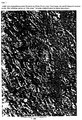
- soot is not diffusely distributed in the phase of polyphenylene ethers and polystyrene during incorporation. Rather, in addition to this phase, a further phase of rubber particles reinforced with soot is obviously formed (see Fig. 1).
- the invention relates to the thermoplastic compositions described in claims 1 to 10 and the processes according to claims 11 and 12.
- thermoplastic compositions are to be considered as unshaped mixtures which can be processed into molded parts or semi-finished products by thermoplastic processing.
- the thermoplastic materials can be present, for example, as granules.
- Suitable polyphenylene ethers are polyethers based on diortho-substituted phenols, the ether oxygen of one unit being bound to the benzene nucleus of the adjacent unit. At least 50 units should be linked together.
- the polyethers, in the ortho position to the oxygen, can carry hydrogen, halogen, hydrocarbons which have no tertiary carbon atom, halogenated hydrocarbons and phenyl radicals.
- the poly (2,6-dimethyl-1,4-phenylene ether) is preferably used, in particular one with an intrinsic viscosity of 0.40 to 0.65 dl / g (measured in chloroform at 25 ° C.).
- the polyphenylene ethers can e.g. B. in the presence of complexing agents such as copper bromide and morpholine, can be prepared from the phenols (cf. DE-OS 32 24 692 and 32 24 691).
- the styrene homopolymers are prepared in a known manner from styrene by free-radical bulk or suspension polymerization. Their molecular masses are between 150,000 and 300,000 (cf. plastic handbook, volume V, polystyrene, Carl Hanser Verlag Kunststoff, 1969 and Ullmanns Encyklopadie der Technische Chemie, 4th edition, volume 19, Verlag Chemie, Weinheim 1980).
- the average diameter of the particles should be less than 1 mm, on the other hand the particles should preferably not be so small that there is a lot of dust during mixing processes.
- the Mooney viscosity of the polymer component of the powdered filler-containing rubber ML (1 + 4) 100 ° C. is between 40 and 120 (cf. Mooney Rubber Chem. Techn. 30, 460 (1957).
- E-SBR rubber a rubber based on styrene and butadiene, preferably a rubber which has been produced by polymerization in emulsion and is briefly referred to as E-SBR rubber. It contains 15 to 40 weight percent styrene and 85 to 60 weight percent butadiene. The mass fraction of the powdered filler-containing SBR rubber in the thermoplastic masses is between 0.5 and 50, preferably between 10 and 25%.
- Silicates but preferably carbon black and silica, are suitable as fillers of the rubber. Mixtures of these fillers are also possible.
- the mass fraction of the filler in the powdered filler-containing SBR rubber used is between 10 and 80, preferably between 30 and 60%.
- thermoplastic compositions according to the invention can also contain a flame retardant and other additives, such as pigments, oligomers and polymers, antistatic agents, stabilizers and processing aids and reinforcing agents.
- a flame retardant and other additives such as pigments, oligomers and polymers, antistatic agents, stabilizers and processing aids and reinforcing agents.
- the proportion of the reinforcing agents can be up to 50%, that of the flame retardants up to 15% and that of all other additives up to 5%, in each case based on the total molding composition.
- Aromatic phosphorus compounds of the general formula come as flame retardants in question, wherein R "R 2 and R 3 may be the same or different and aryl, alkyl, cycloalkyl, alkyl-substituted aryl, halogen-substituted aryl, aryl-substituted alkyl, halogen, hydrogen, the corresponding aryloxy, alkyloxy, cycloalkyloxy radicals and the like Combinations are, where at least one radical is an aryl or aryloxy radical and the total number of carbon atoms of R "R 2 and R 3 does not exceed 30 in total, such as triphenylphosphine oxide, phenylbisdodecylphosphate, phenylbisneopentylphosphate, phenylethylene hydrogenphosphate, phenylbis (3 , 5,5'-trimethylhexyl) phosphate), ethyl diphenyl phosphate, 2-ethylhe
- Phosphorus compounds in which each R is an aryloxy or an aryl radical, such as triphenylphosphine oxide and triphenylphosphate, are particularly suitable.
- a conventional halogen-containing flame retardant can also be used.
- Halogen-containing organic compounds such as z. B. in the monograph by H. Vogel «Flamenfesting von Kunststoff •, Hüthig-Verlag, 1966, on pages 94 to 102.
- it can also be halogenated polymers such as. B. halogenated polyphenylene ethers (see DE-OS 33 34 068) or brominated oligo- or polystyren act.
- the compounds are said to contain more than 30 weight percent halogen.
- flame retardants containing halogen are used, it is advisable to use a synergist.
- Compounds of antimony, boron and tin are suitable. These are generally used in amounts of 0.5 to 10 percent by weight, based on the thermoplastic compositions.
- Glass, carbon and metal fibers, metal flakes, in particular made of aluminum, minerals and carbon black, are particularly suitable as reinforcing agents.
- Suitable stabilizers include organic phosphites, such as. B. didecylphenyl phosphite and trilauryl phosphite, sterically hindered phenols and tetramethylpiperidine, benzophenone and triazole derivatives.
- Waxes such as. B. oxidized hydrocarbons and their alkali and alkaline earth salts.
- the molding compositions are produced in the customary manner on devices which permit homogeneous mixing of the components, such as kneaders, extruders or roller mixers.
- the powdery filler-containing rubber is dispersed in the polymer matrix.
- Continuous kneaders such as. B. twin-screw kneader.
- the molding compositions can either be produced directly from polyphenylene ethers, styrene homopolymers and powdery filler-containing SBR rubber. However, one can also start from a melt mixture (PPE + PS) and then remelt it with further styrene homopolymers and powdery filler-containing SBR rubber. This procedure has the advantage that one can take advantage of the favorable presentation of the melt mixtures of polyphenylene ethers and styrene polymers (cf. DE-OS 33 37 629 and DE-OS 31 31 440).
- the filler-containing SBR rubber is finely dispersed in the finished molding compound.
- the shape of the particles differs characteristically from rubber particles which are introduced via impact-modified polystyrene (HIPS). While the latter particles can be described as cellular spheres or ellipsoids, the filler-containing SBR rubber particles are irregularly limited, compact bodies of different dimensions, the volume of which is generally below 30 ⁇ m 3 , preferably below 10 ⁇ m 3 . Particularly preferred are compositions in which the largest volume of rubber particles 1 I Lm 3.
- compositions according to the invention can be processed by the usual methods for thermoplastic processing, such as. B. extrusion and injection molding.
- a polyphenylene ether with a J value of 55 cm 3 / g was obtained by oxidative coupling of 2,6-dimethyiphenol stopping the reaction and subsequent reaction extraction in accordance with DE-OS 33 13 864 and DE- OS 33 32 377.
- German patent application P 33 37 629.8 a mixture of polyphenylene ether and polystyrene (see Example 2.1) was produced in a mass ratio of 55:45.
- a polyphenylene ether with a J value of 55 cm 3 / g (determined in chloroform according to DIN 53 728) was obtained by oxidative coupling of 2,6-dimethylphenol, stopping the reaction and subsequent reaction extraction in accordance with DE-OS 33 13 864 and DE- OS 33 32 377 and precipitation by methanol.
- Vestyron® 325 from Chemische Werke Hüls AG, D-4 370 Marl, is used as the styrene homopolymer. The characteristics of this product are given in the brochure «Plastics from hüls», Vestyron® September 1983 edition.
- a powdery natural rubber containing 31.5% by weight of carbon black in accordance with ASTM No. N-339 was obtained in accordance with DE-OS 28 22 148.
- a powdered E-SBR rubber (based on 23.5% styrene and 76.5% butadiene), which contained 41% carbon black in accordance with ASTM No. N-339, was obtained in accordance with DE-OS 28 22 148.
- Vestowax® AO 1 539 is a product of Chemische Werke Hüls AG, D-4 370 Marl. It is a wax with a molecular weight of 1,500, which is obtained by oxidation of polyethylene.
- a ZSK 30 twin-screw kneader from Werner u. was used to produce the impact-resistant polymeric mixtures. Pfleiderer with conveying, kneading and degassing zones.
- the ingredients were mechanically mixed and remelted in said device, having been uniformly used a cylinder temperature of 250 ° C and a screw speed of 250 min- 1 ..
- the exiting melt strands were granulated by a conventional process. It was dried at 110 ° C. to a moisture content of less than 0.05%.
- the granules are processed on an injection molding machine at a cylinder temperature of 240 to 260 ° C and a mold temperature of 90 ° C to standard small bars.
- the Vicat softening temperature according to Din 53 460 was determined on 4 mm thick press plates which had been produced at 250 ° C. (See table on page 6 f.)
Landscapes
- Chemical & Material Sciences (AREA)
- Health & Medical Sciences (AREA)
- Chemical Kinetics & Catalysis (AREA)
- Medicinal Chemistry (AREA)
- Polymers & Plastics (AREA)
- Organic Chemistry (AREA)
- Compositions Of Macromolecular Compounds (AREA)
Description
- Thermoplastische Massen, die sich zur Herstellung von Formteilen eignen und die Styrolpolymerisate und Polyphenylenether enthalten, sind erstmalig in der deutschen Patentschrift DE-PS 16 94 257 beschrieben worden.
- Die in der DE-PS 21 19 301 beanspruchten thermoplastischen Massen bestehen aus Polyphenylenethern mit einem kautschukmodifizierten Polystyrol und/oder einem Polystyrol und einem Kautschuk. Für Massen, bei denen der mittlere Teilchendurchmesser der dispergierten elastomeren Phase unter maximal etwa 2 ILm liegt, werden höhere Schlagzähigkeiten geltend gemacht.
- Es ist bekannt, daß man Polymermischungen zur Verbesserung ihrer physikalischen Eigenschaften Füllstoffe, wie z. B. Metalle, Titandioxid, Asbest, Glasfasern, Calcium- und Aluminiumsilikate (DE-OSS 27 13 462, 27 52 383 und 28 40 111), zusetzen kann. Mit Aluminiumflocken, Kohlenstoffasern und Ruß läßt sich eine elektrische Abschirmwirkung der aus den Massen erhaltenen Formkörper erzielen.
- Die füllstoffhaltigen thermoplastischen Massen werden hergestellt, indem man die Bestandteile durchmischt, die erhaltene geschmolzene Vormischung zu einem Strang extrudiert und diesen zu einem Granulat zerschneidet (vgl. DE-OS 27 13 462).
- Von erheblicher wirtschaftlicher Bedeutung sind Polymermischungen auf Basis von Polyphenylenethern, die sich durch ein bestimmtes Maß an Kerbschlagzähigkeit und Wärmeformbeständigkeit auszeichnen. Im Prinzip lassen sich derartige Mischungen aus Polyphenylenethern und schlagfesten Styrolpolymerisaten mit unterschiedlichen Kautschukgehalten herstellen. Dieser Weg ist aber aufwendig, da zahlreiche Polystyroltypen bereit gehalten werden müssen, um die jeweils gewünschten Qualitäten einstellen zu können.
- Es wäre einfacher, könnte man unterschiedliche Typen durch Abmischen von wenigen Ausgangskomponenten, insbesondere unter Verwendung von Styrolhomopolymerisaten, herstellen.
- Eine nachträgliche Einarbeitung von Kautschuk in Polystyrol ist zwar technisch möglich, doch ist zu berücksichtigen, daß der Kautschuk, der üblicherweise in Ballenform vorliegt, schwer handhabbar ist.
- Grundsätzlich könnte man nun auch daran denken, Kautschuk in Pulverform einzusetzen, der unterschiedliche Mengen an Füllstoffen enthält.
- In der einschlägigen Literatur sind indessen keine Beispiele bekannt, wonach derartige Kautschuke mit Polyphenylenethern und Styrolhomopolymerisaten zu Polymermischungen verarbeitet werden könnten. Es ist lediglich bekannt, daß pulverförmige füllstoffhaltige Kautschuke auch bestimmte Anteile von Thermoplasten, wie Polyvinylchlorid, Polystyrol oder Polymethylmethacrylat, enthalten können (vgl. DE-PS 16 94 918), aber diese Schrift vermochte dem Fachmann keine konkrete Anregung zu vermitteln, zumal sich das in dieser Schrift beschriebene Verfahren in der Praxis nicht hat durchsetzen können.
- Versuche der Anmelderin zeigten weiterhin, daß pulverförmige füllstoffhaltige Kautschuke auf Basis von Naturkautschuk in Abmischungen mit Polyphenylenethern und Styrolhomopolymerisaten Formmassen mit erheblich verringerter Kerbschlagzähigkeit ergeben. Mit pulverförmigen Kautschuken auf Basis von Polybutadien wurden gleichfalls unbefriedigende Ergebnisse erhalten. Es schien daher wenig aussichtsreich, Polymermischungen aus Polyphenylenethern, Styrolhomopolymerisaten und pulverförmigem füllstoffhaltigen Kautschuk herzustellen.
- Ziel der vorliegenden Erfindung war es, Polymermischungen hoher Wärmeformbeständigkeit und einstellbarer Schlagzähigkeit auf Basis von Polyphenylenethern (PPE), Styrolhomopolymerisaten (PS), Kautschuk (K) und Füllstoffen herzustellen.
- Es wurde jetzt gefunden, daß es möglich ist, Polyphenylenether mit Styrolhomopolymerisaten und einem bestimmten pulverförmigen füllstoffhaltigen SBR-Kautschuk zu verarbeiten. Dieser Kautschuk enthält als Füllstoffe Ruß, Kieselsäure und/oder Silikate. Er wird erhalten, indem man
- a) einer Füllstoff-Suspension soviel Mineralsäure zusetzt, daß nach der anschließenden Zugabe eines wasserlöslichen Aluminiumsalzes und von Wasserglas ein pH-Wert von 3,0 bis 3,7 erreicht wird,
- b) diese Füllstoff-Suspension mit
- - einem Kautschuk-Latex, einer Kautschuk-Lösung oder dessen wäßriger Emulsion
- - einem wasserlöslichen Aluminiumsalz und
- - Wasserglas
vereint und hierbei soviel Mineralsäure zusetzt, daß in der erhaltenen Mischung ein pH-Wert von 3,0 bis 3,7 eingehalten wird, - c) den anfallenden, füllstoffhaltigen SBR-Kautschuk von der wäßrigen Phase abtrennt und trocknet.
- Untersuchungen zeigen, daß beispielsweise der Ruß bei der Einarbeitung nicht diffus in der Phase aus Polyphenylenethern und Polystyrol verteilt wird. Vielmehr bildet sich offensichtlich neben dieser Phase eine weitere Phase von mit Ruß verstärkten Kautschukteilchen aus (siehe Abb. 1).
- Dies ist überraschend und mag die Ursache dafür sein, daß sich die erhaltenen Formteile durch erstaunlich hohe Wärmeformbeständigkeit bei gleichzeitig hoher Schlagzähigkeit auszeichnen.
- Gegenstand der Erfindung sind die in den Ansprüchen 1 bis 10 beschriebenen thermoplastischen Massen sowie die Verfahren nach den Ansprüchen 11 und 12.
- Es ergeben sich somit folgende Vorteile :
- 1. Es können gezielt Polymermischungen eingestellt werden, deren Formmassen eine vorgegebene Wärmeformbeständigkeit und Schlagzähigkeit aufweisen. Dies wird durch alleinige Veränderung des Mischungsverhältnisses Polyphenylenether/Styrolhomopolymerisat/pulverförmiger füllstoffhaltiger SBR-Kautschuk erreicht.
- 2. Der Ersatz von Styrolhomopolymerisaten durch pulverförmigen füllstoffhaltigen SBR-Kautschuk führt nicht, wie man erwartet hätte, zu einer Verringerung der Wärmeformbeständigkeit. Man erhält bessere Kerbschlagzähigkeiten (vgl. Beispiel 5 und 6 mit C).
- 3. Der Zusatz von pulverförmigem füllstoffhaltigen SBR-Kautschuk führt zu einer Erhöhung der Kerbschlagzähigkeit.
- Unter thermoplastischen Massen sollen im Rahmen dieser Erfindung ungeformte Mischungen angesehen werden, die sich durch thermoplastische Verarbeitung zu Formteilen oder zu Halbzeug verarbeiten lassen. Die thermoplastischen Massen können beispielsweise als Granulat vorliegen.
- Als Polyphenylenether kommen Polyether auf Basis von diorthosubstituierten Phenolen infrage, wobei der Ethersauerstoff der einen Einheit an den Benzolkern der benachbarten Einheit gebunden ist. Dabei sollen mindestens 50 Einheiten miteinander verknüpft sein. Die Polyether können in ortho-Stellung zum Sauerstoff Wasserstoff, Halogen, Kohlenwasserstoffe, die kein et-ständiges tertiäres Kohlenstoffatom besitzen, Halogenkohlenwasserstoffe und Phenylreste tragen. So kommen infrage : Poly(2,6-dichlor-1,4-phenylenether), Poly(2,6-diphenyl-1,4-phenylenether), Poly(2,6-dimethyl-1,4-phenylenether), Poly(2,6-dibrom-1,4-phenylenether). Vorzugsweise wird der Poly(2,6-dimethyl-1,4-phenylenether) eingesetzt, insbesondere ein solcher mit einer Grenzviskosität von 0,40 bis 0,65 dl/g (gemessen in Chloroform bei 25 °C).
- Die Polyphenylenether können z. B. in Gegenwart von komplexbildenden Mitteln, wie Kupferbromid und Morpholin, aus den Phenolen hergestellt werden (vgl. DE-OS 32 24 692 und 32 24 691).
- Die Styrolhomopolymerisate werden in bekannter Weise aus Styrol durch radikalische Masse- oder Suspensionspolymerisation hergestellt. Ihre Molekularmassen liegen zwischen 150 000 und 300 000 (vgl. Kunststoff-Handbuch, Band V, Polystyrol, Carl Hanser Verlag München, 1969 und Ullmanns Encyklopädie der technischen Chemie, 4. Auflage, Band 19, Verlag Chemie, Weinheim 1980).
- Im Rahmen dieser Erfindung verwendet man einen pulverförmigen füllstoffhaltigen SBR-Kautschuk, der in der Regel auch nach Lagerung noch rieselfähig ist (vgl. DE-OS 28 22 148). Dieser Kautschuk enthält als Füllstoffe Ruß, Kieselsäure und/oder Silikate. Er wird erhalten, indem man
- a) einer Füllstoff-Suspension soviel Mineralsäure zusetzt, daß nach der anschließenden Zugabe eines wasserlöslichen Aluminiumsalzes und von Wasserglas ein pH-Wert von 3,0 bis 3,7 erreicht wird,
- b) diese Füllstoff-Suspension mit
- - einem Kautschuk-Latex, einer Kautschuk-Lösung oder dessen wäßriger Emulsion
- - einem wasserlöslichen Aluminiumsalz und
- - Wasserglas
vereint und hierbei soviel Mineralsäure zusetzt, daß in der erhaltenen Mischung ein pH-Wert von 3,0 bis 3,7 eingehalten wird, - c) den anfallenden, füllstoffhaltigen SBR-Kautschuk von der wäßrigen Phase abtrennt und trocknet.
- Der mittlere Durchmesser der Teilchen (Volumenmittel) soll unter 1 mm liegen, andererseits sollen die Teilchen vorzugsweise nicht so klein sein, daß es bei Mischungsvorgängen zu starker Staubentwicklung kommt. Die Mooney-Viskosität des Polymerbestandteils des pulverförmigen füllstoffhaltigen Kautschuks ML (1 + 4) 100 °C liegt zwischen 40 und 120 (vgl. Mooney Rubber Chem. Techn. 30, 460 (1957).
- Es handelt sich um einen Kautschuk auf Basis von Styrol und Butadien, vorzugsweise um einen Kautschuk, der durch Polymerisation in Emulsion hergestellt wurde und kurz als E-SBR-Kautschuk bezeichnet wird. Er enthält 15 bis 40 Gewichtsprozent Styrol und 85 bis 60 Gewichtsprozent Butadien. Der Massenanteil des pulverförmigen füllstoffhaltigen SBR-Kautschuks in den thermoplastischen Massen liegt zwischen 0,5 und 50, vorzugsweise zwischen 10 und 25%.
- Als Füllstoffe des Kautschuks kommen Silikate, vorzugsweise aber Ruß und Kieselsäure, infrage. Auch Mischungen dieser Füllstoffe sind möglich. Bezüglich weiterer Einzelheiten wird auf die DE-OS 28 22 148 verwiesen. Der Massenanteil des Füllstoffs im eingesetzten pulverförmigen füllstoffhaltigen SBR-Kautschuk liegt zwischen 10 und 80, vorzugsweise zwischen 30 und 60 %.
- Die erfindungsgemäßen thermoplastischen Massen können daneben einen Flammschutz sowie weitere Zusatzstoffe, wie Pigmente, Oligo- und Polymere, Antistatika, Stabilisatoren und Verarbeitungshilfsmittel sowie Verstärkungsmittel, enthalten. Der Anteil der Verstärkungsmittel kann bis zu 50 %, der der Flammschutzmittel bis zu 15 % und der aller übrigen Zusatzstoffe insgesamt bis zu 5 %, jeweils bezogen auf die gesamte Formmasse, betragen.
- Als Flammschutz kommen aromatische Phosphorverbindungen der allgemeinen Formel

- Besonders geeignet sind Phosphorverbindungen, bei denen jedes R ein Aryloxy- oder ein Aryl-Rest ist, wie Triphenylphosphinoxid und Triphenylphosphat.
- Man kann auch ein übliches halogenhaltiges Flammschutzmittel verwenden. Infrage kommen dabei Halogen enthaltende organische Verbindungen, wie sie z. B. in der Monographie von H. Vogel « Flammenfestmachen von Kunststoff •, Hüthig-Verlag, 1966, auf den Seiten 94 bis 102 beschrieben wird. Es kann sich dabei aber auch um halogenierte Polymere, wie z. B. halogenierte Polyphenylenether (siehe DE-OS 33 34 068) oder bromierte Oligo- bzw. Polystyrole, handeln. Die Verbindungen sollen mehr als 30 Gewichtsprozent Halogen enthalten.
- Im Falle des Einsatzes der halogenhaltigen Flammschutzmittel empfiehlt es sich, einen Synergisten zu verwenden. Geeignet sind Verbindungen des Antimons, Bors und des Zinns. Diese werden im allgemeinen in Mengen von 0,5 bis 10 Gewichtsprozent, bezogen auf die thermoplastischen Massen, eingesetzt.
- Als Verstärkungsmittel eignen sich insbesondere Glas-, Kohlenstoff- und Metallfasern, Metallschuppen, insbesondere aus Aluminium, Mineralien und Ruße.
- Geeignete Stabilisatoren umfassen organische Phosphite, wie z. B. Didecylphenylphosphit und Trilaurylphosphit, sterisch gehinderte Phenole sowie Tetramethylpiperidin-, Benzophenon- und Triazolderivate.
- Als Verarbeitungshilfsmittel eignen sich Wachse, wie z. B. oxidierte Kohlenwasserstoffe sowie ihre Alkali- und Erdalkalisalze.
- Man stellt die Formmassen wie üblich auf Vorrichtungen her, die ein homogenes Mischen der Komponenten zulassen, wie Kneter, Extruder oder Walzenmischgeräte. Bei diesem Vorgang wird der pulverförmige füllstoffhaltige Kautschuk in der Polymermatrix dispergiert. Bevorzugt sind kontinuierliche Kneter, wie z. B. Doppeischneckenkneter.
- Man kann die Formmassen entweder direkt aus Polyphenylenethern, Styrolhomopolymerisaten und pulverförmigem füllstoffhaltigen SBR-Kautschuk herstellen. Man kann aber auch von einer Schmelzmischung (PPE + PS) ausgehen und diese dann mit weiteren Styrolhomopolymerisaten und pulverförmigem füllstoffhaltigen SBR-Kautschuk umschmelzen. Diese Arbeitsweise hat den Vorteil, daß man die günstige Darstellungsweise der Schmelzmischungen aus Polyphenylenethern und Styrolpolymerisaten ausnutzen kann (vgl. DE-OS 33 37 629 sowie DE-OS 31 31 440).
- In der fertigen Formmasse ist der füllstoffhaltige SBR-Kautschuk feindispers verteilt. Die Form der Teilchen unterscheidet sich in charakteristischer Weise von Kautschukteilchen, die über schlagzäh modifiziertes Polystyrol (HIPS) eingebracht werden. Während letztere Teilchen als zellige Kugeln oder Ellipsoide beschrieben werden können, sind die füllstoffhaltigen SBR-Kautschukteilchen unregelmäßig begrenzte, kompakte Körper unterschiedlicher Ausdehnung, deren Volumen in der Regel unter 30 µm3, vorzugsweise unter 10 µm3, liegt. Besonders bevorzugt werden Massen, bei denen das größte Volumen der Kautschukteilchen unter 1 ILm3 liegt.
- Die erfindungsgemäßen Massen lassen sich nach den für die Thermoplastverarbeitung üblichen Verfahren, wie z. B. Extrusion und Spritzgießen, verarbeiten.
- Einen Polyphenylenether mit einem J-Wert von 55 cm3/g (bestimmt in Chloroform nach DIN 53 728) erhielt man durch oxidative Kupplung von 2,6-Dimethyiphenoi-Abstoppung der Reaktion und anschließender Reaktionsextraktion gemäß DE-OS 33 13 864 und DE-OS 33 32 377. Gemäß deutscher Patentanmeldung P 33 37 629.8 wurde eine Mischung von Polyphenylenether und Polystyrol (siehe Beispiel 2.1) im Massenverhältnis 55 : 45 hergestellt.
- Einen Polyphenylenether mit einem J-Wert von 55 cm3/g (bestimmt in Chloroform nach DIN 53 728) erhielt man durch oxidative Kupplung von 2,6-Dimethylphenol, Abstoppung der Reaktion und anschließender Reaktionsextraktion gemäß DE-OS 33 13 864 und DE-OS 33 32 377 und Fällung durch Methanol.
- Als Styrolhomopolymerisat wird Vestyron@ 114 der Fa. Chemische Werke Hüls AG, D-4370 Marl, eingesetzt. Die Kenndaten dieses Produktes sind in der Broschüre « Kunststoffe von hüls •, Vestyron@, Ausgabe September 1983, angegeben.
- Als Styrolhomopolymerisat wird Vestyron® 325 der Fa. Chemische Werke Hüls AG, D-4 370 Marl, eingesetzt. Die Kenndaten dieses Produktes sind in der Broschüre « Kunststoffe von hüls », Vestyron® Ausgabe September 1983, angegeben.
- Ein pulverförmiger Naturkautschuk, der 31,5 Gewichtsprozent Ruß entsprechend ASTM Nr. N-339 enthielt, wurde gemäß DE-OS 28 22 148 erhalten.
- Ein pulverförmiger E-SBR-Kautschuk (auf Basis von 23,5 % Styrol und 76,5 % Butadien), der 41 % Ruß entsprechend ASTM Nr. N-339 enthielt, wurde gemäß DE-OS 28 22 148 erhalten.
- Aus 100 Massenteile der Summe von Polyphenylenether, Styrolhomopolymerisat und füllstoffhaltiger SBR-Kautschuk kommen noch folgende Zusatzstoffe in den angegebenen Mengen :
- 0,5 Massenteile Didecylphenylphosphit
- 0,5 Massenteile Octadecyl-3-(3,5-di-tert.-butyl-4-hydroxyphenyl)-propionat
- 1,5 Massenteile Vestowax® AO 1 539
- Vestowax® AO 1 539 ist ein Produkt der Chemische Werke Hüls AG, D-4 370 Marl. Es handelt sich um ein Wachs mit Molekulargewicht 1 500, das durch Oxidation von Polyethylen erhalten wird.
- Für die Fertigung der schlagzähen polymeren Mischungen benutzte man einen ZSK 30 Doppelschneckenkneter der Firma Werner u. Pfleiderer mit Förder-, Knet- und Entgasungszonen.
- Die Bestandteile wurden mechanisch gemischt und in dem genannten Gerät umgeschmolzen, wobei einheitlich eine Zylindertemperatur von 250 °C und eine Schneckendrehzahl von 250 min-1 verwendet wurde.. Die austretenden Schmelzstränge wurden nach üblichem Verfahren granuliert. Man trocknete sie bei 110°C bis zu einer Feuchte von weniger als 0,05 %.
- Für die Bestimmung der Kerbschlagzähigkeit nach DIN 53 453 verarbeitet man das Granulat auf einer Spritzgußmaschine bei einer Zylindertemperatur von 240 bis 260 °C und einer Werkzeugtemperatur von 90 °C zu Normkleinstäben.
- Die Vicat-Erweichungstemperatur nach Din 53 460 bestimmte man an 4 mm dicken Preßplatten, die man bei 250 °C hergestellt hatte.
(Siehe Tabelle Seite 6 f.) -

Claims (12)
wobei dieser Kautschuk als Füllstoffe Ruß, Kieselsäure und/oder Silikate enthält und dadurch erhalten wird, daß man
vereint und hierbei soviel Mineralsaure zusetzt, daß in der erhaltenen Mischung ein pH-Wert von 3,0 bis 3,7 eingehalten wird,
Priority Applications (1)
| Application Number | Priority Date | Filing Date | Title |
|---|---|---|---|
| AT85109572T ATE35999T1 (de) | 1984-09-21 | 1985-07-30 | Thermoplastische massen auf basis von polyphenylenethern, styrolhomopolymerisaten und pulverfoermigem, fuellstoffhaltigen kautschuk sowie verfahren zu ihrer herstellung. |
Applications Claiming Priority (2)
| Application Number | Priority Date | Filing Date | Title |
|---|---|---|---|
| DE3434705 | 1984-09-21 | ||
| DE19843434705 DE3434705A1 (de) | 1984-09-21 | 1984-09-21 | Thermoplastische massen auf basis von polyphenylenethern, styrolhomopolymerisaten und pulverfoermigem, fuellstoffhaltigen kautschuk sowie verfahren zu ihrer herstellung |
Publications (2)
| Publication Number | Publication Date |
|---|---|
| EP0175106A1 EP0175106A1 (de) | 1986-03-26 |
| EP0175106B1 true EP0175106B1 (de) | 1988-07-27 |
Family
ID=6245996
Family Applications (1)
| Application Number | Title | Priority Date | Filing Date |
|---|---|---|---|
| EP85109572A Expired EP0175106B1 (de) | 1984-09-21 | 1985-07-30 | Thermoplastische Massen auf Basis von Polyphenylenethern, Styrolhomopolymerisaten und pulverförmigem, füllstoffhaltigen Kautschuk sowie Verfahren zu ihrer Herstellung |
Country Status (4)
| Country | Link |
|---|---|
| EP (1) | EP0175106B1 (de) |
| JP (1) | JPS61209246A (de) |
| AT (1) | ATE35999T1 (de) |
| DE (2) | DE3434705A1 (de) |
Families Citing this family (1)
| Publication number | Priority date | Publication date | Assignee | Title |
|---|---|---|---|---|
| CN104004280B (zh) * | 2014-05-20 | 2017-01-25 | 滁州迪蒙德模具制造有限公司 | 一种含热塑性树脂的塑料模具的制造方法 |
Family Cites Families (2)
| Publication number | Priority date | Publication date | Assignee | Title |
|---|---|---|---|---|
| DE1932234B2 (de) * | 1968-06-28 | 1978-06-22 | Uniroyal, Inc., New York, N.Y. (V.St.A.) | Synthetische, thermoplastische Harzmischung auf Basis von PPO und einem Additionspolymeren und Verfahren zu deren Herstellung |
| EP0086955B1 (de) * | 1982-02-08 | 1986-09-10 | General Electric Company | PPE-Zusammensetzung, Schlagzähigkeitsregler, mineralischer Füllstoff und PTFE |
-
1984
- 1984-09-21 DE DE19843434705 patent/DE3434705A1/de not_active Withdrawn
-
1985
- 1985-07-30 AT AT85109572T patent/ATE35999T1/de not_active IP Right Cessation
- 1985-07-30 DE DE8585109572T patent/DE3563976D1/de not_active Expired
- 1985-07-30 EP EP85109572A patent/EP0175106B1/de not_active Expired
- 1985-09-18 JP JP60204559A patent/JPS61209246A/ja active Pending
Also Published As
| Publication number | Publication date |
|---|---|
| DE3563976D1 (en) | 1988-09-01 |
| EP0175106A1 (de) | 1986-03-26 |
| JPS61209246A (ja) | 1986-09-17 |
| DE3434705A1 (de) | 1986-04-03 |
| ATE35999T1 (de) | 1988-08-15 |
Similar Documents
| Publication | Publication Date | Title |
|---|---|---|
| EP0205816B1 (de) | Schlagzähe thermoplastische Formmassen auf Basis von modifizierten Polyphenylenethern, Polyoctenylenen und Polyamiden | |
| DE68926439T2 (de) | Verfahren zur Entfernung flüchtiger Substanzen aus Polyphenylenether oder Polyphenylenether/Styrolharz-Zusammensetzungen | |
| EP0181449B1 (de) | Thermoplastische Massen auf Basis von Polyphenylenethern und Polyoctenylenen sowie Verfahren zu ihrer Herstellung | |
| EP0168566B1 (de) | Thermoplastische Massen auf Basis von Polyphenylenethern, schlagfesten Styrolpolymerisaten und pulverförmigem, füllstoffhaltigen Kautschuk sowie Verfahren zu ihrer Herstellung | |
| EP0246358B1 (de) | Verfahren zur Herstellung thermoplastischer, PPE enthaltender Formmassen | |
| DE2119301A1 (de) | Thermoplastische Massen von hoher Schlagzähigkeit | |
| EP0185860B1 (de) | Thermoplastische Massen auf Basis von Polyphenylenethern, Styrolpolymerisaten und Polyoctenylenen | |
| EP0250760B1 (de) | Schlagzähe thermoplastische Formmassen auf Basis von modifizierten Polyphenylenethern, Polyoctenylenen und Polyamiden | |
| EP0560008A1 (de) | Kunststoff-Schaum-Verbundwerkstoffe | |
| EP0182995B1 (de) | Thermoplastische Massen auf Basis von Polyphenylenethern und Styrol-Butadien-Emulsionspolymerisaten | |
| DE3636349A1 (de) | Bauteile auf basis von polyphenylenethern und kautschuken sowie verfahren zu ihrer herstellung | |
| EP0548683A1 (de) | Verfahren zur Herstellung thermoplastischer Formmassen auf der Basis von pulverförmigen Polyphenylenethern und vinylaromatischen Polymeren | |
| EP0175106A1 (de) | Thermoplastische Massen auf Basis von Polyphenylenethern, Styrolhomopolymerisaten und pulverförmigem, füllstoffhaltigen Kautschuk sowie Verfahren zu ihrer Herstellung | |
| DE3346304A1 (de) | Thermoplastische formmassen | |
| DE3935169A1 (de) | Faserverstaerkte polyphenylenether-formmassen und verfahren zu ihrer herstellung | |
| DE3116491A1 (de) | "thermoplastische formmassen" | |
| EP0170946B1 (de) | Thermoplastische Formmassen aus Styrol-Acrylnitril-Copolymerisaten und Polyphenylenethern | |
| DE2713462A1 (de) | Polyphenylenaethermassen | |
| EP0530572B1 (de) | Thermooxidationsbeständige thermoplastische Formmassen | |
| EP0489321B1 (de) | Kontinuierliches Verfahren zur Herstellung von flammgeschützten halogenfreien thermoplastischen Formmassen | |
| DE69609081T2 (de) | Zusammensetzungen aus polyphenylenethern | |
| DE2716273A1 (de) | Schaeumbare thermoplastische harzzusammensetzung und verfahren zur herstellung | |
| DE3615393A1 (de) | Schlagzaehe thermoplastische formmassen auf basis von modifizierten polyphenylenethern, polyoctenylenen und polyamiden | |
| EP0530558A2 (de) | Selbstverlöschende thermoplastische Formmassen auf der Basis von niedermolekularen Polyphenylenethern | |
| EP0478927A2 (de) | Mischungen aus Polystyrol und Maleinsäureanhydrid sowie Verfahren zu ihrer Herstellung |
Legal Events
| Date | Code | Title | Description |
|---|---|---|---|
| PUAI | Public reference made under article 153(3) epc to a published international application that has entered the european phase |
Free format text: ORIGINAL CODE: 0009012 |
|
| AK | Designated contracting states |
Kind code of ref document: A1 Designated state(s): AT BE DE FR GB IT NL SE |
|
| 17P | Request for examination filed |
Effective date: 19860225 |
|
| 17Q | First examination report despatched |
Effective date: 19870522 |
|
| GRAA | (expected) grant |
Free format text: ORIGINAL CODE: 0009210 |
|
| AK | Designated contracting states |
Kind code of ref document: B1 Designated state(s): AT BE DE FR GB IT NL SE |
|
| REF | Corresponds to: |
Ref document number: 35999 Country of ref document: AT Date of ref document: 19880815 Kind code of ref document: T |
|
| GBT | Gb: translation of ep patent filed (gb section 77(6)(a)/1977) | ||
| REF | Corresponds to: |
Ref document number: 3563976 Country of ref document: DE Date of ref document: 19880901 |
|
| ET | Fr: translation filed | ||
| ITF | It: translation for a ep patent filed | ||
| PLBE | No opposition filed within time limit |
Free format text: ORIGINAL CODE: 0009261 |
|
| STAA | Information on the status of an ep patent application or granted ep patent |
Free format text: STATUS: NO OPPOSITION FILED WITHIN TIME LIMIT |
|
| 26N | No opposition filed | ||
| PG25 | Lapsed in a contracting state [announced via postgrant information from national office to epo] |
Ref country code: GB Effective date: 19890730 Ref country code: AT Effective date: 19890730 |
|
| PG25 | Lapsed in a contracting state [announced via postgrant information from national office to epo] |
Ref country code: SE Effective date: 19890731 Ref country code: BE Effective date: 19890731 |
|
| BERE | Be: lapsed |
Owner name: HULS A.G. Effective date: 19890731 |
|
| PG25 | Lapsed in a contracting state [announced via postgrant information from national office to epo] |
Ref country code: NL Effective date: 19900201 |
|
| NLV4 | Nl: lapsed or anulled due to non-payment of the annual fee | ||
| GBPC | Gb: european patent ceased through non-payment of renewal fee | ||
| PG25 | Lapsed in a contracting state [announced via postgrant information from national office to epo] |
Ref country code: FR Free format text: LAPSE BECAUSE OF NON-PAYMENT OF DUE FEES Effective date: 19900330 |
|
| PG25 | Lapsed in a contracting state [announced via postgrant information from national office to epo] |
Ref country code: DE Effective date: 19900403 |
|
| REG | Reference to a national code |
Ref country code: FR Ref legal event code: ST |
|
| EUG | Se: european patent has lapsed |
Ref document number: 85109572.9 Effective date: 19900418 |