EP0177308B1 - Procédé pour la cimentation de puits et compositions - Google Patents
Procédé pour la cimentation de puits et compositions Download PDFInfo
- Publication number
- EP0177308B1 EP0177308B1 EP19850306926 EP85306926A EP0177308B1 EP 0177308 B1 EP0177308 B1 EP 0177308B1 EP 19850306926 EP19850306926 EP 19850306926 EP 85306926 A EP85306926 A EP 85306926A EP 0177308 B1 EP0177308 B1 EP 0177308B1
- Authority
- EP
- European Patent Office
- Prior art keywords
- cement
- hydrogen
- amount
- weight
- ch2po3
- Prior art date
- Legal status (The legal status is an assumption and is not a legal conclusion. Google has not performed a legal analysis and makes no representation as to the accuracy of the status listed.)
- Expired
Links
- 239000000203 mixture Substances 0.000 title claims description 176
- 238000000034 method Methods 0.000 title claims description 11
- 239000004568 cement Substances 0.000 claims description 155
- 239000001257 hydrogen Substances 0.000 claims description 64
- 229910052739 hydrogen Inorganic materials 0.000 claims description 64
- -1 methylene phosphonic acid Chemical compound 0.000 claims description 57
- 239000003795 chemical substances by application Substances 0.000 claims description 41
- 125000004435 hydrogen atom Chemical group [H]* 0.000 claims description 37
- XLYOFNOQVPJJNP-UHFFFAOYSA-N water Substances O XLYOFNOQVPJJNP-UHFFFAOYSA-N 0.000 claims description 36
- 239000002002 slurry Substances 0.000 claims description 32
- 150000001875 compounds Chemical class 0.000 claims description 30
- 229910052757 nitrogen Inorganic materials 0.000 claims description 30
- 239000000463 material Substances 0.000 claims description 27
- 125000004433 nitrogen atom Chemical group N* 0.000 claims description 27
- VYPSYNLAJGMNEJ-UHFFFAOYSA-N Silicium dioxide Chemical compound O=[Si]=O VYPSYNLAJGMNEJ-UHFFFAOYSA-N 0.000 claims description 26
- 230000003213 activating effect Effects 0.000 claims description 26
- VILCJCGEZXAXTO-UHFFFAOYSA-N 2,2,2-tetramine Chemical group NCCNCCNCCN VILCJCGEZXAXTO-UHFFFAOYSA-N 0.000 claims description 25
- 239000002253 acid Substances 0.000 claims description 22
- 239000008186 active pharmaceutical agent Substances 0.000 claims description 20
- YDONNITUKPKTIG-UHFFFAOYSA-N [Nitrilotris(methylene)]trisphosphonic acid Chemical group OP(O)(=O)CN(CP(O)(O)=O)CP(O)(O)=O YDONNITUKPKTIG-UHFFFAOYSA-N 0.000 claims description 14
- 239000011396 hydraulic cement Substances 0.000 claims description 14
- 229910052698 phosphorus Inorganic materials 0.000 claims description 14
- QGZKDVFQNNGYKY-UHFFFAOYSA-O Ammonium Chemical compound [NH4+] QGZKDVFQNNGYKY-UHFFFAOYSA-O 0.000 claims description 13
- RPNUMPOLZDHAAY-UHFFFAOYSA-N Diethylenetriamine Chemical group NCCNCCN RPNUMPOLZDHAAY-UHFFFAOYSA-N 0.000 claims description 13
- 239000004115 Sodium Silicate Substances 0.000 claims description 13
- 125000004430 oxygen atom Chemical group O* 0.000 claims description 13
- 125000004437 phosphorous atom Chemical group 0.000 claims description 13
- NTHWMYGWWRZVTN-UHFFFAOYSA-N sodium silicate Chemical compound [Na+].[Na+].[O-][Si]([O-])=O NTHWMYGWWRZVTN-UHFFFAOYSA-N 0.000 claims description 13
- 229910052911 sodium silicate Inorganic materials 0.000 claims description 13
- TTZMPOZCBFTTPR-UHFFFAOYSA-N O=P1OCO1 Chemical group O=P1OCO1 TTZMPOZCBFTTPR-UHFFFAOYSA-N 0.000 claims description 12
- 229910052783 alkali metal Inorganic materials 0.000 claims description 12
- 229910052784 alkaline earth metal Inorganic materials 0.000 claims description 12
- 150000001412 amines Chemical class 0.000 claims description 12
- 150000002431 hydrogen Chemical group 0.000 claims description 12
- 239000011398 Portland cement Substances 0.000 claims description 11
- ABLZXFCXXLZCGV-UHFFFAOYSA-N phosphonic acid group Chemical group P(O)(O)=O ABLZXFCXXLZCGV-UHFFFAOYSA-N 0.000 claims description 11
- 235000012239 silicon dioxide Nutrition 0.000 claims description 11
- 229910002026 crystalline silica Inorganic materials 0.000 claims description 10
- 239000007787 solid Substances 0.000 claims description 9
- 239000004354 Hydroxyethyl cellulose Substances 0.000 claims description 8
- 229920000663 Hydroxyethyl cellulose Polymers 0.000 claims description 8
- 229930040373 Paraformaldehyde Natural products 0.000 claims description 8
- 235000019447 hydroxyethyl cellulose Nutrition 0.000 claims description 8
- 229920002866 paraformaldehyde Polymers 0.000 claims description 8
- 239000000377 silicon dioxide Substances 0.000 claims description 8
- UXVMQQNJUSDDNG-UHFFFAOYSA-L Calcium chloride Chemical compound [Cl-].[Cl-].[Ca+2] UXVMQQNJUSDDNG-UHFFFAOYSA-L 0.000 claims description 7
- 239000001110 calcium chloride Substances 0.000 claims description 7
- 229910001628 calcium chloride Inorganic materials 0.000 claims description 7
- 125000000325 methylidene group Chemical group [H]C([H])=* 0.000 claims description 7
- 238000000926 separation method Methods 0.000 claims description 7
- IJGRMHOSHXDMSA-UHFFFAOYSA-N Atomic nitrogen Chemical compound N#N IJGRMHOSHXDMSA-UHFFFAOYSA-N 0.000 claims description 6
- 239000002245 particle Substances 0.000 claims description 6
- 125000003916 ethylene diamine group Chemical group 0.000 claims description 5
- 229920002678 cellulose Polymers 0.000 claims description 4
- 239000001913 cellulose Substances 0.000 claims description 4
- 229920013821 hydroxy alkyl cellulose Polymers 0.000 claims description 4
- SMZOUWXMTYCWNB-UHFFFAOYSA-N 2-(2-methoxy-5-methylphenyl)ethanamine Chemical compound COC1=CC=C(C)C=C1CCN SMZOUWXMTYCWNB-UHFFFAOYSA-N 0.000 claims description 3
- 229920000536 2-Acrylamido-2-methylpropane sulfonic acid Polymers 0.000 claims description 3
- XHZPRMZZQOIPDS-UHFFFAOYSA-N 2-Methyl-2-[(1-oxo-2-propenyl)amino]-1-propanesulfonic acid Chemical compound OS(=O)(=O)CC(C)(C)NC(=O)C=C XHZPRMZZQOIPDS-UHFFFAOYSA-N 0.000 claims description 3
- NIXOWILDQLNWCW-UHFFFAOYSA-N 2-Propenoic acid Natural products OC(=O)C=C NIXOWILDQLNWCW-UHFFFAOYSA-N 0.000 claims description 3
- HRPVXLWXLXDGHG-UHFFFAOYSA-N Acrylamide Chemical compound NC(=O)C=C HRPVXLWXLXDGHG-UHFFFAOYSA-N 0.000 claims description 3
- UFHFLCQGNIYNRP-UHFFFAOYSA-N Hydrogen Chemical compound [H][H] UFHFLCQGNIYNRP-UHFFFAOYSA-N 0.000 claims description 3
- 239000004372 Polyvinyl alcohol Substances 0.000 claims description 3
- 229940088644 n,n-dimethylacrylamide Drugs 0.000 claims description 3
- YLGYACDQVQQZSW-UHFFFAOYSA-N n,n-dimethylprop-2-enamide Chemical compound CN(C)C(=O)C=C YLGYACDQVQQZSW-UHFFFAOYSA-N 0.000 claims description 3
- 229920002451 polyvinyl alcohol Polymers 0.000 claims description 3
- BWYYYTVSBPRQCN-UHFFFAOYSA-M sodium;ethenesulfonate Chemical compound [Na+].[O-]S(=O)(=O)C=C BWYYYTVSBPRQCN-UHFFFAOYSA-M 0.000 claims description 3
- 229920000642 polymer Polymers 0.000 claims description 2
- 230000003111 delayed effect Effects 0.000 description 20
- 238000012360 testing method Methods 0.000 description 20
- WSFSSNUMVMOOMR-UHFFFAOYSA-N Formaldehyde Chemical compound O=C WSFSSNUMVMOOMR-UHFFFAOYSA-N 0.000 description 13
- 239000000654 additive Substances 0.000 description 12
- 239000012530 fluid Substances 0.000 description 11
- QGZKDVFQNNGYKY-UHFFFAOYSA-N Ammonia Chemical compound N QGZKDVFQNNGYKY-UHFFFAOYSA-N 0.000 description 10
- 239000000243 solution Substances 0.000 description 10
- 230000008719 thickening Effects 0.000 description 10
- 239000013505 freshwater Substances 0.000 description 7
- 125000001424 substituent group Chemical group 0.000 description 7
- VEXZGXHMUGYJMC-UHFFFAOYSA-N Hydrochloric acid Chemical compound Cl VEXZGXHMUGYJMC-UHFFFAOYSA-N 0.000 description 6
- 229910021529 ammonia Inorganic materials 0.000 description 5
- 239000004606 Fillers/Extenders Substances 0.000 description 4
- FAPWRFPIFSIZLT-UHFFFAOYSA-M Sodium chloride Chemical compound [Na+].[Cl-] FAPWRFPIFSIZLT-UHFFFAOYSA-M 0.000 description 4
- 150000001299 aldehydes Chemical class 0.000 description 4
- 229940042400 direct acting antivirals phosphonic acid derivative Drugs 0.000 description 4
- 150000002576 ketones Chemical class 0.000 description 4
- YACKEPLHDIMKIO-UHFFFAOYSA-N methylphosphonic acid Chemical group CP(O)(O)=O YACKEPLHDIMKIO-UHFFFAOYSA-N 0.000 description 4
- 230000000717 retained effect Effects 0.000 description 4
- 239000013535 sea water Substances 0.000 description 4
- 159000000000 sodium salts Chemical class 0.000 description 4
- 238000012956 testing procedure Methods 0.000 description 4
- OKKJLVBELUTLKV-UHFFFAOYSA-N Methanol Chemical compound OC OKKJLVBELUTLKV-UHFFFAOYSA-N 0.000 description 3
- 238000006243 chemical reaction Methods 0.000 description 3
- 229920003023 plastic Polymers 0.000 description 3
- 239000004033 plastic Substances 0.000 description 3
- 239000000047 product Substances 0.000 description 3
- 230000000979 retarding effect Effects 0.000 description 3
- 0 CC1(C)[C@@](CC*)CCC1 Chemical compound CC1(C)[C@@](CC*)CCC1 0.000 description 2
- LFQSCWFLJHTTHZ-UHFFFAOYSA-N Ethanol Chemical group CCO LFQSCWFLJHTTHZ-UHFFFAOYSA-N 0.000 description 2
- 239000003377 acid catalyst Substances 0.000 description 2
- 230000002378 acidificating effect Effects 0.000 description 2
- 230000000996 additive effect Effects 0.000 description 2
- 239000007864 aqueous solution Substances 0.000 description 2
- 239000007795 chemical reaction product Substances 0.000 description 2
- 238000011161 development Methods 0.000 description 2
- 239000002270 dispersing agent Substances 0.000 description 2
- 235000013312 flour Nutrition 0.000 description 2
- 238000010438 heat treatment Methods 0.000 description 2
- 238000011065 in-situ storage Methods 0.000 description 2
- 239000007788 liquid Substances 0.000 description 2
- 239000012263 liquid product Substances 0.000 description 2
- 238000004519 manufacturing process Methods 0.000 description 2
- QJGQUHMNIGDVPM-UHFFFAOYSA-N nitrogen group Chemical group [N] QJGQUHMNIGDVPM-UHFFFAOYSA-N 0.000 description 2
- 239000003208 petroleum Substances 0.000 description 2
- 239000003340 retarding agent Substances 0.000 description 2
- 150000003839 salts Chemical class 0.000 description 2
- 239000011780 sodium chloride Substances 0.000 description 2
- 239000012265 solid product Substances 0.000 description 2
- 238000003860 storage Methods 0.000 description 2
- 238000006467 substitution reaction Methods 0.000 description 2
- ISIJQEHRDSCQIU-UHFFFAOYSA-N tert-butyl 2,7-diazaspiro[4.5]decane-7-carboxylate Chemical compound C1N(C(=O)OC(C)(C)C)CCCC11CNCC1 ISIJQEHRDSCQIU-UHFFFAOYSA-N 0.000 description 2
- PHOQVHQSTUBQQK-SQOUGZDYSA-N D-glucono-1,5-lactone Chemical compound OC[C@H]1OC(=O)[C@H](O)[C@@H](O)[C@@H]1O PHOQVHQSTUBQQK-SQOUGZDYSA-N 0.000 description 1
- KKCBUQHMOMHUOY-UHFFFAOYSA-N Na2O Inorganic materials [O-2].[Na+].[Na+] KKCBUQHMOMHUOY-UHFFFAOYSA-N 0.000 description 1
- OAICVXFJPJFONN-UHFFFAOYSA-N Phosphorus Chemical compound [P] OAICVXFJPJFONN-UHFFFAOYSA-N 0.000 description 1
- GSEJCLTVZPLZKY-UHFFFAOYSA-N Triethanolamine Chemical group OCCN(CCO)CCO GSEJCLTVZPLZKY-UHFFFAOYSA-N 0.000 description 1
- 230000002411 adverse Effects 0.000 description 1
- PNEYBMLMFCGWSK-UHFFFAOYSA-N aluminium oxide Inorganic materials [O-2].[O-2].[O-2].[Al+3].[Al+3] PNEYBMLMFCGWSK-UHFFFAOYSA-N 0.000 description 1
- 239000002585 base Substances 0.000 description 1
- 230000015572 biosynthetic process Effects 0.000 description 1
- 238000009835 boiling Methods 0.000 description 1
- 239000012267 brine Substances 0.000 description 1
- AXCZMVOFGPJBDE-UHFFFAOYSA-L calcium dihydroxide Chemical compound [OH-].[OH-].[Ca+2] AXCZMVOFGPJBDE-UHFFFAOYSA-L 0.000 description 1
- 239000000920 calcium hydroxide Substances 0.000 description 1
- 229910001861 calcium hydroxide Inorganic materials 0.000 description 1
- 159000000007 calcium salts Chemical class 0.000 description 1
- XFWJKVMFIVXPKK-UHFFFAOYSA-N calcium;oxido(oxo)alumane Chemical compound [Ca+2].[O-][Al]=O.[O-][Al]=O XFWJKVMFIVXPKK-UHFFFAOYSA-N 0.000 description 1
- 239000004202 carbamide Substances 0.000 description 1
- 229920003090 carboxymethyl hydroxyethyl cellulose Polymers 0.000 description 1
- 239000003054 catalyst Substances 0.000 description 1
- 229910052681 coesite Inorganic materials 0.000 description 1
- 238000004891 communication Methods 0.000 description 1
- 229920001577 copolymer Polymers 0.000 description 1
- 229910052906 cristobalite Inorganic materials 0.000 description 1
- 230000007423 decrease Effects 0.000 description 1
- GLUUGHFHXGJENI-UHFFFAOYSA-N diethylenediamine Natural products C1CNCCN1 GLUUGHFHXGJENI-UHFFFAOYSA-N 0.000 description 1
- 238000005553 drilling Methods 0.000 description 1
- 230000000694 effects Effects 0.000 description 1
- 238000005516 engineering process Methods 0.000 description 1
- RTZKZFJDLAIYFH-UHFFFAOYSA-N ether Substances CCOCC RTZKZFJDLAIYFH-UHFFFAOYSA-N 0.000 description 1
- 150000002170 ethers Chemical group 0.000 description 1
- 238000005755 formation reaction Methods 0.000 description 1
- 239000007789 gas Substances 0.000 description 1
- 238000001879 gelation Methods 0.000 description 1
- 229960003681 gluconolactone Drugs 0.000 description 1
- 229910052602 gypsum Inorganic materials 0.000 description 1
- 239000010440 gypsum Substances 0.000 description 1
- 239000011019 hematite Substances 0.000 description 1
- 229910052595 hematite Inorganic materials 0.000 description 1
- 229920001519 homopolymer Polymers 0.000 description 1
- 230000036571 hydration Effects 0.000 description 1
- 238000006703 hydration reaction Methods 0.000 description 1
- 229930195733 hydrocarbon Natural products 0.000 description 1
- 150000002430 hydrocarbons Chemical class 0.000 description 1
- LIKBJVNGSGBSGK-UHFFFAOYSA-N iron(3+);oxygen(2-) Chemical compound [O-2].[O-2].[O-2].[Fe+3].[Fe+3] LIKBJVNGSGBSGK-UHFFFAOYSA-N 0.000 description 1
- 230000007774 longterm Effects 0.000 description 1
- 238000012423 maintenance Methods 0.000 description 1
- 238000006386 neutralization reaction Methods 0.000 description 1
- 239000003921 oil Substances 0.000 description 1
- 239000003129 oil well Substances 0.000 description 1
- 230000000149 penetrating effect Effects 0.000 description 1
- 239000011574 phosphorus Substances 0.000 description 1
- 229920001451 polypropylene glycol Polymers 0.000 description 1
- AOHJOMMDDJHIJH-UHFFFAOYSA-N propylenediamine Chemical group CC(N)CN AOHJOMMDDJHIJH-UHFFFAOYSA-N 0.000 description 1
- 238000005086 pumping Methods 0.000 description 1
- KIDHWZJUCRJVML-UHFFFAOYSA-N putrescine Chemical group NCCCCN KIDHWZJUCRJVML-UHFFFAOYSA-N 0.000 description 1
- 239000000376 reactant Substances 0.000 description 1
- 238000007789 sealing Methods 0.000 description 1
- HPALAKNZSZLMCH-UHFFFAOYSA-M sodium;chloride;hydrate Chemical compound O.[Na+].[Cl-] HPALAKNZSZLMCH-UHFFFAOYSA-M 0.000 description 1
- 229910052682 stishovite Inorganic materials 0.000 description 1
- 229920001897 terpolymer Polymers 0.000 description 1
- 229910052905 tridymite Inorganic materials 0.000 description 1
- XSQUKJJJFZCRTK-UHFFFAOYSA-N urea group Chemical group NC(=O)N XSQUKJJJFZCRTK-UHFFFAOYSA-N 0.000 description 1
- 238000005303 weighing Methods 0.000 description 1
Classifications
-
- C—CHEMISTRY; METALLURGY
- C09—DYES; PAINTS; POLISHES; NATURAL RESINS; ADHESIVES; COMPOSITIONS NOT OTHERWISE PROVIDED FOR; APPLICATIONS OF MATERIALS NOT OTHERWISE PROVIDED FOR
- C09K—MATERIALS FOR MISCELLANEOUS APPLICATIONS, NOT PROVIDED FOR ELSEWHERE
- C09K8/00—Compositions for drilling of boreholes or wells; Compositions for treating boreholes or wells, e.g. for completion or for remedial operations
- C09K8/02—Well-drilling compositions
- C09K8/04—Aqueous well-drilling compositions
- C09K8/14—Clay-containing compositions
- C09K8/18—Clay-containing compositions characterised by the organic compounds
- C09K8/20—Natural organic compounds or derivatives thereof, e.g. polysaccharides or lignin derivatives
- C09K8/206—Derivatives of other natural products, e.g. cellulose, starch, sugars
-
- C—CHEMISTRY; METALLURGY
- C04—CEMENTS; CONCRETE; ARTIFICIAL STONE; CERAMICS; REFRACTORIES
- C04B—LIME, MAGNESIA; SLAG; CEMENTS; COMPOSITIONS THEREOF, e.g. MORTARS, CONCRETE OR LIKE BUILDING MATERIALS; ARTIFICIAL STONE; CERAMICS; REFRACTORIES; TREATMENT OF NATURAL STONE
- C04B24/00—Use of organic materials as active ingredients for mortars, concrete or artificial stone, e.g. plasticisers
- C04B24/003—Phosphorus-containing compounds
-
- C—CHEMISTRY; METALLURGY
- C04—CEMENTS; CONCRETE; ARTIFICIAL STONE; CERAMICS; REFRACTORIES
- C04B—LIME, MAGNESIA; SLAG; CEMENTS; COMPOSITIONS THEREOF, e.g. MORTARS, CONCRETE OR LIKE BUILDING MATERIALS; ARTIFICIAL STONE; CERAMICS; REFRACTORIES; TREATMENT OF NATURAL STONE
- C04B28/00—Compositions of mortars, concrete or artificial stone, containing inorganic binders or the reaction product of an inorganic and an organic binder, e.g. polycarboxylate cements
- C04B28/02—Compositions of mortars, concrete or artificial stone, containing inorganic binders or the reaction product of an inorganic and an organic binder, e.g. polycarboxylate cements containing hydraulic cements other than calcium sulfates
Definitions
- This invention relates to cementing compositions having a retarded set time, which compositions are particularly but not exclusively useful for cementing in wells.
- Portland cement is normally mixed with about 40% to 50% of water, based on the weight of dry cement, to form a pumpable slurry which is pumped into a subterranean zone to be cemented by way of the wellbore penetrating such zone. After placement in the zone, the cement slurry sets into a hard mass.
- cement compositions are utilized in carrying out a variety of operations in wells to accomplish a variety of purposes, cement compositions are most commonly used in well operations for bonding casing within the wellbore and sealing zones whereby undesirable communication between zones is prevented.
- extended cementing times are required to mix cement compositions and pump them to the desired zones in the wells.
- elevated temperatures are encountered which accelerate the normal sets of cement compositions to the point where the cementing times, i.e., the mixing and placement times, exceed the pumpable times of the cement compositions, making it difficult or impossible to place the cement compositions at the desired locations in the wells.
- the term "pumpable time” is used herein to mean the total time between when a cement composition is mixed and when the composition becomes too thick to pump.
- cementing times often have exceeded the pumpable times of the cement compositions whereby cementing operations have been unsuccessful or incomplete.
- the present invention provides set retarded cement compositions which are particularly suitable for use in cementing subterranean zones wherein the cement compositions are subjected to elevated temperatures. Methods of cementing high temperature subterranean zones penetrated by wellbores using the cement compositions are also provided.
- the set retarded cement compositions of the present invention are comprised of a hydraulic cement, sufficient water to form a pumpable cement slurry which will set into a hard mass, and an effective amount of a set retarder comprised of a methylene phosphonic acid derivative or a mixture of such derivatives. While the use of certain methylene phosphonic acid derivatives of aminoethyl piperazine as set retarder additives for cement slurries is described in US-A-4466836, these compounds have not been noted to be effective at elevated temperatures.
- the pumpable times of the compositions of the present invention are of durations such that the compositions can be effectively utilized for cementing wells wherein the compositions are subjected to temperatures up to 550°F (288°C) and higher.
- methylene phosphonic acid derivatives which are suitable for use in accordance with this invention as set retarders are as follows:
- most of the derivatives include at least one intramolecular hydrogen bond between a nitrogen atom and an oxygen atom which is attached to a phosphorus atom.
- the hydrogen involved in this bond is different from the other acidic hydrogens in that it is difficult to neutralize and should be left intact in the compound. That is, the removal of the intra-molecular hydrogen bond formed when the methylene phosphonic acid derivative contains nitrogen greatly decreases or eliminates the effectiveness of the derivative as a cement composition setting rate retarder.
- the other acidic protons may however be neutralized as indicated above.
- ethylenediamine substituted with 2 or 3 moles of methylene phosphonic acid diethylenetriamine substituted with 2 or 3 moles of methylene phosphonic acid, triethylenetetramine substituted with 1 to 6 moles of methylene phosphonic acid, and mixtures of such compounds are preferred.
- the most preferred compounds for use in the set retarded cement compositions of the first aspect of this invention are methylene phosphonic acid substituted triethylenetetramine compounds having in the range of from 1 to 6 methylene phosphonic acid groups per molecule, preferably from 1 to 3 methylene phosphonic acid groups per molecule and most preferably 3 methylene phosphonic acid groups per molecule.
- the substituted triethylenetetramine compounds are formed by the addition of formaldehyde and orthophosphorous acid to triethylenetetramine in the presence of an acid catalyst, preferably hydrochloric acid.
- Methylene phosphonic acid is generated in situ and substitutes at one or more of the six active sites of the triethylenetetramine to form a methylene phosphonic acid substituted triethylenetetramine compound having in the range of from 1 to 6 methyl phosphonic acid groups per molecule.
- a liquid product can be formed by neutralization of the acid reaction product to a pH of 7.0 ⁇ 0.1 with additional triethylenetetramine.
- a solid product can be formed by adding calcium hydroxide to the acid reaction product until a pH of 2.0 ⁇ 0.1 has been reached.
- the thick viscous product produced is then precipitated as the calcium salt in an excess of methyl alcohol, filtered and dried.
- An alternate and more preferred technique for producing a solid product is to adsorb the liquid product onto a quantity of silica flour at about 50% loading rate.
- the methylene phosphonic acid derivatives or mixture of derivatives are present in the cement compositions in an amount of from about 1% to about 10% by weight of dry cement utilized.
- a preferred setting rate retarded cement composition is comprised of a hydraulic cement and water slurry containing a set retarder selected from the group consisting of ethylenediamine substituted with 2 or 3 moles of methylene phosphonic acid, diethylenetriamine substituted with 2 or 3 moles of methylene phosphonic acid, triethylenetetramine substituted with 1 to 6 moles of methylene phosphonic acid and mixtures of such compounds, the retarder being present in said composition in an amount of from about 1% to about 10% by weight of dry cement utilized in the slurry.
- a set retarder selected from the group consisting of ethylenediamine substituted with 2 or 3 moles of methylene phosphonic acid, diethylenetriamine substituted with 2 or 3 moles of methylene phosphonic acid, triethylenetetramine substituted with 1 to 6 moles of methylene phosphonic acid and mixtures of such compounds
- a more preferred set retarded cement composition of this invention is comprised of a hydraulic cement, sufficient water to form a pumpable slurry which will set into a hard mass, and methylene phosphonic acid substituted triethylenetetramine having in the range of from 1 to 6 methyl phosphonic acid groups per molecule present in the composition in an amount in the range of from about 1% to about 10% by weight of dry cement.
- the retarder is comprised of methylene phosphonic acid substituted triethylenetetramine having 3 methyl phosphonic acid groups per molecule present in the composition in an amount in the range of from about 2% to about 8% by weight of dry cement.
- a particularly suitable composition is comprised of Portland cement, water present in the composition in an amount in the range of from about 35% to about 62% by weight of dry cement, and methylene phosphonic acid substituted triethylemetetramine having 3 methylene phosphonic acid groups per molecule present in the composition in an amount in the range of from about 2% to about 8% by weight of dry cement.
- a particulate crystalline silica component can be included in the composition.
- the silica material is a particulate crystalline silica having a particle size of less than about 10 mesh (2mm sieve aperture), preferably 20-80 mesh (0.8 - 0.18mm sieve aperture) and most preferably 30 mesh (0.60mm sieve aperture).
- particulate crystalline silica is included in the cement compositions of this invention it is preferably present in the compositions in an amount in the range of from about 17% to about 35% by weight of dry cement therein with the methylene phosphonic acid derivative retarder or retarders being present therein in an amount in the range of from about 2% to about 8% by weight of dry cement.
- a particularly preferred composition which includes particulate crystalline silica is comprised of Portland cement, silica present in the composition in an amount in the range of from about 25% to about 35% by weight of dry cement, water present in the composition in an amount in the range of from about 45% to about 55% by weight of dry cement and methylene phosphonic acid substituted triethylenetetramine having 3 methylene phosphonic acid groups per mole present in the composition in an amount in the range of from about 3% to about 6% by weight of dry cement.
- composition including silica is comprised of Portland API Class H cement, particulate crystalline silica present in an amount of about 35% by weight of dry cement, water present in an amount of about 54% by weight of dry cement and methylene phosphonic acid substituted triethylenetetramine having 3 methylene phosphonic acid groups per mole present in an amount in the range of from about 3% to about 6% by weight of dry cement.
- the water utilized to form the compositions of this invention can be fresh water, salt water, brine, seawater or other water which does not contain materials adversely reactive with components of the compositions.
- known components and/or additives can also be included in the compositions for bringing about desired results such as dispersing agents, density reducing components, fluid loss reducing additives, friction reducing additives, etc.
- a pumpable set retarded cement composition described above is first prepared using conventional equipment.
- the methylene phosphonic acid derivative retarder or retarders can be added to the cement in either solid or liquid form prior to combining water therewith to form a slurry thereof or the retarder can be mixed with the slurry after it is formed.
- the cement composition Once the cement composition has been prepared, it is pumped or otherwise introduced into the zone to be cemented and then allowed to set into a hard mass therein.
- compositions containing relatively small quantities of retarder have long pumpable times (up to 8 hours) at temperatures above 400°F (204°C).
- the compositions have sufficient pumpable times, i.e., pumpable times exceeding cementing times for deep wells wherein the compositions are subjected to temperatures up to 600°F (316°C).
- compositions of the first aspect of the invention in which the setting time of certain cement compositions is retarded by the use of certain methylene phosphonic acid derivatives. These compositions are particularly (but not exclusively) suited to high temperature environments.
- the above compositions can advantageously also contain a hydratable gel-forming material to minimise the setting of solids and separation of free water. These compositions are not so suited to high temperature applications (because of the presence of the gel-forming material) and are usually selectively activated to set into a hard mass by mixing therewith a suitable activating agent.
- the compositions of the first aspect of the invention can also, of course, be so activated if desired.
- compositions of the second aspect of the invention are as defined for the first aspect except that they also comprise a hydratable gel forming material selected from hydratable cellulose derivatives, polyvinyl alcohol, and polymers of 2-acrylamido-2-methylpropane sulfonic acid, sodium vinylsulfonate, acrylamide, N,N-dimethylacrylamide, acrylic acid, and mixtures of the foregoing compounds present in said slurry in an amount in the range of from about 0.01% to about 1.5% by weight of the dry cement, to minimize the settling of solids and separation of free water therefrom; and wherein the retarder 1. selected from (a), (b), (c), (d) and (e) as defined in claim 1
- aminotri(methylenephosphonic acid), ethylenediamine substituted with from 1 to 4 moles of methylenephosphonic acid, diethylenetriamine substituted with from 1 to 5 moles of methylenephosphonic acid, triethylenetetramine substituted with from 1 to 6 moles of methylenephosphonic acid, and mixtures of such compounds are preferred for the second aspect of the invention.
- the most preferred compounds for use in the second aspect of the invention are aminotri(methylenephosphonic acid) and methylenephosphonic acid substituted diethylenetriamine compounds having in the range of from 1 to 5 methylenephosphonic acid groups per molecule, preferably from 3 to 5 methylenephosphonic acid groups per molecule, and most preferably 5 methylenephosphonic acid groups per molecule.
- the aminotri(methylenephosphonic acid) and substituted diethylenetriamine compounds are formed by the addition of formaldeyde and orthophosphorous acid to aqueous solutions of ammonia or diethylenetriamine in the presence of an acid catalyst, preferably hydrochloric acid.
- Methylenephosphonic acid is generated in situ and substitutes at the nitrogen atom(s) of the ammonia or diethylenetriamine. In the case of ammonia, three methylenephosphonic acid groups are attached to the nitrogen atom.
- diethylenetriamine there are five sites which can be substituted with methylenephosphonic acid groups corresponding to each (-N-H) functionality in the molecule. The degree of substitution depends on the molar ratio of the starting reactants and the reaction conditions. It is possible for a diethylenetriamine molecule to contain from 1 to 5 methylenephosphonic acid groups.
- the particular quantity of the retarder (or set delaying agent) added to an aqueous hydraulic cement slurry controls the duration of the time the cement composition will remain in a pumpable fluid state.
- a quantity is utilized which will allow the resulting cement composition to be retained in a pumpable fluid state for a period of time exceeding the required time.
- the cement composition of the second aspect is preferably activated by mixing a set activating agent therewith just prior to placement as will be described in detail hereinbelow.
- the phosphonic acid retarder derivative or derivatives utilized are combined with an aqueous hydraulic cement slurry in an amount in the range of from about 0.1% to about 5.0% by weight of dry cement utilized to form the slurry. Such a quantity will cause the slurry to remain in a pumpable fluid state for a time period ranging from about 1 day up to about 45 days.
- the hydratable gel forming materials used in the second aspect of the invention prevent or at least reduce the settling of solids and/or the separation of free water from the set delayed cement composition during long-term storage. They hydrate to provide gel strength and limited viscosity to the compositions. While various hydratable materials can be utilized, particularly suitable such materials are those selected from the group consisting of hydratable cellulose derivatives, polyvinyl alcohol, and homopolymers, copolymers and/or terpolymers of 2-acrylamido-2-methylpropane sulfonic acid, sodium vinylsulfonate, acrylamide, N,N-dimethylacrylamide, acrylic acid, and mixtures of the foregoing compounds. Of these, hydratable cellulose derivatives such as hydroxyalkylcellulose, carboxyalkylcellulose and carboxyalkylhydroxyalkylcellulose are preferred. The most preferred such hydratable material is hydroxyethylcellulose.
- the hydratable gel forming material or materials used are combined with the cement compositions in relatively small amounts so that the settling of solids and separation of free water are minimized but the viscosity of the cement composition is not increased to the point whereby pumpability is reduced.
- the hydratable material is combined with a cement composition of this invention in an amount in the range of from about 0.01% to about 1.5% by weight of dry cement therein.
- the hydratable material is selected from the group consisting of hydroxyalkylcellulose, carboxyalkylcellulose, carboxyalkylhydroxyalkylcellulose and mixtures thereof, the material or materials are combined with the cement slurry in an amount in the range of from about 0.1% to about 1.0% by weight of dry cement therein.
- the preferred hydratable gel forming material i.e., hydroxyethylcellulose, is preferably combined with the aqueous cement slurry in an amount in the range of from about 0.1% to about 0.5% by weight of dry cement therein, most preferably about 0.2%.
- a preferred set delayed cement composition capable of being retained in a pumpable fluid state for a long time period and then caused to set by mixing a set activating agent therewith just prior to placement is comprised of a hydraulic cement, sufficient water to form a pumpable slurry, a hydratable gel forming materials selected from the group consisting of hydroxyalkylcellulose, carboxyalkylcellulose, carboxyalkylhydroxyalkylcellulose, and mixtures thereof present in the composition in an amount in the range of from about 0.1% to about 1.0% by weight of dry cement therein, and a set delaying agent selected from the group consisting of aminotri(methylenephosphonic acid), diethylenetriamine substituted with 5 moles of methylenephosphonic acid, and mixtures of such compounds present in the composition in an amount in the range of from about 0.1% to about 2.5% by weight of dry cement therein.
- Portland cement is generally preferred for use in the compositions of this invention because of its low cost, availability and general utility, but other cements can also be utilized such as high alumina content, pozzolan, high gypsum cements, high silica cements and cements which contain a high calcium aluminate content.
- Portland cements of API Classes H and G are preferred cements for use in this invention in most instances, although the other API classes of cement can also be utilized. The characteristics of these cements are described in API Specification 10, Second Edition dated June 15, 1984, of the American Petroleum Institute to which reference should be made for further details.
- a highly useful and effective cement slurry base for use in practicing this invention utilizes API Class H Portland cement mixed with water to provide a density of from about 11.3 to about 18.0 pounds per gallon (1.36 to 2.16 g/cm3).
- a particularly preferred set retarded cement composition of the second aspect of this invention capable of being retained in a pumpable fluid state for a long time period and then caused to set by mixing a set activating agent therewith is comprised of API Class H Portland cement, water in an amount in the range of from about 38% to about 46% by weight of dry cement, hydroxyethylcellulose in an amount in the range of from about 0.1% to about 0.5% by weight of dry cement therein, most preferably 0.2% and aminotri(methylenephosphonic acid) or diethylenetriamine substituted with 5 moles of methylenephosphonic acid present in an amount in the range of from about 0.2% to about 0.7% by weight of dry cement.
- the set retarder agent is aminotri(methylenephosphonic acid) and is present in the composition in an amount of about 0.5% by weight of dry cement therein.
- the set delaying or retarding effect imparted to the set delayed cement compositions of the second aspect of this invention is preferably terminated by heating the cement compositions to a high temperature, e.g., above roughly 300°F (149°C ) depending on the concentration of the set delaying agent.
- a high temperature e.g., above roughly 300°F (149°C ) depending on the concentration of the set delaying agent.
- the compositions can be placed therein whereby they are activated upon being heated and eventually set into hard masses.
- a more preferred technique for activating the set delayed compositions is to mix one or more set activating agents with the compositions just prior to placement.
- Particularly suitable such set activating agents are aqueous sodium silicate solutions, paraformaldeyde, calcium chloride and mixtures of two or more such agents.
- Sodium silicate is readily commercially available in aqueous solutions of various grades.
- An aqueous sodium silicate solution having a density of 11.67 pounds per gallon (1.4g/cm3) and an Na2O:SiO2 weight ratio of about 1:3.22 is particularly suitable for use in accordance with this invention, but other solutions can be used.
- an aqueous sodium silicate solution extender can be combined with a set delayed cement composition of this invention in a relatively large quantity (up to 100% by volume of the cement composition) to produce a light-weight activated cement composition (the sodium silicate solution functions as an extender to lower the density and also as an activating agent).
- the sodium silicate solution functions as an extender to lower the density and also as an activating agent.
- a small quantity of calcium chloride or paraformaldehyde set activating agent is combined with the set delayed cement composition in addition to the aqueous sodium silicate solution.
- the preferred set activating agent for normal density cement compositions is a mixture of paraformaldehyde and calcium chloride in equal proportions.
- the set activating agent used is combined with a set delayed cement composition in an amount in the range of from about 0.5% to about 2.5% by weight of the cement composition.
- a set delayed cement composition of the type described above is first prepared at a convenient location. Once prepared, the set delayed composition is then transported to the remote location and, if required, stored at such location. When all or part of the stored cement composition which is in a pumpable fluid state is to be used, it is mixed with a set activating agent or agents of the type described above followed by the placement of the activated mixture in the zone to be cemented.
- a particularly convenient technique for mixing the activating agent and other components such as an aqueous sodium silicate solution extender and/or other additives is to combine the activating agent and other components and/or additives with the set delayed cement composition on the fly, i.e., the activating agent and other components and/or additives are continuously mixed with the set delayed cement composition as they both are pumped into the zone to be cemented.
- additives can be incorporated in the cement compositions to modify the properties thereof such as dispersants, viscosifiers, and weight adjusting materials. Also, additives for reducing fluid loss to surrounding formations, for reducing friction during pumping, and for imparting other properties to the cement compositions can be utilized.
- sack refers to a standard sack weighing 94 pounds (42.5 kg) as defined in API Bulletin 10-C, Third Edition, April 15th, 1984, of the American Petroleum Institute. This publication sets forth the nomenclature used in oil well cementing technology and is also incorporated herein by reference. Examples 1 to 5 illustrate the first aspect of the invention, and Examples 6 to 10 illustrate the second aspect of the invention.
- a number of cement compositions comprised of Portland Cement, i.e., Lone Star Class H cement, particulate crystalline silica having a particle size of from 20-80 mesh (0.81 - 0.18mm sieve aperture) in an amount of 35% by weight of dry cement, fresh water in an amount of 54% by weight of dry cement (6.1 gallons water/sack - 0.55 dm3/kg) and various quantities of methylene phosphonic acid substituted triethylenetetramine (TETA) having various degrees of methyl phosphonic acid group (-CH2PO3H2) substitution are prepared.
- Portland Cement i.e., Lone Star Class H cement
- particulate crystalline silica having a particle size of from 20-80 mesh (0.81 - 0.18mm sieve aperture) in an amount of 35% by weight of dry cement
- fresh water in an amount of 54% by weight of dry cement
- TETA methylene phosphonic acid substituted triethylenetetramine
- -CH2PO3H2 methyl
- compositions are tested for thickening time at 450°F (232°C) in accordance with the standard API thickening time testing procedures set forth in the publication API Specification 10, Second Edition, June 15, 1984, which is also incorporated herein by reference. The results of these tests are given in Table I below.
- the cement compositions of the present invention have excellent thickening times at 450°F (232°C)
- the compositions containing TETA substituted with one, two and three -CH2PO3H2 substituents per molecule all yielded good response properties with the compositions containing TETA substituted with three -CH2PO3H2 substituents giving the best results, i.e., the longest thickening times with the least retarder quantities.
- the compositions containing TETA substituted with four and six -CH2PO3H2 substituents responded similarly except that gelation prior to strength development occurs at some retarder concentrations.
- a number of cement compositions comprised of Lone Star Class H cement, Trinity Class H cement or Centex Class H cement, particulate crystalline silica having a particle size of 20-80 mesh (0.81 - 0.18mm sieve aperture) in an amount of 35% by weight of dry cement, fresh water in an amount of 54% by weight of dry cement (6.1. gallons/sacks - 0.55 dm3/kg) and various quantities of TETA substituted with three -CH2PO3H2 groups per molecule are prepared.
- the substituted TETA is prepared by reacting formaldehyde and phosphorus acid with TETA in the presence of a hydrochloric acid catalyst.
- the resulting liquid is adsorbed onto silica flour at a 50% loading rate.
- the resulting solid retarder is utilized in preparing the compositions.
- compositions are tested for thickening times in accordance with the testing procedures set forth in the publication API Specification 10, Second Edition, June 15, 1984, at 400°F (204°C), 450°F (232°C), 500°F (260°C) and 550°F (288°C). The results of these tests are given in Table II below.
- compositions of this invention have excellent thickening times at elevated temperatures.
- Cement compositions of the present invention containing additional components and additives to form high density (19.0 lb/gal. - 2.28 g/cm3) slurries are prepared.
- the compositions are comprised of Lone Star Class H cement, fresh water in an amount of 6.8 gal/sack (0.61 dm3/kg) of dry cement, particulate crystalline silica having a particle size of 20-80 mesh (0.81 - 0.18mm sieve aperture) in an amount of 35% by weight of dry cement, Hematite in an amount of 73 lb/ sack, (0.77 kg/kg), sodium chloride in the amount of 21.1 lb/sack (0.22 kg/kg), carboxymethylhydroxyethylcellulose in an amount of 1.0% by weight of dry cement, an additive containing an admixture of deltagluconolactone in an amount of 1.0% by weight of dry cement, an additive containing polypropylene glycol in an amount of about 0.25% by weight of dry cement and various amounts of TETA substituted with
- Methylene phosphonic acid derivative compounds from the seven categories of derivatives set forth above are utilized to form set retarded cement compositions.
- Each of the compositions includes Lone Star Class H cement, particulate crystalline silica having a particle size of 20-80 mesh (0.81 - 0.18mm sieve aperture) in an amount of 35% by weight of dry cement, fresh water in an amount of 54% by weight of dry cement and a quantity of one of the set retarding compounds.
- the compositions are tested for thickening time at 450°F (232°C) or 500°F (260°C) in accordance with the standard API thickening time procedures set forth in API Specification 10, Second Edition, June 15, 1984. The results of these tests are set forth in Table V below.
- the set delayed cement compositions of the second aspect of the invention are capable of being retained in pumpable fluid states for long periods of time and have a minimum settling of solids and separation of free water during storage. Once the cement compositions are to be pumped, they must be capable of being activated whereby hydration of the cement occurs and reasonable compressive strengths are developed. The activating agents must not flash-set the compositions in that the compositions must be placed with adequate margins of safety after the activating agents are mixed therewith.
- the free water and settling tests consist of preparing aqueous hydraulic cement slurries containing various amounts of hydratable gel forming material (hydroxyethylcellulose) and set delaying agent (aminotri(methylenephosphonic acid)) and placing the slurries in covered 500 cm3 plastic beakers. The slurries are observed on a daily basis for solids settlement and free water separation over time periods up to 33 days. The results of these tests are set forth in Table VI.
- the pumpability (maintenance of the compositions in a fluid state) tests are carried out in the same manner as the free water and settling tests described above. That is, various set delayed cement slurries are prepared and placed in additional 500 cm3 plastic beakers which are observed for pumpability, i.e., the samples ale stirred by hand and visually examined for pumpability. The results of these tests are shown in Table VII below.
- Cement compositions containing various amounts of hydratable gel forming material (hydroxyethylcellulose) and set delaying agent (aminotri(methylenephosphonic acid)) are combined with various set activating agents and then allowed to set.
- the set compositions are tested for compressive strength at 24, 48 and 72 hours in accordance with the standard API compressive strength testing procedures set forth in the publication API Specification 10, Second Edition, June 15, 1984, which is incorporated herein by reference. The results of these tests are given in Table VIII below.
- Set delayed cement compositions are prepared and combined with various amounts of various set activating agents as well as with various diluted aqueous sodium silicate solutions to produce low densities.
- the slurries are poured into 250 cm3 plastic beakers with lids and placed in water baths at 80°F (27°C).
- a penetrometer is used to determine 24, 48 and 72 hour and 7 day compressive strengths. The results of these tests are shown in Tables IX and X below.
- Table IX shows that the compositions containing 1% paraformaldehyde activating agent produce equivalent compressive strength to the compositions containing 1% amounts of both paraformaldehyde and calcium chloride activating agents.
- Table X shows the compressive strengths of cement compositions activated with paraformaldehyde and/or an aqueous sodium silicate solution after the compositions have remained fluid for 28 days.
- the compositions are diluted with various amounts of sea water containing 18% by volume aqueous sodium silicate to obtain three different densities at the time the activating agents are added to the compositions.
- Set delayed cement compositions containing various amounts of set delaying agent are prepared.
- the compositions are refrigerated at 20°F (-6.7°C) for 7 days add then heated to 80°F (26.7°C) for 4 hours. After heating, the compositions are combined with various quantities and combinations of set activating agents, allowed to set and tested for compressive strengths using a penetrometer at 1 and 2 days. The results of these tests are given in Table XI below.
- Set delayed cement compositions are prepared using fresh water, sea water and various set delaying agents.
- the descriptions of the set delaying agents used are set forth in Table XII below.
- Free water, settling and fluid time tests are carried out on the compositions in the manner described in Example 6. The results of these tests are set forth in Tables XII, XIII and XIV below.
- a set delayed cement composition of this invention is prepared containing API Class H cement, water, hydroxyethylcellulose and aminotri(methylenephosphonic acid).
- the set delayed composition is combined with various set activating agent or agents and various quantities of sodium silicate solution and allowed to set.
- the set compositions are tested for compressive strength at 6 months in accordance with the standard API compressive strength testing procedures set forth in the publication API Specification 10, Second Edition, June 15, 1984. The results of these tests are given in Table XX below.
Landscapes
- Chemical & Material Sciences (AREA)
- Engineering & Computer Science (AREA)
- Ceramic Engineering (AREA)
- Materials Engineering (AREA)
- Organic Chemistry (AREA)
- Structural Engineering (AREA)
- Chemical Kinetics & Catalysis (AREA)
- Inorganic Chemistry (AREA)
- Dispersion Chemistry (AREA)
- Life Sciences & Earth Sciences (AREA)
- General Life Sciences & Earth Sciences (AREA)
- Curing Cements, Concrete, And Artificial Stone (AREA)
Claims (14)
- Composition de ciment à prise retardée, pour la cimentation de zones à haute température dans des puits, comprenant:
du ciment hydraulique,
une quantité d'eau suffisante pour former un laitier apte à être pompé, et
une quantité efficace d'un ou plusieurs retardateurs de prise dérivés de l'acide méthylènephosphonique, et choisi(s) parmi(a) des composés possédant la formule générale: dans laquelle R₁, R₂ et R₃ sont indépendamment des atomes d'hydrogène ou -CH₂PO₃(X)₂, avec la restriction que l'un des radicaux R₁, R₂ est R₃ est toujours -CH₂PO₃(X)₂;X est un atome d'hydrogène ou un cation alcalin, l'ion ammonium, une amine protonée ou un cation alcalino-terreux, auquel cas il n'y a qu'un X par groupe méthylène-phosphonate; etau moins un X est un atome d'hydrogène qui est lié à l'atome d'azote au moyen d'une liaison hydrogène intramoléculaire entre l'atome d'azote et un atome d'oxygène lié à un atome de phosphore;(b) des composés possédant la formule développée: dans laquelle:
 n est un nombre entier allant de 1 à 4;R₁ est un atome d'hydrogène ou -CH₂PO₃(X)₂;R₂ est un atome d'hydrogène, -CH₂PO₃(x)₂ ou -CH₂CH₂N(R₃)₂, R₃ étant un atome d'hydrogène ou -CH₂PO₃(X)₂;X est un atome d'hydrogène, un cation alcalin, l'ion ammonium, une amine protonée ou un cation alcalino-terreux, auquel cas il n'y a qu'un X par groupe méthylène-phosphonate; etau moins l'un des radicaux R₁, R₂ ou R₃ est -CH₂PO₃(x)₂ et un X est un atome d'hydrogène qui est lié à un atome d'azote au moyen d'une liaison hydrogène intramoléculaire entre l'atome d'azote et un atome d'oxygène lié à un atome de phosphore;(c) des composés possédant la formule développée:
 n est un nombre entier allant de 0 à 4;R₁ est un atome d'hydrogène ou -CH₂PO₃(X)₂;R₂ est un atome d'hydrogène, -CH₂PO₃(X)₂ ou -CH₂CH₂N(R₄)₂, R₄ étant un atome d'hydrogène ou -CH₂PO₃(X)₂;R₃ est -N(R₅)₂ ou
 X est un atome d'hydrogène, un cation alcalin, l'ion ammonium, une amine protonée ou un cation alcalino-terreux, auquel cas il n'y a qu'un X par groupe méthylène-phosphonate; etau moins l'un des radicaux R₁, R₂ ou R₃ est -CH₂PO₃(X)₂ et un X est un atome d'hydrogène qui est lié à un atome d'azote au moyen d'une liaison hydrogène intramoléculaire entre l'atome d'azote et un atome d'oxygène lié à un atome de phosphore;(d) des composés possédant la formule développée:
 n est un nombre entier allant de 2 à 6;R est un atome d'hydrogène, -CH₂PO₃(X)₂ ou -CH₂CH₂N(R₁)₂, R₁ étant un atome d'hydrogène ou -CH₂PO₃(X)₂;X est un atome d'hydrogène, un cation alcalin, l'ion ammonium, une amine protonée ou un cation alcalino-terreux, auquel cas il n'y a qu'un X par groupe méthylène-phosphonate; etau moins un radical R est -CH₂PO₃(X)₂ et un X est un atome d'hydrogène qui est lié à un atome d'azote au moyen d'une liaison hydrogène intramoléculaire entre l'atome d'azote et un atome d'oxygène lié à un atome de phosphore;(e) des composés possédant la formule développée:
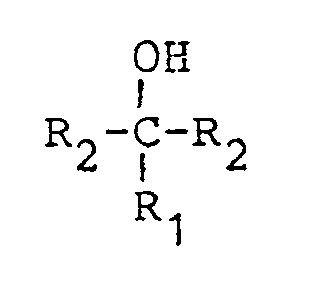 R₁ est un atome d'hydrogène ou -CH₃;R₂ est -CH₂PO₃(X)₂ ou -CH₂NHCH₂PO₃(X)₂;X est un atome d'hydrogène, un cation alcalin, l'ion ammonium, une amine protonée ou un cation alcalino-terreux, auquel cas il n'y a qu'un X par groupe méthylène-phosphonate; etdans le cas de la présence d'azote, au moins un X est un atome d'hydrogène qui est lié à un atome d'azote au moyen d'une liaison hydrogène intramoléculaire entre l'atome d'azote et un atome d'oxygène lié à un atome de phosphore.
 - Composition selon la revendication 1, dans laquelle ledit retardateur est présent dans ladite composition en une quantité de 1 à 10 % en poids du ciment sec.
- Composition selon la revendication 1 ou 2, qui comprend en outre de la silice cristalline particulaire ayant une taille de particule inférieure à 2 mm (n° de tamis US 10), en une quantité de 17 à 35 % en poids du ciment sec.
- Composition selon la revendication 1, 2 ou 3, dans laquelle le retardateur de prise est un ou plusieurs composés de type éthylènediamine substituée par 2 ou 3 moles d'acide méthylènephosphonique, diéthylènetriamine substituée par 2 ou 3 moles d'acide méthylènephosphonique, et triéthylènetétramine substituée par 1 à 6 moles d'acide méthylènephosphonique.
- Composition selon l'une quelconque des revendications 1 à 4, dans laquelle ledit ciment hydraulique est le ciment portland, ladite eau est présente en une quantité de 35 à 62 % en poids du ciment sec, et le retardateur est présent en une quantité de 2 à 8 % en poids du ciment sec.
- Composition selon la revendication 3, dans laquelle le ciment hydraulique est le ciment portland, la silice est présente en une quantité de 25 à 35 % en poids du ciment sec, l'eau est présente en une quantité de 45 à 55 % en poids du ciment sec, et le retardateur est la triéthylènetétramine substituée par l'acide méthylènephosphonique, comportant 3 groupes acide méthylènephosphonique par molécule, et est présent en une quantité de 3 à 6 % en poids du ciment sec.
- Procédé de cimentation d'une zone souterraine à haute température, pénétrée par un trou de forage, dans lequel un laitier aqueux de ciment hydraulique apte à la prise est placé dans ladite zone, caractérisé en ce que la composition de ciment est telle que définie dans l'une quelconque des revendications 1 à 6.
- Composition selon la revendication 1, qui comprend en outre une substance hydratable formant gel, choisie parmi des dérivés de cellulose hydratable, le poly(alcool vinylique) et des polymères d'acide 2-acrylamido-2-méthylpropane-sulfonique, vinylsulfonate de sodium, acrylamide, N,N-diméthylacrylamide, acide acrylique et un mélange quelconque de deux des composés précédents ou plus, présente dans ledit laitier en une quantité dans la plage de 0,01 à 1,5 % en poids du ciment sec, pour réduire au minimum la sédimentation de solides et la séparaton d'eau libre à partir de cette composition; et dans laquelle le retardateur est choisi parmi (a), (b), (c), (d) et (e) tels que définis dans la revendication 1.
- Composition selon la revendication 8, dans laquelle ledit retardateur est un ou plusieurs composés choisis parmi l'aminotri(acide méthylènephosphonique), l'éthylènediamine substituée par 1 à 4 modes d'acide méthylènephosphonique, la diéthylènediamine substituée par 1 à 5 modes d'acide méthylènephosphonique, et la triéthylènetétramine substituée par 1 à 6 modes d'acide méthylènephosphonique.
- Composition selon la revendication 8 ou 9, dans laquelle la substance hydratable formant gel est une ou plusieurs substances choisies parmi une hydroxyalkylcellulose, une carboxyalkylcellulose et une carboxyalkylhydroxyalkylcellulose, et est présente en une quantité de 0,1 à 1,0 % en poids du ciment sec; et le retardateur est présent en une quantité de 0,1 à 2,5 % en poids du ciment sec.
- Composition selon la revendication 10, dans laquelle ladite substance formant gel est l'hydroxyéthylcellulose présente en une quantité de 0,1 à 0,5 % en poids du ciment sec, et éventuellement ledit retardateur est l'aminotri(acide méthylènephosphonique), présent en une quantité de 0,2 à 0,7 % en poids du ciment sec.
- Composition selon la revendication 8, dans laquelle le ciment hydraulique comprend le ciment portland classe API H, l'eau est présente en une quantité de 38 à 46 % en poids du ciment sec, la substance hydratable formant gel est l'hydroxyéthylcellulose présente en une quantité de 0,1 à 0,5 % en poids du ciment sec, et le retardateur est l'aminotri(acide méthylènephosphonique), présent en une quantité de 0,2 à 0,7 %, de préférence de 0,5 % en poids du ciment sec.
- Composition selon l'une quelconque des revendications 1 à 6 et 8 à 12, qui comprend en outre un ou plusieurs agents activateurs de prise, choisis parmi une solution aqueuse de silicate de sodium, le paraformaldéhyde et le chlorure de calcium.
- Procédé de cimentation d'une zone en un emplacement éloigné, comprenant les étapes de: préparation d'une composition de ciment à prise retardée, selon l'une quelconque des revendications 8 à 12, le transport de ladite composition de ciment à prise retardée vers ledit emplacement éloigné, le mélange d'un ou plusieurs agents activateurs de prise avec ladite composition de ciment juste avant la mise en place de celle-ci, le(s)dit(s) agent(s) étant choisi(s) parmi une solution aqueuse de silicate de sodium, le paraformaldéhyde et le chlorure de calcium; et la mise en place du mélange résultant dans ladite zone.
Priority Applications (2)
| Application Number | Priority Date | Filing Date | Title |
|---|---|---|---|
| AT85306926T ATE66443T1 (de) | 1984-09-27 | 1985-09-27 | Verfahren zum zementieren von bohrloechern und zusammensetzungen. |
| MYPI87001866A MY102551A (en) | 1984-09-27 | 1987-09-22 | Well cementing methods and compositions. |
Applications Claiming Priority (4)
| Application Number | Priority Date | Filing Date | Title |
|---|---|---|---|
| US65585984A | 1984-09-27 | 1984-09-27 | |
| US655859 | 1984-09-27 | ||
| US06/665,248 US4676832A (en) | 1984-10-26 | 1984-10-26 | Set delayed cement compositions and methods of using the same |
| US665248 | 1984-10-26 |
Publications (3)
| Publication Number | Publication Date |
|---|---|
| EP0177308A2 EP0177308A2 (fr) | 1986-04-09 |
| EP0177308A3 EP0177308A3 (en) | 1987-10-14 |
| EP0177308B1 true EP0177308B1 (fr) | 1991-08-21 |
Family
ID=27097058
Family Applications (1)
| Application Number | Title | Priority Date | Filing Date |
|---|---|---|---|
| EP19850306926 Expired EP0177308B1 (fr) | 1984-09-27 | 1985-09-27 | Procédé pour la cimentation de puits et compositions |
Country Status (4)
| Country | Link |
|---|---|
| EP (1) | EP0177308B1 (fr) |
| AU (1) | AU579405B2 (fr) |
| DE (1) | DE3583843D1 (fr) |
| SG (1) | SG11692G (fr) |
Cited By (1)
| Publication number | Priority date | Publication date | Assignee | Title |
|---|---|---|---|---|
| WO2015034543A1 (fr) * | 2013-09-09 | 2015-03-12 | Halliburton Energy Services, Inc. | Activation de compositions de ciments à prise ralentie par échange de retardateur de prise |
Families Citing this family (16)
| Publication number | Priority date | Publication date | Assignee | Title |
|---|---|---|---|---|
| CH678526A5 (fr) * | 1990-01-27 | 1991-09-30 | Sandoz Ag | |
| US4976316A (en) * | 1990-02-20 | 1990-12-11 | Atlantic Richfield Company | Method of accelerating set of cement by washover fluid containing alkanolamine |
| CH680730A5 (fr) * | 1990-07-09 | 1992-10-30 | Sika Ag | |
| US5186847A (en) * | 1991-01-30 | 1993-02-16 | Halliburton Company | Methods of preparing and using substantially debris-free gelled aqueous well treating fluids |
| CH681720A5 (fr) * | 1991-04-12 | 1993-05-14 | Sika Ag | |
| US5263542A (en) * | 1992-05-27 | 1993-11-23 | Halliburton Company | Set retarded ultra fine cement compositions and methods |
| FR2699915B1 (fr) * | 1992-12-29 | 1995-03-10 | Prod Ind Cfpi Franc | Composition de matières améliorant les propriétés rhéologiques des produits à base de ciments. |
| US5346012A (en) * | 1993-02-01 | 1994-09-13 | Halliburton Company | Fine particle size cement compositions and methods |
| FR2702471B1 (fr) * | 1993-03-10 | 1995-04-14 | Schlumberger Cie Dowell | Retardateurs haute température pour ciments pétroliers, laitiers de ciments et procédés de cimentation correspondants. |
| FR2702472B1 (fr) * | 1993-03-10 | 1995-04-14 | Schlumberger Cie Dowell | Retardateurs haute température pour ciments pétroliers, laitiers de ciments et procédés de cimentation correspondants. |
| ES2306041T3 (es) * | 2005-01-31 | 2008-11-01 | Rhodia Chimie | Cemento retardante. |
| US20060249289A1 (en) * | 2005-05-05 | 2006-11-09 | Halliburton Energy Services, Inc. | Set-delayed cement compositions comprising hydrated lime and silica and methods of cementing in subterranean formations |
| US7201798B2 (en) * | 2005-05-05 | 2007-04-10 | Halliburton Energy Services, Inc. | Set-delayed cement compositions comprising hydrated lime and silica and methods of cementing in subterranean formations |
| US7854262B2 (en) * | 2008-10-14 | 2010-12-21 | Halliburton Energy Services, Inc. | Sorel cement compositions, amine phosphono retarders, and associated methods |
| CN105545247B (zh) * | 2015-12-08 | 2018-08-10 | 中国石油天然气股份有限公司 | 一种油气井固井方法 |
| CN107353437A (zh) * | 2017-08-08 | 2017-11-17 | 青岛长荣化工科技有限公司 | 一种膨胀型阻燃剂及其制备方法 |
Family Cites Families (12)
| Publication number | Priority date | Publication date | Assignee | Title |
|---|---|---|---|---|
| US3346487A (en) * | 1965-06-11 | 1967-10-10 | Monsanto Co | Deflocculation of solid materials in aqueous medium |
| US3346488A (en) * | 1965-08-24 | 1967-10-10 | Monsanto Co | Deflocculation of solid materials in aqueous medium |
| DE1542202C3 (de) * | 1966-01-29 | 1975-04-03 | Henkel & Cie Gmbh, 4000 Duesseldorf | Verfahren zur Verflüssigung von wäßrigen anorganischen Feststoffdispersionen |
| US3483007A (en) * | 1966-07-07 | 1969-12-09 | Dow Chemical Co | Aqueous cement slurry and method of use |
| DE2325737A1 (de) * | 1973-05-21 | 1974-12-19 | Henkel & Cie Gmbh | Gipsmassen |
| FR2411810A1 (fr) * | 1977-12-14 | 1979-07-13 | Protex Manuf Prod Chimique | Compositions additives pour melanges a base de platre de gypse ou anhydrite |
| US4393939A (en) * | 1981-04-20 | 1983-07-19 | Halliburton Services | Clay stabilization during oil and gas well cementing operations |
| US4470463A (en) * | 1983-01-27 | 1984-09-11 | The Dow Chemical Company | Well treating process and composition |
| US4466836A (en) * | 1983-04-28 | 1984-08-21 | The Dow Chemical Company | Set retarding compounds for use in cement slurries |
| GB2157279A (en) * | 1984-04-12 | 1985-10-23 | Dow Chemical Co | Well treating composition |
| AU3008984A (en) * | 1984-07-02 | 1986-01-09 | Dow Chemical Company, The | Amine phosphonate retarding of cement set |
| AU3208884A (en) * | 1984-08-20 | 1986-02-27 | Dow Chemical Company, The | Alkylenephosphoric acid piperazine derivatives as cement set retarders |
-
1985
- 1985-09-25 AU AU47872/85A patent/AU579405B2/en not_active Ceased
- 1985-09-27 DE DE8585306926T patent/DE3583843D1/de not_active Expired - Fee Related
- 1985-09-27 EP EP19850306926 patent/EP0177308B1/fr not_active Expired
-
1992
- 1992-02-06 SG SG11692A patent/SG11692G/en unknown
Cited By (5)
| Publication number | Priority date | Publication date | Assignee | Title |
|---|---|---|---|---|
| WO2015034543A1 (fr) * | 2013-09-09 | 2015-03-12 | Halliburton Energy Services, Inc. | Activation de compositions de ciments à prise ralentie par échange de retardateur de prise |
| GB2530459A (en) * | 2013-09-09 | 2016-03-23 | Halliburton Energy Services Inc | Activation of set-delayed cement compositions by retarder exchange |
| AU2013399606B2 (en) * | 2013-09-09 | 2016-09-22 | Halliburton Energy Services, Inc. | Activation of set-delayed cement compositions by retarder exchange |
| US9988306B2 (en) | 2013-09-09 | 2018-06-05 | Halliburton Energy Services, Inc. | Activation of set-delayed cement compositions by retarder exchange |
| GB2530459B (en) * | 2013-09-09 | 2021-02-10 | Halliburton Energy Services Inc | Activation of set-delayed cement compositions by retarder exchange |
Also Published As
| Publication number | Publication date |
|---|---|
| EP0177308A2 (fr) | 1986-04-09 |
| AU4787285A (en) | 1986-04-10 |
| AU579405B2 (en) | 1988-11-24 |
| DE3583843D1 (de) | 1991-09-26 |
| SG11692G (en) | 1992-03-20 |
| EP0177308A3 (en) | 1987-10-14 |
Similar Documents
| Publication | Publication Date | Title |
|---|---|---|
| US4676832A (en) | Set delayed cement compositions and methods of using the same | |
| EP0177308B1 (fr) | Procédé pour la cimentation de puits et compositions | |
| US2961044A (en) | Cement compositions and process of cementing wells | |
| US4997487A (en) | High temperature set retarded well cement compositions and methods | |
| US8505629B2 (en) | Foamed spacer fluids containing cement kiln dust and methods of use | |
| US6182758B1 (en) | Dispersant and fluid loss control additives for well cements, well cement compositions and methods | |
| US4500357A (en) | Oil field cementing methods and compositions | |
| US5968255A (en) | Universal well cement additives and methods | |
| US7073585B2 (en) | Cement compositions with improved fluid loss characteristics and methods of cementing in surface and subterranean applications | |
| EP1633952B1 (fr) | Compositions de ciment presentant des caracteristiques de perte du fluide ameliorees et procedes de cimentation dans des formations souterraines | |
| US5972103A (en) | Universal well cement additives and methods | |
| EP0538989B1 (fr) | Compositions de cimentation de puits et leurs utilisation | |
| US4742094A (en) | Low fluid loss salt saturated cement slurries, additives and methods | |
| US20050034864A1 (en) | Cement compositions with improved fluid loss characteristics and methods of cementing in surface and subterranean applications | |
| CA2079044A1 (fr) | Compositions et methode de cementation de puits a haute temperature | |
| GB2250044A (en) | Cementing wells | |
| CA2102040A1 (fr) | Ciments a faible perte de liquide, adjuvants et methodes | |
| EP2907862A1 (fr) | Compositions durcissables étendues comprenant de la poussière de four à ciment et procédés associés | |
| US4791989A (en) | Low fluid loss salt saturated cement slurries, additives and methods | |
| US5109042A (en) | Fluid loss additive for cement slurries containing a n-vinyl-2-pyrrolidone-ω-2-acrylamido-2-methylpropane sulfonate-ω-acrylic acid-ω-acrylamide polymer | |
| CA1317452C (fr) | Adjuvants pour composition de cimentation de puits de produits petroliers, servant a reduire le filtrat | |
| CA1258366A (fr) | Methode et produit de cimentation de puits a haute temperature | |
| EP3121245B1 (fr) | FLUIDES-MOUSSES DE SÉPARATION CONTENANT DE LA POUSSIÈRE DE
FOURS À CIMENT ET PROCÉDÉS D'UTILISATION | |
| EP0124303A2 (fr) | Composition de ciment pour étancher un terrassement souterrain | |
| NZ331387A (en) | Light weight high temperature well cement compositions and methods for use in the presence of carbon dioxide and brines at high temperature and pressure |
Legal Events
| Date | Code | Title | Description |
|---|---|---|---|
| PUAI | Public reference made under article 153(3) epc to a published international application that has entered the european phase |
Free format text: ORIGINAL CODE: 0009012 |
|
| AK | Designated contracting states |
Kind code of ref document: A2 Designated state(s): AT DE FR GB IT NL |
|
| PUAL | Search report despatched |
Free format text: ORIGINAL CODE: 0009013 |
|
| AK | Designated contracting states |
Kind code of ref document: A3 Designated state(s): AT DE FR GB IT NL |
|
| 17P | Request for examination filed |
Effective date: 19880125 |
|
| 17Q | First examination report despatched |
Effective date: 19890516 |
|
| ITF | It: translation for a ep patent filed | ||
| GRAA | (expected) grant |
Free format text: ORIGINAL CODE: 0009210 |
|
| AK | Designated contracting states |
Kind code of ref document: B1 Designated state(s): AT DE FR GB IT NL |
|
| PG25 | Lapsed in a contracting state [announced via postgrant information from national office to epo] |
Ref country code: AT Effective date: 19910821 |
|
| REF | Corresponds to: |
Ref document number: 66443 Country of ref document: AT Date of ref document: 19910915 Kind code of ref document: T |
|
| PGFP | Annual fee paid to national office [announced via postgrant information from national office to epo] |
Ref country code: AT Payment date: 19910909 Year of fee payment: 7 |
|
| REF | Corresponds to: |
Ref document number: 3583843 Country of ref document: DE Date of ref document: 19910926 |
|
| ET | Fr: translation filed | ||
| PLBE | No opposition filed within time limit |
Free format text: ORIGINAL CODE: 0009261 |
|
| STAA | Information on the status of an ep patent application or granted ep patent |
Free format text: STATUS: NO OPPOSITION FILED WITHIN TIME LIMIT |
|
| 26N | No opposition filed | ||
| PGFP | Annual fee paid to national office [announced via postgrant information from national office to epo] |
Ref country code: FR Payment date: 19930909 Year of fee payment: 9 |
|
| PGFP | Annual fee paid to national office [announced via postgrant information from national office to epo] |
Ref country code: GB Payment date: 19930917 Year of fee payment: 9 |
|
| PGFP | Annual fee paid to national office [announced via postgrant information from national office to epo] |
Ref country code: DE Payment date: 19930922 Year of fee payment: 9 |
|
| PGFP | Annual fee paid to national office [announced via postgrant information from national office to epo] |
Ref country code: NL Payment date: 19930930 Year of fee payment: 9 |
|
| PG25 | Lapsed in a contracting state [announced via postgrant information from national office to epo] |
Ref country code: GB Effective date: 19940927 |
|
| PG25 | Lapsed in a contracting state [announced via postgrant information from national office to epo] |
Ref country code: NL Effective date: 19950401 |
|
| NLV4 | Nl: lapsed or anulled due to non-payment of the annual fee | ||
| GBPC | Gb: european patent ceased through non-payment of renewal fee |
Effective date: 19940927 |
|
| PG25 | Lapsed in a contracting state [announced via postgrant information from national office to epo] |
Ref country code: FR Effective date: 19950531 |
|
| PG25 | Lapsed in a contracting state [announced via postgrant information from national office to epo] |
Ref country code: DE Effective date: 19950601 |
|
| REG | Reference to a national code |
Ref country code: FR Ref legal event code: ST |