EP0179355B1 - Von Terpenen abgeleitete funktionelle Silane - Google Patents
Von Terpenen abgeleitete funktionelle Silane Download PDFInfo
- Publication number
- EP0179355B1 EP0179355B1 EP85112806A EP85112806A EP0179355B1 EP 0179355 B1 EP0179355 B1 EP 0179355B1 EP 85112806 A EP85112806 A EP 85112806A EP 85112806 A EP85112806 A EP 85112806A EP 0179355 B1 EP0179355 B1 EP 0179355B1
- Authority
- EP
- European Patent Office
- Prior art keywords
- epoxysilane
- terpene
- group
- lower alkoxy
- groups
- Prior art date
- Legal status (The legal status is an assumption and is not a legal conclusion. Google has not performed a legal analysis and makes no representation as to the accuracy of the status listed.)
- Expired - Lifetime
Links
- 235000007586 terpenes Nutrition 0.000 title claims abstract description 50
- 150000003505 terpenes Chemical class 0.000 title claims abstract description 47
- 150000004756 silanes Chemical class 0.000 title description 14
- 125000003545 alkoxy group Chemical group 0.000 claims abstract description 28
- XMGQYMWWDOXHJM-UHFFFAOYSA-N limonene Chemical compound CC(=C)C1CCC(C)=CC1 XMGQYMWWDOXHJM-UHFFFAOYSA-N 0.000 claims abstract description 14
- 239000003054 catalyst Substances 0.000 claims abstract description 10
- UAHWPYUMFXYFJY-UHFFFAOYSA-N beta-myrcene Chemical compound CC(C)=CCCC(=C)C=C UAHWPYUMFXYFJY-UHFFFAOYSA-N 0.000 claims abstract description 8
- 238000006459 hydrosilylation reaction Methods 0.000 claims abstract description 8
- INYHZQLKOKTDAI-UHFFFAOYSA-N 5-ethenylbicyclo[2.2.1]hept-2-ene Chemical compound C1C2C(C=C)CC1C=C2 INYHZQLKOKTDAI-UHFFFAOYSA-N 0.000 claims abstract description 6
- 235000001510 limonene Nutrition 0.000 claims abstract description 6
- 229940087305 limonene Drugs 0.000 claims abstract description 6
- VYBREYKSZAROCT-UHFFFAOYSA-N alpha-myrcene Natural products CC(=C)CCCC(=C)C=C VYBREYKSZAROCT-UHFFFAOYSA-N 0.000 claims abstract description 4
- FUDNBFMOXDUIIE-UHFFFAOYSA-N 3,7-dimethylocta-1,6-diene Chemical compound C=CC(C)CCC=C(C)C FUDNBFMOXDUIIE-UHFFFAOYSA-N 0.000 claims abstract description 3
- 239000004593 Epoxy Substances 0.000 claims description 25
- -1 terpene epoxide Chemical class 0.000 claims description 24
- 125000000217 alkyl group Chemical group 0.000 claims description 20
- 229910000077 silane Inorganic materials 0.000 claims description 18
- BLRPTPMANUNPDV-UHFFFAOYSA-N Silane Chemical compound [SiH4] BLRPTPMANUNPDV-UHFFFAOYSA-N 0.000 claims description 17
- 125000003342 alkenyl group Chemical group 0.000 claims description 12
- 150000002118 epoxides Chemical class 0.000 claims description 11
- 238000000034 method Methods 0.000 claims description 10
- OKTJSMMVPCPJKN-UHFFFAOYSA-N Carbon Chemical compound [C] OKTJSMMVPCPJKN-UHFFFAOYSA-N 0.000 claims description 8
- 229910052799 carbon Inorganic materials 0.000 claims description 8
- 239000000203 mixture Substances 0.000 claims description 7
- 125000004178 (C1-C4) alkyl group Chemical group 0.000 claims description 5
- 239000003795 chemical substances by application Substances 0.000 claims description 5
- 125000003700 epoxy group Chemical group 0.000 claims description 5
- 238000002360 preparation method Methods 0.000 claims description 5
- 125000003518 norbornenyl group Chemical group C12(C=CC(CC1)C2)* 0.000 claims description 4
- 230000006340 racemization Effects 0.000 claims description 4
- 125000000219 ethylidene group Chemical group [H]C(=[*])C([H])([H])[H] 0.000 claims description 3
- JFNLZVQOOSMTJK-KNVOCYPGSA-N norbornene Chemical compound C1[C@@H]2CC[C@H]1C=C2 JFNLZVQOOSMTJK-KNVOCYPGSA-N 0.000 claims description 3
- 125000000391 vinyl group Chemical group [H]C([*])=C([H])[H] 0.000 claims description 3
- OJOWICOBYCXEKR-UHFFFAOYSA-N 5-ethylidenebicyclo[2.2.1]hept-2-ene Chemical compound C1C2C(=CC)CC1C=C2 OJOWICOBYCXEKR-UHFFFAOYSA-N 0.000 claims description 2
- 150000001721 carbon Chemical class 0.000 claims description 2
- XUIMIQQOPSSXEZ-UHFFFAOYSA-N Silicon Chemical group [Si] XUIMIQQOPSSXEZ-UHFFFAOYSA-N 0.000 claims 1
- 229910052710 silicon Inorganic materials 0.000 claims 1
- OJOWICOBYCXEKR-APPZFPTMSA-N (1S,4R)-5-ethylidenebicyclo[2.2.1]hept-2-ene Chemical compound CC=C1C[C@@H]2C[C@@H]1C=C2 OJOWICOBYCXEKR-APPZFPTMSA-N 0.000 abstract description 3
- 230000015572 biosynthetic process Effects 0.000 abstract description 3
- 238000003786 synthesis reaction Methods 0.000 abstract description 3
- 239000000047 product Substances 0.000 description 14
- 239000000243 solution Substances 0.000 description 14
- CSCPPACGZOOCGX-UHFFFAOYSA-N Acetone Chemical compound CC(C)=O CSCPPACGZOOCGX-UHFFFAOYSA-N 0.000 description 12
- HEDRZPFGACZZDS-MICDWDOJSA-N Trichloro(2H)methane Chemical compound [2H]C(Cl)(Cl)Cl HEDRZPFGACZZDS-MICDWDOJSA-N 0.000 description 12
- 150000001875 compounds Chemical class 0.000 description 11
- CDBYLPFSWZWCQE-UHFFFAOYSA-L Sodium Carbonate Chemical compound [Na+].[Na+].[O-]C([O-])=O CDBYLPFSWZWCQE-UHFFFAOYSA-L 0.000 description 9
- 238000006243 chemical reaction Methods 0.000 description 9
- KFSLWBXXFJQRDL-UHFFFAOYSA-N Peracetic acid Chemical compound CC(=O)OO KFSLWBXXFJQRDL-UHFFFAOYSA-N 0.000 description 8
- 238000004821 distillation Methods 0.000 description 8
- QQQSFSZALRVCSZ-UHFFFAOYSA-N triethoxysilane Chemical compound CCO[SiH](OCC)OCC QQQSFSZALRVCSZ-UHFFFAOYSA-N 0.000 description 7
- YMWUJEATGCHHMB-UHFFFAOYSA-N Dichloromethane Chemical compound ClCCl YMWUJEATGCHHMB-UHFFFAOYSA-N 0.000 description 6
- 239000002253 acid Substances 0.000 description 6
- 238000000576 coating method Methods 0.000 description 6
- 239000007822 coupling agent Substances 0.000 description 6
- JRZJOMJEPLMPRA-UHFFFAOYSA-N olefin Natural products CCCCCCCC=C JRZJOMJEPLMPRA-UHFFFAOYSA-N 0.000 description 6
- 238000006884 silylation reaction Methods 0.000 description 6
- DQGZGGZXMOFHLB-UHFFFAOYSA-N 2,2-dimethyl-3-(3-methylidenepent-4-enyl)oxirane Chemical compound CC1(C)OC1CCC(=C)C=C DQGZGGZXMOFHLB-UHFFFAOYSA-N 0.000 description 4
- CSNNHWWHGAXBCP-UHFFFAOYSA-L Magnesium sulfate Chemical compound [Mg+2].[O-][S+2]([O-])([O-])[O-] CSNNHWWHGAXBCP-UHFFFAOYSA-L 0.000 description 4
- 239000000654 additive Substances 0.000 description 4
- 150000001336 alkenes Chemical class 0.000 description 4
- 238000006735 epoxidation reaction Methods 0.000 description 4
- 238000007254 oxidation reaction Methods 0.000 description 4
- 229910000029 sodium carbonate Inorganic materials 0.000 description 4
- AQRLNPVMDITEJU-UHFFFAOYSA-N triethylsilane Chemical compound CC[SiH](CC)CC AQRLNPVMDITEJU-UHFFFAOYSA-N 0.000 description 4
- PKTOVQRKCNPVKY-UHFFFAOYSA-N dimethoxy(methyl)silicon Chemical compound CO[Si](C)OC PKTOVQRKCNPVKY-UHFFFAOYSA-N 0.000 description 3
- 230000003647 oxidation Effects 0.000 description 3
- BASFCYQUMIYNBI-UHFFFAOYSA-N platinum Chemical compound [Pt] BASFCYQUMIYNBI-UHFFFAOYSA-N 0.000 description 3
- 150000003254 radicals Chemical class 0.000 description 3
- 239000011541 reaction mixture Substances 0.000 description 3
- 239000003381 stabilizer Substances 0.000 description 3
- YUYCVXFAYWRXLS-UHFFFAOYSA-N trimethoxysilane Chemical compound CO[SiH](OC)OC YUYCVXFAYWRXLS-UHFFFAOYSA-N 0.000 description 3
- XMGQYMWWDOXHJM-JTQLQIEISA-N (+)-α-limonene Chemical compound CC(=C)[C@@H]1CCC(C)=CC1 XMGQYMWWDOXHJM-JTQLQIEISA-N 0.000 description 2
- CCEFMUBVSUDRLG-KXUCPTDWSA-N (4R)-limonene 1,2-epoxide Natural products C1[C@H](C(=C)C)CC[C@@]2(C)O[C@H]21 CCEFMUBVSUDRLG-KXUCPTDWSA-N 0.000 description 2
- WEEGYLXZBRQIMU-UHFFFAOYSA-N 1,8-cineole Natural products C1CC2CCC1(C)OC2(C)C WEEGYLXZBRQIMU-UHFFFAOYSA-N 0.000 description 2
- MHAJPDPJQMAIIY-UHFFFAOYSA-N Hydrogen peroxide Chemical compound OO MHAJPDPJQMAIIY-UHFFFAOYSA-N 0.000 description 2
- RRHGJUQNOFWUDK-UHFFFAOYSA-N Isoprene Chemical group CC(=C)C=C RRHGJUQNOFWUDK-UHFFFAOYSA-N 0.000 description 2
- CCEFMUBVSUDRLG-XNWIYYODSA-N Limonene-1,2-epoxide Chemical compound C1[C@H](C(=C)C)CCC2(C)OC21 CCEFMUBVSUDRLG-XNWIYYODSA-N 0.000 description 2
- 239000002318 adhesion promoter Substances 0.000 description 2
- 150000001343 alkyl silanes Chemical class 0.000 description 2
- 150000004687 hexahydrates Chemical class 0.000 description 2
- 239000007788 liquid Substances 0.000 description 2
- 229910052943 magnesium sulfate Inorganic materials 0.000 description 2
- 235000019341 magnesium sulphate Nutrition 0.000 description 2
- 230000014759 maintenance of location Effects 0.000 description 2
- 239000003921 oil Substances 0.000 description 2
- 229910052697 platinum Inorganic materials 0.000 description 2
- 239000000376 reactant Substances 0.000 description 2
- 229920006395 saturated elastomer Polymers 0.000 description 2
- GEHJYWRUCIMESM-UHFFFAOYSA-L sodium sulfite Chemical compound [Na+].[Na+].[O-]S([O-])=O GEHJYWRUCIMESM-UHFFFAOYSA-L 0.000 description 2
- 239000002904 solvent Substances 0.000 description 2
- 239000012258 stirred mixture Substances 0.000 description 2
- DQZNLOXENNXVAD-UHFFFAOYSA-N trimethoxy-[2-(7-oxabicyclo[4.1.0]heptan-4-yl)ethyl]silane Chemical compound C1C(CC[Si](OC)(OC)OC)CCC2OC21 DQZNLOXENNXVAD-UHFFFAOYSA-N 0.000 description 2
- BPSIOYPQMFLKFR-UHFFFAOYSA-N trimethoxy-[3-(oxiran-2-ylmethoxy)propyl]silane Chemical compound CO[Si](OC)(OC)CCCOCC1CO1 BPSIOYPQMFLKFR-UHFFFAOYSA-N 0.000 description 2
- GQVMHMFBVWSSPF-SOYUKNQTSA-N (4E,6E)-2,6-dimethylocta-2,4,6-triene Chemical compound C\C=C(/C)\C=C\C=C(C)C GQVMHMFBVWSSPF-SOYUKNQTSA-N 0.000 description 1
- NHQDETIJWKXCTC-UHFFFAOYSA-N 3-chloroperbenzoic acid Chemical compound OOC(=O)C1=CC=CC(Cl)=C1 NHQDETIJWKXCTC-UHFFFAOYSA-N 0.000 description 1
- LSIGXJYVSGAHHA-UHFFFAOYSA-N 6-ethenyl-3-oxatricyclo[3.2.1.02,4]oct-2(4)-ene Chemical compound C=CC1CC2C(O3)=C3C1C2 LSIGXJYVSGAHHA-UHFFFAOYSA-N 0.000 description 1
- 0 CC1[C@@](C)*=C(*)*C1 Chemical compound CC1[C@@](C)*=C(*)*C1 0.000 description 1
- VGGSQFUCUMXWEO-UHFFFAOYSA-N Ethene Chemical compound C=C VGGSQFUCUMXWEO-UHFFFAOYSA-N 0.000 description 1
- 239000005977 Ethylene Substances 0.000 description 1
- ZOKXTWBITQBERF-UHFFFAOYSA-N Molybdenum Chemical compound [Mo] ZOKXTWBITQBERF-UHFFFAOYSA-N 0.000 description 1
- 239000006087 Silane Coupling Agent Substances 0.000 description 1
- VKBVWGBWOYMHLX-UHFFFAOYSA-N [5-(3,3-dimethyloxiran-2-yl)-3-methylpentyl]-diethoxy-methylsilane Chemical compound CCO[Si](C)(OCC)CCC(C)CCC1OC1(C)C VKBVWGBWOYMHLX-UHFFFAOYSA-N 0.000 description 1
- VNIXSCYBZOWUTP-UHFFFAOYSA-N [5-(3,3-dimethyloxiran-2-yl)-3-methylpentyl]-dimethoxy-methylsilane Chemical compound CO[Si](C)(OC)CCC(C)CCC1OC1(C)C VNIXSCYBZOWUTP-UHFFFAOYSA-N 0.000 description 1
- ZJZGILLNLDHRIZ-UHFFFAOYSA-N [5-(3,3-dimethyloxiran-2-yl)-3-methylpentyl]-triethoxysilane Chemical compound CCO[Si](OCC)(OCC)CCC(C)CCC1OC1(C)C ZJZGILLNLDHRIZ-UHFFFAOYSA-N 0.000 description 1
- OUPBNYNTITUANX-UHFFFAOYSA-N [5-(3,3-dimethyloxiran-2-yl)-3-methylpentyl]-trimethoxysilane Chemical compound CO[Si](OC)(OC)CCC(C)CCC1OC1(C)C OUPBNYNTITUANX-UHFFFAOYSA-N 0.000 description 1
- HMDDXIMCDZRSNE-UHFFFAOYSA-N [C].[Si] Chemical compound [C].[Si] HMDDXIMCDZRSNE-UHFFFAOYSA-N 0.000 description 1
- 125000002015 acyclic group Chemical group 0.000 description 1
- 230000000996 additive effect Effects 0.000 description 1
- 125000005370 alkoxysilyl group Chemical group 0.000 description 1
- 125000002947 alkylene group Chemical group 0.000 description 1
- 239000007767 bonding agent Substances 0.000 description 1
- 239000012267 brine Substances 0.000 description 1
- 125000004432 carbon atom Chemical group C* 0.000 description 1
- 239000011203 carbon fibre reinforced carbon Substances 0.000 description 1
- 239000007795 chemical reaction product Substances 0.000 description 1
- GQVMHMFBVWSSPF-UHFFFAOYSA-N cis-alloocimene Natural products CC=C(C)C=CC=C(C)C GQVMHMFBVWSSPF-UHFFFAOYSA-N 0.000 description 1
- 239000008199 coating composition Substances 0.000 description 1
- 239000010941 cobalt Substances 0.000 description 1
- 229910017052 cobalt Inorganic materials 0.000 description 1
- GUTLYIVDDKVIGB-UHFFFAOYSA-N cobalt atom Chemical compound [Co] GUTLYIVDDKVIGB-UHFFFAOYSA-N 0.000 description 1
- 238000001816 cooling Methods 0.000 description 1
- GAURFLBIDLSLQU-UHFFFAOYSA-N diethoxy(methyl)silicon Chemical compound CCO[Si](C)OCC GAURFLBIDLSLQU-UHFFFAOYSA-N 0.000 description 1
- 230000000694 effects Effects 0.000 description 1
- 238000004070 electrodeposition Methods 0.000 description 1
- 125000001495 ethyl group Chemical group [H]C([H])([H])C([H])([H])* 0.000 description 1
- 238000001914 filtration Methods 0.000 description 1
- 239000000796 flavoring agent Substances 0.000 description 1
- 235000019634 flavors Nutrition 0.000 description 1
- 239000011521 glass Substances 0.000 description 1
- 230000003301 hydrolyzing effect Effects 0.000 description 1
- 239000005457 ice water Substances 0.000 description 1
- 239000003999 initiator Substances 0.000 description 1
- 229910052741 iridium Inorganic materials 0.000 description 1
- GKOZUEZYRPOHIO-UHFFFAOYSA-N iridium atom Chemical compound [Ir] GKOZUEZYRPOHIO-UHFFFAOYSA-N 0.000 description 1
- 238000002955 isolation Methods 0.000 description 1
- 238000013035 low temperature curing Methods 0.000 description 1
- 238000004519 manufacturing process Methods 0.000 description 1
- LULAYUGMBFYYEX-UHFFFAOYSA-N metachloroperbenzoic acid Natural products OC(=O)C1=CC=CC(Cl)=C1 LULAYUGMBFYYEX-UHFFFAOYSA-N 0.000 description 1
- 150000002751 molybdenum Chemical class 0.000 description 1
- 229910052750 molybdenum Inorganic materials 0.000 description 1
- 239000011733 molybdenum Substances 0.000 description 1
- 125000002950 monocyclic group Chemical group 0.000 description 1
- 229930003658 monoterpene Natural products 0.000 description 1
- 150000002773 monoterpene derivatives Chemical class 0.000 description 1
- 235000002577 monoterpenes Nutrition 0.000 description 1
- 229930014626 natural product Natural products 0.000 description 1
- 150000007823 ocimene derivatives Chemical class 0.000 description 1
- 125000001181 organosilyl group Chemical group [SiH3]* 0.000 description 1
- 239000007800 oxidant agent Substances 0.000 description 1
- 239000003973 paint Substances 0.000 description 1
- 239000002304 perfume Substances 0.000 description 1
- 229920000642 polymer Polymers 0.000 description 1
- 238000000746 purification Methods 0.000 description 1
- 239000011342 resin composition Substances 0.000 description 1
- 229910052703 rhodium Inorganic materials 0.000 description 1
- 239000010948 rhodium Substances 0.000 description 1
- MHOVAHRLVXNVSD-UHFFFAOYSA-N rhodium atom Chemical compound [Rh] MHOVAHRLVXNVSD-UHFFFAOYSA-N 0.000 description 1
- 235000010265 sodium sulphite Nutrition 0.000 description 1
- HPALAKNZSZLMCH-UHFFFAOYSA-M sodium;chloride;hydrate Chemical compound O.[Na+].[Cl-] HPALAKNZSZLMCH-UHFFFAOYSA-M 0.000 description 1
- 239000007858 starting material Substances 0.000 description 1
- 238000003756 stirring Methods 0.000 description 1
- 231100000331 toxic Toxicity 0.000 description 1
- 230000002588 toxic effect Effects 0.000 description 1
- 231100000419 toxicity Toxicity 0.000 description 1
- 230000001988 toxicity Effects 0.000 description 1
- XJPBRODHZKDRCB-UHFFFAOYSA-N trans-alpha-ocimene Natural products CC(=C)CCC=C(C)C=C XJPBRODHZKDRCB-UHFFFAOYSA-N 0.000 description 1
- UCSBCWBHZLSFGC-UHFFFAOYSA-N tributoxysilane Chemical compound CCCCO[SiH](OCCCC)OCCCC UCSBCWBHZLSFGC-UHFFFAOYSA-N 0.000 description 1
- ZQDWUJIBGXKPDZ-UHFFFAOYSA-N trimethoxy(7-oxabicyclo[4.1.0]heptan-4-yl)silane Chemical compound C1C([Si](OC)(OC)OC)CCC2OC21 ZQDWUJIBGXKPDZ-UHFFFAOYSA-N 0.000 description 1
- PQDJYEQOELDLCP-UHFFFAOYSA-N trimethylsilane Chemical compound C[SiH](C)C PQDJYEQOELDLCP-UHFFFAOYSA-N 0.000 description 1
- OZWKZRFXJPGDFM-UHFFFAOYSA-N tripropoxysilane Chemical compound CCCO[SiH](OCCC)OCCC OZWKZRFXJPGDFM-UHFFFAOYSA-N 0.000 description 1
- BNCOGDMUGQWFQE-UHFFFAOYSA-N tris(ethenyl)silicon Chemical compound C=C[Si](C=C)C=C BNCOGDMUGQWFQE-UHFFFAOYSA-N 0.000 description 1
- HKILWKSIMZSWQX-UHFFFAOYSA-N tris(prop-2-enyl)silane Chemical compound C=CC[SiH](CC=C)CC=C HKILWKSIMZSWQX-UHFFFAOYSA-N 0.000 description 1
- WFKWXMTUELFFGS-UHFFFAOYSA-N tungsten Chemical compound [W] WFKWXMTUELFFGS-UHFFFAOYSA-N 0.000 description 1
- 229910052721 tungsten Inorganic materials 0.000 description 1
- 239000010937 tungsten Substances 0.000 description 1
- 229930195735 unsaturated hydrocarbon Natural products 0.000 description 1
- 150000003681 vanadium Chemical class 0.000 description 1
- 229920002554 vinyl polymer Polymers 0.000 description 1
- IHPKGUQCSIINRJ-UHFFFAOYSA-N β-ocimene Natural products CC(C)=CCC=C(C)C=C IHPKGUQCSIINRJ-UHFFFAOYSA-N 0.000 description 1
Classifications
-
- C—CHEMISTRY; METALLURGY
- C07—ORGANIC CHEMISTRY
- C07F—ACYCLIC, CARBOCYCLIC OR HETEROCYCLIC COMPOUNDS CONTAINING ELEMENTS OTHER THAN CARBON, HYDROGEN, HALOGEN, OXYGEN, NITROGEN, SULFUR, SELENIUM OR TELLURIUM
- C07F7/00—Compounds containing elements of Groups 4 or 14 of the Periodic Table
- C07F7/02—Silicon compounds
- C07F7/08—Compounds having one or more C—Si linkages
- C07F7/18—Compounds having one or more C—Si linkages as well as one or more C—O—Si linkages
- C07F7/1804—Compounds having Si-O-C linkages
Definitions
- the invention relates to the synthesis of novel epoxy functional silanes and specifically to the hydrosilylation of limonene oxide, myrcene oxide, dihydromyrcene oxide and 2-vinyl norbornene oxide. Because the epoxy and the alkoxysilyl functionality can react independently, these compounds are useful in a number of applications as for example, polymer additives, paint additives, stabilizers, bonding and coupling agents.
- Epoxy silanes have been known for sometime. Such compounds such as [ ⁇ -(3,4-epoxycyclohexyl) ethyl]trimethoxysilane (R.N. 3388-04-3) and (gamma-glycidoxypropyl)trimethoxysilane (R.N. 25704-87-4) find use as coupling agents and in various resin compositions. See Kirk-Othmer Encyclopedia, Vol. 20, pp 968, (1982).
- French Patent 1,526,231 shows various non-terpenoid epoxy silanes including 8-(methdimethoxysilyl)-2,3-epoxyoctane, 4-(trimethoxysilyl)-1,2-epoxycyclohexane, 4-[ ⁇ -(trimethoxysilyl) ethyl]-1,2-epoxycyclohexane and the like.
- E. P. Plueddemann discusses the use of similar epoxysilanes as adhesion promoters in coatings. See also E. P. Plueddemann, Silane Coupling Agents, Plenum Press, N.Y. 1982. In a typical synthesis, an olefin alkoxysilane is prepared and the epoxide group introduced by oxidation of the unsaturation double bond.
- the instant process produces terpene derived epoxysilanes by first forming an olefin epoxide having one or more unsaturated double bond sites followed by a silylation reaction i.e. addition of alkoxysilanes, alkylsilanes or mixed alkoxyalkylsilanes with one of the available unsaturation (double bond) sites.
- a silylation reaction i.e. addition of alkoxysilanes, alkylsilanes or mixed alkoxyalkylsilanes with one of the available unsaturation (double bond) sites.
- the terpene epoxide contains a single double bond for the silylation reaction the resulting products are epoxy terpenyl alkoxy (or alkyl) silanes.
- the addition of one mole of the silane will produce an epoxy terpenyl alkoxy (or alkyl) silane which retains one unreacted double bond.
- additional unsaturation is desirable both in coupling agents and in organic coatings where such unsaturation can be useful in low temperature cures and also in air cured coatings.
- the invention relates to new terpene derived epoxy silane compositions and to a process for their preparation wherein the terpene is first epoxidized to yield a terpene oxide having both an epoxy group and ethylenically unsaturated double bond and said terpene oxide is next reacted with a silane having the structure HSiR ⁇ R"R′′′, wherein R ⁇ , R" and R′′′ are independently selected from the group consisting of C 1-4 lower alkyl, C 2-4 lower alkenyl, or C 1-4 lower alkoxy groups.
- the invention further provides an epoxysilane having the structure: T-SiR ⁇ R"R′′′ wherein R ⁇ , R", and R′′′ are independently selected from the group consisting of C 1-4 lower alkyl, C 2-4 lower alkenyl, or C 1-4 lower alkoxy groups and wherein T is epoxy containing radical selected from said radical being derived from cis- and trans-4R-limonene oxide, epoxy 6-ethylidene-2-norbornene, and epoxy 5-vinyl-2-norbornene; with the proviso that when T is 1,2- epoxymenthan-9-yl it must be optically active (chiral) and at least one of the R ⁇ , R", R′′′ groups has to be a lower alkyl or C 1-4 lower alkoxy group.
- T-SiR ⁇ R"R′′′ wherein R ⁇ , R", and R′′′ are independently selected from C 1-4 lower alkoxy groups and C 1-4 lower alkyl groups and T is 1,2-epoxymenthan-9-yl derived from (cis- and trans-)4R-limonene oxide without racemization and compounds of the formulae where R ⁇ , R", and R′′′ are independently C 1-4 lower alkoxy groups or mixtures of lower alkoxy and C 1-4 alkyl groups and T-SiR ⁇ R"R′′′ wherein T is and R ⁇ , R", and R′′′ are independently C 1-4 lower alkoxy groups or mixtures of C 1-4 lower alkoxy and C 1-4 alkyl groups.
- epoxy silanes by first forming a silyl derivative of a multiunsaturated olefin or terpene to form a silyl olefin or silyl terpene additive via hydrosilation and in a subsequent step oxidize the remaining olefin functionality to an epoxide.
- the present two-step process reverses such procedure by first forming a terpene oxide and next reacting a alkoxy or trisubstituted silane with the remaining carbon to carbon unsaturation.
- the resulting terpene derived epoxide silanes are believed to be new compounds.
- terpene or terpenoid is used to identify not only unsaturated hydrocarbons having two or more isoprene units but applies equally to the saturated or partially saturated isomers having similar isoprene structure.
- Preferred terpenes are the monoterpenes having ten (10) carbon atoms and multiple carbon-carbon double bond unsaturation including acyclic, monocyclic, and bicyclic terpenes.
- Useful terpenes which may be in part epoxidized to form an epoxy terpene having a remaining
- double bond unsaturation capable of further reaction with various silanes include practically all known terpenes.
- Preferred terpene reactants are those derived from myrcene, limonene, norbornene and the like.
- One double bond of the terpene is converted to an epoxide via oxidation methods practiced in the industry.
- the epoxide reaction product may be further reacted with the silane without isolation or purification.
- terpenes can be utilized as for example, 5-ethylidene-2-norbornene, 5-vinyl-2-norbornene, 3S-dihydromyrcene, d-limonene, ocimene, allo-ocimene, dipentene and the like.
- silanes can be used to produce the multifunctional terpene derived epoxy silanes.
- the silane can be represented by the formula HSiR ⁇ R"R′′′ wherein R ⁇ , R", and R′′′ are independently selected from the group consisting of C 1-4 alkyl, C 2-4 alkylene, and C 1-4 lower alkoxy groups.
- the silane to be reacted with the terpene oxide is a trialkoxysilane especially where greater activity of the product is desired.
- the silane can also be a trialkylsilane when greater hydrolytic stability of the silane portion is needed.
- the intermediate silanes such as the alkyldialkoxysilanes and the dialkylalkoxysilanes.
- trialkoxysilanes includes trimethoxysilane, triethoxysilane, tripropoxysilane, and tributoxysilane.
- trialkylatedsilanes includes trivinylsilane, triethylsilane, trimethylsilane, triallylsilane and the like.
- Examples of mixed alkyl-alkoxy-silanes are methyldimethoxysilane and the like. It is recognized that the properties of the epoxy terpene derived silanes will depend on the choice of R ⁇ , R", and R′′′.
- Triethylsilane is a preferred alkylsilane; triethoxysilane is a preferred trialkoxysilane; and methyldimethoxysilane is a preferred mixed silane. These silanes are preferred largely because of the cost and availability but in part on the basis of the properties imparted to the epoxysilane product.
- terpene derived epoxysilanes which have no remaining double bond unsaturation and which can be used as coupling agents and for other purposes in organic coatings are those of the formula wherein R ⁇ , R" and R′′′ are independently selected from the group consisting of C 1-4 lower alkyl, C 2-4 lower alkenyl and C 1-4 lower alkoxy groups and include 8-(trimethoxysilyl)-2,6-dimethyl-2,3-epoxyoctane; 8-(triethoxysilyl)2,6-dimethyl-2,3-epoxyoctane; 8-(methyldimethoxysilyl)2,6-dimethyl-2,3-epoxyoctane; and 8-(methyldiethoxysilyl)-2,6-dimethyl-2,3-epoxyoctane.
- terpene derived epoxysilanes having residual unsaturation are those of the formula wherein R ⁇ , R" and R′′′ are each independently selected from C 1-4 lower alkyl, C 2-4 lower alkenyl and C 1-4 lower alkyl groups include 8-(triethoxysilyl)-2,6-dimethyl-2,3-epoxyoctene-6 and 8-(methyldiethoxysilyl)-2,6-dimethyl-2,3-epoxyoctane-6. It will be appreciated that this nomenclature is less specific then corresponding compounds shown in the best mode examples wherein the name incorporates the particular derived terpene.
- the compounds of this invention will be used as components or additives of coating compositions serving in part as stabilizing agents, flavor and perfume agents, cure catalysts and as cure accelerators in those terpene derived epoxides having residual unsaturation.
- a process for preparing a terpene derived epoxy silane which comprises a) reacting a terpene with an epoxidizing agent to yield a terpene oxide having both an epoxy group and an ethylenically unsaturated double bond b) reacting the terpene oxide so formed in the presence of a hydrosilylation catalyst with a silane having the structure R ⁇ R"R′′′SiH wherein R ⁇ , R" and R′′′ are independently selected from C 1-4 lower alkoxy groups C 2-4 lower alkenyl and C 1-4 lower alkyl groups and c) isolating said epoxy terpenyl silane.
- the oxidation reaction of the terpene to form the terpene oxide is well known in the art. It is preferred to conduct the epoxidation in a solvent and to moderate the reaction temperature below 30°C. Although it is preferred to use peracetic acid for this oxidation, other oxidants can be substituted as for example metachloroperbenzoic acid, alkyl hydroperoxides and molybdenum or vanadium salts, hydrogen peroxide with tungsten and molybdenum salts. See R. A. Sheldon, J. Mol. Cat., 7, 107 (1980).
- the silylation reaction is known to the art. It is preferred to catalyze the addition of the Si-H bond to the unsaturated bond of the epoxy terpene and to perform silylation in a solvent at moderate temperature i.e. 50-70°.
- the reaction can be followed by GLC analysis.
- a catalyst such as chloroplatinic acid in acetone, is a preferred catalyst for the reaction.
- Other catalysts such as for example, supported platinum catalysts, cobalt, rhodium and iridium, homogeneous or heterogeneous systems and common free radical initiators can be substituted.
- the product is usually isolated by distillation.
- the silane employed may be one where the R ⁇ , R", and R′′′ groups are independently selected from C 1-4 lower alkyl C 2-4 lower alkenyl and C 1-4 lower alkoxy.
- the products prepared according to the invention are sufficiently pure for most applications, e.g. as coupling agents, sizes and finishes for use on glass, adhesion promoters, stabilizers, use in coatings and electrocoating compositions and as moisture scavengers or protectants.
- the terpene starting materials are derived from natural products, usually optically active (chiral) and are relatively innocuous.
- optically active chiral
- these properties make the epoxy silane adducts of the present invention much preferred over the nonterpenoid structures of the prior art which are traditionally quite toxic. It is believed that the improved toxicity results largely from the terpenoid structure inherent in the instant terpene derived epoxy silanes.
- 3S-Dihydromyrcene-6,7-epoxide _ To an ice-cooled, stirred mixture of 680 g (5.0 mol.) 3S- dihydromyrcene, 400 g of sodium carbonate in 400 m. of methylene chloride was slowly added 800 ml. of 40% peracetic acid, while keeping the internal temperature below 30°C. After stirring overnight, the liquid was decanted to a separatory funnel. The oil was separated, washed with sodium sulfite solution and then with sodium carbonate, dried over magnesium sulfate, and evaporated to dryness. Distillation of the product on a 2 ⁇ column gave 607.7 g (80% yield) of epoxide, bp 84-97°C/25 mm.
- Cis- and trans-) 4R-Limonene Oxide _ A mechanically stirred mixture of 1 kg. (7.3 mol.) and sodium carbonate (310.6 g) was cooled to 0°-10°C., and treated with 1.61 kg. (9.1 mol.) 40% peracetic acid by dropwise addition. After the addition was complete, the reaction mixture was stirred for another 45 min., washed with ice water, sodium carbonate, and brine. The oil was dried over magnesium sulfate, and distilled to give recovered limonene (30 g), the cis -epoxide (257 g) and trans -epoxide (296 g), and diepoxide (82 g).
- a solution of 25 g (0.162 mol.) 3S-dihydromyrcene-6,7-epoxide and 27 g (0.164 mol.) triethoxysilane was heated to 50°C.
- To the solution was added 30 cc of a 1% w/v solution of chloroplatinic acid in acetone dropwise, keeping the temperature between 60-70°C. After addition, the solution was kept at 70°C. for 3 hours.
- GLC of the reaction mixture showed 78% conversion of reactants to a dominant product.
- the titled compound was isolated by distillation, bp (180°C./0.1 mm.) (39 g, 75% yield) NMR (CDCl3) 0.5-0.8 (m, 2), 0.9 (bd, 3), 1.21 (t, 9), 1.29 (s, 3), 1.31 (s, 3), 1.4-1.8 (m, 7), 2.7 (bt, 1), 3.8 (q, 6) ppg; IR (neat film, cm -1 ) 2900, 1440, 1370, 1180-1140, 945, 750.
- 3S-6,7-Epoxycitronellylmethyldiethoxysilane _ Methyldiethoxysilane (22 g, 0.164 mol.) was added to a solution of 3S-dihydromyrcene-6,7-epoxide (25 g; 0.165 mol.) and 10 ml. of 1% chloroplatinic acid hexahydrate in acetone.
- the resultant solution was heated to 57°C. for 4 hours.
- a GLC of the cooled reaction mixture showed 89% conversion to a dominant product.
- the titled compound was isolated by distillation bp 180°/0.1 mm., (40 g, 85% yield).
- trimethoxysilane and methyldimethoxysilane were added to 3S-dihydromyrcene-6,7-epoxide.
Landscapes
- Chemical & Material Sciences (AREA)
- Organic Chemistry (AREA)
- Compositions Of Macromolecular Compounds (AREA)
- Organic Low-Molecular-Weight Compounds And Preparation Thereof (AREA)
Claims (16)


a. durch Umsetzen eines Terpens mit einem Epoxidationsmittel ein Terpenepoxid erzeugt wird, das eine Epoxidgruppe und eine ethylenisch ungesättigte Doppelbindung hat, und
b. das Terpenepoxid in Gegenwart eines Hydrosilylationskatalysators mit einem Silan imgesetzt wird, das die Struktur RʹR"R‴ hat, in der Rʹ, R" und R‴ unabhängig voneinander aus der Gruppe ausgewählt sind, die aus den niederen C1-4-Alkoxy-, den niederen C2-4-Alkenyl- und den niederen C1-4-Alkylgruppen besteht, und
c. das Epoxyterpenylsilan isoliert wird.

in der Rʹ, R", R‴ unabhängig voneinander aus der Gruppe ausgewählt sind, die aus den niederen C1-4-Alkyl-, niederen C2-4-Alkenyl- oder niederen C1-4-Alkoxygruppen besteht und T ein epoxidhaltiges Radikal Ist, das aus

a. zum Erzeugen eines Epoxids mit einer Epoxygruppe und einer ethylenisch ungesättigten Doppelbindung ein Norbornen, das im Norbornenring eine ungesättigte Kohlenstoff-Kohlenstoffbindung besitzt und das infolge einer über eine Vinylgruppe oder eine Ethylidengruppe erfolgten Anlagerung an dem Norbornenring eine weitere ungesättigte Kohlenstoff-Kohlenstoff-Bindung besitzt, mit einem Epoxidationsmittel umgesetzt wird;
b. das Epoxid in Gegenwart eines Hydrosilylationskatalysators mit einem Silan umgesetzt wird, das die Struktur RʹR"R‴ hat, in der Rʹ, R" und R‴ unabhängig voneinander aus der Gruppe ausgewählt sind, die aus den niederen C1-4-Alkoxy-, den niederen C2-4-Alkenyl- und den niederen C1-4-Alkylgruppen besteht, und
c. das Epoxysilan isoliert wird.

in der Rʹ, R" und R‴ unabhängig voneinander aus den niederen C1-4-Alkoxy- und den niederen C1-4-Alkylgruppen ausgewählt sind und T ein von dem (cis- und trans-)4R-Linonenoxiden ohne Racemisierung abgeleitetes 1,2-Epoxymenthan-9-yl ist.

in der Rʹ, R" und R‴ unabhängig voneinander aus den niederen (1-4-Alkoxygruppen ausgewählt sind und T 1,2-Epoxymenthan-9-yl ist, das ohne Racemisierung von (cis- und trans-)-4R-Limonenoxid abgeleitet ist.

in der Rʹ, R" und R‴ unabhängig voneinander aus den niederen C1-4-Alkylgruppen ausgewählt sind und T 1,2-Epoxymenthan-9-yl ist, das ahne Racemisierung von (cis- und trans-)-4R-Limonen-oxid abgeleitet ist.


in der T
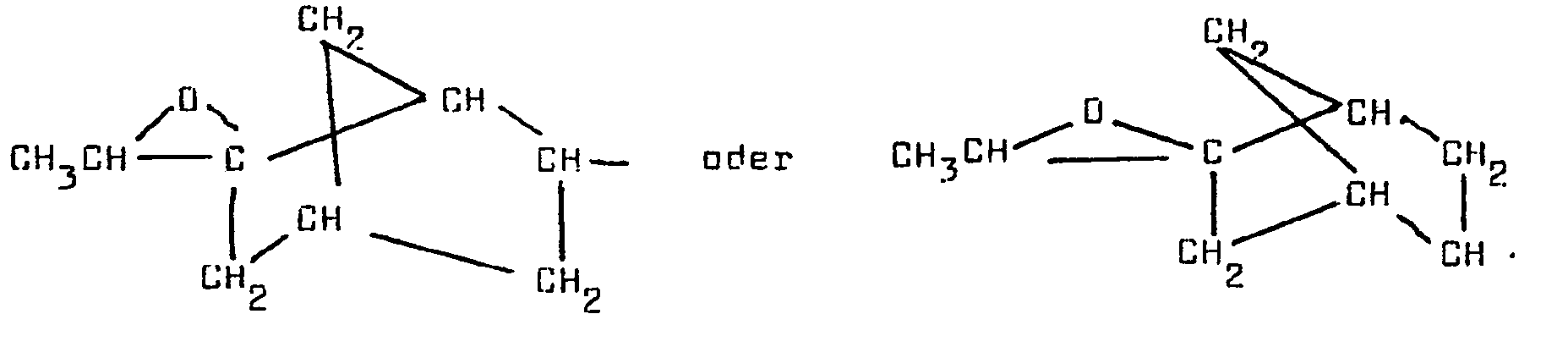
Priority Applications (1)
| Application Number | Priority Date | Filing Date | Title |
|---|---|---|---|
| AT85112806T ATE60056T1 (de) | 1984-10-09 | 1985-10-09 | Von terpenen abgeleitete funktionelle silane. |
Applications Claiming Priority (2)
| Application Number | Priority Date | Filing Date | Title |
|---|---|---|---|
| US65855584A | 1984-10-09 | 1984-10-09 | |
| US658555 | 1984-10-09 |
Publications (3)
| Publication Number | Publication Date |
|---|---|
| EP0179355A2 EP0179355A2 (de) | 1986-04-30 |
| EP0179355A3 EP0179355A3 (en) | 1986-12-30 |
| EP0179355B1 true EP0179355B1 (de) | 1991-01-16 |
Family
ID=24641737
Family Applications (1)
| Application Number | Title | Priority Date | Filing Date |
|---|---|---|---|
| EP85112806A Expired - Lifetime EP0179355B1 (de) | 1984-10-09 | 1985-10-09 | Von Terpenen abgeleitete funktionelle Silane |
Country Status (5)
| Country | Link |
|---|---|
| EP (1) | EP0179355B1 (de) |
| JP (1) | JPS61106585A (de) |
| AT (1) | ATE60056T1 (de) |
| CA (1) | CA1314901C (de) |
| DE (1) | DE3581360D1 (de) |
Cited By (1)
| Publication number | Priority date | Publication date | Assignee | Title |
|---|---|---|---|---|
| TWI654217B (zh) | 2016-03-10 | 2019-03-21 | Shin-Etsu Chemical Co., Ltd. | 有機矽化合物及其製造方法 |
Families Citing this family (3)
| Publication number | Priority date | Publication date | Assignee | Title |
|---|---|---|---|---|
| US4738892A (en) * | 1985-09-27 | 1988-04-19 | Pcr, Inc. | Silica filler for epoxy encapsulants and epoxy encapsulants containing same |
| DE4128894A1 (de) * | 1991-08-30 | 1993-03-04 | Wacker Chemie Gmbh | Verfahren zur herstellung von epoxygruppen aufweisenden organosiliciumverbindungen |
| JP6775418B2 (ja) * | 2013-03-14 | 2020-10-28 | モーメンティブ・パフォーマンス・マテリアルズ・インク | 高屈折率シロキサン |
Family Cites Families (3)
| Publication number | Priority date | Publication date | Assignee | Title |
|---|---|---|---|---|
| GB834326A (en) * | 1956-10-29 | 1960-05-04 | Midland Silicones Ltd | Organosilicon compounds |
| US3120546A (en) * | 1961-01-30 | 1964-02-04 | Dow Corning | Epoxy acyloxy silanes |
| US3691206A (en) * | 1965-09-29 | 1972-09-12 | Hal J Northrup | Primer for cured silicone release agents |
-
1985
- 1985-10-09 DE DE8585112806T patent/DE3581360D1/de not_active Expired - Lifetime
- 1985-10-09 JP JP60223888A patent/JPS61106585A/ja active Pending
- 1985-10-09 CA CA000492554A patent/CA1314901C/en not_active Expired - Fee Related
- 1985-10-09 EP EP85112806A patent/EP0179355B1/de not_active Expired - Lifetime
- 1985-10-09 AT AT85112806T patent/ATE60056T1/de not_active IP Right Cessation
Non-Patent Citations (1)
| Title |
|---|
| JACS, 81, 2632-5, (1959) * |
Cited By (1)
| Publication number | Priority date | Publication date | Assignee | Title |
|---|---|---|---|---|
| TWI654217B (zh) | 2016-03-10 | 2019-03-21 | Shin-Etsu Chemical Co., Ltd. | 有機矽化合物及其製造方法 |
Also Published As
| Publication number | Publication date |
|---|---|
| ATE60056T1 (de) | 1991-02-15 |
| CA1314901C (en) | 1993-03-23 |
| DE3581360D1 (de) | 1991-02-21 |
| EP0179355A3 (en) | 1986-12-30 |
| EP0179355A2 (de) | 1986-04-30 |
| JPS61106585A (ja) | 1986-05-24 |
Similar Documents
| Publication | Publication Date | Title |
|---|---|---|
| KR900002530B1 (ko) | 반응성 안정화 화합물의 제조방법 | |
| US3842111A (en) | Sulfur containing organosilicon compounds | |
| KR100651094B1 (ko) | 고 수율 히드로실화 방법 | |
| Plueddemann et al. | Epoxyorganosiloxanes | |
| US6166238A (en) | High purity organofunctional alkyldialkoxysilanes | |
| EP0179355B1 (de) | Von Terpenen abgeleitete funktionelle Silane | |
| CA1151195A (en) | Mercapto-organo-methyl-vinyl-disiloxanes | |
| US3576027A (en) | Hydrosilation of olefins | |
| US5336786A (en) | Organic silicon compounds | |
| US5856543A (en) | Silanes comprising branched alkyl chains | |
| EP0586241B1 (de) | Alkoxysilane mit Azasilacycloalkylgruppe und Tetrametyldisiloxane mit Azasilacycloalkylgruppe | |
| US4213908A (en) | Siliceous dioxolane derivatives and their application to the manufacture of organosilane esters containing epoxy groups | |
| US3529007A (en) | New organosilicon compounds,their preparation and their use | |
| US3576023A (en) | Method for preparation of si-h functional organodisiloxanes | |
| EP0485985A1 (de) | Organosiliciumverbindungen und Verfahren zu deren Herstellung | |
| US5342984A (en) | Triorganomonohalogenosilane | |
| JP3279148B2 (ja) | 2−アリロキシメチル−1,4−ジオキサンの製造方法 | |
| JPH06157554A (ja) | トリオルガノクロロシランの製造方法 | |
| US6713644B1 (en) | Hydrosilation with platinum free neat copper containing catalyst | |
| EP0195997B1 (de) | Chlorosilan-Verbindungen | |
| Tamao et al. | Organofluorosilicates in organic synthesis: XV. Reaction of exo-and endo-5-norbornen-2-ylsilyl derivatives with n-bromosuccinimide. Difference in reactivity between hexacoordinate and tetracoordinate silicon compounds | |
| US4740607A (en) | Removal of olefins from organohalosilanes | |
| JPH06505998A (ja) | エポキシ基を有する有機珪素化合物の製造方法 | |
| EP1072603B1 (de) | Hydrosilylierung von 4-Vinyl-1-Cyclohexen | |
| Hudrik et al. | o, 8-EPOXYSILANES |
Legal Events
| Date | Code | Title | Description |
|---|---|---|---|
| PUAI | Public reference made under article 153(3) epc to a published international application that has entered the european phase |
Free format text: ORIGINAL CODE: 0009012 |
|
| AK | Designated contracting states |
Kind code of ref document: A2 Designated state(s): AT BE CH DE FR GB IT LI LU NL SE |
|
| PUAL | Search report despatched |
Free format text: ORIGINAL CODE: 0009013 |
|
| AK | Designated contracting states |
Kind code of ref document: A3 Designated state(s): AT BE CH DE FR GB IT LI LU NL SE |
|
| 17P | Request for examination filed |
Effective date: 19870529 |
|
| RAP1 | Party data changed (applicant data changed or rights of an application transferred) |
Owner name: PCR, INC. |
|
| 17Q | First examination report despatched |
Effective date: 19880907 |
|
| GRAA | (expected) grant |
Free format text: ORIGINAL CODE: 0009210 |
|
| AK | Designated contracting states |
Kind code of ref document: B1 Designated state(s): AT BE CH DE FR GB IT LI LU NL SE |
|
| PG25 | Lapsed in a contracting state [announced via postgrant information from national office to epo] |
Ref country code: SE Effective date: 19910116 Ref country code: LI Effective date: 19910116 Ref country code: CH Effective date: 19910116 Ref country code: AT Effective date: 19910116 |
|
| REF | Corresponds to: |
Ref document number: 60056 Country of ref document: AT Date of ref document: 19910215 Kind code of ref document: T |
|
| ITF | It: translation for a ep patent filed | ||
| RAP2 | Party data changed (patent owner data changed or rights of a patent transferred) |
Owner name: PCR GROUP, INC. |
|
| REF | Corresponds to: |
Ref document number: 3581360 Country of ref document: DE Date of ref document: 19910221 |
|
| REG | Reference to a national code |
Ref country code: CH Ref legal event code: PL |
|
| ET | Fr: translation filed | ||
| PGFP | Annual fee paid to national office [announced via postgrant information from national office to epo] |
Ref country code: BE Payment date: 19911024 Year of fee payment: 7 |
|
| PG25 | Lapsed in a contracting state [announced via postgrant information from national office to epo] |
Ref country code: LU Free format text: LAPSE BECAUSE OF NON-PAYMENT OF DUE FEES Effective date: 19911031 |
|
| PLBE | No opposition filed within time limit |
Free format text: ORIGINAL CODE: 0009261 |
|
| STAA | Information on the status of an ep patent application or granted ep patent |
Free format text: STATUS: NO OPPOSITION FILED WITHIN TIME LIMIT |
|
| BECN | Be: change of holder's name |
Effective date: 19910116 |
|
| 26N | No opposition filed | ||
| PG25 | Lapsed in a contracting state [announced via postgrant information from national office to epo] |
Ref country code: BE Effective date: 19921031 |
|
| BERE | Be: lapsed |
Owner name: PCR GROUP INC. Effective date: 19921031 |
|
| PGFP | Annual fee paid to national office [announced via postgrant information from national office to epo] |
Ref country code: GB Payment date: 19950913 Year of fee payment: 11 Ref country code: FR Payment date: 19950913 Year of fee payment: 11 |
|
| PGFP | Annual fee paid to national office [announced via postgrant information from national office to epo] |
Ref country code: DE Payment date: 19950919 Year of fee payment: 11 |
|
| PGFP | Annual fee paid to national office [announced via postgrant information from national office to epo] |
Ref country code: NL Payment date: 19950920 Year of fee payment: 11 |
|
| PG25 | Lapsed in a contracting state [announced via postgrant information from national office to epo] |
Ref country code: GB Effective date: 19961009 |
|
| PG25 | Lapsed in a contracting state [announced via postgrant information from national office to epo] |
Ref country code: NL Effective date: 19970501 |
|
| GBPC | Gb: european patent ceased through non-payment of renewal fee |
Effective date: 19961009 |
|
| PG25 | Lapsed in a contracting state [announced via postgrant information from national office to epo] |
Ref country code: FR Effective date: 19970630 |
|
| NLV4 | Nl: lapsed or anulled due to non-payment of the annual fee |
Effective date: 19970501 |
|
| PG25 | Lapsed in a contracting state [announced via postgrant information from national office to epo] |
Ref country code: DE Effective date: 19970701 |
|
| REG | Reference to a national code |
Ref country code: FR Ref legal event code: ST |