EP0179701A1 - Fernsehverfahren für Programme in mehreren Sprachen - Google Patents
Fernsehverfahren für Programme in mehreren Sprachen Download PDFInfo
- Publication number
- EP0179701A1 EP0179701A1 EP85401926A EP85401926A EP0179701A1 EP 0179701 A1 EP0179701 A1 EP 0179701A1 EP 85401926 A EP85401926 A EP 85401926A EP 85401926 A EP85401926 A EP 85401926A EP 0179701 A1 EP0179701 A1 EP 0179701A1
- Authority
- EP
- European Patent Office
- Prior art keywords
- data
- image
- speaker
- sound
- original
- Prior art date
- Legal status (The legal status is an assumption and is not a legal conclusion. Google has not performed a legal analysis and makes no representation as to the accuracy of the status listed.)
- Withdrawn
Links
- 238000000034 method Methods 0.000 title claims description 26
- 238000013519 translation Methods 0.000 claims abstract description 20
- 230000000007 visual effect Effects 0.000 claims description 18
- 230000005236 sound signal Effects 0.000 claims description 15
- 238000004458 analytical method Methods 0.000 claims description 12
- 230000000694 effects Effects 0.000 claims description 11
- 239000002131 composite material Substances 0.000 claims description 10
- 230000005540 biological transmission Effects 0.000 claims description 8
- 230000008569 process Effects 0.000 claims description 6
- 238000012731 temporal analysis Methods 0.000 claims description 4
- 238000012732 spatial analysis Methods 0.000 claims description 2
- 230000000873 masking effect Effects 0.000 claims 1
- 230000014616 translation Effects 0.000 description 14
- 125000001475 halogen functional group Chemical group 0.000 description 12
- 235000021183 entrée Nutrition 0.000 description 6
- 238000012545 processing Methods 0.000 description 6
- 210000000056 organ Anatomy 0.000 description 5
- 240000008042 Zea mays Species 0.000 description 4
- 238000012986 modification Methods 0.000 description 4
- 230000004048 modification Effects 0.000 description 4
- 238000010586 diagram Methods 0.000 description 3
- 241000839426 Chlamydia virus Chp1 Species 0.000 description 2
- 101150071546 Chp1 gene Proteins 0.000 description 2
- 230000009471 action Effects 0.000 description 2
- 238000013479 data entry Methods 0.000 description 2
- 238000001514 detection method Methods 0.000 description 2
- 230000004807 localization Effects 0.000 description 2
- 238000012163 sequencing technique Methods 0.000 description 2
- 230000007704 transition Effects 0.000 description 2
- 238000006677 Appel reaction Methods 0.000 description 1
- 101100536354 Drosophila melanogaster tant gene Proteins 0.000 description 1
- 241001080024 Telles Species 0.000 description 1
- 230000004075 alteration Effects 0.000 description 1
- 230000006399 behavior Effects 0.000 description 1
- 230000015572 biosynthetic process Effects 0.000 description 1
- 230000008859 change Effects 0.000 description 1
- 238000012512 characterization method Methods 0.000 description 1
- 238000004891 communication Methods 0.000 description 1
- 230000001934 delay Effects 0.000 description 1
- 238000012544 monitoring process Methods 0.000 description 1
- 238000003909 pattern recognition Methods 0.000 description 1
- 230000008447 perception Effects 0.000 description 1
- 230000033764 rhythmic process Effects 0.000 description 1
- 230000001360 synchronised effect Effects 0.000 description 1
- 230000016776 visual perception Effects 0.000 description 1
Images

Classifications
-
- H—ELECTRICITY
- H04—ELECTRIC COMMUNICATION TECHNIQUE
- H04N—PICTORIAL COMMUNICATION, e.g. TELEVISION
- H04N7/00—Television systems
- H04N7/08—Systems for the simultaneous or sequential transmission of more than one television signal, e.g. additional information signals, the signals occupying wholly or partially the same frequency band, e.g. by time division
Definitions
- the present invention relates to a television method for multilingual programs.
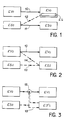
- the solid line links 10 and 11 symbolize the transmission without alteration of the visual and sound screens, and the dashed link 12 the translation of the original sound screen ESo into a graphic screen of subtitling EG.
- a second known solution consists in creating one or more sound dubbing channels.
- the principle is recalled in FIG. 2.
- the original EVo visual screen is still reproduced without modification.
- a translated sound screen ESt is substituted for the original sound screen.
- This translated sound screen is produced under a double constraint: on the one hand, the dubbing message must obviously be the fairly faithful translation of the original message; on the other hand, the sound message must take into account, in particular in its duration, the image transmitted, since this duration must be substantially equal to the time during which the movement of the lips of the original speaker is perceptible.
- This double constraint is shown diagrammatically by the arrows in dashes 13 and 14.
- the invention aims to solve this difficult problem. For that, she recommends to go about it in the following way. Instead of reproducing, on the television receiver, the original visual screen, a visual screen is produced which will be called “transcribed” and which results from a modification of the original image, this modification being determined born by the translated sound screen. As for the latter, it is obtained according to the invention, not under the strong phonetic-visual constraint outlined above, but under the main constraint of translation fidelity.
- the modification of the original image is carried out in the zones where the phonating organs of the speakers are in perceptible movement.
- These particular areas of the image are the object of a treatment intended to reveal a sign which will be called "phono-visual" and which is animated by a synchronized movement no longer on the original voices of the speakers as in the prior art, but on the voices of the corresponding speakers-translators.
- the veil in question we take the average value of the luminance of the image inside a phonator domain, we store this average value, and, on a subsequent image, we perform a fade between the stored average value and the subsequent image in question, the fade increasing from the periphery to the center of the domain.
- the chrominance signals of the image are acted upon.
- the viewer can adjust as he pleases the magnitude of the audio-visual signs appearing on his receiver.
- the first phase of the method of the invention consists in forming the data capable of guiding the receiver in the formation of phonovisual signs.
- Dlo are the data associated with the original image (lo)
- DSo the data associated with the original sound channel (So)
- DSj the data associated with a sound channel of translation of rank j (Sj).
- FIG. 4 illustrates an example of parameters used for the localization of two phonator domains in an image which comprises two speakers. These domains have as centers the points of coordinates X1Y1 and X2Y2 and dimensions G1 and G2. By “dimensions” is meant either a diameter, or the side of a square, or any other quantity related to the extent of the domain which is at the origin of the sound.
- Pol state variable
- Po2 indicates, according to its binary value, whether the original speaker considered speaks or is silent.
- This variable Po can be obtained either by automatic detection on the corresponding audio channel, or by a listening operator.
- This variable Bh can be easily obtained by a detection device physically linked to the speaker-translator.
- the viewer has a control unit 54 making it possible to select a language (either the original language Lo, or a language j taken from n foreign languages L1, L2, ).
- a language selection signal SL is emitted by this box.
- the viewer also has a second control means 55, which allows him to adjust the extent of the audio-visual signs appearing on the transcribed image which he observes.
- the corresponding control signal is denoted Dp.
- a circuit 50 which is formed, as will be seen better in the following figures, of a video processor 60, an audio processor 70 and a selector 80.
- This circuit 50 delivers a video signal Ip and an audio signal Sp, which are applied to a cathode ray tube and a loudspeaker 56 and respectively define the image and the sound presented to the viewer.
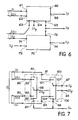
- FIG. 6 shows, in more detail, the inputs-outputs of the processors 60 and 70.
- the video processor 60 has five inputs 61, 62, 63, 64, 65 which respectively receive the signals lo, Dlo, DSo, DSj and Dp, and an output 66 which delivers the image signal presented Ip.
- the audio processor 70 has three inputs 71, 72, 73 which receive the signals So, Sj and Dp and an output 74 which delivers the presented sound signal Sp.
- FIG. 7 shows the selector 80 which has six inputs 81, 82, 83, 84, 85 and 86 which respectively receive the signals S1, DS1, DS2, S2, and SL and two outputs 87 and 88 which respectively deliver the sound signal Sj relating to the selected language j and the associated data DSj.
- This selector comprises a first multiplexer 90 with as many signal inputs 92-93 as there are languages available (2 in the illustrated case), these inputs being connected to inputs 82 and 83 receiving the data of the various languages; this multiplexer also has a control input 95 connected to the input 85 from which it receives the selection signal SL; it finally has an output 98 connected to the output 88, where the selected data DSj appear.
- the selector further comprises, in the same way, a multiplexer 100 with two inputs 101 and 104 connected to the inputs 81 and 84 and receiving from them the sound signals of the various languages S1, S2 (2 in this case); the multiplexer further comprises a control input 106 connected to the input 86, from which it receives the language selection signal; it finally has an output 1 07 connected to the outlet 87 where the sound appears selected signal Sj.
- the user who follows a television program in a language which is not the language of origin selects this language of listening, which has the effect of making this veil appear.
- the user can adjust certain characteristics.
- Synchronization means allow the transmission to control the value of the time interval between the change to 1 of the variables P01 and Pt1, and this by introducing a fixed delay on the image and the sound track d origin and variable delays on the translation routes.
- the second visual sign is placed around the same point with coordinates X1Y1, and also depends on G1 and A1. In the description which follows, it is assumed that this second sign is generated in a chrominance plane.
- this second sign can evolve, temporally and spatially, to the rhythm of Bh1, thereby recreating a psychovisual effect consistent with the voice heard.
- variable Dp has a means of adjusting, according to his taste and the circumstances, the magnitude of the visual signs presented, such as their size, their luminance or their chrominance, etc. .
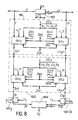
- the video processor is presented as illustrated in FIG. 8. It firstly comprises a video splitter 100, which receives the original video signal la and which delivers, on three outputs, the luminance signal Y, the chrominance signal Ch (in fact made up of two components) and the line and frame synchronization signals L and T.
- the processor then includes a plurality of processing channels, each assigned to a speaker.
- the illustrated case includes two such channels 110 and 120, but this is obviously only an example. As these two channels are identical, we will only describe the first, whose references are assigned an index 1, the same components are used for the second, but with the index 2.
- the processor further comprises a first switch 130Y, which receives the original luminance signal Y, and the modified luminance signals Yp1, Yp2 and which delivers one or the other of these signals, depending on the value of the data item Tt which determines whether the processing should take place or not.
- the processor includes a second switch 130Ch, identical to the previous one, but assigned to the chrominance signals (original or modified).
- the processor comprises a mixer 140 with two inputs receiving Yp and Chp and an output delivering the video signal Ip to be presented to the cathode-ray tube.
Landscapes
- Engineering & Computer Science (AREA)
- Multimedia (AREA)
- Signal Processing (AREA)
- Machine Translation (AREA)
- Television Systems (AREA)
- Two-Way Televisions, Distribution Of Moving Picture Or The Like (AREA)
Applications Claiming Priority (2)
| Application Number | Priority Date | Filing Date | Title |
|---|---|---|---|
| FR8415124A FR2571196B1 (fr) | 1984-10-02 | 1984-10-02 | Procede de television pour programmes multilingues |
| FR8415124 | 1984-10-02 |
Publications (1)
| Publication Number | Publication Date |
|---|---|
| EP0179701A1 true EP0179701A1 (de) | 1986-04-30 |
Family
ID=9308274
Family Applications (1)
| Application Number | Title | Priority Date | Filing Date |
|---|---|---|---|
| EP85401926A Withdrawn EP0179701A1 (de) | 1984-10-02 | 1985-10-02 | Fernsehverfahren für Programme in mehreren Sprachen |
Country Status (2)
| Country | Link |
|---|---|
| EP (1) | EP0179701A1 (de) |
| FR (1) | FR2571196B1 (de) |
Cited By (11)
| Publication number | Priority date | Publication date | Assignee | Title |
|---|---|---|---|---|
| GB2231246A (en) * | 1989-03-08 | 1990-11-07 | Kokusai Denshin Denwa Co Ltd | Converting text input into moving-face picture |
| GB2250405A (en) * | 1990-09-11 | 1992-06-03 | British Telecomm | Speech analysis and image synthesis |
| EP0674315A1 (de) * | 1994-03-18 | 1995-09-27 | AT&T Corp. | Audio-visuelles Überspielsystem und -verfahren |
| WO1997036297A1 (en) * | 1996-03-25 | 1997-10-02 | Interval Research Corporation | Automated synchronization of video image sequences to new soundtracks |
| RU2107407C1 (ru) * | 1996-08-06 | 1998-03-20 | Петропавловский Алексей Георгиевич | Способ многоязыкового вещания телепрограммы |
| EP0972285A4 (de) * | 1995-10-08 | 2002-04-03 | Face Imaging Ltd | Verfahren zum automatischen computerunterstützten audiovisuellen kopieren von filmen |
| US7109993B2 (en) | 1995-10-08 | 2006-09-19 | Yissum Research Development Company Of The Hebrew University Of Jerusalem | Method and system for the automatic computerized audio visual dubbing of movies |
| US7480446B2 (en) | 1996-12-05 | 2009-01-20 | Vulcan Patents Llc | Variable rate video playback with synchronized audio |
| US7565681B2 (en) | 1999-10-08 | 2009-07-21 | Vulcan Patents Llc | System and method for the broadcast dissemination of time-ordered data |
| US9317560B2 (en) | 2000-01-28 | 2016-04-19 | Interval Licensing Llc | Alerting users to items of current interest |
| CN112837674A (zh) * | 2019-11-22 | 2021-05-25 | 阿里巴巴集团控股有限公司 | 语音识别方法、装置及相关系统和设备 |
Citations (1)
| Publication number | Priority date | Publication date | Assignee | Title |
|---|---|---|---|---|
| US4405944A (en) * | 1980-10-14 | 1983-09-20 | Zenith Radio Corporation | TV Sound transmission system |
-
1984
- 1984-10-02 FR FR8415124A patent/FR2571196B1/fr not_active Expired
-
1985
- 1985-10-02 EP EP85401926A patent/EP0179701A1/de not_active Withdrawn
Patent Citations (1)
| Publication number | Priority date | Publication date | Assignee | Title |
|---|---|---|---|---|
| US4405944A (en) * | 1980-10-14 | 1983-09-20 | Zenith Radio Corporation | TV Sound transmission system |
Non-Patent Citations (1)
| Title |
|---|
| RUNDFUNKTECHNISCHE MITTEILUNGEN, vol. 20, no. 4, août 1976, pages 138-146, Hamburg, DE; F. PILZ: "TEchniken zur Übertragung von Untertiteln in Fernsehprogrammen, insbesondere zur wahlweisen Verwendung beim Zuschauer" * |
Cited By (16)
| Publication number | Priority date | Publication date | Assignee | Title |
|---|---|---|---|---|
| GB2231246B (en) * | 1989-03-08 | 1993-06-30 | Kokusai Denshin Denwa Co Ltd | Picture synthesizing method and apparatus |
| GB2231246A (en) * | 1989-03-08 | 1990-11-07 | Kokusai Denshin Denwa Co Ltd | Converting text input into moving-face picture |
| GB2250405A (en) * | 1990-09-11 | 1992-06-03 | British Telecomm | Speech analysis and image synthesis |
| EP0674315A1 (de) * | 1994-03-18 | 1995-09-27 | AT&T Corp. | Audio-visuelles Überspielsystem und -verfahren |
| EP0972285A4 (de) * | 1995-10-08 | 2002-04-03 | Face Imaging Ltd | Verfahren zum automatischen computerunterstützten audiovisuellen kopieren von filmen |
| US7109993B2 (en) | 1995-10-08 | 2006-09-19 | Yissum Research Development Company Of The Hebrew University Of Jerusalem | Method and system for the automatic computerized audio visual dubbing of movies |
| US6492990B1 (en) | 1995-10-08 | 2002-12-10 | Yissum Research Development Company Of The Hebrew University Of Jerusalem | Method for the automatic computerized audio visual dubbing of movies |
| WO1997036297A1 (en) * | 1996-03-25 | 1997-10-02 | Interval Research Corporation | Automated synchronization of video image sequences to new soundtracks |
| AU716673B2 (en) * | 1996-03-25 | 2000-03-02 | Interval Research Corporation | Automated synchronization of video image sequences to new soundtracks |
| US5880788A (en) * | 1996-03-25 | 1999-03-09 | Interval Research Corporation | Automated synchronization of video image sequences to new soundtracks |
| RU2107407C1 (ru) * | 1996-08-06 | 1998-03-20 | Петропавловский Алексей Георгиевич | Способ многоязыкового вещания телепрограммы |
| US7480446B2 (en) | 1996-12-05 | 2009-01-20 | Vulcan Patents Llc | Variable rate video playback with synchronized audio |
| US7565681B2 (en) | 1999-10-08 | 2009-07-21 | Vulcan Patents Llc | System and method for the broadcast dissemination of time-ordered data |
| US9317560B2 (en) | 2000-01-28 | 2016-04-19 | Interval Licensing Llc | Alerting users to items of current interest |
| CN112837674A (zh) * | 2019-11-22 | 2021-05-25 | 阿里巴巴集团控股有限公司 | 语音识别方法、装置及相关系统和设备 |
| CN112837674B (zh) * | 2019-11-22 | 2024-06-11 | 阿里巴巴集团控股有限公司 | 语音识别方法、装置及相关系统和设备 |
Also Published As
| Publication number | Publication date |
|---|---|
| FR2571196B1 (fr) | 1987-01-23 |
| FR2571196A1 (fr) | 1986-04-04 |
Similar Documents
| Publication | Publication Date | Title |
|---|---|---|
| US7467088B2 (en) | Closed caption control apparatus and method therefor | |
| US8010366B1 (en) | Personal hearing suite | |
| JPH01144793A (ja) | 互換性のある視聴覚テレビジョン表示に同期される対話式完全動画を提供する方法 | |
| JPH01138870A (ja) | 対話式テレビジョンシステム | |
| WO2019063751A1 (en) | SUBTITLE PROVIDING SYSTEM | |
| EP0043167A1 (de) | Verfahren zum Übertragen von Informationen über Fernsehnetzwerke | |
| KR20220077132A (ko) | 시청각 콘텐츠용 바이노럴 몰입형 오디오 생성 방법 및 시스템 | |
| CN112437337A (zh) | 一种直播实时字幕的实现方法、系统及设备 | |
| Vitkovitch et al. | Effect of video frame rate on subjects’ ability to shadow one of two competing verbal passages | |
| Huwiler | A Narratology of Audio Art: Telling Stories by Sound¹ | |
| US12125370B2 (en) | Method and system for synchronizing a viewer-effect signal of a media content with a media signal of the media content | |
| FR2571196A1 (fr) | Procede de television pour programmes multilingues | |
| WO2013057438A1 (fr) | Procede d'envoi et de restitution sonore d'informations audio | |
| CN114845160A (zh) | 一种语音驱动视频处理方法、相关装置及存储介质 | |
| CN116504265A (zh) | 用于控制音频的系统和方法 | |
| FR2841724A1 (fr) | Systeme et procede de synchronisation pour programmes audiovisuels, dispositifs et procedes associes | |
| FR2664494A1 (fr) | Methode et installation de reglage et d'adaptation de protheses auditives. | |
| EP3633587B1 (de) | Vorrichtung und zugehörige methoden zu darstellung von kommentaren | |
| CN119128184A (zh) | 数字人播报方法、装置、电子设备及存储介质 | |
| JP2004266746A (ja) | 画像音声通信システム | |
| US6744487B2 (en) | Producing a soundtrack for moving picture sequences | |
| EP4203486A1 (de) | Set-top-box zur wiedergabe einer zusätzlichen audiospur | |
| Martinez et al. | Dialogue Understandability: Why are we streaming movies with subtitles? | |
| EP0907934A1 (de) | Vorrichtung und verfahren zum übermitteln von animierten und lautbildern | |
| Nakazono | Frame rate of motion picture and its influence on speech perception |
Legal Events
| Date | Code | Title | Description |
|---|---|---|---|
| PUAI | Public reference made under article 153(3) epc to a published international application that has entered the european phase |
Free format text: ORIGINAL CODE: 0009012 |
|
| AK | Designated contracting states |
Kind code of ref document: A1 Designated state(s): AT BE CH DE GB IT LI LU NL SE |
|
| 17P | Request for examination filed |
Effective date: 19861003 |
|
| STAA | Information on the status of an ep patent application or granted ep patent |
Free format text: STATUS: THE APPLICATION IS DEEMED TO BE WITHDRAWN |
|
| 18D | Application deemed to be withdrawn |
Effective date: 19880503 |