EP0179704B1 - Protection des métaux contre la perméabilité de l'hydrogène - Google Patents
Protection des métaux contre la perméabilité de l'hydrogène Download PDFInfo
- Publication number
- EP0179704B1 EP0179704B1 EP85401935A EP85401935A EP0179704B1 EP 0179704 B1 EP0179704 B1 EP 0179704B1 EP 85401935 A EP85401935 A EP 85401935A EP 85401935 A EP85401935 A EP 85401935A EP 0179704 B1 EP0179704 B1 EP 0179704B1
- Authority
- EP
- European Patent Office
- Prior art keywords
- layer
- permeation
- hydrogen
- metal
- vanadium
- Prior art date
- Legal status (The legal status is an assumption and is not a legal conclusion. Google has not performed a legal analysis and makes no representation as to the accuracy of the status listed.)
- Expired
Links
- 229910052739 hydrogen Inorganic materials 0.000 title claims description 49
- 239000001257 hydrogen Substances 0.000 title claims description 49
- UFHFLCQGNIYNRP-UHFFFAOYSA-N Hydrogen Chemical compound [H][H] UFHFLCQGNIYNRP-UHFFFAOYSA-N 0.000 title claims description 47
- 229910052751 metal Inorganic materials 0.000 title claims description 23
- 239000002184 metal Substances 0.000 title claims description 22
- 150000002739 metals Chemical class 0.000 title description 7
- 239000010410 layer Substances 0.000 claims description 37
- 229910000756 V alloy Inorganic materials 0.000 claims description 20
- 229910052804 chromium Inorganic materials 0.000 claims description 17
- LEONUFNNVUYDNQ-UHFFFAOYSA-N vanadium atom Chemical compound [V] LEONUFNNVUYDNQ-UHFFFAOYSA-N 0.000 claims description 17
- 238000000034 method Methods 0.000 claims description 16
- 239000000758 substrate Substances 0.000 claims description 16
- 229910052720 vanadium Inorganic materials 0.000 claims description 15
- 229910052710 silicon Inorganic materials 0.000 claims description 13
- 230000004927 fusion Effects 0.000 claims description 12
- 229910052782 aluminium Inorganic materials 0.000 claims description 8
- VNNRSPGTAMTISX-UHFFFAOYSA-N chromium nickel Chemical compound [Cr].[Ni] VNNRSPGTAMTISX-UHFFFAOYSA-N 0.000 claims description 7
- 230000001590 oxidative effect Effects 0.000 claims description 6
- 229910001120 nichrome Inorganic materials 0.000 claims description 5
- 229910002065 alloy metal Inorganic materials 0.000 claims description 2
- 238000010438 heat treatment Methods 0.000 claims description 2
- 239000002344 surface layer Substances 0.000 claims description 2
- 229910044991 metal oxide Inorganic materials 0.000 claims 2
- 150000004706 metal oxides Chemical class 0.000 claims 2
- 230000007423 decrease Effects 0.000 claims 1
- 239000011651 chromium Substances 0.000 description 18
- 230000004888 barrier function Effects 0.000 description 12
- 229910045601 alloy Inorganic materials 0.000 description 10
- 239000000956 alloy Substances 0.000 description 10
- VYZAMTAEIAYCRO-UHFFFAOYSA-N Chromium Chemical group [Cr] VYZAMTAEIAYCRO-UHFFFAOYSA-N 0.000 description 9
- 238000000576 coating method Methods 0.000 description 9
- 239000011248 coating agent Substances 0.000 description 8
- 239000002826 coolant Substances 0.000 description 8
- 238000009792 diffusion process Methods 0.000 description 8
- 239000000463 material Substances 0.000 description 8
- 229910018487 Ni—Cr Inorganic materials 0.000 description 7
- 230000003647 oxidation Effects 0.000 description 7
- 238000007254 oxidation reaction Methods 0.000 description 7
- 238000000151 deposition Methods 0.000 description 6
- XUIMIQQOPSSXEZ-UHFFFAOYSA-N Silicon Chemical compound [Si] XUIMIQQOPSSXEZ-UHFFFAOYSA-N 0.000 description 5
- YZCKVEUIGOORGS-NJFSPNSNSA-N Tritium Chemical compound [3H] YZCKVEUIGOORGS-NJFSPNSNSA-N 0.000 description 5
- 239000010703 silicon Substances 0.000 description 5
- 229910052722 tritium Inorganic materials 0.000 description 5
- XEEYBQQBJWHFJM-UHFFFAOYSA-N Iron Chemical compound [Fe] XEEYBQQBJWHFJM-UHFFFAOYSA-N 0.000 description 4
- 229910000990 Ni alloy Inorganic materials 0.000 description 4
- PXHVJJICTQNCMI-UHFFFAOYSA-N Nickel Chemical compound [Ni] PXHVJJICTQNCMI-UHFFFAOYSA-N 0.000 description 4
- RTAQQCXQSZGOHL-UHFFFAOYSA-N Titanium Chemical compound [Ti] RTAQQCXQSZGOHL-UHFFFAOYSA-N 0.000 description 4
- XAGFODPZIPBFFR-UHFFFAOYSA-N aluminium Chemical compound [Al] XAGFODPZIPBFFR-UHFFFAOYSA-N 0.000 description 4
- 230000008021 deposition Effects 0.000 description 4
- 239000010955 niobium Substances 0.000 description 4
- GUCVJGMIXFAOAE-UHFFFAOYSA-N niobium atom Chemical compound [Nb] GUCVJGMIXFAOAE-UHFFFAOYSA-N 0.000 description 4
- GUVRBAGPIYLISA-UHFFFAOYSA-N tantalum atom Chemical compound [Ta] GUVRBAGPIYLISA-UHFFFAOYSA-N 0.000 description 4
- 239000010936 titanium Substances 0.000 description 4
- WFKWXMTUELFFGS-UHFFFAOYSA-N tungsten Chemical compound [W] WFKWXMTUELFFGS-UHFFFAOYSA-N 0.000 description 4
- 239000010937 tungsten Substances 0.000 description 4
- 229910000640 Fe alloy Inorganic materials 0.000 description 2
- ZOKXTWBITQBERF-UHFFFAOYSA-N Molybdenum Chemical compound [Mo] ZOKXTWBITQBERF-UHFFFAOYSA-N 0.000 description 2
- 229910001257 Nb alloy Inorganic materials 0.000 description 2
- 229910000831 Steel Inorganic materials 0.000 description 2
- 229910001362 Ta alloys Inorganic materials 0.000 description 2
- 229910001069 Ti alloy Inorganic materials 0.000 description 2
- 229910001080 W alloy Inorganic materials 0.000 description 2
- QCWXUUIWCKQGHC-UHFFFAOYSA-N Zirconium Chemical compound [Zr] QCWXUUIWCKQGHC-UHFFFAOYSA-N 0.000 description 2
- 229910001093 Zr alloy Inorganic materials 0.000 description 2
- 230000002238 attenuated effect Effects 0.000 description 2
- 230000007613 environmental effect Effects 0.000 description 2
- 230000001747 exhibiting effect Effects 0.000 description 2
- 229910052734 helium Inorganic materials 0.000 description 2
- 239000001307 helium Substances 0.000 description 2
- SWQJXJOGLNCZEY-UHFFFAOYSA-N helium atom Chemical compound [He] SWQJXJOGLNCZEY-UHFFFAOYSA-N 0.000 description 2
- 150000002431 hydrogen Chemical class 0.000 description 2
- 229910001338 liquidmetal Inorganic materials 0.000 description 2
- 239000000203 mixture Substances 0.000 description 2
- 229910052750 molybdenum Inorganic materials 0.000 description 2
- 239000011733 molybdenum Substances 0.000 description 2
- 229910052758 niobium Inorganic materials 0.000 description 2
- 230000002285 radioactive effect Effects 0.000 description 2
- 238000011084 recovery Methods 0.000 description 2
- 239000010959 steel Substances 0.000 description 2
- 238000010301 surface-oxidation reaction Methods 0.000 description 2
- 229910052715 tantalum Inorganic materials 0.000 description 2
- 229910052719 titanium Inorganic materials 0.000 description 2
- 229910052721 tungsten Inorganic materials 0.000 description 2
- XLYOFNOQVPJJNP-UHFFFAOYSA-N water Substances O XLYOFNOQVPJJNP-UHFFFAOYSA-N 0.000 description 2
- 229910001868 water Inorganic materials 0.000 description 2
- 229910052726 zirconium Inorganic materials 0.000 description 2
- ZOXJGFHDIHLPTG-UHFFFAOYSA-N Boron Chemical compound [B] ZOXJGFHDIHLPTG-UHFFFAOYSA-N 0.000 description 1
- 230000015572 biosynthetic process Effects 0.000 description 1
- 229910052796 boron Inorganic materials 0.000 description 1
- 238000007796 conventional method Methods 0.000 description 1
- 230000002939 deleterious effect Effects 0.000 description 1
- 230000000694 effects Effects 0.000 description 1
- 239000000446 fuel Substances 0.000 description 1
- 230000035876 healing Effects 0.000 description 1
- 239000012770 industrial material Substances 0.000 description 1
- 229910001092 metal group alloy Inorganic materials 0.000 description 1
- 239000003758 nuclear fuel Substances 0.000 description 1
- 230000035699 permeability Effects 0.000 description 1
- 150000003839 salts Chemical class 0.000 description 1
- 239000007787 solid Substances 0.000 description 1
- 238000004544 sputter deposition Methods 0.000 description 1
- 239000010935 stainless steel Substances 0.000 description 1
- 229910001220 stainless steel Inorganic materials 0.000 description 1
- 239000000126 substance Substances 0.000 description 1
Images

Classifications
-
- C—CHEMISTRY; METALLURGY
- C23—COATING METALLIC MATERIAL; COATING MATERIAL WITH METALLIC MATERIAL; CHEMICAL SURFACE TREATMENT; DIFFUSION TREATMENT OF METALLIC MATERIAL; COATING BY VACUUM EVAPORATION, BY SPUTTERING, BY ION IMPLANTATION OR BY CHEMICAL VAPOUR DEPOSITION, IN GENERAL; INHIBITING CORROSION OF METALLIC MATERIAL OR INCRUSTATION IN GENERAL
- C23C—COATING METALLIC MATERIAL; COATING MATERIAL WITH METALLIC MATERIAL; SURFACE TREATMENT OF METALLIC MATERIAL BY DIFFUSION INTO THE SURFACE, BY CHEMICAL CONVERSION OR SUBSTITUTION; COATING BY VACUUM EVAPORATION, BY SPUTTERING, BY ION IMPLANTATION OR BY CHEMICAL VAPOUR DEPOSITION, IN GENERAL
- C23C12/00—Solid state diffusion of at least one non-metal element other than silicon and at least one metal element or silicon into metallic material surfaces
-
- C—CHEMISTRY; METALLURGY
- C23—COATING METALLIC MATERIAL; COATING MATERIAL WITH METALLIC MATERIAL; CHEMICAL SURFACE TREATMENT; DIFFUSION TREATMENT OF METALLIC MATERIAL; COATING BY VACUUM EVAPORATION, BY SPUTTERING, BY ION IMPLANTATION OR BY CHEMICAL VAPOUR DEPOSITION, IN GENERAL; INHIBITING CORROSION OF METALLIC MATERIAL OR INCRUSTATION IN GENERAL
- C23C—COATING METALLIC MATERIAL; COATING MATERIAL WITH METALLIC MATERIAL; SURFACE TREATMENT OF METALLIC MATERIAL BY DIFFUSION INTO THE SURFACE, BY CHEMICAL CONVERSION OR SUBSTITUTION; COATING BY VACUUM EVAPORATION, BY SPUTTERING, BY ION IMPLANTATION OR BY CHEMICAL VAPOUR DEPOSITION, IN GENERAL
- C23C10/00—Solid state diffusion of only metal elements or silicon into metallic material surfaces
- C23C10/60—After-treatment
-
- G—PHYSICS
- G21—NUCLEAR PHYSICS; NUCLEAR ENGINEERING
- G21B—FUSION REACTORS
- G21B1/00—Thermonuclear fusion reactors
- G21B1/11—Details
- G21B1/13—First wall; Blanket; Divertor
-
- Y—GENERAL TAGGING OF NEW TECHNOLOGICAL DEVELOPMENTS; GENERAL TAGGING OF CROSS-SECTIONAL TECHNOLOGIES SPANNING OVER SEVERAL SECTIONS OF THE IPC; TECHNICAL SUBJECTS COVERED BY FORMER USPC CROSS-REFERENCE ART COLLECTIONS [XRACs] AND DIGESTS
- Y02—TECHNOLOGIES OR APPLICATIONS FOR MITIGATION OR ADAPTATION AGAINST CLIMATE CHANGE
- Y02E—REDUCTION OF GREENHOUSE GAS [GHG] EMISSIONS, RELATED TO ENERGY GENERATION, TRANSMISSION OR DISTRIBUTION
- Y02E30/00—Energy generation of nuclear origin
- Y02E30/10—Nuclear fusion reactors
-
- Y—GENERAL TAGGING OF NEW TECHNOLOGICAL DEVELOPMENTS; GENERAL TAGGING OF CROSS-SECTIONAL TECHNOLOGIES SPANNING OVER SEVERAL SECTIONS OF THE IPC; TECHNICAL SUBJECTS COVERED BY FORMER USPC CROSS-REFERENCE ART COLLECTIONS [XRACs] AND DIGESTS
- Y10—TECHNICAL SUBJECTS COVERED BY FORMER USPC
- Y10T—TECHNICAL SUBJECTS COVERED BY FORMER US CLASSIFICATION
- Y10T428/00—Stock material or miscellaneous articles
- Y10T428/12—All metal or with adjacent metals
- Y10T428/12458—All metal or with adjacent metals having composition, density, or hardness gradient
Definitions
- the present invention relates to fusion reactors and more particularly to a hydrogen isotope permeation barrier for fusion reactor components such as a first wall.
- Vanadium alloys are attractive materials for both the first wall and blanket of the fusion reactor; however, they are extremely permeable to hydrogen isotopes and would cause unacceptably high losses of tritium through the wall into the coolant stream.
- a method of preparing a structural member which is resistant to hydrogen permeation and to hydrogen embrittlement permeation and comprises a vanadium alloy substrate layer wherein the method comprises the steps:
- the loss of tritium through the wall of the reactor can be attenuated significantly by growing a Cr 2 0 3 , A1 2 0 2 , or Si0 2 or NiCr 2 0 4 layer on the vanadium alloy surface via surface oxidation. This is accomplished by depositing either a Si, Cr, AI or Ni-Cr coating onto the vanadium alloy surface and partially diffusing the Si, Cr or AI into the alloy substrate. These elements have a partial-to- total solubility in the vanadium, and will alloy directly with the surface to form a layer of graded composition which is enriched in Si, Al, Cr or NiCr.
- the surface is subsequently oxidized to create the Si0 2 , Cr 2 0 3 or NiCr 2 0 4 oxide permeation barrier.
- the thickness of the layer can be carefully controlled by the oxidizing conditions selected. Typically, a 0,5-2 11m oxide layer can be grown which will be quite effective in attenuating diffusion of hydrogen isotopes.
- the invention also relates to the use of structural member which is resistant to hydrogen permeation and to hydrogen embrittlement permeation and comprises a vanadium alloy substrate layer prepared as abovementioned.
- a second significant application of the invention is that this method can also be employed to protect structural metals which are subject to external hydrogen embrittlement.
- Alloys which could be protected from hydrogen embrittlement include: steels, zirconium, nickel alloys, niobium, tantalum, molybdenum, tungsten and titanium. Protection can be achieved by deposition of a layer vanadium as an intermediate layer followed by deposition of the chromium, silicon, Ni-Cr or aluminum layer followed by subsequent diffusion anneal and controlled oxidation of the surface.
- the present invention offers a method to attentuate hydrogen diffusion through fusion reactor components via controlled oxidation of prealloyed surfaces. Alloys of zirconium, vanadium, titanium, niobium, tantalum, tungsten, nickel and iron may be protected from hydrogen isotope permeation by using vanadium as an intermediate layer and either chromium, nickel- chromium, silicon or aluminum as the oxide forming component. Further, this method may also be used to prevent hydrogen embrittlement of metals from external hydrogen environments and is applicable to the majority of alloy systems exhibiting hydrogen embrittlement phenomena.
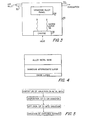
- Fig. 1 illustrates a diagrammatic cross section of a fusion reactor first wall 10 having a first surface 12 confronting the plasma-generating center of a reactor.
- a coolant duct 16 is connected to an opposite surface 14 of the first wall 10 and, in conventional fashion, coolant is conducted therethrough for retaining the fusion reactor at a safe operating temperature.
- coolants may include helium, water or liquid metals.
- compatibility of the barrier material must exist with the coolant.
- Paths 18 are intended to indicate typical paths for permeating hydrogen. Radioactive hydrogen isotopes, such as tritium are of particular concern to environmental safety which necessitates costly recovery schemes. Further, permeation of hydrogen isotopes results in a loss of nuclear fuel and the attendant expenses in fuel replacement.
- an oxide layer 20 is formed inwardly from surface 14 of the first wall.
- vanadium alloys are attractive materials for both the first wall and the blanket of a fusion reactor.
- vanadium alloys by themselves are extremely permeable to hydrogen, including radioactive hydrogen isotopes, and would cause unacceptably high losses of tritium through the wall into the coolant stream.
- this loss can be attenuated significantly by growing a Cr 2 0 3 , A1 2 0 3 , Si02 or NiCr 204 layer on the vanadium alloy surface via surface oxidation.
- first wall 10 may be comprised of a solid metal structure such as vanadium or the method may apply to the formation of a permeation barrier on other prealloyed surfaces. Alloys of zirconium, vanadium, titanium, niobium, tantalum, tungsten, nickel and iron may be protected from hydrogen isotope permeation by using vanadium as an intermediate layer and either chromium, nickel- chromium, silicon or aluminum as the oxide forming component. This utilization of vanadium as an intermediate layer is illustrated in Fig. 4.
- Fig. 3 illustrates a simplified view of a setup for treating vanadium alloyed first wall to reduce hydrogen isotope permeation therethrough.
- vessel 22 is evacuated through outlet 32.
- the vessel has vanadium alloy panel 24 suspended therein.
- a charge 26 is also included within the vessel 22 and is heated.
- the charge may be Si, Cr, Al or Ni-Cr. If, for example, chromium is the charge, its vapors 26 evaporate and diffuse into the substrate material of panel 24 forming a corresponding chromium diffused layer. It is to be emphasized that other conventional methods may be used for diffusing the chromium into the vanadium alloy substrate.
- the chromium might be deposited onto the surface of the substrate by conventional means (i.e. sputtering) and subsequently heated to effect diffusion of the chromium into the substrate metal. After the diffusion has been completed, air inlet 30 is opened thereby ending the evacuated condition of the vessel. Upon the application of controlled heat for a controlled period of time, the desired oxidation of the diffused layer will occur thereby successfully completing the treatment of the alloy panel 24. Typically a 0,5-2 11 m oxide layer can be grown which will be quite effective in attenuating diffusion of hydrogen isotopes.
- the utilization of vanadium as an intermediate layer, as shown in Fig. 4, extends the present invention to another application, namely, the treatment of metal alloys to prevent hydrogen embrittlement.
- Many industrial materials are subject to an environment in which hydrogen can play a deleterious role in the physical and mechanical properties of the material.
- the present method can also be employed to protect structural metals which are subject to external hydrogen embrittlement. Alloys which could be protected from hydrogen embrittlement include: steels, zirconium, nickel alloy, niobium, tantalum, molybdenum, tungsten and titanium. Protection can be achieved by the process indicated in Fig. 5.
- the first step involves the deposition of a layer of vanadium as an intermediate layer.
- the invention may also be used to prevent hydrogen embrittlement of metals from external hydrogen environments and is applicable to the majority of alloy systems exhibiting hydrogen embrittlement phenomena.
- Fig. 2 shows a family of plots demonstrating minimization of hydrogen permeation through various metals when the present invention is utilized.
- the performance of oxidized vanadium is far superior to that of unoxidized vanadium, a host of other metal elements, and even stainless steel.
Landscapes
- Chemical & Material Sciences (AREA)
- Engineering & Computer Science (AREA)
- Metallurgy (AREA)
- Chemical Kinetics & Catalysis (AREA)
- Materials Engineering (AREA)
- Mechanical Engineering (AREA)
- Physics & Mathematics (AREA)
- Organic Chemistry (AREA)
- General Engineering & Computer Science (AREA)
- High Energy & Nuclear Physics (AREA)
- Plasma & Fusion (AREA)
- Other Surface Treatments For Metallic Materials (AREA)
- Physical Vapour Deposition (AREA)
- Glass Compositions (AREA)
Claims (5)
Applications Claiming Priority (2)
| Application Number | Priority Date | Filing Date | Title |
|---|---|---|---|
| US662736 | 1984-10-19 | ||
| US06/662,736 US4555275A (en) | 1984-10-19 | 1984-10-19 | Hydrogen permeation protection for metals |
Publications (2)
| Publication Number | Publication Date |
|---|---|
| EP0179704A1 EP0179704A1 (fr) | 1986-04-30 |
| EP0179704B1 true EP0179704B1 (fr) | 1989-05-24 |
Family
ID=24658987
Family Applications (1)
| Application Number | Title | Priority Date | Filing Date |
|---|---|---|---|
| EP85401935A Expired EP0179704B1 (fr) | 1984-10-19 | 1985-10-03 | Protection des métaux contre la perméabilité de l'hydrogène |
Country Status (5)
| Country | Link |
|---|---|
| US (1) | US4555275A (fr) |
| EP (1) | EP0179704B1 (fr) |
| JP (1) | JPS6199667A (fr) |
| AU (1) | AU569163B2 (fr) |
| DE (1) | DE3570459D1 (fr) |
Families Citing this family (20)
| Publication number | Priority date | Publication date | Assignee | Title |
|---|---|---|---|---|
| DE3438339C1 (de) * | 1984-10-19 | 1986-01-30 | Nukem Gmbh, 6450 Hanau | Verfahren zur Herstellung von Konstruktionsteilen fuer gasfoermige Wasserstoffisotope enthaltende Medien |
| US4714632A (en) * | 1985-12-11 | 1987-12-22 | Air Products And Chemicals, Inc. | Method of producing silicon diffusion coatings on metal articles |
| DE3736075A1 (de) * | 1987-10-24 | 1989-05-03 | Schott Glaswerke | Elektrochromes schichtenpaket |
| US4869929A (en) * | 1987-11-10 | 1989-09-26 | Air Products And Chemicals, Inc. | Process for preparing sic protective films on metallic or metal impregnated substrates |
| JPH0814633B2 (ja) * | 1989-05-24 | 1996-02-14 | 株式会社日立製作所 | 核融合炉 |
| US5049418A (en) * | 1991-02-19 | 1991-09-17 | Grumman Aerospace Corporation | Barrier coatings for oxidation protection incorporating compatibility layer |
| JP3124140B2 (ja) * | 1992-12-28 | 2001-01-15 | 株式会社東芝 | 核融合炉の炉内機器 |
| US5608766A (en) * | 1993-10-29 | 1997-03-04 | General Electric Company | Co-deposition of palladium during oxide film growth in high-temperature water to mitigate stress corrosion cracking |
| US5774516A (en) * | 1993-10-29 | 1998-06-30 | General Electric Company | Modification of oxide film electrical conductivity to maintain low corrosion potential in high-temperature water |
| JP2844304B2 (ja) | 1994-02-15 | 1999-01-06 | 日本原子力研究所 | プラズマ対向材料 |
| US5769966A (en) * | 1994-05-11 | 1998-06-23 | The United States Of America As Represented By The Department Of Energy | Insulator coating for high temperature alloys method for producing insulator coating for high temperature alloys |
| CN1833046B (zh) * | 2003-06-10 | 2010-09-01 | 住友金属工业株式会社 | 氢气环境用钢材,结构机械构件及其制造方法 |
| US20060037660A1 (en) * | 2004-08-20 | 2006-02-23 | Kinnally Kevin J | Hydrogen conduit and process for producing same |
| DE102006020426A1 (de) * | 2006-04-25 | 2007-10-31 | Georg-August-Universität Göttingen Stiftung öffentlichen Rechts (ohne Bereich Humanmedizin) | Verfahren zum Nachweis von gasförmigen Verunreinigungen in Werkstoffen |
| WO2008073468A1 (fr) * | 2006-12-11 | 2008-06-19 | Mallinckrodt Inc. | Corps cibles et leurs utilisations dans la production de matériaux radio-isotopiques |
| US9472309B1 (en) | 2009-11-04 | 2016-10-18 | The Boeing Company | Machine-replaceable plasma-facing tile for fusion power reactor environments |
| WO2017187215A1 (fr) * | 2016-04-29 | 2017-11-02 | Arcelormittal | Feuille d'acier ordinaire enduite d'un revêtement protecteur |
| US10450668B2 (en) | 2017-04-11 | 2019-10-22 | Savannah River Nuclear Solutions, Llc | Development of a passivated stainless steel surface |
| JP2023026218A (ja) * | 2021-08-13 | 2023-02-24 | 東芝エネルギーシステムズ株式会社 | 電気化学スタック用金属部材及び電気化学スタック |
| CN113978056B (zh) * | 2021-10-15 | 2025-11-25 | 北京科技大学 | 一种钒合金 |
Family Cites Families (19)
| Publication number | Priority date | Publication date | Assignee | Title |
|---|---|---|---|---|
| US3127283A (en) * | 1964-03-31 | Microns for | ||
| US2809127A (en) * | 1948-11-19 | 1957-10-08 | Metal Gas Company Ltd | Surface treatment of metals |
| US3060557A (en) * | 1957-03-25 | 1962-10-30 | Armour Res Found | Metal cladding process and products resulting therefrom |
| US3031392A (en) * | 1957-10-02 | 1962-04-24 | Martin Marietta Corp | Nuclear fuel elements |
| US2886431A (en) * | 1957-11-08 | 1959-05-12 | Karl F Smith | Vanadium alloys |
| US2863818A (en) * | 1957-11-08 | 1958-12-09 | Karl F Smith | Jacketed reactor fuel element |
| GB1063372A (en) * | 1964-02-24 | 1967-03-30 | Atomic Energy Authority Uk | Improvements relating to stainless steels, particularly for nuclear reactor fuel elements |
| GB1081512A (en) * | 1965-01-22 | 1967-08-31 | Atomic Energy Authority Uk | Improvements in or relating to nuclear fuel elements |
| FR1453876A (fr) * | 1965-05-13 | 1966-07-22 | Ct Tech De L Ind Horlogere | Procédé de traitement de pièces à revêtements métalliques de grande dureté età forte protection contre la corrosion et pièces à revêtements métalliques obtenues selon ce procédé |
| GB1159823A (en) * | 1965-08-06 | 1969-07-30 | Montedison Spa | Protective Coatings |
| DE1608157B1 (de) * | 1968-03-14 | 1971-12-23 | Kernforschung Gmbh Ges Fuer | Korrosionsfester Verbundwerkstoff fuer Konstruktionsteile und Brennelementhuellen in Kernreaktoren |
| FR1584370A (fr) * | 1968-08-12 | 1969-12-19 | ||
| US3576621A (en) * | 1969-04-23 | 1971-04-27 | Us Interior | Vanadium-base alloy |
| US4157923A (en) * | 1976-09-13 | 1979-06-12 | Ford Motor Company | Surface alloying and heat treating processes |
| FR2388056A1 (fr) * | 1977-04-20 | 1978-11-17 | Louyot Comptoir Lyon Alemand | Procede pour revetir les appareils en platine ou en alliage a base de platine afin d'assurer leur protection lors de leur utilisation a haute temperature |
| GB2023453B (en) * | 1977-11-01 | 1982-11-17 | Atomic Energy Authority Uk | Coating of substrates |
| US4224382A (en) * | 1979-01-26 | 1980-09-23 | Union Carbide Corporation | Hard facing of metal substrates |
| SU870496A1 (ru) * | 1980-01-14 | 1981-10-07 | Белорусский Ордена Трудового Красного Знамени Политехнический Институт | Состав дл химико-термической обработки стальных изделий |
| AU4463285A (en) * | 1984-08-09 | 1986-02-13 | Grumman Aerospace Corporation | Cr, al diffusion into v alloy |
-
1984
- 1984-10-19 US US06/662,736 patent/US4555275A/en not_active Expired - Lifetime
-
1985
- 1985-07-05 AU AU44630/85A patent/AU569163B2/en not_active Ceased
- 1985-10-03 DE DE8585401935T patent/DE3570459D1/de not_active Expired
- 1985-10-03 EP EP85401935A patent/EP0179704B1/fr not_active Expired
- 1985-10-17 JP JP60230071A patent/JPS6199667A/ja active Pending
Also Published As
| Publication number | Publication date |
|---|---|
| AU4463085A (en) | 1986-04-24 |
| AU569163B2 (en) | 1988-01-21 |
| EP0179704A1 (fr) | 1986-04-30 |
| JPS6199667A (ja) | 1986-05-17 |
| US4555275A (en) | 1985-11-26 |
| DE3570459D1 (en) | 1989-06-29 |
Similar Documents
| Publication | Publication Date | Title |
|---|---|---|
| EP0179704B1 (fr) | Protection des métaux contre la perméabilité de l'hydrogène | |
| CN108914111B (zh) | 一种高结合强度氧化铝阻氢渗透耐腐蚀绝缘层及其制备方法和应用 | |
| Grünling et al. | The role of silicon in corrosion-resistant high temperature coatings | |
| EP0673539B1 (fr) | Revetement resistant a l'usure pour des elements d'unites a combustible et d'unites de commande, et procede d'application d'un revetement resistant a l'usure | |
| JP6385015B2 (ja) | 原子炉級ジルコニウム合金金属組織を伴う動的に付着された組成漸移型Zr−Al−CセラミックまたはTi−Al−Cセラミックまたは非晶質もしくは準非晶質ステンレス鋼 | |
| JP4405188B2 (ja) | 耐熱性物品及びその製作方法 | |
| KR102864950B1 (ko) | 경수형 원자로의 작동 중에 SiC 클래딩을 완화하기 위한 코팅 및 표면 수정 | |
| CN108770361A (zh) | 轻水反应堆燃料棒的包壳 | |
| KR20160005819A (ko) | 지르코늄 합금 피복관의 제조방법 및 이에 따라 제조되는 지르코늄 합금 피복관 | |
| US4055706A (en) | Processes for protecting refractory metallic components against corrosion | |
| US3073717A (en) | Coated carbon element for use in nuclear reactors and the process of making the element | |
| Tang et al. | Metallic and ceramic coatings for enhanced accident tolerant fuel cladding | |
| US3359176A (en) | Ceramic fuel element for a gas-cooled nuclear reactor including a metallic fuel container provided with an oxidation resistant coating | |
| WO2023015050A2 (fr) | Revêtements structurés à grain aléatoire appliqués à l'arc cathodique sur un gainage de combustible nucléaire en alliage de zirconium | |
| Yeom et al. | Recent Advances of Cold Spray Technologies in Nuclear Energy Applications | |
| US4602968A (en) | Manganese oxide coated nickel base construction parts for medium containing gaseous hydrogen isotope | |
| US5137683A (en) | Process for forming a chromium oxide insulating layer between the pellets and the cladding of a nuclear fuel element, and fuel element having such an insulating layer | |
| GB2252981A (en) | Diffusion barrier coating for titanium alloys involving alloying | |
| Chen et al. | Reusable molds for casting U-Zr alloys | |
| Gnesin et al. | On the Possibilities of Increasing the Diffusion Resistance of Protective Silicide Coatings on the Surface of E110 Alloy | |
| EP0176379A1 (fr) | Alliage de vanadium possédant une résistance à l'oxydation | |
| Swansiger et al. | Deuterium permeation through oxidized fecralloy | |
| JPS62150194A (ja) | 制御素子 | |
| Cornie | Characterization, shaping, and joining of SiC/superalloy sheet for exhaust system components | |
| Park et al. | Potential containment materials for liquid-lead and lead-bismuth eutectic spallation neutron source |
Legal Events
| Date | Code | Title | Description |
|---|---|---|---|
| PUAI | Public reference made under article 153(3) epc to a published international application that has entered the european phase |
Free format text: ORIGINAL CODE: 0009012 |
|
| AK | Designated contracting states |
Kind code of ref document: A1 Designated state(s): DE FR GB IT |
|
| 17P | Request for examination filed |
Effective date: 19860918 |
|
| 17Q | First examination report despatched |
Effective date: 19870917 |
|
| GRAA | (expected) grant |
Free format text: ORIGINAL CODE: 0009210 |
|
| AK | Designated contracting states |
Kind code of ref document: B1 Designated state(s): DE FR GB IT |
|
| PGFP | Annual fee paid to national office [announced via postgrant information from national office to epo] |
Ref country code: FR Payment date: 19890613 Year of fee payment: 5 |
|
| REF | Corresponds to: |
Ref document number: 3570459 Country of ref document: DE Date of ref document: 19890629 |
|
| ITF | It: translation for a ep patent filed | ||
| ET | Fr: translation filed | ||
| PGFP | Annual fee paid to national office [announced via postgrant information from national office to epo] |
Ref country code: GB Payment date: 19890930 Year of fee payment: 5 |
|
| ITTA | It: last paid annual fee | ||
| PGFP | Annual fee paid to national office [announced via postgrant information from national office to epo] |
Ref country code: DE Payment date: 19891220 Year of fee payment: 5 |
|
| PLBE | No opposition filed within time limit |
Free format text: ORIGINAL CODE: 0009261 |
|
| STAA | Information on the status of an ep patent application or granted ep patent |
Free format text: STATUS: NO OPPOSITION FILED WITHIN TIME LIMIT |
|
| 26N | No opposition filed | ||
| PG25 | Lapsed in a contracting state [announced via postgrant information from national office to epo] |
Ref country code: GB Effective date: 19901003 |
|
| GBPC | Gb: european patent ceased through non-payment of renewal fee | ||
| PG25 | Lapsed in a contracting state [announced via postgrant information from national office to epo] |
Ref country code: FR Effective date: 19910628 |
|
| PG25 | Lapsed in a contracting state [announced via postgrant information from national office to epo] |
Ref country code: DE Effective date: 19910702 |
|
| REG | Reference to a national code |
Ref country code: FR Ref legal event code: ST |