EP0180171B1 - Verfahren zum Sensibilisieren einer Zielzelle zum Lysen durch cytotoxische T-Lymphkörperchen - Google Patents
Verfahren zum Sensibilisieren einer Zielzelle zum Lysen durch cytotoxische T-Lymphkörperchen Download PDFInfo
- Publication number
- EP0180171B1 EP0180171B1 EP85113657A EP85113657A EP0180171B1 EP 0180171 B1 EP0180171 B1 EP 0180171B1 EP 85113657 A EP85113657 A EP 85113657A EP 85113657 A EP85113657 A EP 85113657A EP 0180171 B1 EP0180171 B1 EP 0180171B1
- Authority
- EP
- European Patent Office
- Prior art keywords
- receptor
- molecule
- antibody
- targeted cell
- process according
- Prior art date
- Legal status (The legal status is an assumption and is not a legal conclusion. Google has not performed a legal analysis and makes no representation as to the accuracy of the status listed.)
- Expired - Lifetime
Links
Images
Classifications
-
- C—CHEMISTRY; METALLURGY
- C07—ORGANIC CHEMISTRY
- C07K—PEPTIDES
- C07K19/00—Hybrid peptides, i.e. peptides covalently bound to nucleic acids, or non-covalently bound protein-protein complexes
-
- C—CHEMISTRY; METALLURGY
- C07—ORGANIC CHEMISTRY
- C07K—PEPTIDES
- C07K16/00—Immunoglobulins [IG], e.g. monoclonal or polyclonal antibodies
- C07K16/18—Immunoglobulins [IG], e.g. monoclonal or polyclonal antibodies against material from animals or humans
- C07K16/28—Immunoglobulins [IG], e.g. monoclonal or polyclonal antibodies against material from animals or humans against receptors, cell surface antigens or cell surface determinants
- C07K16/2803—Immunoglobulins [IG], e.g. monoclonal or polyclonal antibodies against material from animals or humans against receptors, cell surface antigens or cell surface determinants against the immunoglobulin superfamily
- C07K16/2809—Immunoglobulins [IG], e.g. monoclonal or polyclonal antibodies against material from animals or humans against receptors, cell surface antigens or cell surface determinants against the immunoglobulin superfamily against the T-cell receptor (TcR)-CD3 complex
-
- G—PHYSICS
- G01—MEASURING; TESTING
- G01N—INVESTIGATING OR ANALYSING MATERIALS BY DETERMINING THEIR CHEMICAL OR PHYSICAL PROPERTIES
- G01N33/00—Investigating or analysing materials by specific methods not covered by groups G01N1/00 - G01N31/00
- G01N33/48—Biological material, e.g. blood, urine; Haemocytometers
- G01N33/50—Chemical analysis of biological material, e.g. blood, urine; Testing involving biospecific ligand binding methods; Immunological testing
- G01N33/53—Immunoassay; Biospecific binding assay; Materials therefor
- G01N33/531—Production of immunochemical test materials
-
- G—PHYSICS
- G01—MEASURING; TESTING
- G01N—INVESTIGATING OR ANALYSING MATERIALS BY DETERMINING THEIR CHEMICAL OR PHYSICAL PROPERTIES
- G01N33/00—Investigating or analysing materials by specific methods not covered by groups G01N1/00 - G01N31/00
- G01N33/48—Biological material, e.g. blood, urine; Haemocytometers
- G01N33/50—Chemical analysis of biological material, e.g. blood, urine; Testing involving biospecific ligand binding methods; Immunological testing
- G01N33/53—Immunoassay; Biospecific binding assay; Materials therefor
- G01N33/566—Immunoassay; Biospecific binding assay; Materials therefor using specific carrier or receptor proteins as ligand binding reagents where possible specific carrier or receptor proteins are classified with their target compounds
-
- A—HUMAN NECESSITIES
- A61—MEDICAL OR VETERINARY SCIENCE; HYGIENE
- A61K—PREPARATIONS FOR MEDICAL, DENTAL OR TOILETRY PURPOSES
- A61K38/00—Medicinal preparations containing peptides
Definitions
- the present invention is a process for making any selected or targeted cell susceptible to lysis by cytotoxic T lymphocytes (CTLs).
- CTLs cytotoxic T lymphocytes
- the process consists of binding an antibody, directed against a region of the T lymphocyte receptor that is shared by most cytotoxic T lymphocytes or a receptor-associated molecule, to the surface of the cell to be lysed.
- the antibody called anti-receptor antibody, may be bound directly by means of a chemical crosslinking agent such as glutaraldehyde, or indirectly, by means of a "linker" molecule bound to the CTL receptor.
- Monoclonal anti-receptor antibodies of the desired specificity may be produced from hybridomas made from spleen cells isolated from immunized rats and fused with myeloma cells, wherein the rats are immunized using either
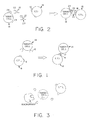
- lysis of a target cell 14 is produced by bridging the CTL to the target cell 14 by means of a "hybrid" molecule 20 made by joining an anti-receptor antibody 12 with another molecule 22 which selectively binds to a surface molecule 24 on the targeted cell 14.
- a second antibody directed against a target cell surface antigen such as a viral antigen or a tumor antigen, may be used as the molecule 22.
- a hormone such as melanocyte stimulating hormone (MSH), which is selectively bound by a receptor on the targeted cell may also be used.
- Rat mAbs against lymphocyte function-associated antigen type 1 (4-16-1) and class I-H-2 b surface antigens (3-18-8) were produced as previously described by Kranz et al, Proc. Nat. Acad. Sci. USA , 81:573-577 (1984).
- Antibody was coupled to Affi-GelTM 10 (Bio-Rad Laboratories) at about 5 mg per ml of packed gel for use in immunoprecipitation assays.
Landscapes
- Health & Medical Sciences (AREA)
- Life Sciences & Earth Sciences (AREA)
- Chemical & Material Sciences (AREA)
- Immunology (AREA)
- Molecular Biology (AREA)
- Engineering & Computer Science (AREA)
- Biochemistry (AREA)
- Urology & Nephrology (AREA)
- General Health & Medical Sciences (AREA)
- Hematology (AREA)
- Medicinal Chemistry (AREA)
- Biomedical Technology (AREA)
- Organic Chemistry (AREA)
- Biotechnology (AREA)
- Physics & Mathematics (AREA)
- Cell Biology (AREA)
- Genetics & Genomics (AREA)
- Microbiology (AREA)
- Biophysics (AREA)
- Food Science & Technology (AREA)
- Proteomics, Peptides & Aminoacids (AREA)
- Analytical Chemistry (AREA)
- General Physics & Mathematics (AREA)
- Pathology (AREA)
- Medicines Containing Antibodies Or Antigens For Use As Internal Diagnostic Agents (AREA)
- Medicines Containing Material From Animals Or Micro-Organisms (AREA)
- Peptides Or Proteins (AREA)
- Micro-Organisms Or Cultivation Processes Thereof (AREA)
- Preparation Of Compounds By Using Micro-Organisms (AREA)
Claims (26)
- Verfahren zur Herstellung einer für eine Lyse durch einen zytotoxischen T-Lymphozyten anfälligen Target-Zelle, umfassend die Bindung eines für die Rezeptordeterminanten des zytotoxischen T-Lymphozyten spezifischen Antikörpers an die Target-Zelle.
- Verfahren nach Anspruch 1, dadurch gekennzeichnet, daß sich die Rezeptordeterminanten auf der konstanten Domäne eines zytotoxischen T-Lymphozytenrezeptors befinden.
- Verfahren nach Anspruch 1, dadurch gekennzeichnet, daß die Determinanten auf einem mit dem zytotoxischen T-Lymphozytenrezeptor assoziierten Molekül liegen.
- Verfahren nach Anspruch 3, dadurch gekennzeichnet, daß es sich bei dem mit dem Rezeptor assoziierten Molekül um T3 handelt.
- Verfahren nach Anspruch 1, dadurch gekennzeichnet, daß der Antirezeptorantikörper über den nicht-antigenbindenden Bereich des Antikörpers an die Target-Zelle gebunden ist.
- Verfahren nach Anspruch 5, dadurch gekennzeichnet, daß der Antirezeptorantikörper mit Hilfe eines zweiten Moleküls mit spezifischer Bindung an die Oberfläche der Target-Zelle an die Target-Zelle gebunden ist.
- Verfahren nach Anspruch 6, dadurch gekennzeichnet, daß es sich bei dem den Antirezeptorantikörper an die Target-Zelle bindenden zweiten Molekül um einen für ein Antigen auf der Oberfläche der Target-Zelle spezifischen zweiten Antikörper handelt.
- Verfahren nach Anspruch 6, dadurch gekennzeichnet, daß es sich bei dem zweiten Molekül um ein Hormon mit spezifischer Bindung an einen Rezeptor auf der Oberfläche der Target-Zelle handelt.
- Verfahren nach Anspruch 6, dadurch gekennzeichnet, daß es sich bei dem zweiten Molekül um ein Kohlenhydrat mit spezifischer Bindung an einen Rezeptor auf der Oberfläche der Target-Zelle handelt.
- Verfahren nach Anspruch 1, bei dem zusätzlich der komplementfixierende Teil der Antikörper eliminiert ist.
- Verfahren nach Anspruch 7, bei dem zusätzlich der komplementfixierende Teil der Antikörper eliminiert ist.
- Verfahren nach Anspruch 1, dadurch gekennzeichnet, daß der Antikörper aus der Gruppe nicht-komplementfixierter Antikörper in Form von IgG₄, IgA und IgE ausgewählt ist.
- Verfahren nach Anspruch 7, dadurch gekennzeichnet, daß die Antikörper aus der Gruppe nicht-komplementfixierender Antikörper in Form von IgG₄, IgA und IgE ausgewählt sind.
- Verfahren nach Anspruch 6, dadurch gekennzeichnet, daß der Antirezeptorantikörper an das zweite Molekül unter Verwendung eines bifunktionellen Vernetzungsmittels gebunden ist.
- Verfahren nach Anspruch 6, dadurch gekennzeichnet, daß das zweite Molekül speziell eine Bindung an ein drittes Molekül auf der Oberfläche der Target-Zelle, ausgewählt aus der Gruppe Tumorantigene, Virusantigene, Haupthistokompatibilitätsantigene, spezifische Proteinrezeptoren, Hormonrezeptoren und Kohlenhydratrezeptoren, eingeht.
- Reagens zur Verwendung bei der Herstellung einer Target-Zelle, die gegen eine Lyse durch zytotoxische T-Lymphozyten empfindlich ist, umfassend einen für T-Lymphozytenrezeptordeterminanten spezifischen Antikörper.
- Reagens nach Anspruch 16, dadurch gekennzeichnet, daß der Antirezeptorantikörper gegen einen Teil eines T-Lymphozytenrezeptors, an dem Rezeptoren eines zytotoxischen T-Lymphozyten teilhaben, gerichtet ist.
- Reagens nach Anspruch 16, dadurch gekennzeichnet, daß der Antirezeptorantikörper gegen einen Teil eines mit einem Rezeptor eines zytotoxischen T-Lymphozyten assoziierten Moleküls gerichtet ist.
- Reagens nach Anspruch 16, das zusätzlich ein zweites Molekül mit spezifischer Bindung an die Oberfläche der Target-Zelle umfaßt.
- Reagens nach Anspruch 19, dadurch gekennzeichnet, daß das zweite Molekül kovalent an den Antirezeptorantikörper gebunden ist.
- Reagens nach Anspruch 19, dadurch gekennzeichnet, daß das zweite Molekül aus der Gruppe Antikörper, Hormone und Kohlenhydrate ausgewählt ist.
- Reagens nach Anspruch 19, dadurch gekennzeichnet, daß das zweite Molekül spezifisch eine Bindung an ein drittes Molekül auf der Oberfläche der Target-Zelle, ausgewählt aus der Gruppe Tumorantigene, Virusantigene, spezifische Proteinrezeptoren, Hormonrezeptoren und Kohlenhydratrezeptoren, gebunden ist.
- Verfahren zum Lysieren von zu Target-Zellen gemachten Zellen durch Bindung eines gegen T-Lymphozytenrezeptordeterminanten, die den meisten zytotoxischen T-Lymphozyten gemeinsam sind gerichteten Antikörpers an die Target-Zelle und Einwirkenlassen zytotoxischer T-Lymphozyten auf die Antirezeptorantikörper-gebundenen Zellen.
- Verfahren nach Anspruch 23, dadurch gekennzeichnet, daß der Antirezeptorantikörper an die zur Target-Zelle gemachten Zelle mit Hilfe eines zweiten Moleküls, das eine spezifische Bindung an die Oberfläche der Target-Zelle eingeht, gebunden ist.
- Verfahren nach Anspruch 24, dadurch gekennzeichnet, daß das zweite Molekül aus der Gruppe Antikörper, Hormone und Kohlenhydrate ausgewählt ist.
- Verfahren nach Anspruch 23, dadurch gekennzeichnet, daß der Antirezeptorantikörper gegen T3 gerichtet ist.
Priority Applications (1)
| Application Number | Priority Date | Filing Date | Title |
|---|---|---|---|
| AT85113657T ATE74622T1 (de) | 1984-10-31 | 1985-10-26 | Verfahren zum sensibilisieren einer zielzelle zum lysen durch cytotoxische t-lymphkoerperchen. |
Applications Claiming Priority (2)
| Application Number | Priority Date | Filing Date | Title |
|---|---|---|---|
| US66688084A | 1984-10-31 | 1984-10-31 | |
| US666880 | 1984-10-31 |
Publications (3)
| Publication Number | Publication Date |
|---|---|
| EP0180171A2 EP0180171A2 (de) | 1986-05-07 |
| EP0180171A3 EP0180171A3 (en) | 1987-09-09 |
| EP0180171B1 true EP0180171B1 (de) | 1992-04-08 |
Family
ID=24675887
Family Applications (1)
| Application Number | Title | Priority Date | Filing Date |
|---|---|---|---|
| EP85113657A Expired - Lifetime EP0180171B1 (de) | 1984-10-31 | 1985-10-26 | Verfahren zum Sensibilisieren einer Zielzelle zum Lysen durch cytotoxische T-Lymphkörperchen |
Country Status (4)
| Country | Link |
|---|---|
| EP (1) | EP0180171B1 (de) |
| JP (1) | JPS61234779A (de) |
| AT (1) | ATE74622T1 (de) |
| DE (1) | DE3585818D1 (de) |
Families Citing this family (9)
| Publication number | Priority date | Publication date | Assignee | Title |
|---|---|---|---|---|
| CA1338518C (en) * | 1987-09-23 | 1996-08-13 | Joyce M. Zarling | Antibody heteroconjugates for the killing of hiv-infected cells |
| US5766947A (en) * | 1988-12-14 | 1998-06-16 | Astra Ab | Monoclonal antibodies reactive with an epitope of a Vβ3.1 variable region of a T cell receptor |
| US5223426A (en) * | 1988-12-15 | 1993-06-29 | T Cell Sciences, Inc. | Monoclonal antibodies reactive with defined regions of the t-cell antigen receptor |
| WO1991003493A1 (en) * | 1989-08-29 | 1991-03-21 | The University Of Southampton | Bi-or trispecific (fab)3 or (fab)4 conjugates |
| SE9002484L (sv) | 1990-07-20 | 1992-01-21 | Kabi Pharmacia Ab | Nya substituerade polyetrar |
| JP3105629B2 (ja) † | 1991-04-23 | 2000-11-06 | サングスタット メディカル コーポレイション | 特異的結合ペアのメンバーの細胞活性調節接合体 |
| DZ3332A1 (fr) | 2000-03-31 | 2001-10-11 | Purdue Research Foundation | Methode de traitement a l'aide de conjugues ligand-immunogene |
| UY38701A (es) | 2019-05-21 | 2020-12-31 | Novartis Ag | Moléculas de unión a cd19, conjugados, composiciones que las comprenden y usos de las mismas |
| AU2020279224B2 (en) | 2019-05-21 | 2024-12-05 | Novartis Ag | Trispecific binding molecules against BCMA and uses thereof |
Family Cites Families (1)
| Publication number | Priority date | Publication date | Assignee | Title |
|---|---|---|---|---|
| DE3381055D1 (de) * | 1982-08-11 | 1990-02-08 | Toshiba Kawasaki Kk | Reagenszusammensetzung fuer immuntest und dieselbe verwendender immuntest. |
-
1985
- 1985-10-26 AT AT85113657T patent/ATE74622T1/de not_active IP Right Cessation
- 1985-10-26 EP EP85113657A patent/EP0180171B1/de not_active Expired - Lifetime
- 1985-10-26 DE DE8585113657T patent/DE3585818D1/de not_active Expired - Lifetime
- 1985-10-31 JP JP60243026A patent/JPS61234779A/ja active Pending
Non-Patent Citations (3)
| Title |
|---|
| CHEMICAL ABSTRACTS, vol. 102, no. 11, 18 March 1985, Columbus, OH (US); D.M.KRANZ et al., p. 440, no. 94055w * |
| CHEMICAL ABSTRACTS, vol. 81, no. 15, 14 October 1974, Columbus, OH (US); F.WISLOEFF et al., p. 317, no. 89587q * |
| CHEMICAL ABSTRACTS, vol. 97, no. 9, 30 August 1982, Columbus, OH (US); D.DIALYNAS et al., p. 481, no. 70590u * |
Also Published As
| Publication number | Publication date |
|---|---|
| ATE74622T1 (de) | 1992-04-15 |
| EP0180171A3 (en) | 1987-09-09 |
| DE3585818D1 (de) | 1992-05-14 |
| EP0180171A2 (de) | 1986-05-07 |
| JPS61234779A (ja) | 1986-10-20 |
Similar Documents
| Publication | Publication Date | Title |
|---|---|---|
| Acuto et al. | The human T cell receptor: appearance in ontogeny and biochemical relationship of α and β subunits on IL-2 dependent clones and T cell tumors | |
| Carrel et al. | Subsets of human Ia-like molecules defined by monoclonal antibodies | |
| Tony et al. | Major histocompatibility complex-restricted, polyclonal B cell responses resulting from helper T cell recognition of antiimmunoglobulin presented by small B lymphocytes. | |
| Waldmann | The structure, function, and expression of interleukin-2 receptors on normal and malignant lymphocytes | |
| Smith et al. | Antibodies to CD3/T-cell receptor complex induce death by apoptosis in immature T cells in thymic cultures | |
| US5078998A (en) | Hybrid ligand directed to activation of cytotoxic effector T lymphocytes and target associated antigen | |
| Staerz et al. | Monoclonal antibodies specific for a murine cytotoxic T-lymphocyte clone. | |
| Gorga et al. | Immunochemically purified DR antigens in liposomes stimulate xenogeneic cytolytic T cells in secondary in vitro cultures | |
| EP0180171A2 (de) | Verfahren zum Sensibilisieren einer Zielzelle zum Lysen durch cytotoxische T-Lymphkörperchen | |
| Tsujisaki et al. | Fine specificity and idiotype diversity of the murine anti-HLA-A2, A28 monoclonal antibodies CR11–351 and KS1 | |
| Binz et al. | T cell receptors with allo-major histocompatibility complex specificity from rat and mouse. Similarity of size, plasmin susceptibility, and localization of antigen-binding region. | |
| Revilla et al. | Targeting to porcine sialoadhesin receptor improves antigen presentation to T cells | |
| Turkewitz et al. | Large-scale purification of murine I-Ak and I-Ek antigens and characterization of the purified proteins | |
| Kingsley et al. | Abnormal Helper‐Inducer/Suppressor–Inducer T‐Cell Subset Distribution and T‐Cell Activation Status are Common to All Types of Chronic Synovitis | |
| EP0162034A2 (de) | Verfahren zur Isolierung von monoklonalen Antikörpern aus Hybridomas-Kulturen | |
| BISHARA et al. | Human leukocyte antigens (HLA) class I and class II on sperm cells studied at the serological, cellular, and genomic levels | |
| Hiramatsu et al. | Unique T cell Ia antigen expressed on a hybrid cell line producing antigen-specific augmenting T cell factor. | |
| JPH04505401A (ja) | 主要組織適合抗原に会合したペプチドを認識するモノクローナル抗体 | |
| Sakato et al. | A small hypervariable segment in the variable domain of an immunoglobulin light chain stimulates formation of anti-idiotypic suppressor T cells. | |
| Emmrich et al. | Selective stimulation of human T lymphocyte subsets by heteroconjugates of antibodies to the T cell receptor and to subset‐specific differentiation antigens | |
| Hua et al. | Lysis of hybridoma cells bearing anti‐clonotypic surface immunoglobulin by clonotype‐expressing alloreactive cytotoxic T cells | |
| Kennett | Monoclonal antibodies. Hybrid myelomas--a revolution in serology and immunogenetics | |
| Klostergaard et al. | Human and murine lymphotoxins as a multicomponent system: progress in purification of the human αL component | |
| Rammensee et al. | Targeting cytotoxic T cells to antigen‐specific B lymphocytes | |
| CZ34293A3 (en) | Preparation for treating tumorous diseases |
Legal Events
| Date | Code | Title | Description |
|---|---|---|---|
| PUAI | Public reference made under article 153(3) epc to a published international application that has entered the european phase |
Free format text: ORIGINAL CODE: 0009012 |
|
| AK | Designated contracting states |
Kind code of ref document: A2 Designated state(s): AT BE CH DE FR GB IT LI LU NL SE |
|
| PUAL | Search report despatched |
Free format text: ORIGINAL CODE: 0009013 |
|
| AK | Designated contracting states |
Kind code of ref document: A3 Designated state(s): AT BE CH DE FR GB IT LI LU NL SE |
|
| 17P | Request for examination filed |
Effective date: 19880304 |
|
| 17Q | First examination report despatched |
Effective date: 19900301 |
|
| GRAA | (expected) grant |
Free format text: ORIGINAL CODE: 0009210 |
|
| AK | Designated contracting states |
Kind code of ref document: B1 Designated state(s): AT BE CH DE FR GB IT LI LU NL SE |
|
| REF | Corresponds to: |
Ref document number: 74622 Country of ref document: AT Date of ref document: 19920415 Kind code of ref document: T |
|
| ITF | It: translation for a ep patent filed | ||
| REF | Corresponds to: |
Ref document number: 3585818 Country of ref document: DE Date of ref document: 19920514 |
|
| ET | Fr: translation filed | ||
| PLBE | No opposition filed within time limit |
Free format text: ORIGINAL CODE: 0009261 |
|
| STAA | Information on the status of an ep patent application or granted ep patent |
Free format text: STATUS: NO OPPOSITION FILED WITHIN TIME LIMIT |
|
| 26N | No opposition filed | ||
| PGFP | Annual fee paid to national office [announced via postgrant information from national office to epo] |
Ref country code: FR Payment date: 19931011 Year of fee payment: 9 |
|
| PGFP | Annual fee paid to national office [announced via postgrant information from national office to epo] |
Ref country code: SE Payment date: 19931015 Year of fee payment: 9 |
|
| PGFP | Annual fee paid to national office [announced via postgrant information from national office to epo] |
Ref country code: GB Payment date: 19931018 Year of fee payment: 9 |
|
| PGFP | Annual fee paid to national office [announced via postgrant information from national office to epo] |
Ref country code: DE Payment date: 19931021 Year of fee payment: 9 |
|
| PGFP | Annual fee paid to national office [announced via postgrant information from national office to epo] |
Ref country code: CH Payment date: 19931025 Year of fee payment: 9 |
|
| PGFP | Annual fee paid to national office [announced via postgrant information from national office to epo] |
Ref country code: AT Payment date: 19931029 Year of fee payment: 9 |
|
| PGFP | Annual fee paid to national office [announced via postgrant information from national office to epo] |
Ref country code: NL Payment date: 19931031 Year of fee payment: 9 |
|
| PGFP | Annual fee paid to national office [announced via postgrant information from national office to epo] |
Ref country code: LU Payment date: 19931101 Year of fee payment: 9 |
|
| PGFP | Annual fee paid to national office [announced via postgrant information from national office to epo] |
Ref country code: BE Payment date: 19931130 Year of fee payment: 9 |
|
| EPTA | Lu: last paid annual fee | ||
| PG25 | Lapsed in a contracting state [announced via postgrant information from national office to epo] |
Ref country code: LU Free format text: LAPSE BECAUSE OF NON-PAYMENT OF DUE FEES Effective date: 19941026 Ref country code: GB Effective date: 19941026 Ref country code: AT Effective date: 19941026 |
|
| PG25 | Lapsed in a contracting state [announced via postgrant information from national office to epo] |
Ref country code: SE Effective date: 19941027 |
|
| PG25 | Lapsed in a contracting state [announced via postgrant information from national office to epo] |
Ref country code: LI Effective date: 19941031 Ref country code: CH Effective date: 19941031 Ref country code: BE Effective date: 19941031 |
|
| EAL | Se: european patent in force in sweden |
Ref document number: 85113657.2 |
|
| BERE | Be: lapsed |
Owner name: MASSACHUSETTS INSTITUTE OF TECHNOLOGY Effective date: 19941031 |
|
| PG25 | Lapsed in a contracting state [announced via postgrant information from national office to epo] |
Ref country code: NL Effective date: 19950501 |
|
| NLV4 | Nl: lapsed or anulled due to non-payment of the annual fee | ||
| GBPC | Gb: european patent ceased through non-payment of renewal fee |
Effective date: 19941026 |
|
| PG25 | Lapsed in a contracting state [announced via postgrant information from national office to epo] |
Ref country code: FR Effective date: 19950630 |
|
| REG | Reference to a national code |
Ref country code: CH Ref legal event code: PL |
|
| PG25 | Lapsed in a contracting state [announced via postgrant information from national office to epo] |
Ref country code: DE Effective date: 19950701 |
|
| EUG | Se: european patent has lapsed |
Ref document number: 85113657.2 |
|
| REG | Reference to a national code |
Ref country code: FR Ref legal event code: ST |