EP0180401B1 - Système pour insérer des documents - Google Patents
Système pour insérer des documents Download PDFInfo
- Publication number
- EP0180401B1 EP0180401B1 EP85307633A EP85307633A EP0180401B1 EP 0180401 B1 EP0180401 B1 EP 0180401B1 EP 85307633 A EP85307633 A EP 85307633A EP 85307633 A EP85307633 A EP 85307633A EP 0180401 B1 EP0180401 B1 EP 0180401B1
- Authority
- EP
- European Patent Office
- Prior art keywords
- control
- web
- forms
- information
- accumulations
- Prior art date
- Legal status (The legal status is an assumption and is not a legal conclusion. Google has not performed a legal analysis and makes no representation as to the accuracy of the status listed.)
- Expired
Links
- 230000035508 accumulation Effects 0.000 claims description 38
- 238000009825 accumulation Methods 0.000 claims description 38
- 238000000034 method Methods 0.000 claims description 6
- 230000004044 response Effects 0.000 claims description 6
- 238000000926 separation method Methods 0.000 claims description 3
- 238000012545 processing Methods 0.000 description 12
- 238000012546 transfer Methods 0.000 description 8
- 230000008569 process Effects 0.000 description 5
- 230000008859 change Effects 0.000 description 4
- 238000011144 upstream manufacturing Methods 0.000 description 4
- 230000009172 bursting Effects 0.000 description 2
- 238000010276 construction Methods 0.000 description 2
- 238000012937 correction Methods 0.000 description 2
- 238000010586 diagram Methods 0.000 description 2
- 238000003780 insertion Methods 0.000 description 2
- 230000037431 insertion Effects 0.000 description 2
- 241000935974 Paralichthys dentatus Species 0.000 description 1
- 230000009471 action Effects 0.000 description 1
- 230000003213 activating effect Effects 0.000 description 1
- 238000007796 conventional method Methods 0.000 description 1
- 230000006870 function Effects 0.000 description 1
- 230000002028 premature Effects 0.000 description 1
Images




Classifications
-
- B—PERFORMING OPERATIONS; TRANSPORTING
- B07—SEPARATING SOLIDS FROM SOLIDS; SORTING
- B07C—POSTAL SORTING; SORTING INDIVIDUAL ARTICLES, OR BULK MATERIAL FIT TO BE SORTED PIECE-MEAL, e.g. BY PICKING
- B07C1/00—Measures preceding sorting according to destination
-
- G—PHYSICS
- G05—CONTROLLING; REGULATING
- G05B—CONTROL OR REGULATING SYSTEMS IN GENERAL; FUNCTIONAL ELEMENTS OF SUCH SYSTEMS; MONITORING OR TESTING ARRANGEMENTS FOR SUCH SYSTEMS OR ELEMENTS
- G05B2219/00—Program-control systems
- G05B2219/20—Pc systems
- G05B2219/24—Pc safety
- G05B2219/24117—If error detected, shut down
-
- G—PHYSICS
- G05—CONTROLLING; REGULATING
- G05B—CONTROL OR REGULATING SYSTEMS IN GENERAL; FUNCTIONAL ELEMENTS OF SUCH SYSTEMS; MONITORING OR TESTING ARRANGEMENTS FOR SUCH SYSTEMS OR ELEMENTS
- G05B2219/00—Program-control systems
- G05B2219/20—Pc systems
- G05B2219/25—Pc structure of the system
- G05B2219/25339—Supervisory plus control computer
-
- G—PHYSICS
- G05—CONTROLLING; REGULATING
- G05B—CONTROL OR REGULATING SYSTEMS IN GENERAL; FUNCTIONAL ELEMENTS OF SUCH SYSTEMS; MONITORING OR TESTING ARRANGEMENTS FOR SUCH SYSTEMS OR ELEMENTS
- G05B2219/00—Program-control systems
- G05B2219/20—Pc systems
- G05B2219/25—Pc structure of the system
- G05B2219/25391—Start, stop sequence of different parts of machine, copier, textile, glass
-
- Y—GENERAL TAGGING OF NEW TECHNOLOGICAL DEVELOPMENTS; GENERAL TAGGING OF CROSS-SECTIONAL TECHNOLOGIES SPANNING OVER SEVERAL SECTIONS OF THE IPC; TECHNICAL SUBJECTS COVERED BY FORMER USPC CROSS-REFERENCE ART COLLECTIONS [XRACs] AND DIGESTS
- Y10—TECHNICAL SUBJECTS COVERED BY FORMER USPC
- Y10S—TECHNICAL SUBJECTS COVERED BY FORMER USPC CROSS-REFERENCE ART COLLECTIONS [XRACs] AND DIGESTS
- Y10S345/00—Computer graphics processing and selective visual display systems
- Y10S345/902—Menu display
Definitions
- This invention relates to inserter systems which assemble batches of documents, which may be sheets and/or forms, for insertion into envelopes. More particularly it relates to control systems for such inseter systems.
- sheets herein is meant single sheet documents and by forms herein is meant documents which comprise a web and which are separated from such web by such inserter systems).
- Such systems are known in the art and are generally used by organizations which make large mailings where the contents of each item mailed may vary.
- Such systems typically comprise: feeder modules for insertion of sheets into a batch, either multiply or singly; web modules for separating webs into discrete forms and inserting the discrete forms into the batch; envelope modules for inserting the batches into envelopes; a transport system for conveying sheets and forms through the various modules to form proper batches; inserter modules for inserting the batches into envelopes, which are preferably preaddressed; optionally, meter modules for metering the envelopes with appropriate postage; and a control system to synchronize the operation of the inserter system to assure that the batches are properly assembled, inserted into envelopes, and, possibly, metered.
- Information for control of such known inserters system is read from a control document, which is preferably a form, by a scanner associated with the feeder module or web module which feeds that document.
- a scanner associated with the feeder module or web module which feeds that document.
- that module is the most upstream module along the transport system.
- the scanner reads information from the control document which typically includes information such as information defining the number of documents to be inserted at each module, information providing an I.D. code for comparison with I.D. codes on inserted documents to assure that documents are properly matched, and, possibly, information for other purposes such as selection of postage.
- This control information is then transmitted to the control system which controls the operation of the inserter system accordingly to assure the proper assembly and processing of each batch as defined by a control document.
- inserter systems generally comprise an upstream web module, or modules, which feed accumulations of forms (i.e., a control form and optionally, one or more succeeding non-control forms from the web) into a sheet inserter system; including feeder modules, inserter modules and, possibly, postage meter modules, where appropriate sheets would be inserted to complete the batch, the batch inserted into an envelope, and, possibly, postage indicia imprinted.
- forms i.e., a control form and optionally, one or more succeeding non-control forms from the web
- sheet inserter system including feeder modules, inserter modules and, possibly, postage meter modules, where appropriate sheets would be inserted to complete the batch, the batch inserted into an envelope, and, possibly, postage indicia imprinted.
- Such sheet inserter systems are known and typical examples are described in U.S.
- Web modules comprise a forms feeder which feeds a web of forms into a burster-folder, where the web is separated into discrete forms, which may be folded to fit into an envelope, if necessary, and a scanner which reads information from the web before bursting. To prevent accidental premature bursting a slack loop of web is maintained between the forms feeder and the burster-folder.
- the forms feeder removes the sprocket strips, which are used to drive the web, from the web. Accordingly, in systems where control information is printed on the sprocket strips (in order not to print extraneous information on the form to be mailed) the scanner must be positioned to scan the web before the sprocket strips are removed.
- Web modules may also include an accumulator which accumulates a number of succeeding non-control forms with a control form and then feeds the accumulation into a batch.
- EP-B European Patent No 102699
- an inserter should be constructed as a universal multi-station inserter having a processor at each inserter station and, additionally, a control processor.
- the central processor receives a signal from a scanner and instructs the inserter processors to activate the inserter stations.
- US-A US patent Specification
- US-A US patent Specification
- a control system includes a sensor for sequentially sensing the web indicia upstream of a cutting element and a particular arrangement of shift registers for storing signals representative of the indicia. The signals are shifted along the shift registers with movement of the web, and sheets cut therefrom, throgh the AIM system.
- the shift registers are sampled at various stages therealong to obtain signals for deactivating a web drive and activating insewrt stations.
- a clock signal for cutter and collector shift registers is provided by an endless tape which is normally used to control lengths of cuts by the sheet cutter.
- US Patent Specification (US-A) No 3804005 discloses an automatically controlled reprographic copying machine. Coded markings are applied to the edges of master sheets and are used to control machine operation.
- US Patent Specification (US-A) No 4479197 there is a lengthy and detailed disclosure of a logic state analyser working with menus which can be displayed for the user's choice on a CRT.
- control information is imprinted on the sprocket strips of control forms included in a first web, and the control information is scanned and the sprocket strips removed from the web prior to separation of the web into discrete forms.
- a multi-web inserter system a multi-web inserter system having a plurality of inserter stations in sequence each fed with webs by an associated web module means, the system being of the type wherein control information is imprinted on the sprocket strips of control forms included in a first web, said control information is scanned and said sprocket strips removed from said web prior to separation of said web into discrete forms, comprising:
- said supervisory control means being further responsive to a restart signal to read said stored information from said non-volatile memory and restart operations in accordance with said stored information.
- a system comprising a first web module for receiving the first web, scanning the sprocket strips of the first web for control information, removing the sprocket strips, storing and retransmitting the control information, separating the web into discrete forms, forming accumulations of the discrete forms, and feeding said accumulations for further processing by the system.
- the system further includes a second web module for receiving a second web, separating the second web into second discrete forms, forming second accumulations of the second discrete forms, and feeding the second accumulations synchronously with the first accumulations for further processing by the system.
- the system is controlled by a supervisory control system which includes a non-volatile memory, which supervisory control system receives the retransmitted control information and controls the operation of the system.
- the supervisory control system is further responsive to a shut-down signal to complete operations in accordance with control information from control forms which have been separated from the first web, receive from the first web module the control information associated with unseparated control forms from which the sprocket strips have been removed, store this information in the non-volatile memory, and halt operation of the system.
- the supervisory control system is further responsive to a restart signal to read the stored information from the non-volatile memory and restart operations in accordance with the stored information to complete processing of the control documents from which the control information has been removed.
- the batch is fed to transfer unit 50 which transfers the batch to the transport unit 42 of sheet inserter module 40 where additional sheets may be added to the batch, the batch inserted in an envelope and appropriate postage imprinted on the envelope in accordance with the information scanned from the control document.
- Sheet inserter system 40 and transfer unit 50 may be conventional units known and well understood by those skilled in the art, such as the INSERTAMAX II or INSERTAMAX III systems, available from the Pitney Bowes Corporation of Stamford, Connecticut.
- sheet inserter system 40 may be a more sophisticated system such as that described in European Patent application No. 83-303757.5. The operation of such INSERTAMAX type transfer units and sheet inserter systems is well understood by those skilled in the art and need not be described further here for an understanding of this invention.
- web module 20-1 is typical of web modules used in embodiments of the subject invention. It comprises a forms feeder 22-1 which draws in web 10-1 by means of sprocket wheels engaged with sprocket strips fixed to the edges of web 10-1. Forms feeder 22-1 draws web 10-1 past scanner 24-1 and separates the sprocket strips from web 10-1 before feeding it to burster-folder 26-1. Forms feeder 22-1 is controlled to maintain a slack loop of web between itself and burster-feeder 26-1 and to feed web 10-1 on a demand basis.
- Scanner 24-1 scans the forms in the web for machine readable information imprinted on the forms in the web.
- this would include control information printed on control documents and, possibly, I.D. information printed on other, non-control, documents in web 10-1.
- scanners 24-2 through 24-4 would scan for I.D. information.
- Scanner 24-1 is positioned to scan web 10-1 prior to the point where the sprocket strips are removed since in many embodiments of the subject invention information is printed on the sprocket strips rather than on the face of the forms themselves.
- Burster-folder 26-1 separates web 10-1 into discrete forms and accumulates these forms in accumulator 28-1.
- the control form, and possibly a number of succeeding non-control forms from web 10-1 are accumulated in accumulator 28-1 in accordance with control information on the control document.
- other accumulations of discrete forms which are to be added to the batch defined by the control document may be accumulated. These accumulations are fed to transport unit 30 in synchronism so as to properly form the batch defined by the control document. As described above, this batch is then fed to transfer unit 50 and sheet inserter system 40 for further processing in a conventional manner.
- FIG. 2 shows a block diagram of the control system for the inserter of Figure 1.
- the control system includes module control systems 20-1c through 20-4c, which control web modules 20-1 through 20-4 respectively, and supervisory control system 100.
- Module control systems 20-1c through 20-4c are substantially identical and module 20-1c is shown in Figure 1 as typical.
- Module control means 20-1c in turn comprises 3 microprocessors 22-1c, 24-1c and 26-1c, which may be Intel Model 8741 Microprocessors available from the Intel Corp. Santa Clara, CA, and which control form feeder 22-1, scanner 24-1 and burster-folder 26-1, respectively.
- Supervisory control system 100 comprises a single board computer, including processor 110, and which may be a Model SPC 20/4, also available from the above Intel Corp.
- Supervisory control system 100 also includes random access memory (RAM) 130, which serves as the program memory for supervisory control system 100, and a non-volatile memory, which in the embodiment of Figure 2 comprises a floppy disk drive 142 and floppy disk controller 140, which is used to initially load the operating program during start-up, as well as other information as will be described further below.
- Supervisory control system 100 also includes an operator interface 120 which is used by an operator to input the configuration for a mailing.
- interface 120 comprises a touch screen, such as an INFOTOUCH model touch screen sold by Fluke Manufacturing Co., Seattle, WA, but may also be any of a number of other well known conventional operator interfaces.
- transport unit 30 operates under the direct control of supervisory control system 100 through a conventional interface/controller 30-c which is connected to an I/O channel of processor 110.
- Encoder 32 provides position information to processor 110 for control of transport unit 30.
- Supervisory control system 100 also communicates with sheet inserter system 40 through inserter interface 40-c, which is also directly connected to an I/O channel of processor 110.
- sheet inserter system 40 operates, in the embodiment illustrated, under its own control system. Accordingly, supervisory control system 100 communicates to inserter 40 parameters which define the operations to be carried out on a batch by sheet inserter system 40 in accordance with information scanned from the control document.
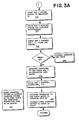
- FIG 3 shows a simplified flow chart of the operation of the inserter system of the subject invention.
- the operator loads webs 10-1 through 10-4 into web modules 20-1 through 20-4, initially aligning each web so that its start position is known.
- the operator also loads appropriate sheets into the feeder stations of sheet inserter system 40 in accordance with the instructions for a particular mailing.
- the operator inputs information defining the configuration for that mailing through operator interface 120 in a manner which will be described more fully below.
- This configuration information defines various parameters for the forms of webs 10-1 through 10-4 to be used with a particular mailing. Typically, such information would include form length, position of control and I.D.
- the configuration may also include information such as which web module will feed the web containing the control forms, and the number of documents to be maintained in the loop between the forms feeder and the burster-folder.
- forms feeder control 22 ⁇ 1c is initialized with information defining the length of forms and the position of information on the forms, while scanner conotrol system 24-1 c is initialized with information for interpreting the codes on the forms of web 10-1.
- Other module control systems 20-2c through 20-4c will be initialized in a similar manner except that scanner 24-1 will scan for both control information and I.D. codes while the other scanners will scan only for I.D. codes.
- supervisory control system 100 starts web module 1.
- Forms feeder control 22 ⁇ 1c controls forms feeder 22-1 to advance web 10-1 to establish a loop and feed into buster-folder 26-1.
- feeder controller 22-1c monitors the positions of the forms and as information passes scanner 24-1 forms feeder control 22-1c signals scanner control 24-1c to start scanning, as shown at 211.
- supervisory control system 110 polls scanner controller 241c for control information.
- Scanner controller 24-1c interprets the information read from the forms in accordance with the information provided defining the configuration and responds to supervisory control system 100 when it has read control information from a control form.
- supervisory control system 100 responds to a signal from scanner controller 241c to exit its polling loop and read the control information from scanner controller 24-1c. This control information defines the particular batch associated with that particular control form.
- supervisory controller 100 controls burster-folder controller 26-1c to seaparate and accumulate in accumulator 28-1 a particular number of forms as defined by the control information for the batch associated with the particular control form. It also transmits to sheet inserter system 40 the information defining the number of sheets to be inserted at each feeder station of sheet inserter system 40, and, possibly, information defining the postage to be applied to that particular batch.
- supervisory control system 100 starts web modules 20-2 through 20-4.
- burster-folders separate and accumulate forms according to the control information into accumulators 28-2 through 28-4.
- Form feeder controllers 22-2c through 22-4c signal scanner controllers 24 ⁇ 2c through 24-4c to scan forms for I.D. codes.
- supervisory controller system 100 loops to poll burster-folder controller 26-1c to determine when the accumulation is complete.
- burster-folder controller 26-1c signals supervisory controller system 100 that the accumulation is complete system 100 exits the polling loop and polls scanner controller 24-1 for I.D. codes and checks the I.D. codes to assure that the accumulation has been formed properly.
- I.D. codes will consist of random 3 or 4 bit binary numbers imprinted on each document associated with a particular batch).
- the inserter system of the subject invention signals the operator and halts (or takes other appropriate action in response to the error).
- supervisory control system 100 loads the accumulation of discrete forms in accumulator 28-1 onto transport unit 30.
- supervisory control system 100 polls burster-folder controller 26-2c for a complete accumulation.
- burster-folder controller signals that the accumulation is complete in accumulator 28-2
- supervisory controller system 100 exits the polling loop and poles scanner controller 24-2c for I.D. codes at 260 and checks, after receiving the codes, to assure that the appropriate forms have been added to the batch, at 265, if an error is detected, the system again signals the operator and halts at 266. If no error is detected, supervisory control system 100 advances transport unit 30 and loads the contents of accumulator 28-2 onto to transport unit 30 adding them to the batch.
- supervisory control system 100 advances transport unit 30 and feeds the batch to transfer unit 50, at 280 supervisory control system 100 also signals sheet inserter system 40 that a batch is read and returns to begin processing another batch. At 281, sheet inserter system 40 signals transfer unit 50 to feed the batch and completes processing.
- Figures 4 through 9 show the displays on the touch screen of operator interface 120 used to establish configurations for a particular mailing.
- supervisory control system 100 When the inserter system of the subject invention is initially energized, supervisory control system 100 enters a conventional power-up routine and performs various checks to assure that the system is operational. If the system checks out properly, the image shown in Figure 4 is displayed on the touch screen of interface 120. By selecting one of the labeled areas shown, the operator may select a configuration for a particular mailing.
- the operator By touching the area labeled "LAST” the operator will select the last used configuration and the image shown in Figure 5 will be displayed on the touch screen. This image provides information defining the configuration which will run if the operator signals acceptance by touching the area marked "READY".
- the configuration number is displayed at 300 and the on/off status of each web module is displayed at 310.
- the document number defining the particular document type to be run in each module is displayed.
- the kind of document, whether a form or sheet, is displayed.
- the number of documents currently in process in the web module is displayed.
- the document numbers displayed at 312 define document types in terms of predefined information stored on floppy disk 142. This information defines particular types of documents, identified by particular document numbers, in terms of document kind, length, position of machine readable information, whether or not the document may be a control document, and information needed to interpret the machine readable information on the document. Thus, the specification of document numbers for each web module specifies a configuration in terms of the stored predetermined information.
- web modules 20-1 through 20-4 may optionally be equipped with a sheet feeder option to allow them to handle both sheets and webs of forms.
- the operator may touch the area marked "OR” to display the image shown in Figure 7.
- This image provides more detailed information on each actual document in web modules 20-1 through 20-4; particularly at 322 the actual dash code on each document is shown.
- the operator may move among the various dashes of the dash codes displayed and selectively change them to change the effective dash code on a document. This would, for example, allow correction of an erroneously read dash code.
- the areas marked "NEXT” and "PREV” the operator may then move from document to document. When satisfied the operator may return to the image of Figure 5 by touching the area marked "EXIT". If the operator now touches the area marked "READY", the configuration displayed will be run, including any corrections entered through Figure 7.
- Touching the area marked "OLD” on the touch screen causes the image shown in Figure 9 to be displayed. Entering the number of a previously established configuration through the numeric pad area 330 shown on the touch screen then touching the area marked "ENTER” returns the system to the image of Figure 5 which then displays the status of the entered old configuration. The operator may then proceed to start the system, change the set up, or exit, as described above.
- the operator may create new configurations by touching the area marked "NEW" on the touch screen of Figure 4.
- the system will then display the iamge shown in Figure 6.
- the operator may then enter a document number of each web module 20-1 through 20-4 of the above-described embodiment of the subject invention, entering zero for non-selected modules. After the document number for the last web module is entered, the system displays the image of Figure 5 and operations proceed as described above.
- the operator may cause the system to display the image of Figure 8 on the touch screen.
- This image shows a listing of all established configurations for the system.
- the operator may call up more configurations if the number of defined configurations exceeds the available space for display.
- the operator may return to the image of Figure 4.
- touch screens are well known commercially available devices and programming of supervisory control system 100 to control the touch of interface 120 in the above-described manner, is also a well known conventional technique well within the skill of those skilled in the art.
Landscapes
- Collation Of Sheets And Webs (AREA)
- Controlling Sheets Or Webs (AREA)
- Devices For Checking Fares Or Tickets At Control Points (AREA)
- Cash Registers Or Receiving Machines (AREA)
- Sorting Of Articles (AREA)
Claims (3)
Applications Claiming Priority (2)
| Application Number | Priority Date | Filing Date | Title |
|---|---|---|---|
| US06/665,686 US4527790A (en) | 1984-10-29 | 1984-10-29 | Apparatus and method for separating multiple webs of documents having the capability for orderly shut-down and re-start of operation |
| US665686 | 1984-10-29 |
Publications (3)
| Publication Number | Publication Date |
|---|---|
| EP0180401A2 EP0180401A2 (fr) | 1986-05-07 |
| EP0180401A3 EP0180401A3 (en) | 1988-03-30 |
| EP0180401B1 true EP0180401B1 (fr) | 1990-05-02 |
Family
ID=24671148
Family Applications (1)
| Application Number | Title | Priority Date | Filing Date |
|---|---|---|---|
| EP85307633A Expired EP0180401B1 (fr) | 1984-10-29 | 1985-10-22 | Système pour insérer des documents |
Country Status (5)
| Country | Link |
|---|---|
| US (1) | US4527790A (fr) |
| EP (1) | EP0180401B1 (fr) |
| JP (1) | JPS61111271A (fr) |
| CA (1) | CA1236197A (fr) |
| DE (2) | DE3577408D1 (fr) |
Families Citing this family (28)
| Publication number | Priority date | Publication date | Assignee | Title |
|---|---|---|---|---|
| US4962454A (en) * | 1985-12-26 | 1990-10-09 | Pitney Bowes Inc. | Batch mailing method and apparatus: printing unique numbers on mail pieces and statement sheet |
| US4855920A (en) * | 1985-12-26 | 1989-08-08 | Pitney Bowes, Inc. | Postage accounting device |
| US4760532A (en) * | 1985-12-26 | 1988-07-26 | Pitney Bowes Inc. | Mailing system with postage value transfer and accounting capability |
| US4734865A (en) * | 1986-01-28 | 1988-03-29 | Bell & Howell Company | Insertion machine with audit trail and command protocol |
| US4720960A (en) * | 1986-02-04 | 1988-01-26 | Green Ronald J | Sheet collating apparatus and method |
| DE3650113T2 (de) * | 1986-03-10 | 1995-06-01 | Bell & Howell Co | Einfügungsmaschine mit Betriebszustandsnachspur und Steuerprotokoll. |
| CH665999A5 (fr) * | 1986-03-17 | 1988-06-30 | Bobst Sa | Procede et dispositif pour commander le reglage des organes d'une machine pour les arts graphiques et le cartonnage. |
| FR2611947B1 (fr) * | 1987-02-27 | 1991-05-10 | Smh Alcatel | Machine a affranchir comportant une alarme |
| FR2611953B1 (fr) * | 1987-02-27 | 1989-05-05 | Smh Alcatel | Machine a affranchir electronique a selection du mode de fonctionnement |
| US4765502A (en) * | 1987-06-19 | 1988-08-23 | Pitney Bowes Inc. | Apparatus for nonstop operation of an inserter system with multiple document feeding capability |
| US5182798A (en) * | 1988-12-30 | 1993-01-26 | Pitney Bowes Inc. | Multiple material processing system start-up |
| US5003485A (en) * | 1988-12-30 | 1991-03-26 | Pitney Bowes Inc. | Asynchronous, peer to peer, multiple module control and communication protocol |
| US5185866A (en) * | 1988-12-30 | 1993-02-09 | Pitney Bowes Inc. | Dual mode communication among plurality of processors using three distinct data channels each having different function and operations |
| US4962623A (en) * | 1988-12-30 | 1990-10-16 | Pitney Bowes Inc. | Asynchronous rejection in an inserter |
| US5146587A (en) * | 1988-12-30 | 1992-09-08 | Pitney Bowes Inc. | System with simultaneous storage of multilingual error messages in plural loop connected processors for transmission automatic translation and message display |
| US4992950A (en) * | 1988-12-30 | 1991-02-12 | Pitney Bowes Inc. | Multiple processing station message communication |
| US4970654A (en) * | 1988-12-30 | 1990-11-13 | Pitney Bowes Inc. | Asynchronous queuing and collation passage in an inserter |
| US5067088A (en) * | 1990-02-16 | 1991-11-19 | Johnson & Quin, Inc. | Apparatus and method for assembling mass mail items |
| US5191540A (en) * | 1990-09-05 | 1993-03-02 | Pitney Bowes Inc. | Sheets processing apparatus including memory means removably connected thereto |
| WO1992008198A1 (fr) * | 1990-11-05 | 1992-05-14 | Johnson & Quin, Inc. | Appareil et procede de controle et de verification de documents |
| US5448490A (en) * | 1993-03-23 | 1995-09-05 | Pitney Bowes Inc. | System and method for two level real-time control for an inserting machine |
| US5414974A (en) * | 1993-08-17 | 1995-05-16 | Moore Business Forms, Inc. | Automated document handling system |
| US5734566A (en) * | 1995-08-25 | 1998-03-31 | Pitney Bowes Inc. | Method and apparatus for keeping a matched document inserter system in synchronization |
| US5826869A (en) * | 1995-10-18 | 1998-10-27 | Bell & Howell Phillipsburg Company | High throughput document-processing machine having dynamic speed control |
| US6295523B1 (en) * | 1997-09-16 | 2001-09-25 | Ascom Hasler Mailing Systems Ag | Man-machine interface |
| US6173551B1 (en) * | 1998-04-07 | 2001-01-16 | Philip Morris Incorporated | Ink jet coder system and method |
| US7284749B2 (en) * | 2004-09-21 | 2007-10-23 | First Data Corporation | Sheet processing systems and methods |
| US7611133B2 (en) * | 2006-10-13 | 2009-11-03 | Pitney Bowes Inc. | Method and system for enhanced cutter throughput |
Family Cites Families (17)
| Publication number | Priority date | Publication date | Assignee | Title |
|---|---|---|---|---|
| US3260517A (en) * | 1963-11-22 | 1966-07-12 | Bell & Howell Co | Predetermined feed selection for multi-station inserters |
| US3652078A (en) * | 1969-10-20 | 1972-03-28 | Bell & Howell Co | Selective insertion machine having verification and overweight diversion |
| US3804005A (en) * | 1970-01-22 | 1974-04-16 | Addressograph Multigraph | Reprography machine controlled by information on master |
| US4034973A (en) * | 1975-12-19 | 1977-07-12 | Bell & Howell Company | Automated in-line mailing system |
| US4194685A (en) * | 1976-09-17 | 1980-03-25 | Dynetics Engineering Corp. | Verifying insertion system apparatus and method of operation |
| US4146216A (en) * | 1977-04-25 | 1979-03-27 | Pitney-Bowes, Inc. | Combined collator-sorter |
| US4211483A (en) * | 1978-09-25 | 1980-07-08 | International Business Machines Corporation | Copy production machines having job separation and collation capabilities |
| US4358016A (en) * | 1979-02-21 | 1982-11-09 | Burroughs Corporation | Document sorter apparatus |
| US4395255A (en) * | 1980-09-17 | 1983-07-26 | Pitney Bowes Inc. | Web folding apparatus |
| US4332464A (en) * | 1980-09-22 | 1982-06-01 | Xerox Corporation | Interactive user-machine interface method and apparatus for copier/duplicator |
| US4384196A (en) * | 1980-11-14 | 1983-05-17 | Data Card Corporation | Apparatus and system for preparing data cards and mailer forms and for attaching data cards to respectively associated mailer forms |
| US4479197A (en) * | 1980-11-25 | 1984-10-23 | Hewlett-Packard Company | Method and apparatus for selecting and setting the mode of operation for a mechanism |
| JPS58171994A (ja) * | 1982-04-01 | 1983-10-08 | トツパン・ム−ア株式会社 | 丁合装置 |
| JPS58189705A (ja) * | 1982-04-28 | 1983-11-05 | Mitsubishi Electric Corp | 数値制御装置 |
| JPS591661A (ja) * | 1982-06-25 | 1984-01-07 | Sumitomo Metal Ind Ltd | 耐力異方性の少ない純チタン板の製造方法 |
| US4547856A (en) * | 1982-07-01 | 1985-10-15 | Pitney Bowes Inc. | Universal multi-station document inserter |
| US4497040A (en) * | 1982-07-01 | 1985-01-29 | Pitney Bowes Inc. | Method and apparatus for customizing a multi-station document-inserter |
-
1984
- 1984-10-29 US US06/665,686 patent/US4527790A/en not_active Expired - Lifetime
-
1985
- 1985-09-30 CA CA000491849A patent/CA1236197A/fr not_active Expired
- 1985-10-22 DE DE8585307633T patent/DE3577408D1/de not_active Expired - Fee Related
- 1985-10-22 DE DE198585307633T patent/DE180401T1/de active Pending
- 1985-10-22 EP EP85307633A patent/EP0180401B1/fr not_active Expired
- 1985-10-29 JP JP60242566A patent/JPS61111271A/ja active Pending
Also Published As
| Publication number | Publication date |
|---|---|
| EP0180401A2 (fr) | 1986-05-07 |
| DE3577408D1 (de) | 1990-06-07 |
| JPS61111271A (ja) | 1986-05-29 |
| EP0180401A3 (en) | 1988-03-30 |
| CA1236197A (fr) | 1988-05-03 |
| DE180401T1 (de) | 1990-02-08 |
| US4527790A (en) | 1985-07-09 |
Similar Documents
| Publication | Publication Date | Title |
|---|---|---|
| EP0180400B1 (fr) | Système d'insertion | |
| EP0180386B1 (fr) | Système d'insertion à fonction interactive | |
| US4527791A (en) | Inserter system for forming predetermined batches of documents and inserting the batches into envelopes | |
| US4527790A (en) | Apparatus and method for separating multiple webs of documents having the capability for orderly shut-down and re-start of operation | |
| EP0376738B2 (fr) | Communication en mode dual | |
| EP0376743B1 (fr) | Commande de modules multiples asynchrones et protocole de communication | |
| EP0377331B1 (fr) | Communication de message pour station de traitement multiple | |
| EP0376739B2 (fr) | Génération d'enregistrement de collationnement et commande | |
| AU630905B2 (en) | Auto-translation system for generating messages in a modular machine | |
| CA2050390C (fr) | Cassette d'alimentation de feuilles avec dispositif de memorisation de donnees | |
| US5245547A (en) | Methods of processing sheets having an order corresponding to the order of stored data | |
| US5027587A (en) | Methods and apparatus for controlling an inserter | |
| CA2006018C (fr) | Rejection asynchrone pour machine a inserer | |
| DE68924146T2 (de) | Anfahren eines mehrfachen Dokumenten-Bearbeitungssystems. | |
| US4970654A (en) | Asynchronous queuing and collation passage in an inserter | |
| US5157617A (en) | Assembling apparatus including means for matching coded sheets | |
| US5734566A (en) | Method and apparatus for keeping a matched document inserter system in synchronization | |
| US5191540A (en) | Sheets processing apparatus including memory means removably connected thereto | |
| EP0404264A1 (fr) | Procédé de préparation d'un article de courrier à expédier et système de mise en oeuvre de ce procédé |
Legal Events
| Date | Code | Title | Description |
|---|---|---|---|
| PUAI | Public reference made under article 153(3) epc to a published international application that has entered the european phase |
Free format text: ORIGINAL CODE: 0009012 |
|
| AK | Designated contracting states |
Kind code of ref document: A2 Designated state(s): DE FR GB NL |
|
| PUAL | Search report despatched |
Free format text: ORIGINAL CODE: 0009013 |
|
| AK | Designated contracting states |
Kind code of ref document: A3 Designated state(s): DE FR GB NL |
|
| 17P | Request for examination filed |
Effective date: 19880912 |
|
| 17Q | First examination report despatched |
Effective date: 19881103 |
|
| DET | De: translation of patent claims | ||
| GRAA | (expected) grant |
Free format text: ORIGINAL CODE: 0009210 |
|
| AK | Designated contracting states |
Kind code of ref document: B1 Designated state(s): DE FR GB NL |
|
| REF | Corresponds to: |
Ref document number: 3577408 Country of ref document: DE Date of ref document: 19900607 |
|
| ET | Fr: translation filed | ||
| PLBE | No opposition filed within time limit |
Free format text: ORIGINAL CODE: 0009261 |
|
| STAA | Information on the status of an ep patent application or granted ep patent |
Free format text: STATUS: NO OPPOSITION FILED WITHIN TIME LIMIT |
|
| 26N | No opposition filed | ||
| PGFP | Annual fee paid to national office [announced via postgrant information from national office to epo] |
Ref country code: NL Payment date: 19941031 Year of fee payment: 10 |
|
| PG25 | Lapsed in a contracting state [announced via postgrant information from national office to epo] |
Ref country code: NL Effective date: 19960501 |
|
| NLV4 | Nl: lapsed or anulled due to non-payment of the annual fee |
Effective date: 19960501 |
|
| REG | Reference to a national code |
Ref country code: GB Ref legal event code: IF02 |
|
| PGFP | Annual fee paid to national office [announced via postgrant information from national office to epo] |
Ref country code: FR Payment date: 20021002 Year of fee payment: 18 |
|
| PGFP | Annual fee paid to national office [announced via postgrant information from national office to epo] |
Ref country code: GB Payment date: 20021016 Year of fee payment: 18 |
|
| PGFP | Annual fee paid to national office [announced via postgrant information from national office to epo] |
Ref country code: DE Payment date: 20021031 Year of fee payment: 18 |
|
| PG25 | Lapsed in a contracting state [announced via postgrant information from national office to epo] |
Ref country code: GB Free format text: LAPSE BECAUSE OF NON-PAYMENT OF DUE FEES Effective date: 20031022 |
|
| PG25 | Lapsed in a contracting state [announced via postgrant information from national office to epo] |
Ref country code: DE Free format text: LAPSE BECAUSE OF NON-PAYMENT OF DUE FEES Effective date: 20040501 |
|
| GBPC | Gb: european patent ceased through non-payment of renewal fee |
Effective date: 20031022 |
|
| PG25 | Lapsed in a contracting state [announced via postgrant information from national office to epo] |
Ref country code: FR Free format text: LAPSE BECAUSE OF NON-PAYMENT OF DUE FEES Effective date: 20040630 |
|
| REG | Reference to a national code |
Ref country code: FR Ref legal event code: ST |