EP0183217B1 - Mikrobizide Mittel - Google Patents
Mikrobizide Mittel Download PDFInfo
- Publication number
- EP0183217B1 EP0183217B1 EP85114930A EP85114930A EP0183217B1 EP 0183217 B1 EP0183217 B1 EP 0183217B1 EP 85114930 A EP85114930 A EP 85114930A EP 85114930 A EP85114930 A EP 85114930A EP 0183217 B1 EP0183217 B1 EP 0183217B1
- Authority
- EP
- European Patent Office
- Prior art keywords
- formula
- compounds
- process according
- alkyl
- microorganisms
- Prior art date
- Legal status (The legal status is an assumption and is not a legal conclusion. Google has not performed a legal analysis and makes no representation as to the accuracy of the status listed.)
- Expired - Lifetime
Links
- 230000003641 microbiacidal effect Effects 0.000 title abstract description 4
- 229940124561 microbicide Drugs 0.000 title description 2
- 238000000034 method Methods 0.000 claims abstract description 36
- 239000003054 catalyst Substances 0.000 claims abstract description 19
- 229910052794 bromium Inorganic materials 0.000 claims abstract description 10
- WKBOTKDWSSQWDR-UHFFFAOYSA-N Bromine atom Chemical compound [Br] WKBOTKDWSSQWDR-UHFFFAOYSA-N 0.000 claims abstract description 9
- GDTBXPJZTBHREO-UHFFFAOYSA-N bromine Substances BrBr GDTBXPJZTBHREO-UHFFFAOYSA-N 0.000 claims abstract description 9
- 238000007254 oxidation reaction Methods 0.000 claims abstract description 9
- 230000003647 oxidation Effects 0.000 claims abstract description 8
- 229910052736 halogen Inorganic materials 0.000 claims abstract description 7
- 150000002367 halogens Chemical group 0.000 claims abstract description 7
- 125000004169 (C1-C6) alkyl group Chemical group 0.000 claims abstract 5
- 150000001875 compounds Chemical class 0.000 claims description 63
- 239000000203 mixture Substances 0.000 claims description 36
- RSEBUVRVKCANEP-UHFFFAOYSA-N 2-pyrroline Chemical compound C1CC=CN1 RSEBUVRVKCANEP-UHFFFAOYSA-N 0.000 claims description 33
- 239000004480 active ingredient Substances 0.000 claims description 24
- 244000005700 microbiome Species 0.000 claims description 13
- 239000000654 additive Substances 0.000 claims description 12
- 241000233866 Fungi Species 0.000 claims description 10
- 238000006243 chemical reaction Methods 0.000 claims description 10
- 125000002496 methyl group Chemical group [H]C([H])([H])* 0.000 claims description 10
- 239000007787 solid Substances 0.000 claims description 10
- 239000004094 surface-active agent Substances 0.000 claims description 9
- 239000000460 chlorine Substances 0.000 claims description 8
- 239000001257 hydrogen Substances 0.000 claims description 8
- 229910052739 hydrogen Inorganic materials 0.000 claims description 8
- 239000007788 liquid Substances 0.000 claims description 8
- UFHFLCQGNIYNRP-UHFFFAOYSA-N Hydrogen Chemical compound [H][H] UFHFLCQGNIYNRP-UHFFFAOYSA-N 0.000 claims description 7
- KDLHZDBZIXYQEI-UHFFFAOYSA-N Palladium Chemical compound [Pd] KDLHZDBZIXYQEI-UHFFFAOYSA-N 0.000 claims description 7
- 229910052801 chlorine Inorganic materials 0.000 claims description 6
- 238000002156 mixing Methods 0.000 claims description 6
- 230000003032 phytopathogenic effect Effects 0.000 claims description 6
- 125000000171 (C1-C6) haloalkyl group Chemical group 0.000 claims description 5
- 229910052757 nitrogen Inorganic materials 0.000 claims description 5
- 125000003386 piperidinyl group Chemical group 0.000 claims description 5
- 206010061217 Infestation Diseases 0.000 claims description 4
- 150000001768 cations Chemical class 0.000 claims description 4
- 125000001309 chloro group Chemical group Cl* 0.000 claims description 4
- 229910017052 cobalt Inorganic materials 0.000 claims description 4
- 239000010941 cobalt Substances 0.000 claims description 4
- GUTLYIVDDKVIGB-UHFFFAOYSA-N cobalt atom Chemical compound [Co] GUTLYIVDDKVIGB-UHFFFAOYSA-N 0.000 claims description 4
- 229910052751 metal Inorganic materials 0.000 claims description 4
- 239000002184 metal Substances 0.000 claims description 4
- 239000005077 polysulfide Substances 0.000 claims description 4
- 229920001021 polysulfide Polymers 0.000 claims description 4
- 150000008117 polysulfides Polymers 0.000 claims description 4
- 230000000996 additive effect Effects 0.000 claims description 3
- 239000012442 inert solvent Substances 0.000 claims description 3
- 238000007363 ring formation reaction Methods 0.000 claims description 3
- 230000002378 acidificating effect Effects 0.000 claims description 2
- 201000010099 disease Diseases 0.000 claims description 2
- 208000037265 diseases, disorders, signs and symptoms Diseases 0.000 claims description 2
- 239000003960 organic solvent Substances 0.000 claims description 2
- 125000002757 morpholinyl group Chemical group 0.000 claims 2
- 125000004433 nitrogen atom Chemical group N* 0.000 claims 2
- 125000004430 oxygen atom Chemical group O* 0.000 claims 2
- 125000000719 pyrrolidinyl group Chemical group 0.000 claims 2
- 238000006722 reduction reaction Methods 0.000 claims 2
- 125000004178 (C1-C4) alkyl group Chemical group 0.000 claims 1
- 229910021578 Iron(III) chloride Inorganic materials 0.000 claims 1
- 239000012872 agrochemical composition Substances 0.000 claims 1
- 239000003610 charcoal Substances 0.000 claims 1
- RBTARNINKXHZNM-UHFFFAOYSA-K iron trichloride Chemical compound Cl[Fe](Cl)Cl RBTARNINKXHZNM-UHFFFAOYSA-K 0.000 claims 1
- 238000004519 manufacturing process Methods 0.000 abstract description 4
- QVGXLLKOCUKJST-UHFFFAOYSA-N atomic oxygen Chemical compound [O] QVGXLLKOCUKJST-UHFFFAOYSA-N 0.000 abstract description 3
- 239000000543 intermediate Substances 0.000 abstract description 3
- 239000001301 oxygen Substances 0.000 abstract description 3
- 229910052760 oxygen Inorganic materials 0.000 abstract description 3
- 150000003236 pyrrolines Chemical class 0.000 abstract description 3
- 150000003233 pyrroles Chemical class 0.000 abstract description 2
- 241000196324 Embryophyta Species 0.000 description 29
- YXFVVABEGXRONW-UHFFFAOYSA-N Toluene Chemical compound CC1=CC=CC=C1 YXFVVABEGXRONW-UHFFFAOYSA-N 0.000 description 27
- XEKOWRVHYACXOJ-UHFFFAOYSA-N Ethyl acetate Chemical compound CCOC(C)=O XEKOWRVHYACXOJ-UHFFFAOYSA-N 0.000 description 24
- RTZKZFJDLAIYFH-UHFFFAOYSA-N Diethyl ether Chemical compound CCOCC RTZKZFJDLAIYFH-UHFFFAOYSA-N 0.000 description 23
- 238000002360 preparation method Methods 0.000 description 19
- LFQSCWFLJHTTHZ-UHFFFAOYSA-N Ethanol Chemical compound CCO LFQSCWFLJHTTHZ-UHFFFAOYSA-N 0.000 description 18
- -1 alkyl radical Chemical class 0.000 description 15
- XLYOFNOQVPJJNP-UHFFFAOYSA-N water Substances O XLYOFNOQVPJJNP-UHFFFAOYSA-N 0.000 description 14
- LYCAIKOWRPUZTN-UHFFFAOYSA-N Ethylene glycol Chemical compound OCCO LYCAIKOWRPUZTN-UHFFFAOYSA-N 0.000 description 11
- 235000019441 ethanol Nutrition 0.000 description 11
- WYURNTSHIVDZCO-UHFFFAOYSA-N Tetrahydrofuran Chemical compound C1CCOC1 WYURNTSHIVDZCO-UHFFFAOYSA-N 0.000 description 10
- 239000013543 active substance Substances 0.000 description 10
- 239000002904 solvent Substances 0.000 description 10
- OKKJLVBELUTLKV-UHFFFAOYSA-N Methanol Chemical compound OC OKKJLVBELUTLKV-UHFFFAOYSA-N 0.000 description 9
- OKTJSMMVPCPJKN-UHFFFAOYSA-N Carbon Chemical compound [C] OKTJSMMVPCPJKN-UHFFFAOYSA-N 0.000 description 8
- 235000013399 edible fruits Nutrition 0.000 description 8
- 239000008187 granular material Substances 0.000 description 8
- 239000000843 powder Substances 0.000 description 8
- 241001465754 Metazoa Species 0.000 description 7
- VYPSYNLAJGMNEJ-UHFFFAOYSA-N Silicium dioxide Chemical compound O=[Si]=O VYPSYNLAJGMNEJ-UHFFFAOYSA-N 0.000 description 7
- 239000003795 chemical substances by application Substances 0.000 description 7
- 239000000839 emulsion Substances 0.000 description 7
- 238000009472 formulation Methods 0.000 description 7
- 150000003839 salts Chemical class 0.000 description 7
- 239000000243 solution Substances 0.000 description 7
- 239000000126 substance Substances 0.000 description 7
- QTBSBXVTEAMEQO-UHFFFAOYSA-N Acetic acid Chemical compound CC(O)=O QTBSBXVTEAMEQO-UHFFFAOYSA-N 0.000 description 6
- UHOVQNZJYSORNB-UHFFFAOYSA-N Benzene Chemical compound C1=CC=CC=C1 UHOVQNZJYSORNB-UHFFFAOYSA-N 0.000 description 6
- ZMXDDKWLCZADIW-UHFFFAOYSA-N N,N-Dimethylformamide Chemical compound CN(C)C=O ZMXDDKWLCZADIW-UHFFFAOYSA-N 0.000 description 6
- 125000000217 alkyl group Chemical group 0.000 description 6
- 125000004432 carbon atom Chemical group C* 0.000 description 6
- 239000012141 concentrate Substances 0.000 description 6
- 235000008504 concentrate Nutrition 0.000 description 6
- BASFCYQUMIYNBI-UHFFFAOYSA-N platinum Chemical compound [Pt] BASFCYQUMIYNBI-UHFFFAOYSA-N 0.000 description 6
- RYHBNJHYFVUHQT-UHFFFAOYSA-N 1,4-Dioxane Chemical compound C1COCCO1 RYHBNJHYFVUHQT-UHFFFAOYSA-N 0.000 description 5
- 241000894006 Bacteria Species 0.000 description 5
- 241000220225 Malus Species 0.000 description 5
- 244000046052 Phaseolus vulgaris Species 0.000 description 5
- 150000001298 alcohols Chemical class 0.000 description 5
- 239000000969 carrier Substances 0.000 description 5
- 230000006378 damage Effects 0.000 description 5
- 235000014113 dietary fatty acids Nutrition 0.000 description 5
- 238000005516 engineering process Methods 0.000 description 5
- 239000000194 fatty acid Substances 0.000 description 5
- 229930195729 fatty acid Natural products 0.000 description 5
- 239000000047 product Substances 0.000 description 5
- 239000000758 substrate Substances 0.000 description 5
- YLQBMQCUIZJEEH-UHFFFAOYSA-N tetrahydrofuran Natural products C=1C=COC=1 YLQBMQCUIZJEEH-UHFFFAOYSA-N 0.000 description 5
- IGFHQQFPSIBGKE-UHFFFAOYSA-N 4-nonylphenol Chemical compound CCCCCCCCCC1=CC=C(O)C=C1 IGFHQQFPSIBGKE-UHFFFAOYSA-N 0.000 description 4
- 235000016068 Berberis vulgaris Nutrition 0.000 description 4
- 241000335053 Beta vulgaris Species 0.000 description 4
- IAZDPXIOMUYVGZ-UHFFFAOYSA-N Dimethylsulphoxide Chemical compound CS(C)=O IAZDPXIOMUYVGZ-UHFFFAOYSA-N 0.000 description 4
- 240000009088 Fragaria x ananassa Species 0.000 description 4
- 239000003905 agrochemical Substances 0.000 description 4
- 235000013339 cereals Nutrition 0.000 description 4
- 239000011248 coating agent Substances 0.000 description 4
- 238000000576 coating method Methods 0.000 description 4
- 230000000694 effects Effects 0.000 description 4
- 150000002170 ethers Chemical class 0.000 description 4
- 150000004665 fatty acids Chemical class 0.000 description 4
- 230000002349 favourable effect Effects 0.000 description 4
- 239000002736 nonionic surfactant Substances 0.000 description 4
- 239000011541 reaction mixture Substances 0.000 description 4
- 239000000741 silica gel Substances 0.000 description 4
- 229910002027 silica gel Inorganic materials 0.000 description 4
- 239000000725 suspension Substances 0.000 description 4
- 0 *C1C=CC(C2C(C#N)=CNC2)=CC=C1 Chemical compound *C1C=CC(C2C(C#N)=CNC2)=CC=C1 0.000 description 3
- 244000291564 Allium cepa Species 0.000 description 3
- 235000002732 Allium cepa var. cepa Nutrition 0.000 description 3
- 241000123650 Botrytis cinerea Species 0.000 description 3
- 244000025254 Cannabis sativa Species 0.000 description 3
- 235000013162 Cocos nucifera Nutrition 0.000 description 3
- 244000060011 Cocos nucifera Species 0.000 description 3
- 240000008067 Cucumis sativus Species 0.000 description 3
- YMWUJEATGCHHMB-UHFFFAOYSA-N Dichloromethane Chemical compound ClCCl YMWUJEATGCHHMB-UHFFFAOYSA-N 0.000 description 3
- 235000010469 Glycine max Nutrition 0.000 description 3
- 235000010627 Phaseolus vulgaris Nutrition 0.000 description 3
- ZMANZCXQSJIPKH-UHFFFAOYSA-N Triethylamine Chemical compound CCN(CC)CC ZMANZCXQSJIPKH-UHFFFAOYSA-N 0.000 description 3
- 229960000583 acetic acid Drugs 0.000 description 3
- 150000001338 aliphatic hydrocarbons Chemical class 0.000 description 3
- 235000021016 apples Nutrition 0.000 description 3
- 150000004945 aromatic hydrocarbons Chemical class 0.000 description 3
- 239000013078 crystal Substances 0.000 description 3
- 238000010790 dilution Methods 0.000 description 3
- 239000012895 dilution Substances 0.000 description 3
- 239000003337 fertilizer Substances 0.000 description 3
- 239000012362 glacial acetic acid Substances 0.000 description 3
- 239000000463 material Substances 0.000 description 3
- 239000012074 organic phase Substances 0.000 description 3
- 229910052763 palladium Inorganic materials 0.000 description 3
- 229910052697 platinum Inorganic materials 0.000 description 3
- 238000010992 reflux Methods 0.000 description 3
- 239000007921 spray Substances 0.000 description 3
- 238000005507 spraying Methods 0.000 description 3
- 239000004575 stone Substances 0.000 description 3
- 235000021012 strawberries Nutrition 0.000 description 3
- 125000001424 substituent group Chemical group 0.000 description 3
- 235000013311 vegetables Nutrition 0.000 description 3
- 239000008096 xylene Substances 0.000 description 3
- DSSYKIVIOFKYAU-XCBNKYQSSA-N (R)-camphor Chemical compound C1C[C@@]2(C)C(=O)C[C@@H]1C2(C)C DSSYKIVIOFKYAU-XCBNKYQSSA-N 0.000 description 2
- QDRLNSJTMBNERI-UHFFFAOYSA-N 1,2-dichloro-3-(2-nitroethenyl)benzene Chemical group [O-][N+](=O)C=CC1=CC=CC(Cl)=C1Cl QDRLNSJTMBNERI-UHFFFAOYSA-N 0.000 description 2
- QHBKPJHTWOAGAA-UHFFFAOYSA-N 3-(2,3-dichlorophenyl)-2-(dimethylaminomethylidene)-4-nitrobutanenitrile Chemical compound CN(C)C=C(C#N)C(C[N+]([O-])=O)C1=CC=CC(Cl)=C1Cl QHBKPJHTWOAGAA-UHFFFAOYSA-N 0.000 description 2
- UHPMCKVQTMMPCG-UHFFFAOYSA-N 5,8-dihydroxy-2-methoxy-6-methyl-7-(2-oxopropyl)naphthalene-1,4-dione Chemical compound CC1=C(CC(C)=O)C(O)=C2C(=O)C(OC)=CC(=O)C2=C1O UHPMCKVQTMMPCG-UHFFFAOYSA-N 0.000 description 2
- 241000251468 Actinopterygii Species 0.000 description 2
- 239000005995 Aluminium silicate Substances 0.000 description 2
- USFZMSVCRYTOJT-UHFFFAOYSA-N Ammonium acetate Chemical compound N.CC(O)=O USFZMSVCRYTOJT-UHFFFAOYSA-N 0.000 description 2
- 239000005695 Ammonium acetate Substances 0.000 description 2
- 244000144725 Amygdalus communis Species 0.000 description 2
- 244000105624 Arachis hypogaea Species 0.000 description 2
- 244000003416 Asparagus officinalis Species 0.000 description 2
- 235000005340 Asparagus officinalis Nutrition 0.000 description 2
- 235000007319 Avena orientalis Nutrition 0.000 description 2
- 244000075850 Avena orientalis Species 0.000 description 2
- 235000000832 Ayote Nutrition 0.000 description 2
- 241001465180 Botrytis Species 0.000 description 2
- 241000167854 Bourreria succulenta Species 0.000 description 2
- 241000219198 Brassica Species 0.000 description 2
- 235000003351 Brassica cretica Nutrition 0.000 description 2
- 240000002791 Brassica napus Species 0.000 description 2
- 240000007124 Brassica oleracea Species 0.000 description 2
- 235000003899 Brassica oleracea var acephala Nutrition 0.000 description 2
- 235000011301 Brassica oleracea var capitata Nutrition 0.000 description 2
- 235000001169 Brassica oleracea var oleracea Nutrition 0.000 description 2
- 235000003343 Brassica rupestris Nutrition 0.000 description 2
- 235000004977 Brassica sinapistrum Nutrition 0.000 description 2
- FERIUCNNQQJTOY-UHFFFAOYSA-N Butyric acid Chemical compound CCCC(O)=O FERIUCNNQQJTOY-UHFFFAOYSA-N 0.000 description 2
- 229910021532 Calcite Inorganic materials 0.000 description 2
- 235000012766 Cannabis sativa ssp. sativa var. sativa Nutrition 0.000 description 2
- 235000012765 Cannabis sativa ssp. sativa var. spontanea Nutrition 0.000 description 2
- 235000002566 Capsicum Nutrition 0.000 description 2
- ZAMOUSCENKQFHK-UHFFFAOYSA-N Chlorine atom Chemical compound [Cl] ZAMOUSCENKQFHK-UHFFFAOYSA-N 0.000 description 2
- HEDRZPFGACZZDS-UHFFFAOYSA-N Chloroform Chemical compound ClC(Cl)Cl HEDRZPFGACZZDS-UHFFFAOYSA-N 0.000 description 2
- 241000723346 Cinnamomum camphora Species 0.000 description 2
- 240000007154 Coffea arabica Species 0.000 description 2
- 240000000491 Corchorus aestuans Species 0.000 description 2
- 235000011777 Corchorus aestuans Nutrition 0.000 description 2
- 235000010862 Corchorus capsularis Nutrition 0.000 description 2
- 229920000742 Cotton Polymers 0.000 description 2
- 241000219112 Cucumis Species 0.000 description 2
- 235000015510 Cucumis melo subsp melo Nutrition 0.000 description 2
- 235000010799 Cucumis sativus var sativus Nutrition 0.000 description 2
- 235000009854 Cucurbita moschata Nutrition 0.000 description 2
- 235000009804 Cucurbita pepo subsp pepo Nutrition 0.000 description 2
- 241000371644 Curvularia ravenelii Species 0.000 description 2
- 235000002767 Daucus carota Nutrition 0.000 description 2
- 244000000626 Daucus carota Species 0.000 description 2
- PXGOKWXKJXAPGV-UHFFFAOYSA-N Fluorine Chemical compound FF PXGOKWXKJXAPGV-UHFFFAOYSA-N 0.000 description 2
- 206010017533 Fungal infection Diseases 0.000 description 2
- 241000223218 Fusarium Species 0.000 description 2
- 244000068988 Glycine max Species 0.000 description 2
- 244000299507 Gossypium hirsutum Species 0.000 description 2
- 241000208818 Helianthus Species 0.000 description 2
- 235000003222 Helianthus annuus Nutrition 0.000 description 2
- 240000005979 Hordeum vulgare Species 0.000 description 2
- 235000007340 Hordeum vulgare Nutrition 0.000 description 2
- 235000008694 Humulus lupulus Nutrition 0.000 description 2
- 244000025221 Humulus lupulus Species 0.000 description 2
- KFZMGEQAYNKOFK-UHFFFAOYSA-N Isopropanol Chemical compound CC(C)O KFZMGEQAYNKOFK-UHFFFAOYSA-N 0.000 description 2
- 235000003228 Lactuca sativa Nutrition 0.000 description 2
- 240000008415 Lactuca sativa Species 0.000 description 2
- 240000004322 Lens culinaris Species 0.000 description 2
- 235000014647 Lens culinaris subsp culinaris Nutrition 0.000 description 2
- 235000004431 Linum usitatissimum Nutrition 0.000 description 2
- 240000006240 Linum usitatissimum Species 0.000 description 2
- 235000007688 Lycopersicon esculentum Nutrition 0.000 description 2
- 240000005561 Musa balbisiana Species 0.000 description 2
- 208000031888 Mycoses Diseases 0.000 description 2
- SECXISVLQFMRJM-UHFFFAOYSA-N N-Methylpyrrolidone Chemical compound CN1CCCC1=O SECXISVLQFMRJM-UHFFFAOYSA-N 0.000 description 2
- 235000002637 Nicotiana tabacum Nutrition 0.000 description 2
- 244000061176 Nicotiana tabacum Species 0.000 description 2
- 241000207836 Olea <angiosperm> Species 0.000 description 2
- 240000007594 Oryza sativa Species 0.000 description 2
- 235000007164 Oryza sativa Nutrition 0.000 description 2
- 235000008753 Papaver somniferum Nutrition 0.000 description 2
- 244000025272 Persea americana Species 0.000 description 2
- 235000008673 Persea americana Nutrition 0.000 description 2
- 241000758706 Piperaceae Species 0.000 description 2
- 235000010582 Pisum sativum Nutrition 0.000 description 2
- 240000004713 Pisum sativum Species 0.000 description 2
- 229920003171 Poly (ethylene oxide) Polymers 0.000 description 2
- 239000002202 Polyethylene glycol Substances 0.000 description 2
- 229920001214 Polysorbate 60 Polymers 0.000 description 2
- 235000006040 Prunus persica var persica Nutrition 0.000 description 2
- 241000220324 Pyrus Species 0.000 description 2
- 240000000528 Ricinus communis Species 0.000 description 2
- 235000004443 Ricinus communis Nutrition 0.000 description 2
- 240000004808 Saccharomyces cerevisiae Species 0.000 description 2
- 240000000111 Saccharum officinarum Species 0.000 description 2
- 235000007201 Saccharum officinarum Nutrition 0.000 description 2
- 235000007238 Secale cereale Nutrition 0.000 description 2
- 244000082988 Secale cereale Species 0.000 description 2
- 240000003768 Solanum lycopersicum Species 0.000 description 2
- 235000002595 Solanum tuberosum Nutrition 0.000 description 2
- 244000061456 Solanum tuberosum Species 0.000 description 2
- 240000003829 Sorghum propinquum Species 0.000 description 2
- 235000011684 Sorghum saccharatum Nutrition 0.000 description 2
- 244000300264 Spinacia oleracea Species 0.000 description 2
- 235000009337 Spinacia oleracea Nutrition 0.000 description 2
- 244000125380 Terminalia tomentosa Species 0.000 description 2
- 244000269722 Thea sinensis Species 0.000 description 2
- 244000299461 Theobroma cacao Species 0.000 description 2
- 235000009470 Theobroma cacao Nutrition 0.000 description 2
- 235000021307 Triticum Nutrition 0.000 description 2
- 244000098338 Triticum aestivum Species 0.000 description 2
- 244000078534 Vaccinium myrtillus Species 0.000 description 2
- 208000027418 Wounds and injury Diseases 0.000 description 2
- 240000008042 Zea mays Species 0.000 description 2
- 235000005824 Zea mays ssp. parviglumis Nutrition 0.000 description 2
- 235000002017 Zea mays subsp mays Nutrition 0.000 description 2
- 239000000853 adhesive Substances 0.000 description 2
- 230000001070 adhesive effect Effects 0.000 description 2
- 239000003513 alkali Substances 0.000 description 2
- 235000020224 almond Nutrition 0.000 description 2
- 235000012211 aluminium silicate Nutrition 0.000 description 2
- 229940043376 ammonium acetate Drugs 0.000 description 2
- 235000019257 ammonium acetate Nutrition 0.000 description 2
- 150000003863 ammonium salts Chemical class 0.000 description 2
- 239000003945 anionic surfactant Substances 0.000 description 2
- RDOXTESZEPMUJZ-UHFFFAOYSA-N anisole Chemical compound COC1=CC=CC=C1 RDOXTESZEPMUJZ-UHFFFAOYSA-N 0.000 description 2
- 125000003785 benzimidazolyl group Chemical class N1=C(NC2=C1C=CC=C2)* 0.000 description 2
- 235000021028 berry Nutrition 0.000 description 2
- 239000011230 binding agent Substances 0.000 description 2
- 230000015572 biosynthetic process Effects 0.000 description 2
- QKSKPIVNLNLAAV-UHFFFAOYSA-N bis(2-chloroethyl) sulfide Chemical compound ClCCSCCCl QKSKPIVNLNLAAV-UHFFFAOYSA-N 0.000 description 2
- 235000021029 blackberry Nutrition 0.000 description 2
- 210000004556 brain Anatomy 0.000 description 2
- 230000001680 brushing effect Effects 0.000 description 2
- 235000009120 camo Nutrition 0.000 description 2
- 229960000846 camphor Drugs 0.000 description 2
- 229930008380 camphor Natural products 0.000 description 2
- 239000003093 cationic surfactant Substances 0.000 description 2
- 235000005607 chanvre indien Nutrition 0.000 description 2
- 235000019693 cherries Nutrition 0.000 description 2
- 235000020971 citrus fruits Nutrition 0.000 description 2
- 239000003240 coconut oil Substances 0.000 description 2
- 235000016213 coffee Nutrition 0.000 description 2
- 235000013353 coffee beverage Nutrition 0.000 description 2
- 238000001816 cooling Methods 0.000 description 2
- 235000005822 corn Nutrition 0.000 description 2
- 244000038559 crop plants Species 0.000 description 2
- JHIVVAPYMSGYDF-UHFFFAOYSA-N cyclohexanone Chemical compound O=C1CCCCC1 JHIVVAPYMSGYDF-UHFFFAOYSA-N 0.000 description 2
- 235000015177 dried meat Nutrition 0.000 description 2
- 238000005538 encapsulation Methods 0.000 description 2
- 150000002148 esters Chemical class 0.000 description 2
- 239000000835 fiber Substances 0.000 description 2
- 239000000706 filtrate Substances 0.000 description 2
- 229910052731 fluorine Inorganic materials 0.000 description 2
- 239000011737 fluorine Substances 0.000 description 2
- 230000002538 fungal effect Effects 0.000 description 2
- 230000000855 fungicidal effect Effects 0.000 description 2
- 239000000417 fungicide Substances 0.000 description 2
- 238000000227 grinding Methods 0.000 description 2
- 239000011487 hemp Substances 0.000 description 2
- WGCNASOHLSPBMP-UHFFFAOYSA-N hydroxyacetaldehyde Natural products OCC=O WGCNASOHLSPBMP-UHFFFAOYSA-N 0.000 description 2
- 208000014674 injury Diseases 0.000 description 2
- 125000001972 isopentyl group Chemical group [H]C([H])([H])C([H])(C([H])([H])[H])C([H])([H])C([H])([H])* 0.000 description 2
- NLYAJNPCOHFWQQ-UHFFFAOYSA-N kaolin Chemical compound O.O.O=[Al]O[Si](=O)O[Si](=O)O[Al]=O NLYAJNPCOHFWQQ-UHFFFAOYSA-N 0.000 description 2
- 235000021374 legumes Nutrition 0.000 description 2
- 239000002855 microbicide agent Substances 0.000 description 2
- 235000010460 mustard Nutrition 0.000 description 2
- 229930014626 natural product Natural products 0.000 description 2
- LYGJENNIWJXYER-UHFFFAOYSA-N nitromethane Chemical compound C[N+]([O-])=O LYGJENNIWJXYER-UHFFFAOYSA-N 0.000 description 2
- 235000014571 nuts Nutrition 0.000 description 2
- 239000003921 oil Substances 0.000 description 2
- 235000019198 oils Nutrition 0.000 description 2
- 235000020232 peanut Nutrition 0.000 description 2
- 239000003208 petroleum Substances 0.000 description 2
- 150000003904 phospholipids Chemical class 0.000 description 2
- 229920001223 polyethylene glycol Polymers 0.000 description 2
- 229920000151 polyglycol Polymers 0.000 description 2
- 239000010695 polyglycol Substances 0.000 description 2
- 235000012015 potatoes Nutrition 0.000 description 2
- 239000002244 precipitate Substances 0.000 description 2
- 238000004321 preservation Methods 0.000 description 2
- 230000003449 preventive effect Effects 0.000 description 2
- 238000012545 processing Methods 0.000 description 2
- 239000011814 protection agent Substances 0.000 description 2
- 235000015136 pumpkin Nutrition 0.000 description 2
- 230000002829 reductive effect Effects 0.000 description 2
- 235000009566 rice Nutrition 0.000 description 2
- 238000002791 soaking Methods 0.000 description 2
- 239000000344 soap Substances 0.000 description 2
- 239000002689 soil Substances 0.000 description 2
- 238000001228 spectrum Methods 0.000 description 2
- 235000020354 squash Nutrition 0.000 description 2
- 125000001273 sulfonato group Chemical class [O-]S(*)(=O)=O 0.000 description 2
- 150000003467 sulfuric acid derivatives Chemical class 0.000 description 2
- 239000004546 suspension concentrate Substances 0.000 description 2
- 230000009885 systemic effect Effects 0.000 description 2
- 235000013616 tea Nutrition 0.000 description 2
- 238000012360 testing method Methods 0.000 description 2
- 239000004563 wettable powder Substances 0.000 description 2
- 238000009736 wetting Methods 0.000 description 2
- 150000003738 xylenes Chemical class 0.000 description 2
- ASWBNKHCZGQVJV-UHFFFAOYSA-N (3-hexadecanoyloxy-2-hydroxypropyl) 2-(trimethylazaniumyl)ethyl phosphate Chemical compound CCCCCCCCCCCCCCCC(=O)OCC(O)COP([O-])(=O)OCC[N+](C)(C)C ASWBNKHCZGQVJV-UHFFFAOYSA-N 0.000 description 1
- WRIDQFICGBMAFQ-UHFFFAOYSA-N (E)-8-Octadecenoic acid Natural products CCCCCCCCCC=CCCCCCCC(O)=O WRIDQFICGBMAFQ-UHFFFAOYSA-N 0.000 description 1
- TZCPCKNHXULUIY-RGULYWFUSA-N 1,2-distearoyl-sn-glycero-3-phosphoserine Chemical compound CCCCCCCCCCCCCCCCCC(=O)OC[C@H](COP(O)(=O)OC[C@H](N)C(O)=O)OC(=O)CCCCCCCCCCCCCCCCC TZCPCKNHXULUIY-RGULYWFUSA-N 0.000 description 1
- LLMLNAVBOAMOEE-UHFFFAOYSA-N 2,3-dichlorobenzaldehyde Chemical compound ClC1=CC=CC(C=O)=C1Cl LLMLNAVBOAMOEE-UHFFFAOYSA-N 0.000 description 1
- 125000004201 2,4-dichlorophenyl group Chemical group [H]C1=C([H])C(*)=C(Cl)C([H])=C1Cl 0.000 description 1
- XNWFRZJHXBZDAG-UHFFFAOYSA-N 2-METHOXYETHANOL Chemical group COCCO XNWFRZJHXBZDAG-UHFFFAOYSA-N 0.000 description 1
- JDSQBDGCMUXRBM-UHFFFAOYSA-N 2-[2-(2-butoxypropoxy)propoxy]propan-1-ol Chemical group CCCCOC(C)COC(C)COC(C)CO JDSQBDGCMUXRBM-UHFFFAOYSA-N 0.000 description 1
- WBIQQQGBSDOWNP-UHFFFAOYSA-N 2-dodecylbenzenesulfonic acid Chemical class CCCCCCCCCCCCC1=CC=CC=C1S(O)(=O)=O WBIQQQGBSDOWNP-UHFFFAOYSA-N 0.000 description 1
- LQJBNNIYVWPHFW-UHFFFAOYSA-N 20:1omega9c fatty acid Natural products CCCCCCCCCCC=CCCCCCCCC(O)=O LQJBNNIYVWPHFW-UHFFFAOYSA-N 0.000 description 1
- SIFHSKAUXUWSHP-UHFFFAOYSA-N 3-(2,3-dichlorophenyl)-2-(morpholin-4-ylmethylidene)-4-nitrobutanenitrile Chemical compound C=1C=CC(Cl)=C(Cl)C=1C(C[N+](=O)[O-])C(C#N)=CN1CCOCC1 SIFHSKAUXUWSHP-UHFFFAOYSA-N 0.000 description 1
- ZKKBIZXAEDFPNL-UHFFFAOYSA-N 3-(dimethylamino)prop-2-enenitrile Chemical group CN(C)C=CC#N ZKKBIZXAEDFPNL-UHFFFAOYSA-N 0.000 description 1
- RFJPLJPQYMNNEC-UHFFFAOYSA-N 3-morpholin-4-ylprop-2-enenitrile Chemical compound N#CC=CN1CCOCC1 RFJPLJPQYMNNEC-UHFFFAOYSA-N 0.000 description 1
- XZAHELAZTUOSOR-UHFFFAOYSA-N 3-phenyl-2,3-dihydro-1h-pyrrole-4-carbonitrile Chemical compound N#CC1=CNCC1C1=CC=CC=C1 XZAHELAZTUOSOR-UHFFFAOYSA-N 0.000 description 1
- RJCHCFQTUKAYAA-UHFFFAOYSA-N 5-[[2-amino-5-[(4-methoxyphenyl)methyl]-3-methylimidazol-4-yl]methyl]-2-methoxybenzene-1,3-diol Chemical compound C1=CC(OC)=CC=C1CC1=C(CC=2C=C(O)C(OC)=C(O)C=2)N(C)C(=N)N1 RJCHCFQTUKAYAA-UHFFFAOYSA-N 0.000 description 1
- QSBYPNXLFMSGKH-UHFFFAOYSA-N 9-Heptadecensaeure Natural products CCCCCCCC=CCCCCCCCC(O)=O QSBYPNXLFMSGKH-UHFFFAOYSA-N 0.000 description 1
- 229930195730 Aflatoxin Natural products 0.000 description 1
- 241000223600 Alternaria Species 0.000 description 1
- 235000011437 Amygdalus communis Nutrition 0.000 description 1
- 244000144730 Amygdalus persica Species 0.000 description 1
- 241000235349 Ascomycota Species 0.000 description 1
- 241000228212 Aspergillus Species 0.000 description 1
- 241000221198 Basidiomycota Species 0.000 description 1
- LSNNMFCWUKXFEE-UHFFFAOYSA-M Bisulfite Chemical compound OS([O-])=O LSNNMFCWUKXFEE-UHFFFAOYSA-M 0.000 description 1
- 241000499339 Botrytis allii Species 0.000 description 1
- DKPFZGUDAPQIHT-UHFFFAOYSA-N Butyl acetate Natural products CCCCOC(C)=O DKPFZGUDAPQIHT-UHFFFAOYSA-N 0.000 description 1
- 241000222120 Candida <Saccharomycetales> Species 0.000 description 1
- 239000004215 Carbon black (E152) Substances 0.000 description 1
- 235000014036 Castanea Nutrition 0.000 description 1
- 241001070941 Castanea Species 0.000 description 1
- 241001157813 Cercospora Species 0.000 description 1
- 235000005979 Citrus limon Nutrition 0.000 description 1
- 244000131522 Citrus pyriformis Species 0.000 description 1
- 241001672694 Citrus reticulata Species 0.000 description 1
- 240000000560 Citrus x paradisi Species 0.000 description 1
- 240000004244 Cucurbita moschata Species 0.000 description 1
- 240000001980 Cucurbita pepo Species 0.000 description 1
- 241000219104 Cucurbitaceae Species 0.000 description 1
- XDTMQSROBMDMFD-UHFFFAOYSA-N Cyclohexane Chemical compound C1CCCCC1 XDTMQSROBMDMFD-UHFFFAOYSA-N 0.000 description 1
- MQIUGAXCHLFZKX-UHFFFAOYSA-N Di-n-octyl phthalate Natural products CCCCCCCCOC(=O)C1=CC=CC=C1C(=O)OCCCCCCCC MQIUGAXCHLFZKX-UHFFFAOYSA-N 0.000 description 1
- ZAFNJMIOTHYJRJ-UHFFFAOYSA-N Diisopropyl ether Chemical compound CC(C)OC(C)C ZAFNJMIOTHYJRJ-UHFFFAOYSA-N 0.000 description 1
- 102000002322 Egg Proteins Human genes 0.000 description 1
- 108010000912 Egg Proteins Proteins 0.000 description 1
- 241000221787 Erysiphe Species 0.000 description 1
- IAYPIBMASNFSPL-UHFFFAOYSA-N Ethylene oxide Chemical compound C1CO1 IAYPIBMASNFSPL-UHFFFAOYSA-N 0.000 description 1
- 239000004606 Fillers/Extenders Substances 0.000 description 1
- 235000019733 Fish meal Nutrition 0.000 description 1
- 235000016623 Fragaria vesca Nutrition 0.000 description 1
- 235000011363 Fragaria x ananassa Nutrition 0.000 description 1
- JZNWSCPGTDBMEW-UHFFFAOYSA-N Glycerophosphorylethanolamin Natural products NCCOP(O)(=O)OCC(O)CO JZNWSCPGTDBMEW-UHFFFAOYSA-N 0.000 description 1
- ZWZWYGMENQVNFU-UHFFFAOYSA-N Glycerophosphorylserin Natural products OC(=O)C(N)COP(O)(=O)OCC(O)CO ZWZWYGMENQVNFU-UHFFFAOYSA-N 0.000 description 1
- 244000043261 Hevea brasiliensis Species 0.000 description 1
- 235000017858 Laurus nobilis Nutrition 0.000 description 1
- BZLVMXJERCGZMT-UHFFFAOYSA-N Methyl tert-butyl ether Chemical compound COC(C)(C)C BZLVMXJERCGZMT-UHFFFAOYSA-N 0.000 description 1
- 241001518729 Monilinia Species 0.000 description 1
- 235000018290 Musa x paradisiaca Nutrition 0.000 description 1
- VUYCAMJXEYSDFH-UHFFFAOYSA-N N#Cc1c[nH]cc1C(C=C1)=CC=CC1[RnH] Chemical compound N#Cc1c[nH]cc1C(C=C1)=CC=CC1[RnH] VUYCAMJXEYSDFH-UHFFFAOYSA-N 0.000 description 1
- 241000189150 Nigrospora Species 0.000 description 1
- CTQNGGLPUBDAKN-UHFFFAOYSA-N O-Xylene Chemical compound CC1=CC=CC=C1C CTQNGGLPUBDAKN-UHFFFAOYSA-N 0.000 description 1
- 239000005642 Oleic acid Substances 0.000 description 1
- ZQPPMHVWECSIRJ-UHFFFAOYSA-N Oleic acid Natural products CCCCCCCCC=CCCCCCCCC(O)=O ZQPPMHVWECSIRJ-UHFFFAOYSA-N 0.000 description 1
- 241000233654 Oomycetes Species 0.000 description 1
- 229910019142 PO4 Inorganic materials 0.000 description 1
- 241000228143 Penicillium Species 0.000 description 1
- 241000233614 Phytophthora Species 0.000 description 1
- DNIAPMSPPWPWGF-UHFFFAOYSA-N Propylene glycol Chemical group CC(O)CO DNIAPMSPPWPWGF-UHFFFAOYSA-N 0.000 description 1
- 240000005809 Prunus persica Species 0.000 description 1
- 241000221300 Puccinia Species 0.000 description 1
- 235000014443 Pyrus communis Nutrition 0.000 description 1
- 239000007868 Raney catalyst Substances 0.000 description 1
- NPXOKRUENSOPAO-UHFFFAOYSA-N Raney nickel Chemical compound [Al].[Ni] NPXOKRUENSOPAO-UHFFFAOYSA-N 0.000 description 1
- 229910000564 Raney nickel Inorganic materials 0.000 description 1
- 241001361634 Rhizoctonia Species 0.000 description 1
- 241000235527 Rhizopus Species 0.000 description 1
- 241000221662 Sclerotinia Species 0.000 description 1
- 239000004113 Sepiolite Substances 0.000 description 1
- PRXRUNOAOLTIEF-ADSICKODSA-N Sorbitan trioleate Chemical compound CCCCCCCC\C=C/CCCCCCCC(=O)OC[C@@H](OC(=O)CCCCCCC\C=C/CCCCCCCC)[C@H]1OC[C@H](O)[C@H]1OC(=O)CCCCCCC\C=C/CCCCCCCC PRXRUNOAOLTIEF-ADSICKODSA-N 0.000 description 1
- 239000004147 Sorbitan trioleate Substances 0.000 description 1
- 235000021355 Stearic acid Nutrition 0.000 description 1
- VBIIFPGSPJYLRR-UHFFFAOYSA-M Stearyltrimethylammonium chloride Chemical compound [Cl-].CCCCCCCCCCCCCCCCCC[N+](C)(C)C VBIIFPGSPJYLRR-UHFFFAOYSA-M 0.000 description 1
- QAOWNCQODCNURD-UHFFFAOYSA-N Sulfuric acid Chemical class OS(O)(=O)=O QAOWNCQODCNURD-UHFFFAOYSA-N 0.000 description 1
- 235000005212 Terminalia tomentosa Nutrition 0.000 description 1
- 241000722133 Tilletia Species 0.000 description 1
- GSEJCLTVZPLZKY-UHFFFAOYSA-N Triethanolamine Chemical class OCCN(CCO)CCO GSEJCLTVZPLZKY-UHFFFAOYSA-N 0.000 description 1
- 244000274883 Urtica dioica Species 0.000 description 1
- 235000009108 Urtica dioica Nutrition 0.000 description 1
- 241000219094 Vitaceae Species 0.000 description 1
- 235000014787 Vitis vinifera Nutrition 0.000 description 1
- 240000006365 Vitis vinifera Species 0.000 description 1
- ATBOMIWRCZXYSZ-XZBBILGWSA-N [1-[2,3-dihydroxypropoxy(hydroxy)phosphoryl]oxy-3-hexadecanoyloxypropan-2-yl] (9e,12e)-octadeca-9,12-dienoate Chemical compound CCCCCCCCCCCCCCCC(=O)OCC(COP(O)(=O)OCC(O)CO)OC(=O)CCCCCCC\C=C\C\C=C\CCCCC ATBOMIWRCZXYSZ-XZBBILGWSA-N 0.000 description 1
- FJJCIZWZNKZHII-UHFFFAOYSA-N [4,6-bis(cyanoamino)-1,3,5-triazin-2-yl]cyanamide Chemical compound N#CNC1=NC(NC#N)=NC(NC#N)=N1 FJJCIZWZNKZHII-UHFFFAOYSA-N 0.000 description 1
- 239000002250 absorbent Substances 0.000 description 1
- 230000002745 absorbent Effects 0.000 description 1
- 239000002253 acid Substances 0.000 description 1
- 230000000274 adsorptive effect Effects 0.000 description 1
- 230000002411 adverse Effects 0.000 description 1
- 239000005409 aflatoxin Substances 0.000 description 1
- 125000001931 aliphatic group Chemical group 0.000 description 1
- 150000008055 alkyl aryl sulfonates Chemical class 0.000 description 1
- 229940045714 alkyl sulfonate alkylating agent Drugs 0.000 description 1
- 150000008052 alkyl sulfonates Chemical class 0.000 description 1
- AWUCVROLDVIAJX-UHFFFAOYSA-N alpha-glycerophosphate Natural products OCC(O)COP(O)(O)=O AWUCVROLDVIAJX-UHFFFAOYSA-N 0.000 description 1
- 235000019728 animal nutrition Nutrition 0.000 description 1
- 230000000844 anti-bacterial effect Effects 0.000 description 1
- 239000003125 aqueous solvent Substances 0.000 description 1
- 238000009305 arable farming Methods 0.000 description 1
- 229960000892 attapulgite Drugs 0.000 description 1
- 239000003899 bactericide agent Substances 0.000 description 1
- 235000021015 bananas Nutrition 0.000 description 1
- 239000000440 bentonite Substances 0.000 description 1
- 229910000278 bentonite Inorganic materials 0.000 description 1
- SVPXDRXYRYOSEX-UHFFFAOYSA-N bentoquatam Chemical compound O.O=[Si]=O.O=[Al]O[Al]=O SVPXDRXYRYOSEX-UHFFFAOYSA-N 0.000 description 1
- 150000003935 benzaldehydes Chemical class 0.000 description 1
- 125000001797 benzyl group Chemical group [H]C1=C([H])C([H])=C(C([H])=C1[H])C([H])([H])* 0.000 description 1
- BCOZLGOHQFNXBI-UHFFFAOYSA-M benzyl-bis(2-chloroethyl)-ethylazanium;bromide Chemical compound [Br-].ClCC[N+](CC)(CCCl)CC1=CC=CC=C1 BCOZLGOHQFNXBI-UHFFFAOYSA-M 0.000 description 1
- BJQHLKABXJIVAM-UHFFFAOYSA-N bis(2-ethylhexyl) phthalate Chemical compound CCCCC(CC)COC(=O)C1=CC=CC=C1C(=O)OCC(CC)CCCC BJQHLKABXJIVAM-UHFFFAOYSA-N 0.000 description 1
- 239000002374 bone meal Substances 0.000 description 1
- 229940036811 bone meal Drugs 0.000 description 1
- 239000011449 brick Substances 0.000 description 1
- 125000000484 butyl group Chemical group [H]C([*])([H])C([H])([H])C([H])([H])C([H])([H])[H] 0.000 description 1
- 229940105847 calamine Drugs 0.000 description 1
- 230000000711 cancerogenic effect Effects 0.000 description 1
- 229910052799 carbon Inorganic materials 0.000 description 1
- 231100000315 carcinogenic Toxicity 0.000 description 1
- 239000012876 carrier material Substances 0.000 description 1
- 239000004359 castor oil Substances 0.000 description 1
- 235000019438 castor oil Nutrition 0.000 description 1
- 125000002091 cationic group Chemical group 0.000 description 1
- 210000004027 cell Anatomy 0.000 description 1
- 235000019864 coconut oil Nutrition 0.000 description 1
- 239000002131 composite material Substances 0.000 description 1
- 239000007859 condensation product Substances 0.000 description 1
- 239000000470 constituent Substances 0.000 description 1
- 238000005520 cutting process Methods 0.000 description 1
- 150000004292 cyclic ethers Chemical class 0.000 description 1
- 239000003599 detergent Substances 0.000 description 1
- 150000001983 dialkylethers Chemical class 0.000 description 1
- GUJOJGAPFQRJSV-UHFFFAOYSA-N dialuminum;dioxosilane;oxygen(2-);hydrate Chemical compound O.[O-2].[O-2].[O-2].[Al+3].[Al+3].O=[Si]=O.O=[Si]=O.O=[Si]=O.O=[Si]=O GUJOJGAPFQRJSV-UHFFFAOYSA-N 0.000 description 1
- DOIRQSBPFJWKBE-UHFFFAOYSA-N dibutyl phthalate Chemical group CCCCOC(=O)C1=CC=CC=C1C(=O)OCCCC DOIRQSBPFJWKBE-UHFFFAOYSA-N 0.000 description 1
- MTHSVFCYNBDYFN-UHFFFAOYSA-N diethylene glycol Chemical group OCCOCCO MTHSVFCYNBDYFN-UHFFFAOYSA-N 0.000 description 1
- ZGSPNIOCEDOHGS-UHFFFAOYSA-L disodium [3-[2,3-di(octadeca-9,12-dienoyloxy)propoxy-oxidophosphoryl]oxy-2-hydroxypropyl] 2,3-di(octadeca-9,12-dienoyloxy)propyl phosphate Chemical compound [Na+].[Na+].CCCCCC=CCC=CCCCCCCCC(=O)OCC(OC(=O)CCCCCCCC=CCC=CCCCCC)COP([O-])(=O)OCC(O)COP([O-])(=O)OCC(OC(=O)CCCCCCCC=CCC=CCCCCC)COC(=O)CCCCCCCC=CCC=CCCCCC ZGSPNIOCEDOHGS-UHFFFAOYSA-L 0.000 description 1
- 239000002270 dispersing agent Substances 0.000 description 1
- 229940060296 dodecylbenzenesulfonic acid Drugs 0.000 description 1
- 239000010459 dolomite Substances 0.000 description 1
- 229910000514 dolomite Inorganic materials 0.000 description 1
- 239000000428 dust Substances 0.000 description 1
- 238000010410 dusting Methods 0.000 description 1
- 235000013345 egg yolk Nutrition 0.000 description 1
- 210000002969 egg yolk Anatomy 0.000 description 1
- 239000003995 emulsifying agent Substances 0.000 description 1
- 230000001804 emulsifying effect Effects 0.000 description 1
- 230000007613 environmental effect Effects 0.000 description 1
- 125000001033 ether group Chemical group 0.000 description 1
- 125000001495 ethyl group Chemical group [H]C([H])([H])C([H])([H])* 0.000 description 1
- 150000005452 ethyl sulfates Chemical class 0.000 description 1
- 238000011156 evaluation Methods 0.000 description 1
- FKLFBQCQQYDUAM-UHFFFAOYSA-N fenpiclonil Chemical compound ClC1=CC=CC(C=2C(=CNC=2)C#N)=C1Cl FKLFBQCQQYDUAM-UHFFFAOYSA-N 0.000 description 1
- 239000004467 fishmeal Substances 0.000 description 1
- NVVZQXQBYZPMLJ-UHFFFAOYSA-N formaldehyde;naphthalene-1-sulfonic acid Chemical compound O=C.C1=CC=C2C(S(=O)(=O)O)=CC=CC2=C1 NVVZQXQBYZPMLJ-UHFFFAOYSA-N 0.000 description 1
- 235000012055 fruits and vegetables Nutrition 0.000 description 1
- ZEMPKEQAKRGZGQ-XOQCFJPHSA-N glycerol triricinoleate Natural products CCCCCC[C@@H](O)CC=CCCCCCCCC(=O)OC[C@@H](COC(=O)CCCCCCCC=CC[C@@H](O)CCCCCC)OC(=O)CCCCCCCC=CC[C@H](O)CCCCCC ZEMPKEQAKRGZGQ-XOQCFJPHSA-N 0.000 description 1
- 150000002334 glycols Chemical class 0.000 description 1
- 235000021021 grapes Nutrition 0.000 description 1
- 150000004820 halides Chemical class 0.000 description 1
- 125000001188 haloalkyl group Chemical group 0.000 description 1
- 125000005843 halogen group Chemical group 0.000 description 1
- 210000002216 heart Anatomy 0.000 description 1
- 239000004009 herbicide Substances 0.000 description 1
- FUZZWVXGSFPDMH-UHFFFAOYSA-N hexanoic acid Chemical compound CCCCCC(O)=O FUZZWVXGSFPDMH-UHFFFAOYSA-N 0.000 description 1
- 125000004051 hexyl group Chemical group [H]C([H])([H])C([H])([H])C([H])([H])C([H])([H])C([H])([H])C([H])([H])* 0.000 description 1
- 229930195733 hydrocarbon Natural products 0.000 description 1
- 150000002431 hydrogen Chemical class 0.000 description 1
- 208000015181 infectious disease Diseases 0.000 description 1
- 229910052500 inorganic mineral Inorganic materials 0.000 description 1
- 239000002917 insecticide Substances 0.000 description 1
- PNDPGZBMCMUPRI-UHFFFAOYSA-N iodine Chemical compound II PNDPGZBMCMUPRI-UHFFFAOYSA-N 0.000 description 1
- 125000000959 isobutyl group Chemical group [H]C([H])([H])C([H])(C([H])([H])[H])C([H])([H])* 0.000 description 1
- QXJSBBXBKPUZAA-UHFFFAOYSA-N isooleic acid Natural products CCCCCCCC=CCCCCCCCCC(O)=O QXJSBBXBKPUZAA-UHFFFAOYSA-N 0.000 description 1
- 125000001449 isopropyl group Chemical group [H]C([H])([H])C([H])(*)C([H])([H])[H] 0.000 description 1
- 150000002576 ketones Chemical class 0.000 description 1
- 239000000787 lecithin Substances 0.000 description 1
- 235000010445 lecithin Nutrition 0.000 description 1
- 229920005610 lignin Polymers 0.000 description 1
- 230000000670 limiting effect Effects 0.000 description 1
- 210000004185 liver Anatomy 0.000 description 1
- 238000005259 measurement Methods 0.000 description 1
- 235000013372 meat Nutrition 0.000 description 1
- AUHZEENZYGFFBQ-UHFFFAOYSA-N mesitylene Substances CC1=CC(C)=CC(C)=C1 AUHZEENZYGFFBQ-UHFFFAOYSA-N 0.000 description 1
- 125000001827 mesitylenyl group Chemical group [H]C1=C(C(*)=C(C([H])=C1C([H])([H])[H])C([H])([H])[H])C([H])([H])[H] 0.000 description 1
- UZKWTJUDCOPSNM-UHFFFAOYSA-N methoxybenzene Substances CCCCOC=C UZKWTJUDCOPSNM-UHFFFAOYSA-N 0.000 description 1
- 150000005451 methyl sulfates Chemical class 0.000 description 1
- 239000011707 mineral Substances 0.000 description 1
- 235000010755 mineral Nutrition 0.000 description 1
- 239000003750 molluscacide Substances 0.000 description 1
- 230000002013 molluscicidal effect Effects 0.000 description 1
- 229910052901 montmorillonite Inorganic materials 0.000 description 1
- YKYONYBAUNKHLG-UHFFFAOYSA-N n-Propyl acetate Natural products CCCOC(C)=O YKYONYBAUNKHLG-UHFFFAOYSA-N 0.000 description 1
- 150000002790 naphthalenes Chemical class 0.000 description 1
- 239000005645 nematicide Substances 0.000 description 1
- 125000001971 neopentyl group Chemical group [H]C([*])([H])C(C([H])([H])[H])(C([H])([H])[H])C([H])([H])[H] 0.000 description 1
- 229930183344 ochratoxin Natural products 0.000 description 1
- QIQXTHQIDYTFRH-UHFFFAOYSA-N octadecanoic acid Chemical class CCCCCCCCCCCCCCCCCC(O)=O QIQXTHQIDYTFRH-UHFFFAOYSA-N 0.000 description 1
- OQCDKBAXFALNLD-UHFFFAOYSA-N octadecanoic acid Chemical class CCCCCCCC(C)CCCCCCCCC(O)=O OQCDKBAXFALNLD-UHFFFAOYSA-N 0.000 description 1
- UYDLBVPAAFVANX-UHFFFAOYSA-N octylphenoxy polyethoxyethanol Chemical compound CC(C)(C)CC(C)(C)C1=CC=C(OCCOCCOCCOCCO)C=C1 UYDLBVPAAFVANX-UHFFFAOYSA-N 0.000 description 1
- 150000002888 oleic acid derivatives Chemical class 0.000 description 1
- 230000001590 oxidative effect Effects 0.000 description 1
- 229910052625 palygorskite Inorganic materials 0.000 description 1
- 244000052769 pathogen Species 0.000 description 1
- 230000001717 pathogenic effect Effects 0.000 description 1
- 235000021017 pears Nutrition 0.000 description 1
- 125000001147 pentyl group Chemical group C(CCCC)* 0.000 description 1
- 125000001997 phenyl group Chemical group [H]C1=C([H])C([H])=C(*)C([H])=C1[H] 0.000 description 1
- 235000021317 phosphate Nutrition 0.000 description 1
- 150000008104 phosphatidylethanolamines Chemical class 0.000 description 1
- 150000003013 phosphoric acid derivatives Chemical class 0.000 description 1
- 150000003014 phosphoric acid esters Chemical class 0.000 description 1
- 150000003021 phthalic acid derivatives Chemical class 0.000 description 1
- 230000000704 physical effect Effects 0.000 description 1
- 230000008635 plant growth Effects 0.000 description 1
- 235000021018 plums Nutrition 0.000 description 1
- 239000002798 polar solvent Substances 0.000 description 1
- 229920000642 polymer Polymers 0.000 description 1
- 229920001451 polypropylene glycol Polymers 0.000 description 1
- 230000002265 prevention Effects 0.000 description 1
- 229940090181 propyl acetate Drugs 0.000 description 1
- 125000001436 propyl group Chemical group [H]C([*])([H])C([H])([H])C([H])([H])[H] 0.000 description 1
- 230000001681 protective effect Effects 0.000 description 1
- 239000008262 pumice Substances 0.000 description 1
- 150000003242 quaternary ammonium salts Chemical class 0.000 description 1
- 239000012429 reaction media Substances 0.000 description 1
- 238000011946 reduction process Methods 0.000 description 1
- 229910052703 rhodium Inorganic materials 0.000 description 1
- 239000010948 rhodium Substances 0.000 description 1
- MHOVAHRLVXNVSD-UHFFFAOYSA-N rhodium atom Chemical compound [Rh] MHOVAHRLVXNVSD-UHFFFAOYSA-N 0.000 description 1
- 238000006798 ring closing metathesis reaction Methods 0.000 description 1
- 239000004576 sand Substances 0.000 description 1
- 229920006395 saturated elastomer Polymers 0.000 description 1
- 150000004671 saturated fatty acids Chemical class 0.000 description 1
- 235000003441 saturated fatty acids Nutrition 0.000 description 1
- 125000002914 sec-butyl group Chemical group [H]C([H])([H])C([H])([H])C([H])(*)C([H])([H])[H] 0.000 description 1
- 229910052624 sepiolite Inorganic materials 0.000 description 1
- 235000019355 sepiolite Nutrition 0.000 description 1
- 239000000377 silicon dioxide Substances 0.000 description 1
- 235000019337 sorbitan trioleate Nutrition 0.000 description 1
- 229960000391 sorbitan trioleate Drugs 0.000 description 1
- 235000012424 soybean oil Nutrition 0.000 description 1
- 239000003549 soybean oil Substances 0.000 description 1
- 239000003381 stabilizer Substances 0.000 description 1
- 239000007858 starting material Substances 0.000 description 1
- 239000008117 stearic acid Chemical class 0.000 description 1
- 150000003460 sulfonic acids Chemical class 0.000 description 1
- 238000003786 synthesis reaction Methods 0.000 description 1
- 239000000454 talc Substances 0.000 description 1
- 229910052623 talc Inorganic materials 0.000 description 1
- 239000003760 tallow Substances 0.000 description 1
- 125000000999 tert-butyl group Chemical group [H]C([H])([H])C(*)(C([H])([H])[H])C([H])([H])[H] 0.000 description 1
- 239000002562 thickening agent Substances 0.000 description 1
- 238000004809 thin layer chromatography Methods 0.000 description 1
- 231100000331 toxic Toxicity 0.000 description 1
- 230000002588 toxic effect Effects 0.000 description 1
- 239000011573 trace mineral Substances 0.000 description 1
- 235000013619 trace mineral Nutrition 0.000 description 1
- 238000012546 transfer Methods 0.000 description 1
- 238000001665 trituration Methods 0.000 description 1
- 150000004670 unsaturated fatty acids Chemical class 0.000 description 1
- 235000021122 unsaturated fatty acids Nutrition 0.000 description 1
- NQPDZGIKBAWPEJ-UHFFFAOYSA-N valeric acid Chemical compound CCCCC(O)=O NQPDZGIKBAWPEJ-UHFFFAOYSA-N 0.000 description 1
- 235000015112 vegetable and seed oil Nutrition 0.000 description 1
- 239000008158 vegetable oil Substances 0.000 description 1
- 239000000080 wetting agent Substances 0.000 description 1
- CPYIZQLXMGRKSW-UHFFFAOYSA-N zinc;iron(3+);oxygen(2-) Chemical compound [O-2].[O-2].[O-2].[O-2].[Fe+3].[Fe+3].[Zn+2] CPYIZQLXMGRKSW-UHFFFAOYSA-N 0.000 description 1
Classifications
-
- C—CHEMISTRY; METALLURGY
- C07—ORGANIC CHEMISTRY
- C07D—HETEROCYCLIC COMPOUNDS
- C07D295/00—Heterocyclic compounds containing polymethylene-imine rings with at least five ring members, 3-azabicyclo [3.2.2] nonane, piperazine, morpholine or thiomorpholine rings, having only hydrogen atoms directly attached to the ring carbon atoms
- C07D295/04—Heterocyclic compounds containing polymethylene-imine rings with at least five ring members, 3-azabicyclo [3.2.2] nonane, piperazine, morpholine or thiomorpholine rings, having only hydrogen atoms directly attached to the ring carbon atoms with substituted hydrocarbon radicals attached to ring nitrogen atoms
- C07D295/14—Heterocyclic compounds containing polymethylene-imine rings with at least five ring members, 3-azabicyclo [3.2.2] nonane, piperazine, morpholine or thiomorpholine rings, having only hydrogen atoms directly attached to the ring carbon atoms with substituted hydrocarbon radicals attached to ring nitrogen atoms substituted by carbon atoms having three bonds to hetero atoms with at the most one bond to halogen, e.g. ester or nitrile radicals
- C07D295/145—Heterocyclic compounds containing polymethylene-imine rings with at least five ring members, 3-azabicyclo [3.2.2] nonane, piperazine, morpholine or thiomorpholine rings, having only hydrogen atoms directly attached to the ring carbon atoms with substituted hydrocarbon radicals attached to ring nitrogen atoms substituted by carbon atoms having three bonds to hetero atoms with at the most one bond to halogen, e.g. ester or nitrile radicals with the ring nitrogen atoms and the carbon atoms with three bonds to hetero atoms attached to the same carbon chain, which is not interrupted by carbocyclic rings
-
- A—HUMAN NECESSITIES
- A01—AGRICULTURE; FORESTRY; ANIMAL HUSBANDRY; HUNTING; TRAPPING; FISHING
- A01N—PRESERVATION OF BODIES OF HUMANS OR ANIMALS OR PLANTS OR PARTS THEREOF; BIOCIDES, e.g. AS DISINFECTANTS, AS PESTICIDES OR AS HERBICIDES; PEST REPELLANTS OR ATTRACTANTS; PLANT GROWTH REGULATORS
- A01N43/00—Biocides, pest repellants or attractants, or plant growth regulators containing heterocyclic compounds
- A01N43/34—Biocides, pest repellants or attractants, or plant growth regulators containing heterocyclic compounds having rings with one nitrogen atom as the only ring hetero atom
- A01N43/36—Biocides, pest repellants or attractants, or plant growth regulators containing heterocyclic compounds having rings with one nitrogen atom as the only ring hetero atom five-membered rings
-
- C—CHEMISTRY; METALLURGY
- C07—ORGANIC CHEMISTRY
- C07C—ACYCLIC OR CARBOCYCLIC COMPOUNDS
- C07C255/00—Carboxylic acid nitriles
-
- C—CHEMISTRY; METALLURGY
- C07—ORGANIC CHEMISTRY
- C07D—HETEROCYCLIC COMPOUNDS
- C07D207/00—Heterocyclic compounds containing five-membered rings not condensed with other rings, with one nitrogen atom as the only ring hetero atom
- C07D207/02—Heterocyclic compounds containing five-membered rings not condensed with other rings, with one nitrogen atom as the only ring hetero atom with only hydrogen or carbon atoms directly attached to the ring nitrogen atom
- C07D207/18—Heterocyclic compounds containing five-membered rings not condensed with other rings, with one nitrogen atom as the only ring hetero atom with only hydrogen or carbon atoms directly attached to the ring nitrogen atom having one double bond between ring members or between a ring member and a non-ring member
- C07D207/22—Heterocyclic compounds containing five-membered rings not condensed with other rings, with one nitrogen atom as the only ring hetero atom with only hydrogen or carbon atoms directly attached to the ring nitrogen atom having one double bond between ring members or between a ring member and a non-ring member with hetero atoms or with carbon atoms having three bonds to hetero atoms with at the most one bond to halogen, e.g. ester or nitrile radicals, directly attached to ring carbon atoms
Definitions
- the present invention relates to new 3-cyano-4-phenylpyrroline nuclates with microbicidal activity, furthermore compositions which contain these active compounds as active substances and the use of the active compounds or the compositions containing them to combat harmful microorganisms, in particular fungi and bacteria which damage plants.
- the invention further relates to the preparation of the new compounds.
- R represents halogen, C 1 ⁇ C 6 alkyl or C 1 ⁇ C 6 haloalkyl and n represents 0, 1 or 2.
- Alkyl itself and as a constituent of haloalkyl include, for example, the following straight-chain or branched groups: methyl, ethyl, propyl, butyl, pentyl or hexyl and their isomers such as e.g. Isopropyl, isobutyl, sec-butyl, tert-butyl, isopentyl, neopentyl or isopentyl.
- Halo as a component of the substituent haloalkyl means the single or multiple occurrence of fluorine, chlorine, bromine or iodine, preferably fluorine, chlorine or bromine, in the alkyl radical.
- halogenated alkyls are, for example: CH 2 Cl, CH 2 F, CHCI 2 , CHF 2 , CH 2 CH 2 Br, C 2 Cl 5 , CH 2 Br or CHBrCI, preferably CF 3 .
- Preferred single compound is 3-cyano-4- (2 ', 3'-dichlorophenyl) -A 2- pyrroline.
- the compounds of formula I are prepared according to the invention by compounds of formula II to compounds of formula III in which R 1 and R 2 independently of one another are C 1 -C 4 alkyl, or together with the adjacent nitrogen atom pyrrolidinyl or piperidinyl or with an additional oxygen atom morpholinyl and R n has the meaning given under formula I, reduced and then to compounds of Formula I are cyclized.
- a preferred embodiment of the process is when R 1 and R 2 are methyl.
- Ring temperatures require elevated temperatures and, if necessary, the presence of a weakly acidic environment.
- reaction medium The following solvents are suitable as reaction medium:
- Aliphatic and aromatic hydrocarbons e.g. Benzene, toluene, the xylenes or petroleum ether; Esters, e.g. Ethyl acetate, propyl acetate or butyl acetate; Ethers and ethereal compounds, e.g. Dialkyl ethers such as diethyl ether, diisopropyl ether, tert-butyl methyl ether or e.g. Anisole and especially cyclic ethers such as e.g. Dioxane or tetrahydrofuran; Alcohols, e.g. Alkanols such as Methanol or ethanol.
- Esters e.g. Ethyl acetate, propyl acetate or butyl acetate
- Ethers and ethereal compounds e.g. Dialkyl ethers such as diethyl ether, diisopropyl ether, tert-butyl
- the inventive method takes place at temperatures from 0 ° to 150 ° C.
- the preferred The range for the reduction is between 15 ° and 110 ° C.
- the ring closure is preferably carried out at temperatures from 50 ° to 150 ° C.
- the reduction is generally carried out catalytically.
- Suitable catalysts for this purpose are, for example, made of platinum, palladium, rhodium, cobalt polysulfide or Raney nickel. Catalysts made of platinum activated carbon and cobalt polysulfide are preferred.
- the hydrogen pressures used for the reduction process are generally between 1 bar to 150 bar initial pressure, measured at room temperature. Hydrogen pressures of 2 to 120 bar are preferred for the reduction.
- the reduction of the compounds of the formula II and the cyclization of the reduced compounds of the formula III can advantageously be carried out in a single reaction step.
- This mode of reaction represents a preferred embodiment of the process according to the invention.
- the reaction temperatures here are 15 ° -150 ° C.
- the compounds of formula II used as intermediates for the synthesis according to the invention are new. They are prepared by using compounds of the formula IV with compounds of formula V in which R 1 and R 2 independently of one another are C 1 -C 4 -alkyl, preferably methyl, or together with the adjacent nitrogen atom pyrrolidinyl, piperidinyl or with an additional 0 atom morpholinyl and R and n have the meanings given under formula I, can react at elevated temperature in inert solvents.
- Aliphatic and aromatic hydrocarbons such as e.g. Benzene, toluene, the xylenes or petroleum ether, preferably toluene; further ether such as e.g. Dioxane or tetrahydrofuran, especially tetrahydrofuran; and alcohols such as Methanol or ethanol, especially ethanol. Mixtures of such solvents and mixtures of the solvents with water are also suitable.
- the process takes place at temperatures from 0 ° to 200 ° C, preferably from 40 ° to 130 ° C.
- the compound of formula IV serving as the starting material for the previous reaction is also new. It can be prepared, for example, by using compounds of the formula VI in which R and n have the meanings given under formula I, with nitromethane in the presence of ammonium acetate in glacial acetic acid at temperatures from 70 ° to 130 ° C.
- the benzaldehydes of the formula VI are generally known and can be prepared by known processes.
- R 1 and R 2 independently of one another are C 1 -C 4 -alkyl, preferably methyl, or together with the adjacent nitrogen atom pyrrolidinyl or piperidinyl or with an additional oxygen atom morpholinyl, are valuable intermediates for the preparation according to the invention of the new microbicidally active compounds of Formula 1 and thus form part of the present invention.
- Another object of the present invention relates to the preparation of compounds of formula VII in which R n has the meanings given under formula, which can be prepared by oxidation of the new compounds of formula 1.
- the oxidation is carried out using bromine or in the presence of a catalyst acting as an oxidizing medium in inert solvents at temperatures from 0 ° to 250 ° C.
- Temperatures of 0 ° to 80 ° C. are preferred when using bromine and temperatures of 150 ° to 250 ° C. when using a catalyst.
- Suitable catalysts are those suitable for oxidation reactions (hydrogen transfer), palladium-activated carbon being preferred.
- Polyvalent metal cations can also be used as catalysts.
- Technically very advantageous cations are Cu ++ and especially Fe +++ .
- FeC1 3 or FeBr 3 are particularly preferred as salts.
- Suitable solvents are water or aqueous solvent mixtures with alcohols (methanol, ethanol, isopropanol etc.); Dioxane, tetrahydrofuran; Dimethyl sulfoxide; Dimethylformamide or other water-miscible solvents.
- the temperature range during air oxidation in the presence of metal salts is generally 0 ° C to 90 ° C, preferably 5 ° to 80 ° C.
- novel pyrroline derivatives of formula 1 form a valuable addition to the prior art. It was surprisingly found that the compounds of formula 1 have a microbicide spectrum against phytopathogenic fungi and bacteria which is very favorable for outdoor needs. However, they can be used not only in arable farming or similar areas of application to combat harmful microorganisms on crop plants, but also in the protection of stored goods for the preservation of perishable goods. Compounds of the formula I have very advantageous curative, systemic and, in particular, preventive properties and can be used to protect numerous, in particular outdoor, crops.
- the microorganisms that occur on plants or on parts of plants (fruits, flowers, leaves, stems, tubers, roots) from different crops of crops can be contained or destroyed, with parts of the plants which are growing later being spared by such microorganisms.
- the active substances are active, for example, against the phytopathogenic fungi belonging to the following classes: Ascomycetes e.g. Erysiphe, Sclerotinia, Fusarium, Monilinia, Helminthosporium; Basidiomycetes such as Puccinia, Tilletia, Rhizoctonia; as well as those of the class of the Phytomycetes Oomycetes such as Phytophthora.
- the compounds of the formula I can be used particularly successfully as crop protection agents against important harmful fungi from the Fungi imperfecti family, for example against Cercospora, Piricularia and especially against Botrytis. Botrytis spp. (B. cinera, B.
- allii) represent a significant economic damage factor with the gray mold rot on vines, strawberries, apples, onions and other types of fruit and vegetables.
- some compounds of the formula can be successfully used to protect perishable goods of plant or animal origin deploy. They fight molds like Penicillium, Aspergillus, Rhizopus, Fusarium, Helminthosporium, Nigrospora and Alternaria as well as bacteria like butyric acid bacteria and yeasts like Candida.
- the compounds of the formula I have a spectrum of activity which is very favorable for practical use in agriculture for protecting crop plants, without adversely affecting them by undesirable side effects.
- They can also be used as dressings for the treatment of seeds (fruits, tubers, grains) and plant cuttings to protect against fungal infections and against phytopathogenic fungi occurring in the soil.
- the invention thus also relates to microbicidal agents and to the use of the compounds of the formula I for combating phytopathogenic microorganisms, in particular fungi which damage plants and the preventive prevention of an attack on plants and on stocks of plant or animal origin.
- the present invention also includes the production of agrochemicals, which is characterized by the intimate mixing of the active substance with one or more substances or groups of substances described herein. Also included is a process for the treatment of plants or stored goods which is characterized by the application of the compounds of the formula 1 or the new compositions to the plants, parts of plants, their location or the substrate.
- target crops for crop protection include, for example, the following types of plants: cereals: (wheat, barley, rye, oats, rice, sorghum and relatives); Beets: (sugar and fodder beets); Pome, stone and berry fruit: (apples, pears, plums, peaches, almonds, cherries, strawberries, strawberries and blackberries); Legumes: (beans, lentils, peas, soy); Oil cultures: (rapeseed, mustard, poppy seeds, olives, sunflowers, coconut, castor bean, cocoa, peanuts); Cucumber Family: (Pumpkin, Cucumber, Melon); Fiber plants: (cotton, flax, hemp, jute); Citrus fruits: (oranges, lemons, grapefruit, mandarins); Vegetables; (Spinach, lettuce, asparagus, cabbages, carrots, onions, tomatoes, potatoes, peppers); Laurel plants: (avocado, cinnamonum, camphor
- the compounds of the formula I are used in unaltered form or preferably together with the auxiliaries customary in formulation technology and are used, for example, to emulsion concentrates, spreadable pastes, directly sprayable or dilutable solutions, diluted emulsions, wettable powders, soluble powders, dusts, granules, by encapsulation in e.g. polymeric materials processed in a known manner.
- the application methods such as spraying, scattering, brushing or pouring and the shape of the agent are adapted to the desired goals and the given conditions.
- Favorable application rates are generally from 0.01 to a maximum of 2 kg of active substance per 100 kg of substrate to be protected; however, they depend essentially on the nature (size of the surface, consistency, moisture content) of the substrate and its environmental influences.
- stored and stored goods are to be understood as meaning plant and / or animal natural products and their further processing products, for example the plants listed below and taken from the natural life cycle and their plant parts (stems, leaves, tubers, seeds, fruits, grains), which are freshly harvested or in a form that can be further processed (pre-dried, moistened, crushed, ground, roasted).
- cereals such as wheat, barley, rye, oats, rice, sorghum and relatives
- Beets such as carrots, sugar and fodder beets
- Pome, stone and berry fruit such as apple, pear, plum, peach, almond, cherry, strawberry, brain and blackberry
- Legumes such as beans, lentils, peas, soybeans
- Oil crops such as rapeseed, mustard, poppy seeds, olives, sunflowers, coconut, castor bean, cocoa, peanuts
- Cucumber plants such as pumpkin; cucumber, melons
- Fiber plants such as cotton, flax, hemp, jute, nettle
- Citrus fruits Vegetables (such as spinach, lettuce, asparagus, types of cabbage), onions, tomatoes, potatoes, peppers): laurel crops (such as avocado, cinnamonum, camphor) or corn, tobacco, nuts, coffee, sugar cane, tea, grapes
- dried meat and fish processing products such as dried meat, dried fish, meat concentrates, bone meal, fish meal and dry animal feed may be mentioned as natural products of animal origin.
- the treated stock is lastingly protected from attack by mold and other undesirable microorganisms by treatment with compounds of the formula. This prevents the formation of toxic and partly carcinogenic molds (aflatoxins and ochratoxins), protects the goods from spoilage and maintains their quality for a long time.
- the method according to the invention can be applied to all dry and moist stored goods and stored goods which are susceptible to microorganisms, such as yeasts, bacteria and in particular molds.
- a preferred method for applying the active ingredient consists in spraying or wetting the substrate with a liquid preparation or in mixing the substrate with a solid preparation of the active substance.
- the preservation method described is part of the present invention.
- Active ingredients of the formula I are usually used in the form of compositions and can be applied to the areas or plants to be treated simultaneously or in succession with further active ingredients.
- These other active ingredients can be both fertilizers, trace element mediators or other preparations which influence plant growth.
- it can also be selective herbicides, insecticides, fungicides, bactericides, nematicides, molluscicides or mixtures of several of these preparations, together with, if appropriate, other carriers, surfactants or other application-promoting additives customary in formulation technology.
- Suitable carriers and additives can be solid or liquid and correspond to the substances useful in formulation technology, e.g. natural or regenerated mineral substances, solvents, dispersants, wetting agents, adhesives, thickeners, binders or fertilizers.
- a preferred method for applying an active ingredient of the formula 1 or an agrochemical agent which contains at least one of these active ingredients is application to the foliage (leaf application).
- the number of applications and the application rate depend on the infestation pressure for the corresponding pathogen (type of fungus).
- the active ingredients of formula I can also get into the plant through the roots through the root system (systemic effect) by soaking the location of the plant with a liquid preparation or introducing the substances into the soil in solid form, e.g. in the form of granules ( Floor application).
- the compounds of formula 1 can also applied to seeds (coating) by either soaking the seeds in a liquid preparation of the active ingredient or coating them with a solid preparation.
- other types of application are possible in special cases, such as the targeted treatment of plant stems or buds.
- the compounds of formula 1 are used in unchanged form or preferably together with the auxiliaries customary in formulation technology and are therefore used, for example, to emulsion concentrates, spreadable pastes, directly sprayable or dilutable solutions, diluted emulsions, wettable powders, soluble powders, dusts, granules, by encapsulation in e.g. polymeric materials processed in a known manner.
- the application methods such as spraying, atomizing, dusting, scattering, brushing or pouring, are selected in the same way as the type of agent, in accordance with the intended objectives and the prevailing conditions.
- Favorable application rates are generally 50 g to 5 kg of active substance (AS) per ha; preferably 100 g to 2 kg ai / ha, in particular 100 g to 600 g ai / ha.
- the formulations i.e. the agents, preparations or compositions containing the active ingredient of formula 1 and optionally a solid or liquid additive are prepared in a known manner, e.g. by intimately mixing and / or grinding the active ingredients with extenders, e.g. with solvents, solid carriers, and optionally surface-active compounds (surfactants).
- extenders e.g. with solvents, solid carriers, and optionally surface-active compounds (surfactants).
- Possible solvents are: aromatic hydrocarbons, preferably the fractions C s to C 12 , such as xylene mixtures or substituted naphthalenes, phthalic acid esters such as dibutyl or dioctyl phthalate, aliphatic hydrocarbons such as cyclohexane or paraffins, alcohols and glycols and their ethers and esters, such as Ethanol, ethylene glycol, ethylene glycol monomethyl or ethyl ether, ketones such as cyclohexanone, strongly polar solvents such as N-methyl-2-pyrrolidone, dimethyl sulfoxide or dimethylformamide, and optionally epoxidized vegetable oils such as epoxidized coconut oil or soybean oil; or water.
- aromatic hydrocarbons preferably the fractions C s to C 12 , such as xylene mixtures or substituted naphthalenes, phthalic acid esters such as dibutyl or dioctyl
- solid carriers e.g. natural dust, such as calcite, talc, kaolin, montmorillonite or attapulgite
- solid carriers e.g. natural dust, such as calcite, talc, kaolin, montmorillonite or attapulgite
- highly disperse silica or highly disperse absorbent polymers can also be added.
- adsorptive granulate carriers come porous types such as Pumice stone, broken brick, sepiolite or bentonite, as non-sorptive carrier materials e.g. Calcite or sand in question.
- a large number of pregranulated materials of inorganic or organic nature such as, in particular, dolomite or comminuted plant residues can be used.
- application-promoting additives that can lead to a large reduction in the application rate are also natural (animal or vegetable) or synthetic phospholipids from the range of the cephalins and lecithins, such as Phosphatidylethanolamine, phosphatidylserine, phosphatidylglycerol, lysolecithin, plasmalogens or cardiolipin, which can be obtained, for example, from animal or plant cells, in particular from the brain, heart, liver, egg yolk or soybeans.
- Commercial mixtures that can be used are e.g. Phosphatidylchlorin mixtures.
- Synthetic phospholipids are e.g. Dioctanoylphosphatidylchloline and dipalmitoylphophatidylcholine.
- suitable surface-active compounds are nonionic, cationic and / or anionic surfactants with good emulsifying, dispersing and wetting properties.
- surfactants are also to be understood as mixtures of surfactants.
- Suitable anionic surfactants can be both so-called water-soluble soaps and water-soluble synthetic surface-active compounds.
- the soaps are the alkali, alkaline earth or optionally substituted ammonium salts of higher fatty acids (C 1lY- C 22 ), such as the Na or K salts of oleic or stearic acid, or of natural fatty acid mixtures, for example from coconut or Tallow oil can be extracted.
- the fatty acid methyl taurine salts should also be mentioned.
- the fatty sulfonates or sulfates are usually present as alkali, alkaline earth or optionally substituted ammonium salts and have an alkyl radical with 8 to 22 carbon atoms, alkyl also including the alkyl part of acyl radicals, e.g. The Na or Ca salt of lignin sulfonic acid, dodecylsulfuric acid ester or a fatty alcohol sulfate mixture made from natural fatty acids.
- This subheading also includes the salts of sulfuric acid esters and sulfonic acids from fatty alcohol-ethylene oxide adducts.
- the sulfonated benzimidazole derivatives preferably contain 2-sulfonic acid groups and a fatty acid residue with 8-22 carbon atoms.
- Alkylarylsulfonates are e.g. the Na, Ca or triethanolamine salts of dodecylbenzenesulfonic acid, dibutylnaphthalenesulfonic acid, or a naphthalenesulfonic acid-formaldehyde condensation product.
- Corresponding phosphates such as e.g. Salts of the phosphoric acid ester of a p-nonylphenol (4-14) ethylene oxide adduct in question.
- Suitable nonionic surfactants are primarily polyglycol ether derivatives of aliphatic or cycloaliphatic alcohols, saturated or unsaturated fatty acids and alkylphenols, which can contain 3 to 30 glycol ether groups and 8 to 20 carbon atoms in the (aliphatic) hydrocarbon radical and 6 to 18 carbon atoms in the alkyl radical of the alkylphenols.
- nonionic surfactants are the water-soluble, 20 to 250 ethylene glycol ether groups and 10 to 100 propylene glycol ether groups containing polyethylene oxide adducts with polypropylene glycol, ethylenediaminopolypropylene glycol and alkylpolypropylene glycol with 1 to 10 carbon atoms in the alkyl chain.
- the compounds mentioned usually contain 1 to 5 ethylene glycol units per propylene glycol unit.
- nonionic surfactants are nonylphenol polyethoxyethanols, castor oil polyglycol ethers, polypropylene-polyethylene oxide adducts, tributylphenoxypolyethyleneethanol, polyethylene glycol and octylphenoxypolyethoxyethanol.
- Fatty acid esters of polyoxyethylene sorbitan such as polyoxyethylene sorbitan trioleate, are also suitable.
- the cationic surfactants are primarily quaternary ammonium salts which contain at least one alkyl radical having 8 to 22 carbon atoms as N substituents and, as further substituents, have lower, optionally halogenated alkyl, benzyl or lower hydroxyalkyl radicals.
- the salts are preferably in the form of halides, methyl sulfates or ethyl sulfates, e.g. the stearyltrimethylammonium chloride or the benzyldi (2-chloroethyl) ethylammonium bromide.
- the additives that are safe for human and animal nutrition are preferred.
- the agrochemical preparations generally contain 0.1 to 99%, in particular 0.1 to 95% active ingredient of the formula I, 99.9 to 1%, in particular 99.8 to 5% of a solid or liquid additive and 0 to 25% , in particular 0.1 to 25% of a surfactant.
- the agents can also contain other additives such as stabilizers, defoamers, viscosity regulators, binders, adhesives and fertilizers or other active ingredients to achieve special effects.
- Such agrochemicals are part of the present invention.
- Corresponding pyrrole derivatives of the formula VII can be prepared from such compounds of the formula I by oxidation.
- Emulsions of any desired concentration can be prepared from such concentrates by dilution with water.
- the solutions are suitable for use in the form of tiny drops.
- the active ingredient is dissolved in methylene chloride, sprayed onto the carrier and the solvent is then evaporated off in vacuo.
- Ready-to-use dusts are obtained by intimately mixing carrier substances with the active ingredient.
- the active ingredient is mixed well with the additives and ground well in a suitable mill.
- Spray powder is obtained which can be diluted with water to form suspensions of any desired concentration.
- Emulsions of any desired concentration can be prepared from this concentrate by dilution with water.
- Ready-to-use dusts are obtained by mixing the active ingredient with the carrier and grinding it in a suitable mill.
- the active ingredient is mixed with the additives, ground and moistened with water. This mixture is extruded and then dried in an air stream.
- the finely ground active ingredient is applied evenly in a mixer to the kaolin moistened with polyethylene glycol. In this way, dust-free coating granules are obtained.
- the finely ground active ingredient is intimately mixed with the additives. This gives a suspension concentrate from which suspensions of any desired concentration can be prepared by dilution with water.
Landscapes
- Chemical & Material Sciences (AREA)
- Organic Chemistry (AREA)
- Life Sciences & Earth Sciences (AREA)
- Wood Science & Technology (AREA)
- Environmental Sciences (AREA)
- Plant Pathology (AREA)
- Health & Medical Sciences (AREA)
- Engineering & Computer Science (AREA)
- Dentistry (AREA)
- General Health & Medical Sciences (AREA)
- Agronomy & Crop Science (AREA)
- Zoology (AREA)
- Pest Control & Pesticides (AREA)
- Agricultural Chemicals And Associated Chemicals (AREA)
- Pyrrole Compounds (AREA)
- Low-Molecular Organic Synthesis Reactions Using Catalysts (AREA)
- Organic Low-Molecular-Weight Compounds And Preparation Thereof (AREA)
- Plural Heterocyclic Compounds (AREA)
- Acyclic And Carbocyclic Compounds In Medicinal Compositions (AREA)
- Hydrogenated Pyridines (AREA)
- Cosmetics (AREA)
- Food Preservation Except Freezing, Refrigeration, And Drying (AREA)
Description
- Die vorliegende Erfindung betrifft neue 3-Cyano-4-phenylpyrrolin-uenvate mit mikrobizider Wirksamkeit, weiterhin Mittel, die diese Wirkstoffe als Aktivsubstanzen enthalten sowie die Verwendung der Wirkstoffe oder der sie enthaltenden Mittel zur Bekämpfung schädlicher Mikroorganismen, insbesondere pflanzenschädigender Pilze und Bakterien. Die Erfindung betrifft ferner die Herstellung der neuen Verbindungen.
- Die neuen Verbindungen entsprechen der allgemeinen Formel 1

- R Halogen, C1―C6-Alkyl oder C1―C6-Haloalkyl darstellt und n 0, 1 oder 2 bedeutet.
- Unter Alkyl selbst sowie als Bestandteil von Haloalkyl sind beispeilsweise folgende geradkettige oder verzweigte Gruppen zu verstehen: Methyl, Ethyl, Propyl, Butyl, Pentyl oder Hexyl sowie deren Isomere wie z.B. Isopropyl, Isobutyl, sek.-Butyl, tert.-Butyl, Isopentyl, Neopentyl oder Isopentyl.
- Halo als Bestandteil des Substituenten Haloalkyl bedeutet das einfache oder mehrfache Auftreten von Fluor, Chlor, Brom oder Jod, vorzugsweise Fluor, Chlor oder Brom, im Alkylrest. Solche halogenierten Alkyle sind beispielsweise: CH2Cl, CH2F, CHCI2, CHF2, CH2CH2Br, C2Cl5, CH2Br oder CHBrCI, vorzugsweise CF3.
- Bevorzugt sind Verbindungen der Formel in denen R Chlor, Brom oder Methyl darstellt und n 1 oder 2 bedeutet.
- Insbesondere bevorzugt sind Verbindungen der Formel I, in denen R Chlor oder Methyl und n 2 bedeuten.
- Bevorzugte Einzelverbindung ist 3-Cyano-4-(2',3'-dichlorphenyl)-A2-pyrrolin.
- Die Verbindungen der Formel I werden erfindungsgemäss hergestellt, indem Verbindungen der Formel II


- Eine bevorzugte Ausführungsform des Verfahrens liegt vor, wenn R1 und R2 Methyl bedeuten.
- Die Reduktion findet in organischen Lösungsmitteln bei erhöhten Temperaturen unter Wasserstoffdruck in Gegenwart eines Katalysators statt.
- Für den Ringschluss sind erhöhte Temperaturen und gegebenenfalls das Vorhandensein eines schwach sauren Milieus erforderlich.
- Als Reaktionsmedium kommen folgende Lösungsmittel in Betracht:
- Aliphatische und aromatische Kohlenwasserstoffe, wie z.B. Benzol, Toluol, die Xylole oder Petrolether; Ester, wie z.B. Essigsäureäthylester, Essigsäurepropylester oder Essigsäurebutylester; Ether und etherartige Verbindungen, z.B. Dialkylether wie Diethylether, Diisopropylether, tert.-Butylmethylether oder z.B. Anisol und insbesondere cyclische Ether, wie z.B. Dioxan oder Tetrahydrofuran; Alkohole, z.B. Alkanole wie z.B. Methanol oder Ethanol.
- Ferner kommen in Betracht Gemische derartiger Lösungsmittel.
- Das erfindungsgemässe Verfahren findet bei Temperaturen von 0° bis 150°C statt. Der bevorzugte Bereich liegt für die Reduktion zwischen 15° und 110°C. Der Ringschluss wird vorzugsweise bei Temperaturen von 50° bis 150°C durchgeführt.
- Die Reduktion wird in allgemeinen auf katalytischem Wege durchgeführt. Für diesen Zweck geeignete Katalysatoren sind beispielsweise aus Platin, Palladium, Rhodium, Cobaltpolysulfid oder Raney-Nickel. Bevorzugt sind dabei Katalysatoren aus Platin-Aktivkohle und Cobaltpolysulfid.
- Die für den Reduktionsvorgang verwendeten Wasserstoffdrucke liegen im allgemeinen zwischen 1 bar bis 150 bar Anfangsdruck, gemessen bei Raumtemperatur. Bevorzugt für die Reduktion sind Wasserstoffdrucke von 2 bis 120 bar.
- Vorteilhafterweise kann im vorhergehend beschriebenen Verfahren zur Herstellung der Verbindungen der Formel I die Reduktion der Verbindungen der Formel II und die Zyklisierung der reduzierten Verbindungen der Formel III in einem einzigen Reaktionsschritt durchgeführt werden. Diese Reaktionsweise stellt eine bevorzugte Ausführungsform des erfindungsgemässen Verfahrens dar. Die Reaktionstemperaturen betragen dabei 15°-150°C.
- Die für die erfindungsgemässe Synthese als Zwischenprodukte verwendeten Verbindungen der Formel II sind neu. Sie werden hergestellt, indem man Verbindungen der Formel IV

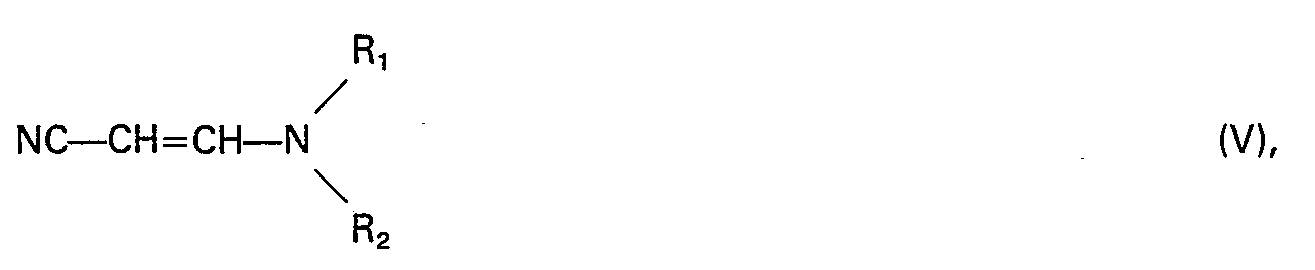
- Als Lösungsmittel kommen in Betracht aliphatische und aromatische Kohlenwasserstoffe, wie z.B. Benzol, Toluol, die Xylole oder Petroläther, vorzugsweise Toluol; ferner Aether wie z.B. Dioxan oder Tetrahydrofuran, insbesondere Tetrahydrofuran; sowie Alkohole wie z.B. Methanol oder Ethanol, insbesondere Ethanol. Ferner kommen in Betracht Gemische derartiger Lösungsmittel sowie Gemische der Lösungsmittel mit Wasser.
- Das Verfahren findet bei Temperaturen von 0° bis 200°C, vorzugsweise von 40° bis 130°C statt.
- Die als Ausgangsmaterial für die vorhergehende Reaktion dienende Verbindung der Formel IV ist ebenfalls neu. Sie kann beispielsweise hergestellt werden, indem man Verbindungen der Formel VI

- Die Benzaldehyde der Formel VI sind allgemein bekannt und können nach bekannten Verfahren hergestellt werden.
- Die neuen Verbindungen der Formel

- Ein weiterer Gegenstand vorliegender Erfindung betrifft die Herstellung von Verbindungen der Formel VII

- Bei Verwendung von Brom sind Temperaturen von 0° bis 80°C und bei Einsatz eines Katalysators Temperaturen von 150° bis 250°C bevorzugt. Als Katalysatoren kommen solche für Oxidationsreaktionen (Wasserstoffübertragung) geeignete in Betracht, wobei Palladium-Aktivkohle bevorzugt ist.
- Es kommen als Katalysatoren auch.mehrwertige Metallkationen in Frage. Technisch sehr vorteilhafte Kationen sind Cu++ und besonders Fe+++. Als Salze sind insbesondere FeC13 oder FeBr3 bevorzugt.
- Zur Oxidation wird Luft oder Sauerstoff durch das Reaktionsgemisch geleitet oder im Autoklaven unter Druck (z.B 2 bis 120 bar) aufgepresst. Als Lösungsmittel eignen sich Wasser oder wässrige LösungsmittelGemische mit Alkoholen (Methanol, Ethanol, Isopropanol etc.); Dioxan, Tetrahydrofuran; Dimethylsulfoxid; Dimethylformamid oder anderen mit Wasser mischbaren Lösungsmitteln. Der Temperaturbereich bei der Luftoxidation in Gegenwart von Metallsalzen beträgt in der Regel 0°C bis 90°C, bevorzugt 5° bis 80°C.
- Verbindungen der Formel VII sind teilweise bekannt, z.B. aus der DE-Offenlegungsschrift 29 27 480. Es wird dort gesagt, dass sie pflanzenfungizide Eigenschaften besitzen.
- Die erfindungsgemässen neuen Pyrrolinderivate der Formel 1 bilden eine wertvolle Bereicherung des Standes der Technik. So konnte überraschend festgestellt werden, dass die Verbindungen der Formel 1 ein für Freiland-Bedürfnisse sehr günstiges Mikrobizid-Spektrum gegen phytopathogene Pilze und Bakterien aufweisen. Sie können jedoch nicht nur im Ackerbau oder ähnlichen Einsatzgebieten zur Bekämpfung schädlicher Mikroorganismen an Kulturpflanzen, sondern zusätzlich im Vorratsschutz zur Konservierung verderblich Waren eingesetzt werden. Verbindungen der Formel I besitzen sehr vorteilhafte kurative, systemische und insbesondere präventive Eigenschaften und lassen sich zum Schutz von zahlreichen, insbesondere Freilandkulturen einsetzen. Mit den Wirkstoffen der Formel I können an Pflanzen oder an Pflanzenteilen (Früchte, Blüten, Laubwerk, Stengel, Knollen, Wurzeln) von unterschiedlichen Nutzpflanzenkulturen die auftretenden Mikroorganismen eingedämmt oder vernichtet werden, wobei auch später zuwachsende Pflanzenteile von derartigen Mikroorganismen verschont bleiben.
- Die Wirkstoffe sind beispielsweise gegen die den folgenden Klassen angehörenden phytopathogenen Pilze wirksam: Ascomycetes z.B. Erysiphe, Sclerotinia, Fusarium, Monilinia, Helminthosporium; Basidiomycetes wie z.B. Puccinia, Tilletia, Rhizoctonia; sowie die der Klasse der Phytomycetes angehörenden Oomycetes wie Phytophthora. Als Pflanzenschutzmittel können die Verbindungen der Formel I mit besonders gutem Erfolg gegen wichtige Schadpilze aus der Familie der Fungi imperfecti eingesetzt werden, so z.B. gegen Cercospora, Piricularia und vor allem gegen Botrytis. Botrytis spp. (B. cinera, B. allii) stellen mit der Grauschimmelfäule an Reben, Erdbeeren, Aepfeln, Zwiebeln und anderen Obst- und Gemüsesorten einen bedeutenden wirtschaftlichen Schadfaktor dar. Darüber hinaus lassen sich einige Verbindungen der Formel erfolgreich zum Schutz verderblicher Waren pflanzlicher oder tierischer Herkunft einsetzen. Sie bekämpfen Schimmelpilze wie Penicillium, Aspergillus, Rhizopus, Fusarium, Helminthosporium, Nigrospora und Alternaria sowie Bakterien wie Buttersäurebakterien und Hefen wie Candida.
- Als Pflanzenschutzmittel besitzen die Verbindungen der Formel I ein für die praktische Anwendung in der Landwirtschaft sehr günstiges Wirkungsspektrum zum Schutz von Kulturpflanzen, ohne diese durch unerwünschte Nebenwirkungen nachteilig zu beeinflussen.
- Sie können ferner als Beizmittel zur Behandlung von Saatgut (Früchte, Knollen, Körner) und Pflanzenstecklingen zum Schutz vor Pilzinfektionen sowie gegen im Erdboden auftretende phytopathogene Pilze eingesetzt werden.
- Die Erfindung betrifft somit auch mikrobizide Mittel sowie die Verwendung der Verbindungen der Formel I zur Bekämpfung phytopathogener Mikroorganismen, insbesondere pflanzenschädigender Pilze bzw. die präventive Verhütung eines Befalls an Pflanzen und an Vorräten pflanzlicher oder tierischer Herkunft.
- Darüber hinaus schliesst die vorliegende Erfindung auch die Herstellung agrochemischer Mittel ein, die gekennzeichnet ist durch das innige Vermischen der Aktivsubstanz mit einem oder mehreren hierin beschriebenen Substanzen bzw. Substanzgruppen. Eingeschlossen ist auch ein Verfahren zur Behandlung von Pflanzen oder Vorratsgütern, das sich durch Applikation der Verbindungen der Formel 1 bzw. der neuen Mittel auf die Pflanzen, Pflanzenteile, deren Standort oder das Substrat kennzeichnet.
- Als Zielkulturen für den Pflanzenschutz gelten im Rahmen dieser Erfindung beispielsweise folgende Pflanzenarten: Getreide: (Weizen, Gerste, Roggen, Hafer, Reis, Sorghum und Verwandte); Rüben: (Zucker-und Futterrüben); Kern-, Stein- und Beerenobst: (Aepfel, Birnen, Pflaumen, Pfirsiche, Mandeln, Kirschen, Erd-, Hirn- und Brombeeren); Hülsenfrüchte: (Bohnen, Linsen, Erbsen, Soja); Oelkulturen: (Raps, Senf, Mohn, Oliven, Sonnenblumen, Kokos, Rizinus, Kakao, Erdnüssen); Gurkengewächse: (Kürbis, Gurken, Melonen); Fasergewächse: (Baumwolle, Flachs, Hanf, Jute); Citrusfrüchte: (Orangen, Zitronen, Pampelmusen, Mandarinen); Gemüsesorten; (Spinat, Kopfsalat, Spargel, Kohlarten, Möhren, Zwiebeln, Tomaten, Kartoffeln, Paprika); Lorbeergewächse: (Avocado, Cinnamonum, Kampfer) oder Pflanzen wie Mais, Tabak, Nüsse, Kaffee, Zuckerrohr, Tee, Weinreben, Hopfen, Bananen- und Naturkautschukgewächse sowie Zierpflanzen (Compositen).
- Als Vorratsschutzmittel werden die Verbindungen der Formel I in unveränderter Form oder vorzugsweise zusammen mit den in der Formulierungstechnik üblichen Hilfsmitteln eingesetzt und werden z.B. zu Emulsionskonzentraten, streichfähigen Pasten, direkt versprühbaren oder verdünnbaren Lösungen, verdünnten Emulsionen, Spritzpulvern, löslichen Pulvern, Stäubemitteln, Granulaten, durch Verkapselungen in z.B. polymeren Stoffen in bekannter Weise verarbeitet. Die Anwendungsverfahren wie Versprühen, Verstreuen, Bestreicheh oder Giessen und die Form des Mittels werden den angestrebten Zielen und den gegebenen Verhältnissen angepasst. Günstige Aufwandmengen liegen im allgemeinen bei 0,01 bis höchstens 2 kg Aktivsubstanz pro 100 kg zu schützendes Substrat; sie hängen jedoch wesentlich von der Beschaffenheit (Grösse der Oberfläche, Konsistenz, Feuchtigkeitsgehalt) des Substrats und dessen Umgebungseinflüssen ab.
- Unter Lager- und Vorratsgütern sollen im Rahmen vorliegender Erfindung pflanzliche und/oder tierische Naturstoffe und deren Weiterverarbeitungsprodukte verstanden werden, beispielsweise die nachfolgend aufgezählten und aus dem natürlichen Lebenszyklus herausgenommenen Pflanzen sowie deren Pflanzenteile (Stengel, Blätter, Knollen, Samen, Früchte, Körner), die im frisch geernteten Zustand oder in weiterverarbeitbarer Form vorliegen (vorgetrocknet, befeuchtet, zerkleinert, gemahlen, geröstet). Als Beispiele, die keinen das Anwendungsgebiet limitierenden Charakter im Rahmen dieser Erfindung besitzen, seien folgende Ertragsgüter genannt: Getreide (wie Weizen, Gerste, Roggen, Hafer, Reis, Sorghum und Verwandte); Rüben (wie Möhren, Zucker- und Futterrüben); Kern-, Stein- und Beerenobst (wie Aepfel, Birnen, Pflaumen, Pfirsiche, Mandeln, Kirschen, Erd-, Hirn- und Brombeeren); Hülsenfrüchte (wie Bohnen, Linsen, Erbsen, Soja); Oelkulturen (wie Raps, Senf, Mohn, Oliven, Sonnenblumen, Kokos, Rizinus, Kakao, Erdnüsse); Gurkengewächse (wie Kürbis; Gurken, Melonen); Fasergewächse (wie Baumwolle, Flachs, Hanf, Jute, Nessel); Citrusfrüchte; Gemüsesorten (wie Spinat, Salat, Spargel, Kohlarten), Zwiebeln, Tomaten, Kartoffeln, Paprika): Lorbeergewächse (wie Avocadom, Cinnamonum, Kampfer) oder Mais, Tabak, Nüsse, Kaffee, Zuckerrohr, Tee, Weintrauben, Kastanien, Hopfen, Bananen, Gras und Heu.
- Als Naturprodukte tierischer Herkunft seien insbesondere getrocknete Fleisch- und Fischverarbeitungsprodukte wie Trockenfleisch, Trockenfisch, Fleischkonzentrate, Knochenmehl, Fischmehl und Tiertrockenfutter genannt.
- Das behandelte Vorratsgut wird durch Behandlung mit Verbindungen der Formel nachhaltig vor dem Befall durch Schimmelpilze und andere unerwünschte Mikroorganismen geschützt. Dadurch wird die Bildung toxischer und zum Teil karzinogener Schimmelpilze (Aflatoxine und Ochratoxine) unterbunden, das Gut vor dem Verderben bewahrt und dessen Qualität für längere Zeit aufrechterhalten. Das erfindungsgemässe Verfahren kann auf alle trockenen und feuchten Vorrats- und Lagergüter angewendet werden, die gegen Mikroorganismen, wie Hefen, Bakterien und insbesondere Schimmelpilze anfällig sind.
- Eine bevorzugtes Verfahren zum Aufbringen des Wirkstoffes besteht in einem Besprühen oder Benetzen des Substrats mit einer flüssigen Aufbereitung oder im Vermischen des Substrats mit einer festen Aufbereitung der Aktivsubstanz. Das beschriebene Konservierungs-Verfahren ist ein Teil der vorliegenden Erfindung.
- Wirkstoffe der Formel I werden üblicherweise in Form von Zusammensetzungen verwendet und können gleichzeitig oder nacheinander mit weiteren Wirkstoffen auf die zu behandelnde Flächen oder Pflanzen gegeben werden. Diese weiteren Wirkstoffe können sowohl Düngemittel, Spurenelement-Vermittler oder andere das Pflanzenwachstum beeinflussende Präparate sein. Es können aber auch selektive Herbizide, Insektizide, Fungizide, Bakterizide, Nematizide, Molluskizide oder Gemische mehrerer dieser Präparate sein, zusammen mit gegebenenfalls weiteren in der Formulierungstechnik üblichen Trägerstoffen, Tensiden oder anderen applikationsfördernden Zusätzen.
- Geeignete Träger und Zusätze können fest oder flüssig sein und entsprechen den in der Formulierungstechnik zweckdienlichen Stoffen, wie z.B. natürlichen oder regenerierten mineralischen Stoffen, Lösungs-, Dispergier-, Netz-, Haft-, Verdickungs-, Binde- oder Düngemitteln.
- Ein bevorzugtes Verfahren zum Aufbringen eines Wirkstoffes der Formel 1 bzw. eines agrochemischen Mittels, das Mindestens einen dieser Wirkstoffe enthält, ist das Aufbringen auf das Blattwerk (Blattapplikation). Anzahl der Applikationen und Aufwandmenge richten sich dabei nach dem Befallsdruck für den entsprechenden Erreger (Pilzsorte). Die Wirkstoffe der Formel I können aber auch über den Erdboden durch das Wurzelwerk in die Pflanze gelangen (systemische Wirkung), indem man den Standort der Pflanze mit einer flüssigen Zubereitung tränkt oder die Substanzen in fester Form in den Boden einbringt z.B. in Form von Granulat (Bodenapplikation). Die Verbindungen der Formel 1 können aber auch auf Samenkörner aufgebracht werden (Coating), indem man die Körner entweder in einer flüssigen Zubereitung des Wirkstoffs tränkt oder sie mit einer festen Zubereitung beschichtet. Darüber hinaus sind in besonderen Fällen weitere Applikationsarten möglich, so z.B. die gezielte Behandlung der Pflanzenstengel oder der Knospen.
- Die Verbindungen der Formel 1 werden dabei in unveränderter Form oder vorzugsweise zusammen mit den in der Formulierungstechnik üblichen Hilfsmittel eingesetzt und werden daher z.B. zu Emulsionskonzentraten, streichfähigen Pasten, direkt versprühbaren oder verdünnbaren Lösungen, verdünnten Emulsionen, Spritzpulvern, löslichen Pulvern, Stäubemitteln, Granulaten, durch Verkapselungen in z.B. polymeren Stoffen in bekannter Weise verarbeitet. Die Anwendungsverfahren wie Versprühen, Vernebeln, Verstäuben, Verstreuen, Bestreichen oder Giessen werden gleich wie die Art der Mittel den angestrebten Zielen und den gegebenen Verhältnissen entsprechend gewählt. Günstige Aufwandmengen liegen im allgemeinen bei 50 g bis 5 kg Aktivsubstanz (AS) je ha; bevorzugt 100 g bis 2 kg AS/ha, insbesondere 100 g bis 600 g AS/ha.
- Die Formulierungen, d.h. die den Wirkstoff der Formel 1 und gegebenenfalls einen festen oder flüssigen Zusatzstoff enthaltenden Mittel, Zubereitungen oder Zusammensetzungen werden in bekannter Weise hergestellt, z.B. durch inniges Vermischen und/oder Vermahlen der Wirkstoffe mit Streckmitteln, wie z.B. mit Lösungsmitteln, festen Trägerstoffen, und gegebenfalls oberflächenaktiven Verbindungen (Tensiden).
- Als Lösungsmittel können in Frage kommen: Aromatische Kohlenwasserstoffe, bevorzugt die Fraktionen Cs bis C12, wie z.B. Xylolgemische oder substituierte Naphthaline, Phthalsäureester wie Dibutyl-oder Dioctylphthalat, aliphatische Kohlenwasserstoffe wie Cyclohexan oder Paraffine, Alkohole und Glykole sowie deren Ether und Ester, wie Ethanol, Ethylenglykol, Ethylenglykolmonomethyl- oder Ethylether, Ketone wie Cyclohexanon, stark polare Lösungsmittel wie N-Methyl-2-pyrrolidon, Dimethylsulfoxid oder Dimethylformamid, sowie gegebenenfalls epoxydierte Pflanzenöle wie epoxydiertes Kokosnussöl oder Sojaöl; oder Wasser.
- Als feste Trägerstoffe, z.B. für Stäubemittel und dispergierbare Pulver, werden in der Regel natürliche Gesteinsmehle verwendet, wie Calcit, Talkum, Kaolin, Montmorillonit oder Attapulgit. Zur Verbesserung der physikalischen Eigenschaften können auch hochdisperse Kieselsäure oder hochdisperse saugfähige Polymerisate zugesetzt werden. Als gekörnte, adsorptive Granulatträger kommen poröse Typen wie z.B. Bimsstein, Ziegelbruch, Sepiolit oder Bentonit, als nicht sorptive Trägermaterialien z.B. Calcit oder Sand in Frage. Darüber hinaus kann eine Vielzahl von vorgranulierten Materialien anorganischer oder organischer Natur wie insbesondere Dolomit oder zerkleinerte Pflanzenrückstände verwendet werden.
- Besonder vorteilhafte, applikationsfördernde Zuschlagstoffe, die zu einer starken Reduktion der Aufwandmenge führen können, sind ferner natürliche (tierische oder pflanzliche) oder synthetische Phospholipide aus der Reihe der Kephaline und Lecithine, wie z.B. Phosphatidylethanolamin, Phosphatidylserin, Phosphatidylglycerin, Lysolecithin, Plasmalogene oder Cardiolipin, die man beispielsweise aus tierischen oder pflanzlichen Zellen, insbesondere aus Hirn, Herz, Leber, Eidotter oder Sojabohnen gewinnen kann. Verwendbare Handelsmischungen sind z.B. Phosphatidylchlorin-Mischungen. Synthetische Phospholipide sind z.B. Dioctanoylphosphatidylchlolin und Dipalmitoylphophatidylcholin.
- Als oberflächenaktive Verbindungen kommen je nach Art des zu formulierenden Wirkstoffes der Formel I nichtionogene, kation- und/oder anionaktive Tenside mit guten Emulgier-, Dispergier- und Netzeigenschaften in Betracht. Unter Tensiden sind auch Tensidgemische zu verstehen.
- Geeignete anionische Tenside können sowohl sog. wasserlösliche Seifen, als auch wasserlösliche synthetische oberflächenaktive Verbindungen sein.
- Als Seifen seien die Alkali-, Erdalkali- oder gegebenenfalls substituierten Ammoniumsalze von höheren Fettsäuren (C1lY-C22), wie z.B. die Na- oder K-Salze der Oel- oder Stearinsäure, oder von natürlichen Fettsäuregemischen, die z.B. aus Kokosnuss- oder Talgöl gewonnen werden können. Ferner sind auch die Fettsäure-methyltaurinsalze zu erwähnen.
- Häufiger werden jedoch sog. synthetische Tenside verwendet, insbesondere Fettsulfonate, Fettsulfate, sulfonierte Benzimidazolderivate oder Alkylsulfonate.
- Die Fettsulfonate oder -sulfate liegen in der Regel als Alkali-, Erdalkali- oder gegebenenfalls substituierte Ammoniumsalze vor und weisen einen Alkylrest mit 8 bis 22 C-Atomen auf, wobei Alkyl auch den Alkylteil von Acylresten einschliesst, z.B. Das Na- oder Ca-Salz der Ligninsulfonsäure, des Dodecylschwefelsäureesters oder eines aus natürlichen Fettsäuren hergestellten Fettalkoholsulfatgemisches. Hierher gehören auch die Salze der Schwefelsäureester und Sulfonsäuren von Fettalkohol-Ethylenoxyd-Addukten. Die sulfonierten Benzimidazolderivate enthalten vorzugsweise 2-Sulfonsäuregruppen und einen Fettsäurerest mit 8-22 C-Atomen. Alkylarylsulfonate sind z.B. die Na-, Ca- oder Triethanolaminsalze der Dodecylbenzolsulfonsäure, der Dibutylnaphthalinsulfonsäure, oder eines Naphthalinsulfonsäure-Formaldehydkondensationsproduktes.
- Ferner kommen auch entsprechende Phosphate wie z.B. Salze des Phosphorsäureesters eines p-Nonylphenol-(4-14)-Ethylenoxyd-Adduktes in Frage.
- Als nichtionische Tenside kommen in erster Linie Polyglykoletherderivate von aliphatischen oder cycloaliphatischen Alkoholen, gesättigten oder ungesättigten Fettsäuren und Alkylphenolen in Frage, die 3 bis 30 Glykolethergruppen und 8 bis 20 Kohlenstoffatome im (aliphatischen) Kohlenwasserstoffrest und 6 bis 18 Kohlenstoffatome im Alkylrest der Alkylphenole enthalten können.
- Weitere geeignete nichtionische Tenside sind die wasserlöslichen, 20 bis 250 Aethylenglykol- äthergruppen und 10 bis 100 Propylenglykolethergruppen enthaltenden Polyethylenoxidaddukte an Polypropylenglykol, Aethylendiaminopolypropylenglykol und Alkylpolypropylenglykol mit 1 bis 10 Kohlenstoffatomen in der Alkylkette. Die genannten Verbindungen enthalten üblicherweise pro Propylenglykol-Einheit 1 bis 5 Ethylenglykoleinheiten.
- Als Beispiele nichtionischer Tenside seien Nonylphenolpolyethoxyethanole, Ricinusölpolyglykolether, Polypropylen-Polyethylenoxydaddukte, Tributylphenoxypolyethylenethanol, Polyethylenglykol und Octylphenoxypolyethoxyethanol erwähnt.
- Ferner kommen auch Fettsäureester von Polyoxyethylensorbitan wie das Polyoxyethylensorbitantrioleat in Betracht.
- Bei den kationischen Tensiden handelt es sich vor allem um quartäre Ammoniumsalze, welche als N-Substituenten mindestens einen Alkylrest mit 8 bis 22 C-Atomen enthalten und als weitere Substituenten niedrige, gegebenenfalls halogenierte Alkyl-, Benzyl- oder niedrige Hydroxyalkylreste aufweisen. Die Salze liegen vorzugsweise als Halogenide, Methylsulfate oder Ethylsulfate vor, z.B. das Stearyltrimethylammoniumchlorid oder das Benzyldi(2-chlorethyl)ethylammoniumbromid. Auf dem Vorratsschutzgebiet werden die für die menschliche und tierische Ernährung unbedenklichen Zuschlagstoffe bevorzugt.
- Die in der Formulierungstechnik gebräuchlichen Tenside sind u.a. in folgenden Publikationen beschrieben: "McCutcheon's Detergents and Emulsifiers Annual" MC Püblishing Corp., Ridgewood New Jersey, 1981;
- Helmut Stache "Tensid-Taschenbuch" Carl Hanser-Verlag München/Wien 1981.
- Die agrochemischen Zubereitungen enthalten in der Regel 0,1 bis 99%, insbesondere 0,1 bis 95% Wirkstoff der Formel I, 99,9 bis 1 %, insbesondere 99,8 bis 5% eines festen oder flüssigen Zusatzstoffes und 0 bis 25%, insbesondere 0,1 bis 25% eines Tensides.
- Während als Handelsware eher konzentrierte Mittel bevorzugt werden, verwendet der Endverbraucher in der Regel verdünnte Mittel.
- Die Mittel können auch weitere Zusätze wie Stabilisatoren, Entschäumer, Viskositätsregulatoren, Bindemittel, Haftmittel sowie Dünger oder andere Wirkstoffe zur Erzielung spezieller Effekte enthalten.
- Derartige agrochemische Mittel sind ein Bestandteil der vorliegenden Erfindung.
-

- 28,0 g 2,3-Dichlorbenzaldehyd, 13,9 g Ammoniumacetat, 13,9 ml Nitromethan und 120 ml Eisessig werden 2 Stunden unter Rückfluss erhitzt. Nach dem Abkühlen wird das Reaktionsgemisch auf Eis gegossen und 30 Minuten gerührt. Der gebildete Niederschlag wird dann abfiltriert, mit Wasser gewaschen und unter Vakuum getrocknet. Es werden schwach gelbliche Kristalle gewonnen.
- Smp. 89―91°C. IR (CHCl3) in cm-1: 1650 (C=C); 1530 und 1350 (NO2). NMR (CDCI3) in ppm: 7,2-7,7 (m, 4H); 8,50 (d, J=15 Hz, 1H).
-

- Eine Lösung von 109 g 1-(2',3'-Dichlorphenyl)-2-nitroäthylen, 49 g 1-Cyan-2-dimethylamino-äthylen und 1,0 Liter abs. Toluol wird 50 Stunden unter Rückfluss erhitzt. Nach dem Akühlen wird das Toluol abgedampft und der erhaltene Rückstand mit Diäthyläther gerührt. Anschliessend wird der Niederschlag abfiltriert und mit wenig Diäthyläther nachgewaschen. Es werden beige-farbene Kristalle erhalten.
- Smp. 114-115°C. IR (CHCI3) in cm-': 2180 (CN), 1635 (C=C), 1555 (N02).
- NMR (CDCI3) in ppm: 3,08 (s, 6H); 4,6-5,0 (ABX, 3H); 6,60 (s, 1H); 7,2-7,45 (ABX, 3H).
-

- Smp. 74―77°C. IR (CHCI3) in cm-1; 2200 (CN), 1630 (C=C), 1560 (NO2).
- NMR (CDCI3) in ppm: 4,5 (m, 4H); 4,7 (m, 4H); 4,8 (ABX, 3H); 6,60 (s, 1 H); 7,2-7,5 (m, 3H).
-

- a) 6,28 g 1-Dimethylamino-2-cyano-3-(2',3'-dichlorphenyl)-4-nitrobut-1-en werden in 100 ml Essigsäureäthylester bei 35° und 4 bar in Gegenwart von 1,2 g Platin-Aktivkohle-Katalysator (5 %ig) bis zum Stillstand der Wasserstoffaufnahme (=1313 ml H2, entsprechend 98% d.Th.) hydriert. Anschliessend wird das Gemisch vom Katalysator abfiltriert und die erhaltene Lösung eingedampft.
- b) Der Rückstand von (a) wird in 45 ml Eisessig aufgenommen und 1 Stunde bei 50°C gerührt. Anschliessend wird eingedampft und der Rückstand mit Essigsäureäthylester/Wasser verteilt. Die organische Phase wird über MgS04 getrocknet und dann eingedampft. Der erhaltene Rückstand kristallisiert langsam durch und wird mit Diäthyläther digeriert. Es wird ein weisses Pulver erhalten.
- Smp. 150-1510C. IR (CHCI3) in cm-1; 3450 (NH), 2200 (CN), 1605 (C=C).
- NMR (CDCI3) in ppm: 3,4 (dxq, 1H); 4,2 (m, 2H, davon 1H mit D2O austauschbar); 4,8 (q, 1H); 7,2-7,4 (m, 4H). MG: 238.
-

- Smp. 150°C. IR (CHCI3) in cm-1: 3450 (NH), 2200 (CN), 1605 (C=C).
- NMR (CDCI3) in ppm: 3,4 (dxq;1H); 4,2 (m, 2H, davon 1H mit D20 austauschbar); 4,8 (q, 1H); 7,2-7,4 (m, 4H). MG: 238.
-

- a) 1,0 g 3-Cyano-4-(2',3'-dichlorphenyl)-△2-pyrrolin wird in 15 ml CHCI3 gelöst und mit 0,67 g Brom versetzt. Nach 15 Minuten ist dünnschichtchromatographisch kein Edukt mehr nachzuweisen. Die Reaktionslösung wird mit 1,4 ml Triäthylamin versetzt und 1 Stunde bei 40°C gerührt. Anschliessend wird das Reaktionsgemisch mit Wasser gewaschen, dann die organische Phase über MgS04 getrocknet und eingedampft. Der Rückstand wird in Toluol/Essigsäureäthylester (4:1 VN) gelöst über Kieselgel chromatographiert. Aus dem Eluat wird das hergestellte Produkt erhalten.
- Smp. 148―150°C.
- b) 5,2 g 3-Cyano-4-(2',3'-dichlorphenyl)-△2-pyrrolin werden in 100 ml Mesitylen in Gegenwart von 0,5 g Palladium/Aktivkohle-Katalysator 14 Stunden bei 180-200°C gerührt. Anschliessend wird der Katalysator abfiltriert und das Filtrat eingedampft. Der Rückstand wird in Toluol/Essigsäureäthylester (4:1 V/V) gelöst über Kieselgel chromatographiert. Aus dem Eluat wird das hergestellte Produkt erhalten.
- Smp. 149―151°C
- c) 0,5 g 3-Cyano-4-(2',3'-dichlorphenyl)-△2-pyrrolin werden mit 1,0 g FeCl3 in einem Gemisch von 12 ml Wasser/Ethanol (3:1) 24 Stunden bei Raumtemperatur unter Einleiten von Luft gerührt. Das Reaktionsgemisch wird auf Wasser gegossen und dreimal mit 10 ml Aethylacetat extrahiert. Die organische Phase wird mit Wasser gewaschen, über MgS04 getrocknet und eingedampft. Der Rückstand wird durch Verreiben mit Diäthyläther kristallisiert. Man erhält beigefarbene Kristalle.
- Smp. 150―151°C.
- Die einzelnen Reaktionsschritte des erfindungsgemässen Herstellungsverfahrens lassen erkennen, dass der Substituent Rn im Phenylkern keinen nennenswerten Einfluss auf den Reaktionsverlauf ausübt. Auf gleiche Art lassen sich beispielsweise auch folgende Verbindungen herstellen, die als Fungizide einsetzbar sind:
- 3-Cyano-4-(2-chlorphenyl)-△2-pyrrolin,
- 3-Cyano-4-(2,5-dichlorphenyl)-△2-pyrrolin,
- 3-Cyano-4-(2-trifluorphenyl)-△2-pyrrolin,
- 3-Cyano-4-(2-bromophenyl)-△2-pyrrolin,
- 3-Cyano-4-(3-bromophenyl)-△2-pyrrolin,
- 3-Cyano-4-(3-fluorophenyl)-△2-pyrrolin,
- 3-Cyano-4-(3-tolyl)-△2-pyrrolin,
- 3-Cyano-4-(4-chlorphenyl)-△2-pyrrolin,
- 3-Cyano-4-(3-chlorphenyl)-△2-pyrrolin,
- 3-Cyano-4-(4-bromphenyl)-△2-pyrrolin,
- 3-Cyano-4-(4-fluorphenyl)-△2-pyrrolin,
- 3-Cyano-4-(4-tolyl)-△2-pyrrolin,
- 3-Cyano-4-(2,4-dichlorphenyl)-A2-pyrrolin.
- Durch Oxidation sind aus solchen Verbindungen der Formel I entsprechende Pyrrol-Derivate der Formel VII herstellbar.
-

- Aus solchen Konzentraten können durch Verdünnen mit Wasser Emulsionen jeder gewünschten Konzentration hergestellt werden.

- (MG=Molekulargewicht)
- Die Lösungen sind zur Anwendung in Form kleinster Tropfen geeignet.
-

- Der Wirkstoff wird in Methylenchlorid gelöst, auf den Träger aufgesprüht und das Lösungsmittel anschliessend im Vakuum abgedampft.

- Durch inniges Vermischen auf Trägerstoffe mit dem Wirkstoff erhält man gebrauchsfertige Stäubemittel.
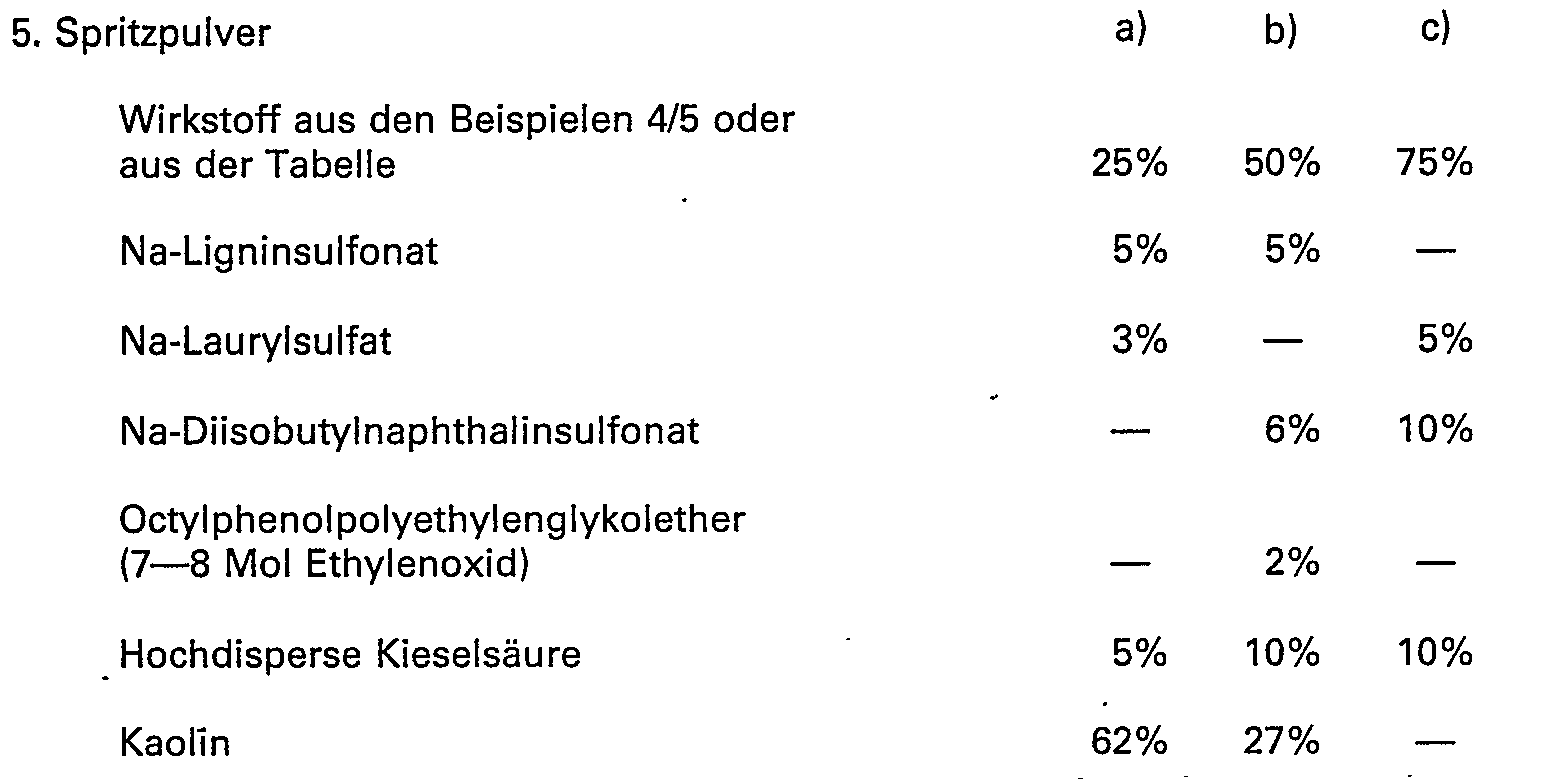
- Der Wirkstoff wird mit den Zusatzstoffen gut vermischt und in einer geeigneten Mühle gut vermahlen. Man erhält Spritzpulver, die sich mit Wasser zu Suspensionen jeder gewünschten Konzentration verdünnen lassen.
-

- Aus diesem Konzentrat können durch Verdünnen mit Wasser Emulsionen jeder gewünschten Konzentration hergestellt werden.

- Man erhält anwendungsfertige Stäubemittel, indem der Wirkstoff mit dem Träger vermischt und auf einer geeigneten Mühle vermahlen wird.
-

- Der Wirkstoff wird mit den Zusatzstoffen vermischt, vermahlen und mit Wasser angefeuchtet. Dieses Gemisch wird extrudiert und anschliessend im Luftstrom getrocknet.
-

- Der fein gemahlene Wirkstoff wird in einem Mischer auf das mit Polyethylenglykol angefeuchtete Kaolin gleichmässig aufgetragen. Auf diese Weise erhält man staubfreie Umhüllungs-Granulate.
-

- Der fein gemahlene Wirkstoff wird mit den Zusatzstoffen innig vermischt. Man erhält so ein Suspensions-Konzentrat, aus welchem durch Verdünnen mit Wasser Suspensionen jeder gewünschten Konzentration hergestellt werden können.
- Ca. 10 cm hohe Bohnen-Pflanzen wurden mit einer aus Spritzpulver der Wirkstoffes hergestellten Spritzbrühe (0,002% Aktivsubstanz) besprüht. Nach 48 Stunden wurden die behandelten Pflanzen mit einer Konidiensuspension des Pilzes infiziert. Nach einer Inkubation der infizierten Pflanzen während 3 Tagen bei 95-100% relativer Luftfeuchtigkeit und 21°C erfolgte die Beurteilung des Pilzbefalls. Die Verbindungen aus den Beispielen 4 und 5 und aus der Tabelle hemmten nicht nur im obigen Modellversuch sondern auch im Freiland die Pilzinfektion sehr stark. Bei einer Konzentration von 0,002% erweist sich z.B. die Verbindung der Beispiele 4/5 als voll wirksam (Krankheitsbefall 0 bis 5%). Der Befall infizierter jedoch unbehandelter Bohnenpflanzen betrug 100%.
- Künstlich verletzte Aepfel wurden behandelt, indem eine aus Spritzpulver der Wirksubstanz hergestellte Spritzbrühe (0,002% Aktivsubstanz) auf die Verletzungsstellen aufgetropft wurde. Die behandelten Früchte wurden anschliessend mit einer Sporensuspension von Botrytis cinerea inokuliert und während einer Woche bei einer hohen Luftfeuchtigkeit und ca. 20°C inkubiert. Bei der Auswertung wurden die angefaulten Verletzungsstellen gezählt und daraus die fungizide Wirkung der Testsubstanz abgeleitet. Unter anderen hemmt die Verbindung der Beispiele 4/5 den Pilzbefall im Vergleich zu unbehandelten Kontrollfrüchten (100% Befall) vollständig.
Claims (30)


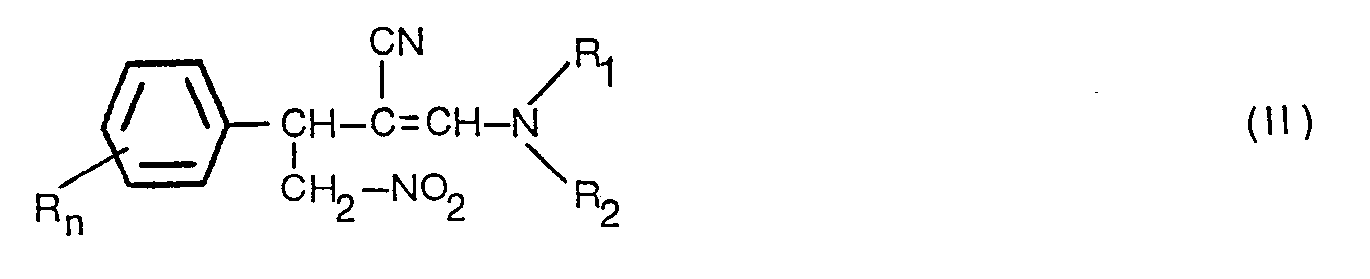


Priority Applications (1)
| Application Number | Priority Date | Filing Date | Title |
|---|---|---|---|
| AT85114930T ATE53574T1 (de) | 1984-11-28 | 1985-11-25 | Mikrobizide mittel. |
Applications Claiming Priority (2)
| Application Number | Priority Date | Filing Date | Title |
|---|---|---|---|
| CH567784 | 1984-11-28 | ||
| CH5677/84 | 1984-11-28 |
Publications (2)
| Publication Number | Publication Date |
|---|---|
| EP0183217A1 EP0183217A1 (de) | 1986-06-04 |
| EP0183217B1 true EP0183217B1 (de) | 1990-06-13 |
Family
ID=4297546
Family Applications (1)
| Application Number | Title | Priority Date | Filing Date |
|---|---|---|---|
| EP85114930A Expired - Lifetime EP0183217B1 (de) | 1984-11-28 | 1985-11-25 | Mikrobizide Mittel |
Country Status (10)
| Country | Link |
|---|---|
| US (2) | US4687861A (de) |
| EP (1) | EP0183217B1 (de) |
| JP (1) | JPS61137858A (de) |
| KR (1) | KR860004022A (de) |
| AT (1) | ATE53574T1 (de) |
| AU (2) | AU586653B2 (de) |
| CA (1) | CA1253509A (de) |
| DE (1) | DE3578171D1 (de) |
| IL (1) | IL77153A0 (de) |
| ZA (1) | ZA859068B (de) |
Cited By (1)
| Publication number | Priority date | Publication date | Assignee | Title |
|---|---|---|---|---|
| JP2004509865A (ja) * | 2000-09-22 | 2004-04-02 | バイエル・クロツプサイエンス・アクチエンゲゼルシヤフト | 有害生物防除剤としてのデルタ1−ピロリン類 |
Families Citing this family (8)
| Publication number | Priority date | Publication date | Assignee | Title |
|---|---|---|---|---|
| EP0174910B1 (de) * | 1984-09-12 | 1990-04-04 | Ciba-Geigy Ag | Verfahren zur Herstellung von 4-Phenyl-pyrrol-derivaten |
| EP0236272B1 (de) * | 1986-03-04 | 1991-06-12 | Ciba-Geigy Ag | Fungizide Verwendung eines Cyanopyrrol-Derivates |
| DE3718375A1 (de) * | 1987-06-02 | 1988-12-15 | Bayer Ag | Verfahren zur herstellung von 3-cyano-4-aryl-pyrrolen |
| US4860706A (en) * | 1987-09-14 | 1989-08-29 | Aisan Kogyo Kabushiki Kaisha | Throttle body |
| DE3737984A1 (de) * | 1987-11-09 | 1989-08-03 | Bayer Ag | 3-cyano-4-phenyl-pyrrole |
| US4958030A (en) * | 1988-12-12 | 1990-09-18 | Ciba-Geigy Corporation | Process for the preparation of 3-phenylpyrrole derivatives |
| US5118816A (en) * | 1990-12-26 | 1992-06-02 | American Cyanamid Company | 2-aryl-5-(trifluoromethyl)-2-pyrroline compounds useful in the manufacture of insecticidal, nematocidal and acaricidal arylpyrroles |
| US5935623A (en) * | 1998-01-15 | 1999-08-10 | Milwhite, Inc. | Use of thermally treated clays in animal feeds |
Family Cites Families (11)
| Publication number | Priority date | Publication date | Assignee | Title |
|---|---|---|---|---|
| US2382915A (en) * | 1941-12-17 | 1945-08-14 | Ici Ltd | Manufacture of substituted pyrroles |
| DE1470386A1 (de) * | 1963-12-20 | 1969-05-29 | Union Carbide Corp | Verfahren zur Herstellung von substituierten Dihydropyrrolderivaten |
| US3462451A (en) * | 1966-04-25 | 1969-08-19 | Upjohn Co | 2,3-bis(alkoxyphenyl)pyrroles |
| FR1516776A (fr) * | 1966-07-21 | 1968-03-15 | Rhone Poulenc Sa | Nouveaux dérivés du pyrrole et leur préparation |
| BR6915082D0 (pt) * | 1969-05-16 | 1973-03-08 | Wellcome Found | Processo de preparacao de benzil-pirimidinas |
| US3869470A (en) * | 1973-07-31 | 1975-03-04 | Phillips Petroleum Co | Dehydrogenation of pyrrolidines |
| JPS5511524A (en) * | 1978-07-10 | 1980-01-26 | Nippon Soda Co Ltd | Cyanopyrrole derivative, its preparation and agricultural and horticultural fungicide |
| US4471126A (en) * | 1982-04-26 | 1984-09-11 | Nippon Soda Company Limited | Method for the production of 3-phenylpyrrole |
| US4567052A (en) * | 1983-06-17 | 1986-01-28 | Ciba-Geigy Corporation | 3-Phenyl-4-cyanopyrrole derivatives, the preparation thereof, and method of use thereof as microbicides |
| US4546099A (en) * | 1983-07-22 | 1985-10-08 | Ciba-Geigy Corporation | N-Aminomethyl-3-phenyl-4-cyanopyrrole derivatives, compositions and use thereof as microbicides |
| US4680413A (en) * | 1986-01-17 | 1987-07-14 | Nippon Soda Co., Ltd. | Process for the production of 3-phenyl-4-cyanopyrroles |
-
1985
- 1985-11-22 US US06/800,845 patent/US4687861A/en not_active Expired - Fee Related
- 1985-11-25 DE DE8585114930T patent/DE3578171D1/de not_active Expired - Lifetime
- 1985-11-25 EP EP85114930A patent/EP0183217B1/de not_active Expired - Lifetime
- 1985-11-25 AT AT85114930T patent/ATE53574T1/de not_active IP Right Cessation
- 1985-11-26 IL IL77153A patent/IL77153A0/xx not_active IP Right Cessation
- 1985-11-26 CA CA000496211A patent/CA1253509A/en not_active Expired
- 1985-11-27 AU AU50396/85A patent/AU586653B2/en not_active Ceased
- 1985-11-27 ZA ZA859068A patent/ZA859068B/xx unknown
- 1985-11-27 KR KR1019850008861A patent/KR860004022A/ko not_active Ceased
- 1985-11-28 JP JP60266278A patent/JPS61137858A/ja active Pending
-
1987
- 1987-06-03 US US07/057,147 patent/US4778901A/en not_active Expired - Fee Related
-
1989
- 1989-05-18 AU AU34914/89A patent/AU612838B2/en not_active Expired - Fee Related
Cited By (1)
| Publication number | Priority date | Publication date | Assignee | Title |
|---|---|---|---|---|
| JP2004509865A (ja) * | 2000-09-22 | 2004-04-02 | バイエル・クロツプサイエンス・アクチエンゲゼルシヤフト | 有害生物防除剤としてのデルタ1−ピロリン類 |
Also Published As
| Publication number | Publication date |
|---|---|
| ZA859068B (en) | 1986-07-30 |
| ATE53574T1 (de) | 1990-06-15 |
| KR860004022A (ko) | 1986-06-16 |
| AU612838B2 (en) | 1991-07-18 |
| US4778901A (en) | 1988-10-18 |
| EP0183217A1 (de) | 1986-06-04 |
| CA1253509A (en) | 1989-05-02 |
| DE3578171D1 (de) | 1990-07-19 |
| JPS61137858A (ja) | 1986-06-25 |
| US4687861A (en) | 1987-08-18 |
| AU3491489A (en) | 1989-09-07 |
| IL77153A0 (en) | 1986-04-29 |
| CA1256869C (de) | 1989-07-04 |
| AU5039685A (en) | 1986-06-05 |
| AU586653B2 (en) | 1989-07-20 |
Similar Documents
| Publication | Publication Date | Title |
|---|---|---|
| EP0206999B1 (de) | Mikrobizide Mittel | |
| EP0275955B1 (de) | Mikrobizides Mittel | |
| EP0182738A2 (de) | Verfahren zur Herstellung fungizid aktiver 4-Phenyl-pyrrol-Derivate | |
| EP0388838B1 (de) | Schädlingsbekämpfungsmittel | |
| DE3801233A1 (de) | Mikrobizides mittel | |
| EP0276432A2 (de) | Schädlingsbekämpfungsmittel | |
| EP0236272A1 (de) | Fungizide Verwendung eines Cyanopyrrol-Derivates | |
| EP0133247B1 (de) | N-Aminomethyl-3-phenyl-4-cyanopyrrol-Derivate, deren Herstellung und Verwendung als Mikrobizide | |
| EP0198797B1 (de) | Schädlingsbekämpfungsmittel | |
| EP0346841A2 (de) | 1-Aryl-naphthoesäureamide und diese enthaltende mikrobizide Mittel | |
| EP0310558A2 (de) | Mikrobizide Mittel | |
| EP0430033A2 (de) | Mikrobizide Mittel | |
| EP0182737A2 (de) | 3-Phenylpyrrolderivate, Verfahren zu ihrer Herstellung und ihre Verwendung als Schädlingsbekämpfungsmittel | |
| EP0130149B1 (de) | 3-Phenyl-4-cyanopyrrol-Derivate, Verfahren zu deren Herstellung und deren Verwendung als Mikrobizide | |
| EP0063101B1 (de) | Nitroaryl-alkylsulfon-derivate als Gametozide | |
| EP0183217A1 (de) | Mikrobizide Mittel | |
| EP0457726B1 (de) | 2-Anilino-pyrimidin Derivate als Schädlingsbekämpfungsmittel | |
| EP0655441B1 (de) | Kristallmodifikation von (4-Cyclopropyl-6-methyl-pyrimidin-2-yl)- phenyl-amin, und Verfahren zu dessen Herstellung | |
| EP0386681A1 (de) | 3-Aryl-4-cyano-pyrrol-Derivate, Verfahren zu ihrer Herstellung und diese enthaltende mikrobiozide Mittel | |
| EP0096142B1 (de) | Mikrobizide Sulfenyl-Pyrrole | |
| DD295160A5 (de) | Mikrobizide mittel | |
| EP0065483A1 (de) | Mikrobizide Acylanilin- und Acylnaphthylamin-Derivate, Verfahren zu deren Herstellung und ihre Verwendung | |
| EP0121651B1 (de) | Phenyl-sulfonylharnstoffe als Bakterizide | |
| DE3941160A1 (de) | Lagerungsstabile salze von acyl-cyclohexandion-oximaethern mit herbizider und das pflanzenwachstum regulierender wirkung | |
| EP0207000B1 (de) | Mikrobizide |
Legal Events
| Date | Code | Title | Description |
|---|---|---|---|
| PUAI | Public reference made under article 153(3) epc to a published international application that has entered the european phase |
Free format text: ORIGINAL CODE: 0009012 |
|
| 17P | Request for examination filed |
Effective date: 19851125 |
|
| AK | Designated contracting states |
Kind code of ref document: A1 Designated state(s): AT BE CH DE FR GB IT LI LU NL SE |
|
| 17Q | First examination report despatched |
Effective date: 19890123 |
|
| RBV | Designated contracting states (corrected) |
Designated state(s): AT BE CH DE FR GB IT LI LU NL |
|
| GRAA | (expected) grant |
Free format text: ORIGINAL CODE: 0009210 |
|
| AK | Designated contracting states |
Kind code of ref document: B1 Designated state(s): AT BE CH DE FR GB IT LI LU NL |
|
| REF | Corresponds to: |
Ref document number: 53574 Country of ref document: AT Date of ref document: 19900615 Kind code of ref document: T |
|
| ITF | It: translation for a ep patent filed | ||
| REF | Corresponds to: |
Ref document number: 3578171 Country of ref document: DE Date of ref document: 19900719 |
|
| ET | Fr: translation filed | ||
| GBT | Gb: translation of ep patent filed (gb section 77(6)(a)/1977) | ||
| PLBE | No opposition filed within time limit |
Free format text: ORIGINAL CODE: 0009261 |
|
| STAA | Information on the status of an ep patent application or granted ep patent |
Free format text: STATUS: NO OPPOSITION FILED WITHIN TIME LIMIT |
|
| 26N | No opposition filed | ||
| ITTA | It: last paid annual fee | ||
| PGFP | Annual fee paid to national office [announced via postgrant information from national office to epo] |
Ref country code: FR Payment date: 19920918 Year of fee payment: 8 |
|
| PGFP | Annual fee paid to national office [announced via postgrant information from national office to epo] |
Ref country code: DE Payment date: 19921001 Year of fee payment: 8 |
|
| PGFP | Annual fee paid to national office [announced via postgrant information from national office to epo] |
Ref country code: LU Payment date: 19921014 Year of fee payment: 8 |
|
| PGFP | Annual fee paid to national office [announced via postgrant information from national office to epo] |
Ref country code: AT Payment date: 19921020 Year of fee payment: 8 |
|
| PGFP | Annual fee paid to national office [announced via postgrant information from national office to epo] |
Ref country code: GB Payment date: 19921026 Year of fee payment: 8 |
|
| PGFP | Annual fee paid to national office [announced via postgrant information from national office to epo] |
Ref country code: NL Payment date: 19921130 Year of fee payment: 8 |
|
| PGFP | Annual fee paid to national office [announced via postgrant information from national office to epo] |
Ref country code: BE Payment date: 19921211 Year of fee payment: 8 |
|
| PGFP | Annual fee paid to national office [announced via postgrant information from national office to epo] |
Ref country code: CH Payment date: 19921214 Year of fee payment: 8 |
|
| EPTA | Lu: last paid annual fee | ||
| PG25 | Lapsed in a contracting state [announced via postgrant information from national office to epo] |
Ref country code: LU Free format text: LAPSE BECAUSE OF NON-PAYMENT OF DUE FEES Effective date: 19931125 Ref country code: GB Effective date: 19931125 Ref country code: AT Effective date: 19931125 |
|
| PG25 | Lapsed in a contracting state [announced via postgrant information from national office to epo] |
Ref country code: LI Effective date: 19931130 Ref country code: CH Effective date: 19931130 Ref country code: BE Effective date: 19931130 |
|
| BERE | Be: lapsed |
Owner name: CIBA-GEIGY A.G. Effective date: 19931130 |
|
| PG25 | Lapsed in a contracting state [announced via postgrant information from national office to epo] |
Ref country code: NL Effective date: 19940601 |
|
| NLV4 | Nl: lapsed or anulled due to non-payment of the annual fee | ||
| GBPC | Gb: european patent ceased through non-payment of renewal fee |
Effective date: 19931125 |
|
| PG25 | Lapsed in a contracting state [announced via postgrant information from national office to epo] |
Ref country code: FR Effective date: 19940729 |
|
| REG | Reference to a national code |
Ref country code: CH Ref legal event code: PL |
|
| PG25 | Lapsed in a contracting state [announced via postgrant information from national office to epo] |
Ref country code: DE Effective date: 19940802 |
|
| REG | Reference to a national code |
Ref country code: FR Ref legal event code: ST |