EP0184882B1 - Méthode pour améliorer la filtrabilité d'un bouillon microbien et son utilisation - Google Patents
Méthode pour améliorer la filtrabilité d'un bouillon microbien et son utilisation Download PDFInfo
- Publication number
- EP0184882B1 EP0184882B1 EP85201946A EP85201946A EP0184882B1 EP 0184882 B1 EP0184882 B1 EP 0184882B1 EP 85201946 A EP85201946 A EP 85201946A EP 85201946 A EP85201946 A EP 85201946A EP 0184882 B1 EP0184882 B1 EP 0184882B1
- Authority
- EP
- European Patent Office
- Prior art keywords
- broth
- microbial
- filterability
- nuclease
- ncib
- Prior art date
- Legal status (The legal status is an assumption and is not a legal conclusion. Google has not performed a legal analysis and makes no representation as to the accuracy of the status listed.)
- Expired
Links
Images

Classifications
-
- C—CHEMISTRY; METALLURGY
- C12—BIOCHEMISTRY; BEER; SPIRITS; WINE; VINEGAR; MICROBIOLOGY; ENZYMOLOGY; MUTATION OR GENETIC ENGINEERING
- C12P—FERMENTATION OR ENZYME-USING PROCESSES TO SYNTHESISE A DESIRED CHEMICAL COMPOUND OR COMPOSITION OR TO SEPARATE OPTICAL ISOMERS FROM A RACEMIC MIXTURE
- C12P1/00—Preparation of compounds or compositions, not provided for in groups C12P3/00 - C12P39/00, by using microorganisms or enzymes
-
- C—CHEMISTRY; METALLURGY
- C12—BIOCHEMISTRY; BEER; SPIRITS; WINE; VINEGAR; MICROBIOLOGY; ENZYMOLOGY; MUTATION OR GENETIC ENGINEERING
- C12N—MICROORGANISMS OR ENZYMES; COMPOSITIONS THEREOF; PROPAGATING, PRESERVING, OR MAINTAINING MICROORGANISMS; MUTATION OR GENETIC ENGINEERING; CULTURE MEDIA
- C12N1/00—Microorganisms; Compositions thereof; Processes of propagating, maintaining or preserving microorganisms or compositions thereof; Processes of preparing or isolating a composition containing a microorganism; Culture media therefor
- C12N1/02—Separating microorganisms from their culture media
-
- C—CHEMISTRY; METALLURGY
- C12—BIOCHEMISTRY; BEER; SPIRITS; WINE; VINEGAR; MICROBIOLOGY; ENZYMOLOGY; MUTATION OR GENETIC ENGINEERING
- C12P—FERMENTATION OR ENZYME-USING PROCESSES TO SYNTHESISE A DESIRED CHEMICAL COMPOUND OR COMPOSITION OR TO SEPARATE OPTICAL ISOMERS FROM A RACEMIC MIXTURE
- C12P19/00—Preparation of compounds containing saccharide radicals
- C12P19/04—Polysaccharides, i.e. compounds containing more than five saccharide radicals attached to each other by glycosidic bonds
- C12P19/06—Xanthan, i.e. Xanthomonas-type heteropolysaccharides
-
- Y—GENERAL TAGGING OF NEW TECHNOLOGICAL DEVELOPMENTS; GENERAL TAGGING OF CROSS-SECTIONAL TECHNOLOGIES SPANNING OVER SEVERAL SECTIONS OF THE IPC; TECHNICAL SUBJECTS COVERED BY FORMER USPC CROSS-REFERENCE ART COLLECTIONS [XRACs] AND DIGESTS
- Y10—TECHNICAL SUBJECTS COVERED BY FORMER USPC
- Y10S—TECHNICAL SUBJECTS COVERED BY FORMER USPC CROSS-REFERENCE ART COLLECTIONS [XRACs] AND DIGESTS
- Y10S435/00—Chemistry: molecular biology and microbiology
- Y10S435/8215—Microorganisms
- Y10S435/822—Microorganisms using bacteria or actinomycetales
- Y10S435/91—Xanthomonas
Definitions
- the present invention relates to a method for improving the filterability of a microbial broth of a polysaccharide producing microorganism and in particular of a broth which has been subjected to heating and/or clarification by an enzyme treatment and/or ultrafiltration and/or shear and/ or storage.
- Polysaccharide polymers which are produced by fermentation of carbohydrates with suitble polysaccharide producing microorganisms are widely used as water thickeners. Especially in enhanced oil recovery operations they have established a utility as viscosity enhancers of displacement fluids. These displacement fluids are normally aqueous solutions which are pumped into an oil bearing rock formation to displace the oil from the reservoir rock.
- displacement fluids containing polysaccharides such as those derived from Xanthomonas campestris are now widely used, still a major problem has not been completely solved.
- This problem concerns the presence of insoluble impurities in industrial grades of these polysaccharide solutions.
- the high viscosity of the fermentation broth precludes complete separation of insoluble material, such as cellular debris and nonviabfe bacteria from the polysaccharide- containing broth.
- a process for enzymatically purifying of a xanthan gum containing as impurities bacterial cell residues and microgels. This process comprises the treating of an aqueous disperson of the gum with Basidiomycete cellulase.
- a method for enhancing the ability of polysaccharides in aqueous solutions to flow through a porous medium which method comprises contacting the polysaccharides with an endoenzyme which is capable of hydrolyzing at least one of the linkages of the sugar units of the polysaccharides and maintaining the polysaccharides in contact with the enzyme under hydrolysis conditions for a time sufficient to decrease the tendency of the polysaccharides to plug the porous medium yet insufficient to decrease the viscosity of the aqueous polysaccharides by more than 25%.
- Efforts are still being made to improve the filterability of a polysaccharide containing aqueous solutions.
- filterability is commonly used to describe the ability of a fluid to flow through a porous medium, and derives from the filtration test employed in the oil ⁇ industry.
- an enzymatic process is known for the treatment of xanthan gums for improving the filterability of their aqueous solutions. In this process a combination of two enzymes i.e. a polysaccharase and a protease is used.
- nucleases improve the filterability of a microbial cell matter containing aqueous solution
- disintegration by nuclease enzymes of deoxyribonucleic acid (DNA) and ribonucleic acid (RNA) which are released form cells which break down might have an enhancing effect on the filterability of the microbial broth.
- DNA deoxyribonucleic acid
- RNA ribonucleic acid
- the filterability of such a broth can be greatly improved even when DNA and/or RNA are present in only very low concentrations e.g. as in the case of an enzyme treated and ultrafiltered broth.
- the present invention provides a method for improving the filterability of a microbial broth of a polysaccharide producing microorganism containing cell matter resulting from the breaking down of cells, which comprises contacting that broth with one or more enzymes having nuclease activity.
- microbial broth refers not only to a fermentation broth but also to aqueous solutions and aqueous/non aqueous dispersions of polysaccharides derived from such a fermentation broth, which contain minor amounts of nucleic acids.
- the microbial broth which is treated with the present method has preferably been first subjected to a clarification with a protease or any other agent which gives cell lysis and/or ultrafiltration.
- the enzyme having nuclease activity is preferably deoxyribonuclease and/or ribonuclease. Since deoxyribonuclease gives a greater filterability improvement it is preferably used.
- Enzymes which have been contaminated with nuclease activity may also be suitably used and are therefore within the scope of the present invention. Enzymes which may have been contaminated with nuclease activity are e.g. proteases, lipases, cellulases, and polysaccharases.
- the microorganism which forms the microbial broth is preferably selected from Xanthomonas campestris NCIB 11803, NCIB 11854, Pseudomonas sp. NCIB 11592, NCIB 11264, Agrobacterium tumefaciens/Agrobacterium radiobacter NCIB 11883.
- the temperature at which the microbial broth is contacted with the nuclease is preferably in the range of 5-95°C.
- the microbial broth is preferably subjected to a mixing-treatment after contacting the broth with nuclease.
- 0.1-10 grams (dry weight) bacteria per liter broth or up to 60 grams (dry weight) bacteria per liter aqueous concentration an amount of 0.0001-250 milligrams nuclease per litre broth or concentrate is used.
- Cells may contain their own nuclease activity. However they may also be genetically or physiologically modified to induce or enhance this nuclease activity. Microorganisms which have this inbuilt ability of releasing nuclease may obviate the necessity of using nuclease enzyme when filterability of their broths have to be improved.
- the method according to the present invention may be used to improve the filterability of any polysaccharide aqueous solution whether a broth or a more purified aqueous solution such as one can obtain from a polysaccharide containing broth which has been subjected to an ultrafiltration and/or enzyme treatment as described in EP-A-49012 in the name of Applicant.
- Polysaccharide aqueous solutions which have been obtained from a polysaccharide fermentation broth which has been treated with enzymes and subsequently subjected to ultrafiltration, have found a particular use in e.g. enhanced oil recovery operations and in the formulation of water-in-oil emulsions as described in GB 8324236 and GB 8412053 both unpublished patent applications in the name of Applicant, which formed the priority documents for EP-A-137538.
- the aqueous polysaccharide concentrate which has a concentration of about 8-10 wt% may be preferably treated with the present process.
- the flow of the aqueous fluid displacement solution through a porous medium which solution is made by dilution of the aqueous polysaccharide concentrate with water can be improved with the present method.
- the water is sea water or water which is available at the oil reservoir where the fluid displacement solution has to be used.
- the present invention further provides a method for improving the flow of a microbial polysaccharide containing aqueous fluid displacement solution through a porous medium.
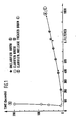
- a broth of Xanthomonas campestris NCIB 11854 containing 3.50 g dry wt bacteria per litre and 11.15 g dry wt polymer per litre was clarified as follows. To 300 g of broth at pH 7.0 ⁇ 0.2 in a 500 ml flask was added protease (Novo 0.6 L Alcalase) to 0.25 g.l-'. The flask contents were mixed by hand shaking for 30 seconds and then incubated statically in a water bath at 55°C for 2) hours. Over this period the optical density of the broth (as measured after approximately 20-fold dilution in water) in a 1 cm cuvette at 600 nm fell from 5.5 to 0.90.
- protease Novo 0.6 L Alcalase
- This clarified broth was cooled to 30°C when the pH was 7.3. It was divided into two halves in 250 ml flasks and to one half were added the following nucleases: Sigma Ribonuclease-A R-5503 to 50 mg I -1 , Sigma Deoxyribonuclease-1 D-0876 to 48 mg 1- 1 and Sigma Deoxyribonuclease-1 D-4638 to 93 mg 1- 1. Both flasks were then incubated at 30°C, 200 rpm on an orbital shaker, together with a flask containing unclarified broth, for 1 hour, and then stored at +4°C.
- pH 8.2 made up to 1.0 litre in distilled water and filtered through a 0.22 pM filter before use.
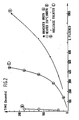
- a broth of Xanthomonas campestris NCIB 11854 was produced which contained (g. dry wt. per litre), bacteria 2.63, polysaccharide 11.45.
- the broth had a pH of 7.1 ⁇ 0.2; 500 g was incubated in a 2-litre flask at 55°C, 220 rpm on an orbital shaker for 4 hours. Over this period the optical density measured as in example (2) at 600 nm fell from 5.7 to 2.5 which indicated some cell lysis had taken place.
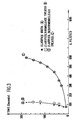
- a xanthan broth as in example (2) was clarified as follows. To 500 g of broth in a 2- litre baffled flask protease (Novo 0.6 L Alcalase) was added to 0.30 g I -1 and the flask was incubated at 55°C for 41 2 hours on an orbital shaker at 220 rpm. Over this period the optical density of the broth as measured at 600 nm in a 1 cm cuvette (sample diluted approximately 20-fold in distilled water) fell from 5.7 to 0.42. The pH of the clarified broth was 7.0 ⁇ 0.2 at 30°C.
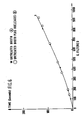
- Figure 3 clearly indicates that the major improvement in filterability of the clarified broth is given by deoxyribonuclease rather than ribonuclease treatment.
- the viscosities (as measured in example 1) showed no major changes during the various treatments and were (at 7.34 S -1 , 30°C, 1 g polysaccharide per litre in substitute ocean water) 4.7 x 10- 2 Pa.s (47 cP) for (A), 5.2 x 10- 2 Pa.s (52 cP) for both (B) and (C).
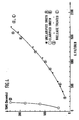
- a Xanthomonas campestris NCIB 11854 broth containing 11.5 g dry wt polysaccharide per litre and 2.5 g dry wt bacteria per litre was clarified as follows. 1.25 kg of broth, pH 6.8 ⁇ 0.2, was placed in a 2.0 litre baffled flask and protease (Novo 0.6L Alcalase) was added to 0.20 g per litre. The flask was incubated at 55°C for 4.75 hours at 56°C on an orbital shaker at 200 rpm. During clarification the optical density (measured as in example 1) decreased from 3.6 to 0.60. The clarified broth was cooled to 30°C.
- nuclease treatment does not improve the filterability of a broth that has not been treated e.g. heated, sheared, stored or clarified.
- a fresh Xanthomonas campestris NCIB 11854 broth, pH 6.90 ⁇ 0.10, containing 3.50 g dry wt litre -1 bacteria and 11.2 g dry wt litre -1 polymer was treated as follows. Two 300 g amounts were placed in each of two 500 ml flasks. To one flask (A) no additions were made, while to the other flask (B), the following nucleases were added: Sigma Ribonuclease A, R-5503, 0.0043 g; Sigma Deoxyribonuclease-1, D-4638, 0.0033 g and Sigma Deoxyribonuclease-1, D-0876, 0.0024 g.
Landscapes
- Chemical & Material Sciences (AREA)
- Life Sciences & Earth Sciences (AREA)
- Organic Chemistry (AREA)
- Engineering & Computer Science (AREA)
- Zoology (AREA)
- Wood Science & Technology (AREA)
- Health & Medical Sciences (AREA)
- Genetics & Genomics (AREA)
- Biotechnology (AREA)
- Bioinformatics & Cheminformatics (AREA)
- General Health & Medical Sciences (AREA)
- Microbiology (AREA)
- Biochemistry (AREA)
- General Engineering & Computer Science (AREA)
- Chemical Kinetics & Catalysis (AREA)
- General Chemical & Material Sciences (AREA)
- Biomedical Technology (AREA)
- Virology (AREA)
- Tropical Medicine & Parasitology (AREA)
- Medicinal Chemistry (AREA)
- Mycology (AREA)
- Preparation Of Compounds By Using Micro-Organisms (AREA)
- Enzymes And Modification Thereof (AREA)
- Filtering Materials (AREA)
- Fats And Perfumes (AREA)
- Medicines Containing Material From Animals Or Micro-Organisms (AREA)
- Separation Using Semi-Permeable Membranes (AREA)
- Water Treatment By Sorption (AREA)
- Solid-Sorbent Or Filter-Aiding Compositions (AREA)
- Polysaccharides And Polysaccharide Derivatives (AREA)
- Developing Agents For Electrophotography (AREA)
- Pens And Brushes (AREA)
Claims (9)
Priority Applications (1)
| Application Number | Priority Date | Filing Date | Title |
|---|---|---|---|
| AT85201946T ATE40569T1 (de) | 1984-12-14 | 1985-11-22 | Verfahren zur verbesserung der filtrierbarkeit einer mikrobiellen bruehe und deren verwendung. |
Applications Claiming Priority (2)
| Application Number | Priority Date | Filing Date | Title |
|---|---|---|---|
| GB848431653A GB8431653D0 (en) | 1984-12-14 | 1984-12-14 | Filterability of microbial broth |
| GB8431653 | 1984-12-14 |
Publications (2)
| Publication Number | Publication Date |
|---|---|
| EP0184882A1 EP0184882A1 (fr) | 1986-06-18 |
| EP0184882B1 true EP0184882B1 (fr) | 1989-02-01 |
Family
ID=10571219
Family Applications (1)
| Application Number | Title | Priority Date | Filing Date |
|---|---|---|---|
| EP85201946A Expired EP0184882B1 (fr) | 1984-12-14 | 1985-11-22 | Méthode pour améliorer la filtrabilité d'un bouillon microbien et son utilisation |
Country Status (17)
| Country | Link |
|---|---|
| US (1) | US4729958A (fr) |
| EP (1) | EP0184882B1 (fr) |
| JP (1) | JPH0661273B2 (fr) |
| KR (1) | KR940003688B1 (fr) |
| AT (1) | ATE40569T1 (fr) |
| AU (1) | AU577648B2 (fr) |
| BR (1) | BR8506226A (fr) |
| CA (1) | CA1288714C (fr) |
| DE (1) | DE3568060D1 (fr) |
| DK (1) | DK172131B1 (fr) |
| GB (1) | GB8431653D0 (fr) |
| IE (1) | IE58913B1 (fr) |
| IL (1) | IL77312A (fr) |
| MX (1) | MX162523A (fr) |
| NO (1) | NO166876C (fr) |
| NZ (1) | NZ214535A (fr) |
| ZA (1) | ZA859519B (fr) |
Families Citing this family (13)
| Publication number | Priority date | Publication date | Assignee | Title |
|---|---|---|---|---|
| GB8502629D0 (en) * | 1985-02-01 | 1985-03-06 | Shell Int Research | Polysaccharide aqueous solution |
| US5006472A (en) * | 1988-06-03 | 1991-04-09 | Miles Inc. | Enzymatic purification process |
| US5236046A (en) * | 1988-10-17 | 1993-08-17 | Texaco Inc. | Heteropolysaccharide preparation and use thereof as a mobility control agent in enhanced oil recovery |
| DE3939771A1 (de) * | 1989-12-01 | 1991-06-06 | Behringwerke Ag | Verfahren zur biologischen inaktivierung von nukleinsaeuren |
| US5595892A (en) * | 1991-12-20 | 1997-01-21 | Shin-Etsu Chemical Co., Ltd. | Process for preparation of purified xanthan gum |
| DE69221841T2 (de) * | 1991-12-20 | 1998-01-22 | Shinetsu Bio Inc | Verfahren zur Herstellung von gereinigtem Xanthangummi |
| JP3741734B2 (ja) | 1994-06-30 | 2006-02-01 | 信越化学工業株式会社 | キサンタンガムの回収精製方法 |
| EP0768374B1 (fr) * | 1995-10-13 | 2003-01-29 | Ajinomoto Co., Inc. | Procédé pour éliminer des cellules à partir du bouillon de fermentation |
| US6033896A (en) | 1996-11-15 | 2000-03-07 | The Ohio State University | Process of separation of cells from liquid by adsorption onto fiber |
| US6924133B1 (en) * | 1999-10-01 | 2005-08-02 | Novozymes A/S | Spray dried enzyme product |
| GB0522193D0 (en) * | 2005-10-31 | 2005-12-07 | Axis Shield Asa | Method |
| CA3033366A1 (fr) | 2016-08-10 | 2018-02-15 | Geo Fossil Fuels, Llc | Compositions comprenant des bio-polymeres et procedes de fabrication de ceux-ci |
| EP3670646A1 (fr) * | 2018-12-21 | 2020-06-24 | Ohly GmbH | Concentré de protéine de levure fonctionnel |
Family Cites Families (21)
| Publication number | Priority date | Publication date | Assignee | Title |
|---|---|---|---|---|
| DK104013C (da) * | 1962-06-08 | 1966-03-21 | Canadian Patents Dev | Fremgangsmåde til fremstilling af en somatisk antigenvaccine. |
| GB1185012A (en) * | 1966-03-11 | 1970-03-18 | Minnesota Mining & Mfg | Improvements in or relating to Photographic Gelatin |
| US3488256A (en) * | 1966-04-14 | 1970-01-06 | Keever Co | Alteration of activity of natural product molecules |
| US3809776A (en) * | 1971-02-22 | 1974-05-07 | Standard Oil Co | Enzymic degradation of nucleic acids in scp materials |
| US4007088A (en) * | 1972-06-14 | 1977-02-08 | Ceskoslovenska Akademie Ved | Process of manufacturing native microbial protein with a low content of nucleic acids |
| US3867255A (en) * | 1972-11-29 | 1975-02-18 | Anheuser Busch | Process of making yeast protein isolate having reduced nucleic acid content |
| US3887431A (en) * | 1972-11-29 | 1975-06-03 | Anheuser Busch | Yeast protein isolate with reduced nucleic acid content and process of making same |
| GB1466078A (en) * | 1973-09-26 | 1977-03-02 | British Petroleum Co | Treatment of proteinaceous material |
| SE7401668L (fr) * | 1974-02-07 | 1975-08-08 | Scp Exploatering Ab | |
| US4010071A (en) * | 1974-10-10 | 1977-03-01 | Merck & Co., Inc. | Clarification of xanthan gum |
| US4182860A (en) * | 1975-11-10 | 1980-01-08 | Laskin Allen I | Modified heteropolysaccharides and their preparation |
| US4119491A (en) * | 1977-05-16 | 1978-10-10 | Shell Oil Company | Enzyme-filtration clarification of xanthan gum polymer solution |
| US4165257A (en) * | 1978-03-13 | 1979-08-21 | Continental Oil Company | Biopolymer filterability improvement by caustic-enzyme treatment |
| US4218481A (en) * | 1978-10-06 | 1980-08-19 | Standard Oil Company (Indiana) | Yeast autolysis process |
| US4326037A (en) * | 1979-11-01 | 1982-04-20 | The United States Of America As Represented By The United States Department Of Energy | Enzymatic method for improving the injectability of polysaccharides |
| DE3172841D1 (en) * | 1980-09-29 | 1985-12-12 | Shell Int Research | Treatment of pseudoplastic polysaccharide solutions |
| FR2491494B1 (fr) * | 1980-10-06 | 1985-11-29 | Inst Francais Du Petrole | Procede enzymatique de clarification de gommes xanthanes permettant d'ameliorer leur injectivite et leur filtrabilite |
| FR2506328A1 (fr) * | 1981-05-22 | 1982-11-26 | Inst Francais Du Petrole | Procede enzymatique de traitement de gommes xanthanes en vue d'ameliorer la filtration de leurs solutions aqueuses |
| GB2111520A (en) * | 1981-10-29 | 1983-07-06 | Kelco Biospecialties Ltd | Clarification of xanthan gum solutions |
| EP0078556B1 (fr) * | 1981-11-03 | 1986-03-12 | Shell Internationale Researchmaatschappij B.V. | Procédé de rupture de cellules |
| US4440225A (en) * | 1982-09-13 | 1984-04-03 | Exxon Research And Engineering Co. | Oil recovery using modified heteropolysaccharides in buffered brine |
-
1984
- 1984-12-14 GB GB848431653A patent/GB8431653D0/en active Pending
-
1985
- 1985-11-21 CA CA000495844A patent/CA1288714C/fr not_active Expired - Fee Related
- 1985-11-22 AT AT85201946T patent/ATE40569T1/de not_active IP Right Cessation
- 1985-11-22 EP EP85201946A patent/EP0184882B1/fr not_active Expired
- 1985-11-22 DE DE8585201946T patent/DE3568060D1/de not_active Expired
- 1985-12-02 MX MX797A patent/MX162523A/es unknown
- 1985-12-12 NO NO855002A patent/NO166876C/no unknown
- 1985-12-12 US US06/807,940 patent/US4729958A/en not_active Expired - Lifetime
- 1985-12-12 BR BR8506226A patent/BR8506226A/pt not_active IP Right Cessation
- 1985-12-12 KR KR85009349A patent/KR940003688B1/ko not_active Expired - Fee Related
- 1985-12-12 NZ NZ214535A patent/NZ214535A/xx unknown
- 1985-12-12 IL IL77312A patent/IL77312A/xx not_active IP Right Cessation
- 1985-12-12 IE IE314285A patent/IE58913B1/en not_active IP Right Cessation
- 1985-12-12 DK DK577485A patent/DK172131B1/da not_active IP Right Cessation
- 1985-12-12 JP JP60278119A patent/JPH0661273B2/ja not_active Expired - Lifetime
- 1985-12-12 ZA ZA859519A patent/ZA859519B/xx unknown
- 1985-12-12 AU AU51140/85A patent/AU577648B2/en not_active Ceased
Also Published As
| Publication number | Publication date |
|---|---|
| JPS61146193A (ja) | 1986-07-03 |
| NO166876B (no) | 1991-06-03 |
| IE58913B1 (en) | 1993-12-01 |
| NO855002L (no) | 1986-06-16 |
| IE853142L (en) | 1986-06-12 |
| ZA859519B (en) | 1986-08-27 |
| KR940003688B1 (en) | 1994-04-27 |
| DK577485A (da) | 1986-06-15 |
| EP0184882A1 (fr) | 1986-06-18 |
| NO166876C (no) | 1991-09-11 |
| DK577485D0 (da) | 1985-12-12 |
| US4729958A (en) | 1988-03-08 |
| AU5114085A (en) | 1986-06-19 |
| IL77312A (en) | 1990-01-18 |
| GB8431653D0 (en) | 1985-01-30 |
| CA1288714C (fr) | 1991-09-10 |
| NZ214535A (en) | 1989-01-27 |
| DE3568060D1 (en) | 1989-03-09 |
| ATE40569T1 (de) | 1989-02-15 |
| JPH0661273B2 (ja) | 1994-08-17 |
| AU577648B2 (en) | 1988-09-29 |
| DK172131B1 (da) | 1997-11-24 |
| MX162523A (es) | 1991-05-20 |
| BR8506226A (pt) | 1986-08-26 |
Similar Documents
| Publication | Publication Date | Title |
|---|---|---|
| EP0184882B1 (fr) | Méthode pour améliorer la filtrabilité d'un bouillon microbien et son utilisation | |
| US4010071A (en) | Clarification of xanthan gum | |
| US3966618A (en) | Clarification of xanthan gum | |
| US4119491A (en) | Enzyme-filtration clarification of xanthan gum polymer solution | |
| US4416990A (en) | Enzymatic clarification process for improving the injectivity and filtrabhility of xanthan gums | |
| EP0078556B1 (fr) | Procédé de rupture de cellules | |
| CA1244367A (fr) | Procede de traitement d'une solution aqueuse d'heteropolysaccharide, et solution ou poudre d'heteropolysaccharide ainsi obtenus | |
| EP0039962B1 (fr) | Clarification des produits de fermentation contenant des polysaccharides | |
| US4326037A (en) | Enzymatic method for improving the injectability of polysaccharides | |
| FR2586249A1 (fr) | Procede de preparation d'un heteropolysaccharide modifie et compositions le contenant | |
| EP0140725B1 (fr) | Procédé de traitement d'une solution de polysaccharide et son utilisation | |
| US11001746B2 (en) | Compositions comprising and methods of making bio-polymers | |
| JPH0372277B2 (fr) | ||
| JPH0369921B2 (fr) | ||
| US4072606A (en) | Method for coagulating a colloidal suspension | |
| US4356095A (en) | Water-soluble polymers and utilization thereof | |
| JP2539216B2 (ja) | キサンタンガムの水溶液の濾過性を改良するためのキサンタンガムの酵素処理方法 | |
| US3989592A (en) | Water-soluble polymers and utilization thereof | |
| JPH08154695A (ja) | 精製キサンタンガムの製造方法 | |
| EP0135953B1 (fr) | Procédé de rupture de cellules | |
| Griffith et al. | Enzymatic method for improving the injectability of polysaccharides |
Legal Events
| Date | Code | Title | Description |
|---|---|---|---|
| PUAI | Public reference made under article 153(3) epc to a published international application that has entered the european phase |
Free format text: ORIGINAL CODE: 0009012 |
|
| AK | Designated contracting states |
Kind code of ref document: A1 Designated state(s): AT BE CH DE FR GB IT LI LU NL SE |
|
| 17P | Request for examination filed |
Effective date: 19861103 |
|
| 17Q | First examination report despatched |
Effective date: 19871123 |
|
| GRAA | (expected) grant |
Free format text: ORIGINAL CODE: 0009210 |
|
| AK | Designated contracting states |
Kind code of ref document: B1 Designated state(s): AT BE CH DE FR GB IT LI LU NL SE |
|
| REF | Corresponds to: |
Ref document number: 40569 Country of ref document: AT Date of ref document: 19890215 Kind code of ref document: T |
|
| ITF | It: translation for a ep patent filed | ||
| REF | Corresponds to: |
Ref document number: 3568060 Country of ref document: DE Date of ref document: 19890309 |
|
| ET | Fr: translation filed | ||
| PLBE | No opposition filed within time limit |
Free format text: ORIGINAL CODE: 0009261 |
|
| STAA | Information on the status of an ep patent application or granted ep patent |
Free format text: STATUS: NO OPPOSITION FILED WITHIN TIME LIMIT |
|
| 26N | No opposition filed | ||
| ITTA | It: last paid annual fee | ||
| EPTA | Lu: last paid annual fee | ||
| EAL | Se: european patent in force in sweden |
Ref document number: 85201946.2 |
|
| PGFP | Annual fee paid to national office [announced via postgrant information from national office to epo] |
Ref country code: LU Payment date: 19951001 Year of fee payment: 11 |
|
| PG25 | Lapsed in a contracting state [announced via postgrant information from national office to epo] |
Ref country code: LU Free format text: LAPSE BECAUSE OF NON-PAYMENT OF DUE FEES Effective date: 19961122 |
|
| PGFP | Annual fee paid to national office [announced via postgrant information from national office to epo] |
Ref country code: FR Payment date: 19980924 Year of fee payment: 14 |
|
| PGFP | Annual fee paid to national office [announced via postgrant information from national office to epo] |
Ref country code: GB Payment date: 19981029 Year of fee payment: 14 |
|
| PGFP | Annual fee paid to national office [announced via postgrant information from national office to epo] |
Ref country code: NL Payment date: 19981126 Year of fee payment: 14 |
|
| PG25 | Lapsed in a contracting state [announced via postgrant information from national office to epo] |
Ref country code: GB Free format text: LAPSE BECAUSE OF NON-PAYMENT OF DUE FEES Effective date: 19991122 |
|
| PG25 | Lapsed in a contracting state [announced via postgrant information from national office to epo] |
Ref country code: NL Free format text: LAPSE BECAUSE OF NON-PAYMENT OF DUE FEES Effective date: 20000601 |
|
| GBPC | Gb: european patent ceased through non-payment of renewal fee |
Effective date: 19991122 |
|
| PG25 | Lapsed in a contracting state [announced via postgrant information from national office to epo] |
Ref country code: FR Free format text: LAPSE BECAUSE OF NON-PAYMENT OF DUE FEES Effective date: 20000731 |
|
| NLV4 | Nl: lapsed or anulled due to non-payment of the annual fee |
Effective date: 20000601 |
|
| REG | Reference to a national code |
Ref country code: FR Ref legal event code: ST |
|
| PGFP | Annual fee paid to national office [announced via postgrant information from national office to epo] |
Ref country code: SE Payment date: 20041125 Year of fee payment: 20 Ref country code: DE Payment date: 20041125 Year of fee payment: 20 |
|
| PGFP | Annual fee paid to national office [announced via postgrant information from national office to epo] |
Ref country code: AT Payment date: 20041130 Year of fee payment: 20 |
|
| PGFP | Annual fee paid to national office [announced via postgrant information from national office to epo] |
Ref country code: BE Payment date: 20041214 Year of fee payment: 20 |
|
| PGFP | Annual fee paid to national office [announced via postgrant information from national office to epo] |
Ref country code: CH Payment date: 20050208 Year of fee payment: 20 |
|
| BE20 | Be: patent expired |
Owner name: *SHELL INTERNATIONALE RESEARCH MAATSCHAPPIJ B.V. Effective date: 20051122 |
|
| REG | Reference to a national code |
Ref country code: CH Ref legal event code: PL |
|
| EUG | Se: european patent has lapsed | ||
| BE20 | Be: patent expired |
Owner name: *SHELL INTERNATIONALE RESEARCH MAATSCHAPPIJ B.V. Effective date: 20051122 |