EP0185548B1 - Procédé de fluidification et mélanges fluidifiables - Google Patents
Procédé de fluidification et mélanges fluidifiables Download PDFInfo
- Publication number
- EP0185548B1 EP0185548B1 EP85309234A EP85309234A EP0185548B1 EP 0185548 B1 EP0185548 B1 EP 0185548B1 EP 85309234 A EP85309234 A EP 85309234A EP 85309234 A EP85309234 A EP 85309234A EP 0185548 B1 EP0185548 B1 EP 0185548B1
- Authority
- EP
- European Patent Office
- Prior art keywords
- particulate solid
- carbonaceous material
- tendrillar carbonaceous
- tendrillar
- mean particle
- Prior art date
- Legal status (The legal status is an assumption and is not a legal conclusion. Google has not performed a legal analysis and makes no representation as to the accuracy of the status listed.)
- Expired
Links
- 238000000034 method Methods 0.000 title claims description 47
- 239000000203 mixture Substances 0.000 title claims description 37
- 239000003575 carbonaceous material Substances 0.000 claims description 123
- 239000007787 solid Substances 0.000 claims description 98
- 239000002245 particle Substances 0.000 claims description 63
- OKTJSMMVPCPJKN-UHFFFAOYSA-N Carbon Chemical compound [C] OKTJSMMVPCPJKN-UHFFFAOYSA-N 0.000 claims description 54
- 239000000463 material Substances 0.000 claims description 53
- PNEYBMLMFCGWSK-UHFFFAOYSA-N aluminium oxide Inorganic materials [O-2].[O-2].[O-2].[Al+3].[Al+3] PNEYBMLMFCGWSK-UHFFFAOYSA-N 0.000 claims description 42
- 229910052799 carbon Inorganic materials 0.000 claims description 38
- 239000007789 gas Substances 0.000 claims description 36
- CWYNVVGOOAEACU-UHFFFAOYSA-N Fe2+ Chemical compound [Fe+2] CWYNVVGOOAEACU-UHFFFAOYSA-N 0.000 claims description 21
- 229910052751 metal Inorganic materials 0.000 claims description 20
- 239000002184 metal Substances 0.000 claims description 20
- 238000002156 mixing Methods 0.000 claims description 12
- 238000005054 agglomeration Methods 0.000 claims description 6
- 230000002776 aggregation Effects 0.000 claims description 6
- 239000001257 hydrogen Substances 0.000 claims description 4
- 229910052739 hydrogen Inorganic materials 0.000 claims description 4
- UFHFLCQGNIYNRP-UHFFFAOYSA-N Hydrogen Chemical compound [H][H] UFHFLCQGNIYNRP-UHFFFAOYSA-N 0.000 claims description 3
- 239000010410 layer Substances 0.000 description 39
- 238000005243 fluidization Methods 0.000 description 35
- 239000000843 powder Substances 0.000 description 29
- 238000012360 testing method Methods 0.000 description 20
- 230000005587 bubbling Effects 0.000 description 19
- 239000003054 catalyst Substances 0.000 description 15
- 238000012546 transfer Methods 0.000 description 14
- UQSXHKLRYXJYBZ-UHFFFAOYSA-N Iron oxide Chemical compound [Fe]=O UQSXHKLRYXJYBZ-UHFFFAOYSA-N 0.000 description 12
- 238000005336 cracking Methods 0.000 description 12
- 230000000694 effects Effects 0.000 description 11
- XEEYBQQBJWHFJM-UHFFFAOYSA-N Iron Chemical compound [Fe] XEEYBQQBJWHFJM-UHFFFAOYSA-N 0.000 description 9
- 230000008569 process Effects 0.000 description 7
- VYPSYNLAJGMNEJ-UHFFFAOYSA-N Silicium dioxide Chemical compound O=[Si]=O VYPSYNLAJGMNEJ-UHFFFAOYSA-N 0.000 description 6
- 239000011236 particulate material Substances 0.000 description 6
- 230000009467 reduction Effects 0.000 description 5
- 230000003247 decreasing effect Effects 0.000 description 4
- 238000001035 drying Methods 0.000 description 4
- 229910052742 iron Inorganic materials 0.000 description 4
- 229920000049 Carbon (fiber) Polymers 0.000 description 3
- 230000008901 benefit Effects 0.000 description 3
- 230000015572 biosynthetic process Effects 0.000 description 3
- 239000004917 carbon fiber Substances 0.000 description 3
- 238000009826 distribution Methods 0.000 description 3
- 230000003628 erosive effect Effects 0.000 description 3
- 238000013467 fragmentation Methods 0.000 description 3
- 238000006062 fragmentation reaction Methods 0.000 description 3
- 239000004033 plastic Substances 0.000 description 3
- XLYOFNOQVPJJNP-UHFFFAOYSA-N water Substances O XLYOFNOQVPJJNP-UHFFFAOYSA-N 0.000 description 3
- IJGRMHOSHXDMSA-UHFFFAOYSA-N Atomic nitrogen Chemical compound N#N IJGRMHOSHXDMSA-UHFFFAOYSA-N 0.000 description 2
- PXHVJJICTQNCMI-UHFFFAOYSA-N Nickel Chemical compound [Ni] PXHVJJICTQNCMI-UHFFFAOYSA-N 0.000 description 2
- 229910000831 Steel Inorganic materials 0.000 description 2
- 238000010306 acid treatment Methods 0.000 description 2
- 238000013019 agitation Methods 0.000 description 2
- 239000000956 alloy Substances 0.000 description 2
- 229910045601 alloy Inorganic materials 0.000 description 2
- 230000009286 beneficial effect Effects 0.000 description 2
- 238000001354 calcination Methods 0.000 description 2
- 229910021386 carbon form Inorganic materials 0.000 description 2
- 230000003197 catalytic effect Effects 0.000 description 2
- 239000003245 coal Substances 0.000 description 2
- 239000011248 coating agent Substances 0.000 description 2
- 238000000576 coating method Methods 0.000 description 2
- 239000002355 dual-layer Substances 0.000 description 2
- 238000005516 engineering process Methods 0.000 description 2
- 239000000835 fiber Substances 0.000 description 2
- 239000010419 fine particle Substances 0.000 description 2
- 229930195733 hydrocarbon Natural products 0.000 description 2
- 150000002430 hydrocarbons Chemical class 0.000 description 2
- 239000010959 steel Substances 0.000 description 2
- 239000000126 substance Substances 0.000 description 2
- 229920005992 thermoplastic resin Polymers 0.000 description 2
- OCKGFTQIICXDQW-ZEQRLZLVSA-N 5-[(1r)-1-hydroxy-2-[4-[(2r)-2-hydroxy-2-(4-methyl-1-oxo-3h-2-benzofuran-5-yl)ethyl]piperazin-1-yl]ethyl]-4-methyl-3h-2-benzofuran-1-one Chemical compound C1=C2C(=O)OCC2=C(C)C([C@@H](O)CN2CCN(CC2)C[C@H](O)C2=CC=C3C(=O)OCC3=C2C)=C1 OCKGFTQIICXDQW-ZEQRLZLVSA-N 0.000 description 1
- UGFAIRIUMAVXCW-UHFFFAOYSA-N Carbon monoxide Chemical compound [O+]#[C-] UGFAIRIUMAVXCW-UHFFFAOYSA-N 0.000 description 1
- 235000008733 Citrus aurantifolia Nutrition 0.000 description 1
- 235000019738 Limestone Nutrition 0.000 description 1
- 235000011941 Tilia x europaea Nutrition 0.000 description 1
- 239000002253 acid Substances 0.000 description 1
- 150000007513 acids Chemical class 0.000 description 1
- 230000004913 activation Effects 0.000 description 1
- 230000002411 adverse Effects 0.000 description 1
- 238000004458 analytical method Methods 0.000 description 1
- 229910002091 carbon monoxide Inorganic materials 0.000 description 1
- 238000004523 catalytic cracking Methods 0.000 description 1
- 239000004568 cement Substances 0.000 description 1
- 239000000919 ceramic Substances 0.000 description 1
- 238000012512 characterization method Methods 0.000 description 1
- 238000001311 chemical methods and process Methods 0.000 description 1
- 238000005660 chlorination reaction Methods 0.000 description 1
- 229910017052 cobalt Inorganic materials 0.000 description 1
- 239000010941 cobalt Substances 0.000 description 1
- GUTLYIVDDKVIGB-UHFFFAOYSA-N cobalt atom Chemical compound [Co] GUTLYIVDDKVIGB-UHFFFAOYSA-N 0.000 description 1
- 238000002485 combustion reaction Methods 0.000 description 1
- 239000000470 constituent Substances 0.000 description 1
- 238000003795 desorption Methods 0.000 description 1
- 238000010586 diagram Methods 0.000 description 1
- 238000010790 dilution Methods 0.000 description 1
- 239000012895 dilution Substances 0.000 description 1
- 239000006185 dispersion Substances 0.000 description 1
- 239000010459 dolomite Substances 0.000 description 1
- 229910000514 dolomite Inorganic materials 0.000 description 1
- 238000002474 experimental method Methods 0.000 description 1
- 239000012530 fluid Substances 0.000 description 1
- 239000000446 fuel Substances 0.000 description 1
- 238000000227 grinding Methods 0.000 description 1
- 238000010438 heat treatment Methods 0.000 description 1
- 239000008240 homogeneous mixture Substances 0.000 description 1
- 150000002431 hydrogen Chemical class 0.000 description 1
- 229910052500 inorganic mineral Inorganic materials 0.000 description 1
- 239000012212 insulator Substances 0.000 description 1
- 239000003077 lignite Substances 0.000 description 1
- 239000004571 lime Substances 0.000 description 1
- 239000006028 limestone Substances 0.000 description 1
- 239000007788 liquid Substances 0.000 description 1
- 238000004519 manufacturing process Methods 0.000 description 1
- -1 mass ratios used Substances 0.000 description 1
- 230000007246 mechanism Effects 0.000 description 1
- 150000001247 metal acetylides Chemical class 0.000 description 1
- 239000007769 metal material Substances 0.000 description 1
- 150000002739 metals Chemical class 0.000 description 1
- 239000011707 mineral Substances 0.000 description 1
- 239000004570 mortar (masonry) Substances 0.000 description 1
- 229910052759 nickel Inorganic materials 0.000 description 1
- 229910052757 nitrogen Inorganic materials 0.000 description 1
- 230000003647 oxidation Effects 0.000 description 1
- 238000007254 oxidation reaction Methods 0.000 description 1
- 230000000737 periodic effect Effects 0.000 description 1
- 230000002085 persistent effect Effects 0.000 description 1
- 239000002367 phosphate rock Substances 0.000 description 1
- 230000008092 positive effect Effects 0.000 description 1
- 238000012545 processing Methods 0.000 description 1
- 239000011435 rock Substances 0.000 description 1
- 238000005096 rolling process Methods 0.000 description 1
- 239000004576 sand Substances 0.000 description 1
- 238000005549 size reduction Methods 0.000 description 1
- 238000001179 sorption measurement Methods 0.000 description 1
- 230000001629 suppression Effects 0.000 description 1
- 230000000007 visual effect Effects 0.000 description 1
Images

Classifications
-
- B—PERFORMING OPERATIONS; TRANSPORTING
- B01—PHYSICAL OR CHEMICAL PROCESSES OR APPARATUS IN GENERAL
- B01J—CHEMICAL OR PHYSICAL PROCESSES, e.g. CATALYSIS OR COLLOID CHEMISTRY; THEIR RELEVANT APPARATUS
- B01J8/00—Chemical or physical processes in general, conducted in the presence of fluids and solid particles; Apparatus for such processes
- B01J8/18—Chemical or physical processes in general, conducted in the presence of fluids and solid particles; Apparatus for such processes with fluidised particles
- B01J8/1872—Details of the fluidised bed reactor
-
- B—PERFORMING OPERATIONS; TRANSPORTING
- B82—NANOTECHNOLOGY
- B82Y—SPECIFIC USES OR APPLICATIONS OF NANOSTRUCTURES; MEASUREMENT OR ANALYSIS OF NANOSTRUCTURES; MANUFACTURE OR TREATMENT OF NANOSTRUCTURES
- B82Y30/00—Nanotechnology for materials or surface science, e.g. nanocomposites
-
- C—CHEMISTRY; METALLURGY
- C01—INORGANIC CHEMISTRY
- C01F—COMPOUNDS OF THE METALS BERYLLIUM, MAGNESIUM, ALUMINIUM, CALCIUM, STRONTIUM, BARIUM, RADIUM, THORIUM, OR OF THE RARE-EARTH METALS
- C01F7/00—Compounds of aluminium
- C01F7/02—Aluminium oxide; Aluminium hydroxide; Aluminates
- C01F7/021—After-treatment of oxides or hydroxides
-
- C—CHEMISTRY; METALLURGY
- C01—INORGANIC CHEMISTRY
- C01G—COMPOUNDS CONTAINING METALS NOT COVERED BY SUBCLASSES C01D OR C01F
- C01G49/00—Compounds of iron
- C01G49/02—Oxides; Hydroxides
-
- D—TEXTILES; PAPER
- D01—NATURAL OR MAN-MADE THREADS OR FIBRES; SPINNING
- D01F—CHEMICAL FEATURES IN THE MANUFACTURE OF ARTIFICIAL FILAMENTS, THREADS, FIBRES, BRISTLES OR RIBBONS; APPARATUS SPECIALLY ADAPTED FOR THE MANUFACTURE OF CARBON FILAMENTS
- D01F9/00—Artificial filaments or the like of other substances; Manufacture thereof; Apparatus specially adapted for the manufacture of carbon filaments
- D01F9/08—Artificial filaments or the like of other substances; Manufacture thereof; Apparatus specially adapted for the manufacture of carbon filaments of inorganic material
- D01F9/12—Carbon filaments; Apparatus specially adapted for the manufacture thereof
- D01F9/127—Carbon filaments; Apparatus specially adapted for the manufacture thereof by thermal decomposition of hydrocarbon gases or vapours or other carbon-containing compounds in the form of gas or vapour, e.g. carbon monoxide, alcohols
- D01F9/1278—Carbon monoxide
-
- F—MECHANICAL ENGINEERING; LIGHTING; HEATING; WEAPONS; BLASTING
- F26—DRYING
- F26B—DRYING SOLID MATERIALS OR OBJECTS BY REMOVING LIQUID THEREFROM
- F26B3/00—Drying solid materials or objects by processes involving the application of heat
- F26B3/02—Drying solid materials or objects by processes involving the application of heat by convection, i.e. heat being conveyed from a heat source to the materials or objects to be dried by a gas or vapour, e.g. air
- F26B3/06—Drying solid materials or objects by processes involving the application of heat by convection, i.e. heat being conveyed from a heat source to the materials or objects to be dried by a gas or vapour, e.g. air the gas or vapour flowing through the materials or objects to be dried
- F26B3/08—Drying solid materials or objects by processes involving the application of heat by convection, i.e. heat being conveyed from a heat source to the materials or objects to be dried by a gas or vapour, e.g. air the gas or vapour flowing through the materials or objects to be dried so as to loosen them, e.g. to form a fluidised bed
- F26B3/088—Drying solid materials or objects by processes involving the application of heat by convection, i.e. heat being conveyed from a heat source to the materials or objects to be dried by a gas or vapour, e.g. air the gas or vapour flowing through the materials or objects to be dried so as to loosen them, e.g. to form a fluidised bed using inert thermally-stabilised particles
-
- F—MECHANICAL ENGINEERING; LIGHTING; HEATING; WEAPONS; BLASTING
- F27—FURNACES; KILNS; OVENS; RETORTS
- F27B—FURNACES, KILNS, OVENS OR RETORTS IN GENERAL; OPEN SINTERING OR LIKE APPARATUS
- F27B15/00—Fluidised-bed furnaces; Other furnaces using or treating finely-divided materials in dispersion
-
- B—PERFORMING OPERATIONS; TRANSPORTING
- B01—PHYSICAL OR CHEMICAL PROCESSES OR APPARATUS IN GENERAL
- B01J—CHEMICAL OR PHYSICAL PROCESSES, e.g. CATALYSIS OR COLLOID CHEMISTRY; THEIR RELEVANT APPARATUS
- B01J2208/00—Processes carried out in the presence of solid particles; Reactors therefor
- B01J2208/00008—Controlling the process
- B01J2208/00654—Controlling the process by measures relating to the particulate material
- B01J2208/00681—Agglomeration
-
- C—CHEMISTRY; METALLURGY
- C01—INORGANIC CHEMISTRY
- C01P—INDEXING SCHEME RELATING TO STRUCTURAL AND PHYSICAL ASPECTS OF SOLID INORGANIC COMPOUNDS
- C01P2004/00—Particle morphology
- C01P2004/01—Particle morphology depicted by an image
- C01P2004/03—Particle morphology depicted by an image obtained by SEM
-
- C—CHEMISTRY; METALLURGY
- C01—INORGANIC CHEMISTRY
- C01P—INDEXING SCHEME RELATING TO STRUCTURAL AND PHYSICAL ASPECTS OF SOLID INORGANIC COMPOUNDS
- C01P2004/00—Particle morphology
- C01P2004/60—Particles characterised by their size
- C01P2004/61—Micrometer sized, i.e. from 1-100 micrometer
-
- C—CHEMISTRY; METALLURGY
- C01—INORGANIC CHEMISTRY
- C01P—INDEXING SCHEME RELATING TO STRUCTURAL AND PHYSICAL ASPECTS OF SOLID INORGANIC COMPOUNDS
- C01P2006/00—Physical properties of inorganic compounds
- C01P2006/10—Solid density
Definitions
- This invention is concerned with methods of fluidizing particulate solids in a fluidized bed and, more particularly, with techniques for fluidizing solids which hitherto could not be fluidized in a fluidized bed, and with fluidizable mixtures suitable for use in such methods.
- Fluidization of solids in a fluidized bed is a much used method of gas-solids contacting with many commercially successful applications in widespread fields.
- Fluidized beds find use in chemical reactors such as fluidized-bed catalytic crackers.
- Other chemical processes utilizing fluidized beds include processes for chlorination of hydrocarbons, oxidation of gaseous fuels, roasting of ore to facilitate release of valuable metals, calcination of lime in dolomite, and calcination of phosphate rock.
- Fluidized beds are also used for physical contacting processes, such as for heat transfer, solids mixing, drying, size enlargement, size reduction, classification, adsorption, desorption, heat treatment, and coating.
- exemplary of these processes are drying coal, cement, rock, and limestone, as well as coating metal parts with thermoplastic resins where a heated metal part is dipped into a fluidized bed of the thermoplastic resin.
- fluidized beds tend to have nearly uniform temperatures and good heat transfer, both from gas to solids and from solids to internal surfaces. Further advantages are that addition or loss of solids through chemical or other means can normally be tolerated, and that rather thorough solids mixing occurs.
- Bubbles provide a mechanism for gas bypassing, which can result in process inefficiency.
- the motion of the bubbles also promotes elutriation of fine particles, fragmentation of friable solids, and erosion of reactor surfaces.
- a method of fluidizing a particulate solid in a mixed fluidized bed comprising:
- the preferred mass ratio of tendrillar carbonaceous material to particulate solid is from 1:9 to 4:1.
- the tendrillar carbonaceous material typically has a different composition from the particulate solid and has a typical mean size of from 5 to 50 micrometres as measured by a micromerograph.
- the tendrils typically have a diameter of from 0.1 to 0.3 micrometres and a length-to-diameter ratio of from 5:1 to 50:1.
- the tendrillar carbonaceous material can be composed of ferrous carbon, which is a fibrous, particulate, carbonaceous material.
- the tendrils comprise carbon fibres and a ferrous group metal component dispersed throughout the fibres as nodules. These nodules are intimately associated with and at least partially bonded to the carbon of the fibres.
- This type of tendrillar carbonaceous material comprises from 0.1 to 60% by weight of ferrous metal, from 40 to 99.9% by weight of carbon, and up to about 1.5% by weight of hydrogen.
- tendrillar carbonaceous material as a fluidization aid allows fluidization of solids, such as cohesive solids, which hitherto could not be effectively fluidized. Furthermore, the use of tendrillar carbonaceous material as a fluidization aid with an already fluidizable. material having a particle size of less than about 200 micrometres, results in more effective fluidization of such solids than was hitherto possible, with enhanced gas/solid contact through reduction of bubbling, enhanced solids mixing, and/or reduced entrainment.
- the present invention also includes the use of tendrillar carbonaceous material in a two-layer fluidized bed.
- the two-layer fluidized bed has a lower fluidized layer which comprises a first particulate solid having a mean particle size of greater than about 200 micrometres and a density greater than about 0.8 g/cm 3 .
- This type of fluidized bed also has an upper fluidized layer on top of and substantially separate from the lower fluidized layer.
- the upper fluidized layer comprises tendrillar carbonaceous material having a particle size and bulk density less than those of the first particulate solid. Typically the first particulate solid and the tendrillar carbonaceous material have different compositions.
- the upper fluidized layer also comprises a second particulate solid having a mean particle size of less than about 200 micrometres.
- Fluidizing gas is passed up through the two layers with sufficient velocity to fluidize the first particulate solid in the lower layer and the second particulate solid and the tendrillar carbonaceous material in the upper layer; the two layers remain substantially separate during fluidization and the interface between the two layers is relatively distinct.
- Figure 1 shows Geldart's material classification diagram
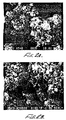
- Figures 2A and 2B are photomicrographs showing tendrillar carbonaceous material through a scanning electron microscope under relatively low magnification (540x) and under relatively high magnification (20,000x), respectively.
- the tendrillar carbonaceous material used as a fluidization aid in the present invention is a carbon- containing material comprising tendrils or slender coiling filaments.
- the material consists essentially of an agglomeration of tendrils having a diameter of from 0.01 to 1 micron, preferably from 0.1 to 0.3 micron, and a length-to-diameter ratio of from 5:1 to 1000:1, preferably up to about 50:1.
- the tendrils are building blocks that form larger agglomerates that are of value in fluidized bed applications.
- the size of the agglomerates formed is a function of the manufacturing process and of the environment to which the material is subjected.
- the amount of agglomeration produced can be measured with commonly used size characterization techniques.
- One technique uses a micromerograph, which is a device that subjects a material to be measured to high shear forces followed by dispersion in a gas. Size determination is then performed on the dispersed particles using an aerodynamic technique.
- the material is dispersed in a suitable liquid and subjected to ultrasonic vibration to produce deagglomeration. This technique can be used to prepare samples for scanning electron microscope analysis.
- Both techniques are essentially deagglomerating techniques which tend to produce a size distribution of the tendrillar carbonaceous material in which the mass mean particle size is many times the diameter of the individual tendrils. Typically, this mass mean particle size for the tendrillar carbonaceous material as measured by such deagglomerating techniques is in the range 5 to 50 micrometres.
- the tendrillar carbonaceous material is subjected to smaller shear forces than in a micromerograph, and is therefore generally present in a concentrated rather than dispersed . manner.
- the mass mean particle size of the tendrillar carbonaceous material agglomerates is from about 200 to about 3000 microns. This size range had been determined from direct visual and photographic observation, from bed expansion/particle size correlations, and from entrainment rate/particle size correlations.
- These large agglomerates can be broken down into smaller particles through deagglomeration techniques such as micromerograph processing.
- the combination of the properties of the tendrils and the fluidized agglomerate size is believed to be important to provide the beneficial effects of the present invention.
- the tendrillar carbonaceous material can be "ferrous carbon" which is a fibrous, particulate, carbonaceous material comprising carbon fibers and a ferrous group metal component.
- the ferrous group metal component is dispersed throughout the carbon fibers as nodules that are intimately associated with and at least partially bonded to the carbon fibers.
- the ferrous carbon comprises from about 0.1 to about 60% by weight ferrous metal, from about 40 to about 99.9% by weight carbon, and up to about 1.5% by weight hydrogen.
- ferrous metal there is meant a metal of Group VIII of the Periodic Table of the Elements, such as iron, cobalt, nickel, and combinations, carbides, oxides and alloys thereof. If desired, a portion of the metal can be removed such as by acid treatment.
- Ferrous carbon material is shown in Figures 2A and 2B.
- the ferrous carbon form of tendrillar carbonaceous material is generally made by disproportionating carbon monoxide in the presence of a ferrous group metal component catalyst which can be a metal, an alloy, a carbide or other metallic substance. Carbonaceous material forms and grows from the catalyst surface primarily in the form of fibers. These fibers become tangled masses that occupy increasingly larger volumes in the reactor.
- a ferrous group metal component catalyst which can be a metal, an alloy, a carbide or other metallic substance.
- Carbonaceous material forms and grows from the catalyst surface primarily in the form of fibers. These fibers become tangled masses that occupy increasingly larger volumes in the reactor.
- the ferrous carbon is prepared in a fluidized bed containing an abradant and is elutriated overhead as described in the present application.
- the ferrous carbon form of tendrillar carbonaceous material produced by these methods includes a major phase and a minor phase, the major phase comprising from about 95 to about 99.9% by weight carbon, from about 0.1% to about 1.5% hydrogen, and the balance, if any, being the ferrous metal.
- the minor component is the nodules which are dispersed throughout the major phase and are intimately associated with and at least partly bonded to the carbon in the major phase.
- the minor phase comprises carbon and at least 50% by weight ferrous metal.
- Tendrillar carbonaceous material can also be prepared by passing hot hydrocarbons over a ferrous metal catalyst.
- the ferrous metal content of the tendrillar carbonaceous material produced by these methods can be reduced by acid treatment.
- Tendrillar carbonaceous material can be used as a fluidization aid for Geldart group C cohesive powders.
- Exemplary of such cohesive powders are kieselguhr having a mean particle size of about 15 microns and a bulk density of about 0.22 g/cm 3 ; iron oxide having a mean particle size of about 0.5 microns and a bulk density of about 2.3 g/cm 3 ; and angular alumina having a mean particle size of about 9 microns and a bulk density of about 1.2 g/cm 3 .
- Normal fluidization of these powders is extremely difficult; the powder lifts as a plug or channels badly, i.e., the gas passes up voids extending from the fluidizing gas distributor to the bed surface. It is believed that these powders exhibit cohesive behavior because the interparticle forces are greater than those which the fluidizing gas can exert on the particle.
- the mass ratio of tendrillar carbonaceous material to cohesive powder is preferably from about 1:9 to about 4:1.
- the bulk density of tendrillar carbonaceous material is less than that of the cohesive powder, although it can be the same as or greater than the bulk density of the cohesive powder.
- the mean particle size of the tendrillar carbonaceous material is greater than the mean particle size of the cohesive powder. Unless indicated otherwise, all particle sizes presented herein are "mass mean particle sizes", and in the case of tendrillar carbonaceous material, are determined with a micromerograph.
- Tendrillar carbonaceous material can also be used as a fluidization aid for Geldart group A materials and Geldart group B materials having a mean particle size of less than about 200 microns. These materials can generally be fluidized. However, fluidized beds of such materials suffer adverse effects from bubbles, such as gas bypassing, high entrainment, solids fragmentation, and/or erosion of reactor surfaces.
- the primary function of the fluidization aid is to reduce bubbling. This has the positive effects of reducing gas bypassing, increasing the rate of solids circulation, decreasing solids fragmentation, decreasing erosion of reactor surfaces, and/or reducing solids entrainment.
- Exemplary of Geldart group A materials are fluid cracking catalyst with a mean size of about 67 microns and a particle density of about 1:6 g/cm 3 , and 80 urn (180 grit) and 45 urn (320 grit) angular alumina.
- Exemplary of small group B materials are angular alumina with a mean size of about 120 microns and a particle density of about 3.6 g/cm 3 , and iron powder with a mean particle size of about 80 microns and a particle density of about 7.5 g/cm 3 .
- tendrillar carbonaceous material When used as a fluidization aid with these particulate materials, tendrillar carbonaceous material is used in a sufficient amount to provide a tendrillar carbonaceous material to particulate solid mass ratio ranging from about 1:30 to about 1:1 to effect significant reduction in bubbling and achieve the beneficial effects thereof.
- Tendrillar carbonaceous material generally cannot be used as a fluidization aid for particles having a mean particle size greater than about 200 microns.
- mean particle size is greater than about 200 microns, a two layer fluidized bed tends to form, as described below.
- the tendrillar carbonaceous material can be used in a two layer fluidized bed.
- a lower fluidized layer contains a first particulate solid having a mean particle size greater than about 200 microns and a bulk density greater than about 0.8 g/cm 3 .
- An upper fluidized layer is on top of and substantially separate from the lower fluidized layer.
- the upper fluidized layer comprises tendrillar carbonaceous material having a bulk density of from about 0.04 to about 0.7 g/cm 3 .
- the tendrillar carbonaceous material typically has a mean particle size of from about 5 to about 50 microns. Because of the low density and small size of the tendrillar carbonaceous material compared to the density and size of the first particulate solid, the tendrillar carbonaceous material stays in the upper fluidized layer.
- the tendrillar carbonaceous material when the first particulate solid and the tendrillar carbonaceous material are placed together in a vessel, and then fluidizing gas is passed upwardly through the vessel, the tendrillar carbonacous material and the first particulate solid separate to form the upper and lower fluidized layers, respectively.
- the composition of the tendrillar carbonaceous material is generally different from the composition of the first particulate solid.
- the upper layer can contain, in addition to the tendrillar carbonaceous material, a second particulate solid, which typically has a composition different from the composition of the tendrillar carbonaceous material.
- the second particulate solid generally has a mean particle size of less than about 200 microns so that it remains in the upper layer.
- the second particulate solid generally is a Geldart group A or Geldart group C material.
- fluidizing gas forms bubbles in the lower fluidized layer
- the upper fluidized layer contains sufficient tendrillar carbonaceous material to dissipate the bubbles formed in the lower fluidized layer.
- the lower layer acts as a bubble formation zone, preferably containing particles having a mean particle size of from about 200 to about 300 microns and a bulk density in the range of about 1.4 to about 4 g/cm 3 .
- This lower layer produces gas bubbles in the range of about 5 to about 15 centimeters in diameter, depending upon the diameter of the reactor. These bubbles break up upon reaching the upper layer.
- the purpose of these bubbles is to provide agitation to the upper layer to enhance solids circulation of solids.
- a shallow lower layer can be used to form bubbles which, when they reach the upper layer containing the tendrillar carbonaceous material, provide agitation to the upper layer to enhance solids circulation.
- Tendrillar carbonaceous material can also be used as a fluidization aid in combination with a particulate solid having a broad size distribution comprising particles in group B, group A, and, if desired, group C.
- the fluidized bed forms a non-homogeneous mixture which is rich in larger particulate solids near the bottom and rich in tendrillar carbonaceous material and smaller particulate solid near the top. This configuration can be of benefit when the particulate solid is chemically consumed as part of the process.
- the tendrillar carbonaceous material improves process efficiency by improving gas/solid contact, and helps reduce entrainment losses of fine particles.
- This example demonstrates the use of tendrillar carbonaceous material as a fluidization aid for a cohesive powder that otherwise could not be fluidized.
- the powder used was kieselguhr powder.
- the properties of the powder, properties of the tendrillar carbonaceous material, mass ratio of tendrillar carbonaceous material to kieselguhr powder, gas velocity, and bed expansion percentages are presented in Table 1.
- ferrous carbon was the type of the tendrillar carbonaceous material.
- the reported gas velocity in all Examples is the superficial velocity which is gas volumetric flow divided by the bed cross- sectional area.
- the gas used for this Example, and all of the Examples reported herein, was nitrogen.
- the vessel used was a transparent unit having a cross-section of 50 cm x 1.6 cm and a height of 180 cm.
- Example 1A At superficial velocities of 12 to 30 cm/s (centimeters per second), the kieselguhr alone did not fluidize at all (Example 1A). The gas flowed through several large, distinct channels and there was virtually no motion of solids.
- examples 1B, 1C, and ID the kieselguhr was mixed with tendrillar carbonaceous material. The mixing was effected by wet blending the two solids in water, draining off excess water through filter paper, drying the mixture in an oven at about 100 degrees C, and grinding the resulting cake with mortar and pestle. Fluidization quality of the mixtures was excellent and there was no observable bubbling in the bed. The mixtures were easily conveyed through a plastic tube having an inside diameter of 0.64 cm.
- Example 2 also demonstrates the effectiveness of tendrillar carbonaceous material as a fluidization aid for a cohesive powder.
- the same vessel was used as used for Example 1.
- the results of Example 2 are also presented in Table 1.
- the cohesive powder used was iron oxide powder. Without tendrillar carbonaceous material (Example 2A) some solids motion near the top of the bed in a superficial gas velocity range of 12 to 30 cm/s was achieved, but there was less than 10% bed expansion. Most of the iron oxide powder did not fluidize.
- This example demonstrates how the use of tendrillar carbonaceous material as a fluidization aid allows good fluidization of a cohesive powder that otherwise has poor fluidization characteristics.
- the cohesive powder used was angular alumina. Testing was performed in the same unit used for Example 1. The properties of the angular alumina, tendrillar carbonaceous material properties, mass ratios, gas velocities, and test results are presented in Table 1.
- the angular alumina by itself (Example 3A) fluidized poorly for a while, and then fell out of fluidization with stable channels forming in the bed.
- Mixtures of angular alumina and tendrillar carbonaceous material (Examples 3B-3D) were prepared by mixing the two materials in a plastic jar and manually shaking the jar for about one minute. The fluidization quality of the mixtures was good with no apparent bubbling and good solids mixing.
- This Example demonstrates the effectiveness of tendrillar carbonaceous material as a fluidization aid for particulate solids having a mean particle size of from 40 to 220 microns and a bulk density of from 1.4 to 4 g/cm 3 .
- the particulate material used in the test was alumina having a mean particle size of 122 microns and a.bulk density of 1.7 g/cm 3 .
- the test unit used was the same as used for Example 1. During this test, the tendrillar carbonaceous material to alumina mass ratio was increased from 0 to 1:1. As the tendrillar carbonaceous material content of the mixture was increased, bubble activity decreased substantially, with the bubbles becoming smaller and persisting for shorter distances before breaking up.
- Examples demonstrate the effectiveness of tendrillar carbonaceous material as a fluidization aid for group A particles.
- the material used was angular alumina, 80 urn (180 grit) (Example 5) and 45 pm (320 grit) (Example 6).
- the properties of the angular alumina, the properties of the tendrillar carbonaceous material, the mass ratio of carbon to angular alumina, gas velocity, and bed expansion are presented in Table 1.
- the test unit was the same as used for Example 1.
- tendrillar carbonaceous material Without tendrillar carbonaceous material, large bubbles were noted, up to 18 cm with the 80 um (180 grit) alumina and up to about 13 cm with the 45 um (320 grit) alumina.
- This Example demonstrates the effectiveness of tendrillar carbonaceous material as a fluidization aid for a particulate material having a mean particle size of 67 microns and a bulk density of 0.8 g/cm 3 .
- the material tested was cracking catalyst.
- the properties of the tendrillar carbonaceous material used, the mass ratio of tendrillar carbonaceous material to cracking catalyst, and gas velocity are presented in Table 1.
- the cracking catalyst by itself fluidized in a bubbling mode. Noticeable bubble suppression was achieved by adding tendrillar carbonaceous material in a mass ratio of 1:99. Bubbling was eliminated for mass ratios of tendrillar carbonaceous material to cracking catalyst of 1:19 and higher.
- the particulate materials tested were 150 j.1m (100 grit) alumina, which is the same material tested in Example 4, and 9 um (900 grit) alumina which is the same material tested in Example 3.
- the properties of the particulate material and tendrillar carbonaceous material used, mass ratios used, gas velocity, particulate material entrainment, and tendrillar carbonaceous material entrainment are presented in Table 2.
- the test unit was a plastic 10 cm diameter vertical chamber with a height of 12 meters.
- the tendrillar carbonaceous material did not have a significant effect on the entrainment of the 150 ⁇ m (100 grit) alumina, other than a simple dilution effect. With the 9 pm (900 grit) alumina, however, use of the tendrillar carbonaceous material resulted in a very substantial decrease in entrainment of the alumina over a wide range of mixture ratios.
- Example 10 demonstrates that tendrillar carbonaceous material was more effective than activated carbon in reducing the entrainment rate of a cracking catalyst in a fluidized bed.
- Properties of the cracking catalyst, tendrillar carbonaceous material, activated carbon, mass ratios used, gas velocity, particulate entrainment, and carbon entrainment are presented in Table 2. Each test lasted for about 1 hour.
- the activated carbon was obtained from Darco, located in Wilmington, Delaware, Catalog No. S-51. This material was made from lignite, which, after activation with heat and steam, is thoroughly washed with mineral acids and then with water to remove extractable inorganic constituents. The remaining ash content is essentially inert and generally insoluble.
- the Darco activated carbon has a moisture content of about 8% and a surface area of 600 m 2 /g.
- the test results show that the addition of tendrillar carbonaceous material to cracking catalyst reduced total entrainment compared to cracking catalyst by itself. Further, tendrillar carbonaceous material reduced entrainment of the cracking catalyst more than did the activated carbon. The activated carbon had much higher entrainment rates than the tendrillar carbonaceous material. For example, comparing Examples 10B and 10E, the entrainment rate of the cracking catalyst with activated carbon was about 6.6 times greater than the entrainment rate of the cracking catalyst using tendrillar carbonaceous material as a fluidization aid.
- the test unit was the same as used for Example 1.
- Alumina powder having a bulk density of about 1.6 g/cm 3 and a mean particle size of about 300 microns was placed in the test unit.
- atomized steel powder having a bulk density of about 3.1 g/cm 3 and a mean particle size of about 300 microns was placed in the test unit.
- the two materials mixed completely after a few minutes of fluidization at about 30 cm/s. Fluidization occurred with bubbling.
- Tendrillar carbonaceous material was then added to the test unit and the three component mixture was fluidized at 30 cm/s.
- the tendrillar carbonaceous material had a mean particle size of about 15 microns and a bulk density of 0.25 g/cm 3 .
- the tendrillar carbon had no apparent effect on the behavior of the other two materials.
- the bulk of the tendrillar carbonaceous material stayed in a distinctly separate layer on top of the other materials.
- Iron and alumina particles occasionally were thrown into the carbon layer as bubbles burst, and carbon was occasionally dragged down into the lower layer by falling iron and alumina. However, intermixing was insignificant and the boundary between the upper and lower layers was clearly defined. Bubbles emerging from the lower layer were desctroyed very quickly in the carbon layer, typically over a distance corresponding to about 1 bubble diameter.
- This Example shows the effect of tendrillar carbonaceous material on the heat transfer properties of a fluidized bed of alumina.
- the alumina used had a mean size of about 122 microns and a bulk density of about 1.69 g/cm 3 .
- the test unit was a steel reactor with a diameter of 16 cm and a height of 520 cm.
- the fluidizing gas had a velocity of 30 cm/s.
- the tendrillar carbonaceous material had a mean particle size of 15 microns and a bulk density of 0.25 g/cm 3.
- heat was removed from the fluidized bed with a temperature gradient of about 300°C.
- Table 3 presents the carbon to alumina mass ratio in the bed and the ratio of the heat transfer of the mixture to heat transfer of alumina alone. Heat transfer decreased as the carbon concentration increased. It is believed that the decrease in heat transfer resulting from the addition of carbon resulted from the carbon collecting on the heat transfer surface.
- the tendrillar carbonaceous material itself behaved in a different mode in heat removal that it did in heat addition. In the heat removal case, the carbon clung to the cold heat transfer surface and actually acted as an insulator. In the heat addition case, the tendrillar carbonaceous material behaved in a much more advantageous manner when mixed with alumina, so that bubbling was inhibited, the solids circulation rate increased, and heat transfer was enhanced, even though the bed density was substantially lower than when the alumina was fluidized alone.
- tendrillar carbonaceous material is an effective fluidization aid. It can be used to fluidize cohesive materials without significant carryover rates at high gas velocities without bubbling. Further, materials that otherwise could be fluidized can be fluidized with tendrillar carbonaceous material, and the tendrillar carbonaceous material can significantly decrease bubbling, decrease entrainment, and can result in improved heat transfer. The reduction in bubbling allows the use of smaller reactors with increased economies in the use of fluidized bed technology.
- the fluidized bed and particularly for a two layer fluidized bed, can contain particulate solids of varying particle sizes and densities. Therefore, the scope of the appended claims should not be limited to the description of the preferred versions contained herein.
Landscapes
- Chemical & Material Sciences (AREA)
- Engineering & Computer Science (AREA)
- Organic Chemistry (AREA)
- Inorganic Chemistry (AREA)
- Nanotechnology (AREA)
- Chemical Kinetics & Catalysis (AREA)
- Life Sciences & Earth Sciences (AREA)
- Mechanical Engineering (AREA)
- General Engineering & Computer Science (AREA)
- Physics & Mathematics (AREA)
- Composite Materials (AREA)
- Combustion & Propulsion (AREA)
- Microbiology (AREA)
- Condensed Matter Physics & Semiconductors (AREA)
- General Physics & Mathematics (AREA)
- Materials Engineering (AREA)
- Crystallography & Structural Chemistry (AREA)
- Dispersion Chemistry (AREA)
- Thermal Sciences (AREA)
- General Chemical & Material Sciences (AREA)
- Textile Engineering (AREA)
- Geology (AREA)
- Devices And Processes Conducted In The Presence Of Fluids And Solid Particles (AREA)
- Catalysts (AREA)
Claims (20)
Priority Applications (1)
| Application Number | Priority Date | Filing Date | Title |
|---|---|---|---|
| AT85309234T ATE51539T1 (de) | 1984-12-20 | 1985-12-18 | Wirbelverfahren und zum vorwirbeln geeignete gemische. |
Applications Claiming Priority (4)
| Application Number | Priority Date | Filing Date | Title |
|---|---|---|---|
| US684424 | 1984-12-20 | ||
| US06/684,424 US4591334A (en) | 1984-06-15 | 1984-12-20 | Fluidization aid |
| US696670 | 1985-01-30 | ||
| US06/696,670 US4583299A (en) | 1984-12-20 | 1985-01-30 | Fluidization aid for cohesive materials |
Publications (3)
| Publication Number | Publication Date |
|---|---|
| EP0185548A2 EP0185548A2 (fr) | 1986-06-25 |
| EP0185548A3 EP0185548A3 (en) | 1988-02-03 |
| EP0185548B1 true EP0185548B1 (fr) | 1990-04-04 |
Family
ID=27103321
Family Applications (1)
| Application Number | Title | Priority Date | Filing Date |
|---|---|---|---|
| EP85309234A Expired EP0185548B1 (fr) | 1984-12-20 | 1985-12-18 | Procédé de fluidification et mélanges fluidifiables |
Country Status (6)
| Country | Link |
|---|---|
| US (1) | US4583299A (fr) |
| EP (1) | EP0185548B1 (fr) |
| AU (1) | AU590736B2 (fr) |
| BR (1) | BR8506339A (fr) |
| CA (1) | CA1257246A (fr) |
| DE (1) | DE3576918D1 (fr) |
Families Citing this family (18)
| Publication number | Priority date | Publication date | Assignee | Title |
|---|---|---|---|---|
| US4710483A (en) * | 1977-07-21 | 1987-12-01 | Trw Inc. | Novel carbonaceous material and process for producing a high BTU gas from this material |
| US4743431A (en) * | 1982-01-15 | 1988-05-10 | Trw Inc. | Fluidization aid including low bulk density fluidization aid |
| US4767737A (en) * | 1982-01-15 | 1988-08-30 | Trw Inc. | Method for making carbonaceous materials |
| US4689161A (en) * | 1985-05-24 | 1987-08-25 | Trw Inc. | Viscosifier, its uses, and its manufacture |
| US5165909A (en) * | 1984-12-06 | 1992-11-24 | Hyperion Catalysis Int'l., Inc. | Carbon fibrils and method for producing same |
| US5707916A (en) * | 1984-12-06 | 1998-01-13 | Hyperion Catalysis International, Inc. | Carbon fibrils |
| US5171560A (en) * | 1984-12-06 | 1992-12-15 | Hyperion Catalysis International | Carbon fibrils, method for producing same, and encapsulated catalyst |
| US4738828A (en) * | 1984-12-20 | 1988-04-19 | Trw Inc. | Fluidization aid including low bulk density fluidization aid |
| US4994534A (en) * | 1989-09-28 | 1991-02-19 | Union Carbide Chemicals And Plastics Company Inc. | Process for producing sticky polymers |
| ZA907803B (en) * | 1989-09-28 | 1991-07-31 | Hyperion Catalysis Int | Electrochemical cells and preparing carbon fibrils |
| US5071590A (en) * | 1990-11-13 | 1991-12-10 | Gte Products Corporation | Method for increasing the cohesiveness of powders in fluid beds |
| AU727973B2 (en) * | 1996-05-15 | 2001-01-04 | Hyperion Catalysis International Inc. | Rigid porous carbon structures, methods of making, methods of using and products containing same |
| AU6078700A (en) * | 1999-07-21 | 2001-02-13 | Hyperion Catalysis International, Inc. | Methods of oxidizing multiwalled carbon nanotubes |
| JP4129459B2 (ja) * | 2005-02-10 | 2008-08-06 | 有限会社末富エンジニアリング | 改質触媒用不織布および織布 |
| US20070053846A1 (en) * | 2005-08-31 | 2007-03-08 | Dave Rajesh N | Dry coating and downstream processing of cohesive powders |
| CA2728013A1 (fr) * | 2008-06-18 | 2009-12-23 | Board Of Regents, The University Of Texas System | Maintien de la stabilite d'argile schisteuse par obturation de pores |
| KR20230025654A (ko) | 2020-02-20 | 2023-02-22 | 에코카탈리틱 인크. | 탄화수소의 산화적 탈수소화를 위한 유동화 향상제 |
| FR3112149B1 (fr) * | 2020-07-01 | 2022-08-26 | Safran Ceram | Procédé de revêtement de fibres courtes |
Family Cites Families (4)
| Publication number | Priority date | Publication date | Assignee | Title |
|---|---|---|---|---|
| US2581118A (en) * | 1947-05-09 | 1952-01-01 | Standard Oil Dev Co | Method of controlling temperatures in a fluidized catalyst hydrocarbon synthesis process |
| US2824074A (en) * | 1953-05-18 | 1958-02-18 | California Research Corp | Fluid alumina-molybdenum oxide reforming catalyst |
| US3816609A (en) * | 1970-05-25 | 1974-06-11 | Exxon Research Engineering Co | Process for producing a gaseous composition containing hydrogen or hydrogen and carbon oxides |
| US4225531A (en) * | 1977-03-18 | 1980-09-30 | The Badger Company, Inc. | Fluidization promoters |
-
1985
- 1985-01-30 US US06/696,670 patent/US4583299A/en not_active Expired - Lifetime
- 1985-12-11 AU AU51108/85A patent/AU590736B2/en not_active Ceased
- 1985-12-17 CA CA000497876A patent/CA1257246A/fr not_active Expired
- 1985-12-17 BR BR8506339A patent/BR8506339A/pt not_active IP Right Cessation
- 1985-12-18 DE DE8585309234T patent/DE3576918D1/de not_active Expired - Fee Related
- 1985-12-18 EP EP85309234A patent/EP0185548B1/fr not_active Expired
Also Published As
| Publication number | Publication date |
|---|---|
| DE3576918D1 (de) | 1990-05-10 |
| BR8506339A (pt) | 1986-08-26 |
| CA1257246A (fr) | 1989-07-11 |
| EP0185548A3 (en) | 1988-02-03 |
| US4583299A (en) | 1986-04-22 |
| AU5110885A (en) | 1986-06-26 |
| EP0185548A2 (fr) | 1986-06-25 |
| AU590736B2 (en) | 1989-11-16 |
Similar Documents
| Publication | Publication Date | Title |
|---|---|---|
| EP0185548B1 (fr) | Procédé de fluidification et mélanges fluidifiables | |
| US4591334A (en) | Fluidization aid | |
| Matheson et al. | Characteristics of fluid-solid systems | |
| Grace et al. | Influence of particle size distribution on the performance of fluidized bed reactors | |
| CA1332404C (fr) | Particules d'alumine | |
| US4650657A (en) | Method for making carbonaceous materials | |
| AU666265B2 (en) | Structurally modified alumina supports, and heat transfer solids for high temperature fluidized bed reactions | |
| Hayashi et al. | Hydrogen reduction of liquid iron oxide fines in gas-conveyed systems | |
| EP0296068A2 (fr) | Procédé pour l'agglomération de concentrés de minerais utilisant comme liants des dispersions non-aqueuses de polymères solubles dans l'eau. | |
| US2714126A (en) | Method of effecting conversion of gaseous hydrocarbons | |
| US4738828A (en) | Fluidization aid including low bulk density fluidization aid | |
| US3549556A (en) | Spherical methanation catalysts | |
| US4767737A (en) | Method for making carbonaceous materials | |
| US4743431A (en) | Fluidization aid including low bulk density fluidization aid | |
| US6475462B1 (en) | Process and apparatus for treating particulate matter | |
| US5108461A (en) | Process for producing ceramic powders | |
| US2686161A (en) | Siliceous contact material and method of manufacture | |
| JP2007506065A (ja) | 電熱式流動化ベッド炉における粒子の熱処理のための方法及び装置、並びに、その結果生じた生成物 | |
| US2510823A (en) | Method of sintering a catalyst | |
| US2874950A (en) | Hydraulic cement process | |
| US2459444A (en) | Hydrocarbon synthesis | |
| US2700592A (en) | Method of carrying out endothermic reactions under fluidizing conditions | |
| US2675294A (en) | Method of effecting chemical conversions | |
| CA2340378A1 (fr) | Systeme gazeux d'aide a la fluidisation | |
| US2500331A (en) | Process of applying promoters to catalyst particles |
Legal Events
| Date | Code | Title | Description |
|---|---|---|---|
| PUAI | Public reference made under article 153(3) epc to a published international application that has entered the european phase |
Free format text: ORIGINAL CODE: 0009012 |
|
| AK | Designated contracting states |
Kind code of ref document: A2 Designated state(s): AT BE DE FR GB IT LU NL SE |
|
| PUAL | Search report despatched |
Free format text: ORIGINAL CODE: 0009013 |
|
| AK | Designated contracting states |
Kind code of ref document: A3 Designated state(s): AT BE DE FR GB IT LU NL SE |
|
| 17P | Request for examination filed |
Effective date: 19880426 |
|
| 17Q | First examination report despatched |
Effective date: 19890317 |
|
| GRAA | (expected) grant |
Free format text: ORIGINAL CODE: 0009210 |
|
| AK | Designated contracting states |
Kind code of ref document: B1 Designated state(s): AT BE DE FR GB IT LU NL SE |
|
| PG25 | Lapsed in a contracting state [announced via postgrant information from national office to epo] |
Ref country code: SE Effective date: 19900404 Ref country code: NL Effective date: 19900404 Ref country code: IT Free format text: LAPSE BECAUSE OF FAILURE TO SUBMIT A TRANSLATION OF THE DESCRIPTION OR TO PAY THE FEE WITHIN THE PRESCRIBED TIME-LIMIT;WARNING: LAPSES OF ITALIAN PATENTS WITH EFFECTIVE DATE BEFORE 2007 MAY HAVE OCCURRED AT ANY TIME BEFORE 2007. THE CORRECT EFFECTIVE DATE MAY BE DIFFERENT FROM THE ONE RECORDED. Effective date: 19900404 Ref country code: BE Effective date: 19900404 Ref country code: AT Effective date: 19900404 |
|
| REF | Corresponds to: |
Ref document number: 51539 Country of ref document: AT Date of ref document: 19900415 Kind code of ref document: T |
|
| REF | Corresponds to: |
Ref document number: 3576918 Country of ref document: DE Date of ref document: 19900510 |
|
| ET | Fr: translation filed | ||
| NLV1 | Nl: lapsed or annulled due to failure to fulfill the requirements of art. 29p and 29m of the patents act | ||
| PGFP | Annual fee paid to national office [announced via postgrant information from national office to epo] |
Ref country code: SE Payment date: 19901205 Year of fee payment: 6 |
|
| PG25 | Lapsed in a contracting state [announced via postgrant information from national office to epo] |
Ref country code: LU Free format text: LAPSE BECAUSE OF NON-PAYMENT OF DUE FEES Effective date: 19901231 |
|
| PLBE | No opposition filed within time limit |
Free format text: ORIGINAL CODE: 0009261 |
|
| STAA | Information on the status of an ep patent application or granted ep patent |
Free format text: STATUS: NO OPPOSITION FILED WITHIN TIME LIMIT |
|
| 26N | No opposition filed | ||
| PG25 | Lapsed in a contracting state [announced via postgrant information from national office to epo] |
Ref country code: FR Effective date: 19910830 |
|
| REG | Reference to a national code |
Ref country code: FR Ref legal event code: ST |
|
| PGFP | Annual fee paid to national office [announced via postgrant information from national office to epo] |
Ref country code: FR Payment date: 19911212 Year of fee payment: 7 |
|
| PGFP | Annual fee paid to national office [announced via postgrant information from national office to epo] |
Ref country code: GB Payment date: 19921113 Year of fee payment: 8 |
|
| PGFP | Annual fee paid to national office [announced via postgrant information from national office to epo] |
Ref country code: DE Payment date: 19921229 Year of fee payment: 8 |
|
| ITTA | It: last paid annual fee | ||
| PG25 | Lapsed in a contracting state [announced via postgrant information from national office to epo] |
Ref country code: GB Effective date: 19931218 |
|
| GBPC | Gb: european patent ceased through non-payment of renewal fee |
Effective date: 19931218 |
|
| PG25 | Lapsed in a contracting state [announced via postgrant information from national office to epo] |
Ref country code: DE Effective date: 19940901 |