EP0185573B1 - Expression und Sekretion von Polypeptiden in Eukaryoten unter Kontrolle eines Adenoviruspromotors - Google Patents
Expression und Sekretion von Polypeptiden in Eukaryoten unter Kontrolle eines Adenoviruspromotors Download PDFInfo
- Publication number
- EP0185573B1 EP0185573B1 EP85402261A EP85402261A EP0185573B1 EP 0185573 B1 EP0185573 B1 EP 0185573B1 EP 85402261 A EP85402261 A EP 85402261A EP 85402261 A EP85402261 A EP 85402261A EP 0185573 B1 EP0185573 B1 EP 0185573B1
- Authority
- EP
- European Patent Office
- Prior art keywords
- adenovirus
- genome
- region
- sequence
- promoter
- Prior art date
- Legal status (The legal status is an assumption and is not a legal conclusion. Google has not performed a legal analysis and makes no representation as to the accuracy of the status listed.)
- Expired - Lifetime
Links
- 241000701161 unidentified adenovirus Species 0.000 title claims abstract description 85
- 230000014509 gene expression Effects 0.000 title claims abstract description 25
- 229920001184 polypeptide Polymers 0.000 title claims abstract description 22
- 102000004196 processed proteins & peptides Human genes 0.000 title claims abstract description 22
- 108090000765 processed proteins & peptides Proteins 0.000 title claims abstract description 22
- 241000206602 Eukaryota Species 0.000 title abstract description 3
- 230000029142 excretion Effects 0.000 title description 4
- 239000002773 nucleotide Substances 0.000 claims abstract description 39
- 125000003729 nucleotide group Chemical group 0.000 claims abstract description 39
- 108020004511 Recombinant DNA Proteins 0.000 claims abstract description 31
- 238000003780 insertion Methods 0.000 claims abstract description 21
- 230000037431 insertion Effects 0.000 claims abstract description 21
- 241001465754 Metazoa Species 0.000 claims abstract description 14
- 108020004414 DNA Proteins 0.000 claims abstract description 12
- 230000009466 transformation Effects 0.000 claims abstract description 9
- 210000004027 cell Anatomy 0.000 claims description 68
- 239000013598 vector Substances 0.000 claims description 42
- 241000700605 Viruses Species 0.000 claims description 36
- 239000012634 fragment Substances 0.000 claims description 36
- 108090000623 proteins and genes Proteins 0.000 claims description 36
- 101150010882 S gene Proteins 0.000 claims description 30
- 241000700721 Hepatitis B virus Species 0.000 claims description 22
- 230000002950 deficient Effects 0.000 claims description 18
- 238000000034 method Methods 0.000 claims description 18
- 238000004519 manufacturing process Methods 0.000 claims description 17
- 239000000427 antigen Substances 0.000 claims description 15
- 102000036639 antigens Human genes 0.000 claims description 15
- 108091007433 antigens Proteins 0.000 claims description 15
- 208000015181 infectious disease Diseases 0.000 claims description 13
- 230000008569 process Effects 0.000 claims description 13
- 230000003612 virological effect Effects 0.000 claims description 12
- 150000007523 nucleic acids Chemical class 0.000 claims description 9
- 101710194807 Protective antigen Proteins 0.000 claims description 8
- 108020004707 nucleic acids Proteins 0.000 claims description 8
- 102000039446 nucleic acids Human genes 0.000 claims description 8
- 230000001717 pathogenic effect Effects 0.000 claims description 8
- 239000001963 growth medium Substances 0.000 claims description 7
- 102000004169 proteins and genes Human genes 0.000 claims description 7
- 229960005486 vaccine Drugs 0.000 claims description 7
- 230000001413 cellular effect Effects 0.000 claims description 6
- 230000002458 infectious effect Effects 0.000 claims description 6
- 230000010076 replication Effects 0.000 claims description 6
- 239000003795 chemical substances by application Substances 0.000 claims description 5
- 230000000295 complement effect Effects 0.000 claims description 4
- 210000004102 animal cell Anatomy 0.000 claims description 3
- 108091028043 Nucleic acid sequence Proteins 0.000 claims description 2
- 230000001131 transforming effect Effects 0.000 claims description 2
- 208000002672 hepatitis B Diseases 0.000 claims 5
- 210000005260 human cell Anatomy 0.000 claims 3
- 230000002163 immunogen Effects 0.000 claims 2
- 241001135569 Human adenovirus 5 Species 0.000 description 43
- 239000013612 plasmid Substances 0.000 description 29
- 238000010276 construction Methods 0.000 description 16
- 241000829100 Macaca mulatta polyomavirus 1 Species 0.000 description 12
- 210000003501 vero cell Anatomy 0.000 description 12
- 241000283973 Oryctolagus cuniculus Species 0.000 description 11
- 230000015572 biosynthetic process Effects 0.000 description 10
- 238000003786 synthesis reaction Methods 0.000 description 10
- 108091026890 Coding region Proteins 0.000 description 9
- 108020003175 receptors Proteins 0.000 description 9
- 102000005962 receptors Human genes 0.000 description 9
- 108020004999 messenger RNA Proteins 0.000 description 8
- 239000002245 particle Substances 0.000 description 8
- 238000003127 radioimmunoassay Methods 0.000 description 8
- 238000013518 transcription Methods 0.000 description 8
- 230000035897 transcription Effects 0.000 description 8
- 230000000694 effects Effects 0.000 description 7
- 239000013603 viral vector Substances 0.000 description 7
- 239000002609 medium Substances 0.000 description 6
- 239000000047 product Substances 0.000 description 5
- 241000598171 Human adenovirus sp. Species 0.000 description 4
- 230000008901 benefit Effects 0.000 description 4
- AIYUHDOJVYHVIT-UHFFFAOYSA-M caesium chloride Chemical compound [Cl-].[Cs+] AIYUHDOJVYHVIT-UHFFFAOYSA-M 0.000 description 4
- 210000003527 eukaryotic cell Anatomy 0.000 description 4
- 230000035931 haemagglutination Effects 0.000 description 4
- 238000000338 in vitro Methods 0.000 description 4
- 238000001727 in vivo Methods 0.000 description 4
- 238000001890 transfection Methods 0.000 description 4
- 230000014616 translation Effects 0.000 description 4
- 102000004594 DNA Polymerase I Human genes 0.000 description 3
- 108010017826 DNA Polymerase I Proteins 0.000 description 3
- 241000588724 Escherichia coli Species 0.000 description 3
- PEDCQBHIVMGVHV-UHFFFAOYSA-N Glycerine Chemical compound OCC(O)CO PEDCQBHIVMGVHV-UHFFFAOYSA-N 0.000 description 3
- 241000282412 Homo Species 0.000 description 3
- 108091006905 Human Serum Albumin Proteins 0.000 description 3
- 102000008100 Human Serum Albumin Human genes 0.000 description 3
- 238000004113 cell culture Methods 0.000 description 3
- 230000002068 genetic effect Effects 0.000 description 3
- 230000000977 initiatory effect Effects 0.000 description 3
- 230000004044 response Effects 0.000 description 3
- 239000006228 supernatant Substances 0.000 description 3
- 238000013519 translation Methods 0.000 description 3
- 108091003079 Bovine Serum Albumin Proteins 0.000 description 2
- 102000053602 DNA Human genes 0.000 description 2
- 102000003960 Ligases Human genes 0.000 description 2
- 108090000364 Ligases Proteins 0.000 description 2
- TWRXJAOTZQYOKJ-UHFFFAOYSA-L Magnesium chloride Chemical compound [Mg+2].[Cl-].[Cl-] TWRXJAOTZQYOKJ-UHFFFAOYSA-L 0.000 description 2
- 206010057190 Respiratory tract infections Diseases 0.000 description 2
- FAPWRFPIFSIZLT-UHFFFAOYSA-M Sodium chloride Chemical compound [Na+].[Cl-] FAPWRFPIFSIZLT-UHFFFAOYSA-M 0.000 description 2
- 108700026226 TATA Box Proteins 0.000 description 2
- 108010003533 Viral Envelope Proteins Proteins 0.000 description 2
- 238000004458 analytical method Methods 0.000 description 2
- 239000000872 buffer Substances 0.000 description 2
- 239000001506 calcium phosphate Substances 0.000 description 2
- 229910000389 calcium phosphate Inorganic materials 0.000 description 2
- 235000011010 calcium phosphates Nutrition 0.000 description 2
- 238000005520 cutting process Methods 0.000 description 2
- 238000012217 deletion Methods 0.000 description 2
- 230000037430 deletion Effects 0.000 description 2
- 230000002349 favourable effect Effects 0.000 description 2
- 230000005764 inhibitory process Effects 0.000 description 2
- 210000004779 membrane envelope Anatomy 0.000 description 2
- 239000000203 mixture Substances 0.000 description 2
- 231100001221 nontumorigenic Toxicity 0.000 description 2
- 235000015097 nutrients Nutrition 0.000 description 2
- 230000008520 organization Effects 0.000 description 2
- 230000008488 polyadenylation Effects 0.000 description 2
- 238000002360 preparation method Methods 0.000 description 2
- 230000001681 protective effect Effects 0.000 description 2
- 230000008439 repair process Effects 0.000 description 2
- 210000002966 serum Anatomy 0.000 description 2
- QORWJWZARLRLPR-UHFFFAOYSA-H tricalcium bis(phosphate) Chemical compound [Ca+2].[Ca+2].[Ca+2].[O-]P([O-])([O-])=O.[O-]P([O-])([O-])=O QORWJWZARLRLPR-UHFFFAOYSA-H 0.000 description 2
- 231100000588 tumorigenic Toxicity 0.000 description 2
- 230000000381 tumorigenic effect Effects 0.000 description 2
- 238000005199 ultracentrifugation Methods 0.000 description 2
- 108091032973 (ribonucleotides)n+m Proteins 0.000 description 1
- 102000040650 (ribonucleotides)n+m Human genes 0.000 description 1
- -1 6H2O 100.0 mg / l Chemical compound 0.000 description 1
- 229920001817 Agar Polymers 0.000 description 1
- 229920000936 Agarose Polymers 0.000 description 1
- 101100283604 Caenorhabditis elegans pigk-1 gene Proteins 0.000 description 1
- UXVMQQNJUSDDNG-UHFFFAOYSA-L Calcium chloride Chemical compound [Cl-].[Cl-].[Ca+2] UXVMQQNJUSDDNG-UHFFFAOYSA-L 0.000 description 1
- 108010035563 Chloramphenicol O-acetyltransferase Proteins 0.000 description 1
- 108020004638 Circular DNA Proteins 0.000 description 1
- 102000004190 Enzymes Human genes 0.000 description 1
- 108090000790 Enzymes Proteins 0.000 description 1
- 208000034454 F12-related hereditary angioedema with normal C1Inh Diseases 0.000 description 1
- 108090000288 Glycoproteins Proteins 0.000 description 1
- 102000003886 Glycoproteins Human genes 0.000 description 1
- 206010028980 Neoplasm Diseases 0.000 description 1
- 241001494479 Pecora Species 0.000 description 1
- 229920002684 Sepharose Polymers 0.000 description 1
- 108091081024 Start codon Proteins 0.000 description 1
- 229930006000 Sucrose Natural products 0.000 description 1
- CZMRCDWAGMRECN-UGDNZRGBSA-N Sucrose Chemical compound O[C@H]1[C@H](O)[C@@H](CO)O[C@@]1(CO)O[C@@H]1[C@H](O)[C@@H](O)[C@H](O)[C@@H](CO)O1 CZMRCDWAGMRECN-UGDNZRGBSA-N 0.000 description 1
- 101150050863 T gene Proteins 0.000 description 1
- 102000006601 Thymidine Kinase Human genes 0.000 description 1
- 108020004440 Thymidine kinase Proteins 0.000 description 1
- 108700009124 Transcription Initiation Site Proteins 0.000 description 1
- 239000007983 Tris buffer Substances 0.000 description 1
- 108020005202 Viral DNA Proteins 0.000 description 1
- 108010067390 Viral Proteins Proteins 0.000 description 1
- 238000009825 accumulation Methods 0.000 description 1
- 239000008272 agar Substances 0.000 description 1
- 230000003321 amplification Effects 0.000 description 1
- 230000003263 anti-adenoviral effect Effects 0.000 description 1
- 238000003556 assay Methods 0.000 description 1
- 230000027455 binding Effects 0.000 description 1
- 210000004369 blood Anatomy 0.000 description 1
- 239000008280 blood Substances 0.000 description 1
- 239000001110 calcium chloride Substances 0.000 description 1
- 235000011148 calcium chloride Nutrition 0.000 description 1
- 229910001628 calcium chloride Inorganic materials 0.000 description 1
- 238000005119 centrifugation Methods 0.000 description 1
- 230000008859 change Effects 0.000 description 1
- 239000012228 culture supernatant Substances 0.000 description 1
- 230000001186 cumulative effect Effects 0.000 description 1
- 238000001514 detection method Methods 0.000 description 1
- 238000010586 diagram Methods 0.000 description 1
- 238000009826 distribution Methods 0.000 description 1
- 238000001493 electron microscopy Methods 0.000 description 1
- 210000003743 erythrocyte Anatomy 0.000 description 1
- 238000011156 evaluation Methods 0.000 description 1
- 238000002474 experimental method Methods 0.000 description 1
- 239000012894 fetal calf serum Substances 0.000 description 1
- 230000004927 fusion Effects 0.000 description 1
- SPSXSWRZQFPVTJ-ZQQKUFEYSA-N hepatitis b vaccine Chemical compound C([C@H](NC(=O)[C@H]([C@@H](C)O)NC(=O)[C@H]([C@@H](C)O)NC(=O)[C@H](CO)NC(=O)[C@H](CC(N)=O)NC(=O)[C@H](CC=1C2=CC=CC=C2NC=1)NC(=O)[C@H](CCC(N)=O)NC(=O)[C@@H](N)CCSC)C(=O)N[C@@H](CC1N=CN=C1)C(=O)N[C@@H](CCC(N)=O)C(=O)N[C@@H]([C@@H](C)O)C(=O)N[C@@H](CC(C)C)C(=O)N[C@@H](CCC(N)=O)C(=O)N[C@@H](CC(O)=O)C(=O)N1[C@@H](CCC1)C(=O)N[C@@H](CCCNC(N)=N)C(=O)N[C@@H](C(C)C)C(=O)OC(=O)CNC(=O)CNC(=O)[C@H](C)NC(=O)[C@H]1N(CCC1)C(=O)[C@H](CC=1C=CC=CC=1)NC(=O)[C@H](CC=1C=CC(O)=CC=1)NC(=O)[C@H](CC(C)C)NC(=O)CNC(=O)[C@@H](N)CCCNC(N)=N)C1=CC=CC=C1 SPSXSWRZQFPVTJ-ZQQKUFEYSA-N 0.000 description 1
- 229940124736 hepatitis-B vaccine Drugs 0.000 description 1
- 208000016861 hereditary angioedema type 3 Diseases 0.000 description 1
- 238000009396 hybridization Methods 0.000 description 1
- 238000010166 immunofluorescence Methods 0.000 description 1
- 230000009851 immunogenic response Effects 0.000 description 1
- 238000010348 incorporation Methods 0.000 description 1
- 230000002401 inhibitory effect Effects 0.000 description 1
- 238000002347 injection Methods 0.000 description 1
- 239000007924 injection Substances 0.000 description 1
- 238000011081 inoculation Methods 0.000 description 1
- 230000003834 intracellular effect Effects 0.000 description 1
- 238000001990 intravenous administration Methods 0.000 description 1
- 238000010253 intravenous injection Methods 0.000 description 1
- 210000003734 kidney Anatomy 0.000 description 1
- 230000003137 locomotive effect Effects 0.000 description 1
- 229910001629 magnesium chloride Inorganic materials 0.000 description 1
- 244000005700 microbiome Species 0.000 description 1
- PGSADBUBUOPOJS-UHFFFAOYSA-N neutral red Chemical compound Cl.C1=C(C)C(N)=CC2=NC3=CC(N(C)C)=CC=C3N=C21 PGSADBUBUOPOJS-UHFFFAOYSA-N 0.000 description 1
- 238000006386 neutralization reaction Methods 0.000 description 1
- 238000003199 nucleic acid amplification method Methods 0.000 description 1
- QYSGYZVSCZSLHT-UHFFFAOYSA-N octafluoropropane Chemical compound FC(F)(F)C(F)(F)C(F)(F)F QYSGYZVSCZSLHT-UHFFFAOYSA-N 0.000 description 1
- 231100000590 oncogenic Toxicity 0.000 description 1
- 230000002246 oncogenic effect Effects 0.000 description 1
- 238000001243 protein synthesis Methods 0.000 description 1
- 108091008146 restriction endonucleases Proteins 0.000 description 1
- 210000003705 ribosome Anatomy 0.000 description 1
- 238000013207 serial dilution Methods 0.000 description 1
- 239000011780 sodium chloride Substances 0.000 description 1
- 239000007787 solid Substances 0.000 description 1
- 239000000243 solution Substances 0.000 description 1
- 238000001179 sorption measurement Methods 0.000 description 1
- 230000007480 spreading Effects 0.000 description 1
- 238000003892 spreading Methods 0.000 description 1
- 239000005720 sucrose Substances 0.000 description 1
- 239000000725 suspension Substances 0.000 description 1
- 230000002194 synthesizing effect Effects 0.000 description 1
- 230000010474 transient expression Effects 0.000 description 1
- 230000007704 transition Effects 0.000 description 1
- LENZDBCJOHFCAS-UHFFFAOYSA-N tris Chemical compound OCC(N)(CO)CO LENZDBCJOHFCAS-UHFFFAOYSA-N 0.000 description 1
- 241001430294 unidentified retrovirus Species 0.000 description 1
- 238000011144 upstream manufacturing Methods 0.000 description 1
Images

Classifications
-
- C—CHEMISTRY; METALLURGY
- C12—BIOCHEMISTRY; BEER; SPIRITS; WINE; VINEGAR; MICROBIOLOGY; ENZYMOLOGY; MUTATION OR GENETIC ENGINEERING
- C12N—MICROORGANISMS OR ENZYMES; COMPOSITIONS THEREOF; PROPAGATING, PRESERVING, OR MAINTAINING MICROORGANISMS; MUTATION OR GENETIC ENGINEERING; CULTURE MEDIA
- C12N15/00—Mutation or genetic engineering; DNA or RNA concerning genetic engineering, vectors, e.g. plasmids, or their isolation, preparation or purification; Use of hosts therefor
- C12N15/09—Recombinant DNA-technology
- C12N15/63—Introduction of foreign genetic material using vectors; Vectors; Use of hosts therefor; Regulation of expression
- C12N15/79—Vectors or expression systems specially adapted for eukaryotic hosts
- C12N15/85—Vectors or expression systems specially adapted for eukaryotic hosts for animal cells
- C12N15/86—Viral vectors
-
- C—CHEMISTRY; METALLURGY
- C07—ORGANIC CHEMISTRY
- C07K—PEPTIDES
- C07K14/00—Peptides having more than 20 amino acids; Gastrins; Somatostatins; Melanotropins; Derivatives thereof
- C07K14/005—Peptides having more than 20 amino acids; Gastrins; Somatostatins; Melanotropins; Derivatives thereof from viruses
-
- C—CHEMISTRY; METALLURGY
- C12—BIOCHEMISTRY; BEER; SPIRITS; WINE; VINEGAR; MICROBIOLOGY; ENZYMOLOGY; MUTATION OR GENETIC ENGINEERING
- C12N—MICROORGANISMS OR ENZYMES; COMPOSITIONS THEREOF; PROPAGATING, PRESERVING, OR MAINTAINING MICROORGANISMS; MUTATION OR GENETIC ENGINEERING; CULTURE MEDIA
- C12N2710/00—MICROORGANISMS OR ENZYMES; COMPOSITIONS THEREOF; PROPAGATING, PRESERVING, OR MAINTAINING MICROORGANISMS; MUTATION OR GENETIC ENGINEERING; CULTURE MEDIA dsDNA viruses
- C12N2710/00011—Details
- C12N2710/10011—Adenoviridae
- C12N2710/10311—Mastadenovirus, e.g. human or simian adenoviruses
- C12N2710/10341—Use of virus, viral particle or viral elements as a vector
- C12N2710/10343—Use of virus, viral particle or viral elements as a vector viral genome or elements thereof as genetic vector
-
- C—CHEMISTRY; METALLURGY
- C12—BIOCHEMISTRY; BEER; SPIRITS; WINE; VINEGAR; MICROBIOLOGY; ENZYMOLOGY; MUTATION OR GENETIC ENGINEERING
- C12N—MICROORGANISMS OR ENZYMES; COMPOSITIONS THEREOF; PROPAGATING, PRESERVING, OR MAINTAINING MICROORGANISMS; MUTATION OR GENETIC ENGINEERING; CULTURE MEDIA
- C12N2710/00—MICROORGANISMS OR ENZYMES; COMPOSITIONS THEREOF; PROPAGATING, PRESERVING, OR MAINTAINING MICROORGANISMS; MUTATION OR GENETIC ENGINEERING; CULTURE MEDIA dsDNA viruses
- C12N2710/00011—Details
- C12N2710/10011—Adenoviridae
- C12N2710/10311—Mastadenovirus, e.g. human or simian adenoviruses
- C12N2710/10351—Methods of production or purification of viral material
-
- C—CHEMISTRY; METALLURGY
- C12—BIOCHEMISTRY; BEER; SPIRITS; WINE; VINEGAR; MICROBIOLOGY; ENZYMOLOGY; MUTATION OR GENETIC ENGINEERING
- C12N—MICROORGANISMS OR ENZYMES; COMPOSITIONS THEREOF; PROPAGATING, PRESERVING, OR MAINTAINING MICROORGANISMS; MUTATION OR GENETIC ENGINEERING; CULTURE MEDIA
- C12N2730/00—Reverse transcribing DNA viruses
- C12N2730/00011—Details
- C12N2730/10011—Hepadnaviridae
- C12N2730/10111—Orthohepadnavirus, e.g. hepatitis B virus
- C12N2730/10122—New viral proteins or individual genes, new structural or functional aspects of known viral proteins or genes
-
- C—CHEMISTRY; METALLURGY
- C12—BIOCHEMISTRY; BEER; SPIRITS; WINE; VINEGAR; MICROBIOLOGY; ENZYMOLOGY; MUTATION OR GENETIC ENGINEERING
- C12N—MICROORGANISMS OR ENZYMES; COMPOSITIONS THEREOF; PROPAGATING, PRESERVING, OR MAINTAINING MICROORGANISMS; MUTATION OR GENETIC ENGINEERING; CULTURE MEDIA
- C12N2730/00—Reverse transcribing DNA viruses
- C12N2730/00011—Details
- C12N2730/10011—Hepadnaviridae
- C12N2730/10111—Orthohepadnavirus, e.g. hepatitis B virus
- C12N2730/10134—Use of virus or viral component as vaccine, e.g. live-attenuated or inactivated virus, VLP, viral protein
Definitions
- the invention relates to a recombinant DNA comprising a nucleotide sequence coding for a determined polypeptide under the control of an adenovirus promoter, vectors containing this recombinant DNA and eukaryotic cells transformed by this recombinant DNA, the products of excretion of these transformed cells and their applications, in particular to the constitution of vaccines.
- Human adenoviruses have a long, linear, double-stranded genome (approximately 36,000 bp) that codes for at least 30 proteins.
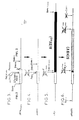
- the viral cycle during infection of permissive cells, is divided into two phases, early and late. It is known that the four regions of the viral genome expressed in the early phase are called regions E1, E2, E3 and E4, the respective positions of which in the entire viral genome are schematically represented in FIG. 1.
- the E1 region located at the left end of the genome, is itself divided into two regions E1A and E1B.
- the transition from the early to the late phase, marked by the replication of viral DNA, is characterized by a sudden change in the genetic program of the virus.
- the expression of certain early genes is repressed whereas the transcription of late genes is mainly carried out from a single promoter, the major late promoter (fig. 1). In addition, there is a strong repression of protein synthesis in the host cell (1).
- Ad2, Ad5 human adenoviruses type 2 or 5
- Ad2, Ad5 human adenoviruses type 2 or 5
- E3 region which represents 6% of the genome
- Ad5 is not essential in vitro and can therefore be substituted in its entirety (2).
- the size of the foreign DNA fragment that can be inserted into the genome of these viruses is large. Indeed, the virus can encapsulate a genome whose length exceeds by 5% that of the wild genome.
- the promoter of the early E1A region of an adenovirus, transported in mouse cells in which replication of the retroviruses is not possible, has been shown to be able to exert its promoter activity there nevertheless.
- a prokaryotic gene coding for chloramphenicol acetyltransferase could it be expressed in such a cellular system under the control of said promoter (Kruczek I. et al (1983), Proc. Natl. Acad. Sci. USA).
- the invention stems from the observation that the promoter of the early E1A region of the genome of an adenovirus (hereinafter simply referred to as "E1A promoter”) could particularly effectively control the expression in a viral vector of a gene.
- heterologous that is to say foreign with respect to the genes which are normally associated with it in the adenovirus
- heterologous that is to say foreign with respect to the genes which are normally associated with it in the adenovirus
- heterologous nucleotide sequence coding for a polypeptide sequence whose expression is sought Under the conditions defined below, the E1A promoter behaves like a strong promoter, and this more particularly when the E1A promoter-heterologous coding sequence assembly is inserted into this viral vector.
- the invention stems from the observation that the promoter of the early E1A region of the genome of an adenovirus (hereinafter simply referred to as "E1A promoter”) could particularly effectively control the expression in a viral vector of a gene.
- heterologous that is to say foreign with respect to the genes which are normally associated with it in the adenovirus
- heterologous that is to say foreign with respect to the genes which are normally associated with it in the adenovirus
- heterologous nucleotide sequence coding for a polypeptide sequence whose expression is sought Under the conditions defined below, the E1A promoter behaves like a strong promoter, and this more particularly when the E1A promoter-heterologous coding sequence assembly is inserted into this viral vector.
- the invention therefore generally relates to a recombinant vector for the transformation of lines eukaryotic cells, in particular human or animal, chosen from those which are infectable by adenoviruses or whose endogenous polymerases are capable of recognizing the promoters of adenoviruses, this vector being further modified by an insertion nucleic acid containing a nucleotide sequence coding for a polypeptide sequence the expression of which in said cell lines is sought, characterized in that said insertion sequence is substituted for the E1A genes normally placed under the direct control of said early promoter of the E1A region, this insertion sequence being itself even placed under the direct control of this promoter and in that it comprises, downstream of the nucleic acid of insertion, all of the essential sequences of an adenovirus genome which are necessary for the replication of the corresponding adenoviruses that are normally located downstream of genes normally under the control of direct from the early promoter E1A in said genome, and in that the aforesaid
- a viral vector Being a viral vector, derived from an adenovirus, one can also benefit from the advantage attaching to the E1A region of adenoviruses, namely that its expression is constitutive and permanent throughout the viral cycle ( 8, 9).
- a particular preferred form of the recombinant DNA according to the invention is characterized in that it comprises, downstream of the nucleic acid of insertion, in the direction of transcription, a defective adenovirus genome nevertheless comprising l 'all of those essential sequences necessary for the replication of the corresponding adenovirus, which are normally located downstream of the genes normally under the direct control of the early promoter E1A in said genome.
- the defective adenovirus genome with which the recombinant DNA in accordance with the invention is associated consists of a complete genome of adenovirus, however devoid of the anterior part of the E1A region of the viral genome, in particular of its fragment. 0-2.6% (percentage expressed relative to the total size of the adenovirus genome).
- the recombinant DNAs of the invention associated with vector elements such as those which have been mentioned above, in fact constitute vectors containing said recombinant DNAs.
- "defective recombinant viruses” when the vector elements associated with the DNA-recombinant according to the invention are derived from a defective adenovirus genome.
- These defective recombinant viruses are advantageously used for the transformation of transformable cell lines of higher eukaryotes (in particular of human or animal origin) themselves comprising a distinct nucleotide sequence capable of complementing the part of the genome of the adenovirus including the above vector is lacking, said distinct sequence preferably being incorporated into the genome of cells of said cell line.
- line 293 a human embryonic kidney line which contains, integrated into its genome, the first eleven percent of the left end of the genome of an Ad5. These make it possible to complement defective recombinant viruses which carry deletions from this region (10).
- the S gene of the hepatitis B virus genome constitutes a nucleotide sequence of particular interest in this regard, for several reasons.
- the expression product of the S gene in the cells which express it, HBsAg (11, 12) is secreted in the cell supernatant in the form of particles easy to detect and to quantify by radioimmunological assay, which allows a precise evaluation of the expression capacity of the viral vector.
- the invention provides a recombinant viral vector allowing the study of the expression of HBV genes both at the level of transcription and of translation, which is all the more interesting since To date, there has been no cell culture system capable of spreading the hepatitis B virus (HBV).
- cellular infection with the recombinant adenovirus-HBV virus illustrates in a particularly advantageous way the methodological basis of a process for manufacturing a vaccine against a determined pathogenic agent (in this case the hepatitis B virus in the 'example considered).
- Another nucleotide sequence of the hepatitis B virus genome of particular interest is the S gene provided with its pre-S2 region which codes for the HBs antigen and for a receptor for polymerized human serum albumin (pHSA) (25 ), (26).
- pHSA polymerized human serum albumin
- the S gene can be substituted in the recombinant DNA by any other nucleotide sequence coding for a distinct protective antigen against another determined pathogenic agent, especially when this distinct protective antigen is itself normally capable of be secreted by cells transformed by recombinant DNA. It also goes without saying that the S gene and the pre-S2 region can be substituted in the recombinant DNA by any other nucleotide sequence coding for a distinct protective antigen against another determined pathogenic agent, especially when this distinct protective antigen is itself normally capable of being secreted by transformed cells by recombinant DNA.
- the nucleotide sequence coding for this distinct protective antigen can moreover possibly be inserted into the recombinant DNA in phase with another gene, for example the HBsAg antigen, since this other gene can be used as a "locomotive" to promote the excretion also of this distinct antigen, in particular in the form of a hybrid protein.
- another gene for example the HBsAg antigen
- this other gene can be used as a "locomotive" to promote the excretion also of this distinct antigen, in particular in the form of a hybrid protein.
- the separate antigens capable of being thus produced mention is made, for example, of glycoproteins of structure of the Epsteim-Barr virus.
- the first nucleotides of the nucleotide sequence coding for a determined polypeptide (“simple” or hybrid protein) are placed, in particular by construction as close as possible to this promoter, in particular of the “TATA box”, characteristic of the promoter, it being understood however that the nucleotide sequence between the promoter and the ATG initiating the nucleotide sequence coding for said determined polypeptide must generally contain the triplets coding for the 5 'untranslated end of the messenger RNA normally corresponding to the coding sequence and containing the ribosome pairing sequences necessary for efficient translation.
- This 5 'untranslated end of the messenger RNA can moreover be replaced by the 5' untranslated end of a messenger RNA distinct from that normally associated with a determined coding sequence.
- a messenger RNA distinct from that normally associated with a determined coding sequence.
- the S gene it is possible to replace the 5 'untranslated end containing the pre-S gene or adjoining it with the 5' untranslated end of the messenger RNA of the T antigen from SV40.
- a DNA sequence containing the S and pre-S2 regions of the hepatitis B virus genome is used under the control of the strong E1A promoter, it is possible to obtain the expressions at the times from the pre-S2 region and from region S. Any other 5 'untranslated end of messenger RNA can be used, as long as it is compatible with the other similar end chosen.
- the distance between the promoter's TATA box and the messenger RNA initiation site is approximately 30 nucleotides.
- the promoter E1A of the recombinant DNA according to the invention and even more generally the vector according to the invention using larger parts of the genome of an adenovirus are preferably derived from an adenovirus belonging to category C, such that it has been defined by TOOZE. These adenoviruses have the known property of not being oncogenic.
- the Ad2 or Ad5 subtypes of this category of adenovirus are characterized by a significant transforming power. The use of the latter type of recombinant DNA is therefore particularly recommended, when the expression product sought is intended for the production of protective antigens, in particular active principles of vaccines. This will be all the more true in the case where whole, and even infectious, adenoviruses will be used as active principles of live vaccines, in particular under the conditions which will be explained further below.
- the invention naturally also relates to cell lines, in particular of human or animal origin, which are transformed by recombinant DNAs as defined above and which have been made capable of synthesizing a polypeptide encoded by the nucleotide sequence (or said sequences nucleotides) contained in these recombinant DNAs and placed under the direct control of said promoter.
- the invention relates more particularly still to cell lines transformed with a recombinant vector in accordance with the invention and further characterized in that the cells of these cell lines themselves contain a distinct sequence of nucleotides capable of complementing the part of the genome of the adenovirus which the above vector does not have, said distinct sequence preferably being incorporated into the genome of the cells of said cell line .
- the line 293 already mentioned above after having been transformed by the recombinant vectors, constitutes a preferred cell culture according to the invention. Thanks to the complementation sequence which the cells of this line contain, a significant viral multiplication is observed inside these cells and, consequently, an equally multiplied expression of the coding sequence for the predetermined polypeptide.
- this coding sequence is the S gene
- a high production of HBsAg antigens is excreted in the culture medium of these cells.
- the recombinant adenovirus directs in vitro the synthesis of HBsAg particles having receptor activity for pHSA.
- this recombinant virus When injected into rabbits, this recombinant virus produces anti-HBsAg and anti-pHSA antibodies.
- the same vectors can be used for the transformation of Vero cells under analogous conditions.
- the recombinant vectors according to the invention can also be used for the transformation of cells which do not itself have the complementation sequence under the conditions which have been indicated above. It may then be necessary to carry out a co-transformation of these latter types cells, on the one hand, with the recombinant vector according to the invention, on the other hand, with a non-defective adenovirus or a distinct recombinant DNA containing the adenovirus sequences which lack the recombinant vector according to the invention. It will certainly be observed in the latter case a simultaneous production of HBsAg antigens (when the coding sequence contains the S gene) and of the replicated adenovirus released by the cells thus transformed.
- the protective antigen formed may, however, if necessary, be separated from the viral suspension, for example by bringing the culture medium into contact with anti-adenovirus antibodies, preferably immobilized on a solid support, such as cross-linked agarose. , marketed under the designation SEPHAROSE.
- anti-adenovirus antibodies preferably immobilized on a solid support, such as cross-linked agarose. , marketed under the designation SEPHAROSE.
- SEPHAROSE cross-linked agarose
- adenoviruses more particularly those which belong to group C of human adenoviruses, makes it possible to envisage the constitution of "live vaccines".
- These can be constituted by infectious adenoviruses modified in the E3 region by the insertion of the recombinant DNA according to the invention into the nonessential part of the adenovirus.
- human group C adenoviruses have never been shown to be tumorigenic in animals (3).
- These vectors or viruses will be of particular interest for the transformation of Vero cells, the non-tumorigenic character of which is now firmly established. Therefore they constitute a line of animal origin particularly favorable to the production of products for human use.
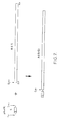
- the numbers appearing in figs. 1 to 5 indicate the positions of the restriction sites in the viral sequences Ad5, SV40 and HBV.
- the numbering of the positions of the restriction sites of Ad5 and SV450 are those of J. TOOZE (1), those of HBV are those of P. TIOLLAIS et al. (11).
- 1st case Fragment of the hepatitis B virus genome containing the S gene.
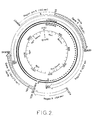
- hepatitis B virus (fig. 2). It is recalled that the hepatitis B virus genome is a partially single-stranded circular DNA molecule. Its length is approximately 3,200 bp. It consists of the pairing of two strands of unequal length called strands L (-) and S (+).
- the S gene represents the coding sequence of the major polypeptide of the viral envelope which carries HBsAg.
- the DNA fragment used in the constructions below is the XhoI127-BglII1984 fragment.
- the polyadenylation site of the HBsAg messenger was located at position 1916.
- 2nd case Fragment of the genome of the hepatitis B virus containing the S gene and the pre-S2 region.
- the DNA fragment used is the MstII3161-BglII1982 fragment which codes both for the HBs antigen and for a polymerized human serum albumin receptor (pHSA).
- the MstII site precedes the initiation codon of the pre-S2 region by 9 nucleotides.
- the BglII site is located 64 nucleotides downstream of the poly A addition signal of the S gene (from the English "poly A addition signal").
- a recombinant adenovirus comprising the S gene
- the procedure is identical for obtaining a recombinant adenovirus, in accordance with the invention, having the S gene and the pre- S2, it being understood that, in this second case, it is the DNA fragment MstII-BglII which is inserted between the HindIII and BamHI restriction sites of the plasmid pK4, in place of the DNA fragment XhoI-BglII of which it is question below.
- Ad5 the recombinant adenovirus having the S gene
- Ad5 the recombinant adenovirus having the S gene
- Ad5 the recombinant adenovirus having the S gene and the pre-S2 region.
- the plasmid pE1A contains the first 632 nucleotides of the left end of the Ad5 genome. This fragment was obtained by cutting the purified restriction fragment SacI E (0 - 5.0%) of Ad5 by TaqI (FIG. 1). This fragment was inserted between the EcoRI and ClaI restriction sites of the plasmid pML2 (fig. 3) Le plasmid pML2 was opened by EcoRI and Clal. The Ad5 fragment was linked to the linearized plasmid at the TaqI end. The junction of the TaqI-ClaI ends recreates a ClaI restriction site. The EcoRI end of the recombinant was repaired with DNA polymerase I from E. coli (Klenow fragment) and the plasmid recircularized using T4 ligase. The EcoRI site has therefore been reconstructed.
- the plasmid pAB1 was constructed from the plasmid pEIA (TaqI), so as to eliminate the coding part of the E1A region. This was done by isolating the PvuII-PvuII fragment (positions 452-623), cutting this fragment with the enzyme HaeIII (position 495), reinserting the PvuII452-HaeIII495 fragment at the PvuII623 site of the plasmid pE1A (TaqI). In other words, the HaeIII495-Pvu623 fragment has been deleted.
- the plasmid pAB1 contains a HindIII site close to the transcription initiation site of the E1A region and a BamHI site (of pML2) located at a distance. These two restriction sites can be used to clone foreign genes without genetic fusion.
- pAB1 was cut with HindIII and BamHI and the fragment containing the E1A promoter, derived from pAB1, was linked, at its BamHI end to the BglI-BamHI fragment (positions 5235-2533 of the SV40 virus genome) hereinafter called A (SV40) containing the gene coding for the T and t antigens of the SV40 virus.
- A SV40
- the plasmid is recircularized using T4 ligase.
- the construction present in the plasmid pK4 was tested by bringing into play the transient expression of the T gene.
- the plasmid pK4 directs the synthesis of the antigen T of SV40 which was detected by immunofluorescence. About 1% of the transfected cells showed clear fluorescence. The absence of fluorescence after cell transfection with a plasmid containing the fragment of SV40 inserted in the wrong orientation shows that the gene for T and t antigens is well placed under the control of the E1A promoter of Ad5.
- the plasmid pK4 was digested with HindIII and BamHI.
- the XhoI-BglII fragment (positions 125 to 1982) of the hepatitis B virus (HBV) genome (fig. 2) was inserted, in place of most of A (SV40) between the restriction sites HindIII and BamHI of the plasmid pK4, after repair of their respective ends by DNA polymerase I of E. coli (fragment of Kleenow) (fig. 3).
- the XhoI, HindIII, BamHI and BglII restriction sites are lost after ligation.
- the HindIII site was located 8 nucleotides upstream of the ATG initiating the T and t antigens. The insertion of the S gene into this site therefore makes it possible to conserve the 5 end of the early SV40 mRNA containing the "capping" site and the messenger pairing sequences to the ribosomes.
- the HBV DNA fragment contains the coding sequence or S gene (position 155 to 833) of the major polypeptide of the viral envelope carrying HBsAg as well as the sequence located 3 ′ of the S gene and which includes the polyadenylation site of HBsAg messenger RNA at position 1916 (20, 21, 22). Two plasmids pK4S+ and pK4S ⁇ carrying the HBV fragment inserted in both directions were isolated.
- 293 cells were grown in dishes 6 cm in diameter. 4 hours before transfection the culture supernatant was replaced with medium. 5 boxes of 293 cells at 70% confluence were then transfected with the ligation mixture according to the calcium phosphate technique then incubated for 4 hours at 37 ° C.
- TS buffer NaCl 8000.0 mg / l, KCl 380.0 mg / l, Na2 HPO4 100.0 mg / l, CaCl2 100.0 mg / l, MgCl2, 6H2O 100.0 mg / l, Tris 3000.0 mg / l pH 7.4
- 400 microliters of a TS solution containing 20% glycerol for 1 minute at ordinary temperature washed twice with 2 ml of TS buffer, then covered with 4 ml of MEM medium containing 1% noble agar, 1% fetal calf serum.
- the cells were covered with 4 ml of the nutrient mixture. On day 10, the cells were stained with 4 ml of the nutrient medium supplemented with 0.01% neutral red. The plaques were observed on day 11. The viruses were resuspended in 1 ml of TS and amplified on 293 cells. The presence of HBsAG in the culture medium was tested by RIA (Austria II, laboratory ABBOTT). After amplification, the presence of HBV sequences in the recombinant was tested by hybridization. Five ranges were analyzed. Only one was against a recombinant HBsAg+ virus. This Ad5 clone (XB) as well as another clone were positive for the detection of HBV sequences.
- Ad5 clone XB
- the size of the recombinant viral genome exceeds that of the wild virus by 2100 bp. No deletion could be detected by analysis of restriction fragments of the recombinant genome. Furthermore, this analysis showed that the pML2 sequences located between the PstI restriction site and the Ad5 sequence were correctly excised during the propagation of the recombinant genome in line 293.
- the synthesized HBsAg was purified by ultracentrifugation in CsCl. It has a density of 1.20. Typical particles of 22 nm have been observed by electron microscopy.
- HBsAg purified from the culture medium of cells infected with adenovirus recombinant Ad5 (MB) consisted of a homogeneous population of particles having an average diameter of 22 nm. The density after centrifugation in CsCl was 1.21.
- the HBsAg particles produced in Vero cells were tested by the hemagglutination technique of sheep red blood cells coated with pHSA and by radioimmunoassay (RIA) to detect the presence of pHSA receptor activity. Binding activity for pHSA was detected, but not for polymerized bovine albumin (Table II). Such activity was not detected with Vero cells infected with the recombinant Ad5 adenovirus (XB) containing only the S gene.
- XB Ad5 adenovirus
- Rabbits were intravenously inoculated with highly purified preparations of the recombinant Ad5 adenovirus (M-B) and the wild type adenovirus. Although the HBsAg antigen could not be detected in their serum, 5 out of 8 rabbits, inoculated with the recombinant virus, showed the appearance of an anti-HBs titer varying from 20 to 270 mIU / ml after 15 days (Table III). No anti-HBs antibodies were detected in rabbits injected with the wild type of adenovirus. After a second intravenous inoculation carried out 4 weeks after the first, a second peak was observed in the anti-HBs response reaching 440 mIU / ml for one of the animals.
- anti-HBs titers varying from 6 mIU / ml to 360 mIU / ml were noted. Previous studies have indicated that the minimum level of anti-HBs still protective against HBV is 10 mIU / ml for humans.
- Anti-pHSA antibodies were tested in rabbits inoculated in order to determine their relationship with the neutralization of HBV. These antibodies, detected by the inhibition of hemagglutination, were found in 5 animals out of 5 having a positive anti-HBs response (Table IV).
- the recombinant adenovirus Ad5 therefore directs in vivo the synthesis of HBsAg particles having a receptor character for polymerized human serum albumin.
- the invention therefore provides a methodological basis for the manufacture of a hepatitis B vaccine (or against other types of conditions) in cell cultures.
- adenovirus type 5 as a vector is twofold.
- this virus is a virus whose pathogenic power in humans is low. It only causes mild respiratory infections.
- this serotype which belongs to group C of human adenoviruses is not tumorigenic in animals.
- the rate of production of HBsAg obtained on Vero cells (approximately 1 microgram / 106 / per infectious cycle) is a priori sufficient for industrial exploitation.
- this cell line is non-tumorigenic and for this reason, it constitutes the line of animal origin a priori the most favorable for the production of a product for human use.
- 293 cells which have been mentioned above can be substituted for any other higher eukaryotic cells which can be infected with adenoviruses or which are capable of recognizing the E1A promoter of adenoviruses, these cells having been modified by prior incorporation into their own genomes, of a sequence containing the missing parts of the virus defective recombinant according to the invention of the genome of an adenovirus, in particular under the control of a promoter strongly recognized by these cells, for example a thymidine kinase promoter or an SV40 virus promoter.
- a promoter strongly recognized by these cells for example a thymidine kinase promoter or an SV40 virus promoter.
- the sequence originating from the adenovirus, then integrated into the genome of these higher eukaryotic cells, can therefore complement the defective viruses in accordance with the invention, under conditions analogous to those permitted by 293 cells. These methods are applicable with a particular advantage to Vero cells.
- Ad5 adenovirus used was deposited on August 3, 1984 under the number I-322 at the C.N.C.M. ("National Collection of Cultures of Microorganisms from the INSTITUT PASTEUR of Paris.
- the anti-pHSA receptor activity has been expressed as the reciprocal of the highest serum titer capable of providing 100% inhibition of hemagglutination.
- the HBsAg particles having a receptor hemagglutination titer for the pHSA of 1: 128 were mixed with an equal volume of serial dilutions of inhibitory sera.
Landscapes
- Life Sciences & Earth Sciences (AREA)
- Health & Medical Sciences (AREA)
- Genetics & Genomics (AREA)
- Chemical & Material Sciences (AREA)
- Organic Chemistry (AREA)
- Engineering & Computer Science (AREA)
- Wood Science & Technology (AREA)
- Biochemistry (AREA)
- Biotechnology (AREA)
- General Engineering & Computer Science (AREA)
- Molecular Biology (AREA)
- Virology (AREA)
- Bioinformatics & Cheminformatics (AREA)
- General Health & Medical Sciences (AREA)
- Biomedical Technology (AREA)
- Zoology (AREA)
- Biophysics (AREA)
- Physics & Mathematics (AREA)
- Microbiology (AREA)
- Plant Pathology (AREA)
- Gastroenterology & Hepatology (AREA)
- Medicinal Chemistry (AREA)
- Proteomics, Peptides & Aminoacids (AREA)
- Micro-Organisms Or Cultivation Processes Thereof (AREA)
- Medicines Containing Antibodies Or Antigens For Use As Internal Diagnostic Agents (AREA)
- Medicines Containing Material From Animals Or Micro-Organisms (AREA)
- Preparation Of Compounds By Using Micro-Organisms (AREA)
- Saccharide Compounds (AREA)
Claims (23)
- Rekombinanter Vektor, der den frühen Promotor der Region E1A des Genoms eines Adenovirus für die Transformation von eukaryotischen Zellinien enthält, insbesondere menschlichen oder tierischen, ausgewählt unter jenen, die durch Adenoviren infizierbar sind, oder deren endogene Polymerasen fähig sind, die Promotoren der Adenoviren zu erkennen, wobei dieser Vektor außerdem modifiziert ist durch eine Nukleinsäure-Insertion, die eine für eine Polypeptidsequenz kodierende Nukleotidsequenz enthält, deren Expression in den genannten Zellinien angestrebt ist, dadurch gekennzeichnet, daß die genannte Sequenz der Insertion die E1A-Gene, die normalerweise unter die direkte Kontrolle des genannten frühen Promotors der Region E1A gestellt sind, substituiert, wobei diese Sequenz der Insertion ihrerseits unter die direkte Kontrolle dieses Promotors gestellt ist und dadurch, daß sie unterhalb der Nukleinsäure der Insertion die Anordnung der essentiellen Sequenzen eines Adenovirus-Genoms umfaßt, die zur Replikation des entsprechenden Adenovirus notwendig sind und die normalerweise unterhalb der Gene angeordnet sind, die normalerweise unter der direkten Kontrolle des frühen Promotors E1A in dem genannten Genom sind, und dadurch, daß die genannte für die Polypeptidsequenz kodierende Nukleotidsequenz, deren Expression angestrebt wird, gegenüber den Genen des genannten Adenovirus heterolog sind.
- Rekombinanter Vektor nach Anspruch 1, dadurch gekennzeichnet, daß das Genom des Adenovirus, mit dem er verbunden ist, unvollständig ist, dadurch, daß es den vorderen Teil der Region E1A des Virus-Genoms nicht aufweist, insbesondere sein Fragment 0-2,6 %.
- Rekombinanter Vektor nach Anspruch 1, dadurch gekennzeichnet, daß die rekombinante DNA, die durch den frühen Promotor der Region E1A und die Nukleinsequenz der Insertion gebildet ist, in einer nicht essentiellen Region eines Adenovirus inkorporiert ist, insbesondere in den nicht essentiellen Teil der Region E3 dieses Adenovirus.
- Rekombinanter Vektor nach Anspruch 1, dadurch gekennzeichnet, daß er aus einem infektiösen Adenovirus besteht, der die rekombinante DNA umfaßt, die durch den frühen Promotor der Region E1A und die Nukleinsequenz der Insertion gebildet ist, die in einer seiner nicht essentiellen Regionen inkorporiert ist, insbesondere in dem nicht essentiellen Teil seiner Region E3.
- Rekombinanter Vektor nach einem der Ansprüche 1 bis 4, dadurch gekennzeichnet, daß sein Promotor von einem Adenovirus der Kategorie C herstammt, die zum Untertyp Ad2 oder Ad5 gehört.
- Rekombinanter Vektor nach einem der Ansprüche 1 bis 5, dadurch gekennzeichnet, daß die in der genannten Nukleinsäure der Insertion enthaltene Nukleotidsequenz für ein Protein kodiert, das, wenn es in einem natürlichen Zell-Wirt unter der Kontrolle seines natürlichen Promotors exprimiert wird, in das Milieu einer Kultur dieses natürlichen Zell-Wirtes ausgeschieden wird.
- Rekombinanter Vektor nach einem der Ansprüche 1 bis 6, dadurch gekennzeichnet, daß die genannte Nukleotidsequenz für ein Schutzantigen gegen einen bestimmten pathogenen Stoff kodiert, insbesondere für das Antigen HBsAg.
- Rekombinanter Vektor nach Anspruch 7, dadurch gekennzeichnet, daß die genannte Nukleinsequenz das Gen S und die Region pre-S2 des Genoms vom Virus der Hepatitis B umfaßt.
- Zellinie von menschlichem oder tierischem Ursprung, dadurch gekennzeichnet, daß sie durch einen rekombinanten Vektor nach einem der Ansprüche 1 bis 8 transformiert wird und dadurch, daß sie das Polypeptid synthetisiert, das von der genannten Nukleotidsequenz kodiert wird.
- Zellinie nach Anspruch 9, in Kombination mit Anspruch 1 oder 2, oder beiden gleichzeitig, und gegebenenfalls mit einem der Ansprüche 5 bis 8, dadurch gekennzeichnet, daß sie selbst eine bestimmte Nukleotidsequenz enthält, die fähig ist, den Teil des Genoms des Adenovirus zu komplementieren, dem der genannte Vektor fehlt, wobei die genannte bestimmte Sequenz bevorzugt ins Genom der Zellen der genannten Zellinie inkorporiert ist.
- Verfahren zur Herstellung eines bestimmten Polypeptids umfassend die Transformation durch einen rekombinanten Vektor, der eine für das genannte Polypeptid einer eukaryotischen Linie von Zellen kodierende Nukleotidsequenz enthält, insbesondere tierische oder menschliche, ausgewählt von denen, die durch Adenoviren infizierbar sind, oder deren endogene Polymerasen fähig sind, die Promotoren der Adenoviren zu erkennen, dadurch gekennzeichnet, daß die transformierende DNA gemäß einem der Ansprüche 1 bis 8 ist und dadurch, daß die Produkte der Expression dieser Zellen aufgenommen werden, darunter das genannte bestimmte Polypeptid.
- Verfahren nach Anspruch 11, dadurch gekennzeichnet, daß der rekombinante Vektor gemäß einem der Ansprüche 5 bis 8 ist.
- Verfahren nach Anspruch 11, dadurch gekennzeichnet, daß die transformierten eukaryotischen Zellen gemäß Anspruch 10 sind.
- Verfahren nach Anspruch 11, dadurch gekennzeichnet, daß die genannten eukaryotischen Zellen gleichzeitig mit den entsprechenden infektiösen Adenoviren transformiert werden.
- Verfahren nach einem der Ansprüche 11 bis 14, dadurch gekennzeichnet, daß die bestimmte Nukleotidsequenz gemäß der in Anspruch 7 definierten ist.
- Verfahren zur Herstellung eines Polypeptids, das für den Virus der Hepatitis B charakteristische immunogene Eigenschaften besitzt, umfassend die Transformation einer Linie von eukaryotischen Zellen, insbesondere tierischen oder menschlichen, ausgewählt unter jenen, die durch Adenoviren infizierbar sind, oder deren endogene Polymerasen fähig sind, die Promotoren der Adenoviren zu erkennen, durch einen rekombinanten Vektor, der eine Insertion enthält, die selbst eine für ein für den Virus der Hepatitis B charakteristisches immunogenes Polypeptid kodierende Nukleotidsequenz umfaßt, dadurch gekennzeichnet, daß die genannte Nukleotidsequenz die E1A-Gene, die normalerweise unter die direkte Kontrolle des frühen Promotors der Region E1A des Genoms eines Adenovirus gestellt sind, substituiert, wobei diese Sequenz der Insertion selbst unter die direkte Kontrolle dieses Promotors gestellt ist und dieser rekombinante Vektor außerdem, unterhalb der Nukleinsäure der Insertion, die Anordnung der Sequenzen eines Adenovirus-Genoms enthält, die für die Replikation des entsprechenden Adenovirus essentiell notwendig sind und die normalerweise unterhalb der Gene angeordnet sind, die normalerweise unter der direkten Kontrolle des frühen Promotors E1A in dem genannten Genom sind.
- Verfahren nach Anspruch 16, dadurch gekennzeichnet, daß der rekombinante Vektor in einem unvollständigen Adenovirus besteht, der in den genannten Linien von Zellen replizierbar ist, wobei der genannte Adenovirus den vorderen Teil der Region E1A des Virusgenoms nicht aufweist, insbesondere sein Fragment 0-2,6 %, und dadurch, daß im Kulturmilieu die Produkte der Expression der von der rekombinanten DNA transformierten Linien von eukaryotischen Zellen, darin eingeschlossen das von der genannten Nukleotidsequenz kodierte und von den genannten Linien von Zellen synthetisierte Polypeptid aufgenommen werden.
- Verfahren nach den Ansprüchen 16 oder 17, dadurch gekennzeichnet, daß der Promotor der rekombinanten DNA von einem Adenovirus der Kategorie C herstammt, der zum Untertyp Ad2 oder Ad5 gehört.
- Verfahren nach einem der Ansprüche 16 bis 18, dadurch gekennzeichnet, daß die rekombinante DNA, die von dem genannten frühen Promotor und der Sequenz der Insertion gebildet ist, in einer nicht essentiellen Region des Adenovirus inkorporiert ist, insbesondere in dem nicht essentiellen Teil der Region E3 dieses Adenovirus.
- Verfahren nach einem der Ansprüche 16 bis 19, dadurch gekennzeichnet, daß die Linie der eukaryotischen Zellen selbst eine bestimmte Sequenz von Nukleotiden enthält, die fähig sind, den Teil des Genoms des Adenovirus, von dem der genannte Vektor entnommen ist, zu komplementieren, wobei die genannte Sequenz bevorzugt ins Genom der Zellen der genannten Linie von Zellen inkorporiert ist.
- Verfahren nach einem der Ansprüche 16 bis 20, dadurch gekennzeichnet, daß die rekombinante DNA die Nukleotidsequenz umfaßt, die dem Gen S des Genoms vom Virus der Hepatitis B entspricht.
- Verfahren nach einem der Ansprüche 16 bis 20, dadurch gekennzeichnet, daß die rekombinante DNA die Sequenz umfaßt, die dem Gen S und der Region pre-S2 des Genoms vom Virus der Hepatitis B entspricht.
- Impfstoff dessen aktiver Wirkstoff in einem infektiösen und replizierbaren Adenovirus besteht, umfassend, in eine seiner nicht essentiellen Regionen inkorporiert, insbesondere den nicht essentiellen Teil seiner Region E3, eine rekombinante DNA gebildet zwischen dem frühen Promotor der Region E1A und einer Nuklein-Sequenz der Insertion, die für ein Schutzantigen gegen den gewählten pathogenen Stoff kodiert und insbesondere gegen den Virus der Hepatitis B, wobei diese Nuklein-Sequenz der Insertion die E1A-Gene substituiert, die normalerweise unter der Kontrolle dieses Promotors sind.
Priority Applications (1)
| Application Number | Priority Date | Filing Date | Title |
|---|---|---|---|
| AT85402261T ATE76428T1 (de) | 1984-11-20 | 1985-11-20 | Expression und sekretion von polypeptiden in eukaryoten unter kontrolle eines adenoviruspromotors. |
Applications Claiming Priority (2)
| Application Number | Priority Date | Filing Date | Title |
|---|---|---|---|
| FR8417674A FR2573436B1 (fr) | 1984-11-20 | 1984-11-20 | Adn recombinant comportant une sequence nucleotidique codant pour un polypeptide determine sous le controle d'un promoteur d'adenovirus, vecteurs contenant cet adn recombinant, cellules eucaryotes transformees par cet adn recombinant, produits d'excretion de ces cellules transformees et leurs applications, notamment a la constitution de vaccins |
| FR8417674 | 1984-11-20 |
Publications (2)
| Publication Number | Publication Date |
|---|---|
| EP0185573A1 EP0185573A1 (de) | 1986-06-25 |
| EP0185573B1 true EP0185573B1 (de) | 1992-05-20 |
Family
ID=9309766
Family Applications (1)
| Application Number | Title | Priority Date | Filing Date |
|---|---|---|---|
| EP85402261A Expired - Lifetime EP0185573B1 (de) | 1984-11-20 | 1985-11-20 | Expression und Sekretion von Polypeptiden in Eukaryoten unter Kontrolle eines Adenoviruspromotors |
Country Status (6)
| Country | Link |
|---|---|
| EP (1) | EP0185573B1 (de) |
| JP (1) | JP2610015B2 (de) |
| AT (1) | ATE76428T1 (de) |
| CA (1) | CA1266627A (de) |
| DE (1) | DE3586092D1 (de) |
| FR (1) | FR2573436B1 (de) |
Cited By (16)
| Publication number | Priority date | Publication date | Assignee | Title |
|---|---|---|---|---|
| US6939862B2 (en) | 1997-06-30 | 2005-09-06 | Aventis Pharma S.A. | Method for transferring nucleic acid into striated muscles |
| US7008776B1 (en) | 1996-12-06 | 2006-03-07 | Aventis Pharmaceuticals Inc. | Compositions and methods for effecting the levels of high density lipoprotein (HDL) cholesterol and apolipoprotein AI very low density lipoprotein (VLDL) cholesterol and low density lipoprotein (LDL) cholesterol |
| US7432371B2 (en) | 2002-02-07 | 2008-10-07 | Covalent Partners, Llc | Nanofilm and membrane compositions |
| US8236293B2 (en) | 1995-06-15 | 2012-08-07 | Crucell Holland B.V. | Means and methods for nucleic acid delivery vehicle design and nucleic acid transfer |
| US8563006B2 (en) | 2001-10-11 | 2013-10-22 | Wyeth Holdings Corporation | Immunogenic compositions for the prevention and treatment of meningococcal disease |
| US8574597B2 (en) | 2006-12-22 | 2013-11-05 | Wyeth Llc | Immunogenic compositions for the prevention and treatment of meningococcal disease |
| US8986710B2 (en) | 2012-03-09 | 2015-03-24 | Pfizer Inc. | Neisseria meningitidis compositions and methods thereof |
| US9556240B2 (en) | 2010-08-23 | 2017-01-31 | Wyeth Llc | Stable formulations of Neisseria meningitidis rLP2086 antigens |
| US9757443B2 (en) | 2010-09-10 | 2017-09-12 | Wyeth Llc | Non-lipidated variants of Neisseria meningitidis ORF2086 antigens |
| US9802987B2 (en) | 2013-03-08 | 2017-10-31 | Pfizer Inc. | Immunogenic fusion polypeptides |
| US9822150B2 (en) | 2013-09-08 | 2017-11-21 | Pfizer Inc. | Neisseria meningitidis compositions and methods thereof |
| US10183070B2 (en) | 2017-01-31 | 2019-01-22 | Pfizer Inc. | Neisseria meningitidis compositions and methods thereof |
| US10196429B2 (en) | 2012-03-09 | 2019-02-05 | Pfizer Inc. | Neisseria meningitidis composition and methods thereof |
| US10214730B2 (en) | 2011-04-19 | 2019-02-26 | The Research Foundation For The State University Of New York | Adeno-associated-virus Rep sequences, vectors and viruses |
| US10888611B2 (en) | 2015-02-19 | 2021-01-12 | Pfizer Inc. | Neisseria meningitidis compositions and methods thereof |
| US12383611B2 (en) | 2019-09-27 | 2025-08-12 | Pfizer Inc. | Neisseria meningitidis compositions and methods thereof |
Families Citing this family (67)
| Publication number | Priority date | Publication date | Assignee | Title |
|---|---|---|---|---|
| IL76751A (en) * | 1984-11-01 | 1991-04-15 | American Home Prod | Method and oral vaccines against infectious organisms using live,recombinant adenovirus for the production of antibodies |
| FR2642767B1 (fr) * | 1989-01-19 | 1993-10-01 | Transgene Sa | Vecteurs d'expression de proteines heterologues dans les cellules eucaryotes, lignees cellulaires obtenues et procede pour leur preparation |
| US5670488A (en) * | 1992-12-03 | 1997-09-23 | Genzyme Corporation | Adenovirus vector for gene therapy |
| US20020164782A1 (en) | 1999-02-10 | 2002-11-07 | Gregory Richard J. | Adenovirus vectors for gene therapy |
| FR2681786A1 (fr) * | 1991-09-27 | 1993-04-02 | Centre Nat Rech Scient | Vecteurs recombinants d'origine virale, leur procede d'obtention et leur utilisation pour l'expression de polypeptides dans des cellules musculaires. |
| US6099831A (en) * | 1992-09-25 | 2000-08-08 | Centre National De La Recherche Scientifique | Viral recombinant vectors for expression in muscle cells |
| US6743623B2 (en) | 1991-09-27 | 2004-06-01 | Centre National De La Recherche Scientifique | Viral recombinant vectors for expression in muscle cells |
| US6013638A (en) * | 1991-10-02 | 2000-01-11 | The United States Of America As Represented By The Department Of Health And Human Services | Adenovirus comprising deletions on the E1A, E1B and E3 regions for transfer of genes to the lung |
| FR2688514A1 (fr) * | 1992-03-16 | 1993-09-17 | Centre Nat Rech Scient | Adenovirus recombinants defectifs exprimant des cytokines et medicaments antitumoraux les contenant. |
| EP1024198A3 (de) * | 1992-12-03 | 2002-05-29 | Genzyme Corporation | Pseudo-adenovirenvectors zur Gentherapie der Hämophilien |
| FR2707880B1 (fr) * | 1993-06-30 | 1995-10-06 | Rhone Poulenc Rorer Sa | Compositions pharmaceutiques et leur utilisation, notamment pour le traitement des maladies neurodégénératives. |
| FR2711670B1 (fr) | 1993-10-22 | 1996-01-12 | Pasteur Institut | Vecteur nucléotidique, composition le contenant et vaccin pour l'immunisation à l'encontre d'une hépatite. |
| US5820868A (en) | 1993-12-09 | 1998-10-13 | Veterinary Infectious Disease Organization | Recombinant protein production in bovine adenovirus expression vector system |
| IL113052A0 (en) | 1994-03-23 | 1995-06-29 | Rhone Poulenc Rorer Sa | Recombinant viruses, their preparation and their use in gene therapy |
| FR2730637B1 (fr) | 1995-02-17 | 1997-03-28 | Rhone Poulenc Rorer Sa | Composition pharmaceutique contenant des acides nucleiques, et ses utilisations |
| FR2732357B1 (fr) | 1995-03-31 | 1997-04-30 | Rhone Poulenc Rorer Sa | Vecteurs viraux et utilisation pour le traitement des desordres hyperproliferatifs, notamment de la restenose |
| US6395530B1 (en) | 1996-12-06 | 2002-05-28 | Aventis Pharmaceuticals Inc. | LLG polypeptides of the triacylglycerol lipase family, and compositions and methods for their use in enzymatic hydrolysis, and protein and gene therapies |
| US6884430B1 (en) | 1997-02-10 | 2005-04-26 | Aventis Pharma S.A. | Formulation of stabilized cationic transfection agent(s) /nucleic acid particles |
| WO1998049321A2 (en) | 1997-04-28 | 1998-11-05 | Rhone-Poulenc Rorer S.A. | Adenovirus-mediated intratumoral delivery of an angiogenesis antagonist for the treatment of tumors |
| WO1998059063A2 (en) | 1997-06-23 | 1998-12-30 | University Of Saskatchewan | Bovine adenovirus type 3 genome |
| US6653088B1 (en) | 1997-10-24 | 2003-11-25 | Aventis Pharma S.A. | Interaction test for the investigation of inhibitory molecules of the interaction between a presenilin and the β-amyloid peptide |
| US6225456B1 (en) | 1998-05-07 | 2001-05-01 | University Technololy Corporation | Ras suppressor SUR-5 |
| US6506889B1 (en) | 1998-05-19 | 2003-01-14 | University Technology Corporation | Ras suppressor SUR-8 and related compositions and methods |
| US6441156B1 (en) | 1998-12-30 | 2002-08-27 | The United States Of America As Represented By The Department Of Health And Human Services | Calcium channel compositions and methods of use thereof |
| HK1048138B (zh) * | 1999-04-15 | 2009-06-12 | 荷兰克鲁塞尔公司 | 用编码腺病毒e1蛋白的序列在人体细胞中生产重组蛋白 |
| US6855544B1 (en) | 1999-04-15 | 2005-02-15 | Crucell Holland B.V. | Recombinant protein production in a human cell |
| US8236561B2 (en) | 1999-04-15 | 2012-08-07 | Crucell Holland B.V. | Efficient production of IgA in recombinant mammalian cells |
| US7297680B2 (en) | 1999-04-15 | 2007-11-20 | Crucell Holland B.V. | Compositions of erythropoietin isoforms comprising Lewis-X structures and high sialic acid content |
| US7604960B2 (en) | 1999-04-15 | 2009-10-20 | Crucell Holland B.V. | Transient protein expression methods |
| FR2799472B1 (fr) | 1999-10-07 | 2004-07-16 | Aventis Pharma Sa | Preparation d'adenovirus recombinants et de banques adenovirales |
| US7521220B2 (en) | 1999-11-26 | 2009-04-21 | Crucell Holland B.V. | Production of vaccines |
| US7192759B1 (en) | 1999-11-26 | 2007-03-20 | Crucell Holland B.V. | Production of vaccines |
| US7527961B2 (en) | 1999-11-26 | 2009-05-05 | Crucell Holland B.V. | Production of vaccines |
| DE01918975T1 (de) | 2000-03-24 | 2006-04-13 | Biosphere Medical, Inc., Rockland | Mikrokügelchen zur aktiven Embolisierung |
| PT1290023E (pt) | 2000-03-31 | 2011-01-05 | Aventis Pharma Inc | Factor indutor do factor nuclear kb |
| GB0018307D0 (en) | 2000-07-26 | 2000-09-13 | Aventis Pharm Prod Inc | Polypeptides |
| JP5610659B2 (ja) | 2000-07-21 | 2014-10-22 | ルバンス セラピュティックス インク.Revance Therapeutics,Inc. | 多成分生物学的輸送システム |
| US6916635B2 (en) | 2000-10-02 | 2005-07-12 | The Research Foundation Of State University Of New York | Hybrid adenovirus/adeno-associated virus vectors and methods of use thereof |
| US7060442B2 (en) | 2000-10-30 | 2006-06-13 | Regents Of The University Of Michigan | Modulators on Nod2 signaling |
| WO2002053761A2 (en) | 2000-12-28 | 2002-07-11 | Wyeth | Recombinant protective protein from $i(streptococcus pneumoniae) |
| FR2829136B1 (fr) | 2001-08-29 | 2006-11-17 | Aventis Pharma Sa | Derives lipidiques d'aminoglycosides |
| PT1465987E (pt) | 2001-12-07 | 2008-04-15 | Crucell Holland Bv | Produção de vírus, isolados virais e vacinas |
| PT1479985T (pt) | 2002-01-17 | 2017-08-03 | Alfa Laval Corp Ab | Evaporador submerso compreendendo um permutador de calor de placas e um compartimento cilíndrico onde está disposto o permutador de calor de placas |
| EP1506286B1 (de) | 2002-05-24 | 2014-03-19 | Merck Sharp & Dohme Corp. | Neutralisierung eines menschlichen anti-igfr-antikörpers |
| US7785608B2 (en) | 2002-08-30 | 2010-08-31 | Wyeth Holdings Corporation | Immunogenic compositions for the prevention and treatment of meningococcal disease |
| WO2004099396A1 (en) | 2003-05-09 | 2004-11-18 | Crucell Holland B.V. | Cultures of e1-immortalized cells and processes for culturing the same to increase product yields therefrom |
| US7432057B2 (en) | 2004-01-30 | 2008-10-07 | Michigan State University | Genetic test for PSE-susceptible turkeys |
| AU2005274948B2 (en) | 2004-07-16 | 2011-09-22 | Genvec, Inc. | Vaccines against aids comprising CMV/R-nucleic acid constructs |
| SG173414A1 (en) | 2006-07-28 | 2011-08-29 | Sanofi Aventis Fr | Composition and method for treatment of tumors |
| PL2829551T3 (pl) | 2006-10-19 | 2018-04-30 | Csl Limited | Antagonisty przeciwciała o wysokim powinowactwie wobec receptora alfa 1 interleukiny-13 |
| AU2007319605B2 (en) | 2006-10-19 | 2011-02-17 | Csl Limited | Anti-IL-13R alpha 1 antibodies and their uses thereof |
| WO2010026537A1 (en) | 2008-09-05 | 2010-03-11 | Institut National De La Sante Et De La Recherche Medicale (Inserm) | Novel multimodular assembly useful for intracellular delivery |
| MX2011004755A (es) | 2008-11-05 | 2011-10-10 | Wyeth Llc | Composicion inmunogenica multicomponente para la prevencion de enfermedad estreptococica beta-hemolitica (bhs). |
| WO2010096561A1 (en) | 2009-02-18 | 2010-08-26 | The United States Of America, As Represented By The Secretary, Department Of Health And Human Services | Synthetic hiv/siv gag proteins and uses thereof |
| JP6188728B2 (ja) | 2012-02-07 | 2017-08-30 | グローバル・バイオ・セラピューティクス・インコーポレイテッドGlobal Bio Therapeutics,Inc. | 核酸送達の区画化方法ならびにその組成物および使用 |
| WO2014164703A1 (en) | 2013-03-11 | 2014-10-09 | University Of Florida Research Foundation, Inc. | Delivery of card protein as therapy for occular inflammation |
| US11053291B2 (en) | 2014-02-19 | 2021-07-06 | University Of Florida Research Foundation, Incorporated | Delivery of Nrf2 as therapy for protection against reactive oxygen species |
| FR3028527A1 (fr) | 2014-11-13 | 2016-05-20 | Pivert | Identification de facteurs de transcription de yarrowia lipolytica |
| WO2016075314A1 (fr) | 2014-11-13 | 2016-05-19 | Institut National De La Recherche Agronomique | Identification de facteurs de transcription de yarrowia lipolytica affectant la production de proteines |
| EP3703723A4 (de) | 2017-10-31 | 2021-12-15 | KaliVir Immunotherapeutics, Inc. | Onkolytischer plattformvektor zur systemischen abgabe |
| FR3081169B1 (fr) | 2018-05-15 | 2020-06-19 | Messenger Biopharma | Substitution de la coiffe des arn messagers par deux sequences d'arn introduites a leur extremite 5' |
| TW202227621A (zh) | 2020-11-19 | 2022-07-16 | 美商凱立凡爾免疫治療股份有限公司 | 重塑腫瘤微環境的溶瘤免疫療法 |
| BR112023022681A2 (pt) | 2021-04-30 | 2024-01-23 | Kalivir Immunotherapeutics Inc | Vírus oncolíticos para expressão modificada de mhc |
| US20240366681A1 (en) | 2021-08-13 | 2024-11-07 | Triovance Holding Llc | A skin substitute composition and methods of producing and using the same |
| AU2024277678A1 (en) | 2023-05-25 | 2025-11-27 | Dispatch Biotherapeutics, Inc. | Synthetic cancer antigens as targets for treating cancers |
| WO2025171388A1 (en) | 2024-02-09 | 2025-08-14 | Dispatch Biotherapeutics, Inc. | Engineered cancer antigens with modified domains and related methods and uses |
| WO2025171383A2 (en) | 2024-02-09 | 2025-08-14 | Dispatch Biotherapeutics, Inc. | Engineered cancer antigens and related methods and uses |
Family Cites Families (2)
| Publication number | Priority date | Publication date | Assignee | Title |
|---|---|---|---|---|
| US4593002A (en) * | 1982-01-11 | 1986-06-03 | Salk Institute Biotechnology/Industrial Associates, Inc. | Viruses with recombinant surface proteins |
| FR2521165A1 (fr) * | 1982-02-08 | 1983-08-12 | Pasteur Institut | Fragments d'adn codant pour un peptide immunogene susceptible d'introduire in vivo la synthese d'anticorps anti-poliovirus |
-
1984
- 1984-11-20 FR FR8417674A patent/FR2573436B1/fr not_active Expired
-
1985
- 1985-11-20 CA CA000495753A patent/CA1266627A/fr not_active Expired - Lifetime
- 1985-11-20 AT AT85402261T patent/ATE76428T1/de not_active IP Right Cessation
- 1985-11-20 EP EP85402261A patent/EP0185573B1/de not_active Expired - Lifetime
- 1985-11-20 JP JP60260990A patent/JP2610015B2/ja not_active Expired - Fee Related
- 1985-11-20 DE DE8585402261T patent/DE3586092D1/de not_active Expired - Lifetime
Non-Patent Citations (2)
| Title |
|---|
| Cell vol.23 pp 825-36 (1981) * |
| Nuclear Acids Research vol. 12 n0.4 * |
Cited By (36)
| Publication number | Priority date | Publication date | Assignee | Title |
|---|---|---|---|---|
| US8236293B2 (en) | 1995-06-15 | 2012-08-07 | Crucell Holland B.V. | Means and methods for nucleic acid delivery vehicle design and nucleic acid transfer |
| US7008776B1 (en) | 1996-12-06 | 2006-03-07 | Aventis Pharmaceuticals Inc. | Compositions and methods for effecting the levels of high density lipoprotein (HDL) cholesterol and apolipoprotein AI very low density lipoprotein (VLDL) cholesterol and low density lipoprotein (LDL) cholesterol |
| US6939862B2 (en) | 1997-06-30 | 2005-09-06 | Aventis Pharma S.A. | Method for transferring nucleic acid into striated muscles |
| US9107873B2 (en) | 2001-10-11 | 2015-08-18 | Wyeth Holdings Llc | Immunogenic compositions for the prevention and treatment of meningococcal disease |
| US9168293B2 (en) | 2001-10-11 | 2015-10-27 | Wyeth Holdings Llc | Immunogenic compositions for the prevention and treatment of meningococcal disease |
| US8563007B1 (en) | 2001-10-11 | 2013-10-22 | Wyeth Holdings Corporation | Immunogenic compositions for the prevention and treatment of meningococcal disease |
| US10300122B2 (en) | 2001-10-11 | 2019-05-28 | Wyeth Holdings Llc | Immunogenic compositions for the prevention and treatment of meningococcal disease |
| US11116829B2 (en) | 2001-10-11 | 2021-09-14 | Wyeth Holdings Llc | Immunogenic compositions for the prevention and treatment of meningococcal disease |
| US9757444B2 (en) | 2001-10-11 | 2017-09-12 | Wyeth Holdings Llc | Immunogenic compositions for the prevention and treatment of meningococcal disease |
| US9132182B2 (en) | 2001-10-11 | 2015-09-15 | Wyeth Holdings Llc | Immunogenic compositions for the prevention and treatment of meningococcal disease |
| US8563006B2 (en) | 2001-10-11 | 2013-10-22 | Wyeth Holdings Corporation | Immunogenic compositions for the prevention and treatment of meningococcal disease |
| US9623101B2 (en) | 2001-10-11 | 2017-04-18 | Wyeth Holdings Llc | Immunogenic compositions for the prevention and treatment of meningococcal disease |
| US7432371B2 (en) | 2002-02-07 | 2008-10-07 | Covalent Partners, Llc | Nanofilm and membrane compositions |
| US8574597B2 (en) | 2006-12-22 | 2013-11-05 | Wyeth Llc | Immunogenic compositions for the prevention and treatment of meningococcal disease |
| US9556240B2 (en) | 2010-08-23 | 2017-01-31 | Wyeth Llc | Stable formulations of Neisseria meningitidis rLP2086 antigens |
| US11077180B2 (en) | 2010-09-10 | 2021-08-03 | Wyeth Llc | Non-lipidated variants of Neisseria meningitidis ORF2086 antigens |
| US9757443B2 (en) | 2010-09-10 | 2017-09-12 | Wyeth Llc | Non-lipidated variants of Neisseria meningitidis ORF2086 antigens |
| US10512681B2 (en) | 2010-09-10 | 2019-12-24 | Wyeth Llc | Non-lipidated variants of Neisseria meningitidis ORF2086 antigens |
| US10214730B2 (en) | 2011-04-19 | 2019-02-26 | The Research Foundation For The State University Of New York | Adeno-associated-virus Rep sequences, vectors and viruses |
| US10829521B2 (en) | 2012-03-09 | 2020-11-10 | Pfizer Inc. | Neisseria meningitidis composition and methods thereof |
| US9561269B2 (en) | 2012-03-09 | 2017-02-07 | Pfizer Inc. | Neisseria meningitidis compositions and methods thereof |
| US11472850B2 (en) | 2012-03-09 | 2022-10-18 | Pfizer Inc. | Neisseria meningitidis composition and methods thereof |
| US10550159B2 (en) | 2012-03-09 | 2020-02-04 | Pfizer Inc. | Neisseria meningitidis composition and methods thereof |
| US8986710B2 (en) | 2012-03-09 | 2015-03-24 | Pfizer Inc. | Neisseria meningitidis compositions and methods thereof |
| US9724402B2 (en) | 2012-03-09 | 2017-08-08 | Pfizer Inc. | Neisseria meningitidis composition and methods thereof |
| US10196429B2 (en) | 2012-03-09 | 2019-02-05 | Pfizer Inc. | Neisseria meningitidis composition and methods thereof |
| US9802987B2 (en) | 2013-03-08 | 2017-10-31 | Pfizer Inc. | Immunogenic fusion polypeptides |
| US11680087B2 (en) | 2013-09-08 | 2023-06-20 | Pfizer Inc. | Neisseria meningitidis compositions and methods thereof |
| US9822150B2 (en) | 2013-09-08 | 2017-11-21 | Pfizer Inc. | Neisseria meningitidis compositions and methods thereof |
| US10899802B2 (en) | 2013-09-08 | 2021-01-26 | Pfizer Inc. | Neisseria meningitidis compositions and methods thereof |
| US10888611B2 (en) | 2015-02-19 | 2021-01-12 | Pfizer Inc. | Neisseria meningitidis compositions and methods thereof |
| US10813989B2 (en) | 2017-01-31 | 2020-10-27 | Pfizer Inc. | Neisseria meningitidis compositions and methods thereof |
| US10543267B2 (en) | 2017-01-31 | 2020-01-28 | Pfizer Inc. | Neisseria meningitidis compositions and methods thereof |
| US10183070B2 (en) | 2017-01-31 | 2019-01-22 | Pfizer Inc. | Neisseria meningitidis compositions and methods thereof |
| US11730800B2 (en) | 2017-01-31 | 2023-08-22 | Pfizer Inc. | Neisseria meningitidis compositions and methods thereof |
| US12383611B2 (en) | 2019-09-27 | 2025-08-12 | Pfizer Inc. | Neisseria meningitidis compositions and methods thereof |
Also Published As
| Publication number | Publication date |
|---|---|
| ATE76428T1 (de) | 1992-06-15 |
| EP0185573A1 (de) | 1986-06-25 |
| FR2573436B1 (fr) | 1989-02-17 |
| FR2573436A1 (fr) | 1986-05-23 |
| JPS61158795A (ja) | 1986-07-18 |
| DE3586092D1 (de) | 1992-06-25 |
| JP2610015B2 (ja) | 1997-05-14 |
| CA1266627A (fr) | 1990-03-13 |
Similar Documents
| Publication | Publication Date | Title |
|---|---|---|
| EP0185573B1 (de) | Expression und Sekretion von Polypeptiden in Eukaryoten unter Kontrolle eines Adenoviruspromotors | |
| EP0667912B1 (de) | Defekte adenovirus-vektoren und deren verwendung in der gentherapie | |
| EP0038765B1 (de) | Impfstoff gegen Hepatitis B Virus, Verfahren und transformierte eukaryotische Zellen zur Herstellung dieses Impfstoffes | |
| EP0991763B1 (de) | Modifizierte adenovirale fiber und sie enthaltende adenoviren | |
| FR2726285A1 (fr) | Adenovirus depourvus de particules contaminantes viables, preparation et utilisation | |
| EP0291586A2 (de) | Rekombinantes Hepatitis-B-Oberflächenantigen und dieses enthaltender Impfstoff | |
| FR2707664A1 (fr) | Vecteurs viraux et utilisation en thérapie génique. | |
| EP0201416B1 (de) | Partikel mit immunogenen HBs-Antigen-Eigenschaften und mit einer mit dem HBs-Antigen-Epitopen nichtverwandten antigenischen Stelle, Vektoren und tierische Zellen für die Herstellung dieser kombinierten Impfstoffartikel | |
| EP0988391B1 (de) | Rekombinante adenovirale vektoren, die eine spleissequenz enthalten | |
| EP0155198A1 (de) | Hefe-Klonierungs- und Expressionsvektoren für ein Protein in einer eukaryotischen Zelle, enthaltend mindestens ein Teil des Genoms eines Retrovirus; transfektierte eukaryotische Zellen; diese Zellen verwendendes Verfahren und erhaltene Proteine | |
| CA2176585A1 (fr) | Adenovirus recombinants pour la therapie genique des cancers | |
| FR2480780A1 (fr) | Procede de transformation de cellules, notamment eucaryotes, par un adn circulaire tel que celui du virus de l'hepatite b et preparations contenant les produits d'expression desdits adn | |
| EP0783585B1 (de) | Defektive rekombinante adenoviren mit einem inaktivierten gen iv a 2 | |
| CA1262532A (fr) | Composition utile pour la fabrication de vaccins contenant des particules portant l'antigene de surface du virus de l'hepatite b et le recepteur de l'albumine serique humaine polymerisee, cellules animales capables de produire de telles particules | |
| EP1002120B1 (de) | Chimäre adenovirale vektoren | |
| US6426216B1 (en) | Defective recombinant adenovirus lacking E1A coding sequence and comprising a heterologous nucleotide sequence under control of the E1A promoter | |
| JP2004175665A (ja) | タンパク質中空ナノ粒子およびそれを用いた薬剤 | |
| FR2642767A1 (fr) | Vecteurs d'expression de proteines heterologues dans les cellules eucaryotes, lignees cellulaires obtenues et procede pour leur preparation | |
| EP0906443A1 (de) | In vivo herstellung von replicativen molekülen | |
| FR2748753A1 (fr) | Nouveaux vecteurs adenoviraux pour la therapie genique | |
| FR2718749A1 (fr) | Vecteurs viraux et utilisation en thérapie génique. | |
| FR2743818A1 (fr) | Constructions d'adn et vecteurs d'expression derives du gene de l'arn va i d'adenovirus | |
| Buscail et al. | Potential of recombinant SV40-based vectors for gene therapy |
Legal Events
| Date | Code | Title | Description |
|---|---|---|---|
| PUAI | Public reference made under article 153(3) epc to a published international application that has entered the european phase |
Free format text: ORIGINAL CODE: 0009012 |
|
| AK | Designated contracting states |
Kind code of ref document: A1 Designated state(s): AT BE CH DE FR GB IT LI LU NL SE |
|
| 17P | Request for examination filed |
Effective date: 19861222 |
|
| 17Q | First examination report despatched |
Effective date: 19880822 |
|
| GRAA | (expected) grant |
Free format text: ORIGINAL CODE: 0009210 |
|
| AK | Designated contracting states |
Kind code of ref document: B1 Designated state(s): AT BE CH DE FR GB IT LI LU NL SE |
|
| PG25 | Lapsed in a contracting state [announced via postgrant information from national office to epo] |
Ref country code: AT Effective date: 19920520 |
|
| REF | Corresponds to: |
Ref document number: 76428 Country of ref document: AT Date of ref document: 19920615 Kind code of ref document: T |
|
| REF | Corresponds to: |
Ref document number: 3586092 Country of ref document: DE Date of ref document: 19920625 |
|
| ITF | It: translation for a ep patent filed | ||
| GBT | Gb: translation of ep patent filed (gb section 77(6)(a)/1977) | ||
| ITTA | It: last paid annual fee | ||
| PG25 | Lapsed in a contracting state [announced via postgrant information from national office to epo] |
Ref country code: LU Free format text: LAPSE BECAUSE OF NON-PAYMENT OF DUE FEES Effective date: 19921130 |
|
| PLBE | No opposition filed within time limit |
Free format text: ORIGINAL CODE: 0009261 |
|
| STAA | Information on the status of an ep patent application or granted ep patent |
Free format text: STATUS: NO OPPOSITION FILED WITHIN TIME LIMIT |
|
| 26N | No opposition filed | ||
| EAL | Se: european patent in force in sweden |
Ref document number: 85402261.3 |
|
| REG | Reference to a national code |
Ref country code: NL Ref legal event code: AC1 Free format text: NLAC1 930096, 930624 |
|
| REG | Reference to a national code |
Ref country code: GB Ref legal event code: IF02 |
|
| PGFP | Annual fee paid to national office [announced via postgrant information from national office to epo] |
Ref country code: FR Payment date: 20020912 Year of fee payment: 18 |
|
| PGFP | Annual fee paid to national office [announced via postgrant information from national office to epo] |
Ref country code: DE Payment date: 20031107 Year of fee payment: 19 |
|
| PGFP | Annual fee paid to national office [announced via postgrant information from national office to epo] |
Ref country code: CH Payment date: 20031112 Year of fee payment: 19 |
|
| PGFP | Annual fee paid to national office [announced via postgrant information from national office to epo] |
Ref country code: SE Payment date: 20031118 Year of fee payment: 19 |
|
| PGFP | Annual fee paid to national office [announced via postgrant information from national office to epo] |
Ref country code: BE Payment date: 20031208 Year of fee payment: 19 |
|
| PG25 | Lapsed in a contracting state [announced via postgrant information from national office to epo] |
Ref country code: SE Free format text: LAPSE BECAUSE OF NON-PAYMENT OF DUE FEES Effective date: 20041121 |
|
| PGFP | Annual fee paid to national office [announced via postgrant information from national office to epo] |
Ref country code: GB Payment date: 20041123 Year of fee payment: 20 |
|
| PGFP | Annual fee paid to national office [announced via postgrant information from national office to epo] |
Ref country code: NL Payment date: 20041124 Year of fee payment: 20 |
|
| PG25 | Lapsed in a contracting state [announced via postgrant information from national office to epo] |
Ref country code: CH Free format text: LAPSE BECAUSE OF NON-PAYMENT OF DUE FEES Effective date: 20041130 Ref country code: LI Free format text: LAPSE BECAUSE OF NON-PAYMENT OF DUE FEES Effective date: 20041130 Ref country code: BE Free format text: LAPSE BECAUSE OF NON-PAYMENT OF DUE FEES Effective date: 20041130 |
|
| BERE | Be: lapsed |
Owner name: CENTRE NATIONAL DE LA RECHERCHE SCIENTIFIQUE *CNRS Effective date: 20041130 Owner name: INSTITUT *PASTEUR Effective date: 20041130 Owner name: INSTITUT NATIONAL DE LA SANTE ET DE LA RECHERCHE M Effective date: 20041130 |
|
| PG25 | Lapsed in a contracting state [announced via postgrant information from national office to epo] |
Ref country code: DE Free format text: LAPSE BECAUSE OF NON-PAYMENT OF DUE FEES Effective date: 20050601 Ref country code: NL Free format text: LAPSE BECAUSE OF NON-PAYMENT OF DUE FEES Effective date: 20050601 |
|
| EUG | Se: european patent has lapsed | ||
| REG | Reference to a national code |
Ref country code: CH Ref legal event code: PL |
|
| PG25 | Lapsed in a contracting state [announced via postgrant information from national office to epo] |
Ref country code: FR Free format text: LAPSE BECAUSE OF NON-PAYMENT OF DUE FEES Effective date: 20050729 |
|
| NLV4 | Nl: lapsed or anulled due to non-payment of the annual fee |
Effective date: 20050601 |
|
| REG | Reference to a national code |
Ref country code: FR Ref legal event code: ST |
|
| PG25 | Lapsed in a contracting state [announced via postgrant information from national office to epo] |
Ref country code: GB Free format text: LAPSE BECAUSE OF EXPIRATION OF PROTECTION Effective date: 20051119 |
|
| REG | Reference to a national code |
Ref country code: GB Ref legal event code: PE20 |
|
| BERE | Be: lapsed |
Owner name: CENTRE NATIONAL DE LA RECHERCHE SCIENTIFIQUE *CNRS Effective date: 20041130 Owner name: INSTITUT *PASTEUR Effective date: 20041130 Owner name: INSTITUT NATIONAL DE LA SANTE ET DE LA RECHERCHE M Effective date: 20041130 |
|
| PG25 | Lapsed in a contracting state [announced via postgrant information from national office to epo] |
Ref country code: FR Free format text: LAPSE BECAUSE OF NON-PAYMENT OF DUE FEES Effective date: 20031130 |