EP0186379B1 - Gen für ein Protein mit insektizider Wirkung - Google Patents
Gen für ein Protein mit insektizider Wirkung Download PDFInfo
- Publication number
- EP0186379B1 EP0186379B1 EP85308994A EP85308994A EP0186379B1 EP 0186379 B1 EP0186379 B1 EP 0186379B1 EP 85308994 A EP85308994 A EP 85308994A EP 85308994 A EP85308994 A EP 85308994A EP 0186379 B1 EP0186379 B1 EP 0186379B1
- Authority
- EP
- European Patent Office
- Prior art keywords
- plasmid
- dna fragment
- amino acid
- protein
- insecticidal
- Prior art date
- Legal status (The legal status is an assumption and is not a legal conclusion. Google has not performed a legal analysis and makes no representation as to the accuracy of the status listed.)
- Expired - Lifetime
Links
- 108090000623 proteins and genes Proteins 0.000 title claims abstract description 74
- 230000000749 insecticidal effect Effects 0.000 title claims abstract description 62
- 102000004169 proteins and genes Human genes 0.000 title claims abstract description 57
- 239000013612 plasmid Substances 0.000 claims abstract description 80
- 239000012634 fragment Substances 0.000 claims abstract description 71
- 239000002773 nucleotide Substances 0.000 claims abstract description 27
- 125000003729 nucleotide group Chemical group 0.000 claims abstract description 27
- 125000003275 alpha amino acid group Chemical group 0.000 claims abstract description 20
- 241000588724 Escherichia coli Species 0.000 claims abstract description 18
- 108020004414 DNA Proteins 0.000 claims description 62
- 108090000765 processed proteins & peptides Proteins 0.000 claims description 29
- 238000000034 method Methods 0.000 claims description 14
- 239000000203 mixture Substances 0.000 claims description 14
- 238000004519 manufacturing process Methods 0.000 claims description 7
- 108020004705 Codon Proteins 0.000 claims description 6
- 150000001413 amino acids Chemical class 0.000 claims description 6
- 108091028043 Nucleic acid sequence Proteins 0.000 claims description 5
- 238000003776 cleavage reaction Methods 0.000 claims description 3
- 230000007017 scission Effects 0.000 claims description 3
- 230000003362 replicative effect Effects 0.000 claims description 2
- 241000193388 Bacillus thuringiensis Species 0.000 abstract description 15
- 229940097012 bacillus thuringiensis Drugs 0.000 abstract description 15
- 101710151559 Crystal protein Proteins 0.000 abstract description 7
- 235000018102 proteins Nutrition 0.000 description 48
- 229920001184 polypeptide Polymers 0.000 description 26
- 102000004196 processed proteins & peptides Human genes 0.000 description 26
- 241001131785 Escherichia coli HB101 Species 0.000 description 17
- 108700026244 Open Reading Frames Proteins 0.000 description 10
- 210000004027 cell Anatomy 0.000 description 10
- 108091008146 restriction endonucleases Proteins 0.000 description 10
- 235000001014 amino acid Nutrition 0.000 description 9
- 238000003127 radioimmunoassay Methods 0.000 description 9
- FAPWRFPIFSIZLT-UHFFFAOYSA-M Sodium chloride Chemical compound [Na+].[Cl-] FAPWRFPIFSIZLT-UHFFFAOYSA-M 0.000 description 8
- 238000004166 bioassay Methods 0.000 description 7
- 238000010276 construction Methods 0.000 description 7
- 241001147766 Bacillus thuringiensis serovar sotto Species 0.000 description 6
- 239000000284 extract Substances 0.000 description 6
- 239000000243 solution Substances 0.000 description 6
- 229920001817 Agar Polymers 0.000 description 5
- 241000255789 Bombyx mori Species 0.000 description 5
- KCXVZYZYPLLWCC-UHFFFAOYSA-N EDTA Chemical compound OC(=O)CN(CC(O)=O)CCN(CC(O)=O)CC(O)=O KCXVZYZYPLLWCC-UHFFFAOYSA-N 0.000 description 5
- 239000008272 agar Substances 0.000 description 5
- 238000001962 electrophoresis Methods 0.000 description 5
- 239000002917 insecticide Substances 0.000 description 5
- 239000000047 product Substances 0.000 description 5
- LFQSCWFLJHTTHZ-UHFFFAOYSA-N Ethanol Chemical compound CCO LFQSCWFLJHTTHZ-UHFFFAOYSA-N 0.000 description 4
- AVKUERGKIZMTKX-NJBDSQKTSA-N ampicillin Chemical compound C1([C@@H](N)C(=O)N[C@H]2[C@H]3SC([C@@H](N3C2=O)C(O)=O)(C)C)=CC=CC=C1 AVKUERGKIZMTKX-NJBDSQKTSA-N 0.000 description 4
- 229960000723 ampicillin Drugs 0.000 description 4
- 239000011780 sodium chloride Substances 0.000 description 4
- 239000006228 supernatant Substances 0.000 description 4
- XLYOFNOQVPJJNP-UHFFFAOYSA-N water Substances O XLYOFNOQVPJJNP-UHFFFAOYSA-N 0.000 description 4
- 108010054576 Deoxyribonuclease EcoRI Proteins 0.000 description 3
- 239000000020 Nitrocellulose Substances 0.000 description 3
- 102000003992 Peroxidases Human genes 0.000 description 3
- HEMHJVSKTPXQMS-UHFFFAOYSA-M Sodium hydroxide Chemical compound [OH-].[Na+] HEMHJVSKTPXQMS-UHFFFAOYSA-M 0.000 description 3
- DBMJMQXJHONAFJ-UHFFFAOYSA-M Sodium laurylsulphate Chemical compound [Na+].CCCCCCCCCCCCOS([O-])(=O)=O DBMJMQXJHONAFJ-UHFFFAOYSA-M 0.000 description 3
- 125000000539 amino acid group Chemical group 0.000 description 3
- 239000013599 cloning vector Substances 0.000 description 3
- 239000002609 medium Substances 0.000 description 3
- 230000000813 microbial effect Effects 0.000 description 3
- 244000005700 microbiome Species 0.000 description 3
- 238000012986 modification Methods 0.000 description 3
- 230000004048 modification Effects 0.000 description 3
- 229920001220 nitrocellulos Polymers 0.000 description 3
- 108040007629 peroxidase activity proteins Proteins 0.000 description 3
- 239000000725 suspension Substances 0.000 description 3
- HEDRZPFGACZZDS-UHFFFAOYSA-N Chloroform Chemical compound ClC(Cl)Cl HEDRZPFGACZZDS-UHFFFAOYSA-N 0.000 description 2
- 241000255777 Lepidoptera Species 0.000 description 2
- 102000016943 Muramidase Human genes 0.000 description 2
- 108010014251 Muramidase Proteins 0.000 description 2
- 108010062010 N-Acetylmuramoyl-L-alanine Amidase Proteins 0.000 description 2
- 230000037396 body weight Effects 0.000 description 2
- 239000012888 bovine serum Substances 0.000 description 2
- 238000010367 cloning Methods 0.000 description 2
- 210000004748 cultured cell Anatomy 0.000 description 2
- 238000009472 formulation Methods 0.000 description 2
- 239000006166 lysate Substances 0.000 description 2
- 229960000274 lysozyme Drugs 0.000 description 2
- 239000004325 lysozyme Substances 0.000 description 2
- 235000010335 lysozyme Nutrition 0.000 description 2
- YBYRMVIVWMBXKQ-UHFFFAOYSA-N phenylmethanesulfonyl fluoride Chemical compound FS(=O)(=O)CC1=CC=CC=C1 YBYRMVIVWMBXKQ-UHFFFAOYSA-N 0.000 description 2
- 239000008363 phosphate buffer Substances 0.000 description 2
- 238000002360 preparation method Methods 0.000 description 2
- 239000000758 substrate Substances 0.000 description 2
- 230000001988 toxicity Effects 0.000 description 2
- 231100000419 toxicity Toxicity 0.000 description 2
- 108020005065 3' Flanking Region Proteins 0.000 description 1
- 241000193830 Bacillus <bacterium> Species 0.000 description 1
- 241000894006 Bacteria Species 0.000 description 1
- 101100148606 Caenorhabditis elegans pst-1 gene Proteins 0.000 description 1
- 108091026890 Coding region Proteins 0.000 description 1
- 102000012410 DNA Ligases Human genes 0.000 description 1
- 108010061982 DNA Ligases Proteins 0.000 description 1
- QTANTQQOYSUMLC-UHFFFAOYSA-O Ethidium cation Chemical compound C12=CC(N)=CC=C2C2=CC=C(N)C=C2[N+](CC)=C1C1=CC=CC=C1 QTANTQQOYSUMLC-UHFFFAOYSA-O 0.000 description 1
- 241000238631 Hexapoda Species 0.000 description 1
- KDXKERNSBIXSRK-UHFFFAOYSA-N Lysine Natural products NCCCCC(N)C(O)=O KDXKERNSBIXSRK-UHFFFAOYSA-N 0.000 description 1
- 239000004472 Lysine Substances 0.000 description 1
- 108020002230 Pancreatic Ribonuclease Proteins 0.000 description 1
- 102000005891 Pancreatic ribonuclease Human genes 0.000 description 1
- ISWSIDIOOBJBQZ-UHFFFAOYSA-N Phenol Chemical compound OC1=CC=CC=C1 ISWSIDIOOBJBQZ-UHFFFAOYSA-N 0.000 description 1
- 108010059712 Pronase Proteins 0.000 description 1
- CZMRCDWAGMRECN-UGDNZRGBSA-N Sucrose Chemical compound O[C@H]1[C@H](O)[C@@H](CO)O[C@@]1(CO)O[C@@H]1[C@H](O)[C@@H](O)[C@H](O)[C@@H](CO)O1 CZMRCDWAGMRECN-UGDNZRGBSA-N 0.000 description 1
- 229930006000 Sucrose Natural products 0.000 description 1
- 229920004890 Triton X-100 Polymers 0.000 description 1
- OSFRXFWEODRNCZ-UHFFFAOYSA-M [Cl-].Br.[Cs+] Chemical compound [Cl-].Br.[Cs+] OSFRXFWEODRNCZ-UHFFFAOYSA-M 0.000 description 1
- 238000000246 agarose gel electrophoresis Methods 0.000 description 1
- 239000000427 antigen Substances 0.000 description 1
- 102000036639 antigens Human genes 0.000 description 1
- 108091007433 antigens Proteins 0.000 description 1
- 238000013459 approach Methods 0.000 description 1
- -1 as shown in Fig. 5 Substances 0.000 description 1
- 238000000376 autoradiography Methods 0.000 description 1
- 239000000872 buffer Substances 0.000 description 1
- 239000007853 buffer solution Substances 0.000 description 1
- 125000003178 carboxy group Chemical group [H]OC(*)=O 0.000 description 1
- 238000005119 centrifugation Methods 0.000 description 1
- 238000012258 culturing Methods 0.000 description 1
- 235000018417 cysteine Nutrition 0.000 description 1
- XUJNEKJLAYXESH-UHFFFAOYSA-N cysteine Natural products SCC(N)C(O)=O XUJNEKJLAYXESH-UHFFFAOYSA-N 0.000 description 1
- 238000012217 deletion Methods 0.000 description 1
- 230000037430 deletion Effects 0.000 description 1
- 230000000694 effects Effects 0.000 description 1
- DNJIEGIFACGWOD-UHFFFAOYSA-N ethyl mercaptane Natural products CCS DNJIEGIFACGWOD-UHFFFAOYSA-N 0.000 description 1
- 239000000499 gel Substances 0.000 description 1
- 239000001963 growth medium Substances 0.000 description 1
- 238000003780 insertion Methods 0.000 description 1
- 230000037431 insertion Effects 0.000 description 1
- 238000001738 isopycnic centrifugation Methods 0.000 description 1
- 239000008055 phosphate buffer solution Substances 0.000 description 1
- 229920003023 plastic Polymers 0.000 description 1
- 239000004033 plastic Substances 0.000 description 1
- 229920002401 polyacrylamide Polymers 0.000 description 1
- 229940093429 polyethylene glycol 6000 Drugs 0.000 description 1
- 239000002244 precipitate Substances 0.000 description 1
- 125000002924 primary amino group Chemical group [H]N([H])* 0.000 description 1
- 230000009257 reactivity Effects 0.000 description 1
- 238000005215 recombination Methods 0.000 description 1
- 230000006798 recombination Effects 0.000 description 1
- 230000028070 sporulation Effects 0.000 description 1
- 239000005720 sucrose Substances 0.000 description 1
- 238000012360 testing method Methods 0.000 description 1
- 238000013518 transcription Methods 0.000 description 1
- 230000035897 transcription Effects 0.000 description 1
- 238000013519 translation Methods 0.000 description 1
- 239000013598 vector Substances 0.000 description 1
- 230000035899 viability Effects 0.000 description 1
- 239000011800 void material Substances 0.000 description 1
- DGVVWUTYPXICAM-UHFFFAOYSA-N β‐Mercaptoethanol Chemical compound OCCS DGVVWUTYPXICAM-UHFFFAOYSA-N 0.000 description 1
Images







Classifications
-
- C—CHEMISTRY; METALLURGY
- C07—ORGANIC CHEMISTRY
- C07K—PEPTIDES
- C07K14/00—Peptides having more than 20 amino acids; Gastrins; Somatostatins; Melanotropins; Derivatives thereof
- C07K14/195—Peptides having more than 20 amino acids; Gastrins; Somatostatins; Melanotropins; Derivatives thereof from bacteria
- C07K14/32—Peptides having more than 20 amino acids; Gastrins; Somatostatins; Melanotropins; Derivatives thereof from bacteria from Bacillus (G)
- C07K14/325—Bacillus thuringiensis crystal peptides, i.e. delta-endotoxins
Definitions
- the present invention relates to genes coding for insecticidal proteins, plasmids containing the genes, and microorganisms transformed with the plasmids.
- insecticidal protein produced by Bacillus thuringiensis shows toxicity against larvae of Lepidoptera
- preparations containing the insecticidal protein have been commercially provided as insecticides with selective toxicity to insects.
- insecticidal protein is produced only during the sporulation period, by Bacillus thuringiensis, the production period is rather short, and this limits the productivity of the protein. Therefore, the microbial insecticide is higher in cost than conventional chemically synthesized insecticides.
- the insecticidal protein produced by Bacillus thuringiensis is characteristically crystalline, and has a ooor solubility in water. Accordingly, it is difficult to economically separate and purify the protein from the spores of producer cells. Therefore, the conventional microbial insecticides are prepared as formulations containing spores of Bacillus thuringiensis, which spores will pollute the environment when the formulation is used.
- JP-A-58-500565 (equivalent to EP-A-63949 and WO 82/03872), refers to a DNA fragment coding for an insecticidal protein of Bacillus thuringiensis subsp. sotto origin, but does not include a detailed description thereof. Moreover, the molecular weights of a plasmid included in the Bacillus thuringiensis subsp. sotto, and of the produced insecticidal protein, are different from those of the present invention.
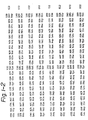
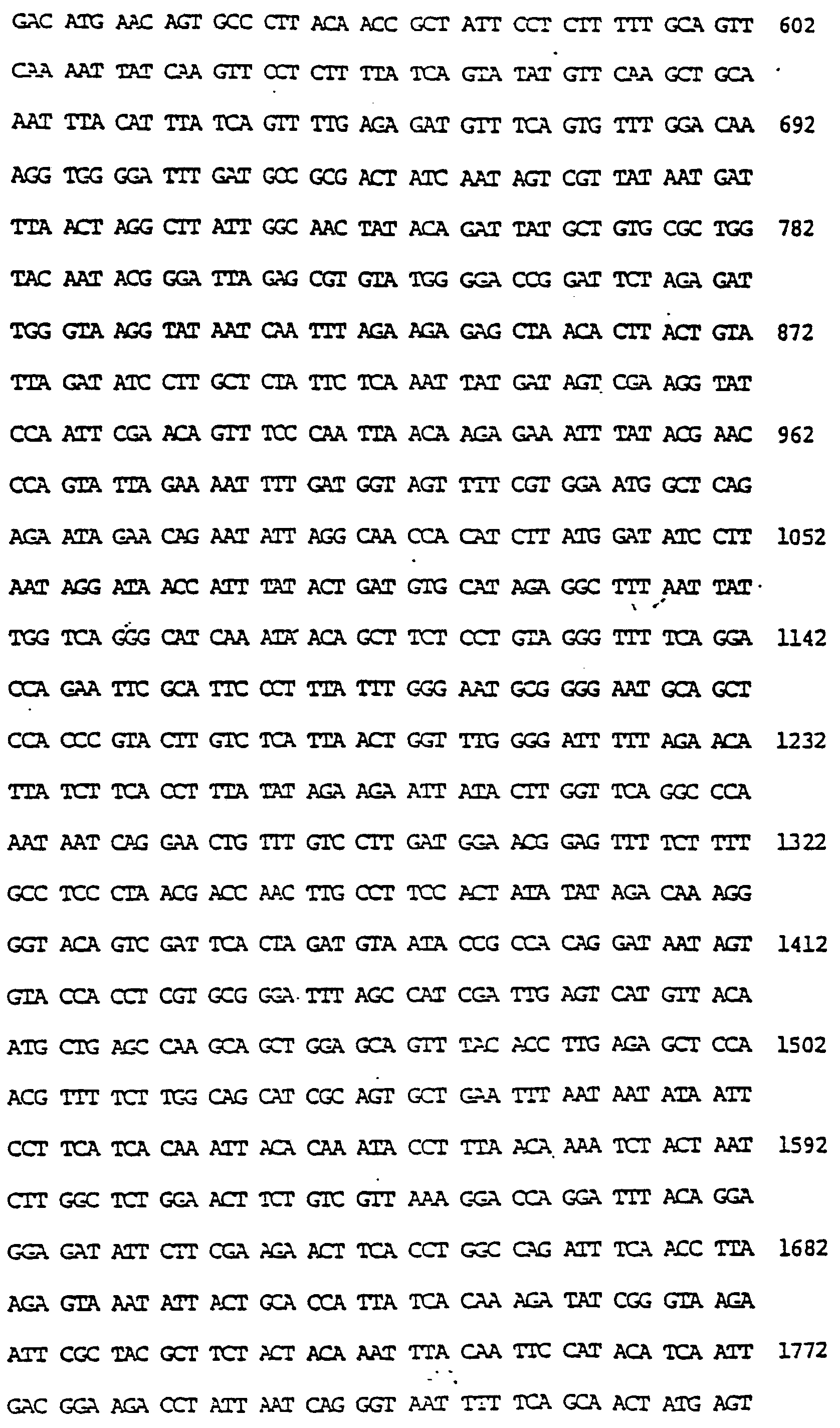
- the invention provides a DNA fragment comprising a nucleotide sequence coding for an insecticidal protein having an amino acid sequence as set out in Fig. 1, or having an amino acid sequence comprising at least 723 amino acids from the N-terminus thereof.
- the invention provides a DNA fragment having the nucleotide sequence from position 153 to position 3692 (codons 1 to 1180) as set out in Fig. 1, or at least 723 codons from the 5'- terminus of that sequence.
- the invention provides a plasmid capable of replicating in E. coli and expressing the insecticidal protein defined above, comprising a pBR322 plasmid in which a DNA sequence as defined has been inserted.
- the invention provides E. coli transformed with the plasmid so as to produce insecticidal protein.
- the invention provides water-soluble insecticidal protein produced by an organism transformed with said DNA.
- the invention provides processes comprising the production of the DNA fragments, plasmids and proteins described.
- the DNA fragment coding for an insecticidal protein according to the present invention is derived from a plasmid pSY1 present in Bacillus thuringiensis subsp. sotto and including a gene for insecticidal protein.
- the plasmid pSY1 is isolated from the above-mentioned strain according to a modification of the method described by Hansen and Olsen, J. Bacteriol. 135, 227-238 (1978) .
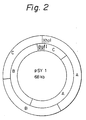
- the molecular size of the plasmid is calculated to be 68 kb.
- the plasmid pSY1 is cleaved with a restriction enzyme Xhol to obtain a DNA fragment containing a gene coding for insecticidal'protein.
- the DNA fragment is then inserted into an Xhol site of a cloning vector pKAT 1
- the ligation mixture is used to transform E. coli C600, and the transformants are screened for ampicillin resistance and the production of insecticidal proteins as determined by radioimmunoassay to obtain a clone containing plasmid pSX8, which includes an 18 kb insert containing a nucleotide sequence coding for the insecticidal protein.
- the plasmid pSX8 is cleaved with various kinds of restriction enzymes, and each of the DNA fragments thus obtained is ligated to a cloning vector pBR322 cleaved with the corresponding restriction enzyme.
- Each of the ligation mixtures is used to transform E. coli HB101, and the transformants are screened as described above to obtain a clone E. coli HB101/pSP801, which contains a plasmid pSP801 of about 11.0 kb including a 6.6 kb Pstl DNA insert.
- a restriction map of the plasmid pSP801 is represented in Fig. 4.
- E. coli HB101-pSP801 produces a polypeptide having a molecular weight of about 144 kilo Daltons (kD), and this molecular weight is approximately the same as that of a crystal protein produced by Bacillus thuringiensis, the insert of about 6.6 kb in the plasmid pSP801 is supposed to contain a nucleotide sequence coding for the entire amino acid sequence of a protein, the same as the crystal protein produced by Bacillus thuringiensis.
- the plasmid pSP801 is then cleaved with restriction enzymes M1 ul and Hpal to obtain a DNA fragment of about 2.95 kb, which is then filled-in, and added with Bam HI linker at both terminals.
- the DNA fragment thus modified is then inserted into a Bam HI site of pBR322 to obtain a ligation mixture.
- the mixture is used to transform E. coli HB101, and the transformants are screened as described above to obtain a clone E. coli HB101/pLBT291.
- the clone E. coli HB101 pLBT291 produces a polypeptide of about 75 kD having insecticidal activity. Therefore, the above-mentioned DNA fragment of about 2.95 kb is confirmed to contain a nucleotide sequence coding for a part of the amino acid sequence of the insecticidal crystal protein produced by Bacillus thuringiensis.
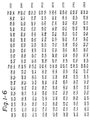
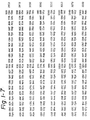
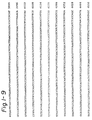
- a nucleotide sequence of the DNA fragment of about 2.95 kb corresponds to a nucleotide sequence at positions 1 to 2955 in Fig. 1-1 to 1-7.
- the DNA fragment consists of 2955 bases, in which 2802 bases from the positions 153 to 2954 encode 934 amino acids corresponding to the above-mentioned polypeptide.
- Another part of the DNA fragment consisting of nucleotides from the positions 1 to 152 is a 5' non-coding sequence.
- the nucleotide sequence is different from the nucleotide sequence disclosed by Wong et. al., supra , at three sites, which difference results in a difference of three amino acids in the peptide.
- Plasmid pSY1 was prepared from Bacillus thuringiensis subsp. sotto according to a modification of the alkali-method described by Hansen and Olsen, J. Bacteriol. 135, 227-238 (1978).
- the above-mentioned bacterium was cultured in 400 ml of Penassay broth, and the cultured cells were suspended in 10.8 ml of a solution comprised of 25% sucrose, 50 mM Tris-HCI, and 20 mM EDTA (pH 8.0), and the suspension was added with 10 mg/ml of lisozyme and incubated at 37° C for one hour.
- the suspension was then added with pronase E (T.M) and sodium dodecyl sulfate (SDS) to concentrations of 0.5 mg/ml and 1% respectively, and incubated at the same temperature for another one hour to lyse the cells completely.
- the lysate was added with 3 ml of 3N NaOH and incubated at a room temperature for three minutes, and then added with 8 ml of 2M Tris-HCI (pH 7.0), 4 ml of 20% SDS, 8 ml of 5M NaCI, and incubated for six hours in ice.
- the thus-treated lysate was centrifuged at 17,000 x G for 30 minutes to obtain a supernatant.
- polyethylene glycol 6000 was added to a concentration of 10% to precipitate DNA.
- DNA was dissolved in 20 ml of a solution comprised of 20 mM Tris-HCI, 5 mM EDTA and 150 mM NaCl (ph 7.5), and the solution was added with RNase A to a concentration of 0.1 mg/ml, incubated at 37° C for two hours, extracted with phenol, and added with two volumes of ethanol to precipitate DNA.
- the precipitate was dissolved in 5 ml of a solution comprising 20 mM Tris-HCI, 5 mM EDTA, and 150 mM NaCl (pH 7.5), and the solution was passed through a Biogel A-0.5 m (T.M.) column, and a void volume fraction was recovered.
- DNA of plasmid pSY1 was treated with restriction enzymes.
- the DNA was cleaved with Bam HI and Stu I at one site, with Bgl II and Xho I at three sites, and with Mlu I and Sac I at four sites, but not cleaved with Aat II, Sal I and Sma I.
- Bon I, Bcl II, Cla I, Eco RI, Hind III, Hpa I, Kpn I, Pst I and Pvu II provided many fragments.
- Figure 2 represents a restriction map obtained by Bgl II and Xho I.
- Cleavage sites of Bam HI and Stu I locate on a Bgl II-A fragment and an Xho I-A fragment, respectively, at a distance of about 2 kb.
- the plasmid pSYI was found to be 68 kb in size.
- E. coli transformed with a plasmid containing a gene for an insecticidal protein were selected according to modification of the procedure described by Erlich et. al., Cell, 13 , 681-689 (1978) using an antibody against the insecticidal protein.
- Bacillus thuringiensis subsp. sotto was cultured in a modified G medium described by Aronson et. al., J. Bacteriol. 106, 1016-1025 (1971) for three days, and the insecticidal crystal protein was isolated and purified from the culture according to a method of Sharpe et. al., Appl. Microbiol. 30, 1052-1053 (1975). The purified protein was used as an antigen to prepare the antibody.
- the antibody IgG thus obtained was labeled with 125, according to a procedure described by Marrison and Bayse, Biochemistry 9 , 2995-3000 (1970).
- Cells of E. coli to be tested were cultured on an agar plate medium to form colonies, and the agar plate carrying the colonies thereon was exposed to vapor of chloroform for 30 minutes, and overlaid with an agar layer containing 1 mg/ml lysozyme, 10 mM EDTA and 0.02% Triton X100 (T.M) to lyse cells of the colonies.
- T.M Triton X100
- the filter paper was washed with 10 mM phosphate buffer pH 7.2 containing 5% bovine serum and 0.15M NaCl (CS-PBS), and maintained in 10 mN Tris-HCI buffer pH 7.5 containing 0.14M NaCI, 25% bovine serum and 4 x 10 6 cpm 125 I-labeled antibody prepared as described above for 5 to 7 hours.
- the filter was then washed with CS-PBS, dried, and exposed on an X-ray film to carry out autoradiography.
- plasmid pSX8 The route for the construction of plasmid pSX8 is shown in Fig. 3.
- the plasmid pSY1 was cleaved with a restriction enzyme Xhol to obtain DNA fragments.
- a cloning vector plasmid pKAT1 was cleaved with Xho I.
- the DNA fragments from pSY1 were then inserted to Xho site of the cleaved pKAT1 with T4 DNA ligase to obtain a ligation mixture, which was then used to transform cells of E. coli C600.
- the transformants were first screened on L broth agar plate medium supplemented with 25 ⁇ g/ml ampicillin to select clones resistant to ampicillin, the selected clones were then subjected to the radioimmunoassay described in paragraph (3), and a positive clone containing recombinant plasmid pSX8 was selected.
- the plasmid pSX8 contains a 18 kb insert of DNA fragment, which includes a gene coding for an insecticidal protein.
- the plasmid pSX8 was cleaved with a restriction enzyme Hind III, Pst 1, or Eco RI to obtain DNA fragments, which were then inserted into a corresponding restriction site of cloning vectors pBR322 and pBR325 cleaved with the corresponding restriction enzyme, and each ligation mixture was used to transform E. coli HB101.
- the transformants thus obtained were then screened according to the above- described procedures to select a clone expressing an insecticidal protein.
- a clone E from the ligation of Pst I - cleaved pSX8 DNA fragment with Pst I - cleaved pBR322 fragment, a clone E.
- coli HB101/pSP801 containing plasmid pSP801 was selected.
- the route for construction of the plasmid pSP801 is shown in Fig. 3, and a restriction map of the plasmid pSP801 is shown in Fig. 4.
- the plasmid pSP801 contains an inserted Pst I DNA fragment of 6.6 kb, which includes a gene coding for an insecticidal protein.
- plasmid pSP801 was cleaved with Mlu I and Hpa I, and the Mlu I - HPa I DNA fragment thus obtained was filled-in, and attached with Bam HI linkers at both terminals.
- the Bam HI fragment was then inserted into a Bam HI site of pBR322.
- the ligation mixture thus prepared was used to transform E. coli HB101.
- the transformants were then screened according to the radioimmunoassay described in paragraph (3) to obtain a clone E. coli HB101 ' pLBT291, containing plasmid pLBT291.
- the plasmid pLBT291 contained a 2.95 kb insert of DNA fragment which corresponds to the Hpa I ⁇ 2 - Mlu I fragment on plasmid pSP801.
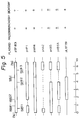
- deletion derivatives were constructed from pSP801 using the restriction sites indicated in Fig. 5. Each of these derivatives was used to transform E. coli HB101, and a clone containing plasmid pHP1, pMR4, pKA2, pKB5, or pKB53 was obtained.
- plasmid pMR4 contained all regions of the 6.6 kb-Pstl DNA fragment and 4 base pairs insertion at the Mlu I site, but other plasmids contained only parts of the Pstl DNA fragment.
- Fig. 5 the left part of the drawing represents profiles of a region of each plasmid corresponding to the 6.6-kb Pst I DNA fragment in plasmid pSP801.
- the right side columns represent the results of the radioimmunoassay and bioassay respectively, wherein + denotes positive, - denotes negative, and + denotes intermediate activity. From, Fig. 5, it is confirmed that the gene coding for an aimed insecticidal protein is located on the 2.95 kb Hpa I ⁇ 2 - Mlu I fragment in pSP801.
- the clones which were pronounced positive in the radioimmunoassay i.e., E. coli HB101/pSX8, E. coli HB 1 01/pS801, E. coli HB101/pLBT291, and other clones containing pKB5,-pKA2, pMR4 and pHP1 respectively, as well as the control clone, i.e., E.
- coli HB101/pBR322 were cultured in 400 ml of L-broth medium supplemented with 25 ⁇ g/ml of ampicillin, overnight at 37° C, and the cultured cells were collected by centrifugation and suspended in a buffer solution containing 150 mM NaCl, 20 mM Tris-HCI (pH8.0), 5 mM EDTA, 2 mM phenylmethylsulfonyl fluoride, and 7 mM mercaptoethanol. The suspension was added with 0.3 ml of 10 mg/ml lysozyme, maintained on ice for 30 minutes, and sonicated for three minutes to rupture the cells.
- the sonicated product was then centrifuged at 14,000 xg for 20 minutes to recover a supernatant.
- the supernatant was then dialysed overnight in 20 mM phosphate buffer pH7.2.
- the extracts thus obtained from the cultured E. coli were subjected to electrophoresis and bioassay.
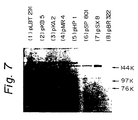
- the electrophoresis the extracts were separated on 7% SDS-polyacrylamide gel according to a conventional procedure.
- the separated products were electrophoretically transferred to a nitrocellulose filter, and the nitrocellulose filter was incubated successively with an antibody against the insecticidal crystalline protein, anti-rabbit IgG antibody labeled with peroxidase, and then with a substrate solution for the peroxidase.
- lane 1 represents a product from a clone containing plasmid pLBT291
- lane 2 represents that from pKB5
- lane 3 represents that from pKA2
- lane 4 represents that from pMR4
- lane 5 represents that from pHP1
- lane 6 represents that from pSP801
- lane 7 represents that from pSX8, and
- lane 8 represents that from pBR322.
- the insecticidal protein produced by Bacillus thuringiensis has been known to comprise three polypeptides, i.e., a main polypeptide having a molecular weight of 144 kD, and two minor polypeptides having a molecular weight of 97 kD and 76 kD respectively
- the plasmids pMR4 (lane 4), pHP1 (lane 5), pSP801 (lane 6), and pSX8 (lane 7) provided a band corresponding to 144 kD, which corresponded to the main polypeptide of the insecticidal protein produced by Bacillus thuringiensis.
- plasmid pLBT291 provided a band corresponding to 75 kD.
- Plasmids pKB5 and pKA3 which were not pronounced positive in the radioimmunoassay and bioassay, and the control plasmid pBR322, provided no clear bands.
- the above-mentioned result shows that the Pst I fragment in pSP801 and in pMR4, and the Hpa 1.2 - Pst I fragment in pHP1 contain a DNA sequence coding for a full length polypeptide of 144 kD.
- the Hpa 1.2 - Mlu I fragment of 2.95 kb in pLBT291 corresponds to a 5'-terminal side part of the Hpa 1.2 - Pst I fragment in pHP1
- the Hpa 1.2 - Mlu I 2.95 kb fragment in pLBT291 should encode a polypeptide corresponding to a part of the 144 kD polypeptide.
- both the 75 kD polypeptide derived from pLBT291 and the 144 kD polypeptide derived from other plasmids react with the antibody against the insecticidal protein obtained from Bacillus thurringiensis. This suggests that the 75 kD polypeptide contains an essential region or site for the insecticidal activity.
- the 75 kD polypeptide expressed by pLBT291 shows an insecticidal activity substantially identical to that of the 144 kD polypeptide which corresponds to the main polypeptide of the insecticidal crystal protein produced by Bacillus thuringiensis. This means that the 75 kD polypeptide contains a site or region essential for the insecticidal activity. Moreover, it should be noted that, in contrast with the natural insecticidal crystal protein produced by Bacillus thuringiensis, which is almost insoluble in water, both the 144 kD polypeptide and 75 kD polypeptide expressed by genes of the present invention are soluble in water.
- the sequence of the Hpa 1.2 - Mlu I DNA fragment of 2.95 kb in plasmid pSP801, corresponding to the Bam HI DNA fragment of 2.95 bp in plasmid pLBT291 was determined according to the dideoxy method described by Messing, Method in Enzymology Vol. 101 C, 20-78.
- a detailed restriction map of the Hpa 1.2 - Mlu I fragment is set forth in Fig. 6.
- the 2.95 kb DNA fragment was cleaved with restriction enzymes Sau 3A, Hpa II, and Taq I, and the resulting DNA fragments were cloned into phage M13mp10, or M13mp11. Moreover, the 2.95 kb DNA fragment was cleaved with restriction enzymes Cla I, Hind III, and Eco RI, and the resulting DNA fragments were cloned into phage M13mp10 or M13mp11. These cloned minute DNA fragments were sequenced according to the above-cited Messing's method, and the determined sequences were overlapped to determine a whole nucleotide sequence of the 2.95 kb DNA fragment.
- the Mlu I - Pst I DNA fragment of 2 kb positioned adjacent to the 3'-terminal of the Hpa 1.2 - Mlu I 2.95 kb fragment was sequenced as above-mentioned. In this manner, finally, the whole nucleotide sequence of the 5 kb DNA fragment from the Hpa 1.2 site to the Pst I site was determined.
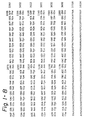
- the nucleotide sequence thus determined is set forth in Fig. 1-1 to Fig. 1-10.
- the 5 kb DNA fragment consists of 5,002 bp, and contains a single large open reading frame starting from a starting codon ATG, wherein base "A" corresponds to the position 153 in the sequence in Fig. 1-1, and terminating at a stop codon TAA, wherein the last base "A” corresponds to the position 3,695 in the sequence in Fig. 1-8.
- the open reading frame consists of 3,540 bp, and is flanked by a 5'-non-translation sequence consisting of 152 bp, and by a 3'-flanking sequence consisting of 1,310 bp.
- the 144 kD insecticidal polypeptide should be derived from the above-mentioned open reading frame.
- the open reading frame consisting of 3,540 bp encodes 1180 amino acids. Therefore, the 144 kD insecticidal polypeptide is assumed to consist of 1180 amino acid residues starting from Met at the amino acid position 1 and terminating by Glu at the amino acid position 1180, which corresponds to 133,481 Dalton of the molecular weight. This amino acid sequence reveals that approximately half at the amino terminal side of the 144 kb insecticidal polypeptide contains much less lysine and cysteine than a carboxy terminal side does.
- nucleotide sequence starting from base “A” at position 153 and terminated by "G” at the position 2954, consisting of 2802 bases corresponds to an open reading frame contained in the 2.95 kb Hpa 1.2 - Mlu I DNA fragment.
- the nucleotide sequence consisting of 2802 bases should encode 934 amino acids. Therefore, the polypeptide produced of E. coli transformed with plasmid pLBT291 may consist of at least 934 amino acid residues starting from Met at the amino acid position 1 to Arg at the amino acid position 934.
- An inverted repeat sequence capable of forming a stable stem and loop structure is found from the position 3782, which corresponds to about 100 bp downstream from the stop codon, to the position 3824, and assumed to act as a terminater on transcription. Moreover, an open reading frame reversely extending from the position 5002 to the position 4021 is found.
- the insecticidal protein are provided in a water-soluble form. Therefore, the protein can be easily separated and purified from the producer cells. This means that insecticidal compositions specific to Lepidoptera can be produced in a form containing no producer microorganism's cells or spores. Such compositions, when used, are safe for the environment.
- E. coli transformed with the present plasmid produces the insecticidal protein without the limitation in the production period, in contrast with Bacillus thuringiensis which produces it only within the spore forming period, according to the present invention, the insecticidal protein can be produced at a lower cost.
- nucleotide sequences and plasmids of the present invention can be further manipulated or modified to construct improved nucleotide sequences or plasmids which will provide new polypeptides having stronger insecticidal activity.
Landscapes
- Chemical & Material Sciences (AREA)
- Organic Chemistry (AREA)
- Health & Medical Sciences (AREA)
- Life Sciences & Earth Sciences (AREA)
- Gastroenterology & Hepatology (AREA)
- Biochemistry (AREA)
- Biophysics (AREA)
- General Health & Medical Sciences (AREA)
- Genetics & Genomics (AREA)
- Medicinal Chemistry (AREA)
- Molecular Biology (AREA)
- Proteomics, Peptides & Aminoacids (AREA)
- Crystallography & Structural Chemistry (AREA)
- Micro-Organisms Or Cultivation Processes Thereof (AREA)
- Preparation Of Compounds By Using Micro-Organisms (AREA)
- Agricultural Chemicals And Associated Chemicals (AREA)
Claims (17)




Priority Applications (1)
| Application Number | Priority Date | Filing Date | Title |
|---|---|---|---|
| AT85308994T ATE61631T1 (de) | 1984-12-12 | 1985-12-11 | Gen fuer ein protein mit insektizider wirkung. |
Applications Claiming Priority (2)
| Application Number | Priority Date | Filing Date | Title |
|---|---|---|---|
| JP260638/84 | 1984-12-12 | ||
| JP59260638A JP2540484B2 (ja) | 1984-12-12 | 1984-12-12 | 殺虫性蛋白質をコ−ドする遺伝子 |
Publications (2)
| Publication Number | Publication Date |
|---|---|
| EP0186379A1 EP0186379A1 (de) | 1986-07-02 |
| EP0186379B1 true EP0186379B1 (de) | 1991-03-13 |
Family
ID=17350698
Family Applications (1)
| Application Number | Title | Priority Date | Filing Date |
|---|---|---|---|
| EP85308994A Expired - Lifetime EP0186379B1 (de) | 1984-12-12 | 1985-12-11 | Gen für ein Protein mit insektizider Wirkung |
Country Status (4)
| Country | Link |
|---|---|
| EP (1) | EP0186379B1 (de) |
| JP (1) | JP2540484B2 (de) |
| AT (1) | ATE61631T1 (de) |
| DE (1) | DE3582136D1 (de) |
Cited By (9)
| Publication number | Priority date | Publication date | Assignee | Title |
|---|---|---|---|---|
| EP0224331A1 (de) * | 1985-10-28 | 1987-06-03 | Sumitomo Chemical Company, Limited | Herstellung von Insektizidprotein von Bacillus thuringiensis subsp. aizawai IPL durch die Expression von Insektizidprotein-Gen in Wirtszellen |
| FR2627778A1 (fr) * | 1988-02-25 | 1989-09-01 | Sandoz Sa | Gene de structure, proteine endotoxine correspondante et application insecticide |
| EP0366397A1 (de) * | 1988-10-27 | 1990-05-02 | Mycogen Corporation | Bacillus thuringiensis, benannt B.t. ps81f, welches aktiv gegen Lepidoptera ist, sowie Gen, welches für das gegen Lepidoptera aktive Toxin kodiert |
| EP0367474A1 (de) * | 1988-11-01 | 1990-05-09 | Mycogen Corporation | Bacillus thuringiensis, benannt B.t. ps81gg, welches aktiv gegen Lepidoptera ist, sowie Gen welches für das gegen Lepidoptera aktive Toxin kodiert |
| EP0451878A1 (de) * | 1985-01-18 | 1991-10-16 | Plant Genetic Systems, N.V. | Modifizierung von Pflanzen mittels gentechnologischer Verfahren, um Insekten zu bekämpfen oder zu kontrollieren |
| US5231008A (en) * | 1985-10-28 | 1993-07-27 | Sumitomo Chemical Company, Limited | Production of insecticidal protein of bacillus thuringiensis subsp. aizawal IPL by the expression of insecticidal protein gene in host cells |
| US5317096A (en) * | 1985-01-18 | 1994-05-31 | Plant Genetic Systems, N.V. | Transformation vectors allowing expression of foreign polypeptide endotoxins from Bacillus thuringiensis in plants |
| US5608142A (en) * | 1986-12-03 | 1997-03-04 | Agracetus, Inc. | Insecticidal cotton plants |
| USRE35714E (en) * | 1985-10-28 | 1998-01-13 | Sumitomo Chemical Company, Limited | Production of insecticidal protein of Bacillus thuringiensis subsp. aizawai by the expression of insecticidal protein gene in host cells |
Families Citing this family (1)
| Publication number | Priority date | Publication date | Assignee | Title |
|---|---|---|---|---|
| JPS63133999A (ja) * | 1986-11-27 | 1988-06-06 | Agency Of Ind Science & Technol | 誘導発現による蛋白質の製造法 |
Family Cites Families (4)
| Publication number | Priority date | Publication date | Assignee | Title |
|---|---|---|---|---|
| WO1982003872A1 (en) | 1981-04-27 | 1982-11-11 | Washington Univ | B.thuringiensis crystal protein in e.coli |
| FR2525630B1 (fr) * | 1982-04-26 | 1985-07-05 | Pasteur Institut | Adn contenant une sequence codant pour une proteine du cristal ou un polypeptide doue de proprietes insecticides, micro-organismes transformes par de tels adn, compositions contenant lesdites proteines du cristal, polypeptide ou micro-organismes |
| CA1301094C (en) * | 1984-08-31 | 1992-05-19 | Helen Riaboff Whiteley | Bacillus thuringiensis crystal protein gene toxin segment |
| US7286984B1 (en) | 1999-11-05 | 2007-10-23 | At&T Corp. | Method and system for automatically detecting morphemes in a task classification system using lattices |
-
1984
- 1984-12-12 JP JP59260638A patent/JP2540484B2/ja not_active Expired - Fee Related
-
1985
- 1985-12-11 DE DE8585308994T patent/DE3582136D1/de not_active Expired - Lifetime
- 1985-12-11 AT AT85308994T patent/ATE61631T1/de not_active IP Right Cessation
- 1985-12-11 EP EP85308994A patent/EP0186379B1/de not_active Expired - Lifetime
Cited By (15)
| Publication number | Priority date | Publication date | Assignee | Title |
|---|---|---|---|---|
| US6107546A (en) * | 1985-01-18 | 2000-08-22 | Aventis Cropscience N.V. | Transformation vectors allowing expression of truncated BT2 endotoxins in plants |
| US5843898A (en) * | 1985-01-18 | 1998-12-01 | Plant Genetic Systems, N.V. | Transformation vectors allowing expression of foreign polypeptide endotoxins in plants |
| US5767372A (en) * | 1985-01-18 | 1998-06-16 | Plant Genetic Systems, N.V. | Transformation vectors allowing expression of foreign polypeptide endotoxins from Bacillus thuringiensis in plants |
| US5760181A (en) * | 1985-01-18 | 1998-06-02 | Plant Genetic Systems, N.V. | Endotoxins |
| EP0451878A1 (de) * | 1985-01-18 | 1991-10-16 | Plant Genetic Systems, N.V. | Modifizierung von Pflanzen mittels gentechnologischer Verfahren, um Insekten zu bekämpfen oder zu kontrollieren |
| US5317096A (en) * | 1985-01-18 | 1994-05-31 | Plant Genetic Systems, N.V. | Transformation vectors allowing expression of foreign polypeptide endotoxins from Bacillus thuringiensis in plants |
| US5545565A (en) * | 1985-01-18 | 1996-08-13 | Plant Genetic Systems, N.V. | Transformation vectors allowing expression of foreign polypeptide endoxins from Bacillus thuringiensis in plants |
| USRE35714E (en) * | 1985-10-28 | 1998-01-13 | Sumitomo Chemical Company, Limited | Production of insecticidal protein of Bacillus thuringiensis subsp. aizawai by the expression of insecticidal protein gene in host cells |
| US5231008A (en) * | 1985-10-28 | 1993-07-27 | Sumitomo Chemical Company, Limited | Production of insecticidal protein of bacillus thuringiensis subsp. aizawal IPL by the expression of insecticidal protein gene in host cells |
| EP0224331A1 (de) * | 1985-10-28 | 1987-06-03 | Sumitomo Chemical Company, Limited | Herstellung von Insektizidprotein von Bacillus thuringiensis subsp. aizawai IPL durch die Expression von Insektizidprotein-Gen in Wirtszellen |
| US5608142A (en) * | 1986-12-03 | 1997-03-04 | Agracetus, Inc. | Insecticidal cotton plants |
| BE1001877A4 (fr) * | 1988-02-25 | 1990-04-03 | Sandoz Sa | Composes nouveaux. |
| FR2627778A1 (fr) * | 1988-02-25 | 1989-09-01 | Sandoz Sa | Gene de structure, proteine endotoxine correspondante et application insecticide |
| EP0366397A1 (de) * | 1988-10-27 | 1990-05-02 | Mycogen Corporation | Bacillus thuringiensis, benannt B.t. ps81f, welches aktiv gegen Lepidoptera ist, sowie Gen, welches für das gegen Lepidoptera aktive Toxin kodiert |
| EP0367474A1 (de) * | 1988-11-01 | 1990-05-09 | Mycogen Corporation | Bacillus thuringiensis, benannt B.t. ps81gg, welches aktiv gegen Lepidoptera ist, sowie Gen welches für das gegen Lepidoptera aktive Toxin kodiert |
Also Published As
| Publication number | Publication date |
|---|---|
| EP0186379A1 (de) | 1986-07-02 |
| JPS61139389A (ja) | 1986-06-26 |
| JP2540484B2 (ja) | 1996-10-02 |
| ATE61631T1 (de) | 1991-03-15 |
| DE3582136D1 (de) | 1991-04-18 |
Similar Documents
| Publication | Publication Date | Title |
|---|---|---|
| JP3085973B2 (ja) | 組換え酵母による成熟タンパク質の分泌に関するシグナルペプチドについてコードする配列として新規dna断片の適用、発現カセット、形質転換酵母及びそれに対応するタンパク質の製造方法 | |
| CA1297051C (en) | Expression of the cloned lysostaphin gene | |
| EP0198015B1 (de) | Herstellung von streptavidinähnlichen polypeptiden | |
| US5665863A (en) | Polypeptides having granulocyte colony stimulating activity, their preparation and pharmaceutical compositions containing them | |
| AU643511B2 (en) | Bacterial vectors | |
| Chaudhary et al. | Role of domain II of Pseudomonas exotoxin in the secretion of proteins into the periplasm and medium by Escherichia coli. | |
| Jacob‐Dubuisson et al. | Amino‐terminal maturation of the Bordetella pertussis filamentous haemagglutinin | |
| CA2064933A1 (en) | Carrier protein | |
| EP0186379A1 (de) | Gen für ein Protein mit insektizider Wirkung | |
| CA1301096C (en) | High yield protein production system | |
| EP0306673B1 (de) | Verfahren zur Herstellung von menschlichem Wachstumshormon | |
| US5272254A (en) | Production of streptavidin-like polypeptides | |
| US4828988A (en) | Hybrid polypeptides comprising somatocrinine and alpha1 -antitrypsin, method for their production from bacterial clones and use thereof for the production of somatocrinine | |
| EP0321940B1 (de) | Methode zur Herstellung von natürlichen, menschlichen Wachstumshormon in reiner Form | |
| EP0400973B1 (de) | Sekretorische Expressionsvektoren für Mycobakterien sowie Transformanten | |
| Jackson et al. | Analysis of the membrane‐binding domain of penicillin‐binding protein 5 of Escherichia coli | |
| US6015696A (en) | Mycobacterial secretory expression vectors and transformants | |
| EP0234592A1 (de) | Plasmid, das ein DNA-Fragment enthält, welches für die Fc-Region von menschlichem Immunoglobulin G Protein codiert, und Verwendung desselben zur Herstellung des genannten Proteins | |
| CA1283374C (en) | Recombinant dna expression vectors and method for gene expression | |
| US5268277A (en) | Method for the preparation of human growth hormone | |
| WO1996026282A1 (en) | Expression of gene products from genetically manipulated strains of bordetella | |
| JPS63501053A (ja) | 異種タンパク質の生産方法 | |
| Hollenberg | INTEGRATED IN A 2-µm DNA VECTOR | |
| JPH07147979A (ja) | 新規アミノペプチダーゼ | |
| Honma et al. | Aberrant gene for El Tor hemolysin from Vibrio cholerae non-01, N037 |
Legal Events
| Date | Code | Title | Description |
|---|---|---|---|
| PUAI | Public reference made under article 153(3) epc to a published international application that has entered the european phase |
Free format text: ORIGINAL CODE: 0009012 |
|
| AK | Designated contracting states |
Kind code of ref document: A1 Designated state(s): AT BE CH DE FR GB IT LI LU NL SE |
|
| 17P | Request for examination filed |
Effective date: 19861222 |
|
| 17Q | First examination report despatched |
Effective date: 19880829 |
|
| GRAA | (expected) grant |
Free format text: ORIGINAL CODE: 0009210 |
|
| AK | Designated contracting states |
Kind code of ref document: B1 Designated state(s): AT BE CH DE FR GB IT LI LU NL SE |
|
| REF | Corresponds to: |
Ref document number: 61631 Country of ref document: AT Date of ref document: 19910315 Kind code of ref document: T |
|
| ET | Fr: translation filed | ||
| REF | Corresponds to: |
Ref document number: 3582136 Country of ref document: DE Date of ref document: 19910418 |
|
| ITF | It: translation for a ep patent filed | ||
| PLBE | No opposition filed within time limit |
Free format text: ORIGINAL CODE: 0009261 |
|
| STAA | Information on the status of an ep patent application or granted ep patent |
Free format text: STATUS: NO OPPOSITION FILED WITHIN TIME LIMIT |
|
| 26N | No opposition filed | ||
| EPTA | Lu: last paid annual fee | ||
| EAL | Se: european patent in force in sweden |
Ref document number: 85308994.4 |
|
| PGFP | Annual fee paid to national office [announced via postgrant information from national office to epo] |
Ref country code: LU Payment date: 19971113 Year of fee payment: 13 |
|
| PGFP | Annual fee paid to national office [announced via postgrant information from national office to epo] |
Ref country code: AT Payment date: 19971119 Year of fee payment: 13 |
|
| PGFP | Annual fee paid to national office [announced via postgrant information from national office to epo] |
Ref country code: BE Payment date: 19971120 Year of fee payment: 13 |
|
| PGFP | Annual fee paid to national office [announced via postgrant information from national office to epo] |
Ref country code: CH Payment date: 19971125 Year of fee payment: 13 |
|
| PGFP | Annual fee paid to national office [announced via postgrant information from national office to epo] |
Ref country code: SE Payment date: 19971202 Year of fee payment: 13 |
|
| PGFP | Annual fee paid to national office [announced via postgrant information from national office to epo] |
Ref country code: NL Payment date: 19971231 Year of fee payment: 13 |
|
| PG25 | Lapsed in a contracting state [announced via postgrant information from national office to epo] |
Ref country code: LU Free format text: LAPSE BECAUSE OF NON-PAYMENT OF DUE FEES Effective date: 19981211 Ref country code: AT Free format text: LAPSE BECAUSE OF NON-PAYMENT OF DUE FEES Effective date: 19981211 |
|
| PG25 | Lapsed in a contracting state [announced via postgrant information from national office to epo] |
Ref country code: SE Free format text: LAPSE BECAUSE OF NON-PAYMENT OF DUE FEES Effective date: 19981212 |
|
| PG25 | Lapsed in a contracting state [announced via postgrant information from national office to epo] |
Ref country code: LI Free format text: LAPSE BECAUSE OF NON-PAYMENT OF DUE FEES Effective date: 19981231 Ref country code: CH Free format text: LAPSE BECAUSE OF NON-PAYMENT OF DUE FEES Effective date: 19981231 Ref country code: BE Free format text: LAPSE BECAUSE OF NON-PAYMENT OF DUE FEES Effective date: 19981231 |
|
| BERE | Be: lapsed |
Owner name: SUNTORY LTD Effective date: 19981231 |
|
| PG25 | Lapsed in a contracting state [announced via postgrant information from national office to epo] |
Ref country code: NL Free format text: LAPSE BECAUSE OF NON-PAYMENT OF DUE FEES Effective date: 19990701 |
|
| REG | Reference to a national code |
Ref country code: CH Ref legal event code: PL |
|
| NLV4 | Nl: lapsed or anulled due to non-payment of the annual fee |
Effective date: 19990701 |
|
| REG | Reference to a national code |
Ref country code: GB Ref legal event code: IF02 |
|
| PGFP | Annual fee paid to national office [announced via postgrant information from national office to epo] |
Ref country code: FR Payment date: 20021210 Year of fee payment: 18 |
|
| PGFP | Annual fee paid to national office [announced via postgrant information from national office to epo] |
Ref country code: GB Payment date: 20021211 Year of fee payment: 18 |
|
| PGFP | Annual fee paid to national office [announced via postgrant information from national office to epo] |
Ref country code: DE Payment date: 20021212 Year of fee payment: 18 |
|
| PG25 | Lapsed in a contracting state [announced via postgrant information from national office to epo] |
Ref country code: GB Free format text: LAPSE BECAUSE OF NON-PAYMENT OF DUE FEES Effective date: 20031211 |
|
| PG25 | Lapsed in a contracting state [announced via postgrant information from national office to epo] |
Ref country code: DE Free format text: LAPSE BECAUSE OF NON-PAYMENT OF DUE FEES Effective date: 20040701 |
|
| GBPC | Gb: european patent ceased through non-payment of renewal fee |
Effective date: 20031211 |
|
| PG25 | Lapsed in a contracting state [announced via postgrant information from national office to epo] |
Ref country code: FR Free format text: LAPSE BECAUSE OF NON-PAYMENT OF DUE FEES Effective date: 20040831 |
|
| REG | Reference to a national code |
Ref country code: FR Ref legal event code: ST |