EP0186446B1 - Katalytisches Kracken mit einer Mischung von Zeoliten vom Faujasit- und vom beta-Typ - Google Patents
Katalytisches Kracken mit einer Mischung von Zeoliten vom Faujasit- und vom beta-Typ Download PDFInfo
- Publication number
- EP0186446B1 EP0186446B1 EP85309272A EP85309272A EP0186446B1 EP 0186446 B1 EP0186446 B1 EP 0186446B1 EP 85309272 A EP85309272 A EP 85309272A EP 85309272 A EP85309272 A EP 85309272A EP 0186446 B1 EP0186446 B1 EP 0186446B1
- Authority
- EP
- European Patent Office
- Prior art keywords
- zeolite
- process according
- beta
- catalyst
- faujasite
- Prior art date
- Legal status (The legal status is an assumption and is not a legal conclusion. Google has not performed a legal analysis and makes no representation as to the accuracy of the status listed.)
- Expired - Lifetime
Links
- 239000010457 zeolite Substances 0.000 title claims description 151
- HNPSIPDUKPIQMN-UHFFFAOYSA-N dioxosilane;oxo(oxoalumanyloxy)alumane Chemical compound O=[Si]=O.O=[Al]O[Al]=O HNPSIPDUKPIQMN-UHFFFAOYSA-N 0.000 title claims description 137
- 229910021536 Zeolite Inorganic materials 0.000 title claims description 135
- 238000004523 catalytic cracking Methods 0.000 title claims description 12
- 239000000203 mixture Substances 0.000 title description 17
- 239000003054 catalyst Substances 0.000 claims description 98
- 238000000034 method Methods 0.000 claims description 49
- 230000008569 process Effects 0.000 claims description 41
- PNEYBMLMFCGWSK-UHFFFAOYSA-N aluminium oxide Inorganic materials [O-2].[O-2].[O-2].[Al+3].[Al+3] PNEYBMLMFCGWSK-UHFFFAOYSA-N 0.000 claims description 33
- 239000007789 gas Substances 0.000 claims description 27
- 238000005336 cracking Methods 0.000 claims description 25
- 239000002253 acid Substances 0.000 claims description 23
- 239000012013 faujasite Substances 0.000 claims description 23
- VYPSYNLAJGMNEJ-UHFFFAOYSA-N Silicium dioxide Chemical compound O=[Si]=O VYPSYNLAJGMNEJ-UHFFFAOYSA-N 0.000 claims description 21
- 238000009835 boiling Methods 0.000 claims description 18
- 239000002245 particle Substances 0.000 claims description 10
- 239000000377 silicon dioxide Substances 0.000 claims description 10
- 239000004215 Carbon black (E152) Substances 0.000 claims description 8
- 229930195733 hydrocarbon Natural products 0.000 claims description 8
- 150000002430 hydrocarbons Chemical class 0.000 claims description 8
- 239000011159 matrix material Substances 0.000 claims description 8
- UFHFLCQGNIYNRP-UHFFFAOYSA-N Hydrogen Chemical compound [H][H] UFHFLCQGNIYNRP-UHFFFAOYSA-N 0.000 claims description 4
- 239000001257 hydrogen Substances 0.000 claims description 4
- 229910052739 hydrogen Inorganic materials 0.000 claims description 4
- 150000002910 rare earth metals Chemical group 0.000 claims description 4
- 230000000694 effects Effects 0.000 description 40
- 238000006243 chemical reaction Methods 0.000 description 34
- 239000003921 oil Substances 0.000 description 30
- 239000003502 gasoline Substances 0.000 description 29
- TVMXDCGIABBOFY-UHFFFAOYSA-N octane Chemical compound CCCCCCCC TVMXDCGIABBOFY-UHFFFAOYSA-N 0.000 description 28
- 239000000047 product Substances 0.000 description 18
- 239000002131 composite material Substances 0.000 description 9
- -1 alumina Chemical compound 0.000 description 8
- 150000001768 cations Chemical class 0.000 description 7
- 239000010771 distillate fuel oil Substances 0.000 description 7
- 125000004435 hydrogen atom Chemical group [H]* 0.000 description 7
- 230000008901 benefit Effects 0.000 description 6
- 238000000605 extraction Methods 0.000 description 6
- 238000011068 loading method Methods 0.000 description 6
- 229910052782 aluminium Inorganic materials 0.000 description 5
- XAGFODPZIPBFFR-UHFFFAOYSA-N aluminium Chemical compound [Al] XAGFODPZIPBFFR-UHFFFAOYSA-N 0.000 description 5
- 239000011324 bead Substances 0.000 description 5
- 239000011230 binding agent Substances 0.000 description 5
- 239000012530 fluid Substances 0.000 description 5
- 239000006069 physical mixture Substances 0.000 description 5
- 239000011148 porous material Substances 0.000 description 5
- QGZKDVFQNNGYKY-UHFFFAOYSA-N Ammonia Chemical compound N QGZKDVFQNNGYKY-UHFFFAOYSA-N 0.000 description 4
- IJGRMHOSHXDMSA-UHFFFAOYSA-N Atomic nitrogen Chemical compound N#N IJGRMHOSHXDMSA-UHFFFAOYSA-N 0.000 description 4
- 150000007513 acids Chemical class 0.000 description 4
- 239000000463 material Substances 0.000 description 4
- 238000011160 research Methods 0.000 description 4
- 238000010025 steaming Methods 0.000 description 4
- 238000011282 treatment Methods 0.000 description 4
- CIWBSHSKHKDKBQ-JLAZNSOCSA-N Ascorbic acid Chemical compound OC[C@H](O)[C@H]1OC(=O)C(O)=C1O CIWBSHSKHKDKBQ-JLAZNSOCSA-N 0.000 description 3
- MCMNRKCIXSYSNV-UHFFFAOYSA-N ZrO2 Inorganic materials O=[Zr]=O MCMNRKCIXSYSNV-UHFFFAOYSA-N 0.000 description 3
- 230000002378 acidificating effect Effects 0.000 description 3
- 229910052783 alkali metal Inorganic materials 0.000 description 3
- 150000001340 alkali metals Chemical group 0.000 description 3
- 150000001336 alkenes Chemical class 0.000 description 3
- 230000029936 alkylation Effects 0.000 description 3
- 238000005804 alkylation reaction Methods 0.000 description 3
- 239000002585 base Substances 0.000 description 3
- 239000000571 coke Substances 0.000 description 3
- 238000002474 experimental method Methods 0.000 description 3
- 230000006872 improvement Effects 0.000 description 3
- 229910052500 inorganic mineral Inorganic materials 0.000 description 3
- CPLXHLVBOLITMK-UHFFFAOYSA-N magnesium oxide Inorganic materials [Mg]=O CPLXHLVBOLITMK-UHFFFAOYSA-N 0.000 description 3
- 239000011707 mineral Substances 0.000 description 3
- 239000007858 starting material Substances 0.000 description 3
- 239000000126 substance Substances 0.000 description 3
- QGZKDVFQNNGYKY-UHFFFAOYSA-O Ammonium Chemical compound [NH4+] QGZKDVFQNNGYKY-UHFFFAOYSA-O 0.000 description 2
- VEXZGXHMUGYJMC-UHFFFAOYSA-N Hydrochloric acid Chemical compound Cl VEXZGXHMUGYJMC-UHFFFAOYSA-N 0.000 description 2
- DGAQECJNVWCQMB-PUAWFVPOSA-M Ilexoside XXIX Chemical compound C[C@@H]1CC[C@@]2(CC[C@@]3(C(=CC[C@H]4[C@]3(CC[C@@H]5[C@@]4(CC[C@@H](C5(C)C)OS(=O)(=O)[O-])C)C)[C@@H]2[C@]1(C)O)C)C(=O)O[C@H]6[C@@H]([C@H]([C@@H]([C@H](O6)CO)O)O)O.[Na+] DGAQECJNVWCQMB-PUAWFVPOSA-M 0.000 description 2
- DTQVDTLACAAQTR-UHFFFAOYSA-N Trifluoroacetic acid Chemical compound OC(=O)C(F)(F)F DTQVDTLACAAQTR-UHFFFAOYSA-N 0.000 description 2
- 239000000654 additive Substances 0.000 description 2
- 230000000996 additive effect Effects 0.000 description 2
- 229910021529 ammonia Inorganic materials 0.000 description 2
- 238000001354 calcination Methods 0.000 description 2
- 239000011575 calcium Substances 0.000 description 2
- 229910052791 calcium Inorganic materials 0.000 description 2
- 125000002091 cationic group Chemical group 0.000 description 2
- 238000002485 combustion reaction Methods 0.000 description 2
- 230000018044 dehydration Effects 0.000 description 2
- 238000006297 dehydration reaction Methods 0.000 description 2
- 239000000499 gel Substances 0.000 description 2
- 238000005342 ion exchange Methods 0.000 description 2
- 239000012263 liquid product Substances 0.000 description 2
- 239000000395 magnesium oxide Substances 0.000 description 2
- 229910052751 metal Inorganic materials 0.000 description 2
- 239000002184 metal Substances 0.000 description 2
- 229910044991 metal oxide Inorganic materials 0.000 description 2
- 150000004706 metal oxides Chemical class 0.000 description 2
- BDAGIHXWWSANSR-UHFFFAOYSA-N methanoic acid Natural products OC=O BDAGIHXWWSANSR-UHFFFAOYSA-N 0.000 description 2
- 150000007522 mineralic acids Chemical class 0.000 description 2
- 229910052757 nitrogen Inorganic materials 0.000 description 2
- 150000007524 organic acids Chemical class 0.000 description 2
- BASFCYQUMIYNBI-UHFFFAOYSA-N platinum Chemical compound [Pt] BASFCYQUMIYNBI-UHFFFAOYSA-N 0.000 description 2
- 239000002243 precursor Substances 0.000 description 2
- 238000012545 processing Methods 0.000 description 2
- 229910052761 rare earth metal Inorganic materials 0.000 description 2
- 230000009467 reduction Effects 0.000 description 2
- XTHPWXDJESJLNJ-UHFFFAOYSA-N sulfurochloridic acid Chemical compound OS(Cl)(=O)=O XTHPWXDJESJLNJ-UHFFFAOYSA-N 0.000 description 2
- 125000000383 tetramethylene group Chemical group [H]C([H])([*:1])C([H])([H])C([H])([H])C([H])([H])[*:2] 0.000 description 2
- 238000002411 thermogravimetry Methods 0.000 description 2
- XLYOFNOQVPJJNP-UHFFFAOYSA-N water Chemical compound O XLYOFNOQVPJJNP-UHFFFAOYSA-N 0.000 description 2
- 229910052725 zinc Inorganic materials 0.000 description 2
- 239000011701 zinc Substances 0.000 description 2
- OSWFIVFLDKOXQC-UHFFFAOYSA-N 4-(3-methoxyphenyl)aniline Chemical compound COC1=CC=CC(C=2C=CC(N)=CC=2)=C1 OSWFIVFLDKOXQC-UHFFFAOYSA-N 0.000 description 1
- 239000005995 Aluminium silicate Substances 0.000 description 1
- OYPRJOBELJOOCE-UHFFFAOYSA-N Calcium Chemical compound [Ca] OYPRJOBELJOOCE-UHFFFAOYSA-N 0.000 description 1
- UGFAIRIUMAVXCW-UHFFFAOYSA-N Carbon monoxide Chemical compound [O+]#[C-] UGFAIRIUMAVXCW-UHFFFAOYSA-N 0.000 description 1
- RYGMFSIKBFXOCR-UHFFFAOYSA-N Copper Chemical compound [Cu] RYGMFSIKBFXOCR-UHFFFAOYSA-N 0.000 description 1
- IOVCWXUNBOPUCH-UHFFFAOYSA-N Nitrous acid Chemical compound ON=O IOVCWXUNBOPUCH-UHFFFAOYSA-N 0.000 description 1
- NINIDFKCEFEMDL-UHFFFAOYSA-N Sulfur Chemical compound [S] NINIDFKCEFEMDL-UHFFFAOYSA-N 0.000 description 1
- HCHKCACWOHOZIP-UHFFFAOYSA-N Zinc Chemical compound [Zn] HCHKCACWOHOZIP-UHFFFAOYSA-N 0.000 description 1
- 238000010306 acid treatment Methods 0.000 description 1
- 230000003679 aging effect Effects 0.000 description 1
- 235000012211 aluminium silicate Nutrition 0.000 description 1
- 238000004458 analytical method Methods 0.000 description 1
- QVGXLLKOCUKJST-UHFFFAOYSA-N atomic oxygen Chemical compound [O] QVGXLLKOCUKJST-UHFFFAOYSA-N 0.000 description 1
- 229910002091 carbon monoxide Inorganic materials 0.000 description 1
- 230000003197 catalytic effect Effects 0.000 description 1
- 230000008859 change Effects 0.000 description 1
- 238000007385 chemical modification Methods 0.000 description 1
- 239000004927 clay Substances 0.000 description 1
- 229910052570 clay Inorganic materials 0.000 description 1
- 239000003245 coal Substances 0.000 description 1
- 239000010949 copper Substances 0.000 description 1
- 229910052802 copper Inorganic materials 0.000 description 1
- 229910052593 corundum Inorganic materials 0.000 description 1
- 230000020335 dealkylation Effects 0.000 description 1
- 238000006900 dealkylation reaction Methods 0.000 description 1
- 230000007423 decrease Effects 0.000 description 1
- 238000003795 desorption Methods 0.000 description 1
- GUJOJGAPFQRJSV-UHFFFAOYSA-N dialuminum;dioxosilane;oxygen(2-);hydrate Chemical compound O.[O-2].[O-2].[O-2].[Al+3].[Al+3].O=[Si]=O.O=[Si]=O.O=[Si]=O.O=[Si]=O GUJOJGAPFQRJSV-UHFFFAOYSA-N 0.000 description 1
- 238000009792 diffusion process Methods 0.000 description 1
- 239000012153 distilled water Substances 0.000 description 1
- VFNGKCDDZUSWLR-UHFFFAOYSA-N disulfuric acid Chemical compound OS(=O)(=O)OS(O)(=O)=O VFNGKCDDZUSWLR-UHFFFAOYSA-N 0.000 description 1
- RMGVZKRVHHSUIM-UHFFFAOYSA-N dithionic acid Chemical compound OS(=O)(=O)S(O)(=O)=O RMGVZKRVHHSUIM-UHFFFAOYSA-N 0.000 description 1
- 235000019253 formic acid Nutrition 0.000 description 1
- 239000000295 fuel oil Substances 0.000 description 1
- 238000010438 heat treatment Methods 0.000 description 1
- 239000010763 heavy fuel oil Substances 0.000 description 1
- 239000012535 impurity Substances 0.000 description 1
- 229910001387 inorganic aluminate Inorganic materials 0.000 description 1
- 229910010272 inorganic material Inorganic materials 0.000 description 1
- 239000011147 inorganic material Substances 0.000 description 1
- 229910052809 inorganic oxide Inorganic materials 0.000 description 1
- 229910052909 inorganic silicate Inorganic materials 0.000 description 1
- 238000006317 isomerization reaction Methods 0.000 description 1
- NLYAJNPCOHFWQQ-UHFFFAOYSA-N kaolin Chemical compound O.O.O=[Al]O[Si](=O)O[Si](=O)O[Al]=O NLYAJNPCOHFWQQ-UHFFFAOYSA-N 0.000 description 1
- 229910052749 magnesium Inorganic materials 0.000 description 1
- 239000011777 magnesium Substances 0.000 description 1
- 230000014759 maintenance of location Effects 0.000 description 1
- 238000002156 mixing Methods 0.000 description 1
- 229910052901 montmorillonite Inorganic materials 0.000 description 1
- LNOPIUAQISRISI-UHFFFAOYSA-N n'-hydroxy-2-propan-2-ylsulfonylethanimidamide Chemical compound CC(C)S(=O)(=O)CC(N)=NO LNOPIUAQISRISI-UHFFFAOYSA-N 0.000 description 1
- VQTGUFBGYOIUFS-UHFFFAOYSA-N nitrosylsulfuric acid Chemical compound OS(=O)(=O)ON=O VQTGUFBGYOIUFS-UHFFFAOYSA-N 0.000 description 1
- 235000005985 organic acids Nutrition 0.000 description 1
- 229910052760 oxygen Inorganic materials 0.000 description 1
- 239000001301 oxygen Substances 0.000 description 1
- 239000012188 paraffin wax Substances 0.000 description 1
- FHHJDRFHHWUPDG-UHFFFAOYSA-N peroxysulfuric acid Chemical compound OOS(O)(=O)=O FHHJDRFHHWUPDG-UHFFFAOYSA-N 0.000 description 1
- 235000011007 phosphoric acid Nutrition 0.000 description 1
- 150000003016 phosphoric acids Chemical class 0.000 description 1
- 229910052697 platinum Inorganic materials 0.000 description 1
- 239000002244 precipitate Substances 0.000 description 1
- 238000002360 preparation method Methods 0.000 description 1
- 239000011541 reaction mixture Substances 0.000 description 1
- 230000004044 response Effects 0.000 description 1
- 238000007142 ring opening reaction Methods 0.000 description 1
- 229910052708 sodium Inorganic materials 0.000 description 1
- 239000011734 sodium Substances 0.000 description 1
- 229910052717 sulfur Inorganic materials 0.000 description 1
- 239000011593 sulfur Substances 0.000 description 1
- 230000036962 time dependent Effects 0.000 description 1
- GWEVSGVZZGPLCZ-UHFFFAOYSA-N titanium dioxide Inorganic materials O=[Ti]=O GWEVSGVZZGPLCZ-UHFFFAOYSA-N 0.000 description 1
- 238000004448 titration Methods 0.000 description 1
- YNJBWRMUSHSURL-UHFFFAOYSA-N trichloroacetic acid Chemical compound OC(=O)C(Cl)(Cl)Cl YNJBWRMUSHSURL-UHFFFAOYSA-N 0.000 description 1
- 238000005292 vacuum distillation Methods 0.000 description 1
- 229910001845 yogo sapphire Inorganic materials 0.000 description 1
Images



Classifications
-
- B—PERFORMING OPERATIONS; TRANSPORTING
- B01—PHYSICAL OR CHEMICAL PROCESSES OR APPARATUS IN GENERAL
- B01J—CHEMICAL OR PHYSICAL PROCESSES, e.g. CATALYSIS OR COLLOID CHEMISTRY; THEIR RELEVANT APPARATUS
- B01J29/00—Catalysts comprising molecular sieves
- B01J29/04—Catalysts comprising molecular sieves having base-exchange properties, e.g. crystalline zeolites
- B01J29/06—Crystalline aluminosilicate zeolites; Isomorphous compounds thereof
- B01J29/80—Mixtures of different zeolites
-
- C—CHEMISTRY; METALLURGY
- C10—PETROLEUM, GAS OR COKE INDUSTRIES; TECHNICAL GASES CONTAINING CARBON MONOXIDE; FUELS; LUBRICANTS; PEAT
- C10G—CRACKING HYDROCARBON OILS; PRODUCTION OF LIQUID HYDROCARBON MIXTURES, e.g. BY DESTRUCTIVE HYDROGENATION, OLIGOMERISATION, POLYMERISATION; RECOVERY OF HYDROCARBON OILS FROM OIL-SHALE, OIL-SAND, OR GASES; REFINING MIXTURES MAINLY CONSISTING OF HYDROCARBONS; REFORMING OF NAPHTHA; MINERAL WAXES
- C10G11/00—Catalytic cracking, in the absence of hydrogen, of hydrocarbon oils
- C10G11/02—Catalytic cracking, in the absence of hydrogen, of hydrocarbon oils characterised by the catalyst used
- C10G11/04—Oxides
- C10G11/05—Crystalline alumino-silicates, e.g. molecular sieves
-
- B—PERFORMING OPERATIONS; TRANSPORTING
- B01—PHYSICAL OR CHEMICAL PROCESSES OR APPARATUS IN GENERAL
- B01J—CHEMICAL OR PHYSICAL PROCESSES, e.g. CATALYSIS OR COLLOID CHEMISTRY; THEIR RELEVANT APPARATUS
- B01J29/00—Catalysts comprising molecular sieves
- B01J29/04—Catalysts comprising molecular sieves having base-exchange properties, e.g. crystalline zeolites
- B01J29/06—Crystalline aluminosilicate zeolites; Isomorphous compounds thereof
- B01J29/08—Crystalline aluminosilicate zeolites; Isomorphous compounds thereof of the faujasite type, e.g. type X or Y
- B01J29/084—Y-type faujasite
-
- B—PERFORMING OPERATIONS; TRANSPORTING
- B01—PHYSICAL OR CHEMICAL PROCESSES OR APPARATUS IN GENERAL
- B01J—CHEMICAL OR PHYSICAL PROCESSES, e.g. CATALYSIS OR COLLOID CHEMISTRY; THEIR RELEVANT APPARATUS
- B01J29/00—Catalysts comprising molecular sieves
- B01J29/04—Catalysts comprising molecular sieves having base-exchange properties, e.g. crystalline zeolites
- B01J29/06—Crystalline aluminosilicate zeolites; Isomorphous compounds thereof
- B01J29/08—Crystalline aluminosilicate zeolites; Isomorphous compounds thereof of the faujasite type, e.g. type X or Y
- B01J29/085—Crystalline aluminosilicate zeolites; Isomorphous compounds thereof of the faujasite type, e.g. type X or Y containing rare earth elements, titanium, zirconium, hafnium, zinc, cadmium, mercury, gallium, indium, thallium, tin or lead
- B01J29/088—Y-type faujasite
-
- B—PERFORMING OPERATIONS; TRANSPORTING
- B01—PHYSICAL OR CHEMICAL PROCESSES OR APPARATUS IN GENERAL
- B01J—CHEMICAL OR PHYSICAL PROCESSES, e.g. CATALYSIS OR COLLOID CHEMISTRY; THEIR RELEVANT APPARATUS
- B01J29/00—Catalysts comprising molecular sieves
- B01J29/04—Catalysts comprising molecular sieves having base-exchange properties, e.g. crystalline zeolites
- B01J29/06—Crystalline aluminosilicate zeolites; Isomorphous compounds thereof
- B01J29/70—Crystalline aluminosilicate zeolites; Isomorphous compounds thereof of types characterised by their specific structure not provided for in groups B01J29/08 - B01J29/65
- B01J29/7007—Zeolite Beta
Definitions
- This invention relates to improvements in catalytic cracking of hydrocarbon of hydrocarbon oils to produce higher gasoline and distillate yields, increase gasoline octane number and reduce the product pour point of the distillates.
- Catalytic cracking of hydrocarbon oils using crystalline zeolites is well known and is usually practised in fluid-bed catalytic cracking (FCC) units or moving bed (thermofor) catalytic cracking (TCC) reactors.
- FCC fluid-bed catalytic cracking
- TCC moving bed catalytic cracking
- zeolite ZSM-5 in cracking together with zeolite X or Y is described in US-A-3,894,93l and 3,894,933, in which the ZSM-5 constitutes about 5-10 wt. % of the mixture of zeolites.
- US-A-3,894,934 discloses a weight ratio of ZSM-5 to large pore zeolite of 1:10 to 3:1.
- the faujasites are long known in the art, and forms of them employed in cracking include rare earth-exchanged zeolite X (REX) or Y (REY), ultrastable zeolite Y (USY) and the acid form of zeolite Y (HY).
- REX rare earth-exchanged zeolite X
- REY Y
- USY ultrastable zeolite Y
- HY acid form of zeolite Y
- a process for cracking a hydrocarbon feed comprises contacting said feed in the absence of added hydrogen with a catalyst comprising zeolite beta and a zeolite having the structure of faujasite.
- the weight ratio of faujasite to beta is from 1:25 to 20:1, advantageously from 1:4 to 5:1, 1:2 to 2:1 or 1:1.
- a beta/ faujasite weight ratio of 40:60 to 70:30 is favoured.
- the faujasite is zeolite Y, which may be used in the form of rare earth-exchanged zeolite Y, ultrastable zeolite Y or the acid form of zeolite Y.
- the zeolite beta is advantageously employed in the acid or rare earth form, and may have a silica:alumina mole ratio of 10 to 500, preferably 50 to 250. It can for certain purposes possess an alpha value less than 100.
- the catalyst may be in the form of particles which contain both zeolite beta and the faujasite, although in some applications it will be convenient to employ a mixture of particles of dissimilar zeolite content.
- Catalyst particles usually comprise a porous matrix in addition to their zeolite(s), such as alumina, silica and/or silica-alumina.
- the process is conducted at a temperature of 449 to 566°C, a pressure of about 0 (1 bar) to about 100 psig (7.9 bar), and a LHSV of about 0.1 to about 20, and a commonly employed feed is a gas oil.
- Gas oils having an initial boiling point of at least 400°F (204.5°C) and an end point of at least 850°F (454.5°C), or up to 1000°F (538°C), are particularly contemplated.
- the cracking unit employed will in most cases be one which operates on the fluid-bed or moving-bed principle.
- the hydrocarbon feedstock is heated with the catalyst composition under conversion conditions which are appropriate for cracking. External hydrogen is not added during the cracking process.
- the process according to the invention includes the elements of cracking and dewaxing. During conversion, the aromatics and naphthenes which are present in the feedstock undergo cracking reactions, such as dealkylation, isomerization and ring opening. Additionally, paraffins in the feedstock crack and/or isomerize to lower molecular weight species. The reduction in paraffin molecular weight results in a dewaxing effect. The dewaxing occurs together with the cracking during conversion and may occur simultaneously.
- the process enables heavy feedstocks, such as gas oils boiling above 420°F (216°C), to be converted to gasoline range products boiling below 420°F (216°C) and distillates in the 420°-650°F (216°-343° range.
- Use of the catalyst composition of this invention results in improved cracking activity over the base catalyst, increased octane numbers of the product gasoline and increased gasoline plus alkylate yield relative to faujasite-type zeolites alone.
- the addition of zeolite beta to a faujasite-type base catalyst results in about the same distillate selectivity at high (70%) conversion, improved distillate quality and reduced pour and cloud points, compared to similar catalysts containing only faujasite-type zeolites.
- zeolite beta is used in the at least partly hydrogen form in order to provide the desired acidity for the cracking reactions which are to take place.
- the acidity may be controlled by base exchange of the zeolite, especially with alkali metal cations, such as sodium, by steaming or by control of the silica-to-alumina ratio of the zeolite.
- zeolite beta When synthesized in the alkali metal form, zeolite beta may be converted to the hydrogen form by ammonium ion-exchange and calcination of the ammonium form to yield the hydrogen form.
- other forms of the zeolite wherein the original alkali metal content has been reduced may be used.
- the original alkali metal of the zeolite may be replaced by ion-exchange with other suitable metal cations, including, by way of example, copper, zinc, calcium or rare earth metals.
- zeolite beta preferably has a silica/alumina mole ratio in the range of 20:1 to 50:1 in the as-synthesized form.
- Zeolite beta can be prepared with silica-to-alumina mole ratios above the 200:1 maximum specified in US-A-3,308,069 and these forms of the zeolite perform well in the process: ratios of 50:1, 250:1, 500:1 or even higher may be used.
- the silica-to-alumina mole ratio of the zeolite in its assynthesized form may be increased by techniques such as steaming or dealuminization, and a certain measure of dealuminization can in any case take place during use under the influence of the hydrothermal conditions encountered during the catalytic cracking cycle.
- the silica-to-alumina ratios referred to in this specification are the structural or framework ratios, that is, the ratio of the SiO4 to the AlO4 tetrahedra, which together constitute the structure of which the zeolite is composed. It should be understood that this ratio may vary from the silica-to-alumina ratio determined by various physical and chemical methods. For example, a gross chemical analysis may include aluminum which is present in the form of cations associated with the acidic sites on the zeolite, thereby giving a low silica-to-alumina ratio.
- thermogravimetric analysis TGA
- a low ammonia titration may be obtained if cationic aluminum prevents exchange of the ammonium ions onto the acidic sites.
- the silica-to-alumina ratio of the zeolite may be determined by the nature of the starting materials used in its preparation and their quantities relative one to another. Some variation in the ratio may therefore be obtained by changing the concentration of the silica precursor relative to that of the alumina precursor, but a limit to the maximum easily obtainable silica-to-alumina ratio of the product zeolite may be observed, usually in the vicinity of about 100:1. For ratios above this value, other methods are available for preparing the high silica zeolite, such as dealuminzation by extraction with acid. One such method comprises contacting the zeolite with an acid, preferably a mineral acid such as hydrochloric acid.
- the dealuminzation proceeds readily at ambient and mildly elevated temperatures and occurs with minimal losses in crystallinity to form high silica forms of zeolite beta with silica-to-alumina ratios of at least 100:1, with ratios of 200:1 or even higher being readily attainable.
- the zeolite is conveniently used in the hydrogen form for the dealuminization process, although other cationic forms may also be employed, for example, the sodium form. If these other forms are used, sufficient acid should be employed to allow for the replacement by protons of the original cations in the zeolite.
- the amount of zeolite in the zeolite/acid mixture should generally be from 5 to 60 wt. %.
- the acid may be a mineral acid, i.e., an inorganic acid or an organic acid.
- Typical inorganic acids which can be employed include mineral acids, such as hydrochloric, sulfuric, nitric and phosphoric acids, peroxydisulfonic acid, dithionic acid, sulfamic acid, peroxymonosulfuric acid, amidodisulfonic acid, nitrosulfonic acid, chlorosulfuric acid, pyrosulfuric acid, and nitrous acid.
- Representative organic acids which may be used include formic acid, trichloroacetic acid, and trifluoroacetic acid.
- the concentration of added acid should be such as not to lower the pH of the reaction mixture to an undesirably low level, which could effect the crystallinity of the zeolite undergoing treatment.
- the acidity which the zeolite can tolerate will depend, at least in part, upon the silica-to-alumina ratio of the starting material. Generally, it has been found that zeolite beta can withstand concentrated acid without undue loss in crystallinity, but as a general guide, the acid will be from 0.1N to 4.0N, usually 1 to 2N. The values hold good regardless of the silica-to-alumina ratio of the zeolite beta starting material. Stronger acids tend to effect a relatively greater degree of aluminum removal than weaker acids.
- the dealuminzation reaction proceeds readily at ambient temperatures, but mildly elevated temperatures may be employed, e.g., up to boiling.
- the duration of the extraction will affect the silica-to-alumina ratio of the product, since extraction, being diffusion controlled, is time dependent.
- the zeolite becomes progressively more resistant to loss of crystallinity as the silica-to-alumina ratio increases, i.e., it becomes more stable as the aluminum is removed, higher temperatures and more concentrated acids may be used towards the end of the treatment than at the beginning without the attendant risk of losing crystallinity.
- the product is water-washed free of impurities, preferably with distilled water, until the effluent wash water has a pH within the approximate range of 5 to 8.
- the zeolite may be steamed prior to acid extraction so as to increase the silica-to-alumina ratio and render the zeolite structure more stable to the acid.
- the steaming may also serve to increase the ease with which the alumina is removed and to promote the retention of crystallinity during the extraction procedure. Steaming in and of itself may be sufficient to increase the desired silica-to-alumina ratio.
- the zeolite Prior to use, the zeolite should be dehydrated at least partially. This can be done by heating to a temperature in the range of 400° to 1100°F (204° to 593°C) in air or an inert atmosphere, such as nitrogen, for 1 to 48 hours. Dehydration can also be performed at lower temperatures merely by using a vacuum, but a longer time is required to obtain a sufficient amount of dehydration.
- the X or Y zeolites or other faujasite materials used according to the invention usually have the original cations associated therewith replaced by a wide variety of other cations according to techniques well known in the art, particularly rare earth.
- Typical replacing cations include hydrogen and/or metal cations, including Mg, Zn and Ca.
- a faujasite which may be used is USY.
- "Ultrastable" zeolites are well known in the art, are described in the literature and are exemplified in US-A-3,293,192 and 3,449,070.
- Such matrix materials include synthetic and naturally occurring substances, such as inorganic materials, e.g., clay, silica and metal oxides.
- inorganic materials e.g., clay, silica and metal oxides.
- the latter may be either naturally occurring or in the form of gelatinous precipitates or gels, including mixtures of silica and metal oxides.
- Naturally occurring clays can be composited with the zeolites, including those of the montmorillonite and kaolin families. These clays can be used in the raw state as originally mined or initially subjected to calcination, acid treatment or chemical modification.
- the zeolites may be composited with a porous matrix material, such as alumina, silica-alumina, silica-magnesia, silica-zirconia, silica-thoria, silica-berylia, silica-titania, as well as ternary compositions, such as silica-alumina-thoria, silica-alumina-zirconia, magnesia and silica-magnesia-zirconia.
- the matrix may be in the form of a cogel.
- the relative proportions of zeolite component and inorganic oxide gel matrix on an anhydrous basis may vary widely with the zeolite content ranging from 5 to 99, more usually 10 to 65, wt.
- the matrix itself may possess catalytic properties, generally of an acidic nature, and may be impregnated with a combustion promoter, such as platinum, to enhance a carbon monoxide combustion.
- a combustion promoter such as platinum
- the weight ratio of faujasite to beta in the catalyst is important.
- the weight ratio of faujasite to beta can range from 1:25 to 3:1, preferably 1:5 to 2:1, and still more preferably from 1:4 to 1:1.
- the faujasite to beta ratio may range from 1:2 to 20:1, with a ratio of higher than 1:1 being preferably utilized.
- the octane efficiency of the catalytic cracking process will vary according to a number of factors, including the nature of the feedstock, the conversion level and the relative proportions and activities of the catalysts. Added to this is the fact that the catalysts may age at different rates so that a process may drift from optimum values as it progresses, unless measures are taken to correct this, for example, by addition of fresh catalyst of one type or another. In an FCC process using the two zeolites on separate catalyst particles the differential aging effect can be readily compensated by adding make-up catalyst of one type or another, e.g., more zeolite beta, if this is found to age more quickly.
- a moving bed process which will generally use composite catalyst beads, i.e., catalyst particles containing both zeolites in each particle, this expedient cannot readily be employed. In such cases, it may be necessary to vary the feed or another variable of the process, such as temperature or severity.
- the octane efficiency may pass through a maximum value at certain values of the faujasite:beta ratio or of the activity ratio between the two catalysts. If this does occur, it will be possible to optimize either the content of the two zeolites in the catalyst as a whole, or their respective activities (or both), by altering the proportion of faujasite to beta so as to obtain the greatest octane improvement relative to the yield loss.
- conventional faujasite cracking catalysts will give a maximum in the octane efficiency at zeolite loadings from about 60:40 to 30:70 (faujasite:beta) at the activity ratios conventionally encountered.
- a particularly contemplated feedstock is a heavy hydrocarbon oil such as a gas oil, coker tower bottoms fraction reduced crude, vacuum tower bottoms, deasphalted vacuum resids, FCC tower bottoms or cycle oil.
- Oils derived from coal, shale or tar sands may also be used. Oils of this kind generally boil about 650°F (343°C), although the invention is also useful with oils which have initial boiling points as low as 500°F (260°C).
- These heavy oils contain high molecular weight long-chain paraffins and high molecular weight aromatics with a large proportion of fused ring aromatics.
- a heavy hydrocarbon oil feedstock will normally contain a substantial amount boiling above 450°F (232°C) and will normally have an initial boiling point of about 550°F (288°C), more usually about 650°F (343°C).
- Typical boiling ranges will be about 650° to 1050°F (566°C), or about 650° to 950°F (510°C), but oils with a narrower boiling range may, of course, be processed; for example, those with a boiling range of about 650° to 850°F (454°C).
- Heavy gas oils are often of this kind, as are cycle oils and other non-residual materials. It is possible to co-process materials boiling below 500°F (260°C), but the degree of conversion will be lower for such components. Feedstocks containing lighter ends of this kind will normally have an initial boiling point above about 300°F (149°C).
- the present process is of particular utility with highly paraffinic feeds because, with feeds of this kind, the greatest improvement in pour point may be obtained. However, benefits will also be observed with non-waxy feeds.
- the processing is carried out under conditions similar to those used for conventional catalytic cracking. Generally, temperatures of 840° to 1050°F (449°-566°C) will be employed.
- the space velocity of the feedstock will normally be from 0.1 to 20 LHSV, preferably 0.1 to 10 LHSV.
- the conversion may be conducted by contacting the feedstock with a fixed stationary bed of catalyst, a fixed fluidized bed or with a transport bed.
- the catalyst may be regenerated by burning in air or other oxygen-containing gas.
- a preliminary hydrotreating step to remove nitrogen and sulfur and to saturate aromatics to naphthenes without substantial boiling range conversion will usually improve catalyst performance and permit lower temperatures, higher space velocities, or combinations of these conditions to be employed.
- This Example demonstrates the activity advantage of a separate-particle mixture of zeolite beta with REY over REY alone in a fixed bed reactor.
- Gippsland gas oil (properties listed in Table 1 following) was passed over equilibrium TCC bead catalysts mixed with varying quantities of the hydrogen form of zeolite beta contained in an Al2O3 binder.
- the alpha activity of the zeolite beta varied between 0.4 and 418, depending upon the following conditions:
- the catalysts comprising zeolite beta with alpha value greater than 38 show similar activity gains. Although the activity gain for catalysts comprising zeolite beta with an alpha value of 4 and 9 is smaller, the activity is still substantially improved over the standard catalyst.
- Example 2 demonstrates activity advantages with zeolite beta in fluid catalyst form. Gippsland gas oil was cracked in a fluid bed unit using zeolite REY, a physical mixture of zeolite beta and REY, and zeolite beta alone. The results are shown in Table 2.
- Gippsland gas oil was cracked in a fluid bed unit. At 70% conversion of 420°F+ (215.5°C) fraction, the physical mixture catalyst of zeolite beta and REY gave 11% more gasoline and 1.8% more distillate than zeolite beta alone. In addition, C1-C4 gas yield was substantially less. The results are shown in Table 3.
- Gippsland gas oil was cracked over conventional REY and a 1:1 wt REY:zeolite beta physical mixture catalyst to achieve 46% conversion of 420°F+ fraction.
- the octane number of the gasoline is 3.4 RON higher with the mixture catalyst.
- the mixture catalyst also gave 2 wt. % more yield of gasoline + potential alkylate. The results are shown in Table 4.
- zeolite beta as an additive catalyst cracking component for commercial TCC catalysts.
- Zeolite beta was extruded with 35 or 50 wt. % alumina binder and physically mixed with an equilibrated commercial TCC catalyst (Durabead 9A).
- the Gippsland gas oil as disclosed in Examples 1-4, was processed over the catalysts. The process conditions and results are listed below in Table 5.
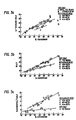
- the results, as illustrated in Fig. 2, show the octane number of the product gasoline for various conversion levels of the feedstock, relative zeolite loadings and the alpha activity of the zeolite beta in the catalyst.
- the increase in octane number obtained is 3-5 at 65% conversion.
- the C4 and dry gas makes are higher for the catalysts with zeolite beta having an alpha value of 418 then those with lower alpha values.
- the gasoline yields are only slightly reduced for zeolite beta-containing catalysts with alpha values less than 38.
- the zeolite beta-containing catalysts with alpha values of 418 exhibit larger gasoline yield loss, which accounts for the increased C4 and dry gas make yields.
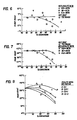
- Fig. 4 illustrates that the yield of Light Fuel Oil (LFO), i.e., those product oils having a boiling point between 420°F (216°C) and 690°F (366°C), is essentially the same whether or not zeolite beta is added to the conventional TCC catalyst. It can be assumed that the same results would apply to heavy fuel oils, i.e., those product oils having a boiling point higher than 690°F (366°C).
- LFO Light Fuel Oil
- Figs. 5-7 illustrate the relationship between pour point and catalyst activity for LFO (Fig. 5), cloud point and catalyst activity for LFO (Fig.6), and pour point and catalyst activity for vacuum distillate bottoms (VDB) (Fig.7).
- advantages can be seen for the addition of zeolite beta to the conversion catalyst at conversion levels greater than about 60%.
- Example 16 illustrates the effect of a composite catalyst comprising zeolite beta and REY.
- the previous examples were directed to physical mixtures of zeolite beta and REY.
- Six wt. % zeolite beta was composited with 6 wt. % REY, formed into a bead-shaped catalyst using silica-alumina as a binder, and steamed at 1290°F (699°C) at 1 atm (1 bar) pressure for 12 hours.
- Gippsland gas oil was cracked in a fixed bed at 925°F (496°6) for 5 minutes over the composite catalyst.
- the results of the composite catalyst run, as well as a comparison run utilizing a fresh commercial sample of REY (Durabead 9A) catalyst, are shown in Table 6.
- Example 17 illustrates that higher research octane number benefits can be obtained with a composite zeolite beta/REY catalyst than with a separate particle mixture when using large TCC bead catalysts, which suffer from diffusional effects.
- Both catalysts were steamed (100% steam) at 1300°F (704°6), 40 psig (3.8 bar) for 9 hours.
- Gippsland gas oil was cracked over the catalyst in the same manner as in Example 16. The results are presented below in Table 7.
- Example 18 illustrates the effect of processing a non-waxy feed (TCC Feedstock, properties listed in Table 8 following) over a zeolite beta/REY catalyst and a comparison REY only catalyst.
- the catalyst was prepared in the same manner as the catalyst of Example 16.
- the feedstock was passed over the catalyst in the same manner as in Example 16. The results are listed below in Table 9.
- Gippsland gas oil was cracked in a fluid bed FCC unit with various mixtures of hydrogen form of zeolite beta and a conventional REY catalyst.
- Table 10 shows the pour points of the 420°F+ (215.5°C) product at 50% conversion of 420°F+ feed.
- Gippsland gas oil was cracked in a fixed bed at 925°F (496°C) over various zeolites.
- the LFO distillates were obtained by vacuum distillation of total liquid products.
- the distillates from mixture catalyst experiments showed better cetane quality than those from REY.
- the distillates from beta catalyst alone were of similar cetane quality to REY. The results are shown in Table 11 and Fig. 9.
- Examples 21-24 illustrate the effect of varying ratios of REY/zeolite beta on the octane number when cracking Gippsland gas oil feedstock.
- REY was contained in standard TCC catalyst beads consisting of 12% zeolite in a silica-alumina binder.
- Zeolite beta was steamed at 1000°F (538°C), 1 atm (bar) pressure for about 16 hours and extruded with 50 wt. % alumina binder.
- Experiments were conducted in fixed-bed cracking units using physical mixtures of the two components. The process conditions and results are shown below in Table 12.
- Fig. 10 clearly illustrates the effects of changing the zeolite beta:Y ratio.
- the gasoline octane number is a function of the level of zeolite beta added. Cracking with the zeolite beta alone gives 90.5 octane (R + O) gasoline, compared to 86 R + O for the Y alone. On the other hand, gasoline yields follow the opposite trend, and the largest yield loss coincides with the largest octane gain.
- the efficiency of gaining octane may be considered in terms of: which is shown in Fig. 11 and appears to reach a maximum near 1:1 ratios of beta:Y.
Landscapes
- Chemical & Material Sciences (AREA)
- Crystallography & Structural Chemistry (AREA)
- Engineering & Computer Science (AREA)
- Organic Chemistry (AREA)
- Chemical Kinetics & Catalysis (AREA)
- Oil, Petroleum & Natural Gas (AREA)
- Materials Engineering (AREA)
- General Chemical & Material Sciences (AREA)
- Production Of Liquid Hydrocarbon Mixture For Refining Petroleum (AREA)
- Catalysts (AREA)
Claims (21)
- Verfahren zum Cracken einer Kohlenwasserstoffzufuhr, das den Kontakt dieser Zufuhr bei einer Temperatur von 449 bis 556°C in Abwesenheit von zugesetztem Wasserstoff mit einem Katalysator umfaßt, der Zeolith Beta und einen Zeolith umfaßt, der die Struktur von Faujasit aufweist, wobei das Gewichtsverhältnis von Faujasit zum Zeolith Beta von 1:25 bis 20:i beträgt.
- Verfahren nach Anspruch 1 , worin das Gewichtsverhältnis des Faujasit zum Zeolith Beta von 1:4 bis 5:1 beträgt.
- Verfahren nach einem der vorstehenden Ansprüche, worin das Faujasit Zeolith Y ist.
- Verfahren nach Anspruch 3, worin der Zeolith ein mit Seltenen Erden ausgetauschter Zeolith Y, ultrastabiler Zeolith Y oder die Säureform von Zeolith Y ist.
- Verfahren nach einem der Ansprüche 1 bis 4, worin der Katalysator in Form von Partikeln vorliegt, die sowohl Zeolith Beta als auch Faujasit enhalten.
- Verfahren nach einem der Ansprüche 1 bis 4, worin der Katalysator in Form von Partikeln vorliegt, die entweder Zeolith Beta oder Faujasit enthalten.
- Verfahren nach einem der vorstehenden Ansprüche, worin der Zeolith Beta in der Säureform oder in der Form der Seltenen Erden vorliegt.
- Verfahren nach einem der vorstehenden Ansprüche, worin der Zeolith Beta ein Siliciumdioxid/Aluminiumoxid-Mol-verhältnis von 10 bis 500 aufweist.
- Verfahren nach einem der vorstehenden Ansprüche, worin der Zeolith Beta ein Siliciumdioxid/Aluminumoxid-Mol-verhältnis von 50 bis 250 aufweist.
- Verfahren nach einem der vorstehenden Ansprüche, worin der Katalysator außerdem eine poröse Matrix umfaßt.
- Verfahren nach Anspruch 10, worin die Matrix Aluminiumoxid, Siliciumdioxid und/oder Siliciumdioxid-Aluminiumoxid umfaßt.
- Verfahren nach einem der vorstehenden Ansprüche, worin der Kontakt bei einem Druck von etwa 0 (1 bar) bis etwa 100 psig (7,9 bar) und einer LHSV von etwa 0,1 bis etwa 20 durchgeführt wird.
- Verfahren nach einem der vorstehenden Ansprüche, worin der Zeolith Beta einen Alpha-Wert von kleiner als 100 aufweist.
- Verfahren nach einem der vorstehenden Ansprüche, worin das Gewichtsverhältnis von Zeolith Beta zum Faujasit von 40:60 bis 70:30 beträgt.
- Verfahren nach einem der vorstehenden Ansprüche, worin die Zufuhr Gasöl ist.
- Verfahren nach Anspruch 15, worin das Gasöl einen Anfangssiedepunkt von mindestens 400°F (204,5°C) und einen Endpunkt von mindestens 850°F (454,5°C) aufweist.
- Verfahren nach Anspruch 15 oder Anspruch 16, worin das Gasöl einen Anfangssiedepunkt von etwa 400°F (204,5°C) und einen Endpunkt von etwa 1000°C (538°C) aufweist.
- Verfahren nach einem der vorstehenden Ansprüche, worin der Kontakt in einer katalytischen Wirbelschicht-Crackanlage stattfindet.
- Verfahren nach einem der Ansprüche 1 bis 17, worin der Kontakt in einer katalytischen Bewegtbett-Crackanlage stattfindet.
- Verfahren nach einem der vorstehenden Ansprüche, worin das Gewichtsverhältnis von Faujasit zum Zeolith Beta von 1:2 bis 2:1 beträgt.
- Verfahren nach einem der vorstehenden Ansprüche, worin das Gewichtsverhältnis von Faujasit zum Zeolith Beta 1:1 beträgt.
Applications Claiming Priority (4)
| Application Number | Priority Date | Filing Date | Title |
|---|---|---|---|
| US68676284A | 1984-12-27 | 1984-12-27 | |
| US686762 | 1984-12-27 | ||
| US77518985A | 1985-09-12 | 1985-09-12 | |
| US775189 | 1985-09-12 |
Publications (3)
| Publication Number | Publication Date |
|---|---|
| EP0186446A2 EP0186446A2 (de) | 1986-07-02 |
| EP0186446A3 EP0186446A3 (en) | 1987-11-11 |
| EP0186446B1 true EP0186446B1 (de) | 1991-05-15 |
Family
ID=27103861
Family Applications (1)
| Application Number | Title | Priority Date | Filing Date |
|---|---|---|---|
| EP85309272A Expired - Lifetime EP0186446B1 (de) | 1984-12-27 | 1985-12-19 | Katalytisches Kracken mit einer Mischung von Zeoliten vom Faujasit- und vom beta-Typ |
Country Status (4)
| Country | Link |
|---|---|
| EP (1) | EP0186446B1 (de) |
| AU (1) | AU582404B2 (de) |
| CA (1) | CA1252747A (de) |
| DE (1) | DE3582872D1 (de) |
Cited By (1)
| Publication number | Priority date | Publication date | Assignee | Title |
|---|---|---|---|---|
| AU2009252242B2 (en) * | 2008-05-30 | 2013-11-28 | Jgc Catalysts And Chemicals Ltd. | Catalyst for fluid catalytic cracking of hydrocarbon oil and method of fluid catalytic cracking of hydrocarbon oil with the same |
Families Citing this family (7)
| Publication number | Priority date | Publication date | Assignee | Title |
|---|---|---|---|---|
| US4898846A (en) * | 1986-03-21 | 1990-02-06 | W. R. Grace & Co.-Conn. | Cracking catalysts with octane enhancement |
| FR2661621B1 (fr) * | 1990-05-07 | 1992-07-10 | Inst Francais Du Petrole | Catalyseur de craquage de charges hydrocarbonees comprenant une zeolithe beta, une zeolithe y et une matrice. |
| US5350501A (en) * | 1990-05-22 | 1994-09-27 | Union Oil Company Of California | Hydrocracking catalyst and process |
| US5279726A (en) * | 1990-05-22 | 1994-01-18 | Union Oil Company Of California | Catalyst containing zeolite beta and processes for its use |
| US5275720A (en) * | 1990-11-30 | 1994-01-04 | Union Oil Company Of California | Gasoline hydrocracking catalyst and process |
| FR2743733B1 (fr) * | 1996-01-22 | 1998-02-27 | Inst Francais Du Petrole | Catalyseur comprenant une zeolithe de type faujasite et une zeolithe de type ton et procede d'hydroconversion de charges petrolieres hydrocarbonees |
| ES2168208B1 (es) * | 2000-03-24 | 2003-04-01 | Univ Valencia Politecnica | Catalizadores de craqueo basados en zeolitas. |
Family Cites Families (3)
| Publication number | Priority date | Publication date | Assignee | Title |
|---|---|---|---|---|
| US3769202A (en) * | 1962-07-16 | 1973-10-30 | Mobil Oil Corp | Catalytic conversion of hydrocarbons |
| US3894934A (en) * | 1972-12-19 | 1975-07-15 | Mobil Oil Corp | Conversion of hydrocarbons with mixture of small and large pore crystalline zeolite catalyst compositions to accomplish cracking cyclization, and alkylation reactions |
| US4486296A (en) * | 1983-10-13 | 1984-12-04 | Mobil Oil Corporation | Process for hydrocracking and dewaxing hydrocarbon oils |
-
1985
- 1985-12-05 AU AU50807/85A patent/AU582404B2/en not_active Ceased
- 1985-12-13 CA CA000497653A patent/CA1252747A/en not_active Expired
- 1985-12-19 EP EP85309272A patent/EP0186446B1/de not_active Expired - Lifetime
- 1985-12-19 DE DE8585309272T patent/DE3582872D1/de not_active Expired - Lifetime
Non-Patent Citations (1)
| Title |
|---|
| J. of Catalysis 67, 218-222 (1981) * |
Cited By (1)
| Publication number | Priority date | Publication date | Assignee | Title |
|---|---|---|---|---|
| AU2009252242B2 (en) * | 2008-05-30 | 2013-11-28 | Jgc Catalysts And Chemicals Ltd. | Catalyst for fluid catalytic cracking of hydrocarbon oil and method of fluid catalytic cracking of hydrocarbon oil with the same |
Also Published As
| Publication number | Publication date |
|---|---|
| DE3582872D1 (de) | 1991-06-20 |
| EP0186446A3 (en) | 1987-11-11 |
| CA1252747A (en) | 1989-04-18 |
| AU5080785A (en) | 1986-07-03 |
| AU582404B2 (en) | 1989-03-23 |
| EP0186446A2 (de) | 1986-07-02 |
Similar Documents
| Publication | Publication Date | Title |
|---|---|---|
| US4740292A (en) | Catalytic cracking with a mixture of faujasite-type zeolite and zeolite beta | |
| US4309280A (en) | Promotion of cracking catalyst octane yield performance | |
| US5358918A (en) | Hydrocarbon conversion catalyst for producing high quality gasoline and C3 and C4 olefins | |
| CA1153973A (en) | Octane improvement in catalytic cracking | |
| Madon | Role of ZSM-5 and ultrastable Y zeolites for increasing gasoline octane number | |
| US4334114A (en) | Production of aromatic hydrocarbons from a mixed feedstock of C5 -C12 olefins and C3 -C4 hydrocarbons | |
| US5308475A (en) | Use of ZSM-12 in catalytic cracking for gasoline octane improvement and co-production of light olefins | |
| WO1996034072A1 (en) | Process for converting olefinic hydrocarbons using spent fcc catalyst | |
| EP0095303A1 (de) | Katalytisches Entparaffinerungsverfahren | |
| US4994173A (en) | Method of adding zsm-5 containing catalyst to fluid bed catalytic cracking units | |
| US4927526A (en) | Octane improvement of gasoline in catalytic cracking without decreasing total liquid yield | |
| US4588496A (en) | Process for the catalytic cracking of metals-containing feedstocks | |
| EP0101291A2 (de) | Katalytisches Kracken | |
| US4552648A (en) | Fluidized catalytic cracking process | |
| EP0186446B1 (de) | Katalytisches Kracken mit einer Mischung von Zeoliten vom Faujasit- und vom beta-Typ | |
| US4871444A (en) | Distillate fuel quality of FCC cycle oils | |
| CA1269630A (en) | CATALYTIC CRACKING OF PARAFINIC FEEDSTOCKS WITH ZEOLITE .beta. | |
| US3994800A (en) | Catalytic cracking with catalyst of improved Y zeolite | |
| US5536391A (en) | Production of clean distillate fuels from heavy cycle oils | |
| EP0256875B2 (de) | Krackkatalysator, seine Herstellung und seine Anwendung | |
| US4521298A (en) | Promotion of cracking catalyst octane yield performance | |
| EP0130368A1 (de) | Konvertierung von Methanol zu Kohlenwasserstoffen | |
| EP0489324A1 (de) | Doppelzeolitenkrackkatalysator zur Verbesserung der Benzinoktanzahl | |
| US5258341A (en) | Yttrium containing zeolite Y cracking catalyst | |
| US5236877A (en) | Dual zeolite fluid cracking catalyst composition for improved gasoline octane |
Legal Events
| Date | Code | Title | Description |
|---|---|---|---|
| PUAI | Public reference made under article 153(3) epc to a published international application that has entered the european phase |
Free format text: ORIGINAL CODE: 0009012 |
|
| AK | Designated contracting states |
Kind code of ref document: A2 Designated state(s): BE DE FR GB IT NL |
|
| PUAL | Search report despatched |
Free format text: ORIGINAL CODE: 0009013 |
|
| AK | Designated contracting states |
Kind code of ref document: A3 Designated state(s): BE DE FR GB IT NL |
|
| 17P | Request for examination filed |
Effective date: 19880414 |
|
| 17Q | First examination report despatched |
Effective date: 19890323 |
|
| GRAA | (expected) grant |
Free format text: ORIGINAL CODE: 0009210 |
|
| AK | Designated contracting states |
Kind code of ref document: B1 Designated state(s): BE DE FR GB IT NL |
|
| ET | Fr: translation filed | ||
| REF | Corresponds to: |
Ref document number: 3582872 Country of ref document: DE Date of ref document: 19910620 |
|
| ITF | It: translation for a ep patent filed | ||
| RAP2 | Party data changed (patent owner data changed or rights of a patent transferred) |
Owner name: MOBIL OIL CORPORATION |
|
| NLT2 | Nl: modifications (of names), taken from the european patent patent bulletin |
Owner name: MOBIL OIL CORPORATION TE FAIRFAX, VIRGINIE, VER. S |
|
| PLBI | Opposition filed |
Free format text: ORIGINAL CODE: 0009260 |
|
| 26 | Opposition filed |
Opponent name: GRACE GMBH Effective date: 19920211 |
|
| NLR1 | Nl: opposition has been filed with the epo |
Opponent name: GRACE GMBH |
|
| K2C1 | Correction of patent specification (title page) published |
Effective date: 19910515 |
|
| PGFP | Annual fee paid to national office [announced via postgrant information from national office to epo] |
Ref country code: FR Payment date: 19971001 Year of fee payment: 13 |
|
| PGFP | Annual fee paid to national office [announced via postgrant information from national office to epo] |
Ref country code: GB Payment date: 19971006 Year of fee payment: 13 |
|
| APAE | Appeal reference modified |
Free format text: ORIGINAL CODE: EPIDOS REFNO |
|
| PGFP | Annual fee paid to national office [announced via postgrant information from national office to epo] |
Ref country code: DE Payment date: 19971017 Year of fee payment: 13 |
|
| PGFP | Annual fee paid to national office [announced via postgrant information from national office to epo] |
Ref country code: BE Payment date: 19971028 Year of fee payment: 13 |
|
| PGFP | Annual fee paid to national office [announced via postgrant information from national office to epo] |
Ref country code: NL Payment date: 19971031 Year of fee payment: 13 |
|
| APAC | Appeal dossier modified |
Free format text: ORIGINAL CODE: EPIDOS NOAPO |
|
| RDAG | Patent revoked |
Free format text: ORIGINAL CODE: 0009271 |
|
| STAA | Information on the status of an ep patent application or granted ep patent |
Free format text: STATUS: PATENT REVOKED |
|
| 27W | Patent revoked |
Effective date: 19980518 |
|
| GBPR | Gb: patent revoked under art. 102 of the ep convention designating the uk as contracting state |
Free format text: 980518 |
|
| NLR2 | Nl: decision of opposition | ||
| APAH | Appeal reference modified |
Free format text: ORIGINAL CODE: EPIDOSCREFNO |