EP0186647B1 - Verfahren zur Herstellung von Glyphosat und Glyphosatderivaten - Google Patents
Verfahren zur Herstellung von Glyphosat und Glyphosatderivaten Download PDFInfo
- Publication number
- EP0186647B1 EP0186647B1 EP85870191A EP85870191A EP0186647B1 EP 0186647 B1 EP0186647 B1 EP 0186647B1 EP 85870191 A EP85870191 A EP 85870191A EP 85870191 A EP85870191 A EP 85870191A EP 0186647 B1 EP0186647 B1 EP 0186647B1
- Authority
- EP
- European Patent Office
- Prior art keywords
- set forth
- glyphosate
- reaction
- compound
- hydrogen
- Prior art date
- Legal status (The legal status is an assumption and is not a legal conclusion. Google has not performed a legal analysis and makes no representation as to the accuracy of the status listed.)
- Expired
Links
Images
Classifications
-
- C—CHEMISTRY; METALLURGY
- C07—ORGANIC CHEMISTRY
- C07F—ACYCLIC, CARBOCYCLIC OR HETEROCYCLIC COMPOUNDS CONTAINING ELEMENTS OTHER THAN CARBON, HYDROGEN, HALOGEN, OXYGEN, NITROGEN, SULFUR, SELENIUM OR TELLURIUM
- C07F9/00—Compounds containing elements of Groups 5 or 15 of the Periodic Table
- C07F9/02—Phosphorus compounds
- C07F9/28—Phosphorus compounds with one or more P—C bonds
- C07F9/38—Phosphonic acids [RP(=O)(OH)2]; Thiophosphonic acids ; [RP(=X1)(X2H)2(X1, X2 are each independently O, S or Se)]
- C07F9/3804—Phosphonic acids [RP(=O)(OH)2]; Thiophosphonic acids ; [RP(=X1)(X2H)2(X1, X2 are each independently O, S or Se)] not used, see subgroups
- C07F9/3808—Acyclic saturated acids which can have further substituents on alkyl
- C07F9/3813—N-Phosphonomethylglycine; Salts or complexes thereof
-
- C—CHEMISTRY; METALLURGY
- C07—ORGANIC CHEMISTRY
- C07F—ACYCLIC, CARBOCYCLIC OR HETEROCYCLIC COMPOUNDS CONTAINING ELEMENTS OTHER THAN CARBON, HYDROGEN, HALOGEN, OXYGEN, NITROGEN, SULFUR, SELENIUM OR TELLURIUM
- C07F9/00—Compounds containing elements of Groups 5 or 15 of the Periodic Table
- C07F9/02—Phosphorus compounds
- C07F9/28—Phosphorus compounds with one or more P—C bonds
- C07F9/38—Phosphonic acids [RP(=O)(OH)2]; Thiophosphonic acids ; [RP(=X1)(X2H)2(X1, X2 are each independently O, S or Se)]
- C07F9/44—Amides thereof
-
- C—CHEMISTRY; METALLURGY
- C07—ORGANIC CHEMISTRY
- C07F—ACYCLIC, CARBOCYCLIC OR HETEROCYCLIC COMPOUNDS CONTAINING ELEMENTS OTHER THAN CARBON, HYDROGEN, HALOGEN, OXYGEN, NITROGEN, SULFUR, SELENIUM OR TELLURIUM
- C07F9/00—Compounds containing elements of Groups 5 or 15 of the Periodic Table
- C07F9/02—Phosphorus compounds
- C07F9/28—Phosphorus compounds with one or more P—C bonds
- C07F9/38—Phosphonic acids [RP(=O)(OH)2]; Thiophosphonic acids ; [RP(=X1)(X2H)2(X1, X2 are each independently O, S or Se)]
- C07F9/3804—Phosphonic acids [RP(=O)(OH)2]; Thiophosphonic acids ; [RP(=X1)(X2H)2(X1, X2 are each independently O, S or Se)] not used, see subgroups
- C07F9/3808—Acyclic saturated acids which can have further substituents on alkyl
- C07F9/3817—Acids containing the structure (RX)2P(=X)-alk-N...P (X = O, S, Se)
-
- C—CHEMISTRY; METALLURGY
- C25—ELECTROLYTIC OR ELECTROPHORETIC PROCESSES; APPARATUS THEREFOR
- C25B—ELECTROLYTIC OR ELECTROPHORETIC PROCESSES FOR THE PRODUCTION OF COMPOUNDS OR NON-METALS; APPARATUS THEREFOR
- C25B3/00—Electrolytic production of organic compounds
- C25B3/01—Products
- C25B3/07—Oxygen containing compounds
-
- C—CHEMISTRY; METALLURGY
- C25—ELECTROLYTIC OR ELECTROPHORETIC PROCESSES; APPARATUS THEREFOR
- C25B—ELECTROLYTIC OR ELECTROPHORETIC PROCESSES FOR THE PRODUCTION OF COMPOUNDS OR NON-METALS; APPARATUS THEREFOR
- C25B3/00—Electrolytic production of organic compounds
- C25B3/01—Products
- C25B3/09—Nitrogen containing compounds
-
- C—CHEMISTRY; METALLURGY
- C25—ELECTROLYTIC OR ELECTROPHORETIC PROCESSES; APPARATUS THEREFOR
- C25B—ELECTROLYTIC OR ELECTROPHORETIC PROCESSES FOR THE PRODUCTION OF COMPOUNDS OR NON-METALS; APPARATUS THEREFOR
- C25B3/00—Electrolytic production of organic compounds
- C25B3/20—Processes
- C25B3/25—Reduction
Definitions
- This invention relates to the synthesis of secondary and tertiary amines containing phosphonyl and carbonyl groups and, more particularly, to an improved process for producing N-phosphonomethylglycine or derivatives thereof by reductive alkylation.
- N-Phosphonomethylglycine known in the agricultural chemical art as glyphosate, is a highly effective and commercially important phytotoxicant useful in controlling the growth of germinating seeds, emerging seedlings, maturing and established woody and herbaceous vegetation, and aquatic plants.
- Glyphosate and salts thereof are conveniently applied in the form of an aqueous solution as a post-emergent phytotoxicant or herbicide for the control of growth of one or more monocotyledonous species and one or more dicotyledonous species.
- such compounds are characterized by broad spectrum activity, i.e., they control the growth of a wide variety of plants, including but not limited to ferns, conifers, aquatic monocotyledons, and dicotyledons.
- Gaertner Canadian Patent 1,039,739, describes a process for producing glyphosate by reacting aminomethylphosphonic acid and esters with glyoxal or glyoxylic acid to form a carbonylal- diminomethanephosphonate. Thereafter, the car- bonylaldiminomethanephosphonate is subjected to catalytic hydrogenation to reduce the double bond and produce glyphosate or esters. The ester groups are then hydrolyzed to produce N-phosphonomethylglycine. Both the condensation of aminomethylphosphonate with aldehyde and catalytic hydrogenation of the resultant imine are carried out in organic solvents.
- the solvent is an aromatic hydrocarbon, such as benzene, toluene, or xylene, while catalytic hydrogenation is typically carried out in an alcohol.
- Gaertner U.S. Patent 3,927,080, describes the production of glyphosate by acid hydrolysis of N-t-butyl-N-phosphonomethylglycine or its esters.
- Tertiary butyl amine is reacted with a bromoacetate ester to produce an ester of N-t-butylglycine which is in turn reacted with formaldehyde and phosphorous acid to produce the N-t-butyl-N-phosphonomethylglycine precursor.
- Ehrat, U.S. Patent 4,237,065 describes a process in which glycine is condensed with formaldehyde in the presence of a tertiary base to produce N-methyl glycine or N-methylene glycine, and the latter is in turn reacted with phosphorous acid to produce glyphosate.
- N-phosphonomethylglycine is prepared by condensation of glycine, formaldehyde, and a dialkyl phosphite in an aqueous alkaline medium to form an N-phosphonomethylglycine dialkyl ester. The latter is hydrolyzed with a mineral acid to produce glyphosate.
- Gaertner as described in his aforesaid Canadian patent, achieved monoalkylation of aminomethylphosphonic acid by the sequential process of first condensing aminomethylphosphonic acid or its esters with glyoxylic acid or its esters to produce the aldimine and thereafter subjecting the aldimine to catalytic hydrogenation
- the resultant secondary amine can further react with the aldehyde to produce an aminal which is in turn reduced by hydrogenolysis resulting in formation of a tertiary amine.
- the result is typically substantial dialkylation rather than the substantially exclusive monoalkylation that is preferred in the preparation of an end product, such as glyphosate.
- the present invention relates to a process for preparing glyphosate and glyphosate derivatives corresponding to the Formula (I)
- R can be hydrogen and R, R', and R 2 are independently selected from the group consisting of-OH; -SH;
- monovalent hydrocarbon as used herein includes alkyl, alkenyl, alkynyl, aralkyl inclusive of both straight and branched chain radicals, such as methyl, ethyl, isopropyl, cyclopropyl, cyclohexyl, tertiary butyl, iso-butyl, n-butyl, and the various forms amyl, hexyl, heptyl, octyl, nonyl, decyl, undecyl, dodecyl, tridecyl, tetradecyl, pentadecyl, hexadecyl, heptadecyl, octadecyl, benzyl, phenylethyl, naphthylethyl, tolylethyl, methylbenzyl, phenylbenzyl and the corresponding alkenyl, and alkynyl groups and the various
- the monovalent hydrocarbonoxyhydrocarbon groups represented by R 6 include alkoxyalkyl, al- kenoxyalkyl, aryloxyalkyl and alkoxyaryl, such as 2-methoxyethyl, 4-ethoxy-2-methylbutyl, 2- ethoxyethyl, 3-propoxypropyl, 4-methoxybutyl, 4-methoxy-2-ethylbutyl, 4-butoxybutyl, 2-allyloxyethyl, 2-butenoxyethyl, 4-butenoxybutyl, 4-(3-methoxypropoxy)butyl, 2-(3-allyloxypropoxy)-ethyl, phenoxyethyl, naphthoxyethyl, butyl, 2,4-diethoxyphenyl, 2-methoxyphenyl, tolyloxyethyl, 4-phenoxybutyl, trifluoromethylphenyl and the like.
- halogenated monovalent hydrocarbon groups represented by R 6 are haloalkyl, such as chloromethyl, iodomethyl, bromomethyl, fluoromethyl, chloroethyl, iodoethyl, bromoethyl, 1,2-dichloroethyl, 1,2-diiodoethyl, chloro-n-propyl, bromo-n-propyl, iodoisopropyl, bromo-n-butyl, bromotert-butyl, 1,3,3-trichlorobutyl, chloropent- yl, bromopentyl, 2,3-dichloropentyl, chlorohexyl, bromohexyl, 2,4-dichlorohexyl, 1,3-dibromohexyl, 1,3,4-trichlorohexyl, chloroheptyl, bromo-heptyl, fluoromethyl, chlor
- aryl as employed herein includes phenyl, naphthyl, and biphenylyl.
- substituents may present steric hindrance such that adjacent positions on the aryl ring are not occupied but such variation is well understood by those skilled in the art.
- substituted phenyl groups are mono-substituted phenyl wherein the substituent is in the ortho, meta, or para position, for example, methylphenyl, butylphenyl, methoxyphenyl, butoxyphenyl, fluorophenyl, chlorophenyl, bromophenyl, iodophenyl, trifluoromethylphenyl, nitrophenyl, methylthiophenyl, butylthiophenyl, cyanophenyl, ethoxycarbonylphenyl and the like, and the di- and tri-substituted phenyl groups wherein the substituents are the same or different and are located in the 2, 3, 4, 5, or 6 positions of the phenyl ring, for example, dichlorophenyl, dimethylphenyl, methylchlorophenyl, ethyl- fluorophenyl, dibutoxyphenyl, butylnitrophenyl,
- Groups representative of a substituted naphthyl group include methylnaphthyl, nitronaphthyl, bromonaphthyl, dimethylnaphthyl, difluoronaph- thyl, trimethylnaphthyl and the like.
- Groups representative of substituted biphenylyl include methylbiphenylyl, nitrobiphenylyl, bromobiphenylyl, dimethylbiphenylyl, di- fluorobiphenylyl, trimethylbiphenylyl and the like.
- Preferred salt-forming cations R are cations which render glyphosate or glyphosate derivatives readily soluble in water.
- Such cations typically include but are not limited to alkali metals, ammonium, organic ammonium, and aliphatic sulfonium.
- the R 3 alkyl substituent employed in the process of this invention typically includes and is not limited to any cyclic, straight, or branched chain alkyl group, such as methyl, ethyl, propyl, isopropyl, butyl, hexyl, cyclohexyl, and cyclopropyl.
- the preferred alkyl substituent is represented by the formula
- R 8 , R 9 , R 10 , and R 11 are independently selected from the group consisting of hydrogen, alkyl C 1-6 , aryl, and substituted aryl provided no more than two of R B , R 9 , R 1o , and R 1 are aryl or substituted aryl.
- a precursor primary or secondary amine corresponding to Formula (II) where R and R 3 are as defined above is condensed in an aqueous medium with a carbonyl compound or hydrate or acetal thereof.
- the carbonyl compound corresponds to Formula (111) or (IV) wherein R' and R 2 are as defined above, R' 2 and R' 3 are independently selected from hydrogen, alkyl, hydroxyalkyl having 1 to 4 carbon atoms, alkenyl and alkyl having 2 to 4 carbon atoms joined through the oxygen atoms to form a cyclic acetal, aryl, substituted aryl, or heterocyclic moieties.
- the condensation product is reduced in situ to produce the desired compound of Formula (I).
- the present invention resides in the discovery that glyphosate and various glyphosate derivatives can be produced with very high selectivity by the reductive alkylation of glycine, its salts, or its esters, in an aqueous medium with a carbonyl compound, such as formylphosphonic acid, its hydrate, or its acetals. Contrary to the results reported for the reductive alkylation of glycine with linear aldehydes, such as acetaldehyde or butyraldehyde, high conversions of the reactants to the monoalkylated product can be achieved with relatively minimal dialkylation. Thus, not only high selectivity but good overall yields are obtained. In the aqueous reaction medium, reduction of the intermediate reaction product is carried either by catalytic hydrogenation or electrochemical reduction.
- the reaction scheme of the invention By use of the reaction scheme of the invention, a wide variety of products can be produced having structures generally patterned on or comparable to glyphosate.
- the process of the invention is particularly advantageous for the monoalkylation of certain primary amines to secondary amines, it may also be used for the monoalkylation of secondary amines to tertiary amines.
- the amine reactant in the process of the invention may be generally defined as
- R and R 3 are as defined above.
- R, R 1 , and R can be OR 7 , R 7 , in addition to other values, may be a salt-forming cation as defined above.
- R, R', R 2 , and R 3 should not include moieties which are reactive with each other to any significant extent under the conditions of the reductive alkylation, nor should these groups include moieties preferentially reactive under such conditions with either the amine or carbonyl group involved in the reductive alkylation.
- the product corresponds generally to the Formula (I) where R, R', R 2 , and R 3 are as defined above.
- the amine compound of Formula (II) for example, glycine
- the carbonyl compound of Formula (III) for example, formylphosphonic acid
- the reaction proceeds through condensation of amine and carbonyl compound to form the intermediate, followed by reduction thereof without isolation to produce the final product.
- the process of this invention can also be used for producing tertiary amines by reductive alkylation of secondary amines.
- the pH of the aqueous solution containing the amine and carbonyl compound reactants is adjusted to between about 5.5 and about 12.0, preferably 7.0 to 12.0, prior to carrying out the reductive alkylation.
- the mechanism by which pH affects the productivity of the reaction is not known. However, the condensation reaction is understood to be reversible and it is, therefore, believed that a pH more acid than 5.5 may adversely affect the equilibrium constant for this reaction. Conditions more acid than pH 5.5 and those more alkaline than pH 12.0 may conduct to the reduction of the aldehyde to the hydroxyalkyl phosphonic acid and/or to poor selectivity.
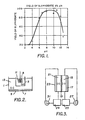
- Fig. 1 illustrates the influence of pH on selectivity in the preparation of glyphosate (or its sodium salts) by reaction of glycine and formylphosphonic acid.
- Adjustment of pH is carried out by addition of a base, typically an alkali metal hydroxide, such as sodium hydroxide or potassium hydroxide.
- a base typically an alkali metal hydroxide, such as sodium hydroxide or potassium hydroxide.
- Tertiary amines such as triethylamine, may also be used as well as primary and secondary amines.
- the aqueous solution is either contacted with hydrogen in the presence of a hydrogenation catalyst or placed in an electrochemical cell where the intermediate formed by the condensation reaction is cathodically reduced.
- a wide variety of hydrogenation catalysts may be used including various platinum group metals, such as platinum, palladium, iridium, osmium, rhodium, or ruthenium and various other transition metals, such as nickel and cobalt. Other metals, such as copper and zinc, can also be used. Either elemental metals or various compounds of such metals, such as oxides, halides, and organometallics, can be used. Where the catalyst is a solid state material, it can be either supported, such as, for example, platinum on carbon, palladium on alumina, nickel on kieselguhr, etc., or unsupported, for example, Raney nickel or platinum oxide. Various soluble compounds of catalytic metals can also be employed. Palladium on carbon and Raney nickel are particularly effective and convenient catalysts and thus somewhat preferred. But depending on the conditions and nature of the substrate, a number of other catalysts may be equally effective.
- platinum group metals such as platinum, palladium, iridium, os
- the preferred concentration of catalyst also varies widely depending on substrate and conditions. However, the optimum proportion for any particular system can be readily arrived at by routine testing.
- Pressure is not generally a highly critical variable where the reductive alkylation of the invention is carried out by catalytic hydrogenation. Pressure can be varied widely. For convenience, however, hydrogen pressures from atmospheric to about 4.60 x 10 Newtons/meter (N/m 2 ) or more are used.
- the solution of amine and carbonyl compound is placed in an electrolytic cell, preferably as the catholyte in a cell having a porous barrier between catholyte and anolyte chambers.
- a cell is illustrated, for example, in Fig.2.
- This cell includes a container 1 having a porous alumina cup 3 disposed therein. Inside cup 3 is a platinum mesh anode 5. A mercury pool 7, covering the bottom wall 9 of container 1, serves as the cathode. Cup 3 thus divides the cell into anolyte chamber 11 and catholyte chamber 13, respectively.
- any convenient electrolyte can be used for the anolyte.
- Current is applied preferably at a density of approximately 0.001 to 0.5 amps per square centimeter to effect the reduction.
- Electrolytic reduction may also be carried out in an undivided cell, whose construction may be essentially identical to that of Fig. except that cup 3 is absent and no separate anolyte liquor is used.
- electrochemical reduction can take place in a flow cell, such as that illustrated in Fig.3.
- a catholyte flow channel 15 is disposed between a cathode 17 and a semipermeable membrane 19 which comprises an ion exchange resin.
- Reaction solution contained in a reservoir 25 is continuously passed through catholyte channel 15 by means of a pump 27.
- an anolyte chamber 21 and a carbon anode 23 are continuously passed through anolyte channel 21 by means of a pump 31.
- the cathode of the electrochemical reduction cell is preferably comprised of a material which exhibits a high hydrogen overpotential in the electrochemical reduction system.
- a material which exhibits a high hydrogen overpotential in the electrochemical reduction system include, for example, mercury, cadmium, lead, palladium, platinum, or graphite.
- Selection of the anode material is not particularly critical.
- the anode may be of platinum, carbon, graphite, platinized titanium, stainless steel, etc.
- Products produced in accordance with the reductive alkylation reaction of this invention may have a variety of uses, but they are particularly useful as herbicides.
- Product may be recovered from the reaction solution by various conventional methods. Where the reductive alkylation is conducted by catalytic hydrogenation using a solid state catalyst, the first step in product recovery is removal of the catalyst, as by filtration or centrifugation. The recovered catalyst may in most instances be recycled and reslurried with fresh feed solution containing amines and carbonyl compound reactants.
- reaction product may be separated, for example, by evaporation.
- the product need not be recovered and the solution can be used directly as a herbicide, if desired.
- Formylphosphonic acid for use in practicing the process of this invention can be conveniently prepared as described by Wagenknecht, Journal of Electrochemical Society, Vol.123, pp.620-624 (May, 1976) and in Bayer U.S. Patent 4,348,332, the teachings of which are incorporated herein by reference.
- Formylphosphonic acid (2 g) was taken up in water (50 ml) and the pH of the resultant solution adjusted to 5.8 by portionwise addition of sodium carbonate.
- the formylphosphonic acid solution was then added dropwise to a solution of glycine (4 g) in water (20 ml) at room temperature.
- Dissolved carbon dioxide was removed under vacuum, and the decarbonated solution and a 2.5% platinum on carbon catalyst (1 g) were placed in a pressure bottle having a magnetic stirrer.
- the pressure bottle was sealed and pressurized with hydrogen to 3.45 x 10 5 N/m 2. gauge.
- the hydrogen was periodically replenished by repressurizing the bottle to 3.45 x 10 5 N/m 2 gauge.
- N-methylglyphosate can be prepared by reacting equimolar amounts of N-methylglycine and formylphosphonic acid according to the conditions of Example 2. Upon the cessation of hydrogen uptake, a substantial amount of N-methylglyphosate will have been produced.
- N-isopropylglyphosate can be prepared by reacting equimolar amounts of N-isopropylgly- cine and formylphosphonic acid according to the conditions of Example 2. Upon cessation of hydrogen uptake, a substantial amount of N-isopropylglyphosate will have been produced.
- N-phosphonomethylglycine was produced in the manner described in Example 2 except that the amount of glycine charged was 1.9 g (0.025 mol), the pH was adjusted to 6.0 prior to hydrogenation, and the catalyst for the hydrogenation was 60% nickel on kieselguhr (0.20 g). After 3 hours and 30 minutes of reaction at room temperature, the reactor was sampled, and it was determined that 2.71 g of N-phosphonomethylglycine had been produced, a yield of 69.4% based on formylphosphonic acid. The reaction was thereafter allowed to continue overnight, after which the N-phosphonomethylglycine produced was 3.0 g, a 78% yield.
- N-phosphonomethylglycine was produced in the manner described in Example 2 except that the pH was adjusted prior to hydrogenation, and the hydrogenation catalyst was No.28 Davison Raney Nickel (3.0 g). After 3 hours and 15 minutes, a 76% yield of N-phosphonomethylglycine was obtained.
- N-phosphonomethylglycine was produced in the manner described in Example 4 except that the reaction was carried out at a temperature of 40°C. After 2 hours a 73% yield of the desired product was obtained.
- Reaction of glycine and formylphosphonic acid was carried out in the manner described in Example 2 except that the amount of glycine used was increased slightly (1.9 g; 0.025 mole), a smaller amount of catalyst was supplied (0.1 g), and the pH was adjusted to 8.0. The system was maintained at the reaction temperature and pressure for 20 hours although hydrogen uptake ceased after 0.5 hour. The analysis indicated a 93.9% yield of glyphosate salt.
- Example 6 The conditions of Example 6 were repeated except that the hydrogen pressure was increased to 3.17 x 10 7 N/m 2. Reaction was terminated after 3 hours. Analysis revealed a 58.1 % yield of glyphosate.
- Reaction of glycine and formylphosphonic acid was carried out under the conditions of Example 2 except that the pH was initially adjusted to 8.0 and hydrogen gas was continuously bubbled through the liquid phase at atmospheric pressure. After 18 hours of reaction, a 65.9% yield of glyphosate was obtained.
- FIG.1 A plot of yield as a function of pH as generated by computer using regression analysis is set forth in Fig.1.
- Glycine (1.14 g, 0.015 mole) and formylphosphonic acid (5.0 g of a 32% solution, 0.015 mole) were taken up in water and the pH adjusted to 8.0 by addition of 2.5 N NaOH. This solution was placed in the cathode compartment of a divided cell.
- the anode chamber contained 0.1 M KOAc solution.
- the cathode was mercury and the anode was a platinum screen.
- the cathode potential was held at -1.2 v vs. a sce reference electrode. A total of 5.7 x 10- 3 Faraday of current was passed. Analysis of the catholyte revealed that 1.1 g of glyphosate had been produced for a 43% yield based on consumed glyphosate.
Landscapes
- Chemical & Material Sciences (AREA)
- Organic Chemistry (AREA)
- Metallurgy (AREA)
- Engineering & Computer Science (AREA)
- Materials Engineering (AREA)
- Electrochemistry (AREA)
- Chemical Kinetics & Catalysis (AREA)
- Molecular Biology (AREA)
- Health & Medical Sciences (AREA)
- Life Sciences & Earth Sciences (AREA)
- General Health & Medical Sciences (AREA)
- Biochemistry (AREA)
- Crystallography & Structural Chemistry (AREA)
- Agricultural Chemicals And Associated Chemicals (AREA)
- Organic Low-Molecular-Weight Compounds And Preparation Thereof (AREA)
- Low-Molecular Organic Synthesis Reactions Using Catalysts (AREA)
- Electrolytic Production Of Non-Metals, Compounds, Apparatuses Therefor (AREA)
Claims (21)


Priority Applications (1)
| Application Number | Priority Date | Filing Date | Title |
|---|---|---|---|
| AT85870191T ATE41008T1 (de) | 1984-12-28 | 1985-12-23 | Verfahren zur herstellung von glyphosat und glyphosatderivaten. |
Applications Claiming Priority (2)
| Application Number | Priority Date | Filing Date | Title |
|---|---|---|---|
| US06/687,309 US4568432A (en) | 1984-12-28 | 1984-12-28 | Process for preparing glyphosate and glyphosate derivatives |
| US687309 | 1984-12-28 |
Publications (2)
| Publication Number | Publication Date |
|---|---|
| EP0186647A1 EP0186647A1 (de) | 1986-07-02 |
| EP0186647B1 true EP0186647B1 (de) | 1989-03-01 |
Family
ID=24759940
Family Applications (1)
| Application Number | Title | Priority Date | Filing Date |
|---|---|---|---|
| EP85870191A Expired EP0186647B1 (de) | 1984-12-28 | 1985-12-23 | Verfahren zur Herstellung von Glyphosat und Glyphosatderivaten |
Country Status (11)
| Country | Link |
|---|---|
| US (1) | US4568432A (de) |
| EP (1) | EP0186647B1 (de) |
| JP (1) | JPS61161293A (de) |
| KR (1) | KR870001466B1 (de) |
| CN (1) | CN85109397A (de) |
| AT (1) | ATE41008T1 (de) |
| AU (1) | AU573938B2 (de) |
| CA (1) | CA1228592A (de) |
| DE (1) | DE3568437D1 (de) |
| HU (1) | HU205612B (de) |
| ZA (1) | ZA859832B (de) |
Families Citing this family (23)
| Publication number | Priority date | Publication date | Assignee | Title |
|---|---|---|---|---|
| US5874612A (en) * | 1984-12-28 | 1999-02-23 | Baysdon; Sherrol L. | Process for the preparation of glyphosate and glyphosate derivatives |
| HUT41415A (en) * | 1984-12-28 | 1987-04-28 | Monsanto Co | Process for preparing n-phosphono-methyl-glycine derivatives |
| IL77364A (en) * | 1984-12-28 | 1991-01-31 | Monsanto Co | Thermal dealkylation of n-alkyl n-phosphono-methylglycine |
| DE3532344A1 (de) * | 1985-09-11 | 1987-03-19 | Hoechst Ag | Verfahren zur herstellung von n-phosphonomethylglycin |
| US4851159A (en) * | 1988-05-02 | 1989-07-25 | Monsanto Company | Process for the preparation of N- phosphonomethylglycine |
| ES2184151T3 (es) * | 1996-12-30 | 2003-04-01 | Monsanto Technology Llc | Procedimiento para preparar derivados de cianofosfonato a partir de anhidrido fosforico y cianuro. |
| EP0948506A1 (de) * | 1996-12-30 | 1999-10-13 | Monsanto Company | Cyanophosphonat-derivate |
| WO1998029423A1 (en) * | 1996-12-30 | 1998-07-09 | Monsanto Company | Hydrogenation of cyanophosphonate derivatives |
| US5859290A (en) * | 1996-12-30 | 1999-01-12 | Monsanto Company | Hydrogenation of cyanophosphonate derivatives in the presence of a glycine derivative |
| EP0948503A1 (de) * | 1996-12-30 | 1999-10-13 | Monsanto Company | Herstellung von cyanophosphonaten aus phosphaten und cyaniden |
| EP0948504A1 (de) * | 1996-12-30 | 1999-10-13 | Monsanto Company | Herstellung von cyanophosphonaten aus pyrophosphaten und cyaniden |
| CA2276161A1 (en) * | 1996-12-30 | 1998-07-09 | Monsanto Company | Cyanophosphorus compounds and their preparation |
| US6054608A (en) * | 1997-05-05 | 2000-04-25 | Monsanto Company | Method for preparing formylphosphonic acid |
| US6232494B1 (en) * | 1998-02-12 | 2001-05-15 | Monsanto Company | Process for the preparation of N-(phosphonomethyl)glycine by oxidizing N-substituted N-(phosphonomethyl)glycine |
| US6218563B1 (en) | 1998-12-03 | 2001-04-17 | Monsanto Company | Cyanophosphonamides and method for preparation |
| US6274760B1 (en) * | 2000-03-14 | 2001-08-14 | Monsanto Co. | Preparation of formylphosphonic acid from tertiary aminomethylphosphonic acid N-oxides |
| US6441223B1 (en) | 2000-11-30 | 2002-08-27 | Monsanto Technology Llc | Method of making phosphorus-containing compounds and products thereof |
| JP5529831B2 (ja) * | 2010-12-22 | 2014-06-25 | ダウ グローバル テクノロジーズ エルエルシー | グリホサート化合物とipbcとの相乗的組み合わせ |
| JP2014527071A (ja) | 2011-08-31 | 2014-10-09 | マリンクロッド エルエルシー | H−ホスホネートによるナノ粒子pegの改変 |
| CN108083984B (zh) * | 2017-12-28 | 2021-02-26 | 吴嘉 | 用于草甘膦溶剂及副产物回收的方法 |
| MY204154A (en) * | 2018-08-21 | 2024-08-09 | Huntsman Int Llc | Catalyst for pir/pur foam production |
| CN108997086A (zh) * | 2018-08-31 | 2018-12-14 | 南通江山农药化工股份有限公司 | 甘氨酸法草甘膦副产甲缩醛的纯化工艺 |
| WO2020175707A1 (ja) | 2019-02-28 | 2020-09-03 | 国立研究開発法人科学技術振興機構 | 電極触媒およびアミン化合物の製造方法 |
Family Cites Families (6)
| Publication number | Priority date | Publication date | Assignee | Title |
|---|---|---|---|---|
| CA775575A (en) * | 1961-11-13 | 1968-01-09 | R. Irani Riyad | Organic phosphorus compounds |
| IL48619A (en) * | 1974-12-11 | 1978-04-30 | Monsanto Co | Process for the production of n-(phosphonomethyl)-glycine compounds |
| EP0000767B1 (de) * | 1977-08-11 | 1980-11-26 | Ciba-Geigy Ag | Glycylmethyl-phosphinsäurederivate, ihre Herstellung und Verwendung |
| US4369142A (en) * | 1981-12-03 | 1983-01-18 | Ciba-Geigy Corporation | Process for producing N-phosphonomethylglycine |
| IL65187A (en) * | 1982-03-08 | 1985-03-31 | Geshuri Lab Ltd | N-phosphonomethylglycine derivatives,processes for their preparation and herbicidal compositions containing them |
| HUT41415A (en) * | 1984-12-28 | 1987-04-28 | Monsanto Co | Process for preparing n-phosphono-methyl-glycine derivatives |
-
1984
- 1984-12-28 US US06/687,309 patent/US4568432A/en not_active Expired - Fee Related
-
1985
- 1985-12-20 HU HU854940A patent/HU205612B/hu unknown
- 1985-12-23 KR KR1019850009741A patent/KR870001466B1/ko not_active Expired
- 1985-12-23 EP EP85870191A patent/EP0186647B1/de not_active Expired
- 1985-12-23 AU AU51567/85A patent/AU573938B2/en not_active Ceased
- 1985-12-23 DE DE8585870191T patent/DE3568437D1/de not_active Expired
- 1985-12-23 ZA ZA859832A patent/ZA859832B/xx unknown
- 1985-12-23 AT AT85870191T patent/ATE41008T1/de not_active IP Right Cessation
- 1985-12-27 JP JP60299618A patent/JPS61161293A/ja active Granted
- 1985-12-27 CN CN198585109397A patent/CN85109397A/zh active Pending
- 1985-12-27 CA CA000498672A patent/CA1228592A/en not_active Expired
Also Published As
| Publication number | Publication date |
|---|---|
| AU573938B2 (en) | 1988-06-23 |
| JPH0455437B2 (de) | 1992-09-03 |
| ATE41008T1 (de) | 1989-03-15 |
| HU205612B (en) | 1992-05-28 |
| US4568432A (en) | 1986-02-04 |
| KR860004904A (ko) | 1986-07-16 |
| AU5156785A (en) | 1986-07-03 |
| ZA859832B (en) | 1986-09-24 |
| CA1228592A (en) | 1987-10-27 |
| KR870001466B1 (ko) | 1987-08-12 |
| DE3568437D1 (en) | 1989-04-06 |
| JPS61161293A (ja) | 1986-07-21 |
| CN85109397A (zh) | 1986-10-15 |
| EP0186647A1 (de) | 1986-07-02 |
| HUT41416A (en) | 1987-04-28 |
Similar Documents
| Publication | Publication Date | Title |
|---|---|---|
| EP0186647B1 (de) | Verfahren zur Herstellung von Glyphosat und Glyphosatderivaten | |
| EP0186648B1 (de) | Verfahren zur Herstellung von Glyphosat und Glyphosatderivaten | |
| EP1104427B1 (de) | Verfahren zur herstellung von n-(phosphonomethyl)glycin durch oxidation von n-substituierten n-(phosphonomehtyl)glycin | |
| EP1062221B1 (de) | Verfahren zur herstellung von glyphosat durch oxidation von n-substituierten glyphosaten | |
| EP0221043B1 (de) | Verfahren zur Herstellung N-substituierter Aminomethylphosphonsäuren | |
| EP0769014B1 (de) | Verfahren zur herstellung von n-phosphonomethylamino carboxylsäuren | |
| US5874612A (en) | Process for the preparation of glyphosate and glyphosate derivatives | |
| EP0769013B1 (de) | Verfahren zur herstellung von n-phosphonomethylamino carboxylsäuren | |
| AU2004267103A1 (en) | Process for the preparation of N-phosphono-methylglycine and derivatives thereof | |
| US6365772B1 (en) | Facile synthesis of phosphonomethylglycine from phosphonomethyliminodiacetic acid | |
| US4847013A (en) | Process for the preparation of N-phosphonomethylglycine | |
| US6441223B1 (en) | Method of making phosphorus-containing compounds and products thereof | |
| US4587061A (en) | Oxidative ring cleavage process | |
| KR20000068930A (ko) | 엔-치환 글리포세이트의 산화에 의한 글리포세이트의 제조방법 | |
| NZ335654A (en) | Process for making glyphosate by oxidizing n-substituted glyphosates in the presence of a noble metal catalyst | |
| HUP0002391A2 (hu) | Eljárás glifozát előállítására N-szubsztituált glifozátok oxidálásával |
Legal Events
| Date | Code | Title | Description |
|---|---|---|---|
| PUAI | Public reference made under article 153(3) epc to a published international application that has entered the european phase |
Free format text: ORIGINAL CODE: 0009012 |
|
| AK | Designated contracting states |
Kind code of ref document: A1 Designated state(s): AT BE CH DE FR GB IT LI LU NL SE |
|
| 17P | Request for examination filed |
Effective date: 19861211 |
|
| 17Q | First examination report despatched |
Effective date: 19871116 |
|
| GRAA | (expected) grant |
Free format text: ORIGINAL CODE: 0009210 |
|
| AK | Designated contracting states |
Kind code of ref document: B1 Designated state(s): AT BE CH DE FR GB IT LI LU NL SE |
|
| REF | Corresponds to: |
Ref document number: 41008 Country of ref document: AT Date of ref document: 19890315 Kind code of ref document: T |
|
| REF | Corresponds to: |
Ref document number: 3568437 Country of ref document: DE Date of ref document: 19890406 |
|
| ET | Fr: translation filed | ||
| ITF | It: translation for a ep patent filed | ||
| PLBE | No opposition filed within time limit |
Free format text: ORIGINAL CODE: 0009261 |
|
| STAA | Information on the status of an ep patent application or granted ep patent |
Free format text: STATUS: NO OPPOSITION FILED WITHIN TIME LIMIT |
|
| 26N | No opposition filed | ||
| PGFP | Annual fee paid to national office [announced via postgrant information from national office to epo] |
Ref country code: FR Payment date: 19911107 Year of fee payment: 7 |
|
| PGFP | Annual fee paid to national office [announced via postgrant information from national office to epo] |
Ref country code: AT Payment date: 19911112 Year of fee payment: 7 |
|
| PGFP | Annual fee paid to national office [announced via postgrant information from national office to epo] |
Ref country code: GB Payment date: 19911114 Year of fee payment: 7 |
|
| PGFP | Annual fee paid to national office [announced via postgrant information from national office to epo] |
Ref country code: SE Payment date: 19911120 Year of fee payment: 7 |
|
| PGFP | Annual fee paid to national office [announced via postgrant information from national office to epo] |
Ref country code: DE Payment date: 19911121 Year of fee payment: 7 Ref country code: CH Payment date: 19911121 Year of fee payment: 7 |
|
| PGFP | Annual fee paid to national office [announced via postgrant information from national office to epo] |
Ref country code: BE Payment date: 19911127 Year of fee payment: 7 |
|
| PGFP | Annual fee paid to national office [announced via postgrant information from national office to epo] |
Ref country code: LU Payment date: 19911202 Year of fee payment: 7 |
|
| ITTA | It: last paid annual fee | ||
| PGFP | Annual fee paid to national office [announced via postgrant information from national office to epo] |
Ref country code: NL Payment date: 19911231 Year of fee payment: 7 |
|
| EPTA | Lu: last paid annual fee | ||
| PG25 | Lapsed in a contracting state [announced via postgrant information from national office to epo] |
Ref country code: LU Free format text: LAPSE BECAUSE OF NON-PAYMENT OF DUE FEES Effective date: 19921223 Ref country code: GB Effective date: 19921223 Ref country code: AT Effective date: 19921223 |
|
| PG25 | Lapsed in a contracting state [announced via postgrant information from national office to epo] |
Ref country code: SE Effective date: 19921224 |
|
| PG25 | Lapsed in a contracting state [announced via postgrant information from national office to epo] |
Ref country code: LI Effective date: 19921231 Ref country code: CH Effective date: 19921231 Ref country code: BE Effective date: 19921231 |
|
| BERE | Be: lapsed |
Owner name: MONSANTO CY Effective date: 19921231 |
|
| PG25 | Lapsed in a contracting state [announced via postgrant information from national office to epo] |
Ref country code: NL Effective date: 19930701 |
|
| NLV4 | Nl: lapsed or anulled due to non-payment of the annual fee | ||
| GBPC | Gb: european patent ceased through non-payment of renewal fee |
Effective date: 19921223 |
|
| PG25 | Lapsed in a contracting state [announced via postgrant information from national office to epo] |
Ref country code: FR Effective date: 19930831 |
|
| REG | Reference to a national code |
Ref country code: CH Ref legal event code: PL |
|
| PG25 | Lapsed in a contracting state [announced via postgrant information from national office to epo] |
Ref country code: DE Effective date: 19930901 |
|
| REG | Reference to a national code |
Ref country code: FR Ref legal event code: ST |
|
| EUG | Se: european patent has lapsed |
Ref document number: 85870191.5 Effective date: 19930709 |