EP0187547B1 - Synthetic polymeric drugs - Google Patents
Synthetic polymeric drugs Download PDFInfo
- Publication number
- EP0187547B1 EP0187547B1 EP85309560A EP85309560A EP0187547B1 EP 0187547 B1 EP0187547 B1 EP 0187547B1 EP 85309560 A EP85309560 A EP 85309560A EP 85309560 A EP85309560 A EP 85309560A EP 0187547 B1 EP0187547 B1 EP 0187547B1
- Authority
- EP
- European Patent Office
- Prior art keywords
- gly
- phe
- leu
- mol
- ala
- Prior art date
- Legal status (The legal status is an assumption and is not a legal conclusion. Google has not performed a legal analysis and makes no representation as to the accuracy of the status listed.)
- Expired - Lifetime
Links
Images


Classifications
-
- A—HUMAN NECESSITIES
- A61—MEDICAL OR VETERINARY SCIENCE; HYGIENE
- A61K—PREPARATIONS FOR MEDICAL, DENTAL OR TOILETRY PURPOSES
- A61K47/00—Medicinal preparations characterised by the non-active ingredients used, e.g. carriers or inert additives; Targeting or modifying agents chemically bound to the active ingredient
- A61K47/50—Medicinal preparations characterised by the non-active ingredients used, e.g. carriers or inert additives; Targeting or modifying agents chemically bound to the active ingredient the non-active ingredient being chemically bound to the active ingredient, e.g. polymer-drug conjugates
- A61K47/51—Medicinal preparations characterised by the non-active ingredients used, e.g. carriers or inert additives; Targeting or modifying agents chemically bound to the active ingredient the non-active ingredient being chemically bound to the active ingredient, e.g. polymer-drug conjugates the non-active ingredient being a modifying agent
- A61K47/68—Medicinal preparations characterised by the non-active ingredients used, e.g. carriers or inert additives; Targeting or modifying agents chemically bound to the active ingredient the non-active ingredient being chemically bound to the active ingredient, e.g. polymer-drug conjugates the non-active ingredient being a modifying agent the modifying agent being an antibody, an immunoglobulin or a fragment thereof, e.g. an Fc-fragment
- A61K47/6835—Medicinal preparations characterised by the non-active ingredients used, e.g. carriers or inert additives; Targeting or modifying agents chemically bound to the active ingredient the non-active ingredient being chemically bound to the active ingredient, e.g. polymer-drug conjugates the non-active ingredient being a modifying agent the modifying agent being an antibody, an immunoglobulin or a fragment thereof, e.g. an Fc-fragment the modifying agent being an antibody or an immunoglobulin bearing at least one antigen-binding site
- A61K47/6883—Polymer-drug antibody conjugates, e.g. mitomycin-dextran-Ab; DNA-polylysine-antibody complex or conjugate used for therapy
-
- A—HUMAN NECESSITIES
- A61—MEDICAL OR VETERINARY SCIENCE; HYGIENE
- A61K—PREPARATIONS FOR MEDICAL, DENTAL OR TOILETRY PURPOSES
- A61K47/00—Medicinal preparations characterised by the non-active ingredients used, e.g. carriers or inert additives; Targeting or modifying agents chemically bound to the active ingredient
- A61K47/50—Medicinal preparations characterised by the non-active ingredients used, e.g. carriers or inert additives; Targeting or modifying agents chemically bound to the active ingredient the non-active ingredient being chemically bound to the active ingredient, e.g. polymer-drug conjugates
- A61K47/51—Medicinal preparations characterised by the non-active ingredients used, e.g. carriers or inert additives; Targeting or modifying agents chemically bound to the active ingredient the non-active ingredient being chemically bound to the active ingredient, e.g. polymer-drug conjugates the non-active ingredient being a modifying agent
- A61K47/56—Medicinal preparations characterised by the non-active ingredients used, e.g. carriers or inert additives; Targeting or modifying agents chemically bound to the active ingredient the non-active ingredient being chemically bound to the active ingredient, e.g. polymer-drug conjugates the non-active ingredient being a modifying agent the modifying agent being an organic macromolecular compound, e.g. an oligomeric, polymeric or dendrimeric molecule
- A61K47/58—Medicinal preparations characterised by the non-active ingredients used, e.g. carriers or inert additives; Targeting or modifying agents chemically bound to the active ingredient the non-active ingredient being chemically bound to the active ingredient, e.g. polymer-drug conjugates the non-active ingredient being a modifying agent the modifying agent being an organic macromolecular compound, e.g. an oligomeric, polymeric or dendrimeric molecule obtained by reactions only involving carbon-to-carbon unsaturated bonds, e.g. poly[meth]acrylate, polyacrylamide, polystyrene, polyvinylpyrrolidone, polyvinylalcohol or polystyrene sulfonic acid resin
-
- A—HUMAN NECESSITIES
- A61—MEDICAL OR VETERINARY SCIENCE; HYGIENE
- A61P—SPECIFIC THERAPEUTIC ACTIVITY OF CHEMICAL COMPOUNDS OR MEDICINAL PREPARATIONS
- A61P35/00—Antineoplastic agents
-
- Y—GENERAL TAGGING OF NEW TECHNOLOGICAL DEVELOPMENTS; GENERAL TAGGING OF CROSS-SECTIONAL TECHNOLOGIES SPANNING OVER SEVERAL SECTIONS OF THE IPC; TECHNICAL SUBJECTS COVERED BY FORMER USPC CROSS-REFERENCE ART COLLECTIONS [XRACs] AND DIGESTS
- Y10—TECHNICAL SUBJECTS COVERED BY FORMER USPC
- Y10S—TECHNICAL SUBJECTS COVERED BY FORMER USPC CROSS-REFERENCE ART COLLECTIONS [XRACs] AND DIGESTS
- Y10S530/00—Chemistry: natural resins or derivatives; peptides or proteins; lignins or reaction products thereof
- Y10S530/81—Carrier - bound or immobilized peptides or proteins and the preparation thereof, e.g. biological cell or cell fragment as carrier
- Y10S530/811—Peptides or proteins is immobilized on, or in, an inorganic carrier
-
- Y—GENERAL TAGGING OF NEW TECHNOLOGICAL DEVELOPMENTS; GENERAL TAGGING OF CROSS-SECTIONAL TECHNOLOGIES SPANNING OVER SEVERAL SECTIONS OF THE IPC; TECHNICAL SUBJECTS COVERED BY FORMER USPC CROSS-REFERENCE ART COLLECTIONS [XRACs] AND DIGESTS
- Y10—TECHNICAL SUBJECTS COVERED BY FORMER USPC
- Y10S—TECHNICAL SUBJECTS COVERED BY FORMER USPC CROSS-REFERENCE ART COLLECTIONS [XRACs] AND DIGESTS
- Y10S530/00—Chemistry: natural resins or derivatives; peptides or proteins; lignins or reaction products thereof
- Y10S530/81—Carrier - bound or immobilized peptides or proteins and the preparation thereof, e.g. biological cell or cell fragment as carrier
- Y10S530/812—Peptides or proteins is immobilized on, or in, an organic carrier
-
- Y—GENERAL TAGGING OF NEW TECHNOLOGICAL DEVELOPMENTS; GENERAL TAGGING OF CROSS-SECTIONAL TECHNOLOGIES SPANNING OVER SEVERAL SECTIONS OF THE IPC; TECHNICAL SUBJECTS COVERED BY FORMER USPC CROSS-REFERENCE ART COLLECTIONS [XRACs] AND DIGESTS
- Y10—TECHNICAL SUBJECTS COVERED BY FORMER USPC
- Y10S—TECHNICAL SUBJECTS COVERED BY FORMER USPC CROSS-REFERENCE ART COLLECTIONS [XRACs] AND DIGESTS
- Y10S530/00—Chemistry: natural resins or derivatives; peptides or proteins; lignins or reaction products thereof
- Y10S530/81—Carrier - bound or immobilized peptides or proteins and the preparation thereof, e.g. biological cell or cell fragment as carrier
- Y10S530/812—Peptides or proteins is immobilized on, or in, an organic carrier
- Y10S530/815—Carrier is a synthetic polymer
-
- Y—GENERAL TAGGING OF NEW TECHNOLOGICAL DEVELOPMENTS; GENERAL TAGGING OF CROSS-SECTIONAL TECHNOLOGIES SPANNING OVER SEVERAL SECTIONS OF THE IPC; TECHNICAL SUBJECTS COVERED BY FORMER USPC CROSS-REFERENCE ART COLLECTIONS [XRACs] AND DIGESTS
- Y10—TECHNICAL SUBJECTS COVERED BY FORMER USPC
- Y10S—TECHNICAL SUBJECTS COVERED BY FORMER USPC CROSS-REFERENCE ART COLLECTIONS [XRACs] AND DIGESTS
- Y10S530/00—Chemistry: natural resins or derivatives; peptides or proteins; lignins or reaction products thereof
- Y10S530/81—Carrier - bound or immobilized peptides or proteins and the preparation thereof, e.g. biological cell or cell fragment as carrier
- Y10S530/812—Peptides or proteins is immobilized on, or in, an organic carrier
- Y10S530/815—Carrier is a synthetic polymer
- Y10S530/816—Attached to the carrier via a bridging agent
Definitions
- the present invention is concerned with polymeric drugs comprising a) a bioactive agent and b) am inert synthetic polymeric carrier which is combined through biodegradable spacer units with the bioactive agent, and with the synthesis thereof.
- Small molecules which enter by diffusion tend to find their way to all parts of the cell, but macromolecules, following pinocytosis, are transported in their intracellular vesicles directly to the lysosomal compartment of the cell where an array of hydrolytic enzymes is available.
- a drug-carrier linkage must be devised which undergoes controlled lysosomal hydrolysis, but is capable of withstanding the action of enzymes in the bloodstream.
- the drug delivery system must be able to achieve specific uptake at those target cells where the therapeutic effect is required, with minimal uptake by other cells.
- Synthetic polymers based on N-(2-hydroxypropyl) methacrylamide (HPMA) have been proposed as potential drug carriers, see U.S. Patents 4062831 and 4097470; such polymers are soluble in aqueous media and have good biocompatibility. Furthermore, by the incorporation of p-nitrophenylesters of N-methacrylolyl ologopeptides they can be combined with many drugs which contain a primary amino group.
- the polymeric chains may be cross-linked to a level below the gel point in order to achieve the optimum molecular weight and to provide, by the use of biodegradable cross-linkages, a means of degrading the polymer to facilitate elimination from the body.
- lysosomal enzymes include a number of proteinases with the ability to hydrolyse peptide linkages
- direct linkage of the bioactive molecule to the polymer chain by an amide bond would appear to have the potential for lysosomal hydrolysis. In practice, this is not found to be she case.
- peptide "spacers" interposed between the drug and the carrier have been found to undergo degradation by lysosomal enzymes within the broad range of rates.
- the bond actually cleaved is usually that between the drug and the neighbouring amino-acid, although this is not always the case.
- the rate of hydrolysis that is the rate of drug release, is found to depend greatly on the number and the nature of the aminoacid residues in the peptide spacer.
- Spacers of less than three aminoacids were not generally susceptible to lysosomal hydrolysis.
- Peptide spacers designed to match the known substrate specificity of thiol-proteinases, known to be present in lysosomes, are particularly effectively cleaved.
- glycoproteins to give oligosaccharide side-chains which terminate in galactose leads to a dramatic increase in the deposition of the glycoproteins in the parenchymal cells of the liver.
- the galactose moiety acts as a specific determinant interacting with receptors localised on the plasma membrane of the liver cells. This offers a potential mechanism for the targeting of drugs to hepatoma, a particularly difficult cancer to treat.
- galactosamine bound to HPMA copolymers by an amide bond gives a similar result, indicating that the receptors on hepatocyte membranes recognise the galactose moiety not only in glycosides, but also when present as N-acyl galactosamine.
- a number of other recognition systems are known, for example, the N-acetyl glucosamine/mannose recognition system of Kupffer cells and macrophages and the phosphohexose recognition system of fibroblasts.
- Another Possible targeting mechanism is to bind the polymeric drug to an antibody which is recognised specifically by those cells which have the appropriate antigenic receptors.
- Drug molecules have been bound directly to immunoglobulins, but this can lead to loss of drug activity, loss of antibody activity and/or solubility of the conjugate.
- a further targeting mechanism is to include a protein or a hormone, for example transferrin and melanocyte-stimulating hormone, which will bind specifically to the target cell type.
- the rate of lysosomal hydrolysis of a peptide spacer is dependent on both the number and the nature of the aminoacid residues. This is a reflection of both steric and structural factors.
- the rate of terminal hydrolysis of a spacer containing 2 to 4 aminoacid residues is generally dependent on the number of residues present, an effect attributed to steric interaction between the polymer chain and the enzyme.
- the rate of hydrolysis is dependent on the nature (and sequence) of the aminoacid residues. This dependency arises from the substrate specific nature of the lysosomal enzymes responsible for cleavage of the peptide spacer.
- the region of the enzyme where interaction with the substrate takes place is known as the "active site" of the enzyme.
- the active site performs the dual role of binding the substrate while catalysing the reaction, for example cleavage.
- Studies of the structures of the complexes of proteolytic enzymes with peptides indicate that the active site of these enzymes is relatively large and binds to several aminoacid residues in the peptide.
- the present invention is based on the discovery of (i) peptide groups which can act as spacers which undergo lysosomal hydrolysis at a satisfactory rate to give controlled intracellular drug release and (ii) combinations of linkage and determinant which can be used to bind the determinant to the polymeric chain without interfering with its targeting mechanism, the peptide sequences of (i) and the linkages of (ii) being, at the same time, resistant to extracellular hydrolysis.
- peptide linkages have been developed for use as peptide cross-linking spacers which are subject to facile lysosomal cleavage; the hydrolysis of these linkages is particularly susceptible to steric hindrance by the polymer chains, more so than the hydrolysis of terminal moieties from peptide side-chains.
- a polymeric drug an comprising a) a bioactive agent and b) an inert synthetic polymeric carrier comprising repeating units derived from N-(2-hydroxypropyl)-methacrylamide (HPMA), the polymeric carrier being combined through peptide spacers with the bioactive agent and through other spacers with a targeting moiety, characterised in that the polymeric drug comprises
- These polymeric drugs may additionally comprise (d) up to 5 mol % of units derived from an N-methacryloylated peptide, the peptide groups being bound to a linking group which is similarly attached to a similar peptide group attached to another polymer chain, the peptide being Gly-Leu-Gly, Gly-Val-Ala, Gly-Phe-Ala, Gly-Leu-Phe, Gly-Leu-Ala, Ala-Val-Ala, Gly-Phe-Leu-Gly, Gly-Phe-Phe-Leu, Gly-Leu-Leu-Gly, Gly-Phe-Tyr-Ala, Gly-Phe-Gly-Phe, Ala-Gly-Val-Phe, Gly-Phe-Phe-Gly, Cly-Phe-Leu-Gly-Phe, or Gly-Gly-Phe-Leu-Gly-Phe, said units being of the formula: where -[NH
- Gly-Gly is an acceptable spacer for other drugs, such as deacetyl colchicine and colcemid.
- the determinant may be linked directly to the polymer chain (either by an amide or an ester bond) that is without a spacer, or may be linked through an aminoacid or peptide spacer.
- the considerations affecting the choice of linkage to be used for any particular determinant are complicated and depend, inter alia, on the nature and number of the drug-bearing units, on whether the polymer is single chain or cross-linked, and, of course, on the nature of the determinant.
- the overriding requirement is that the determinant should be accessible by the specific receptors on the target cells; this is to a large extent a function of the geometry of the polymeric drug molecule.
- the bioactive molecule present in the polymeric drug is preferably an anti-cancer agent, an antimicrobial agent, an antiparasitic agent, an anti-inflammatory agent, a cardio-vascular drug, or a drug acting on the nervous system
- Particularly preferred bioactive molecules are, for example, daunomycin, puromycin, adriamycin, melphalan isopropylester (sarcolysine), bleomycin, desferioxamine, bestatin, and tritylcysteine.
- the determinant is preferably a monosaccharide,disaccharide, oligosaccharide or O-methacryloylated saccharide unit which is preferably bound by an amide bond,an antibody, such as IgG (rat immuno-globulin) or anti-0- antibody, or a protein, such as transferrin or melanocyte-stimulating hormone (MSH).
- an antibody such as IgG (rat immuno-globulin) or anti-0- antibody
- a protein such as transferrin or melanocyte-stimulating hormone (MSH).
- Particularly preferred determinants are galactose, galactosamine, glucosamine, mannosarhine, and fucosylamine.
- the linking group is preferably of the type -(aminoacid) NH(CH 2 ) x NH (aminoacid)-, where x is an integer from 1 to 12, and is attached to the adjacent peptide spacers by amide bonds.
- Particularly preferred linking groups are those in which x is 6 and the aminoacid is Phe, Tyr, Ala, Gly or Leu and that in which x is 2 and the aminoacid is Ala.
- a particularly preferred embodiment of the invention comprises single or cross-linked chains of the specified polymer with daunomycin as the bioactive molecule, galactose, galactosamine or fucosylamine as the determinant, Gly-Phe-Leu-Gly as the peptide spacer to both the daunomycin and the determinant, and optionally, Gly-Phe-Leu-Gly as the peptide cross-linking spacer and -(Phe)NH(CH 2 ) 6 NH(Phe)-as the linking group.
- the invention also includes the synthesis of polymeric drugs according to the invention.
- the initial step involves the copolymerisation of HPMA and the p-nitrophenyl ester of the N-methacryloylated peptide (N-methacryloylated tyrosinamide may also be incorporated at this point to provide a bioassay label) to give a "polymeric precursor" in which the terminal p-nitrophenoxy groups on the peptide side-chains are convenient leaving groups for subsequent addition reactions.
- the second step involves the sequential addition of the reactive drug, the reactive determinant, and optionally, a diamino cross-linking agent. If the single chain form of the polymeric drug carrier is required, the drug and determinant are consecutively added to the polymeric precursor in either order. If the cross-linked product is required, a suitable cross-linking agent, the drug, and the determinant are sequentially added to the polymeric precursor, again in any desired order.
- the polymeric precursor containing these aminoacids is sequentially treated with an aminoacid or peptidyl derivative of the drug, an aminoacid or peptidyl derivative of the determinant, and, optionally, when a cross-linked product is required, a diamino cross-linking agent.
- the determinant may be bound to an N-methacryloylated peptide having the required amino-acid sequence for the determinant spacer and the N-methacryloylated peptidyl determinant then incorporated in the copolymerisation step.
- the polymeric precursor is consecutively treated with the reactive drug and, optionally, when a cross-linked product is required, a diamino cross-linking agent.
- This procedure may be represented as follows: It is also possible to prepare polymeric precursors similar to those described above, but containing peptide side-chains which terminate not in p-nitrophenyl ester groups, but in carboxyl groups. In the presence of a suitable catalyst, reactive drugs and determinants may be attached to these polymeric precursors through the terminal carboxyl groups; hydroxy rather than p-nitrophenoxy is the nominal leaving group during addition.
- Drugs and determinants with reactive amino groups give products which are identical to those obtained from polymeric precursors with terminal p-nitrophenyl ester groups, thatis, the reactive molecule is attached to the side-chain through an amide bond.
- polymeric precursors with terminal carboxyl groups in contrast to those with terminal p-nitrophenyl ester groups, also react with drugs and determinants with reactive hydroxy groups to give products in which the reactive molecule is attached to the side-chain through an ester bond.
- Polymeric precursorswith side-chains terminating in carboxyl groups may be prepared (a) by base hydrolysis of the corresponding polymeric precursor with side-chains terminating in p-nitrophenyl ester groups, the preparation of which has been described above, or (b) by copolymerising HPMA in accordance with any of the synthetic procedures described above for the preparation of the polymeric precursor with terminal p-nitrophenyl ester groups, but using in the copolymerisation step non-esterified N-methacryloylated peptide rather than the p-nitrophenyl ester thereof.
- the resultant copolymer may then be consecutively treated with the reactive drug and the reactive determinant.
- Suitable catalysts for the addition of the reactive drug and/or determinant to polymeric precursors containing carboxyl groups include carbodiimides, such as dicyclohexylcarbodiimide in organic solvents and N-cyclohexyl-N'-(2-morpholino ethyl) carbodiimide metho-p-toluenesulphonate in aqueous solutions, and Woodward's reagent (N-ethyl-5-phenylisoxazolium-3'-sulphonate).
- any or all of the reactive drug,reactive determinant, and cross-linking agent are added to the polymeric precursors in any of the above synthetic procedures is not critical.
- the amounts of the reactants used should, of course, be those which give the desired molar contents of each component in the polymer within the ranges specified above.
- the overall molecular weight is determined by the polymerisation conditions, particularly the concentration of initiator, the presence of transfer agents, and the concentration of comonomer p-nitrophenoxy groups.
- the single chain products according to the invention preferably have a molecular weight in the range 5,000 to 60,000, more preferably 30,000 to 60,000, and the cross-linked products preferably in the range 10,000 to 500,000, more preferably 30,000 to 400,000.
- the peptide derivatives required for copolymerisation with HPMA may be prepared and the copolymerisation may be carried out, as follows:
- HPMA The preparation of HPMA is described in Angew. Makromol. Chem., 70, 109 (1978); the reactive drugs and determinants are all commercially available. Aminoacid and peptidyl derivatives of drugs and determinants may be prepared by methods described in Makromol. chem.. 184, 199, (1983) and the cross- linking agents may be prepared as described, for example, in Makromol. Chem., 182, 1899 (1981).
- the present invention also comprises pharmaceutical compositions which comprise at least one polymeric drug according to the invention and an inert, physiologically acceptable carrier.
- the polymeric drugs can be administered orally or by injection, for example by intraperitoneal, intravenous or intramuscular injection.
- any of the excipients and drug formulation additives which are conventionally used in such pharmaceutical compositions can, in principle, be used with the polymeric drugs according to the invention.
- Examples 22 to 35 are concerned with the biological testing of polymeric drugs according to the invention and analogues thereof, and the remaining examples are concerned with the synthesis of such polymeric drugs.
- Examples 22 to 35 are concerned with the biological testing of analogues of polymeric drugs according to the invention, these analogues being compounds that include feature (a) and, in some cases, one or both of the optional features (d) and (e), of compounds according to the invention, but only contain one of features (b) and (c) and not both. Analogues here used in these examples rather than compounds according to the invention so that the effect of variation in features (b) and (c) individually could be more clearly demonstrated.
- the polymer was precipitated by pouring the mixture into 400 ml of acetone/diethylether (9 : 1) mixture; the precipitate was filtered off, thoroughly washed with acetone and ether, and dried.
- the polymer was purified by double gel filtration using Sephadex ® LH-20 (2x100 cm) and methanol as the eluent. The methanol was evaporated under reduced pressure and pure polymer was isolated from water solution by freeze drying. Yield: 0.75 g.
- Polymer contained 3.5 mol % of side chains terminating in daunomycin (10.2 wt. % of daunomycin), 1.8 mol % of side-chains terminating in galactosamine (1.8 wt. % of galactosamine) and 1 mol % of Tyr-NH 2 side chains. The polymer contained less than 0.1 % of unbound daunomycin related to the amount of bound daunomycin).
- a copolymer of HPMA, MA-tyrosinamide, and MA-Gly-Phe-Leu-Gly-ONp (0.1g, 2.85 x 10- 5 mol of -ONp groups) was dissolved in dimethyl sulphoxide (DMSO) (0.4 ml) and a solution of daunomycin hydrochloride (8.5 mg, 1.5 x 10- 5 mol) in DMSO (0.1 ml) added, followed by triethylamine (1.5 mg, 1.5 x 10- 5 mol).
- DMSO dimethyl sulphoxide
- the pure polymer was isolated by freeze drying and contained 2.17 mol % of side-chains terminating in daunomycin, i.e. 7.5% by weight of active product, and 1.8 mol % of side-chains terminating in galactosamine, i.e. 2.0% by weight of galactosamine.
- MA-Gly-Phe-Leu-Gly-ONp (3) was prepared as described in Example 1 and polymeric precursor (9) was prepared by copolymerization of HPMA and (3) by the method described in Example 1.
- Polymer precursor (9) contained 8.0 mol% of -Gly-Phe-Leu-Gly-ONp side-chains and 1 mol % of Tyr-NH 2 .
- the polymer was immediately precipitated in 400 ml of acetone, washed and dried.
- the purity of the product i.e. the presence of low-molecular puromycin, was checked by extraction of the polymer into ethyl acetate as described in Example 1 and confirmed by GPC on Sephadex G-15.
- Removal of the BOC-group was carried out by dissolving 8.1 g of the BOC-Val-Ala-OMe in 60 ml of methanol and adding 20 ml of 30% HCI methanol. After 2 hours of stirring, the solvent was evaporated and raw HCI-Val-Ala-OMe was isolated.
- N-methacryloylalanine was prepared. Coupling of MA-Ala-OH (5.35 g 0.034 mol) with HCI.Val-Ala-OMe (8.1 g) was performed in dimethylformamide by means of dicyclohexylcarbodiimide (7.0 g) in the presence of triethylamine (3.4 g). Recrystalization from CH 2 C) 2 /pentene gave 9.5 g of MA-Ala-Val-Ala-OMe.
- the mixture of deacetylcolchicine and isodeacetylcolchicine was prepared by treating trimethylcol- chicinic acid with diazomethane according to a known procedure (Biochemistry 25 , 2463 (1966)).
- the mixture was stirred for 60 minutes and then a solution of galactosamine hydrochloride (0.018 g: 8.5 x 10- 5 mol) and triethylamine (0.0086 g; 8.5 x 10- 5 mol) was added. The mixture was stirred for a further 16 hours and the polymer then precipitated in acetone.
- the polymer was purified first by gel filtration using Sephadex LH-20/methanol and then by dialysis in Visking dialysis tubing against water. The pure polymer was isolated by freeze drying.
- the polymer product contained 2.8 mol % of side-chains terminating in daunomycin (7.8 wt. % of daunomycin) (determined from E 485 nm 9.8 x 10 3 (DMSO)), and 3.9 mol % of side-chains terminating in galactosamine.
- Methacryloylglycylleucylglycine p -nitrophenylester was prepared by the procedure described in Example 6 for compound (15).
- the polymer precursor was obtained by the copolymerization of HPMA (94 mol %), MA-Tyr-NH 2 (1 mol %) and MAG-Gly-Leu-Gly-ONp (5 mol %).
- the polymer precursor (20) contained 4.3 mol % of side-chains terminating in ONp groups.
- the polymer product (23) contained 1.3 wt. % of MSH (determined spectrophotometrically: for 0.347 mg/ml of MSH in H 2 0,
- a polymer precursor (24) containing 4.3 mol % of side-chains having ONp groups (0.20 g; 5.3 x 10- 5 mol of ONp groups) was dissolved in 0.8 ml of DMSO and 0.070 g (1.06 x 10 -4 mol) of desferioxamine and 0.011 g (1.06 x 10⁻⁴ mol) of triethylamine in 0.2 ml of DMSO were added. After 16 hours of stirring at room temperature, the polymer product was precipitated in 200 ml of acetone. Purification was carried out by dialysis in water containing 20% methanol using Visking dialysis tubing.
- the desferioxamine content was calculated by kinetic measurements to determine the amount of ONp groups in the reaction mixture.
- the polymer product contained 3.9 mol % of side-chains with bound desferioxamime (12.4 wt. % of desferioxamine).
- Methacryloylglylleulleucylglycine p -nitrophenylester was prepared by a similar procedure to that described in Example 1 for preparing (3).
- Polymer precursor (28) was prepared by the copolymerization of HPMA (89.5 mol %).
- the polymer contained 8.1 mol % of tetrapeptide side-chains terminating in ONp groups.
- Polymer product (29) was prepared from 0.4 g of the polymer precursor (28) containing 1.8 x 10- 4 mol of ONp groups dissolved in 1.6 ml of DMSO to which 0.06 g (1.1 x 10- 4 mol) of adriamycin hydrochloride and 0.011 g (1.1 x 10- 4 mol) of triethylamine in 0.2 ml of DMSO was added. After 1 hour of stirring at 25 °C, 0.030 g (1.4 10- 4 mol) of galactosamine and 0.014 g (1, 4.10- 4 mol) of triethyamine were added to the mixture. The subsequent procedure was the same as that described in Example 1.
- the polymer product contained 3.2 mol % of side-chains containing adriamycin (9.6 wt. % of adriamycin) and 4.1 mol % of side-chains containing mannosamine. Yield: 0.31 g.
- the content of sugar residues was determined after acid hydrolysis using GPC according to a known procedure (Anal. Biochem., 73, 532 (1976)).
- the reactive monomer MA-Gly-Phe-Tyr-ONp and the polymer precursor (30) were prepared according to Makromol. Chem. 182. 799 (1981).
- the polymer precursor contained 8.5 mol % of side-chains having ONp groups.
- M w /M n 1.3 (determined for aminolyzed precursor).
- the binding of bleomycin to the polymer precursor was carried out by the procedure described in Example 8.
- the polymer product (31) contained 5.7 mol % of side-chains containing bleomycin.
- Reactive monomer MA-Gly-Phe-ONp and polymer precursor (32) were prepared according to Makromol. Chem. 182, 799 (1981).
- the polymer precursor contained 12.9 mol % of side-chains with ONp groups.
- the reaction was allowed to proceed for 1 hour and then 0.015 g (9.0 10- 5 mol) of fucosylamine in 0.1 ml of DMSO was added to the mixture.
- the subsequent procedure was similar to that described in Example 5.
- the polymer product (33) contained 4.1 mo1 % of side-chains terminating in puromycin and 6.7 mol % of side-chains terminating in fucosylamine.
- a copolymer of HPMA and MA-Gly-Gly-OH (15.0 mg, 5.0 x 10- 6 mol of COOH groups) was dissolved in Srensen buffer of pH5 (75 ul) and a solution of N-cyclohexyl-N-[2-morpholino ethyl]-carbodiimide (0.002 mg) in the same buffer (40 ul) added at 1 C. The mixture was stirred for 15 minutes and then a solution of IgG (60.0 mg) in the same buffer (235 ul) was added slowly. The mixture was stirred for 5 hours and then stood overnight at 4° C. The crude reaction mixture was dialysed against phosphate buffered saline (pH 7.2).
- Polymer precursor (36) containing 4.8 mol % of side-chains with ONp groups was prepared according to Makromol. Chem. 182, 1899 (1981).
- Polymer precursor (38) containing 4.8 mol % of side-chains having ONp groups was prepared according to Makromol. Chem. 182, 1899 (1981).
- Gly-Me-ipe was prepared by reacting 3.03 g of BOC-Gly-OH with 6.0 g Me-ipe in 50 ml of tetrahydrofuran using the DCC method.
- the protecting BOC group was removed in HCI methanol (15 %) solution and the free base was prepared by bubbling NH 3 through the Gly-Me-ipe hydrochloride suspension in diethyl ether. Ammonium chloride was filtered off and an oily product was isolated after evaporation of the solvent.
- Polymer precursor (42) was prepared by radical precipitation copolymerization of DGM (1, 2, 3, 4-di-0-isopropylidene-6-0-methacryloyl- ⁇ -D-galactopyranose) and methacryloylglycylphenylalanine p-nitrophenylester (Ma-Gly-Phe-ONp) (preparation according to Makromol. Chem. 178 , 2169 (1977) as described in Example 1).
- Example 18 The reaction was carried out by a similar method to that of Example 18. 0.5 g of Leu-Gly-Me-eipe was added to a solution of 1.5 g of the polymer precursor (42) in 10 ml of DMSO and the mixture was stirred for 3 days. Polymer (45) was precipitated in an acetone-diethyl ether (1 : 1) mixture and reprecipitated two times from methanol in the same mixture. The deacetonylation of galactose and the isolation and characterisation of polymer (46) were as described in Example 18. M w of polymer carrier : 35,000; content of drug (melphalan isopropylester bound to polymer): 118 mg/g of polymer. The absence of free drug was checked by GPC (Sephadex G-25).
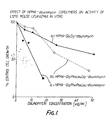
- Example 22 Effect on activity of L1210 mouse leukaemia in vitro .
- the mouse leukaemia, L1210 was maintained in suspension culture in RMPI 40 medium containing 10% heat inactivated horse serum. Under these conditions the doubling time was 15-20 h for cell densities up to approximately 1 x 10 5 cells per ml. Cell densities were assessed using a Coulter counter.
- cells were seeded into tubes (10 ml) and the starting cell density measured.
- the various polymeric drugs were added at various concentrations and the cells maintained in a growth cabinet for a further 72 h before measuring cell density.
- the number of cells found in tubes containing the polymeric drug was expressed as a percentage of the cells found in tubes incubated for the same period (72 h) without the addition of the drug.
- the results are shown graphically in Figure 1 of the accompanying drawings, in which the curves were obtained by plotting percentage cell growth against the daunomycin concentration in jig/ml. The results indicate that all three analogues were cytotoxic to L1210 mouse leukaemia in vitro to some degree, but better inhibitory effects were shown by analogues (b) and (c) than by analogue (a).
- the mouse leukaemia L1210 was inoculated (10 5 viable cells) intraperitoneally into DBA 2 mice on day 0.
- the HPMA copolymers were administered on days 1, 2 and 3. Survival of all animals was monitored. Control (untreated) animals always died between day 15 and day 20.
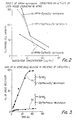
- HPMA analogues Two HPMA analogues were prepared which were of the single chain type and did not contain determinants. Both analogues contained daunomycin as the bioactive moiety with different peptide spacers to the drug; both drug spacers were in accordance with the invention. In detail, the analogues were as follows:
- Each analogue (25 mg in 1.5 ml) was incubated with 1 ml of enzyme solution at 37° C.
- the enzyme solution was a purified lysosomal enzyme, cathepsin L (3.8 x 10- 7 mol/I),in phosphate buffer (pH 6.0)-containing 5mM glutathione and 1mM EDTA.
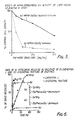
- HPMA analogues Two HPMA analogues were prepared which did not contain determinants.
- the analogues contained different drugs, but the drug spacer was the same in both cases and was in accordance with the invention.
- the analogues were as follows
- HPMA analogues Two HPMA analogues were prepared which were of the single chain type and did not contain determinants.
- the analogues contained different drugs, but the drug spacer was the same in both cases and was in accordance with the invention.
- the analogues were as follows:
- Each analogue (25 ma in 1.5 ml) was incubated with 1 ml of the enzyme solution. At various time intervals release of drug was measured by extracting free drug and measuring absorbance at the appropriate wavelength spectrophotometrically. Samples of the incubation mixture (0.15 ml) were taken and added to 1.5 ml of buffer (pH 9.8) and 1.5 ml of ethyl acetate. After 5 min. of vigorous shaking, a sample (1 ml) of the ethyl acetate layer was taken and the extinction measured at 485 nm, in the case of daunomycin, or 272 nm in the case of puromycin.
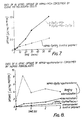
- HPMA analogue containing melanocyte-stimulating hormone (MSH) as the determinant was prepared from « -melanocyte-stimulating hormone; the peptide spacer to the determinant was -GLyGly-, a determinant spacer in accordance with the invention.
- the analogue was of the cross-linked type (through the MSN) and did not contain a bioactive moiety.
- a preparation of the analogue was 125 1-radiolabelled and its ability to bind to Clone M3 591 mouse melanoma cells was compared with that of an HPMA control polymer containing tyrosinamide substituents and no determinant substituents.
- Triplicate cultures were seeded with 2 x 10 6 cells and incubated for three days prior to experimentation. 100 ⁇ I of each polymer was added to the cultures and incubated for up to 60 minutes. At intervals cultures were terminated and the medium sampled; total cell number and cell associated radioactivity were determined.
- HPMA analogue containing apotransferrin (75 ⁇ I, 580 ⁇ g/ml) was radiolabelled by the iodogen method; the peptide spacer to the determinant was -GlyGly-, a determinant spacer in accordance with the invention.
- the compound did not contain a bioactive moiety. Chromatography indicated that the analogue had a molecular weight of about 260,000, corresponding to a formula of polymer (apotransferrin) 3 .
- fibroblast cells human skin
- Hank's Balanced Salt solution 3 ml
- the radiolabelled analogue 200 ⁇ I, 11 ⁇ g/ml
- Samples (1 ml) of medium were counted; cell counts were determined in two separate groups to distinguish between binding and internalisation.
- Group 1 were trypsinised to remove the ligand binding to the transferrin receptor; group 2 were not given this treatment. Both groups were dissolved in aqueous NaOH and quantified for radioactivity and protein. The rate of uptake was compared with that of an HPMA control polymer containing -GlyPhePheLeu-aminopropanol substituents and no determinant substituents.
- HPMA analogues containing galactose as the determinant were prepared in which the galactose was bound directly to the polymer backbone via an ester linkage.
- the analogues contained increasing amounts of galactose varying from 0 to 99 mol %; no bioactive moieties were present.
- the analogues were labelled with 125 1 by the Chloramine T method and tested for their ability to bind to human hepatoma (Hep G2) cells in vitro .
- the cells were grown as monolayer cultures in EMEM supplemented with 10% foetal bovine serum. Triplicate cultures were seeded with 2 x 10 6 cells and then incubated for 3 days before experimentation.
- the cells were incubated with each analogue (100 ⁇ l) for 15 seconds, after which time the medium was sampled and the cell monolayer thoroughly washed. 2.5 ml of 1 M NaOH was added to dissolve the cells and samples were taken to determine radiolabel content and total protein.
- Example 32 (effect on activity of L1210 mouse leukaemia in vitro )
- Polymer 2 is in accordance with the invention, polymer 1 is not.
- Both HPMA polymers were radiolabelled with 125 1 using the Chloramine T method of iodination. This radiolabel is stable in the biological environment and therefore enables the fate of the polymer to be followed in vivo .
- Polymer (arproximately 100 L g in 0.1 ml of buffer) was injected into the femoral vein of a male Wistar rat (250-350 g) maintained under anaesthetic and after a thirty minute period the animal was sacrificed and the body distribution of radioactivity measured.
- the mouse leukaemia L1210 was inoculated (10 5 viable cells) intraperitoneally into DBA 2 mice on day 0. The animals were then divided into two groups which were treated separately. The animals of group 1 were treated with polymer 1 and the animals of group 2 were treated with Polymer 2; in both groups the dose administered was equivalent to 7.5 mg of daunomycin/kg. Survival of the animals in both groups was monitored.
- polymer 1 containing -GlyPheLeuGly- spacers to the drug and determinant is considerably more effective in killing T-lymphocytes than the corresponding polymer (2) containing -GlyGly-spacers.
Landscapes
- Health & Medical Sciences (AREA)
- Life Sciences & Earth Sciences (AREA)
- Engineering & Computer Science (AREA)
- Bioinformatics & Cheminformatics (AREA)
- Public Health (AREA)
- General Health & Medical Sciences (AREA)
- Chemical & Material Sciences (AREA)
- Medicinal Chemistry (AREA)
- Pharmacology & Pharmacy (AREA)
- Veterinary Medicine (AREA)
- Animal Behavior & Ethology (AREA)
- Epidemiology (AREA)
- Biotechnology (AREA)
- Immunology (AREA)
- Chemical Kinetics & Catalysis (AREA)
- General Chemical & Material Sciences (AREA)
- Nuclear Medicine, Radiotherapy & Molecular Imaging (AREA)
- Organic Chemistry (AREA)
- Medicinal Preparation (AREA)
- Medicines That Contain Protein Lipid Enzymes And Other Medicines (AREA)
- Pharmaceuticals Containing Other Organic And Inorganic Compounds (AREA)
- Peptides Or Proteins (AREA)
- Addition Polymer Or Copolymer, Post-Treatments, Or Chemical Modifications (AREA)
- Acyclic And Carbocyclic Compounds In Medicinal Compositions (AREA)
Priority Applications (1)
| Application Number | Priority Date | Filing Date | Title |
|---|---|---|---|
| AT85309560T ATE60991T1 (de) | 1985-01-04 | 1985-12-31 | Synthetische polymere arzneistoffe. |
Applications Claiming Priority (2)
| Application Number | Priority Date | Filing Date | Title |
|---|---|---|---|
| GB858500209A GB8500209D0 (en) | 1985-01-04 | 1985-01-04 | Synthetic polymeric drugs |
| GB8500209 | 1985-01-04 |
Publications (3)
| Publication Number | Publication Date |
|---|---|
| EP0187547A2 EP0187547A2 (en) | 1986-07-16 |
| EP0187547A3 EP0187547A3 (en) | 1987-07-22 |
| EP0187547B1 true EP0187547B1 (en) | 1991-02-27 |
Family
ID=10572420
Family Applications (1)
| Application Number | Title | Priority Date | Filing Date |
|---|---|---|---|
| EP85309560A Expired - Lifetime EP0187547B1 (en) | 1985-01-04 | 1985-12-31 | Synthetic polymeric drugs |
Country Status (9)
| Country | Link |
|---|---|
| US (1) | US5037883A (da) |
| EP (1) | EP0187547B1 (da) |
| JP (2) | JPH075474B2 (da) |
| AT (1) | ATE60991T1 (da) |
| AU (1) | AU589587B2 (da) |
| CA (1) | CA1305053C (da) |
| DE (1) | DE3581921D1 (da) |
| DK (1) | DK164485C (da) |
| GB (1) | GB8500209D0 (da) |
Cited By (5)
| Publication number | Priority date | Publication date | Assignee | Title |
|---|---|---|---|---|
| US5965118A (en) * | 1997-04-18 | 1999-10-12 | Access Pharmaceuticals, Inc. | Polymer-platinum compounds |
| US5985916A (en) * | 1997-04-18 | 1999-11-16 | Access Pharmaceuticals, Inc. | Polymer-platinum compounds |
| US6251866B1 (en) | 1997-08-05 | 2001-06-26 | Watson Laboratories, Inc. | Conjugates targeted to the interleukin-2 receptor |
| US8106016B2 (en) | 2003-09-30 | 2012-01-31 | Shire Llc | Compounds and compositions for prevention of overdose of oxycodone |
| US8394813B2 (en) | 2000-11-14 | 2013-03-12 | Shire Llc | Active agent delivery systems and methods for protecting and administering active agents |
Families Citing this family (80)
| Publication number | Priority date | Publication date | Assignee | Title |
|---|---|---|---|---|
| US4738434A (en) | 1986-04-07 | 1988-04-19 | Marjoram Robert H | Vibration and/or shock attenuating fluid mount or the like |
| JP2896580B2 (ja) * | 1989-08-25 | 1999-05-31 | チッソ株式会社 | アミロース―リゾチームハイブリッドと活性化糖およびその製造法 |
| DE69120141T2 (de) * | 1990-03-28 | 1996-11-28 | Shuji Kojima | Polymerkombiniertes Arzneimittel zur Magenbehandlung und Verfahren zu dessen Herstellung |
| CA2046830C (en) | 1990-07-19 | 1999-12-14 | Patrick P. Deluca | Drug delivery system involving inter-action between protein or polypeptide and hydrophobic biodegradable polymer |
| CZ279785B6 (cs) * | 1991-02-01 | 1995-06-14 | Galena, A.S. | Směrované polymerní konjugáty cyklosporinu |
| US5332575A (en) * | 1991-10-03 | 1994-07-26 | Parfums Christian Dior | Method of targeting melanocytes with a compound containing a fucose residue |
| US5258453A (en) * | 1992-01-21 | 1993-11-02 | University Of Utah | Drug delivery system for the simultaneous delivery of drugs activatable by enzymes and light |
| GB9213077D0 (en) * | 1992-06-19 | 1992-08-05 | Erba Carlo Spa | Polymerbound taxol derivatives |
| GB2270920B (en) * | 1992-09-25 | 1997-04-02 | Univ Keele | Alginate-bioactive agent conjugates |
| US7056935B2 (en) | 1995-06-07 | 2006-06-06 | Gpi Nil Holdings, Inc. | Rotamase enzyme activity inhibitors |
| GB9600471D0 (en) * | 1996-01-10 | 1996-03-13 | Univ London Pharmacy | Drug delivery system |
| GB9606975D0 (en) * | 1996-04-02 | 1996-06-05 | Univ Birmingham | Anti-tumor agent |
| DE69734709D1 (de) | 1996-04-15 | 2005-12-29 | Asahi Chemical Ind | Arzneimittelkomplexe enthaltend taxan-verbindungen oder steroiden |
| US6180084B1 (en) * | 1998-08-25 | 2001-01-30 | The Burnham Institute | NGR receptor and methods of identifying tumor homing molecules that home to angiogenic vasculature using same |
| US6066673A (en) * | 1998-03-12 | 2000-05-23 | The Procter & Gamble Company | Enzyme inhibitors |
| US7018654B2 (en) | 1999-03-05 | 2006-03-28 | New River Pharmaceuticals Inc. | Pharmaceutical composition containing an active agent in an amino acid copolymer structure |
| US7060708B2 (en) | 1999-03-10 | 2006-06-13 | New River Pharmaceuticals Inc. | Active agent delivery systems and methods for protecting and administering active agents |
| US6716452B1 (en) | 2000-08-22 | 2004-04-06 | New River Pharmaceuticals Inc. | Active agent delivery systems and methods for protecting and administering active agents |
| AU1820400A (en) * | 1999-11-17 | 2001-05-30 | School Of Pharmacy, University Of London, The | Conjugates of hpma copolymer and ellipticin |
| JP2003523386A (ja) | 2000-02-24 | 2003-08-05 | コプラン・リサーチ・ラボラトリーズ・リミテッド | 経口投与可能な酸安定性の抗潰瘍性ベンゾイミダゾール誘導体 |
| US7163918B2 (en) | 2000-08-22 | 2007-01-16 | New River Pharmaceuticals Inc. | Iodothyronine compositions |
| WO2002020663A2 (en) | 2000-09-06 | 2002-03-14 | Ap Pharma, Inc. | Degradable polyacetal polymers |
| CA2445985A1 (en) * | 2001-05-04 | 2002-11-14 | University Of Utah Research Foundation | Hyaluronic acid containing bioconjugates: targeted delivery of anti-cancer drugs to cancer cells |
| KR100507968B1 (ko) * | 2001-08-18 | 2005-08-17 | 한국과학기술연구원 | 자기집합체를 형성하는 항암제-키토산 복합체 및 그의제조방법 |
| AU2002332637A1 (en) * | 2001-08-22 | 2003-03-10 | Watson Pharmaceuticals, Inc. | Conjugates targeted to target receptors |
| US20060014697A1 (en) | 2001-08-22 | 2006-01-19 | Travis Mickle | Pharmaceutical compositions for prevention of overdose or abuse |
| US7375082B2 (en) | 2002-02-22 | 2008-05-20 | Shire Llc | Abuse-resistant hydrocodone compounds |
| US7338939B2 (en) | 2003-09-30 | 2008-03-04 | New River Pharmaceuticals Inc. | Abuse-resistant hydrocodone compounds |
| CZ293787B6 (cs) * | 2001-12-20 | 2004-07-14 | Zentiva, A.S. | pH senzitivní polymerní konjugáty antracyklinového kancerostatika pro cílenou terapii |
| US7700561B2 (en) | 2002-02-22 | 2010-04-20 | Shire Llc | Abuse-resistant amphetamine prodrugs |
| US7105486B2 (en) | 2002-02-22 | 2006-09-12 | New River Pharmaceuticals Inc. | Abuse-resistant amphetamine compounds |
| AU2003219863C1 (en) | 2002-02-22 | 2009-03-05 | Shire Llc | Novel sustained release pharmaceutical compounds to prevent abuse of controlled substances |
| US7659253B2 (en) | 2002-02-22 | 2010-02-09 | Shire Llc | Abuse-resistant amphetamine prodrugs |
| JP4514455B2 (ja) * | 2002-04-11 | 2010-07-28 | チルドレンズ メディカル センター コーポレーション | Tnp−470ポリマー複合体及びその使用 |
| CA2480809A1 (en) * | 2002-04-11 | 2003-10-23 | Children's Medical Center Corporation | Methods for inhibiting vascular hyperpermeability |
| US20050169883A1 (en) * | 2002-05-06 | 2005-08-04 | Prestwich Glenn D. | Preblocking with non-ha gags increases effectiveness of ha conjugated anticancer agents |
| US20040116348A1 (en) * | 2002-09-23 | 2004-06-17 | Ying Chau | Polymer-linker-drug conjugates for targeted drug delivery |
| US8133881B2 (en) | 2003-01-13 | 2012-03-13 | Shire Llc | Carbohydrate conjugates to prevent abuse of controlled substances |
| AU2004222439B2 (en) * | 2003-03-20 | 2008-08-21 | Nanocarrier Kabushiki Kaisha | Micellar preparation containing sparingly water-soluble anticancer agent and novel block copolymer |
| EP1613274B1 (en) | 2003-04-15 | 2010-03-03 | GlaxoSmithKline LLC | Human il-18 substitution mutants and their conjugates |
| JP4898445B2 (ja) | 2003-05-29 | 2012-03-14 | シャイア エルエルシー | 乱用抵抗性アンフェタミン化合物類 |
| EA008864B1 (ru) | 2003-09-30 | 2007-08-31 | Нью Ривер Фармасьютикалз Инк. | Фармацевтические композиции для предотвращения передозировки или неправильного употребления лекарственных средств |
| ES2605443T3 (es) * | 2003-11-06 | 2017-03-14 | Seattle Genetics, Inc. | Conjugados de auristatina con anticuerpos anti-HER2 o anti-CD22 y su uso en terapia |
| PL1737428T3 (pl) * | 2004-03-31 | 2018-03-30 | University Of Utah Research Foundation | Makrocząsteczkowe systemy dostarczania do nieinwazyjnego obrazowania, oceny i leczenia zapalenia stawów i innych chorób zapalnych |
| CN101023119B (zh) * | 2004-09-22 | 2010-05-05 | 日本化药株式会社 | 新型嵌段共聚物,胶束制剂以及含胶束制剂为活性组分的抗癌剂 |
| CN101106974B (zh) | 2005-01-14 | 2012-08-08 | 韩国科学技术研究院 | 形成自聚集体的胆甾烷酸-脱乙酰壳多糖复合物及其制备方法 |
| US20080248030A1 (en) * | 2005-02-02 | 2008-10-09 | Children's Medical Center Corporation | Method of Treating Angiogenic Diseases |
| KR20080106254A (ko) | 2006-03-28 | 2008-12-04 | 니폰 가야꾸 가부시끼가이샤 | 탁산류의 고분자 결합체 |
| CA2652656A1 (en) | 2006-05-18 | 2007-11-29 | Nippon Kayaku Kabushiki Kaisha | High-molecular weight conjugate of podophyllotoxins |
| WO2007143209A2 (en) * | 2006-06-02 | 2007-12-13 | University Of Virginia Patent Foundation | Luminescent diketonate polymers |
| CA2664852A1 (en) * | 2006-10-03 | 2008-04-10 | Nippon Kayaku Kabushiki Kaisha | High-molecular weight conjugate of resorcinol derivatives |
| EP2080779B1 (en) | 2006-11-06 | 2016-05-18 | Nippon Kayaku Kabushiki Kaisha | Polymeric derivative of nucleic acid metabolic antagonist |
| EP2090607B1 (en) | 2006-11-08 | 2015-05-20 | Nippon Kayaku Kabushiki Kaisha | Polymeric derivative of nucleic acid metabolic antagonist |
| CN1973902B (zh) * | 2006-12-12 | 2010-11-10 | 东北师范大学 | 以人参多糖为载体的抗肿瘤药物阿霉素复合物及制备方法 |
| US8703878B2 (en) | 2007-09-28 | 2014-04-22 | Nippon Kayaku Kabushiki Kaisha | High-molecular weight conjugate of steroids |
| KR101589582B1 (ko) * | 2008-03-18 | 2016-01-28 | 니폰 가야꾸 가부시끼가이샤 | 생리활성물질의 고분자량 결합체 |
| JP5366940B2 (ja) | 2008-05-08 | 2013-12-11 | 日本化薬株式会社 | 葉酸若しくは葉酸誘導体の高分子結合体 |
| WO2010042638A2 (en) * | 2008-10-07 | 2010-04-15 | Young Bok Lee | Hpma - docetaxel or gemcitabine conjugates and uses therefore |
| JP5544357B2 (ja) | 2009-05-15 | 2014-07-09 | 日本化薬株式会社 | 水酸基を有する生理活性物質の高分子結合体 |
| CN104587484A (zh) | 2009-10-13 | 2015-05-06 | 瑞沙恩医药公司 | 用于抗癌剂递送的聚合物系统 |
| CZ302830B6 (cs) * | 2009-12-15 | 2011-11-30 | Ústav makromolekulární chemie AV CR, v.v.i. | Vysokomolekulární polymerní nosice léciv odvozené od dendrimeru a jejich konjugáty s lécivy pro lécbu zejména pevných nádoru |
| EP2544701B1 (en) | 2010-03-08 | 2019-08-14 | University of Utah Research Foundation | Polymeric drug delivery conjugates and methods of making and using thereof |
| US9895449B2 (en) | 2010-05-25 | 2018-02-20 | Syndevrx, Inc. | Polymer-conjugated MetAP2 inhibitors, and therapeutic methods of use thereof |
| WO2011150022A2 (en) | 2010-05-25 | 2011-12-01 | Syndevrx, Inc. | Polymer-conjugated metap2 inhibitors, and therapeutic methods of use thereof |
| JP5856069B2 (ja) | 2010-11-17 | 2016-02-09 | 日本化薬株式会社 | 新規なシチジン系代謝拮抗剤の高分子誘導体 |
| CA2827029C (en) | 2011-02-11 | 2019-07-02 | The Regents Of The University Of Michigan | Tripeptide compositions and methods |
| JP5711378B2 (ja) | 2011-09-11 | 2015-04-30 | 日本化薬株式会社 | ブロック共重合体の製造方法 |
| AU2014248886B2 (en) | 2013-03-12 | 2019-06-27 | University Of Utah Research Foundation | Compositions and methods for inducing apoptosis |
| EP3574922B1 (en) * | 2013-04-10 | 2021-09-15 | Syndevrx, Inc. | Modified or polymer-conjugated fumagillol metap2 inhibitors for use in improving or restoring insulin sensitivity |
| CN103965398B (zh) * | 2014-04-11 | 2016-04-13 | 西北师范大学 | D-半乳糖/苯甲醛氮芥/n-(2-羟丙基)甲基丙烯酰胺共聚物及其制备和应用 |
| KR102849342B1 (ko) | 2015-12-10 | 2025-08-21 | 신데브알엑스, 인크. | 푸마길롤 유도체 및 그의 다형체 |
| AU2017206718B2 (en) | 2016-01-11 | 2021-09-30 | Syndevrx, Inc. | Treatment for tumors driven by metabolic dysfunction |
| US11879019B2 (en) | 2016-12-19 | 2024-01-23 | The Regents Of The University Of California | Dual-enzyme responsive peptides |
| EP3554548A4 (en) | 2016-12-19 | 2020-08-19 | The Regents of The University of California | NON-CRUSHABLE PILL FORMULATIONS |
| WO2018195067A1 (en) | 2017-04-17 | 2018-10-25 | The University Of Chicago | Polymer materials for delivery of short-chain fatty acids to the intestine for applications in human health and treatment of disease |
| US10894019B2 (en) | 2017-08-15 | 2021-01-19 | University Of South Carolina | Drug delivery system and method for targeting cancer stem cells |
| US11612577B2 (en) | 2018-10-26 | 2023-03-28 | Syndevrx, Inc. | Biomarkers of METAP2 inhibitors and applications thereof |
| US11672767B2 (en) | 2019-05-13 | 2023-06-13 | University Of South Carolina | Enzymatically cleavable self-assembled nanoparticles for morphogen delivery |
| AU2020367821A1 (en) | 2019-10-18 | 2022-05-12 | University Of Utah Research Foundation | Polymeric drug delivery conjugates and methods of making and using thereof |
| CN114099442B (zh) * | 2020-08-25 | 2024-01-30 | 复旦大学 | 用于肿瘤放化疗栓塞治疗和影像的多功能微球制剂及其制备方法 |
Citations (1)
| Publication number | Priority date | Publication date | Assignee | Title |
|---|---|---|---|---|
| EP0122969A2 (en) * | 1983-04-25 | 1984-10-31 | GRUPPO LEPETIT S.p.A. | Immobilized oligopeptides |
Family Cites Families (3)
| Publication number | Priority date | Publication date | Assignee | Title |
|---|---|---|---|---|
| NL133221C (da) * | 1965-11-12 | |||
| US3957700A (en) * | 1972-05-04 | 1976-05-18 | British Industrial Plastics Limited | Filled aminoplast moulding materials |
| US4007142A (en) * | 1974-04-24 | 1977-02-08 | Balm Paints Limited | Amine resin and process |
-
1985
- 1985-01-04 GB GB858500209A patent/GB8500209D0/en active Pending
- 1985-12-31 DE DE8585309560T patent/DE3581921D1/de not_active Expired - Lifetime
- 1985-12-31 AT AT85309560T patent/ATE60991T1/de not_active IP Right Cessation
- 1985-12-31 EP EP85309560A patent/EP0187547B1/en not_active Expired - Lifetime
-
1986
- 1986-01-03 AU AU51833/86A patent/AU589587B2/en not_active Ceased
- 1986-01-03 DK DK003386A patent/DK164485C/da not_active IP Right Cessation
- 1986-01-03 CA CA000498931A patent/CA1305053C/en not_active Expired - Lifetime
- 1986-01-04 JP JP61000137A patent/JPH075474B2/ja not_active Expired - Fee Related
-
1989
- 1989-11-17 US US07/438,352 patent/US5037883A/en not_active Expired - Lifetime
-
1994
- 1994-05-31 JP JP6140759A patent/JP2620517B2/ja not_active Expired - Fee Related
Patent Citations (1)
| Publication number | Priority date | Publication date | Assignee | Title |
|---|---|---|---|---|
| EP0122969A2 (en) * | 1983-04-25 | 1984-10-31 | GRUPPO LEPETIT S.p.A. | Immobilized oligopeptides |
Cited By (5)
| Publication number | Priority date | Publication date | Assignee | Title |
|---|---|---|---|---|
| US5965118A (en) * | 1997-04-18 | 1999-10-12 | Access Pharmaceuticals, Inc. | Polymer-platinum compounds |
| US5985916A (en) * | 1997-04-18 | 1999-11-16 | Access Pharmaceuticals, Inc. | Polymer-platinum compounds |
| US6251866B1 (en) | 1997-08-05 | 2001-06-26 | Watson Laboratories, Inc. | Conjugates targeted to the interleukin-2 receptor |
| US8394813B2 (en) | 2000-11-14 | 2013-03-12 | Shire Llc | Active agent delivery systems and methods for protecting and administering active agents |
| US8106016B2 (en) | 2003-09-30 | 2012-01-31 | Shire Llc | Compounds and compositions for prevention of overdose of oxycodone |
Also Published As
| Publication number | Publication date |
|---|---|
| DK3386A (da) | 1986-07-05 |
| DK164485B (da) | 1992-07-06 |
| JP2620517B2 (ja) | 1997-06-18 |
| EP0187547A3 (en) | 1987-07-22 |
| US5037883A (en) | 1991-08-06 |
| EP0187547A2 (en) | 1986-07-16 |
| JPH07300428A (ja) | 1995-11-14 |
| CA1305053C (en) | 1992-07-14 |
| JPH075474B2 (ja) | 1995-01-25 |
| AU589587B2 (en) | 1989-10-19 |
| JPS61243026A (ja) | 1986-10-29 |
| AU5183386A (en) | 1986-07-10 |
| GB8500209D0 (en) | 1985-02-13 |
| DK164485C (da) | 1992-11-23 |
| DE3581921D1 (de) | 1991-04-04 |
| ATE60991T1 (de) | 1991-03-15 |
| DK3386D0 (da) | 1986-01-03 |
Similar Documents
| Publication | Publication Date | Title |
|---|---|---|
| US5037883A (en) | Synthetic polymeric drugs | |
| Duncan et al. | Anticancer agents coupled to N-(2-hydroxypropyl) methacrylamide copolymers. I. Evaluation of daunomycin and puromycin conjugates in vitro | |
| Ulbrich et al. | Polymeric drugs based on conjugates of synthetic and natural macromolecules: I. Synthesis and physico-chemical characterisation | |
| US6620916B1 (en) | Modified physiologically active proteins and medicinal compositions containing the same | |
| Kopeček et al. | Targetable polymeric prodrugs | |
| US7041818B2 (en) | DDS compound and method for measurement thereof | |
| US9289510B2 (en) | Polymeric drug delivery conjugates and methods of making and using thereof | |
| EP0955064B1 (en) | Process for producing drug complexes | |
| EP0619118B1 (en) | Use of peptide derivatives | |
| US6933352B2 (en) | Amphiphilic compounds having a dendritic branch structure | |
| WO1981001145A1 (en) | Hydrolytic enzyme-activatible pro-drugs | |
| NZ248590A (en) | Lyophilized polyethylene oxide modified proteinaceous compositions with cyclodextrin | |
| EP0215662A2 (en) | Anti-tumor protease preparations | |
| JP2662311B2 (ja) | 生物学的に活性な新規薬剤・ポリマー誘導体およびその製造方法 | |
| EP0891191A1 (en) | Anti-tumour agent | |
| KR100330635B1 (ko) | 안트라사이클린결합체,이의제조방법및이를포함하는약제학적조성물 | |
| CZ278551B6 (en) | Polymeric medicament, process for preparing thereof and pharmaceutical compositions based thereon | |
| EP0136791B1 (en) | Neocarzinostatin derivatives and method of producing the same | |
| CN101168594B (zh) | 寡肽为骨架的聚乙二醇活性衍生物、其制备方法及与药物分子的结合物 | |
| Sintov et al. | Polymeric drug delivery of enzymatically degradable pendant agents: Peptidyl-linked procainamide model system studies | |
| Lapicque et al. | Polysaccharidic prodrugs for enzymatically controlled release | |
| Pató et al. | Synthesis of New Poly (N-Vinyl Pyrrolidone-Co-Maleic Acid) Peptide Hormone Conjugates with Anticancer Activity | |
| IE44541B1 (en) | Modified protein reproductive hormone antigens | |
| EP0489220A1 (en) | Cytotoxic N,N'-bis (succinyl-peptide-) derivatives of 1,4-bis (aminoalkyl)-5,8-dihydroxyanthraquinones and antibody conjugates thereof |
Legal Events
| Date | Code | Title | Description |
|---|---|---|---|
| PUAI | Public reference made under article 153(3) epc to a published international application that has entered the european phase |
Free format text: ORIGINAL CODE: 0009012 |
|
| AK | Designated contracting states |
Kind code of ref document: A2 Designated state(s): AT BE CH DE FR GB IT LI LU NL SE |
|
| PUAL | Search report despatched |
Free format text: ORIGINAL CODE: 0009013 |
|
| AK | Designated contracting states |
Kind code of ref document: A3 Designated state(s): AT BE CH DE FR GB IT LI LU NL SE |
|
| 17P | Request for examination filed |
Effective date: 19880121 |
|
| 17Q | First examination report despatched |
Effective date: 19890726 |
|
| RAP1 | Party data changed (applicant data changed or rights of an application transferred) |
Owner name: CANCER RESEARCH CAMPAIGN TECHNOLOGY LIMITED Owner name: CESKOSLOVENSKA AKADEMIE VED |
|
| GRAA | (expected) grant |
Free format text: ORIGINAL CODE: 0009210 |
|
| AK | Designated contracting states |
Kind code of ref document: B1 Designated state(s): AT BE CH DE FR GB IT LI LU NL SE |
|
| REF | Corresponds to: |
Ref document number: 60991 Country of ref document: AT Date of ref document: 19910315 Kind code of ref document: T |
|
| ITF | It: translation for a ep patent filed | ||
| REF | Corresponds to: |
Ref document number: 3581921 Country of ref document: DE Date of ref document: 19910404 |
|
| ET | Fr: translation filed | ||
| PLBE | No opposition filed within time limit |
Free format text: ORIGINAL CODE: 0009261 |
|
| STAA | Information on the status of an ep patent application or granted ep patent |
Free format text: STATUS: NO OPPOSITION FILED WITHIN TIME LIMIT |
|
| 26N | No opposition filed | ||
| EPTA | Lu: last paid annual fee | ||
| EAL | Se: european patent in force in sweden |
Ref document number: 85309560.2 |
|
| REG | Reference to a national code |
Ref country code: GB Ref legal event code: IF02 |
|
| PGFP | Annual fee paid to national office [announced via postgrant information from national office to epo] |
Ref country code: SE Payment date: 20040128 Year of fee payment: 19 |
|
| PGFP | Annual fee paid to national office [announced via postgrant information from national office to epo] |
Ref country code: GB Payment date: 20040130 Year of fee payment: 19 Ref country code: BE Payment date: 20040130 Year of fee payment: 19 |
|
| PGFP | Annual fee paid to national office [announced via postgrant information from national office to epo] |
Ref country code: NL Payment date: 20040205 Year of fee payment: 19 Ref country code: DE Payment date: 20040205 Year of fee payment: 19 |
|
| PGFP | Annual fee paid to national office [announced via postgrant information from national office to epo] |
Ref country code: FR Payment date: 20040210 Year of fee payment: 19 |
|
| PGFP | Annual fee paid to national office [announced via postgrant information from national office to epo] |
Ref country code: AT Payment date: 20040211 Year of fee payment: 19 |
|
| PGFP | Annual fee paid to national office [announced via postgrant information from national office to epo] |
Ref country code: LU Payment date: 20040213 Year of fee payment: 19 |
|
| PGFP | Annual fee paid to national office [announced via postgrant information from national office to epo] |
Ref country code: CH Payment date: 20040218 Year of fee payment: 19 |
|
| PG25 | Lapsed in a contracting state [announced via postgrant information from national office to epo] |
Ref country code: LU Free format text: LAPSE BECAUSE OF NON-PAYMENT OF DUE FEES Effective date: 20041231 Ref country code: LI Free format text: LAPSE BECAUSE OF NON-PAYMENT OF DUE FEES Effective date: 20041231 Ref country code: GB Free format text: LAPSE BECAUSE OF NON-PAYMENT OF DUE FEES Effective date: 20041231 Ref country code: CH Free format text: LAPSE BECAUSE OF NON-PAYMENT OF DUE FEES Effective date: 20041231 Ref country code: BE Free format text: LAPSE BECAUSE OF NON-PAYMENT OF DUE FEES Effective date: 20041231 Ref country code: AT Free format text: LAPSE BECAUSE OF NON-PAYMENT OF DUE FEES Effective date: 20041231 |
|
| PG25 | Lapsed in a contracting state [announced via postgrant information from national office to epo] |
Ref country code: SE Free format text: LAPSE BECAUSE OF NON-PAYMENT OF DUE FEES Effective date: 20050101 |
|
| BERE | Be: lapsed |
Owner name: *CANCER RESEARCH CAMPAIGN TECHNOLOGY LTD Effective date: 20041231 Owner name: *CESKOSLOVENSKA AKADEMIE VED Effective date: 20041231 |
|
| PG25 | Lapsed in a contracting state [announced via postgrant information from national office to epo] |
Ref country code: NL Free format text: LAPSE BECAUSE OF NON-PAYMENT OF DUE FEES Effective date: 20050701 Ref country code: DE Free format text: LAPSE BECAUSE OF NON-PAYMENT OF DUE FEES Effective date: 20050701 |
|
| REG | Reference to a national code |
Ref country code: CH Ref legal event code: PL |
|
| GBPC | Gb: european patent ceased through non-payment of renewal fee |
Effective date: 20041231 |
|
| EUG | Se: european patent has lapsed | ||
| PG25 | Lapsed in a contracting state [announced via postgrant information from national office to epo] |
Ref country code: FR Free format text: LAPSE BECAUSE OF NON-PAYMENT OF DUE FEES Effective date: 20050831 |
|
| NLV4 | Nl: lapsed or anulled due to non-payment of the annual fee |
Effective date: 20050701 |
|
| REG | Reference to a national code |
Ref country code: FR Ref legal event code: ST |
|
| BERE | Be: lapsed |
Owner name: *CANCER RESEARCH CAMPAIGN TECHNOLOGY LTD Effective date: 20041231 Owner name: *CESKOSLOVENSKA AKADEMIE VED Effective date: 20041231 |