EP0188037B1 - Bidentatchelatmonomere und -polymere - Google Patents
Bidentatchelatmonomere und -polymere Download PDFInfo
- Publication number
- EP0188037B1 EP0188037B1 EP19850300142 EP85300142A EP0188037B1 EP 0188037 B1 EP0188037 B1 EP 0188037B1 EP 19850300142 EP19850300142 EP 19850300142 EP 85300142 A EP85300142 A EP 85300142A EP 0188037 B1 EP0188037 B1 EP 0188037B1
- Authority
- EP
- European Patent Office
- Prior art keywords
- group
- carbon atoms
- chelating
- groups
- metal
- Prior art date
- Legal status (The legal status is an assumption and is not a legal conclusion. Google has not performed a legal analysis and makes no representation as to the accuracy of the status listed.)
- Expired
Links
- 229920000642 polymer Polymers 0.000 title claims description 95
- 239000000178 monomer Substances 0.000 title claims description 84
- 229910052751 metal Inorganic materials 0.000 claims description 87
- 239000002184 metal Substances 0.000 claims description 86
- 125000004432 carbon atom Chemical group C* 0.000 claims description 58
- 229920001577 copolymer Polymers 0.000 claims description 39
- 125000000217 alkyl group Chemical group 0.000 claims description 37
- 238000000576 coating method Methods 0.000 claims description 33
- 150000001875 compounds Chemical class 0.000 claims description 19
- 238000000034 method Methods 0.000 claims description 19
- 239000011248 coating agent Substances 0.000 claims description 18
- 125000004429 atom Chemical group 0.000 claims description 15
- 229910021645 metal ion Inorganic materials 0.000 claims description 15
- 239000000203 mixture Substances 0.000 claims description 14
- 238000012360 testing method Methods 0.000 claims description 14
- 239000013522 chelant Substances 0.000 claims description 12
- 125000004435 hydrogen atom Chemical group [H]* 0.000 claims description 11
- 150000002739 metals Chemical class 0.000 claims description 11
- 125000001997 phenyl group Chemical group [H]C1=C([H])C([H])=C(*)C([H])=C1[H] 0.000 claims description 11
- 239000000460 chlorine Substances 0.000 claims description 10
- 125000005843 halogen group Chemical group 0.000 claims description 10
- 125000000843 phenylene group Chemical group C1(=C(C=CC=C1)*)* 0.000 claims description 10
- 230000009471 action Effects 0.000 claims description 9
- 239000001257 hydrogen Substances 0.000 claims description 9
- 229910052739 hydrogen Inorganic materials 0.000 claims description 9
- 230000000379 polymerizing effect Effects 0.000 claims description 9
- 239000007787 solid Substances 0.000 claims description 8
- 125000003545 alkoxy group Chemical group 0.000 claims description 7
- 229910052794 bromium Inorganic materials 0.000 claims description 7
- 229910052801 chlorine Inorganic materials 0.000 claims description 7
- 239000002131 composite material Substances 0.000 claims description 7
- 125000001931 aliphatic group Chemical group 0.000 claims description 6
- 125000004414 alkyl thio group Chemical group 0.000 claims description 6
- 125000002947 alkylene group Chemical group 0.000 claims description 6
- 229910045601 alloy Inorganic materials 0.000 claims description 6
- 239000000956 alloy Substances 0.000 claims description 6
- 125000002496 methyl group Chemical group [H]C([H])([H])* 0.000 claims description 6
- 229920005604 random copolymer Polymers 0.000 claims description 6
- 229910052731 fluorine Inorganic materials 0.000 claims description 5
- 238000009472 formulation Methods 0.000 claims description 4
- 239000012442 inert solvent Substances 0.000 claims description 4
- 150000002500 ions Chemical class 0.000 claims description 4
- 230000000737 periodic effect Effects 0.000 claims description 4
- 229910052723 transition metal Inorganic materials 0.000 claims description 4
- 150000003624 transition metals Chemical class 0.000 claims description 4
- UFHFLCQGNIYNRP-UHFFFAOYSA-N Hydrogen Chemical compound [H][H] UFHFLCQGNIYNRP-UHFFFAOYSA-N 0.000 claims description 3
- 230000001464 adherent effect Effects 0.000 claims description 3
- 238000004090 dissolution Methods 0.000 claims description 3
- 229910000000 metal hydroxide Inorganic materials 0.000 claims description 3
- 150000004692 metal hydroxides Chemical class 0.000 claims description 3
- 239000000725 suspension Substances 0.000 claims description 3
- 238000001035 drying Methods 0.000 claims description 2
- WKBOTKDWSSQWDR-UHFFFAOYSA-N Bromine atom Chemical compound [Br] WKBOTKDWSSQWDR-UHFFFAOYSA-N 0.000 claims 4
- ZAMOUSCENKQFHK-UHFFFAOYSA-N Chlorine atom Chemical compound [Cl] ZAMOUSCENKQFHK-UHFFFAOYSA-N 0.000 claims 4
- GDTBXPJZTBHREO-UHFFFAOYSA-N bromine Substances BrBr GDTBXPJZTBHREO-UHFFFAOYSA-N 0.000 claims 4
- 229910052727 yttrium Inorganic materials 0.000 claims 4
- PXGOKWXKJXAPGV-UHFFFAOYSA-N Fluorine Chemical compound FF PXGOKWXKJXAPGV-UHFFFAOYSA-N 0.000 claims 2
- 239000011737 fluorine Substances 0.000 claims 2
- 125000001183 hydrocarbyl group Chemical group 0.000 claims 2
- PNDPGZBMCMUPRI-UHFFFAOYSA-N iodine Chemical compound II PNDPGZBMCMUPRI-UHFFFAOYSA-N 0.000 claims 2
- 239000000243 solution Substances 0.000 description 28
- CSCPPACGZOOCGX-UHFFFAOYSA-N Acetone Chemical compound CC(C)=O CSCPPACGZOOCGX-UHFFFAOYSA-N 0.000 description 24
- XLYOFNOQVPJJNP-UHFFFAOYSA-N water Substances O XLYOFNOQVPJJNP-UHFFFAOYSA-N 0.000 description 14
- 0 C*C(C)(/C=C/C(C)(C)/C=C1/OC=C)/C=C1/[N+](*)[O-] Chemical compound C*C(C)(/C=C/C(C)(C)/C=C1/OC=C)/C=C1/[N+](*)[O-] 0.000 description 13
- 229910000831 Steel Inorganic materials 0.000 description 13
- 229910052782 aluminium Inorganic materials 0.000 description 13
- XAGFODPZIPBFFR-UHFFFAOYSA-N aluminium Chemical compound [Al] XAGFODPZIPBFFR-UHFFFAOYSA-N 0.000 description 13
- 239000000047 product Substances 0.000 description 13
- 239000010959 steel Substances 0.000 description 13
- 229910001868 water Inorganic materials 0.000 description 13
- OKKJLVBELUTLKV-UHFFFAOYSA-N Methanol Chemical compound OC OKKJLVBELUTLKV-UHFFFAOYSA-N 0.000 description 12
- HEMHJVSKTPXQMS-UHFFFAOYSA-M Sodium hydroxide Chemical compound [OH-].[Na+] HEMHJVSKTPXQMS-UHFFFAOYSA-M 0.000 description 12
- YXFVVABEGXRONW-UHFFFAOYSA-N Toluene Chemical compound CC1=CC=CC=C1 YXFVVABEGXRONW-UHFFFAOYSA-N 0.000 description 12
- HIXDQWDOVZUNNA-UHFFFAOYSA-N 2-(3,4-dimethoxyphenyl)-5-hydroxy-7-methoxychromen-4-one Chemical compound C=1C(OC)=CC(O)=C(C(C=2)=O)C=1OC=2C1=CC=C(OC)C(OC)=C1 HIXDQWDOVZUNNA-UHFFFAOYSA-N 0.000 description 11
- 230000001070 adhesive effect Effects 0.000 description 11
- RTZKZFJDLAIYFH-UHFFFAOYSA-N ether Substances CCOCC RTZKZFJDLAIYFH-UHFFFAOYSA-N 0.000 description 11
- 230000006872 improvement Effects 0.000 description 11
- 239000004922 lacquer Substances 0.000 description 11
- 239000010410 layer Substances 0.000 description 11
- HEDRZPFGACZZDS-UHFFFAOYSA-N Chloroform Chemical compound ClC(Cl)Cl HEDRZPFGACZZDS-UHFFFAOYSA-N 0.000 description 10
- VVQNEPGJFQJSBK-UHFFFAOYSA-N Methyl methacrylate Chemical compound COC(=O)C(C)=C VVQNEPGJFQJSBK-UHFFFAOYSA-N 0.000 description 10
- YGSDEFSMJLZEOE-UHFFFAOYSA-N salicylic acid Chemical compound OC(=O)C1=CC=CC=C1O YGSDEFSMJLZEOE-UHFFFAOYSA-N 0.000 description 10
- 239000000853 adhesive Substances 0.000 description 9
- 229920001519 homopolymer Polymers 0.000 description 9
- 238000010348 incorporation Methods 0.000 description 9
- 238000011282 treatment Methods 0.000 description 8
- 230000000694 effects Effects 0.000 description 7
- OZAIFHULBGXAKX-UHFFFAOYSA-N 2-(2-cyanopropan-2-yldiazenyl)-2-methylpropanenitrile Chemical compound N#CC(C)(C)N=NC(C)(C)C#N OZAIFHULBGXAKX-UHFFFAOYSA-N 0.000 description 6
- QTBSBXVTEAMEQO-UHFFFAOYSA-N Acetic acid Chemical compound CC(O)=O QTBSBXVTEAMEQO-UHFFFAOYSA-N 0.000 description 6
- 229910019142 PO4 Inorganic materials 0.000 description 6
- WYURNTSHIVDZCO-UHFFFAOYSA-N Tetrahydrofuran Chemical compound C1CCOC1 WYURNTSHIVDZCO-UHFFFAOYSA-N 0.000 description 6
- NBIIXXVUZAFLBC-UHFFFAOYSA-K phosphate Chemical compound [O-]P([O-])([O-])=O NBIIXXVUZAFLBC-UHFFFAOYSA-K 0.000 description 6
- 239000010452 phosphate Substances 0.000 description 6
- 238000004611 spectroscopical analysis Methods 0.000 description 6
- 239000002253 acid Substances 0.000 description 5
- 238000005260 corrosion Methods 0.000 description 5
- 230000007797 corrosion Effects 0.000 description 5
- 150000002430 hydrocarbons Chemical group 0.000 description 5
- 239000003973 paint Substances 0.000 description 5
- 239000002904 solvent Substances 0.000 description 5
- CDBYLPFSWZWCQE-UHFFFAOYSA-L Sodium Carbonate Chemical compound [Na+].[Na+].[O-]C([O-])=O CDBYLPFSWZWCQE-UHFFFAOYSA-L 0.000 description 4
- PPBRXRYQALVLMV-UHFFFAOYSA-N Styrene Chemical compound C=CC1=CC=CC=C1 PPBRXRYQALVLMV-UHFFFAOYSA-N 0.000 description 4
- YRKCREAYFQTBPV-UHFFFAOYSA-N acetylacetone Chemical compound CC(=O)CC(C)=O YRKCREAYFQTBPV-UHFFFAOYSA-N 0.000 description 4
- 239000002738 chelating agent Substances 0.000 description 4
- 238000007334 copolymerization reaction Methods 0.000 description 4
- 229910052802 copper Inorganic materials 0.000 description 4
- 239000010949 copper Substances 0.000 description 4
- 238000005238 degreasing Methods 0.000 description 4
- 238000001704 evaporation Methods 0.000 description 4
- 230000008020 evaporation Effects 0.000 description 4
- 239000004816 latex Substances 0.000 description 4
- 229920000126 latex Polymers 0.000 description 4
- 239000000463 material Substances 0.000 description 4
- FJKROLUGYXJWQN-UHFFFAOYSA-N papa-hydroxy-benzoic acid Natural products OC(=O)C1=CC=C(O)C=C1 FJKROLUGYXJWQN-UHFFFAOYSA-N 0.000 description 4
- 239000003208 petroleum Substances 0.000 description 4
- 239000002244 precipitate Substances 0.000 description 4
- 229960004889 salicylic acid Drugs 0.000 description 4
- VRLXQFXFASUPJO-UHFFFAOYSA-N 3-(2-chloroacetyl)oxypropyl 2-methylprop-2-enoate Chemical compound CC(=C)C(=O)OCCCOC(=O)CCl VRLXQFXFASUPJO-UHFFFAOYSA-N 0.000 description 3
- 239000005725 8-Hydroxyquinoline Substances 0.000 description 3
- 229910001369 Brass Inorganic materials 0.000 description 3
- RYGMFSIKBFXOCR-UHFFFAOYSA-N Copper Chemical compound [Cu] RYGMFSIKBFXOCR-UHFFFAOYSA-N 0.000 description 3
- CERQOIWHTDAKMF-UHFFFAOYSA-N Methacrylic acid Chemical compound CC(=C)C(O)=O CERQOIWHTDAKMF-UHFFFAOYSA-N 0.000 description 3
- ZMXDDKWLCZADIW-UHFFFAOYSA-N N,N-Dimethylformamide Chemical compound CN(C)C=O ZMXDDKWLCZADIW-UHFFFAOYSA-N 0.000 description 3
- ZMANZCXQSJIPKH-UHFFFAOYSA-N Triethylamine Chemical compound CCN(CC)CC ZMANZCXQSJIPKH-UHFFFAOYSA-N 0.000 description 3
- 235000011054 acetic acid Nutrition 0.000 description 3
- 238000004458 analytical method Methods 0.000 description 3
- QVGXLLKOCUKJST-UHFFFAOYSA-N atomic oxygen Chemical compound [O] QVGXLLKOCUKJST-UHFFFAOYSA-N 0.000 description 3
- 239000010951 brass Substances 0.000 description 3
- CQEYYJKEWSMYFG-UHFFFAOYSA-N butyl acrylate Chemical compound CCCCOC(=O)C=C CQEYYJKEWSMYFG-UHFFFAOYSA-N 0.000 description 3
- -1 chrome-nickels Substances 0.000 description 3
- 150000002148 esters Chemical class 0.000 description 3
- 125000001495 ethyl group Chemical group [H]C([H])([H])C([H])([H])* 0.000 description 3
- NBVXSUQYWXRMNV-UHFFFAOYSA-N fluoromethane Chemical group FC NBVXSUQYWXRMNV-UHFFFAOYSA-N 0.000 description 3
- 125000000623 heterocyclic group Chemical group 0.000 description 3
- XEEYBQQBJWHFJM-UHFFFAOYSA-N iron Substances [Fe] XEEYBQQBJWHFJM-UHFFFAOYSA-N 0.000 description 3
- 229910052760 oxygen Inorganic materials 0.000 description 3
- 239000001301 oxygen Substances 0.000 description 3
- 229960003540 oxyquinoline Drugs 0.000 description 3
- 230000000704 physical effect Effects 0.000 description 3
- 230000037452 priming Effects 0.000 description 3
- 238000001179 sorption measurement Methods 0.000 description 3
- 238000003756 stirring Methods 0.000 description 3
- 239000000126 substance Substances 0.000 description 3
- YLQBMQCUIZJEEH-UHFFFAOYSA-N tetrahydrofuran Natural products C=1C=COC=1 YLQBMQCUIZJEEH-UHFFFAOYSA-N 0.000 description 3
- IBALVVJJRIOXHH-UHFFFAOYSA-N (3-formyl-4-hydroxyphenyl)methyl 2-methylprop-2-enoate Chemical compound CC(=C)C(=O)OCC1=CC=C(O)C(C=O)=C1 IBALVVJJRIOXHH-UHFFFAOYSA-N 0.000 description 2
- UIAFKZKHHVMJGS-UHFFFAOYSA-N 2,4-dihydroxybenzoic acid Chemical compound OC(=O)C1=CC=C(O)C=C1O UIAFKZKHHVMJGS-UHFFFAOYSA-N 0.000 description 2
- NIXOWILDQLNWCW-UHFFFAOYSA-N 2-Propenoic acid Natural products OC(=O)C=C NIXOWILDQLNWCW-UHFFFAOYSA-N 0.000 description 2
- XULIVYOHSVBEEY-UHFFFAOYSA-N 2-[(8-hydroxyquinolin-5-yl)methoxy]ethyl 2-methylprop-2-enoate Chemical compound C1=CC=C2C(COCCOC(=O)C(=C)C)=CC=C(O)C2=N1 XULIVYOHSVBEEY-UHFFFAOYSA-N 0.000 description 2
- YNFBMDWHEHETJW-UHFFFAOYSA-N 2-pyridin-2-yl-1h-benzimidazole Chemical compound N1=CC=CC=C1C1=NC2=CC=CC=C2N1 YNFBMDWHEHETJW-UHFFFAOYSA-N 0.000 description 2
- PAYRUJLWNCNPSJ-UHFFFAOYSA-N Aniline Chemical compound NC1=CC=CC=C1 PAYRUJLWNCNPSJ-UHFFFAOYSA-N 0.000 description 2
- IJGRMHOSHXDMSA-UHFFFAOYSA-N Atomic nitrogen Chemical compound N#N IJGRMHOSHXDMSA-UHFFFAOYSA-N 0.000 description 2
- KAKZBPTYRLMSJV-UHFFFAOYSA-N Butadiene Chemical compound C=CC=C KAKZBPTYRLMSJV-UHFFFAOYSA-N 0.000 description 2
- 239000004215 Carbon black (E152) Substances 0.000 description 2
- LFQSCWFLJHTTHZ-UHFFFAOYSA-N Ethanol Chemical compound CCO LFQSCWFLJHTTHZ-UHFFFAOYSA-N 0.000 description 2
- 229910001209 Low-carbon steel Inorganic materials 0.000 description 2
- PXHVJJICTQNCMI-UHFFFAOYSA-N Nickel Chemical compound [Ni] PXHVJJICTQNCMI-UHFFFAOYSA-N 0.000 description 2
- JUJWROOIHBZHMG-UHFFFAOYSA-N Pyridine Chemical compound C1=CC=NC=C1 JUJWROOIHBZHMG-UHFFFAOYSA-N 0.000 description 2
- VYPSYNLAJGMNEJ-UHFFFAOYSA-N Silicium dioxide Chemical compound O=[Si]=O VYPSYNLAJGMNEJ-UHFFFAOYSA-N 0.000 description 2
- UIIMBOGNXHQVGW-UHFFFAOYSA-M Sodium bicarbonate Chemical compound [Na+].OC([O-])=O UIIMBOGNXHQVGW-UHFFFAOYSA-M 0.000 description 2
- NINIDFKCEFEMDL-UHFFFAOYSA-N Sulfur Chemical compound [S] NINIDFKCEFEMDL-UHFFFAOYSA-N 0.000 description 2
- HFBMWMNUJJDEQZ-UHFFFAOYSA-N acryloyl chloride Chemical compound ClC(=O)C=C HFBMWMNUJJDEQZ-UHFFFAOYSA-N 0.000 description 2
- PNEYBMLMFCGWSK-UHFFFAOYSA-N aluminium oxide Inorganic materials [O-2].[O-2].[O-2].[Al+3].[Al+3] PNEYBMLMFCGWSK-UHFFFAOYSA-N 0.000 description 2
- 125000003118 aryl group Chemical group 0.000 description 2
- 230000008901 benefit Effects 0.000 description 2
- 230000015572 biosynthetic process Effects 0.000 description 2
- 238000006243 chemical reaction Methods 0.000 description 2
- ZCDOYSPFYFSLEW-UHFFFAOYSA-N chromate(2-) Chemical compound [O-][Cr]([O-])(=O)=O ZCDOYSPFYFSLEW-UHFFFAOYSA-N 0.000 description 2
- QBPFLULOKWLNNW-UHFFFAOYSA-N chrysazin Chemical compound O=C1C2=CC=CC(O)=C2C(=O)C2=C1C=CC=C2O QBPFLULOKWLNNW-UHFFFAOYSA-N 0.000 description 2
- 239000000356 contaminant Substances 0.000 description 2
- 238000001816 cooling Methods 0.000 description 2
- 238000004132 cross linking Methods 0.000 description 2
- 239000012043 crude product Substances 0.000 description 2
- 239000012153 distilled water Substances 0.000 description 2
- 238000000921 elemental analysis Methods 0.000 description 2
- 239000000839 emulsion Substances 0.000 description 2
- 238000002474 experimental method Methods 0.000 description 2
- 239000000284 extract Substances 0.000 description 2
- 229910052736 halogen Inorganic materials 0.000 description 2
- 229930195733 hydrocarbon Natural products 0.000 description 2
- 230000007062 hydrolysis Effects 0.000 description 2
- 238000006460 hydrolysis reaction Methods 0.000 description 2
- 239000005457 ice water Substances 0.000 description 2
- 229910052740 iodine Inorganic materials 0.000 description 2
- 229910052742 iron Inorganic materials 0.000 description 2
- 239000011777 magnesium Substances 0.000 description 2
- 229910052749 magnesium Inorganic materials 0.000 description 2
- 229910052943 magnesium sulfate Inorganic materials 0.000 description 2
- 125000001624 naphthyl group Chemical group 0.000 description 2
- 230000008569 process Effects 0.000 description 2
- MCJGNVYPOGVAJF-UHFFFAOYSA-N quinolin-8-ol Chemical compound C1=CN=C2C(O)=CC=CC2=C1 MCJGNVYPOGVAJF-UHFFFAOYSA-N 0.000 description 2
- 238000010992 reflux Methods 0.000 description 2
- 239000011347 resin Substances 0.000 description 2
- 229920005989 resin Polymers 0.000 description 2
- SMQUZDBALVYZAC-UHFFFAOYSA-N salicylaldehyde Chemical compound OC1=CC=CC=C1C=O SMQUZDBALVYZAC-UHFFFAOYSA-N 0.000 description 2
- 150000003839 salts Chemical class 0.000 description 2
- 239000000523 sample Substances 0.000 description 2
- 239000000741 silica gel Substances 0.000 description 2
- 229910002027 silica gel Inorganic materials 0.000 description 2
- 229910000029 sodium carbonate Inorganic materials 0.000 description 2
- 238000007614 solvation Methods 0.000 description 2
- 239000007858 starting material Substances 0.000 description 2
- 238000003860 storage Methods 0.000 description 2
- 229910052717 sulfur Inorganic materials 0.000 description 2
- 238000010998 test method Methods 0.000 description 2
- VDZOOKBUILJEDG-UHFFFAOYSA-M tetrabutylammonium hydroxide Chemical compound [OH-].CCCC[N+](CCCC)(CCCC)CCCC VDZOOKBUILJEDG-UHFFFAOYSA-M 0.000 description 2
- 125000000026 trimethylsilyl group Chemical group [H]C([H])([H])[Si]([*])(C([H])([H])[H])C([H])([H])[H] 0.000 description 2
- 229910052725 zinc Inorganic materials 0.000 description 2
- 239000011701 zinc Substances 0.000 description 2
- DCNCKFLANOGBGV-UHFFFAOYSA-N (4-amino-3-hydroxyphenyl) 2-methylprop-2-enoate Chemical compound CC(=C)C(=O)OC1=CC=C(N)C(O)=C1 DCNCKFLANOGBGV-UHFFFAOYSA-N 0.000 description 1
- IKHWZYDHACDIKL-UHFFFAOYSA-N (7-iodo-2-quinolin-2-ylquinolin-8-yl) prop-2-enoate Chemical compound C1=CC=CC2=NC(C=3C=CC4=CC=C(C(=C4N=3)OC(=O)C=C)I)=CC=C21 IKHWZYDHACDIKL-UHFFFAOYSA-N 0.000 description 1
- DMDRFFLGPYHJKF-UHFFFAOYSA-N (8-hydroxy-4-nitroquinolin-5-yl) 2-methylprop-2-enoate Chemical compound C1=CC([N+]([O-])=O)=C2C(OC(=O)C(=C)C)=CC=C(O)C2=N1 DMDRFFLGPYHJKF-UHFFFAOYSA-N 0.000 description 1
- 229920002818 (Hydroxyethyl)methacrylate Polymers 0.000 description 1
- 150000005045 1,10-phenanthrolines Chemical class 0.000 description 1
- JPVQCHVLFHXNKB-UHFFFAOYSA-N 1,2,3,4,5,6-hexamethyldisiline Chemical compound CC1=C(C)[Si](C)=[Si](C)C(C)=C1C JPVQCHVLFHXNKB-UHFFFAOYSA-N 0.000 description 1
- MEKOFIRRDATTAG-UHFFFAOYSA-N 2,2,5,8-tetramethyl-3,4-dihydrochromen-6-ol Chemical compound C1CC(C)(C)OC2=C1C(C)=C(O)C=C2C MEKOFIRRDATTAG-UHFFFAOYSA-N 0.000 description 1
- AEQDJSLRWYMAQI-UHFFFAOYSA-N 2,3,9,10-tetramethoxy-6,8,13,13a-tetrahydro-5H-isoquinolino[2,1-b]isoquinoline Chemical compound C1CN2CC(C(=C(OC)C=C3)OC)=C3CC2C2=C1C=C(OC)C(OC)=C2 AEQDJSLRWYMAQI-UHFFFAOYSA-N 0.000 description 1
- JDUUBUKAOYURMC-UHFFFAOYSA-N 2-(2-chloroacetyl)oxyethyl 2-methylprop-2-enoate Chemical compound CC(=C)C(=O)OCCOC(=O)CCl JDUUBUKAOYURMC-UHFFFAOYSA-N 0.000 description 1
- SMZOUWXMTYCWNB-UHFFFAOYSA-N 2-(2-methoxy-5-methylphenyl)ethanamine Chemical compound COC1=CC=C(C)C=C1CCN SMZOUWXMTYCWNB-UHFFFAOYSA-N 0.000 description 1
- QIYHCQVVYSSDTI-UHFFFAOYSA-N 2-(phenyliminomethyl)phenol Chemical compound OC1=CC=CC=C1C=NC1=CC=CC=C1 QIYHCQVVYSSDTI-UHFFFAOYSA-N 0.000 description 1
- YPMKNVUPBWJVPU-UHFFFAOYSA-N 2-hydroxy-2-[4-(2-methylprop-2-enoylamino)phenyl]acetic acid Chemical compound CC(=C)C(=O)NC1=CC=C(C(O)C(O)=O)C=C1 YPMKNVUPBWJVPU-UHFFFAOYSA-N 0.000 description 1
- CSECHWHAAUMBAK-UHFFFAOYSA-N 2-hydroxy-2-[4-(2-methylprop-2-enoyloxy)phenyl]acetic acid Chemical compound CC(=C)C(=O)OC1=CC=C(C(O)C(O)=O)C=C1 CSECHWHAAUMBAK-UHFFFAOYSA-N 0.000 description 1
- NEAQRZUHTPSBBM-UHFFFAOYSA-N 2-hydroxy-3,3-dimethyl-7-nitro-4h-isoquinolin-1-one Chemical class C1=C([N+]([O-])=O)C=C2C(=O)N(O)C(C)(C)CC2=C1 NEAQRZUHTPSBBM-UHFFFAOYSA-N 0.000 description 1
- LOOIGDSYRPZXNT-UHFFFAOYSA-N 2-hydroxy-4-(2-methylprop-2-enoylamino)-5-nitrobenzoic acid Chemical compound CC(=C)C(=O)NC1=CC(O)=C(C(O)=O)C=C1[N+]([O-])=O LOOIGDSYRPZXNT-UHFFFAOYSA-N 0.000 description 1
- JYLCVRHQTJPCTN-UHFFFAOYSA-N 2-hydroxy-4-(2-methylprop-2-enoylamino)benzoic acid Chemical compound CC(=C)C(=O)NC1=CC=C(C(O)=O)C(O)=C1 JYLCVRHQTJPCTN-UHFFFAOYSA-N 0.000 description 1
- SEEZWGFVHCMHJF-UHFFFAOYSA-N 2-nitrosophenol Chemical class OC1=CC=CC=C1N=O SEEZWGFVHCMHJF-UHFFFAOYSA-N 0.000 description 1
- WPTCSQBWLUUYDV-UHFFFAOYSA-N 2-quinolin-2-ylquinoline Chemical class C1=CC=CC2=NC(C3=NC4=CC=CC=C4C=C3)=CC=C21 WPTCSQBWLUUYDV-UHFFFAOYSA-N 0.000 description 1
- GNSFRPWPOGYVLO-UHFFFAOYSA-N 3-hydroxypropyl 2-methylprop-2-enoate Chemical compound CC(=C)C(=O)OCCCO GNSFRPWPOGYVLO-UHFFFAOYSA-N 0.000 description 1
- LYZXKHCSSAIBNM-UHFFFAOYSA-N 3-nitro-6-prop-2-enoyloxyquinoline-2-carboxylic acid Chemical compound C1=C(OC(=O)C=C)C=C2C=C([N+]([O-])=O)C(C(=O)O)=NC2=C1 LYZXKHCSSAIBNM-UHFFFAOYSA-N 0.000 description 1
- QCQCHGYLTSGIGX-GHXANHINSA-N 4-[[(3ar,5ar,5br,7ar,9s,11ar,11br,13as)-5a,5b,8,8,11a-pentamethyl-3a-[(5-methylpyridine-3-carbonyl)amino]-2-oxo-1-propan-2-yl-4,5,6,7,7a,9,10,11,11b,12,13,13a-dodecahydro-3h-cyclopenta[a]chrysen-9-yl]oxy]-2,2-dimethyl-4-oxobutanoic acid Chemical compound N([C@@]12CC[C@@]3(C)[C@]4(C)CC[C@H]5C(C)(C)[C@@H](OC(=O)CC(C)(C)C(O)=O)CC[C@]5(C)[C@H]4CC[C@@H]3C1=C(C(C2)=O)C(C)C)C(=O)C1=CN=CC(C)=C1 QCQCHGYLTSGIGX-GHXANHINSA-N 0.000 description 1
- WUBBRNOQWQTFEX-UHFFFAOYSA-N 4-aminosalicylic acid Chemical compound NC1=CC=C(C(O)=O)C(O)=C1 WUBBRNOQWQTFEX-UHFFFAOYSA-N 0.000 description 1
- WLPQGZNMXPKVBI-UHFFFAOYSA-N 4-ethenyl-2-hydroxybenzoic acid Chemical compound OC(=O)C1=CC=C(C=C)C=C1O WLPQGZNMXPKVBI-UHFFFAOYSA-N 0.000 description 1
- WMMOOOXPUVDJSP-UHFFFAOYSA-N 4-ethenyl-n-hydroxybenzamide Chemical compound ONC(=O)C1=CC=C(C=C)C=C1 WMMOOOXPUVDJSP-UHFFFAOYSA-N 0.000 description 1
- WFACWTZLXIFJCM-UHFFFAOYSA-N 5-(chloromethyl)-2-hydroxybenzaldehyde Chemical compound OC1=CC=C(CCl)C=C1C=O WFACWTZLXIFJCM-UHFFFAOYSA-N 0.000 description 1
- JGOBHUWKRDXZEY-UHFFFAOYSA-N 5-(chloromethyl)quinolin-8-ol Chemical compound C1=CN=C2C(O)=CC=C(CCl)C2=C1 JGOBHUWKRDXZEY-UHFFFAOYSA-N 0.000 description 1
- VGEDRKIZYBZWRN-UHFFFAOYSA-N 5-chloro-2-hydroxy-4-(2-methylprop-2-enoylamino)benzoic acid Chemical compound CC(=C)C(=O)NC1=CC(O)=C(C(O)=O)C=C1Cl VGEDRKIZYBZWRN-UHFFFAOYSA-N 0.000 description 1
- DTLZYKKXJKFING-UHFFFAOYSA-N 9-(2-methylprop-2-enoyloxy)-1,10-phenanthroline-2-carboxylic acid Chemical compound C1=C(C(O)=O)N=C2C3=NC(OC(=O)C(=C)C)=CC=C3C=CC2=C1 DTLZYKKXJKFING-UHFFFAOYSA-N 0.000 description 1
- 239000004923 Acrylic lacquer Substances 0.000 description 1
- ROFVEXUMMXZLPA-UHFFFAOYSA-N Bipyridyl Chemical class N1=CC=CC=C1C1=CC=CC=N1 ROFVEXUMMXZLPA-UHFFFAOYSA-N 0.000 description 1
- 229910000906 Bronze Inorganic materials 0.000 description 1
- QUHUHGURGZKVEV-UHFFFAOYSA-N CC=Cc(c(N=C)c(cc1)O)c1S(=O)=O Chemical compound CC=Cc(c(N=C)c(cc1)O)c1S(=O)=O QUHUHGURGZKVEV-UHFFFAOYSA-N 0.000 description 1
- NVWRQUXLFNJECF-UHFFFAOYSA-N C[n]1c(-c2ccccn2)nc2ccccc12 Chemical compound C[n]1c(-c2ccccn2)nc2ccccc12 NVWRQUXLFNJECF-UHFFFAOYSA-N 0.000 description 1
- OKTJSMMVPCPJKN-UHFFFAOYSA-N Carbon Chemical compound [C] OKTJSMMVPCPJKN-UHFFFAOYSA-N 0.000 description 1
- 229910000975 Carbon steel Inorganic materials 0.000 description 1
- NJESAXZANHETJV-UHFFFAOYSA-N Cc(cc1)cc(O)c1C(O)=O Chemical compound Cc(cc1)cc(O)c1C(O)=O NJESAXZANHETJV-UHFFFAOYSA-N 0.000 description 1
- VGCXGMAHQTYDJK-UHFFFAOYSA-N Chloroacetyl chloride Chemical compound ClCC(Cl)=O VGCXGMAHQTYDJK-UHFFFAOYSA-N 0.000 description 1
- VYZAMTAEIAYCRO-UHFFFAOYSA-N Chromium Chemical compound [Cr] VYZAMTAEIAYCRO-UHFFFAOYSA-N 0.000 description 1
- 239000004908 Emulsion polymer Substances 0.000 description 1
- 239000004593 Epoxy Substances 0.000 description 1
- VGGSQFUCUMXWEO-UHFFFAOYSA-N Ethene Chemical compound C=C VGGSQFUCUMXWEO-UHFFFAOYSA-N 0.000 description 1
- IMROMDMJAWUWLK-UHFFFAOYSA-N Ethenol Chemical compound OC=C IMROMDMJAWUWLK-UHFFFAOYSA-N 0.000 description 1
- 239000005977 Ethylene Substances 0.000 description 1
- 229910015400 FeC13 Inorganic materials 0.000 description 1
- WOBHKFSMXKNTIM-UHFFFAOYSA-N Hydroxyethyl methacrylate Chemical compound CC(=C)C(=O)OCCO WOBHKFSMXKNTIM-UHFFFAOYSA-N 0.000 description 1
- FYYHWMGAXLPEAU-UHFFFAOYSA-N Magnesium Chemical compound [Mg] FYYHWMGAXLPEAU-UHFFFAOYSA-N 0.000 description 1
- 239000004159 Potassium persulphate Substances 0.000 description 1
- KEAYESYHFKHZAL-UHFFFAOYSA-N Sodium Chemical compound [Na] KEAYESYHFKHZAL-UHFFFAOYSA-N 0.000 description 1
- VMHLLURERBWHNL-UHFFFAOYSA-M Sodium acetate Chemical compound [Na+].CC([O-])=O VMHLLURERBWHNL-UHFFFAOYSA-M 0.000 description 1
- DBMJMQXJHONAFJ-UHFFFAOYSA-M Sodium laurylsulphate Chemical compound [Na+].CCCCCCCCCCCCOS([O-])(=O)=O DBMJMQXJHONAFJ-UHFFFAOYSA-M 0.000 description 1
- 239000004141 Sodium laurylsulphate Substances 0.000 description 1
- QAOWNCQODCNURD-UHFFFAOYSA-N Sulfuric acid Chemical compound OS(O)(=O)=O QAOWNCQODCNURD-UHFFFAOYSA-N 0.000 description 1
- 239000005864 Sulphur Substances 0.000 description 1
- XSTXAVWGXDQKEL-UHFFFAOYSA-N Trichloroethylene Chemical group ClC=C(Cl)Cl XSTXAVWGXDQKEL-UHFFFAOYSA-N 0.000 description 1
- HCHKCACWOHOZIP-UHFFFAOYSA-N Zinc Chemical compound [Zn] HCHKCACWOHOZIP-UHFFFAOYSA-N 0.000 description 1
- ZDJUIIDLTKYTOF-UHFFFAOYSA-N [4-[N-hydroxy-C-(hydroxyiminomethyl)carbonimidoyl]-2-(trifluoromethyl)phenyl] 2-methylprop-2-enoate Chemical compound FC(C=1C=C(C=CC1OC(C(=C)C)=O)C(=NO)C=NO)(F)F ZDJUIIDLTKYTOF-UHFFFAOYSA-N 0.000 description 1
- WPOGBBWXHBJBEV-UHFFFAOYSA-N [4-[N-hydroxy-C-(hydroxyiminomethyl)carbonimidoyl]phenyl] 2-methylprop-2-enoate Chemical compound C(C(=C)C)(=O)OC1=CC=C(C=C1)C(=NO)C=NO WPOGBBWXHBJBEV-UHFFFAOYSA-N 0.000 description 1
- GPRPOUKWLMXXTF-UHFFFAOYSA-N [4-hydroxy-3-(phenyliminomethyl)phenyl]methyl 2-methylprop-2-enoate Chemical compound C(C(=C)C)(=O)OCC1=CC=C(C(C=NC2=CC=CC=C2)=C1)O GPRPOUKWLMXXTF-UHFFFAOYSA-N 0.000 description 1
- 238000010521 absorption reaction Methods 0.000 description 1
- 150000001243 acetic acids Chemical class 0.000 description 1
- 150000007513 acids Chemical class 0.000 description 1
- 150000001252 acrylic acid derivatives Chemical class 0.000 description 1
- 239000003522 acrylic cement Substances 0.000 description 1
- 239000012790 adhesive layer Substances 0.000 description 1
- 239000002390 adhesive tape Substances 0.000 description 1
- 238000013019 agitation Methods 0.000 description 1
- 238000007605 air drying Methods 0.000 description 1
- 150000001298 alcohols Chemical class 0.000 description 1
- 150000001299 aldehydes Chemical class 0.000 description 1
- 150000001336 alkenes Chemical class 0.000 description 1
- 230000004075 alteration Effects 0.000 description 1
- 150000001412 amines Chemical class 0.000 description 1
- 239000000538 analytical sample Substances 0.000 description 1
- 125000000129 anionic group Chemical group 0.000 description 1
- 150000004056 anthraquinones Chemical class 0.000 description 1
- 229940111121 antirheumatic drug quinolines Drugs 0.000 description 1
- 239000007864 aqueous solution Substances 0.000 description 1
- 125000000732 arylene group Chemical group 0.000 description 1
- 238000010533 azeotropic distillation Methods 0.000 description 1
- 239000003637 basic solution Substances 0.000 description 1
- 150000001555 benzenes Chemical class 0.000 description 1
- 229940114055 beta-resorcylic acid Drugs 0.000 description 1
- 229920001400 block copolymer Polymers 0.000 description 1
- 229910021538 borax Inorganic materials 0.000 description 1
- 239000010974 bronze Substances 0.000 description 1
- 229910052799 carbon Inorganic materials 0.000 description 1
- 239000010962 carbon steel Substances 0.000 description 1
- 125000002915 carbonyl group Chemical group [*:2]C([*:1])=O 0.000 description 1
- 150000003857 carboxamides Chemical class 0.000 description 1
- 125000003178 carboxy group Chemical group [H]OC(*)=O 0.000 description 1
- 150000001733 carboxylic acid esters Chemical class 0.000 description 1
- 150000001735 carboxylic acids Chemical class 0.000 description 1
- 239000003054 catalyst Substances 0.000 description 1
- 125000002091 cationic group Chemical group 0.000 description 1
- 150000001768 cations Chemical class 0.000 description 1
- 238000007385 chemical modification Methods 0.000 description 1
- IJOOHPMOJXWVHK-UHFFFAOYSA-N chlorotrimethylsilane Chemical compound C[Si](C)(C)Cl IJOOHPMOJXWVHK-UHFFFAOYSA-N 0.000 description 1
- 229910052804 chromium Inorganic materials 0.000 description 1
- 239000011651 chromium Substances 0.000 description 1
- 238000004440 column chromatography Methods 0.000 description 1
- 229940125904 compound 1 Drugs 0.000 description 1
- 229940125782 compound 2 Drugs 0.000 description 1
- 229940126214 compound 3 Drugs 0.000 description 1
- 229940125898 compound 5 Drugs 0.000 description 1
- 238000009833 condensation Methods 0.000 description 1
- 230000005494 condensation Effects 0.000 description 1
- 238000010276 construction Methods 0.000 description 1
- 238000011109 contamination Methods 0.000 description 1
- KUNSUQLRTQLHQQ-UHFFFAOYSA-N copper tin Chemical compound [Cu].[Sn] KUNSUQLRTQLHQQ-UHFFFAOYSA-N 0.000 description 1
- 230000002596 correlated effect Effects 0.000 description 1
- 230000000875 corresponding effect Effects 0.000 description 1
- 238000002425 crystallisation Methods 0.000 description 1
- 230000008025 crystallization Effects 0.000 description 1
- 125000004093 cyano group Chemical group *C#N 0.000 description 1
- 229960001577 dantron Drugs 0.000 description 1
- 230000002939 deleterious effect Effects 0.000 description 1
- 150000001993 dienes Chemical class 0.000 description 1
- 125000005594 diketone group Chemical group 0.000 description 1
- 238000003618 dip coating Methods 0.000 description 1
- 238000007598 dipping method Methods 0.000 description 1
- 230000008034 disappearance Effects 0.000 description 1
- 238000002845 discoloration Methods 0.000 description 1
- UQGFMSUEHSUPRD-UHFFFAOYSA-N disodium;3,7-dioxido-2,4,6,8,9-pentaoxa-1,3,5,7-tetraborabicyclo[3.3.1]nonane Chemical compound [Na+].[Na+].O1B([O-])OB2OB([O-])OB1O2 UQGFMSUEHSUPRD-UHFFFAOYSA-N 0.000 description 1
- 239000006185 dispersion Substances 0.000 description 1
- 238000004821 distillation Methods 0.000 description 1
- 239000003480 eluent Substances 0.000 description 1
- 150000002085 enols Chemical class 0.000 description 1
- 238000005530 etching Methods 0.000 description 1
- 125000002573 ethenylidene group Chemical group [*]=C=C([H])[H] 0.000 description 1
- 150000002170 ethers Chemical class 0.000 description 1
- 238000011156 evaluation Methods 0.000 description 1
- 239000000706 filtrate Substances 0.000 description 1
- 238000001914 filtration Methods 0.000 description 1
- 239000007789 gas Substances 0.000 description 1
- 229920000578 graft copolymer Polymers 0.000 description 1
- 239000004519 grease Substances 0.000 description 1
- 150000002367 halogens Chemical group 0.000 description 1
- 150000002466 imines Chemical class 0.000 description 1
- 238000007654 immersion Methods 0.000 description 1
- 239000003999 initiator Substances 0.000 description 1
- 230000000977 initiatory effect Effects 0.000 description 1
- 229910001867 inorganic solvent Inorganic materials 0.000 description 1
- 239000003049 inorganic solvent Substances 0.000 description 1
- 230000003993 interaction Effects 0.000 description 1
- 230000005865 ionizing radiation Effects 0.000 description 1
- 238000005304 joining Methods 0.000 description 1
- 150000002576 ketones Chemical class 0.000 description 1
- 239000007788 liquid Substances 0.000 description 1
- 230000014759 maintenance of location Effects 0.000 description 1
- 238000005259 measurement Methods 0.000 description 1
- VHRYZQNGTZXDNX-UHFFFAOYSA-N methacryloyl chloride Chemical compound CC(=C)C(Cl)=O VHRYZQNGTZXDNX-UHFFFAOYSA-N 0.000 description 1
- 239000003595 mist Substances 0.000 description 1
- 230000004048 modification Effects 0.000 description 1
- 238000012986 modification Methods 0.000 description 1
- JWLRXAZGNWWIPG-UHFFFAOYSA-N n-benzyl-n-hydroxy-2-methylprop-2-enamide Chemical compound CC(=C)C(=O)N(O)CC1=CC=CC=C1 JWLRXAZGNWWIPG-UHFFFAOYSA-N 0.000 description 1
- 125000004957 naphthylene group Chemical group 0.000 description 1
- 230000007935 neutral effect Effects 0.000 description 1
- 229910052759 nickel Inorganic materials 0.000 description 1
- 229910052757 nitrogen Inorganic materials 0.000 description 1
- 125000004433 nitrogen atom Chemical group N* 0.000 description 1
- QJGQUHMNIGDVPM-UHFFFAOYSA-N nitrogen group Chemical group [N] QJGQUHMNIGDVPM-UHFFFAOYSA-N 0.000 description 1
- 238000000655 nuclear magnetic resonance spectrum Methods 0.000 description 1
- 239000003960 organic solvent Substances 0.000 description 1
- 150000002923 oximes Chemical class 0.000 description 1
- 125000004430 oxygen atom Chemical group O* 0.000 description 1
- 230000020477 pH reduction Effects 0.000 description 1
- 239000002245 particle Substances 0.000 description 1
- 150000002989 phenols Chemical class 0.000 description 1
- 239000006069 physical mixture Substances 0.000 description 1
- 229920006254 polymer film Polymers 0.000 description 1
- USHAGKDGDHPEEY-UHFFFAOYSA-L potassium persulfate Chemical compound [K+].[K+].[O-]S(=O)(=O)OOS([O-])(=O)=O USHAGKDGDHPEEY-UHFFFAOYSA-L 0.000 description 1
- 235000019394 potassium persulphate Nutrition 0.000 description 1
- 239000000843 powder Substances 0.000 description 1
- 238000002360 preparation method Methods 0.000 description 1
- 239000011253 protective coating Substances 0.000 description 1
- UMJSCPRVCHMLSP-UHFFFAOYSA-N pyridine Natural products COC1=CC=CN=C1 UMJSCPRVCHMLSP-UHFFFAOYSA-N 0.000 description 1
- LOAUVZALPPNFOQ-UHFFFAOYSA-N quinaldic acid Chemical class C1=CC=CC2=NC(C(=O)O)=CC=C21 LOAUVZALPPNFOQ-UHFFFAOYSA-N 0.000 description 1
- 150000003248 quinolines Chemical class 0.000 description 1
- 230000035484 reaction time Effects 0.000 description 1
- 239000002002 slurry Substances 0.000 description 1
- 239000011734 sodium Substances 0.000 description 1
- 239000001632 sodium acetate Substances 0.000 description 1
- 235000017281 sodium acetate Nutrition 0.000 description 1
- ODZPKZBBUMBTMG-UHFFFAOYSA-N sodium amide Chemical compound [NH2-].[Na+] ODZPKZBBUMBTMG-UHFFFAOYSA-N 0.000 description 1
- 229910000030 sodium bicarbonate Inorganic materials 0.000 description 1
- 235000017557 sodium bicarbonate Nutrition 0.000 description 1
- FQENQNTWSFEDLI-UHFFFAOYSA-J sodium diphosphate Chemical compound [Na+].[Na+].[Na+].[Na+].[O-]P([O-])(=O)OP([O-])([O-])=O FQENQNTWSFEDLI-UHFFFAOYSA-J 0.000 description 1
- 239000000176 sodium gluconate Substances 0.000 description 1
- 235000012207 sodium gluconate Nutrition 0.000 description 1
- 229940005574 sodium gluconate Drugs 0.000 description 1
- 239000012312 sodium hydride Substances 0.000 description 1
- 229910000104 sodium hydride Inorganic materials 0.000 description 1
- 235000019333 sodium laurylsulphate Nutrition 0.000 description 1
- 229940048086 sodium pyrophosphate Drugs 0.000 description 1
- 159000000000 sodium salts Chemical class 0.000 description 1
- 239000004328 sodium tetraborate Substances 0.000 description 1
- 235000010339 sodium tetraborate Nutrition 0.000 description 1
- 229910001495 sodium tetrafluoroborate Inorganic materials 0.000 description 1
- 230000003381 solubilizing effect Effects 0.000 description 1
- 238000001228 spectrum Methods 0.000 description 1
- 239000012258 stirred mixture Substances 0.000 description 1
- 239000011593 sulfur Substances 0.000 description 1
- 125000004434 sulfur atom Chemical group 0.000 description 1
- 239000002344 surface layer Substances 0.000 description 1
- 238000010345 tape casting Methods 0.000 description 1
- 235000019818 tetrasodium diphosphate Nutrition 0.000 description 1
- 239000001577 tetrasodium phosphonato phosphate Substances 0.000 description 1
- 150000007970 thio esters Chemical class 0.000 description 1
- 150000003556 thioamides Chemical class 0.000 description 1
- 125000002813 thiocarbonyl group Chemical group *C(*)=S 0.000 description 1
- 150000003568 thioethers Chemical class 0.000 description 1
- 150000003573 thiols Chemical group 0.000 description 1
- UBOXGVDOUJQMTN-UHFFFAOYSA-N trichloroethylene Natural products ClCC(Cl)Cl UBOXGVDOUJQMTN-UHFFFAOYSA-N 0.000 description 1
- 238000000870 ultraviolet spectroscopy Methods 0.000 description 1
- 238000002211 ultraviolet spectrum Methods 0.000 description 1
- 125000000391 vinyl group Chemical group [H]C([*])=C([H])[H] 0.000 description 1
- 229920002554 vinyl polymer Polymers 0.000 description 1
- 238000005406 washing Methods 0.000 description 1
- 239000000080 wetting agent Substances 0.000 description 1
Classifications
-
- C—CHEMISTRY; METALLURGY
- C09—DYES; PAINTS; POLISHES; NATURAL RESINS; ADHESIVES; COMPOSITIONS NOT OTHERWISE PROVIDED FOR; APPLICATIONS OF MATERIALS NOT OTHERWISE PROVIDED FOR
- C09D—COATING COMPOSITIONS, e.g. PAINTS, VARNISHES OR LACQUERS; FILLING PASTES; CHEMICAL PAINT OR INK REMOVERS; INKS; CORRECTING FLUIDS; WOODSTAINS; PASTES OR SOLIDS FOR COLOURING OR PRINTING; USE OF MATERIALS THEREFOR
- C09D157/00—Coating compositions based on unspecified polymers obtained by reactions only involving carbon-to-carbon unsaturated bonds
-
- C—CHEMISTRY; METALLURGY
- C09—DYES; PAINTS; POLISHES; NATURAL RESINS; ADHESIVES; COMPOSITIONS NOT OTHERWISE PROVIDED FOR; APPLICATIONS OF MATERIALS NOT OTHERWISE PROVIDED FOR
- C09D—COATING COMPOSITIONS, e.g. PAINTS, VARNISHES OR LACQUERS; FILLING PASTES; CHEMICAL PAINT OR INK REMOVERS; INKS; CORRECTING FLUIDS; WOODSTAINS; PASTES OR SOLIDS FOR COLOURING OR PRINTING; USE OF MATERIALS THEREFOR
- C09D5/00—Coating compositions, e.g. paints, varnishes or lacquers, characterised by their physical nature or the effects produced; Filling pastes
- C09D5/002—Priming paints
-
- Y—GENERAL TAGGING OF NEW TECHNOLOGICAL DEVELOPMENTS; GENERAL TAGGING OF CROSS-SECTIONAL TECHNOLOGIES SPANNING OVER SEVERAL SECTIONS OF THE IPC; TECHNICAL SUBJECTS COVERED BY FORMER USPC CROSS-REFERENCE ART COLLECTIONS [XRACs] AND DIGESTS
- Y10—TECHNICAL SUBJECTS COVERED BY FORMER USPC
- Y10T—TECHNICAL SUBJECTS COVERED BY FORMER US CLASSIFICATION
- Y10T428/00—Stock material or miscellaneous articles
- Y10T428/29—Coated or structually defined flake, particle, cell, strand, strand portion, rod, filament, macroscopic fiber or mass thereof
- Y10T428/2982—Particulate matter [e.g., sphere, flake, etc.]
- Y10T428/2991—Coated
-
- Y—GENERAL TAGGING OF NEW TECHNOLOGICAL DEVELOPMENTS; GENERAL TAGGING OF CROSS-SECTIONAL TECHNOLOGIES SPANNING OVER SEVERAL SECTIONS OF THE IPC; TECHNICAL SUBJECTS COVERED BY FORMER USPC CROSS-REFERENCE ART COLLECTIONS [XRACs] AND DIGESTS
- Y10—TECHNICAL SUBJECTS COVERED BY FORMER USPC
- Y10T—TECHNICAL SUBJECTS COVERED BY FORMER US CLASSIFICATION
- Y10T428/00—Stock material or miscellaneous articles
- Y10T428/31504—Composite [nonstructural laminate]
- Y10T428/31678—Of metal
- Y10T428/31692—Next to addition polymer from unsaturated monomers
Definitions
- the present invention relates to novel bidentate chelating monomers, their homopolymers, and their copolymers with non-chelating monomers.
- it relates to a composite structure and method therefor in which a metal surface is coated with a polymer incorporating a bidentate chelating functionality.
- the polymer provides significant and varied chemical modification to the metal surface and is useful, for example, as a protective coating or a priming layer.
- Chelating agents are well known and are regarded in the art as compounds which contain two or more donor atoms selected from oxygen, nitrogen, and sulphur positioned so that they may react with a metal ion to form a five- or six-membered ring.
- the donor atoms may be of the same or different elements selected from the above group.
- Chelating agents having two or more atoms which can serve as donors are referred to as bidentate or polydentate groups.
- Oxygen-containing donor groups include alcohols, enols, phenols, ethers, carboxylic acids, and carbonyl groups, as in, for example, aldehydes, ketones, carboxylic esters, and carboxamides.
- Nitrogen-containing donor groups include imines and amines in which the nitrogen atom forms part of a heterocyclic ring.
- sulfur-containing donor groups are thiols, thiophenols, thioethers, and thiocarbonyls, as in, for example, thioacids, thioesters, and thioamides, including groups in which the sulfur atom is part of a heterocyclic ring.
- the present invention provides linear, film-forming polymers or copolymers coated on certain metal surfaces, which polymers or copolymers are derived from one or more types of ethylenically-unsaturated monomers, at least one of which has bidentate chelating moieties, and constitutes between 0.01 and 100 mole percent of the monomer units and preferably between 3 and 20 mole percent of the monomer units.
- the bidentate chelating monomers have structures described by the formula
- R' is hydrogen, lower alkyl (1 to 4 carbon atoms), CN, or CI
- P is a connecting linkage of chain length up to about 75 atoms, providing that P is a stable group which does not react with Q, nor enter into any chelating action, nor have polymerizing units within it, and
- Q is a bidentate chelating group having a high affinity for the ions of the metal of the surface involved.
- the polymers and copolymers of the present invention are film-forming and are highly adherent to metal surfaces, particularly such metals as Al, Mg, Zn, Fe, Cu, and their alloys.
- metals such metals as Al, Mg, Zn, Fe, Cu, and their alloys.
- the polymeric coating When coated on a metal surface, provides a method of altering the properties of a metal surface in respect to corrosion, hydrophilicity and hydrophobicity, susceptibility to mechanical damage, light reflectance, color and are capable of conferring controlled adhesion properties at the free surface of the polymer layer.
- the polymers and copolymers of the present invention have linear, hydrocarbon backbones, which may be substituted by halogen or cyano moieties, and pendent bidentate chelating groups attached thereto. There are no oxygen atoms within the backbone structure and no crosslinks between the linear chains.
- the novel linear polymers and copolymers which have pendent bidentate chelating groups are of the non-graft and non-block type. It is not advantageous in the present invention to have a high concentration of chelating groups in the polymeric structure since such a polymer tends to sequester metal ions out of the metal surface and be non-adherent thereto.
- the choice of the chelating group Q is based upon its chelating ability as defined in the following way which will include most known bidentate chelating groups.
- their chelating ability is such that the first step-wise stability constant K, (defined below) with the metal is greater than or equal to 10 7 , and whose chelating ability is less than that required for dissolution of metal ions from the metal surface.
- the coatings of the preent invention can be homopolymers of the bidentate chelating monomers, defined above or they can be copolymerized with ethylenically-unsaturated non-chelating monomers chosen to give to the resulting copolymer the properties required for suitable application to the metal surface and the properties suitable to the intended use of the treated metal surface.
- homopolymers of the chelating monomers are useful, copolymers prepared from chelating and non- chelating monomers, or mixtures thereof, are generally more useful because of the extra dimension provided in the choice of the effect on the surface properties of the metal, and in the choice of application conditions of the polymer to the metal surface.
- the film-forming polymers and copolymers of the present invention have pendent bidentate chelating groups. They are linear polymers which are not crosslinked. Hence, epoxy materials which promote oxygen-containing crosslinking bridges are not included in the present invention.
- the present invention relates to homopolymers and random copolymers. Graft copolymers and physical mixtures of chelating and non-chelating polymers have disadvantages in their physical properties, the former having high chelating strengh which tends to promote the sequestering (solvation) of metal ions from the surface and is deleterious to adhesion, whereas the latter leads to variable and inconsistent adhesive properties.
- the present invention teaches the value of bidentate chelating moieties in its film-forming polymers because of their moderate chelating strength. It is important that the chelating strength be within the correct range. If it is too low, little more adhesion to the metal surface occurs that with a simple hydrocarbon polymer; if it is too high metal atoms are pulled from the surface to make a permanent complex with the chelate. Tridentate and higher chelates are generally unsuitable because of solvation of the metal surface.
- the bidentate chelate-containing polymers of this invention are surprisingly tolerant of the choice of chelate moiety of the molar ratio of that moiety to the other monomer moieties, and of the choice of the other ethylenically-unsaturated monomers. This provides wide freedom in the selection of polymers to suit the metal surface, and at the same time a wide range in the intended use of the treated surface, with latitude remaining in the application conditions for the polymers to the metal.
- the composite structure of the present invention comprises a metal surface, preferably the surface comprising metal atoms and ions selected from 1) the transition metals and 2) the metals of Groups IIA, IIIA, and IVA of the Periodic Table or alloys thereof, and applied thereto a linear, film-forming polymer or random copolymer having a hydrocarbon backbone, said polymer or copolymer being derived from at least one ethylenically-unsaturated monofunctional monomer, at least one of which monomers contribute to the polymer or copolymer pendent bidentate chelating groups whose chelating ability is less than that required for dissolution of metal ions from said metal surface.
- the metal surface bears an organic polymeric coating, the bidentate chelating group of which forms a complex compounds with the metal, said polymeric coating comprising: 1) 0.01 to 100 mole percent, and preferably 3 to 20 mole percent of at least one chelating monomer unit selected from units having the formula in which R', P, and Q are as defined above.
- Q is a bidentate chelating moiety chosen from groups having a high affinity for the polyvalent metal ion defined above, this high affinity being defined, for bidentate chelating moieties, by a first step- wise stability constant as follows: K, should be greater than or equal to 10 7 where in which M" is the ionized metal involved, Q is the bidentate chelate moiety, and M"Q is the first-formed complex, and the solvating ability of the bidentate group for the metal surface being given by the expression
- the molecular weight of polymers and copolymers is in the range of 5,000 to 1,000,000, with the number of individual monomer units present being in the range of 50 to 10,000.
- R 2 is hydrogen, halogen (F, Cl, Br, I), -NO2, -OH, -COOH or alkyl groups having 1 to 12 carbon atoms, or phenyl or naphthyl optionally substituted by one or more methyl or ethyl groups for a total of 6 to 12 carbon atoms;
- R 3 is an unsubstituted alkyene or arylene (i.e., phenylene or naphthylene) group or these groups substituted by one or more methyl or ethyl groups, R 3 having up to 12 carbon atoms;
- R 4 is an unsubstituted alkyl or aryl (i.e., phenyl or naphthyl) group or these groups substituted by one or more methyl or ethyl grops, R 4 having up to 12 carbon atoms;
- Suitable units of this invention are obtained from chelating monomers which include: salicyclic acids such as 5-nitro-4-methacrylamidosalicylic acid, 5-chloro-4-methacrylamidosalicylate, 2-hydroxy-4-vinylbenzoic acid, or 4-methacrylamidosalicylate; benzenes, such as 1,2-dihydroxy-5-chloro-3-phenylmethacrylate, 1,2-dithio-5-bromo-3-phenyl-thiomethacrylate, 2-thio-5-methacryloyloxybenzoic acid, and 2-amino-5-methacryloyloxyphenol; quinolines, such as 4-nitro-5-methacryloyloxy-8-hydroxy-quinoline and 4-hydroxy-5-methacryloloxy-8-hydroxyquinoline; 2,2'-bipyridines and 2,2'-biquinolines, such as 7-iodo-8-acryloyloxyb
- Novel bidentate chelating monomers and polymers derived therefrom having ethylenically-unsaturated moieties are useful in the present invention as homopolymers and as copolymers with non- chelating monomers.
- These novel bidentate chelating monomers belong to a class having the general formulae:
- R' is H, lower alkyl, chlorinated lower alkyl, CN, or Cl
- X is an organic connecting linkage selected from a single bond and a brancehed or straight chain aliphatic group of up to 22 carbon atoms, providing that groups of 2 or more carbon atoms may be interrupted by one phenylene
- R 2 , R 3 are independently H or lower alkyl (C 1 to C 4 ), providing that the total number of atoms found in the connecting linkage X is not more than 75, and providing that X does not react with W, nor enter into any chelating action, nor have polymerizing units within it;
- W is a bidentate chelating moiety selected from the group consisting of wherein R 7 , R 8 are independently lower alkyl (C 1 ⁇ C 4 );
- R 9 is independently selected from a hydrogen atom, a halogen atom selected from F, Cl, Br, and I, an N0 2 group, an alkyl group having 1 to 10 carbon atoms, an alkoxy group having 1 to 10 carbon atoms, an alkylthio group having 1 to 10 carbon atoms, a phenyl group, and a phenyl group substituted by up to 3 groups chosen from a halogen atom, an N0 2 group and a lower alkyl group having 1 to 4 carbon atoms;
- R 10 is independently selected from a hydrogen atom, a halogen atom selected from F, Cl, and Br, an N0 2 group, an alkyl group having 1 to 10 carbon atoms, an alkoxy group having 1 to 4 carbon atoms, an alkylthio group having 1 to 4 carbon atoms, and a phenyl group;
- Y is an organic connecting linkage chosen from a single bond and the -CH 2 L- wherein L is a branched or straight chain aliphatic group of up to 21 carbon atoms that may be interrupted by up to one phenylene, ⁇ SO 2 ⁇ , moiety for every group of two or more C atoms, wherein R 2 , R 3 are independently H or lower alkyl (C 1 to C 4 ), providing that the total number of atoms in the connecting linkage Y is not more than 75, and providing that Y does not react with Z, nor enter into any chelating action, nor have polymerizing units within it; and
- Z is a bidentate chelating moiety selected from the group consisting of wherein R 9 and R 10 are as defined above.
- the chelating monomers which provide preferred chelating monomer units, conform to one of the general structures wherein A is or ⁇ SO 2 ⁇ ,
- Novel chelating monomers which are suitable for use in the invention and conform to Formula A include structures (1) to (6).
- the metals with which these polymers can form strongly adhesive bonds are metals such as aluminum, magnesium, zinc, iron, copper, brass, etc. This group contains the transition metals of the Periodic Table and the metals of Groups IIA, IIIA and IVA and alloys thereof.
- the metal may be self- supporting; a thin layer on a support, or in a finely divided particle form.
- the non-chelating monomers which can be copolymerized with the chelating monomers may be selected from any conventional monomer having ethylenic unsaturation, such as ethylene and other olefins, acrylic acid and its esters, methacrylic acid and its esters; vinyl alcohol and its esters, styrene, dienes including butadiene, etc.
- the choice of these monomers depends on the properties required of the resulting copolymers.
- the inclusion of fluorocarbon substituents in the monomers can have advantageous effects on the surface properties as is well known in the art. A discussion of this range of monomers and their copolymerization properties may be found in "Textbook of Polymer Chemistry", F. W.
- the copolymers are characterized in that they contain at least one non-chelating organic monomer such as vinyl or vinylidene monomers, e.g. methyl methacrylate, butyl acrylate, styrene (see for example the listing in U. S. Patent No.
- the conventional organic monomers are incorporated in a total amount from 0 to 99.99 mole percent, preferably 80 to 97 mole percent, and the pendent chelate monomers in total amount to 0.01 to 100 mole percent, preferably 3 to 20 mole percent, of the polymer, and the nonchelating monomer and chelating monomer moieties are distributed randomly within the copolymer.
- Copolymers of the invention are much preferred over homopolymers of the chelating monomers. These are random copolymers and do not include block copolymers.
- chelating groups While a variety of chelating groups may be incorporated in any polymer, it should be understood that only a limited range of chelating groups will be suitable for a given metal surface. Hence, it is necessary to select the chelating group(s) to be present in the polymer in order to attain the optimum properties for any particular application.
- the polymers and copolymers of this invention can be prepared as is known in the art in mass, in 1 1
- ionic catalysts both cationic and anionic, e.g., BF 3 , sodium amide, HF, etc.
- Coatings of the polymers were applied onto prepared metal surfaces from solutions or suspensions in suitable inert solvents known in the art as acetone, chloroform, and water. Applications can also be made as a 100 percent solids formulation.
- a variety of coating techniques may be used giving dry coating thickness range of 1 to 100 micrometers, such as wire wound bars (Mayer or K-bars", R. K. Print-Coat Instruments, Ltd., England), knife coating, and flood coating, in which the preferred concentrations of polymers in solvent are in the range of 3 to 10 weight percent.
- Dip adsorption application to the metal surface (sometimes termed exhaustion coating) may be used in which case solution concentrations in the range 0.1 to 3.0 weight percent may be used.
- the metal After immersion in the polymer solution in which the inert solvent is selected, for example, from those disclosed above for a predetermined time (e.g., one hour) the metal is removed, rinsed with plain solvent, and dried.
- This technique gives extremely thin coatings which are particularly valuable as priming layers.
- a variation of this technique provides for close control of the amount of polymer adsorbed to the metal surface and makes use of very low concentration solutions [e.g., 1 mg/I (1 x 10- 4 weight percent)]. Substantially all the polymer in the volume of solution in contact with the metal surface is deposited.
- Pretreatment of the metal surface may be important to remove grease and other contamination.
- the polymer film and the metal surface may also be abraded with suitable fine abrasive papers or grits.
- Copolymers of the invention when applied to metal surfaces have shown much increased adhesion to the metal surface compared with polymers not containing pendent chelating groups. Shear strength improvements of 300 percent have been found.
- the composite structures of the present invention are useful in varied applications including the following:
- Adhesion tests were conducted using lacquer-type coatings of methyl methacrylate/butylacrylate copolymers containing 0 to 10 mole percent pendent chelating groups. Five different chelating groups were examined, and in each case the presence of the chelating group led to significant improvements in adhesion. The groups involved were salicylic acid, salicylaldehyde, salicylidene-aniline, 8-hydroxyquinoline and 2-(2-pyridyl)benzimidazole. Adhesion of the coatings was monitored by cross-hatch tape tests.
- Polymerizable chelating groups were incorporated in a 100 percent solids, cross-linking acrylic adhesive formulation. The resulting adhesive was used to form lap-joints between steel strips and the shear strengths recorded. Two of the chelating monomers gave approximately 80 percent improvement over controls.
- Primed metal surfaces were obtained by exhaustion of chelating polymers from solution on to metal surfaces.
- the chelating polymer was not applied to the metal surface as a lacquer-type coating, but was allowed to chemically adsorb onto the metal surface from solution, any loosely bound material being removed by rinsing. The result was an ultra-thin coating tightly bound to the metal surface by chemical bonds.
- 5-Chloromethyl-8-hydroxyquinoline (46 g) (prepared by the method of Kolobielski, J. Heterocyclic Chem. 275, (1966)), sodium acetate (16.4 g) and hydroxyethyl methacrylate (200 ml) were stirred and heated on a steam bath for 5 hours, and the resulting slurry was dissolved in water (1 litre). Solid sodium carbonate was added until alkaline, and then the precipitate was collected, washed with water, dissolved in ether (500 ml), dried with MgS0 4 , and then treated with HCI gas to precipitate the hydrochloride salt.
- 5-Chloromethylsalicylaldehyde (34 g) (prepared by the method of Angyal et al., J. Chem. Soc. 2141, (1950)) was added to a stirred mixture of acetone (250 mi), sodium hydrogen carbonate (33.6 g), and methacrylic acid (34.4 g) and the mixture was stirred under reflux for 2'/ 2 hours. Addition of the mixture to ice water gave a grey precipitate which was collected, washed with water, dried, and crystallized from light petroleum (b.p. 60-80°C). Yield 32.1 g, m.p. 82-4.
- the compound of Formula (2) (19.35 g), aniline (8.19 g), and toluene (200 ml) were refluxed with azeotropic removal of water from 2 1 / 2 hours.
- the cooled solution was evaporated under reduced pressure, and the residual oil adsorbed on silica gel (90 g).
- the mixture was extracted at room temperature with successive portions of light petroleum until no more color was extracted.
- Chloroacetoxypropyl methacrylate was prepared by condensation of chloroacetyl chloride with hydroxypropyl methacrylate in pyridine (cf Chem. Abs. 68, 105913 g) b.p 92-4°C/0.2 mm.
- the desired amount of chelating monomer (see EXAMPLE 16 for relative amounts used) was dissolved in 30 g of a 4:1 (v/v) mixture of methyl methacrylate and butyl acrylate, and this solution was added to 70 ml 4 percent (w/v) sodium lauryl sulphate solution containing 0.03 g potassium persulphate. This mixture was stirred 1 hour at room temperature under N 2 , and then it was stirred two hours at 70°C under N 2 . The polymer was coagulated by pouring into methanol, collected, dissolved in acetone, re-precipitated with methanol, and dried at 45°C under reduced pressure. Data relating to the chelating polymers is shown in TABLE I of EXAMPLE 16.
- 4-Acrylamidosalicyclic acid was prepared by the method of Kennedy et al., J. Chem. Soc. Perkin / 488 (1973). A basic solution of the sodium salt of 4-aminosalicyclic acid is stirred vigorously at room temperature during the slow addition of a molar equivalent of acryloylchloride. After an additional one hour of stirring, the solution is cooled and slowly acidified with HCI until the pH was below 3. The solid was filtered, washed and recrystallized from 3:1 ethanol/water, m.p. 227-229°C. Elemental and spectroscopic analyses proved the identity and purity of the product. This compound (5 g) was refluxed 30 min.
- MMA-co-BA methyl methacrylate/butyl acrylate mixture
- Azo-bis-isobutyronitrile (10 mg) was added, the solution flushed out with N 2 , then heated 5 hours on the steam bath under N 2 .
- the product was precipitated with methanol, re-dissolved in acetone, treated with a few ml 2N HCI to ensure hydrolysis of the trimethylsilyl groups, reprecipitated with methanol, and then it was collected and dried at 45°C under reduced pressure.
- 4-Methacrylamidosalicyclic acid was prepared according to the method of EXAMPLE 13 except that methacryloylchloride was utilized as a starting material.
- the recrystallized solid had an m.p. of 238°C. Elemental and spectroscopic analyses proved the identity and purity of the product.
- the chelating monomer so produced was homopolymerized in tetrahydrofuran (THF).
- THF 75 g was charged with the monomer and 0.5 weight percent initiator azo-bis-isobutyronitrile (AIBN), then flushed with N 2 , sealed, and then heated with agitation at 65°C for 16 hours.
- AIBN initiator azo-bis-isobutyronitrile
- the polymer obtained by this process was found to have an average molecular weight of 54,000. It reacted with FeCI 3 to give a purple color which indicated that the salicyclic acid remained intact.
- the chelating monomer was also polymerized with hydrocarbon and fluorocarbon monomers (see Example 22) in the manner as above.
- the resulting polymers were found to have average molecular weights in the 66,000 to 300,000 range.
- Mild steel sheet (20 gauge) was subjected to a degrease-abrade-degrease routine immediately before use. After wiping with acetone-soaked tissue, it was abraded with Scotch TM brand (3M) fine-grade discs in a hand-held rotary sander, then hand-finished with 400 grit paper. The final step was degreasing in a trichloroethylene vapor bath.
- Coatings were made on the prepared steel sheet from 6 percent w/v solutions of polymer in acetone or chloroform. A variety of techniques were used, including wire wound bars, blade and flood-coating, giving thicknesses in the range of 2 to 10 micrometers. Coating thickness was monitored by an Elcometer 150 N eddy current tester (Elcometer Instruments Ltd., Manchester, England).
- Coatings of copolymers of EXAMPLES 7-12 were tested with chelating group incorporations (nominal) of 1, 3 and 5 mole percent. Adhesion of the coatings was monitored by a cross-hatch tape test (ASTM D3359-74). Whereas, the reference copolymer of MMA and BA failed this test completely, all the chelating polymers examined passed undamaged, showing that substantial improvements in adhesion were provided by this technique. Even when a tape of double the specified peel strength was used, the coatings still survived intact.
- chelating monomers could provide significant improvements in adhesive strength for 100 percent solids systems, with salicylic acid and 8-hydroxyquinoline showing the greatest effect.
- concentration of chelating groups could not be varied over a wide range because of the limited solubility of the chelating monomers in methyl methacrylate.
- a holder was built which allowed 12 strips of steel (80 mm x 18 mm) to be rotated slowly (approx. 50 r.p.m.) with their ends dipping in a solution (or solvent) to a depth of 20 mm. Conditions were standardized as one hour's dip in a 1 percent by weight solution of polymer in acetone, followed by 30 minutes rinse in fresh solvent.
- Lap joints were made with the adhesive described in Example 18 (overlap 18 mm), bound with adhesive tape, and they were allowed to cure overnight at room temperature under pressure. Prior to measuring the shear strength on an Instron apparatus, the tape was removed and the dimensions of the joint checked for deviations from the target of 18 mm x 18 mm, with adjustments being made accordingly to the recorded strengths. The average of six specimens was taken for each treatment.
- the first explanation predicts that a less polar chelating group should give a less drastic fall-off in adhesion at high incorporations, when subjected to the adsorption-lap shear test. Although all chelating groups must be polar to some extent, it seems reasonable that the p-diketone derivative (6) could be more compatible with acrylates.
- a typical phosphate anticorrosion treatment was applied to the steel strips for comparison purposes.
- the phosphating solution was taken from the recent literature, Eur. Appl. 19,430 (Chem. Abs. 94, 144059), and consisted of ZnC1 2 (2.5 g), NaC10 3 (2.6 g), NaN0 2 (0.15 g), NaBF 4 (0.5 g), and H 3 P0 4 (17.2 g) made up to one litre with distilled water. Test strips were dipped in this solution for 30 minutes at room temperature, rinsed in distilled water, then in acetone, and allowed to dry before lap-jointing. Longer or shorter dip times were found to be much less effective.
- the lacquer consisted of poly (MMA-co-BA) (4:1), 6 weight percent in chloroform solution, giving a coating thickness of approximately 5 micrometers.
- Atmospheric weathering was carried out on the laboratory roof. Panels (A), (B) and (E) showed little or no improvement over bare metal, but (C), (D) and (F) showed considerable improvement. After 3 months exposure, (C) had about 50 percent of the coating intact, while (D) and (F) had the coatings almost completely intact, but with discoloration occurring underneath ((F) less so than (D)).
- chelating polymers according to this invention has been shown to give high protection to aluminum surfaces. It has shown the most advantageous improvements when used with treatments disclosed in the prior art. Thus, in this example it was combined with a pretreatment of the aluminum to give AIOOH (see U.S. Patent No. 4,149,912) and the chelate polymer coating was followed with a latex or lacquer paint coat.
- Aluminum used for testing was standard 3003 aluminum obtained from the Q-panel Company (Cleveland, OH) which also supplied Alodine ® treated aluminum panels used as comparisons.
- the aluminum metal surfaces to be tested are cleaned in the conventional manner.
- the surfaces were cleaned at 70°C for one minute with a non-etching cleaner comprising 30 g/I of sodium pyrophosphate, 4 g/I of sodium gluconate, and 1 g/I of a wetting agent.
- the aluminum surface was then converted to AIOOH by treatment in a sodium hydroxide mist followed immediately by treatment in a steam chamber and finally a cold water resin.
- the chelating polymers were coated onto these metalsurfaces by dip coating into 0.1 to 3 percent solutions, removing and air drying; there was no need for more concentrated solutions, high temperatures, or long reaction times. (Coatings may also be made from aqueous solutions, depending on the chelate and polymers used.)
Landscapes
- Chemical & Material Sciences (AREA)
- Life Sciences & Earth Sciences (AREA)
- Engineering & Computer Science (AREA)
- Materials Engineering (AREA)
- Wood Science & Technology (AREA)
- Organic Chemistry (AREA)
- Chemical Kinetics & Catalysis (AREA)
- Addition Polymer Or Copolymer, Post-Treatments, Or Chemical Modifications (AREA)
Claims (13)
wobei das Polymer oder Copolymer eine Hauptkette aus Kohlenwasserstoff besitzt und zu 99,99 bis 0 Molprozent aus Einheiten besteht, die von einem oder mehreren ethylenisch ungesättigten Monomeren abgeleitet sind, und zu 0,01 bis 100 Molprozent aus mindestens einem Monomer, das zu dem Polymer oder Copolymer angehängte zweizähnige chelatbildende Gruppen hinzufügt, deren Chelatbildefähigkeit kleiner ist als für ein Ablösen von Metallionen von der Metalloberfläche erforderlich ist,
wobei die zweizähnigen chelatbildenden Einheiten des Monomers die Formel


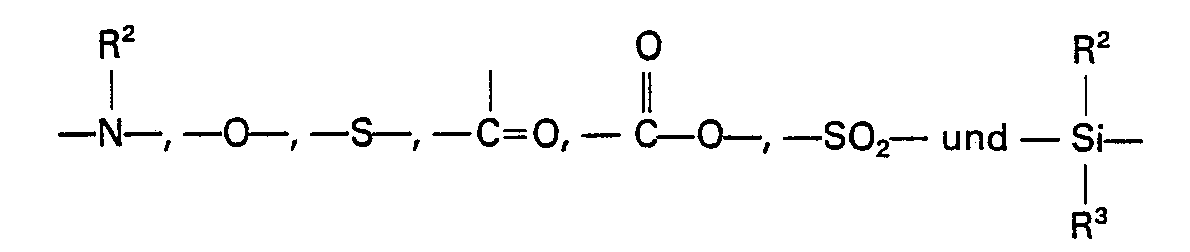


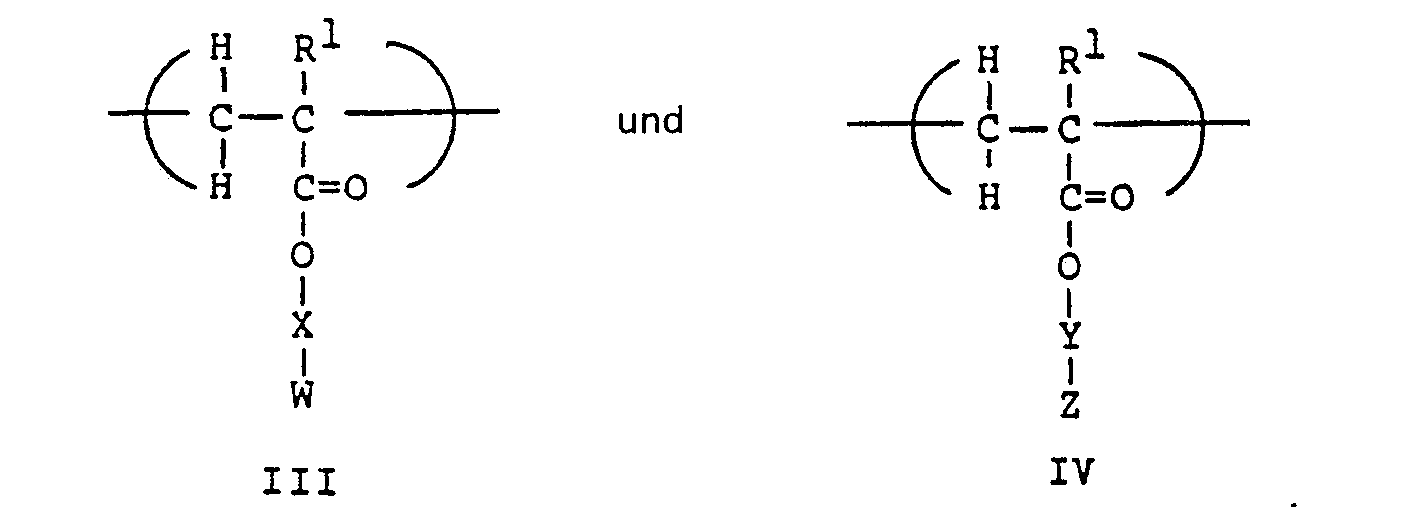

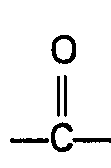
wobei R5, R6, R", R12, A, B, W, Z, p und g die vorstehend angegebenen Bedeutungen haben, das Polymer ein Molekulargewicht im Bereich von 5000 bis 1 000 000 hat und wenn B -S- ist, A nur


ausgewählt ist, wobei R5, R6, R", R'2, A, B, W, Z, p und g die vorstehend angegebenen Bedeutungen haben und wenn B ―S― ist, A nur


Priority Applications (3)
| Application Number | Priority Date | Filing Date | Title |
|---|---|---|---|
| US06/527,332 US4500601A (en) | 1983-08-29 | 1983-08-29 | Chelating polymers for modifying metal surface properties |
| EP19850300142 EP0188037B1 (de) | 1983-08-29 | 1985-01-09 | Bidentatchelatmonomere und -polymere |
| DE8585300142T DE3562484D1 (en) | 1985-01-09 | 1985-01-09 | Bidentate chelating monomers and polymers |
Applications Claiming Priority (2)
| Application Number | Priority Date | Filing Date | Title |
|---|---|---|---|
| US06/527,332 US4500601A (en) | 1983-08-29 | 1983-08-29 | Chelating polymers for modifying metal surface properties |
| EP19850300142 EP0188037B1 (de) | 1983-08-29 | 1985-01-09 | Bidentatchelatmonomere und -polymere |
Publications (2)
| Publication Number | Publication Date |
|---|---|
| EP0188037A1 EP0188037A1 (de) | 1986-07-23 |
| EP0188037B1 true EP0188037B1 (de) | 1988-05-04 |
Family
ID=26098067
Family Applications (1)
| Application Number | Title | Priority Date | Filing Date |
|---|---|---|---|
| EP19850300142 Expired EP0188037B1 (de) | 1983-08-29 | 1985-01-09 | Bidentatchelatmonomere und -polymere |
Country Status (2)
| Country | Link |
|---|---|
| US (1) | US4500601A (de) |
| EP (1) | EP0188037B1 (de) |
Families Citing this family (16)
| Publication number | Priority date | Publication date | Assignee | Title |
|---|---|---|---|---|
| US5026860A (en) * | 1983-08-29 | 1991-06-25 | Minnesota Mining And Manufacturing Company | Bidentate chelating monomers and polymers |
| DE3819456A1 (de) * | 1988-06-08 | 1989-12-14 | Basf Ag | 4- (meth)acrylamidomethyl)-pyrazole und -isoxazole, verfahren zu ihrer herstellung, deren homo- und copolymerisate sowie deren verwendung zur herstellung photopolymerisierter dichtungsmassen, oberflaechenschichten, klebstoffe oder flaechenfoermiger aufzeichnungsmaterialien |
| DE3819455A1 (de) * | 1988-06-08 | 1989-12-14 | Basf Ag | 2-((meth)acrylamidomethyl)-1,3-diketone |
| US5242877A (en) * | 1992-02-21 | 1993-09-07 | Rohm And Haas Company | Polymer-supported catalysts |
| US5474827A (en) * | 1994-03-23 | 1995-12-12 | Minnesota Mining And Manufacturing Company | Retroreflective article and method of making the same |
| US5693320A (en) * | 1996-03-17 | 1997-12-02 | Ube Industries, Ltd. | (Meth)acryloyloxy substituted acetylsalicylates and polymers thereof |
| JPH10175265A (ja) * | 1996-12-19 | 1998-06-30 | Matsushita Electric Ind Co Ltd | 絶縁膜及びその製造方法 |
| DE19936472A1 (de) * | 1999-08-03 | 2001-02-15 | Stn Atlas Elektronik Gmbh | Haftvermittler |
| SG99331A1 (en) * | 2000-01-13 | 2003-10-27 | Hitachi Ltd | Method of producing electronic part with bumps and method of producing elctronic part |
| US7138472B2 (en) * | 2001-01-29 | 2006-11-21 | Nalco Company | High molecular weight polymers containing pendant salicylic acid groups for clarifying bayer process liquors |
| US20140150970A1 (en) * | 2010-11-19 | 2014-06-05 | Ppg Industries Ohio, Inc. | Structural adhesive compositions |
| WO2012096183A1 (ja) | 2011-01-14 | 2012-07-19 | 株式会社ダステック | 高分子鉄キレート剤 |
| US10696698B2 (en) | 2016-01-28 | 2020-06-30 | ACatechol, Inc. | Surface primer compositions and methods of use |
| CN108699090A (zh) * | 2016-01-28 | 2018-10-23 | 阿卡特肖勒公司 | 表面底漆组合物和使用方法 |
| WO2017170934A1 (ja) * | 2016-04-01 | 2017-10-05 | 国立大学法人 東京大学 | 新規化合物とその合成方法 |
| CN106188383B (zh) * | 2016-07-18 | 2018-08-14 | 中山大学 | 一种新型具有荧光特性的交联丙烯酸酯乳液及其制备方法 |
Family Cites Families (5)
| Publication number | Priority date | Publication date | Assignee | Title |
|---|---|---|---|---|
| US2634253A (en) * | 1951-07-26 | 1953-04-07 | Du Pont | Salicylaldehyde polymeric polyprimary polyamine condensation products |
| US3395134A (en) * | 1960-05-12 | 1968-07-30 | Gaetano F D'alelio | Chelating polymers and method of preparation |
| US3165487A (en) * | 1960-12-21 | 1965-01-12 | Dow Chemical Co | Coating compositions of graft copolymers of alkali salts of vinylphenyl alpha-aminocarboxylic acids and butadiene-styrene copolymers and method of making the same |
| US3304276A (en) * | 1964-05-13 | 1967-02-14 | Faulkner Raymond Noel | Polyhydric phenol modified fatty media and iron surfaces chelated therewith |
| DE2555597B2 (de) * | 1975-11-27 | 1979-04-05 | Noverox Ag, Zug (Schweiz) | Rostumwandelndes und Eisen gegen Korrosion schützendes Mittel auf Basis einer wäßrigen Kunststoffdispersion oder -emulsion mit einem zur Eisen komplexbildung befähigten Bestandteil |
-
1983
- 1983-08-29 US US06/527,332 patent/US4500601A/en not_active Expired - Fee Related
-
1985
- 1985-01-09 EP EP19850300142 patent/EP0188037B1/de not_active Expired
Also Published As
| Publication number | Publication date |
|---|---|
| EP0188037A1 (de) | 1986-07-23 |
| US4500601A (en) | 1985-02-19 |
Similar Documents
| Publication | Publication Date | Title |
|---|---|---|
| EP0188037B1 (de) | Bidentatchelatmonomere und -polymere | |
| US6376065B1 (en) | Fluorochemical benzotriazoles | |
| AU735281B2 (en) | Process of treating metallic surfaces | |
| EP3682042B1 (de) | Verfahren zur vorbehandlung von aluminiummaterialien, insbesondere von aluminiumrädern | |
| Bastidas et al. | Butyl substituents in n-butylamine and their influence on mild steel corrosion inhibition in hydrochloric acid | |
| JP2022502240A (ja) | アルミニウム含有基材の表面を処理する方法 | |
| US6376021B1 (en) | Heat treatment of polyphenylene oxide-coated metal | |
| EP4153693A1 (de) | Polymere zur metalloberflächenbehandlung | |
| RU2216559C2 (ru) | Полимеризуемые композиции для нанесения органического покрытия на металлические материалы | |
| US5385997A (en) | Bidentate chelating monomers and polymers | |
| EP3847297B1 (de) | Verfahren zur behandlung von oberflächen aus aluminiumhaltigen substraten | |
| Pauline et al. | Synthesis, characterization and corrosion protection property of terpolymers derived from poly (MAn-co-MMA) containing benzimidazole derivative as pendant group | |
| TWI825151B (zh) | 製造聚合物及金屬–聚合物複合材料的方法 | |
| EP4006116A1 (de) | Metalloberflächenbehandlung | |
| CA1250496A (en) | Chelating polymers for modifying metal surface properties | |
| US6238541B1 (en) | Film-forming method and metal material | |
| JPS61167644A (ja) | 二座配位キレ−ト化性単量体および重合体 | |
| El‐Sanabary et al. | Preparation and evaluation of some new corrosion inhibitors in varnishes | |
| TWI787775B (zh) | 於鋅鐵合金上形成黑色鈍化層之方法及黑色鈍化組合物 | |
| RU2797669C2 (ru) | Способ обработки поверхностей содержащих алюминий основ | |
| JP2006283180A (ja) | 防錆剤およびその用途 | |
| Cram | Electrochemically polymerised acrylics as adhesion promoting layers at a metal/polymer interface | |
| CN121969655A (zh) | 用于改善表面的粘合剂粘结的聚合物 | |
| MXPA99005991A (en) | Method for treating metallic surfaces | |
| EP3864190A1 (de) | Verfahren zur ni-freien phosphatierung von metalloberflächen und zusammensetzung zur verwendung in solch einem verfahren |
Legal Events
| Date | Code | Title | Description |
|---|---|---|---|
| PUAI | Public reference made under article 153(3) epc to a published international application that has entered the european phase |
Free format text: ORIGINAL CODE: 0009012 |
|
| AK | Designated contracting states |
Kind code of ref document: A1 Designated state(s): DE FR GB IT |
|
| 17P | Request for examination filed |
Effective date: 19861124 |
|
| 17Q | First examination report despatched |
Effective date: 19870707 |
|
| ITF | It: translation for a ep patent filed | ||
| GRAA | (expected) grant |
Free format text: ORIGINAL CODE: 0009210 |
|
| AK | Designated contracting states |
Kind code of ref document: B1 Designated state(s): DE FR GB IT |
|
| REF | Corresponds to: |
Ref document number: 3562484 Country of ref document: DE Date of ref document: 19880609 |
|
| ET | Fr: translation filed | ||
| PLBE | No opposition filed within time limit |
Free format text: ORIGINAL CODE: 0009261 |
|
| STAA | Information on the status of an ep patent application or granted ep patent |
Free format text: STATUS: NO OPPOSITION FILED WITHIN TIME LIMIT |
|
| 26N | No opposition filed | ||
| REG | Reference to a national code |
Ref country code: GB Ref legal event code: 732 |
|
| ITTA | It: last paid annual fee | ||
| PGFP | Annual fee paid to national office [announced via postgrant information from national office to epo] |
Ref country code: FR Payment date: 19931214 Year of fee payment: 10 |
|
| PGFP | Annual fee paid to national office [announced via postgrant information from national office to epo] |
Ref country code: DE Payment date: 19931217 Year of fee payment: 10 |
|
| PGFP | Annual fee paid to national office [announced via postgrant information from national office to epo] |
Ref country code: GB Payment date: 19931223 Year of fee payment: 10 |
|
| PG25 | Lapsed in a contracting state [announced via postgrant information from national office to epo] |
Ref country code: GB Effective date: 19950109 |
|
| GBPC | Gb: european patent ceased through non-payment of renewal fee |
Effective date: 19950109 |
|
| PG25 | Lapsed in a contracting state [announced via postgrant information from national office to epo] |
Ref country code: FR Effective date: 19950929 |
|
| PG25 | Lapsed in a contracting state [announced via postgrant information from national office to epo] |
Ref country code: DE Effective date: 19951003 |
|
| REG | Reference to a national code |
Ref country code: FR Ref legal event code: ST |