EP0189019A1 - Structure à membranes pourvues de pores traversants, son procédé de fabrication et ses applications - Google Patents
Structure à membranes pourvues de pores traversants, son procédé de fabrication et ses applications Download PDFInfo
- Publication number
- EP0189019A1 EP0189019A1 EP85890194A EP85890194A EP0189019A1 EP 0189019 A1 EP0189019 A1 EP 0189019A1 EP 85890194 A EP85890194 A EP 85890194A EP 85890194 A EP85890194 A EP 85890194A EP 0189019 A1 EP0189019 A1 EP 0189019A1
- Authority
- EP
- European Patent Office
- Prior art keywords
- molecules
- protein
- membranes
- membrane
- containing molecules
- Prior art date
- Legal status (The legal status is an assumption and is not a legal conclusion. Google has not performed a legal analysis and makes no representation as to the accuracy of the status listed.)
- Granted
Links
Images




Classifications
-
- B—PERFORMING OPERATIONS; TRANSPORTING
- B01—PHYSICAL OR CHEMICAL PROCESSES OR APPARATUS IN GENERAL
- B01D—SEPARATION
- B01D67/00—Processes specially adapted for manufacturing semi-permeable membranes for separation processes or apparatus
- B01D67/0081—After-treatment of organic or inorganic membranes
- B01D67/0088—Physical treatment with compounds, e.g. swelling, coating or impregnation
-
- A—HUMAN NECESSITIES
- A61—MEDICAL OR VETERINARY SCIENCE; HYGIENE
- A61K—PREPARATIONS FOR MEDICAL, DENTAL OR TOILETRY PURPOSES
- A61K9/00—Medicinal preparations characterised by special physical form
- A61K9/20—Pills, tablets, discs, rods
- A61K9/2004—Excipients; Inactive ingredients
- A61K9/2022—Organic macromolecular compounds
- A61K9/2063—Proteins, e.g. gelatin
-
- A—HUMAN NECESSITIES
- A61—MEDICAL OR VETERINARY SCIENCE; HYGIENE
- A61K—PREPARATIONS FOR MEDICAL, DENTAL OR TOILETRY PURPOSES
- A61K9/00—Medicinal preparations characterised by special physical form
- A61K9/70—Web, sheet or filament bases ; Films; Fibres of the matrix type containing drug
-
- B—PERFORMING OPERATIONS; TRANSPORTING
- B01—PHYSICAL OR CHEMICAL PROCESSES OR APPARATUS IN GENERAL
- B01D—SEPARATION
- B01D69/00—Semi-permeable membranes for separation processes or apparatus characterised by their form, structure or properties; Manufacturing processes specially adapted therefor
- B01D69/02—Semi-permeable membranes for separation processes or apparatus characterised by their form, structure or properties; Manufacturing processes specially adapted therefor characterised by their properties
-
- B—PERFORMING OPERATIONS; TRANSPORTING
- B01—PHYSICAL OR CHEMICAL PROCESSES OR APPARATUS IN GENERAL
- B01D—SEPARATION
- B01D71/00—Semi-permeable membranes for separation processes or apparatus characterised by the material; Manufacturing processes specially adapted therefor
- B01D71/06—Organic material
- B01D71/74—Natural macromolecular material or derivatives thereof
-
- C—CHEMISTRY; METALLURGY
- C12—BIOCHEMISTRY; BEER; SPIRITS; WINE; VINEGAR; MICROBIOLOGY; ENZYMOLOGY; MUTATION OR GENETIC ENGINEERING
- C12N—MICROORGANISMS OR ENZYMES; COMPOSITIONS THEREOF; PROPAGATING, PRESERVING, OR MAINTAINING MICROORGANISMS; MUTATION OR GENETIC ENGINEERING; CULTURE MEDIA
- C12N1/00—Microorganisms; Compositions thereof; Processes of propagating, maintaining or preserving microorganisms or compositions thereof; Processes of preparing or isolating a composition containing a microorganism; Culture media therefor
- C12N1/06—Lysis of microorganisms
-
- C—CHEMISTRY; METALLURGY
- C12—BIOCHEMISTRY; BEER; SPIRITS; WINE; VINEGAR; MICROBIOLOGY; ENZYMOLOGY; MUTATION OR GENETIC ENGINEERING
- C12N—MICROORGANISMS OR ENZYMES; COMPOSITIONS THEREOF; PROPAGATING, PRESERVING, OR MAINTAINING MICROORGANISMS; MUTATION OR GENETIC ENGINEERING; CULTURE MEDIA
- C12N11/00—Carrier-bound or immobilised enzymes; Carrier-bound or immobilised microbial cells; Preparation thereof
- C12N11/02—Enzymes or microbial cells immobilised on or in an organic carrier
- C12N11/04—Enzymes or microbial cells immobilised on or in an organic carrier entrapped within the carrier, e.g. gel or hollow fibres
Definitions
- the invention relates to a structure which comprises at least one membrane with continuous pores or is formed from at least one such membrane, these pores being in particular in the diameter range from 2 to 200 nm (nanometers). It also relates to methods of manufacturing this structure and several advantageous uses of the structure.
- ultrafiltration membranes which are used in processes for fractionating or concentrating mixtures of high molecular weight organic substances of different molecular weights.
- asymmetric ultrafiltration membranes are currently used in many cases, consisting of a very thin separation layer, which is essential for the mass transport through the membrane and for the selectivity of the separation and whose thickness is generally between 100 and 200 nm a coarse-pored support layer.
- the separating layers consist of different polymers, preferably cellulose derivatives or polysulfones.
- Such ultrafiltration membranes are either phase inversion membranes or composite membranes.
- phase inversion membranes a homogeneous polymer solution is brought into contact with a precipitant, after which the membrane is located on the polymer solution-precipitant contact surface forms in which the coarse-pored support layer adjoins the fine-pored separating layer.
- the separating and supporting layers are produced separately from one another and only then connected to one another.
- the pore diameter is not a fixed size, but the diameters of the pores vary according to a statistical distribution around an average.
- This behavior of an ultrafiltration membrane is characterized by its separation curve.
- the percentage retention rate (R) which is retained during filtration through the ultrafiltration membrane, is determined for various ideal test molecules (these are spherical molecules in the uncharged state) of different molecular weights (MW).
- the separation curve itself represents an interpolation of these measured values and shows the dependency of this percentage retention rate on the logarithm of the molecular weight [log (MW)].
- Another parameter for the performance of an ultrafiltration membrane is the so-called flow rate. This is the amount of water that flows through the membrane per m 2 and hour at a certain pressure difference between the two sides of the membrane.
- the membrane opposes the water flowing through them with considerable resistance.
- the flow rate is higher, the greater the number of pores per unit area of the membranes or the smaller the effective pore depth, ie the length of the channels forming the pores.
- Other important quality features of ultrafiltration membranes are their chemical and / or thermal stability.
- the invention is based on the object of specifying a structure which comprises at least one membrane with continuous pores or is formed by at least one such membrane, these pores in particular should be in the diameter range from 1 to 8 nm and when using this structure as Ultrafiltration membranes can be used if necessary to make sharp separations between molecules with different molecular weights; with which ultrafiltration membrane one can also achieve a higher flow rate than with the known ultrafiltration membranes and which has good chemical and thermal stability.
- the object on which the invention is based is achieved in the structure according to the invention, which is characterized in that is that is that the membrane or the membranes, which extend along flat, curved, cylindrical or vesicular surfaces, are each made up of at least one layer of mutually connected and arranged according to a crystal lattice molecules, namely protein molecules or protein-containing molecules, wherein in continuous pores arranged between the molecules according to a lattice remain free, and that the membranes are bound or bound to or in an optionally porous support body or that they are combined to form a self-supporting film.
- a crystal lattice molecules namely protein molecules or protein-containing molecules
- the protein molecules or protein-containing molecules are advantageously connected to one another in a single layer or in a plurality of adjacent layers arranged according to a crystal lattice, in which layers the adjacent protein molecules or protein-containing molecules are preferably connected to one another by secondary valence bonds.
- the structure according to the invention is characterized in that monofunctional or bifunctional foreign molecules are bound to reactive groups of the protein molecules or protein-containing molecules, which may advantageously be carboxyl groups and / or amino groups and / or sulfhydryl groups and / or hydroxyl groups the structure advantageously has membranes with layers of protein molecules or protein-containing molecules, within which foreign molecules are bound to essentially all of these molecules at the same reactive sites.
- protein molecules or protein-containing molecules of the membranes are intramolecularly covalently formed by bifunctional foreign molecules are cross-linked and / or that they have membranes on which adjacent or adjacent protein molecules or protein-containing molecules that belong to the same membrane or to two adjacent or adjacent membranes - optionally via bifunctional foreign molecules - are covalently cross-linked and / or on which protein molecules or protein-containing ones Molecules - if necessary through bifunctional foreign molecules - are cross-linked with the carrier material.
- the structure is characterized in that the foreign molecules extend into the region of the membrane pores which are recessed between the protein molecules or the protein-containing molecules.
- the structure according to the invention is characterized by membranes whose protein molecules or protein-containing molecules and / or foreign molecules connected to them have dissociable groups which dissociate under the working conditions of the structure and can therefore assume predetermined electrical charges which are dependent on these working conditions.
- these membranes are advantageously constructed asymmetrically with respect to each surface parallel to the membrane extension.
- the invention is also based on the object of specifying a method for producing a structure which comprises at least one membrane with continuous pores, in particular a method for producing the structure according to the invention.
- This object is ge in the inventive method solves that is characterized in that protein molecules or protein-containing molecules, which may have been obtained from cell shells, in particular from cell shells of prokaryotes, or fragments of layers of such molecules, which are connected to one another in these layers, in one liquid, optionally aqueous medium, which optionally contains chaotropic agents, such as guanidine hydrochloride, or urea, and / or surfactants, are brought into solution or in suspension that thereafter, if appropriate, by reducing the concentration of the chaotropic agents and / or surfactants and / or by changing the pH in the environment in which conditions are created in which the protein molecules or protein-containing molecules and / or the layer fragments then self-assemble to form membranes in which the protein molecules or the protein-containing molecules are arranged next to one another according to a crystal lattice dene n continuous pores arranged between the molecules according to a lattice remain free, that the membranes thus formed are attached to or introduced into or in a carrier and
- an aqueous suspension of cell shells of a type which has outer layers which are connected to one another and according to a crystal lattice is advantageously produced arranged protein molecules or protein-containing molecules are built up, in these layers between the molecules arranged according to a grid through pores remain free, after which, if necessary by adding chaotropic agents and / or surfactants and / or by changing the pH in or in the environment, the named protein molecules or protein-containing molecules or fragments of the layers consisting of these molecules from the cell Shells are separated, and that the remnants of the cell shells are separated from the environment.
- the protein molecules or protein-containing molecules are separated off advantageously by increasing the pH from about pH 7.0 to a value less than or equal to 13.0, but in particular to a value less than or equal to 9.5, or by reducing the pH -Value of about pH 7.0 to a value greater than or equal to 1.0, but in particular to a value greater than or equal to 2.5.
- the method according to the invention is characterized in that the concentration of the chaotropic agents and / or surfactants and / or change in the membranes to be carried out to induce the self-organization of the protein molecules or protein-containing molecules and / or the detached layer fragments to form membranes pH is done by dialysis.
- the method according to the invention is characterized in that the mono- and / or bifunctional foreign molecules have groups which react with carboxyl groups, amino groups, sulfhydryl groups or hydroxyl groups of the protein molecules or protein-containing molecules.
- the protein molecules or the protein-containing molecules and / or are self-organized the layer fragments to membranes at a phase interface solid to liquid.
- the method according to the invention is characterized in that the membranes formed by self-organization of the protein molecules or protein-containing molecules and / or the layer fragments have practically all maximum dimensions in their area of less than 100 ⁇ m, but preferably less than ID 15 um.
- the membranes are attached or introduced to or into a porous support by floating onto the support.
- the cell shells of some prokaryotes, in particular of some bacilli have an outermost layer whose mass distribution determined by electron microscopy has a periodicity which indicates a crystalline structure of the layer.
- S-layer surface layer
- S-layer can be separated from the underlying peptidoklycan-containing layer of the cell shells in an aqueous environment by adding chaotropic agents and brought into solution.
- these S layers consist in most cases of identical molecules, namely protein molecules or protein-containing molecules.
- these molecules self-assemble to form small membrane fragments with dimensions in the area of up to about 10 to 15 ⁇ m, which have the same mass distribution as the original S layer . These membrane fragments are subsequently Called P membranes.
- P-membranes also disintegrate again when the concentration of the chaotropic agents increases again and, when the concentration decreases again, they form again as P-membranes, it is assumed that the P-membranes each consist of layers of mutually connected and thereby according to a crystal lattice arranged protein molecules or protein-containing molecules are constructed and that the reversibly releasable and recoverable connection between the molecules in the P-membranes takes place via side valences of these molecules.
- FIGS. 2 to 4 show three model representations of how the S-layers or P-membranes are made up of the protein molecules or protein-containing molecules designated here as 1,1 'or 1 "as subunits;
- FIG. 2 shows a quadratic Lattice with p4 symmetry, Fig. 3 a hexagonal lattice with p6 symmetry and Fig.
- cells from Bacillus ste are used arothermophilus 3c / NRS 1536, the cell shells of which are composed of a cytoplasmic membrane, a peptidoglycan-containing layer and the S layer.
- the cells are first torn open by ultrasound treatment, the cytoplasmic membrane fragments are disintegrated with the aid of detergents, and the remaining cell-shell fragments are cleaned by washing cell contents.
- the S layers are then separated from the peptidoglycan-containing layer by adding 5M guanidine hydrochloride as the chaotropic agent and brought into solution.
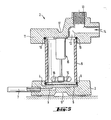
- a pressure apparatus 2 as shown in section in FIG. 5 is used to manufacture the ultrafilter. It consists of a bottom part 3, which has a cylindrical recess 4 with a ribbed bottom, in which a porous sintered plate 5 is inserted; the space below the sintered plate 5 is connected to an outlet port 7 via an outlet channel 6.
- a cylindrical wall part 9 made of plexiglass is placed over a 0-sealing ring 8, which in turn is connected via a second 0-sealing ring 10 to a cover part 11, in which a feed channel 12 with connections 13, 14 for a filler neck or a Compressed gas source is provided.
- a magnetic stirring device 15 is attached to the underside of the cover part 11, and its stirrer 16 extends down to the lower edge of the cylindrical wall part 9.
- the base and cover parts are held together by a clamping device engaging at 17 and 17 '.
- a disk-shaped microfilter 18 from Nuclepore, Tübingen, FRG is now inserted into the printing apparatus on the sintered plate 5 as a carrier material for the ultrafilter to be produced.
- This microfilter 18 consists of an approximately 10 ⁇ m thick polycarbonate film with pores of the same size throughout with a pore diameter of 0.1 ⁇ m.
- the P-membrane suspension described above is then filled in via the connection 13 in the cover part 11 in such an amount that 25 ⁇ g of P-membranes are contained in the suspension per cm 2 area of the microfilter.
- the glutardialdehyde which has a carbonyl group at both ends, reacts as a bifunctional crosslinker with two E - amino groups of the lysine of the protein-containing molecules of the P membranes, either intramolecularly, if the two ⁇ -amino groups originate from the same protein-containing molecule, or intermolecularly , if the two ⁇ -amino groups of two different protein-containing molecules of P membranes originate.
- the ultrafiltration membrane consisting of the microfilter 18 and the washed-on and cross-linked P-membranes is then essentially finished and can be removed from the printing apparatus 2.
- the printing apparatus 2 with the ultrafiltration membrane thus produced can also be used directly as an ultrafiltration device.
- the flow rate determined for this ultrafiltration membrane at a membrane overpressure of 2.10 5 Pa is included 480 1 / hm 2 .
- the flow rate depends, however, on the amount of the P-membranes washed up. For example, when the amount of P membrane washed up amounts to 50 pg / cm 2 membrane surface, it decreases to a value of 220 1 / hm 2 .
- Fig. 7 shows a partial representation schematically in section of the ultrafiltration membrane produced according to this example.
- the P-membranes designated 20 are washed up and fixed by cross-linking. You are upset in an amount that the The total surface area of the P-membrane amount is approximately two to three times the area of the ultrafiltration membranes, so that the P-membranes are averaged approximately in two layers and overlap to some extent.
- cells of Bacillus stearothermophilus PV 72 are used in this example.
- the cell sheaths consist of a cytoplasmic membrane, a peptidoglycan-containing layer and an S-layer made of protein-containing molecules.
- a suspension of P-membranes is now produced from the cell shells, analogously to that described in Example 1.
- the S layer or the P membranes of the cell shells of this Bacillus have a hexagonal lattice structure (p6 symmetry) with a periodicity of 18 nm.
- a disk-shaped microfilter made of nylon of the Ultipor N 66 T type from Pall, Cortland, NY, USA and having a thickness of 150 ⁇ m is inserted into the printing apparatus 2 as a support.
- This microfilter has free amino and carboxyl groups in a ratio of 1: 1.
- the P-membrane suspension is applied to the microfilter in an amount such that 30 ⁇ g of P-membranes are contained in the suspension per cm 2 of microfilter surface, and the P-membranes by applying a membrane overpressure of 2.10 5 Pa on or in the sponge-like structure of the microfilter.
- FIG. 8 shows a partial representation in section of the microfilter 21, which has an open-pore sponge structure, the sizes of the exposed pores having a statistical distribution around an average value, and the P membranes 20 which have been washed in or washed in Overpressure of 2.10 5 1 ml of a 0.1% dimethylsuberimidate solution (1M triethanolamine buffer, pH 9.5) was pressed through the P-membranes 20 and the microfilter 21 at 60 ° C. for 60 min.
- a 0.1% dimethylsuberimidate solution (1M triethanolamine buffer, pH 9.5
- the dimethyl suberimidate reacts like an aldehyde predominantly with the ⁇ -amino groups of the lysine of the protein-containing molecules of the P-membranes intra- and intermolecularly as well as with the amino groups of the nylon microfilter material. After washing several times, the ultrafiltration membrane is then ready for use.
- the structures with P membranes described in Examples 1 and 2 above which can advantageously be used as ultrafiltration membranes, have high chemical, thermal and mechanical stability due to the crosslinking with bifunctional foreign molecules. They are particularly stable against proteolytic degradation, can be autoclaved and can also be used in an acidic and alkaline environment (pH 1 to 13) and together with highly concentrated chaotropic agents (5M guanidine hydrochloride, 8M urea).
- highly concentrated chaotropic agents 5M guanidine hydrochloride, 8M urea.
- the resistance of the structures to organic liquids such as ketones, alcohols and chlorinated hydrocarbons is also essential.
- the desired pore diameter of the ultrafiltration membranes is essentially used by the selection of the reached the microorganism whose cell shells have S layers with pores with approximately the desired pore diameter.
- the desired pore diameter can then be varied by adding foreign molecules that extend into the area of the pores of the P membranes, which will be discussed in more detail later.
- P membranes which are made up of a molecular layer have layer thicknesses of approximately 5 to 20 nm and pore diameters in the range between 1 and 8 nm.
- the concentration of the chaotropic agents or the surfactants it can be achieved that the S-layer fragments are only separated from the peptidoglycan-containing layer of the cell-shell fragments or that the S-layer fragments themselves are disintegrated and brought into solution. If you reach e.g. by treating with 2.5M guanidine hydrochloride only to separate the S-layer fragments, 5M guanidine hydrochloride disintegrates the S-layer by breaking the bonds between the individual protein molecules or protein-containing molecules. Disintegration of the S layer can also be brought about by a strong change in the pH of the solution containing the S layers; e.g. by lowering the pH from around 7.0 to 2.5, or in some cases by increasing from 7.0 to 9.5.
- the surfaces of the self-organizing P-membranes can be flat, curved, cylindrical or vesicular. According to Examples 1 and 2, P membranes were used, the surfaces of which are essentially flat.
- Figures 10 and 11 show variants of the examples len 1 and 2 described structures in which the P membranes 20 'are vesicular.
- FIG. 12 shows a further variant of the structure according to Example 2, in the production of which vesicular and level P-membranes 20 'and 20 were used.
- the vesicular P-membranes were mainly washed into the pores, while the flat P-membranes were mainly washed onto the surface of the microfilter 21.
- Hexamethylene diisocyanate is e.g. used in a 1% solution with 5% tetrahydrofuran (triethanolamine hydrochloride, pH 8.0). Response time is e.g. 4 hours at 20 ° C.
- the N-N'-diiodoacetyl-hexamethylene diamine is preferably used in a 0.5% solution (0.1M sodium acetate buffer, pH 7.2). The reaction time is 3 hours at 4 ° C.
- carbodiimides such as EDC react with the carboxyl, sulfhydryl and hydroxyl groups of tyrosine on the P membranes. If they do not take part in the reaction, sulfhydryl groups must be masked beforehand. By blocking the carboxyl groups with EDC, the pK value of the P membranes is shifted to the acidic range.
- EDC 0.1M EDC in distilled water (0.02M NaOH, pH 8.0). e.g. allowed to react for 18 hours at room temperature.
- a variant of the method according to the invention in which a layer of P-membranes is produced, each of which consists of a single-layer P-membrane over somewhat larger surface areas, which can have dimensions up to 100 ⁇ m.
- a suspension of P membranes is generated, which was obtained from cell shells of Bacillus stearothermophilus 3c / NRS 1536.
- the S layers of the cell shells of this Bacillus are electrically neutral on their surface lying on the outside of the cell, to which the carbohydrate residue of the protein-containing molecules (glycoproteins) forming these S layers is exposed. while they have a net negative charge on their other surface.
- the aforementioned P membrane suspension now also contains free protein-containing molecules of the S layers in solution.
- a microfilter with a particularly smooth surface as was also used according to Example 1, is treated on one surface with a solution of Alcian blue (0.1% in distilled water) and dried.
- the Alcian blue creates a positive surface charge in a neutral environment on the microfilter surface.
- the P-membrane suspension is now applied to the microfilter with gentle stirring.
- the structure thus produced has the same exclusion limit and selectivity as the structure produced according to Example 1.
- the P-membrane layers separated from auxiliary layers can then, optionally after covalent crosslinking, be applied to a final support which is better adapted to the requirements of the intended use of the structure according to the invention and with which they can then optionally also be covalently crosslinked.
- These surface properties can advantageously also be generated by an electric field, e.g. starts from an electrically charged metal mirror serving as a "support surface”.
- These surface properties should include be such that the binding force between the "support surface” and the protein molecules or protein-containing molecules attached to it is sufficiently weak that the self-organization of these molecules to P-membranes taking place on this "support surface” is not impeded. This is important for the formation of P membranes with little interference in the crystal lattice.
- FIG. 14 shows, in a partial representation, schematically in section a further variant of the structure according to the invention, in which a porous microfilter 21, as was also used according to example 2; a P-membrane layer is applied, which consists of P-membranes 22, which is composed of two layers 23, 23 'of protein molecules or protein-containing molecules in mirror image.
- a porous microfilter 21 as was also used according to example 2
- a P-membrane layer is applied, which consists of P-membranes 22, which is composed of two layers 23, 23 'of protein molecules or protein-containing molecules in mirror image.
- Each of these two molecular layers 23, 23 ' is designed differently on its inside or on its outside and the two layers 23, 23' are connected to one another in such a way that they occupy the most energetically stable position.
- the two layers 23, 23 ' can also be covalently cross-linked with one another or the P-membrane 22 with the microfilter 21.
- the structure according to the invention can also advantageously be used as a separator for gas separation or as a separator for an ion exchange process.
- the structure according to the invention serves as a carrier for other semipermeable membranes that span the pores of the P membranes of the structure.
- These other semi-permeable membranes can optionally be hyperfiltration membranes, in particular mono- or bimolecular hyperfiltration membranes.
- hyperfiltration membranes in particular surfactant- or surfactant-like lipoid hyperfiltration membranes, generally have a thickness of only 2 to 6 nm and are particularly fragile.
- Hyperfiltration membranes are used in particular in the fields of seawater desalination, wastewater treatment, the separation of mixtures of organic liquids, in particular for hydrocarbon separation by pervaporation or for the separation of optical antipodes by means of chiral separation layers.
- FIG. 15 shows a partial sectional view of a structure according to the invention, the production of which was described in Example 2 (see FIG. 8), on the P-membrane layer 24 of which the hyperfiltration membrane 25 is applied.
- the filtering or separating action is essentially determined by the hyperfiltration membrane. Errors such as small holes or the like in the P-membrane layer 24 are not necessarily disturbing.
- the cross-linked P-membrane layer is particularly suitable as a support for the hyperfiltration membranes, since it has sufficient mechanical stability to span or fill the pores and rough surfaces of the conventional support layers for ultrafiltration membranes in such a way that the fragile hyperfiltration membranes, especially cross-linked monolayers can be fully grown or separated.
- the P-membrane layers are sufficiently thin and their pore density is large enough to ensure a sufficiently high throughput in combination with hyperfiltration membranes.
- Composites of a P-membrane layer and a hyperfiltration membrane can advantageously also be produced by placing a hyperfiltration membrane with a defined net surface charge as a "support surface" - e.g. analogous to that described in Example 3 - forms a P-membrane layer and if necessary crosslinks it with the hyperfiltration membrane.
- Composites of a P-membrane layer and a hyperfiltration membrane can also serve as a support or "support surface” for further hyperfiltration membranes or P-membrane layers.
- Such multilayer composites can be cross-linked in the level of the individual layers or also between the individual layers by covalent bonds.
- the formation of a sandwich composite consisting of two hyperfiltration membranes on both sides of a P-membrane layer allows the injection of foreign molecules, such as enzymes or charge carriers, which can significantly influence the behavior of such a sandwich composite.
- the composites mentioned or multi-layer composites can also advantageously have the form of closed vesicles, in the production of which one can start from a "starting vesicle” consisting of a hyperfiltration membrane or a P-membrane layer.
- the structure according to the invention is used as a separation column for a penetration chromatography.
- 16 shows a partial representation, schematically, in section of such a chromatography column 26, in which vesicular, possibly intra- and intermolecularly cross-linked P-membranes 20 'with an inner diameter d in the range from 1 to 3 ⁇ m are filled.
- the substances to be separated are added to the top of the column. After passing through and eluting the substances, the larger molecules at the lower end of the chromatography column come out earlier than the smaller molecules, the chromatography showing a very sharp fractionation in the area of the pore size of the P membranes.
- the structure according to the invention is used as a covering material for a wide variety of substances.
- This casing material can be a cross-linked P-membrane layer, which is produced as described above on an auxiliary layer or "support surface", after which the auxiliary layer is optionally removed.
- the foils thus produced can e.g. are advantageously used as packaging material and have the advantage that they can optionally be biodegradable, the rate of degradation being influenced by the type and degree of covalent crosslinking.
- P-membrane layers of this type can also be used as capsule shells for pharmaceutical preparations to be administered orally, with the desired release of the content only occurring due to the proteolytic degradation in certain sections of the digestive tract.
- their rate of degradation and thus the point in time at which the capsule contents are released can be determined.
- the capsule contents can be released before the P membrane layer dissolves, controlled by the pore size.
- pH effects could induce the release.
Landscapes
- Chemical & Material Sciences (AREA)
- Health & Medical Sciences (AREA)
- Life Sciences & Earth Sciences (AREA)
- Engineering & Computer Science (AREA)
- Bioinformatics & Cheminformatics (AREA)
- Organic Chemistry (AREA)
- Genetics & Genomics (AREA)
- General Health & Medical Sciences (AREA)
- Zoology (AREA)
- Wood Science & Technology (AREA)
- Chemical Kinetics & Catalysis (AREA)
- Biotechnology (AREA)
- Medicinal Chemistry (AREA)
- Animal Behavior & Ethology (AREA)
- Pharmacology & Pharmacy (AREA)
- Biomedical Technology (AREA)
- Epidemiology (AREA)
- Microbiology (AREA)
- Veterinary Medicine (AREA)
- Public Health (AREA)
- Biochemistry (AREA)
- General Engineering & Computer Science (AREA)
- Dispersion Chemistry (AREA)
- Manufacturing & Machinery (AREA)
- Inorganic Chemistry (AREA)
- Mycology (AREA)
- Tropical Medicine & Parasitology (AREA)
- Virology (AREA)
- Separation Using Semi-Permeable Membranes (AREA)
- Peptides Or Proteins (AREA)
Applications Claiming Priority (4)
| Application Number | Priority Date | Filing Date | Title |
|---|---|---|---|
| AT0406984A AT382321B (de) | 1984-12-21 | 1984-12-21 | Verfahren zur herstellung einer definierte poren aufweisenden membran und deren verwendung |
| AT4069/84 | 1984-12-21 | ||
| ZA851706A ZA851706B (en) | 1984-03-09 | 1985-03-06 | A structure with membranes that have continuous pores,a method for producing this structure,as well as applications of the structure |
| ZA851706 | 1985-03-06 |
Publications (2)
| Publication Number | Publication Date |
|---|---|
| EP0189019A1 true EP0189019A1 (fr) | 1986-07-30 |
| EP0189019B1 EP0189019B1 (fr) | 1991-03-27 |
Family
ID=25600773
Family Applications (1)
| Application Number | Title | Priority Date | Filing Date |
|---|---|---|---|
| EP85890194A Expired - Lifetime EP0189019B1 (fr) | 1984-12-21 | 1985-08-27 | Structure à membranes pourvues de pores traversants, son procédé de fabrication et ses applications |
Country Status (2)
| Country | Link |
|---|---|
| EP (1) | EP0189019B1 (fr) |
| DE (1) | DE3582324D1 (fr) |
Cited By (6)
| Publication number | Priority date | Publication date | Assignee | Title |
|---|---|---|---|---|
| WO1988002653A1 (fr) * | 1986-10-20 | 1988-04-21 | Brunswick Corporation | Membranes a film mince d'ultrafiltration |
| WO1989009406A1 (fr) * | 1988-03-28 | 1989-10-05 | Sleytr Uwe B | Procede pour l'immobilisation ou le depot de molecules ou de substances sur un support |
| WO1991006863A1 (fr) * | 1989-10-31 | 1991-05-16 | E.I. Du Pont De Nemours And Company | Inhibiteurs de biosynthese de pyrimidine utiles en tant qu'agents immunosuppresseurs |
| EP0292325A3 (fr) * | 1987-05-20 | 1991-07-24 | David M. Anderson | Système de membrane |
| US5069945A (en) * | 1986-10-20 | 1991-12-03 | Memtec America Corporation | Ultrapous thin-film membranes |
| WO2002097118A1 (fr) * | 2001-05-29 | 2002-12-05 | Nano-S Biotechnologie Gmbh | Procede pour produire une couche de molecules fonctionnelles |
Citations (5)
| Publication number | Priority date | Publication date | Assignee | Title |
|---|---|---|---|---|
| FR1421584A (fr) * | 1964-11-06 | 1965-12-17 | Kodak Pathe | Procédé de fabrication d'une membrane anisotrope à structure capillaire, membrane ainsi obtenue et applications |
| DE1237303B (de) * | 1958-04-15 | 1967-03-23 | Dr Heinrich Thiele | Herstellung von mechanisch und chemisch stabilen Membranen und Formkoerpern mit runden und parallelen Kapillaren |
| DE1249517B (de) * | 1967-09-07 | Kiel Dr Heinrich Thiele | Herstellen von Membranen aus Polyelektrolyten | |
| US3593852A (en) * | 1969-08-08 | 1971-07-20 | American Cyanamid Co | Reverse osmotic water purification |
| EP0154620A2 (fr) * | 1984-03-09 | 1985-09-11 | Uwe B. Dipl.-Ing. Dr. Sleytr | Structure à membranes poreuses, procédé de fabrication de cette structure ainsi que ses applications |
-
1985
- 1985-08-27 EP EP85890194A patent/EP0189019B1/fr not_active Expired - Lifetime
- 1985-08-27 DE DE8585890194T patent/DE3582324D1/de not_active Expired - Lifetime
Patent Citations (5)
| Publication number | Priority date | Publication date | Assignee | Title |
|---|---|---|---|---|
| DE1249517B (de) * | 1967-09-07 | Kiel Dr Heinrich Thiele | Herstellen von Membranen aus Polyelektrolyten | |
| DE1237303B (de) * | 1958-04-15 | 1967-03-23 | Dr Heinrich Thiele | Herstellung von mechanisch und chemisch stabilen Membranen und Formkoerpern mit runden und parallelen Kapillaren |
| FR1421584A (fr) * | 1964-11-06 | 1965-12-17 | Kodak Pathe | Procédé de fabrication d'une membrane anisotrope à structure capillaire, membrane ainsi obtenue et applications |
| US3593852A (en) * | 1969-08-08 | 1971-07-20 | American Cyanamid Co | Reverse osmotic water purification |
| EP0154620A2 (fr) * | 1984-03-09 | 1985-09-11 | Uwe B. Dipl.-Ing. Dr. Sleytr | Structure à membranes poreuses, procédé de fabrication de cette structure ainsi que ses applications |
Non-Patent Citations (2)
| Title |
|---|
| CHEMICAL ABSTRACTS, Band 98, Nr. 17, 25. April 1983, Seite 218, Nr. 139218u, Columbus, Ohio, US; R. GARAVITO et al.: "X-ray diffraction analysis of matrix porin, an integral membrane protein from Escherichia coli outer membranes" & J. MOL. BIOL. 1983, 164(2), 313-27 * |
| CHEMICAL ABSTRACTS, Band 99, Nr. 1, 04. Juli 1983, Seite 210, Nr. 2009c, Columbus, Ohio, US; D.L. DORSET et al.: "Two-dimensional crystal packing of matrix porin. A channel forming protein in Escherichia coli outer membranes" & J. MOL. BIOL. 1983, 165(4), 701-10 * |
Cited By (9)
| Publication number | Priority date | Publication date | Assignee | Title |
|---|---|---|---|---|
| WO1988002653A1 (fr) * | 1986-10-20 | 1988-04-21 | Brunswick Corporation | Membranes a film mince d'ultrafiltration |
| AU600627B2 (en) * | 1986-10-20 | 1990-08-16 | Memtec North America Corporation | Ultrafiltration thin film membranes |
| US5069945A (en) * | 1986-10-20 | 1991-12-03 | Memtec America Corporation | Ultrapous thin-film membranes |
| EP0292325A3 (fr) * | 1987-05-20 | 1991-07-24 | David M. Anderson | Système de membrane |
| WO1989009406A1 (fr) * | 1988-03-28 | 1989-10-05 | Sleytr Uwe B | Procede pour l'immobilisation ou le depot de molecules ou de substances sur un support |
| AU634960B2 (en) * | 1988-03-28 | 1993-03-11 | Nano S Biotechnologie Gmbh | Process for immobilizing or depositing molecules or substances on a support |
| WO1991006863A1 (fr) * | 1989-10-31 | 1991-05-16 | E.I. Du Pont De Nemours And Company | Inhibiteurs de biosynthese de pyrimidine utiles en tant qu'agents immunosuppresseurs |
| WO2002097118A1 (fr) * | 2001-05-29 | 2002-12-05 | Nano-S Biotechnologie Gmbh | Procede pour produire une couche de molecules fonctionnelles |
| US7262281B2 (en) | 2001-05-29 | 2007-08-28 | Nano-S Biotechnologie Gmbh | Method of depositing S-layer proteins on a carrier to immobilize functional molecules |
Also Published As
| Publication number | Publication date |
|---|---|
| DE3582324D1 (de) | 1991-05-02 |
| EP0189019B1 (fr) | 1991-03-27 |
Similar Documents
| Publication | Publication Date | Title |
|---|---|---|
| EP0154620B1 (fr) | Structure à membranes poreuses, procédé de fabrication de cette structure ainsi que ses applications | |
| DE3789114T2 (de) | Einen dünnen film enthaltende ultrafiltrationsmembran. | |
| DE69107461T2 (de) | Verwendung von interfacial polymerisierten membranen in abgabevorrichtungen. | |
| DE69325266T2 (de) | Superporöse polysaccharidgele | |
| DE68919772T2 (de) | Liposomen, an deren Oberfläche die Adsorption on Proteinen verhindert wird. | |
| EP0059393B1 (fr) | Membranes d'hyperfiltration à couches de séparation formées par des pellicules monomoléculaires d'agents tensio-actifs | |
| EP1867325B1 (fr) | Capsules comprenant des lipides dans le revêtement | |
| DE60217845T2 (de) | Beschichtete membranen | |
| EP1289642B2 (fr) | Nanocapsules a enveloppe de polyelectrolyte | |
| DE10001172A1 (de) | Templatieren von Feststoffpartikeln mit Polymermultischichten | |
| DE19607279A1 (de) | Durch Festkörper unterstützte Membran-Biosensoren | |
| DE3136606A1 (de) | "verfahren zur herstellung von einen wirkstoff enthaltenden mikrokapseln und die danach erhaeltlichen mikrokapseln | |
| DE2303866B2 (de) | Verfahren zur Herstellung von Mikrokapseln | |
| EP0189019B1 (fr) | Structure à membranes pourvues de pores traversants, son procédé de fabrication et ses applications | |
| EP0207100B1 (fr) | Procede pour modifier les dimensions effectives de pores d'une structure | |
| EP1575703A1 (fr) | Procede et dispositif pour modifier des microparticules | |
| DE2611258C2 (de) | Verfahren zum Extrahieren eines Polypeptids aus einer wäßrigen Lösung | |
| EP1285003B1 (fr) | Utilisation de polymeres membranaires secondaires de micro-organismes procaryotes | |
| DE19954843C2 (de) | Verfahren zur Verkapselung von Proteinen oder Peptiden in Liposomen, mit dem Verfahren hergestellte Liposomen und deren Verwendung | |
| DE3815473A1 (de) | Wirkstoff-system fuer den lipidaustausch mit zielstrukturen | |
| DE19907552A1 (de) | Polyelektrolythüllen auf biologischen Templaten | |
| WO2017157662A1 (fr) | Membrane en couche mince poreuse, procédé de fabrication et possibilités d'utilisation | |
| EP0288529B1 (fr) | Procede pour la separation et la decantation de colloides par chromatographie a exclusion | |
| DE20304380U1 (de) | Trägerpartikeln für die Chromatographie auf der Grundlage von Mikrokapseln | |
| EP1097943A1 (fr) | Procédé de préparation d'hyperpolymères d'hémoglobine de poids moléculaire uniforme |
Legal Events
| Date | Code | Title | Description |
|---|---|---|---|
| PUAI | Public reference made under article 153(3) epc to a published international application that has entered the european phase |
Free format text: ORIGINAL CODE: 0009012 |
|
| AK | Designated contracting states |
Kind code of ref document: A1 Designated state(s): DE |
|
| 17P | Request for examination filed |
Effective date: 19870122 |
|
| 17Q | First examination report despatched |
Effective date: 19890510 |
|
| GRAA | (expected) grant |
Free format text: ORIGINAL CODE: 0009210 |
|
| AK | Designated contracting states |
Kind code of ref document: B1 Designated state(s): DE |
|
| REF | Corresponds to: |
Ref document number: 3582324 Country of ref document: DE Date of ref document: 19910502 |
|
| K2C3 | Correction of patent specification (complete document) published |
Effective date: 19910327 |
|
| PLBE | No opposition filed within time limit |
Free format text: ORIGINAL CODE: 0009261 |
|
| STAA | Information on the status of an ep patent application or granted ep patent |
Free format text: STATUS: NO OPPOSITION FILED WITHIN TIME LIMIT |
|
| 26N | No opposition filed | ||
| PGFP | Annual fee paid to national office [announced via postgrant information from national office to epo] |
Ref country code: DE Payment date: 20020830 Year of fee payment: 18 |
|
| PG25 | Lapsed in a contracting state [announced via postgrant information from national office to epo] |
Ref country code: DE Free format text: LAPSE BECAUSE OF NON-PAYMENT OF DUE FEES Effective date: 20040302 |
|
| APAH | Appeal reference modified |
Free format text: ORIGINAL CODE: EPIDOSCREFNO |