EP0189628A1 - Nachweis von B-Zellneoplasmen - Google Patents
Nachweis von B-Zellneoplasmen Download PDFInfo
- Publication number
- EP0189628A1 EP0189628A1 EP85306492A EP85306492A EP0189628A1 EP 0189628 A1 EP0189628 A1 EP 0189628A1 EP 85306492 A EP85306492 A EP 85306492A EP 85306492 A EP85306492 A EP 85306492A EP 0189628 A1 EP0189628 A1 EP 0189628A1
- Authority
- EP
- European Patent Office
- Prior art keywords
- dna
- chromosome
- probe
- cell
- derived
- Prior art date
- Legal status (The legal status is an assumption and is not a legal conclusion. Google has not performed a legal analysis and makes no representation as to the accuracy of the status listed.)
- Granted
Links
- 208000012526 B-cell neoplasm Diseases 0.000 title claims abstract description 13
- 238000001514 detection method Methods 0.000 title claims description 4
- 239000003298 DNA probe Substances 0.000 claims abstract description 25
- 208000034951 Genetic Translocation Diseases 0.000 claims abstract description 8
- 210000000349 chromosome Anatomy 0.000 claims description 76
- 210000004027 cell Anatomy 0.000 claims description 54
- 239000000523 sample Substances 0.000 claims description 36
- 239000012634 fragment Substances 0.000 claims description 28
- 210000003917 human chromosome Anatomy 0.000 claims description 27
- 210000003719 b-lymphocyte Anatomy 0.000 claims description 19
- 108020003215 DNA Probes Proteins 0.000 claims description 18
- 208000010839 B-cell chronic lymphocytic leukemia Diseases 0.000 claims description 17
- 208000031422 Lymphocytic Chronic B-Cell Leukemia Diseases 0.000 claims description 16
- 208000032852 chronic lymphocytic leukemia Diseases 0.000 claims description 16
- 238000000034 method Methods 0.000 claims description 14
- 238000012360 testing method Methods 0.000 claims description 13
- 239000013611 chromosomal DNA Substances 0.000 claims description 9
- 230000003211 malignant effect Effects 0.000 claims description 9
- 201000003444 follicular lymphoma Diseases 0.000 claims description 8
- 210000004698 lymphocyte Anatomy 0.000 claims description 8
- 208000003950 B-cell lymphoma Diseases 0.000 claims description 5
- 238000003556 assay Methods 0.000 claims 5
- 230000000527 lymphocytic effect Effects 0.000 abstract 1
- 108020004414 DNA Proteins 0.000 description 117
- 230000005945 translocation Effects 0.000 description 19
- 108091008146 restriction endonucleases Proteins 0.000 description 17
- 238000009396 hybridization Methods 0.000 description 13
- 238000004458 analytical method Methods 0.000 description 9
- 210000004754 hybrid cell Anatomy 0.000 description 8
- 238000002105 Southern blotting Methods 0.000 description 7
- 210000004602 germ cell Anatomy 0.000 description 7
- 210000005260 human cell Anatomy 0.000 description 7
- 108090000623 proteins and genes Proteins 0.000 description 7
- 210000001744 T-lymphocyte Anatomy 0.000 description 6
- 239000002773 nucleotide Substances 0.000 description 6
- 125000003729 nucleotide group Chemical group 0.000 description 6
- 108010054576 Deoxyribonuclease EcoRI Proteins 0.000 description 5
- 206010028980 Neoplasm Diseases 0.000 description 5
- 108091028043 Nucleic acid sequence Proteins 0.000 description 5
- 210000004978 chinese hamster ovary cell Anatomy 0.000 description 5
- 239000000758 substrate Substances 0.000 description 5
- 208000011691 Burkitt lymphomas Diseases 0.000 description 4
- 102000004190 Enzymes Human genes 0.000 description 4
- 241000283984 Rodentia Species 0.000 description 4
- 239000000499 gel Substances 0.000 description 4
- 238000000338 in vitro Methods 0.000 description 4
- 241000699802 Cricetulus griseus Species 0.000 description 3
- 241000588724 Escherichia coli Species 0.000 description 3
- 208000035269 cancer or benign tumor Diseases 0.000 description 3
- 238000003745 diagnosis Methods 0.000 description 3
- 208000032839 leukemia Diseases 0.000 description 3
- 230000001613 neoplastic effect Effects 0.000 description 3
- 238000004806 packaging method and process Methods 0.000 description 3
- 210000005259 peripheral blood Anatomy 0.000 description 3
- 239000011886 peripheral blood Substances 0.000 description 3
- 238000012216 screening Methods 0.000 description 3
- 238000010561 standard procedure Methods 0.000 description 3
- 208000004736 B-Cell Leukemia Diseases 0.000 description 2
- 108010008655 Epstein-Barr Virus Nuclear Antigens Proteins 0.000 description 2
- 241000701959 Escherichia virus Lambda Species 0.000 description 2
- ZHNUHDYFZUAESO-UHFFFAOYSA-N Formamide Chemical compound NC=O ZHNUHDYFZUAESO-UHFFFAOYSA-N 0.000 description 2
- 102000003729 Neprilysin Human genes 0.000 description 2
- 108090000028 Neprilysin Proteins 0.000 description 2
- 239000000020 Nitrocellulose Substances 0.000 description 2
- 206010035226 Plasma cell myeloma Diseases 0.000 description 2
- 230000002159 abnormal effect Effects 0.000 description 2
- 239000011543 agarose gel Substances 0.000 description 2
- 238000000246 agarose gel electrophoresis Methods 0.000 description 2
- 210000004369 blood Anatomy 0.000 description 2
- 239000008280 blood Substances 0.000 description 2
- 238000011161 development Methods 0.000 description 2
- 238000002405 diagnostic procedure Methods 0.000 description 2
- 244000005700 microbiome Species 0.000 description 2
- 201000000050 myeloid neoplasm Diseases 0.000 description 2
- 210000005170 neoplastic cell Anatomy 0.000 description 2
- 229920001220 nitrocellulos Polymers 0.000 description 2
- 239000013600 plasmid vector Substances 0.000 description 2
- 230000000392 somatic effect Effects 0.000 description 2
- 239000013598 vector Substances 0.000 description 2
- 208000024893 Acute lymphoblastic leukemia Diseases 0.000 description 1
- 208000014697 Acute lymphocytic leukaemia Diseases 0.000 description 1
- 108700028369 Alleles Proteins 0.000 description 1
- 108091003079 Bovine Serum Albumin Proteins 0.000 description 1
- 241000189662 Calla Species 0.000 description 1
- 208000037088 Chromosome Breakage Diseases 0.000 description 1
- 108090000790 Enzymes Proteins 0.000 description 1
- 102000018713 Histocompatibility Antigens Class II Human genes 0.000 description 1
- 108010027412 Histocompatibility Antigens Class II Proteins 0.000 description 1
- 208000031671 Large B-Cell Diffuse Lymphoma Diseases 0.000 description 1
- 206010025323 Lymphomas Diseases 0.000 description 1
- 206010064912 Malignant transformation Diseases 0.000 description 1
- 108700020796 Oncogene Proteins 0.000 description 1
- 208000006664 Precursor Cell Lymphoblastic Leukemia-Lymphoma Diseases 0.000 description 1
- 239000012980 RPMI-1640 medium Substances 0.000 description 1
- 101000702488 Rattus norvegicus High affinity cationic amino acid transporter 1 Proteins 0.000 description 1
- 206010042971 T-cell lymphoma Diseases 0.000 description 1
- 208000027585 T-cell non-Hodgkin lymphoma Diseases 0.000 description 1
- 230000001594 aberrant effect Effects 0.000 description 1
- 230000005856 abnormality Effects 0.000 description 1
- 210000000988 bone and bone Anatomy 0.000 description 1
- 201000011510 cancer Diseases 0.000 description 1
- 208000002458 carcinoid tumor Diseases 0.000 description 1
- 108091092356 cellular DNA Proteins 0.000 description 1
- 230000008711 chromosomal rearrangement Effects 0.000 description 1
- 230000001086 cytosolic effect Effects 0.000 description 1
- 230000001419 dependent effect Effects 0.000 description 1
- 230000029087 digestion Effects 0.000 description 1
- 201000010099 disease Diseases 0.000 description 1
- 208000037265 diseases, disorders, signs and symptoms Diseases 0.000 description 1
- 210000003743 erythrocyte Anatomy 0.000 description 1
- 230000001747 exhibiting effect Effects 0.000 description 1
- 230000002349 favourable effect Effects 0.000 description 1
- 239000012894 fetal calf serum Substances 0.000 description 1
- 230000003325 follicular Effects 0.000 description 1
- 210000003714 granulocyte Anatomy 0.000 description 1
- BHEPBYXIRTUNPN-UHFFFAOYSA-N hydridophosphorus(.) (triplet) Chemical compound [PH] BHEPBYXIRTUNPN-UHFFFAOYSA-N 0.000 description 1
- 238000010166 immunofluorescence Methods 0.000 description 1
- 238000002372 labelling Methods 0.000 description 1
- 208000003747 lymphoid leukemia Diseases 0.000 description 1
- 230000036212 malign transformation Effects 0.000 description 1
- 230000036210 malignancy Effects 0.000 description 1
- 239000012528 membrane Substances 0.000 description 1
- 239000000203 mixture Substances 0.000 description 1
- 238000012986 modification Methods 0.000 description 1
- 230000004048 modification Effects 0.000 description 1
- 230000000877 morphologic effect Effects 0.000 description 1
- 210000001672 ovary Anatomy 0.000 description 1
- 238000012545 processing Methods 0.000 description 1
- 238000004393 prognosis Methods 0.000 description 1
- 230000000644 propagated effect Effects 0.000 description 1
- 230000002285 radioactive effect Effects 0.000 description 1
- 230000008707 rearrangement Effects 0.000 description 1
- 230000003252 repetitive effect Effects 0.000 description 1
- 230000000717 retained effect Effects 0.000 description 1
- NLJMYIDDQXHKNR-UHFFFAOYSA-K sodium citrate Chemical compound O.O.[Na+].[Na+].[Na+].[O-]C(=O)CC(O)(CC([O-])=O)C([O-])=O NLJMYIDDQXHKNR-UHFFFAOYSA-K 0.000 description 1
- 239000001509 sodium citrate Substances 0.000 description 1
- YEENEYXBHNNNGV-XEHWZWQGSA-M sodium;3-acetamido-5-[acetyl(methyl)amino]-2,4,6-triiodobenzoate;(2r,3r,4s,5s,6r)-2-[(2r,3s,4s,5r)-3,4-dihydroxy-2,5-bis(hydroxymethyl)oxolan-2-yl]oxy-6-(hydroxymethyl)oxane-3,4,5-triol Chemical compound [Na+].CC(=O)N(C)C1=C(I)C(NC(C)=O)=C(I)C(C([O-])=O)=C1I.O[C@H]1[C@H](O)[C@@H](CO)O[C@]1(CO)O[C@@H]1[C@H](O)[C@@H](O)[C@H](O)[C@@H](CO)O1 YEENEYXBHNNNGV-XEHWZWQGSA-M 0.000 description 1
- 239000007787 solid Substances 0.000 description 1
- 238000000856 sucrose gradient centrifugation Methods 0.000 description 1
- 238000004114 suspension culture Methods 0.000 description 1
- 208000024891 symptom Diseases 0.000 description 1
- 238000010396 two-hybrid screening Methods 0.000 description 1
- 238000005406 washing Methods 0.000 description 1
Images

Classifications
-
- C—CHEMISTRY; METALLURGY
- C07—ORGANIC CHEMISTRY
- C07K—PEPTIDES
- C07K14/00—Peptides having more than 20 amino acids; Gastrins; Somatostatins; Melanotropins; Derivatives thereof
- C07K14/82—Translation products from oncogenes
-
- C—CHEMISTRY; METALLURGY
- C12—BIOCHEMISTRY; BEER; SPIRITS; WINE; VINEGAR; MICROBIOLOGY; ENZYMOLOGY; MUTATION OR GENETIC ENGINEERING
- C12Q—MEASURING OR TESTING PROCESSES INVOLVING ENZYMES, NUCLEIC ACIDS OR MICROORGANISMS; COMPOSITIONS OR TEST PAPERS THEREFOR; PROCESSES OF PREPARING SUCH COMPOSITIONS; CONDITION-RESPONSIVE CONTROL IN MICROBIOLOGICAL OR ENZYMOLOGICAL PROCESSES
- C12Q1/00—Measuring or testing processes involving enzymes, nucleic acids or microorganisms; Compositions therefor; Processes of preparing such compositions
- C12Q1/68—Measuring or testing processes involving enzymes, nucleic acids or microorganisms; Compositions therefor; Processes of preparing such compositions involving nucleic acids
- C12Q1/6876—Nucleic acid products used in the analysis of nucleic acids, e.g. primers or probes
- C12Q1/6883—Nucleic acid products used in the analysis of nucleic acids, e.g. primers or probes for diseases caused by alterations of genetic material
- C12Q1/6886—Nucleic acid products used in the analysis of nucleic acids, e.g. primers or probes for diseases caused by alterations of genetic material for cancer
-
- C—CHEMISTRY; METALLURGY
- C12—BIOCHEMISTRY; BEER; SPIRITS; WINE; VINEGAR; MICROBIOLOGY; ENZYMOLOGY; MUTATION OR GENETIC ENGINEERING
- C12Q—MEASURING OR TESTING PROCESSES INVOLVING ENZYMES, NUCLEIC ACIDS OR MICROORGANISMS; COMPOSITIONS OR TEST PAPERS THEREFOR; PROCESSES OF PREPARING SUCH COMPOSITIONS; CONDITION-RESPONSIVE CONTROL IN MICROBIOLOGICAL OR ENZYMOLOGICAL PROCESSES
- C12Q2600/00—Oligonucleotides characterized by their use
- C12Q2600/156—Polymorphic or mutational markers
Definitions
- B-cell neoplasms such as lymphocytic leukemias, follicular lympbomas, and others, develop from aberrant cells which have chromosomal translocations.
- Karyologie analyses of neoplastic B-cells indicate that they carry chromosomal translocations characteristic of a particular neoplasm (See Erikson et al., Proc. Nat'l Acad. Sci. USA 80: 4822-4826 (1983), and Proc. Nat'l. Acad. Set. USA 81: 4144-1448 (1984)).
- chromosomes 14 and 18 are characteristic of human follicular lymphomas (See Croce et al., Proc. Nat'l Acad. Sci. USA 80: 6922-6926 (1983), and Yuni et al., N. Engl. J. Med. 307: 1231-1236 (1982)).
- a method for diagnosing B-cell neoplasm comprising hybridizing a labeled DNA probe to restricted B-cell DNA; said DNA probe hybridizing to a region of DNA lying between a restriction site of a hybrid chromosome of a malignant B-cell and the breakpoint of said chromosome, said restriction site being unique to said region; identifying the pattern of restricted chromosomal DNA fragments to which said DNA probe hybridizes; and detecting differences between the test pattern and the pattern for resticted normal chromosomal DNA.
- the DNA probes used in this invention identify gene loci located on translocated chromosomes that are involved in the malignant transformation of B-cells.
- the invention permits the detection and identification of B-cell neoplasms, such as follicular lymphoma, diffuse B-cell lymphoma and others, in patients in the early stage of the disease.
- B-cell neoplasms such as follicular lymphoma, diffuse B-cell lymphoma and others, in patients in the early stage of the disease.
- the invention does not require manifestation of overt symptoms for an accurate diagnosis.
- the DNA probes contemplated for use in this invention may be derived from the DNA of B-cell lines maintained in vitro which carry chromosomal translocations or from fresh samples obtained directly from patients with B-cell neoplasms.
- a full genomic library may be prepared from DNA of these cell lines. Any of the known techniques for constructing genomic libraries may be employed. Such procedures include, without limitation, partially digesting genomic DNA with a restriction enzyme, purifying DNA fragments 15 to 25 kb in length, ligating the fragments with DNA of a lambda phage vector, and packaging in vitro.
- the desired fragments of DNA can be obtained by screening independent recombinant phages with a probe specific for a gene sequence located near the breakpoint of the hybrid chromosome present in the B-cell line, or in the fresh neoplastic cells.
- the immunoglobin heavy chain gene lies near the breakpoint.
- the immunoglobin lambda chain gene lies near the breakpoint and the kappa chain immunoglobin gene lies near the breakpoint of chromosome 2.
- the c-mye oncogene lies near the breakpoint of chromosome 8.
- breakpoint also referred to as the joining region, as used herein refers to the locus at which the covalent bonds between the nucleotides, comprising the DNA backbone, break and reform with nucleotides derived from a different chromosome.
- the chromosome thus formed is a hybrid chromosome consisting of DNA derived from more than one chromosome. Translocations Involving chromosomes 14 and 18 have been observed in the great majority of follicular lymphomas. Other translocations, which occur in B-cell neoplasms, involving chromosome 8 with 2, 8 with 14, 8 with 22, and 11 with 14, are also known.
- a B-cell carrying a translocation has two hybrid chromosomes: a hybrid chromosome which appears by karyotypic analysis to be longer than its homolog, and a hybrid chromosome which, by karyotypic analysis, appears shorter than its homolog.
- hybrid chromosome as used herein is generic to any chromosome comprised of DNA from more than one chromosome.
- DNA derived from the chromosome region spanning the breakpoint of a hybrid chromosome has a restriction map that differs from germ line DNA and can thus be identified by restriction map analysis.
- a DNA clone, derived from a normal chromosome 14 which spans the breakpoint has a characteristic restriction map when cut with a restriction enzyme or enzymes.
- a restriction map represents the pattern of DNA fragments of specific sizes which result when a DNA segment is cut with a restriction enzyme or several restriction enzymes. Restriction enzymes, which recognize and cut at specific DNA sequences are known in the art and include, without limitation, enzymes such EcoRI, Hind III, and Sau3a, . which are purified from microorganisms.
- the DNA spanning the breakpoint may be subcloned and processed to select a DNA probe that hybridizes to only one side of the breakpoint. That is, it is purified and cut with the desired restriction enzyme to produce DNA fragments which are then cloned into a plasmid vector and propagated in a microorganism.
- DNA isolated from the subclones may be hybridized to DNA derived from hybrid cells (for example, rodent x human cells) containing only one human chromosome such as chromosome 14 and also hybridized to hybrid cells containing a different human chromosome, such as chromosome 18. Subclones which hybrize to the DNA from cells containing human chromosome 18 but not to the DNA from cells containing human chromosome 14 may be selected.
- subclones which hybridize to chromosome 14 but not to 18 may be selected.
- Those subclones, which contain DNA homologous to chromosomal DNA on only one side of the breakpoint, are the DNA probes contemplated for use in this invention.
- this invention contemplates use of a DNA probe that hybridizes to DNA lying on either side of the breakpoint.
- the size of a DNA probe can vary from approximately 20 nucleotides to approximately hundreds or thousands nucleotides.
- the cell lines contemplated for use in this invention are derived from malignant B-cells which have chromosonal translocations.
- Such cell lines include but, are not limited to, chronic lymphocytic leukemia, follicular lymphoma, diffuse B-cell lymphoma, and other leukemias or lymphomas.
- Such cells may be cultured by employing standard techniques known to those skilled in the art.
- the diagnostic test may employ a sample of peripheral blood obtained from an individual who is being screened for the presence of B-cell neoplasm.
- DNA is purified from the lymphocytes employing standard techniques well known to those skilled in the art. Aliquots of lymphocyte DNA are each Incubated with a restriction enzyme or enzymes.
- a restriction enzyme is chosen so that when the DNA of the chromosome is cut with this restriction enzyme the probe hybridizes to a region of DNA lying between the breakpoint of the chromosome and the DNA sequence at which the selected restriction enzyme cuts. This DNA region thus contains a unique site for this restriction enzyme.
- the probe may also hybridize to a DNA sequence beyond the restriction site. Selection of an appropriate restriction enzyme is well within the skill of the art.
- the restricted DNA samples may be separated by agarose gel electrophoresis and blotted to nitrocellulose filters, essentially as described by Southern (Erikson, et al., Proe. Nat'l Acad. Sci. 80: 7581-7585 (1983)). Other procedures for separating restricted DNA fragments and transferring them to an appropriate substrate for further processing may also be employed.
- the separated areas of DNA on the nitrocellulose filters or on other appropriate substrates are hybridized to the labeled DNA probe which is homologous to a region of DNA near a breakpoint of a translocated chromosome in a B-cell line derived from a neoplasm.
- the hybridization reaction may be carried out under standard conditions, known to those skilled in the art.
- the separated areas of DNA are examined to determine if hybridization occurred.
- DNA from a lymphocyte sample which is neoplastic will exhibit a different hybridization pattern than the control DNA because the patterns of hybridization have changed in size or additional pattern(s) of hybridization have appeared which represent hybridization of the probe with fragments derived from the rearranged hybrid chromosome.
- DNA from a normal cell e.g., a T-cell or any other cell that is not a B-cell
- DNA from the individual being tested may be used for a follow-up test if such follow-up test is pursued.
- the DNA probe can be labeled, for example, with radioactive phosphorous and DNA from a gel transferred to a solid substrate hybridized with it.
- the substrate may be washed and dried and the hybridization detected by exposing the dried substrate to X-ray film in order to visualize the results of the test.
- a lane of the gel which corresponds to a restricted lymphocyte DNA sample that does not carry a neoplasm will exhibit a characteristic pattern of hybridization and will serve as a control lane against which the test DNA is compared.
- Other means for labeling the DNA probe and detecting hybridization are known to those skilled in the art and may also be employed.
- test cell DNA is hybridized to a mixture of DNA probes derived from cell lines carrying different translocations. Further screening with separate DNA probes may be conducted if the initial screen yields a positive result.
- Peripheral blood was obtained from a 15-year old boy who was diagnosed, based on morphologic examination of peripheral blood and bone narrow smears, as having acute lymphoblastic leukemia type L2 (FAB classification).
- FAB classification acute lymphoblastic leukemia type L2
- the blood was mixed 9/1 with 3.4M sodium citrate, layered on Lymphoprep (1.070 sp density; Meyggard and Co., Oslo, Norway), and centrifuged for removal of erythrocytes and granulocytes.
- Cells collected from the interface were washed, seeded at 1 x 10 8 /ml RPMI 1640 medium with 15% fetal calf serum, and incubated at 37°C in 5% C0 2 .
- the cells maintained the ability to grow indefinitely in suspension culture.
- the cell line derived from the blood sample taken during the boy's relapse is designated cell line 380.
- the 380 cells do not express membrane bound immumoglobulins. A strong positive reaction, however, was observed with antibodies directed against IA-Like antigens (B33.1) and against CALLA, a common acute lymphocytic leukemia antigen (J5). The cells did not react with antibodies specific for T-cell markers (Table 1). No expression of Epstein Barr virus nuclear antigen (EBNA) was detected in the 380 cells. In addition, the cells were negative for the expression of cytoplasmic immumoglobulins, but positive for TdT as determined by immunofluorescence (Table 1). Karyotype analysis of the 380 cells revealed the presence of two reciprocal chromosomal translocations.
- the 380 cells have two abnormal chromosomes 14 (14q + ), one rearranged chromosome 8 (8q - ), and one abnormal chromosome 18 (18q-).
- 14q + chromosomes was the result of the translocation of the distal end of a long arm of chromosome 8 to the heavy chain locus on band q32 of chromosome 14, while the other 14q + chromosome resulted from the translocation of the segment q21-greater than qter of human chromosome 18 to the heavy chain locus.
- No other abnormality in chromosome morphology was detected in the karyotype.
- Example 1 human leukemic cells designated CLL 271, derived from a 65-year old male with chronic lymphocytic leukemia (CLL) of the B-cell type, a t(11;14) (q13;q32), chromosonal translocation, were obtained and their DNA was extracted.
- the cells were also hybridized with mouse myeloma cells and hybrids containing the translocated chromosomes were obtained (Erikson et al., Proc. Nat'l. Acad. Sci. USA 81:4144-4148 (1984)).
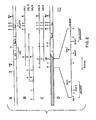
- a full genomic library was prepared from the DNA of the 380 cells of Example 1. Genomic DNA was partially digested with the restriction enzyme Sau 3A, and DNA fragments 14 to 23kb in length were purified by sucrose gradient centrifugation. The fragments were then ligated with DNA of the lambda phage vector EMBL3A (Tsjimoto et al., Science 224: 1403 (1984)) which was cut with Bam HI. After packaging in vitro in E. Coli, 420,000 independent recombinant phages were screened with a probe specific for the J H (the H (heavy) chain joining region) DNA segment (pHj) (Fig. 1, H, Hind III; R. Eco RI; S. Sam. 3a). Nine recombinant clones were obtained and their restriction map analysis allowed classification into groups that represented sequences derived from the two 14q + chromosomes. The restriction maps and representative overlapping clones of each group are shown in Fig. 1.
- Example 3 In a similar manner to that in Example 3, a full genomic library was prepared from the DNA of CLL 271 fresh leukemic cells of Example 2. After packaging in vitro, 375,000 independent recombinant phages were screened with the pC u 0.9 (a probe homologous to the immunoglobin A chain of the C (constant) region containing a 0.9kbEcoRl fragment) and the pHj probes. Ten clones were selected and restriction map analysis allowed classification into two groups that represented sequences derived from the uninvolved chromosome 14 and from the 14q + hybrid chromosome. The restriction maps and representative overlapping recombinant clones of each group are shown in Figs. 2B and C (H, Hind III; R.
- the recombinant clones shown in Fig. 2B contain the shorter Bam HI fragment hybridizing with the pCu 0.9 or pHj probes and represent the productively rearranged u gene on the uninvolved chromosome 14.
- the other group, illustrated in Fig. 3C, represents the excluded ⁇ allele on the 14q + chromosome.
- the restriction maps of the two groups, 5' of the J H segments, are completely different from each other and also from that of germ line DNA.
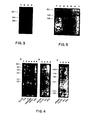
- Fig. 3 The results of this hybridization are shown in Fig. 3: lane 1, DNA from CHO (Chinese hamster ovary cell); lane 2, DNA from 706B6-40C1 17 (CHO x human hybrid cell containing only human chromosome 8); lane 3, DNA from 280AG8Ce4 (mouse x human hybrid containing human chromosome 8 but not human chromosome 14); lane 4, DNA from 545T human cell line.
- probe p380j-9SS hybridized with human DNA and with the DNA of a CHO x human hybrid containing only human chromosome 8 and no other human chromosomes. The same probe did not hybridize with rodent x human hybrids containing only human chromosome 14. Therefore, the class of recombinants containing the p380j-9SS DNA segment carry the joining region between chromosomes 8 and 14 on the 14 q + chromosome (Fig. 1).
- the p380j-9SS probe detected only a single germ line hybridizing fragment in the DNA of a T-cell line (545T) derived from the same patients from whom the leukemic 380 cell line was obtained, and also in DNAs derived from various other human cells.
- This probe detected a germ line and a rearranged DNA fragment in the 380 leukemic cell line DNA indicating that the translocation between 8 and 14 occurred as a somatic event during the development of the patient's leukemia.
- the p380j-2RR probe (Fig. 1B) was hybridized to DNA isolated from mouse x human and CHO x human hybrid cells containing human chromosomes 14 and 18 respectively.
- the probe hybridized with human DNA and with DNA derived from hybrids containing human chromosome 18, but not with DNA from hybrids containing human chromosome 14.
- clones 380j2 and 380j3 contain the joining region between chromosomes 14 and 18.
- CLL 271 shown in Fig. 2C, contain the t(11; 14) breakpoint a single copy DNA sequence derived from chromosome 11 within the Lamda Rc8 and the Lamda Rc5 cloned DNAs (Fig. 2C) was isolated.
- the Sal I-Sst I fragment and a Sma I-Eco RI fragment pictured in Fig. 2D were subcloned into plasmid vectors pUC19 (6) and a derivative of pBR322 designated pYT13 (7) and replicated in E. Coli.
- the subclones were designated pRc8SS and pRe8SmR, respectively (Fig. 3D). These two probes were used for hybridization with Southern blots of DNA from somatic cell hybrids between rodent cells and human cells that retained either human chromosome 14 or human chromosome 11. The results of this procedure are shown in Fig. 4.
- Jl cells are human chinese hamster ovary hybrids containing only human chromosome 11; Hll cells are human x mouse hybrids containing only human chromosomes 11 and Xq; and P3HR-1 cells are derived from a Burkitt lymphoma.
- Hybrid M44 (C12S5) is a human x mouse cell line containing only the human chromosome 14q + from P3HR-1 Burkitt lymphoma, and NP3 cells are derived from a mouse myeloma cell line.
- the DNA samples were digested with Eco RI and the Southern blot filters were hybridized with probe pRc8SS (lane A and B) and with pRcSSMR (lane C). The final washing of filters was done with 2 x SSC at 65°C for (A) and with 0.2xSSC at 65°C for (B) and (C).
- the DNA of Jl, Hll and CLL 271 cells showed the same size fragments (approx. 6kb) hybridizing with the two probes while mouse and Chinese hamster DNA did not hybridize with the probes.
- the pRc8SS probe did not hybridize with the DNA from hybrid cells containing human chromosome 14 (Fig. 5A, lane 4).
- the recombinant clones Lamda Rc8 and Lamda Rc5 contain the joining site between chromosomes 11 and 14 on the 14q + chromosome of CLL 271 cells.
- DNAs of mouse x human and Chinese hamster x human hybrid cells containing chromosomes 14 and/or 18 were hybridized with the p380j-2RR probe (Fig. 1). DNA samples were digested with BamHl and fractionated on a 0.7% agrarose gel. The Southern blot filter was hybridized with 32 P-labeled p380j-2RR and washed as described above. The p380j-2RR probe hybridized with human DNA and with DNA derived from hybrids containing human chromosome 18, but not with DNA from hybrids containing human chromosome 14. These data indicate that clones 380j2 and 380j3 contain the joining region between chromosomes 14 and 18.
- the p380j-2RR chromosome 18 specific probe was hybridized with DNA from human cells of various origins and from 380 cells. Human DNAs were cut with Sstl and run on a 0.7% agarose gel. The Southern blot filter was hybridized with 32 P-labeled p380j-2RR and washed as described above.
- lane 1 DNA EBV-transformed human lymphoblastoid cells
- lane 2 DNA from a human T-cell lymphoma
- lane 3 DNA from cells of CLL 271 (which carries a t(11;14) chromosome translocation);
- lane 4 DNA from Burkitt lymphoma cell line (DAUDI) with t(8;14) translocation;
- lane 5 DNA from 545T T-cell line;
- lane 6 DNA from 380 leukemic cell line; and
- lane 7 DNA from LN128 cells (human follicular lymphoma with the t(14;18) chromosome translocation).
- DNA derived from the neoplastic cells of a 35 year old male diagnosed by standard methods as having follicular lymphoma (LN 128) exhibited both a germ line and a rearranged DNA fragment when hybridized with the p380j-2RR DNA probe (Fig. 5, line 7).
- the additional band of hybridization compared to the control lane (lane 1) indicates the presence of follicular lymphoma.
- a karyotypic analysis of this patient's chromosomes revealed a reciprocal t(14;18) (q32; q21) translocation.
- Probe pRc8SmR specific for chromosome 11, was hybridized to DNAs isolated from various sources to detect rearranged fragments derived from hybrid chromosomes.
- Cellular DNA(5ug) from various sources was digested with Hind III or Bell and fractionated by agarose gel electrophoresis.
- the Southern blot filter was hybridized with the pRc8SmR probe and finally washed with 0.2xSSC at 65°C.
- the Bcl I digestion showed a rearranged fragment in LN87 cell DNA as well as in CLL 271 cell DNA. This result indicates that the breakpoint in LN 87 is close to the breakpoint observed in CLL 271 cells.
- the consistent location of the breakpoints in the case of CLL 271, a chronic lymphocytic leukemia, and LN 87, a diffuse large cell lymphoma, both having the t(11;14) translocation, indicates the involvement of the same gene, putatively called bcl-l (B-cell lymphoma/leukemia-1) in a variety of B-cell malignancies exhibiting this chromosomal translocation.
Landscapes
- Chemical & Material Sciences (AREA)
- Health & Medical Sciences (AREA)
- Organic Chemistry (AREA)
- Life Sciences & Earth Sciences (AREA)
- Proteomics, Peptides & Aminoacids (AREA)
- Genetics & Genomics (AREA)
- Immunology (AREA)
- Engineering & Computer Science (AREA)
- Biophysics (AREA)
- Zoology (AREA)
- Molecular Biology (AREA)
- Biochemistry (AREA)
- General Health & Medical Sciences (AREA)
- Wood Science & Technology (AREA)
- Oncology (AREA)
- Pathology (AREA)
- Analytical Chemistry (AREA)
- Gastroenterology & Hepatology (AREA)
- Physics & Mathematics (AREA)
- Biotechnology (AREA)
- Microbiology (AREA)
- Hospice & Palliative Care (AREA)
- Medicinal Chemistry (AREA)
- Bioinformatics & Cheminformatics (AREA)
- General Engineering & Computer Science (AREA)
- Measuring Or Testing Involving Enzymes Or Micro-Organisms (AREA)
- Investigating Or Analysing Biological Materials (AREA)
- Medicines That Contain Protein Lipid Enzymes And Other Medicines (AREA)
Priority Applications (1)
| Application Number | Priority Date | Filing Date | Title |
|---|---|---|---|
| AT85306492T ATE64624T1 (de) | 1984-11-15 | 1985-09-12 | Nachweis von b-zellneoplasmen. |
Applications Claiming Priority (2)
| Application Number | Priority Date | Filing Date | Title |
|---|---|---|---|
| US671580 | 1984-11-15 | ||
| US06/671,580 US4701409A (en) | 1984-11-15 | 1984-11-15 | Detection of B-cell neoplasms |
Publications (2)
| Publication Number | Publication Date |
|---|---|
| EP0189628A1 true EP0189628A1 (de) | 1986-08-06 |
| EP0189628B1 EP0189628B1 (de) | 1991-06-19 |
Family
ID=24695095
Family Applications (1)
| Application Number | Title | Priority Date | Filing Date |
|---|---|---|---|
| EP85306492A Expired - Lifetime EP0189628B1 (de) | 1984-11-15 | 1985-09-12 | Nachweis von B-Zellneoplasmen |
Country Status (7)
| Country | Link |
|---|---|
| US (1) | US4701409A (de) |
| EP (1) | EP0189628B1 (de) |
| JP (1) | JPS61173798A (de) |
| AT (1) | ATE64624T1 (de) |
| AU (1) | AU577245B2 (de) |
| CA (1) | CA1267098A (de) |
| DE (1) | DE3583290D1 (de) |
Cited By (7)
| Publication number | Priority date | Publication date | Assignee | Title |
|---|---|---|---|---|
| WO1991000364A1 (en) * | 1989-07-03 | 1991-01-10 | Temple University | Tcl-5 gene rearrangement involved in t-cell leukemia and melanoma |
| WO1991007424A1 (en) * | 1989-11-15 | 1991-05-30 | Temple University | Methods for detecting human leukemias |
| WO1991013172A1 (en) * | 1990-02-23 | 1991-09-05 | The Board Of Trustees Of The Leland Stanford Junior University | Transcription factors having a pathogenetic role in human neoplasias |
| WO1992019775A1 (en) * | 1991-04-29 | 1992-11-12 | Raggio-Italgene Spa | Assay and kit for the detection of chromosomal abnormalities |
| DE19610255A1 (de) * | 1996-03-15 | 1997-09-18 | Univ Heidelberg | Nukleinsäuresequenzen und Verfahren zum Nachweis von Translokationen zwischen Chromosomen |
| WO2000073500A1 (en) * | 1999-05-27 | 2000-12-07 | Vlaams Interuniversitair Instituut Voor Biotechnologie Vzw | MOLECULAR CHARACTERISATION OF CHROMOSOME TRANSLOCATION t(11;18)(q21;q21) AND ITS CORRELATION TO CARCINOGENESIS |
| US6689875B1 (en) | 1999-06-09 | 2004-02-10 | Vlaams Interuniversitair Instituut Voor Biotechnologie Vzw | Molecular characterization of chromosome translocation t(11;18)(q21;q21) and its correlation to carcinogenesis |
Families Citing this family (32)
| Publication number | Priority date | Publication date | Assignee | Title |
|---|---|---|---|---|
| JPH0665320B2 (ja) * | 1985-07-10 | 1994-08-24 | ザ リサ−チ フアウンデ−シヨン オブ ステ−ト ユニバ−シテイ− オブ ニユ−ヨ−ク | 遺伝子の新規検出法 |
| US5015568A (en) * | 1986-07-09 | 1991-05-14 | The Wistar Institute | Diagnostic methods for detecting lymphomas in humans |
| US4997764A (en) * | 1987-04-23 | 1991-03-05 | New York University | Transformation of human B-lympocytes with Epstein Barr virus and c-myc containing vectors |
| US5066792A (en) * | 1987-09-04 | 1991-11-19 | Board Of Regents University Of Texas | Gene probe for detection of specific human leukemias |
| US5079147A (en) * | 1989-03-13 | 1992-01-07 | The Wistar Institute Of Anatomy And Biology | Diagnostic probes and methods for using same to detect breast cancer |
| US5582973A (en) * | 1989-11-24 | 1996-12-10 | The United States Of America As Represented By The Department Of Health And Human Services | Sensitive method for localizing chromosomal breakpoints |
| US5985598A (en) * | 1994-10-27 | 1999-11-16 | Thomas Jefferson University | TCL-1 gene and protein and related methods and compositions |
| US7175995B1 (en) | 1994-10-27 | 2007-02-13 | Thomas Jefferson University | TCL-1 protein and related methods |
| CN103820562B (zh) | 2005-08-01 | 2015-05-13 | 俄亥俄州立大学研究基金会 | 用于乳腺癌的诊断、预后和治疗的基于MicroRNA的方法和组合物 |
| JP2009507918A (ja) | 2005-09-12 | 2009-02-26 | ジ・オハイオ・ステイト・ユニバーシティ・リサーチ・ファウンデイション | Bcl2関連癌の診断及び療法のための組成物及び方法 |
| ES2553442T3 (es) | 2006-01-05 | 2015-12-09 | The Ohio State University Research Foundation | Procedimientos basados en los microARN para el diagnóstico, pronóstico y tratamiento del cáncer de pulmón |
| US7670840B2 (en) | 2006-01-05 | 2010-03-02 | The Ohio State University Research Foundation | Micro-RNA expression abnormalities of pancreatic, endocrine and acinar tumors |
| EP1969147B1 (de) | 2006-01-05 | 2014-07-30 | The Ohio State University Research Foundation | mikro-RNA-basierte verfahren zur Diagnose von Magenkrebs |
| EP2369011A1 (de) | 2006-03-20 | 2011-09-28 | The Ohio State University Research Foundation | Miko-RNA-Fingerabdrücke während humaner Megakaryozytopoiese |
| EP2041317A4 (de) * | 2006-07-13 | 2009-10-14 | Univ Ohio State Res Found | Mikro-rna-basierte verfahren und zusammensetzungen zur diagnose und behandlung von erkrankungen in zusammenhang mit darmkrebs |
| EP2061907B1 (de) * | 2006-09-19 | 2011-11-23 | The Ohio State University Research Foundation | Tcl1-expression in durch mir-29 und mir-181 regulierter chronischer lymphozyten-leukämie (cll) |
| US8252538B2 (en) | 2006-11-01 | 2012-08-28 | The Ohio State University | MicroRNA expression signature for predicting survival and metastases in hepatocellular carcinoma |
| WO2008094545A2 (en) | 2007-01-31 | 2008-08-07 | The Ohio State University Research Foundation | Mic orna-based methods and compositions for the treatment of acute myeloid leukemia |
| ES2537349T3 (es) | 2007-06-08 | 2015-06-05 | The Government Of The United States Of America As Represented By The Secretary Of The Department Of Health And Human Services | Métodos para determinar un subtipo de carcinoma hepatocelular |
| CN101918424A (zh) | 2007-06-15 | 2010-12-15 | 俄亥俄州立大学研究基金会 | 用于靶向由Drosha介导的微小RNA加工的致癌ALL-1融合蛋白 |
| CN101809169B (zh) | 2007-07-31 | 2013-07-17 | 俄亥俄州立大学研究基金会 | 通过靶向dnmt3a和dnmt3b恢复甲基化的方法 |
| EP2653561B1 (de) | 2007-08-03 | 2016-03-02 | The Ohio State University Research Foundation | Ultrakonservierte Bereiche zur Codierung von ncRNA |
| EP3028708A1 (de) | 2007-08-22 | 2016-06-08 | The Ohio State University Research Foundation | Verfahren und zusammensetzungen zur induzierung von epha7-deregulierung und erk-phosphorlylierung bei humaner akuter leukämie |
| CA2703707A1 (en) | 2007-10-26 | 2009-04-30 | The Ohio State University Research Foundation | Methods for identifying fragile histidine triad (fhit) interaction and uses thereof |
| EP2307028B1 (de) | 2008-06-11 | 2013-10-02 | The Government of the United States of America as represented by The Secretary of the Department of Health and Human Services | Verwendung der mir-26-familie als prädiktiver marker für hepatozelluläres karzinom und des ansprechens auf die therapie |
| AU2010321555B2 (en) | 2009-11-23 | 2015-10-15 | The Ohio State University | Materials and methods useful for affecting tumor cell growth, migration and invasion |
| ES2606146T3 (es) | 2010-11-12 | 2017-03-22 | The Ohio State University Research Foundation | Métodos relacionados con microARN-21 y reparación de desapareamiento en cáncer colorrectal |
| CN103313706A (zh) | 2010-11-15 | 2013-09-18 | 俄亥俄州立大学研究基金会 | 控制释放粘膜粘合系统 |
| US8664192B2 (en) | 2011-03-07 | 2014-03-04 | The Ohio State University | Mutator activity induced by microRNA-155 (miR-155) links inflammation and cancer |
| EP2766500A4 (de) | 2011-10-14 | 2015-10-14 | Univ Ohio State | Verfahren und materialien in verbindung mit eierstockkrebs |
| AU2012352265B2 (en) | 2011-12-13 | 2017-02-16 | Ohio State Innovation Foundation | Methods and compositions related to miR-21 and miR-29a, exosome inhibition, and cancer metastasis |
| US8859202B2 (en) | 2012-01-20 | 2014-10-14 | The Ohio State University | Breast cancer biomarker signatures for invasiveness and prognosis |
Citations (2)
| Publication number | Priority date | Publication date | Assignee | Title |
|---|---|---|---|---|
| US3755086A (en) * | 1971-02-09 | 1973-08-28 | Hoffmann La Roche | Diagnostic method utilizing synthetic deoxyrilionucleotide oligomer template |
| EP0149547A2 (de) * | 1984-01-18 | 1985-07-24 | The Board Of Trustees Of The Leland Stanford Junior University | Diagnose von Neoplasia mittels Genumformung |
Family Cites Families (2)
| Publication number | Priority date | Publication date | Assignee | Title |
|---|---|---|---|---|
| US4535058A (en) * | 1982-10-01 | 1985-08-13 | Massachusetts Institute Of Technology | Characterization of oncogenes and assays based thereon |
| US4582788A (en) * | 1982-01-22 | 1986-04-15 | Cetus Corporation | HLA typing method and cDNA probes used therein |
-
1984
- 1984-11-15 US US06/671,580 patent/US4701409A/en not_active Expired - Lifetime
-
1985
- 1985-09-12 AT AT85306492T patent/ATE64624T1/de not_active IP Right Cessation
- 1985-09-12 EP EP85306492A patent/EP0189628B1/de not_active Expired - Lifetime
- 1985-09-12 DE DE8585306492T patent/DE3583290D1/de not_active Expired - Lifetime
- 1985-09-25 CA CA000491536A patent/CA1267098A/en not_active Expired - Lifetime
- 1985-10-03 JP JP60221111A patent/JPS61173798A/ja active Pending
- 1985-11-04 AU AU49349/85A patent/AU577245B2/en not_active Expired
Patent Citations (2)
| Publication number | Priority date | Publication date | Assignee | Title |
|---|---|---|---|---|
| US3755086A (en) * | 1971-02-09 | 1973-08-28 | Hoffmann La Roche | Diagnostic method utilizing synthetic deoxyrilionucleotide oligomer template |
| EP0149547A2 (de) * | 1984-01-18 | 1985-07-24 | The Board Of Trustees Of The Leland Stanford Junior University | Diagnose von Neoplasia mittels Genumformung |
Non-Patent Citations (4)
| Title |
|---|
| CLINICAL CHEMISTRY, vol. 31, June 1985, pages 804-811, Washington DC, US; C.D. SAULS et al.: "Applications of recombinant DNA to pathologic diagnosis" * |
| NATURE, vol. 290, 2nd April 1981, pages 368-372, London, GB; P.A. HIETER et al.: "Human immunoglobulin kappa light-chain genes are deleted or rearranged in lambda-producing B cells" * |
| PROC. NATL. ACAD. SCI. USA, vol. 80, August 1983, pages 4822-4826, US; K. NISHIKURA et al.: "Differential expression of the normal and of the translocated human c-myc oncogenes in B cells" * |
| PROC. NATL. ACAD. SCI. USA, vol. 80, November 1983, pages 6922-6926; C.M. CROCE et al.: "Transcriptional activation of an unrearranged and untranslocated c-myc oncogene by translocation of a C-lambda locus in Burkitt lymphona cells" * |
Cited By (9)
| Publication number | Priority date | Publication date | Assignee | Title |
|---|---|---|---|---|
| WO1991000364A1 (en) * | 1989-07-03 | 1991-01-10 | Temple University | Tcl-5 gene rearrangement involved in t-cell leukemia and melanoma |
| WO1991007424A1 (en) * | 1989-11-15 | 1991-05-30 | Temple University | Methods for detecting human leukemias |
| WO1991013172A1 (en) * | 1990-02-23 | 1991-09-05 | The Board Of Trustees Of The Leland Stanford Junior University | Transcription factors having a pathogenetic role in human neoplasias |
| WO1992019775A1 (en) * | 1991-04-29 | 1992-11-12 | Raggio-Italgene Spa | Assay and kit for the detection of chromosomal abnormalities |
| DE19610255A1 (de) * | 1996-03-15 | 1997-09-18 | Univ Heidelberg | Nukleinsäuresequenzen und Verfahren zum Nachweis von Translokationen zwischen Chromosomen |
| DE19610255B4 (de) * | 1996-03-15 | 2004-11-04 | Universität Heidelberg | Verfahren zur Herstellung von Nukleinsäuresequenzen und Verfahren zum Nachweis von Translokationen zwischen Chromosomen |
| WO2000073500A1 (en) * | 1999-05-27 | 2000-12-07 | Vlaams Interuniversitair Instituut Voor Biotechnologie Vzw | MOLECULAR CHARACTERISATION OF CHROMOSOME TRANSLOCATION t(11;18)(q21;q21) AND ITS CORRELATION TO CARCINOGENESIS |
| US6689875B1 (en) | 1999-06-09 | 2004-02-10 | Vlaams Interuniversitair Instituut Voor Biotechnologie Vzw | Molecular characterization of chromosome translocation t(11;18)(q21;q21) and its correlation to carcinogenesis |
| US7807809B2 (en) | 1999-06-09 | 2010-10-05 | Vlaams Interuniversitair Instituut Voor Biotechnologie Vzw | Molecular characterization of chromosome translocation t(11;18)(q21;q21) and its correlation to carcinogenesis |
Also Published As
| Publication number | Publication date |
|---|---|
| US4701409A (en) | 1987-10-20 |
| EP0189628B1 (de) | 1991-06-19 |
| ATE64624T1 (de) | 1991-07-15 |
| AU577245B2 (en) | 1988-09-15 |
| CA1267098A (en) | 1990-03-27 |
| JPS61173798A (ja) | 1986-08-05 |
| AU4934985A (en) | 1986-05-22 |
| DE3583290D1 (de) | 1991-07-25 |
Similar Documents
| Publication | Publication Date | Title |
|---|---|---|
| EP0189628B1 (de) | Nachweis von B-Zellneoplasmen | |
| EP0252685B1 (de) | Diagnostische Verfahren zum Nachweis von Lymphomen bei Menschen | |
| US5149628A (en) | Methods for detecting bcl-3 gene in human leukemias | |
| US5202429A (en) | DNA molecules having human BCL-2 gene sequences | |
| Neri et al. | Ras oncogene mutation in multiple myeloma. | |
| Lens et al. | p53 abnormalities in CLL are associated with excess of prolymphocytes and poor prognosis | |
| Groffen et al. | c-sis is translocated from chromosome 22 to chromosome 9 in chronic myelocytic leukemia. | |
| EP0453560B1 (de) | Lokalisation und charakterisierung des wilms-tumor-gens | |
| Newcomb et al. | ras oncogenes and phenotypic staging in N-methylnitrosourea-and γ-irradiation-induced thymic lymphomas in C57BL/6J mice | |
| WO1984001389A1 (en) | Characterization of oncogenes and assays based thereon | |
| Ohno et al. | Molecular analysis of a chromosomal translocation, t (9; 14)(p13; q32), in a diffuse large-cell lymphoma cell line expressing the Ki-1 antigen. | |
| Rodriguez et al. | Analysis of chromosome 12 aneuploidy in interphase cells from human male germ cell tumors by fluorescence in situ hybridization | |
| Ha et al. | Lineage specific classification of leukaemia: results of the analysis of sixty cases of childhood leukaemia | |
| WO1992012262A1 (en) | Dna sequences related to isolated fragile x syndrome | |
| Latif et al. | Molecular characterization of a large homozygous deletion in the small cell lung cancer cell line U2020: a strategy for cloning the putative tumor suppressor gene | |
| Lidereau et al. | Presence of an allelic EcoRI restriction fragment of the c-mos locus in leukocyte and tumor cell DNAs of breast cancer patients. | |
| Hilkens et al. | Genetic mapping of Pim-1 putative oncogene to mouse chromosome 17 | |
| US5242795A (en) | TCL-5 gene rearrangement involved in T-cell leukemia and melanoma | |
| EP0181635A2 (de) | Proben und Verfahren zur Bestimmung chromosomischer Translokationen | |
| Stoppa-Lyonnet et al. | Segregation of two BRCA1 mutations in a single family | |
| US5650278A (en) | Compositions and diagnostic kits for identifying alveolar rhabdomyosarcoma | |
| Khokhar et al. | Cytogenetic abnormalities in the leukemic phase of non-Hodgkin lymphoma | |
| Britt et al. | Identification of a unique erythroleukemia-associated retroviral gp70 expressed during early stages of normal erythroid differentiation. | |
| Kees et al. | New translocation t (2; 13)(p12; q34) and rearrangement of the MLL gene in a childhood leukemia cell line | |
| Kees et al. | Establishment and characterization of a childhood pre-B acute lymphoblastic leukemia cell line, PER-278, with chromosome translocations t (1; 19) and t (1; 9) |
Legal Events
| Date | Code | Title | Description |
|---|---|---|---|
| PUAI | Public reference made under article 153(3) epc to a published international application that has entered the european phase |
Free format text: ORIGINAL CODE: 0009012 |
|
| AK | Designated contracting states |
Kind code of ref document: A1 Designated state(s): AT BE CH DE FR GB IT LI NL |
|
| 17P | Request for examination filed |
Effective date: 19861112 |
|
| 17Q | First examination report despatched |
Effective date: 19880722 |
|
| GRAA | (expected) grant |
Free format text: ORIGINAL CODE: 0009210 |
|
| AK | Designated contracting states |
Kind code of ref document: B1 Designated state(s): AT BE CH DE FR GB IT LI NL |
|
| REF | Corresponds to: |
Ref document number: 64624 Country of ref document: AT Date of ref document: 19910715 Kind code of ref document: T |
|
| REF | Corresponds to: |
Ref document number: 3583290 Country of ref document: DE Date of ref document: 19910725 |
|
| ET | Fr: translation filed | ||
| ITF | It: translation for a ep patent filed | ||
| PLBE | No opposition filed within time limit |
Free format text: ORIGINAL CODE: 0009261 |
|
| STAA | Information on the status of an ep patent application or granted ep patent |
Free format text: STATUS: NO OPPOSITION FILED WITHIN TIME LIMIT |
|
| 26N | No opposition filed | ||
| REG | Reference to a national code |
Ref country code: GB Ref legal event code: IF02 |
|
| PGFP | Annual fee paid to national office [announced via postgrant information from national office to epo] |
Ref country code: NL Payment date: 20040905 Year of fee payment: 20 |
|
| PGFP | Annual fee paid to national office [announced via postgrant information from national office to epo] |
Ref country code: GB Payment date: 20040908 Year of fee payment: 20 Ref country code: FR Payment date: 20040908 Year of fee payment: 20 |
|
| PGFP | Annual fee paid to national office [announced via postgrant information from national office to epo] |
Ref country code: DE Payment date: 20040909 Year of fee payment: 20 |
|
| PGFP | Annual fee paid to national office [announced via postgrant information from national office to epo] |
Ref country code: AT Payment date: 20040913 Year of fee payment: 20 |
|
| PGFP | Annual fee paid to national office [announced via postgrant information from national office to epo] |
Ref country code: CH Payment date: 20040915 Year of fee payment: 20 |
|
| PGFP | Annual fee paid to national office [announced via postgrant information from national office to epo] |
Ref country code: BE Payment date: 20041122 Year of fee payment: 20 |
|
| PG25 | Lapsed in a contracting state [announced via postgrant information from national office to epo] |
Ref country code: GB Free format text: LAPSE BECAUSE OF EXPIRATION OF PROTECTION Effective date: 20050911 |
|
| PG25 | Lapsed in a contracting state [announced via postgrant information from national office to epo] |
Ref country code: NL Free format text: LAPSE BECAUSE OF EXPIRATION OF PROTECTION Effective date: 20050912 |
|
| BE20 | Be: patent expired |
Owner name: THE *WISTAR INSTITUTE Effective date: 20050912 |
|
| REG | Reference to a national code |
Ref country code: GB Ref legal event code: PE20 |
|
| REG | Reference to a national code |
Ref country code: CH Ref legal event code: PL |
|
| NLV7 | Nl: ceased due to reaching the maximum lifetime of a patent |
Effective date: 20050912 |
|
| BE20 | Be: patent expired |
Owner name: THE *WISTAR INSTITUTE Effective date: 20050912 |