EP0191325A2 - Verfahren zur Herstellung von Nassverfahrensphosphorsäure - Google Patents
Verfahren zur Herstellung von Nassverfahrensphosphorsäure Download PDFInfo
- Publication number
- EP0191325A2 EP0191325A2 EP86100777A EP86100777A EP0191325A2 EP 0191325 A2 EP0191325 A2 EP 0191325A2 EP 86100777 A EP86100777 A EP 86100777A EP 86100777 A EP86100777 A EP 86100777A EP 0191325 A2 EP0191325 A2 EP 0191325A2
- Authority
- EP
- European Patent Office
- Prior art keywords
- digestion
- mash
- phosphate
- phosphoric acid
- aluminum
- Prior art date
- Legal status (The legal status is an assumption and is not a legal conclusion. Google has not performed a legal analysis and makes no representation as to the accuracy of the status listed.)
- Granted
Links
- 238000000034 method Methods 0.000 title claims abstract description 15
- 238000002360 preparation method Methods 0.000 title claims description 4
- 235000011007 phosphoric acid Nutrition 0.000 title description 14
- 150000003016 phosphoric acids Chemical class 0.000 title description 2
- NBIIXXVUZAFLBC-UHFFFAOYSA-N Phosphoric acid Chemical compound OP(O)(O)=O NBIIXXVUZAFLBC-UHFFFAOYSA-N 0.000 claims abstract description 32
- 229910019142 PO4 Inorganic materials 0.000 claims abstract description 24
- NBIIXXVUZAFLBC-UHFFFAOYSA-K phosphate Chemical compound [O-]P([O-])([O-])=O NBIIXXVUZAFLBC-UHFFFAOYSA-K 0.000 claims abstract description 23
- 239000010452 phosphate Substances 0.000 claims abstract description 23
- 230000029087 digestion Effects 0.000 claims abstract description 20
- 229910000147 aluminium phosphate Inorganic materials 0.000 claims abstract description 16
- 239000002253 acid Substances 0.000 claims abstract description 14
- 229910052782 aluminium Inorganic materials 0.000 claims abstract description 14
- -1 aluminum compound Chemical class 0.000 claims abstract description 9
- XAGFODPZIPBFFR-UHFFFAOYSA-N aluminium Chemical compound [Al] XAGFODPZIPBFFR-UHFFFAOYSA-N 0.000 claims abstract description 6
- 229910052500 inorganic mineral Inorganic materials 0.000 claims abstract description 3
- 239000011707 mineral Substances 0.000 claims abstract description 3
- 230000015572 biosynthetic process Effects 0.000 claims abstract 3
- 239000007787 solid Substances 0.000 claims description 4
- 150000004645 aluminates Chemical class 0.000 claims description 2
- WNROFYMDJYEPJX-UHFFFAOYSA-K aluminium hydroxide Chemical class [OH-].[OH-].[OH-].[Al+3] WNROFYMDJYEPJX-UHFFFAOYSA-K 0.000 claims description 2
- 239000004927 clay Substances 0.000 claims description 2
- 150000003467 sulfuric acid derivatives Chemical class 0.000 claims description 2
- 150000001875 compounds Chemical class 0.000 abstract description 6
- 238000004519 manufacturing process Methods 0.000 abstract description 4
- OAICVXFJPJFONN-UHFFFAOYSA-N Phosphorus Chemical compound [P] OAICVXFJPJFONN-UHFFFAOYSA-N 0.000 abstract 1
- 239000011574 phosphorus Substances 0.000 abstract 1
- 229910052698 phosphorus Inorganic materials 0.000 abstract 1
- 235000021317 phosphate Nutrition 0.000 description 18
- 239000011734 sodium Substances 0.000 description 13
- 150000007513 acids Chemical class 0.000 description 6
- OSGAYBCDTDRGGQ-UHFFFAOYSA-L calcium sulfate Inorganic materials [Ca+2].[O-]S([O-])(=O)=O OSGAYBCDTDRGGQ-UHFFFAOYSA-L 0.000 description 5
- 238000005406 washing Methods 0.000 description 5
- 238000001914 filtration Methods 0.000 description 4
- 244000228088 Cola acuminata Species 0.000 description 3
- 235000010205 Cola acuminata Nutrition 0.000 description 3
- 235000015438 Cola nitida Nutrition 0.000 description 3
- QAOWNCQODCNURD-UHFFFAOYSA-N Sulfuric acid Chemical compound OS(O)(=O)=O QAOWNCQODCNURD-UHFFFAOYSA-N 0.000 description 3
- 238000004140 cleaning Methods 0.000 description 3
- 239000000706 filtrate Substances 0.000 description 3
- YCKRFDGAMUMZLT-UHFFFAOYSA-N Fluorine atom Chemical compound [F] YCKRFDGAMUMZLT-UHFFFAOYSA-N 0.000 description 2
- 230000000052 comparative effect Effects 0.000 description 2
- 239000011737 fluorine Substances 0.000 description 2
- 229910052731 fluorine Inorganic materials 0.000 description 2
- 239000000047 product Substances 0.000 description 2
- 229910052710 silicon Inorganic materials 0.000 description 2
- 239000010703 silicon Substances 0.000 description 2
- 235000016795 Cola Nutrition 0.000 description 1
- 241001634499 Cola Species 0.000 description 1
- DGAQECJNVWCQMB-PUAWFVPOSA-M Ilexoside XXIX Chemical compound C[C@@H]1CC[C@@]2(CC[C@@]3(C(=CC[C@H]4[C@]3(CC[C@@H]5[C@@]4(CC[C@@H](C5(C)C)OS(=O)(=O)[O-])C)C)[C@@H]2[C@]1(C)O)C)C(=O)O[C@H]6[C@@H]([C@H]([C@@H]([C@H](O6)CO)O)O)O.[Na+] DGAQECJNVWCQMB-PUAWFVPOSA-M 0.000 description 1
- 229910004883 Na2SiF6 Inorganic materials 0.000 description 1
- AZDRQVAHHNSJOQ-UHFFFAOYSA-N alumane Chemical class [AlH3] AZDRQVAHHNSJOQ-UHFFFAOYSA-N 0.000 description 1
- ZOMBKNNSYQHRCA-UHFFFAOYSA-J calcium sulfate hemihydrate Chemical compound O.[Ca+2].[Ca+2].[O-]S([O-])(=O)=O.[O-]S([O-])(=O)=O ZOMBKNNSYQHRCA-UHFFFAOYSA-J 0.000 description 1
- 230000001419 dependent effect Effects 0.000 description 1
- 150000004683 dihydrates Chemical class 0.000 description 1
- 238000010790 dilution Methods 0.000 description 1
- 239000012895 dilution Substances 0.000 description 1
- 239000004744 fabric Substances 0.000 description 1
- 150000004761 hexafluorosilicates Chemical class 0.000 description 1
- 230000007257 malfunction Effects 0.000 description 1
- 239000000463 material Substances 0.000 description 1
- 239000000203 mixture Substances 0.000 description 1
- 150000003013 phosphoric acid derivatives Chemical class 0.000 description 1
- 239000002244 precipitate Substances 0.000 description 1
- 238000004537 pulping Methods 0.000 description 1
- JTDPJYXDDYUJBS-UHFFFAOYSA-N quinoline-2-carbohydrazide Chemical compound C1=CC=CC2=NC(C(=O)NN)=CC=C21 JTDPJYXDDYUJBS-UHFFFAOYSA-N 0.000 description 1
- 229910052708 sodium Inorganic materials 0.000 description 1
- 239000000725 suspension Substances 0.000 description 1
- XLYOFNOQVPJJNP-UHFFFAOYSA-N water Substances O XLYOFNOQVPJJNP-UHFFFAOYSA-N 0.000 description 1
Images

Classifications
-
- C—CHEMISTRY; METALLURGY
- C01—INORGANIC CHEMISTRY
- C01B—NON-METALLIC ELEMENTS; COMPOUNDS THEREOF; METALLOIDS OR COMPOUNDS THEREOF NOT COVERED BY SUBCLASS C01C
- C01B25/00—Phosphorus; Compounds thereof
- C01B25/16—Oxyacids of phosphorus; Salts thereof
- C01B25/18—Phosphoric acid
- C01B25/22—Preparation by reacting phosphate-containing material with an acid, e.g. wet process
- C01B25/2208—Preparation by reacting phosphate-containing material with an acid, e.g. wet process with an acid or a mixture of acids other than sulfuric acid
-
- C—CHEMISTRY; METALLURGY
- C01—INORGANIC CHEMISTRY
- C01B—NON-METALLIC ELEMENTS; COMPOUNDS THEREOF; METALLOIDS OR COMPOUNDS THEREOF NOT COVERED BY SUBCLASS C01C
- C01B25/00—Phosphorus; Compounds thereof
- C01B25/16—Oxyacids of phosphorus; Salts thereof
- C01B25/18—Phosphoric acid
- C01B25/22—Preparation by reacting phosphate-containing material with an acid, e.g. wet process
- C01B25/222—Preparation by reacting phosphate-containing material with an acid, e.g. wet process with sulfuric acid, a mixture of acids mainly consisting of sulfuric acid or a mixture of compounds forming it in situ, e.g. a mixture of sulfur dioxide, water and oxygen
- C01B25/223—Preparation by reacting phosphate-containing material with an acid, e.g. wet process with sulfuric acid, a mixture of acids mainly consisting of sulfuric acid or a mixture of compounds forming it in situ, e.g. a mixture of sulfur dioxide, water and oxygen only one form of calcium sulfate being formed
- C01B25/225—Dihydrate process
-
- C—CHEMISTRY; METALLURGY
- C01—INORGANIC CHEMISTRY
- C01B—NON-METALLIC ELEMENTS; COMPOUNDS THEREOF; METALLOIDS OR COMPOUNDS THEREOF NOT COVERED BY SUBCLASS C01C
- C01B25/00—Phosphorus; Compounds thereof
- C01B25/16—Oxyacids of phosphorus; Salts thereof
- C01B25/18—Phosphoric acid
- C01B25/22—Preparation by reacting phosphate-containing material with an acid, e.g. wet process
- C01B25/222—Preparation by reacting phosphate-containing material with an acid, e.g. wet process with sulfuric acid, a mixture of acids mainly consisting of sulfuric acid or a mixture of compounds forming it in situ, e.g. a mixture of sulfur dioxide, water and oxygen
- C01B25/223—Preparation by reacting phosphate-containing material with an acid, e.g. wet process with sulfuric acid, a mixture of acids mainly consisting of sulfuric acid or a mixture of compounds forming it in situ, e.g. a mixture of sulfur dioxide, water and oxygen only one form of calcium sulfate being formed
- C01B25/226—Hemihydrate process
Definitions
- the present invention relates to a process for the preparation of wet process phosphoric acid by digestion of phosphate ores with the aid of a mineral acid to form a digestion mash which is then separated into remaining and formed solids on the one hand and the resulting crude phosphoric acid on the other hand.
- This digestion is usually carried out using sulfuric acid, so that calcium sulfate hemihydrate or dihydrate is formed in addition to the crude phosphoric acid, depending on the reaction conditions.
- the calcium sulfate compound is generally separated off by filtration using vacuum filter apparatus, which is followed by a mostly multi-stage countercurrent washing of the filtered solids in order to obtain the phosphoric acid as completely as possible.
- the digestion process or returned components from subsequent cleaning operations wash water
- more or less strongly contaminated crude phosphoric acids and acid-insoluble compounds are formed, which are separated off together with the calcium sulfate during the filtration.
- the fluorine contained in every raw phosphate in addition to more or less large amounts of aluminum, reacts with the silicon also present in the ore to form SiF 6 2 -, the hexafluorosilicate which is sparingly soluble with alkalis and alkaline earths forms. Therefore, in addition to reducing the fluorine content in the crude phosphoric acid which has already been filtered off, additional sodium hexafluorosilicate (DE-PS 16 67 435) is precipitated by adding compounds containing sodium and / or silicon.
- the solubility of Na 2 SiF 6 is strongly dependent on the P 2 0 5 concentration and the temperature. Especially when washing the calcium sulfate, a P 2 0 5 concentration range of 0 to 30% and a temperature range of about 20-70 ° C. are run through, so that the solubility product of Na 2 siF 6 is exceeded or fallen below at different points .
- this incrustation ie the amount of Na 2SiF6 deposited per unit of time, with otherwise constant conditions, depends primarily on the type of raw phosphate used. While the Na 2 SiF 6 incrustations occur only to a small extent, for example, when using Kola raw phosphate, when using other phosphates, caking occurs within a short time, especially in the filtration stage, so that the operation is interrupted and corresponding Cleaning operations must be performed.
- this object can be achieved in a simple manner if, in the preparation of the wet process phosphoric acid either to the phosphate ore or to the pulping mash, so much of an aluminum compound soluble in phosphoric acid is added that an aluminum concentration of 0.3 to 1 , 0% by weight, preferably from 0.5 to 0.7% by weight.
- the aluminum compound can either be added in such a way that the Al compound is mixed with the phosphate ore before the digestion or is added during the digestion in the vicinity of the point at which the phosphate ore is added.
- Suitable aluminum compounds for this purpose are primarily aluminum hydroxides, sulfates, clay or aluminates, which can be used both in solid and in dissolved form or as a suspension.
- the incrustations of Na 2 SiF 6 are practically avoided or reduced to such a small extent in the case of acids which have a low Al / F molar ratio, so that disruptions in the operating sequence are avoided or the usual service lives are achieved.
- the operating sequence was without any disturbances.
- the incrustations with Na 2 SiF 6 were limited to the filtrate drain lines in the washing zone and were, for example, about 4.5 mm in the drain line of the washing filtrate with 25% P 2 0 5 after 30 days.
- Example 1 20 t / h of South African phalaborwa phosphate (Palfos 86) were digested in the same way to form crude phosphoric acid. A mash was formed with an Al content of 0.17% by weight, based on P 2 0 5 . Already after 2 days there was considerable Na 2 SiF 6 incrustation in practically all lines, but also on the filter cloth greatly reduced the filtration performance and eventually led to a shutdown. Compared to Example 1, the Na2SiF6 incrustation in the drain line of the 25% washing filtrate, which had been completely cleaned before the start of the test, was 8 mm after 3 days.
- the incrustations caused by Na 2 SiF 6 were similarly small as in Example 1, which resulted in operating times of approximately the same length.
Landscapes
- Chemical & Material Sciences (AREA)
- Organic Chemistry (AREA)
- Inorganic Chemistry (AREA)
- Compounds Of Alkaline-Earth Elements, Aluminum Or Rare-Earth Metals (AREA)
- Silicon Compounds (AREA)
- Removal Of Specific Substances (AREA)
Abstract
Description
- Die vorliegende Erfindung betrifft ein Verfahren zur Herstellung von Naßverfahrensphosphorsäure durch Aufschluß von Phosphaterzen mit Hilfe einer Mineralsäure unter Bildung einer Aufschlußmaische, die anschließend in verbleibende und gebildete Feststoffe einerseits sowie die entstandene Rohphosphorsäure andererseits getrennt wird.
- Üblicherweise erfolgt dieser Aufschluß unter Verwendung von Schwefelsäure, so daß je nach Reaktionsbedingungen neben der Rohphosphorsäure Calciumsulfat-Halbhydrat oder -Dihydrat entsteht. Die Abtrennung der Calciumsulfat-Verbindung erfolgt in der Regel durch Filtration mit Hilfe von Vakuumfilter-Apparaten, an die sich eine meist mehrstufige Gegenstromwaschung der abfiltrierten Feststoffe zur möglichst vollständigen Gewinnung der Phosphorsäure anschließt.
- In Abhängigkeit von der Rohphosphatzusammensetzung, des Aufschlußverfahrens oder von rückgeführten Komponenten aus nachfolgenden Reinigungsoperationen (Waschwässer) entstehen dabei mehr oder weniger stark verunreinigte rohe Phosphorsäuren und in Säure unlösliche Verbindungen, die bei der Filtration zusammen mit dem Calciumsulfat abgetrennt werden.
- Vor allem das in jedem Rohphosphat, neben mehr oder minder großen Mengen Aluminium enthlatene Fluor reagiert mit dem ebenfalls im Erz vorhandenen Silicium zu SiF6 2-, das mit Alkalien und Erdalkalien schwerlösliche Hexafluorosilicate bildet. Daher wird häufig zusätzlich zur Verringerung des Fluorgehaltes in der bereits abfiltrierten Rohphosphorsäure durch Zugabe von natrium- und/oder siliciumhaltigen Verbindungen weiteres Natriumhexafluorosilicat (DE-PS 16 67 435) ausgefällt.
- Die Löslichkeit von Na2SiF6 ist stark abhängig von der P205-Konzentration und der Temperatur. Vor allem bei der Waschung des Calciumsulfats wird ein P205-Konzentrationsbereich von 0 bis 30 % und ein Temperaturbereich von etwa 20-70°C durchlaufen, so daß an verschiedenen Stellen das Löslichkeitsprodukt des Na2siF6 über- bzw. unterschritten wird.
- Dies führt jedoch in der Praxis zu erheblichen Problemen, da diese Verbindung besonders bevorzugt an Oberflächen kristallisiert und aufwächst. Dabei spielt das Material nur eine untergeordnete Rolle, so daß praktisch an allen produktberührten Flächen, also z.B. im Reaktor, im Filter, in Leitungen, an Pumpen, an meßtechnischen Einrichtungen aber auch auf oder in den Filtertüchern, Verkrustungen auftreten.
- Dadurch kommt es nach mehr oder weniger kurzen Betriebszeiten zu Störungen, die den Betriebsablauf behindern oder zu Stillständen führen. Diese Produktionsunterbrechungen und Reinigungsoperationen verursachen erhebliche Kosten.
- Es hat sich gezeigt, daß das Ausmaß dieser Verkrustungen, also die pro Zeit-Einheit gebildete Menge an abgeschiedenem Na 2SiF6 bei sonst gleichbleibenden Verhältnissen in erster Linie abhängig von der Art des eingesetzten Rohphosphats ist. Während beispielsweise bei Verwendung von Kola-Rohphosphat die Na2SiF6-Verkrustungen in nur geringem Umfang auftreten, kommt es bei Einsatz von anderen Phosphaten bereits innerhalb kurzer Zeit, vor allem in der Filtrationsstufe, zu so starken Anbackungen, daß der Betrieb unterbrochen und entsprechende Reinigungsoperationen durchgeführt werden müssen.
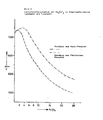
- Ferner wurde festgestellt, daß die Löslichkeit des Na2SiF6 in Abhängigkeit der P205-Konzentration im Falle einer auf Basis Kola-Phosphat hergestellten Phosphorsäure deutlich höher ist, als beispielsweise im Falle einer auf gleiche Weise hergestellten Säure aus südafrikanischem Phalaborwa-Phosphat (Bild 1). Offensichtlich ist diese geringe Löslichkeit die Ursache für die unterschiedlich starken Verkrustungen beim Herstellprozeß der Säuren.
- Es war deshalb Aufgabe der vorliegenden Erfindung, bei der Herstellung von Naßverfahrensphosphorsäure die Na2SiF6-Ausfällungen und Verkrustungen zu vermeiden bzw. erheblich zu vermindern.
- Überraschenderweise wurde gefunden, daß sich diese Aufgabe in einfacher Weise lösen läßt, wenn man bei der Herstellung der Naßverfahrensphosphorsäure entweder zum Phosphaterz oder in die Aufschlußmaische so viel einer in Phosphorsäure löslichen Aluminiumverbindung zugibt, daß sich in der Aufschlußmaische eine Aluminiumkonzentration von 0,3 bis 1,0 Gew%, vorzugsweise von 0,5 - 0,7 Gew% einstellt.
- Die Zugabe der Aluminiumverbindung kann dabei entweder so erfolgen, daß man die Al-Verbindung mit dem Phosphaterz vor dem Aufschluß vermischt oder während des Aufschlusses in der Nähe der Stelle an welche die Phosphaterzzugabe erfolgt, zugibt. Als Al-Verbindungen sind hierzu in erster Linie Aluminiumhydroxide, -sulfate, Ton oder Aluminate geeignet, die sowohl in fester als auch in gelöster Form oder als Suspension eingesetzt werden können.
- Durch die erfinderische Maßnahme werden bei Säuren die ein niedriges Al/F-Molverhältnis aufweisen die Verkrustungen von Na2SiF6 praktisch vermieden bzw. auf ein so geringes Maß reduziert, so daß Störungen im Betriebsablauf vermieden bzw. die üblichen Standzeiten erreicht werden.
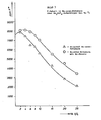
- Wie ein Vergleich von Bild 1 mit Bild 2 zeigt, werden durch Zusatz Aluminium zu einem Phosphaterz mit relativ niedrigem Al-Gehalt (Phalaborwa-Phosphat) Säuren gewonnen, in denen Na2SiF6 ein etwa gleich gutes Löslichkeitsverhalten aufweist wie in Säuren aus Kola-Phosphat mit relativ hohem Al-Gehalt, die sich gut verarbeiten lassen.
- Ohne den Erfindungsgegenstand darauf beschränken zu wollen, soll das Wesen der vorliegenden Erfindung an den nachfolgenden Beispielen näher erläutert werden.
- 20 t/h Kola-Rohphosphat wurden mit 71 t/h Rezirkulationssäure und 18,5 t/h konzentrierte Schwefelsäure bei ca. 72°C in einem Single-Tank aufgeschlossen. Nach einer Verweilzeit von ca. 6 Stunden wurde die Rohphosphorsäure einem Kipp-Pfannen-Filter (Tilting-pan filter) abfiltriert. Der Al-Gehalt in der Aufschlußmaische betrug 0,96 Gew%, bezogen auf P 2 0 5.
- Der Betriebsablauf erfolgte ohne Störungen, Die Verkrustungen mit Na2SiF6 beschränkten sich auf die Filtratäblaufleitungen in der Waschzone und betrugen beispielsweise in der Ablaufleitung des Waschfiltrates mit 25 % P205 nach 30 Tagen ca. 4,5 mm.
- Wie in Beispiel 1 wurden 20 t/h südafrikanisches Phalaborwa-Phosphat (Palfos 86) in gleicher Weise zu Rohphosphorsäure aufgeschlossen. Es entstand eine Maische mit einem Al-Gehalt von 0,17 Gew%,bezogen auf P205. Bereits nach 2 Tagen kam es jedoch in praktisch allen-Leitungen aber auch auf dem Filtertuch zu erheblichen Na2SiF6-Verkrustungen, die zunächst die Filtrationsleistung stark verminderten und schließlich zum Betriebsstillstand führten. Vergleichsweise zu Beispiel 1 betrug die Na2SiF6-Verkrustung in der vor Versuchsbeginn vollständig gesäuberten Ablaufleitung des 25 %igen Waschfiltrats bereits nach 3 Tagen 8 mm.
- Wie in Beispiel 2 wurden 20 t/h Palfos-Phosphat verarbeitet, jedoch mit dem Unterschied, daß gleichzeitig in den Reaktor pro Stunde 138,0 kg feuchtes A1(OH)3 (=̂ 42,0 kg/h Al) eindosiert wurden, so daß eine Aufschlußmaische mit einem Al-Gehalt von 0,32 Gew%, bezogen auf P205 entstand. Die Verkrustungen durch Na2SiF6 waren ähnlich gering wie im Beispiel 1, wodurch sich etwa gleichlange Betriebszeiten ergaben.
- Durch Aufschluß von marokkanischem Bu-craa-Phosphaterz ohne Zusatz einer Al-Verbindung wurde eine Rohphosphorsäure erhalten die 26 Gew% P2051 0,146 Gew% F und 0,076 Gew% Al enthielt.
- Unter gleichen Bedingungen,jedoch mit Zugabe von so viel Al(OH)3 zur Aufschlußmaische, daß letztere 0,80 Gew% Al, bezogen auf P205 enthielt, wurde eine zweite Rohsäure hergestellt, die sich von der ersten durch einen höheren Al-Gehalt von 0,32 Gew% in der Säure unterschied. Die Löslichkeit von Na2SiF6 Säuren, die aus dieser Al-dotierten Rohsäure in unterschiedlichen Verdünnungen hergestellt worden waren, war verglichen mit entsprechenden Säuren aus der nicht dotierten Rohsäure, deutlich höher, wie Bild 3 zeigt.
Claims (5)
Applications Claiming Priority (2)
| Application Number | Priority Date | Filing Date | Title |
|---|---|---|---|
| DE3505247 | 1985-02-15 | ||
| DE19853505247 DE3505247A1 (de) | 1985-02-15 | 1985-02-15 | Verfahren zur herstellung von nassverfahrensphosphorsaeure |
Publications (3)
| Publication Number | Publication Date |
|---|---|
| EP0191325A2 true EP0191325A2 (de) | 1986-08-20 |
| EP0191325A3 EP0191325A3 (en) | 1989-01-11 |
| EP0191325B1 EP0191325B1 (de) | 1991-11-13 |
Family
ID=6262637
Family Applications (1)
| Application Number | Title | Priority Date | Filing Date |
|---|---|---|---|
| EP86100777A Expired - Lifetime EP0191325B1 (de) | 1985-02-15 | 1986-01-22 | Verfahren zur Herstellung von Nassverfahrensphosphorsäure |
Country Status (5)
| Country | Link |
|---|---|
| US (1) | US4683127A (de) |
| EP (1) | EP0191325B1 (de) |
| DE (2) | DE3505247A1 (de) |
| ES (1) | ES8800114A1 (de) |
| ZA (1) | ZA861099B (de) |
Families Citing this family (1)
| Publication number | Priority date | Publication date | Assignee | Title |
|---|---|---|---|---|
| JPH0640518Y2 (ja) * | 1988-01-26 | 1994-10-26 | 池田物産株式会社 | リヤシートバックのロック装置 |
Citations (2)
| Publication number | Priority date | Publication date | Assignee | Title |
|---|---|---|---|---|
| US4132765A (en) | 1975-06-26 | 1979-01-02 | E. I. Du Pont De Nemours And Company | Recovery of fluoride values |
| US4136151A (en) | 1974-07-06 | 1979-01-23 | Fisons Limited | Phosphoric acid production |
Family Cites Families (3)
| Publication number | Priority date | Publication date | Assignee | Title |
|---|---|---|---|---|
| FR2507170A2 (fr) * | 1976-02-26 | 1982-12-10 | Ind Chimiques Maghrebines | Procede de clarification et de defluoration simultanees de l'acide phosphorique et acide obtenu par ledit procede |
| DE3202659A1 (de) * | 1982-01-28 | 1983-08-04 | Hoechst Ag, 6230 Frankfurt | Verfahren zur reinigung von nassverfahrensphosphorsaeure |
| DE3328499A1 (de) * | 1983-08-06 | 1985-02-14 | Hoechst Ag, 6230 Frankfurt | Verfahren zur verminderung des fluorgehaltes einer nassverfahrensphosphorsaeure |
-
1985
- 1985-02-15 DE DE19853505247 patent/DE3505247A1/de not_active Withdrawn
-
1986
- 1986-01-22 DE DE8686100777T patent/DE3682407D1/de not_active Revoked
- 1986-01-22 EP EP86100777A patent/EP0191325B1/de not_active Expired - Lifetime
- 1986-02-05 US US06/826,289 patent/US4683127A/en not_active Expired - Fee Related
- 1986-02-14 ES ES551985A patent/ES8800114A1/es not_active Expired
- 1986-02-14 ZA ZA861099A patent/ZA861099B/xx unknown
Patent Citations (2)
| Publication number | Priority date | Publication date | Assignee | Title |
|---|---|---|---|---|
| US4136151A (en) | 1974-07-06 | 1979-01-23 | Fisons Limited | Phosphoric acid production |
| US4132765A (en) | 1975-06-26 | 1979-01-02 | E. I. Du Pont De Nemours And Company | Recovery of fluoride values |
Also Published As
| Publication number | Publication date |
|---|---|
| EP0191325A3 (en) | 1989-01-11 |
| ES551985A0 (es) | 1987-11-16 |
| ES8800114A1 (es) | 1987-11-16 |
| DE3682407D1 (de) | 1991-12-19 |
| DE3505247A1 (de) | 1986-08-21 |
| EP0191325B1 (de) | 1991-11-13 |
| ZA861099B (en) | 1986-10-29 |
| US4683127A (en) | 1987-07-28 |
Similar Documents
| Publication | Publication Date | Title |
|---|---|---|
| DE1567516C3 (de) | Kontinuierliches Verfahren zur Herstellung von Phosphorsäure | |
| EP0179242B1 (de) | Verfahren zur Reinigung von Phosphorsäure | |
| EP0017741B1 (de) | Verfahren zur Überführung von Extraktionsrückständen aus der Phosphorsäurereinigung in feste Deponieprodukte | |
| DE2447390C3 (de) | Verfahren zur Reinigung von Naßphosphorsäure | |
| EP0191325B1 (de) | Verfahren zur Herstellung von Nassverfahrensphosphorsäure | |
| EP0100870B1 (de) | Verfahren zur Herstellung von Calciummonohydrogenphosphatdihydrat | |
| EP0014755B1 (de) | Verfahren zur Herstellung von zinkfreien Alkaliphosphatlösungen | |
| EP0029132B1 (de) | Verfahren zur Reinigung von Nassverfahrensphosphorsäure | |
| DE3438655C2 (de) | ||
| DE1160376B (de) | Verfahren zur Aufbereitung von bei der Phosphorproduktion anfallenden Abwaessern | |
| DE2053885B2 (de) | Verfahren zur gemeinsamen Entfernung von Sulfationen und kationischen Verunreinigungen aus technischer Naßverfahrensphosphorsäure | |
| DE2503843B2 (de) | Verfahren zum Reinigen von Phosphorsäure aus dem Rohphosphat-Aufschluß | |
| DE2549625A1 (de) | Verfahren zur herstellung von abfallgips | |
| DE2461064C2 (de) | Verfahren zur Herstellung reiner Alkaliphosphatlösungen aus Naßverfahrensphosphorsäure | |
| DE1237074B (de) | Verfahren zur kontinuierlichen Herstellung von Phosphorsaeure | |
| EP0133490B1 (de) | Verfahren zur Verminderung des Fluorgehaltes einer Nassverfahrensphosphorsäure | |
| EP0184690A2 (de) | Verfahren zur Entarsenierung von phosphorsauren Lösungen | |
| DE1190449B (de) | Verfahren zur Gewinnung eines zur Herstellung von Aluminium geeigneten Kryoliths aus Fluor und Phosphorverbindungen enthaltenden Gasen | |
| DE4403841C2 (de) | Verfahren zum Eindampfen von Gebrauchtschwefelsäure | |
| DE1299612B (de) | Verfahren zur Herstellung von Phosphorsaeure | |
| DE2531519A1 (de) | Verfahren zur aufbereitung von rohphosphat | |
| DE2032263B2 (de) | Verfahren zur entfernung von sulfationen aus technischer phosphorsaeure | |
| DE2065186C3 (de) | Verfahren zum Entfernen von Kobalt aus einer Nickel (M)-salz-Lösung | |
| DE1217932B (de) | Verfahren zur Gewinnung von reiner, konzentrierter Phosphorsaeure | |
| DE1219003B (de) | Verfahren zur Herstellung von Dicalciumphosphat fuer Futterzwecke |
Legal Events
| Date | Code | Title | Description |
|---|---|---|---|
| PUAI | Public reference made under article 153(3) epc to a published international application that has entered the european phase |
Free format text: ORIGINAL CODE: 0009012 |
|
| AK | Designated contracting states |
Kind code of ref document: A2 Designated state(s): BE DE FR GB IT NL SE |
|
| PUAL | Search report despatched |
Free format text: ORIGINAL CODE: 0009013 |
|
| AK | Designated contracting states |
Kind code of ref document: A3 Designated state(s): BE DE FR GB IT NL SE |
|
| 17P | Request for examination filed |
Effective date: 19890124 |
|
| 17Q | First examination report despatched |
Effective date: 19900828 |
|
| GRAA | (expected) grant |
Free format text: ORIGINAL CODE: 0009210 |
|
| AK | Designated contracting states |
Kind code of ref document: B1 Designated state(s): BE DE FR GB IT NL SE |
|
| PGFP | Annual fee paid to national office [announced via postgrant information from national office to epo] |
Ref country code: FR Payment date: 19911213 Year of fee payment: 7 |
|
| PGFP | Annual fee paid to national office [announced via postgrant information from national office to epo] |
Ref country code: SE Payment date: 19911219 Year of fee payment: 7 Ref country code: GB Payment date: 19911219 Year of fee payment: 7 |
|
| REF | Corresponds to: |
Ref document number: 3682407 Country of ref document: DE Date of ref document: 19911219 |
|
| PGFP | Annual fee paid to national office [announced via postgrant information from national office to epo] |
Ref country code: BE Payment date: 19920107 Year of fee payment: 7 |
|
| ET | Fr: translation filed | ||
| ITF | It: translation for a ep patent filed | ||
| PGFP | Annual fee paid to national office [announced via postgrant information from national office to epo] |
Ref country code: NL Payment date: 19920131 Year of fee payment: 7 |
|
| GBT | Gb: translation of ep patent filed (gb section 77(6)(a)/1977) | ||
| PGFP | Annual fee paid to national office [announced via postgrant information from national office to epo] |
Ref country code: DE Payment date: 19920310 Year of fee payment: 7 |
|
| PLBI | Opposition filed |
Free format text: ORIGINAL CODE: 0009260 |
|
| 26 | Opposition filed |
Opponent name: BASF AKTIENGESELLSCHAFT, LUDWIGSHAFEN Effective date: 19920812 |
|
| NLR1 | Nl: opposition has been filed with the epo |
Opponent name: BASF AKTIENGESELLSCHAFT, LUDWIGSHAFEN |
|
| PG25 | Lapsed in a contracting state [announced via postgrant information from national office to epo] |
Ref country code: SE Effective date: 19930123 |
|
| PG25 | Lapsed in a contracting state [announced via postgrant information from national office to epo] |
Ref country code: BE Effective date: 19930131 |
|
| RDAG | Patent revoked |
Free format text: ORIGINAL CODE: 0009271 |
|
| STAA | Information on the status of an ep patent application or granted ep patent |
Free format text: STATUS: PATENT REVOKED |
|
| BERE | Be: lapsed |
Owner name: HOECHST A.G. Effective date: 19930131 |
|
| 27W | Patent revoked |
Effective date: 19930408 |
|
| GBPR | Gb: patent revoked under art. 102 of the ep convention designating the uk as contracting state |
Free format text: 930408 |
|
| NLV4 | Nl: lapsed or anulled due to non-payment of the annual fee | ||
| EUG | Se: european patent has lapsed |
Ref document number: 86100777.1 Effective date: 19930810 |