EP0196331B1 - Procede et agencement d'ordonnancement des operations d'un multiprocesseur dans un systeme multiprocesseur - Google Patents
Procede et agencement d'ordonnancement des operations d'un multiprocesseur dans un systeme multiprocesseur Download PDFInfo
- Publication number
- EP0196331B1 EP0196331B1 EP85905562A EP85905562A EP0196331B1 EP 0196331 B1 EP0196331 B1 EP 0196331B1 EP 85905562 A EP85905562 A EP 85905562A EP 85905562 A EP85905562 A EP 85905562A EP 0196331 B1 EP0196331 B1 EP 0196331B1
- Authority
- EP
- European Patent Office
- Prior art keywords
- processor
- copy
- arbiter
- signal
- bus
- Prior art date
- Legal status (The legal status is an assumption and is not a legal conclusion. Google has not performed a legal analysis and makes no representation as to the accuracy of the status listed.)
- Expired - Lifetime
Links
Images


Classifications
-
- G—PHYSICS
- G06—COMPUTING OR CALCULATING; COUNTING
- G06F—ELECTRIC DIGITAL DATA PROCESSING
- G06F11/00—Error detection; Error correction; Monitoring
- G06F11/07—Responding to the occurrence of a fault, e.g. fault tolerance
- G06F11/16—Error detection or correction of the data by redundancy in hardware
-
- G—PHYSICS
- G06—COMPUTING OR CALCULATING; COUNTING
- G06F—ELECTRIC DIGITAL DATA PROCESSING
- G06F11/00—Error detection; Error correction; Monitoring
- G06F11/07—Responding to the occurrence of a fault, e.g. fault tolerance
- G06F11/14—Error detection or correction of the data by redundancy in operations
-
- G—PHYSICS
- G06—COMPUTING OR CALCULATING; COUNTING
- G06F—ELECTRIC DIGITAL DATA PROCESSING
- G06F11/00—Error detection; Error correction; Monitoring
- G06F11/07—Responding to the occurrence of a fault, e.g. fault tolerance
- G06F11/16—Error detection or correction of the data by redundancy in hardware
- G06F11/1666—Error detection or correction of the data by redundancy in hardware where the redundant component is memory or memory area
-
- G—PHYSICS
- G06—COMPUTING OR CALCULATING; COUNTING
- G06F—ELECTRIC DIGITAL DATA PROCESSING
- G06F11/00—Error detection; Error correction; Monitoring
- G06F11/07—Responding to the occurrence of a fault, e.g. fault tolerance
- G06F11/16—Error detection or correction of the data by redundancy in hardware
- G06F11/20—Error detection or correction of the data by redundancy in hardware using active fault-masking, e.g. by switching out faulty elements or by switching in spare elements
- G06F11/202—Error detection or correction of the data by redundancy in hardware using active fault-masking, e.g. by switching out faulty elements or by switching in spare elements where processing functionality is redundant
- G06F11/2035—Error detection or correction of the data by redundancy in hardware using active fault-masking, e.g. by switching out faulty elements or by switching in spare elements where processing functionality is redundant without idle spare hardware
-
- G—PHYSICS
- G06—COMPUTING OR CALCULATING; COUNTING
- G06F—ELECTRIC DIGITAL DATA PROCESSING
- G06F11/00—Error detection; Error correction; Monitoring
- G06F11/07—Responding to the occurrence of a fault, e.g. fault tolerance
- G06F11/16—Error detection or correction of the data by redundancy in hardware
- G06F11/20—Error detection or correction of the data by redundancy in hardware using active fault-masking, e.g. by switching out faulty elements or by switching in spare elements
- G06F11/202—Error detection or correction of the data by redundancy in hardware using active fault-masking, e.g. by switching out faulty elements or by switching in spare elements where processing functionality is redundant
- G06F11/2043—Error detection or correction of the data by redundancy in hardware using active fault-masking, e.g. by switching out faulty elements or by switching in spare elements where processing functionality is redundant where the redundant components share a common memory address space
-
- G—PHYSICS
- G06—COMPUTING OR CALCULATING; COUNTING
- G06F—ELECTRIC DIGITAL DATA PROCESSING
- G06F9/00—Arrangements for program control, e.g. control units
- G06F9/06—Arrangements for program control, e.g. control units using stored programs, i.e. using an internal store of processing equipment to receive or retain programs
- G06F9/46—Multiprogramming arrangements
- G06F9/52—Program synchronisation; Mutual exclusion, e.g. by means of semaphores
-
- G—PHYSICS
- G06—COMPUTING OR CALCULATING; COUNTING
- G06F—ELECTRIC DIGITAL DATA PROCESSING
- G06F2201/00—Indexing scheme relating to error detection, to error correction, and to monitoring
- G06F2201/825—Indexing scheme relating to error detection, to error correction, and to monitoring the problem or solution involving locking
Definitions
- a plurality of processes execute on a processing system simultaneously, either on a single processor on a time-shared basis or on a multiplicity of processors.
- a resource such as information stored in a memory.
- some locking mechanism must be used that allows only one process to access the resource at any one time, and locks out the other processes from accessing the resource at that time.
- shared information the information is generally stored in memory, and hence the locking mechanism must control access to the memory, or at least to that portion of the memory wherein the shared information is stored.
- a type of locking mechanism used widely in multiprocessing systems is a semaphore.
- a semaphore is traditionally implemented as a register or a designated memory location on which is performed a read-and-clear operation, a test-and-set operation, a read-modify-write operation, or some other form of a memory operation that performs an atomic read-modify-write function.
- An atomic read-modify-write function is one during whose execution no other register or memory references are permitted between the read and write portions of the operation.
- a coprocessing system commonly comprises two simultaneously-active but independent processors, each having its own memory that duplicates the contents of the other processor's memory.
- a locking operation such as a read-modify-write operation
- the one processor is then given a grant to proceed with the requested modification, which now needs to be performed on only the one remaining copy of the data block.
- the other processor's modification request is dropped. While this approach may be useful when applied to cache memories, it is unacceptable in other applications, precisely because it destroys all but one of the copies of the data block, i.e. the resource.
- each processor comprises means included in the link for receiving from a processing element a main store locking operation over the bus and for transferring the locking operation to the other processor's link, and for receiving a locking operation transferred by the other processor's link and for accessing the bus to perform the transferred operation on the main store, means for detecting performance on the main store of the transferred operation, means associated with a processing element for requesting from the arbiter bus access for the processing element to perform the main store locking operation, means associated with the arbiter and responsive to the request for signalling the request to the arbiter of the other processor, means associated with the arbiter and responsive to the signalling of the request from the other processor's arbiter for signalling an acknowledgement only when its any previously-signaled acknowledgement has been followed by detection by the detecting means for transferred-operation performance, and means associated with the arbiter and responsive to the signalling of the acknowledgement from the other processor's arbiter for granting the requested bus access only when its any previously-signaled acknowledgement has been
- a multiprocessor system whose processors operate asynchronously of each other may include an arrangement that performs a method of ordering of multiprocessor operations, for example replicated resource locking operations.
- the arrangement may include apparatus that is responsive to undertaking on one processor of an operation which is to be undertaken on more than one processor for notifying those more than one processors of the undertaking, and an arrangement responsive to the notice for preventing an operation like the undertaken operation from being undertaken - but permitting unlike operations to be undertaken - on each processor of the more than one processors before the operation undertaken on the one processor is also undertaken on that processor.
- priority between simultaneously-undertaken like operations is resolved on each processor by arbitration, and between processors by priority assignment.
- the notifying apparatus determines whether an operation like the operation to whose undertaking the notifying means just responded is already being undertaken on at least one of the more than one processors, and the preventing arrangement in turn responds to a determination that a like operation is already being undertaken by preventing further undertaking, of the operation responded to by the notifying means, on each one of the more than one processors until the like operation that is already being undertaken is undertaken on that one processor, and responds to determination that a like operation is not already being undertaken by preventing a further like operation from being undertaken on each one of the more than one processors until the undertaken operation is undertaken on that one processor.
- each of the more than one processors includes for its use a resource, such as a shared memory, that is replicated in the others of the more than one processors and the undertaken operation is an operation for locking the replicated resource, such as an atomic read-modify-write operation.
- a resource such as a shared memory
- an operation such as an operation for locking a shared replicated resource whose order of execution vis-a-vis other like operations is critical is advantageously permitted to be undertaken at different times on each of a plurality of the processors, without fear of interference from other like operations, because the system ensures that multiple such operations are undertaken on each of the processors in the same order. Yet other operations unlike the one operation are not prevented from being undertaken on a processor while that processor is waiting to have the one operation undertaken thereon and while the one operation may be in the process of being undertaken on another processor of the system.
- An operation of like kind as the undertaken operation may be the same or a different operation.
- all operations that can change the contents of storage locations such as write, read-modify-write, and test-and-set operations, may be considered to be like operations.
- only multiple instances of the same operation may be considered to be like operations.
- each attempt by each of a plurality of processors or processor units to perform a read-modify-write operation may constitute an instance of the same operation.
- Asynchronous operation or execution for purposes of this application, means that an operation that must be performed on a plurality of processors need not be performed on those processors simultaneously, but rather may be performed on each of the processors at some different time, for example while other operations are being performed on the other processors.
- a processing system having a plurality of processors that operate asynchronously of each other includes apparatus for initiating on a first processor an operation that is to be performed on at least the first and a second processor, apparatus cooperative therewith for determining whether the initiated operation is permitted to be performed on the at least first and second processors, and an arrangement responsive to determination that the operation is permitted to be performed for preventing a second operation like the initiated operation from being performed while permitting unlike operations to be performed on each processor before performance on that processor of the initiated operation.
- Each of the processors includes apparatus for performing the initiated operation when not prevented from doing so by the preventing arrangement.
- the initiating apparatus includes apparatus for generating a first signal, (e.g., intraprocessor request), to request the operation, and apparatus for causing the operation to be performed in response to receipt of a second signal, (e.g., intraprocessor grant).
- the preventing arrangement then includes apparatus associated with each processor of the at least first and second processors for sending a fourth signal, (e.g., interprocessor grant), in response to receipt of a third signal, (e.g., interprocessor request), only when performance on the associated processor of an operation like the initiated operation has followed sending by that processor's fourth signal sending apparatus of any prior fourth signal.
- a fourth signal e.g., interprocessor grant
- the determining apparatus includes apparatus associated with one processor of the at least first and second processor for sending the third signal to the fourth signal sending apparatus of the other processors of the at least first and second processors in response to receipt of the first signal, and also includes apparatus for sending the second signal to the causing apparatus in response to receipt of the fourth signal from the fourth signal sending apparatus of at least the other processors of the at least first and second processors only when performance on the one processor of an operation like the initiated operation has followed sending by the one processor's fourth signal sending apparatus of any prior fourth signal.
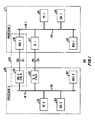
- the coprocessor system 100 is a multiprocessor system comprising a pair of processors 101 and 111 that operate independently from and asynchronously of each other. Generally both processors 101 and 111 are active and each processor 101 and 111 is performing tasks independently of the other processor. Execution of operations that must be performed on both processors 101 and 111 is not synchronized in the two processors 101 and 111, but rather such operations are generally executed on each of the processors 101 and 111 at different times.
- processors 101 and 111 are independent, each has for its own use a main store unit (MSU) 102 and 112, respectively, which generally duplicates the contents of the other main store unit.
- MSU main store unit
- changes to the contents of the one main store unit are also made to the contents of the other main store unit to keep their contents duplicated.
- This mode of operation is referred to as the update mode.
- the memory duplication allows either one of the processors 101 and 111 to take over the execution of all system tasks upon failure or other removal from service of the other processor.
- the contents of the main store units 102 and 112 may cease to duplicate each other.
- the second mode is entered only in exceptional situations, for example when maintenance operations are being performed on one of the processors following its failure.
- the designations "0” and “1” will be used to identify and distinguish the two processors 101 and 111 and their components. This is simply an arbitrary naming convention for purposes of clarity, and no special properties are associated with the "side0” and “side1” designations.
- the processor0 101 and the processor1 111 are identical.
- the processor0 101 includes at least one processing unit. Included among the at least one processing unit are one or more processing elements (PE0) 103 which act as the central processing portion of the processor0 101. Also commonly included are other intelligent devices, such as input and output adaptors (IOA0) 104 which facilitate communications between the processor0 101 and the outside world. The actual number and type of processing units included in the processor0 101 is irrelevant for purposes of this application.
- PE0 processing elements
- IOA0 input and output adaptors
- the processing units 103 and 104 are connected to the MSU0 102 by a system bus (SB0) 105.
- the function of the SB0 105 is to convey information between the various units of the processor0 101 that are attached thereto.
- the SB0 105 is a time-multiplexed bus. Access to the SB0 105 by units that are connected thereto, and transfer of information during each bus time slot from one unit to another across the bus 105, is controlled by a system bus arbiter (SBA0) 106, which is also connected to the SB0 105.
- SBA0 system bus arbiter
- the IL0 107 performs the function of allowing units of the processor0 101 to communicate with units of the processor1 111.
- the IL0 107 is the means by which the contents of the MSU0 102 and the MSU1 112 are kept identical, and the means by which a processing unit of the processor0 101 may request a memory operation to be performed in the MSU1 112 of the processor1 111.
- the processors 101 and 111 are identical for purposes of this application.
- the processor1 111 comprises the main store unit (MSU1) 112, at least one processing element (PE1) 113, an optional input and output adaptor (IOA1) 114, a system bus (SB1) 115, a system bus arbiter (SBA1) 116, and an interprocessor link (IL1) 117, which devices are equivalent to the like devices discussed in conjunction with the processor0 101.
- MSU1 main store unit
- PE1 processing element
- IOA1 optional input and output adaptor
- SB1 system bus
- SBA1 system bus arbiter
- IL1 interprocessor link
- interprocessor links 107 and 117 are interconnected by an asynchronous interprocessor bus (IPB) 120.
- IPB asynchronous interprocessor bus
- the interprocessor bus 120 allows transfer of information between the links 107 and 117.
- the system bus arbiters 106 and 116 of the two processors 101 and 111 are likewise interconnected for communication, by an interarbiter channel (IAC) 121.
- IAC interarbiter channel
- the arbiters 106 and 116, together with the interarbiter channel 121 comprise a complex 150 whose function it is to control the undertaking in the system 100 of operations that are to be undertaken on both processors 101 and 111.
- Various elements of the complex keep both processors 101 and 111 notified of undertaking of any such operation on either of the processors, determine whether such operation is being undertaken on either of the processors, and prevent a plurality of such operations from being undertaken in different order on one of the processors than on the other of the processors.
- the interarbiter channel 121 enables one arbiter to notify the other when a processing unit of the one arbiter's processor initiates a read-modify-write (RMW) operation which must be performed on the main store of both processors, and to determine whether a like operation is being performed by the other processor.
- RMW read-modify-write
- Each arbiter through cooperation with the other arbiter via the IAC 121, prevents another RMW operation directed to both processors from being performed on its associated processor, when one such RMW operation is being performed on one of the processors, until the one RMW operation is performed on the associated processor. However, other operations are permitted to be performed during this time.
- the operation of the complex 150 in accomplishing these functions will be described more fully as part of the consideration of the structure and function of the arbiters 106 and 116.
- the system bus 105 is a high-speed, synchronous, time-multiplexed, transaction-based bus.
- the arbiter 106 controls transfer across the bus 105 of information from one unit of the processor0 101 to another.
- the next time slot may be used for a transfer of information between two completely different units.
- a source unit requesting something from another, the destination, unit will not hold up the bus 105 while the destination unit honors the request. Instead, the source unit uses a bus time slot to make the request, and the destination unit uses a bus time slot at some later time to respond to the request.
- the time slots between the request time slot and the response time slot may be used for other transactions.
- a transaction may require more than one bus time slot to complete. For example, if a unit wishes to perform a multiword transfer of data to another unit, the arbiter 106 will assign to the source unit as many consecutive time slots as are necessary to transfer all of the words.
- system bus 105 In addition to transferring addresses and data, the system bus 105 carries source and destination codes to identify the units involved in a transaction. A transaction also includes a command field to indicate the type and size of the transaction.
- the system bus 105 includes a system bus request (SBREQ) and a system bus grant (SBGRANT) line for each unit capable of using the system bus 105.
- the system bus 105 includes a read-modify-write request (RMWREQ) line for each unit capable of initiating a read-modify-write (RMW) operation that must be performed on both processors 101 and 111.
- the SBREQ, RMWREQ, and SBGRANT signal lines of the bus 105 connect to the arbiter 106.
- RMW operation also exists which is performed on only one of the processors 101 and 111. This type of RMW operation is performed only when the processors 101 and 111 are not in update mode, i.e., the contents of the main store units 102 and 112 are not being kept identical. Whether or not the processors 102 and 112 are or are not in update mode is indicated by the state of a SBUD signal line of the system bus 105.
- a unit wishing to use the system bus 105 asserts its dedicated SBREQ line. If a unit wishes to use the system bus 105 for the purpose of causing an RMW operation to be performed on both processors 101 and 111, it likewise asserts its dedicated RMWREQ line. If the requesting unit is not granted the next bus time slot, its request line or lines remain active. The unit is effectively prevented from accessing the bus, and hence from performing the RMW operation, until the arbiter 106 issues to it a system bus grant signal.
- the unit When the unit receives the SBGRANT signal from the arbiter 106, it negates its SBREQ line, and also its RMWREQ line if it was asserted. That unit then issues the address, data, source code, destination code, and command that make up the transaction onto the SBAD, SBD, SBSC, SBDC, and SBC buses, respectively, of the system bus 105, and asserts the bus valid (SBV) and command valid (SBCV) signal lines of the system bus 105.
- SBV bus valid
- SBCV command valid
- each unit When the information that has been gated out onto the system bus 105 has been conveyed by the bus 105 to all of the other units attached to the system bus 105, each unit, unless it is busy, inspects the destination code, (and the command field, in the case of the link 107 and the arbiter 106) to see if the unit is a destination of the current transaction. If a non-busy unit is a destination, it latches the information present on the system bus 105, and then issues a system bus acknowledge signal to the arbiter 106, by asserting its dedicated system bus acknowledge (SBACK) line. A busy unit maintains asserted its dedicated BUSY signal line instead.
- SBACK system bus acknowledge
- the arbiter 106 knows which units are destinations of the transaction from having inspected the destination code and command field, and it looks at the BUSY signal line of each destination unit. If any of the destinations are busy, the arbiter 106 aborts the transaction, by asserting a busy abort (SBBA) signal line of the system bus 105. When the source unit receives the busy abort signal, it once again asserts its SBREQ line to request the system bus for a later time slot.
- SBBA busy abort
- a unit including the arbiter 106, knows how many time slots a transaction will take from examining the command information that has been gated onto the system bus 105 by the source unit.
- the arbiter 106 asserts the SBGRANT line of the requestor unit for each time slot of the transaction.
- destination units pulse their SBACK signal lines during each time slot of the multiple time slot transaction.
- the source unit does not assert its request line or lines during every time slot of a transaction it has been granted.
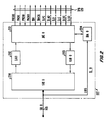
- FIG. 2 A block diagram of the link 107 is shown in FIG. 2.
- the structure and operation of the link 117 are equivalent to that of the link 107.
- the link 107 is divided into five major functional blocks: a system bus interface (SBI0) 200, an interprocessor bus interface (IBI0) 201, an input job queue (IJQ0) 202, an output job queue (OJQ0) 203, and an interprocessor bus arbiter (IBA0) 204.
- SBI0 system bus interface
- IBI0 interprocessor bus interface
- IJQ0 input job queue
- OJQ0 output job queue
- IBA0 interprocessor bus arbiter
- the system bus interface 200 connects to the system bus 105, and it is responsible for ensuring that the link 107 adheres to the protocol of the system bus 105.
- the system bus interface 200 is constantly monitoring the system bus 105, looking for transactions which have the link 107 as their destination.
- the system bus interface 200 receives on the system bus 105 a potential transaction request to do an information transfer to the other processor 111 in the form of a command, a source code, a destination code, and an address.
- the request comes from a source unit in the processor 101 which has initiated the transaction.
- the system bus interface 200 examines the destination code and the command of the transaction currently being sent out on the system bus 105 to determine whether the transaction is directed to link 107, i.e., whether the link 107 is one of the destinations of the transaction.
- the specification of the link 107 as the destination of the transaction may be either explicit or implicit.
- the link 107 is an explicit destination if the link is specified in the destination code or if an EXTERNAL bit of the destination code is set. This tells the link 107 to do a transfer to the unit of the processor1 111 that is specified in the destination code.
- the link 107 is an implicit destination if the transaction specifies the main store unit 102 as the destination, the operation is a write or an RMW, and the SBUD line indicates that the system is in update mode.
- the link 107 is not a destination if it is the source of the transaction.
- the SBI0 200 includes source and destination code generation circuitry which then modifies the source and destination codes of the transaction for use by the link 117 of the processor1 111. This circuitry sets the EXTERNAL bit in the source code and clears the EXTERNAL bit in the destination code. This circuitry is also responsible for changing the source code to "link" if the received transaction is a read-modify-write operation to main store and the external specification was implicit.
- the system bus interface 200 then transfers the transaction information to the input job queue 202.
- the input job queue 202 holds work for the interprocessor bus interface 201. It has the capacity to hold a plurality, in this example 16, entries, with one entry corresponding to one system bus time slot.
- the system bus interface 200 signals the arbiter 106 that it is busy. This means that it is unable to receive any more transaction packages. If another unit initiates a transaction which has the link 107 as one of its destinations, the arbiter 106 aborts that transaction. This continues until the input job queue 202 empties out enough so it has at least three unoccupied entry spaces, at which time the system bus interface 200 negates the busy indication.
- the output job queue 203 holds information conveyed to the link 107 by the link 117 and waiting to be transferred out onto the system bus 105 by the system bus interface 200. Its capacity is three entries. However, it is not allowed to hold more than one system bus transaction at a time.
- the system bus interface 200 After the link 107 has received a transaction from the other link 117 into its output job queue 202, the system bus interface 200 asserts the link's SBREQ signal line.
- the link 107 does not have a RMWREQ signal line as it never initiates an RMW operation that involves both processors 101 and 111.
- the link 107 merely initiates on the processor0 101 the processor0-specific portion of an RMW operation that was originally initiated on the other processor1 111.
- the system bus interface 200 gates the source code, destination code, command field, address, and data, from the output job queue 203 onto the system bus 105.
- the other side link 117 is not permitted by the link 107 to copy another transaction to the output job queue 203 of the link 107 until the arbiter 106 has granted the SBREQ of the link 107 and the first entry of the output job queue 203 has been successfully transmitted over the system bus 105.
- the arbiter 106 will abort the transaction by asserting the BUSY ABORT signal line. When this happens, the system bus interface 200 will reassert the link's SBREQ lead and attempt the transaction again. When the system bus interface 200 of the link 107 successfully transfers the transaction to the destination unit, the destination unit asserts its dedicated SBACK line of the system bus 105 to inform the arbiter 106 thereof.
- the interprocessor bus arbiter 204 is the part of the link 107 that determines which one of the links 107 and 117 has control of the interprocessor bus 120.
- the arbiter 204 performs arbitration between plural requests for use of the interprocessor bus 120.
- the arbiter 204 must arbitrate between transaction packages coming into the link 107 from the system bus 105 which are destined for the link 117 of the processor1 111, and transaction packages from the link 117 coming into the link 107 via the interprocessor bus 120.
- the interprocessor bus 120 is arbitrated on the basis of transaction packages. That is, once the bus 120 has been granted to one of the links, that link will control the bus 120 until it has completed the transfer of all of the package.
- a package contains all of the information contained in one system bus transaction. Upon receiving the whole package from the other link, the receiving link may request use of its processor's system bus to initiate the transaction on its processor.
- the interprocessor bus interface 201 is responsible for assuring that the link 107 adheres to the asynchronous protocol of the interprocessor bus 120.
- the interface 201 is responsible for transmitting information on the interprocessor bus 120, for receiving information over the bus 120, and for issuing and responding to interprocessor bus control signals.
- the interprocessor bus interface 201 When a transaction from the system bus 105 has been received, processed, and placed in the input job queue 207 by the system bus interface 200, the interprocessor bus interface 201 asserts the link's package request (PREQ0) lead of the interprocessor bus 120 to signal the link 117 on the other side that it has a transaction package to send. If the interprocessor bus arbiter of the link 117 determines that the link 107 should have control of the interprocessor bus 120, the link 117 asserts its package acknowledge (PACK1) lead of the interprocessor bus 120.
- PREQ0 link's package request
- PACK1 package acknowledge
- the interprocessor bus interface 201 of the link 107 When the interprocessor bus interface 201 of the link 107 receives the PACK1 signal, it gates the address, data, source code, destination code, and command that make up one input job queue entry onto the ILAD, ILD, ILSC, ILDC, and ILC buses, respectively, of the bus 120 and asserts the interprocessor bus valid (IBV) signal line of the bus 120.
- the interprocessor bus interface of the link 117 receives the IBV signal, it latches the information from the bus 120 and transfers it to its own output job queue. The interprocessor bus interface of the link 117 then sends an interprocessor bus acknowledge (IBACK) signal to the link 107 to indicate that the information has been received.
- IBACK interprocessor bus acknowledge
- the IBV/IBACK signal handshake is repeated for the transfer of each entry.
- the interprocessor bus interface 201 of the link 107 sends the last entry of the transaction, it asserts the interprocessor link package complete (ILPC) signal line of the interprocessor bus 120 along with the BV signal line.
- ILPC interprocessor link package complete
- the link 107 receives the last entry of the package, it sends back the last IBACK.
- the link 107 receives the last IBACK, it removes its PREQ0 request signal.
- the link 117 sees that the package request has been removed, it removes the PACK1 signal. If the link 107 has another transaction package in its input job queue 202, it asserts the PREQ0 line again, after the PACK1 signal from the previous package has been negated.
- the primary function of the interprocessor link is to allow operational transfers between processors, in particular, to allow transfers from a processing unit in one processor to the main store in the other processor.
- the need for this function arises as a result of the duplication of information stored in the main stores, which information is shared, i.e., referenced, by both processors.
- one processor wishes to change the shared information in the duplicated stores, it must use a semaphore to lock the information so that the other processor does not reference that information while the one processor is in the process of updating the information. Because the stores are duplicated, a processor must lock not only its own main store, but also the duplicated main store on the other side.
- the locking and unlocking of various blocks of information in a main store is done by performing a read-modify-write (RMW) operation on a semaphore of that main store that is associated with the block of information of concern.
- the semaphore is a predesignated location of each main store.
- an RMW operation involves reading the contents of a storage location, modifying the read-out contents, and writing the modified contents back into the storage location.
- the original, unmodified, contents of the location are also sent to the requesting unit as the reply.
- the requesting unit examines the reply to determine therefrom if it has successfully locked the semaphore, or if the semaphore is currently locked by some other unit.
- the RMW operation is executed in the main store by main store circuitry in response to receipt of an RMW instruction in the command field of the transaction.
- the RMW operation is executed atomically, in that the executing circuitry of the main store does not allow other main store operations to be performed while executing the RMW operation.
- a processing unit of the processor0 101 may lock the main store 112 of the processor1 111 explicitly, by asserting the EXTERNAL bit in the destination code and specifying main store as the destination of the transaction. This indicates that the destination of the operation is the main store 112 only and not the main store 102. Such an RMW operation is performed only on the main store 112 of the processor 111. It is performed only when the system 100 is not in update mode.
- a processing unit of the processor0 101 may also lock the main store 112 implicitly, by specifying main store as the destination of the transaction without asserting the EXTERNAL bit, while the system 100 is in the update mode. This indicates that both main stores 102 and 112 are the destination of the operation. Thus a transfer to both the internal and the external main store results from a single request of the processing unit, and the RMW operation is performed on the main stores 102 and 112 of both processors 101 and 111. But the memory operation that is sent to the other processor is not generally performed at the same time as the memory operation in the source processor.
- FIGS. 3A and 3B The means by which the links accomplish this result is functionally diagramed in FIGS. 3A and 3B. As these figures suggest, the scheme is dependent upon specifying the link as the source of the read-modify-write in the update operation case, while the source processing unit is specified as the source in the EXTERNAL operation case.
- FIG. 3A shows the transactions of an update read-modify-write operation.
- the link 107 receives the transaction specifying the internal processing unit 103 or 104 in the source code, and specifying the internal main store unit 102 in the destination code. Not only does the main store 102 respond to this transaction and execute an RMW operation on itself, but the link 107 recognizes that it is the implicit destination of the transaction.
- the system bus interface 200 of the link 107 changes the source code of the received transaction to specify internal link.
- the link 117 is internal from the viewpoint of the processor1 111 to which the link 107 forwards the modified transaction over the interprocessor bus 120.
- the link 117 passes the transaction to the main store unit 112, without change.
- the main store unit 112 executes the requested RMW operation on itself, and acknowledges the execution by sending a response transaction on the system bus 115 that identifies internal main store unit as the source of the transaction, and internal link as the destination. From the viewpoint of the main store unit 112, it is the internal main store unit and the link 117 is the internal link.
- the link 117 does not forward the response transaction to the link 107, but merely discards it.
- the response from the main store unit 112 of the processor1 111 is blocked from reaching the source processing unit 103 or 104 of the processor0 101.
- FIG. 3B The transactions of an external read-modify-write operation are shown in FIG. 3B.
- the link 107 receives the transaction specifying the internal processing unit 103 or 104 in the source code, and specifying the external main store unit 112 in the destination code. Because the external main store unit 112 is specified, only the link 107 and not the main store 102 responds to this transaction.
- the system bus interface unit 200 of the link 107 recognizes that the link 107 is a destination of the transaction, and it changes the source code of the transaction to specify external processing unit and changes the destination code to specify the internal main store unit.
- the internal and external designations reflect the viewpoint of the processor1 111 to which the link 107 forwards the modified transaction over the interprocessor bus 120.
- the link 117 passes the transaction to the main store unit 112 without change.
- the main store unit 112 executes the requested RMW operation, and acknowledges it by sending a response transaction on the system bus 115 that identifies the internal main store unit 112 as the source of the transaction and the external processing unit 103 or 104 as the destination.
- the link 117 recognizes that it is the destination of the transaction.
- the system bus interface of the link 117 receives the transaction and changes its source code to specify external main store unit and changes the destination code to specify internal processing unit.
- the internal and external designations reflect the viewpoint of the processor0 101 to which the link 117 forwards the modified transaction over the interprocessor bus 120.
- the link 107 then sends the transaction to the designated processing unit 103 or 104 without change.
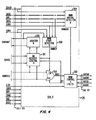
- the arbiter 106 includes a conventional arbitration circuit (ARB) 300.
- the system bus request (SBREQ) lines of the plurality of units of the processor0 101 that are capable of using the system bus are connected to the arbitration circuit 300 through a system bus request control (SBREQCTRL) circuit 301.
- System bus grant (SBGRANT) lines lead away from the arbiter 106, each to one of the units that are capable of using the bus.
- the SBGRANT lines also connect to the system bus request control circuit 301.
- Read-modify-write intraprocessor request (RMWREQ) lines of those units of the processor0 101 that are capable of initiating an update RMW operation connect to the system bus request control circuit 301 and to the inputs of an ORing circuit 303.
- Output of the ORing circuit 303 represents a composite read-modify-write intraprocessor request. It leads to a read-modify-write-control (RMWCTRL) circuit 302.
- the ORing circuit 303 logically combines the signals appearing at its inputs into a single composite signal.
- the circuit 303 selectively gates the composite signal to its output.
- the gating function of the circuit 303 is controlled by the GO signal line from the RMWCTRL circuit 302 and by an RMWST signal line from an RMW start detector 305 of the arbiter 106. These signal lines are connected to the disable (DIS) and enable (EN) inputs, respectively, of the circuit 303. Until a GO signal is issued by the RMWCTRL 302, the circuit 303 is enabled and it gates the composite signal out onto the UREQ signal line.
- Assertion of the GO signal line by the RMWCTRL disables the circuit 303, causing it to block the composite signal from its output and to keep the UREQ signal line negated. Assertion of the RMWST signal line by the detector 305 reenables the circuit 303.
- the RMWST signal is generated by the RMW start detector 305 when it detects that a unit of the processor0 101 other than the link 107 has successfully started performance of an update RMW operation.
- the RMW start detector 305 monitors the SBC bus to determine if an operation is an RMW. It monitors the SBDC bus to determine if the destination of the operation is the main store unit 102. And it monitors the SBGRANT lead of the link 107 to make sure that the link 107 is not the source of the transaction. Also, the RMW start detector 305 monitors the SBBA signal to make sure that the bus transaction has not been aborted and is proceeding successfully. If all these conditions are satisfied, the RMW start detector 305 asserts the RMWST signal line.
- Assertion of the UREQ signal line by the ORing circuit indicates to the RMWCTRL circuit 302 that a request for performance of an update RMW operation is pending, and the circuit 302 pulses the GO signal line when it determines that the RMW operation may proceed. Receipt of the GO signal causes the SBREQCTRL circuit 301 to pass all pending SBREQ signals to the arbitration circuit 300. Hence after the GO signal is given, the arbitration circuit 300 arbitrates between all system bus requests, including those of processing units wishing to perform an RMW operation.
- the arbitration circuit 300 grants intraprocessor system bus use to a processing unit wishing to perform an update RMW operation, by asserting the SBGRANT line, and that unit begins successful performance of that update RMW operation, the RMW start detector 305 pulses the RMWST line. Receipt of the RMWST signal causes the SBREQCTRL circuit 301 to again block the SBREQ signals of any units currently also asserting their RMWREQ lines from reaching the arbitration circuit 300.
- the RMWCTRL circuit 302 controls when an update RMW operation may be performed. In particular, it is the task of the RMWCTRL circuit 302 to make sure that an update RMW operation initiated in either processor is performed on both processors before another update RMW operation is allowed to be performed. Other update RMW operations that are initiated either simultaneously with, or subsequently to, the one initiated update RMW operation are prevented from being performed before the one update RMW operation is performed.
- the RMWCTRL circuit 302 is connected to a like RMWCTRL circuit of the other system bus arbiter 116 by an interarbiter communication channel (IAC) 121.
- IAC interarbiter communication channel
- the interarbiter channel 121 comprises four signal lines.
- the RMWCTRL circuit 302 generates a read-modify-write interprocessor request by asserting the side0 arbiter request (AREQ0) line, to notify the arbiter 116 that it wishes to allow an update RMW operation to be performed.
- the RMWCTRL circuit of the arbiter 116 generates a read-modify-write interprocessor grant to signal its acquiescence, by asserting the side1 arbiter acknowledgment (AACK1) line.
- the RMWCTRL circuit of the arbiter 116 sends notice of an update RMW operation to the RMWCTRL circuit 302 of the arbiter 106 on the side1 arbiter request (AREQ1) line, and the RMWCTRL circuit 302 signals its acquiescence on the side0 arbiter acknowledgment (AACK0) signal line.
- AREQ1 side1 arbiter request
- AACK0 side0 arbiter acknowledgment
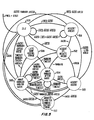
- the operation of the RMWCTRL circuit 302 is defined by the state diagram of FIG. 5.
- the RMWCTRL circuit 302 When no requests for an update RMW operation are pending from units of the processor0 101 or from the other arbiter 116, the RMWCTRL circuit 302 is in the IDLE state 500.
- the circuit 302 enters the IDLE state 500 in response to initialization or a system reset which activates a power clear (PWCL) signal, or in response to the occurrence of a fatal error in the processor0 101 which results in an error stop (ERST) signal.
- PWCL power clear
- ESD error stop
- the circuit 302 remains in the IDLE state 500 for as long as the UREQ input signal line is negated, indicating that no units of the processor0 101 are requesting an update RMW operation, the AREQ1 signal line is negated, indicating that no update RMW operation has been initiated at the other processor, and the AACK1 signal line is negated, indicating that the other arbiter 116 has not given the arbiter 106 the go-ahead to perform an update RMW operation.
- the circuit 302 Since in the IDLE state 500 the circuit 302 is not issuing an arbiter request to the other arbiter 116, receipt by the circuit 302 of the arbiter acknowledgment signal from the arbiter 116 would cause the circuit 302 to enter the ERROR state 507 to signal an error in arbiter-to-arbiter communications. Thereafter the circuit 302 would return to the IDLE state 500.
- Receipt of the UREQ signal indicates to the circuit 302 that at least one of the units of the processor0 101 is requesting an update RMW operation, and causes the circuit 302 to enter state 501.
- the circuit 302 asserts the AREQ0 signal line to notify the other arbiter 116 that it wishes to allow performance of an update RMW operation.
- the circuit 302 then awaits receipt of the arbiter acknowledgment signal from the arbiter 116.
- the circuit 302 is connected to the LIDS signal line of the processor0 101 to determine whether the arbiter 106 is the master or the slave, i.e., which of the two arbiters 106 and 116 has priority of inter-arbiter communications. If the arbiter 106 is designated the master arbiter by the LIDS signal line, the circuit 302 does not respond to arbiter requests from the arbiter 116 and remains in the state 501 until it receives arbiter acknowledgment from the arbiter 116.
- the circuit 302 leaves the state 501 and enters state 503 in which it issues an arbiter acknowledgment to the arbiter 116 by pulsing the AACK0 line, allowing the arbiter 116 to proceed with an update RMW operation first.
- the arbiter request of the circuit 302 to the arbiter 116 remains pending.
- the slave circuit 302 Having entered state 503 from the state 501, the slave circuit 302 has not yet received an arbiter acknowledgment from the arbiter 116, i.e., the AACK1 line has not been asserted. Hence the circuit 302 leaves state 503 and enters state 505 to await receipt of the arbiter acknowledgment from the arbiter 116. But having given an arbiter acknowledgment to the arbiter 116, to allow the processor1 111 to commence an update RMW operation, the circuit 302 expects the link 117 of the processor1 111 to transfer the update RMW transaction to the link 107 and the link 107 to perform the update RMW operation on the main store 102 within a predetermined time period.
- Successful performance of the RMW transaction on the main store unit 102 of the processor0 101 is signalled to the circuit 302 by an RMW arrival detector 304 via assertion of an RMWARR signal line (see FIG. 4). Hence in the state 505 the circuit 302 begins to time the predetermined time period while also awaiting receipt of the RMWARR and the AACK1 signals.
- the RMWARR signal is generated by the RMW arrival detector 304 when it detects successful arrival of an update RMW operation from the link 107 at the main store unit 102.
- the detector 304 monitors the SBUD line to determine if the system 100 is in update mode. It monitors the SBC bus to determine if an operation is an RMW. It monitors the SBSC bus to determine if the operation comes from the link 107. It monitors the SBDC bus to determine if the destination of the operation is the main store unit 102. And it monitors the SBACK line of the main store unit 102 to determine whether the bus transaction has successfully arrived at the main store unit 102. When it finds all of these conditions satisfied, the detector 304 asserts the RMWARR signal line.
- the slave circuit 302 if the slave circuit 302, its arbiter request still pending, receives the RMWARR signal in the state 505 before the predetermined time expires, it knows that the link 107 has successfully performed on the main store 102 the RMW transaction that it received from the processor1 111. Therefore the circuit 302 reenters the state 501 to await receipt of the arbiter acknowledgment to its pending arbiter request. In and from the state 501 the circuit 302 proceeds in the manner described previously.
- the slave circuit 302 If the slave circuit 302 does not receive the RMWARR signal in the state 505 before the predetermined time expires and while its arbiter request is still pending, it enters an RMW late arrival error state 506 to signal the system that the RMW operation transaction was not successfully performed by the link 107 on time. From the state 506 the circuit 302 enters the IDLE state 500. But since the slave circuit 302 has not yet asserted the GO signal line, the UREQ signal line is still asserted. Hence the circuit 302 reasserts the AREQ0 line and resumes the state 501 to await receipt of the AACK1 signal.
- the slave circuit 302 If the slave circuit 302 receives both the AACK1 signal and the RMWARR signal in the state 505, it enters the state 502 to activate the GO signal and thereby enable its processor's RMW operation to proceed.
- the slave circuit 302 receives in the state 505 the AACK1 signal but not the RMWARR signal, it enters state 504. In this state the circuit 302 continues to time the predetermined time period while awaiting the RMWARR signal.
- the circuit 302 In the state 504, if the predetermined period times out without receipt by the circuit 302 of the RMWARR signal, the circuit 302 enters the state 506, wherein it performs activities as described previously. But if the circuit 302 receives the RMWARR signal before the predetermined period expires, the circuit 302 leaves the state 504 and enters the state 502 to issue the GO signal to enable its processor's update RMW operation to proceed. Activities of the circuit 302 in the state 502 and subsequent states are described below.
- the circuit 302 issues a GO signal only if successful performance on the processor0 101 of an update RMW operation, as signalled by the RMWARR signal line, has followed issuance by the circuit 302 of an AACK0 signal.
- the circuit 302 While the circuit 302 is in the state 501, receipt of the arbiter acknowledgment from the arbiter 116 signals to the circuit 302 that the requested RMW operation may proceed. This is true whether the arbiter 106 is designated the master or the slave by the LIDS signal line. In response, the circuit 302 enters state 502 in which it pulses the GO signal to allow the requested RMW operation to proceed. If an arbiter request from the arbiter 116 is not then pending, the circuit 302 reenters the IDLE state 500. Assertion of the GO line causes the circuit 303 to negate the UREQ line, and hence the circuit 302 remains in the IDLE state 500.
- the circuit 302 If the circuit 302 does receive an arbiter request from the arbiter 116 while the circuit 302 is in the state 502, the circuit enters the state 503 and issues an arbiter acknowledgment to the arbiter 116 to allow it to proceed with an update RMW operation.
- the circuit 302 Having entered the state 503, the circuit 302 has received an arbiter acknowledgment from the arbiter 116, and therefore the circuit 302 leaves the state 503 and enters state 504. In the state 504, the circuit 302 begins to time the predetermined time period allowed for the RMW operation transaction to be successfully performed on the processor0 101. Activities of the circuit 302 in the state 504 and subsequent states have been described above.
- the circuit 302 issues a GO signal only if successful performance on the processor0 101 of an RMW operation has followed issuance by the circuit 302 of an AACK0 signal.
- circuit 302 when it receives an arbiter request while it is in the IDLE state 500. If the circuit 302 receives the AREQ1 signal simultaneously with receipt of the UREQ signal, the circuit 302 gives priority to the UREQ, and it ignores the AREQ1 and proceeds to respond to the UREQ signal in the manner described above.
- the circuit 302 If the circuit 302 receives the AREQ1 signal alone, it responds by leaving the IDLE state 500 and entering the state 503, wherein it pulses its arbiter acknowledgment line to allow the processor1 111 to proceed with the RMW operation.
- the circuit 302 should receive a UREQ signal while it is in the state 503, it responds by asserting its arbiter request line and thereafter proceeding in the manner described above for the slave circuit 302 in the state 503.
- circuit 302 If the circuit 302 should receive an arbiter acknowledgment in the state 503 even though it has not asserted its arbiter request, an error is indicated and the circuit 302 enters the state 507 to inform the system of an arbiter-to-arbiter communication error. The circuit 302 then reenters the IDLE state 500.
- the circuit 302 If the circuit 302 receives neither a UREQ nor an AACK1 signal in the state 503, it enters the state 505 to time the predetermined time period allowed for receipt of the RMWARR signal.
- the circuit 302 If the circuit 302 should receive a UREQ signal while it is in the state 505, it responds by asserting its arbiter request line and thereafter proceeding in the manner described above for the slave circuit in the state 505.
- circuit 302 If the circuit 302 should receive an arbiter acknowledgment in the state 505 even though it has not asserted its arbiter request, an error is indicated and the circuit 302 enters the state 507 to inform the system of an arbiter-to-arbiter communication error. From the state 507 the circuit 302 reenters the IDLE state 500, as described above.
- the arbiter 302 If in the state 505 the arbiter 302 receives the RMWARR signal only, it reenters the IDLE state 500. But if it receives both the RMWARR signal and an arbiter request from the arbiter 116, it reenters the state 503 to issue an arbiter acknowledgment to the arbiter 116. In and from the state 503 the circuit 302 proceeds in the manner described for when the circuit 302 first assumed the state 503.
- the arbiter 302 if in the state 504 the arbiter 302 does not receive the RMWARR signal before the predetermined time period times out, it enters the state 506 to signal to the system a late RMW arrival error. In and from the state 506 the circuit 302 proceeds in the manner described previously,
- the circuit 302 issues an AACK0 signal only if successful performance on the processor 0 101 of an RMW operation, as signalled by the RMWARR signal line, has followed issuance by the circuit 302 of any prior AACK0 signal.
Landscapes
- Engineering & Computer Science (AREA)
- Theoretical Computer Science (AREA)
- Physics & Mathematics (AREA)
- General Engineering & Computer Science (AREA)
- General Physics & Mathematics (AREA)
- Quality & Reliability (AREA)
- Software Systems (AREA)
- Multi Processors (AREA)
- Information Transfer Systems (AREA)
- Hardware Redundancy (AREA)
Abstract
Claims (18)
- Dispositif comprenant :
un ensemble de copies d'une ressource (102, 112), les copies étant de multiples exemplaires les unes des autres,
un ensemble de processeurs (101:103, 104; 111:113, 114) pour accomplir des opérations sur la ressource, et
des moyens (105, 107, 120, 117, 115) connectant les processeurs à la ressource pour permettre à chaque processeur d'accéder à un ensemble des copies,
et CARACTERISE PAR
le fait que l'ensemble de processeurs fonctionnent de façon asynchrone et simultanée, pour accomplir chacun sur la ressource des opérations comprenant un jeu d'opérations prédéterminées, dans des conditions dans lesquelles l'accomplissement d'une opération prédéterminée implique l'accomplissement de l'opération prédéterminée sur un ensemble des copies, et
des moyens (150), connectés à la ressource et réagissant à l'accomplissement par un processeur, sur la ressource, d'une opération incluse dans le jeu d'opérations, en interdisant à tous les autres processeurs d'accomplir une opération incluse dans le jeu d'opérations, sur une copie donnée, jusqu'à ce que l'opération soit accomplie sur la copie donnée, tout en autorisant l'accomplissement sur une copie quelconque de toute opération qui est exclue du jeu d'opérations. - Dispositif selon la revendication 1, dans lequel
les moyens d'interdiction comprennent
des moyens (106, 121, 116) destinés à empêcher tous les autres processeurs d'accomplir une seconde opération quelconque incluse dans le jeu d'opérations, sur une copie quelconque, jusqu'à ce que l'opération mentionnée en premier soit accomplie sur toutes les copies; - Dispositif selon la revendication 1, dans lequel
le jeu d'opérations prédéterminées comprend des opérations de verrouillage de ressource. - Dispositif selon la revendication 1 dans lequel
chaque processeur émet un premier signal (SBREQ + RMWREQ) pour demander une opération incluse dans le jeu, et il accomplit l'opération demandée sous l'effet de la réception d'un second signal (SBGRANT), et
les moyens d'interdiction comprennent
un ensemble de premiers moyens (106, 116) connectés les uns aux autres, et avec l'un différent de ces moyens associé à chaque copie, chacun d'eux (a) réagissant à la réception d'un premier signal provenant d'un processeur demandeur, en émettant un troisième signal (AREQ) vers les autres premiers moyens, (b) réagissant à la réception d'un troisième signal en émettant un quatrième signal (AACK) vers le premier moyen à partir duquel le troisième signal a été reçu, seulement lorsque l'accomplissement (RMWARR), sur la copie associée, d'une opération incluse dans le jeu d'opérations, a fait suite à l'émission par ce premier moyen de chaque quatrième signal antérieur, et (c) réagissant à la réception des quatrièmes signaux provenant d'un autre premier moyen en émettant le second signal vers le processeur demandeur, seulement lorsque l'accomplissement, sur la copie associée, d'une opération incluse dans le jeu d'opérations, a fait suite à l'émission de chaque quatrième signal antérieur par ce premier moyen. - Dispositif selon la revendication 1, dans lequel
les moyens d'interdiction comprennent
un ensemble de premiers moyens (106, 116) connectés les uns aux autres, avec l'un différent des premiers moyens associé à chaque copie, chaque premier moyen réagissant à l'accomplissement par un processeur, sur la copie associée, d'une opération incluse dans le jeu d'opérations, en notifiant cette condition aux autres premiers moyens, et réagissant à la réception d'une notification, provenant d'un autre premier moyen, en empêchant tous les autres processeurs d'accomplir sur la copie associée une seconde opération quelconque incluse dans le jeu d'opérations, jusqu'à ce que l'opération mentionnée en premier soit accomplie sur la copie associée, tout en autorisant l'accomplissement, sur la copie associée, d'une opération quelconque qui est exclue du jeu d'opérations. - Dispositif selon la revendication 5, dans lequel
chaque processeur est associé à un premier moyen différent, chaque premier moyen réagit à l'accomplissement par le processeur associé d'une opération incluse dans le jeu d'opérations, en notifiant cette condition aux autres premiers moyens, et il réagit à la réception d'une notification provenant d'un autre premier moyen en empêchant le processeur associé d'accomplir une seconde opération quelconque incluse dans le jeu d'opérations, jusqu'à ce que l'operation mentionnée en premier soit accomplie sur toutes les copies, tout en autorisant le processeur associé à effectuer n'importe quelle opération qui est exclue du jeu d'opérations. - Dispositif selon la revendication 1, dans lequel la ressource reproduite à de multiples exemplaires comprend un ensemble de copies de mémoire, et
le jeu d'opérations prédéterminées consiste en opérations qui sont destinées à changer le contenu de la mémoire. - Dispositif selon la revendication 1, dans lequel
l'ensemble de copies de la ressource comprend
deux copies en double d'une mémoire, chacune d'elles étant rattachée à un processeur différent,
l'ensemble de processeurs comprend
une paire de processeurs simultanément actifs et fonctionnant de façon asynchrone, chacun d'eux étant destiné à accomplir des opérations de mémoire qui comprennent une opération de verrouillage de mémoire destinée à verrouiller les deux copies,
les moyens permettant l'accès comprennent
des moyens qui interconnectent les copies et qui réagissent à l'accomplissement par un processeur d'une opération de verrouillage sur la copie associée, en accomplissant l'opération de verrouillage sur l'autre copie, et
les moyens d'interdiction comprennent
des moyens qui réagissent à une demande d'accomplissement d'une opération de verrouillage de mémoire, qui est exprimée par un processeur, (a) en autorisant l'accomplissement de l'opération de verrouillage demandée, lorsque toutes les opérations de verrouillage autorisées précédemment ont été accomplies sur les deux copies, et (b) en interdisant l'accomplissement de l'opération de verrouillage demandée, jusqu'à ce que toutes les opérations de verrouillage autorisées précédemment aient été accomplies sur les deux copies, tout en autorisant l'accomplissement de n'importe quelles autres opérations. - Dispositif selon la revendication 8, dans lequel
les moyens d'autorisation et d'interdiction comprennent
une paire de premiers moyens (106, 116) connectés l'un à l'autre et l'un différent de ces premiers moyens étant associé à chaque copie, chaque premier moyen réagissant à une demande émise par le processeur associé à la copie, et portant sur l'accomplissement d'une opération de verrouillage sur la copie associée, en notifiant cette condition à l'autre premier moyen, et réagissant à la réception d'une notification provenant de l'autre premier moyen en empêchant le processeur associé à la copie d'accomplir une opération de verrouillage sur la copie associée, jusqu'à ce que l'opération demandée soit accomplie sur la copie associée, tout en autorisant l'accomplissement de n'importe quelles autres opérations. - Dispositif selon la revendication 8, dans lequel
les moyens d'interconnexion de copies comprennent, pour chaque processeur,
un bus (105, 115) qui connecte le processeur à la copie associée, et
des premiers moyens (107, 117) connectés au bus, pour accomplir sur la copie associée, et par l'intermédiaire du bus, des opérations de verrouillage de mémoire qui sont accomplies sur l'autre copie par l'autre processeur, et les moyens d'autorisation et d'interdiction comprennent pour chaque processeur,
des seconds moyens (305), connectés au bus pour détecter l'accomplissement par le processeur d'une opération de verrouillage de mémoire, et pour générer un premier signal (RMWST) représentatif de la détection,
des troisièmes moyens (304) connectés au bus pour détecter l'accomplissement par les premiers moyens d'une opération de verrouillage de mémoire, et pour générer un second signal (RMWARR) représentatif de la détection,
des quatrièmes moyens (302), connectés au processeur, pour accorder au processeur l'accès au bus, sous la réception d'une demande de processeur pour accéder au bus,
des cinquièmes moyens (301), connectés au processeur, aux seconds moyens et aux quatrièmes moyens, pour bloquer la réception par les quatrièmes moyens de demandes de processeur portant sur l'accès au bus, pour accomplir une opération de verrouillage, sous l'effet de la réception du premier signal, et pour débloquer la réception par les quatrièmes moyens, sous l'effet de la réception d'un troisième signal (GO),
des sixièmes moyens (302, 121), connectés aux troisièmes moyens, aux cinquièmes moyens et aux sixièmes moyens de l'autre processeur, réagissant à la réception d'une demande (UREQ) du processeur pour l'accès au bus, en accomplissant une opération de verrouillage de façon à générer une demande inter-processeur (AREQ0) qui est dirigée vers les sixièmes moyens de l'autre processeur, réagissant à la réception d'une demande inter-processeur (AREQ1) provenant des sixièmes moyens de l'autre processeur en générant une autorisation inter-processeur (AACK0) s'ils ont reçu le second signal à la suite de la génération de chaque autorisation inter-processeur antérieure (AACK0), et réagissant à la réception d'une autorisation inter-processeur (AACK1) provenant des sixièmes moyens de l'autre processeur, en générant le troisième signal s'ils ont reçu le second signal à la suite de la génération de chaque autorisation inter-processeur antérieure (AACK0), et
des septièmes moyens (303), connectés au processeur, aux seconds moyens et aux sixièmes moyens, pour bloquer la réception par les sixièmes moyens d'une demande émise par le processeur pour accéder au bus de façon à accomplir une opération de verrouillage, sous l'effet de la réception du troisième signal, et pour débloquer la réception, sous l'effet de la réception du premier signal. - Dispositif selon la revendication 8, dans lequel
l'opération de verrouillage est une opération de lecture-modification-écriture au niveau atomique. - Dispositif selon la revendication 1, dans lequel
l'ensemble de processeurs comprend
une paire de processeurs (101, 111) fonctionnant simultanément et de façon asynchrone, chaque processeur ayant au moins un élément de traitement (103/113),
l'ensemble de copies de ressource comprend, dans chaque processeur,
une mémoire (102/112) qui contient un double du contenu de la mémoire de l'autre processeur,
les moyens permettant l'accès comprennent, dans chaque processeur,
un bus (105/115) qui interconnecte l'élément de traitement et la mémoire du processeur, et
une liaison (107, 120/117, 120) connectée pour la communication avec le bus et avec la liaison de l'autre processeur, et comprenant
des moyens (107/117) destinés à recevoir à partir de l'élément de traitement une opération de verrouillage de mémoire à effectuer sur la mémoire, par l'intermédiaire du bus, et à transférer l'opération de verrouillage vers la liaison de l'autre processeur, ainsi qu'à recevoir une opération de verrouillage qui est transférée par la liaison de l'autre processeur et à accéder au bus pour effectuer sur la mémoire l'opération de verrouillage transférée, et
les moyens d'interdiction comprennent, dans chaque processeur,
un arbitre (300) connecté au bus pour arbitrer l'accès à celui-ci,
des moyens (304, 305) connectés à la mémoire pour détecter l'accomplissement sur la mémoire de l'opération transférée,
des moyens (SBREQ + RMWREQ) associés à un élément de traitement et connectés à l'arbitre, pour demander au bus d'arbitre l'accès pour l'élément de traitement, de façon à accomplir l'opération de verrouillage de mémoire,
des moyens (AREQ0, 302:501) connectés aux moyens demandeurs, et réagissant à la demande en signalant la demande à l'arbitre de l'autre processeur,
des moyens (AACK0, 302:503) connectés aux moyens de détection, et réagissant à l'indication de la demande provenant de l'arbitre de l'autre processeur, en indiquant un acquittement seulement lorsque son acquittement quelconque signalé précédemment a été suivi par la détection, par les moyens de détection, de l'accomplissement sur la mémoire d'une opération de verrouillage transférée par la liaison de l'autre processeur, vers les moyens de réception, et
des moyens (300, 301, 302:502), connectés aux moyens de détection, et réagissant à l'indication de l'acquittement provenant de l'arbitre de l'autre processeur, en autorisant l'accès au bus demandé seulement lorsque son acquittement quelconque indiqué précédemment a été suivi par la détection, par les moyens de détection, de l'accomplissement sur la mémoire d'une opération de verrouillage transférée par la liaison de l'autre processeur vers les moyens de réception. - Un procédé d'ordonnancement de l'accomplissement d'opérations dans un dispositif comprenant un ensemble de copies d'une ressource (102, 112), les copies étant de multiples exemplaires les unes des autres, un ensemble de processeurs fonctionnant de façon asynchrone et simultanée (101:103, 104;111:113, 114) de façon à accomplir sur la ressource des opérations qui comprennent un jeu d'opérations prédéterminées, dans des conditions dans lesquelles l'accomplissement d'une opération prédéterminée fait intervenir l'accomplissement de l'opération prédéterminée sur un ensemble des copies, et une structure (105, 107, 120, 117, 115) pour connecter les processeurs à la ressource, de façon à permettre à chaque processeur d'accéder à un ensemble des copies, le procédé comprenant une première étape qui consiste dans l'accomplissement, par un processeur et sur une copie, d'une opération qui est incluse dans l'ensemble d'opérations,
CARACTERISE PAR les étapes suivantes
on interdit à tous les autres processeurs d'effectuer une opération incluse dans le jeu d'opérations, sur une copie donnée, jusqu'à ce que l'opération soit effectuée sur la copie donnée, sous la dépendance de la première étape, et
on autorise l'accomplissement de toute opération qui est exclue du jeu d'opérations, sur une copie quelconque, pendant l'étape d'interdiction. - Un procédé selon la revendication 13, dans lequel
l'étape d'interdiction comprend les étapes suivantes
on accomplit l'opération mentionnée en premier sur une autre copie, sous l'effet de l'étape dans laquelle un processeur accomplit sur une copie une opération qui est incluse dans le jeu d'opérations, et
on autorise l'accomplissement sur l'autre copie d'une seconde opération qui est incluse dans le jeu d'opérations, sous l'effet de l'étape d'accomplissement de l'opération mentionnée en premier sur l'autre copie. - Un procédé selon la revendication 13, dans lequel
les opérations incluses dans le jeu d'opérations sont des opérations de verrouillage de ressource. - Un procédé selon la revendication 13, dans lequel
l'étape d'accomplissement d'une opération comprend les étapes suivantes
on émet un premier signal (SBREQ + RMWREQ) à partir d'un processeur vers une structure de commande (106) qui est associée à une première copie donnée, pour demander une opération incluse dans le jeu d'opérations, et
on accomplit l'opération demandée, à l'aide du premier processeur, sous l'effet de la réception d'un second signal (SBGRANT) provenant de la structure de commande qui est associée à la première copie, et
l'étape d'interdiction comprend les étapes suivantes
on émet un troisième signal (AREQ) à partir de la structure de commande qui est associée à la première copie, pour commander des structures qui sont associées avec d'autres copies (116), sous l'effet de la réception du premier signal,
on émet un quatrième signal (AACK) à partir de la structure de commande qui est associée à une autre copie, vers la structure de commande qui est associée à la première copie, si l'accomplissement (RMWARR) sur l'autre copie d'une opération incluse dans le jeu d'opérations a fait suite à l'émission, par la structure de commande associée à l'autre copie, de chaque quatrième signal antérieur, sous l'effet de la réception du troisième signal, et
on émet le second signal à partir de la structure de commande associée à la première copie, si l'accomplissement sur la première copie d'une opération incluse dans le jeu d'opérations a fait suite à l'émission, par la structure de commande associée à la première copie, de chaque quatrième signal antérieur, sous l'effet de la réception des quatrièmes signaux provenant des autres copies. - Un procédé selon la revendication 13, dans lequel
l'étape d'accomplissement d'une opération comprend les étapes suivantes
on autorise l'accomplissement de l'opération lorsque toutes les opérations autorisées précédemment qui sont incluses dans le jeu d'opérations ont été accomplies sur toutes les copies, sous l'effet d'une demande d'accomplissement de l'opération qui est émise par un processeur, et
on interdit l'accomplissement de l'opération jusqu'à ce que toutes les opérations autorisées précédemment qui sont incluses dans le jeu d'opérations aient été accomplies sur toutes les copies, tandis qu'on autorise l'accomplissement de n'importe quelles autres opérations qui sont exclues du jeu d'opérations, sous l'effet de la demande, et
l'étape d'interdiction pour tous les autres processeurs est accomplie sous la dépendance de l'étape d'autorisation de l'opération. - Un procédé selon la revendication 13, dans un système à deux processeurs comprenant des premier et second processeurs (102, 112) qui fonctionnent simultanément et de façon mutuellement asynchrone, chaque processeur ayant au moins un élément de traitement (103, 113), une mémoire (102) qui double le contenu de la mémoire (112) de l'autre processeur, un bus (105, 115) qui interconnecte l'élément de traitement et la mémoire, un arbitre (106, 116) connecté au bus pour arbitrer l'accès à celui-ci, et une liaison (107, 120) connectée pour la communication avec le bus et avec la liaison (117, 120) de l'autre processeur, comprenant les étapes suivantes(a) on demande, à partir du bus d'arbitre du premier processeur, l'accès pour un élément de traitement du premier processeur, pour accomplir une opération de verrouillage de mémoire,(b) on indique à l'arbitre du second processeur la demande provenant de l'arbitre du premier processeur,(c) on indique un acquittement provenant de l'arbitre du second processeur, sous la dépendance de la demande indiquée, seulement lorsqu'un acquittement quelconque indiqué précédemment, de l'arbitre du second processeur, a été suivi par la détection, par l'arbitre du second processeur, de l'accomplissement sur la mémoire du second processeur d'une opération de verrouillage transférée par la liaison du premier processeur vers la liaison du second processeur,(d) on accorde l'accès, à partir de l'arbitre du premier processeur du bus demandé, sous l'effet de l'acquittement indiqué, seulement lorsqu'un acquittement quelconque indiqué précédemment de l'arbitre du premier processeur a été suivi par la détection, par l'arbitre du premier processeur, de l'accomplissement sur la mémoire du premier processeur d'une opération de verrouillage transférée par la liaison du second processeur vers la liaison du premier processeur,(e) on émet l'opération de verrouillage, à partir de l'élément de traitement du premier processeur, sur le bus du premier processeur, sous l'effet de l'autorisation, pour accomplir l'opération de verrouillage sur la mémoire du premier processeur,(f) on transfère vers la liaison du second processeur l'opération de verrouillage qui est reçue par la liaison du premier processeur, sur le bus du premier processeur,(g) on accède au bus du second processeur avec la liaison du second processeur, pour accomplir l'opération de verrouillage transférée sur la mémoire du second processeur, et(h) on détecte, dans l'arbitre du second processeur, l'accomplissement sur la mémoire du second processeur de l'opération de verrouillage transférée.
Applications Claiming Priority (2)
| Application Number | Priority Date | Filing Date | Title |
|---|---|---|---|
| US66196784A | 1984-10-17 | 1984-10-17 | |
| US661967 | 1984-10-17 |
Publications (2)
| Publication Number | Publication Date |
|---|---|
| EP0196331A1 EP0196331A1 (fr) | 1986-10-08 |
| EP0196331B1 true EP0196331B1 (fr) | 1992-01-29 |
Family
ID=24655833
Family Applications (1)
| Application Number | Title | Priority Date | Filing Date |
|---|---|---|---|
| EP85905562A Expired - Lifetime EP0196331B1 (fr) | 1984-10-17 | 1985-10-17 | Procede et agencement d'ordonnancement des operations d'un multiprocesseur dans un systeme multiprocesseur |
Country Status (7)
| Country | Link |
|---|---|
| US (1) | US4805106A (fr) |
| EP (1) | EP0196331B1 (fr) |
| JP (1) | JP2575356B2 (fr) |
| KR (1) | KR930008685B1 (fr) |
| CA (1) | CA1239227A (fr) |
| DE (1) | DE3585323D1 (fr) |
| WO (1) | WO1986002475A1 (fr) |
Families Citing this family (53)
| Publication number | Priority date | Publication date | Assignee | Title |
|---|---|---|---|---|
| US5067071A (en) * | 1985-02-27 | 1991-11-19 | Encore Computer Corporation | Multiprocessor computer system employing a plurality of tightly coupled processors with interrupt vector bus |
| DE3688136T2 (de) * | 1986-04-04 | 1993-10-07 | Ibm | Verfahren zum Testen und Setzen von Daten in einen Datensatz auf einer Platte in eine atomaren Ein/Ausgabeoperation. |
| US5202971A (en) * | 1987-02-13 | 1993-04-13 | International Business Machines Corporation | System for file and record locking between nodes in a distributed data processing environment maintaining one copy of each file lock |
| US4958273A (en) * | 1987-08-26 | 1990-09-18 | International Business Machines Corporation | Multiprocessor system architecture with high availability |
| JP2749819B2 (ja) * | 1987-10-26 | 1998-05-13 | 松下電工株式会社 | 共有メモリ制御方式 |
| IT1223142B (it) * | 1987-11-17 | 1990-09-12 | Honeywell Bull Spa | Sistema multiprocessore di elaborazione con multiplazione di dati globali |
| US4933901A (en) * | 1988-01-11 | 1990-06-12 | Texas Instruments Incorporated | Method for assigning priority to read and write requests received closely in time |
| US4979105A (en) * | 1988-07-19 | 1990-12-18 | International Business Machines | Method and apparatus for automatic recovery from excessive spin loops in an N-way multiprocessing system |
| US5175861A (en) * | 1988-10-14 | 1992-12-29 | Nec Corporation | Lock processing system |
| US4928222A (en) * | 1988-10-31 | 1990-05-22 | International Business Machines Corporation | Enhanced semaphore architecture |
| IT1227711B (it) * | 1988-11-18 | 1991-05-06 | Caluso Torino | Sistema multiprocessore di elaborazione dati a risorse distribuite condivise e prevenzione di stallo. |
| IT1227360B (it) * | 1988-11-18 | 1991-04-08 | Honeywell Bull Spa | Sistema multiprocessore di elaborazione dati con replicazione di dati globali. |
| DE3917715A1 (de) * | 1989-05-31 | 1990-12-06 | Teldix Gmbh | Rechnersystem |
| JP3206914B2 (ja) * | 1989-11-09 | 2001-09-10 | インターナショナル、ビジネス、マシーンズ、コーポレーション | 多重プロセッサ・システム |
| JP2665813B2 (ja) * | 1990-02-23 | 1997-10-22 | 三菱電機株式会社 | 記憶制御装置 |
| US5263150A (en) * | 1990-04-20 | 1993-11-16 | Chai I Fan | Computer system employing asynchronous computer network through common memory |
| US5669002A (en) * | 1990-06-28 | 1997-09-16 | Digital Equipment Corp. | Multi-processor resource locking mechanism with a lock register corresponding to each resource stored in common memory |
| JP2511588B2 (ja) * | 1990-09-03 | 1996-06-26 | インターナショナル・ビジネス・マシーンズ・コーポレイション | デ―タ処理ネットワ―ク、ロックを獲得させる方法及び直列化装置 |
| US5544347A (en) | 1990-09-24 | 1996-08-06 | Emc Corporation | Data storage system controlled remote data mirroring with respectively maintained data indices |
| US5428783A (en) * | 1990-11-28 | 1995-06-27 | Motorola, Inc. | Lan based loosely coupled large grain parallel processing method |
| US5293491A (en) * | 1990-12-28 | 1994-03-08 | International Business Machines Corp. | Data processing system and memory controller for lock semaphore operations |
| US5434970A (en) * | 1991-02-14 | 1995-07-18 | Cray Research, Inc. | System for distributed multiprocessor communication |
| US5359715A (en) * | 1991-09-16 | 1994-10-25 | Ncr Corporation | Architectures for computer systems having multiple processors, multiple system buses and multiple I/O buses interfaced via multiple ported interfaces |
| US5269005A (en) * | 1991-09-17 | 1993-12-07 | Ncr Corporation | Method and apparatus for transferring data within a computer system |
| US5339427A (en) * | 1992-03-30 | 1994-08-16 | International Business Machines Corporation | Method and apparatus for distributed locking of shared data, employing a central coupling facility |
| JP2531903B2 (ja) * | 1992-06-22 | 1996-09-04 | インターナショナル・ビジネス・マシーンズ・コーポレイション | コンピュ―タ・システムおよびシステム拡張装置 |
| US5428796A (en) * | 1992-08-26 | 1995-06-27 | International Business Machines Corporation | System and method for regulating access to direct access storage devices in data processing systems |
| US5418966A (en) * | 1992-10-16 | 1995-05-23 | International Business Machines Corporation | Updating replicated objects in a plurality of memory partitions |
| US5455914A (en) * | 1993-07-23 | 1995-10-03 | Unisys Corporation | Tie-breaking control circuit for bus modules which share command execution |
| US5721943A (en) * | 1993-10-14 | 1998-02-24 | International Business Machines Corporation | Negotiable locks for concurrent access of control data by multiple programs |
| US5550973A (en) * | 1995-03-15 | 1996-08-27 | International Business Machines Corporation | System and method for failure recovery in a shared resource system having a moving write lock |
| US5893160A (en) * | 1996-04-08 | 1999-04-06 | Sun Microsystems, Inc. | Deterministic distributed multi-cache coherence method and system |
| US5901327A (en) * | 1996-05-28 | 1999-05-04 | Emc Corporation | Bundling of write data from channel commands in a command chain for transmission over a data link between data storage systems for remote data mirroring |
| US6052797A (en) * | 1996-05-28 | 2000-04-18 | Emc Corporation | Remotely mirrored data storage system with a count indicative of data consistency |
| US5983326A (en) * | 1996-07-01 | 1999-11-09 | Sun Microsystems, Inc. | Multiprocessing system including an enhanced blocking mechanism for read-to-share-transactions in a NUMA mode |
| KR100334305B1 (ko) * | 1997-03-21 | 2002-05-03 | 가나이 쓰토무 | 전자 장치, 전자 장치 사용 방법, 및 전자 장치 시스템 |
| US6041376A (en) * | 1997-04-24 | 2000-03-21 | Sequent Computer Systems, Inc. | Distributed shared memory system having a first node that prevents other nodes from accessing requested data until a processor on the first node controls the requested data |
| US6078981A (en) * | 1997-12-29 | 2000-06-20 | Intel Corporation | Transaction stall technique to prevent livelock in multiple-processor systems |
| US7013305B2 (en) | 2001-10-01 | 2006-03-14 | International Business Machines Corporation | Managing the state of coupling facility structures, detecting by one or more systems coupled to the coupling facility, the suspended state of the duplexed command, detecting being independent of message exchange |
| JP3481485B2 (ja) * | 1999-01-28 | 2003-12-22 | エヌイーシーコンピュータテクノ株式会社 | マルチプロセッサシステム |
| US6453375B1 (en) * | 1999-03-23 | 2002-09-17 | Intel Corporation | Method and apparatus for obtaining coherent accesses with posted writes from multiple software drivers |
| US6275915B1 (en) | 1999-04-09 | 2001-08-14 | Avaya Technology Corp. | Selective memory duplication arrangement |
| TR199902280A2 (xx) * | 1999-09-17 | 2001-02-21 | Netaş Northem Electric Telecommuni̇cation A.Ş. | Eş zamanlama devresi. |
| US6523076B1 (en) * | 1999-11-08 | 2003-02-18 | International Business Machines Corporation | Method and apparatus for synchronizing multiple bus arbiters on separate chips to give simultaneous grants for the purpose of breaking livelocks |
| US6370625B1 (en) * | 1999-12-29 | 2002-04-09 | Intel Corporation | Method and apparatus for lock synchronization in a microprocessor system |
| US7454753B2 (en) * | 2001-06-27 | 2008-11-18 | International Business Machines Corporation | Semaphore management subsystem for use with multi-thread processor systems |
| US7089555B2 (en) * | 2001-06-27 | 2006-08-08 | International Business Machines Corporation | Ordered semaphore management subsystem |
| US7143414B2 (en) * | 2001-09-26 | 2006-11-28 | International Business Machines Corporation | Method and apparatus for locking multiple semaphores |
| US7406690B2 (en) * | 2001-09-26 | 2008-07-29 | International Business Machines Corporation | Flow lookahead in an ordered semaphore management subsystem |
| US7343436B2 (en) * | 2002-10-29 | 2008-03-11 | Kabushiki Kaisha Forks | Synchronous electronic control system and system control method |
| US7610200B2 (en) * | 2004-08-30 | 2009-10-27 | Lsi Corporation | System and method for controlling sound data |
| JP5105713B2 (ja) * | 2005-03-30 | 2012-12-26 | 日本電気株式会社 | 情報処理装置 |
| KR100709385B1 (ko) * | 2006-07-19 | 2007-04-24 | 주식회사 케이 썸 씨앤 에프 | 컴퓨터 시스템 |
Family Cites Families (25)
| Publication number | Priority date | Publication date | Assignee | Title |
|---|---|---|---|---|
| US3623014A (en) * | 1969-08-25 | 1971-11-23 | Control Data Corp | Computer communications system |
| AT316662B (de) * | 1970-11-17 | 1974-07-25 | Siemens Ag | Schaltungsanordnung für Fernmelde-, insbesondere Fernsprechvermittlungsanlage, die durch mindestens zwei Rechner zentral gesteuert werden |
| BE790654A (fr) * | 1971-10-28 | 1973-04-27 | Siemens Ag | Systeme de traitement avec des unites de systeme |
| US4015426A (en) * | 1972-11-20 | 1977-04-05 | Nippondenso Co., Ltd. | Fuel control system |
| US3889237A (en) * | 1973-11-16 | 1975-06-10 | Sperry Rand Corp | Common storage controller for dual processor system |
| US4257099A (en) * | 1975-10-14 | 1981-03-17 | Texas Instruments Incorporated | Communication bus coupler |
| US4187538A (en) * | 1977-06-13 | 1980-02-05 | Honeywell Inc. | Read request selection system for redundant storage |
| US4363094A (en) * | 1977-12-29 | 1982-12-07 | M/A-COM DDC, Inc. | Communications processor |
| US4205373A (en) * | 1978-05-22 | 1980-05-27 | Ncr Corporation | System and method for accessing memory connected to different bus and requesting subsystem |
| US4370708A (en) * | 1978-10-31 | 1983-01-25 | Honeywell Information Systems Inc. | Logic system for selectively reconfiguring an intersystem communication link |
| US4400775A (en) * | 1980-02-28 | 1983-08-23 | Tokyo Shibaura Denki Kabushiki Kaisha | Shared system for shared information at main memory level in computer complex |
| US4371928A (en) * | 1980-04-15 | 1983-02-01 | Honeywell Information Systems Inc. | Interface for controlling information transfers between main data processing systems units and a central subsystem |
| US4363096A (en) * | 1980-06-26 | 1982-12-07 | Gte Automatic Electric Labs Inc. | Arbitration controller providing for access of a common resource by a duplex plurality of central processing units |
| US4374414A (en) * | 1980-06-26 | 1983-02-15 | Gte Automatic Electric Labs Inc. | Arbitration controller providing for access of a common resource by a duplex plurality of central processing units |
| US4371754A (en) * | 1980-11-19 | 1983-02-01 | Rockwell International Corporation | Automatic fault recovery system for a multiple processor telecommunications switching control |
| JPS58140862A (ja) * | 1982-02-16 | 1983-08-20 | Toshiba Corp | 相互排他方式 |
| US4562535A (en) * | 1982-04-05 | 1985-12-31 | Texas Instruments Incorporated | Self-configuring digital processor system with global system |
| US4466098A (en) * | 1982-06-11 | 1984-08-14 | Siemens Corporation | Cross channel circuit for an electronic system having two or more redundant computers |
| US4545015A (en) * | 1982-12-27 | 1985-10-01 | Pitney Bowes Inc. | Word processing system with foreground/background capability |
| JPS59142799A (ja) * | 1983-02-04 | 1984-08-16 | Hitachi Ltd | バツクアツプ用蓄電装置付二重化記憶装置 |
| US4594657A (en) * | 1983-04-22 | 1986-06-10 | Motorola, Inc. | Semaphore for memory shared by two asynchronous microcomputers |
| US4636942A (en) * | 1983-04-25 | 1987-01-13 | Cray Research, Inc. | Computer vector multiprocessing control |
| US4580243A (en) * | 1983-09-14 | 1986-04-01 | Gte Automatic Electric Incorporated | Circuit for duplex synchronization of asynchronous signals |
| US4604694A (en) * | 1983-12-14 | 1986-08-05 | International Business Machines Corporation | Shared and exclusive access control |
| US4608688A (en) * | 1983-12-27 | 1986-08-26 | At&T Bell Laboratories | Processing system tolerant of loss of access to secondary storage |
-
1985
- 1985-10-16 CA CA000493108A patent/CA1239227A/fr not_active Expired
- 1985-10-17 JP JP60504882A patent/JP2575356B2/ja not_active Expired - Lifetime
- 1985-10-17 KR KR1019860700366A patent/KR930008685B1/ko not_active Expired - Fee Related
- 1985-10-17 DE DE8585905562T patent/DE3585323D1/de not_active Expired - Lifetime
- 1985-10-17 WO PCT/US1985/002053 patent/WO1986002475A1/fr not_active Ceased
- 1985-10-17 EP EP85905562A patent/EP0196331B1/fr not_active Expired - Lifetime
-
1987
- 1987-07-09 US US07/073,400 patent/US4805106A/en not_active Expired - Lifetime
Non-Patent Citations (2)
| Title |
|---|
| The Bell System Technical Journal, volume 62, no. 1, January 1983, New Jersey, (US) Hetherington et al.: "The 3B20D Processor & DMERT operating system:, pages 207-220, see page 207, line 20 - page 208, line 13; figure 1; page 217, lines 7-35 * |
| Wesley W.chu, Distributed Systems, Vol. 1: Distributed Processing Systems, The Artech House Computer Library, 1986, pages 227-233 * |
Also Published As
| Publication number | Publication date |
|---|---|
| CA1239227A (fr) | 1988-07-12 |
| EP0196331A1 (fr) | 1986-10-08 |
| WO1986002475A1 (fr) | 1986-04-24 |
| JP2575356B2 (ja) | 1997-01-22 |
| KR880700353A (ko) | 1988-02-22 |
| DE3585323D1 (de) | 1992-03-12 |
| JPS62500549A (ja) | 1987-03-05 |
| KR930008685B1 (ko) | 1993-09-11 |
| US4805106A (en) | 1989-02-14 |
Similar Documents
| Publication | Publication Date | Title |
|---|---|---|
| US4805106A (en) | Method of and arrangement for ordering of multiprocessor operations in a multiprocessor system with redundant resources | |
| US6141715A (en) | Method and system for avoiding live lock conditions on a computer bus by insuring that the first retired bus master is the first to resubmit its retried transaction | |
| US5191649A (en) | Multiprocessor computer system with data bus and ordered and out-of-order split data transactions | |
| US5068781A (en) | Method and apparatus for managing multiple lock indicators in a multiprocessor computer system | |
| EP0535696B1 (fr) | Appareil permettant d'éviter les blocages dans un système multi-processeur | |
| EP0166341B1 (fr) | Système multiprocesseur avec des moyens de voie rapide pour accès en mémoire | |
| US4979097A (en) | Method and apparatus for interconnecting busses in a multibus computer system | |
| US4864496A (en) | Bus adapter module for interconnecting busses in a multibus computer system | |
| EP0357685B1 (fr) | Procede et appareil permettant d'assurer un acces adequat aux ressources d'un systeme d'ordinateur a multiprocesseur | |
| US5761445A (en) | Dual domain data processing network with cross-linking data queues and selective priority arbitration logic | |
| US4949239A (en) | System for implementing multiple lock indicators on synchronous pended bus in multiprocessor computer system | |
| KR970001919B1 (ko) | 다수의 버스간의 정보 전송 시스템 및 방법 | |
| US5271020A (en) | Bus stretching protocol for handling invalid data | |
| US5528761A (en) | Message passing apparatus for determining if counted acknowledgements from a set of processors are within a defined range | |
| KR930000992B1 (ko) | 멀티 프로세서 컴퓨터 시스템상의 인터록 판독 트랜잭션을 개시하기 위한 방법 및 장치 | |
| US4897786A (en) | Bus window interlock | |
| US4979099A (en) | Quasi-fair arbitration scheme with default owner speedup | |
| US4858234A (en) | Method and apparatus for error recovery in a multibus computer system | |
| US4974153A (en) | Repeater interlock scheme for transactions between two buses including transaction and interlock buffers | |
| US4837767A (en) | Bus adapter module with improved error recovery in a multibus computer system | |
| JP2724226B2 (ja) | マルチバス多重プロセッサシステムのブロッキングを解除する方法 | |
| JPH06139207A (ja) | システムバス制御方式 | |
| JP3626292B2 (ja) | バスインタフェース制御方式 | |
| JP2504552B2 (ja) | マルチプロセッサコンピュ―タシステムにおいてシステムリソ―スへの充分なアクセスを確保するコマンダノ―ド方法及び装置 | |
| JPS63286949A (ja) | バス制御方式 |
Legal Events
| Date | Code | Title | Description |
|---|---|---|---|
| PUAI | Public reference made under article 153(3) epc to a published international application that has entered the european phase |
Free format text: ORIGINAL CODE: 0009012 |
|
| AK | Designated contracting states |
Kind code of ref document: A1 Designated state(s): BE DE FR GB IT NL SE |
|
| 17P | Request for examination filed |
Effective date: 19861003 |
|
| RBV | Designated contracting states (corrected) |
Designated state(s): BE DE FR GB IT NL SE |
|
| 17Q | First examination report despatched |
Effective date: 19890519 |
|
| GRAA | (expected) grant |
Free format text: ORIGINAL CODE: 0009210 |
|
| AK | Designated contracting states |
Kind code of ref document: B1 Designated state(s): BE DE FR GB IT NL SE |
|
| PG25 | Lapsed in a contracting state [announced via postgrant information from national office to epo] |
Ref country code: SE Effective date: 19920129 Ref country code: BE Effective date: 19920129 |
|
| ET | Fr: translation filed | ||
| REF | Corresponds to: |
Ref document number: 3585323 Country of ref document: DE Date of ref document: 19920312 |
|
| ITF | It: translation for a ep patent filed | ||
| PLBE | No opposition filed within time limit |
Free format text: ORIGINAL CODE: 0009261 |
|
| STAA | Information on the status of an ep patent application or granted ep patent |
Free format text: STATUS: NO OPPOSITION FILED WITHIN TIME LIMIT |
|
| 26N | No opposition filed | ||
| PGFP | Annual fee paid to national office [announced via postgrant information from national office to epo] |
Ref country code: FR Payment date: 20010925 Year of fee payment: 17 |
|
| PGFP | Annual fee paid to national office [announced via postgrant information from national office to epo] |
Ref country code: NL Payment date: 20011008 Year of fee payment: 17 Ref country code: GB Payment date: 20011008 Year of fee payment: 17 |
|
| PGFP | Annual fee paid to national office [announced via postgrant information from national office to epo] |
Ref country code: DE Payment date: 20011230 Year of fee payment: 17 |
|
| REG | Reference to a national code |
Ref country code: GB Ref legal event code: IF02 |
|
| PG25 | Lapsed in a contracting state [announced via postgrant information from national office to epo] |
Ref country code: GB Free format text: LAPSE BECAUSE OF NON-PAYMENT OF DUE FEES Effective date: 20021017 |
|
| PG25 | Lapsed in a contracting state [announced via postgrant information from national office to epo] |
Ref country code: NL Free format text: LAPSE BECAUSE OF NON-PAYMENT OF DUE FEES Effective date: 20030501 Ref country code: DE Free format text: LAPSE BECAUSE OF NON-PAYMENT OF DUE FEES Effective date: 20030501 |
|
| GBPC | Gb: european patent ceased through non-payment of renewal fee |
Effective date: 20021017 |
|
| PG25 | Lapsed in a contracting state [announced via postgrant information from national office to epo] |
Ref country code: FR Free format text: LAPSE BECAUSE OF NON-PAYMENT OF DUE FEES Effective date: 20030630 |
|
| NLV4 | Nl: lapsed or anulled due to non-payment of the annual fee |
Effective date: 20030501 |
|
| REG | Reference to a national code |
Ref country code: FR Ref legal event code: ST |