EP0198593A1 - Dünnschichtstab für die Chromatographie - Google Patents
Dünnschichtstab für die Chromatographie Download PDFInfo
- Publication number
- EP0198593A1 EP0198593A1 EP86301819A EP86301819A EP0198593A1 EP 0198593 A1 EP0198593 A1 EP 0198593A1 EP 86301819 A EP86301819 A EP 86301819A EP 86301819 A EP86301819 A EP 86301819A EP 0198593 A1 EP0198593 A1 EP 0198593A1
- Authority
- EP
- European Patent Office
- Prior art keywords
- thin
- group
- layer rod
- layer
- alkyl group
- Prior art date
- Legal status (The legal status is an assumption and is not a legal conclusion. Google has not performed a legal analysis and makes no representation as to the accuracy of the status listed.)
- Pending
Links
Images

Classifications
-
- B—PERFORMING OPERATIONS; TRANSPORTING
- B01—PHYSICAL OR CHEMICAL PROCESSES OR APPARATUS IN GENERAL
- B01D—SEPARATION
- B01D15/00—Separating processes involving the treatment of liquids with solid sorbents; Apparatus therefor
- B01D15/08—Selective adsorption, e.g. chromatography
-
- G—PHYSICS
- G01—MEASURING; TESTING
- G01N—INVESTIGATING OR ANALYSING MATERIALS BY DETERMINING THEIR CHEMICAL OR PHYSICAL PROPERTIES
- G01N30/00—Investigating or analysing materials by separation into components using adsorption, absorption or similar phenomena or using ion-exchange, e.g. chromatography or field flow fractionation
- G01N30/90—Plate chromatography, e.g. thin layer or paper chromatography
- G01N30/92—Construction of the plate
- G01N30/93—Application of the sorbent layer
-
- G—PHYSICS
- G01—MEASURING; TESTING
- G01N—INVESTIGATING OR ANALYSING MATERIALS BY DETERMINING THEIR CHEMICAL OR PHYSICAL PROPERTIES
- G01N30/00—Investigating or analysing materials by separation into components using adsorption, absorption or similar phenomena or using ion-exchange, e.g. chromatography or field flow fractionation
- G01N30/02—Column chromatography
- G01N30/84—Preparation of the fraction to be distributed
- G01N2030/8411—Intermediate storage of effluent, including condensation on surface
- G01N2030/8417—Intermediate storage of effluent, including condensation on surface the store moving as a whole, e.g. moving wire
-
- G—PHYSICS
- G01—MEASURING; TESTING
- G01N—INVESTIGATING OR ANALYSING MATERIALS BY DETERMINING THEIR CHEMICAL OR PHYSICAL PROPERTIES
- G01N30/00—Investigating or analysing materials by separation into components using adsorption, absorption or similar phenomena or using ion-exchange, e.g. chromatography or field flow fractionation
- G01N30/02—Column chromatography
- G01N30/62—Detectors specially adapted therefor
- G01N30/64—Electrical detectors
- G01N30/68—Flame ionisation detectors
Definitions
- the thin-layer rod of this invention uses a chemically modified adsorbent as part of a stationary phase thereof, by which it is enabled to effect affinity chromatography and provide a high degree of separation as compared with a conventional thin-layer rod.
- the accuracy of determination which is enjoyed by this thin-layer rod is not impaired by the chemical modification.
- Chromatography is a useful means of analysis which has found extensive utility in a variety of fields. It is classified broadly into several groups such as, for example, gas chromatography, column chromatography, thin-layer chromatography (TLC), and paper chromatography. TLC can further be classified into two major sub-groups, i.e., ordinary TLC using a plate having a stationary phase superposed in the form of a thin layer on a quartz glass plate, and TLC using a thin-layer rod having a stationary phase baked on a quartz glass rod.
- the present invention relates to a thin-layer rod for use in the TLC in the latter sub-group.
- Chromatography is a method for separating a given sample into its components, detecting the components, and determining their amounts by utilizing differences the components exhibit in terms of the ratio, R f , between the speed of movement of the component of interest and the speed of movement of the developer which is fixed by the ratio of the affinity a given component shows for the stationary phase to the affinity for the developer.
- the differences in R f therefore, enable separation of the components to be easily and sufficiently effected, based on-the differences in affinity the components exhibit for the stationary phase.
- the simple fact that the differences in affinity exist and that those differences in Rf are large is not necessarily sufficient.
- the fact that the image of the chromatogram is not obscure but is clear and free from diffusion constitutes itself an essential requirement. If the image is obscure, the individual images of the components separated somewhat due to the differences in affinity still tend to overlap, barring the achievement of effective separation, detection, and determination of the components aimed at by the chromatography.
- the TLC conducted by the use of a flame ionization detector has the advantage that in the analysis of hydrocarbons, the areas occupied by the components in the chromatogram are available for direct determination of the amounts of the components because the responses of the detector are faithfully proportionate to the concentrations of the components by weight. It has been ascertained that even in the separation of higher hydrocarbons, the responses of the detector are faithfully proportionate to the weight concentrations.
- the thin-layer chromatography conducted by the use of a flame ionization detector (FID ,TLC) proves to be a highly advantageous means.
- the FID permits use of a thin-layer rod, but not the ordinary thin-layer plate, because of the restrictions imposed by the physical structure of the FID.
- Conventional thin-layer rods have not been chemically modified. Only thin-layer rods of a type having silica gel or alumina simply baked onto a quartz glass rod have been known to the art. These thin-layer rods are not very satisfactory in terms of the separating property, particularly because they have the disadvantage that the images of the chromatogram are subject to the phenomenon of tailing and lose clarity. Thus, they have not been fully suitable for the separation of higher hydrocarbons such as polycyclic aromatic hydrocarbons.
- An object of this invention is to provide a thin-layer rod for FID-TLC excelling in performance and separating properties and overcoming substantially all problems in the ability to provide quantitative determinations.
- this invention provides a thin-layer rod for thin-layer chromatography conducted by the use of a flame ionization detector, which comprises a rodlike support and a stationary phase made of an adsorbent which is superposed on the rodlike support, with chemical modification made in at least part of the stationary phase.
- silica gel for example, used as the adsorbent has on the surface thereof what is called "silanol” which is a hydroxyl group linked to a silicon atom. Since this silanol group exhibits varying degrees of affinity for different compounds, it manifests an effect of some measure upon the separation of various compounds. It is, however, known that the presence of a silanol group promotes the phenomenon of tailing of the image.
- the thin-layer rod for use in the FID- TLC , thereofre, it is necessary for the thin-layer rod to possess a chemically modified stationary phase incapable of being peeled even on exposure to the heat used by the FID and for the chemical modification to be incapable of causing an error in the determination.
- the inventor has drawn an inference that it suffices to use a thin-layer rod which has a chemically modified stationary phase on the development-starting side thereof and a conventional stationary phase ih the remaining part thereof.
- the thin-layer rod of the present invention comprises a chemically modified separation part whose function is to effect clear separation, a further part (detection part) whose function is to receive images so separated, promote the separation further to a certain extent, and detect the separated components.
- the thin-layer rod of the present invention cannot entail the problem of erroneous measurement because its detection part is not different from the conventional thin-layer rod. Further, it does not very easily suffer from the phenomenon of tailing because the part for receiving the images already separated clearly in the separation part and possessing a hydroxyl group, a silanol group, etc., is short. Thus, by the thin-layer rod of this invention, a clear chromatogram is obtained.
- Fig. 1 is a figure illustrating a longitudinal cross-section of.the thin-layer rod of this invention as a model.
- 1 represents a rodlike support such as, for example, a quartz glass rod
- 2 represents a separation part formed of a chemically modified stationary phase
- 3 represents a detection part formed of a conventional stationary phase.
- the lower side of the thin-layer rod as shown in the figure constitutes the side for starting the development.
- the thin-layer rod for chromatography provided by the present invention will be described more specifically below.
- the thin-layer rod of the present invention comprises a rodlike support and a stationary phase formed of adsorbent which is superposed on the rod-like support and has at least part of the stationary phase including the development starting side thereof chemically modified.
- This thin-layer rod is intended for use in thin-layer chromatography which is conducted by the use of a flame ionization detector.
- the rodlike support and the adsorbent to be used in the chromatographic thin-layer rod of this invention are not different from their conventional countertypes.
- the fixation of the adsorbent on the rod- like support can be effected by the conventional method.
- the rodlike support has a diameter approximately in the range of from 0.3 to 3 mm and a length approximately in the range of from 10 to 20 cm.
- a rodlike member made of a heat-resistant and chemically stable material such as, for example, quartz, glass, or ceramics can be effectively used.
- a heat-resistant and chemically stable inorganic adsorbent such as, for example, silica gel, alumina, porous glass powder, diatomaceous earth, or magnesium silicate can be used.
- the deposition of the adsorbent on the rodlike support is accomplished, for example, by preparing a slurry from the adsorbent in a powdered form and a solvent such as acetone or ethanol, immersing the rodlike support in the slurry or applying the slurry on the rodlike support, then drying the rod- like support wet with the slurry, and sintering the applied slurry thereafter.
- the thickness of the layer of the adsorbent so deposited on the rodlike support is approximately in the range of from 10 to 200 ⁇ m.
- a chromatographic thin-layer rod of the construction described above which is not yet chemically modified is readily available-in the market.
- this chromatographic thin-layer rod which has not been chemically modified has its stationary phase entirely, or the development starting side thereof, chemically modified.
- This chemical modification can be accomplished, for example, by treating the stationary phase made of the adsorbent layer with an organic silane, or by first treating the stationary phase with a halogenating agent and subsequently treating it with a Grignard reagent, an organic lithium, or an organic amine.
- the organic silane are a halogenated organic silane and an organic alkoxysilane.
- the stationary phase of the separation part in the thin-layer rod of the present invention is desired to be chemically modified by the use of an organic silane.
- an organic monosilane represented by formula (I) is used advantageously for the chemical modification.
- X represents a halogen atom or an alkoxyl group
- n represents 1, 2, or 3
- R' represents an alkyl group such as methyl group or ethyl group
- R represents a monovalent hydrocarbon group or a monovalent polar group-substituted hydrocarbon group possessing a polar substituent (such as, for example, an amino group, a cyano group, a nitro group, a sulfonic acid group, or a carboxyl group).
- polar group-substituted hydrocarbon group examples include polar group-substituted alkyl groups (such as an amino-alkyl group, a cyano-alkyl group, a nitro-alkyl group, a sulfo-alkyl group, and a carboxy-alkyl group) and monovalent nitro-aromatic groups.
- alkyl groups such as an amino-alkyl group, a cyano-alkyl group, a nitro-alkyl group, a sulfo-alkyl group, and a carboxy-alkyl group
- monovalent nitro-aromatic groups examples include polar group-substituted alkyl groups (such as an amino-alkyl group, a cyano-alkyl group, a nitro-alkyl group, a sulfo-alkyl group, and a carboxy-alkyl group) and monovalent nitro-aromatic groups.
- the chemical modification occurs by
- X represents chlorine atom, methoxy group, or ethoxy group
- R' represents a lower alkyl group having from 1 to 6 carbon atoms such as methyl group
- R represents a monovalent hydrocarbon group having from 1 to 20 carbon atoms (such as, for example, an alkyl group, an alkenyl group, an aromatic group-substituted alkyl group, or an aromatic group)
- the alkyl group of the polar group-substituted alkyl group (such as, for example, an amino-alkyl group, a cyano-alkyl group, a nitro-alkyl group, a sulfo-alkyl group, and a carboxy-alkyl group) is an alkyl group having from 2 to 10 carbon atoms
- the monovalent nitro-aromatic group is a nitro-aromatic group having from 6 to 12 carbon atoms.
- substituent R are 3-aminopropyl, 3-cyano-propyl, 3-nitro-propyl, nitrophenyl, 3-sulfo-propyl, 3-carboxy-propyl, n-butyl, n-octadecyl, methyl, ethyl, n-octyl, phenyl, and phenethyl.
- subscript n in formula (I) is 2 or 3
- the unreacted portion of the substituent X remaining after the chemical reaction is converted to OH by hydrolysis and the produced OH group is treated by reaction with trimethylmonochlorosilane (for trimethylsilylation).
- the treatment with trimethylmonochlorosilane may be carried out even when the subscript n is 1.
- the hydrolysis and the trimethylsilylation mentioned above are not indispensable requirements.
- Another method available for the chemical modification of the stationary phase of the separation part in the thin-layer rod of the present invention comprises first treating the stationary phase with a halogenating agent such as thionyl chloride, silicon chloride, or titanium chloride thereby converting the hydroxyl group or the OH moiety of the silanol group posessed by the adsorbent into a halogen group and subsequently treating the product with a Grignard reagent represented by the formula, RMgCl (wherein R has the same meaning as defined above with respect to formula (I)) or with an organic lithium compound represented by the formula RLi (wherein R has the same meaning as defined above with respect to formula (I)) or an organic amine represented by the formula RNH 2 (wherein R has the same meaning as defined above with respect to formula (I)), thereby converting the halogen group of the thin-layer rod into an R group or an NHR group.
- a halogenating agent such as thionyl chloride, silicon chloride, or titanium chloride
- the stationary phase of the detection part is formed of alumina or silica gel, similarly to the conventional stationary phase. It is provided, however, that the separation part and the detection part should be smoothly connected to each other without fail.
- the thickness of the stationary phase on the thin-layer rod is required to be substantially constant.
- the proportion of the separation part preferably falls approximately in the range of about from 10 to 70% of the entire length of the stationary phase. More preferably, this proportion is selected to be approximately in the range of about from 30 to 60%. If the proportion of the separation part is less than 10%, the clarity of separation obtained by the thin-layer rod is not improved very much over that obtained by the conventional thin-layer rod. If the proportion exceeds 70%, the clarity of separation is notably improved but tends to be accompanied by the disadvantage that the detection part is so small as to barely effect desired analysis on compounds having R f values in the range of from 0.7 to 1.0 and, as a result, the thin-layer rod is useful only to a limited extent.
- the thin-layer rod of the present invention more often than not shows R f values greater than the R f values recognized to be attained by the conventional thin-layer rod. Even when the proportion of the separation part is fixed at 30%, the thin-layer rod is amply capable of analyzing compounds showing R f values on the order of 0.2 when analyzed by utilizing the conventional thin-layer rod.
- the thin-layer rod of the present invention is not limited by the method adopted for its manufacture.
- a commercially available thin-layer rod having adsorbent such as silica gel deposited fast thereon by baking is immersed in an anhydrous organic solvent such as dioxane or toluene having an organic monosilane of formula (I) dissolved in advance therein, and then the immersed thin-layer rod is left reacting thoroughly, such as by refluxing for a prescribed length of time.
- anhydrous organic solvent such as dioxane or toluene having an organic monosilane of formula (I) dissolved in advance therein
- the immersed thin-layer rod is left reacting thoroughly, such as by refluxing for a prescribed length of time.
- the time required for this reaction is variable with the reaction conditions, such as the temperature and the kind of the agent used for the chemical modification, a length of about 12 hours generally suffices.
- the treated thin-layer rod is thoroughly washed with an organic solvent such as dioxane or toluene.
- the OH group produced in consequence of the hydrolysis of the unreacted substituent X may be treated with trimethylmonochlorosilane.
- the unreacted hydroxyl group or silanol group in the adsorbent of the stationary phase is simultaneously trimethylsilylated.
- the treatment with trimethylmonochlorosilane is desired to be performed for the purpose of ensuring that the hydroxyl group or silanol group is trimethylsilylated. This reaction proceeds rapidly.
- this reaction thoroughly proceeds when the treated thin-layer rod is immersed in an anhydrous solution containing trimethylmonochlorosilane dissolved in an organic solvent such as toluene or dioxane in a concentration of 10% and then refluxed for about two hours.
- an organic solvent such as toluene or dioxane
- it is generally sufficient to treat with water.
- the thin-layer rod which has undergone the treatments is washed with an organic solvents such as toluene or dioxane. Desirably, it is further washed with a solvent such as methanol or acetone for the purpose of facilitating desired removal of adhering water and the solvent used.
- the thin-layer rod is thoroughly dried, for example, by being heated at 130°C for several hours.
- the thin-layer rod thus obtained has its stationary phase chemically modified throughout the entire length thereof.
- the thin-layer rod in this state is not conveniently used for FID-TLC.
- the thin-layer rod contemplated by the present invention is obtained as by having the portion thereof corresponding to the detection part calcined at an elevated temperatures thereby converting this portion into the original thin layer of adsorbent.
- the chemical modification which comprises treating the stationary phase of the thin-layer rod with a halogenating agent and subsequently treating it with a Grignard reagent or an organic lithium compound or an organic amine can be carried out, for example, as follows.
- the thin-layer rod is immersed in an anhydrous organic solvent such as pentane having thionyl chloride, silicon chloride, or titanium chloride dissolved in advance therein and the immersed thin-layer rod is refluxed for chlorination for about 1 hour.
- a Grignard reagent represented by formula RMgCl, an organic lithium compound represented by formula RLi, or an organic amine represented by formula RNH 2 is added thereto and allowed to react thoroughly therewith.
- the treated thin-layer rod is thoroughly washed with a solvent, for example, with water, ether, chloroform, and acetone, in the order listed.
- a solvent for example, with water, ether, chloroform, and acetone, in the order listed.
- the portion of the thin-layer rod corresponding to the detection part is selectively converted to the original layer of adsorbent by the method such as by being calcined at elevated temperature, etc.
- the thin-layer rod which has had the stationary phase chemically modified throughout the entire length thereof is an intermediate for a thin-layer rod (final product) which has the development starting side thereof chemically modified and the remaining portion thereof equaling the stationary phase of the conventional thin-layer rod.
- the chromatographic thin-layer rod of the present invention embraces both versions.
- the work of baking only the portion thereof corresponding to the detection part thereby converting the portion into the original layer of adsorbent can be easily carried out not only in the factory operated for the manufacture of the thin-layer rods but also in the laboratory engaged in the analysis by the use of the thin-layer rod.
- the work of baking in the laboratory can be carried out by using an FID or a furnace.
- the thin-layer rod of the present invention in spite of simple construction and easy fabrication, enjoys the advantage that it provides highly satisfactory separation and warrants the precision required quantitative analysis. It manifests a salient effect of easily and accurately performing separation and determination of hydrocarbons, especially high boiling polycyclic aromatic hydrocarbons with respect to which the conventional thin-layer rod has effected separation and determination only with difficulty. It particularly enables monocyclic aromatic hydrocarbons, bicyclic aromatic hydrocarbons, and tricyclic aromatic hydrocarbons to be severally determined easily and accurately.
- the thin-layer rod of the present invention and the conventional countertype are compared with respect to their performance manifested in the separation of aromatic hydrocarbons, thus demonstrating the effects of the present invention.
- a sample toluene solution prepared in a prescribed concentration (10 wt%) is spotted in a volume of 1.0 4 1.
- the thin-layer rod is suspended for 10 minutes in an atmosphere of vapour of a prescribed developing solvent in a closed developing tank, and then the lower part (the development starting side) of the thin-layer rod is immersed in the solvent liquid in the developing tank for enabling the development to advance to the leading end point thereof.
- the thin-layer rod is dried in a draft chamber at room temperature.
- the dry thin-layer rod is subjected to detection in an FID to obtain a chromatogram, from which the R f value, the half-value width, and the degree of separation are found.
- the degree of separation (R S ) is calculated in accordance with the following formula. wherein (Z X ) 1 and (Z X ) 2 represents the distances from the origin to the peaks of the component 1 and the component 2 respectively and b 1 and b 2 represents the half-value width of the two components mentioned above, i.e., the withds of the peaks at the values corresponding to 50% of the maximum values of the peaks in question.
- This formula denotes that the clarity of separation between two compments increases proportion as the degree of separation (R S ) increases.
- the detection with the FID was conducted only in the detection part of each of the thin-layer rods according to this invention and throughout the entire length of each of the conventional thin-layer rods.
- a commercially available silica gel thin-layer rod produced by forming a deposition, by baking silica gel onto a quartz glass rod was chemically modified as follows.
- the commercially available silica gel thin-layer rod was immersed in a solution of 3-amino-propyltriethoxysilane in toluene and refluxed therein for 10 hours.
- the resultant silica gel thin-layer rod was washed with toluene and then washed with methanol.
- the silica gel thinjlayer rod consequently obtained was dried at 130°C for 5 hours, to obtain a chemically modified thin-layer rod.
- a portion 60% of the entire length of this thin-layer rod was baked with a flame ionization detector so as to be converted to the original stationary phase of silica gel.
- the thin-layer rod having the separation part and the detection part formed therein in a ratio of 4/6 prepared by using 3-aminopropyltriethoxysilane as a chemical modifier (Example 1)
- a commercially available silica gel thin-layer rod which had not undergone any chemical modification Comparative Experiment 1
- a commercially available alumina thin-layer rod which had not undergone any chemical modification (Comparative Experiment 2)
- a monocyclic, a bicyclic, and a tricyclic aromatic hydrocarbon indicated in Table 1 were subjected by the procedure described above to chromatography using n-hexane as a developing solvent, to find the R f value, the half-value width, and the degree of separation. The results were as shown in Table 1.
- R s1 represents the degree of separation between monocyclic aromatic hydrocarbons and bicyclic aromatic hydrocarbons and R s2 represents the degree of separation between bicyclic aromatic hydrocarbons and tricyclic aromatic hydrocarbons.
- Example 2 By the use of a thin-layer rod having a separation part and a detection part formed in a proportion of 4/6 prepared by using 3-amino-propyltriethoxysilane as a chemical modifier and following the same procedure of Example 1, except that dioxane was used in place of toluene as a solvent (Example 2), a commercially available silica gel thin-layer rod which had not undergone any chemical modification (Comparative Experiment 3), and a commercially available alumina thin-layer rod which had not undergone any chemical modification (Comparative Experiment 4), a monocyclic, a bicyclic, and a tricyclic aromatic hydrocarbon indicated in Table 2 were subjected to chromatography by following the procedure described above using n-hexane as a solvent, to find the R r value, the half-value width, and the degree of separation. The results were as shown in Table 2.
- R s1 represents the degree of separation between monocyclic aromatic hydrocarbons and bicyclic aromatic hydrocarbons and R s2 represents the degree of separation between bicyclic aromatic hydrocarbons and tricyclic aromatic hydrocarbons.
- R sl represents the degree of separation between monocyclic aromatic hydrocarbons and bicyclic aromatic hydrocarbons and R s2 represents the degree of separation between bicyclic aromatic hydrocarbons and tricyclic aromatic hydrocarbons.
- a commercially available silica gel thin-layer rod having silica gel deposited fast thereon by baking (product of Iatron Laboratory, Inc.) was immersed and refluxed for 10 hours.
- the resultant thin-layer rod was washed with toluene, and then thoroughly washed with methanol.
- a solution containing trimethylmonochlorosilane dissolved in toluene in a concentration of 10.% the resultant thin-layer rod was immersed'and refluxed for 2 hours.
- the thin-layer rod was washed first with toluene and then with methanol and dried at 130°C for 5 hours, to obtain a chemically modified thin-layer rod.
- the portion 60% of the entire length of this thin-layer rod was baked with a flame ionization detector so as to be converted to the original stationary phase of silica gel.
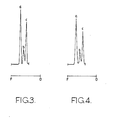
- bicyclic, tricyclic, and tetracyclic aromatic hydrocarbons indicated in Table 5 were subjected to chromatography by following the procedure described above and using a methanol/water (70/30 by volume) mixture as a developing solvent, to find the R f value, the half-value width, and the degree of separation. The results were as shown in Table 5. In this experiment, the clear separation of bicyclic, tricyclic, and tetracyclic aromatic hydrocarbons was attained and separation between two tetracyclic compounds was attained to a considerably high degree.
- R s1 represents the degree of separation between naphthalene and phenanthrene
- R s2 represents the degree of separation between phenanthrene and pyrene
- R s3 represents the degree of separation between pyrene and chrysene.
- Comparative Experiment 5 used a commercially available silica gel thin-layer rod
- Comparative Experiment 6 used a commercially available alumina thin-layer rod
- Example 5 used the same thin-layer rod as used in Example 1
- Example 6 used the same thin-layer rod as used in Example 3.
- n-Hexane was invariably used as a developing solvent.
Landscapes
- Chemical & Material Sciences (AREA)
- Analytical Chemistry (AREA)
- General Health & Medical Sciences (AREA)
- Life Sciences & Earth Sciences (AREA)
- Health & Medical Sciences (AREA)
- Biochemistry (AREA)
- Physics & Mathematics (AREA)
- General Physics & Mathematics (AREA)
- Immunology (AREA)
- Pathology (AREA)
- Chemical Kinetics & Catalysis (AREA)
- Solid-Sorbent Or Filter-Aiding Compositions (AREA)
- Other Investigation Or Analysis Of Materials By Electrical Means (AREA)
- Treatment Of Liquids With Adsorbents In General (AREA)
Applications Claiming Priority (2)
| Application Number | Priority Date | Filing Date | Title |
|---|---|---|---|
| JP60052696A JPS61210956A (ja) | 1985-03-15 | 1985-03-15 | クロマトグラフイ−用薄層棒 |
| JP52696/85 | 1985-03-15 |
Publications (1)
| Publication Number | Publication Date |
|---|---|
| EP0198593A1 true EP0198593A1 (de) | 1986-10-22 |
Family
ID=12922047
Family Applications (1)
| Application Number | Title | Priority Date | Filing Date |
|---|---|---|---|
| EP86301819A Pending EP0198593A1 (de) | 1985-03-15 | 1986-03-13 | Dünnschichtstab für die Chromatographie |
Country Status (6)
| Country | Link |
|---|---|
| US (1) | US4828704A (de) |
| EP (1) | EP0198593A1 (de) |
| JP (1) | JPS61210956A (de) |
| KR (1) | KR930001594B1 (de) |
| AU (1) | AU599900B2 (de) |
| CA (1) | CA1286611C (de) |
Cited By (2)
| Publication number | Priority date | Publication date | Assignee | Title |
|---|---|---|---|---|
| EP0286757A3 (en) * | 1987-04-13 | 1989-06-28 | Iatron Laboratories Inc. | Thin-layer chromatography flame ionization detector for quantitative analysis of chromatographically-separated substances |
| CN114878734A (zh) * | 2022-03-28 | 2022-08-09 | 中国科学院上海微系统与信息技术研究所 | 基于逐层沉积介孔二氧化硅为固定相的微色谱柱制备方法 |
Families Citing this family (6)
| Publication number | Priority date | Publication date | Assignee | Title |
|---|---|---|---|---|
| US5302351A (en) * | 1992-11-16 | 1994-04-12 | The United States Of America As Represented By The Administrator Of The National Aeronautics And Space Administration | Length of stain dosimeter |
| US5811665A (en) * | 1996-09-11 | 1998-09-22 | Alanex Corporation | Large scale sorption-driven solid state chromatography |
| US7223704B2 (en) * | 2004-08-27 | 2007-05-29 | Infineon Technologies Ag | Repair of carbon depletion in low-k dielectric films |
| EP1999465B1 (de) * | 2006-03-24 | 2016-11-16 | Waters Technologies Corporation | Chromatographievorrichtung auf keramikbasis |
| CN101644698A (zh) * | 2009-08-27 | 2010-02-10 | 国家海洋局第一海洋研究所 | 一种原油sara族组分棒状薄层色谱分析方法及应用 |
| CN112748212B (zh) * | 2019-10-31 | 2024-06-07 | 中国石油化工股份有限公司 | 一种色谱棒制备容器及色谱棒制备方法 |
Citations (4)
| Publication number | Priority date | Publication date | Assignee | Title |
|---|---|---|---|---|
| DE2125428A1 (de) * | 1970-05-22 | 1971-12-02 | Du Pont | Chromatographische Packung und Verfahren zur Herstellung derselben |
| US3839205A (en) * | 1971-09-08 | 1974-10-01 | Shionogi & Co | Chromatographic element and method for producing the same |
| DE2712113A1 (de) * | 1977-03-19 | 1978-09-28 | Merck Patent Gmbh | Trennmaterial fuer die duennschichtchromatographie und verfahren zur herstellung |
| FR2462183A1 (fr) * | 1979-07-27 | 1981-02-13 | Merck Patent Gmbh | Procede de preparation d'une matiere separatrice pour la chromatographie, silices modifiees obtenues par ce procede et leur utilisation en chromatographie |
Family Cites Families (6)
| Publication number | Priority date | Publication date | Assignee | Title |
|---|---|---|---|---|
| DE1926465U (de) * | 1965-02-27 | 1965-11-04 | Peter Dr Pogacar | Geraet zur chromatographischen und elektrophoretischen trennung geloester stoffgemische zu analytischen, praeparativen oder diagnostischen zwecken. |
| US3795313A (en) * | 1970-05-22 | 1974-03-05 | Du Pont | Chromatographic packing with chemically bonded organic stationary phases |
| FR2383690A1 (fr) * | 1977-03-19 | 1978-10-13 | Merck Patent Gmbh | Matiere de separation pour chromatographie en couche mince et procede pour sa preparation |
| JPS56150354A (en) * | 1980-04-22 | 1981-11-20 | Shionogi & Co Ltd | Plate for reversed-phase chromatography and its production |
| DE3172131D1 (en) * | 1980-06-27 | 1985-10-10 | Akzo Nv | Porous inorganic support material coated with an organic stationary phase, for use in chromatography, and process for its preparation |
| DE3328348A1 (de) * | 1983-08-05 | 1985-02-14 | Degussa Ag, 6000 Frankfurt | Verfahren zur duennschichtchromatographischen trennung von enantiomeren |
-
1985
- 1985-03-15 JP JP60052696A patent/JPS61210956A/ja active Pending
-
1986
- 1986-03-13 EP EP86301819A patent/EP0198593A1/de active Pending
- 1986-03-13 CA CA000504032A patent/CA1286611C/en not_active Expired - Lifetime
- 1986-03-14 KR KR1019860001845A patent/KR930001594B1/ko not_active Expired - Fee Related
- 1986-03-14 AU AU54750/86A patent/AU599900B2/en not_active Ceased
-
1987
- 1987-12-14 US US07/132,223 patent/US4828704A/en not_active Expired - Fee Related
Patent Citations (5)
| Publication number | Priority date | Publication date | Assignee | Title |
|---|---|---|---|---|
| DE2125428A1 (de) * | 1970-05-22 | 1971-12-02 | Du Pont | Chromatographische Packung und Verfahren zur Herstellung derselben |
| US3839205A (en) * | 1971-09-08 | 1974-10-01 | Shionogi & Co | Chromatographic element and method for producing the same |
| DE2712113A1 (de) * | 1977-03-19 | 1978-09-28 | Merck Patent Gmbh | Trennmaterial fuer die duennschichtchromatographie und verfahren zur herstellung |
| DE2809137A1 (de) * | 1977-03-19 | 1979-09-06 | Merck Patent Gmbh | Trennmaterial fuer die duennschichtchromatographie und verfahren zur herstellung |
| FR2462183A1 (fr) * | 1979-07-27 | 1981-02-13 | Merck Patent Gmbh | Procede de preparation d'une matiere separatrice pour la chromatographie, silices modifiees obtenues par ce procede et leur utilisation en chromatographie |
Cited By (4)
| Publication number | Priority date | Publication date | Assignee | Title |
|---|---|---|---|---|
| EP0286757A3 (en) * | 1987-04-13 | 1989-06-28 | Iatron Laboratories Inc. | Thin-layer chromatography flame ionization detector for quantitative analysis of chromatographically-separated substances |
| US4965048A (en) * | 1987-04-13 | 1990-10-23 | Iatron Laboratories, Inc. | Thin-layer chromatography flame ionization detector for quantitative analysis of chromatographically-separated substances |
| CN114878734A (zh) * | 2022-03-28 | 2022-08-09 | 中国科学院上海微系统与信息技术研究所 | 基于逐层沉积介孔二氧化硅为固定相的微色谱柱制备方法 |
| CN114878734B (zh) * | 2022-03-28 | 2023-12-01 | 中国科学院上海微系统与信息技术研究所 | 基于逐层沉积介孔二氧化硅为固定相的微色谱柱制备方法 |
Also Published As
| Publication number | Publication date |
|---|---|
| KR860007006A (ko) | 1986-10-06 |
| AU599900B2 (en) | 1990-08-02 |
| KR930001594B1 (ko) | 1993-03-06 |
| AU5475086A (en) | 1986-09-18 |
| CA1286611C (en) | 1991-07-23 |
| US4828704A (en) | 1989-05-09 |
| JPS61210956A (ja) | 1986-09-19 |
Similar Documents
| Publication | Publication Date | Title |
|---|---|---|
| Schomburg et al. | Alkylpolysiloxane glass capillary columns combining high temperature stability of the stationary liquid and deactivation of the surface: Thermal treatment of dealkalinized glass surfaces by the stationary liquid itself | |
| Carr et al. | Fluorescence studies of the stationary-phase chemical environment in reversed-phase liquid chromatography | |
| Centineo et al. | Multielemental speciation analysis of organometallic compounds of mercury, lead and tin in natural water samples by headspace-solid phase microextraction followed by gas chromatography–mass spectrometry | |
| Luks-Betlej et al. | Solid-phase microextraction of phthalates from water | |
| Vervoort et al. | Optimisation and characterisation of silica-based reversed-phase liquid chromatographic systems for the analysis of basic pharmaceuticals | |
| Aguerre et al. | Speciation of organotins in environmental samples by SPME-GC: comparison of four specific detectors: FPD, PFPD, MIP-AES and ICP-MS | |
| Cortazar et al. | MultiSimplex optimisation of the solid-phase microextraction–gas chromatographic–mass spectrometric determination of polycyclic aromatic hydrocarbons, polychlorinated biphenyls and phthalates from water samples | |
| Dunemann et al. | Simultaneous determination of Hg (II) and alkylated Hg, Pb, and Sn species in human body fluids using SPME-GC/MS-MS | |
| Blomberg et al. | Peroxide-initiated in situ curing of silicone gums for capillary column gas chromatography | |
| US4828704A (en) | Thin-layer rod for chromatography | |
| Werner et al. | Development of novel thin‐film solid‐phase microextraction materials based on deep eutectic solvents for preconcentration of trace amounts of parabens in surface waters | |
| Wan et al. | Retention behavior of ionizable isomers in reversed-phase liquid chromatography: a comparative study of porous graphitic carbon and octadecyl bonded silica | |
| Farrell et al. | An investigation of high-performance liquid chromatographic methods for the analysis of amphetamines | |
| TW201137340A (en) | Detecting apparatus with photonic crystal structure | |
| Czarny et al. | Molecularly imprinted polymer film grafted from porous silica for efficient enrichment of steroid hormones in water samples | |
| De Crom et al. | Sorbent‐packed needle microextraction trap for benzene, toluene, ethylbenzene, and xylenes determination in aqueous samples | |
| Schomburg et al. | Glass capillary gas chromatography of highly polar solutes like diols, acids and amines deactivation of fused silica and pretreated alkali glass support surfaces | |
| Gharari et al. | All‐in‐one solid‐phase microextraction: Development of a selective solid‐phase microextraction fiber assembly for the simultaneous and efficient extraction of analytes with different polarities | |
| Gilpin et al. | On-column preparation of bonded phases for high pressure liquid chromatography | |
| KR20040076387A (ko) | 개선된 고상 미세 추출 파이버, 그 제조방법 및 이를이용한 수질시료 중의 알킬페놀류와 비스페놀-a의 분석방법 | |
| Chang et al. | Vortex‐assisted liquid–liquid microextraction for the rapid screening of short‐chain chlorinated paraffins in water | |
| Dang et al. | Determination of amino and silanol functional groups on glass via chemical derivatization and ESCA | |
| Bogart et al. | Spectroscopic investigation of the hydrolysis of γ-glycidoxypropylsilane bound to silica surfaces | |
| Deng et al. | Preparation of porous aromatic framework modified graphene oxide for pipette‐tip solid‐phase extraction of theophylline in tea | |
| Malec | Improved open tubular gas chromatographic columns for use at 250° C and above |
Legal Events
| Date | Code | Title | Description |
|---|---|---|---|
| PUAI | Public reference made under article 153(3) epc to a published international application that has entered the european phase |
Free format text: ORIGINAL CODE: 0009012 |
|
| AK | Designated contracting states |
Kind code of ref document: A1 Designated state(s): DE FR GB |
|
| 17P | Request for examination filed |
Effective date: 19870306 |
|
| RAP1 | Party data changed (applicant data changed or rights of an application transferred) |
Owner name: IATRON LABORATORIES INC. Owner name: COSMO OIL COMPANY, LTD |
|
| 17Q | First examination report despatched |
Effective date: 19890303 |
|
| STAA | Information on the status of an ep patent application or granted ep patent |
Free format text: STATUS: THE APPLICATION HAS BEEN REFUSED |
|
| 18W | Application withdrawn |
Withdrawal date: 19910814 |
|
| D18W | Application withdrawn (deleted) | ||
| 18R | Application refused |
Effective date: 19910705 |
|
| D18W | Application withdrawn (deleted) | ||
| RIN1 | Information on inventor provided before grant (corrected) |
Inventor name: YAMAMOTO, YOJIRO |