EP0200743B1 - Destruction de produits chimiques toxiques - Google Patents
Destruction de produits chimiques toxiques Download PDFInfo
- Publication number
- EP0200743B1 EP0200743B1 EP19850905038 EP85905038A EP0200743B1 EP 0200743 B1 EP0200743 B1 EP 0200743B1 EP 19850905038 EP19850905038 EP 19850905038 EP 85905038 A EP85905038 A EP 85905038A EP 0200743 B1 EP0200743 B1 EP 0200743B1
- Authority
- EP
- European Patent Office
- Prior art keywords
- bath
- waste
- oxygen
- wastes
- organic waste
- Prior art date
- Legal status (The legal status is an assumption and is not a legal conclusion. Google has not performed a legal analysis and makes no representation as to the accuracy of the status listed.)
- Expired
Links
Images

Classifications
-
- A—HUMAN NECESSITIES
- A62—LIFE-SAVING; FIRE-FIGHTING
- A62D—CHEMICAL MEANS FOR EXTINGUISHING FIRES OR FOR COMBATING OR PROTECTING AGAINST HARMFUL CHEMICAL AGENTS; CHEMICAL MATERIALS FOR USE IN BREATHING APPARATUS
- A62D3/00—Processes for making harmful chemical substances harmless or less harmful, by effecting a chemical change in the substances
- A62D3/30—Processes for making harmful chemical substances harmless or less harmful, by effecting a chemical change in the substances by reacting with chemical agents
- A62D3/32—Processes for making harmful chemical substances harmless or less harmful, by effecting a chemical change in the substances by reacting with chemical agents by treatment in molten chemical reagent, e.g. salts or metals
-
- C—CHEMISTRY; METALLURGY
- C21—METALLURGY OF IRON
- C21C—PROCESSING OF PIG-IRON, e.g. REFINING, MANUFACTURE OF WROUGHT-IRON OR STEEL; TREATMENT IN MOLTEN STATE OF FERROUS ALLOYS
- C21C5/00—Manufacture of carbon-steel, e.g. plain mild steel, medium carbon steel or cast steel or stainless steel
- C21C5/28—Manufacture of steel in the converter
- C21C5/42—Constructional features of converters
- C21C5/46—Details or accessories
- C21C5/48—Bottoms or tuyéres of converters
-
- C—CHEMISTRY; METALLURGY
- C21—METALLURGY OF IRON
- C21C—PROCESSING OF PIG-IRON, e.g. REFINING, MANUFACTURE OF WROUGHT-IRON OR STEEL; TREATMENT IN MOLTEN STATE OF FERROUS ALLOYS
- C21C5/00—Manufacture of carbon-steel, e.g. plain mild steel, medium carbon steel or cast steel or stainless steel
- C21C5/52—Manufacture of steel in electric furnaces
- C21C5/5211—Manufacture of steel in electric furnaces in an alternating current [AC] electric arc furnace
- C21C5/5217—Manufacture of steel in electric furnaces in an alternating current [AC] electric arc furnace equipped with burners or devices for injecting gas, i.e. oxygen, or pulverulent materials into the furnace
-
- C—CHEMISTRY; METALLURGY
- C21—METALLURGY OF IRON
- C21C—PROCESSING OF PIG-IRON, e.g. REFINING, MANUFACTURE OF WROUGHT-IRON OR STEEL; TREATMENT IN MOLTEN STATE OF FERROUS ALLOYS
- C21C5/00—Manufacture of carbon-steel, e.g. plain mild steel, medium carbon steel or cast steel or stainless steel
- C21C5/52—Manufacture of steel in electric furnaces
- C21C5/5241—Manufacture of steel in electric furnaces in an inductively heated furnace
-
- C—CHEMISTRY; METALLURGY
- C22—METALLURGY; FERROUS OR NON-FERROUS ALLOYS; TREATMENT OF ALLOYS OR NON-FERROUS METALS
- C22B—PRODUCTION AND REFINING OF METALS; PRETREATMENT OF RAW MATERIALS
- C22B7/00—Working up raw materials other than ores, e.g. scrap, to produce non-ferrous metals and compounds thereof; Methods of a general interest or applied to the winning of more than two metals
- C22B7/001—Dry processes
- C22B7/003—Dry processes only remelting, e.g. of chips, borings, turnings; apparatus used therefor
-
- A—HUMAN NECESSITIES
- A62—LIFE-SAVING; FIRE-FIGHTING
- A62D—CHEMICAL MEANS FOR EXTINGUISHING FIRES OR FOR COMBATING OR PROTECTING AGAINST HARMFUL CHEMICAL AGENTS; CHEMICAL MATERIALS FOR USE IN BREATHING APPARATUS
- A62D2101/00—Harmful chemical substances made harmless, or less harmful, by effecting chemical change
- A62D2101/04—Pesticides, e.g. insecticides, herbicides, fungicides or nematocides
-
- A—HUMAN NECESSITIES
- A62—LIFE-SAVING; FIRE-FIGHTING
- A62D—CHEMICAL MEANS FOR EXTINGUISHING FIRES OR FOR COMBATING OR PROTECTING AGAINST HARMFUL CHEMICAL AGENTS; CHEMICAL MATERIALS FOR USE IN BREATHING APPARATUS
- A62D2101/00—Harmful chemical substances made harmless, or less harmful, by effecting chemical change
- A62D2101/20—Organic substances
-
- A—HUMAN NECESSITIES
- A62—LIFE-SAVING; FIRE-FIGHTING
- A62D—CHEMICAL MEANS FOR EXTINGUISHING FIRES OR FOR COMBATING OR PROTECTING AGAINST HARMFUL CHEMICAL AGENTS; CHEMICAL MATERIALS FOR USE IN BREATHING APPARATUS
- A62D2101/00—Harmful chemical substances made harmless, or less harmful, by effecting chemical change
- A62D2101/20—Organic substances
- A62D2101/22—Organic substances containing halogen
-
- A—HUMAN NECESSITIES
- A62—LIFE-SAVING; FIRE-FIGHTING
- A62D—CHEMICAL MEANS FOR EXTINGUISHING FIRES OR FOR COMBATING OR PROTECTING AGAINST HARMFUL CHEMICAL AGENTS; CHEMICAL MATERIALS FOR USE IN BREATHING APPARATUS
- A62D2101/00—Harmful chemical substances made harmless, or less harmful, by effecting chemical change
- A62D2101/20—Organic substances
- A62D2101/28—Organic substances containing oxygen, sulfur, selenium or tellurium, i.e. chalcogen
-
- A—HUMAN NECESSITIES
- A62—LIFE-SAVING; FIRE-FIGHTING
- A62D—CHEMICAL MEANS FOR EXTINGUISHING FIRES OR FOR COMBATING OR PROTECTING AGAINST HARMFUL CHEMICAL AGENTS; CHEMICAL MATERIALS FOR USE IN BREATHING APPARATUS
- A62D2101/00—Harmful chemical substances made harmless, or less harmful, by effecting chemical change
- A62D2101/40—Inorganic substances
-
- Y—GENERAL TAGGING OF NEW TECHNOLOGICAL DEVELOPMENTS; GENERAL TAGGING OF CROSS-SECTIONAL TECHNOLOGIES SPANNING OVER SEVERAL SECTIONS OF THE IPC; TECHNICAL SUBJECTS COVERED BY FORMER USPC CROSS-REFERENCE ART COLLECTIONS [XRACs] AND DIGESTS
- Y02—TECHNOLOGIES OR APPLICATIONS FOR MITIGATION OR ADAPTATION AGAINST CLIMATE CHANGE
- Y02P—CLIMATE CHANGE MITIGATION TECHNOLOGIES IN THE PRODUCTION OR PROCESSING OF GOODS
- Y02P10/00—Technologies related to metal processing
- Y02P10/20—Recycling
-
- Y—GENERAL TAGGING OF NEW TECHNOLOGICAL DEVELOPMENTS; GENERAL TAGGING OF CROSS-SECTIONAL TECHNOLOGIES SPANNING OVER SEVERAL SECTIONS OF THE IPC; TECHNICAL SUBJECTS COVERED BY FORMER USPC CROSS-REFERENCE ART COLLECTIONS [XRACs] AND DIGESTS
- Y02—TECHNOLOGIES OR APPLICATIONS FOR MITIGATION OR ADAPTATION AGAINST CLIMATE CHANGE
- Y02P—CLIMATE CHANGE MITIGATION TECHNOLOGIES IN THE PRODUCTION OR PROCESSING OF GOODS
- Y02P10/00—Technologies related to metal processing
- Y02P10/25—Process efficiency
-
- Y—GENERAL TAGGING OF NEW TECHNOLOGICAL DEVELOPMENTS; GENERAL TAGGING OF CROSS-SECTIONAL TECHNOLOGIES SPANNING OVER SEVERAL SECTIONS OF THE IPC; TECHNICAL SUBJECTS COVERED BY FORMER USPC CROSS-REFERENCE ART COLLECTIONS [XRACs] AND DIGESTS
- Y10—TECHNICAL SUBJECTS COVERED BY FORMER USPC
- Y10S—TECHNICAL SUBJECTS COVERED BY FORMER USPC CROSS-REFERENCE ART COLLECTIONS [XRACs] AND DIGESTS
- Y10S588/00—Hazardous or toxic waste destruction or containment
- Y10S588/90—Apparatus
Definitions
- This invention relates to methods of destroying toxic wastes.
- PCBs polychlorinated biphenyls
- Inorganic wastes such as the oxides of iron, zinc, copper, lead, magnesium, aluminum, chromium and cadmium, various powdered metal manufacturing residues and metal containing sludges also constitute a serious environmental problem. These wastes will all require destruction at some point in their use cycle.
- Contemporary examples of wastes which the EPA classifies as toxic, ignitable, corrosive, or dangerously reactive include paint sludge from appliance factories, dregs of chrome and nickel from metal-plating shops, spent raw materials for varnish, carpets, and detergents at chemical plants, solvents from dry-cleaned clothes and degreased microchips from computers, mercury from exhausted watch batteries, butane residue from disposable cigarette lighters and lye from "empty" cans of oven cleaner.
- reactor types have been offered or used commercially as solutions to hazardous waste disposal: rotary kiln, liquid injection, multiple hearth, multiple chamber, fluidized bed, molten salt, and high efficiency boilers. Though each of these reactors has some desirable practical and theoretical operating features, none can claim profitable operation for the destruction of organic wastes, inorganic wastes and/or sludges in a single process. Of the above reactors, the rotary kiln is most commonly employed in the United States and Europe. Although such reactors can achieve a combustion efficiency of greater than 99.99 percent with organic compounds, post- combustion and high residence times are still often required.
- Incineration of organic materials involves a combination of pyrolysis (1200°C.) and combustion that is initiated by a high temperature flame. Although the initial pyrolysis transforms the organic compound into a more oxidizable form, the oxidation process requires the actual collision of the resulting incipient high energy fragments with oxygen. In a conventional incinerator, such as a rotary kiln, where the reaction medium may tend to be highly viscous, it is often difficult to bring the reacting species into direct contact with oxygen. This lack of efficient mixing on a molecular level impedes the rate of destruction. These reactors are therefore typically relatively inefficient, requiring excess oxygen and, hence, more auxiliary fuel. The actual exothermic (heat liberating) reaction, attending the reaction with oxygen, occurs away from the flame tip as the reacting materials are fed through the reaction chamber. Consequently, the heat generated by these reactions cannot be utilized efficiently for the initial endothermic pyrolysis step.
- thermodynamic problems associated with the destruction of such materials can be minimized by a series of chemical reactions in which thermal energy may be transformed into chemical.
- thermochemical cycle involving the reduction of a metal halide with hydrogen is usually an endothermic process as exemplified for ferrous chloride:
- sagacious use of products and latent heat derived from accompanying in-situ pyrolytic oxidation of carbonaceous materials in a biphasic reaction medium can ameliorate the overall thermal requirements attending this classic dechlorination, provided the reaction medium is capable of sustaining thermochemical reaction cycles in both layers, or in a single layer, or at the biphasic interface, simultaneously.
- thermochemical raction cycles will increase thermodynamic process efficiency and ameliorate the undesirable endothermic effect of most reductions involving inorganic compounds comprising metals, and transition metals of the periodic table. These reductions normally involve the generation or utilization of the. parent oxide as an intermediate in the thermochemical cycle.
- the effectiveness of the intermediate reduction is based on the relative free energy of oxidation of the element(s) involved compared to the free energy of oxidation for hydrogen, carbon or carbon monoxide under the reaction conditions of the bath. For example, carbon can reduce nickel oxide to form nickel and carbon monoxide provided reaction temperatures exceed approximately 850°F.
- a high-turbulence combustion chamber having a pulsating spiral flow will lower the residence time and temperature required for destruction, according to Rathjen et al in U.S. Patent 4,140,066. Separation of PCBs from the sludge in which they are contained, followed by incineration, is described in U.S. Patent 4,402,274.
- An-iron bath is used for coal gasification in U.S. Patent 4,388,084 and one is used, in the absence of air, in U.S. Patent 3,890,908.
- U.S. Patent 4,389,246 to Okamura et al on the subject of coal gasification employing a molten iron bath, the bottom-blowing of ethane is described (see particularly column 6, lines 7-14); the ethane or other hydrocarbon gas is used to stir the mixture and for this reason is considered by Okamura et al to be equivalent to oxidizing gases and inert gases as well as oxidizable gases.
- Hydrocarbon may be injected with oxygen as in U.S. Patent 3,706,549.
- the molten salt process involving the reaction of material with a hot alkali metal is typified by the disclosure of Grantham's U.S. Patent 4,246,255 maintaining a bath of, for example, alkali metal carbonates, at about 700 1000°C. Oxygen is also injected into the molten salt.
- Southwick in U.S. Patent 3,527,178, employs a metal bath. Separable heating and incineration zones, including molten metal, are employed in U.S. Patent 3,744,438.
- Molten iron is employed by Rasor in U.S. Patents 4,187,672 and 4,244,180 as a solvent for carbon generated through the topside introduction of coal; the carbon is then partially oxidized by iron oxide during a long residence time and partially through the introduction of oxygen from above.
- the Rasor disclosure maintains distinct carbonization and oxidation chambers.
- the relative economics of hazardous waste decomposition can be enhanced by high thermodynamic process efficiencies and efficient, cost-effective recovery of energy (in the form of waste heat or fuel gas) and high-purity by-products.
- Minimization of the total costs associated with hazardous waste elimination appears dependent on the ability of a single process to decompose completely and efficiently all wastes regardless of composition.
- the economic utilization of high grade energy will be maximized when destruction occurs efficiently without auxiliary fuel addition or substantially greater than stoichiometric oxygen requirements.
- carbonates may be present in a slag portion of the bath in the present invention, they are not essential and in fact calcium carbonate in particular is undesirable since the chlorine from PCBs and other chlorine-containing waste will tend to combine with the calcium, resulting in the formation of calcium chloride which will undesirably tend to accumulate in the bath and/or slag associated with it.
- GB-A-1150372 discloses a method of disposing organic waste by burning said waste in a rotary-drum furnace of short axial length and adapted for continuous or batchwise waste feed and batchwise molten slag discharge, in the presence of a molten melting bath which may consist of quartz sand and iron oxide.
- Said object is achieved by a method of destroying wastes including at least some organic wastes comprising (1) providing, in a furnace, a molten bath of metals (preferably including either iron or silicon) and oxides of metals having free energies of oxidation under the temperature conditions and oxygen partial pressure conditions of the furnace greater than that for the conversion of carbon to CO, (2) maintaining the molten bath at a viscosity no greater than 0.01 Pa.S (10 cp), and (3) continuously and conjointly introducing oxygen and organic waste into or onto said bath in a stoichiometric ratio of oxygen to the oxidizable portion of said organic waste of at least 1:1, to maintain an average residence time of said organic wastes in said furance of at least about one-half second.
- metals preferably including either iron or silicon
- the present invention also provides a method of pyrolytically and oxidatively destroying inorganic and/or organic waste containing significant amounts of chemically bound halogens comprising injecting said waste into a reaction zone comprising a molten bath of at least 10% silicon and/or its oxides and a metal selected from the group consisting of copper, iron and nickel at a temperature of at least about 1371°C (2500°F), said reaction zone contained in a reactor, said bath having a viscosity no greater than 0.01 Pa.s (10 cp) and conjointly introducing oxygen in a stoichiometric relationship to the oxidizable portion of said waste to maintain an average residence time of said organic waste in said reactor of at least about one-half second, collecting gases evolving from said bath, and recovering hydrogen halide therefrom.
- the present invention provides a method of pyrolytically and oxidatively destroying organic waste comprising (1) providing a molten bath of at least 10% iron in a furnace, (2) maintaining the molten metal fraction of said bath at a viscosity no greater than 0.01 Pa.s (10 cp) and (3) continuously and conjointly injecting oxygen and said organic waste in a stoichiometric ratio of oxygen to the oxidizable portion of said organic waste of at least 1:1 into or onto said bath to maintain an average residence time of said waste in said furnace of at least about one-half second.
- the disposal of organic wastes which may be contaminated with inorganic compounds and metal containing sludges is enabled in a unitary process.
- the wastes may include PCBs, tetrachlorosilane, dioxin, and other highly toxic materials.
- This process which may utilize steelmaking technology and equipment such as that disclosed in Knuppel et al U.S. Patent 3,706,549, comprises injection of oxygen and organic waste streams (which may include inorganics) below the surface of a molten bath, by bottom tuyere or port injection, or by lance-type injection above the surface, such that interaction can occur within the bath, in the absence of an external source of flame.
- the molten medium which comprises metals, oxides, carbonates, silicon, and the like, to be described in more detail below, is maintained at a viscosity no greater than 0.01 Pa.s (10 cp) and temperatures preferably in excess of (1371°C) serves to provide a thermally stable heat conducting medium for the initial bond rupturing pyrolitic sequence.
- Molecular oxygen can be activated by adsorption on the slag or metal surface or by incorporation as a highly reactive metal oxide, such as copper oxide. Oxides of atomic groups V, VI and VII, in forms such as N0 3- , S04 and C104 may also contribute oxygen for the oxidation of molecular fragments comprising carbon and hydrogen to carbon monoxide and water.
- Turbulence or agitation within the molten bath which should be substantially homogenous, facilitates efficient transfer of oxygen from incipient oxides to finely dispersed atomic carbon.
- a slag phase may be expected to form in most applications, and, since the solubility of various oxides in the slag is typically greater than that of carbon, much of the oxygen transfer from a metal oxide will occur at the interface of the two phases.
- the metallic residues may either be converted to their elemental state and typically separate from the slag or be converted to a metal oxide through oxidative combustion.
- the reaction pathway of a given metal is determined by its affinity for oxygen at the temperature of the reaction.
- We may include metals such as iron, nickel and copper within the bath, by way of in situ reduction of metal containing compounds, or from the addition of elemental iron, nickel or copper; such metals activate oxygen transfer to carbon and other elements and catalyze the pyrolytic bond cleavage of various compounds as they are introduced to the bath.
- metals such as iron, nickel and copper within the bath, by way of in situ reduction of metal containing compounds, or from the addition of elemental iron, nickel or copper; such metals activate oxygen transfer to carbon and other elements and catalyze the pyrolytic bond cleavage of various compounds as they are introduced to the bath.
- the metals and oxides of metals which we employ are those which have free energies of oxidation, under the temperature and oxygen partial pressure conditions of the furnace, which are greater than that required for the conversion of carbon to carbon monoxide. Elemental iron, nickel, cobalt, and copper at temperatures higher than about 1371°C (2500°F) all satisfy this requirement.
- a dynamic carbon balance may advantageously be maintained at about 1/2% carbon to about 6% carbon, preferably about 2% to about 3%, across the molten bath by controlled continuous carbonaceous waste injection.
- This effective carbon balance prevents rapid refractory degradation and facilitates reaction kinetics by providing a high carbon concentration gradient.
- decarbonization occurs by oxidation within the melt where carbon, after being reduced to its atomic state, is easily absorbed. Decarbonization may occur in the gas phase and at the gas/liquid interface in the slag layer as well as in the metal bath. The facile formation of carbon monoxide and hydrogen from toxic wastes also affords the possibility of performing C 1 chemistry when that is deemed practical.
- the high carbon, low ferrous oxide slag maintained above the molten metal bath, provides a surface for exothermic radical recombination (e.g., H - +CI . ° -HCI) and a medium for sulfur or heavy metal scavenging.
- exothermic radical recombination e.g., H - +CI . ° -HCI
- gaseous elements such as hydrogen and chlorine, which are stripped from the parent compound upon injection, combine within the melt when electronic affinities are sufficient; however, where the energy of the bath overcomes these forces, formation of products such as hydrogen chloride will occur above the melt.
- thermodynamic efficiency which allows the overall reduction of thermal energy required for the indirect multi-step conversion of metallic residues and inorganic compounds, which may be suspended in or entrained with an organic waste, to their metals or to their respective non-volatile oxides in a single process.
- This alteration of basic chemical composition and usage of thermochemical cycles results in a significant reduction of the volume of the initial waste stream with an attendant decrease in the potential toxicity of the waste.
- the percentage used should not exceed that percentage which defines the condition of thermal neutrality, for longer than a very short time. This quantity is dependent upon the exothermicity of attending oxidations of organic waste, the endothermicity of simultaneously decomposing (or fracturing) inorganic waste, and the heat loss associated with the reaction vessel, as well as the overall process.
- thermal recovery may be enhanced and the concentrated chemically pure gaseous by-products that are uncontaminated with their progenitors may be recovered for future chemical or fuel use.
- the reactor be of more or less conventional design and technology. It should permit a controlled residence time distribution to ensure complete decomposition and should have no moving parts in the reaction zone to afford low maintenance.
- the process is preferably continuous. Slag is not undesirable as it provides a surface to facilitate the initial pyrolytic step; it may advantageously comprise 90% or more of the molten bath composition.
- An insulating medium should be employed around the bath to minimize heat loss thereby maximizing the thermal efficiency of the process.
- A.O.D. or "argon-oxygen-decarbonization” furnace is readily adaptable to our process, for example.
- a relatively small (ten ton) induction-type furnace may, for example, be readily adapted to practical use.
- a much larger unit resembling a bottom-blown basic oxygen steelmaking vessel optionally fitted with a top lance could be employed for very large scale central processing; a hot metal supply must be available.
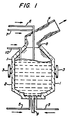
- Figure 1 is a more or less diagrammatic illustration of a top and bottom-blown vessel where an iron or other metal charge is initially heated by induction external to the bath.
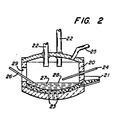
- Figure 2 is a more or less diagrammatic illustration of an electric arc furance containing a molten pool of paradigmatic iron and fitted with bottom tuyere injection capabilities.
- Figure 3 is a diagram showing the relative free energies of oxidation of various metals under the preferred conditions of our furnace operation.
- FIG. 1 the more or less diagrammatic depiction of a vessel suitable for the process of our invention as seen in Figure 1 is an induction furance comprising container walls 1 having built therein induction heat coils at 2 and having trunions 3 for ease of handling.
- the design also includes an off-take 4 for hot gases and means 5 for injecting an organic waste or other carbonaceous material into the bottom of the vessel, preferably concentrically through the same inlet means as oxygen.
- At the top may also be intake means 6 for steam and additional oxygen if they are desired and an additional intake means 7 for other waste materials.
- a further inlet 10 may be provided for flux or for the additional input of waste materials.
- Seals 8 should be provided around the hot gas off-take so the vessel may be tilted on trunions 3 and poured. The seals 8 should be as leak-proof as possible. Molten metal or slag may be drained through a bottom drain 9. The bath level may vary considerably and may be quite high, as shown, within the vessel.
- an electric arc furnace tiltable in a known manner, is shown having walls 20 and a tapping spout 21, electrodes 22, and bottom tuyeres 23 for injecting a mixture of oxygen and organic waste in the bath.
- Lance injection means such as the impingement type pipe lance more or less diagrammatically shown at 24 for further injecting steam, oxygen, pulverized coal, and/or organic or inorganic wastes in the top of the furnace.
- Injection means 24 may be water-cooled in a known manner. Iron or other metallic substances may be placed in the furnace through door 29 if desired.
- a consumable pipe lance 26 of a construction familiar to those skilled in the art may be used to inject waste below the surface of the molten iron 27 and slag 28.
- the impingement type lance is commonly of a concentric construction for the simultaneous introduction of two materials, and frequently is water-cooled in a jacket or other known manner. Typically no attempt is made to cool a consumable lance such as pipe lance 26, which must be replaced almost continuously.
- the unit of Figure 1 is similar to a basic bottom-blown oxygen steelmaking vessel, except for the induction heating coils, and in fact such a vessel may be considered equivalent and fully operable in the methods of the invention. Due to the very high temperatures and extremes of chemical reactions taking place, refractory linings are recommended which are known to be resistant to erosion and degradation. At such temperatures, e.g. 1371°C (2500°F) and above, as high as 2204°C (4000°F), persons skilled in the art will recognize that virtually any organic waste or compound will be pyrolytically destroyed.
- reaction zone we mean the zone within the furance containing the molten bath and the space immediately above it and in contact with it.
- One of the advantageous features of the methods of the invention is the short residence time required-generally no more than two seconds within the bath and/or the reaction zone will be required to completely destroy pyrolytically, and oxidize, any organic compound.
- An average residence time of at least one and one-half (1-1/2) second is the preferred objective; preferably the residence time distribution should permit virtually no chance of chemically bound carbon, and preferably less than 5% of the carbon particles from organic compounds, having a residence time of less than one-half (1/2) second.
- the temperature of the bath should be at least high enough to maintain it in a molten state, generally about 1371°C (2500°F), the recommended temperature for complete and total destruction may be higher for some bath compositions.
- the molten metal content, especially the iron content is increased, the catalytic activity of the bath, and the total carbon dissolved by the bath, are increased; correspondingly the temperature may be reduced and still insure complete destruction of the waste.
- the rate of carbon oxidation is also affected by the viscosity of the bath, which is also a function of its composition as well as the temperature. Uniform mixing and residence time distribution require that the viscosity of the bath should be maintained at less than 0.01 Pa.s (10 cp).
- the depth of the bath and the diameter of the nozzles for oxygen and concurrent inorganic and organic waste introduction will affect the residence time; the depth of the bath will also affect the force required for proper injection of the oxygen and waste materials.
- the injection should be regulated so as to permit dispersion of the injected materials into the bath as soon as possible, and "blow-through" of the materials through excessive force is extremely undesirable if there is any likelihood that a portion of toxic materials will be emitted through the stack to the atmosphere without being destroyed.
- Several injection points are useful for this purpose if only to minimize the volume of material injected at any one point.
- Injectants comprising organics, inorganics and oxygen sources, may be introduced in a known manner, such as submerged top lance, non-submerged top lance, non-submerged multi-directional port/sidewall nozzle, or bottom or sidewall tuyere(s), so as to provide introduction under the molten surface, above the molten surface, or impinging on the molten surface.
- oxygen may be introduced by bottom or sidewall tuyeres, consumable lance or by impingement on the molten bath; solid carbonaceous materials may be introduced through bottom or sidewall tuyeres via inert carrier gas; solid inerts or inorganics, metallic or otherwise, may be introduced via nonreactive carrier gas through a top lance or multi-directional port nozzle, liquid and semi-liquid materials may be introduced above the bath or impinging on the bath by means of a top lance, multi-directional sidewall nozzle, or consumable port lance. Injections may also be made as illustrated in Figure 2. The number and position of injection points is secondary to the principal objective of good mixing to assure the desired short residence time, pyrolytic destruction, and contact with the bath surface.
- the ratio of oxygen to organic material injected is ideally slightly more than stoichiometric with respect to the oxidizable portion of the organic material.
- the source of consumable oxygen may include elemental oxygen, air, water or chemically bound oxygen.
- the ratio of inorganic to combustible organic material should be adjusted so as to maintain the desired bath temperature. Oxidizable portions of any other compounds injected with the organic compounds would of course enter into the calculations. Considerable excess oxygen can be utilized.
- the propensity of an element to form its oxide or the tendency of that oxide to be reduced at a given temperature and partial pressure of oxygen is defined in a known manner by the relative positions of the free energy lines shown therein.
- those elements that lie below the free energy line defined by the oxidation of carbon to carbon monoxide, such as Si, Ti and AI will tend to form their oxides that are of lower density and may accrue to a slag layer.
- Figure 3 represents a portion of the plots of free energies of oxidation of certain metals and their oxides as related to the free energy of oxidation of carbon to carbon monoxide.
- the conversion of carbon to carbon monoxide imparts a free energy of from -125 kcal/mole 0 2 to -150 kcal/mole O2
- the lines from Si to SiO, 4/3 Cr to 2/3 Cr 2 0 3 , Ni to NiO, Cu to C U2 0 and Fe to FeO are all higher on the scale, i.e. the oxides would be reduced generally in the order Cu, Ni, Fe, Cr, and Si.
- a melt comprising initially 100% metal (including silicon) and/or metal oxide above the line on Figure 3 for the conversion of carbon to carbon monoxide.
- a convenient non-carbonaceous, readily oxidizable starting material is ferrosilicon, a prepared commercially available blend of iron and silicon; another is ferromag- nesium.
- the bath contain at least about 10% of a mixture of silicon and/or its oxides and/or metals selected from iron, nickel and copper and/or their oxides.
- the bath comprises initially about 5% silicon and from 0-95% metals selected from copper, nickel and iron.
- the initial heating of the metal-containing charge may be accomplished, as stated elsewhere herein, by the induction coils of an induction furnace, or by any other suitable means such as the electrodes of an electric arc furnace, a lance or source or flame, or a hot charge from an external source.
- injection may be initiated at any time and maintained throughout, irrespective of carbon level, other than saturation, and, externally applied heat sources may be suspended if the proper ratio of organic to inorganic waste is maintained.
- additional carbonaceous material such as powered coal may be injected, either directly into the bath or at a point immediately above it.
- One means of controlling the excessive temperatures in addition to regulating the introduction of combustibles is to introduce such endothermic reactants as water or aqueous waste streams.
- ferric chloride will add iron at the same time that it consumes energy, and therefore provides a convenient means for controlling the temperature of a bath which has a tendency to rise.
- Another possible means is to recycle the effluent gas into or above the molten bath. Those skilled in the art will recognize that this has multifold purposes: 1) it can enhance bath stability if recycle injection occurs beneath the surface, 2) it can serve to raise or lower the bath temperature depending upon where the effluent gas is removed from its reaction coordinate, and 3) it can serve to alter or maintain an effluent product distribution.
- the temperature will rise when the molar ratio in the organic waste of hydrogen to carbon is high relative to the ratio of chlorine to carbon.
- the gases produced may be recovered and/or processed in any of a number of known methods.
- HCI may be recovered by absorbing the hydrogen chloride gas in dilute hydrochloric acid.
- Diluted carbon monoxide may be recovered as a fuel gas by employing a partial combustion gas cleaning system or it may be recovered for other purposes such as the production of C 1 (chemistry) based hydrocarbons, for example methanol, which can be formed by reacting carbon monoxide, which may be recovered pure by known absorption or permeable membrane techniques, with hydrogen in catalytic reactors.
- Elemental chlorine may be obtained by catalytic or electrolytic methods.
- Carbon dioxide may be further generated in a full combustion gas cleaning system, and it may be separated by standard gas processing techniques, for example liquid absorption.
- the more volatile metals may be scrubbed by the above dilute hydrochloride stream if they are reactive or else trapped.
- the remainder of the metals will be positioned between the more dense metal layer at the bottom of the vessel and the slag layer depending upon the thermodynamic stability of the metal oxide.
Landscapes
- Chemical & Material Sciences (AREA)
- Engineering & Computer Science (AREA)
- Organic Chemistry (AREA)
- Metallurgy (AREA)
- Materials Engineering (AREA)
- Manufacturing & Machinery (AREA)
- Mechanical Engineering (AREA)
- Geology (AREA)
- Life Sciences & Earth Sciences (AREA)
- General Life Sciences & Earth Sciences (AREA)
- Environmental & Geological Engineering (AREA)
- Health & Medical Sciences (AREA)
- General Health & Medical Sciences (AREA)
- Toxicology (AREA)
- Chemical Kinetics & Catalysis (AREA)
- General Chemical & Material Sciences (AREA)
- Business, Economics & Management (AREA)
- Emergency Management (AREA)
- Processing Of Solid Wastes (AREA)
Abstract
Claims (38)
Priority Applications (1)
| Application Number | Priority Date | Filing Date | Title |
|---|---|---|---|
| AT85905038T ATE48534T1 (de) | 1984-11-08 | 1985-09-30 | Vernichtung giftiger chemikalien. |
Applications Claiming Priority (4)
| Application Number | Priority Date | Filing Date | Title |
|---|---|---|---|
| US06/669,420 US4602574A (en) | 1984-11-08 | 1984-11-08 | Destruction of toxic organic chemicals |
| US669420 | 1985-06-10 | ||
| US743328 | 1985-06-10 | ||
| US06/743,328 US4574714A (en) | 1984-11-08 | 1985-06-10 | Destruction of toxic chemicals |
Publications (2)
| Publication Number | Publication Date |
|---|---|
| EP0200743A1 EP0200743A1 (fr) | 1986-11-12 |
| EP0200743B1 true EP0200743B1 (fr) | 1989-12-13 |
Family
ID=27100111
Family Applications (1)
| Application Number | Title | Priority Date | Filing Date |
|---|---|---|---|
| EP19850905038 Expired EP0200743B1 (fr) | 1984-11-08 | 1985-09-30 | Destruction de produits chimiques toxiques |
Country Status (6)
| Country | Link |
|---|---|
| US (1) | US4574714A (fr) |
| EP (1) | EP0200743B1 (fr) |
| JP (1) | JPS62501053A (fr) |
| CA (1) | CA1227017A (fr) |
| DE (1) | DE3574678D1 (fr) |
| WO (1) | WO1986002847A1 (fr) |
Families Citing this family (122)
| Publication number | Priority date | Publication date | Assignee | Title |
|---|---|---|---|---|
| US4695448A (en) * | 1985-09-26 | 1987-09-22 | Grand Junction Reality Co., Inc. | Reduction and disposal of toxic waste |
| US4655932A (en) * | 1986-02-10 | 1987-04-07 | Don Roslonski | Method and apparatus for the disintegration and destruction of hazardous and toxic sludge materials |
| WO1988000610A1 (fr) * | 1986-07-11 | 1988-01-28 | Dynecology Inc. | Procede de decomposition thermique de substances organiques refractaires |
| US4661179A (en) * | 1986-07-24 | 1987-04-28 | The United States Of America As Represented By The Secretary Of The Army | Destruction of waste explosive by hydrogenolysis |
| ATE118688T1 (de) * | 1986-11-27 | 1995-03-15 | Suppan Friedrich | Verfahren und anlage zur energiegewinnung aus giftigen abfallstoffen bei deren gleichzeitiger entsorgung. |
| US5074890A (en) * | 1987-10-07 | 1991-12-24 | Dynecology, Incorporated | Process for the thermal decomposition of toxic refractory organic substances |
| US4950309A (en) * | 1987-10-07 | 1990-08-21 | Dynecology Incorporated | Process for the conversion of toxic organic substances to useful products |
| US4848250A (en) * | 1988-08-25 | 1989-07-18 | Wunderley John M | Refuse converter |
| USRE35219E (en) * | 1988-09-14 | 1996-04-30 | Marine Shale Processors, Inc. | Apparatus for using hazardous waste to form non-hazardous aggregate |
| US4871526A (en) * | 1988-10-20 | 1989-10-03 | University Of Pittsburgh Of The Commonwealth System Of Higher Education | Heterogeneous catalytic oxidation of organophosphonate esters |
| US5127347A (en) * | 1989-09-21 | 1992-07-07 | Phoenix Environmental, Ltd. | Method and apparatus for the reduction of solid waste material using coherent radiation |
| US5199363A (en) * | 1989-09-21 | 1993-04-06 | Phoenix Environmental, Ltd. | Method and apparatus for making solid waste material environmentally safe using heat |
| US5370066A (en) * | 1989-09-21 | 1994-12-06 | Phoenix Environmental, Ltd. | Method for making solid waste material environmentally safe using heat |
| US5230292A (en) * | 1989-09-21 | 1993-07-27 | Phoenix Environmental, Ltd. | Apparatus for making solid waste material environmentally safe using heat |
| US5065680A (en) * | 1989-09-21 | 1991-11-19 | Phoenix Environmental, Ltd. | Method and apparatus for making solid waste material environmentally safe using heat |
| SE467483B (sv) * | 1989-11-24 | 1992-07-27 | Ips Interproject Service Ab | Foerfarande foer destruktion av halogenhaltiga substanser |
| CA2037860C (fr) * | 1990-03-08 | 2001-07-31 | Paul Katona | Methode de traitement d'un effluent gazeux |
| IT1239289B (it) * | 1990-04-27 | 1993-10-19 | Ansaldo Spa | Procedimento ed impianto per lo smaltimento di pile esauste ed altri rifiuti,tossici per la presenza di metalli pesanti, mediante trattamento di pirolisi riducente in bagni di ferro fuso |
| WO1994004633A1 (fr) * | 1990-06-21 | 1994-03-03 | Ashland Oil, Inc. | Appareil et procede perfectionnes pour la decomposition de metal en fusion |
| US5177304A (en) * | 1990-07-24 | 1993-01-05 | Molten Metal Technology, Inc. | Method and system for forming carbon dioxide from carbon-containing materials in a molten bath of immiscible metals |
| FI91290C (fi) * | 1991-02-14 | 1994-06-10 | Tampella Power Oy | Menetelmä ja laitteisto energian ja kemikaalien talteenottamiseksi sulfaattiselluprosessissa |
| EP0600906B1 (fr) * | 1991-07-29 | 1997-05-21 | Molten Metal Technology, Inc. | Procede d'oxydation dans un bain de fusion |
| US5776420A (en) * | 1991-07-29 | 1998-07-07 | Molten Metal Technology, Inc. | Apparatus for treating a gas formed from a waste in a molten metal bath |
| US5354940A (en) * | 1991-07-29 | 1994-10-11 | Molten Metal Technology, Inc. | Method for controlling chemical reaction in a molten metal bath |
| US5191154A (en) * | 1991-07-29 | 1993-03-02 | Molten Metal Technology, Inc. | Method and system for controlling chemical reaction in a molten bath |
| US5585532A (en) * | 1991-07-29 | 1996-12-17 | Molten Metal Technology, Inc. | Method for treating a gas formed from a waste in a molten metal bath |
| US5562589A (en) * | 1991-08-01 | 1996-10-08 | Adams; Harold W. | Stabilizing inorganic substrates |
| US5133267A (en) * | 1991-10-01 | 1992-07-28 | Marine Shale Processors, Inc. | Method and apparatus for using hazardous waste to form non-hazardous aggregate |
| US5202100A (en) * | 1991-11-07 | 1993-04-13 | Molten Metal Technology, Inc. | Method for reducing volume of a radioactive composition |
| JP3476817B2 (ja) * | 1991-12-06 | 2003-12-10 | テクノロジカル リソースィズ プロプライエタリー リミテッド | 廃棄物の処理方法 |
| US5324341A (en) * | 1992-05-05 | 1994-06-28 | Molten Metal Technology, Inc. | Method for chemically reducing metals in waste compositions |
| MD960311A (ro) * | 1992-06-08 | 1998-06-30 | Molten Metal Technology, Inc. | Procedeu de tratare a deşeurilor organice şi dispozitiv pentru realizarea lui |
| AU667118B2 (en) * | 1992-06-08 | 1996-03-07 | Molten Metal Technology, Inc. | Method for treating organic waste |
| US5976488A (en) * | 1992-07-02 | 1999-11-02 | Phoenix Environmental, Ltd. | Process of making a compound having a spinel structure |
| US5435814A (en) * | 1992-08-13 | 1995-07-25 | Ashland Inc. | Molten metal decomposition apparatus |
| JPH0629348U (ja) * | 1992-08-31 | 1994-04-15 | 株式会社ユアサコーポレーション | 薄形電池用充電器 |
| US5436210A (en) * | 1993-02-04 | 1995-07-25 | Molten Metal Technology, Inc. | Method and apparatus for injection of a liquid waste into a molten bath |
| US5435982A (en) * | 1993-03-31 | 1995-07-25 | Molten Metal Technology, Inc. | Method for dissociating waste in a packed bed reactor |
| US5301620A (en) * | 1993-04-01 | 1994-04-12 | Molten Metal Technology, Inc. | Reactor and method for disassociating waste |
| US5640706A (en) * | 1993-04-02 | 1997-06-17 | Molten Metal Technology, Inc. | Method and apparatus for producing a product in a regenerator furnace from impure waste containing a non-gasifiable impurity |
| US5491279A (en) * | 1993-04-02 | 1996-02-13 | Molten Metal Technology, Inc. | Method for top-charging solid waste into a molten metal bath |
| CA2159806C (fr) * | 1993-04-06 | 2005-07-05 | John Millice Floyd | Procede de fusion de materiaux contenant du carbone |
| AU707438B2 (en) * | 1993-04-06 | 1999-07-08 | Ausmelt Limited | Smelting of carbon-containing material |
| US5744117A (en) * | 1993-04-12 | 1998-04-28 | Molten Metal Technology, Inc. | Feed processing employing dispersed molten droplets |
| US5395405A (en) * | 1993-04-12 | 1995-03-07 | Molten Metal Technology, Inc. | Method for producing hydrocarbon gas from waste |
| US5537940A (en) * | 1993-06-08 | 1996-07-23 | Molten Metal Technology, Inc. | Method for treating organic waste |
| DE4334056A1 (de) * | 1993-10-06 | 1995-04-13 | Bayer Ag | Verfahren zur Dechlorierung von chlorierten aromatischen Verbindungen |
| US5443572A (en) * | 1993-12-03 | 1995-08-22 | Molten Metal Technology, Inc. | Apparatus and method for submerged injection of a feed composition into a molten metal bath |
| US6258988B1 (en) | 1993-12-23 | 2001-07-10 | Quantum Catalytics, L.L.C. | Method for reforming organics into shorter-chain unsaturated organic compounds |
| US5543558A (en) * | 1993-12-23 | 1996-08-06 | Molten Metal Technology, Inc. | Method for producing unsaturated organics from organic-containing feeds |
| US5629464A (en) * | 1993-12-23 | 1997-05-13 | Molten Metal Technology, Inc. | Method for forming unsaturated organics from organic-containing feed by employing a Bronsted acid |
| US5640707A (en) * | 1993-12-23 | 1997-06-17 | Molten Metal Technology, Inc. | Method of organic homologation employing organic-containing feeds |
| DE4439122A1 (de) * | 1994-02-25 | 1995-08-31 | Kokan Keisoku K K | Verfahren zum Unschädlichmachen von Polychlorobiphenyl(PCB)-haltigen Gegenständen und Substanzen |
| JP2681752B2 (ja) * | 1994-07-20 | 1997-11-26 | 芳雄 宮下 | 塩素を含有する産業廃棄物の無害化処理方法 |
| US5572544A (en) * | 1994-07-21 | 1996-11-05 | Praxair Technology, Inc. | Electric arc furnace post combustion method |
| US5555822A (en) * | 1994-09-06 | 1996-09-17 | Molten Metal Technology, Inc. | Apparatus for dissociating bulk waste in a molten metal bath |
| US5615626A (en) * | 1994-10-05 | 1997-04-01 | Ausmelt Limited | Processing of municipal and other wastes |
| US5678244A (en) * | 1995-02-14 | 1997-10-14 | Molten Metal Technology, Inc. | Method for capture of chlorine dissociated from a chlorine-containing compound |
| AUPN226095A0 (en) | 1995-04-07 | 1995-05-04 | Technological Resources Pty Limited | A method of producing metals and metal alloys |
| US6254652B1 (en) | 1995-04-13 | 2001-07-03 | Marathon Ashland Petroleum Llc | At least three-step molten metal decomposition process cycle |
| US6350289B1 (en) | 1995-04-13 | 2002-02-26 | Marathon Ashland Petroleum Llc | Two-zone molten metal hydrogen-rich and carbon monoxide-rich gas generation process |
| US6315802B1 (en) | 1995-04-13 | 2001-11-13 | Marathon Ashland Petroleum Llc | H2S production from a molten metal reactor |
| US5755839A (en) * | 1995-04-19 | 1998-05-26 | Ashland, Inc. | Molten metal reactor swing system and process |
| US5679132A (en) * | 1995-06-07 | 1997-10-21 | Molten Metal Technology, Inc. | Method and system for injection of a vaporizable material into a molten bath |
| ZA964419B (en) * | 1995-06-07 | 1996-12-09 | Molten Metal Tech Inc | Monitoring concentration of molten bath components |
| US5695732A (en) * | 1995-06-07 | 1997-12-09 | Molten Metal Technology, Inc. | Method for treating a halogenated organic waste to produce halogen gas and carbon oxide gas streams |
| US5732365A (en) * | 1995-10-30 | 1998-03-24 | Dakota Catalyst Products, Inc. | Method of treating mixed waste in a molten bath |
| JP2000501168A (ja) * | 1995-11-10 | 2000-02-02 | エムゲーツェー・プラズマ・アクチェンゲゼルシャフト | 熱分解、溶融及びガラス化するため並びに異なった種類の廃棄物及び残滓から有用物質を回収するための装置と方法 |
| US5745861A (en) * | 1996-03-11 | 1998-04-28 | Molten Metal Technology, Inc. | Method for treating mixed radioactive waste |
| US5759229A (en) * | 1996-07-29 | 1998-06-02 | Feitler; David | Method for recovering cobalt/manganese/bromine values from residue containing used catalyst |
| US5939016A (en) * | 1996-08-22 | 1999-08-17 | Quantum Catalytics, L.L.C. | Apparatus and method for tapping a molten metal bath |
| AU1275697A (en) * | 1996-11-25 | 1998-06-22 | Ashland Inc. | Two-zone molten metal hydrogen-rich and carbon monoxide-rich gas generation process |
| AU1460997A (en) * | 1996-11-25 | 1998-06-22 | Ashland Inc. | H2s production from a molten metal reactor |
| AU1407497A (en) * | 1996-11-25 | 1998-06-22 | Ashland Inc. | At least three-zone molten metal decomposition process |
| AUPO426396A0 (en) | 1996-12-18 | 1997-01-23 | Technological Resources Pty Limited | A method of producing iron |
| AUPO426096A0 (en) | 1996-12-18 | 1997-01-23 | Technological Resources Pty Limited | Method and apparatus for producing metals and metal alloys |
| WO1998028611A1 (fr) | 1996-12-20 | 1998-07-02 | Molten Metal Technology, Inc. | Procede et appareil permettant de controler l'integrite physique de la paroi d'une cuve |
| US5858059A (en) * | 1997-03-24 | 1999-01-12 | Molten Metal Technology, Inc. | Method for injecting feed streams into a molten bath |
| WO1998044992A1 (fr) * | 1997-04-10 | 1998-10-15 | Acciai Speciali Terni S.P.A. | Procede de destruction thermique de matieres dangereuses |
| DE19735153C2 (de) * | 1997-08-13 | 2003-10-16 | Linde Kca Dresden Gmbh | Verfahren und Vorrichtung zur Vergasung von Abfallstoffen |
| AUPO944697A0 (en) * | 1997-09-26 | 1997-10-16 | Technological Resources Pty Limited | A method of producing metals and metal alloys |
| WO1999023419A1 (fr) * | 1997-11-04 | 1999-05-14 | Mgc-Plasma Ag | Chambre de reaction resistante aux explosions et procede d'evacuation d'objets contenant des explosifs |
| WO1999029913A1 (fr) * | 1997-12-11 | 1999-06-17 | Quantum Catalytics, L.L.C. | Dispositif d'injection de matiere d'alimentation et procede de regulation de l'accretion |
| EP1042219A1 (fr) * | 1997-12-22 | 2000-10-11 | The Dow Chemical Company | Production d'un ou plusieurs produits utiles, a partir de materiaux halogenes de valeur inferieure |
| US6136063A (en) * | 1998-03-03 | 2000-10-24 | Clemson University | Process for separating hazardous metals from waste materials during vitrification |
| JP3038185B2 (ja) * | 1998-04-16 | 2000-05-08 | イノエンバイロテクノ株式会社 | 廃棄物の焼却装置 |
| US6051110A (en) * | 1998-04-30 | 2000-04-18 | Dell'orfano; William | Thermolytic distillation of carbonaceous material |
| US6569353B1 (en) * | 1998-06-11 | 2003-05-27 | Lynntech, Inc. | Reactive decontamination formulation |
| AUPP442598A0 (en) | 1998-07-01 | 1998-07-23 | Technological Resources Pty Limited | Direct smelting vessel |
| MY119760A (en) | 1998-07-24 | 2005-07-29 | Tech Resources Pty Ltd | A direct smelting process |
| AUPP483898A0 (en) | 1998-07-24 | 1998-08-13 | Technological Resources Pty Limited | A direct smelting process & apparatus |
| AUPP554098A0 (en) | 1998-08-28 | 1998-09-17 | Technological Resources Pty Limited | A process and an apparatus for producing metals and metal alloys |
| AUPP570098A0 (en) | 1998-09-04 | 1998-10-01 | Technological Resources Pty Limited | A direct smelting process |
| RU2160300C2 (ru) * | 1998-09-15 | 2000-12-10 | Новосибирский государственный проектно-изыскательский институт "ВНИПИЭТ" | Способ переработки твердых органических отходов, установка и деструктор для его осуществления |
| RU2147712C1 (ru) * | 1998-09-30 | 2000-04-20 | Акционерное общество "ВНИИЭТО" | Способ термической переработки твердых отходов |
| RU2147713C1 (ru) * | 1998-09-30 | 2000-04-20 | Акционерное общество "ВНИИЭТО" | Способ термической переработки твердых отходов |
| AUPP647198A0 (en) | 1998-10-14 | 1998-11-05 | Technological Resources Pty Limited | A process and an apparatus for producing metals and metal alloys |
| WO2000032525A1 (fr) * | 1998-12-01 | 2000-06-08 | Societe Generale Pour Les Techniques Nouvelles - Sgn | Procede et dispositif d'incineration et de vitrification de dechets, notamment radioactifs |
| AUPP805599A0 (en) | 1999-01-08 | 1999-02-04 | Technological Resources Pty Limited | A direct smelting process |
| DE19911175C5 (de) * | 1999-03-12 | 2009-09-17 | Eisenmann Anlagenbau Gmbh & Co. Kg | Verfahren zur Entsorgung gefährlicher oder hochenergetischer Materialien sowie Vorrichtung zur Durchführung dieses Verfahrens |
| AUPQ083599A0 (en) | 1999-06-08 | 1999-07-01 | Technological Resources Pty Limited | Direct smelting vessel |
| AUPQ152299A0 (en) | 1999-07-09 | 1999-08-05 | Technological Resources Pty Limited | Start-up procedure for direct smelting process |
| AUPQ205799A0 (en) | 1999-08-05 | 1999-08-26 | Technological Resources Pty Limited | A direct smelting process |
| AUPQ213099A0 (en) | 1999-08-10 | 1999-09-02 | Technological Resources Pty Limited | Pressure control |
| JP4458585B2 (ja) * | 1999-09-09 | 2010-04-28 | 祝治 朝倉 | 有害有機化合物の分解・無害化処理方法 |
| AUPQ308799A0 (en) | 1999-09-27 | 1999-10-21 | Technological Resources Pty Limited | A direct smelting process |
| AUPQ346399A0 (en) | 1999-10-15 | 1999-11-11 | Technological Resources Pty Limited | Stable idle procedure |
| AUPQ365799A0 (en) | 1999-10-26 | 1999-11-18 | Technological Resources Pty Limited | A direct smelting apparatus and process |
| US6612249B2 (en) * | 2000-03-24 | 2003-09-02 | Unique Patents.Com, Llc | Zero NOx gaseous passivation process |
| US6602321B2 (en) | 2000-09-26 | 2003-08-05 | Technological Resources Pty. Ltd. | Direct smelting process |
| US6717026B2 (en) * | 2001-02-27 | 2004-04-06 | Clean Technologies International Corporation | Molten metal reactor utilizing molten metal flow for feed material and reaction product entrapment |
| WO2003078571A2 (fr) * | 2002-02-14 | 2003-09-25 | Wen Sheree H | Dispositif anti-infectieux et d'elimination de toxines |
| US7156897B2 (en) * | 2001-11-27 | 2007-01-02 | Wen Sheree H | Anti-infection and toxin elimination device |
| FR2883495B1 (fr) * | 2005-03-22 | 2008-11-14 | Pechiney Electrometallurgie So | Produits du type "dry-spray" pour la protection des moules de coulee centrifugee des tuyaux de fonte |
| US20060228294A1 (en) * | 2005-04-12 | 2006-10-12 | Davis William H | Process and apparatus using a molten metal bath |
| US7450296B2 (en) * | 2006-01-30 | 2008-11-11 | Taiwan Semiconductor Manufacturing Company, Ltd. | Method and system for patterning alignment marks on a transparent substrate |
| US8303916B2 (en) | 2008-02-01 | 2012-11-06 | Oscura, Inc. | Gaseous transfer in multiple metal bath reactors |
| WO2010076559A2 (fr) * | 2008-12-29 | 2010-07-08 | Tate & Lyle Technology Limited | Système et procédé de traitement de sel fondu |
| US20150184090A1 (en) * | 2012-06-08 | 2015-07-02 | How Jie Ni | Waste treatment gasification system |
| CN110396435B (zh) | 2019-09-03 | 2024-08-09 | 杭州吉幔铁氢能科技有限公司 | 一种双熔浴有机固废喷吹气化装置 |
| DE102021114676A1 (de) | 2021-06-08 | 2022-12-08 | Karlsruher Institut für Technologie | Verfahren zur Verwertung von Carbonfasern (CK) oder Carbonfaserverstärkten Kunststoffen (CFK) |
| CN115200028B (zh) * | 2022-07-05 | 2025-09-12 | 苏州辛贝思机电科技有限公司 | 一种可快速均匀加热型热洁炉 |
Family Cites Families (16)
| Publication number | Priority date | Publication date | Assignee | Title |
|---|---|---|---|---|
| US2647045A (en) * | 1948-12-06 | 1953-07-28 | Rummel Roman | Gasification of combustible materials |
| DE1526068A1 (de) * | 1965-11-06 | 1970-01-08 | Heise Carl Hermann | Verfahren und Vorrichtung zur Beseitigung von Muell aller Art |
| US3527178A (en) * | 1968-12-24 | 1970-09-08 | Pyro Magnetics Corp | Apparatus for the destruction of refuse |
| US3845190A (en) * | 1972-06-20 | 1974-10-29 | Rockwell International Corp | Disposal of organic pesticides |
| DE2304369C2 (de) * | 1973-01-26 | 1974-12-12 | Mannesmann Ag, 4000 Duesseldorf | Verfahren und Vorrichtung zum pyrolytischen Aufbau von Abfallstoffen |
| DE2614384B2 (de) * | 1976-04-02 | 1980-04-30 | Bayer Ag, 5090 Leverkusen | Verfahren zum thermischen Zersetzen von polychlorierten organischen Verbindungen |
| US4230053A (en) * | 1979-02-05 | 1980-10-28 | Deardorff Paul A | Method of disposing of toxic substances |
| US4246255A (en) * | 1979-04-02 | 1981-01-20 | Rockwell International Corporation | Disposal of PCB |
| JPS5794092A (en) * | 1980-12-01 | 1982-06-11 | Sumitomo Metal Ind Ltd | Method for operating coal gasification furnace |
| US4400936A (en) * | 1980-12-24 | 1983-08-30 | Chemical Waste Management Ltd. | Method of PCB disposal and apparatus therefor |
| US4432344A (en) * | 1981-07-15 | 1984-02-21 | Focus Environmental Systems | Method and apparatus for solar destruction of toxic and hazardous materials |
| US4402274A (en) * | 1982-03-08 | 1983-09-06 | Meenan William C | Method and apparatus for treating polychlorinated biphenyl contamined sludge |
| US4469661A (en) * | 1982-04-06 | 1984-09-04 | Shultz Clifford G | Destruction of polychlorinated biphenyls and other hazardous halogenated hydrocarbons |
| US4431612A (en) * | 1982-06-03 | 1984-02-14 | Electro-Petroleum, Inc. | Apparatus for the decomposition of hazardous materials and the like |
| JPS5925335A (ja) * | 1982-07-30 | 1984-02-09 | Kitamura Gokin Seisakusho:Kk | Pcbの無害化処理装置 |
| DE3313889A1 (de) * | 1983-04-16 | 1984-10-18 | Martina Von Ahn | Verfahren und vorrichtung zur beseitigung von gift- und sondermuell |
-
1985
- 1985-06-10 US US06/743,328 patent/US4574714A/en not_active Expired - Lifetime
- 1985-09-30 JP JP60504407A patent/JPS62501053A/ja active Granted
- 1985-09-30 WO PCT/US1985/001886 patent/WO1986002847A1/fr not_active Ceased
- 1985-09-30 EP EP19850905038 patent/EP0200743B1/fr not_active Expired
- 1985-09-30 DE DE8585905038T patent/DE3574678D1/de not_active Expired - Fee Related
- 1985-11-07 CA CA000494841A patent/CA1227017A/fr not_active Expired
Also Published As
| Publication number | Publication date |
|---|---|
| WO1986002847A1 (fr) | 1986-05-22 |
| US4574714A (en) | 1986-03-11 |
| DE3574678D1 (de) | 1990-01-18 |
| JPS62501053A (ja) | 1987-04-30 |
| EP0200743A1 (fr) | 1986-11-12 |
| JPH0588151B2 (fr) | 1993-12-21 |
| CA1227017A (fr) | 1987-09-22 |
Similar Documents
| Publication | Publication Date | Title |
|---|---|---|
| US4574714A (en) | Destruction of toxic chemicals | |
| US4602574A (en) | Destruction of toxic organic chemicals | |
| US5298233A (en) | Method and system for oxidizing hydrogen- and carbon-containing feed in a molten bath of immiscible metals | |
| US5776420A (en) | Apparatus for treating a gas formed from a waste in a molten metal bath | |
| US5585532A (en) | Method for treating a gas formed from a waste in a molten metal bath | |
| US20230031504A1 (en) | Two-stage plasma process for converting waste into fuel gas and apparatus therefor | |
| US5358697A (en) | Method and system for controlling chemical reaction in a molten bath | |
| US5354940A (en) | Method for controlling chemical reaction in a molten metal bath | |
| US5744117A (en) | Feed processing employing dispersed molten droplets | |
| US4950309A (en) | Process for the conversion of toxic organic substances to useful products | |
| RU2114356C1 (ru) | Способ уничтожения органических отходов | |
| RU2105785C1 (ru) | Способ обработки неорганических твердых отходов | |
| JPH06293890A (ja) | 燃焼可能な物質、特に産業廃棄物および家庭から出る塵芥から固形燃料を製造する方法およびこの方法を実施するためのガス化プラント | |
| US6074623A (en) | Process for thermal destruction of spent potliners | |
| RU2118192C1 (ru) | Способ обработки органических отходов для образования отдельных газовых потоков, обогащенных водородом и окислом углерода | |
| Herlitz | Plasma technology. Use of high-temperature plasma shows promise for metal recovery and hazardous destruction | |
| CA2139220C (fr) | Traitement de dechets | |
| AU4300593A (en) | Treatment of waste | |
| MY113621A (en) | Treatment of fly ash | |
| JPH02135236A (ja) | 含塩素有機廃材の処理方法 |
Legal Events
| Date | Code | Title | Description |
|---|---|---|---|
| PUAI | Public reference made under article 153(3) epc to a published international application that has entered the european phase |
Free format text: ORIGINAL CODE: 0009012 |
|
| AK | Designated contracting states |
Kind code of ref document: A1 Designated state(s): AT BE DE FR GB IT |
|
| 17P | Request for examination filed |
Effective date: 19861121 |
|
| 17Q | First examination report despatched |
Effective date: 19870908 |
|
| RAP3 | Party data changed (applicant data changed or rights of an application transferred) |
Owner name: BACH, ROBERT D. Owner name: USS ENGINEERS AND CONSULTANTS, INC. |
|
| RAP1 | Party data changed (applicant data changed or rights of an application transferred) |
Owner name: NAGEL, CHRISTOPHER, J. Owner name: BACH, ROBERT D. |
|
| GRAA | (expected) grant |
Free format text: ORIGINAL CODE: 0009210 |
|
| AK | Designated contracting states |
Kind code of ref document: B1 Designated state(s): AT BE DE FR GB IT |
|
| REF | Corresponds to: |
Ref document number: 48534 Country of ref document: AT Date of ref document: 19891215 Kind code of ref document: T |
|
| ITF | It: translation for a ep patent filed | ||
| ET | Fr: translation filed | ||
| REF | Corresponds to: |
Ref document number: 3574678 Country of ref document: DE Date of ref document: 19900118 |
|
| PLBE | No opposition filed within time limit |
Free format text: ORIGINAL CODE: 0009261 |
|
| STAA | Information on the status of an ep patent application or granted ep patent |
Free format text: STATUS: NO OPPOSITION FILED WITHIN TIME LIMIT |
|
| 26N | No opposition filed | ||
| ITPR | It: changes in ownership of a european patent |
Owner name: CESSIONE;MOLTEN METAL TECHNOLOGY |
|
| REG | Reference to a national code |
Ref country code: FR Ref legal event code: TP |
|
| REG | Reference to a national code |
Ref country code: GB Ref legal event code: 732 |
|
| ITTA | It: last paid annual fee | ||
| PGFP | Annual fee paid to national office [announced via postgrant information from national office to epo] |
Ref country code: AT Payment date: 19960913 Year of fee payment: 12 |
|
| PG25 | Lapsed in a contracting state [announced via postgrant information from national office to epo] |
Ref country code: AT Free format text: LAPSE BECAUSE OF NON-PAYMENT OF DUE FEES Effective date: 19970930 |
|
| PGFP | Annual fee paid to national office [announced via postgrant information from national office to epo] |
Ref country code: BE Payment date: 19980914 Year of fee payment: 14 |
|
| PG25 | Lapsed in a contracting state [announced via postgrant information from national office to epo] |
Ref country code: BE Free format text: LAPSE BECAUSE OF NON-PAYMENT OF DUE FEES Effective date: 19990930 |
|
| BERE | Be: lapsed |
Owner name: MOLTEN METAL TECHNOLOGY Effective date: 19990930 |
|
| PGFP | Annual fee paid to national office [announced via postgrant information from national office to epo] |
Ref country code: FR Payment date: 20010831 Year of fee payment: 17 Ref country code: DE Payment date: 20010831 Year of fee payment: 17 |
|
| PGFP | Annual fee paid to national office [announced via postgrant information from national office to epo] |
Ref country code: GB Payment date: 20010904 Year of fee payment: 17 |
|
| REG | Reference to a national code |
Ref country code: GB Ref legal event code: IF02 |
|
| PG25 | Lapsed in a contracting state [announced via postgrant information from national office to epo] |
Ref country code: GB Free format text: LAPSE BECAUSE OF NON-PAYMENT OF DUE FEES Effective date: 20020930 |
|
| PG25 | Lapsed in a contracting state [announced via postgrant information from national office to epo] |
Ref country code: DE Free format text: LAPSE BECAUSE OF NON-PAYMENT OF DUE FEES Effective date: 20030401 |
|
| GBPC | Gb: european patent ceased through non-payment of renewal fee |
Effective date: 20020930 |
|
| PG25 | Lapsed in a contracting state [announced via postgrant information from national office to epo] |
Ref country code: FR Free format text: LAPSE BECAUSE OF NON-PAYMENT OF DUE FEES Effective date: 20030603 |
|
| REG | Reference to a national code |
Ref country code: FR Ref legal event code: ST |