EP0200950A1 - Pâte contenant une composition eutectique, procédé pour former cette pâte et son utilisation - Google Patents
Pâte contenant une composition eutectique, procédé pour former cette pâte et son utilisation Download PDFInfo
- Publication number
- EP0200950A1 EP0200950A1 EP86105003A EP86105003A EP0200950A1 EP 0200950 A1 EP0200950 A1 EP 0200950A1 EP 86105003 A EP86105003 A EP 86105003A EP 86105003 A EP86105003 A EP 86105003A EP 0200950 A1 EP0200950 A1 EP 0200950A1
- Authority
- EP
- European Patent Office
- Prior art keywords
- eutectic
- paste
- substrate
- composition
- particulate
- Prior art date
- Legal status (The legal status is an assumption and is not a legal conclusion. Google has not performed a legal analysis and makes no representation as to the accuracy of the status listed.)
- Granted
Links
- 230000005496 eutectics Effects 0.000 title claims abstract description 55
- 239000000203 mixture Substances 0.000 title claims abstract description 47
- 238000000034 method Methods 0.000 title claims abstract description 26
- 239000000758 substrate Substances 0.000 claims abstract description 39
- 239000010949 copper Substances 0.000 claims abstract description 32
- 229910052802 copper Inorganic materials 0.000 claims abstract description 27
- BERDEBHAJNAUOM-UHFFFAOYSA-N copper(I) oxide Inorganic materials [Cu]O[Cu] BERDEBHAJNAUOM-UHFFFAOYSA-N 0.000 claims abstract description 27
- RYGMFSIKBFXOCR-UHFFFAOYSA-N Copper Chemical compound [Cu] RYGMFSIKBFXOCR-UHFFFAOYSA-N 0.000 claims abstract description 26
- 239000000919 ceramic Substances 0.000 claims abstract description 24
- 229910052751 metal Inorganic materials 0.000 claims abstract description 19
- KRFJLUBVMFXRPN-UHFFFAOYSA-N cuprous oxide Chemical group [O-2].[Cu+].[Cu+] KRFJLUBVMFXRPN-UHFFFAOYSA-N 0.000 claims abstract description 18
- 239000002184 metal Substances 0.000 claims abstract description 18
- 239000011521 glass Substances 0.000 claims abstract description 17
- 239000000463 material Substances 0.000 claims abstract description 13
- 239000002245 particle Substances 0.000 claims abstract description 11
- 238000010438 heat treatment Methods 0.000 claims description 9
- MNNHAPBLZZVQHP-UHFFFAOYSA-N diammonium hydrogen phosphate Chemical compound [NH4+].[NH4+].OP([O-])([O-])=O MNNHAPBLZZVQHP-UHFFFAOYSA-N 0.000 claims description 7
- 229910019142 PO4 Inorganic materials 0.000 claims description 6
- 238000005272 metallurgy Methods 0.000 claims description 6
- NBIIXXVUZAFLBC-UHFFFAOYSA-K phosphate Chemical compound [O-]P([O-])([O-])=O NBIIXXVUZAFLBC-UHFFFAOYSA-K 0.000 claims description 5
- 239000010452 phosphate Substances 0.000 claims description 5
- 239000011369 resultant mixture Substances 0.000 claims description 4
- 239000002241 glass-ceramic Substances 0.000 claims description 3
- VXQBJTKSVGFQOL-UHFFFAOYSA-N 2-(2-butoxyethoxy)ethyl acetate Chemical compound CCCCOCCOCCOC(C)=O VXQBJTKSVGFQOL-UHFFFAOYSA-N 0.000 claims description 2
- 150000002894 organic compounds Chemical class 0.000 claims description 2
- 238000000151 deposition Methods 0.000 claims 1
- 239000004020 conductor Substances 0.000 abstract description 13
- 239000000853 adhesive Substances 0.000 abstract description 3
- 230000001070 adhesive effect Effects 0.000 abstract description 3
- 239000011236 particulate material Substances 0.000 abstract description 2
- 239000000843 powder Substances 0.000 description 7
- 239000004615 ingredient Substances 0.000 description 6
- 229910000510 noble metal Inorganic materials 0.000 description 5
- IJGRMHOSHXDMSA-UHFFFAOYSA-N Atomic nitrogen Chemical compound N#N IJGRMHOSHXDMSA-UHFFFAOYSA-N 0.000 description 4
- 239000007788 liquid Substances 0.000 description 4
- 230000008018 melting Effects 0.000 description 4
- 238000002844 melting Methods 0.000 description 4
- 235000021317 phosphate Nutrition 0.000 description 4
- BASFCYQUMIYNBI-UHFFFAOYSA-N platinum Chemical compound [Pt] BASFCYQUMIYNBI-UHFFFAOYSA-N 0.000 description 4
- 150000001875 compounds Chemical class 0.000 description 3
- 238000010304 firing Methods 0.000 description 3
- 150000002739 metals Chemical class 0.000 description 3
- 239000004065 semiconductor Substances 0.000 description 3
- XKRFYHLGVUSROY-UHFFFAOYSA-N Argon Chemical compound [Ar] XKRFYHLGVUSROY-UHFFFAOYSA-N 0.000 description 2
- BQCADISMDOOEFD-UHFFFAOYSA-N Silver Chemical compound [Ag] BQCADISMDOOEFD-UHFFFAOYSA-N 0.000 description 2
- RAOSIAYCXKBGFE-UHFFFAOYSA-K [Cu+3].[O-]P([O-])([O-])=O Chemical class [Cu+3].[O-]P([O-])([O-])=O RAOSIAYCXKBGFE-UHFFFAOYSA-K 0.000 description 2
- 229910052878 cordierite Inorganic materials 0.000 description 2
- 229940112669 cuprous oxide Drugs 0.000 description 2
- JSKIRARMQDRGJZ-UHFFFAOYSA-N dimagnesium dioxido-bis[(1-oxido-3-oxo-2,4,6,8,9-pentaoxa-1,3-disila-5,7-dialuminabicyclo[3.3.1]nonan-7-yl)oxy]silane Chemical compound [Mg++].[Mg++].[O-][Si]([O-])(O[Al]1O[Al]2O[Si](=O)O[Si]([O-])(O1)O2)O[Al]1O[Al]2O[Si](=O)O[Si]([O-])(O1)O2 JSKIRARMQDRGJZ-UHFFFAOYSA-N 0.000 description 2
- 238000004100 electronic packaging Methods 0.000 description 2
- 238000005516 engineering process Methods 0.000 description 2
- 239000011261 inert gas Substances 0.000 description 2
- 229910000833 kovar Inorganic materials 0.000 description 2
- 229910052757 nitrogen Inorganic materials 0.000 description 2
- 238000010587 phase diagram Methods 0.000 description 2
- 229910052697 platinum Inorganic materials 0.000 description 2
- 229910000881 Cu alloy Inorganic materials 0.000 description 1
- PNEYBMLMFCGWSK-UHFFFAOYSA-N aluminium oxide Inorganic materials [O-2].[O-2].[O-2].[Al+3].[Al+3] PNEYBMLMFCGWSK-UHFFFAOYSA-N 0.000 description 1
- 229910052786 argon Inorganic materials 0.000 description 1
- QVGXLLKOCUKJST-UHFFFAOYSA-N atomic oxygen Chemical compound [O] QVGXLLKOCUKJST-UHFFFAOYSA-N 0.000 description 1
- 238000007630 basic procedure Methods 0.000 description 1
- 230000009286 beneficial effect Effects 0.000 description 1
- 230000015572 biosynthetic process Effects 0.000 description 1
- 229910000416 bismuth oxide Inorganic materials 0.000 description 1
- 239000006227 byproduct Substances 0.000 description 1
- 239000003990 capacitor Substances 0.000 description 1
- -1 copper metals Chemical class 0.000 description 1
- 229910052593 corundum Inorganic materials 0.000 description 1
- 238000005336 cracking Methods 0.000 description 1
- 230000008021 deposition Effects 0.000 description 1
- 230000001627 detrimental effect Effects 0.000 description 1
- 229910000388 diammonium phosphate Inorganic materials 0.000 description 1
- TYIXMATWDRGMPF-UHFFFAOYSA-N dibismuth;oxygen(2-) Chemical compound [O-2].[O-2].[O-2].[Bi+3].[Bi+3] TYIXMATWDRGMPF-UHFFFAOYSA-N 0.000 description 1
- 239000001307 helium Substances 0.000 description 1
- 229910052734 helium Inorganic materials 0.000 description 1
- SWQJXJOGLNCZEY-UHFFFAOYSA-N helium atom Chemical compound [He] SWQJXJOGLNCZEY-UHFFFAOYSA-N 0.000 description 1
- 239000011229 interlayer Substances 0.000 description 1
- 239000010410 layer Substances 0.000 description 1
- 229910000464 lead oxide Inorganic materials 0.000 description 1
- 239000000155 melt Substances 0.000 description 1
- 239000002923 metal particle Substances 0.000 description 1
- 229910052574 oxide ceramic Inorganic materials 0.000 description 1
- YEXPOXQUZXUXJW-UHFFFAOYSA-N oxolead Chemical compound [Pb]=O YEXPOXQUZXUXJW-UHFFFAOYSA-N 0.000 description 1
- 239000001301 oxygen Substances 0.000 description 1
- 229910052760 oxygen Inorganic materials 0.000 description 1
- 238000012536 packaging technology Methods 0.000 description 1
- 150000003013 phosphoric acid derivatives Chemical class 0.000 description 1
- 229910052709 silver Inorganic materials 0.000 description 1
- 239000004332 silver Substances 0.000 description 1
- 229910000679 solder Inorganic materials 0.000 description 1
- 238000009864 tensile test Methods 0.000 description 1
- 238000012360 testing method Methods 0.000 description 1
- 238000005382 thermal cycling Methods 0.000 description 1
- 229910001845 yogo sapphire Inorganic materials 0.000 description 1
Images
Classifications
-
- C—CHEMISTRY; METALLURGY
- C04—CEMENTS; CONCRETE; ARTIFICIAL STONE; CERAMICS; REFRACTORIES
- C04B—LIME, MAGNESIA; SLAG; CEMENTS; COMPOSITIONS THEREOF, e.g. MORTARS, CONCRETE OR LIKE BUILDING MATERIALS; ARTIFICIAL STONE; CERAMICS; REFRACTORIES; TREATMENT OF NATURAL STONE
- C04B41/00—After-treatment of mortars, concrete, artificial stone or ceramics; Treatment of natural stone
- C04B41/80—After-treatment of mortars, concrete, artificial stone or ceramics; Treatment of natural stone of only ceramics
- C04B41/81—Coating or impregnation
- C04B41/85—Coating or impregnation with inorganic materials
- C04B41/88—Metals
-
- C—CHEMISTRY; METALLURGY
- C03—GLASS; MINERAL OR SLAG WOOL
- C03C—CHEMICAL COMPOSITION OF GLASSES, GLAZES OR VITREOUS ENAMELS; SURFACE TREATMENT OF GLASS; SURFACE TREATMENT OF FIBRES OR FILAMENTS MADE FROM GLASS, MINERALS OR SLAGS; JOINING GLASS TO GLASS OR OTHER MATERIALS
- C03C27/00—Joining pieces of glass to pieces of other inorganic material; Joining glass to glass other than by fusing
- C03C27/04—Joining glass to metal by means of an interlayer
- C03C27/042—Joining glass to metal by means of an interlayer consisting of a combination of materials selected from glass, glass-ceramic or ceramic material with metals, metal oxides or metal salts
- C03C27/046—Joining glass to metal by means of an interlayer consisting of a combination of materials selected from glass, glass-ceramic or ceramic material with metals, metal oxides or metal salts of metals, metal oxides or metal salts only
-
- C—CHEMISTRY; METALLURGY
- C04—CEMENTS; CONCRETE; ARTIFICIAL STONE; CERAMICS; REFRACTORIES
- C04B—LIME, MAGNESIA; SLAG; CEMENTS; COMPOSITIONS THEREOF, e.g. MORTARS, CONCRETE OR LIKE BUILDING MATERIALS; ARTIFICIAL STONE; CERAMICS; REFRACTORIES; TREATMENT OF NATURAL STONE
- C04B37/00—Joining burned ceramic articles with other burned ceramic articles or other articles by heating
- C04B37/02—Joining burned ceramic articles with other burned ceramic articles or other articles by heating with metallic articles
- C04B37/023—Joining burned ceramic articles with other burned ceramic articles or other articles by heating with metallic articles characterised by the interlayer used
- C04B37/025—Joining burned ceramic articles with other burned ceramic articles or other articles by heating with metallic articles characterised by the interlayer used consisting of glass or ceramic material
-
- C—CHEMISTRY; METALLURGY
- C04—CEMENTS; CONCRETE; ARTIFICIAL STONE; CERAMICS; REFRACTORIES
- C04B—LIME, MAGNESIA; SLAG; CEMENTS; COMPOSITIONS THEREOF, e.g. MORTARS, CONCRETE OR LIKE BUILDING MATERIALS; ARTIFICIAL STONE; CERAMICS; REFRACTORIES; TREATMENT OF NATURAL STONE
- C04B41/00—After-treatment of mortars, concrete, artificial stone or ceramics; Treatment of natural stone
- C04B41/009—After-treatment of mortars, concrete, artificial stone or ceramics; Treatment of natural stone characterised by the material treated
-
- C—CHEMISTRY; METALLURGY
- C04—CEMENTS; CONCRETE; ARTIFICIAL STONE; CERAMICS; REFRACTORIES
- C04B—LIME, MAGNESIA; SLAG; CEMENTS; COMPOSITIONS THEREOF, e.g. MORTARS, CONCRETE OR LIKE BUILDING MATERIALS; ARTIFICIAL STONE; CERAMICS; REFRACTORIES; TREATMENT OF NATURAL STONE
- C04B41/00—After-treatment of mortars, concrete, artificial stone or ceramics; Treatment of natural stone
- C04B41/45—Coating or impregnating, e.g. injection in masonry, partial coating of green or fired ceramics, organic coating compositions for adhering together two concrete elements
- C04B41/50—Coating or impregnating, e.g. injection in masonry, partial coating of green or fired ceramics, organic coating compositions for adhering together two concrete elements with inorganic materials
- C04B41/51—Metallising, e.g. infiltration of sintered ceramic preforms with molten metal
- C04B41/5127—Cu, e.g. Cu-CuO eutectic
-
- C—CHEMISTRY; METALLURGY
- C04—CEMENTS; CONCRETE; ARTIFICIAL STONE; CERAMICS; REFRACTORIES
- C04B—LIME, MAGNESIA; SLAG; CEMENTS; COMPOSITIONS THEREOF, e.g. MORTARS, CONCRETE OR LIKE BUILDING MATERIALS; ARTIFICIAL STONE; CERAMICS; REFRACTORIES; TREATMENT OF NATURAL STONE
- C04B41/00—After-treatment of mortars, concrete, artificial stone or ceramics; Treatment of natural stone
- C04B41/45—Coating or impregnating, e.g. injection in masonry, partial coating of green or fired ceramics, organic coating compositions for adhering together two concrete elements
- C04B41/50—Coating or impregnating, e.g. injection in masonry, partial coating of green or fired ceramics, organic coating compositions for adhering together two concrete elements with inorganic materials
- C04B41/51—Metallising, e.g. infiltration of sintered ceramic preforms with molten metal
- C04B41/5188—Metallising, e.g. infiltration of sintered ceramic preforms with molten metal organic
-
- H—ELECTRICITY
- H01—ELECTRIC ELEMENTS
- H01B—CABLES; CONDUCTORS; INSULATORS; SELECTION OF MATERIALS FOR THEIR CONDUCTIVE, INSULATING OR DIELECTRIC PROPERTIES
- H01B1/00—Conductors or conductive bodies characterised by the conductive materials; Selection of materials as conductors
- H01B1/14—Conductive material dispersed in non-conductive inorganic material
- H01B1/16—Conductive material dispersed in non-conductive inorganic material the conductive material comprising metals or alloys
-
- H—ELECTRICITY
- H05—ELECTRIC TECHNIQUES NOT OTHERWISE PROVIDED FOR
- H05K—PRINTED CIRCUITS; CASINGS OR CONSTRUCTIONAL DETAILS OF ELECTRIC APPARATUS; MANUFACTURE OF ASSEMBLAGES OF ELECTRICAL COMPONENTS
- H05K1/00—Printed circuits
- H05K1/02—Details
- H05K1/09—Use of materials for the conductive, e.g. metallic pattern
- H05K1/092—Dispersed materials, e.g. conductive pastes or inks
-
- C—CHEMISTRY; METALLURGY
- C04—CEMENTS; CONCRETE; ARTIFICIAL STONE; CERAMICS; REFRACTORIES
- C04B—LIME, MAGNESIA; SLAG; CEMENTS; COMPOSITIONS THEREOF, e.g. MORTARS, CONCRETE OR LIKE BUILDING MATERIALS; ARTIFICIAL STONE; CERAMICS; REFRACTORIES; TREATMENT OF NATURAL STONE
- C04B2237/00—Aspects relating to ceramic laminates or to joining of ceramic articles with other articles by heating
- C04B2237/02—Aspects relating to interlayers, e.g. used to join ceramic articles with other articles by heating
- C04B2237/04—Ceramic interlayers
- C04B2237/06—Oxidic interlayers
-
- C—CHEMISTRY; METALLURGY
- C04—CEMENTS; CONCRETE; ARTIFICIAL STONE; CERAMICS; REFRACTORIES
- C04B—LIME, MAGNESIA; SLAG; CEMENTS; COMPOSITIONS THEREOF, e.g. MORTARS, CONCRETE OR LIKE BUILDING MATERIALS; ARTIFICIAL STONE; CERAMICS; REFRACTORIES; TREATMENT OF NATURAL STONE
- C04B2237/00—Aspects relating to ceramic laminates or to joining of ceramic articles with other articles by heating
- C04B2237/30—Composition of layers of ceramic laminates or of ceramic or metallic articles to be joined by heating, e.g. Si substrates
- C04B2237/32—Ceramic
- C04B2237/34—Oxidic
- C04B2237/341—Silica or silicates
-
- C—CHEMISTRY; METALLURGY
- C04—CEMENTS; CONCRETE; ARTIFICIAL STONE; CERAMICS; REFRACTORIES
- C04B—LIME, MAGNESIA; SLAG; CEMENTS; COMPOSITIONS THEREOF, e.g. MORTARS, CONCRETE OR LIKE BUILDING MATERIALS; ARTIFICIAL STONE; CERAMICS; REFRACTORIES; TREATMENT OF NATURAL STONE
- C04B2237/00—Aspects relating to ceramic laminates or to joining of ceramic articles with other articles by heating
- C04B2237/30—Composition of layers of ceramic laminates or of ceramic or metallic articles to be joined by heating, e.g. Si substrates
- C04B2237/32—Ceramic
- C04B2237/34—Oxidic
- C04B2237/343—Alumina or aluminates
-
- C—CHEMISTRY; METALLURGY
- C04—CEMENTS; CONCRETE; ARTIFICIAL STONE; CERAMICS; REFRACTORIES
- C04B—LIME, MAGNESIA; SLAG; CEMENTS; COMPOSITIONS THEREOF, e.g. MORTARS, CONCRETE OR LIKE BUILDING MATERIALS; ARTIFICIAL STONE; CERAMICS; REFRACTORIES; TREATMENT OF NATURAL STONE
- C04B2237/00—Aspects relating to ceramic laminates or to joining of ceramic articles with other articles by heating
- C04B2237/30—Composition of layers of ceramic laminates or of ceramic or metallic articles to be joined by heating, e.g. Si substrates
- C04B2237/40—Metallic
- C04B2237/405—Iron metal group, e.g. Co or Ni
- C04B2237/406—Iron, e.g. steel
-
- C—CHEMISTRY; METALLURGY
- C04—CEMENTS; CONCRETE; ARTIFICIAL STONE; CERAMICS; REFRACTORIES
- C04B—LIME, MAGNESIA; SLAG; CEMENTS; COMPOSITIONS THEREOF, e.g. MORTARS, CONCRETE OR LIKE BUILDING MATERIALS; ARTIFICIAL STONE; CERAMICS; REFRACTORIES; TREATMENT OF NATURAL STONE
- C04B2237/00—Aspects relating to ceramic laminates or to joining of ceramic articles with other articles by heating
- C04B2237/50—Processing aspects relating to ceramic laminates or to the joining of ceramic articles with other articles by heating
- C04B2237/59—Aspects relating to the structure of the interlayer
- C04B2237/592—Aspects relating to the structure of the interlayer whereby the interlayer is not continuous, e.g. not the whole surface of the smallest substrate is covered by the interlayer
-
- C—CHEMISTRY; METALLURGY
- C04—CEMENTS; CONCRETE; ARTIFICIAL STONE; CERAMICS; REFRACTORIES
- C04B—LIME, MAGNESIA; SLAG; CEMENTS; COMPOSITIONS THEREOF, e.g. MORTARS, CONCRETE OR LIKE BUILDING MATERIALS; ARTIFICIAL STONE; CERAMICS; REFRACTORIES; TREATMENT OF NATURAL STONE
- C04B2237/00—Aspects relating to ceramic laminates or to joining of ceramic articles with other articles by heating
- C04B2237/50—Processing aspects relating to ceramic laminates or to the joining of ceramic articles with other articles by heating
- C04B2237/60—Forming at the joining interface or in the joining layer specific reaction phases or zones, e.g. diffusion of reactive species from the interlayer to the substrate or from a substrate to the joining interface, carbide forming at the joining interface
-
- C—CHEMISTRY; METALLURGY
- C04—CEMENTS; CONCRETE; ARTIFICIAL STONE; CERAMICS; REFRACTORIES
- C04B—LIME, MAGNESIA; SLAG; CEMENTS; COMPOSITIONS THEREOF, e.g. MORTARS, CONCRETE OR LIKE BUILDING MATERIALS; ARTIFICIAL STONE; CERAMICS; REFRACTORIES; TREATMENT OF NATURAL STONE
- C04B2237/00—Aspects relating to ceramic laminates or to joining of ceramic articles with other articles by heating
- C04B2237/50—Processing aspects relating to ceramic laminates or to the joining of ceramic articles with other articles by heating
- C04B2237/70—Forming laminates or joined articles comprising layers of a specific, unusual thickness
- C04B2237/708—Forming laminates or joined articles comprising layers of a specific, unusual thickness of one or more of the interlayers
Definitions
- the invention relates to the formation of a firm adhesive bond between metal conductors and ceramic or glass substrates.
- Conductive compositions for thick film conductors made from noble metals containing a noble metal and a glass frit dispersed in an inert liquid vehicle are well known in the electronics art. Beneficial characteristics such as low resistivity, good solderability, and adhesion to a ceramic substrate vary according to the particular ingredients selected.
- An electrically conductive useful composition containing a silver metal is described in U.S. Patent No. 4,001,146. The high cost of silver and other noble metals has led to the search for other less expensive conductor metals. Copper is a leading contender in this category.
- a particularly troublesome problem with noble metal conductors is their very prevalent lack of adhesion to the supporting substrate, in particular glass, ceramic or glass-ceramic surfaces.
- the electronic packaging technology it is important that internal metallurgy, as well as surface metal patterns adhere well to the supporting substrate.
- the surface features of the conductive metal pattern serve as the point of connection to a semiconductor device or passive device such as a resistor or capacitor, etc.
- Glass frit has been added to conductive paste embodying noble metals and copper metals to improve the bond between the re sultant metal stripe and pad and substrate, as described in U.S. 3,943,168, and/or 4,072,771.
- this expedient has not been successful to materially strengthen the interface bond between a the screened-on metal pattern and the inorganic ceramic substrate.
- the resultant interface bond is not generally sufficient to meet the demands of the electronic industry.
- frit bonded conductors have generally been found to develop glass-rich interlayers between the conductor and the ceramic substrate after firing. This interface inhibits its heat transfer between the conductor and the substrate, and being brittle, is subject to cracking during thermal cycling with concomitant loss of adherence. It is also a region of low electrical conductivity.
- U.S. Patent No. 4,323,483 discloses in thick film copper conductor compositions the addition of lead oxide and bismuth oxide dispersed in an inert liquid vehicle. While the adhesion is improved, the improvement is not sufficient to meet the needs of the electronic packaging industry.
- An object of this invention is to provide a composition and a method for bonding metal elements such as metal particles i.e. copper, etc., elements such as 1/O pins, covers, and heat sinks to a ceramic or glass substrate.
- metal elements such as metal particles i.e. copper, etc., elements such as 1/O pins, covers, and heat sinks to a ceramic or glass substrate.
- Another object of this invention is to provide a composition and a method for forming conductive metallurgy patterns on ceramic or glass substrates having superior adhesions between the pattern and the substrate.
- This invention provides a new conductor composition especially suitable for thick film copper conductor patterns that, when fired, exhibit excellent adhesion to a ceramic, glass or glass-ceramic substrate surface.
- This superior adhesion is produced by embodying in the conductor composition a eutectic composition that will form an effective bond between the inorganic substrate surface and the copper particles in the composition or copper elements.
- the composition can include Cu particles when it is used for forming electrically conductive metal stripes.
- the application method can be used to bond particulate copper particles to the substrate, or in the alternative, to bond elements such as I/O pins, covers, heat sinks, etc. to surfaces formed of ceramic or glass.
- the invention also relates to a process for forming a copper conductor pattern on an inorganic substrate that has excellent adhesion between the resultant metallic pattern and the supporting substrate.
- an ingredient is added to a bonding composition that bonds to both the metal and ceramic or glass when heated. It involves the recognition that a specific eutectic material, that melts at a reasonably low temperature, has a phosphate that interacts and bonds to the oxide of the ceramic or glass, and also a cuprous oxide which will bond to metal most preferably copper.
- the invention is a solution to a very troublesome problem in the semiconductor packaging technology, and possibly in other technologies, i.e. that of obtaining a consistent and firm bond between metals that have high conductivity and a supporting glass, ceramic or glass/ceramic surface.
- Adhesion between copper and ceramic is improved by having an interface of very low energy. This can be achieved when copper chemically reacts with the oxide substrate and a thin layer is formed at the interface that contains the copper and elements of the ceramic. Since oxide interacts strongly with P 2 O 5 and forms stable phosphates, the addition of small amounts of copper phosphates to copper result in a low energy reactive interface between the copper and the ceramic substrate.
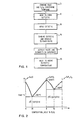
- a first eutectic is formed of a combination of Cu 2 O and CuPO 3 with a melting point of 805° C.
- a second eutectic of CuP0 3 and a higher copper phosphate also can be formed having a melting point of 935° C.
- either the first eutectic or the second eutectic depicted in Fig. 2 can be used in the practice thereof.
- block 10 indicates the first step of the method of my invention, i.e. forming the eutectic composition for use in the bonding composition.
- Either of the eutectic compositions depicted in Fig. 2 can be used in the practice of my invention.
- forming the eutectic involves combining Cu 2 O and a compound that will provide P 2 0 5 .
- a preferred ingredient is ammonium hydrogen phosphate.
- P 2 O 5 could be used directly, but this requires that the mixing and heating be done in an a sealed system; other suitable sources of P 2 0 5 can be used.
- the mixture is heated to the eutectic temperature as indicated by block 12.
- the eutectic temperature depends on which eutectic is being formed. If it is desired to form the first eutectic with a melting point of 805° C, the mole percent of Cu20 in C U 20 and P 2 O 5 mixture should be in the range of 100 to 50, more preferably from 65 to 55.
- the ingredients need not be combined in the precise molar ratio of the eutectic since an excess of either the C U2 0 and P 2 O 5 is not detrimental in the composition.
- the mole percent of Cu20 in the mixture of the Cu 2 0 and P 2 0 s should be less than 50, more particularly from 45 to 35. While both eutectics work in the practice of the invention, the second eutectic is preferred. When using either the first or second eutectic, it is generally advisable to use an inert gas such as nitrogen, argon, helium or wet inert gas with a controlled dew point during the process.
- an inert gas such as nitrogen, argon, helium or wet inert gas with a controlled dew point during the process.
- the eutectic material after heating is allowed to cool and then is ground up to form a particulate material.
- the material can be ground in any suitable manner that is well known in the art.
- the particles of the eutectic should have an average diameter of the order of 2-6 mm.
- the resultant particulate eutectic material is then combined with a suitable inert liquid vehicle, to form a paste as indicated in block 16 of Fig. 1.
- a suitable inert liquid vehicle can be used to form the paste, as for example, butyl carbitol acetate based organic.
- the vehicle is used in any suitable proportion, normally constituting 5 to 40 weight percent of the total mixture.
- copper particles are included.
- the basic paste of the eutectic and vehicle will bond copper elements, such as particles, pins, enclosures, heat sinks, clamps, etc. to any oxide ceramic material.
- the particulate copper can be combined in the paste in any suitable amount, typically forming 60 to 95 percent by weight of the total mixture.
- Other ingredients can also be added to the paste to vary its physical characteristics such as viscosity, surface tension, etc.
- the amount of eutectic material in the paste can vary from 0.5 to 15 percent by weight.
- the copper paste of the invention is deposited on a ceramic or glass substrate.
- the deposition pattern is tailored to achieve the desired objective.
- the paste can be deposited in the form of an electrically conductive metallurgy pattern or solderable pattern on a semiconductor package substrate, or alternatively be deposited for bonding elements such as pins, electrical contacts, covers, heat sinks, and the like.
- the paste is used to bond an element to a substrate, the element is placed in contact with the paste and preferably secured thereto.
- the element to be secured is formed of copper or copper alloy. However, other metals can be secured by the process of the invention.
- the substrate is then heated to a temperature above the eutectic temperature of the texture of the paste in order to remove the organic vehicle and any other associated organic compounds of the paste, and bond the copper particles of the paste to each other and to the ceramic or glass material of the eutectic material.
- the paste without copper particles is used as a bonding material, it bonds the metal element to the ceramic surface.
- the heating operation should be under a wet or dry inert atmosphere. In the case of second eutectic, the heating can be done in an atmosphere where oxygen partial pressure is slightly less than that required to form Cu 2 O because the phosphate eutectic will not decompose under these conditions.
- Cu20 cuprous oxide
- NH 4 ) 2 HPO 4 powders ammonium hydrogen phosphate
- the resultant mixture was then re- ground and heated to 850° C in a platinum crucible for I hour in a N 2 ambient, cooled at a fast rate to room temperature, and again ground into powder.
- the final powder has the composition of 62 mole percent Cu20 and 38 mole percent P20 s . This powdered eutectic material is now ready for use in the bonding process and composition of the invention.
- a particulate compound of the second eutectic, as depicted in Fig. 2 was prepared.
- the same basic procedure described in Example 1 was followed except that the composition was 28.2 weight percent Cu 2 O and 7I.8 percent (NH 4 ) 2 HPO 4 . Further the temperature of the second heating step was 950° C.
- the final composition is 42 mole percent C U 20 and 58 mole percent P 2 O5.
- the resultant powdered eutectic material of the second eutectic composition was now ready for use in the bonding process and composition of the invention.
- An electrically conductive composition of the invention was prepared by mixing copper particles, with an average diameter of 2 mm, powder of the second eutectic, as described in Example 2, and in liquid organic vehicle.
- the resultant mixture had the following composition:
- the resultant paste was screened on an Al 2 O 3 substrate.
- the screened pattern was in the form of circular pads of a diameter of 60 mils with a 3 mil thickness.
- the substrate and pattern was fired to 950° C in a wet nitrogen ambient with a dew point that was less than room temperature for 2 hours. The small amount of moisture in wet atmosphere helps remove organic vehicle in the paste more completely.
- Kovar pins with a head diameter corresponding to the pad diameter, were attached to the pads by solder, and pull tested using a tensile test machine. The machine applied a force to the pin that was perpendicular to the surface of the substrate. The force necessary to separate the pad from the substrate was measured and recorded. The average adhesion strength of the bond was calculated from the data and determined to be 71,17 N (16 pounds). This translates into an adhesion strength greater than 399,9 bar (5800 psi).
- Example 3 The same procedure described in Example 3 was repeated to bond Kovar pins to a cordierite type ceramic substrate that contained Mg O, A1203, and Si02. The firing and testing was done as previously described. The average adhesion strength of the pin bond was 50,26 N (11.3) pounds which translates into an adhesion strength of 282,7 bar - (4100 psi).
- a conductive paste which contained the following:
- Example 3 The same paste pattern described in Example 3 was deposited and fired with the aforedescribed conductive paste, which did not include the eutectic powder, on cordierite substrates as described in Example 4. Pins were bonded to the pads and pull tested as described in Example 3. The average adhesion strength was determined to be less than 96,5 bar (1400 psi).
Landscapes
- Chemical & Material Sciences (AREA)
- Engineering & Computer Science (AREA)
- Ceramic Engineering (AREA)
- Materials Engineering (AREA)
- Organic Chemistry (AREA)
- Structural Engineering (AREA)
- Inorganic Chemistry (AREA)
- Dispersion Chemistry (AREA)
- Microelectronics & Electronic Packaging (AREA)
- Life Sciences & Earth Sciences (AREA)
- Chemical Kinetics & Catalysis (AREA)
- General Chemical & Material Sciences (AREA)
- Geochemistry & Mineralogy (AREA)
- Conductive Materials (AREA)
- Parts Printed On Printed Circuit Boards (AREA)
- Surface Treatment Of Glass (AREA)
- Ceramic Products (AREA)
Applications Claiming Priority (2)
| Application Number | Priority Date | Filing Date | Title |
|---|---|---|---|
| US06/725,598 US4659406A (en) | 1985-04-22 | 1985-04-22 | Method of bonding to ceramic and glass |
| US725598 | 1996-10-03 |
Publications (2)
| Publication Number | Publication Date |
|---|---|
| EP0200950A1 true EP0200950A1 (fr) | 1986-11-12 |
| EP0200950B1 EP0200950B1 (fr) | 1989-07-19 |
Family
ID=24915212
Family Applications (1)
| Application Number | Title | Priority Date | Filing Date |
|---|---|---|---|
| EP86105003A Expired EP0200950B1 (fr) | 1985-04-22 | 1986-04-11 | Pâte contenant une composition eutectique, procédé pour former cette pâte et son utilisation |
Country Status (6)
| Country | Link |
|---|---|
| US (1) | US4659406A (fr) |
| EP (1) | EP0200950B1 (fr) |
| JP (1) | JPS61247672A (fr) |
| BR (1) | BR8601320A (fr) |
| CA (1) | CA1253660A (fr) |
| DE (1) | DE3664542D1 (fr) |
Cited By (2)
| Publication number | Priority date | Publication date | Assignee | Title |
|---|---|---|---|---|
| EP0285850A3 (en) * | 1987-04-06 | 1990-07-11 | International Business Machines Corporation | Improved screen printing method for producing lines of uniform width and height |
| EP0327816A3 (en) * | 1988-02-11 | 1990-10-10 | W.C. Heraeus Gmbh | Non-oxidizable copper thick film conductor |
Families Citing this family (2)
| Publication number | Priority date | Publication date | Assignee | Title |
|---|---|---|---|---|
| US6199748B1 (en) * | 1999-08-20 | 2001-03-13 | Nova Crystals, Inc. | Semiconductor eutectic alloy metal (SEAM) technology for fabrication of compliant composite substrates and integration of materials |
| JP3584964B2 (ja) * | 1999-10-14 | 2004-11-04 | 三菱電機株式会社 | 色変換装置及び色変換方法 |
Citations (3)
| Publication number | Priority date | Publication date | Assignee | Title |
|---|---|---|---|---|
| US4323483A (en) * | 1979-11-08 | 1982-04-06 | E. I. Du Pont De Nemours And Company | Mixed oxide bonded copper conductor compositions |
| US4407786A (en) * | 1978-12-21 | 1983-10-04 | International Standard Electric Corporation | Glass composition |
| US4509035A (en) * | 1982-11-30 | 1985-04-02 | Tokyo Shibaura Denki Kabushiki Kaisha | Humidity-sensitive element and process for producing the same |
Family Cites Families (5)
| Publication number | Priority date | Publication date | Assignee | Title |
|---|---|---|---|---|
| DE1646882B1 (de) * | 1965-07-29 | 1970-11-19 | Du Pont | Edelmetallmasse zum Aufbrennen auf keramische Traeger |
| US4155475A (en) * | 1974-09-17 | 1979-05-22 | The United States Of America As Represented By The Administrator Of The National Aeronautics And Space Administration | Bonding of sapphire to sapphire by eutectic mixture of aluminum oxide and zirconium oxide |
| US4554035A (en) * | 1977-10-17 | 1985-11-19 | General Refractories Company | Method of manufacturing a slide gate |
| US4521329A (en) * | 1983-06-20 | 1985-06-04 | E. I. Du Pont De Nemours And Company | Copper conductor compositions |
| US4540604A (en) * | 1983-08-25 | 1985-09-10 | E. I. Du Pont De Nemours And Company | Thick film conductor compositions |
-
1985
- 1985-04-22 US US06/725,598 patent/US4659406A/en not_active Expired - Fee Related
- 1985-12-20 CA CA000498315A patent/CA1253660A/fr not_active Expired
-
1986
- 1986-02-18 JP JP61032067A patent/JPS61247672A/ja active Granted
- 1986-03-24 BR BR8601320A patent/BR8601320A/pt unknown
- 1986-04-11 EP EP86105003A patent/EP0200950B1/fr not_active Expired
- 1986-04-11 DE DE8686105003T patent/DE3664542D1/de not_active Expired
Patent Citations (3)
| Publication number | Priority date | Publication date | Assignee | Title |
|---|---|---|---|---|
| US4407786A (en) * | 1978-12-21 | 1983-10-04 | International Standard Electric Corporation | Glass composition |
| US4323483A (en) * | 1979-11-08 | 1982-04-06 | E. I. Du Pont De Nemours And Company | Mixed oxide bonded copper conductor compositions |
| US4509035A (en) * | 1982-11-30 | 1985-04-02 | Tokyo Shibaura Denki Kabushiki Kaisha | Humidity-sensitive element and process for producing the same |
Cited By (2)
| Publication number | Priority date | Publication date | Assignee | Title |
|---|---|---|---|---|
| EP0285850A3 (en) * | 1987-04-06 | 1990-07-11 | International Business Machines Corporation | Improved screen printing method for producing lines of uniform width and height |
| EP0327816A3 (en) * | 1988-02-11 | 1990-10-10 | W.C. Heraeus Gmbh | Non-oxidizable copper thick film conductor |
Also Published As
| Publication number | Publication date |
|---|---|
| JPH0238557B2 (fr) | 1990-08-30 |
| DE3664542D1 (en) | 1989-08-24 |
| US4659406A (en) | 1987-04-21 |
| CA1253660A (fr) | 1989-05-09 |
| JPS61247672A (ja) | 1986-11-04 |
| EP0200950B1 (fr) | 1989-07-19 |
| BR8601320A (pt) | 1986-12-02 |
Similar Documents
| Publication | Publication Date | Title |
|---|---|---|
| EP0153737B1 (fr) | Substrat pour circuit à haute thermoconductivité | |
| JP4077888B2 (ja) | セラミックス回路基板 | |
| EP0097058B1 (fr) | Objet fritté en carbure de silicium à couche métallisée et procédé pour sa fabrication | |
| US4877760A (en) | Aluminum nitride sintered body with high thermal conductivity and process for producing same | |
| JP2793912B2 (ja) | 熱サイクル接着性およびエージング接着性の高い銀に富む導電体組成物 | |
| US5165986A (en) | Copper conductive composition for use on aluminum nitride substrate | |
| KR900005842B1 (ko) | 질화 알루미늄 기판 | |
| EP0453858A1 (fr) | Procédé pour braser des composants métallisés aux substrats céramiques | |
| JP3834351B2 (ja) | セラミックス回路基板 | |
| EP0200950B1 (fr) | Pâte contenant une composition eutectique, procédé pour former cette pâte et son utilisation | |
| US4084314A (en) | Producing thick film circuits having terminal elements | |
| US5928568A (en) | Thick film circuit having conductor composition with coated metallic particles | |
| KR100585909B1 (ko) | 질화알루미늄 기판에 사용하기 위한 후막 전도체 조성물 | |
| JP2967929B2 (ja) | 窒化アルミニウム基板用導体ペースト | |
| GB2103250A (en) | Silver-filled glass | |
| JP3167796B2 (ja) | セラミックス回路基板 | |
| JPH05156303A (ja) | メタライズ用金属粉末組成物,それを用いたメタライズ基板及びメタライズ基板の製造方法 | |
| JP2550630B2 (ja) | 導電性被膜形成用銅ペースト | |
| KR970004545B1 (ko) | 금 전도체 조성물 | |
| JPH05221759A (ja) | メタライズ層を有する窒化アルミニウム基板とそのメタライズ方法 | |
| JPS62197376A (ja) | 窒化アルミニウム基板 | |
| JPH04285085A (ja) | 厚膜セラミックス基板 | |
| JP3155044B2 (ja) | セラミックスと金属の接合用ロウ材及びその接合方法 | |
| JPS61281074A (ja) | メタライズ用高熱伝導性窒化アルミニウム焼結体 | |
| JP2743558B2 (ja) | 銅導体ペースト |
Legal Events
| Date | Code | Title | Description |
|---|---|---|---|
| PUAI | Public reference made under article 153(3) epc to a published international application that has entered the european phase |
Free format text: ORIGINAL CODE: 0009012 |
|
| AK | Designated contracting states |
Kind code of ref document: A1 Designated state(s): DE FR GB IT |
|
| PUAB | Information related to the publication of an a document modified or deleted |
Free format text: ORIGINAL CODE: 0009199EPPU |
|
| PUAF | Information related to the publication of a search report (a3 document) modified or deleted |
Free format text: ORIGINAL CODE: 0009199SEPU |
|
| R17D | Deferred search report published (corrected) |
Effective date: 19861217 |
|
| RA1 | Application published (corrected) |
Date of ref document: 19861217 Kind code of ref document: A1 |
|
| 17P | Request for examination filed |
Effective date: 19870224 |
|
| 17Q | First examination report despatched |
Effective date: 19880601 |
|
| GRAA | (expected) grant |
Free format text: ORIGINAL CODE: 0009210 |
|
| AK | Designated contracting states |
Kind code of ref document: B1 Designated state(s): DE FR GB IT |
|
| PG25 | Lapsed in a contracting state [announced via postgrant information from national office to epo] |
Ref country code: IT Free format text: LAPSE BECAUSE OF FAILURE TO SUBMIT A TRANSLATION OF THE DESCRIPTION OR TO PAY THE FEE WITHIN THE PRESCRIBED TIME-LIMIT;WARNING: LAPSES OF ITALIAN PATENTS WITH EFFECTIVE DATE BEFORE 2007 MAY HAVE OCCURRED AT ANY TIME BEFORE 2007. THE CORRECT EFFECTIVE DATE MAY BE DIFFERENT FROM THE ONE RECORDED. Effective date: 19890719 |
|
| REF | Corresponds to: |
Ref document number: 3664542 Country of ref document: DE Date of ref document: 19890824 |
|
| ET | Fr: translation filed | ||
| PLBE | No opposition filed within time limit |
Free format text: ORIGINAL CODE: 0009261 |
|
| STAA | Information on the status of an ep patent application or granted ep patent |
Free format text: STATUS: NO OPPOSITION FILED WITHIN TIME LIMIT |
|
| 26N | No opposition filed | ||
| PGFP | Annual fee paid to national office [announced via postgrant information from national office to epo] |
Ref country code: GB Payment date: 19970325 Year of fee payment: 12 |
|
| PGFP | Annual fee paid to national office [announced via postgrant information from national office to epo] |
Ref country code: FR Payment date: 19970401 Year of fee payment: 12 |
|
| PGFP | Annual fee paid to national office [announced via postgrant information from national office to epo] |
Ref country code: DE Payment date: 19970422 Year of fee payment: 12 |
|
| PG25 | Lapsed in a contracting state [announced via postgrant information from national office to epo] |
Ref country code: GB Free format text: LAPSE BECAUSE OF NON-PAYMENT OF DUE FEES Effective date: 19980411 |
|
| PG25 | Lapsed in a contracting state [announced via postgrant information from national office to epo] |
Ref country code: FR Free format text: THE PATENT HAS BEEN ANNULLED BY A DECISION OF A NATIONAL AUTHORITY Effective date: 19980430 |
|
| GBPC | Gb: european patent ceased through non-payment of renewal fee |
Effective date: 19980411 |
|
| PG25 | Lapsed in a contracting state [announced via postgrant information from national office to epo] |
Ref country code: DE Free format text: LAPSE BECAUSE OF NON-PAYMENT OF DUE FEES Effective date: 19990202 |
|
| REG | Reference to a national code |
Ref country code: FR Ref legal event code: ST |