EP0201362A2 - Pâte résistive à base de métal - Google Patents
Pâte résistive à base de métal Download PDFInfo
- Publication number
- EP0201362A2 EP0201362A2 EP86400406A EP86400406A EP0201362A2 EP 0201362 A2 EP0201362 A2 EP 0201362A2 EP 86400406 A EP86400406 A EP 86400406A EP 86400406 A EP86400406 A EP 86400406A EP 0201362 A2 EP0201362 A2 EP 0201362A2
- Authority
- EP
- European Patent Office
- Prior art keywords
- glass frit
- tin oxide
- paint
- tantala
- screening agent
- Prior art date
- Legal status (The legal status is an assumption and is not a legal conclusion. Google has not performed a legal analysis and makes no representation as to the accuracy of the status listed.)
- Granted
Links
Images



Classifications
-
- C—CHEMISTRY; METALLURGY
- C03—GLASS; MINERAL OR SLAG WOOL
- C03C—CHEMICAL COMPOSITION OF GLASSES, GLAZES OR VITREOUS ENAMELS; SURFACE TREATMENT OF GLASS; SURFACE TREATMENT OF FIBRES OR FILAMENTS MADE FROM GLASS, MINERALS OR SLAGS; JOINING GLASS TO GLASS OR OTHER MATERIALS
- C03C8/00—Enamels; Glazes; Fusion seal compositions being frit compositions having non-frit additions
- C03C8/02—Frit compositions, i.e. in a powdered or comminuted form
-
- H—ELECTRICITY
- H01—ELECTRIC ELEMENTS
- H01C—RESISTORS
- H01C17/00—Apparatus or processes specially adapted for manufacturing resistors
- H01C17/06—Apparatus or processes specially adapted for manufacturing resistors adapted for coating resistive material on a base
- H01C17/065—Apparatus or processes specially adapted for manufacturing resistors adapted for coating resistive material on a base by thick film techniques, e.g. serigraphy
- H01C17/06506—Precursor compositions therefor, e.g. pastes, inks, glass frits or green body
- H01C17/06513—Precursor compositions therefor, e.g. pastes, inks, glass frits or green body characterised by the resistive component
- H01C17/06533—Precursor compositions therefor, e.g. pastes, inks, glass frits or green body characterised by the resistive component composed of oxides
-
- H—ELECTRICITY
- H01—ELECTRIC ELEMENTS
- H01C—RESISTORS
- H01C17/00—Apparatus or processes specially adapted for manufacturing resistors
- H01C17/06—Apparatus or processes specially adapted for manufacturing resistors adapted for coating resistive material on a base
- H01C17/065—Apparatus or processes specially adapted for manufacturing resistors adapted for coating resistive material on a base by thick film techniques, e.g. serigraphy
- H01C17/06506—Precursor compositions therefor, e.g. pastes, inks, glass frits or green body
- H01C17/06573—Precursor compositions therefor, e.g. pastes, inks, glass frits or green body characterised by the permanent binder
- H01C17/0658—Precursor compositions therefor, e.g. pastes, inks, glass frits or green body characterised by the permanent binder composed of inorganic material
-
- H—ELECTRICITY
- H01—ELECTRIC ELEMENTS
- H01C—RESISTORS
- H01C17/00—Apparatus or processes specially adapted for manufacturing resistors
- H01C17/06—Apparatus or processes specially adapted for manufacturing resistors adapted for coating resistive material on a base
- H01C17/065—Apparatus or processes specially adapted for manufacturing resistors adapted for coating resistive material on a base by thick film techniques, e.g. serigraphy
- H01C17/06506—Precursor compositions therefor, e.g. pastes, inks, glass frits or green body
- H01C17/06593—Precursor compositions therefor, e.g. pastes, inks, glass frits or green body characterised by the temporary binder
-
- H—ELECTRICITY
- H01—ELECTRIC ELEMENTS
- H01C—RESISTORS
- H01C7/00—Non-adjustable resistors formed as one or more layers or coatings; Non-adjustable resistors made from powdered conducting material or powdered semi-conducting material with or without insulating material
- H01C7/06—Non-adjustable resistors formed as one or more layers or coatings; Non-adjustable resistors made from powdered conducting material or powdered semi-conducting material with or without insulating material including means to minimise changes in resistance with changes in temperature
Definitions
- the present invention relates to base metal resistive paint, resistors made from the resistive paint, and a method for making the resistive paint. More particularly, this invention relates to thick film base metal resistive paints comprising 20 to 25% tantala glass frit and 75 to 80% tin oxide, well mixed with 25 to 35% screening agent, to form a base metal resistive paint for firing in an inert atmosphere at a peak temperature of about 900°C.
- the tantala glass frit preferably comprises 5 to 25% tantalum oxide.
- the tin oxide is preferably preheated at 450 to 600°C in the presence of a reducing gas, prior to mixing with the tantala glass frit.
- the screening agent preferably forms no carbon residue when pyrolytically decomposed in an inert atmosphere.
- Tin oxide compounds have been used as a major conductive material in resistors for many years. Tin oxide films may be processed by spraying and heating a tin chloride solution ; by evaporation or sputtering technology, by chemical vapor disposition, or by thick film technology.
- Thick film technology has been used in the electronics industry for more than 25 years. Thick film technology includes printing and firing a resistive paint in a desired pattern upon a suitable substrate. Resistive paints used in thick film technology typically include a conductive material, a glass frit, and a screening agent.
- Certain materials were typically mixed with tin oxide powder to obtain the wide range of resistivity and low TCR (temperature coefficient of resistance) desired.
- Patent 3,900,330 patented a zinc-sealing glass containing 0.1 to 25% Ta 2 O 5 to improve surface charge density.
- Wahlers et al. U.S. Patent 4,065,743 patented the use of binary conductive materials of tin oxide and tantalum oxide powders for use with standardized glass frit.
- Wahlers et al. U.S. Patent 4,215,020
- ternary conductive materials for use with tin oxide resistors.
- Recently Wahlers et al. U.S. Patent 4,378,409 and 4,397,915) claimed a tin oxide material for use with a 30 to 40% barium oxide glass frit, and a glass frit with more than 20% silicon oxide.
- a base metal resistive paint is a resistive paint having no noble metals included in its composition.
- the present invention discloses a tantala glass frit, preferably a tantala strontium glass frit, for use in mixing with tin oxide and a screening agent, preferably a non-carbon residue organic compound screening agent to form a base metal resistive paint for screening upon a substrate for subsequent firing in an inert atmosphere at a peak temperature of approximately 900°C.
- the tantala glass frit and tin oxide are preferably ground to a particle size of 10 microns or less prior to mixing.
- the tantala glass frit powder is well mixed at a ratio of 20 to 25% with 75 to 80% tin oxide powder.
- a screening agent in the ratio of 25 to 35% is added to the tantala glass frit and tin oxide powders, and well mixed to form a base metal resistive paint for subsequent screening and firing in an inert atmosphere at a peak temperature of 900"C ⁇ 20°C to form a resistive pattern upon a substrate with a TCR within +300 ppm/°C.
- the disclosed resistive paint exhibits improved thermal stability and short time overload; maintains a tight resistance value due to improved homogeneous mixing of the chemical compounds; and improves physical appearance by reducing the observable cracks and fissions in the fired resistive paint screened upon a suitable substrate. Furthermore, a cost savings in energy, furnace life and maintenance is realized by firing at a peak temperature of 900°C, as compared with firing at peak temperatures of 1000°C to 1100°C, as currently practiced for firing most tin oxide resistive paints.
- one object is to provide an improved thick film resistive paint.
- Another object is to provide a resistive paint mixed from tantala glass frit, tin oxide powders, and a screening agent to form a resistive paint whose TCR is within ⁇ 300 ppm/°C.
- Another object is to provide a method for manufacturing a resistor made from tantala glass frit and tin oxide powders.
- Another object is to provide a screening agent having no carbon residue when pyrolytically decomposed in an inert atmosphere, for use with a base metal resistive paint.
- Yet another object is to provide a tantala glass frit and tin oxide resistive paint suitable for firing at a peak temperature of approximately 900°C.
- Still another object is to provide a resistor made from a resistive paint embodying any of the objects previously disclosed.
- FIG. 1 shows a base metal resistor of the present invention prior to firing, generally designated 10.
- Resistor 10 comprises a substrate 12, such as a ceramic substrate, having a layer of the resistive paint 14 of the present invention screened or otherwise coated thereon for subsequent firing.
- the resistive paint 14 comprises a mixture of tantala glass frit 16 and tin oxide 18 in a preferred ratio of 20 to 25% tantala glass frit to 75 to 80% tin oxide. Note: all compositions disclosed herein are based upon weight percentage.
- the tantala glass frit 16 preferably has a melting point of 800°C or less, and comprises from five to twenty-five percent tantalum oxide (Ta 2 O 5 ).
- the tantala glass frit 16 preferably comprises, at least in part, strontium oxide (SrO), or strontium peroxide (Sr0 2 ).
- the glass 17 and tantala 19 are preferably ground to a particle size of ten microns or less, then well mixed, remelted and ground to form the tantala glass frit 16 of the present invention.
- the tantala glass frit 16 and tin oxide 18 are preferably ground to a particle size of ten microns or less, and the resulting powders are added to a screening agent 20 in a ratio of 65 to 75% tantala glass frit and tin oxide powders to 25 to 35% screening agent.
- the screening agent 20 preferably forms no carbon residue when pyrolytically decomposed in an inert atmosphere, such as 10% butyl-methacrylate dissolved into 90% pine oil.
- the solvent used for making the screening agent can be pine oil, terpineol, an ester alcohol of Texanol from Texas Eastman Company, butyl carbitol acetate or the like.
- the resins used for binders can be polyalkylmethacrylate available from DuPont or Rohm and Haas; or polybutenes available as Amoco H-25, Amoco H-50, and Amoco L-100 from Amoco Chemicals Corporation.
- a wetting agent may be added to wet the solid powders for good paint rheology.
- Some commercially available screening agents after firing in an inert atmosphere at high temperature contain carbon residue, which is conductive. Such carbon residue is not combined with oxygen to form a carbon oxide during heating in an inert atmosphere, therefore the carbon in the screening agent remains in the resistive paint, adversely affecting the controlled performance characteristics of the resistor 10.
- the tantala glass frit 16 contains a well blended mixture of tantala 19 and glass 17, which has been remelted and ground to form the tantala glass frit 16 of the present invention.
- the tantala glass frit 16 when mixed with tin oxide 18 provides a more homogenous mixture than can be readily obtained by admixing tantalum oxide to the resistive paint 14 during the mixing operation.
- the tantala glass frit 16 and tin oxide 18 are well dispersed within the layer of resistive paint 14. The resulting resistance characteristics are thereby improved resulting in a more homogeneous mixture of resistive paint 14, which provides improved and more controllable conductive characteristics, as will hereinafter be disclosed.
- the tin oxide 18 is preferably preheated 22 in a reducing gas to temperature of from 450°C to 600°C, for a time sufficient to reduce the oxide to a desired level.
- a forming gas such as 2 to 7% H 2 and 93 to 98% N 2 atmosphere.
- the preheated 22 tin oxide 18 is then mixed 24 with the tantala glass frit 16 and the screening agent 20, preferably in a three roll mill (not shown) to yield a consistent resistive paint 14 having uniform dispersions of tantala 19 and tin oxide 18 throughout, in the desired proportions previously disclosed.
- the screening agent 20 is preferably an organic coumpound which is free of carbon residue when pyrolytically decomposed, in an inert atmosphere.
- a binding resin 21 may be incorporated into the screening agent 20 to improve the binding properties of the mixed resistive paint 14, prior to firing 28.
- the tantala glass frit 16, tin oxide 18, and screening agent 20 are mixed 24 into a homogeneous resistive paint material 14, they are subsequently screened 26, preferably through a silk or stainless steel screen onto a substrate 12.
- Substrate 12 is preferably an alumina substrate that has been prefired onto a thick film copper conductor in an inert atmos- sphere at about 900°C.
- the screen aperture size affects the resistive quality of the fired resistive paint, as will be subsequently disclosed.
- the preferred screen aperture size is from 165 to 325 mesh.
- the resistive paint 14 disposed upon substrate 12 is preferably allowed to dry prior to firing 28.
- the resistive paint and substrate are subsequently fired 28 at a peak temperature of 900°C +20°C, in an inert atmosphere such as nitrogen, to form a vitreous enamel base metal resistor material fused to the substrate.
- Examples No..1 through No.4 will demonstrate the advantages of the addition of Ta 2 O 5 (tantalum oxide) to the glass frit by comparison of 0%; 2%; 5% and 20% Ta 2 O 5 .
- Each example was tested to determine the ohms/square; Hot and Cold TCR; Thermal Stability; and STOL.
- the Cold TCR was tested at -55°C to +25°C; the Hot TRC was tested at +25°C to +125°C; Thermal Stability was tested at 150°C for 48 hours; the STOL was tested at 500 volts or 5 watts maximum; and the resistor size tested was 0.062 x 0.156 inches, or 2.5 squares.
- Example No. 1 comprises a glass frit, having no (0%) Ta 2 O 5 , with (5%)Si O 2 . + (35%) SrO + (60%) B 2 O 3 . These materials were heated to 1200°C to form a homogeneous glass frit. This glass frit was then ground into a fine powder having a particle size of ten microns or less. Sn0 2 (tin oxide) was then added to the glass frit in a ratio of (75%) Sn0 2 + (25%) glass frit. No Ta 2 O 5 was present in Example No.1. The materials were well mixed with (30%) no carbon residue screening agent to yield a resistive paint, which was subsequently screened and fired at 900°C in an inert atmosphere as previously disclosed. As shown in FIG. 4, Example NO.1, the ohms/square was 60K ; the hot and cold TCR values were extremely high ; the thermal stability was 2%; and the STOL was 3%..
- Example No. 2 comprises the glass frit of Example No. 1, wherein (2%) Ta 2 0 5 was added to the glass frit prior to heating. After heating and grinding, SnO 2 was added to the glass frit in a ratio of (75%) SnO 2 + (25%) glass frit having (2%) Ta 2 0 5 therein. These materials were well mixed with (30%) no carbon residue, organic screening agent to yield a resistive paint, which was subsequently screened and fired at 900°C in an inert atmosphere, as previously disclosed. As shown in FIG. 4, Example No. 2, the ohms/square was 31k; the Cold TCR was -2270; the Hot TCR was -1074; the thermal stability was 4%; and the STOL was 4%.
- Example No. 3 comprises the glass frit of Example No. 1, wherein (5%) Ta 2 O 5 was added to the glass frit prior to heating. After heating and grinding, Sn0 2 was added to the glass frit in a ratio of (75%) SnO 2 + (25%) glass frit having (5%) Ta 2 O 5 therein. These materials were well mixed with (30%) no carbon residue, screening agent to yield a resistive paint, which was subsequently screened and fired at 900°C in an inert atmosphere, as previously disclosed. As shown in FIG. 4, ExampleNo. 3, the ohms/square was 9K; the Cold TCR was -285; the Hot TCR was -279; the thermal stability was .03%; and the STOL was 0.05%.
- Example No. 4 comprises the glass frit of Example No. 1, wherein (20%) Ta 2 0 5 was added to the glass frit prior to heating. After heating and grinding, Sn0 2 was added to the glass frit in the ratio of (75%; Sn0 2 + (25%) glass frit having (20%) Ta 2 0 5 therein. These materials were well mixed with (30%) no carbon residue, screening agent to yield a resistive paint, which was subsequently screened and fired at 900°C in an inert atmosphere, as previously disclosed. As shown in FIG. 4, Example No. 4, the ohms/square was 15K; the Cold TCR was -183; the Hot TCR was -187; the thermal stability was 0.3%; and the STOL was 0.01%.
- the addition of Ta 2 O 5 to the glass frit varies the TCR considerably.
- the addition of 5% Ta 2 0 5 to the glass frit as shown in Example N o. 3 brings the TCR to less than +300 ppm/°C which is considered acceptable for most thick film. applications.
- the addition of 20% Ta 2 0 5 to the glass frit as shown in Example No. 4 brings the TCR to less than +200 ppm/°C which is preferred.
- thermal stability and STOL. 2 to 4% variation shown in Examples No. 1 and No. 2 is unacceptable for most applications.
- increasing the content of Ta 2 O 5 to 5% or more brings the thermal stability and STOL to 0.3% or less, which is within a preferred range of less than 0.5% required for most stringent thick film resistor applications.
- tantala glass frit provides a more homogeneous and uniform resistor paint, compared with the admixture of Ta 2 0 5 particles, tin oxide, non-tantala glass frit, and screening agent.
- CV coefficient of variance
- any improvement in print technology and paint rheology will improve the CV in equal proportion. That is, an improvement in print-technology and paint rheology reducing admixture compositions to a CV of 10 to 11%, will also reduce tantala glass frit resistors to a CV of 5 to 6%, which remains a significant improvement.
- thick film base metal resistors using tin oxide are fired at 1000°C or above (ref. patents 4,137,519 and 4,065,743) to improve thermal stability.
- the glass frit is not well sintered, reducing thermal stability.
- the frit is well sintered at 900°C +20°C.
- both Hot and Cold TCR values are less than +200 ppm/°C, which is desirable for high reliability resistor applications.
- Sn0 2 was preheated in a reducing atmosphere of 7% H 2 and 93% N 2 at a temperature of 450°C, prior to mixing the SnO 2 with the tantala glass frit of ExampleNo. 4 in a ratio of 3:1, (75%) SnO 2 + (25%) tantala glass frit.
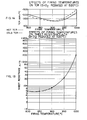
- These materials were well mixed with (30%) of a no carbon residue, screening agent to yield a resistive paint, which was subsequently screened upon a substrate and fired in an inert atmosphere at various temperatures from 800°C to 1000°C shown in FIGS. 2A and 2B.
- FIG. 2A the most stable Hot and Cold TCR values are obtained at a peak firing temperature of 900°C + 20°C. These TCR values fall within +100 ppm/°C, which is most desirable for the most stringent resistor applications.
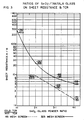
- FIG. 3 shows the effect on sheet resistance and Hot and Cold TCR when the ratios of SnO 2 to tantala glass frit are varied, and the resulting mixture is screened and fired in an inert atmosphere at a peak temperature of 900°C. At ratios between 3:1 and 4:1, the resulting Hot and Cold TCR are less than +200 ppm/°C ; and the sheet resistances in ohms/square are less than 10K.
- FIG. 3 also shows the effect of screening through a 325 mesh screen in solid line; and the effect of screening through a 165 mesh screen in dashed line.
- the larger the screen mesh size the lower the resistance values and the more positive the TCR.
- any screen size from 165 mesh to 325 mesh may be used to yield a TCR within +200 ppm/°C, when the ratio of Sn0 2 to tantala glass frit is within the preferred range of from 3:1 to 4:1.
- the preferred quan- tity of tantala glass frit is from 20 to 25% and the preferred quantity of tin oxide is from 75 to 80% for best TCR results. If tin oxide is present in excess of 80%, the adhesion of the resistor paint to the substrate is weakened, and thermal stability is impaired. If more than 25% tantala glass frit is present, the TCR becomes too negative.
- a base metal resistor paint for firing on a substrate to form a controlled temperature coefficient of resistance within +300 ppm/°C is disclosed for use with high reliability, thick film resistor applications.
- This invention discloses a base metal resistive paint for subsequent screening and firing on a substrate to make a base metal thick film resistor for use in an electronic circuit.
Landscapes
- Engineering & Computer Science (AREA)
- Microelectronics & Electronic Packaging (AREA)
- Manufacturing & Machinery (AREA)
- Chemical & Material Sciences (AREA)
- Geochemistry & Mineralogy (AREA)
- Life Sciences & Earth Sciences (AREA)
- Chemical Kinetics & Catalysis (AREA)
- General Chemical & Material Sciences (AREA)
- Inorganic Chemistry (AREA)
- Materials Engineering (AREA)
- Organic Chemistry (AREA)
- Physics & Mathematics (AREA)
- Electromagnetism (AREA)
- Non-Adjustable Resistors (AREA)
- Apparatuses And Processes For Manufacturing Resistors (AREA)
- Paints Or Removers (AREA)
Applications Claiming Priority (2)
| Application Number | Priority Date | Filing Date | Title |
|---|---|---|---|
| US06/705,233 US4655965A (en) | 1985-02-25 | 1985-02-25 | Base metal resistive paints |
| US705233 | 1991-05-24 |
Publications (3)
| Publication Number | Publication Date |
|---|---|
| EP0201362A2 true EP0201362A2 (fr) | 1986-11-12 |
| EP0201362A3 EP0201362A3 (en) | 1987-11-25 |
| EP0201362B1 EP0201362B1 (fr) | 1990-08-22 |
Family
ID=24832590
Family Applications (1)
| Application Number | Title | Priority Date | Filing Date |
|---|---|---|---|
| EP86400406A Expired EP0201362B1 (fr) | 1985-02-25 | 1986-02-25 | Pâte résistive à base de métal |
Country Status (4)
| Country | Link |
|---|---|
| US (1) | US4655965A (fr) |
| EP (1) | EP0201362B1 (fr) |
| JP (1) | JPS61258401A (fr) |
| GB (1) | GB2171692B (fr) |
Families Citing this family (5)
| Publication number | Priority date | Publication date | Assignee | Title |
|---|---|---|---|---|
| US5608373A (en) * | 1994-06-01 | 1997-03-04 | Cts Corporation | Glass frit compositions and electrical conductor compositions made therefrom compatible with reducing materials |
| US5569412A (en) * | 1994-08-18 | 1996-10-29 | E. I. Du Pont De Nemours And Company | Tin oxide based conductive powders and coatings |
| US6576489B2 (en) * | 2001-05-07 | 2003-06-10 | Applied Materials, Inc. | Methods of forming microstructure devices |
| US6897761B2 (en) * | 2002-12-04 | 2005-05-24 | Cts Corporation | Ball grid array resistor network |
| US7342804B2 (en) * | 2004-08-09 | 2008-03-11 | Cts Corporation | Ball grid array resistor capacitor network |
Family Cites Families (15)
| Publication number | Priority date | Publication date | Assignee | Title |
|---|---|---|---|---|
| US3788997A (en) * | 1971-12-17 | 1974-01-29 | Trw Inc | Resistance material and electrical resistor made therefrom |
| JPS529314B2 (fr) * | 1972-09-22 | 1977-03-15 | ||
| US3900330A (en) * | 1973-03-22 | 1975-08-19 | Nippon Electric Glass Co | Zno-b' 2'o' 3'-sio' 2 'glass coating compositions containing ta' 2'o' 5 'and a semiconductor device coated with the same |
| GB1455367A (en) * | 1973-07-16 | 1976-11-10 | Ngk Spark Plug Co | Resistor composition for use in glass seal type spark plugs |
| JPS5619042B2 (fr) * | 1973-11-21 | 1981-05-02 | ||
| US3928243A (en) * | 1974-07-03 | 1975-12-23 | Gen Motors Corp | Thick film resistor paste containing tantala glass |
| US4065743A (en) * | 1975-03-21 | 1977-12-27 | Trw, Inc. | Resistor material, resistor made therefrom and method of making the same |
| US4378409A (en) * | 1975-09-15 | 1983-03-29 | Trw, Inc. | Electrical resistor material, resistor made therefrom and method of making the same |
| US4397915A (en) * | 1975-09-15 | 1983-08-09 | Trw, Inc. | Electrical resistor material, resistor made therefrom and method of making the same |
| US4215020A (en) * | 1978-04-03 | 1980-07-29 | Trw Inc. | Electrical resistor material, resistor made therefrom and method of making the same |
| US4209764A (en) * | 1978-11-20 | 1980-06-24 | Trw, Inc. | Resistor material, resistor made therefrom and method of making the same |
| US4205298A (en) * | 1978-11-20 | 1980-05-27 | Trw Inc. | Resistor material, resistor made therefrom and method of making the same |
| FR2490210A1 (fr) * | 1980-09-15 | 1982-03-19 | Labo Electronique Physique | Melange de depart pour une composition fortement resistante, encre serigraphiable constituee avec et circuits electriques ainsi realises |
| US4379195A (en) * | 1981-07-06 | 1983-04-05 | Rca Corporation | Low value resistor inks |
| GB2105704B (en) * | 1981-08-22 | 1985-01-30 | Trw Inc | Resistance material resistor and method of making the same |
-
1985
- 1985-02-25 US US06/705,233 patent/US4655965A/en not_active Expired - Fee Related
-
1986
- 1986-02-24 GB GB08604512A patent/GB2171692B/en not_active Expired
- 1986-02-25 JP JP61040126A patent/JPS61258401A/ja active Pending
- 1986-02-25 EP EP86400406A patent/EP0201362B1/fr not_active Expired
Also Published As
| Publication number | Publication date |
|---|---|
| EP0201362B1 (fr) | 1990-08-22 |
| EP0201362A3 (en) | 1987-11-25 |
| US4655965A (en) | 1987-04-07 |
| JPS61258401A (ja) | 1986-11-15 |
| GB2171692A (en) | 1986-09-03 |
| GB2171692B (en) | 1988-07-20 |
| GB8604512D0 (en) | 1986-04-03 |
Similar Documents
| Publication | Publication Date | Title |
|---|---|---|
| CA1063796A (fr) | Nouvelle composition de resistance agglomeree et mode de fabrication | |
| US4215020A (en) | Electrical resistor material, resistor made therefrom and method of making the same | |
| US4961999A (en) | Thermistor composition | |
| EP0115798B1 (fr) | Résistances à base d'oxyde de ruthénium, résistant à la tacheture | |
| KR890001785B1 (ko) | 저항값을 갖는 개량된 저항체 잉크 | |
| US4720418A (en) | Pre-reacted resistor paint, and resistors made therefrom | |
| IE48930B1 (en) | A thick film resistor comprising a temperature coefficient of resistance modifier | |
| JPH06653B2 (ja) | 酸化スズを含むパイロクロール化合物の製造方法 | |
| US4639391A (en) | Thick film resistive paint and resistors made therefrom | |
| US4657699A (en) | Resistor compositions | |
| US4623482A (en) | Copper conductive paint for porcelainized metal substrates | |
| US4209764A (en) | Resistor material, resistor made therefrom and method of making the same | |
| US4906406A (en) | Thermistor composition | |
| CA1091918A (fr) | Materiau pour resistances electriques, resistances faites de ce materiau et methode de fabrication | |
| US4698265A (en) | Base metal resistor | |
| US4655965A (en) | Base metal resistive paints | |
| CN115443513B (zh) | 厚膜电阻糊、厚膜电阻体和电子部件 | |
| EP0057456B1 (fr) | Compositions conductrices | |
| US4378409A (en) | Electrical resistor material, resistor made therefrom and method of making the same | |
| US4645621A (en) | Resistor compositions | |
| EP0012002A1 (fr) | Compositions d'émail résistif | |
| IE55727B1 (en) | Hexaboride resistor composition | |
| KR870001760B1 (ko) | 붕규산염 유리조성물 | |
| US4137519A (en) | Resistor material, resistor made therefrom and method of making the same | |
| EP0186065B1 (fr) | Procéde de préparation d'un élément resistent |
Legal Events
| Date | Code | Title | Description |
|---|---|---|---|
| PUAI | Public reference made under article 153(3) epc to a published international application that has entered the european phase |
Free format text: ORIGINAL CODE: 0009012 |
|
| AK | Designated contracting states |
Kind code of ref document: A2 Designated state(s): FR |
|
| PUAL | Search report despatched |
Free format text: ORIGINAL CODE: 0009013 |
|
| AK | Designated contracting states |
Kind code of ref document: A3 Designated state(s): FR |
|
| 17P | Request for examination filed |
Effective date: 19871211 |
|
| 17Q | First examination report despatched |
Effective date: 19890314 |
|
| GRAA | (expected) grant |
Free format text: ORIGINAL CODE: 0009210 |
|
| AK | Designated contracting states |
Kind code of ref document: B1 Designated state(s): FR |
|
| ET | Fr: translation filed | ||
| PLBE | No opposition filed within time limit |
Free format text: ORIGINAL CODE: 0009261 |
|
| STAA | Information on the status of an ep patent application or granted ep patent |
Free format text: STATUS: NO OPPOSITION FILED WITHIN TIME LIMIT |
|
| 26N | No opposition filed | ||
| PGFP | Annual fee paid to national office [announced via postgrant information from national office to epo] |
Ref country code: FR Payment date: 19960118 Year of fee payment: 11 |
|
| PG25 | Lapsed in a contracting state [announced via postgrant information from national office to epo] |
Ref country code: FR Effective date: 19971030 |
|
| REG | Reference to a national code |
Ref country code: FR Ref legal event code: ST |