EP0201910A1 - Feuille en acier allié par diffusion - Google Patents
Feuille en acier allié par diffusion Download PDFInfo
- Publication number
- EP0201910A1 EP0201910A1 EP86106464A EP86106464A EP0201910A1 EP 0201910 A1 EP0201910 A1 EP 0201910A1 EP 86106464 A EP86106464 A EP 86106464A EP 86106464 A EP86106464 A EP 86106464A EP 0201910 A1 EP0201910 A1 EP 0201910A1
- Authority
- EP
- European Patent Office
- Prior art keywords
- foil
- aluminium
- titanium
- aluminum
- diffusion alloy
- Prior art date
- Legal status (The legal status is an assumption and is not a legal conclusion. Google has not performed a legal analysis and makes no representation as to the accuracy of the status listed.)
- Granted
Links
- 239000011888 foil Substances 0.000 title claims abstract description 167
- 238000009792 diffusion process Methods 0.000 title claims abstract description 120
- 229910000851 Alloy steel Inorganic materials 0.000 title claims description 8
- 229910052782 aluminium Inorganic materials 0.000 claims abstract description 141
- XAGFODPZIPBFFR-UHFFFAOYSA-N aluminium Chemical compound [Al] XAGFODPZIPBFFR-UHFFFAOYSA-N 0.000 claims abstract description 141
- 229910000831 Steel Inorganic materials 0.000 claims abstract description 89
- 229910045601 alloy Inorganic materials 0.000 claims abstract description 89
- 239000000956 alloy Substances 0.000 claims abstract description 89
- 239000010959 steel Substances 0.000 claims abstract description 89
- 239000010936 titanium Substances 0.000 claims abstract description 70
- 229910052719 titanium Inorganic materials 0.000 claims abstract description 69
- RTAQQCXQSZGOHL-UHFFFAOYSA-N Titanium Chemical compound [Ti] RTAQQCXQSZGOHL-UHFFFAOYSA-N 0.000 claims abstract description 63
- 238000000576 coating method Methods 0.000 claims abstract description 60
- 239000011248 coating agent Substances 0.000 claims abstract description 55
- KCZFLPPCFOHPNI-UHFFFAOYSA-N alumane;iron Chemical compound [AlH3].[Fe] KCZFLPPCFOHPNI-UHFFFAOYSA-N 0.000 claims abstract description 51
- 238000010438 heat treatment Methods 0.000 claims abstract description 30
- 239000006104 solid solution Substances 0.000 claims abstract description 26
- 229910001209 Low-carbon steel Inorganic materials 0.000 claims abstract description 22
- 239000012298 atmosphere Substances 0.000 claims abstract description 18
- 238000005097 cold rolling Methods 0.000 claims abstract description 16
- 238000005260 corrosion Methods 0.000 claims abstract description 14
- 230000007797 corrosion Effects 0.000 claims abstract description 14
- 230000003647 oxidation Effects 0.000 claims abstract description 14
- 238000007254 oxidation reaction Methods 0.000 claims abstract description 14
- 230000009467 reduction Effects 0.000 claims abstract description 10
- QJGQUHMNIGDVPM-UHFFFAOYSA-N nitrogen group Chemical group [N] QJGQUHMNIGDVPM-UHFFFAOYSA-N 0.000 claims abstract description 9
- 239000013078 crystal Substances 0.000 claims abstract description 8
- 239000003054 catalyst Substances 0.000 claims abstract description 5
- IJGRMHOSHXDMSA-UHFFFAOYSA-N Atomic nitrogen Chemical compound N#N IJGRMHOSHXDMSA-UHFFFAOYSA-N 0.000 claims description 31
- 239000004411 aluminium Substances 0.000 claims description 28
- 239000010703 silicon Substances 0.000 claims description 22
- 229910052710 silicon Inorganic materials 0.000 claims description 21
- NRTOMJZYCJJWKI-UHFFFAOYSA-N Titanium nitride Chemical compound [Ti]#N NRTOMJZYCJJWKI-UHFFFAOYSA-N 0.000 claims description 20
- 229910052799 carbon Inorganic materials 0.000 claims description 19
- OKTJSMMVPCPJKN-UHFFFAOYSA-N Carbon Chemical compound [C] OKTJSMMVPCPJKN-UHFFFAOYSA-N 0.000 claims description 17
- 238000000034 method Methods 0.000 claims description 16
- 229910052757 nitrogen Inorganic materials 0.000 claims description 15
- PNEYBMLMFCGWSK-UHFFFAOYSA-N Alumina Chemical compound [O-2].[O-2].[O-2].[Al+3].[Al+3] PNEYBMLMFCGWSK-UHFFFAOYSA-N 0.000 claims description 13
- 230000001590 oxidative effect Effects 0.000 claims description 8
- QVGXLLKOCUKJST-UHFFFAOYSA-N atomic oxygen Chemical compound [O] QVGXLLKOCUKJST-UHFFFAOYSA-N 0.000 claims description 4
- 239000001301 oxygen Substances 0.000 claims description 4
- 229910052760 oxygen Inorganic materials 0.000 claims description 4
- 239000000243 solution Substances 0.000 claims description 4
- 229910000975 Carbon steel Inorganic materials 0.000 claims description 3
- 239000007789 gas Substances 0.000 claims description 3
- 239000010962 carbon steel Substances 0.000 claims description 2
- 238000005096 rolling process Methods 0.000 claims description 2
- 239000003344 environmental pollutant Substances 0.000 claims 1
- 230000008676 import Effects 0.000 claims 1
- 238000011065 in-situ storage Methods 0.000 claims 1
- 231100000719 pollutant Toxicity 0.000 claims 1
- 230000000694 effects Effects 0.000 abstract description 7
- TWNQGVIAIRXVLR-UHFFFAOYSA-N oxo(oxoalumanyloxy)alumane Chemical compound O=[Al]O[Al]=O TWNQGVIAIRXVLR-UHFFFAOYSA-N 0.000 abstract description 6
- 229910000976 Electrical steel Inorganic materials 0.000 abstract description 4
- 239000003929 acidic solution Substances 0.000 abstract description 2
- PMHQVHHXPFUNSP-UHFFFAOYSA-M copper(1+);methylsulfanylmethane;bromide Chemical compound Br[Cu].CSC PMHQVHHXPFUNSP-UHFFFAOYSA-M 0.000 abstract description 2
- 238000004519 manufacturing process Methods 0.000 abstract 1
- 230000004048 modification Effects 0.000 abstract 1
- 238000012986 modification Methods 0.000 abstract 1
- XUIMIQQOPSSXEZ-UHFFFAOYSA-N Silicon Chemical compound [Si] XUIMIQQOPSSXEZ-UHFFFAOYSA-N 0.000 description 21
- XEEYBQQBJWHFJM-UHFFFAOYSA-N Iron Chemical compound [Fe] XEEYBQQBJWHFJM-UHFFFAOYSA-N 0.000 description 12
- -1 iron-aluminum-silicon Chemical compound 0.000 description 12
- 238000003618 dip coating Methods 0.000 description 10
- 229910001069 Ti alloy Inorganic materials 0.000 description 9
- 239000000463 material Substances 0.000 description 8
- QGZKDVFQNNGYKY-UHFFFAOYSA-N Ammonia Chemical compound N QGZKDVFQNNGYKY-UHFFFAOYSA-N 0.000 description 6
- VEXZGXHMUGYJMC-UHFFFAOYSA-N Hydrochloric acid Chemical compound Cl VEXZGXHMUGYJMC-UHFFFAOYSA-N 0.000 description 6
- 238000000137 annealing Methods 0.000 description 6
- 229910052742 iron Inorganic materials 0.000 description 6
- 229910052751 metal Inorganic materials 0.000 description 6
- 239000002184 metal Substances 0.000 description 6
- 230000003197 catalytic effect Effects 0.000 description 5
- ATJFFYVFTNAWJD-UHFFFAOYSA-N Tin Chemical compound [Sn] ATJFFYVFTNAWJD-UHFFFAOYSA-N 0.000 description 4
- CSDREXVUYHZDNP-UHFFFAOYSA-N alumanylidynesilicon Chemical compound [Al].[Si] CSDREXVUYHZDNP-UHFFFAOYSA-N 0.000 description 4
- 239000000203 mixture Substances 0.000 description 4
- 230000001681 protective effect Effects 0.000 description 4
- 239000010935 stainless steel Substances 0.000 description 4
- 229910001220 stainless steel Inorganic materials 0.000 description 4
- 229910000655 Killed steel Inorganic materials 0.000 description 3
- HCHKCACWOHOZIP-UHFFFAOYSA-N Zinc Chemical compound [Zn] HCHKCACWOHOZIP-UHFFFAOYSA-N 0.000 description 3
- 229910021529 ammonia Inorganic materials 0.000 description 3
- 238000004458 analytical method Methods 0.000 description 3
- 230000015572 biosynthetic process Effects 0.000 description 3
- 239000000047 product Substances 0.000 description 3
- 229910052718 tin Inorganic materials 0.000 description 3
- 229910052725 zinc Inorganic materials 0.000 description 3
- 239000011701 zinc Substances 0.000 description 3
- KRHYYFGTRYWZRS-UHFFFAOYSA-N Fluorane Chemical compound F KRHYYFGTRYWZRS-UHFFFAOYSA-N 0.000 description 2
- 229910001030 Iron–nickel alloy Inorganic materials 0.000 description 2
- 238000005299 abrasion Methods 0.000 description 2
- 239000002253 acid Substances 0.000 description 2
- 150000007513 acids Chemical class 0.000 description 2
- 238000004140 cleaning Methods 0.000 description 2
- 230000001419 dependent effect Effects 0.000 description 2
- 239000008246 gaseous mixture Substances 0.000 description 2
- 239000001257 hydrogen Substances 0.000 description 2
- 229910052739 hydrogen Inorganic materials 0.000 description 2
- 239000012535 impurity Substances 0.000 description 2
- 239000000843 powder Substances 0.000 description 2
- 230000008569 process Effects 0.000 description 2
- 229910002058 ternary alloy Inorganic materials 0.000 description 2
- 229910000838 Al alloy Inorganic materials 0.000 description 1
- 229910000640 Fe alloy Inorganic materials 0.000 description 1
- UFHFLCQGNIYNRP-UHFFFAOYSA-N Hydrogen Chemical compound [H][H] UFHFLCQGNIYNRP-UHFFFAOYSA-N 0.000 description 1
- OAICVXFJPJFONN-UHFFFAOYSA-N Phosphorus Chemical compound [P] OAICVXFJPJFONN-UHFFFAOYSA-N 0.000 description 1
- 229910000676 Si alloy Inorganic materials 0.000 description 1
- NINIDFKCEFEMDL-UHFFFAOYSA-N Sulfur Chemical compound [S] NINIDFKCEFEMDL-UHFFFAOYSA-N 0.000 description 1
- 238000002441 X-ray diffraction Methods 0.000 description 1
- PWKWDCOTNGQLID-UHFFFAOYSA-N [N].[Ar] Chemical compound [N].[Ar] PWKWDCOTNGQLID-UHFFFAOYSA-N 0.000 description 1
- 230000001464 adherent effect Effects 0.000 description 1
- QZPSXPBJTPJTSZ-UHFFFAOYSA-N aqua regia Chemical compound Cl.O[N+]([O-])=O QZPSXPBJTPJTSZ-UHFFFAOYSA-N 0.000 description 1
- 239000007864 aqueous solution Substances 0.000 description 1
- 239000012300 argon atmosphere Substances 0.000 description 1
- 230000000712 assembly Effects 0.000 description 1
- 238000000429 assembly Methods 0.000 description 1
- 230000009286 beneficial effect Effects 0.000 description 1
- 239000011230 binding agent Substances 0.000 description 1
- 238000005282 brightening Methods 0.000 description 1
- 239000007795 chemical reaction product Substances 0.000 description 1
- 238000005336 cracking Methods 0.000 description 1
- 238000005261 decarburization Methods 0.000 description 1
- 229910001873 dinitrogen Inorganic materials 0.000 description 1
- 238000009826 distribution Methods 0.000 description 1
- 238000004453 electron probe microanalysis Methods 0.000 description 1
- 238000009713 electroplating Methods 0.000 description 1
- 230000004907 flux Effects 0.000 description 1
- 230000006698 induction Effects 0.000 description 1
- 229910000765 intermetallic Inorganic materials 0.000 description 1
- WPBNNNQJVZRUHP-UHFFFAOYSA-L manganese(2+);methyl n-[[2-(methoxycarbonylcarbamothioylamino)phenyl]carbamothioyl]carbamate;n-[2-(sulfidocarbothioylamino)ethyl]carbamodithioate Chemical compound [Mn+2].[S-]C(=S)NCCNC([S-])=S.COC(=O)NC(=S)NC1=CC=CC=C1NC(=S)NC(=O)OC WPBNNNQJVZRUHP-UHFFFAOYSA-L 0.000 description 1
- 238000002844 melting Methods 0.000 description 1
- 230000008018 melting Effects 0.000 description 1
- 239000012299 nitrogen atmosphere Substances 0.000 description 1
- 229910000510 noble metal Inorganic materials 0.000 description 1
- 230000035699 permeability Effects 0.000 description 1
- 229910052698 phosphorus Inorganic materials 0.000 description 1
- 239000011574 phosphorus Substances 0.000 description 1
- 238000007747 plating Methods 0.000 description 1
- 238000005498 polishing Methods 0.000 description 1
- 238000002360 preparation method Methods 0.000 description 1
- 230000002035 prolonged effect Effects 0.000 description 1
- 238000005482 strain hardening Methods 0.000 description 1
- 239000000126 substance Substances 0.000 description 1
- 229910052717 sulfur Inorganic materials 0.000 description 1
- 239000011593 sulfur Substances 0.000 description 1
- MTPVUVINMAGMJL-UHFFFAOYSA-N trimethyl(1,1,2,2,2-pentafluoroethyl)silane Chemical compound C[Si](C)(C)C(F)(F)C(F)(F)F MTPVUVINMAGMJL-UHFFFAOYSA-N 0.000 description 1
- 238000009827 uniform distribution Methods 0.000 description 1
- 230000004584 weight gain Effects 0.000 description 1
- 235000019786 weight gain Nutrition 0.000 description 1
Images


Classifications
-
- C—CHEMISTRY; METALLURGY
- C22—METALLURGY; FERROUS OR NON-FERROUS ALLOYS; TREATMENT OF ALLOYS OR NON-FERROUS METALS
- C22C—ALLOYS
- C22C38/00—Ferrous alloys, e.g. steel alloys
- C22C38/06—Ferrous alloys, e.g. steel alloys containing aluminium
-
- C—CHEMISTRY; METALLURGY
- C23—COATING METALLIC MATERIAL; COATING MATERIAL WITH METALLIC MATERIAL; CHEMICAL SURFACE TREATMENT; DIFFUSION TREATMENT OF METALLIC MATERIAL; COATING BY VACUUM EVAPORATION, BY SPUTTERING, BY ION IMPLANTATION OR BY CHEMICAL VAPOUR DEPOSITION, IN GENERAL; INHIBITING CORROSION OF METALLIC MATERIAL OR INCRUSTATION IN GENERAL
- C23C—COATING METALLIC MATERIAL; COATING MATERIAL WITH METALLIC MATERIAL; SURFACE TREATMENT OF METALLIC MATERIAL BY DIFFUSION INTO THE SURFACE, BY CHEMICAL CONVERSION OR SUBSTITUTION; COATING BY VACUUM EVAPORATION, BY SPUTTERING, BY ION IMPLANTATION OR BY CHEMICAL VAPOUR DEPOSITION, IN GENERAL
- C23C2/00—Hot-dipping or immersion processes for applying the coating material in the molten state without affecting the shape; Apparatus therefor
- C23C2/26—After-treatment
-
- C—CHEMISTRY; METALLURGY
- C23—COATING METALLIC MATERIAL; COATING MATERIAL WITH METALLIC MATERIAL; CHEMICAL SURFACE TREATMENT; DIFFUSION TREATMENT OF METALLIC MATERIAL; COATING BY VACUUM EVAPORATION, BY SPUTTERING, BY ION IMPLANTATION OR BY CHEMICAL VAPOUR DEPOSITION, IN GENERAL; INHIBITING CORROSION OF METALLIC MATERIAL OR INCRUSTATION IN GENERAL
- C23C—COATING METALLIC MATERIAL; COATING MATERIAL WITH METALLIC MATERIAL; SURFACE TREATMENT OF METALLIC MATERIAL BY DIFFUSION INTO THE SURFACE, BY CHEMICAL CONVERSION OR SUBSTITUTION; COATING BY VACUUM EVAPORATION, BY SPUTTERING, BY ION IMPLANTATION OR BY CHEMICAL VAPOUR DEPOSITION, IN GENERAL
- C23C2/00—Hot-dipping or immersion processes for applying the coating material in the molten state without affecting the shape; Apparatus therefor
- C23C2/26—After-treatment
- C23C2/261—After-treatment in a gas atmosphere, e.g. inert or reducing atmosphere
-
- C—CHEMISTRY; METALLURGY
- C23—COATING METALLIC MATERIAL; COATING MATERIAL WITH METALLIC MATERIAL; CHEMICAL SURFACE TREATMENT; DIFFUSION TREATMENT OF METALLIC MATERIAL; COATING BY VACUUM EVAPORATION, BY SPUTTERING, BY ION IMPLANTATION OR BY CHEMICAL VAPOUR DEPOSITION, IN GENERAL; INHIBITING CORROSION OF METALLIC MATERIAL OR INCRUSTATION IN GENERAL
- C23C—COATING METALLIC MATERIAL; COATING MATERIAL WITH METALLIC MATERIAL; SURFACE TREATMENT OF METALLIC MATERIAL BY DIFFUSION INTO THE SURFACE, BY CHEMICAL CONVERSION OR SUBSTITUTION; COATING BY VACUUM EVAPORATION, BY SPUTTERING, BY ION IMPLANTATION OR BY CHEMICAL VAPOUR DEPOSITION, IN GENERAL
- C23C2/00—Hot-dipping or immersion processes for applying the coating material in the molten state without affecting the shape; Apparatus therefor
- C23C2/26—After-treatment
- C23C2/28—Thermal after-treatment, e.g. treatment in oil bath
Definitions
- the present invention relates generally to light gauge steel strips or foils and, more particularly, to very light gauge strips or foils formed of solid solution iron-aluminum diffusion alloys and iron-aluminum-silicon diffusion alloys which are formable at room temperature, have good high temperature oxidation resistance and corrosion resistance, have useful electrical and magnetic properties, and preferably are adapted for growing a surface coating of spine-like whiskers of aluminum oxide suitable for retaining a surface coating of a catalytic metal used in a monolithic catalytic converter for treating gases which pollute the atmosphere.
- the Smith et al U.S. Patent No. 3,214,820 discloses steel foils having a surface coated with tin, zinc, aluminum or stainless steel and describes producing the steel foil with the metallic tin, zinc, aluminum or stainless steel protective metal coating by cold rolling a plain carbon steel strip having the protective metal coating applied by a plating process.
- Smith et al teaches against hot dip coating a steel strip for cold rolling to foil gauge in order to avoid forming a hard brittle subsurface intermetallic layer which Smith et al states prevents forming a satisfactory foil product.
- the Smith et al patent expressly avoids annealing a steel strip coated with tin, zinc, or aluminum, because of the low melting temperatures of these coatings.
- Objects of the invention include at least one of the following:
- iron-alumlnlum diffusion alloy foil by cold rolling and diffusion heating on aluminium coated steel strip which Is characterized by good resistance to oxidation and corrosion at room temperature and at elevated temperatures, as when exposed to exhaust gases from automotive and Indusfrtal appartus.
- a solid solution Iron-aluminium diffusion alloy light gauge strip or foil formed in sliu by diffusion heating a cold rolled titanium stabilized low carbon steel strip contoining on excess of uncombined titanium and having on each side an aluminium coating between about 12.7 ⁇ m (0.0005 Inch) and about 76 ⁇ m (0.003 Inch) thick, the coated steel strip after cold reduction of between about 40% and about 99% having a foll thickness of between about 0.013mm (0.005 inch) and 0.152 mm (0.006 Inch) with an aluminium coating thickness between about 1.07 ⁇ m (0.000042 inch) and 27.° ⁇ m (0.0011 inch), said solid solution iron-aluminlum diffusion alloy light gauge strip or foll containing between about 2 wt.% and about 12 wt.% aluminlum diffused throughout Its cross section, and said light gouge strip or foll being formable at room temperature and being resistant to oxidation and to corrosion at elevated iemperaiures
- a foil formed substantially of an iron-aluminum or iron-aluminum-silicon diffusion alloy is produced in accordance with a preferred embodiment of the invention by forming on each side of a cold rolled titanium stabilized low-carbon steel strip, preferably having a thickness between about 0.25 mm (0.010 inch) and about 0.76 mm (0.030 inch), a hot-dip aluminum coating using conventional continuous in-line hot-dip aluminum coating apparatus with the aluminum or aluminum-silicon hot-dip coating on each side of the strip having a thickness of between about 12.7 ⁇ m (0.0005 inch) and about 76 ⁇ m (0.003 inch) which is sufficient to provide after diffusion heating a diffusion alloy foil containing between about 2 wt.% aluminum and about 12 wt.% aluminum, cold reducing the hot-dip aluminum coated titanium alloy steel strip to effect at least about a 40 percent and up to about a 99 percent reduction in the thickness of the aluminum coated steel strip to provide an aluminum coated light gauge steel strip or steel foil preferably having a maximum thickness of about 0.152 mm (0.006
- the diffusion of the aluminum throughout the cross section of an aluminum coated titanium alloy steel foil is time-temperature dependent for a given aluminum coating and foil thickness and can be effected at a temperature preferably between about 816°C (1500°F) and 1149°C (2100°F) for between about 2 minutes and about 24 hours when using box annealing apparatus.
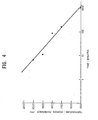
- the graph in Fig. 4 shows the time required to diffuse the aluminum uniformly throughout the cross section of a hot-dip coated low titanium alloy steel foil 0.084 mm (0.0033 inch) thick having an aluminum coating 8.9 ⁇ m (0.00035 inch) thick on each surface when diffusion heating at temperatures between 816°C (1500°F) and 1149°C (2100°F).
- the steel strip from a stabilized low carbon steel such as a low-titanium stabilized low-carbon steel.
- the low-titanium stabilized alloy steel is preferably a steel which has been killed to remove free oxygen, such as an aluminum killed steel.
- the carbon content of the low-titanium alloy steel is less than 0.10.
- wt.% generally between about 0.02 wt.% and 0.10 wt.%, although a vacuum degassed steel having substantially less than 0.02 wt.% carbon can also be used.
- the low-titanium stabilized low carbon steel should have sufficient titanium to combine with all the carbon, oxygen, and nitrogen in the steel and, in addition, sufficient titanium to provide a small excess of uncombined titanium, preferably at least about 0.02 wt.%.
- the total titanium content of the steel is preferably at least about 0.40 wt.% but will always be less than about 1.0 wt.% and will generally not exceed about 0.60 wt.%.
- the titanium in the stabilized steel improves the rate of diffusion between the iron and aluminum in the steel and also improves the surface properties and increases the strength of the steel, thereby improving the cold rolling properties and room temperature ductility properties of the steel strip. If desired, smaller amounts of other carbon and nitrogen binders can be used in addition to the titanium in the steel.
- a typical low-titanium stabilized low-carbon steel suitable for forming an aluminum coated steel foil in accordance with the present invention has the following composition on a weight basis: 0.04% carbon, 0.50% titanium, 0.20-0.50% manganese, 0.012% sulfur, 0.010% phosphorus, 0.05% silicon, 0.020-0.090% aluminum, and the balance essentially iron with incidental impurities.
- the steel strip in order to hot-dip aluminum coat a steel strip on production-type in-line continuous aluminum coating apparatus, it is essential that the steel strip be sufficiently thick to withstand the stresses of being conveyed through the continuous hot-dip coating apparatus, such as a Sendzimir-type hot-dip continuous coating line, but not so thick as to make it impossible to reduce economically the coated strip to a steel foil gauge not substantially above about 0.152 mm (0.006 inch) by effecting about a 40 to 99 percent reduction in the thickness of the hot-dip coated aluminum steel strip.
- the continuous hot-dip coating apparatus such as a Sendzimir-type hot-dip continuous coating line
- a steel strip having a thickness of between about 0.25 mm (0.010 inch) and 0.76 mm (0.030 inch) has been found to meet the foregoing requirements and be suitable for hot-dip aluminum coating on a continuous in-line hot-dip aluminum coating apparatus, such as a Sendzimir-type commercial continuous hot-dip .coating line, adapted to move the steel strip at a line speed of about 280 feet per minute, the strip thereafter being cold reduced to effect between about 40 to 99 percent reduction in-thickness so as to provide an aluminum coated steel'foil having a thickness of between about 0.013 mm (0.0005 inch) and about 0.152 mm (0.006 inch).
- the aluminum hot-dip coated steel strip can be cold reduced to foil gauge in one or more passes through a cold rolling mill, such as a Sendzimir cold rolling mill.
- the foil material can be further processed by tension leveling or .skin passing to remove distortions in the foil and/or effect surface brightening and polishing.
- the aluminum hot-dip coating on the steel strip must be sufficiently thick relative to the thickness of the steel strip to provide in the finished foil a minimum of about 6 wt. percent aluminum based on the weight of the coated foil and not substantially above about 12 wt.% aluminum where room temperature formability is required. In the very thinnest foil, however, a somewhat higher aluminum content may be used without impairing room temperature formability.
- a steel strip having a thickness before hot-dip coating of between about 0.25 mm (0.010 inch) and about 0.76 mm (0.030 inch) should be provided on each side with an aluminum hot-dip coating having a thickness of between about 12.7 um (0.0005 inch) and about 76 ⁇ m (0.003 inch) but sufficient to provide the strip with between about 6 wt.% and about 12 wt.% aluminum.
- the cold rolled aluminum coating on each side of the foil is about 5.1 ⁇ m (0.0002 inch) thick and provides an aluminum concentration of about 6 wt.% based on the weight of the aluminum coated steel foil.
- the hot-dip aluminum coating applied to the steel strip is preferably a Type I aluminum coating _which contains aluminum with about 5-12 wt.% silicon and wherein the silicon prevents the formation of an objectionably thick subsurface iron-aluminum intermetallic layer.
- the diffusion alloy foil contains about 0.7 wt. percent silicon. It is also possible, though not preferred, to apply a Type II aluminum (i.e. substantially pure aluminum) hot-dip coating on the stabilized low carbon steel strip.
- the aluminum-coated steel foil is heated as an open or closed coil in an annealing furnace or on a continuous annealing line in a non-oxidizing atmosphere, such as in a vacuum or in an argon atmosphere, at 982°C (1800°F) for between about 1 and 24 hours.
- a non-oxidizing atmosphere such as in a vacuum or in an argon atmosphere
- a low-titanium alloy stabilized low-carbon aluminum killed steel was formed into a steel strip having a thickness of about 0.43 mm (0.017 inch).
- the titanium stabilized low-carbon aluminum killed steel had the following approximate composition:
- the titanium stabilized steel strip after conventional cleaning was immersed in a hot-dip Type I aluminum coating bath having a temperature of 694°C (l280°F) on a Sendzimir-type continuous coating line having a line speed of 280 feet per minute to provide both sides thereof with a hot-dip aluminum coating having a thickness of about 38 ⁇ m-(0.0015 inch).
- the hot-dip aluminum coated steel strip was cold rolled on a Sendzimir-type cold rolling mill to a foil thickness of about 0.051 mm (0.002 inch) in four passes, effecting a reduction of 43.6% in the first, 45.5% in the second, 45.0% in the third, and 39.4% in the fourth, for a total of about 90% reduction in thickness without intermediate annealing.
- Metallographic examination of the cold reduced steel foil indicated a uniform aluminum surface coating on both sides, approximately 4.6-5.1 ⁇ m (0.00018-0.0002 inch) with the intermetallic subsurface iron-aluminum compound layer completely fractured and randomly redistributed throughout the aluminum coating and with the cold working of the coated steel strip imparting a very high energy level to the coated steel so that during the subsequent diffusion heating treatment there are no Kirkendall voids formed in the diffusion alloy product.
- the aluminum in the coating is preferably fully and substantially uniformly diffused throughout the cross section of the foil by heating the foil for two hours at a temperature of 982°C (1800°F) to form an iron-aluminum-silicon diffusion alloy foil.
- Bulk chemical analyses of the hot-dip aluminum coated foil after diffusion showed 6.4 wt.% aluminum, 0.8 wt.% silicon, and 0.40 wt.% titanium.
- the solid solution iron-aluminum diffusion alloy foil made in the foregoing manner was free of brittle iron-aluminum intermetallic compound and was formable at room temperature without annealing.
- the foil material When heated in air at 1149 0 C (2100°F) for 96 hours the foil material exhibited a weight gain of no more than 1 mgjcm 2 , had good high temperature corrosion and oxidation resistance at 1000°C (1832°F), and when given a 180° 1-T bend at room temperature the surface was not ruptured.
- the iron-aluminum diffusion alloy foil had a tensile strength of 72 ksi, a yield strength of 65 ksi, and an elongation of 10.4%.
- the cold reduced aluminum-coated steel foil of F ig. 1 having about 6 wt.% of the foil as aluminum in the surface coatings was diffusion heated as a closely wound steel coil in a vacuum at 1093°C (2000°F) for four hours to provide a foil having the aluminum substantially fully diffused throughout the cross section of the foil.
- the distribution of the aluminum and silicon in the iron-aluminum diffusion alloy steel foil is shown in Fig. 3.
- the extreme outer 2.5 um (0.0001 inch) to 5.0 ⁇ m (0.0002 inch) of the surface of the diffusion alloy foil of the present invention has been found to contain a higher than average concentration of titanium and aluminum, and it is evident that uncombined titanium in the titanium stabilized steel has diffused outwardly from the interior to the surface of the foil.
- the concentration of titanium in the surface becomes progressively larger and the concentration of titanium in the center of the foil becomes progressively smaller as the diffusion heating is prolonged until no titanium remains at the center of the foil.
- a foil 0.05 mm (0.002 inch) thick is diffusion heated in nitrogen at 925°C (1700°F) for 24 hours, there is no detectable titanium remaining at the center of the foil when the foil is subjected to electron microprobe analysis.
- the relatively low cost iron-aluminum and iron-aluminum-silicon diffusion alloy foils of the present invention are useful in place of the more costly stainless steel foils and high alloy foils for many industrial applications.
- the cold rolled iron-aluminum diffusion alloy steel foils produced as described herein are useful as a substitute for "321 stainless steel” foil and for enclosing or "wrapping" tools which are heat treated at an elevated temperature, thereby avoiding the need to heat the tools in a protective non-oxidizing atmosphere.
- the diffusion alloy tool wrapping foils preferably contain between about 6 wt.% and 12 wt.% aluminum and have a thickness between about 0.050 mm (0.002 inch) and 0.075 mm (0.003 inch) so as to have the required high temperature strength and oxidation resistance as well as formability at room temperature to form a protective wrap for enclosing tools and withstanding heat treating temperatures up to about 1149°C (2100°F).
- the aluminum content of the foil also acts as a "getter” to remove oxygen from within the enclosure and prevents objectionable oxidation and decarburization of the surface of the tools during the heat treating cycle.
- the solid solution iron-aluminum and iron-aluminum-silicon diffusion alloy foils of the present invention when prepared by vacuum diffusion heating with between 2 and 12 wt. percent aluminum and which can also .. contain between about 0.2 and about 0.9 wt.% silicon are useful as electrical steels of the electrically soft variety for use as magnetic shielding material and for making core assemblies of electrical rotary equipment (i.e. motors) and transformers in place of silicon steels, iron-nickel alloys and other ferrous alloys.
- Aluminum has a beneficial effect, similar to that of silicon, on the electrical resistivity and certain magnetic properties of iron, but aluminum is seldom substituted for silicon because of the recognized difficulty of fabricating thin iron-aluminum alloy sheet material.
- one type of electrical steel foil should preferably be one grain thick with the grain (crystal) faces parallel to the direction of rolling (see Fig. 2).
- An iron-aluminum-silicon diffusion alloy containing about 6 wt.% aluminum and 0.9 wt.% silicon has an electrical resistance of about 91-96 micro-ohm centimeters.
- the diffusion alloy foil where intended for certain types of electrical use can be further treated after diffusion heating by cold rolling to reduce the thickness of the foil and impart critical strain to the foil product and then given a critical time-temperature heat treatment to modify the crystal form.
- an iron-aluminum-silicon diffusion alloy foil of the present invention has been cold rolled to impart a 3% critical strain and heated at 816°C (1500°F) for 4 hours to effect a very large increase in the grain size.
- the foil preferably having a thickness about 0.051 mm (0.002 inches) and containing about 6 wt. percent aluminum, can be preconditioned for whisker growth by the method disclosed in U.S. Patent No. 4,279,782. Thereafter, the foil is heated in air preferably for 8 hours at 925°C (l700°F), to grow a spine-like whisker surface coating.
- a coating of gamma aluminum oxide powder dispersed in an aqueous alumina gel-noble metal catalyst mixture is applied to the spine-like whisker coated surface of the foil as described in U.S. Patent No. 4,279,782.
- the cold rolled aluminum coated low-titanium stabilized low carbon steel foil is placed in a dry nitrogen-containing atmosphere which has minimal or no oxidizing action on the titanium and aluminum in the foil and is heated for a time and at a temperature sufficient to form on the surface of the diffusion alloy foil a thin titanium nitride-containing film which imparts high corrosion resistance to the foil.
- a dry nitrogen-containing atmosphere which has minimal or no oxidizing action on the titanium and aluminum in the foil and is heated for a time and at a temperature sufficient to form on the surface of the diffusion alloy foil a thin titanium nitride-containing film which imparts high corrosion resistance to the foil.
- the aluminum surface coating diffuses readily into the steel foil beginning at a temperature of about 399°C (750°F) and effects formation of an iron-aluminum diffusion alloy foil.
- the titanium stabilized aluminum coated steel foil is diffusion heated in a dry nitrogen-containing atmosphere, which has a minimal oxidizing effect on the titanium and aluminum, at a temperature between about 500°C (930°F) and 1093°C (2000°F) and preferably at a temperature of about 925°C (1700°F), the nitrogen reacts with the titanium to form a titanium nitride-containing film on the surface of the diffusion alloy foil.
- the titanium nitride-containing layer on the surface of the foil significantly improves the corrosion resistance of the iron-aluminum diffusion alloy foil, since the titanium nitride-containing surface film is resistant to attack by acids, and resists corrosion when the foil is immersed in an aqueous acidic solution for prolonged periods. Titanium nitride is only slightly soluble in hot aqua regia containing added hydrofluoric acid. Aluminum nitride on the other hand, is readily attacked by acids, such as a hot 10% aqueous hydrochloric acid solution, whereas the foil having the titanium nitride-containing surface film is resistant to attack by the 10% hydrochloric acid solution.
- the titanium nitride can be present as TiN which has a sigma crystal form or as Ti 2 N which has a gamma crystal form. It is also possible for the titanium and nitrogen to form more complex reaction products with the aluminum, iron and silicon in the steel.
- the dry nitrogen-containing atmosphere used to form the titanium nitride-containing film can be pure nitrogen gas, gaseous ammonia, dissociated ammonia, a nitrogen-hydrogen gaseous mixture, or a nitrogen-argon gaseous mixture.
- the diffusion heat treatment with the dry nitrogen-containing atmosphere can range from about 500°C (930°F) to about 1093°C (2000°F) for a period of from about 0.25 to about 48 hours with the formation of the titanium nitride-containing film being time-temperature dependent.
- the surface film has a peak concentration of 12.6 wt. percent-titanium and very little titanium is present in the interior of the foil except at isolated points which are thought to indicate the presence of titanium carbide.
- the nitrogen treated foil having the titanium nitride-containing film on the surface exhibits good room temperature formability when a section of the nitrogen treated foil having a thickness of 3.3 mils is subjected to the Zero-T Bend Test and can be cold rolled with conventional apparatus.
- the nitrogen treated diffusion alloy foil has a tensile strength of about 82 ksi, a yield strength of about 81 ksi, and an elongation of about 1.0 percent.
- Aluminum oxide whiskers do not readily grow on the diffusion alloy foil having a titanium nitride-containing surface. Consequently, when the iron-aluminum diffusion alloy low titanium stabilized foil must have a thick surface growth of spine-like whiskers of aluminum oxide, as when the foil is used to support a catalyst in an automotive catalytic converter, and where optimum corrosion resistance and/or good abrasion resistance is also desired, the thick coating of spine-like whiskers is grown on the surface of an aluminum coated steel foil by the process described in U.S. Patent No. 4,279,782 before heating in a dry nitrogen-containing atmosphere.
- the whisker coated foil can be heated in a dry nitrogen-containing atmosphere for a time and at a temperature sufficient to form a titanium nitride-containing thin layer or film on the surface of the iron-aluminum diffusion alloy steel.
- the whisker coated foil can be heated for a period of between about 0.25 hours and 24 hours at a temperature between about 1093°C (2000°F) and 500°C (930°F), respectively, in a dry nitrogen-containing atmosphere, such as in an atmosphere of gaseous nitrogen or ammonia, to form a titanium nitride-containing layer on the surface of the foil.
- the titanium nitride-containing layer imparts high corrosion resistance and abrasion resistance to the whisker coated diffusion alloy foil.
- the iron-aluminum diffusion alloy foil is produced by cold rolling a hot-dip aluminum coated titanium stabilized steel strip to foil gauge followed by diffusion heating
- formable designates the capability of the foil to be fabricated by conventional metal forming machines at room temperature
- good formability refers to the capability of the foil to undergo severe deformation at room temperature without bend breaking, edge cracking and loss of surface material.
- solid solution iron-aluminum diffusion alloy is used herein to designate an iron-aluminum diffusion alloy or an iron-aluminum-silicon diffusion alloy, such as formed by diffusion heating a Type I aluminum hot-dip coating containing about 5 to 12 wt.% silicon, although higher and lower amounts of silicon can be used for producing special diffusion alloy foils.
Landscapes
- Chemical & Material Sciences (AREA)
- Organic Chemistry (AREA)
- Engineering & Computer Science (AREA)
- Materials Engineering (AREA)
- Mechanical Engineering (AREA)
- Metallurgy (AREA)
- Chemical Kinetics & Catalysis (AREA)
- Physics & Mathematics (AREA)
- Oil, Petroleum & Natural Gas (AREA)
- Thermal Sciences (AREA)
- Solid-Phase Diffusion Into Metallic Material Surfaces (AREA)
- Other Surface Treatments For Metallic Materials (AREA)
- Laminated Bodies (AREA)
- Superconductors And Manufacturing Methods Therefor (AREA)
Applications Claiming Priority (2)
| Application Number | Priority Date | Filing Date | Title |
|---|---|---|---|
| US73372785A | 1985-05-14 | 1985-05-14 | |
| US733727 | 1985-05-14 |
Publications (2)
| Publication Number | Publication Date |
|---|---|
| EP0201910A1 true EP0201910A1 (fr) | 1986-11-20 |
| EP0201910B1 EP0201910B1 (fr) | 1989-03-01 |
Family
ID=24948883
Family Applications (1)
| Application Number | Title | Priority Date | Filing Date |
|---|---|---|---|
| EP86106464A Expired EP0201910B1 (fr) | 1985-05-14 | 1986-05-13 | Feuille en acier allié par diffusion |
Country Status (4)
| Country | Link |
|---|---|
| EP (1) | EP0201910B1 (fr) |
| JP (1) | JPS61270363A (fr) |
| CA (1) | CA1245952A (fr) |
| DE (1) | DE3662210D1 (fr) |
Cited By (9)
| Publication number | Priority date | Publication date | Assignee | Title |
|---|---|---|---|---|
| DE3726073C1 (de) * | 1987-08-06 | 1988-07-14 | Thyssen Edelstahlwerke Ag | Verfahren zur Herstellung von duennwandigem Halbzeug und dessen Verwendungen |
| DE3726072A1 (de) * | 1987-08-06 | 1989-02-16 | Thyssen Edelstahlwerke Ag | Loet-verfahren |
| DE3726075C1 (en) * | 1987-08-06 | 1989-03-02 | Thyssen Edelstahlwerke Ag | Method of soldering steel parts and of producing catalyst supports, heat exchangers and soot filters |
| EP0318864A1 (fr) * | 1987-11-30 | 1989-06-07 | Nippon Yakin Kogyo Co., Ltd. | Procédé pour la fabrication d'acier ferritique inoxydable pourvu d'un revêtement de whiskers oxydes |
| DE4222026C1 (en) * | 1992-07-04 | 1993-04-15 | Thyssen Edelstahlwerke Ag, 4000 Duesseldorf, De | Semi-finished prod. mfr. used as catalyst supports - by coating starting material, e.g. ferritic stainless steel, with at least one chromium@ layer and diffusion heat treating |
| EP0861916A1 (fr) * | 1997-02-28 | 1998-09-02 | Usinor | Procédé de fabrication d'un feuillard en acier inoxydable ferritique à haute teneur en aluminium utilisable notamment pour un support de catalyseur d'échappement de véhicule automobile |
| WO2023001869A1 (fr) * | 2021-07-20 | 2023-01-26 | Kamax Holding Gmbh & Co. Kg | Composant doté d'une couche de diffusion d'aluminium et d'une couche d'oxyde d'aluminium intégrées |
| CN115717242A (zh) * | 2023-01-10 | 2023-02-28 | 江苏富乐华功率半导体研究院有限公司 | 一种化学减薄平整钛箔的方法 |
| CN119069589A (zh) * | 2024-08-27 | 2024-12-03 | 江苏第三代半导体研究院有限公司 | 复合Si/Al插入层结构及其制备方法和应用 |
Families Citing this family (1)
| Publication number | Priority date | Publication date | Assignee | Title |
|---|---|---|---|---|
| JPH01142073A (ja) * | 1987-11-30 | 1989-06-02 | Nippon Yakin Kogyo Co Ltd | 酸化物ウイスカーで被覆されたフェライトステンレス鋼の製造方法 |
Citations (3)
| Publication number | Priority date | Publication date | Assignee | Title |
|---|---|---|---|---|
| US4046304A (en) * | 1973-09-12 | 1977-09-06 | Teikoku Piston Ring Co., Ltd. | Process for producing metal composite material |
| US4279782A (en) * | 1980-03-31 | 1981-07-21 | General Motors Corporation | Application of an alumina coating to oxide whisker-covered surface on Al-containing stainless steel foil |
| WO1985000386A1 (fr) * | 1983-07-07 | 1985-01-31 | Inland Steel Company | Acier revetu d'aluminium par galvanisation a chaud et traite par diffusion, et son procede de traitement |
Family Cites Families (4)
| Publication number | Priority date | Publication date | Assignee | Title |
|---|---|---|---|---|
| FR1391659A (fr) * | 1961-06-21 | 1965-03-12 | Pompey Acieries | Procédé de fabrication d'articles d'épaisseur relativement faible en acier à haute teneur en aluminium ou analogue |
| GB992321A (en) * | 1962-01-23 | 1965-05-19 | Deutsche Edelstahlwerke Ag | Oxidation resistant chromium steels and the production thereof |
| FR2182614B1 (fr) * | 1972-03-17 | 1978-05-05 | Louyot Comptoir Lyon Alemand | |
| DE2745188C3 (de) * | 1977-10-07 | 1980-05-08 | Deutsche Gold- Und Silber-Scheideanstalt Vormals Roessler, 6000 Frankfurt | Geformter Katalysator, Verfahren zu seiner Herstellung und Verwendung |
-
1986
- 1986-05-09 CA CA000508790A patent/CA1245952A/fr not_active Expired
- 1986-05-13 EP EP86106464A patent/EP0201910B1/fr not_active Expired
- 1986-05-13 DE DE8686106464T patent/DE3662210D1/de not_active Expired
- 1986-05-14 JP JP61111762A patent/JPS61270363A/ja active Pending
Patent Citations (3)
| Publication number | Priority date | Publication date | Assignee | Title |
|---|---|---|---|---|
| US4046304A (en) * | 1973-09-12 | 1977-09-06 | Teikoku Piston Ring Co., Ltd. | Process for producing metal composite material |
| US4279782A (en) * | 1980-03-31 | 1981-07-21 | General Motors Corporation | Application of an alumina coating to oxide whisker-covered surface on Al-containing stainless steel foil |
| WO1985000386A1 (fr) * | 1983-07-07 | 1985-01-31 | Inland Steel Company | Acier revetu d'aluminium par galvanisation a chaud et traite par diffusion, et son procede de traitement |
Cited By (16)
| Publication number | Priority date | Publication date | Assignee | Title |
|---|---|---|---|---|
| DE3726073C1 (de) * | 1987-08-06 | 1988-07-14 | Thyssen Edelstahlwerke Ag | Verfahren zur Herstellung von duennwandigem Halbzeug und dessen Verwendungen |
| FR2619125A1 (fr) * | 1987-08-06 | 1989-02-10 | Thyssen Edelstahlwerke Ag | Procede de fabrication de demi-produit a paroi mince et utilisation de celui-ci |
| DE3726072A1 (de) * | 1987-08-06 | 1989-02-16 | Thyssen Edelstahlwerke Ag | Loet-verfahren |
| DE3726075C1 (en) * | 1987-08-06 | 1989-03-02 | Thyssen Edelstahlwerke Ag | Method of soldering steel parts and of producing catalyst supports, heat exchangers and soot filters |
| EP0318864A1 (fr) * | 1987-11-30 | 1989-06-07 | Nippon Yakin Kogyo Co., Ltd. | Procédé pour la fabrication d'acier ferritique inoxydable pourvu d'un revêtement de whiskers oxydes |
| EP0493373A3 (fr) * | 1987-11-30 | 1994-01-26 | Nippon Yakin Kogyo Co Ltd | |
| DE4222026C1 (en) * | 1992-07-04 | 1993-04-15 | Thyssen Edelstahlwerke Ag, 4000 Duesseldorf, De | Semi-finished prod. mfr. used as catalyst supports - by coating starting material, e.g. ferritic stainless steel, with at least one chromium@ layer and diffusion heat treating |
| FR2760244A1 (fr) * | 1997-02-28 | 1998-09-04 | Usinor | Procede de fabrication d'un feuillard en acier inoxydable ferritique a haute teneur en aluminium utilisable notamment pour un support de catalyseur d'echappement de vehicule automobile |
| EP0861916A1 (fr) * | 1997-02-28 | 1998-09-02 | Usinor | Procédé de fabrication d'un feuillard en acier inoxydable ferritique à haute teneur en aluminium utilisable notamment pour un support de catalyseur d'échappement de véhicule automobile |
| US6086689A (en) * | 1997-02-28 | 2000-07-11 | Usinor | Process for manufacturing a foil of ferritic stainless steel having a high aluminum content, aluminum-containing ferritic stainless steel, and catalyst support useful for a motor-vehicle exhaust |
| WO2023001869A1 (fr) * | 2021-07-20 | 2023-01-26 | Kamax Holding Gmbh & Co. Kg | Composant doté d'une couche de diffusion d'aluminium et d'une couche d'oxyde d'aluminium intégrées |
| CN117677727A (zh) * | 2021-07-20 | 2024-03-08 | 卡迈锡控股两合公司 | 具有集成的铝扩散层和氧化铝层的构件 |
| CN115717242A (zh) * | 2023-01-10 | 2023-02-28 | 江苏富乐华功率半导体研究院有限公司 | 一种化学减薄平整钛箔的方法 |
| CN115717242B (zh) * | 2023-01-10 | 2023-03-31 | 江苏富乐华功率半导体研究院有限公司 | 一种化学减薄平整钛箔的方法 |
| CN119069589A (zh) * | 2024-08-27 | 2024-12-03 | 江苏第三代半导体研究院有限公司 | 复合Si/Al插入层结构及其制备方法和应用 |
| CN119069589B (zh) * | 2024-08-27 | 2025-09-12 | 江苏第三代半导体研究院有限公司 | 复合Si/Al插入层结构及其制备方法和应用 |
Also Published As
| Publication number | Publication date |
|---|---|
| CA1245952A (fr) | 1988-12-06 |
| JPS61270363A (ja) | 1986-11-29 |
| DE3662210D1 (en) | 1989-04-06 |
| EP0201910B1 (fr) | 1989-03-01 |
Similar Documents
| Publication | Publication Date | Title |
|---|---|---|
| EP0149655B1 (fr) | Acier revetu d'aluminium par galvanisation a chaud et traite par diffusion, et son procede de traitement | |
| CA1232171A (fr) | Feuille d'acier a alliage pauvre revetue d'aluminium | |
| US4837091A (en) | Diffusion alloy steel foil | |
| EP0201910B1 (fr) | Feuille en acier allié par diffusion | |
| JP3318385B2 (ja) | プレス加工性と耐めっき剥離性に優れた合金化溶融亜鉛めっき鋼板 | |
| US4144379A (en) | Drawing quality hot-dip coated steel strip | |
| JP3520741B2 (ja) | めっき密着性に優れた合金化溶融亜鉛めっき鋼板 | |
| CA1168964A (fr) | Methode de production de la tole de fer aux silicones, et de son traitement de revenu en atmosphere gazeuse d'azote et d'hydrogene | |
| JP2705386B2 (ja) | Si含有鋼板の溶融亜鉛めっき方法 | |
| JPH0748662A (ja) | めっき密着性、外観性に優れた溶融亜鉛めっき鋼板の製造法 | |
| JP2787371B2 (ja) | めっき密着性および外観性に優れたアルミめっき鋼板の製造法 | |
| JP2769350B2 (ja) | 溶融めっき鋼板の製造方法 | |
| US4666794A (en) | Diffusion treated hot-dip aluminum coated steel | |
| JP2525165B2 (ja) | 高強度蒸着亜鉛めっき鋼板の製造方法 | |
| JPH09104962A (ja) | Fe−Al拡散層を有する鉄基合金部材およびその製造方法 | |
| JPH05106001A (ja) | 珪素含有鋼板の溶融亜鉛めつき方法 | |
| JP2630136B2 (ja) | 珪素含有鋼板の溶融亜鉛めっき方法 | |
| US3926688A (en) | Method of manufacturing a flat steel product having an oxidation-resistant coating | |
| JP3536525B2 (ja) | めっき密着性に優れた合金化溶融亜鉛めっき鋼板の製造方法 | |
| JP3014536B2 (ja) | 高強度合金化溶融亜鉛めっき鋼板の製造方法 | |
| JPH07243012A (ja) | 表面外観に優れた合金化溶融Znめっき鋼板の製造方法 | |
| CA2273934A1 (fr) | Feuilles metalliques resistant a l'oxydation, leur utilisation et leur procede de production | |
| JPH0641708A (ja) | 珪素含有鋼板の溶融亜鉛めっき方法 | |
| CA1075936A (fr) | Attache-feuilles en aluminium, et methode de fabrication connexe | |
| DE2856914A1 (de) | Diffusionslegiertes elektroblech |
Legal Events
| Date | Code | Title | Description |
|---|---|---|---|
| PUAI | Public reference made under article 153(3) epc to a published international application that has entered the european phase |
Free format text: ORIGINAL CODE: 0009012 |
|
| AK | Designated contracting states |
Kind code of ref document: A1 Designated state(s): DE FR GB |
|
| 17P | Request for examination filed |
Effective date: 19870507 |
|
| 17Q | First examination report despatched |
Effective date: 19880318 |
|
| GRAA | (expected) grant |
Free format text: ORIGINAL CODE: 0009210 |
|
| AK | Designated contracting states |
Kind code of ref document: B1 Designated state(s): DE FR GB |
|
| REF | Corresponds to: |
Ref document number: 3662210 Country of ref document: DE Date of ref document: 19890406 |
|
| ET | Fr: translation filed | ||
| PLBI | Opposition filed |
Free format text: ORIGINAL CODE: 0009260 |
|
| 26 | Opposition filed |
Opponent name: THYSSEN EDELSTAHLWERKE AG, DUESSELDORF Effective date: 19891130 |
|
| REG | Reference to a national code |
Ref country code: FR Ref legal event code: ST |
|
| REG | Reference to a national code |
Ref country code: FR Ref legal event code: AR |
|
| REG | Reference to a national code |
Ref country code: FR Ref legal event code: BR |
|
| PGFP | Annual fee paid to national office [announced via postgrant information from national office to epo] |
Ref country code: DE Payment date: 19920430 Year of fee payment: 7 |
|
| PGFP | Annual fee paid to national office [announced via postgrant information from national office to epo] |
Ref country code: FR Payment date: 19920501 Year of fee payment: 7 |
|
| PGFP | Annual fee paid to national office [announced via postgrant information from national office to epo] |
Ref country code: GB Payment date: 19920507 Year of fee payment: 7 |
|
| PLAB | Opposition data, opponent's data or that of the opponent's representative modified |
Free format text: ORIGINAL CODE: 0009299OPPO |
|
| R26 | Opposition filed (corrected) |
Opponent name: THYSSEN EDELSTAHLWERKE AG, DUESSELDORF Effective date: 19891130 |
|
| PG25 | Lapsed in a contracting state [announced via postgrant information from national office to epo] |
Ref country code: GB Effective date: 19930513 |
|
| GBPC | Gb: european patent ceased through non-payment of renewal fee |
Effective date: 19930513 |
|
| PG25 | Lapsed in a contracting state [announced via postgrant information from national office to epo] |
Ref country code: FR Effective date: 19940131 |
|
| PG25 | Lapsed in a contracting state [announced via postgrant information from national office to epo] |
Ref country code: DE Effective date: 19940201 |
|
| REG | Reference to a national code |
Ref country code: FR Ref legal event code: ST |
|
| RDAC | Information related to revocation of patent modified |
Free format text: ORIGINAL CODE: 0009299REVO |
|
| RDAG | Patent revoked |
Free format text: ORIGINAL CODE: 0009271 |
|
| STAA | Information on the status of an ep patent application or granted ep patent |
Free format text: STATUS: PATENT REVOKED |
|
| 27W | Patent revoked |
Effective date: 19940401 |
|
| R27W | Patent revoked (corrected) |
Effective date: 19940401 |