EP0202549A2 - Verfahren zum Färben von Leder - Google Patents
Verfahren zum Färben von Leder Download PDFInfo
- Publication number
- EP0202549A2 EP0202549A2 EP86106292A EP86106292A EP0202549A2 EP 0202549 A2 EP0202549 A2 EP 0202549A2 EP 86106292 A EP86106292 A EP 86106292A EP 86106292 A EP86106292 A EP 86106292A EP 0202549 A2 EP0202549 A2 EP 0202549A2
- Authority
- EP
- European Patent Office
- Prior art keywords
- oder
- leather
- und
- amine
- hydrogen
- Prior art date
- Legal status (The legal status is an assumption and is not a legal conclusion. Google has not performed a legal analysis and makes no representation as to the accuracy of the status listed.)
- Granted
Links
- 239000010985 leather Substances 0.000 title claims abstract description 25
- 238000004043 dyeing Methods 0.000 title claims description 14
- 238000000034 method Methods 0.000 title claims description 7
- 150000001412 amines Chemical class 0.000 claims abstract description 17
- UFHFLCQGNIYNRP-UHFFFAOYSA-N Hydrogen Chemical compound [H][H] UFHFLCQGNIYNRP-UHFFFAOYSA-N 0.000 claims abstract description 9
- 239000001257 hydrogen Substances 0.000 claims abstract description 9
- 229910052739 hydrogen Inorganic materials 0.000 claims abstract description 9
- 125000002947 alkylene group Chemical group 0.000 claims abstract description 8
- 150000002431 hydrogen Chemical group 0.000 claims abstract description 6
- 125000004193 piperazinyl group Chemical group 0.000 claims abstract 2
- -1 ethylene, propylene Chemical group 0.000 claims description 4
- WYURNTSHIVDZCO-UHFFFAOYSA-N Tetrahydrofuran Chemical compound C1CCOC1 WYURNTSHIVDZCO-UHFFFAOYSA-N 0.000 claims description 2
- 125000003277 amino group Chemical group 0.000 claims 2
- 239000000975 dye Substances 0.000 description 14
- 229910052757 nitrogen Inorganic materials 0.000 description 5
- XFNJVJPLKCPIBV-UHFFFAOYSA-N trimethylenediamine Chemical compound NCCCN XFNJVJPLKCPIBV-UHFFFAOYSA-N 0.000 description 5
- IJGRMHOSHXDMSA-UHFFFAOYSA-N Atomic nitrogen Chemical compound N#N IJGRMHOSHXDMSA-UHFFFAOYSA-N 0.000 description 4
- VYZAMTAEIAYCRO-UHFFFAOYSA-N Chromium Chemical compound [Cr] VYZAMTAEIAYCRO-UHFFFAOYSA-N 0.000 description 4
- RPNUMPOLZDHAAY-UHFFFAOYSA-N Diethylenetriamine Chemical compound NCCNCCN RPNUMPOLZDHAAY-UHFFFAOYSA-N 0.000 description 4
- PIICEJLVQHRZGT-UHFFFAOYSA-N Ethylenediamine Chemical compound NCCN PIICEJLVQHRZGT-UHFFFAOYSA-N 0.000 description 4
- 239000000203 mixture Substances 0.000 description 4
- 235000013311 vegetables Nutrition 0.000 description 4
- XLYOFNOQVPJJNP-UHFFFAOYSA-N water Substances O XLYOFNOQVPJJNP-UHFFFAOYSA-N 0.000 description 4
- VILCJCGEZXAXTO-UHFFFAOYSA-N 2,2,2-tetramine Chemical compound NCCNCCNCCN VILCJCGEZXAXTO-UHFFFAOYSA-N 0.000 description 3
- HZAXFHJVJLSVMW-UHFFFAOYSA-N 2-Aminoethan-1-ol Chemical compound NCCO HZAXFHJVJLSVMW-UHFFFAOYSA-N 0.000 description 3
- WSFSSNUMVMOOMR-UHFFFAOYSA-N Formaldehyde Chemical compound O=C WSFSSNUMVMOOMR-UHFFFAOYSA-N 0.000 description 3
- GLUUGHFHXGJENI-UHFFFAOYSA-N Piperazine Chemical compound C1CNCCN1 GLUUGHFHXGJENI-UHFFFAOYSA-N 0.000 description 3
- 230000000875 corresponding effect Effects 0.000 description 3
- PAFZNILMFXTMIY-UHFFFAOYSA-N cyclohexylamine Chemical compound NC1CCCCC1 PAFZNILMFXTMIY-UHFFFAOYSA-N 0.000 description 3
- LSHROXHEILXKHM-UHFFFAOYSA-N n'-[2-[2-[2-(2-aminoethylamino)ethylamino]ethylamino]ethyl]ethane-1,2-diamine Chemical compound NCCNCCNCCNCCNCCN LSHROXHEILXKHM-UHFFFAOYSA-N 0.000 description 3
- 239000000047 product Substances 0.000 description 3
- KIDHWZJUCRJVML-UHFFFAOYSA-N putrescine Chemical compound NCCCCN KIDHWZJUCRJVML-UHFFFAOYSA-N 0.000 description 3
- FAGUFWYHJQFNRV-UHFFFAOYSA-N tetraethylenepentamine Chemical compound NCCNCCNCCNCCN FAGUFWYHJQFNRV-UHFFFAOYSA-N 0.000 description 3
- PWGJDPKCLMLPJW-UHFFFAOYSA-N 1,8-diaminooctane Chemical compound NCCCCCCCCN PWGJDPKCLMLPJW-UHFFFAOYSA-N 0.000 description 2
- PVOAHINGSUIXLS-UHFFFAOYSA-N 1-Methylpiperazine Chemical compound CN1CCNCC1 PVOAHINGSUIXLS-UHFFFAOYSA-N 0.000 description 2
- RNLHGQLZWXBQNY-UHFFFAOYSA-N 3-(aminomethyl)-3,5,5-trimethylcyclohexan-1-amine Chemical compound CC1(C)CC(N)CC(C)(CN)C1 RNLHGQLZWXBQNY-UHFFFAOYSA-N 0.000 description 2
- FJSUFIIJYXMJQO-UHFFFAOYSA-N 3-methylpentane-1,5-diamine Chemical compound NCCC(C)CCN FJSUFIIJYXMJQO-UHFFFAOYSA-N 0.000 description 2
- LNPMZQXEPNWCMG-UHFFFAOYSA-N 4-(2-aminoethyl)aniline Chemical compound NCCC1=CC=C(N)C=C1 LNPMZQXEPNWCMG-UHFFFAOYSA-N 0.000 description 2
- BFWYZZPDZZGSLJ-UHFFFAOYSA-N 4-(aminomethyl)aniline Chemical compound NCC1=CC=C(N)C=C1 BFWYZZPDZZGSLJ-UHFFFAOYSA-N 0.000 description 2
- HUXPKQXHDPXCMM-UHFFFAOYSA-N 5,6-dimethylheptane-1,6-diamine Chemical compound CC(N)(C)C(C)CCCCN HUXPKQXHDPXCMM-UHFFFAOYSA-N 0.000 description 2
- NLHHRLWOUZZQLW-UHFFFAOYSA-N Acrylonitrile Chemical compound C=CC#N NLHHRLWOUZZQLW-UHFFFAOYSA-N 0.000 description 2
- QUSNBJAOOMFDIB-UHFFFAOYSA-N Ethylamine Chemical compound CCN QUSNBJAOOMFDIB-UHFFFAOYSA-N 0.000 description 2
- ATUOYWHBWRKTHZ-UHFFFAOYSA-N Propane Chemical compound CCC ATUOYWHBWRKTHZ-UHFFFAOYSA-N 0.000 description 2
- GOOHAUXETOMSMM-UHFFFAOYSA-N Propylene oxide Chemical compound CC1CO1 GOOHAUXETOMSMM-UHFFFAOYSA-N 0.000 description 2
- GSEJCLTVZPLZKY-UHFFFAOYSA-N Triethanolamine Chemical compound OCCN(CCO)CCO GSEJCLTVZPLZKY-UHFFFAOYSA-N 0.000 description 2
- CQPFMGBJSMSXLP-UHFFFAOYSA-M acid orange 7 Chemical compound [Na+].OC1=CC=C2C=CC=CC2=C1N=NC1=CC=C(S([O-])(=O)=O)C=C1 CQPFMGBJSMSXLP-UHFFFAOYSA-M 0.000 description 2
- VKIRRGRTJUUZHS-UHFFFAOYSA-N cyclohexane-1,4-diamine Chemical compound NC1CCC(N)CC1 VKIRRGRTJUUZHS-UHFFFAOYSA-N 0.000 description 2
- 150000004985 diamines Chemical class 0.000 description 2
- ZBCBWPMODOFKDW-UHFFFAOYSA-N diethanolamine Chemical compound OCCNCCO ZBCBWPMODOFKDW-UHFFFAOYSA-N 0.000 description 2
- 230000000694 effects Effects 0.000 description 2
- NAQMVNRVTILPCV-UHFFFAOYSA-N hexane-1,6-diamine Chemical compound NCCCCCCN NAQMVNRVTILPCV-UHFFFAOYSA-N 0.000 description 2
- 239000000991 leather dye Substances 0.000 description 2
- BDAGIHXWWSANSR-UHFFFAOYSA-N methanoic acid Natural products OC=O BDAGIHXWWSANSR-UHFFFAOYSA-N 0.000 description 2
- CRVGTESFCCXCTH-UHFFFAOYSA-N methyl diethanolamine Chemical compound OCCN(C)CCO CRVGTESFCCXCTH-UHFFFAOYSA-N 0.000 description 2
- DILRJUIACXKSQE-UHFFFAOYSA-N n',n'-dimethylethane-1,2-diamine Chemical compound CN(C)CCN DILRJUIACXKSQE-UHFFFAOYSA-N 0.000 description 2
- 229960001124 trientine Drugs 0.000 description 2
- 125000004178 (C1-C4) alkyl group Chemical group 0.000 description 1
- KQIXMZWXFFHRAQ-UHFFFAOYSA-N 1-(2-hydroxybutylamino)butan-2-ol Chemical compound CCC(O)CNCC(O)CC KQIXMZWXFFHRAQ-UHFFFAOYSA-N 0.000 description 1
- ZAXCZCOUDLENMH-UHFFFAOYSA-N 3,3,3-tetramine Chemical compound NCCCNCCCNCCCN ZAXCZCOUDLENMH-UHFFFAOYSA-N 0.000 description 1
- OSWFIVFLDKOXQC-UHFFFAOYSA-N 4-(3-methoxyphenyl)aniline Chemical compound COC1=CC=CC(C=2C=CC(N)=CC=2)=C1 OSWFIVFLDKOXQC-UHFFFAOYSA-N 0.000 description 1
- IGSBHTZEJMPDSZ-UHFFFAOYSA-N 4-[(4-amino-3-methylcyclohexyl)methyl]-2-methylcyclohexan-1-amine Chemical group C1CC(N)C(C)CC1CC1CC(C)C(N)CC1 IGSBHTZEJMPDSZ-UHFFFAOYSA-N 0.000 description 1
- DZIHTWJGPDVSGE-UHFFFAOYSA-N 4-[(4-aminocyclohexyl)methyl]cyclohexan-1-amine Chemical compound C1CC(N)CCC1CC1CCC(N)CC1 DZIHTWJGPDVSGE-UHFFFAOYSA-N 0.000 description 1
- JYVIKLUHLBJNQB-UHFFFAOYSA-N 4-amino-2-hydroxy-3h-naphthalene-2,7-disulfonic acid Chemical compound C1=CC(S(O)(=O)=O)=CC2=CC(O)(S(O)(=O)=O)CC(N)=C21 JYVIKLUHLBJNQB-UHFFFAOYSA-N 0.000 description 1
- BLFRQYKZFKYQLO-UHFFFAOYSA-N 4-aminobutan-1-ol Chemical compound NCCCCO BLFRQYKZFKYQLO-UHFFFAOYSA-N 0.000 description 1
- CNPURSDMOWDNOQ-UHFFFAOYSA-N 4-methoxy-7h-pyrrolo[2,3-d]pyrimidin-2-amine Chemical compound COC1=NC(N)=NC2=C1C=CN2 CNPURSDMOWDNOQ-UHFFFAOYSA-N 0.000 description 1
- CQPFMGBJSMSXLP-ZAGWXBKKSA-M Acid orange 7 Chemical compound OC1=C(C2=CC=CC=C2C=C1)/N=N/C1=CC=C(C=C1)S(=O)(=O)[O-].[Na+] CQPFMGBJSMSXLP-ZAGWXBKKSA-M 0.000 description 1
- 235000011468 Albizia julibrissin Nutrition 0.000 description 1
- IAYPIBMASNFSPL-UHFFFAOYSA-N Ethylene oxide Chemical compound C1CO1 IAYPIBMASNFSPL-UHFFFAOYSA-N 0.000 description 1
- 240000005852 Mimosa quadrivalvis Species 0.000 description 1
- UEEJHVSXFDXPFK-UHFFFAOYSA-O N-dimethylethanolamine Chemical compound C[NH+](C)CCO UEEJHVSXFDXPFK-UHFFFAOYSA-O 0.000 description 1
- WUGQZFFCHPXWKQ-UHFFFAOYSA-N Propanolamine Chemical compound NCCCO WUGQZFFCHPXWKQ-UHFFFAOYSA-N 0.000 description 1
- 239000005700 Putrescine Substances 0.000 description 1
- 235000017343 Quebracho blanco Nutrition 0.000 description 1
- 241000065615 Schinopsis balansae Species 0.000 description 1
- 238000010521 absorption reaction Methods 0.000 description 1
- 150000001299 aldehydes Chemical class 0.000 description 1
- 239000012736 aqueous medium Substances 0.000 description 1
- 239000012752 auxiliary agent Substances 0.000 description 1
- 238000009903 catalytic hydrogenation reaction Methods 0.000 description 1
- 239000003795 chemical substances by application Substances 0.000 description 1
- 238000004040 coloring Methods 0.000 description 1
- 239000007859 condensation product Substances 0.000 description 1
- 238000001035 drying Methods 0.000 description 1
- 235000019253 formic acid Nutrition 0.000 description 1
- 150000002576 ketones Chemical class 0.000 description 1
- 230000005012 migration Effects 0.000 description 1
- 238000013508 migration Methods 0.000 description 1
- AQGNVWRYTKPRMR-UHFFFAOYSA-N n'-[2-[2-[2-[2-(2-aminoethylamino)ethylamino]ethylamino]ethylamino]ethyl]ethane-1,2-diamine Chemical compound NCCNCCNCCNCCNCCNCCN AQGNVWRYTKPRMR-UHFFFAOYSA-N 0.000 description 1
- SYSQUGFVNFXIIT-UHFFFAOYSA-N n-[4-(1,3-benzoxazol-2-yl)phenyl]-4-nitrobenzenesulfonamide Chemical class C1=CC([N+](=O)[O-])=CC=C1S(=O)(=O)NC1=CC=C(C=2OC3=CC=CC=C3N=2)C=C1 SYSQUGFVNFXIIT-UHFFFAOYSA-N 0.000 description 1
- PSZYNBSKGUBXEH-UHFFFAOYSA-N naphthalene-1-sulfonic acid Chemical compound C1=CC=C2C(S(=O)(=O)O)=CC=CC2=C1 PSZYNBSKGUBXEH-UHFFFAOYSA-N 0.000 description 1
- 239000001294 propane Substances 0.000 description 1
- GHMLBKRAJCXXBS-UHFFFAOYSA-N resorcinol Chemical compound OC1=CC=CC(O)=C1 GHMLBKRAJCXXBS-UHFFFAOYSA-N 0.000 description 1
- 229960001755 resorcinol Drugs 0.000 description 1
- 238000010186 staining Methods 0.000 description 1
- 239000000758 substrate Substances 0.000 description 1
Classifications
-
- D—TEXTILES; PAPER
- D06—TREATMENT OF TEXTILES OR THE LIKE; LAUNDERING; FLEXIBLE MATERIALS NOT OTHERWISE PROVIDED FOR
- D06P—DYEING OR PRINTING TEXTILES; DYEING LEATHER, FURS OR SOLID MACROMOLECULAR SUBSTANCES IN ANY FORM
- D06P1/00—General processes of dyeing or printing textiles, or general processes of dyeing leather, furs, or solid macromolecular substances in any form, classified according to the dyes, pigments, or auxiliary substances employed
- D06P1/44—General processes of dyeing or printing textiles, or general processes of dyeing leather, furs, or solid macromolecular substances in any form, classified according to the dyes, pigments, or auxiliary substances employed using insoluble pigments or auxiliary substances, e.g. binders
- D06P1/64—General processes of dyeing or printing textiles, or general processes of dyeing leather, furs, or solid macromolecular substances in any form, classified according to the dyes, pigments, or auxiliary substances employed using insoluble pigments or auxiliary substances, e.g. binders using compositions containing low-molecular-weight organic compounds without sulfate or sulfonate groups
- D06P1/642—Compounds containing nitrogen
- D06P1/645—Aliphatic, araliphatic or cycloaliphatic compounds containing amino groups
-
- D—TEXTILES; PAPER
- D06—TREATMENT OF TEXTILES OR THE LIKE; LAUNDERING; FLEXIBLE MATERIALS NOT OTHERWISE PROVIDED FOR
- D06P—DYEING OR PRINTING TEXTILES; DYEING LEATHER, FURS OR SOLID MACROMOLECULAR SUBSTANCES IN ANY FORM
- D06P1/00—General processes of dyeing or printing textiles, or general processes of dyeing leather, furs, or solid macromolecular substances in any form, classified according to the dyes, pigments, or auxiliary substances employed
- D06P1/44—General processes of dyeing or printing textiles, or general processes of dyeing leather, furs, or solid macromolecular substances in any form, classified according to the dyes, pigments, or auxiliary substances employed using insoluble pigments or auxiliary substances, e.g. binders
- D06P1/64—General processes of dyeing or printing textiles, or general processes of dyeing leather, furs, or solid macromolecular substances in any form, classified according to the dyes, pigments, or auxiliary substances employed using insoluble pigments or auxiliary substances, e.g. binders using compositions containing low-molecular-weight organic compounds without sulfate or sulfonate groups
- D06P1/642—Compounds containing nitrogen
- D06P1/6426—Heterocyclic compounds
-
- D—TEXTILES; PAPER
- D06—TREATMENT OF TEXTILES OR THE LIKE; LAUNDERING; FLEXIBLE MATERIALS NOT OTHERWISE PROVIDED FOR
- D06P—DYEING OR PRINTING TEXTILES; DYEING LEATHER, FURS OR SOLID MACROMOLECULAR SUBSTANCES IN ANY FORM
- D06P1/00—General processes of dyeing or printing textiles, or general processes of dyeing leather, furs, or solid macromolecular substances in any form, classified according to the dyes, pigments, or auxiliary substances employed
- D06P1/44—General processes of dyeing or printing textiles, or general processes of dyeing leather, furs, or solid macromolecular substances in any form, classified according to the dyes, pigments, or auxiliary substances employed using insoluble pigments or auxiliary substances, e.g. binders
- D06P1/64—General processes of dyeing or printing textiles, or general processes of dyeing leather, furs, or solid macromolecular substances in any form, classified according to the dyes, pigments, or auxiliary substances employed using insoluble pigments or auxiliary substances, e.g. binders using compositions containing low-molecular-weight organic compounds without sulfate or sulfonate groups
- D06P1/642—Compounds containing nitrogen
- D06P1/6429—Compounds containing nitrogen bound to a six-membered aromatic carbocyclic ring
-
- D—TEXTILES; PAPER
- D06—TREATMENT OF TEXTILES OR THE LIKE; LAUNDERING; FLEXIBLE MATERIALS NOT OTHERWISE PROVIDED FOR
- D06P—DYEING OR PRINTING TEXTILES; DYEING LEATHER, FURS OR SOLID MACROMOLECULAR SUBSTANCES IN ANY FORM
- D06P3/00—Special processes of dyeing or printing textiles, or dyeing leather, furs, or solid macromolecular substances in any form, classified according to the material treated
- D06P3/02—Material containing basic nitrogen
- D06P3/04—Material containing basic nitrogen containing amide groups
- D06P3/32—Material containing basic nitrogen containing amide groups leather skins
- D06P3/3206—Material containing basic nitrogen containing amide groups leather skins using acid dyes
-
- D—TEXTILES; PAPER
- D06—TREATMENT OF TEXTILES OR THE LIKE; LAUNDERING; FLEXIBLE MATERIALS NOT OTHERWISE PROVIDED FOR
- D06P—DYEING OR PRINTING TEXTILES; DYEING LEATHER, FURS OR SOLID MACROMOLECULAR SUBSTANCES IN ANY FORM
- D06P5/00—Other features in dyeing or printing textiles, or dyeing leather, furs, or solid macromolecular substances in any form
- D06P5/02—After-treatment
- D06P5/04—After-treatment with organic compounds
- D06P5/06—After-treatment with organic compounds containing nitrogen
Definitions
- Chrome, vegetable and / or synthetically tanned leather can be dyed using this process.
- Preferred alkylene oxides are ethylene, propylene and / or butylene oxide.
- Preferred non-oxyalkylated starting amines of the formula (II) are ethylene diamine, diethylene triamine, triethylene tetramine, tetraethylene pentamine, pentaethylene hexamine, hexaethylene heptamine or mixtures of these amines.
- the amines of the formula (I) are used, for example, in an amount of 1-30, in particular 5-15,% by weight, based on the weight of the dye.
- the amines of the formula (I) can be brought into contact with the leather before and after dyeing or simultaneously with the dye. They can also be incorporated into commercially available dye compositions.
- the leather is dyed in a known manner in an aqueous medium. Between 50 and 1000% by weight of water are used, based on the fold or dry weight. Depending on the substrate, desired shade and depth of color, the amount of dye available is between 0.01 and 15% by weight based on the fold or dry weight of the leather.
- the pH of the dye liquor is preferably between 4.0 and 7.0.
- the auxiliaries improve the absorption behavior of the dyes, the liquor consumption and the water droplet resistance of the leather.
- the effects of the aids occur in a wide variety of leather types such as chrome leather, synthetic and / or vegetable retanned chrome leather, purely vegetable tanned leather, split velor or nubuck.
- Wet blue leather is retanned (in 200% by weight of water) with a mixture of 3% by weight of a condensation product of a naphthalenesulfonic acid with formaldehyde and 3% by weight of a vegetable tanning agent. 0.2% by weight of the addition product of diethylene triamine with 2 mol of propylene oxide are used for coloring together with 2% by weight of the dye (A) in 250% by weight of water. After 20 minutes of dyeing at 40 ° C, acidified with 2% formic acid, the leather greased and finished. The percentages by weight relate to the fold weight.
- the staining is e g aler and full than that of the leather which has been dyed with the same amount of dye without aids.
- the retanned chrome leather is replaced by purely vegetable-tanned leather (15% mimosa, 15% quebracho on paw weight), the auxiliary agent by 0.4% by weight of the addition product of ethylenediamine and 3 mol of propylene oxide and dye (A) by 4 % By weight of the dye (B), there are corresponding effects in comparison to dyeing without auxiliaries.
- Example 2 if the auxiliary is allowed to run 5 to 10 minutes before the dye is added, the effects are corresponding.
Landscapes
- Engineering & Computer Science (AREA)
- Textile Engineering (AREA)
- Coloring (AREA)
Abstract
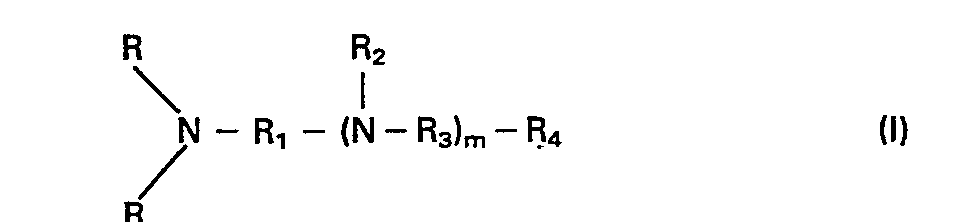
- m 0 oder eine ganze Zahl von 1-7,
- R Wasserstoff, C1-C6-Aminoalkyl,
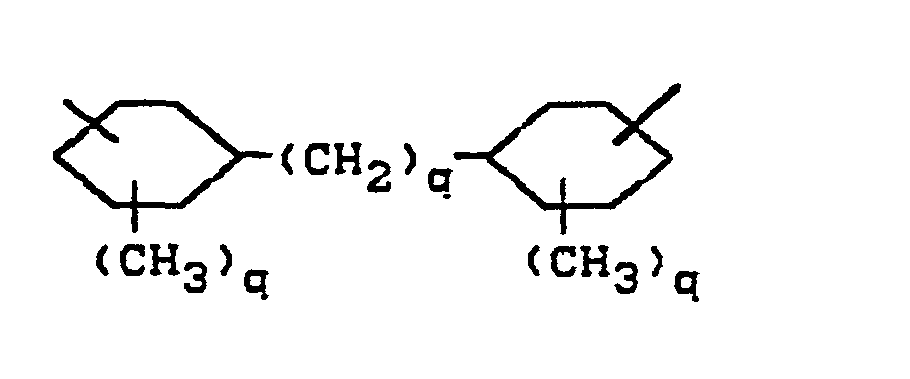
- R1 C2-Cs-Alkylen, einen Rest der Formel
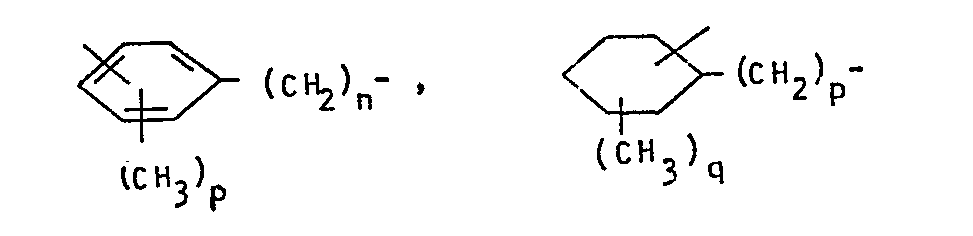
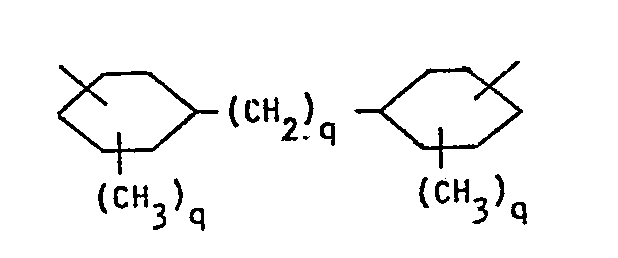
- n 1 oder 2,
- p 0 oder 1,
- q 0, 1, 2 oder 3,
- R2 Wasserstoff oder -R3-R4 oder
- R1 R2 und -N-R1-N- gemeinsam einen Piperazinring,
- R3 C2-C6-Alkylen und
- R4 Wasserstoff, OH oder
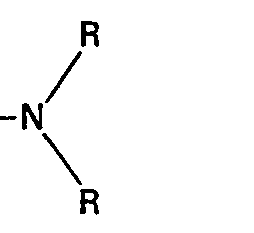
oder ein Anlagerungsprodukt eines solchen Amins mit bis zu 3 Mol eines Alkylenoxides.
Description
- BAYER AKTIENGESELLSCHAFT 5090 Leverkusen, Bayerwerk Konzernverwaltung RP
- Patentabteilung Milli-c
- Gegenstand der Erfindung sind Hilfsmittel für die Lederfärbung, die ein Amin der allgemeinen Formel

- m 0 oder eine ganze Zahl von 1-7,
- R Wasserstoff, C1-C6-Aminoalkyl,
- R1 C2-C9-Alkylen, einen Rest der Formel


- n 1 oder 2,
- p 0 oder 1,
- q 0, 1, 2 oder 3,
- R2 Wasserstoff oder -R3-R4 oder
- R, R2 und -N-R1-N- gemeinsam einen Piperazinrina,
- R3 C2-C6-Alkylen und
- R4 Wasserstoff, OH oder

- Nach diesem Verfahren können chrom-, vegetabil- und/oder synthetisch gegerbte Leder gefärbt werden.
- Zusammen mit den Aminen können bekannte Lederfarbstoffe eingesetzt werden. Vertreter dieser Farbstoffe werden beispielsweise von G. Otto in "Das Färben des Leders" (1962) S. 51-90 und 107-143 beschrieben.
- Als Amine der Formel (1) seien beispielsweise genannt:
- Ethylendiamin, Diethylentriamin, Triethylentetramin, Tetraethylenpentamin, Pentaethylenhexamin, 1,2- und 1,3-Propylen-diamin sowie entsprechende Dipropylentriamine und Tripropylentetramine, 1,4-Diaminobutan, 1,6-Diaminohexan, 3-Methyl-1,5-diaminopentan, 1,8-Diaminooctan, Trimethyl-1,6-diaminohexan (Isomerengemisch 2,2,4- und 2,4,4), 3,3'-Bisaminopropyl-methylamin, N,N'-Bis-2-aminoethylpi- perazin, Piperazin, N-Methylpiperazin, Cyclohexylamin, 1-Amino-3,3,5-trimethyl-5-aminomethylcyclohexan, 4,4'-Diamino-dicyclohexylmethan und -propan, 1,4-Diaminocyclohexan, 2,4- und 2,6-Hexahydrotoluylendiamin und 3,3'-Dimethyl-4,4'-diamino-dicyclohexylmethan, N,N-Dimethylethylendiamin, 4-Aminobenzylamin, 4-Aminophenylethylamin, an einem Stickstoff substituierte 1,3-Propylendiamine, die z. B. durch Addition von Acrylnitril an primäre Monoamine und anschließende Reduktion erhalten werden, disekundäre Diamine, die bei der katalytischen Hydrierung von diprimären aliphatischen Diaminen in Gegenwart von Aldehyden und Ketonen erhalten werden, Alkanolamine wie Ethanolamin, Diethanolamin, Propanolamin, Dipropanolamin, Butanolamin, Dibutanolamin, N-Methyldiethanolamin, N-Dimethyl-ethanolamin, N-Diethylethanolamin und Triethanolamin.
- Bevorzugte Alkylenoxide sind Ethylen-, Propylen- und/oder Butylenoxid.
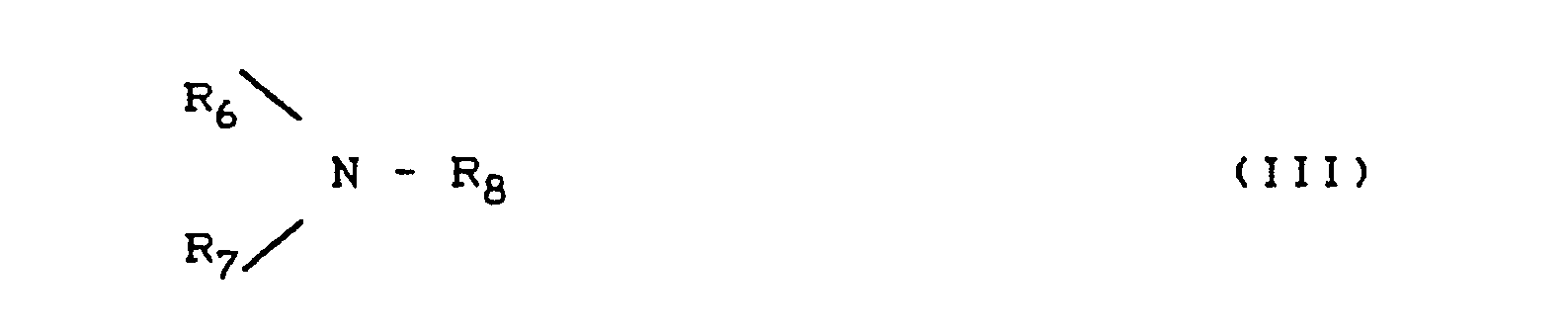
- Insbesondere sind Amine der allgemeinen Formeln


- A und R5 C2-CS-Alkylen,
- R 6 Ci-C4-Alkyl,
- R7 und R8 C1-C4-Alkyl oder -CA-O-)rH, r, s, t und u 0, 1, 2 oder 3, wobei die Summe von r, s, t und u höchstens 3 ist, und w 1-6 bedeuten,
- Bevorzugte nicht oxalkylierte Ausgangsamine der Formel (II) sind Ethylendiamin, Diethylentriamin, Triethylentetramin, Tetraethylenpentamin, Pentaethylenhexamin, Hexaethylenheptamin bzw. Gemische dieser Amine.
- Die Amine der Formel (I) werden beispielsweise in einer Menge von 1-30, insbesondere 5-15 Gew.-X - bezogen auf das Gewicht des Farbstoffs - eingesetzt.
- Die Amine der Formel (I) können vor und nach dem Färben oder auch gleichzeitig mit dem Farbstoff mit dem Leder in Kontakt gebracht werden. Sie können auch in handelsübliche Farbstoff-Kompositionen eingearbeitet werden.
- Das Färben des Leders erfolgt in bekannter Weise in wäßrigem Medium. Dabei werden auf Falz- bzw. Trockengewicht bezogen zwischen 50 und 1000 Gew.-% Wasser angewandt. Die angebotene Farbstoffmenge liegt je nach Substrat, gewünschter Nuance und Farbtiefe zwischen 0,01 und 15 Gew.-% bezogen auf das Falz- oder Trockengewicht des Leders. Der pH-Wert der Färbeflotte liegt vorzugsweise zwischen 4,0 und 7,0.
- Es wurde überraschend gefunden, daß man mit Hilfe der erfindungsgemäßen Hilfsmittel hervorragende Färbungen auf Leder erhält. Die Färbungen zeichnen sich durch Egalität, Farbtiefe und Echtheiten wie Schwei6echtheit, Migrierechtheit und Lichtechtheit aus. Darüber hinaus verbessern die Hilfsmittel das Aufziehverhalten der Farbstoffe, die Flottenauszehrung und die Wassertropfenbeständigkeit des Leders.
- Die Effekte der Hilfsmittel treten bei den verschiedensten Ledertypen wie Chromleder, synthetisch und/oder vegetabil nachgegerbten Chromledern, rein vegetabil gegerbten Ledern, Spaltvelours oder Nubuk auf.
- Wet blue Leder wird (in 200 Gew.-% Wasser) mit einer Mischung aus 3 Gew.-X eines Kondensationsproduktes aus einer Naphthalinsulfonsäure mit Formaldehyd und 3 Gew.-X eines vegetabilen Gerbstoffs nachgegerbt. 0,2 Gew.-% des Additionsproduktes aus Diethylentriamin mit 2 Mol Propylenoxid werden gemeinsam mit 2 Gew.-% des Farbstoffs (A) in 250 Gew,-% Wasser zur Färbung eingesetzt. Nach 20 Minuten Färbezeit bei 40°C wird mit 2 % Ameisensäure abaesäuert, das Leder gefettet und fertiggestellt. Die Gew.-%-Angaben beziehen sich auf das Falzgewicht. Die Färbung ist egaler und voller als die des Leders, das mit der gleichen Farbstoffmenge ohne Hilfsmittel gefärbt wurde.
- Ersetzt man in Beispiel 1 das nachgegerbte Chromleder durch rein vegetabil gegerbtes Leder (15 % Mimosa, 15 % Quebracho auf Blößengewicht), das Hilfsmittel durch 0,4 Gew.-% des Additionsproduktes aus Ethylendiamin und 3 Mol Propylenoxid und Farbstoff (A) durch 4 Gew.-% des Farbstoffs (B), so findet man entsprechende Effekte im Vergleich zur Färbung ohne Hilfsmittel.
- Läßt man in Beispiel 2 das Hilfsmittel vor der Farbstoffzugabe 5 bis 10 Min. vorlaufen, so sind die Effekte entsprechend.
- Zwischengetrocknete Spalten werden broschiert, mit 0,8 Gew.-% des Additionsproduktes aus Ethylamin und 2-3 Mol Ethylenoxid entweder im Vorlauf oder gemeinsam mit 8 Gew.-% des Farbstoffs (C) behandelt. Die Gew.-%-Angaben beziehen sich auf das Trockengewicht des Leders. Man erhält nach der üblichen Fertigstellung egale, farbstarke rotstichig braune Velourfärbungen.
- Arbeitet man wie Beispiel 4, jedoch ausgehend von Wet-Blue-Spalten, so erhält man ohne Zwischentrocknung ebenfalls eine egale und farbstarke Velourfärbung. Die Gew.-%-Angaben beziehen sich auf das Falzgewicht.
- Die Tabelle auf der folgenden Seite gibt weitere Beispiele des erfindungsgemäßen Verfahrens.

- Farbstofftabelle
- Farbstoff A: 1-Amino-3-hydroxynaphthalin-3,6-disulfonsäure / 4-Amino-4'-nitrodiphenyl-2'-sulfonsäure / p-Nitroanalin → Resorcin / Tolamin
- Farbstoff B: Acid Orange 51 ( = C.I. 26550)
- Farbstoff C: Direct Brown 80 ( = C.I. 20210)
- Farbstoff D: Acid Orange 7 ( = C.I. 15510)
- Farbstoff E: 2:1-Chromkomplex aus 2-Amino-4-nitro-phenol-6-sulfonsäure→2-Amino-8-hydroxy-naphthalin-6-sulfonsäure / 2-(3'-Sulfophenyl)-ami- no-8-hydroxy-naphthalin-6-sulfonsäure
oder ein Anlagerungsprodukt eines solchen Amins mit bis zu 3 Mol eines Alkylenoxides enthalten, sowie Verfahren zum Färben von Leder in Gegenwart dieser Amine.
als Hilfsmittel für die Lederfärbung geeignet.
Claims (7)



oder ein Anlagerungsprodukt eines solchen Amins mit bis zu 3 Mol eines Alkylenoxides enthalten.

Applications Claiming Priority (2)
| Application Number | Priority Date | Filing Date | Title |
|---|---|---|---|
| DE19853517804 DE3517804A1 (de) | 1985-05-17 | 1985-05-17 | Mittel fuer die lederfaerbung |
| DE3517804 | 1985-05-17 |
Publications (3)
| Publication Number | Publication Date |
|---|---|
| EP0202549A2 true EP0202549A2 (de) | 1986-11-26 |
| EP0202549A3 EP0202549A3 (en) | 1989-01-18 |
| EP0202549B1 EP0202549B1 (de) | 1992-10-28 |
Family
ID=6270991
Family Applications (1)
| Application Number | Title | Priority Date | Filing Date |
|---|---|---|---|
| EP19860106292 Expired - Lifetime EP0202549B1 (de) | 1985-05-17 | 1986-05-07 | Verfahren zum Färben von Leder |
Country Status (2)
| Country | Link |
|---|---|
| EP (1) | EP0202549B1 (de) |
| DE (2) | DE3517804A1 (de) |
Cited By (3)
| Publication number | Priority date | Publication date | Assignee | Title |
|---|---|---|---|---|
| EP0423561A1 (de) * | 1989-10-18 | 1991-04-24 | Bayer Ag | Verfahren zum Färben von Leder |
| EP0316730A3 (de) * | 1987-11-17 | 1991-12-27 | Bayer Ag | Farbstoffeinstellungen für die Lederfärbung und Lederhilfsmittel |
| WO2005080669A1 (en) * | 2004-02-19 | 2005-09-01 | Ciba Specialty Chemicals Holding Inc. | Method of increasing depth of shade |
Family Cites Families (6)
| Publication number | Priority date | Publication date | Assignee | Title |
|---|---|---|---|---|
| DE724494C (de) * | 1933-12-21 | 1942-08-27 | Ig Farbenindustrie Ag | Verfahren zum Faerben von tierischen Fasern mit sauren, gegebenenfalls Chrom in komplexer Bindung enthaltenden Farbstoffen |
| FR841726A (fr) * | 1937-08-13 | 1939-05-25 | Ig Farbenindustrie Ag | Procédé pour améliorer les propriétés de substances fibreuses végétales, animales ou artificielles |
| IT482244A (de) * | 1950-12-29 | |||
| CH325058A (de) * | 1954-05-25 | 1957-10-31 | Sandoz Ag | Verfahren zum Färben von Veloursleder |
| US2913302A (en) * | 1955-10-31 | 1959-11-17 | Gen Aniline & Film Corp | Azoic dyeing of leather |
| CH437204A (de) * | 1963-08-02 | 1967-06-15 | Sandoz Ag | Verfahren zum Färben oder Bedrucken von Leder |
-
1985
- 1985-05-17 DE DE19853517804 patent/DE3517804A1/de not_active Withdrawn
-
1986
- 1986-05-07 DE DE8686106292T patent/DE3687013D1/de not_active Expired - Lifetime
- 1986-05-07 EP EP19860106292 patent/EP0202549B1/de not_active Expired - Lifetime
Cited By (3)
| Publication number | Priority date | Publication date | Assignee | Title |
|---|---|---|---|---|
| EP0316730A3 (de) * | 1987-11-17 | 1991-12-27 | Bayer Ag | Farbstoffeinstellungen für die Lederfärbung und Lederhilfsmittel |
| EP0423561A1 (de) * | 1989-10-18 | 1991-04-24 | Bayer Ag | Verfahren zum Färben von Leder |
| WO2005080669A1 (en) * | 2004-02-19 | 2005-09-01 | Ciba Specialty Chemicals Holding Inc. | Method of increasing depth of shade |
Also Published As
| Publication number | Publication date |
|---|---|
| EP0202549A3 (en) | 1989-01-18 |
| EP0202549B1 (de) | 1992-10-28 |
| DE3687013D1 (de) | 1992-12-03 |
| DE3517804A1 (de) | 1986-11-20 |
Similar Documents
| Publication | Publication Date | Title |
|---|---|---|
| DE1258817B (de) | Verfahren zum Faerben von stickstoffhaltigen Fasern | |
| DE2024047C3 (de) | Polyazofarbstoffe, ihre Metallkomplexverbindungen, ihre Herstellung und Verwendung | |
| EP0558450B1 (de) | Verfahren zum Färben von Leder mit Farbstoffmischungen | |
| US2763528A (en) | Process for dyeing leather with acid and direct dyes | |
| DE3517804A1 (de) | Mittel fuer die lederfaerbung | |
| DE2539671B2 (de) | Verfahren zum faerben chromgegerbter und/oder nachgegerbter leder | |
| DE3818183A1 (de) | Verfahren zum faerben von leder mit pigmenten | |
| DE925042C (de) | Verfahren zur Verbesserung der Abgasechtheit von gefaerbten Celluloseestern und -aethern | |
| EP0423561A1 (de) | Verfahren zum Färben von Leder | |
| DE633081C (de) | Verfahren zur Verbesserung der Wasserechtheit von Faerbungen auf Textilstoffen | |
| DE2033602A1 (de) | Polyazofarbstoffe, ihre Herstellung und Verwendung | |
| EP0243788B1 (de) | Lederbehandlungsmittel | |
| AT208329B (de) | Verfahren zum Färben von stickstoffhaltigen, mit sauren Farbstoffen anfärbbaren, Fasern und zur Durchführung dieses Verfahrens geeignete Präparate | |
| DE1619402A1 (de) | Verfahren zum Faerben von Fasermaterial aus synthetischem Polyamid | |
| DE2017873C3 (de) | Blaue Diazofarbstoffe | |
| CH366661A (de) | Baukonstruktion für Schnellbaugebäude | |
| DE595187C (de) | Verfahren zum Faerben von Leder | |
| DE541072C (de) | Verfahren zum Faerben oder Bedrucken von Celluloseestern oder -aethern | |
| AT144006B (de) | Verfahren zur Herstellung wasserlöslicher Diazoaminoverbindungen und wasserunlöslicher Azofarbstoffe aus diesen. | |
| DE749389C (de) | Verfahren zum Faerben von Fellen | |
| DE625188C (de) | Verfahren zum Faerben von Pelzen, Haaren und Federn | |
| DE2608535A1 (de) | Neue chromkomplexfarbstoffe, ihre herstellung und verwendung | |
| AT165053B (de) | Verfahren zur Verbesserung von mit wasserlöslichen Farbstoffen hergestellten Färbungen und Drucken | |
| DE1256619B (de) | Verfahren zum Faerben und Bedrucken von Estergruppen enthaltenden Materialien mit Dispersionsfarbstoffen | |
| DE2540588C2 (de) | Neue Lederfarbstoffe, deren Herstellung und Verwendung |
Legal Events
| Date | Code | Title | Description |
|---|---|---|---|
| PUAI | Public reference made under article 153(3) epc to a published international application that has entered the european phase |
Free format text: ORIGINAL CODE: 0009012 |
|
| 17P | Request for examination filed |
Effective date: 19860507 |
|
| AK | Designated contracting states |
Kind code of ref document: A2 Designated state(s): CH DE FR GB IT LI |
|
| PUAL | Search report despatched |
Free format text: ORIGINAL CODE: 0009013 |
|
| AK | Designated contracting states |
Kind code of ref document: A3 Designated state(s): CH DE FR GB IT LI |
|
| 17Q | First examination report despatched |
Effective date: 19891129 |
|
| RTI1 | Title (correction) | ||
| GRAA | (expected) grant |
Free format text: ORIGINAL CODE: 0009210 |
|
| AK | Designated contracting states |
Kind code of ref document: B1 Designated state(s): CH DE FR GB IT LI |
|
| ITF | It: translation for a ep patent filed | ||
| GBT | Gb: translation of ep patent filed (gb section 77(6)(a)/1977) | ||
| REF | Corresponds to: |
Ref document number: 3687013 Country of ref document: DE Date of ref document: 19921203 |
|
| ET | Fr: translation filed | ||
| PLBE | No opposition filed within time limit |
Free format text: ORIGINAL CODE: 0009261 |
|
| STAA | Information on the status of an ep patent application or granted ep patent |
Free format text: STATUS: NO OPPOSITION FILED WITHIN TIME LIMIT |
|
| 26N | No opposition filed | ||
| PGFP | Annual fee paid to national office [announced via postgrant information from national office to epo] |
Ref country code: DE Payment date: 19940414 Year of fee payment: 9 |
|
| PGFP | Annual fee paid to national office [announced via postgrant information from national office to epo] |
Ref country code: CH Payment date: 19940420 Year of fee payment: 9 |
|
| PGFP | Annual fee paid to national office [announced via postgrant information from national office to epo] |
Ref country code: GB Payment date: 19940427 Year of fee payment: 9 |
|
| PGFP | Annual fee paid to national office [announced via postgrant information from national office to epo] |
Ref country code: FR Payment date: 19940428 Year of fee payment: 9 |
|
| PG25 | Lapsed in a contracting state [announced via postgrant information from national office to epo] |
Ref country code: GB Effective date: 19950507 |
|
| PG25 | Lapsed in a contracting state [announced via postgrant information from national office to epo] |
Ref country code: LI Effective date: 19950531 Ref country code: CH Effective date: 19950531 |
|
| GBPC | Gb: european patent ceased through non-payment of renewal fee |
Effective date: 19950507 |
|
| REG | Reference to a national code |
Ref country code: CH Ref legal event code: PL |
|
| PG25 | Lapsed in a contracting state [announced via postgrant information from national office to epo] |
Ref country code: DE Effective date: 19960201 |
|
| PG25 | Lapsed in a contracting state [announced via postgrant information from national office to epo] |
Ref country code: FR Effective date: 19960229 |
|
| REG | Reference to a national code |
Ref country code: FR Ref legal event code: ST |
|
| REG | Reference to a national code |
Ref country code: FR Ref legal event code: ST |
|
| PG25 | Lapsed in a contracting state [announced via postgrant information from national office to epo] |
Ref country code: IT Free format text: LAPSE BECAUSE OF NON-PAYMENT OF DUE FEES;WARNING: LAPSES OF ITALIAN PATENTS WITH EFFECTIVE DATE BEFORE 2007 MAY HAVE OCCURRED AT ANY TIME BEFORE 2007. THE CORRECT EFFECTIVE DATE MAY BE DIFFERENT FROM THE ONE RECORDED. Effective date: 20050507 |