EP0202894A2 - Procédé pour détecter les dérivés des aminoacides - Google Patents
Procédé pour détecter les dérivés des aminoacides Download PDFInfo
- Publication number
- EP0202894A2 EP0202894A2 EP86303763A EP86303763A EP0202894A2 EP 0202894 A2 EP0202894 A2 EP 0202894A2 EP 86303763 A EP86303763 A EP 86303763A EP 86303763 A EP86303763 A EP 86303763A EP 0202894 A2 EP0202894 A2 EP 0202894A2
- Authority
- EP
- European Patent Office
- Prior art keywords
- acid derivatives
- amino
- phenylthiocarbamylamino
- general formula
- detecting
- Prior art date
- Legal status (The legal status is an assumption and is not a legal conclusion. Google has not performed a legal analysis and makes no representation as to the accuracy of the status listed.)
- Granted
Links
Images



Classifications
-
- C—CHEMISTRY; METALLURGY
- C07—ORGANIC CHEMISTRY
- C07K—PEPTIDES
- C07K1/00—General methods for the preparation of peptides, i.e. processes for the organic chemical preparation of peptides or proteins of any length
- C07K1/12—General methods for the preparation of peptides, i.e. processes for the organic chemical preparation of peptides or proteins of any length by hydrolysis, i.e. solvolysis in general
-
- G—PHYSICS
- G01—MEASURING; TESTING
- G01N—INVESTIGATING OR ANALYSING MATERIALS BY DETERMINING THEIR CHEMICAL OR PHYSICAL PROPERTIES
- G01N33/00—Investigating or analysing materials by specific methods not covered by groups G01N1/00 - G01N31/00
- G01N33/48—Biological material, e.g. blood, urine; Haemocytometers
- G01N33/50—Chemical analysis of biological material, e.g. blood, urine; Testing involving biospecific ligand binding methods; Immunological testing
- G01N33/53—Immunoassay; Biospecific binding assay; Materials therefor
- G01N33/531—Production of immunochemical test materials
- G01N33/532—Production of labelled immunochemicals
- G01N33/533—Production of labelled immunochemicals with fluorescent label
-
- G—PHYSICS
- G01—MEASURING; TESTING
- G01N—INVESTIGATING OR ANALYSING MATERIALS BY DETERMINING THEIR CHEMICAL OR PHYSICAL PROPERTIES
- G01N33/00—Investigating or analysing materials by specific methods not covered by groups G01N1/00 - G01N31/00
- G01N33/48—Biological material, e.g. blood, urine; Haemocytometers
- G01N33/50—Chemical analysis of biological material, e.g. blood, urine; Testing involving biospecific ligand binding methods; Immunological testing
- G01N33/53—Immunoassay; Biospecific binding assay; Materials therefor
- G01N33/531—Production of immunochemical test materials
- G01N33/532—Production of labelled immunochemicals
- G01N33/534—Production of labelled immunochemicals with radioactive label
-
- G—PHYSICS
- G01—MEASURING; TESTING
- G01N—INVESTIGATING OR ANALYSING MATERIALS BY DETERMINING THEIR CHEMICAL OR PHYSICAL PROPERTIES
- G01N33/00—Investigating or analysing materials by specific methods not covered by groups G01N1/00 - G01N31/00
- G01N33/48—Biological material, e.g. blood, urine; Haemocytometers
- G01N33/50—Chemical analysis of biological material, e.g. blood, urine; Testing involving biospecific ligand binding methods; Immunological testing
- G01N33/68—Chemical analysis of biological material, e.g. blood, urine; Testing involving biospecific ligand binding methods; Immunological testing involving proteins, peptides or amino acids
- G01N33/6803—General methods of protein analysis not limited to specific proteins or families of proteins
- G01N33/6806—Determination of free amino acids
- G01N33/6809—Determination of free amino acids involving fluorescent derivatizing reagents reacting non-specifically with all amino acids
-
- G—PHYSICS
- G01—MEASURING; TESTING
- G01N—INVESTIGATING OR ANALYSING MATERIALS BY DETERMINING THEIR CHEMICAL OR PHYSICAL PROPERTIES
- G01N33/00—Investigating or analysing materials by specific methods not covered by groups G01N1/00 - G01N31/00
- G01N33/48—Biological material, e.g. blood, urine; Haemocytometers
- G01N33/50—Chemical analysis of biological material, e.g. blood, urine; Testing involving biospecific ligand binding methods; Immunological testing
- G01N33/68—Chemical analysis of biological material, e.g. blood, urine; Testing involving biospecific ligand binding methods; Immunological testing involving proteins, peptides or amino acids
- G01N33/6803—General methods of protein analysis not limited to specific proteins or families of proteins
- G01N33/6818—Sequencing of polypeptides
- G01N33/6824—Sequencing of polypeptides involving N-terminal degradation, e.g. Edman degradation
-
- Y—GENERAL TAGGING OF NEW TECHNOLOGICAL DEVELOPMENTS; GENERAL TAGGING OF CROSS-SECTIONAL TECHNOLOGIES SPANNING OVER SEVERAL SECTIONS OF THE IPC; TECHNICAL SUBJECTS COVERED BY FORMER USPC CROSS-REFERENCE ART COLLECTIONS [XRACs] AND DIGESTS
- Y10—TECHNICAL SUBJECTS COVERED BY FORMER USPC
- Y10T—TECHNICAL SUBJECTS COVERED BY FORMER US CLASSIFICATION
- Y10T436/00—Chemistry: analytical and immunological testing
- Y10T436/14—Heterocyclic carbon compound [i.e., O, S, N, Se, Te, as only ring hetero atom]
- Y10T436/141111—Diverse hetero atoms in same or different rings [e.g., alkaloids, opiates, etc.]
Definitions
- This invnetion relates to a method for detecting amino acids, and it relates more especially to a method for detecting amino acid derivatives, for example for application to N-terminal group determination of a protein.
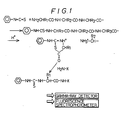
- this invention provides a method for detecting amino acid derivative, which method is characterised by reacting 5-thiazolinone amino acid derivatives of the general formula (a) below with an amino compound which is of the general formula (b) below and which is labelled with a radioactive iodine isotope or which is a fluorescent amino compound, to form phenylthiocarbamylamino acid derivatives of the general formula (c) below, and detecting the phenylthiocarbamylamino acid derivatives wherein X is a residue of a radioactive iodine isotope-labelled or fluorescent compound.
- the 5-thiazolinone amino acid derivatives are obtained by reacting phenyl isothiocyanate of the general formula (d) below with a protein or a peptide of the general formula (e) below to form phenylthiocarbamylprotein of the general formula (f) below, and reacting the phenylthiocarbamylprotein with an acid in an anhydrous condition according to the formula [III] below to effect cyclization and scission:
- R,, R2 and R represent known chemical parts, groups or radicals, for example, amino acid side chains, e.g. hydrogen or hydrocarbon radicals, which will readily be appreciated and known by those skilled in the art.
- the said symbols can thus represent any known and appropriate chemical parts, groups or radicals and such chemical parts, groups or radicals are specifically included herein.
- the method of the invention may enable the amino acid derivatives to be detected with a high degree of sensitivity. Also, smaller amounts of specimens may be used as compared with the amounts of specimens used in known methods. Thus, the method of the invention is of considerable industrial importance and value.
- the amino compound of the general formula - (b) may be a radioactive iodine isotope-labelled iodohistamine.
- the amino compound of the general formula (b) may be a fluoroescent amino compound in the form of aminopyrene or aminofluorene.
- the phenylthiocarbamylamino acid derivatives are detected by using a gamma ray detector or a fluorescence spectrophotometer.
- the present invention also provides a method for detecting amino acids or amino acid derivatives, which method is characterised by reacting thiazoline derivatives with an amino compound to form phenylthiocarbamylamino acid derivatives, and detecting the phenylthiocarbamylamino acid derivatives, the amino compound being a radioactive isotope-labelled or isotope-containing amino compound or a fluorescent amino compound.
- This Example demonstrates a basic detection method wherein 5-thiazolinone derivatives of amino acids (hereinafter abbreviated to ATZ) were reacted with a radioactive iodine isotope-labelled iodohistamine to form phenylthiocarbamylamino acid derivatives, and these phenylthiocarbamylamino acid derivatives were detected with a high level of sensitivity.
- ATZ 5-thiazolinone derivatives of amino acids
- Leu-Ala dipeptide - (hereinafter abbreviated as Leu-Ala) consisting of leucine (hereinafter abbreviated as Leu) and alanine (hereinafter abbreviated as Ala) is used instead of a protein for simplicity.
- Leu-Ala dipeptide -
- Ala alanine
- Leu-Ala (202 mg) was dissolved in 50% aqueous pyridine, and the pH was adjusted to 8.6 by the addition of 2N sodium hydroxide (NaOH). Subsequently, phenylisothiocyanate was added thereto. The pH was kept at 8.6 by the addition of 2N sodium hydroxide because it was decreasing with the addition of the phenylisothiocyanate. After the variation in the pH had been decreased, the solution was heated at 40°C for one hour. After the reaction, the reaction solution was washed with benzene.
- 2N sodium hydroxide NaOH
- 0 and R are any known and suitable chemical parts, groups or radicats. 0 and R, for example, may be amino acid side chains, e.g: hydrogen or hydrocarbon radicals, or 0 may be the phenyl radical.
- ATZ-Leu (70 mg) obtained from PITC-Leu-Ala was dissolved in 30% pyridine/dimethylformamide (20 ml), to which was then added I. histamine 2HC1 (200mg). The resulting mixture was heated with agitation at 50°C for one hour. The reaction solution was evaporated to dryness and the residue was dried to solid form and extracted with 1 N sodium bicarbonate and ethyl acetate. The ethyl acetate phase was dried and evaporated to dryness. The residue was recrystallized from benzene to obtain a product in the form of a white crystal.
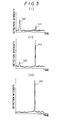
- FIG. 3(i) shows a high-pressure liquid chromatography chart just after mixing.
- Figure 3(ii) shows a high-pressure liquid chromatography chart after heating at 50°C for 30 minutes.
- Figure 3(iii) shows a highpressure liquid chromatography chart after heating at 50°C for one hour.
- the dipeptides and heptapeptide used were as follows: Leu-Gly, Pro-Phe, Phe-Ala, Met-Leu, Ser-Phe, lie-Ser, Gly-Glu, Ala-Ala, Val-Glu, Gln-Gly and Tyr-Gly-Gly-Phe-Leu.
- Example 2 A similar method to that described in Example 1 was followed. Thus, each of the above peptides was reacted with phenylisothiocyanate to form a phenylthiopeptide, which was converted into a thiazolinone derivative by cyclization and scission by treatment with trifluoroacetic acid. The thiazolinone derivative was reacted with iodohistamine partially labelled with a radioactive isotope to form a phenylthiocarbamylamino acid derivative. A variety of the formed phenylthiocarbamylamino acid derivatives were passed through a thin-layer chromatographic column and then detected as clear exposed spots on an X-ray film after exposure for day and night. In the thin-layer chromatography, a solvent system comprising benzene, methanol and tert-butyl alcohol in a volume ratio of 8:1:1 was used in development.
- a solvent system comprising benzene, methanol and
- This Example demonstrates how 5-thiazolinone derivatives of amino acids were reacted with a fluorescent amino compound (9-aminofluorene) to form phenylthiocarbamylamino acid derivatives, and the products were detected with high sensitivity.
- ATZ-Leu The thiazolinone derivative of leucine
- This reaction proceeded according to the following reaction formula to form a phenylthiocarbamylamino acid derivative.
- R is any known and suitable chemical part, group or radical.
- R for example, may be an amino acid side chain, e.g. a hydrogen or hydrocarbon radical.
- reaction was performed in the following way. To ATZ-Leu (70 mg, 0.21 mM) was added 9-aminofluorene (130 mg, 0.6 mM) dissolved in 30% pyridine-dimethyl-formamide, and the resulting mixture was reacted by heating at 50°C for one hour.
- this invention resides in reacting an iodine-labelled or a fluorescent amino compound with a thiazolinone derivative of an amino - acid to form a phenylthiocarbamyl derivative and detecting it with a high degree of sensitivity.
- a thiazolinone derivative of an amino - acid to form a phenylthiocarbamyl derivative and detecting it with a high degree of sensitivity.
- iodohistamine or aminofluorene it is to be understood that other iodine-labelled or fluorescent amino compounds can be used, and that this invention is not to be limited to the particular chemicals or compounds used in the Examples.
Landscapes
- Health & Medical Sciences (AREA)
- Life Sciences & Earth Sciences (AREA)
- Engineering & Computer Science (AREA)
- Immunology (AREA)
- Chemical & Material Sciences (AREA)
- Molecular Biology (AREA)
- Hematology (AREA)
- Urology & Nephrology (AREA)
- Biomedical Technology (AREA)
- Physics & Mathematics (AREA)
- General Health & Medical Sciences (AREA)
- Medicinal Chemistry (AREA)
- Biochemistry (AREA)
- Analytical Chemistry (AREA)
- Pathology (AREA)
- General Physics & Mathematics (AREA)
- Cell Biology (AREA)
- Food Science & Technology (AREA)
- Microbiology (AREA)
- Biotechnology (AREA)
- Proteomics, Peptides & Aminoacids (AREA)
- Biophysics (AREA)
- Bioinformatics & Cheminformatics (AREA)
- Bioinformatics & Computational Biology (AREA)
- Organic Chemistry (AREA)
- Genetics & Genomics (AREA)
- Investigating Or Analysing Biological Materials (AREA)
- Peptides Or Proteins (AREA)
Applications Claiming Priority (2)
| Application Number | Priority Date | Filing Date | Title |
|---|---|---|---|
| JP105400/85 | 1985-05-17 | ||
| JP60105400A JPS61264264A (ja) | 1985-05-17 | 1985-05-17 | アミノ酸誘導体の高感度検出法 |
Publications (3)
| Publication Number | Publication Date |
|---|---|
| EP0202894A2 true EP0202894A2 (fr) | 1986-11-26 |
| EP0202894A3 EP0202894A3 (en) | 1988-09-14 |
| EP0202894B1 EP0202894B1 (fr) | 1992-02-19 |
Family
ID=14406579
Family Applications (1)
| Application Number | Title | Priority Date | Filing Date |
|---|---|---|---|
| EP86303763A Expired - Lifetime EP0202894B1 (fr) | 1985-05-17 | 1986-05-16 | Procédé pour détecter les dérivés des aminoacides |
Country Status (4)
| Country | Link |
|---|---|
| US (1) | US4865994A (fr) |
| EP (1) | EP0202894B1 (fr) |
| JP (1) | JPS61264264A (fr) |
| DE (1) | DE3683916D1 (fr) |
Cited By (3)
| Publication number | Priority date | Publication date | Assignee | Title |
|---|---|---|---|---|
| US4865994A (en) * | 1985-05-17 | 1989-09-12 | Seiko Instruments & Electronics Ltd. | Detection method for amino acid derivatives |
| EP0353361A1 (fr) * | 1987-02-12 | 1990-02-07 | Seiko Instruments Inc. | Procédé pour la détection des dérivés des aminoacides |
| WO1993000355A1 (fr) * | 1991-06-21 | 1993-01-07 | Porton Instruments, Inc. | Sequençage de proteines |
Families Citing this family (4)
| Publication number | Priority date | Publication date | Assignee | Title |
|---|---|---|---|---|
| US5008205A (en) * | 1988-08-10 | 1991-04-16 | Hewlett-Packard Company | Method of facilitating detection of amino acid derivatives with enhanced sensitivity |
| JP2725731B2 (ja) * | 1991-02-28 | 1998-03-11 | 株式会社島津製作所 | 過剰蛍光試薬のクエンチング方法 |
| EP0609450B1 (fr) * | 1992-07-27 | 2000-03-15 | Seiko Instruments Inc. | Procede concernant la detection a haute sensibilite d'un derive d'acide amine |
| EP1060377A4 (fr) * | 1998-03-02 | 2002-06-12 | Biotraces Inc | Reactifs et methodes de microsequen age de proteines |
Family Cites Families (6)
| Publication number | Priority date | Publication date | Assignee | Title |
|---|---|---|---|---|
| US3645689A (en) * | 1970-04-09 | 1972-02-29 | Lkb Produkter Ab | Method and apparatus for analyzing proteins |
| US4065412A (en) * | 1976-05-07 | 1977-12-27 | Durrum Instrument Corporation | Peptide or protein sequencing method and apparatus |
| US4153416A (en) * | 1977-06-06 | 1979-05-08 | Bonner Alex G | Process and apparatus for pulse labelling protein material in the Edman degradation process |
| JPS55110955A (en) * | 1979-02-19 | 1980-08-27 | Yuki Gosei Yakuhin Kogyo Kk | Novel fluorescent estimation of phenylthiohydaniton amino acid |
| JPS57182145A (en) * | 1981-05-02 | 1982-11-09 | Asama Kasei Kk | Aminoacid fluorometry |
| JPS61264264A (ja) * | 1985-05-17 | 1986-11-22 | Seiko Instr & Electronics Ltd | アミノ酸誘導体の高感度検出法 |
-
1985
- 1985-05-17 JP JP60105400A patent/JPS61264264A/ja active Granted
-
1986
- 1986-05-16 EP EP86303763A patent/EP0202894B1/fr not_active Expired - Lifetime
- 1986-05-16 DE DE8686303763T patent/DE3683916D1/de not_active Expired - Fee Related
-
1988
- 1988-04-19 US US07/185,324 patent/US4865994A/en not_active Expired - Lifetime
Cited By (4)
| Publication number | Priority date | Publication date | Assignee | Title |
|---|---|---|---|---|
| US4865994A (en) * | 1985-05-17 | 1989-09-12 | Seiko Instruments & Electronics Ltd. | Detection method for amino acid derivatives |
| EP0353361A1 (fr) * | 1987-02-12 | 1990-02-07 | Seiko Instruments Inc. | Procédé pour la détection des dérivés des aminoacides |
| US5051369A (en) * | 1987-02-12 | 1991-09-24 | Seiko Instruments Inc. | Detection method for amino acid derivative |
| WO1993000355A1 (fr) * | 1991-06-21 | 1993-01-07 | Porton Instruments, Inc. | Sequençage de proteines |
Also Published As
| Publication number | Publication date |
|---|---|
| US4865994A (en) | 1989-09-12 |
| EP0202894A3 (en) | 1988-09-14 |
| DE3683916D1 (de) | 1992-03-26 |
| EP0202894B1 (fr) | 1992-02-19 |
| JPS61264264A (ja) | 1986-11-22 |
| JPH0575068B2 (fr) | 1993-10-19 |
Similar Documents
| Publication | Publication Date | Title |
|---|---|---|
| Edman et al. | Sequence determination | |
| US5240859A (en) | Methods for amino acid sequencing of a polypeptide | |
| Roth | Fluorimetric determination of free hydroxyproline and proline in blood plasma | |
| JPS59150341A (ja) | タンパク質配列分析法および試薬 | |
| Valerio et al. | Synthesis of peptide analogues using the multipin peptide synthesis method | |
| EP0202894A2 (fr) | Procédé pour détecter les dérivés des aminoacides | |
| US5534440A (en) | Compounds and methods for sequencing amino acids | |
| US5064767A (en) | Carboxyl-terminal protein sequencing method and kit | |
| Mitchell et al. | Occurrence of N-alkylation during the acidolytic cleavage of urethane protecting groups | |
| EP0353361B1 (fr) | Procédé pour la détection des dérivés des aminoacides | |
| Miyano et al. | Micro‐scale sequence analysis from the N‐terminus of peptides using the fluorogenic edman reagent 4‐N, N‐dimethylamino‐1‐naphthyl isothiocyanate | |
| WO2011110341A1 (fr) | Méthode permettant de déterminer la concentration d'un peptide | |
| EP0609450B1 (fr) | Procede concernant la detection a haute sensibilite d'un derive d'acide amine | |
| US5783663A (en) | Peptide ligands for affinity purification of fibrinogen | |
| Sabatino et al. | Analytical methods for solid phase peptide synthesis | |
| JPH07145148A (ja) | ポリメチン系化合物およびそれを用いる測定方法 | |
| Takemoto et al. | Analysis of tryptic peptides from the C-terminal region of alpha-crystallin from cataractous and normal human lenses | |
| IKOTA et al. | Amino acids and peptides. XXX. Phosphorus in organic synthesis. XVII. Application of diphenyl phosphorazidate (DPPA) and diethyl phosphorocyanidate (DEPC) to solid-phase peptide synthesis | |
| Balse et al. | Evaluation of new base‐labile2‐(4‐nitrophenylsulfonyl) ethoxycarbonyl (Nsc)‐amino acids for solid‐phase peptide synthesis | |
| Casagranda et al. | C-terminal sequencing of peptides: The thiocyanate degradation method | |
| MECH et al. | Investigation of the Covalent Bond Structure of Peptide‐Matrix Systems by Edman Degradation of Support‐Fixed Peptides | |
| Palacz et al. | 4‐(N‐tert‐Butyloxycarbonylaminomethyl)‐phenylisothiocyanate: its synthesis and use in microsequencing | |
| Casagranda et al. | Enzymatic and chemical methods for manual C-terminal peptide sequencing | |
| JPH0371045A (ja) | アミノ酸誘導体の高感度検出法 | |
| Grant | Evaluation of the synthetic product |
Legal Events
| Date | Code | Title | Description |
|---|---|---|---|
| PUAI | Public reference made under article 153(3) epc to a published international application that has entered the european phase |
Free format text: ORIGINAL CODE: 0009012 |
|
| AK | Designated contracting states |
Kind code of ref document: A2 Designated state(s): DE FR GB |
|
| RAP1 | Party data changed (applicant data changed or rights of an application transferred) |
Owner name: SEIKO INSTRUMENTS INC. |
|
| PUAL | Search report despatched |
Free format text: ORIGINAL CODE: 0009013 |
|
| AK | Designated contracting states |
Kind code of ref document: A3 Designated state(s): DE FR GB |
|
| 17P | Request for examination filed |
Effective date: 19890216 |
|
| 17Q | First examination report despatched |
Effective date: 19901001 |
|
| GRAA | (expected) grant |
Free format text: ORIGINAL CODE: 0009210 |
|
| AK | Designated contracting states |
Kind code of ref document: B1 Designated state(s): DE FR GB |
|
| REF | Corresponds to: |
Ref document number: 3683916 Country of ref document: DE Date of ref document: 19920326 |
|
| ET | Fr: translation filed | ||
| PGFP | Annual fee paid to national office [announced via postgrant information from national office to epo] |
Ref country code: GB Payment date: 19920518 Year of fee payment: 7 |
|
| PGFP | Annual fee paid to national office [announced via postgrant information from national office to epo] |
Ref country code: FR Payment date: 19920522 Year of fee payment: 7 |
|
| PGFP | Annual fee paid to national office [announced via postgrant information from national office to epo] |
Ref country code: DE Payment date: 19920610 Year of fee payment: 7 |
|
| PLBE | No opposition filed within time limit |
Free format text: ORIGINAL CODE: 0009261 |
|
| STAA | Information on the status of an ep patent application or granted ep patent |
Free format text: STATUS: NO OPPOSITION FILED WITHIN TIME LIMIT |
|
| 26N | No opposition filed | ||
| PG25 | Lapsed in a contracting state [announced via postgrant information from national office to epo] |
Ref country code: GB Effective date: 19930516 |
|
| GBPC | Gb: european patent ceased through non-payment of renewal fee |
Effective date: 19930516 |
|
| PG25 | Lapsed in a contracting state [announced via postgrant information from national office to epo] |
Ref country code: FR Effective date: 19940131 |
|
| PG25 | Lapsed in a contracting state [announced via postgrant information from national office to epo] |
Ref country code: DE Effective date: 19940201 |
|
| REG | Reference to a national code |
Ref country code: FR Ref legal event code: ST |