EP0203228B2 - Einstufiges Raffinationsverfahren - Google Patents
Einstufiges Raffinationsverfahren Download PDFInfo
- Publication number
- EP0203228B2 EP0203228B2 EP85201248A EP85201248A EP0203228B2 EP 0203228 B2 EP0203228 B2 EP 0203228B2 EP 85201248 A EP85201248 A EP 85201248A EP 85201248 A EP85201248 A EP 85201248A EP 0203228 B2 EP0203228 B2 EP 0203228B2
- Authority
- EP
- European Patent Office
- Prior art keywords
- catalyst
- stacked
- bed
- hydrotreating
- hydrogen
- Prior art date
- Legal status (The legal status is an assumption and is not a legal conclusion. Google has not performed a legal analysis and makes no representation as to the accuracy of the status listed.)
- Expired - Lifetime
Links
- 238000000034 method Methods 0.000 title claims description 67
- 230000008569 process Effects 0.000 title claims description 60
- 239000003054 catalyst Substances 0.000 claims description 208
- 239000003921 oil Substances 0.000 claims description 84
- 229910052739 hydrogen Inorganic materials 0.000 claims description 43
- 239000001257 hydrogen Substances 0.000 claims description 43
- UFHFLCQGNIYNRP-UHFFFAOYSA-N Hydrogen Chemical compound [H][H] UFHFLCQGNIYNRP-UHFFFAOYSA-N 0.000 claims description 42
- PXHVJJICTQNCMI-UHFFFAOYSA-N Nickel Chemical compound [Ni] PXHVJJICTQNCMI-UHFFFAOYSA-N 0.000 claims description 42
- 229910052751 metal Inorganic materials 0.000 claims description 39
- 239000002184 metal Substances 0.000 claims description 39
- NINIDFKCEFEMDL-UHFFFAOYSA-N Sulfur Chemical class [S] NINIDFKCEFEMDL-UHFFFAOYSA-N 0.000 claims description 36
- 239000011574 phosphorus Substances 0.000 claims description 33
- 229910052698 phosphorus Inorganic materials 0.000 claims description 33
- 239000005864 Sulphur Substances 0.000 claims description 32
- PNEYBMLMFCGWSK-UHFFFAOYSA-N aluminium oxide Inorganic materials [O-2].[O-2].[O-2].[Al+3].[Al+3] PNEYBMLMFCGWSK-UHFFFAOYSA-N 0.000 claims description 32
- 239000007789 gas Substances 0.000 claims description 29
- OAICVXFJPJFONN-UHFFFAOYSA-N Phosphorus Chemical compound [P] OAICVXFJPJFONN-UHFFFAOYSA-N 0.000 claims description 25
- 238000009835 boiling Methods 0.000 claims description 23
- 230000000694 effects Effects 0.000 claims description 22
- 229910052759 nickel Inorganic materials 0.000 claims description 18
- ZOKXTWBITQBERF-UHFFFAOYSA-N Molybdenum Chemical compound [Mo] ZOKXTWBITQBERF-UHFFFAOYSA-N 0.000 claims description 16
- 229910052750 molybdenum Inorganic materials 0.000 claims description 16
- 239000011733 molybdenum Substances 0.000 claims description 16
- IMNFDUFMRHMDMM-UHFFFAOYSA-N N-Heptane Chemical compound CCCCCCC IMNFDUFMRHMDMM-UHFFFAOYSA-N 0.000 claims description 14
- 239000000203 mixture Substances 0.000 claims description 14
- VYPSYNLAJGMNEJ-UHFFFAOYSA-N Silicium dioxide Chemical compound O=[Si]=O VYPSYNLAJGMNEJ-UHFFFAOYSA-N 0.000 claims description 10
- 229910017052 cobalt Inorganic materials 0.000 claims description 10
- 239000010941 cobalt Substances 0.000 claims description 10
- GUTLYIVDDKVIGB-UHFFFAOYSA-N cobalt atom Chemical compound [Co] GUTLYIVDDKVIGB-UHFFFAOYSA-N 0.000 claims description 10
- 239000007788 liquid Substances 0.000 claims description 9
- 239000004215 Carbon black (E152) Substances 0.000 claims description 8
- 229930195733 hydrocarbon Natural products 0.000 claims description 8
- 150000002430 hydrocarbons Chemical class 0.000 claims description 8
- 239000000571 coke Substances 0.000 claims description 7
- RWSOTUBLDIXVET-UHFFFAOYSA-N Dihydrogen sulfide Chemical compound S RWSOTUBLDIXVET-UHFFFAOYSA-N 0.000 claims description 6
- 229910044991 metal oxide Inorganic materials 0.000 claims description 6
- 150000004706 metal oxides Chemical class 0.000 claims description 6
- 229910052976 metal sulfide Inorganic materials 0.000 claims description 6
- 239000000377 silicon dioxide Substances 0.000 claims description 5
- 230000015572 biosynthetic process Effects 0.000 claims description 4
- 239000007795 chemical reaction product Substances 0.000 claims description 4
- 125000005842 heteroatom Chemical group 0.000 claims description 4
- WFKWXMTUELFFGS-UHFFFAOYSA-N tungsten Chemical compound [W] WFKWXMTUELFFGS-UHFFFAOYSA-N 0.000 claims description 4
- 229910052721 tungsten Inorganic materials 0.000 claims description 4
- 239000010937 tungsten Substances 0.000 claims description 4
- 230000000737 periodic effect Effects 0.000 claims description 3
- 229910001392 phosphorus oxide Inorganic materials 0.000 claims description 3
- VSAISIQCTGDGPU-UHFFFAOYSA-N tetraphosphorus hexaoxide Chemical compound O1P(O2)OP3OP1OP2O3 VSAISIQCTGDGPU-UHFFFAOYSA-N 0.000 claims description 3
- UCKMPCXJQFINFW-UHFFFAOYSA-N Sulphide Chemical compound [S-2] UCKMPCXJQFINFW-UHFFFAOYSA-N 0.000 claims description 2
- 238000005470 impregnation Methods 0.000 claims 1
- IJGRMHOSHXDMSA-UHFFFAOYSA-N Atomic nitrogen Chemical compound N#N IJGRMHOSHXDMSA-UHFFFAOYSA-N 0.000 description 22
- 239000011148 porous material Substances 0.000 description 18
- 238000006243 chemical reaction Methods 0.000 description 17
- 150000002739 metals Chemical class 0.000 description 14
- 230000008901 benefit Effects 0.000 description 13
- 239000000047 product Substances 0.000 description 13
- 238000004939 coking Methods 0.000 description 12
- 230000009849 deactivation Effects 0.000 description 12
- 229910052757 nitrogen Inorganic materials 0.000 description 11
- 239000000295 fuel oil Substances 0.000 description 7
- 238000012545 processing Methods 0.000 description 7
- 238000011068 loading method Methods 0.000 description 5
- 239000000463 material Substances 0.000 description 5
- QGZKDVFQNNGYKY-UHFFFAOYSA-N Ammonia Chemical compound N QGZKDVFQNNGYKY-UHFFFAOYSA-N 0.000 description 4
- 238000007792 addition Methods 0.000 description 4
- 238000004523 catalytic cracking Methods 0.000 description 4
- 230000003197 catalytic effect Effects 0.000 description 4
- 230000002950 deficient Effects 0.000 description 4
- 238000009826 distribution Methods 0.000 description 4
- 239000008188 pellet Substances 0.000 description 4
- 229910052799 carbon Inorganic materials 0.000 description 3
- 229910001385 heavy metal Inorganic materials 0.000 description 3
- 238000005984 hydrogenation reaction Methods 0.000 description 3
- 230000008929 regeneration Effects 0.000 description 3
- 238000011069 regeneration method Methods 0.000 description 3
- MHAJPDPJQMAIIY-UHFFFAOYSA-N Hydrogen peroxide Chemical compound OO MHAJPDPJQMAIIY-UHFFFAOYSA-N 0.000 description 2
- CPLXHLVBOLITMK-UHFFFAOYSA-N Magnesium oxide Chemical compound [Mg]=O CPLXHLVBOLITMK-UHFFFAOYSA-N 0.000 description 2
- NBIIXXVUZAFLBC-UHFFFAOYSA-N Phosphoric acid Chemical compound OP(O)(O)=O NBIIXXVUZAFLBC-UHFFFAOYSA-N 0.000 description 2
- 239000007864 aqueous solution Substances 0.000 description 2
- 238000004517 catalytic hydrocracking Methods 0.000 description 2
- 230000007812 deficiency Effects 0.000 description 2
- 230000008021 deposition Effects 0.000 description 2
- 239000006185 dispersion Substances 0.000 description 2
- 239000000446 fuel Substances 0.000 description 2
- 229910000069 nitrogen hydride Inorganic materials 0.000 description 2
- 239000003208 petroleum Substances 0.000 description 2
- 238000004227 thermal cracking Methods 0.000 description 2
- 229910052720 vanadium Inorganic materials 0.000 description 2
- XLYOFNOQVPJJNP-UHFFFAOYSA-N water Substances O XLYOFNOQVPJJNP-UHFFFAOYSA-N 0.000 description 2
- OKTJSMMVPCPJKN-UHFFFAOYSA-N Carbon Chemical compound [C] OKTJSMMVPCPJKN-UHFFFAOYSA-N 0.000 description 1
- -1 VIB metal compound Chemical class 0.000 description 1
- 239000000654 additive Substances 0.000 description 1
- 229910000147 aluminium phosphate Inorganic materials 0.000 description 1
- 229910021529 ammonia Inorganic materials 0.000 description 1
- APUPEJJSWDHEBO-UHFFFAOYSA-P ammonium molybdate Chemical compound [NH4+].[NH4+].[O-][Mo]([O-])(=O)=O APUPEJJSWDHEBO-UHFFFAOYSA-P 0.000 description 1
- 239000011609 ammonium molybdate Substances 0.000 description 1
- 229940010552 ammonium molybdate Drugs 0.000 description 1
- 235000018660 ammonium molybdate Nutrition 0.000 description 1
- 238000004458 analytical method Methods 0.000 description 1
- 238000013459 approach Methods 0.000 description 1
- XUFUCDNVOXXQQC-UHFFFAOYSA-L azane;hydroxy-(hydroxy(dioxo)molybdenio)oxy-dioxomolybdenum Chemical compound N.N.O[Mo](=O)(=O)O[Mo](O)(=O)=O XUFUCDNVOXXQQC-UHFFFAOYSA-L 0.000 description 1
- 239000000969 carrier Substances 0.000 description 1
- 230000015556 catabolic process Effects 0.000 description 1
- 238000012512 characterization method Methods 0.000 description 1
- 229910021446 cobalt carbonate Inorganic materials 0.000 description 1
- WHDPTDWLEKQKKX-UHFFFAOYSA-N cobalt molybdenum Chemical compound [Co].[Co].[Mo] WHDPTDWLEKQKKX-UHFFFAOYSA-N 0.000 description 1
- ZOTKGJBKKKVBJZ-UHFFFAOYSA-L cobalt(2+);carbonate Chemical compound [Co+2].[O-]C([O-])=O ZOTKGJBKKKVBJZ-UHFFFAOYSA-L 0.000 description 1
- 239000002131 composite material Substances 0.000 description 1
- 238000007906 compression Methods 0.000 description 1
- 230000006835 compression Effects 0.000 description 1
- 229910052593 corundum Inorganic materials 0.000 description 1
- 238000005336 cracking Methods 0.000 description 1
- 230000007423 decrease Effects 0.000 description 1
- 230000003247 decreasing effect Effects 0.000 description 1
- 238000006731 degradation reaction Methods 0.000 description 1
- 238000013461 design Methods 0.000 description 1
- 238000011161 development Methods 0.000 description 1
- 230000018109 developmental process Effects 0.000 description 1
- 239000010432 diamond Substances 0.000 description 1
- 238000004821 distillation Methods 0.000 description 1
- 238000009472 formulation Methods 0.000 description 1
- 238000004817 gas chromatography Methods 0.000 description 1
- 238000001030 gas--liquid chromatography Methods 0.000 description 1
- 230000005484 gravity Effects 0.000 description 1
- 150000002431 hydrogen Chemical class 0.000 description 1
- HCWCAKKEBCNQJP-UHFFFAOYSA-N magnesium orthosilicate Chemical compound [Mg+2].[Mg+2].[O-][Si]([O-])([O-])[O-] HCWCAKKEBCNQJP-UHFFFAOYSA-N 0.000 description 1
- 239000000395 magnesium oxide Substances 0.000 description 1
- 239000000391 magnesium silicate Substances 0.000 description 1
- 229910052919 magnesium silicate Inorganic materials 0.000 description 1
- 235000019792 magnesium silicate Nutrition 0.000 description 1
- 230000007246 mechanism Effects 0.000 description 1
- QSHDDOUJBYECFT-UHFFFAOYSA-N mercury Chemical compound [Hg] QSHDDOUJBYECFT-UHFFFAOYSA-N 0.000 description 1
- 229910052753 mercury Inorganic materials 0.000 description 1
- 150000002736 metal compounds Chemical class 0.000 description 1
- 238000005272 metallurgy Methods 0.000 description 1
- 238000002156 mixing Methods 0.000 description 1
- 229910000008 nickel(II) carbonate Inorganic materials 0.000 description 1
- ZULUUIKRFGGGTL-UHFFFAOYSA-L nickel(ii) carbonate Chemical compound [Ni+2].[O-]C([O-])=O ZULUUIKRFGGGTL-UHFFFAOYSA-L 0.000 description 1
- KBJMLQFLOWQJNF-UHFFFAOYSA-N nickel(ii) nitrate Chemical compound [Ni+2].[O-][N+]([O-])=O.[O-][N+]([O-])=O KBJMLQFLOWQJNF-UHFFFAOYSA-N 0.000 description 1
- 150000003018 phosphorus compounds Chemical class 0.000 description 1
- 239000000843 powder Substances 0.000 description 1
- 238000001556 precipitation Methods 0.000 description 1
- 238000007670 refining Methods 0.000 description 1
- 239000011347 resin Substances 0.000 description 1
- 229920005989 resin Polymers 0.000 description 1
- 238000000926 separation method Methods 0.000 description 1
- 239000000243 solution Substances 0.000 description 1
- 239000002904 solvent Substances 0.000 description 1
- 238000001179 sorption measurement Methods 0.000 description 1
- 238000004230 steam cracking Methods 0.000 description 1
- 238000012360 testing method Methods 0.000 description 1
- GPPXJZIENCGNKB-UHFFFAOYSA-N vanadium Chemical compound [V]#[V] GPPXJZIENCGNKB-UHFFFAOYSA-N 0.000 description 1
- 239000013585 weight reducing agent Substances 0.000 description 1
- 229910001845 yogo sapphire Inorganic materials 0.000 description 1
Images

Classifications
-
- C—CHEMISTRY; METALLURGY
- C10—PETROLEUM, GAS OR COKE INDUSTRIES; TECHNICAL GASES CONTAINING CARBON MONOXIDE; FUELS; LUBRICANTS; PEAT
- C10G—CRACKING HYDROCARBON OILS; PRODUCTION OF LIQUID HYDROCARBON MIXTURES, e.g. BY DESTRUCTIVE HYDROGENATION, OLIGOMERISATION, POLYMERISATION; RECOVERY OF HYDROCARBON OILS FROM OIL-SHALE, OIL-SAND, OR GASES; REFINING MIXTURES MAINLY CONSISTING OF HYDROCARBONS; REFORMING OF NAPHTHA; MINERAL WAXES
- C10G65/00—Treatment of hydrocarbon oils by two or more hydrotreatment processes only
- C10G65/02—Treatment of hydrocarbon oils by two or more hydrotreatment processes only plural serial stages only
- C10G65/04—Treatment of hydrocarbon oils by two or more hydrotreatment processes only plural serial stages only including only refining steps
Definitions
- the present invention relates to a single-stage hydrorefining process for treating heavy oils using catalysts arranged in a particular manner, referenced to herein as "stacked bed". It particularly relates to a single-stage hydrorefining process for treating oils having a tendency to deactivate hydrotreating catalysts by coke formation, these being oils with high boiling components and/or oils with a low asphaltene content and very high boiling components, with a particular stacked bed catalyst arrangement. It has been found that the use of a stacked bed increases the catalyst life or allows increased conversions relative to the more traditional catalysts used for the treating of these oils.
- the invention is particularly useful for meeting the demands of increasing hydrotreatment severity, such as sulphur removal, for poorer quality heavy oil fractions both directly distilled or extracted from crude or crude fraction and oil fractions from thermal, steam, or catalytic cracking processes including mixtures of any of these materials.
- oils with high boiling components about 343°C-538°C and/or oils with a low asphaltene content and with very high boiling components (above 538°C) can be treated in a single stage hydrotreating process with improved catalyst-system life and/or increased hydrotreating conversions for a given feedstock.
- the process according to the present invention allows easy conversion of existing catalytic hydrotreating reactors to a stacked bed of specified catalysts.
- the present process operates well at hydrogen pressures below 75 bar (7500 kPa), so that no additional high pressure reactors need be constructed.
- the particular stacked bed combination of catalysts in accordance with the invention results in longer runs between replacements or regenerations for a given oil than would be experienced with either catalyst used alone.
- poorer quality oils can be processed at equivalent conversions or higher conversions for a given oil can be maintained with the same time between replacement or regeneration with the use of the single-stage stacked bed catalyst system according to the present invention.
- the invention can be applied most usefully in situations where rapid catalyst deactivation is occurring.
- the present invention thus relates to a process for catalytically hydrotreating hydrocarbon oils at elevated temperature and pressure in the presence of hydrogen in a hydrotreating zone over a stacked bed of hydrotreating catalysts, characterised in that :
- the process according to the present invention is particularly suitable for systems where catalyst deactivation due to coking is a constraint.
- the bottom bed catalyst is preferably Ni-promoted when nitrogen removal is the predominant concern and is preferably Co-promoted when sulphur removal is the predominant concern.
- oils having a) final boiling point above 538°C whilst having a heptane asphaltenes content less than about 2% by weight, b) final boiling points in the range between 343°C and 538°C, or c) mixtures thereof are contacted with hydrogen or a hydrogen-containing gas and passed downwardly under hydrodesulphurization conditions over a stacked-bed catalyst.
- the boiling points referred to in the present description are as defined by the American Society for Testing and Materials (ASTM) method D 2887-83 ("Boiling Range Distribution of Petroleum Fractions by Gas Chromatography") and is commonly known as TBP-GLC (true boiling point by gas liquid chromatography).
- ASTM American Society for Testing and Materials
- TBP-GLC true boiling point by gas liquid chromatography
- oils to be used as feedstock in the process according to the present invention will be oils having a tendency to deactivate hydrotreating catalysts by coke formation, under hydrotreating conditions and particularly under hydrodesulphurization conditions.
- feedstocks to be applied in the process in accordance with this invention may be taken from straight run oils (non-cracked) or thermally-, steam-, or catalytically cracked hydrocarbonaceous materials.
- Suitable feeds include petroleum derived gas oils distilled from crude or crude fractions at atmospheric or at reduced pressure; solvent extracted oils such as extracted oils commonly referred to as Deasphalted Oils; thermally or steamed cracked oils or fractions thereof such as coker gas oils; gas oils or cycle oils from catalytic cracking and mixtures of two or more of the above materials.
- feedstocks after initial treating in accordance with the process according to the present invention are also possible.
- suitable uses may include feed and additions to feed to units for significant molecular weight reduction such as catalytic cracking units or hydrocracking units; direct use or by blending with other oils or additives for sale as transportation fuels such as diesel oils; or for refinery fuel.
- the stacked-bed catalyst system to be used in the process according to the present invention comprises firstly a normally Ni- and P-containing conventional hydrotreating catalyst.
- the second catalyst to be contacted by the oil normally comprises a low- or no-phosphorus content conventional catalyst.
- the second catalyst contains no phosphorus.
- the second catalyst is also a conventional catalyst and contains Ni and/or Co in the formulation.
- the second catalyst contains Co in preference to Ni; when denitrogenation is the primary objective, the second catalyst preferably contains Ni in preference to Co.
- the catalysts herein can be prepared by techniques well known in the art. The advantages of this invention primarily accrue from the particular combination of operable hydrotreating catalysts in a stacked-bed rather than from any particular method or manner of fabricating the catalyst.
- the first main hydrotreating zone catalyst used in the process according to the present invention suitably comprises a Ni- and P-containing conventional hydrotreating catalyst.
- Conventional hydrotreating catalysts which are suitable for the first catalyst zone generally comprise a phosphorus oxide and/or sulphide component and a component, selected from group VIB of the Periodic Table and a group VIII metal or metal oxide, or metal sulphide and/or mixtures thereof composited with a support. These catalysts will contain up to 10%w, usually 1 to about 5%w of the group VIII metal compound calculated on the base of the metal content, from 3 to about 15%w of the group VIB metal compound calculated on the base of the metal content, and from 1 to 10%w phosphorus compounds calculated on the base of phosphorus content.
- the catalyst comprises a nickel component and a molybdenum and/or tungsten component with an alumina support which may additionally contain silica.
- a more preferred catalyst comprises a nickel component, a molybdenum component, and a phosphorus component with an alumina support which may also contain small amounts of silica.
- Preferred amounts of components range from 2 to 4%w of a nickel component calculated on the base of metal content 8-15%w of a molybdenum component calculated on the base of metal content, and 1 to 4%w, more preferably 2 to 4%w, of a phosphorus component calculated on the base of the phosphorus content.
- the catalyst can be used in any of a variety of shapes such as spheres and extrudates. The preferred shape is a trilobal extrudate.
- the catalyst is suphided prior to use, as is well known to the art.
- Low-phosphorus content catalysts having high surface areas (greater than about 200 m 2 /g) and high compacted bulk densities (0.6-0.85 g/cm 3 ) are preferably used for the second zone as they appear to be highly active.
- the high surface area increases reaction rates due to generally increased dispersion of the active components.
- Higher density catalysts allow one to load a larger amount of active metals and promoter per reactor volume, a factor which is commercially important.
- the metal content specified above provides high activity per reactor volume. Lower metal contents normally result in catalysts exerting two low activities for proper use in the process according to the present invention. Higher metal loadings than specified above do not contribute significantly to the performance and thus lead to an inefficient use of the metals resulting in high catalyst cost with little advantage.
- the second zone catalyst can be used like the first zone catalyst in a variety of shapes.
- the catalyst is sulphided prior to use as is well known to the art.
- the Ni-containing catalyst used for the first zone is preferably a high activity conventional catalyst suitable for high levels of hydrogenation.
- Such catalysts have high surface areas (greater than 140 m 2 /g) and high compacted bulk densities (0.65-0.95 g/cm 3 , more narrowly 0.7-0.95 g/cm 3 ).
- the high surface area increases reaction rates due to generally increased dispersion of the active components.
- Higher density catalysts allow one to load a larger amount of active metals and promoter per reactor volume, a factor which is commercially important.
- the metal and phosphorus content specified above provides the high activity per reactor volume. Lower metal contents result in catalysts exerting too low activities for proper use in the process according to the present invention.
- a low-phosphorus or no-phosphorus conventional hydrotreating catalyst containing a carrier consisting essentially of alumina is used in the second zone of the catalyst system. Co and/or Ni containing conventional catalysts can be suitably applied.
- the second zone catalyst differs from the first zone catalyst primarily in its low-phosphorus content (less than 0.5%w).
- the catalyst contains less than 0.5%w phosphorus and comprises a component from group VIB and a group VIII metal or metal oxide, or metal sulphide and/or mixtures thereof composited with a support consisting essentially of alumina.
- the catalyst comprises a nickel and/or cobalt component and a molybdenum and/or tungsten component with an alumina support.
- Preferred metal contents are up to 10%w, usually 1 to 5%w of group VIII metal component(s) calculated on the base of the metal content, and from 3 to 30%w of group VIB metal component(s) in the base of the metal content.
- a more preferred catalyst comprises a cobalt or nickel component and a molybdenum component with an alumina support.
- the present invention preferably relates to a process for hydrotreating oils having a tendency to deactivate hydrotreating catalysts by coke formation, by passing a) oils having a final boiling point above 538°C and having less than 2%w of heptane asphaltenes, b) oils having a final boiling point from 343°C to 538°C, or c) mixtures thereof downwardly with hydrogen or a hydrogen-containing gas (mixture) into a hydrotreating zone over a stacked-bed of two hydrotreating catalysts under conditions suitable to convert more than 25% of the sulphur compounds present to H 2 S, wherein said stacked-bed comprises an upper zone containing of from 15-85%v, based on total catalyst, of a high-activity hydrotreating catalyst which comprises from 2-4%w nickel, from 8-15%w molybdenum and from 1-4%w phosphorus supported on a carrier consisting mostly of alumina, and a lower zone containing of from 15-85%v, basis total catalyst, of a high-activity,
- the physical characterizations of the catalysts referred to herein are common to those skilled in the catalyst development art.
- Surface areas refer to nitrogen adsorption surface areas preferably determined by at least three points.
- Pore size distributions are determined by mercury intrusion and calculated with a 130 degree contact angle.
- Pore volumes stated are water pore volumes and indicate the volume of water per weight of catalyst necessary to fill the catalyst pores to an incipient wetness of the catalyst.
- the volume of the first catalyst zone in the present invention is from 15 to 85%v of the main catalyst charge.
- the remaining fraction of the main catalyst charge is composed of the second catalyst.
- the division of the catalyst volumes over the zones in the bed depends upon the requirement for nitrogen conversion versus the requirements for stability and other hydrotreating reactions such as sulphur and metals removal. Stacked-beds can be used to tailor the amount of nitrogen removal, sulphur and metals removal, and system stability.
- An increase in the first catalyst will increase the nitrogen removal but will effect the hydrodesulphurization (HDS) activity and stability of the system. Below a catalyst ratio of 15:85 or above a catalyst ratio of 85:15 (upper:lower) the benefits for the stacked-bed system are not large enough to be of practical significance. There is no physical limit on using a smaller percentage of one or the other beds.
- the catalyst zones referred to herein may be in the same or different reactors. For existing units with one reactor the catalysts are layered one on top of the other. Many hydrotreating reactors consist of two or more reactors in series. The catalyst zones are not restricted to the particular volume of one vessel and can extend into the next (prior) vessel. The zones discussed herein refer to the main catalyst bed. Small layers of catalysts which are different sizes are frequently used in reactor loading as is known to those skilled in the art. Intervessel heat exchange and/or hydrogen addition may also be used in the process according to the present invention.
- the pore size of the catalyst does not play a critical role in the process according to the present invention.
- the catalysts in the two zones may be based upon the same carrier. Normally, the finished catalysts will have small differences in their average pore sizes due to the differences in the respective metal and phosphorus loadings.
- Suitable conditions for operating the catalyst system in accordance with the present invention are given in Table I. TABLE I Conditions Broadest range Broad range Narrow range Narrowest range Hydrogen partial pressure, bar 6.8-75 20-75 20-55 34-55 Total pressure, bar 13.6-95 27-95 27-75 47-75 Hydrogen/feed ratio, Nl/kg feed 17-1780 17-890 51-255 85-255 Temperature, °C 150-455 285-455 285-425 345-425 Liquid hourly space velocity, kg/kg ⁇ h 0.1-10.0 - 0.5-5.0 -
- Hydrogen partial pressure is very important in determining the rate of catalyst coking and deactivation. At pressures below 6.8 bar, the catalyst system cokes too rapidly even with better quality oil containing high boiling components. At pressures above 75 bar, the deactivation mechanism of the catalyst system appears to be predominantly that of metals deposition, if present, which results in pore-mouth plugging. Catalysts of varying porosity can be used to address deactivation by metals deposition, as is known by those skilled in the art.
- the hydrogen to feed ratio to be applied in the process according to the present invention is required to be above 17 Nl/kg feed since the reactions occurring during hydrotreating consume hydrogen, resulting in a deficiency of hydrogen at the bottom of the reactor. This deficiency may cause rapid coking of the catalyst and leads to impractical operation. At hydrogen to feed ratios in excess of 890 Nl/kg feed, no substantial benefit is obtained; thus the expense of compression beyond this rate is not warranted.
- Nitrogen removal is an important factor in hydrotreating heavy oils. Catalysts without phosphorus can be more stable with heavy oils under the conditions noted above; however, nitrogen removal activity is low for no-phosphorus catalysts relative to their phosphorus promoted counterparts. Additionally, Co promoted catalysts are less active for nitrogen removal than are Ni promoted catalysts. Stacked catalyst beds can be used to tailor the amount of nitrogen removal, sulphur and metals removal, and system stability. It has been found that a stacked-bed system also improves activities (other than nitrogen removal) as well as the stability of the overall catalyst system relative to either catalyst used individually. The stacked-bed catalyst system is applicable when processing feeds under conditions where a heavy feed is causing deactivation primarily by coking.
- the process according to the present invention should be operated at conditions suitable to remove at least 25% and generally conditions will be applied to remove 30-80%, more preferably 45-75%, of the sulphur in the feed.
- metals such as Ni and V are present in the feed and demetallization is the primary focus the process can be operated at the lower levels of desulphurization.
- there is little metal in the feed and demetallization is not the primary goal, one can operate the process at higher sulphur removal rates.
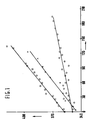
- Figure 1 represents a graph showing the advantage obtained in the reactor inlet temperature as a function of time when the stacked-bed according to the present invention is utilized.
- Figure 2 represents a graph showing the advantage obtained in the reactor outlet temperature as a function of time when the stacked-bed according to the present invention is utilized.
- a catalyst A containing nickel, molybdenum and phosphorus supported on a gamma alumina carrier was prepared from commercially available alumina powders. This carrier was extruded into 1.6 mm pellets having a trilobal cross section. The pellets were dried and calcined before being impregnated with the appropriate catalytically active metals by a dry pore volume method i.e., by adding only enough solution to fill the alumina pore volume. Carriers containing in addition to alumina, a few per cent of other components like silica or magnesia can also be applied.
- a catalyst B containing cobalt and molybdenum supported on a similar alumina carrier as used to prepare catalyst A was prepared.
- this carrier was also extruded into 1.6 mm pellets having a trilobal cross-section. The pellets were dried before being impregnated with the appropriate catalytically active metals by a dry pore volume method.
- An appropriate aqueous solution of cobalt carbonate, ammonium dimolybdate and ammonia was used to impregnate the carrier.
- the metal loadings and properties of the dried, calcined catalyst (B) are also given in Table II.
- Fig. 1 the reactor inlet temperature (RIT in °C) necessary to maintain 0.3% weight sulphur in the product is graphically represented as a function of time (days), which is a convenient measure of general catalyst activity.
- the Ni-Mo-P catalyst data are represented as circles (upper line), the Co-Mo catalyst data as triangles (middle line) and the stacked catalyst data as diamonds (lower line).
- the stacked-bed system has good activity and stability for sulphur removal as well as denitrification advantages.
- the average feed properties and average unit conditions are given in Table III.
- the feed applied was a heavy vacuum gas oil having a final boiling point above 538°C and containing less than 2%w of heptane asphaltenes. Feed to the unit and unit conditions were remarkably constant during the runs considering the unit is a commercial unit.
- the Ni-Mo-P catalyst formed about 33% of the main catalyst load while the Co-Mo catalyst made up the remainder of the main catalyst load. Oil and gas flowed in a single-stage and serially over first the Ni-Mo-P catalyst and then over the Co-Mo catalyst.
- the main advantages of the stacked-bed system shown by this Example comprises a) a significant increase in catalyst stability as can be seen in Fig. 1 where the increase in RIT with time is significantly less for the stacked-bed system (3.1°C/month versus 12.5°C/month) relative to the single catalyst system; b) an increase in catalyst activity as represented by about a 8.1°C lower initial RIT for the same level of sulphur in the product; c) a resulting greatly improved estimated catalyst life of about 400% for the stacked-bed relative to the single bed due to the improvements in activity and stability. An end of run temperature of 416°C and a continued linear decline rate was used to estimate the catalyst life of the stacked-bed system.
- a second set of two commercial runs with a Ni-Mo-Plalumina catalyst and a stacked-bed of a Ni-Mo-Plalumina catalyst over a Co-Mo/alumina catalyst was also carried out.
- a Ni-Mo-P/alumina catalyst would be one that one skilled in the art would traditionally have chosen for this feedstock when considering hydrogenation, denitrification, and desulphurization catalyst activity rather than a Co-Mo catalyst.
- Table IV summarizes approximate average unit conditions and feedstock.
- the oil is a blend of straight run vacuum gas oil (distilled from non-cracked oil) and a coker heavy gas oil.
- Table V the approximate average performance for the two runs at two catalyst ages is summarized and in Figure 2 the reactor outlet temperature necessary to maintain 0.75% weight and 0.60% weight sulphur in the product for the single catalyst and the stacked bed system is depicted as a function of time (days).
- the main advantage of the stacked-bed system relative to the single bed system shown by this Example comprise a) higher sulphur conversion, even at lower operating temperatures, b) greater catalyst stability when processing the same type feed-about first 60 days-, c) processing a heavier feed at comparable stabilities-about after 60 days-, and d) greater hydrogen addition even at lower operating temperatures.
- the single bed system has a lower start of run temperature in the first one or two weeks but this temperature relates to 0.75%w sulphur in the product where the temperature for the stacked-bed system relates to 0.60%w sulphur in the product.
- a third set of two commercial runs with a Ni-Mo-Plalumina catalyst and a stacked-bed of a Ni-Mo-Plalumina catalyst and a Co-Mo/alumina catalyst was also made.
- the feed used has a final boiling point between 343°C and 538°C and contained straight run light gas oil, coker naphtha, coker light gas oil and light cycle oil.
- Table VI the approximate average unit conditions and feed stock properties are summarized. Analysis of the data for these two runs showed that the stacked-bed used in accordance with the present instant invention showed the following advantages when compared to the single catalyst:
Landscapes
- Chemical & Material Sciences (AREA)
- Oil, Petroleum & Natural Gas (AREA)
- Engineering & Computer Science (AREA)
- Chemical Kinetics & Catalysis (AREA)
- General Chemical & Material Sciences (AREA)
- Organic Chemistry (AREA)
- Production Of Liquid Hydrocarbon Mixture For Refining Petroleum (AREA)
- Catalysts (AREA)
Claims (11)
- Ein Verfahren zur katalytischen Hydrobehandlung von Kohlenwasserstoffölen bei erhöhter Temperatur und erhöhtem Druck in Gegenwart von Wasserstoff in einer Hydrobehandlungszone über einem Schichtbett aus Hydrobehandlungskatalysatoren, dadurch gekennzeichnet, daßa) Öle mit einem Endsiedepunkt von mehr als 538°C und mit einem Gehalt von weniger als 2 Gew.% Heptanasphaltenen,b) Öle mit einem Endsiedepunkt von 343°C bis 538°C oderc) Mischungen davonzusammen mit Wasserstoff oder einem Wasserstoff enthaltenden Gas unter für die Umwandlung von mehr als 25% der vorhandenen Schwefelverbindungen in Schwefelwasserstoff geeigneten Bedingungen bei einem Wasserstoffpartialdruck zwischen 6,8 und 75 bar durch das Bett in Abwärtsrichtung geleitet werden, wobei das genannte Schichtbett eine obere Zone, enthaltend 15 bis 85 Volumenprozent, bezogen auf den Gesamtkatalysator, eines Hydrobehandlungskatalysators, umfassend eine Komponente aus der Gruppe VIB des Periodischen Systems der Elemente, ein Metall, Metalloxid oder Metallsulfid der Gruppe VIII und ein Phosphoroxid und/oder -sulfid in einer Menge von 1 bis 10 Gew.%, bezogen auf den Phosphorgehalt, und eine untere Zone, enthaltend 15 bis 85 Volumenprozent, bezogen auf den Gesamtkatalysator, eines Hydrobehandlungskatalysators, umfassend eine Komponente der Gruppe VIB, ein Metall, Metalloxid oder Metallsulfid der Gruppe VIII und weniger als 0,5 Gew.% Phosphor, aufgebracht auf einen Träger, der im wesentlichen aus Aluminiumoxid besteht, umfaßt; und das Reaktionsprodukt aus der genannten Hydrobehandlungszone in ein wasserstoffreiches Gas und ein flüssiges Kohlenwasserstofföl mit reduziertem Heteroatomgehalt aufgetrennt wird.
- Ein Verfahren nach Anspruch 1, in welchem ein Schichtbett, umfassend eine obere Zone, enthaltend bis zu 10 Gew.% einer Komponente der Gruppe VIII, 3 bis 15 Gew.% einer Komponente der Gruppe VIB und 0,1 bis 10 Gew.% Phosphor, und eine untere Zone, enthaltend bis zu 10 Gew.% einer Komponente der Gruppe VIII und 3 bis 30 Gew.% einer Komponente der Gruppe VIB, verwendet wird.
- Ein Verfahren nach Anspruch 1 oder 2, in welchem ein Schichtbett, umfasssend eine obere Zone, enthaltend eine Nikkelkomponente, eine Molybdän- und/oder Wolframkomponente und Phosphor auf einem Aluminiumoxidträger, welcher zusätzlich Siliciumdioxid enthalten kann, und eine untere Zone, enthaltend eine Nickel- und/oder Kobaltkomponente und eine Molybdän- und/oder Wolframkomponente auf einem Aluminiumoxidträger, verwendet wird.
- Ein Verfahren nach Anspruch 3, in welchem ein Schichtbett, umfassend eine obere Zone, enthaltend 2 bis 4 Gew.% Nickel, 8 bis 15 Gew.% Molybdän und 1 bis 4 Gew.% Phosphor auf einem Träger, welcher im wesentlichen aus gamma-Aluminiumoxid besteht, und eine untere Zone, enthaltend 2 bis 4 Gew.% Kobalt, 8 bis 15 Gew.% Molybdän und weniger als 0,5 Gew.% Phosphor auf einem Träger, der im wesentlichen aus Aluminiumoxid besteht, verwendet wird.
- Ein Verfahren nach einem der Ansprüche 1 bis 4, in welchem ein Schichtbett verwendet wird, bei dem der Katalysator der oberen Zone eine Schüttdichte im verdichteten Zustand von 0,65 bis 0,95 g/cm3, vorzugsweise von 0,76 bis 0,88 g/cm3 und eine Oberflächenausdehnung von mehr als 140 m2/g, vorzugsweise von mehr als 150 m2/g, und der Katalysator der unteren Zone eine Schüttdichte im verdichteten Zustand von 0,6 bis 0,8 g/cm3, vorzugsweise von 0,67 bis 0,69 g/cm3 und eine Oberflächenausdehnung von mehr als 180 g/m2, vorzugsweise von mehr als 200 m2/g, aufweist.
- Ein Verfahren nach einem der Ansprüche 1 bis 5, in welchem ein Schichtbettkatalysator eingesetzt wird, welcher in seiner unteren Zone 2 bis 4 Gew.% Kobalt und im wesentlichen kein Nikkel und keinen Phosphor enthält.
- Ein Verfahren nach einem der Ansprüche 1 bis 5, in welchem ein Schichtbettkatalysator eingesetzt wird, der in seiner unteren Zone 2 bis 4 Gew.% Nickel und im wesentlichen kein Kobalt und keinen Phosphor enthält.
- Ein Verfahren nach einem der Ansprüche 1 bis 7, in welchem ein Schichtbett verwendet wird, das einen dreilappig geformten Katalysator in der oberen und/oder unteren Zone enthält.
- Ein Verfahren nach Anspruch 8, in welchem ein Katalysatorträger eingesetzt wird, der vor dem Imprägnieren in dreilappiger Form extrudiert worden ist.
- Ein Verfahren nach einem der Ansprüche 1 bis 9, in welchem die Hydrobehandlungszone in einem einzigen Reaktor enthalten ist und die obere Zone des Schichtbettes ca. 1/3 des gesamten Katalysatorvolumens ausmacht.
- Ein Verfahren nach einem der Ansprüche 1 bis 10, in welchem Kohlenwasserstofföle mit einer Neigung, Hydrobehandlungskatalysatoren unter Bildung von Koks zu desaktivieren, durch die folgenden Schritte hydrobehandelt werden:a) Öle mit einem Endsiedepunkt von mehr als 538°C und einem Gehalt von weniger als 2 Gew.% Heptanasphaltenen,b) Öle mit einem Endsiedepunkt von 343°C bis 538°C, oderc) Mischungen davonwerden mit Wasserstoff oder einem wasserstoffhaltigen Gas in einer Hydrobehandlungszone in Abwärtsrichtung über ein Schichtbett aus zwei Hydrobehandlungskatalysatoren bei für die Umwandlung von mehr als 25% der vorhandenen Schwefelverbindungen in H2S geeigneten Bedingungen und bei einem Wasserstoffpartialdruck zwischen 6,8 und 75 bar geleitet; das genannte Schichtbett enthält eine obere Zone, enthaltend von 15 bis 85 Volumenprozent, bezogen auf den Gesamtkatalysator, eines hochaktiven Hydrobehandlungskatalysators, welcher 2 bis 4 Gew.% Nickel, 8 bis 15 Gew.% Molybdän und 1 bis 4 Gew.% Phosphor auf einem Träger, der im wesentlichen aus Aluminiumoxid besteht, enthält, wobei dieser Katalysator eine Schüttdichte im verdichteten Zustand von 0,65 bis 0,95 g/cm3 und eine Oberflächenausdehnung von mehr als 140 m2/g aufweist; und eine untere Zone, enthaltend 15 bis 85 Volumenprozent, bezogen auf den Gesamtkatalysator, eines hochaktiven Hydroentschwefelungskatalysators, welcher 2 bis 4 Gew.% Kobalt und/oder Nickel und 8 bis 15 Gew.% Molybdän und weniger als 0,5 Gew.% Phosphor auf einem Träger, der zum größten Teil aus Aluminiumoxid besteht, enthält, wobei dieser Katalysator eine Schüttdichte im verdichteten Zustand von 0,6 bis 0,8 g/cm3 und eine Oberflächenausdehnung von mehr als 180 m2/g aufweist; und dann wird das Reaktionsprodukt aus der genannten Hydrobehandlungszone in ein wasserstoffreiches Gas und ein flüssiges Kohlenwasserstofföl mit reduziertem Schwefelgehalt aufgetrennt.
Applications Claiming Priority (2)
| Application Number | Priority Date | Filing Date | Title |
|---|---|---|---|
| US06/735,620 US4776945A (en) | 1984-11-30 | 1985-05-21 | Single-stage hydrotreating process |
| US735620 | 1985-05-21 |
Publications (3)
| Publication Number | Publication Date |
|---|---|
| EP0203228A1 EP0203228A1 (de) | 1986-12-03 |
| EP0203228B1 EP0203228B1 (de) | 1989-05-10 |
| EP0203228B2 true EP0203228B2 (de) | 1996-10-23 |
Family
ID=24956534
Family Applications (1)
| Application Number | Title | Priority Date | Filing Date |
|---|---|---|---|
| EP85201248A Expired - Lifetime EP0203228B2 (de) | 1985-05-21 | 1985-07-29 | Einstufiges Raffinationsverfahren |
Country Status (9)
| Country | Link |
|---|---|
| EP (1) | EP0203228B2 (de) |
| JP (1) | JPH0633364B2 (de) |
| CN (1) | CN1006230B (de) |
| BR (1) | BR8503786A (de) |
| CA (1) | CA1272153A (de) |
| DE (1) | DE3570088D1 (de) |
| ES (1) | ES8604292A1 (de) |
| PT (1) | PT80934B (de) |
| ZA (1) | ZA855849B (de) |
Families Citing this family (10)
| Publication number | Priority date | Publication date | Assignee | Title |
|---|---|---|---|---|
| US5116484A (en) * | 1990-10-31 | 1992-05-26 | Shell Oil Company | Hydrodenitrification process |
| US5227353A (en) * | 1991-07-24 | 1993-07-13 | Mobil Oil Corporation | Hydroprocessing catalyst composition |
| NZ334378A (en) * | 1996-08-01 | 1999-06-29 | Shell Int Research | Single stage process for hydrotreating comprising passing a hydrocarbon distillate fraction over a stacked bed of two hydrotreating catalysts in the presence of hydrogen |
| EP0870817A1 (de) | 1997-04-11 | 1998-10-14 | Akzo Nobel N.V. | Verfahren zur Feinentschwefelung von Kohlenwassestoff-Einsätzen |
| US7232515B1 (en) | 1997-07-15 | 2007-06-19 | Exxonmobil Research And Engineering Company | Hydrofining process using bulk group VIII/Group VIB catalysts |
| US7229548B2 (en) | 1997-07-15 | 2007-06-12 | Exxonmobil Research And Engineering Company | Process for upgrading naphtha |
| US7288182B1 (en) * | 1997-07-15 | 2007-10-30 | Exxonmobil Research And Engineering Company | Hydroprocessing using bulk Group VIII/Group VIB catalysts |
| US7513989B1 (en) | 1997-07-15 | 2009-04-07 | Exxonmobil Research And Engineering Company | Hydrocracking process using bulk group VIII/Group VIB catalysts |
| WO2005033930A2 (en) * | 2003-10-02 | 2005-04-14 | Exxonmobil Research And Engineering Company | Process for upgrading naphtha |
| CA2455011C (en) | 2004-01-09 | 2011-04-05 | Suncor Energy Inc. | Bituminous froth inline steam injection processing |
Family Cites Families (7)
| Publication number | Priority date | Publication date | Assignee | Title |
|---|---|---|---|---|
| DE2300038C2 (de) * | 1973-01-02 | 1987-05-07 | Basf Ag, 6700 Ludwigshafen | Verwendung eines geschwefelten Katalysators für die Herstellung von technischen Weißölen |
| US4016067A (en) * | 1975-02-21 | 1977-04-05 | Mobil Oil Corporation | Process for demetalation and desulfurization of petroleum oils |
| DE2837018A1 (de) * | 1978-08-24 | 1980-03-06 | Basf Ag | Verwendung von kobalt- und/oder nickelmolybdaenoxid-katalysatoren zur hydrierenden raffination von erdoel- kohlenwasserstoffen |
| AU530497B2 (en) * | 1978-09-28 | 1983-07-21 | Amoco Corporation | Catalyst comprising hydrogenation component on support containing alumina and phosphorus oxides |
| US4406779A (en) * | 1981-11-13 | 1983-09-27 | Standard Oil Company (Indiana) | Multiple catalyst system for hydrodenitrogenation of high nitrogen feeds |
| CA1243976A (en) * | 1982-12-06 | 1988-11-01 | Amoco Corporation | Hydrotreating catalyst and process |
| US4500424A (en) * | 1983-04-07 | 1985-02-19 | Union Oil Company Of California | Desulfurization catalyst and process |
-
1985
- 1985-07-29 EP EP85201248A patent/EP0203228B2/de not_active Expired - Lifetime
- 1985-07-29 DE DE8585201248T patent/DE3570088D1/de not_active Expired
- 1985-08-02 ZA ZA855849A patent/ZA855849B/xx unknown
- 1985-08-06 CA CA000488159A patent/CA1272153A/en not_active Expired - Fee Related
- 1985-08-09 PT PT80934A patent/PT80934B/pt not_active IP Right Cessation
- 1985-08-09 ES ES546041A patent/ES8604292A1/es not_active Expired
- 1985-08-09 JP JP60174439A patent/JPH0633364B2/ja not_active Expired - Fee Related
- 1985-08-09 BR BR8503786A patent/BR8503786A/pt not_active IP Right Cessation
- 1985-08-09 CN CN85106942.8A patent/CN1006230B/zh not_active Expired
Also Published As
| Publication number | Publication date |
|---|---|
| EP0203228A1 (de) | 1986-12-03 |
| ZA855849B (en) | 1986-03-26 |
| PT80934A (en) | 1985-09-01 |
| JPH0633364B2 (ja) | 1994-05-02 |
| CN1006230B (zh) | 1989-12-27 |
| DE3570088D1 (en) | 1989-06-15 |
| CN85106942A (zh) | 1987-02-04 |
| ES546041A0 (es) | 1986-01-16 |
| PT80934B (pt) | 1987-09-30 |
| EP0203228B1 (de) | 1989-05-10 |
| ES8604292A1 (es) | 1986-01-16 |
| JPS61266490A (ja) | 1986-11-26 |
| BR8503786A (pt) | 1986-12-09 |
| CA1272153A (en) | 1990-07-31 |
Similar Documents
| Publication | Publication Date | Title |
|---|---|---|
| EP0183283B2 (de) | Einstufiges Hydrobehandlungsverfahren | |
| EP1042432B1 (de) | Hydrocrack-verfahren mit mittendestillat-selektivität | |
| US4306964A (en) | Multi-stage process for demetalation and desulfurization of petroleum oils | |
| US5403469A (en) | Process for producing FCC feed and middle distillate | |
| US5439860A (en) | Catalyst system for combined hydrotreating and hydrocracking and a process for upgrading hydrocarbonaceous feedstocks | |
| US5030780A (en) | Aromatic saturation process with a silica-alumina and zeolite catalyst | |
| US4404097A (en) | Residua demetalation/desulfurization catalyst and methods for its use | |
| KR20190082994A (ko) | 다단 잔유(resid) 수소첨가분해 | |
| US4776945A (en) | Single-stage hydrotreating process | |
| AU714130B2 (en) | Hydroconversion process | |
| PL189544B1 (pl) | Zintegrowany sposób hydrokonwersji | |
| EP0203228B2 (de) | Einstufiges Raffinationsverfahren | |
| SU736874A3 (ru) | Способ обессеривани асфальтенового металлсодержащего нефт ного сырь | |
| US6344136B1 (en) | Methods for reducing sulfur and carbon in petroleum refining processes | |
| US4738767A (en) | Mild hydrocracking with a catalyst containing silica-alumina | |
| JPH01210034A (ja) | Ni−P−Mo触媒及びこの触媒を使用する水素化処理方法 | |
| CA1076052A (en) | Process for onstream regeneration of a hydrodesulfurization catalyst | |
| US6447673B1 (en) | Hydrofining process | |
| US4210525A (en) | Hydrodenitrogenation of demetallized residual oil | |
| US3968031A (en) | Multi-stage hydrodesulfurization process utilizing multi-cycle second stage promoted catalyst | |
| US3968029A (en) | Desulfurization process employing multi-catalyst reactor | |
| JPH05239472A (ja) | 重質炭化水素油の処理方法 | |
| EP1685213B1 (de) | Verfahren zur herstellung von schmierstoffgrundlagen |
Legal Events
| Date | Code | Title | Description |
|---|---|---|---|
| PUAI | Public reference made under article 153(3) epc to a published international application that has entered the european phase |
Free format text: ORIGINAL CODE: 0009012 |
|
| AK | Designated contracting states |
Kind code of ref document: A1 Designated state(s): BE DE FR GB IT NL SE |
|
| 17P | Request for examination filed |
Effective date: 19870413 |
|
| 17Q | First examination report despatched |
Effective date: 19880516 |
|
| GRAA | (expected) grant |
Free format text: ORIGINAL CODE: 0009210 |
|
| AK | Designated contracting states |
Kind code of ref document: B1 Designated state(s): BE DE FR GB IT NL SE |
|
| ITF | It: translation for a ep patent filed | ||
| REF | Corresponds to: |
Ref document number: 3570088 Country of ref document: DE Date of ref document: 19890615 |
|
| ET | Fr: translation filed | ||
| PLBI | Opposition filed |
Free format text: ORIGINAL CODE: 0009260 |
|
| 26 | Opposition filed |
Opponent name: AKZO N.V. Effective date: 19900129 |
|
| NLR1 | Nl: opposition has been filed with the epo |
Opponent name: AKZO N.V. |
|
| ITTA | It: last paid annual fee | ||
| PLAB | Opposition data, opponent's data or that of the opponent's representative modified |
Free format text: ORIGINAL CODE: 0009299OPPO |
|
| R26 | Opposition filed (corrected) |
Opponent name: AKZO NOBEL N.V. Effective date: 19900129 |
|
| EAL | Se: european patent in force in sweden |
Ref document number: 85201248.3 |
|
| PLAW | Interlocutory decision in opposition |
Free format text: ORIGINAL CODE: EPIDOS IDOP |
|
| PLAW | Interlocutory decision in opposition |
Free format text: ORIGINAL CODE: EPIDOS IDOP |
|
| PUAH | Patent maintained in amended form |
Free format text: ORIGINAL CODE: 0009272 |
|
| STAA | Information on the status of an ep patent application or granted ep patent |
Free format text: STATUS: PATENT MAINTAINED AS AMENDED |
|
| 27A | Patent maintained in amended form |
Effective date: 19961023 |
|
| AK | Designated contracting states |
Kind code of ref document: B2 Designated state(s): BE DE FR GB IT NL SE |
|
| ITF | It: translation for a ep patent filed | ||
| NLR2 | Nl: decision of opposition | ||
| ET3 | Fr: translation filed ** decision concerning opposition | ||
| NLR3 | Nl: receipt of modified translations in the netherlands language after an opposition procedure | ||
| REG | Reference to a national code |
Ref country code: GB Ref legal event code: IF02 |
|
| PGFP | Annual fee paid to national office [announced via postgrant information from national office to epo] |
Ref country code: FR Payment date: 20040527 Year of fee payment: 20 |
|
| PGFP | Annual fee paid to national office [announced via postgrant information from national office to epo] |
Ref country code: SE Payment date: 20040603 Year of fee payment: 20 |
|
| PGFP | Annual fee paid to national office [announced via postgrant information from national office to epo] |
Ref country code: GB Payment date: 20040630 Year of fee payment: 20 |
|
| PGFP | Annual fee paid to national office [announced via postgrant information from national office to epo] |
Ref country code: NL Payment date: 20040722 Year of fee payment: 20 |
|
| PGFP | Annual fee paid to national office [announced via postgrant information from national office to epo] |
Ref country code: BE Payment date: 20040727 Year of fee payment: 20 |
|
| PGFP | Annual fee paid to national office [announced via postgrant information from national office to epo] |
Ref country code: DE Payment date: 20040901 Year of fee payment: 20 |
|
| PG25 | Lapsed in a contracting state [announced via postgrant information from national office to epo] |
Ref country code: GB Free format text: LAPSE BECAUSE OF EXPIRATION OF PROTECTION Effective date: 20050728 |
|
| PG25 | Lapsed in a contracting state [announced via postgrant information from national office to epo] |
Ref country code: NL Free format text: LAPSE BECAUSE OF EXPIRATION OF PROTECTION Effective date: 20050729 |
|
| BE20 | Be: patent expired |
Owner name: *SHELL INTERNATIONALE RESEARCH MAATSCHAPPIJ B.V. Effective date: 20050729 |
|
| REG | Reference to a national code |
Ref country code: GB Ref legal event code: PE20 |
|
| EUG | Se: european patent has lapsed | ||
| NLV7 | Nl: ceased due to reaching the maximum lifetime of a patent |
Effective date: 20050729 |
|
| APAH | Appeal reference modified |
Free format text: ORIGINAL CODE: EPIDOSCREFNO |
|
| BE20 | Be: patent expired |
Owner name: *SHELL INTERNATIONALE RESEARCH MAATSCHAPPIJ B.V. Effective date: 20050729 |