EP0209882A2 - In vitro-Herstellung von Baumwollfasern - Google Patents
In vitro-Herstellung von Baumwollfasern Download PDFInfo
- Publication number
- EP0209882A2 EP0209882A2 EP86110016A EP86110016A EP0209882A2 EP 0209882 A2 EP0209882 A2 EP 0209882A2 EP 86110016 A EP86110016 A EP 86110016A EP 86110016 A EP86110016 A EP 86110016A EP 0209882 A2 EP0209882 A2 EP 0209882A2
- Authority
- EP
- European Patent Office
- Prior art keywords
- medium
- cell suspension
- cotton
- callus
- group
- Prior art date
- Legal status (The legal status is an assumption and is not a legal conclusion. Google has not performed a legal analysis and makes no representation as to the accuracy of the status listed.)
- Ceased
Links
- 229920000742 Cotton Polymers 0.000 title claims abstract description 33
- 238000000338 in vitro Methods 0.000 title claims abstract description 15
- 238000004519 manufacturing process Methods 0.000 title claims abstract description 11
- 238000000034 method Methods 0.000 claims abstract description 21
- 239000006285 cell suspension Substances 0.000 claims abstract description 12
- 238000007380 fibre production Methods 0.000 claims abstract description 11
- 150000003839 salts Chemical class 0.000 claims abstract description 11
- 241000219146 Gossypium Species 0.000 claims abstract description 9
- 235000009438 Gossypium Nutrition 0.000 claims abstract description 8
- 238000012258 culturing Methods 0.000 claims abstract description 7
- 239000007788 liquid Substances 0.000 claims abstract description 7
- OKTJSMMVPCPJKN-UHFFFAOYSA-N Carbon Chemical compound [C] OKTJSMMVPCPJKN-UHFFFAOYSA-N 0.000 claims abstract description 6
- 229910052799 carbon Inorganic materials 0.000 claims abstract description 6
- 244000299507 Gossypium hirsutum Species 0.000 claims description 21
- 239000002609 medium Substances 0.000 claims description 21
- 206010020649 Hyperkeratosis Diseases 0.000 claims description 12
- IJGRMHOSHXDMSA-UHFFFAOYSA-N Atomic nitrogen Chemical compound N#N IJGRMHOSHXDMSA-UHFFFAOYSA-N 0.000 claims description 8
- FGIUAXJPYTZDNR-UHFFFAOYSA-N potassium nitrate Chemical group [K+].[O-][N+]([O-])=O FGIUAXJPYTZDNR-UHFFFAOYSA-N 0.000 claims description 8
- 229910052757 nitrogen Inorganic materials 0.000 claims description 4
- 235000010333 potassium nitrate Nutrition 0.000 claims description 4
- WQZGKKKJIJFFOK-GASJEMHNSA-N Glucose Natural products OC[C@H]1OC(O)[C@H](O)[C@@H](O)[C@@H]1O WQZGKKKJIJFFOK-GASJEMHNSA-N 0.000 claims description 3
- 240000000047 Gossypium barbadense Species 0.000 claims description 3
- FAIXYKHYOGVFKA-UHFFFAOYSA-N Kinetin Natural products N=1C=NC=2N=CNC=2C=1N(C)C1=CC=CO1 FAIXYKHYOGVFKA-UHFFFAOYSA-N 0.000 claims description 3
- 239000003636 conditioned culture medium Substances 0.000 claims description 3
- 239000008103 glucose Substances 0.000 claims description 3
- QANMHLXAZMSUEX-UHFFFAOYSA-N kinetin Chemical compound N=1C=NC=2N=CNC=2C=1NCC1=CC=CO1 QANMHLXAZMSUEX-UHFFFAOYSA-N 0.000 claims description 3
- 229960001669 kinetin Drugs 0.000 claims description 3
- 239000005631 2,4-Dichlorophenoxyacetic acid Substances 0.000 claims description 2
- 239000005980 Gibberellic acid Substances 0.000 claims description 2
- 241000218052 Gossypium anomalum Species 0.000 claims description 2
- 241001479461 Gossypium armourianum Species 0.000 claims description 2
- 241001149081 Gossypium raimondii Species 0.000 claims description 2
- IXORZMNAPKEEDV-UHFFFAOYSA-N gibberellic acid GA3 Natural products OC(=O)C1C2(C3)CC(=C)C3(O)CCC2C2(C=CC3O)C1C3(C)C(=O)O2 IXORZMNAPKEEDV-UHFFFAOYSA-N 0.000 claims description 2
- IXORZMNAPKEEDV-OBDJNFEBSA-N gibberellin A3 Chemical group C([C@@]1(O)C(=C)C[C@@]2(C1)[C@H]1C(O)=O)C[C@H]2[C@]2(C=C[C@@H]3O)[C@H]1[C@]3(C)C(=O)O2 IXORZMNAPKEEDV-OBDJNFEBSA-N 0.000 claims description 2
- 239000003630 growth substance Substances 0.000 claims description 2
- 229930192334 Auxin Natural products 0.000 claims 2
- 239000002363 auxin Substances 0.000 claims 2
- UQHKFADEQIVWID-UHFFFAOYSA-N cytokinin Natural products C1=NC=2C(NCC=C(CO)C)=NC=NC=2N1C1CC(O)C(CO)O1 UQHKFADEQIVWID-UHFFFAOYSA-N 0.000 claims 2
- 239000004062 cytokinin Substances 0.000 claims 2
- SEOVTRFCIGRIMH-UHFFFAOYSA-N indole-3-acetic acid Chemical compound C1=CC=C2C(CC(=O)O)=CNC2=C1 SEOVTRFCIGRIMH-UHFFFAOYSA-N 0.000 claims 2
- 240000001814 Gossypium arboreum Species 0.000 claims 1
- 125000002791 glucosyl group Chemical group C1([C@H](O)[C@@H](O)[C@H](O)[C@H](O1)CO)* 0.000 claims 1
- 239000007787 solid Substances 0.000 claims 1
- 210000004027 cell Anatomy 0.000 description 17
- 241000196324 Embryophyta Species 0.000 description 12
- 239000000835 fiber Substances 0.000 description 10
- 210000002421 cell wall Anatomy 0.000 description 4
- 238000000386 microscopy Methods 0.000 description 4
- 238000004161 plant tissue culture Methods 0.000 description 4
- 239000000654 additive Substances 0.000 description 3
- 238000004113 cell culture Methods 0.000 description 3
- 210000000056 organ Anatomy 0.000 description 3
- 239000000047 product Substances 0.000 description 3
- 210000001938 protoplast Anatomy 0.000 description 3
- 238000004114 suspension culture Methods 0.000 description 3
- 229920001817 Agar Polymers 0.000 description 2
- 239000004353 Polyethylene glycol 8000 Substances 0.000 description 2
- 239000008272 agar Substances 0.000 description 2
- 150000001447 alkali salts Chemical class 0.000 description 2
- 230000019552 anatomical structure morphogenesis Effects 0.000 description 2
- 239000006194 liquid suspension Substances 0.000 description 2
- 235000012054 meals Nutrition 0.000 description 2
- 235000015097 nutrients Nutrition 0.000 description 2
- 239000003921 oil Substances 0.000 description 2
- 229940085678 polyethylene glycol 8000 Drugs 0.000 description 2
- 235000019446 polyethylene glycol 8000 Nutrition 0.000 description 2
- 238000012552 review Methods 0.000 description 2
- 241000894007 species Species 0.000 description 2
- 239000013589 supplement Substances 0.000 description 2
- 241000283690 Bos taurus Species 0.000 description 1
- 208000035240 Disease Resistance Diseases 0.000 description 1
- 235000009432 Gossypium hirsutum Nutrition 0.000 description 1
- 241001479464 Gossypium klotzschianum Species 0.000 description 1
- 229920002594 Polyethylene Glycol 8000 Polymers 0.000 description 1
- 229940123573 Protein synthesis inhibitor Drugs 0.000 description 1
- CZMRCDWAGMRECN-UGDNZRGBSA-N Sucrose Chemical compound O[C@H]1[C@H](O)[C@@H](CO)O[C@@]1(CO)O[C@@H]1[C@H](O)[C@@H](O)[C@H](O)[C@@H](CO)O1 CZMRCDWAGMRECN-UGDNZRGBSA-N 0.000 description 1
- 229930006000 Sucrose Natural products 0.000 description 1
- HSCJRCZFDFQWRP-JZMIEXBBSA-N UDP-alpha-D-glucose Chemical compound O[C@@H]1[C@@H](O)[C@H](O)[C@@H](CO)O[C@@H]1OP(O)(=O)OP(O)(=O)OC[C@@H]1[C@@H](O)[C@@H](O)[C@H](N2C(NC(=O)C=C2)=O)O1 HSCJRCZFDFQWRP-JZMIEXBBSA-N 0.000 description 1
- 238000013019 agitation Methods 0.000 description 1
- 230000009418 agronomic effect Effects 0.000 description 1
- 239000007640 basal medium Substances 0.000 description 1
- WQZGKKKJIJFFOK-VFUOTHLCSA-N beta-D-glucose Chemical compound OC[C@H]1O[C@@H](O)[C@H](O)[C@@H](O)[C@@H]1O WQZGKKKJIJFFOK-VFUOTHLCSA-N 0.000 description 1
- 229920002678 cellulose Polymers 0.000 description 1
- 239000001913 cellulose Substances 0.000 description 1
- 230000001143 conditioned effect Effects 0.000 description 1
- 239000008162 cooking oil Substances 0.000 description 1
- 210000004748 cultured cell Anatomy 0.000 description 1
- 230000008030 elimination Effects 0.000 description 1
- 238000003379 elimination reaction Methods 0.000 description 1
- 210000002257 embryonic structure Anatomy 0.000 description 1
- 238000005516 engineering process Methods 0.000 description 1
- 230000007613 environmental effect Effects 0.000 description 1
- 238000011156 evaluation Methods 0.000 description 1
- 238000002474 experimental method Methods 0.000 description 1
- 230000003054 hormonal effect Effects 0.000 description 1
- 238000011534 incubation Methods 0.000 description 1
- 230000006698 induction Effects 0.000 description 1
- 238000011835 investigation Methods 0.000 description 1
- 238000002955 isolation Methods 0.000 description 1
- 244000144972 livestock Species 0.000 description 1
- 239000000463 material Substances 0.000 description 1
- 235000010746 mayonnaise Nutrition 0.000 description 1
- 239000008268 mayonnaise Substances 0.000 description 1
- 239000012913 medium supplement Substances 0.000 description 1
- 238000001000 micrograph Methods 0.000 description 1
- 239000000203 mixture Substances 0.000 description 1
- 239000002362 mulch Substances 0.000 description 1
- 239000003865 nucleic acid synthesis inhibitor Substances 0.000 description 1
- 102000039446 nucleic acids Human genes 0.000 description 1
- 108020004707 nucleic acids Proteins 0.000 description 1
- 150000007523 nucleic acids Chemical class 0.000 description 1
- 235000016709 nutrition Nutrition 0.000 description 1
- 239000004033 plastic Substances 0.000 description 1
- 229920003023 plastic Polymers 0.000 description 1
- 229940116540 protein supplement Drugs 0.000 description 1
- 235000005974 protein supplement Nutrition 0.000 description 1
- 239000000007 protein synthesis inhibitor Substances 0.000 description 1
- 230000008929 regeneration Effects 0.000 description 1
- 238000011069 regeneration method Methods 0.000 description 1
- 230000006574 secondary cell wall biogenesis Effects 0.000 description 1
- 238000004904 shortening Methods 0.000 description 1
- 239000002689 soil Substances 0.000 description 1
- 230000030118 somatic embryogenesis Effects 0.000 description 1
- 239000007858 starting material Substances 0.000 description 1
- 239000005720 sucrose Substances 0.000 description 1
- 239000006228 supernatant Substances 0.000 description 1
- 239000000725 suspension Substances 0.000 description 1
- 239000004753 textile Substances 0.000 description 1
Images


Classifications
-
- C—CHEMISTRY; METALLURGY
- C12—BIOCHEMISTRY; BEER; SPIRITS; WINE; VINEGAR; MICROBIOLOGY; ENZYMOLOGY; MUTATION OR GENETIC ENGINEERING
- C12P—FERMENTATION OR ENZYME-USING PROCESSES TO SYNTHESISE A DESIRED CHEMICAL COMPOUND OR COMPOSITION OR TO SEPARATE OPTICAL ISOMERS FROM A RACEMIC MIXTURE
- C12P19/00—Preparation of compounds containing saccharide radicals
- C12P19/04—Polysaccharides, i.e. compounds containing more than five saccharide radicals attached to each other by glycosidic bonds
-
- C—CHEMISTRY; METALLURGY
- C12—BIOCHEMISTRY; BEER; SPIRITS; WINE; VINEGAR; MICROBIOLOGY; ENZYMOLOGY; MUTATION OR GENETIC ENGINEERING
- C12N—MICROORGANISMS OR ENZYMES; COMPOSITIONS THEREOF; PROPAGATING, PRESERVING, OR MAINTAINING MICROORGANISMS; MUTATION OR GENETIC ENGINEERING; CULTURE MEDIA
- C12N5/00—Undifferentiated human, animal or plant cells, e.g. cell lines; Tissues; Cultivation or maintenance thereof; Culture media therefor
- C12N5/0018—Culture media for cell or tissue culture
- C12N5/0025—Culture media for plant cell or plant tissue culture
-
- D—TEXTILES; PAPER
- D01—NATURAL OR MAN-MADE THREADS OR FIBRES; SPINNING
- D01F—CHEMICAL FEATURES IN THE MANUFACTURE OF ARTIFICIAL FILAMENTS, THREADS, FIBRES, BRISTLES OR RIBBONS; APPARATUS SPECIALLY ADAPTED FOR THE MANUFACTURE OF CARBON FILAMENTS
- D01F2/00—Monocomponent artificial filaments or the like of cellulose or cellulose derivatives; Manufacture thereof
Definitions
- This invention relates to a process for the production of plant products in cell culture. More specifically, the invention relates to the production of cotton fibers in vitro by culturing cells of various strains of Gossypium .
- Cotton is an economically important crop in that it supplies five major products: lint, oil, seed hulls, meal, and linters, the lint being the most important, providing much of the textile industry with high quality fiber.
- the oil is employed in shortening, cooking oil, mayonnaise, etc.
- Cotton seed hulls are useful as cattle feed or as a soil mulch. Meal from glandless seed or gossypol-extracted seed is used as a protein supplement for livestock. Linters are used as a source of cellulose for the plastics industry and as batting for cushions.
- This invention relates to a process for generating cotton fibers in cell culture, thus providing an alternative source for fiber production which under controlled conditions can result in a product which is continuously available, uniform, and displaying particularly desired properties. Further advantages include the elimination of disease resistance and other agronomic considerations as criteria for variety selection.
- plant tissue culture as used herein is taken in its broadest meaning to refer to the cultivation, in vitro , of any plant parts, whether a single cell, a tissue or an organ, under aseptic conditions. More restrictive terms relating to plant tissue culture technology include: “callus culture” which means the culture of cell masses on agar medium and produced from an explant of a seedling or other plant source; “cell suspension culture” which means the culture of cells in liquid media in vessels which are usually aerated by agitation; “organ culture” which means, the aseptic culture on nutrient media of embryos, anthers (including microspores), ovules, roots, shoots, or other plants organs; “meristem culture and morphogenesis” which means the aseptic culture of shoot meristems or other explant tissue on nutrient media for the purpose of growing complete plants, and “protoplast culture” which means the aseptic isolation and culture of plant protoplasts from cultured cells or plant tissue.
- callus culture which means the culture of cell masses on agar
- callus culture For purposes of this invention, callus culture, cell suspension culture and ovule-embryo culture are the most important. Callus culture has been described for at least seven species of Gossypium including: G. hirsutum , G. asboreum , G. barbadense , G. anomalum , G. armourianum , G. klotzschianum , and G. raimondii .
- the subject invention contemplates the use of any Gossypium species or strains thereof as starting material for the production of cotton fibers in vitro .
- This invention relates to a method for the in vitro production of cotton fibers comprising: providing a cell suspension of a strain of Gossypium culturing said cell suspension in a liquid basal salts medium supplemented with a carbon source under conditions of time and temperature sufficient to promote cotton fiber production.
- this invention relates to a method for the in vitro production of cotton comprising: providing a cell suspension of a strain of Gossypium ; culturing said cell suspension in liquid medium comprising basal salts, a carbon source, a growth regulator and ovule conditioned medium.
- strains of Gossypium are capable of producing cotton fibers in vitro when cells derived from callus are cultured on appropriately designed media.
- Strains which have been observed to produced fibers when cultured according to this invention include: T25 ( G. hirsutum , Texas Collection) P784 (G. hirsutum, Paymaster) RQSX1-1 ( G. hirsutum X G. barbadense hybrid, Texas Collection) C312 (G. hirsutum , Coker) ST213 (G. hirsutum , Stoneville) SJ1, SJ2, SJ5 (G. hirsutum , Acala type)
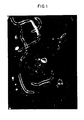
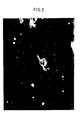
- Fibers were identified by observation with a Zeiss Stereomicroscope, a Zeiss Ultraphot, Reichert Zetopan polarizing microscope, and a Zeiss Inverted Phase-Contrast Microscope. A stage micrometer was used for calibrating magnification prior to photography. Elongated cells in excess of 500 um in length were considered to be potential fiber cells. Birefringence, as observed with polarizing microscopy, was evidence for the presence of secondary cell walls.
- any basic salts medium which has been shown to be useful for callus culture of cotton would be useful in practicing this invention.
- Particularly preferred basic salts media include those of Beasely-Ting (BT) (Beasley, C.A. and I.P. Ting, Amer. J. Botany 60: 130-139 (1973) and Murashige-Skoog (MS) (Murashige, T. and F. Skoog, Physiol. Plant 15: 473 (1962).
- the MS basal medium was made minus NH4NO3, and KNO3 was added as nitrogen source as described herein.
- Particularly effective additives include IAA at a concentration from about 0 to about 10 mg/l most preferably from about 0 to about 3 mg/l; kinetin at a concentration from about 0 to about 1 mg/l, most preferably from about 0 to about 0.1 mg/l; gibberellic acid at a concentration of about 0 to about 10 mg/l most preferably from about 1 mg/l to about 3 mg/l; polyethylene glycol 8000 (PEG) at a concentration of about 0 to about 300 g/l, preferably from about 100 g/l to about 200 g/l; UDP glucose at a concentration of about 0 to about 10 ⁇ 5M preferably about 0 to about 6X10 ⁇ 6M. It was also discovered that "ovule-conditioned" medium was a particularly useful supplement. "Ovule-conditioned" medium supplement was prepared by
- Nitrogen in the form of KNO3 was present at a concentration of from about 1.9 g/l to about 5.7 g/l, preferably from about 3.8 g/l to about 5.7 g/l and a carbon source such as glucose or sucrose was added at a concentration of from about 20 g/l to about 40 g/l preferably from about 22 g/l to about 30 g/l.
- cotton fiber production was observed after cells were cultured in a medium comprising basic MS salts supplemented with 30 g/l glucose. Even though fiber production is rare in this medium, a few fiber cells do occur.
- composition is a medium containing BT salts supplemented with 2 mg/l GA3 and cotton ovules as described earlier This is the so-called "ovule-conditioned medium”.
- the temperature of incubation is an important parameter. Fiber production has been observed in cultures growing at temperatures from about 250C to 340C, preferably from about 290C to about 340C.
- This example demonstrates the production of cotton fibers by cotton cells in culture.
- Seeds were germinated in August of 1984 of variety Paymaster 784, and hypocotyl sections were placed on a MS basal salt medium supplemented with 0.1 mg/l 2,4-D and 0.1 mg/l kinetin. Callus from these tissues were grown on an agar medium at 290C ⁇ 20C in a room with 90 mE/m2/sec light for 16 hours and 8 hours darkness. The tissues were routinely subcultured onto the same medium at intervals of 30-45 days. On April 25, 1985, callus was transferred to a BT medium with conditioned ovules as described previously + 2 mg/l GA3 in liquid suspension. Cells were cultured in darkness at 290C ⁇ 20C, , and rotated on a shaker at 120 rpm.
- the first fibers were detected on May 8, 1985, and the first secondary cell walls were detected on these fibers on May 21, 1985.
Landscapes
- Engineering & Computer Science (AREA)
- Life Sciences & Earth Sciences (AREA)
- Chemical & Material Sciences (AREA)
- Biotechnology (AREA)
- Health & Medical Sciences (AREA)
- Organic Chemistry (AREA)
- Zoology (AREA)
- Wood Science & Technology (AREA)
- Biomedical Technology (AREA)
- Bioinformatics & Cheminformatics (AREA)
- Genetics & Genomics (AREA)
- General Chemical & Material Sciences (AREA)
- Microbiology (AREA)
- Biochemistry (AREA)
- General Engineering & Computer Science (AREA)
- General Health & Medical Sciences (AREA)
- Chemical Kinetics & Catalysis (AREA)
- Cell Biology (AREA)
- Botany (AREA)
- Textile Engineering (AREA)
- Micro-Organisms Or Cultivation Processes Thereof (AREA)
- Breeding Of Plants And Reproduction By Means Of Culturing (AREA)
- Preparation Of Compounds By Using Micro-Organisms (AREA)
- Polysaccharides And Polysaccharide Derivatives (AREA)
Applications Claiming Priority (2)
| Application Number | Priority Date | Filing Date | Title |
|---|---|---|---|
| US75954885A | 1985-07-26 | 1985-07-26 | |
| US759548 | 1985-07-26 |
Publications (2)
| Publication Number | Publication Date |
|---|---|
| EP0209882A2 true EP0209882A2 (de) | 1987-01-28 |
| EP0209882A3 EP0209882A3 (de) | 1988-10-05 |
Family
ID=25056071
Family Applications (1)
| Application Number | Title | Priority Date | Filing Date |
|---|---|---|---|
| EP86110016A Ceased EP0209882A3 (de) | 1985-07-26 | 1986-07-21 | In vitro-Herstellung von Baumwollfasern |
Country Status (2)
| Country | Link |
|---|---|
| EP (1) | EP0209882A3 (de) |
| JP (1) | JPS6232894A (de) |
Cited By (2)
| Publication number | Priority date | Publication date | Assignee | Title |
|---|---|---|---|---|
| US20220304267A1 (en) * | 2019-05-24 | 2022-09-29 | Galy Co. | Compositions and methods for plant cell culture |
| EP4353882A3 (de) * | 2019-05-23 | 2024-07-17 | Galy Co. | Zusammensetzungen und verfahren zur pflanzenzellkultur |
Families Citing this family (1)
| Publication number | Priority date | Publication date | Assignee | Title |
|---|---|---|---|---|
| IL302464A (en) * | 2020-10-26 | 2023-06-01 | Galy Co | Cell lines, strains and methods for the production of cotton fibers in vitro |
-
1986
- 1986-07-21 EP EP86110016A patent/EP0209882A3/de not_active Ceased
- 1986-07-26 JP JP61176534A patent/JPS6232894A/ja active Pending
Non-Patent Citations (9)
| Title |
|---|
| AMERICAN JOURNAL OF BOTANY, vol. 60, no. 2, 1973, pages 130-139; C.A. BEASLEY et al.: "The effects of plant growth substances on in vitro fiber development from fertilized cotton ovules" * |
| AMERICAN JOURNAL OF BOTANY, vol. 61, no. 2, 1974, pages 188-194; C.A. BEASLEY et al.: "Effects of plant growth substances on in vitro fiber development from unfertilized cotton ovules" * |
| CHEMICAL ABSTRACTS, vol. 104, no. 13, 31st March 1986, page 250, no. 104271w, Columbus, Ohio, US; S.V. LEV et al.: "Growth regulators for tissue culture of some Gossypium species" & DOKL. AKAD. NAUK UZSSR 1985, (6), 52-3 * |
| CHEMICAL ABSTRACTS, vol. 76, no. 17, 24th April 1972, page 136, no. 95648y, Columbus, Ohio, US; C.A. BEASLEY et al.: "Test-tube cotton" & CALIF. AGR. 1971, 25(10), 6-8 * |
| CHEMICAL ABSTRACTS, vol. 88, no. 3, 16th January 1978, page 319, no. 19077u, Columbus, Ohio, US; H.J. PRICE et al.: "Callus cultures of six species of cotton (Gossypium L.) on defined media" & PLANT SCI. LETT. 1977, 10(2), 115-19 * |
| CHEMICAL ABSTRACTS, vol. 94, no. 15, 13th April 1981, page 381, no. 117857s, Columbus, Ohio, US; P. HEINSTEIN et al.: "Formation of gossypol by Gossypium hirsutum L. cell suspension cultures" & J. NAT. PROD. 1981, 44(1), 1-6 * |
| CHEMICAL ABSTRACTS, vol. 96, no. 21, 24th May 1982, page 247, no. 176039r, Columbus, Ohio, US; M. KHASANOV: "Growth stimulators and callus-formation" & KHLOPKOVODSTVO 1982, (2), 39 * |
| CHEMICAL ABSTRACTS, vol. 99, no. 25, 19th December 1983, page 251, no. 208039w, Columbus, Ohio, US; A. MOROZOVA et al.: "Growth of cotton fiber and ovules under different in vitro culture conditions" & DOKL. VSES. AKAD. S-KH. NAUK IM. V.I. LENINA 1983, (9), 20-2 * |
| PLANTA (BERL.), vol. 130, 1976, pages 197-201; R.S. DHINDSA et al.: "Effects of abscisic acid on in vitro growth of cotton fiber" * |
Cited By (3)
| Publication number | Priority date | Publication date | Assignee | Title |
|---|---|---|---|---|
| EP4353882A3 (de) * | 2019-05-23 | 2024-07-17 | Galy Co. | Zusammensetzungen und verfahren zur pflanzenzellkultur |
| US12317796B2 (en) | 2019-05-23 | 2025-06-03 | Galy Co. | Compositions and methods for cotton cell culture |
| US20220304267A1 (en) * | 2019-05-24 | 2022-09-29 | Galy Co. | Compositions and methods for plant cell culture |
Also Published As
| Publication number | Publication date |
|---|---|
| EP0209882A3 (de) | 1988-10-05 |
| JPS6232894A (ja) | 1987-02-12 |
Similar Documents
| Publication | Publication Date | Title |
|---|---|---|
| Vasil et al. | Totipotency and embryogenesis in plant cell and tissue cultures | |
| Gardner et al. | Development of the young wheat spike: a SEM study of Chinese spring wheat | |
| Pence et al. | Asexual Embryogenesis in Theobroma cacao L. 1 | |
| Emershad et al. | In ovulo embryo development and plant formation from stenospermic genotypes of Vitis vinifera | |
| Okazaki et al. | Interspecific hybrids between Lilium'Oriental'hybrid and L.'Asiatic'hybrid produced by embryo culture with revised media | |
| Duncan et al. | Effect of temperature shock on nuclear phenomena in microspores of Nicotiana tabacum and consequently on plantlet production | |
| Mathews | Morphogenetic responses from in vitro cultured seedling explants of mung bean (Vigna radiata L. Wilczek) | |
| RU2128428C1 (ru) | Способ регенерации хлопчатника из соматических клеток (варианты) | |
| JPS6147121A (ja) | 大豆再生方法 | |
| Smith | Studies of the growth of pollen with respect to temperature, auxins, colchicine and vitamin B 1 | |
| KR900007085B1 (ko) | 체배형성을 증가시키는 방법 및 배지 | |
| Kiss et al. | High efficiency adventive embryogenesis on somatic embryos of anther, filament and immature proembryo origin in horse-chestnut (Aesculus hippocastanum L.) tissue culture | |
| Durzan | Somatic polyembryogenesis for the multiplication of tree crops | |
| Orshinsky et al. | Effects of media on embryoid induction and plant regeneration from cultured anthers of soft white spring wheats (Triticum aestivum L.) | |
| Forrest et al. | The induction of leaf‐roll galls by the apple aphids Dysaphis devecta and D. plantaginea | |
| Hu et al. | Embryo culture and embryo rescue for wide cross hybrids | |
| EP0209882A2 (de) | In vitro-Herstellung von Baumwollfasern | |
| Merkle et al. | Ex vitro conversion of pyramid magnolia somatic embryos | |
| CA1305322C (en) | Somatic embryogenesis and plant regeneration of cacao | |
| Umbeck et al. | Substitution of cotton cytoplasms from wild diploid species for cotton germplasm improvement 1 | |
| Hossain et al. | Intergeneric and interspecific hybrids through in vitro ovule culture in the Cruciferae | |
| EP0317512B1 (de) | Eine leistungsfähige Methode, Baumwolle aus kultivierten Zellen zu regenerieren | |
| US7442549B2 (en) | Method of constructing orchid haploid by treating unfertilized orchid flower with auxin and method of growing orchid | |
| Davidonis | Fiber development in preanthesis cotton ovules | |
| Dupuis et al. | Factors affecting in vitro maturation of isolated maize microspores |
Legal Events
| Date | Code | Title | Description |
|---|---|---|---|
| PUAI | Public reference made under article 153(3) epc to a published international application that has entered the european phase |
Free format text: ORIGINAL CODE: 0009012 |
|
| AK | Designated contracting states |
Kind code of ref document: A2 Designated state(s): BE CH DE FR GB IT LI |
|
| PUAL | Search report despatched |
Free format text: ORIGINAL CODE: 0009013 |
|
| AK | Designated contracting states |
Kind code of ref document: A3 Designated state(s): BE CH DE FR GB IT LI |
|
| 17P | Request for examination filed |
Effective date: 19890224 |
|
| 17Q | First examination report despatched |
Effective date: 19910128 |
|
| STAA | Information on the status of an ep patent application or granted ep patent |
Free format text: STATUS: THE APPLICATION HAS BEEN REFUSED |
|
| 18R | Application refused |
Effective date: 19920712 |
|
| RIN1 | Information on inventor provided before grant (corrected) |
Inventor name: BERLIN, JERRY D. Inventor name: TROLINDER, NORMA L. Inventor name: GOODIN, JOE RAY |