EP0209971A1 - Polyether-Antibiotikum und Verfahren zu seiner Herstellung - Google Patents
Polyether-Antibiotikum und Verfahren zu seiner Herstellung Download PDFInfo
- Publication number
- EP0209971A1 EP0209971A1 EP86303977A EP86303977A EP0209971A1 EP 0209971 A1 EP0209971 A1 EP 0209971A1 EP 86303977 A EP86303977 A EP 86303977A EP 86303977 A EP86303977 A EP 86303977A EP 0209971 A1 EP0209971 A1 EP 0209971A1
- Authority
- EP
- European Patent Office
- Prior art keywords
- streptomyces
- formula
- nrrl
- compound
- antibiotic
- Prior art date
- Legal status (The legal status is an assumption and is not a legal conclusion. Google has not performed a legal analysis and makes no representation as to the accuracy of the status listed.)
- Granted
Links
Images

Classifications
-
- C—CHEMISTRY; METALLURGY
- C07—ORGANIC CHEMISTRY
- C07H—SUGARS; DERIVATIVES THEREOF; NUCLEOSIDES; NUCLEOTIDES; NUCLEIC ACIDS
- C07H19/00—Compounds containing a hetero ring sharing one ring hetero atom with a saccharide radical; Nucleosides; Mononucleotides; Anhydro-derivatives thereof
- C07H19/01—Compounds containing a hetero ring sharing one ring hetero atom with a saccharide radical; Nucleosides; Mononucleotides; Anhydro-derivatives thereof sharing oxygen
-
- A—HUMAN NECESSITIES
- A23—FOODS OR FOODSTUFFS; TREATMENT THEREOF, NOT COVERED BY OTHER CLASSES
- A23K—FODDER
- A23K20/00—Accessory food factors for animal feeding-stuffs
- A23K20/10—Organic substances
- A23K20/195—Antibiotics
-
- A—HUMAN NECESSITIES
- A23—FOODS OR FOODSTUFFS; TREATMENT THEREOF, NOT COVERED BY OTHER CLASSES
- A23K—FODDER
- A23K50/00—Feeding-stuffs specially adapted for particular animals
- A23K50/30—Feeding-stuffs specially adapted for particular animals for swines
-
- C—CHEMISTRY; METALLURGY
- C12—BIOCHEMISTRY; BEER; SPIRITS; WINE; VINEGAR; MICROBIOLOGY; ENZYMOLOGY; MUTATION OR GENETIC ENGINEERING
- C12N—MICROORGANISMS OR ENZYMES; COMPOSITIONS THEREOF; PROPAGATING, PRESERVING, OR MAINTAINING MICROORGANISMS; MUTATION OR GENETIC ENGINEERING; CULTURE MEDIA
- C12N1/00—Microorganisms; Compositions thereof; Processes of propagating, maintaining or preserving microorganisms or compositions thereof; Processes of preparing or isolating a composition containing a microorganism; Culture media therefor
- C12N1/20—Bacteria; Culture media therefor
- C12N1/205—Bacterial isolates
-
- C—CHEMISTRY; METALLURGY
- C12—BIOCHEMISTRY; BEER; SPIRITS; WINE; VINEGAR; MICROBIOLOGY; ENZYMOLOGY; MUTATION OR GENETIC ENGINEERING
- C12P—FERMENTATION OR ENZYME-USING PROCESSES TO SYNTHESISE A DESIRED CHEMICAL COMPOUND OR COMPOSITION OR TO SEPARATE OPTICAL ISOMERS FROM A RACEMIC MIXTURE
- C12P17/00—Preparation of heterocyclic carbon compounds with only O, N, S, Se or Te as ring hetero atoms
- C12P17/18—Preparation of heterocyclic carbon compounds with only O, N, S, Se or Te as ring hetero atoms containing at least two hetero rings condensed among themselves or condensed with a common carbocyclic ring system, e.g. rifamycin
- C12P17/181—Heterocyclic compounds containing oxygen atoms as the only ring heteroatoms in the condensed system, e.g. Salinomycin, Septamycin
-
- C—CHEMISTRY; METALLURGY
- C12—BIOCHEMISTRY; BEER; SPIRITS; WINE; VINEGAR; MICROBIOLOGY; ENZYMOLOGY; MUTATION OR GENETIC ENGINEERING
- C12P—FERMENTATION OR ENZYME-USING PROCESSES TO SYNTHESISE A DESIRED CHEMICAL COMPOUND OR COMPOSITION OR TO SEPARATE OPTICAL ISOMERS FROM A RACEMIC MIXTURE
- C12P19/00—Preparation of compounds containing saccharide radicals
- C12P19/44—Preparation of O-glycosides, e.g. glucosides
-
- C—CHEMISTRY; METALLURGY
- C12—BIOCHEMISTRY; BEER; SPIRITS; WINE; VINEGAR; MICROBIOLOGY; ENZYMOLOGY; MUTATION OR GENETIC ENGINEERING
- C12P—FERMENTATION OR ENZYME-USING PROCESSES TO SYNTHESISE A DESIRED CHEMICAL COMPOUND OR COMPOSITION OR TO SEPARATE OPTICAL ISOMERS FROM A RACEMIC MIXTURE
- C12P19/00—Preparation of compounds containing saccharide radicals
- C12P19/44—Preparation of O-glycosides, e.g. glucosides
- C12P19/445—The saccharide radical is condensed with a heterocyclic radical, e.g. everninomycin, papulacandin
-
- C—CHEMISTRY; METALLURGY
- C12—BIOCHEMISTRY; BEER; SPIRITS; WINE; VINEGAR; MICROBIOLOGY; ENZYMOLOGY; MUTATION OR GENETIC ENGINEERING
- C12R—INDEXING SCHEME ASSOCIATED WITH SUBCLASSES C12C - C12Q, RELATING TO MICROORGANISMS
- C12R2001/00—Microorganisms ; Processes using microorganisms
- C12R2001/01—Bacteria or Actinomycetales ; using bacteria or Actinomycetales
- C12R2001/465—Streptomyces
Definitions
- This invention relates to the new polyether antibiotic A80438 and to its production by the cultivation of certain novel microorganisms of the Streptomyces species.
- Enhancing growth promotion in animals is one desired feature of such antibiotics. Growth promotion can be achieved by reducing disease and by increasing feed-utilization efficiency.
- Coccidiosis is a serious problem for the poultry industry. Coccidiosis results from infection by one or more species of Eimeria or Isopora. Improved anticoccidial agents are in demand because of the continuing economic losses due to coccidiosis.
- Promoting growth by increasing feed-utilization efficiency is another ecomonically desirable objective of veterinary science.
- growth promotion in ruminants, such as cattle is another ecomonically desirable objective of veterinary science.
- VFA volatile fatty acids
- VFA utilization The relative efficiency of VFA utilization is connected to overall efficiency. Thus, although acetates and butyrates are used, propionates are used with greater efficiency. Also, the fermentation efficiency of propionate production is greater than that of butyrate or acetate. This is in addition to the utilization efficiency. A beneficial compound, therefore, stimulates animals to produce a higher proportion of propionates from carbohydrates, thereby increasing carbohydrate-utilization efficiency.
- A80438 is a new member of the group of polyether antibiotics. Westley (John W. Westley, “Polyether Antibiotics: Naturally Occurring Acid Ionophores, Vol. 2, Chemistry,” Marcel Dekker, New York, 1983) has separated existing polyethers by class and type. Using Westley's system, A80438 is a new member of the - Class la, type (2), group of polyethers. Examples of other members of this group are: lonomycin (also called emericid, A218, RP 31559 and DE 3936; see U.S. Patent 3,950,514), monensin (U.S. Patent 3,501,568), nigericin and laidlomycin.
- this invention provides A80438 urethane derivatives which are believed to have formula 2: wherein R is -CONHR 1 and R1 is alkyl, aryl, alkyl-aryl, arylalkyl, haloaryl, nitroaryl, haloarylalkyl, alkoxyaryl, aryloxyaryl, arylcycloalkyl, acylaryl and cycloalkyl; and salts of these derivatives.
- A80438 is a useful antibacterial and anticoccidial agent. It improves feed-utilization efficiency in ruminants and acts as a growth promotant in ruminants and in monogastric animals. In addition, A80438 has insecticidal, inotropic and antiviral activity. Further, A80438 is useful as an ionophore.
- A80438 (in its sodium salt form) has the following characteristics:
- Solubility Not very soluble in water; soluble in dimethyl sulfoxide, dimethylformamide, lower alcohols such as methanol, ketones such as acetone, esters such as ethyl acetate, halogenated hydrocarbons such as chloroform and hydrocarbons such as diethyl ether, benezene, toluene and warm hexane.
- A80438 is believed to have the structure shown in formula 1. As is apparent from its structure, A80438 has an acid function capable of forming salts and ester derivatives. A80438 also has at least one hydroxyl group which can be esterified or which can form ether derivatives. The acyl and alkyl ester, the alkyl ether and the urethane derivatives of A80438, and the pharmaceutically-acceptable salts of A80438 and of these derivatives are also useful as antibiotics and as agents which increase feed-utilization efficiency.
- acyl means a C 1 to C 7 , preferably a C 1 to C 4 , alkanoic acid moiety, i.e., a radical of the formula wherein R la is C 1 to C6-alkyl or hydrogen, e.g., acetyl, propionyl, butyryl and the like.
- cycloalkyl means cyclic hydrocarbon groups containing from 3 to 7 carbon atoms, such as, cyclopropyl, cyclobutyl, cyclohexyl and the like, cyclohexyl being preferred.
- the cycloalkyl group may be substituted by an aryl residue, as defined herein, to form an arylcycloalkyl residue, e.g., 2-(phenyl)cyclopropyl.
- alkoxy means a C1 to C 7 lower alkyl group having an oxygen function substituted therein, such as, methoxy, ethoxy, propoxy and the like.
- aryl denotes an aromatic residue derived by the removal of a hydrogen atom from an aromatic hydrocarbon, such as, for example, phenyl, pyridyl or furyl, especially phenyl.
- the "aryl” residue may be substituted by various groups.
- a substitutent on a phenyl nucleus is preferably on the 4-position.
- 4-alkylaryl e.g., 4-methylphenyl (4-tolyl); 4-halophenyl, e.g., 4-chlorophenyl; 4-nitrophenyl; 4-aryloxy-aryl, e.g., 4-phenoxyphenyl; 4-alkoxyphenyl, e.g., 4-methoxyphenyl; and 4-(alkyl-carbonyl)-phenyl, e.g., 4-(methylcarbonyl)phenyl or 4-(phenylcarbonyl)phenyl.
- alxyl means a C 1 to C 7 straight or branched chain hydrocarbon, preferably a C 1 to C 4 hydrocarbon, e.g., methyl, ethyl, propyl, isopropyl, n-butyl, etc.
- the alkyl group may be substituted by an aryl residue, as defined supra, to form an arylalkyl residue, e.g., phenylethyl or 2-phenylethyl or by a haloaryl residue to form a haloarylalkyl residue, e.g., 4-bromophenethyl.
- an A80438 compound is used herein to designate antibiotic A80438 (formula 1), an acyl or alkyl ester or an alkyl ether derivative of antibiotic A80438, a urethane derivative of antibiotic A80438 (formula 2) or a pharmaceutically acceptable salt of antibiotic A80438 or of its acyl or alkyl ester, alkyl ether or urethane derivatives.
- Antibiotic A80438 can be produced by the submerged aerobic cultivation of an A80438-producing strain of Streptomyces bobili.NRRL 15971 or Streptomyces pactum culture, NRRL 15970.
- the antibiotic can be recovered from the culture medium by using various isolation and purification procedures understood in the art.
- the new Streptomyces bobili strain which is useful for the preparation of antibiotic A80438 was isolated from a soil sample from Scotland. For convenience in describing the S. bobili strain, it is called the A80438 culture.
- Carbon utilization was determined on ISP No. 9 basal medium to which filter-sterilized carbon sources were added to equal a final concentration of 1.0 percent. Plates were incubated at 30°C. and read after 14 days.
- Starch hydrolysis was determined by testing for the presence of starch with iodine on ISP No. 4 (inorganic salts-starch agar) plates (see Blazevic and Ederer, supra).
- Morphology was studied using an optical light microscope.
- a scanning electron microscope (SEM) was used to study the spore surface ornamentation.
- NaCl tolerance was measured by adding NaCl to ISP No. 2 agar to equal the concentration desired.
- ICSS-NBS Centroid Color Charts standard sample No. 2106 (National Bureau of Standards, 1958, U. S. Department of Commerce, Washington, D.C.) and the Color Harmony Manual (4th ed., Color Standards Department, Container Corporation of America, Chicago, Illinois, 1958) were used to assign color names.
- the isomers of diaminopimelic acid (DAP) and the carbohydrates in hydrolysates of whole cells were established by the chromatographic methods of Becker et al. [B. Becker, M. P. Lechevalier, R. E. Gordon, and H. A. Lechevalier, "Rapid Differentiation between Nocardia and Streptomyces by Paper Chromatography of Whole-cell Hydrolysates", Appl. Microbiol. 12, 421-423 (1964)] and of Lechevalier [M. P. Lechevalier, "Identification of Aerobic Actinomycetes of Clinical Importance", J. Lab. Clin. Med. 71, 934-944 (1968)].
- Phosphatase and urease were determined by methods described by Blazevic and Ederer, supra.
- the organism has very limited growth on both complex and chemically defined media. From a total of 15 agar culture media, only 5 support good growth, 4 support minimal growth, and the remaining 6 do not support any growth. ISP media Nos. 2, 5 and 7, Emerson's agar, and yeast-dextrose agar support good growth. Aerial mycelia are not produced. Coremia are formed abundantly. The limited growth ability and the abundant formation of coremia are distinctive features of this culture. The coremia, which macroscopically resemble poorly developed secondary growth, have a reddish color. The nearest matching color tab in the Tresner and Backus System [H. D. Tresner and E. J. Backus, "System of Color Wheels for Streptomycete Taxonomy," Appl. Microbiol. 11:335-338 (1956)] is 5 cb grayish yellowish pink.
- A80438 does not produce sporophores.
- the presence of coremia represents a special morphological characteristic.
- the coremia are fibrous, abundant, and readily observed with both light and electron microscopes.
- the carbon-utilization pattern for A80438 is as follows: adonitol, cellobiose, D-fructose, D-galactose, D-glucose, i-inositol, D-lactose, D-melezitose, D-melibiose, raffinose, L-rhamnose, ribose, sucrose, trehalose and D-xylose are utilized for growth.
- L-Arabinose, cellulose, dextran, inulin, mannitol, D-mannose, salicin and xylitol do not support growth.
- Culture A80438 is resistant to cephalothin (30 ⁇ g), lincomycin (2 ⁇ g) and penicillin G (10 units). It is sensitive to bacitracin (10 units), gentamicin (10 pg), neomycin (30 pg), oleandomycin (15 units), rifampin (5 ⁇ g), streptomycin (10 ⁇ g), tetracycline (30 ⁇ g), tobramycin (10 ⁇ g), vancomycin (30 ⁇ g) and lysozyme.
- Culture A80438 is Gram positive, and nonacid fast. It does not hydrolyse or peptonize skim milk, and does not liquefy gelatin. It reduces nitrate to nitrites in organic nitrate broth (ISP 8), tolerates up to 4 percent NaCl, and grows at temperatures between 10 and 42°C. It does not survive when exposed to 50°C. for 8 hours.
- ISP 8 organic nitrate broth
- Melanoid pigments are not produced when A80438 is grown in ISP 1 (tryptone-yeast extract broth) or on slants of ISP 6 (peptone-yeast extract-iron agar) or ISP 7 (tyrosine agar).
- A80438 produces catalase, phosphatase and urease.
- Culture A80438 decomposes casein, DNA, esculin, hypoxanthine, tyrosine and xanthine. It does not decompose calcium malate, chitin, elastin, guanine, hippurate, keratin or starch.
- S. bobili has more characteristics in agreement with A80438.
- S. bobili and S. glomeroaurantiacus are listed as validly published in the Approved Lists of Bacterial Names [V.B.D. Skerman et al., "Approved Lists of Bacterial Names", Int. J. Syst. Bacteriol. 30(1), 225-420 (1980)].
- S. bobili is similar to A80438 culturally and physiologically.
- Culturely neither produces aerial mycelia or soluble pigments. Both have a rather distinctive reddish-orange pigment on the reverse side of the colony. Since neither culture produces aerial mycelia, morphological comparisons cannot be made.
- A80438 produces coremia. The published descriptions of S. bobili do not mention these structures. Because Waksman, supra, states that "coremia formation is of no taxonomic significance", this distinguishing feature of A80438 was not greatly emphasized.
- Physiological characteristics shared by A80438 and S. bobili are: reduction of nitrate, absence of melanoid pigmentation, toleration of 4 percent NaCl, inhibition by streptomycin, and a similar carbon-utilization pattern.
- the similarities and differences between A80438 and S. bobili are summarized below:
- Table II gives a detailed comparison of the characteristics of A80438 and S. bobili. Table II: Comparison of the Characteristics of A80438 and Streptomyces bobili a
- the characteristics of the A80438-producing culture Streptomyces bobili NRRL 15971 are subject to variation.
- Recombinants, mutants or variants of the strain may be obtained by methods known in the art.
- mutants can be obtained by treatment with various known physical and chemical mutagens such as ultraviolet light, X rays, gamma rays and chemicals such as N-methyl-N -nitro-N-nitrosoguanidine. All natural and induced variants, mutants and recombinants of this Streptomyces bobili strain which retain the characteristic of A80438 production are part of this invention.
- the microorganism of this invention which has been designated Streptomyces pactum, is useful for the preparation of antibiotic A80438.
- This microorganism was isolated from a soil sample from New Jersey.
- a culture of the Streptomyces actum strain of this invention has been deposited and made part of the stock culture collection of the Midwest Area Northern Regional Research Center, Agricultural Research Service, U.S. Department of Agriculture, 1815 North University Street, Peoria, Illinois 61604, from which it is available to the public under the accession number NRRL 15970.
- Taxonomic studies of this organism were carried out by Frederick P. Mertz of the Lilly Research Laboratories. Based on these studies, the organism is classified as a new strain of Streptomyces pactum Bhuyan, Dietz and Smith 1962. This classification is based on an examination of published descriptions of this species [R. E. Buchanan, and N. E. Gibbons (eds), "Bergey's Manual of Determinative Bacteriology", 8th Edition, The Williams and Wilkins Co., Baltimore, 1974; and E. B. Shirling, and D. Gottlieb, "Cooperative Description of Type Cultures of Streptomyces", Int. J. Syst. Bacteriol. 22(4):265-394 (1972)].
- the new Streptomyces pactum strain is called the A80373 culture in the following discussion of its characteristics.
- Carbon utilization was determined on ISP No. 9 basal medium to which filter-sterilized carbon sources were added to equal a final concentration of 1.0 percent. Plates were incubated at 30°C. and read after 14 days.
- Starch hydrolysis was determined by testing for the presence of starch with iodine on ISP No. 4 (inorganic salts-starch agar) plates (D. J. Blazevic and G. M. Ederer, "Principles of Biochemical Tests in Diagnostic Microbiology", John Wiley and Sons, Inc., New York, 1975, p. 136).
- Morphology was studied using an optical light microscope.
- a scanning electron microscope (SEM) was used to study the spore surface ornamentation.
- NaCl tolerance was measured by adding NaCl to ISP No. 2 agar to equal the concentration desired.
- ICSS-NBS Centroid Color Charts standard sample No. 2106 (National Bureau of Standards, U.S. Department of Commerce, Washington, D.C., 1958) and the Color Harmony Manual (4th ed., Color Standards Department, Container Corporation of America, Chicago, Illinois, 1958) were used to assign color names.
- the isomer of diaminopimelic acid (DAP) and the carbohydrates in hydrolysates of whole cells were established by the chromatographic methods of Becker et al. [B. Becker, M. P. Lechevalier, R. E. Gordon, and H. A. Lechevalier, "Rapid Differentiation between Nocardia and Streptomyces by Paper Chromatography of Whole-cell Hydrolysates", Appl. Microbiol. 12, 421-423 (1964)] and of Lechevalier [M. P. Lechevalier, "Identification of Aerobic Actinomycetes of Clinical Importance", J. Lab. Clin. Med. 71, 934-944 (1968)].
- a total of 15 agar media were used to study the cultural characteristics of this strain. Although abundant growth was observed on a number of the media, good aerial production was limited to only a few media.
- the nearest matching color tab is (d) light Gray in the Tresner and Backus system [H D. Tresner and E. J. Backus, "System of Color Wheels for Streptomycete Taxonomy," Appl. Microbiol.
- A80373 The reverse side of A80373 is yellow-brown to dark reddish-brown, depending on the medium.
- a light brown soluble pigment is present when the culture is grown in ISP Nos. 2, 5 and 7 media.
- the cultural characteristics on six key media are presented in Table 1.
- A80373 produces sterile aerial hyphae on ISP No. 5 and 7 media and on glucose-asparagine agar.
- the culture produces coremia on Emerson, glucose-asparagine and yeast dextrose agars.
- Coiled sporophores of 3-5 turns are seen on a number of media. This is best illustrated on Czapek's solution agar.
- Culture A80373 is placed in the Spirales (S) section of Pridham [T. G. Pridham and A. J. Lyons, Jr., "Progress in Clarification of the Taxonomic and Nomenclatural Status of Some Problem Actinomycetes", In “Developments In Industrial Microbiology", Vol. 10, American Institute of Biological Sciences, Washington, D.C., 1969].
- Spores are arranged in chains of 10 to 50.
- the spore-surface ornamentation is either spiny (sp) or hairy (ha) with very short non-characteristics hairs.
- A80373 has a type I cell wall (Lechevalier, supra). Sugar components of whole cells are glucose, arabinose and rhamnose. Although arabinose is normally absent from cell walls of Streptomyces, Pridham, supra, lists species where it is present. The sugar pattern is classified as NC (not characteristic). Culture A80373 is classified as belonging to the genus
- A80373 uses adonitol, fructose, glucose and ribose.
- A80373 does not use L-arabinose, cellobiose, cellulose, dextran, galactose, inositol, inulin, lactose, mannitol, mannose, melezitose, melibiose, raffinose, L-rhamnose, salicin, sucrose, trehalose, xylitol or xylose.
- Culture A80373 is resistant to cephalothin (30 ⁇ g), lincomycin (2 pg), penicillin G (10 units) and streptomycin (10 ⁇ g). It is sensitive to bacitracin (10 units), gentamicin (10 pg), neomycin (30 ⁇ g), oleandomycin (15 pg), rifampin (5 ⁇ g), tetracycline (30 ⁇ g), tobramycin (10 ⁇ g) and vancomycin (30 ⁇ g).
- Culture A80373 does not reduce nitrate to nitrite in organic nitrate broth (ISP No. 8) or hydrolyze skim milk or starch. It does produce catalase, liquefy gelatin, hydrolyze calcium malate, and survive at 50°C for 8 hours. A80373 will tolerate only 1% NaCl, and will grow at temperatures between 5 and 30°C. Melanoid pigments are not produced when A80373 is grown in tryptone yeast extract broth (ISP No. 1) or on slants of peptone yeast extract iron agar (ISP No. 6) and ISP No. 7.
- A80373 has the most characteristics in agreement with S. karnatakensis.
- A80373 keyed directly to this species in several instances.
- S. pactum is used as the cluster name.
- S. pactum is in the Approved Lists [V.B.D. Skerman, et al, "Approved Lists of Bacterial Names," Int. J. Syst. Bacteriol. 30(1): 225-420 (1980)]; consequently, it is the only one validly published.
- the name S. pactum therefore, will be used.
- A80373 is similar to S. pactum. Although the spore surface of A80373 is not unmistakably hairy as is S. pactum, the differences are not considered sufficient to assign A80373 to a different species. Therefore, culture A80373 is classified as a strain of Streptomyces pactum Bhuyan, Dietz and Smith 1962.
- the characteristics of the A80438-producing culture of this invention are subject to variation.
- Recombinants, mutants or variants of the strain may be obtained by methods in the art.
- mutants can be obtained by treatment with various known physical and chemical mutagens such as ultraviolet light, X rays, gamma rays and chemicals such as N-methyl-N'-nitro-N-nitrosoguanidine.
- Natural and induced variants, mutants and recombinants of Streptomyces pactum NRRL 15970 which retain the characteristic of A80438 production are part of this invention.
- the culture medium used to grow Streptomyces bobili NRRL 15971 or Streptomyces actum NRRL 15970 can be any one of a number of media. For economy in production, optimal yield, and ease of product isolation, however, certain culture media are preferred.
- S. bobili a preferred carbohydrate source in large-scale fermentation is glucose, although ribose, xylose, fructose, galactose, potato dextrin and the like can also be used.
- Glucose is also a preferred carbohydrate source for S. pactum, although sucrose, fructose, blackstrap molasses, starch and the like can also be used.
- a preferred nitrogen source for both S. bobili and S. pactum is enzyme-hydrolyzed casein.
- Another preferred nitrogen source for S. pactum is meat peptone.
- Other nitrogen sources such as fish meal, liver meal, and the like should also be useful nitrogen sources.
- the nutrient inorganic salts which may advantageously be incorporated in the culture media are the customary soluble salts capable of yielding zinc, sodium, magnesium, calcium, ammonium, chloride, carbonate, sulfate, nitrate and like ions.
- Essential trace elements necessary for the growth and development of the organism should also be included in the culture medium. Such trace elements commonly occur as impurities in other substituents of the medium in amounts sufficient to meet the growth requirements of the organism. Foaming is not usually a problem, but small amounts (i.e. 0.2 ml/L) of an antifoam agent such as polypropylene glycol may be added to large scale fermentation media if needed.
- an antifoam agent such as polypropylene glycol
- A804308 For production of substantial quantities of antibiotic A80438, submerged aerobic fermentation in tanks is preferred. Small quantities of A80438 may be obtained by shake-flask culture. Because of the time lag in antibiotic production commonly associated with inoculation of large tanks with the spore form of the organism, it is preferable to use a vegetative inoculum.
- the vegetative inoculum is prepared by inoculating a small volume of culture medium with the spore form or mycelial fragments of the organism to obtain a fresh, actively growing culture of the organism. The vegetative inoculum is then transferred to a larger tank.
- the vegetative inoculum medium can be the same as that used for larger fermentations, but other media are also suitable.
- a 80438 is produced by Streptomyces bobili or Streptomyces actum when grown at temperatures between about 25° and about 37°C. A good temperature for A80438 production appears to be about 30°C.
- Production of antibiotic A80438 can be followed during the fermentation by testing samples of the broth for antibiotic activity against organisms known to be sensitive to the antibiotic.
- One assay organism useful in testing A80438 is Bacillus subtilis ATCC 6633. The bioassay is conveniently performed by the agar-well plate test.
- A80438 can be recovered from the fermentation medium by methods used in the fermentation art.
- the antibiotic activity produced during fermentation of the A80438-producing organism occurs both in the filtered broth and in the mycelial mass.
- Maximum recovery of A80438 is accomplished, therefore, by initially filtering the medium to separate the broth from the mycelial mass.
- the filtered broth and the mycelial mass can then be purified separately to give their respective portion of A80438.
- a variety of techniques may be used in this purification.
- a preferred technique for purification of the filtered broth involves adjusting it to a pH of about 9 and extracting with a suitable solvent such as, for example, ethyl acetate.
- the extracting solvent can then be evaporated under vacuum to give the broth portion of A80438.
- a preferred method of purifying the mycelial mass is to extract the separated mycelial filter cake with a suitable solvent such as, for example, methanol.
- the extracting solvent is then evaporated under vacuum to give a concentrated aqueous solution.
- This aqueous solution is then adjusted to a pH of about 9 and is extracted with a suitable solvent such as, for example, ethyl acetate.
- the extracting solvent is then concentrated under vacuum to give the mycelial portion of A80438.
- the broth and mycelial portions of the A80438 complex are further purified by similar procedures.
- a preferred procedure involves silica gel chromatography.
- antibiotic A80438 can be followed by thin-layer chromatography (TLC) or high performance liquid chromatography (HPLC).
- TLC thin-layer chromatography
- HPLC high performance liquid chromatography
- silica gel TLC solvent system is toluene:ethanol (4:1).
- the antibiotic can be detected by bioautography using, for example, Bacillus subtilis or by other methods such as, for example, vanillin-sulfuric acid spray reagent.
- the culture solids including medium constituents and mycelium can be used without extraction or separation, but preferably after removal of water, as a source of A80438.
- the whole fermentation broth can be dried by lyophilization, by drum-drying, or by azeotropic distillation and drying. The dried broth is then mixed directly into feed premix.
- the salts of A80438 and of its derivatives are useful for separating and purifying the antibiotics.
- the pharmaceutically-acceptable salts are particularly useful. Examples of salts are the alkali-metal, alkaline-earth-metal and amine salts of A80438 and of its derivatives.
- alkali-metal and alkaline-earth metal salts of A80438 include the sodium, potassium, lithium, cesium, rubidium, barium, calcium and magnesium salts.
- Suitable amine salts of A80438 include the ammonium and the primary, secondary, and tertiary C 1 -C 4 -alkylammonium and hydroxy-c 2 -C 4 -alkylammonium salts.
- Illustrative amine salts include those formed by reaction of A80438 with ammonium hydroxide, methylamine, sec-butylamine, isopropylamine, diethylamine, di-isopropylamine, ethanolamine, triethylamine, 3-amino-1-propanol and the like.
- the alkali-metal and alkaline-earth-metal cationic salts of A80438 are prepared according to procedures commonly used for the preparation of cationic salts.
- a suitable solvent such as acetone; about % volume of water is added and this solution is adjusted to a pH of about 9 to 10 with the base of the desired cationic salt (e.g. NaOH, KOH).
- the salt thus formed can be isolated by routine methods, such as filtration or evaporation of the solvent.
- a preferred method of forming salts is to dissolve A80438 (acid form) in a water-immiscible solvent such as ethyl acetate, add an equal volume of water; adjust the mixture to pH 10 with the corresponding cationic base (e.g. NaOH, KOH, etc.).
- the separated organic phase is washed with water and concentrated to dryness. The residue is lyophilized from dioxane.
- the salt can be crystallized from an appropriate solvent, such as pentane.
- the salts formed with organic amines can be prepared in a similar manner.
- the gaseous or liquid amine can be added to a solution of A80438 in a suitable solvent such as acetone; the solvent and excess amine can be removed by evaporation.
- A80438 acyl-ester derivatives are prepared by treating A80438 with a corresponding acid anhydride or acid halide, for example, chloride. Esterification occurs at one of the A80438 hydroxyl groups. Such esters are typically prepared by reacting A80438 with, for example, the corresponding acid anhydride at room temperature.
- a 80438 alkyl ester derivatives are prepared by esterification of the carboxyl group, using standard procedures.
- the A80438 alkyl ester derivatives are typically less active in vitro. When administered to an animal, however, such esters can act as pro drugs which are converted to A80438 in vivo.
- alkyl ether derivatives of A80438 are those compounds wherein one or more of the hydroxyl groups has been replaced by a YR group wherein:
- alkyl and alkoxy have the meaning discussed supra, but are limited to the number of carbon atoms specified.
- hydroxyalkyl refers either to a monohydroxy-C 2 -C 5 -alkyl moiety or, when Y is 0, to the 2,3-dihydroxyprop-1-yl moiety.
- haloalkyl refers to a C2-C5-alkyl moiety having from one to three halogen substituents, selected from the group consisting of bromine, chlorine, and fluorine. When the alkyl moiety is dihalo- or trihalo-substituted, the halo-substituents must be the same halogen moiety.
- Preferred A80438 ether derivatives are those compounds wherein Y represents 0 and R represents C 1 -C 6 - alkyl.
- the ether derivatives are prepared by reacting A80438, or a salt thereof, with a corresponding primary alcohol or thiol.
- Suitable catalysts include hydrochloric acid, sulfuric acid, perchloric acid, methanesulfonic acid, benzenesulfonic acid, toluenesulfonic acid, selenium dioxide, and boron trifluoride.
- a solvent such as, for example, water, acetone, benzene, ether, tetrahydrofuran, or dioxane may be added to facilitate the reaction. Reactions generally occur at room temperature, although higher temperatures may be used.
- the A80438 urethane derivatives of formula 2 can be prepared by treating A80438 or an A80438 salt with an isocyanate of formula 3 R-NCO 3 wherein R is as defined supra.
- a salt of A80438, in particular the sodium salt is used.
- the isocyanate of formula 3 should be added in slight excess, e.g., about 10% excess, in order to form the mono derivative in optimum quantity.
- the reaction is preferably carried out in an inert solvent such as a chlorinated hydrocarbon, e.g., carbon tetrachloride, methylene chloride or chloroform, ether, ethyl acetate or in an aromatic hydrocarbon solvent such as benzene or toluene.
- the reaction temperature is not critical but can be between above 0°C. and the boiling point of the reaction mixture, but is preferably about room temperature.
- the A80438 compounds inhibit the growth of bacteria and fungi which are pathogenic to animal and plant life.
- Table III shows the inhibitory concentration (MIC) at which A80438 inhibits certain organisms.
- the MIC's in Table III were determined by conventional agar-dilution assays.
- the A80438 compounds also are active against anaerobic bacteria.
- Table IV shows the MIC's at which A80438 inhibits various anaerobic bacteria, as determined by standard agar-dilution assay. End points were read after 24-hour incubation.
- mice The acute toxicity of A80438 in mice, when administered by intraperitaneal injection and expressed as LD 50 , was 8.84 mg/kg.
- Anticoccidial activity is an important property of the A80438 compounds.
- Table V summarizes the results of two in vitro tissue-culture tests in which A-80438 inhibited Eimeria tenella.
- Table VI summarizes the results of a study of the effect of A80438 in controlling an Eimeria tenella infection in chickens.
- groups of five 7-day-old chicks were fed a mash diet containing the antibiotic. After having been on this ration for 48 hours, each bird was inoculated with sporulated oocysts of E. tenella.
- Two other groups of five 7-day-old chicks were fed a mash diet which did not contain A80438.
- One of these groups was also inoculated with E. tenella after 48 hours (the infected controls). The other group was not inoculated with E. tenella (the normal controls). Results were evaluated seven days after inoculation.
- the birds were weighed, sacrificed, and examined for evidence of coccidial lesions.
- Coccidial involvement was measured on a scale of 0 (no evidence of coccidiosis) to 4 (maximum involvement for the Eimeria species).
- the percent reduction in lesion score was calculated by subtracting the average lesion score of the treated group from the average lesion score of the infected control group, dividing this difference by the average lesion score of the infected control group and multiplying by 100.
- the percent weight gain was calculated using the weight gain of normal controls as 100%.
- a nontoxic anticoccidial amount of an A80438 compound is administered to infected or susceptible birds, preferably orally on a daily basis.
- the A80438 compound can be supplied in many ways, but it is most conveniently supplied with a pharmaceutically acceptable carrier, preferably the feed ingested by the birds. Although a variety of factors must be considered in determining an appropriate concentration of A80438 compound, the rates of administration are generally in the range of about 2 to about 100 ppm in the feed and are preferably in the range of about 25 to about 75 ppm of feed ration.
- this invention relates to compositions for treating coccidiosis in poultry containing an A80438 compound.
- compositions comprising an effective amount of an A80438 compound for treating coccidiosis together with a suitable vehicle.
- Another group of these are compositions comprising an effective amount of:
- C 1 -C 4 alkyl includes methyl, ethyl, n-propyl, isopropyl, n-butyl, sec-butyl, isobutyl, tert-butyl, and the like.
- halogen represents fluorine, chlorine, bromine and iodine.
- C 1 -C 4 Fluoroalkyl is a C 1 -C 4 alkyl group bearing one or more fluorine atoms.
- fluoroalkyl groups include trifluoromethyl, 1,1,2,2-tetrafluoroethyl, pentafluoroethyl, 1,2,3,3-tetrafluoropropyl, nonafluorobutyl, and the like.
- C 1 -C 4 Fluoroalkoxy is a C 1 -C 4 alkoxy group bearing one or more fluorine atoms.
- fluoroalkoxy groups include difluoromethoxy, trifluoromethoxy, 1-fluoroethoxy, 1,1,2,2-tetrafluoroethoxy, pentafluoroethoxy, 1,2,2,3,3-pentafluoropropoxy, heptafluoropropoxy, 4,4,4-trifluorobutoxy, and the like.
- C 1 -C 4 Fluoroalkylthio is a C 1 -C 4 alkylthio group bearing one or more fluorine atoms.
- fluoroalkylthio groups include trifluoromethylthio, 1,1,2,2-tetrafluoroethylthio, pentafluoroethylthio, 4,4,4-trifluorobutylthio, and the like.
- Preferred formula 4 compounds are those wherein m and n are 0 and R 5 is hydrogen.
- Typical formula 4 compounds are:
- Anticoccidial combinations comprising nicarbazin or 4,4'-dinitrocarbanilide and polyether antibiotics are disclosed by Maurice E. Callender and Thomas K. Jeffers in U.S. Patent 4,218,438, issued August 19, 1980.
- Anticoccidial combinations of the napthalenamines of formula 4 with polyether antibiotics are disclosed by Albert J. Clinton and George O. P. O'Doherty in copending application Serial No. 631,665, filed July 17, 1984.
- Anticoccidial combinations comprising the specified benzenamines and a polyether antibiotic are disclosed by Clinton and O'Doherty in U.S. Patent 4,366,168.
- a coccidiocidal combination of monensin (a polyether antibiotic) and metichlorpindol is disclosed by Larry R. McDougald in U.S. Patent 4,061,755, issued December 6, 1977.
- Nicarbazin and 4,4'-dinitrocarbanilide are taught in U.S. Patent 2,731,382.
- Nicarbazin is a complex of4,4'-dinitrocarbanilide and 2-hydroxy-4,6-dimethylpyrimidine, but the 4,4'-dinxtrocarbanilide alone exhibits anticoccidial activity. See Science 122, 244 (1955).
- the components of the combinations of an A80438 compound with compounds 2(a)-(e) are used in amounts which, in combination, are synergistic as to at least one coccidiosis-causing organism.
- the maximum amounts to be used in the combinations are the same as the maximum amounts for anticoccidial treatment by the individual components.
- the lower limits are generally less than that required for therapy by the individual components.
- compositions containing 1) from about 2 to about 100 ppm of an A80438 compound and 2) a) from about 5 to 125 ppm of nicarbazin, b) from about 25 to about 150 ppm of 4,4'-dinitrocarbanilide, c) from about 1 to about 1000 ppm of the specified napthalenamine, d) from about 5 to about 125 ppm of a specified benzenamine, or e) from about 20 to about 70 ppm of metichlorpindol.
- the A-80438 compounds should be particularly effective when administered with nicarbazin.
- Preferred combinations contain from about 2 to about 20 ppm of an A80438 compound with from about 5 to about 50 ppm of nicarbazin.
- A80438 compounds Another important property of the A80438 compounds is the ability to improve feed-utilization efficiency in animals. For example, the A80438 compounds improve feed-utilization efficiency in ruminants which have a developed rumen function.
- the A80438 compounds are typically effective in increasing propionate and, thereby, the efficiency of feed utilization when administered to ruminants orally at rates of from about 0.02 mg/kg/day to about 1.5 mg/kg/day. Preferable rates of administration are from about 0.05 mg/kg/day to about 0.5 mg/kg/day.
- a preferred method of administration is to mix the compound with the animals' feed.
- This invention further relates to feed compositions adapted to increase feed utilization in ruminant animals comprising feed ration and from 2.5 to 25 grams per ton of an A80438 compound.
- A80438 compounds are active against anaerobic bacteria, including Clostridium perfringens. A80438 compounds should, therefore, be beneficial in the treatment of (which includes prevention of) enteritis in chickens, swine, cattle and sheep. A80438 compounds should also be useful in the treatment of enterotoxemia in ruminants.
- A80438 compounds are useful in the treatment of swine dysentery.
- A80438 inhibits the growth of Treponema hyodysenteriae, the causative agent of swine dysentery, at levels less than or equal to 0.39 mcg/ml.
- a preferred method of administering an A80438 compound to swine comprises incorporating an effective amount of the compound into the feed ration or drinking water.
- An appropriate effective amount will depend upon whether the treatment is to prevent dysentery in swine exposed to the disease or to cure swine already infected with the disease. Usually, a lower concentration of active compound is needed to prevent infection than is required to eliminate infection in animals already afflicted.
- amounts in the range of from about 20 to about 100 grams of A80438 compound per ton of feed are effective to prevent infection.
- Amounts in the range of from about 50 to about 250 grams of A80438 compound per ton of feed are recommended for treating swine suffering from dysentery.
- This invention further relates to feed compositions for treating swine dysentery comprising swine ration and an effective amount of an A80438 compound.
- an effective amount is typically one in the range of from about 20 to about 250 grams of A80438 compound per ton of feed.
- the A80438 compounds are active against polio virus.
- tissue-culture tests show that A80438 is active against Polio III virus at a level of 2000 mcg/mL.
- Antibiotic A80438 exhibits ion-transport properties and is, therefore, an ionophore (ion-bearer) (see B. C. Pressman in "Inorganic Biochemistry", G. L. Eichhorn, Ed.; Elsevier, New York, 1973; Vol. 1, Chapter 6). At a 0.5 mcg/mL concentration A80438 showed ionophorous activity; its activity with Na + , K and Rb was better than that with Cs or Li + . At a lower concentration (0.2 mcg/mL), A80438 appeared to select Na over other alkali-metal cations.
- A80438 can be used, therefore, when the selective removal of particular cations is desired. Examples of such uses include the removal and recovery of silver ions from solutions in photography, the removal of toxic cations from industrial waste streams before such streams are discharged to the environment, and desaliniz- ation of sea water. A80438 can be used as one component of an ion-specific electrode (see 0. Kedem, et al., U.S. Patent 3,753,887, Aug. 21, 1973).
- A80438 alters the cation permeability of both natural and artificial membranes.
- A80438 can be used, therefore, as a component in a membrane used for the selective transport of cations against a concentration gradient.
- One potential application of this property is in recovery of heavy and precious metals on a commercial basis [see E. L. Cussler, D. F. Evans, and Sister M. A. Matesick, Science 172, 377 (1971)].
- A80438 is active as an inhibitor of the enzyme ATPase.
- ATPase an alkali-metal-sensitive enzyme found in cell membranes, is involved in the energy necessary for active transport.
- Activity transport refers to the energy requiring series of operations whereby intracellular and extracellular fluids maintain their compositions.
- Inhibitors of ATPase reduce the energy required for active transport.
- In vitro tests have shown that A80438 inhibits mitochondrial ATPase with a half-effective concentration ( IC 50 ) of 0.5 mcg/mL.
- the A80438 compounds are also potential cardiotonic agents.
- the A80438 compounds can be administered to animals orally or parenterally.
- the most practical way to administer the A80438 compounds is by formulation into the feed supply.
- a variety of feeds including the common dry feeds, liquid feeds, and pelleted feeds, may be used.
- the preferred method of administration is by mixing it with the animals' feed, it can also be administered in other ways, for example, tablets, drenches, boluses, or capsules.
- Each individual dosage unit should contain a quantity of A80438 compound directly related to the proper daily dose for the animal to be treated.
- a preferred method is to make a concentrated drug premix which in turn is used to prepare medicated feeds.
- Typical premixes may contain from about 1 to about 200 grams of drug per pound of premix.
- Premixes may be either liquid or solid preparations.
- the final formulation of feeds for animals will depend upon the amount of drug to be administered.
- the common methods of formulating, mixing, an pelleting feeds may be used to prepare feeds containing an A80438 compound.
- the A80438 compounds may be formulated for parenteral administration by methods recognized in the veterinary pharmaceutical art.
- Effective injectable compositions containing the A80438 compounds may be in either suspension or solution form.
- the A80438 compound is dissolved in a physiologically acceptable carrier.
- a physiologically acceptable carrier comprise a suitable solvent, preservatives such as benzyl alcohol, if needed, and buffers.
- Useful solvents include, for example, alcohols, glycols, or inert oils such as vegetable oils or highly refined mineral oils.
- Injectable suspension compositions are prepared using a nonsolvent for the compound with adjuvants, as a carrier.
- the nonsolvent can be, for example, water or a glycol such as polyethylene glycol.
- Suitable physiologically acceptable adjuvants are necessary to keep the compound suspended in suspension compositions.
- the adjuvants may be chosen from among thickeners such as carboxymethylcellulose, polyvinylpyrrolidone, gelatin, and the alginates. Many surfactants are also useful for suspending the compounds. Lecithin, alkylphenol polyethylene oxide adducts, naphthalenesulfonates, alkylbenzenesulfonates, and the polyoxyethylene sorbitan esters are useful suspending agents in liquid nonsolvents.
- silicone antifoams, glycols, sorbitol, and sugars can be useful suspending agents.
- the culture Streptomyces bobili NRRL 15971 is used to inoculate a vegetative medium having the following composition:
- Slants or plates are prepared by adding 2.5% agar to the seed medium.
- the inoculated slant is incubated at 30°C. for from about 10 to about 14 days.
- the mature slant culture is scraped with a sterile tool to loosen the spores and remove and macerate the mycelial mat.
- About one-fourth of the loosened spores and culture growth thus obtained is used to inoculate 50 mL of a first-stage seed medium.
- the inoculated first-stage medium is incubated in a 250-mL Erlenmeyer flask at 30°C. for about 72 hours on a shaker orbiting in a two-inch (5.08 cm) circle at 250 rpm.
- This incubated first-stage medium (1.25 mL) is used to inoculate 50 mL of a production medium having the following composition:
- the inoculated production medium is incubated in a 250-mL wide-mouth Erlenmeyer flask at 30°C. for 8 to 10 days on a shaker orbiting in a two-inch circle at 250 rpm.
- incubated first-stage medium prepared as described in Section A
- second-stage growth medium having the same composition as that of the first-stage medium.
- This second-stage vegetative medium is incubated in a two-liter wide-mouth Erlenmeyer flask for about 48 hours at 30°C. on a shaker orbiting in a two-inch circle at 250 rpm.
- Incubated second-stage vegetative medium 400 mL is used to inoculated 100 liters of sterile production medium, prepared as described in Section A.
- the inoculated production medium is allowed to ferment in a 165-liter stirred fermentation tank for 8 to 10 days at a temperature of 30°C.
- Low airflow (0.12-0.25 v/v/m) and low rpm (150-200) in the stirred vessel maintain a dissolved oxygen level above 30% of air saturation.
- the broth filtrate adjusted to pH 8 with N aOH, was extracted twice with ethyl acetate (1/2 volumes).
- the ethyl acetate extracts were combined and concentrated under vacuum to a volume of 1 L.
- the broth and mycelial ethyl acetate extracts were combined and concentrated under vacuum to a volume of 1 L.
- Extracts obtained by this procedure from 400 L of whole fermentation broth were combined and concentrated under vacuum to an oily residue.
- the column was developed sequentially with toluene (6 L) and toluene:ethyl acetate mixtures [9:1 (6 L), 4:1 (8 L) and 3:2 (4 L)].
- Fractions having a volume of 1 L were collected during elution of the first 12 L, and 500-ml fractions were collected thereafter.
- the powder was dissolved in acetone (3.5 mL); water (1.5 mL) was added; and the mixture was allowed to stand at 5°C overnight.
- the crystals which formed were separated by filtration, washed with acetone:water (1:1) and dried under vacuum to give 233 mg of crystalline A80438.
- the culture Streptomyces pactum NRRL 15970 is used to inoculate an agar slant having the following composition:
- the inoculated slant is incubated at 30°C. for from about 10 to about 14 days.
- the mature slant culture is scraped with a sterile tool to loosen the spores and remove and macerate the mycelial mat.
- About one-fourth of the loosened spores and culture growth thus obtained is used to inoculate 50 mL of a first-stage vegetative medium having the following composition:
- the inoculated first-stage medium is incubated in a 250-mL Erlenmeyer flask at 30°C. for about 48 hours on a shaker orbiting in a two-inch (5.08 cm) circle at 250 rpm.
- This incubated first-stage medium (1.25 mL) is used to inoculate 50 mL of a production medium having the following composition:
- the inoculated production medium is incubated in a 250-mL wide-mouth Erlenmeyer flask at 30°C. for 8 to 10 days on a shaker orbiting in a two-inch circle at 250 rpm.
- incubated first-stage medium prepared as described in Section A
- second-stage growth medium having the same composition as that of the first-stage medium.
- This second-stage vegetative medium is incubated in a two-liter wide-mouth Erlenmeyer flask for about 48 hours at 30°C. on a shaker orbiting in a two-inch circle at 250 rpm.
- Incubated second-stage vegetative medium 400 mL is used to inoculate 100 liters of sterile production medium, prepared as described in Section A.
- the inoculated production medium is allowed to ferment in a 165-liter stirred fermentation tank for 6 to 8 days at a temperature of 30°C.
- Low airflow (0.125 v/v/m) and low rpm (150-175) in the stirred vessel maintain a dissolved oxygen level above 30% of air saturation.
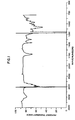
- A80438 sodium salt (1 g) was dissolved in acetone (5 mL); water (25 mL) was added; and the pH of this solution was adjusted to 3.0 with 1 N HC1. Water (25 mL) was added, and a gummy precipitate formed. The mixture was extracted twice with ethyl acetate (100 mL each). The combined extracts were evaporated under vacuum to dryness. The residue was dissolved in acetone (50 mL), and water (25 mL) was added. The mixture again was allowed to stand at room temperature until the gummy precipitate formed. The precipitate was separated and dissolved in warm pentane (100 mL). The pentane solution was allowed to stand at room temperature. The pentane was then decanted and evaporated under vacuum to give 849 mg of A80438 in the acid form (mp 55-56°C) as a white powder (see Figure 1 of the attached drawings).
- A80438 (acid form, 400 mg) was dissolved in acetone (50 mL); water (25 mL) was added; and the pH was adjusted to 10.0 with 1 N KOH. Water (25 mL) was added, and the mixture was stirred for 15 minutes, maintaining the pH at 10. The mixture was then extracted twice ethyl acetate (100 mL each), and the combined extracts were evaporated under vacuum under dryness. The residue was dissolved in acetone (50 mL); water (50 mL) was added; and the mixture was allowed to stand at room temperature overnight. The crystals which formed were separated by filtration, washed with water and dried in a vacuum oven at 50°C to give 179 mg of A80438 potassium salt (mp 157-159°C).
Landscapes
- Chemical & Material Sciences (AREA)
- Life Sciences & Earth Sciences (AREA)
- Organic Chemistry (AREA)
- Engineering & Computer Science (AREA)
- Zoology (AREA)
- Wood Science & Technology (AREA)
- Health & Medical Sciences (AREA)
- Biotechnology (AREA)
- Genetics & Genomics (AREA)
- Bioinformatics & Cheminformatics (AREA)
- General Health & Medical Sciences (AREA)
- Biochemistry (AREA)
- Microbiology (AREA)
- Polymers & Plastics (AREA)
- General Engineering & Computer Science (AREA)
- General Chemical & Material Sciences (AREA)
- Chemical Kinetics & Catalysis (AREA)
- Food Science & Technology (AREA)
- Animal Husbandry (AREA)
- Birds (AREA)
- Molecular Biology (AREA)
- Medicinal Chemistry (AREA)
- Tropical Medicine & Parasitology (AREA)
- Virology (AREA)
- Biomedical Technology (AREA)
- Preparation Of Compounds By Using Micro-Organisms (AREA)
- Micro-Organisms Or Cultivation Processes Thereof (AREA)
Priority Applications (1)
| Application Number | Priority Date | Filing Date | Title |
|---|---|---|---|
| AT86303977T ATE61368T1 (de) | 1985-05-28 | 1986-05-27 | Polyether-antibiotikum und verfahren zu seiner herstellung. |
Applications Claiming Priority (4)
| Application Number | Priority Date | Filing Date | Title |
|---|---|---|---|
| US06/738,320 US4824863A (en) | 1985-05-28 | 1985-05-28 | Antibiotic A80438 |
| US738320 | 1985-05-28 | ||
| US06/738,317 US4830967A (en) | 1985-05-28 | 1985-05-28 | Process for producing antibiotic A80438 |
| US738317 | 1996-10-25 |
Publications (2)
| Publication Number | Publication Date |
|---|---|
| EP0209971A1 true EP0209971A1 (de) | 1987-01-28 |
| EP0209971B1 EP0209971B1 (de) | 1991-03-06 |
Family
ID=27113348
Family Applications (1)
| Application Number | Title | Priority Date | Filing Date |
|---|---|---|---|
| EP86303977A Expired - Lifetime EP0209971B1 (de) | 1985-05-28 | 1986-05-27 | Polyether-Antibiotikum und Verfahren zu seiner Herstellung |
Country Status (2)
| Country | Link |
|---|---|
| EP (1) | EP0209971B1 (de) |
| DE (1) | DE3677844D1 (de) |
Cited By (1)
| Publication number | Priority date | Publication date | Assignee | Title |
|---|---|---|---|---|
| US5059402A (en) * | 1988-08-12 | 1991-10-22 | Seamons Kenneth R | Contact lens disinfection unit |
Families Citing this family (1)
| Publication number | Priority date | Publication date | Assignee | Title |
|---|---|---|---|---|
| WO2002032426A1 (en) * | 2000-10-18 | 2002-04-25 | Bomac Research Limited | Further improvements in and relating to the control of coccidia |
Citations (1)
| Publication number | Priority date | Publication date | Assignee | Title |
|---|---|---|---|---|
| FR2322596A1 (fr) * | 1975-09-02 | 1977-04-01 | Sandoz Sa | Nouveau metabolite, sa preparation et son application comme medicament |
Family Cites Families (1)
| Publication number | Priority date | Publication date | Assignee | Title |
|---|---|---|---|---|
| US4510317A (en) * | 1983-07-28 | 1985-04-09 | Hoffmann-La Roche Inc. | Antibiotic X-14934A |
-
1986
- 1986-05-27 EP EP86303977A patent/EP0209971B1/de not_active Expired - Lifetime
- 1986-05-27 DE DE8686303977T patent/DE3677844D1/de not_active Expired - Lifetime
Patent Citations (1)
| Publication number | Priority date | Publication date | Assignee | Title |
|---|---|---|---|---|
| FR2322596A1 (fr) * | 1975-09-02 | 1977-04-01 | Sandoz Sa | Nouveau metabolite, sa preparation et son application comme medicament |
Non-Patent Citations (2)
| Title |
|---|
| "POLYETHER ANTIBIOTICS", Naturally Ocurring Acid Ionophores, vol. 1, pages 1-11, chapter 1, Marcel Dekker Inc., New York, US; J.W. WESTLEY: "Notation and classification" * |
| JOURNAL OF ANTIBIOTICS, vol. 33, no. 11, November 1980, pages 1224-1230, Tokyo, JP; T. MIZUTANI et al.: "Lonomycins B and C two new components of polyether antibiotics fermentation, isolation and characterization" * |
Cited By (1)
| Publication number | Priority date | Publication date | Assignee | Title |
|---|---|---|---|---|
| US5059402A (en) * | 1988-08-12 | 1991-10-22 | Seamons Kenneth R | Contact lens disinfection unit |
Also Published As
| Publication number | Publication date |
|---|---|
| DE3677844D1 (de) | 1991-04-11 |
| EP0209971B1 (de) | 1991-03-06 |
Similar Documents
| Publication | Publication Date | Title |
|---|---|---|
| US4582822A (en) | Antibiotic A80190, pharmaceutical compositions containing same and method of use | |
| US4683201A (en) | Antibiotic A80190-producing Actinomadura oligospora and process | |
| EP0334632A2 (de) | Antibiotikum | |
| US4824863A (en) | Antibiotic A80438 | |
| EP0341019B1 (de) | Polyäther-Antibiotika | |
| AU605495B2 (en) | Process for the preparation of antibiotics 10381b | |
| CA1337337C (en) | Acidic polycyclic ether antibiotic having anticoccidial and growth promotant activity | |
| EP0184291B1 (de) | Polyäther-Antibiotikum-A80190 | |
| NL8501708A (nl) | Antitumor antibioticum. | |
| EP0209971B1 (de) | Polyether-Antibiotikum und Verfahren zu seiner Herstellung | |
| EP0241285A2 (de) | Antibiotikum A42125 und Verfahren zu dessen Herstellung | |
| US5043353A (en) | A80789 polyether antibiotic | |
| CA1220743A (en) | Antibiotic a39079 factor s-1 and process for its production | |
| US5693524A (en) | Anticoccidial composition of UK-61 689 and Actinomadura mycelium | |
| US5098834A (en) | Process for producing antibiotic A8210 which comprises cultivating Actinomadura Fibrosa sp nov. NRRL 18348, or an A82810-producing mutant thereof | |
| US5552386A (en) | Antibiotic A82810 | |
| US5242814A (en) | Polyether antibiotic | |
| US4876273A (en) | Antibotic A80577 and process for its production | |
| US4637981A (en) | Antibiotic A-4696 factor G | |
| CA1320464C (en) | Antibiotic a80190 | |
| US4830967A (en) | Process for producing antibiotic A80438 | |
| HK67492A (en) | Polyether antibiotic a80190 | |
| EP0305086A2 (de) | Antibiotikum A 80577 und Verfahren zu dessen Herstellung | |
| US5478735A (en) | Process for producing acidic polycyclic ether antibiotic having anticoccidial and growth promant activity with Actinomadura |
Legal Events
| Date | Code | Title | Description |
|---|---|---|---|
| PUAI | Public reference made under article 153(3) epc to a published international application that has entered the european phase |
Free format text: ORIGINAL CODE: 0009012 |
|
| 17P | Request for examination filed |
Effective date: 19860531 |
|
| AK | Designated contracting states |
Kind code of ref document: A1 Designated state(s): AT BE CH DE FR GB IT LI NL SE |
|
| 17Q | First examination report despatched |
Effective date: 19880812 |
|
| GRAA | (expected) grant |
Free format text: ORIGINAL CODE: 0009210 |
|
| AK | Designated contracting states |
Kind code of ref document: B1 Designated state(s): AT BE CH DE FR GB IT LI NL SE |
|
| PG25 | Lapsed in a contracting state [announced via postgrant information from national office to epo] |
Ref country code: IT Free format text: LAPSE BECAUSE OF FAILURE TO SUBMIT A TRANSLATION OF THE DESCRIPTION OR TO PAY THE FEE WITHIN THE PRE;WARNING: LAPSES OF ITALIAN PATENTS WITH EFFECTIVE DATE BEFORE 2007 MAY HAVE OCCURRED AT ANY TIME BEFORE 2007. THE CORRECT EFFECTIVE DATE MAY BE DIFFERENT FROM THE ONE RECORDED.SCRIBED TIME-LIMIT Effective date: 19910306 Ref country code: NL Effective date: 19910306 Ref country code: BE Effective date: 19910306 Ref country code: AT Effective date: 19910306 |
|
| REF | Corresponds to: |
Ref document number: 61368 Country of ref document: AT Date of ref document: 19910315 Kind code of ref document: T |
|
| ET | Fr: translation filed | ||
| REF | Corresponds to: |
Ref document number: 3677844 Country of ref document: DE Date of ref document: 19910411 |
|
| PG25 | Lapsed in a contracting state [announced via postgrant information from national office to epo] |
Ref country code: SE Effective date: 19910528 |
|
| PG25 | Lapsed in a contracting state [announced via postgrant information from national office to epo] |
Ref country code: CH Effective date: 19910531 Ref country code: LI Effective date: 19910531 |
|
| PG25 | Lapsed in a contracting state [announced via postgrant information from national office to epo] |
Ref country code: GB Effective date: 19910606 |
|
| NLV1 | Nl: lapsed or annulled due to failure to fulfill the requirements of art. 29p and 29m of the patents act | ||
| PLBE | No opposition filed within time limit |
Free format text: ORIGINAL CODE: 0009261 |
|
| STAA | Information on the status of an ep patent application or granted ep patent |
Free format text: STATUS: NO OPPOSITION FILED WITHIN TIME LIMIT |
|
| GBPC | Gb: european patent ceased through non-payment of renewal fee | ||
| PG25 | Lapsed in a contracting state [announced via postgrant information from national office to epo] |
Ref country code: FR Effective date: 19920131 |
|
| REG | Reference to a national code |
Ref country code: CH Ref legal event code: PL |
|
| 26N | No opposition filed | ||
| PG25 | Lapsed in a contracting state [announced via postgrant information from national office to epo] |
Ref country code: DE Effective date: 19920303 |
|
| REG | Reference to a national code |
Ref country code: FR Ref legal event code: ST |
|
| EUG | Se: european patent has lapsed |
Ref document number: 86303977.2 Effective date: 19911209 |