EP0210344A2 - Verfahren zum Aufblasen und Fluorieren von Kunststofftanks - Google Patents
Verfahren zum Aufblasen und Fluorieren von Kunststofftanks Download PDFInfo
- Publication number
- EP0210344A2 EP0210344A2 EP86105448A EP86105448A EP0210344A2 EP 0210344 A2 EP0210344 A2 EP 0210344A2 EP 86105448 A EP86105448 A EP 86105448A EP 86105448 A EP86105448 A EP 86105448A EP 0210344 A2 EP0210344 A2 EP 0210344A2
- Authority
- EP
- European Patent Office
- Prior art keywords
- stage
- fluorine
- bar
- pressure
- blow mold
- Prior art date
- Legal status (The legal status is an assumption and is not a legal conclusion. Google has not performed a legal analysis and makes no representation as to the accuracy of the status listed.)
- Granted
Links
Images
Classifications
-
- B—PERFORMING OPERATIONS; TRANSPORTING
- B29—WORKING OF PLASTICS; WORKING OF SUBSTANCES IN A PLASTIC STATE IN GENERAL
- B29C—SHAPING OR JOINING OF PLASTICS; SHAPING OF MATERIAL IN A PLASTIC STATE, NOT OTHERWISE PROVIDED FOR; AFTER-TREATMENT OF THE SHAPED PRODUCTS, e.g. REPAIRING
- B29C49/00—Blow-moulding, i.e. blowing a preform or parison to a desired shape within a mould; Apparatus therefor
- B29C49/42—Component parts, details or accessories; Auxiliary operations
- B29C49/46—Component parts, details or accessories; Auxiliary operations characterised by using particular environment or blow fluids other than air
-
- B—PERFORMING OPERATIONS; TRANSPORTING
- B29—WORKING OF PLASTICS; WORKING OF SUBSTANCES IN A PLASTIC STATE IN GENERAL
- B29C—SHAPING OR JOINING OF PLASTICS; SHAPING OF MATERIAL IN A PLASTIC STATE, NOT OTHERWISE PROVIDED FOR; AFTER-TREATMENT OF THE SHAPED PRODUCTS, e.g. REPAIRING
- B29C49/00—Blow-moulding, i.e. blowing a preform or parison to a desired shape within a mould; Apparatus therefor
- B29C49/42—Component parts, details or accessories; Auxiliary operations
- B29C49/46—Component parts, details or accessories; Auxiliary operations characterised by using particular environment or blow fluids other than air
- B29C2049/4602—Blowing fluids
- B29C2049/4605—Blowing fluids containing an inert gas, e.g. helium
-
- B—PERFORMING OPERATIONS; TRANSPORTING
- B29—WORKING OF PLASTICS; WORKING OF SUBSTANCES IN A PLASTIC STATE IN GENERAL
- B29C—SHAPING OR JOINING OF PLASTICS; SHAPING OF MATERIAL IN A PLASTIC STATE, NOT OTHERWISE PROVIDED FOR; AFTER-TREATMENT OF THE SHAPED PRODUCTS, e.g. REPAIRING
- B29C49/00—Blow-moulding, i.e. blowing a preform or parison to a desired shape within a mould; Apparatus therefor
- B29C49/42—Component parts, details or accessories; Auxiliary operations
- B29C49/46—Component parts, details or accessories; Auxiliary operations characterised by using particular environment or blow fluids other than air
- B29C2049/4602—Blowing fluids
- B29C2049/4605—Blowing fluids containing an inert gas, e.g. helium
- B29C2049/4608—Nitrogen
-
- B—PERFORMING OPERATIONS; TRANSPORTING
- B29—WORKING OF PLASTICS; WORKING OF SUBSTANCES IN A PLASTIC STATE IN GENERAL
- B29C—SHAPING OR JOINING OF PLASTICS; SHAPING OF MATERIAL IN A PLASTIC STATE, NOT OTHERWISE PROVIDED FOR; AFTER-TREATMENT OF THE SHAPED PRODUCTS, e.g. REPAIRING
- B29C49/00—Blow-moulding, i.e. blowing a preform or parison to a desired shape within a mould; Apparatus therefor
- B29C49/42—Component parts, details or accessories; Auxiliary operations
- B29C49/46—Component parts, details or accessories; Auxiliary operations characterised by using particular environment or blow fluids other than air
- B29C2049/4602—Blowing fluids
- B29C2049/4611—Blowing fluids containing a reactive gas
- B29C2049/4617—Fluor
-
- B—PERFORMING OPERATIONS; TRANSPORTING
- B29—WORKING OF PLASTICS; WORKING OF SUBSTANCES IN A PLASTIC STATE IN GENERAL
- B29C—SHAPING OR JOINING OF PLASTICS; SHAPING OF MATERIAL IN A PLASTIC STATE, NOT OTHERWISE PROVIDED FOR; AFTER-TREATMENT OF THE SHAPED PRODUCTS, e.g. REPAIRING
- B29C49/00—Blow-moulding, i.e. blowing a preform or parison to a desired shape within a mould; Apparatus therefor
- B29C49/42—Component parts, details or accessories; Auxiliary operations
- B29C49/46—Component parts, details or accessories; Auxiliary operations characterised by using particular environment or blow fluids other than air
- B29C2049/4602—Blowing fluids
- B29C2049/4611—Blowing fluids containing a reactive gas
- B29C2049/4623—Blowing fluids containing a reactive gas the gas containing sulfur, e.g. sulfur trioxide
-
- B—PERFORMING OPERATIONS; TRANSPORTING
- B29—WORKING OF PLASTICS; WORKING OF SUBSTANCES IN A PLASTIC STATE IN GENERAL
- B29C—SHAPING OR JOINING OF PLASTICS; SHAPING OF MATERIAL IN A PLASTIC STATE, NOT OTHERWISE PROVIDED FOR; AFTER-TREATMENT OF THE SHAPED PRODUCTS, e.g. REPAIRING
- B29C49/00—Blow-moulding, i.e. blowing a preform or parison to a desired shape within a mould; Apparatus therefor
- B29C49/42—Component parts, details or accessories; Auxiliary operations
- B29C49/78—Measuring, controlling or regulating
- B29C49/783—Measuring, controlling or regulating blowing pressure
- B29C2049/7832—Blowing with two or more pressure levels
-
- B—PERFORMING OPERATIONS; TRANSPORTING
- B29—WORKING OF PLASTICS; WORKING OF SUBSTANCES IN A PLASTIC STATE IN GENERAL
- B29C—SHAPING OR JOINING OF PLASTICS; SHAPING OF MATERIAL IN A PLASTIC STATE, NOT OTHERWISE PROVIDED FOR; AFTER-TREATMENT OF THE SHAPED PRODUCTS, e.g. REPAIRING
- B29C49/00—Blow-moulding, i.e. blowing a preform or parison to a desired shape within a mould; Apparatus therefor
- B29C49/42—Component parts, details or accessories; Auxiliary operations
- B29C49/4273—Auxiliary operations after the blow-moulding operation not otherwise provided for
-
- B—PERFORMING OPERATIONS; TRANSPORTING
- B29—WORKING OF PLASTICS; WORKING OF SUBSTANCES IN A PLASTIC STATE IN GENERAL
- B29C—SHAPING OR JOINING OF PLASTICS; SHAPING OF MATERIAL IN A PLASTIC STATE, NOT OTHERWISE PROVIDED FOR; AFTER-TREATMENT OF THE SHAPED PRODUCTS, e.g. REPAIRING
- B29C71/00—After-treatment of articles without altering their shape; Apparatus therefor
-
- B—PERFORMING OPERATIONS; TRANSPORTING
- B29—WORKING OF PLASTICS; WORKING OF SUBSTANCES IN A PLASTIC STATE IN GENERAL
- B29K—INDEXING SCHEME ASSOCIATED WITH SUBCLASSES B29B, B29C OR B29D, RELATING TO MOULDING MATERIALS OR TO MATERIALS FOR MOULDS, REINFORCEMENTS, FILLERS OR PREFORMED PARTS, e.g. INSERTS
- B29K2023/00—Use of polyalkenes or derivatives thereof as moulding material
- B29K2023/04—Polymers of ethylene
- B29K2023/06—PE, i.e. polyethylene
-
- B—PERFORMING OPERATIONS; TRANSPORTING
- B29—WORKING OF PLASTICS; WORKING OF SUBSTANCES IN A PLASTIC STATE IN GENERAL
- B29L—INDEXING SCHEME ASSOCIATED WITH SUBCLASS B29C, RELATING TO PARTICULAR ARTICLES
- B29L2031/00—Other particular articles
- B29L2031/712—Containers; Packaging elements or accessories, Packages
- B29L2031/7172—Fuel tanks, jerry cans
Definitions
- the present invention relates to a method for inflating and fluorinating plastic tanks according to the preamble of claim 1.
- the present invention is therefore based on the object of improving the method mentioned at the outset in such a way that it reliably avoids fluorine damage to personnel and machines.
- a mechanical lock for securing the shape is therefore provided instead of or in addition to a hydraulic tumbler. It is understood that this is designed so that it can withstand the prevailing loads.
- the blowing process is divided into three stages, namely a first stage of inflation, which is carried out only with an inert gas that has no fluorine content. This stage is carried out up to a pressure between 2 and 4 bar, in particular 3 bar, which is followed by security controls as a second stage, which check the mechanical locking on the one hand and the pressure consistency on the other. If it is determined at this point in time that pressure losses are occurring, the process can still be terminated without harmful fluorine leaving the mold.
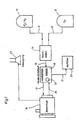
- the two pressure vessels for the F2 / N2- Mixture and the pure nitrogen designated 10 and 12 respectively. They are each connected to the mixing station 14 via a separate line 11 or 13. First of all, this mixing station is supplied in the first stage exclusively with pure nitrogen from the pressure vessel 12 via the line 13. The pure N2 then passes through lines 15 and 17 to the blowing or molding system 18.
- the pressure gauge (not shown) in the blowing system is connected to its display device 19 in the valve control panel 16, where the prevailing pressure can be read. As soon as it has reached 3 bar, the valve (not shown) that controls the nitrogen supply is closed. At this point it is checked whether the pressure remains constant and whether the blow mold is mechanically locked properly. Only when this pressure remains constant, i.e.
- the plastic tank is obviously tight, does the second stage begin, namely blowing with the fluorine-nitrogen mixture, the fluorine fraction being about 1%.
- the blowing mixture may also comprise another composition known in the art.
- the quantities given with regard to fluorine are in no way critical, but can be varied widely.
- the control of the second stage is again carried out by the valve control panel 16.
- the tank is inflated to about 10 bar, a layer of fluorinated polyethylene then forming in the interior of the tank, which has the desired impermeability to solvents and the like. owns.
- the pressure of about 10 bar is then maintained for a period of about 30 seconds.
- the gas mixture is then sucked out of the blow mold via lines 20, 21, which lead to a wet limestone filter, where the fluorine components are absorbed.
- the blow mold 18 is then flushed several times with pure nitrogen coming from the pressure vessel 12 or with dried air. Possibly. Any remaining fluorine that could escape when the blow mold 18 is opened is sucked off from the hose 23.
- the method according to the invention thus ensures in every way that fluorine no longer escapes into the atmosphere unhindered and uncontrolled.
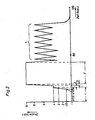
- the pressure curve over 120 seconds is shown again schematically in FIG. 2, the individual method steps being indicated. According to the invention, the security checks are then carried out at approximately 3 bar. The fluorine-nitrogen mixture is only introduced from 4 bar.
- the security check of the tightness of the system is carried out by checking the pressure consistency, as well as the control of the tool locking.
- the pressure is increased to approximately 10 bar, the fluorine / inert gas mixture being introduced at the same time.
- the third stage 3 'then provides pressure maintenance approx. 10 bar for a period of approx. 30 seconds.
- nitrogen or dry air are flushed at the end, as is indicated by the course 4 of the curve.
Landscapes
- Engineering & Computer Science (AREA)
- Manufacturing & Machinery (AREA)
- Mechanical Engineering (AREA)
- Blow-Moulding Or Thermoforming Of Plastics Or The Like (AREA)
- Treatments Of Macromolecular Shaped Articles (AREA)
- Casting Or Compression Moulding Of Plastics Or The Like (AREA)
Abstract
Description
- Die vorliegende Erfindung betrifft ein Verfahren zum Aufblasen und Fluorisieren von Kunststofftanks nach dem Oberbegriff des Anspruchs 1.
- Ein derartiges Verfahren ist aus der DE-PS 24 01 948 bekanntgeworden. Die dortige Lehre geht davon aus, daß das eingesetzte Blasgas neben dem Inertgas 0,1 - 10 Vol% Fluor enthält. Zwar wird hierdurch sichergestellt, daß der Vorformling zur Anlage an die Innenkontur aufgeweitetwird und daß gleichzeitig eine impermeable Innenschicht entsteht. Nachteilig hat sich jedoch bemerkbar gemacht, daß diese Lehre in keinerlei Weise die Toxizität und die korrosionsfördernden Eigenschaften von Fluor berücksichtigt. Gerade beim Einsatz der bekannten hydraulischen Vorrichtungen zum Öffnen und Schließen der Blasformen ist das Risiko besonders hoch, daß schädliche Fluormengen unbeabsichtigt die Blasform verlassen, wenn beispielsweise der Kunststofftank undicht ist oder die hydraulische Verriegelung versagt.
- Auch der weitere Stand der Technik, gemäß US-PS 2 811 468, DE-PS 19 05 094, DE-PS 24 01 948, DE-AS 26 44 508, DE-PS 29 24 797, der sich mit ähnlichen Verfahren beschäftigt, läßt beim Arbeiten mit Fluor Sicherheitsvorkehrungen vermissen.
- Der vorliegenden Erfindung liegt deshalb die Aufgabe zugrunde, das eingangs genannte Verfahren derart zu verbessern, daß es Fluor-Schäden für Personal und Maschinen mit Sicherheit vermeidet.
- Diese Aufgabe wird durch das im Anspruch 1 gekennzeichnete Verfahren gelöst.
- Erfindungsgemäß wird also zunächst einmal statt bzw. in Ergänzung einer hydraulischen Zuhaltung eine mechanische Verriegelung zur Formsicherung vorgesehen. Es versteht sich, daß diese derart gestaltet ist, daß sie den herrschenden Belastungen standhält. Gleichzeitig wird jedoch das Blasverfahren in drei Stufen unterteilt, nämlich in eine erste Stufe des Aufblasens, die nur mit Inertgas durchgeführt wird, das keinerlei Fluoranteil besitzt. Diese Stufe wird bis zu einem Druck zwischen 2 und 4 bar, insbesondere 3 bar durchgeführt, woran sich Sicherheitsontrollen als zweite Stufe anschließen, die einerseits die mechanische Verriegelung und andererseits die Druckkonstanz überprüfen. Sollte zu diesem Zeitpunkt festgestellt werden, daß Druckverluste auftreten, kann das Verfahren noch abgebrochen werden, ohne daß schädliches Fluor die Form verläßt. Erst im Anschluß an diese Sicherheitskontrollen wird dann in einer dritten Stufe das Fluor-Inertgas-Gemisch in die Blasform eingeleitet, wodurch dann die impermeable Innenschicht erzeugt wird. Die erfindungsgemäße Dreistufigkeit führt also zuverlässig zur gewünschten Betriebssicherheit.
- Weitere Vorteile und Merkmale gehen aus den vorstehenden Unteransprüchen hervor.
- Im folgenden wird ein bevorzugtes Ausführungsbeispiel anhand der Figuren näher erläutert.
Es zeigt: - Fig. 1 eine schematische Darstellung der Verfahrensanlage und
- Fig. 2 eine Kurvendarstellung des Druckverlaufes beim Aufblasen des Kunststofftanks.
- In Fig. 1 sind die beiden Druckbehälter für das F₂/N₂- Gemisch und den reinen Stickstoff mit 10 bzw. 12 bezeichnet. Sie sind jeweils über eine eigene Leitung 11 bzw. 13 mit der Mischstation 14 verbunden. Zunächst wird diese Mischstation in der ersten Stufe ausschließlich mit reinem Stickstoff aus dem Druckbehälter 12 über die Leitung 13 beliefert. Das reine N₂ gelangt dann über die Leitungen 15 und 17 zur Blas- bzw. Formanlage 18. Das Manometer (nicht gezeigt) in der Blasanlage ist mit seinem Anzeigegerät 19 im Ventile-Schaltpult 16 verbunden, wo der jeweils herrschende Druck abgelesen werden kann. Sobald dieser 3 bar erreicht hat, wird das Ventil (nicht gezeigt), das die Stickstoffzufuhr steuert, geschlossen.
Zu diesem Zeitpunkt wird dann kontrolliert, ob der Druck konstant bleibt und ob die Blasform einwandfrei mechanisch verriegelt ist. Erst wenn dieser Druck konstant bleibt, also der Kunststofftank offensichtlich dicht ist, setzt die zweite Stufe ein, nämlich das Blasen mit dem Fluor-Stickstoffgemisch, wobei der Fluoranteil etwa 1 % beträgt. Es sei jedoch angemerkt, daß das Blasgemisch auch eine andere, dem Stand der Technik bekannte Zusammensetzung umfassen kann. Auch sind die Mengenangaben hinsichtlich Fluor in keiner Weise kritisch, sondern lassen sich im breiten Rahmen variieren. Die Steuerung der zweiten Stufe erfolgt wiederum vom Ventile-Schaltpult 16. In der zweiten Stufe wird der Tank bis ca. 10 bar aufgeblasen, wobei sich dann im Inneren des Tanks eine Schicht aus fluoriertes Polyäthylen ausbildet, die die gewünschte Impermeabilität bezüglich Lösungsmittel und dergl. besitzt. Der Druck von etwa 10 bar wird dann über einen Zeitraum von etwa 30 Sekunden aufrechterhalten. Daran anschließend wird das Gasgemisch aus der Blasform über die Leitungen 20,21 abgesaugt, die zu einem Kalksteinnaßfilter führen, wo die Fluoranteile absorbiert werden. - Die Blasform 18 wird im Anschluß daran mehrfach mit reinem Stickstoff aus dem Druckbehälter 12 kommend oder mit getrockneter Luft gespült. Evtl. noch vorhandene Reste an Fluor, die beim Öffnen der Blasform 18 entweichen könnten, werden vom Schlauch 23 abgesaugt.
- Das erfindungsgemäße Verfahren stellt also in jeder Weise sicher, daß Fluor nicht mehr ungehindert und unkontrolliert in die Atmosphäre entweicht.
- In Fig. 2 ist noch einmal schematisch der Druckverlauf über 120 Sekunden gezeigt, wobei die einzelnen Verfahrensschritte angegeben sind. Erfindungsgemäß werden also die Sicherheitskontrollen danach bei ca. 3 bar durchgeführt. Das Einleiten des Fluor-Stickstoffgemisches erfolgt erst ab 4 bar.
- Im einzelnen wird die erste Stufe 1 in folgende Schritte aufgeteilt:
- a. Stickstoff-Spülen des Schlauches
- b. Stickstoff-Vorblasen des Schlauches
- c. Schließen der Form
- d. Erstes Vorblasen mit Stickstoff von unten
- e. Zweites Vorblasen mit Stickstoff von unten
- In der zweiten Stufe 2 erfolgt dann die Sicherheitskontrolle der Dichtigkeit des Systems mittels Überprüfung der Druckkonstanz, sowie die Kontrolle der Werkzeugverriegelung. Schließlich wird in der dritten Stufe 3 der Druck bis auf ca. 10 bar gesteigert, wobei gleichzeitig das Fluor-Inertgasgemisch eingeleitet wird. Die dritte Stufe 3' stellt daran anschließend das Druckhalten bei ca. 10 bar für einen Zeitraum von ca. 30 Sekunden dar. Dann wird zum Abschluß mehrfach mit Stickstoff oder Trockenluft gespült, wie dieses durch den Verlauf 4 der Kurve angedeutet ist.
Claims (5)
Applications Claiming Priority (2)
| Application Number | Priority Date | Filing Date | Title |
|---|---|---|---|
| DE3523137A DE3523137C1 (de) | 1985-06-28 | 1985-06-28 | Verfahren zum Aufblasen und Fluorieren eines Kunststofftanks |
| DE3523137 | 1985-06-28 |
Publications (3)
| Publication Number | Publication Date |
|---|---|
| EP0210344A2 true EP0210344A2 (de) | 1987-02-04 |
| EP0210344A3 EP0210344A3 (en) | 1987-09-16 |
| EP0210344B1 EP0210344B1 (de) | 1989-10-04 |
Family
ID=6274425
Family Applications (1)
| Application Number | Title | Priority Date | Filing Date |
|---|---|---|---|
| EP86105448A Expired EP0210344B1 (de) | 1985-06-28 | 1986-04-19 | Verfahren zum Aufblasen und Fluorieren von Kunststofftanks |
Country Status (4)
| Country | Link |
|---|---|
| US (1) | US4830810A (de) |
| EP (1) | EP0210344B1 (de) |
| JP (1) | JPS625829A (de) |
| DE (1) | DE3523137C1 (de) |
Cited By (6)
| Publication number | Priority date | Publication date | Assignee | Title |
|---|---|---|---|---|
| EP0176044A3 (en) * | 1984-09-28 | 1987-09-23 | Kautex-Werke Reinold Hagen Aktiengesellschaft | Method for making hollow articles of thermoplastic material |
| EP0500166A1 (de) * | 1991-02-20 | 1992-08-26 | SOLVAY (Société Anonyme) | Blasverfahren zum Herstellen von Hohlkörpern aus thermoplastischem Material mit verbesserter Gasdichtheit |
| EP0897757A3 (de) * | 1997-08-22 | 2000-11-08 | Sauerstoffwerk Friedrich Guttroff Gmbh | Anordnung zur Fluorierung von Behältern aus Kunststoff |
| DE102004061230A1 (de) * | 2004-12-16 | 2006-07-06 | Krones Ag | Blasmaschine und Blasverfahren |
| WO2009015731A3 (de) * | 2007-07-31 | 2009-05-22 | Khs Ag | Verfahren sowie anlage zum herstellen von behältern durch streck- oder blasformen |
| DE102011011287A1 (de) | 2011-02-15 | 2012-08-16 | Air Liquide Deutschland Gmbh | Verfahren und Vorrichtung zum Funktionalisieren einer Innenoberfläche eines Behälters |
Families Citing this family (26)
| Publication number | Priority date | Publication date | Assignee | Title |
|---|---|---|---|---|
| DE3529870A1 (de) * | 1985-08-21 | 1987-02-26 | Basf Ag | Verfahren zur verringerung der permeation von blasgeformten hohlkoerpern aus thermoplastischen kunststoffen |
| EP0266439A1 (de) * | 1986-11-01 | 1988-05-11 | PVI Patent-Verwertungs- und Innovations-Gesellschaft mbH | Verfahren zur Herstellung von Hohlkörpern mit Innenfluorierung |
| DE8616629U1 (de) * | 1986-06-21 | 1988-03-03 | Kalwar, Klaus, 4803 Steinhagen | Vorrichtung zur Erzeugung einer Koronaentladung an den Oberflächen eines aus unpolarem Kunststoff hergestellten Hohlkörpers |
| DE3640975C2 (de) * | 1986-12-01 | 1994-08-11 | Messer Griesheim Gmbh | Verfahren zur Herstellung fluorierter Oberflächen von Polyethylen hoher Dichte (HDPE) |
| US5236636A (en) * | 1991-10-07 | 1993-08-17 | Ford Motor Company | In-mold plasma treatment |
| US5399263A (en) * | 1992-09-24 | 1995-03-21 | Barnstead Thermolyne | Water purifier |
| US5244615A (en) * | 1992-12-03 | 1993-09-14 | Air Products And Chemicals, Inc. | Process for the production of permeation resistant containers |
| US5401451A (en) * | 1993-07-13 | 1995-03-28 | Air Products And Chemicals, Inc. | Process for producing permeation resistant containers |
| US5422404A (en) * | 1993-08-20 | 1995-06-06 | Polymod Technologies, Inc. | Polymer modified gums |
| US6071370A (en) * | 1993-12-27 | 2000-06-06 | Ford Global Technologies, Inc. | Fuel tank with integral heat shield |
| DE19505188A1 (de) * | 1995-02-16 | 1996-08-22 | Basf Ag | Mehrschichtiger, fluorhaltiger polymerer Stoff |
| US5660639A (en) * | 1995-10-17 | 1997-08-26 | Ford Motor Company | Method and apparatus for plasma treating an article |
| WO2000026284A1 (en) * | 1998-10-29 | 2000-05-11 | Closure Medical Corporation | Polymeric containers for 1,1-disubstituted monomer compositions |
| US6462142B1 (en) | 1999-11-03 | 2002-10-08 | Air Products And Chemicals, Inc. | Processes for improved surface properties incorporating compressive heating of reactive gases |
| US6485670B1 (en) * | 1999-11-09 | 2002-11-26 | Schmalbach-Lubeca Ag | Blow molding method for producing pasteurizable containers |
| US6896838B2 (en) * | 2001-11-21 | 2005-05-24 | Closure Medical Corporation | Halogenated polymeric containers for 1, 1-disubstituted monomer compositions |
| US20040079671A1 (en) * | 2002-08-29 | 2004-04-29 | Paramita Bandyopadhyay | Medicinal product packaging |
| US20050005956A1 (en) * | 2003-07-11 | 2005-01-13 | Maytag Corporation | Fluorine gas treatment of washing machine parts |
| EP1819767A4 (de) * | 2004-12-07 | 2009-07-15 | Lg Chemical Ltd | Artikel mit hoher sperreigenschaft |
| FR2889993B1 (fr) * | 2005-08-23 | 2007-12-28 | Technoplan Engineering S A Sa | Procede de soufflage au moyen d'un gaz d'un emballage et installation de mise en oeuvre. |
| GB2431372A (en) * | 2005-10-18 | 2007-04-25 | Ebac Ltd | Apparatus and method for blow moulding articles |
| DE102006011137A1 (de) * | 2006-03-10 | 2007-09-20 | Sig Technology Ltd. | Verfahren und Vorrichtung zur Blasformung von Behältern |
| DE102014004354A1 (de) * | 2014-03-27 | 2015-10-01 | Khs Corpoplast Gmbh | Verfahren und Vorrichtung zum Herstellen eines mit Füllgut gefüllten Behälters |
| CN107738434A (zh) * | 2017-09-29 | 2018-02-27 | 江苏龙灯博士摩包装材料有限公司 | 一种中空容器线上氟化工艺 |
| DE102019123796A1 (de) * | 2019-09-05 | 2021-03-11 | Krones Ag | Vorrichtung und Verfahren zum Umformen von Kunststoffvorformlingen zu Kunststoffbehältnissen mittels stationärer Druckluftzuführung |
| CN117656430B (zh) * | 2023-12-25 | 2024-06-14 | 佛山市合研精密模具科技有限公司 | 一种吹瓶机模具快速更换设备 |
Family Cites Families (14)
| Publication number | Priority date | Publication date | Assignee | Title |
|---|---|---|---|---|
| US2811468A (en) * | 1956-06-28 | 1957-10-29 | Shulton Inc | Impermeable polyethylene film and containers and process of making same |
| DE1905094B2 (de) * | 1968-02-02 | 1978-01-05 | British Resin Products Ltd, London | Vorratsbehaelter fuer treibstoff |
| US3728063A (en) * | 1971-04-23 | 1973-04-17 | E Langecker | Blowing machine for producing hollow bodies, particularly bottles |
| JPS4962504U (de) * | 1972-09-11 | 1974-06-01 | ||
| US3862284A (en) * | 1973-05-10 | 1975-01-21 | Air Prod & Chem | Process for producing blow molded thermoplastic articles having improved barrier properties |
| US3942922A (en) * | 1974-04-01 | 1976-03-09 | The Goodyear Tire & Rubber Company | Tire press and mold leakage control |
| US3998180A (en) * | 1975-04-07 | 1976-12-21 | Union Carbide Corporation | Vapor deposition apparatus including fluid transfer means |
| US4162878A (en) * | 1977-11-21 | 1979-07-31 | Litton Industrial Products, Inc. | Safety latch system |
| CA1121956A (en) * | 1978-06-28 | 1982-04-20 | Arden R. Weatherly | Blow molding of plastic articles having barrier properties |
| US4396567A (en) * | 1979-11-27 | 1983-08-02 | Dewey Rainville | Method for blow molding with active ingredient in blowing gas |
| JPS5850572B2 (ja) * | 1980-05-09 | 1983-11-11 | 大同酸素株式会社 | ブロ−ガス回収を伴う中空成形品の製造方法 |
| US4333905A (en) * | 1980-10-15 | 1982-06-08 | Bomatic, Inc. | Method for blowmolding a container |
| DE3435592A1 (de) * | 1984-09-28 | 1986-04-03 | Kautex Werke Reinold Hagen AG, 5300 Bonn | Verfahren zur herstellung von hohlkoerpern aus thermoplastischem kunststoff |
| DE3529870A1 (de) * | 1985-08-21 | 1987-02-26 | Basf Ag | Verfahren zur verringerung der permeation von blasgeformten hohlkoerpern aus thermoplastischen kunststoffen |
-
1985
- 1985-06-28 DE DE3523137A patent/DE3523137C1/de not_active Expired
-
1986
- 1986-04-19 EP EP86105448A patent/EP0210344B1/de not_active Expired
- 1986-05-29 US US06/867,916 patent/US4830810A/en not_active Expired - Lifetime
- 1986-06-26 JP JP61151347A patent/JPS625829A/ja active Granted
Cited By (10)
| Publication number | Priority date | Publication date | Assignee | Title |
|---|---|---|---|---|
| EP0176044A3 (en) * | 1984-09-28 | 1987-09-23 | Kautex-Werke Reinold Hagen Aktiengesellschaft | Method for making hollow articles of thermoplastic material |
| EP0500166A1 (de) * | 1991-02-20 | 1992-08-26 | SOLVAY (Société Anonyme) | Blasverfahren zum Herstellen von Hohlkörpern aus thermoplastischem Material mit verbesserter Gasdichtheit |
| BE1004647A3 (fr) * | 1991-02-20 | 1993-01-05 | Solvay | Procede pour realiser, par moulage par soufflage, des corps creux en matiere thermoplastique presentant une impermeabilite aux gaz amelioree. |
| US5213734A (en) * | 1991-02-20 | 1993-05-25 | Solvay S.A. | Process for producing, by blow moulding, hollow bodies made of thermoplastic material having an improved impermeability to gases |
| EP0897757A3 (de) * | 1997-08-22 | 2000-11-08 | Sauerstoffwerk Friedrich Guttroff Gmbh | Anordnung zur Fluorierung von Behältern aus Kunststoff |
| DE102004061230A1 (de) * | 2004-12-16 | 2006-07-06 | Krones Ag | Blasmaschine und Blasverfahren |
| DE102004061230B4 (de) * | 2004-12-16 | 2011-09-29 | Krones Ag | Blasmaschine und Blasverfahren |
| WO2009015731A3 (de) * | 2007-07-31 | 2009-05-22 | Khs Ag | Verfahren sowie anlage zum herstellen von behältern durch streck- oder blasformen |
| DE102011011287A1 (de) | 2011-02-15 | 2012-08-16 | Air Liquide Deutschland Gmbh | Verfahren und Vorrichtung zum Funktionalisieren einer Innenoberfläche eines Behälters |
| EP2489694A1 (de) | 2011-02-15 | 2012-08-22 | L'Air Liquide Société Anonyme pour l'Etude et l'Exploitation des Procédés Georges Claude | Verfahren und Vorrichtung zur Funktionalisierung einer inneren Oberfläche eines Behälters |
Also Published As
| Publication number | Publication date |
|---|---|
| JPH0438217B2 (de) | 1992-06-23 |
| EP0210344A3 (en) | 1987-09-16 |
| EP0210344B1 (de) | 1989-10-04 |
| JPS625829A (ja) | 1987-01-12 |
| DE3523137C1 (de) | 1986-04-30 |
| US4830810A (en) | 1989-05-16 |
Similar Documents
| Publication | Publication Date | Title |
|---|---|---|
| EP0210344B1 (de) | Verfahren zum Aufblasen und Fluorieren von Kunststofftanks | |
| EP0176044B1 (de) | Verfahren zur Herstellung von Hohlkörpern aus thermoplastischem Kunststoff | |
| DE4218710C1 (de) | Anlage zum Herstellen von Tübbingen für eine Tunnelauskleidung | |
| DE69419285T2 (de) | Zu reinigende Gasabführverbindung für Druckgaszylinder | |
| DE19944579B4 (de) | Verfahren zur Herstellung eines Kunststoffbehälters | |
| DE19604654C2 (de) | Anlage für die kontinuierliche Herstellung von biaxial-verstreckten Kunststoff-Blasfolien und Verfahren zum Anfahren der Anlage | |
| DE2210099C3 (de) | Verfahren und Vorrichtung zur Ausformung von Gegenständen aus wärmehärtenden Werkstoffen, insbesondere von Fahrzeugluftreifen | |
| EP0284852A1 (de) | Einrichtung zum Prüfen der Gasdichtigkeit von Hohlraumwänden | |
| DE3311856A1 (de) | Innenschlauch fuer luftreifen sowie vorrichtung zu seiner herstellung | |
| DE2800406A1 (de) | Rohrverbinder | |
| DE2254762A1 (de) | Verfahren zum verbinden zweier metallprofile zu einem gegen kaeltedurchgang isolierten verbundprofil und nach dem verfahren hergestelltes verbundprofil | |
| WO2020094300A1 (de) | Verteilervorrichtung, system und verfahren zum abdichten und verwendung | |
| DE2802645A1 (de) | Verfahren und vorrichtung zur dichtheitspruefung | |
| DE3923417A1 (de) | Aufblasbarer gegenstand | |
| DE3833000C2 (de) | ||
| EP0990103B1 (de) | Füllanschluss für gasflaschenventile | |
| DE10253731B4 (de) | Verfahren zur Herstellung von Kunststoffbauteilen | |
| DE3739457C1 (en) | Procedure and device for the high-pressure sealing of flow channels in a slot die, comprising pivotable upper and lower parts, for rubber and thermoplastics | |
| DE2201080A1 (de) | Verfahren und Vorrichtung zum Vulkanisieren von Luftreifen | |
| EP4406881A1 (de) | Verfahren zur verfüllung von kavernen sowie zusammenschluss | |
| DE102024103457A1 (de) | Erstes Bauteil, welches mit einem zweiten Bauteil mittels einer Rastverbindung verbindbar oder verbunden ist, sowie Anordnung umfassend ein erstes Bauteil und ein zweites Bauteil, welche mit einer Rastverbindung miteinander verbunden sind | |
| DE4319075C2 (de) | Verfahren zur Herstellung von Flachflaschen | |
| DE2922802A1 (de) | Verfahren zum dichten verschliessen einer geteilten form und vorrichtung zur durchfuehrung des verfahrens | |
| DE519904C (de) | Verfahren und Vorrichtung zur Herstellung der Verbindungen von oelgefuellten Kabeln | |
| DE2242812C (de) | Verfahren zum Härten von säurehärtbaren Formstoffgemischen |
Legal Events
| Date | Code | Title | Description |
|---|---|---|---|
| PUAI | Public reference made under article 153(3) epc to a published international application that has entered the european phase |
Free format text: ORIGINAL CODE: 0009012 |
|
| 17P | Request for examination filed |
Effective date: 19860419 |
|
| AK | Designated contracting states |
Kind code of ref document: A2 Designated state(s): FR GB IT |
|
| PUAL | Search report despatched |
Free format text: ORIGINAL CODE: 0009013 |
|
| AK | Designated contracting states |
Kind code of ref document: A3 Designated state(s): FR GB IT |
|
| 17Q | First examination report despatched |
Effective date: 19890224 |
|
| ITF | It: translation for a ep patent filed | ||
| GRAA | (expected) grant |
Free format text: ORIGINAL CODE: 0009210 |
|
| AK | Designated contracting states |
Kind code of ref document: B1 Designated state(s): FR GB IT |
|
| GBT | Gb: translation of ep patent filed (gb section 77(6)(a)/1977) | ||
| ET | Fr: translation filed | ||
| PLBI | Opposition filed |
Free format text: ORIGINAL CODE: 0009260 |
|
| 26 | Opposition filed |
Opponent name: AIR PRODUCTS AND CHEMICALS INC. Effective date: 19900607 |
|
| ITTA | It: last paid annual fee | ||
| PLBN | Opposition rejected |
Free format text: ORIGINAL CODE: 0009273 |
|
| STAA | Information on the status of an ep patent application or granted ep patent |
Free format text: STATUS: OPPOSITION REJECTED |
|
| 27O | Opposition rejected |
Effective date: 19920626 |
|
| PGFP | Annual fee paid to national office [announced via postgrant information from national office to epo] |
Ref country code: GB Payment date: 20010323 Year of fee payment: 16 |
|
| PGFP | Annual fee paid to national office [announced via postgrant information from national office to epo] |
Ref country code: FR Payment date: 20010420 Year of fee payment: 16 |
|
| REG | Reference to a national code |
Ref country code: GB Ref legal event code: IF02 |
|
| PG25 | Lapsed in a contracting state [announced via postgrant information from national office to epo] |
Ref country code: GB Free format text: LAPSE BECAUSE OF NON-PAYMENT OF DUE FEES Effective date: 20020419 |
|
| GBPC | Gb: european patent ceased through non-payment of renewal fee |
Effective date: 20020419 |
|
| PG25 | Lapsed in a contracting state [announced via postgrant information from national office to epo] |
Ref country code: FR Free format text: LAPSE BECAUSE OF NON-PAYMENT OF DUE FEES Effective date: 20021231 |
|
| REG | Reference to a national code |
Ref country code: FR Ref legal event code: ST |
|
| PG25 | Lapsed in a contracting state [announced via postgrant information from national office to epo] |
Ref country code: IT Free format text: LAPSE BECAUSE OF NON-PAYMENT OF DUE FEES;WARNING: LAPSES OF ITALIAN PATENTS WITH EFFECTIVE DATE BEFORE 2007 MAY HAVE OCCURRED AT ANY TIME BEFORE 2007. THE CORRECT EFFECTIVE DATE MAY BE DIFFERENT FROM THE ONE RECORDED. Effective date: 20050419 |