EP0210645A2 - Synthetische Peptidrezeptoren, Verfahren zur Herstellung und Verwendung derselben - Google Patents
Synthetische Peptidrezeptoren, Verfahren zur Herstellung und Verwendung derselben Download PDFInfo
- Publication number
- EP0210645A2 EP0210645A2 EP86110443A EP86110443A EP0210645A2 EP 0210645 A2 EP0210645 A2 EP 0210645A2 EP 86110443 A EP86110443 A EP 86110443A EP 86110443 A EP86110443 A EP 86110443A EP 0210645 A2 EP0210645 A2 EP 0210645A2
- Authority
- EP
- European Patent Office
- Prior art keywords
- complementary
- synthetic peptide
- peptide
- amino acid
- receptors
- Prior art date
- Legal status (The legal status is an assumption and is not a legal conclusion. Google has not performed a legal analysis and makes no representation as to the accuracy of the status listed.)
- Withdrawn
Links
Images
Classifications
-
- C—CHEMISTRY; METALLURGY
- C07—ORGANIC CHEMISTRY
- C07K—PEPTIDES
- C07K14/00—Peptides having more than 20 amino acids; Gastrins; Somatostatins; Melanotropins; Derivatives thereof
- C07K14/435—Peptides having more than 20 amino acids; Gastrins; Somatostatins; Melanotropins; Derivatives thereof from animals; from humans
- C07K14/705—Receptors; Cell surface antigens; Cell surface determinants
- C07K14/72—Receptors; Cell surface antigens; Cell surface determinants for hormones
-
- C—CHEMISTRY; METALLURGY
- C07—ORGANIC CHEMISTRY
- C07K—PEPTIDES
- C07K14/00—Peptides having more than 20 amino acids; Gastrins; Somatostatins; Melanotropins; Derivatives thereof
- C07K14/435—Peptides having more than 20 amino acids; Gastrins; Somatostatins; Melanotropins; Derivatives thereof from animals; from humans
- C07K14/705—Receptors; Cell surface antigens; Cell surface determinants
-
- C—CHEMISTRY; METALLURGY
- C07—ORGANIC CHEMISTRY
- C07K—PEPTIDES
- C07K16/00—Immunoglobulins [IG], e.g. monoclonal or polyclonal antibodies
- C07K16/18—Immunoglobulins [IG], e.g. monoclonal or polyclonal antibodies against material from animals or humans
- C07K16/26—Immunoglobulins [IG], e.g. monoclonal or polyclonal antibodies against material from animals or humans against hormones ; against hormone releasing or inhibiting factors
-
- G—PHYSICS
- G01—MEASURING; TESTING
- G01N—INVESTIGATING OR ANALYSING MATERIALS BY DETERMINING THEIR CHEMICAL OR PHYSICAL PROPERTIES
- G01N33/00—Investigating or analysing materials by specific methods not covered by groups G01N1/00 - G01N31/00
- G01N33/48—Biological material, e.g. blood, urine; Haemocytometers
- G01N33/50—Chemical analysis of biological material, e.g. blood, urine; Testing involving biospecific ligand binding methods; Immunological testing
- G01N33/68—Chemical analysis of biological material, e.g. blood, urine; Testing involving biospecific ligand binding methods; Immunological testing involving proteins, peptides or amino acids
- G01N33/6878—Chemical analysis of biological material, e.g. blood, urine; Testing involving biospecific ligand binding methods; Immunological testing involving proteins, peptides or amino acids in epitope analysis
-
- G—PHYSICS
- G01—MEASURING; TESTING
- G01N—INVESTIGATING OR ANALYSING MATERIALS BY DETERMINING THEIR CHEMICAL OR PHYSICAL PROPERTIES
- G01N33/00—Investigating or analysing materials by specific methods not covered by groups G01N1/00 - G01N31/00
- G01N33/48—Biological material, e.g. blood, urine; Haemocytometers
- G01N33/50—Chemical analysis of biological material, e.g. blood, urine; Testing involving biospecific ligand binding methods; Immunological testing
- G01N33/74—Chemical analysis of biological material, e.g. blood, urine; Testing involving biospecific ligand binding methods; Immunological testing involving hormones or other non-cytokine intercellular protein regulatory factors such as growth factors, including receptors to hormones and growth factors
-
- A—HUMAN NECESSITIES
- A61—MEDICAL OR VETERINARY SCIENCE; HYGIENE
- A61K—PREPARATIONS FOR MEDICAL, DENTAL OR TOILETRY PURPOSES
- A61K38/00—Medicinal preparations containing peptides
Definitions
- the present invention relates to synthetic peptide receptors, processes for producing and using the same, in particular for diagnostic, preparative and therapeutic purposes.
- Hormones and mediators which consist of more or less long peptides, generally only work when they are absorbed by the receptor. These receptors are generally highly specific. Even minor changes in the amino acid sequence of the hormone or mediator are able to negatively influence the specificity. So far, the structure of the receptors has been largely unknown, especially since they are mostly insoluble and built into the cell wall or membrane.
- Bost et al. have theorized that there is a relationship between peptides and their receptors, according to which complementary DNA, if they are transcribed in the direction from 5 'to 3', encode peptides or proteins which are read with the regular, ie not on the complementary strand, positive Peptides interact.
- This theory was tested and confirmed on two synthesized peptides, namely the complementary ACTH and the complementary gamma-endorphin (cf. Proc. Natl. Acad. Sci. USA 82, 1985, pages 1372 to 1375). While discussing these results, it was found that this finding could lead to a number of interesting scientific conclusions and that further findings on peptide-peptide interactions could be examined, however, it was not recognized that a number of extremely meaningful practical consequences can be drawn from this.
- complementary or analog complementary peptides in larger quantities by calculating the complementary or analog complementary amino acid sequences from the complementary RNA strand of the respective peptide and synthesizing them according to the solid phase method. Furthermore, it is possible to incorporate the complementary RNA strand of the respective peptide into a vector using genetic engineering and to express it biotechnologically. In this way, synthetic peptide receptors which consist of or contain an amino acid sequence which is complementary to the sequence of the respective peptide are obtained in larger amounts and with high purity.
- Analogously complementary means that the complementary sequence can also be modified by incorporating similarly hydrophobic or hydrophilic amino acids at the typical location of the molecule using methods of peptide design in such a way that their amphiphilic secondary structure is preserved, stabilized or fixed.
- modified analog complementary peptides are synthetic peptide receptors.
- synthetic peptide receptors can be used to generate polyclonal and / or monoclonal antibodies, which then act specifically against natural receptors. Antibodies of this type can then in turn be used for diagnostic and therapeutic purposes and thus open up completely new paths and possibilities.
- the synthetic peptide receptors according to the invention for longer-chain peptides thus also contain sections that are not relevant for specificity. Nevertheless, it will generally be easier to synthesize the full complementary amino acid sequence rather than finding the parts relevant to the specific peptide-peptide bond.
- the synthetic peptide receptor consists exactly of the amino acid sequence which is complementary to the RNA of the respective peptide, i.e. was read negatively from the RNS.
- the synthetic peptide receptors are to be bound to a support or a marker, it may be expedient to extend the amino acid sequence in order to thereby avoid a negative influence on the specificity of the peptide-peptide binding.
- the synthetic peptide receptor contains an amino acid sequence that is complementary to the sequence of the respective peptide.
- the synthetic peptide receptors are bound to a carrier, they can be used both diagnostically and preparatively for binding the respective natural peptide, for example by means of so-called affinity chromatography.
- a natural peptide can be detected in the usual way by a synthetic peptide receptor bound to a carrier, for example by means of antibodies or labeled antibodies.
- a carrier for example by means of antibodies or labeled antibodies.
- radioactive labeling, an enzyme or a fluorescent group can be used as the label.
- the synthetic peptide receptors When used therapeutically, they can be injected in a correspondingly highly purified form, so that they then competitively inhibit excessive amounts of hormones or mediators against the natural receptors.
- Soluble peptide receptors which consist exclusively of the amino acid sequence which is complementary or analogously complementary to the sequence of the respective hormone or mediator will preferably be used for this purpose. Solutions of this type can also be used for diagnostics and differential diagnostics, since in this way excess amounts of hormones or mediators are also masked analytically.
- Antibodies of this type can in turn be used diagnostically to display and determine the receptors on cells or cell biological material. Furthermore, they can be used therapeutically to block receptors, for example specific receptors on tumor cells. These antibodies are particularly suitable for so-called flow cytometry, which is becoming increasingly important for cell diagnostics. With the help of such antibodies it will be possible to determine an exact quantification of the expression of surface receptors which are an essential cell property. These antibodies can be used therapeutically against the overproduction of hormones, at least in the acute phase, which is often dangerous, for example in acute hyperparathyroidism and insulinoma.
- hPTH i.e. human parathyroid hormone, or CRF
- CRF i.e. the "corticotropin releasing factor”
- GHRH growth hormone releasing hormone
- peptide receptors are the complementary peptides to all known transformation growth factors, in particular interleukins, interferons, platelet-derived growth factors, epidermal growth factors, transferrin, erythropoitin, tumor necrosis factor, colony stimulating factor, factor VIII, and all oncogenes -Proteins. Also of particular interest are all neuropeptides, unless they have already been mentioned above.
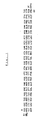
- FIG. 1 shows the calculated amino acid sequence for the complementary peptide to (1-38) hPTH as a typical example of a preferred synthetic peptide receptor according to the invention.
- This peptide is synthesized according to the solid phase method (Merrifield) and acts as a synthetic receptor.
- the synthetic peptide was found to be highly hydrophobic and lipophilic. It therefore showed the typical properties of a membrane receptor protein.
- the synthetic peptide immobilized on the surface of a solid support was able to adsorb parathyroid hormone labeled with 131-iodine from a solution. The bound, labeled parathyroid hormone could then simply be replaced by unlabelled parathyroid hormone.
Landscapes
- Health & Medical Sciences (AREA)
- Life Sciences & Earth Sciences (AREA)
- Chemical & Material Sciences (AREA)
- Molecular Biology (AREA)
- Immunology (AREA)
- Organic Chemistry (AREA)
- Engineering & Computer Science (AREA)
- General Health & Medical Sciences (AREA)
- Medicinal Chemistry (AREA)
- Biochemistry (AREA)
- Proteomics, Peptides & Aminoacids (AREA)
- Biomedical Technology (AREA)
- Cell Biology (AREA)
- Urology & Nephrology (AREA)
- Hematology (AREA)
- Biophysics (AREA)
- Genetics & Genomics (AREA)
- Endocrinology (AREA)
- Gastroenterology & Hepatology (AREA)
- Analytical Chemistry (AREA)
- Zoology (AREA)
- Microbiology (AREA)
- Toxicology (AREA)
- Food Science & Technology (AREA)
- Physics & Mathematics (AREA)
- Biotechnology (AREA)
- General Physics & Mathematics (AREA)
- Pathology (AREA)
- Peptides Or Proteins (AREA)
- Preparation Of Compounds By Using Micro-Organisms (AREA)
- Medicines That Contain Protein Lipid Enzymes And Other Medicines (AREA)
- Investigating Or Analysing Biological Materials (AREA)
- Medicines Containing Antibodies Or Antigens For Use As Internal Diagnostic Agents (AREA)
Abstract
Description
- Gegenstand der vorliegenden Erfindung sind synthetische Peptidrezeptoren, Verfahren zur Herstellung und Verwendung derselben, insbesondere zu diagnostischen, präparativen und therapeutischen Zwecken.
- Hormone und Mediatoren, die aus mehr oder weniger langen Peptiden bestehen, wirken im allgemeinen erst, wenn sie vom Rezeptor aufgenommen sind. Diese Rezeptoren sind im allgemeinen hochspezifisch. Bereits geringfügige Veränderungen in der Aminosäuresequenz des Hormons oder Mediators sind in der Lage, die Spezifität negativ zu beeinflussen. Bisher war die Struktur der Rezeptoren weitgehend unbekannt, zumal sie meist unlöslich sind und in die Zellwand oder -Membranen eingebaut sind.
- Bost et al. haben die Theorie aufgestellt, daß zwischen Peptiden und ihren Rezeptoren eine Beziehung besteht, wonach komplementäre DNS, sofern sie in der Richtung von 5' nach 3' transscribiert werden, Peptide oder Proteine kodieren, die mit den regulär, d.h. nicht am komplementären Strang positiv abgelesenen Peptiden in Wechselwirkung treten. Diese Theorie wurde getestet und an zwei synthetisierten Peptiden, nämlich dem komplementären ACTH und dem komplementären gamma-Endorphin, bestätigt (vgl. Proc. Natl. Acad. Sci. USA 82, 1985, Seite 1372 bis 1375). Bei der Diskussion dieser Ergebnisse wurde zwar festgestellt, daß diese Erkenntnis eine Reihe von interessanten wissenschaftlichen Folgerungen nach sich ziehen könne und weitere Erkenntisse über Peptid-Peptid-Wechselwirkungen untersucht werden könnten, jedoch wurde nicht erkannt, daß sich hieraus auch eine Reihe außerordentlich bedeutungsvoller praktischer Konsequenzen ziehen lassen.
- So ist es beispielsweise möglich, derartige komplementäre oder analog komplementäre Peptide dadurch in größeren Mengen herzustellen, daß die komplementären oder analog komplementären Aminosäuresequenzen aus dem komplementären RNS-Strang des jeweiligen Peptides berechnet und nach der Festphasenmethode synthetisiert werden. Weiterhin ist es möglich, den komplementären RNS-Strang des jeweiligen Peptides gentechnologisch in einen Vektor einzubauen und biotechnologisch zu exprimieren. Auf diese Weise erhält man in größeren Mengen und hoher Reinheit synthetische Peptidrezeptoren, welche aus einer Aminosäuresequenz bestehen bzw. diese enthalten, die komplementär ist zur Sequenz des jeweiligen Peptides. Analog komplementär bedeutet, daß die komplementäre Sequenz durch Einbau ähnlich hydrophober oder hydrophiler Aminosäuren an typischer Stelle des Moleküls mit Methoden des Peptiddesigns auch so modifiziert werden kann, daß ihre amphiphilische Sekundärstruktur erhalten, stabilisiert oder fixiert wird. Insofern sind auch derartige modifizierte analog komplementäre Peptide synthetische Peptidrezeptoren.
- Diese synthetischen Peptidrezeptoren sind allgemein zunächst einmal löslich, so daß sie wesentlich leichter gehandhabt und weiterverwendet werden können. Es ist aber auch möglich, sie an einen festen Träger zu binden und in dieser Form für diagnostische und präparative Zwecke einzusetzen. Als Träger kommen alle üblichen festen Träger wie Polystyrol, Glas, Dextrane, aber auch biologische Membranen und Lipid-Vesikel in Frage.
- Weiterhin ist es möglich, an diese synthetischen Peptidrezeptoren übliche Marker zu binden und sie in dieser Form diagnostisch einzusetzen. Weiterhin ist es möglich, diese synthetischen Peptidrezeptoren zur Diagnostik und therapeutischen Behandlung von Zuständen der Überproduktion von Hormonen oder Mediatoren einzusetzen sowie gegebenenfalls auch bei akuten allergischen Reaktionen, da sie blockierend in das Geschehen einwirken. Schließlich können die synthetischen Peptidrezeptoren zur Erzeugung von polyclonalen und/oder monoclonalen Antikörpern verwendet werden, die dann spezifisch gegen natürliche Rezeptoren wirken. Derartige Antikörper können dann wiederum für diagnostische und therapeutische Zwecke eingesetzt werden und damit völlig neue Wege und Möglichkeiten eröffnen.
- Von besonderer Bedeutung sind solche synthetischen Peptidrezeptoren, die eine komplementäre oder analog komplementäre Aminosäuresequenz zu relativ kurzkettigen Peptiden aufweisen. Diese kurzkettigen Peptidrezeptoren lassen sich in besonders einfacher Weise nach der Festphasenmethode synthetisieren, sofern die Aminosäuresequenz des Peptides bzw. des RNS-Stranges bekannt ist. Hieraus läßt sich nämlich der komplementäre RNS-Strang bzw. die komplementäre oder analog komplementäre Aminosäuresequenz berechnen. Bei längerkettigen Peptiden, d.h. bei Kettenlängen über 40 bis 50 Aminosäureresten, bereitet die Festphasenmethode bereits so erhebliche Schwierigkeiten, daß es eigentlich nur noch möglich ist, den komplementären RNS-Strang des jeweiligen Peptides zu synthetisieren, gentechnologisch in einen Vektor einzubauen und biotechnologisch zu exprimieren. Derartige längerkettige Peptide sind im allgemeinen auch nicht auf ihrer gesamten Kettenlänge spezifisch gegenüber dem natürlichen Rezeptor.
- Die erfindungsgemäßen synthetischen Peptidrezeptoren für längerkettige Peptide enthalten somit auch für die Spezifität nicht relevante Abschnitte. Trotzdem wird es im allgemeinen einfacher sein, die volle komplementäre Aminosäuresequenz zu synthetisieren, anstatt die für die spezifische Peptid-Peptid-Bindung relevanten Teile ausfindig zu machen.
- Für die spezifische Peptid-Peptid-Bindung zwischen synthetischen Peptidrezeptoren und den jeweiligen positiv abgelesenen Peptiden ist es im einfachsten Falle ausreichend, wenn der synthetische Peptidrezeptor exakt aus der Aminosäuresequenz besteht, die komplementär ist zur RNS des jeweiligen Peptides, d.h. an der RNS negativ abgelesen wurde. Insbesondere wenn jedoch die synthetischen Peptidrezeptoren an einen Träger oder einen Marker gebunden werden sollen, kann es durchaus zweckmäßig sein, die Aminosäuresequenz zu verlängern, um dadurch eine negative Beeinflussung der Spezifität der Peptid-Peptid-Bindung zu vermeiden. In diesen Fällen enthält der synthetische Peptidrezeptor eine Aminosäuresequenz, die komplementär ist zur Sequenz des jeweiligen Peptides.
- Sofern die synthetischen Peptidrezeptoren an einen Träger gebunden werden, können sie sowohl diagnostisch als auch präparativ zur Bindung des jeweiligen natürlichen Peptides verwendet werden, beispielsweise mittels der sogenannten Affinitätschromatographie. Diagnostisch kann ein natürliches Peptid durch einen an einen Träger gebundenen synthetischen Peptidrezeptor in üblicher Weise erfaßt werden, z.B. mittels Antikörpern oder markierten Antikörpern. Als Markierung kommt beispielsweise radioaktive Markierung, ein Enzym oder eine fluoreszierende Gruppe in Frage.
- Bei der therapeutischen Verwendung der synthetischen Peptidrezeptoren können diese in entsprechend hoch gereinigter Form injiziert werden, so daß sie dann überhöhte Mengen von Hormonen oder Mediatoren kompetitv gegenüber den natürlichen Rezeptoren inhibieren. Vorzugsweise wird man für diesen Zweck lösliche Peptidrezeptoren verwenden, die ausschließlich aus der Aminosäuresequenz bestehen, die komplementär oder analog komplementär ist zur Sequenz des jeweiligen Hormons oder Mediators. Derartige Lösungen können auch zur Diagnostik und Differentialdiagnostik herangezogen werden, da hierdurch überschüssige Mengen von Hormonen oder Mediatoren auch analytisch maskiert werden.
- Von außerordentlicher Bedeutung ist die Verwendung der synthetischen Peptidrezeptoren zur Erzeugung von polyclonalen und/oder monoclonalen Antikörpern, die spezifisch gegen natürliche Rezeptoren wirken. Derartige Antikörper können zunächst wiederum diagnostisch eingesetzt werden zur Darstellung und Bestimmung der Rezeptoren auf Zellen oder zellbiologischem Material. Weiterhin können sie therapeutisch eingesetzt werden zum Blokkieren von Rezeptoren, beispeilsweise von spezifischen Rezeptoren auf Tumorzellen. Besonders geeignet sind diese Antikörper für die sogenannte Flow-Cytometrie, die für die Zelldiagnostik zunehmend an Bedeutung gewinnt. Mit Hilfe derartiger Antikörper wird es möglich sein, eine exakte Quantifizierung der Expression von Oberflächenrezeptoren festzustellen, die eine wesentliche Zelleigenschaft sind. Therapeutisch können diese Antikörper eingesetzt werden gegen die Überproduktion von Hormonen, zumindest in der akuten Phase, die oft gefährlich ist, z.B. bei akutem Hyperparathyreodismus und Insulinom.
- Beispiele für interessante synthetische Peptidrezeptoren sind das komplementäre Peptid zum hPTH, d.h. dem humanen Parathormon, oder zum CRF, d.h. dem "corticotropin releasing factor", also dem hypothalamischen Faktor, welcher die Freisetzung von ACTH aus der Hypophyse stimuliert. Weitere interessante synthetische Peptidrezeptoren sind das komplementäre Peptid zum hANaP (humanes atriales natriuretisches Peptid) sowie zum GHRH (growth hormone releasing hormone) d.h. dem hypothalamischen Faktor, welcher die Freisetzung von Wachstumshormon aus der Hypophyse stimuliert. Weitere interessante synthetische Peptidrezeptoren sind die komplementären Peptide zu allen bekannten Transformations-Wachstumsfaktoren, insbesondere Interleukine, Interferone, Plateletderived Growth Factor, Epidermal Growth Factor, Transferrin, Erythropoitin, Tumor-nekrosis-faktor, Colony-stimulating-faktor, Faktor VIII, sowie alle Onkogen-Proteine. Ferner sind von besonderem Interesse alle Neuropeptide, sofern sie nicht schon weiter oben erwähnt wurden.
- Als typisches Beispiel für einen bevorzugten erfindungsgemäßen synthetischen Peptidrezeptor wird in der anliegenden Fig. 1 die errechnete Aminosäuresequenz für das komplementäre Peptid zum (1-38) hPTH dargestellt. Dieses Peptid wird nach der Festphasenmethode (Merrifield) synthetisiert und wirkt als synthetischer Rezeptor.
- Das synthetische Peptid erwies sich als stark hydrophob und lipophil. Es zeigte daher die typischen Eigenschaften eines Membran-Rezeptorproteins. Das an der Oberfläche eines festen Trägers immobilisierte synthetische Peptid war in der Lage, mit 131-Jod markiertes Parathormon aus einer Lösung zu adsorbieren. Das gebundene, markierte Parathormon konnte danach einfach durch unmarkiertes Parathormon verdrängt werden.
Claims (12)
Applications Claiming Priority (2)
| Application Number | Priority Date | Filing Date | Title |
|---|---|---|---|
| DE3527568 | 1985-08-01 | ||
| DE19853527568 DE3527568A1 (de) | 1985-08-01 | 1985-08-01 | Synthetische peptidrezeptoren, verfahren zur herstellung und verwendung derselben |
Publications (2)
| Publication Number | Publication Date |
|---|---|
| EP0210645A2 true EP0210645A2 (de) | 1987-02-04 |
| EP0210645A3 EP0210645A3 (de) | 1989-03-22 |
Family
ID=6277364
Family Applications (1)
| Application Number | Title | Priority Date | Filing Date |
|---|---|---|---|
| EP86110443A Withdrawn EP0210645A3 (de) | 1985-08-01 | 1986-07-29 | Synthetische Peptidrezeptoren, Verfahren zur Herstellung und Verwendung derselben |
Country Status (3)
| Country | Link |
|---|---|
| EP (1) | EP0210645A3 (de) |
| JP (1) | JPS6264957A (de) |
| DE (1) | DE3527568A1 (de) |
Cited By (2)
| Publication number | Priority date | Publication date | Assignee | Title |
|---|---|---|---|---|
| EP0291988A3 (en) * | 1987-05-19 | 1989-10-25 | F. Hoffmann-La Roche Ag | Purification of il-2 by recepter-affinity chromatography |
| US5149788A (en) * | 1987-05-19 | 1992-09-22 | Hoffmann-La Roche, Inc. | Purification of chimeric proteins containing an IL-2 moiety by receptor-affinity chromatography |
Family Cites Families (1)
| Publication number | Priority date | Publication date | Assignee | Title |
|---|---|---|---|---|
| US5077195A (en) * | 1985-03-01 | 1991-12-31 | Board Of Reagents, The University Of Texas System | Polypeptides complementary to peptides or proteins having an amino acid sequence or nucleotide coding sequence at least partially known and methods of design therefor |
-
1985
- 1985-08-01 DE DE19853527568 patent/DE3527568A1/de not_active Withdrawn
-
1986
- 1986-07-29 EP EP86110443A patent/EP0210645A3/de not_active Withdrawn
- 1986-08-01 JP JP61182604A patent/JPS6264957A/ja active Pending
Cited By (3)
| Publication number | Priority date | Publication date | Assignee | Title |
|---|---|---|---|---|
| EP0291988A3 (en) * | 1987-05-19 | 1989-10-25 | F. Hoffmann-La Roche Ag | Purification of il-2 by recepter-affinity chromatography |
| US5149788A (en) * | 1987-05-19 | 1992-09-22 | Hoffmann-La Roche, Inc. | Purification of chimeric proteins containing an IL-2 moiety by receptor-affinity chromatography |
| US5162503A (en) * | 1987-05-19 | 1992-11-10 | Hoffmann-La Roche, Inc. | Purification of interleukin-2 by receptor-affinity chromatography |
Also Published As
| Publication number | Publication date |
|---|---|
| DE3527568A1 (de) | 1987-02-05 |
| JPS6264957A (ja) | 1987-03-24 |
| EP0210645A3 (de) | 1989-03-22 |
Similar Documents
| Publication | Publication Date | Title |
|---|---|---|
| DE68908491T2 (de) | Insulinvorläufer, deren Herstellung und DNA-Sequenzen, Expressionsvehikel und Primer und ein Prozess zur Herstellung von Humaninsulin und Analoge. | |
| DE3486216T2 (de) | Hybrid-DNS-Synthesis von reifen insulinähnlichen Wachstumsfaktoren. | |
| EP0830376B1 (de) | Verfahren zur herstellung von erythropoietin frei von tierischen proteinen | |
| DE19641876B4 (de) | Streptavidinmuteine | |
| DE69230061T2 (de) | Künstliches immunoglobulin-bindendes protein | |
| DE19648625A1 (de) | Mikroprojektil für das Einbringen von Substanzen in Zellen durch ballistischen Transfer | |
| DE3650276T2 (de) | Proteinreinigung. | |
| DE69128088T2 (de) | Trennung der proteine und farbstoffe | |
| DE3880440T2 (de) | Verfahren zur herstellung von apoaequorin. | |
| DE3039566A1 (de) | Verfahren zur reinigung von interferon | |
| DE69915160T2 (de) | Verfahren zur Herstellung des Somatostatin Analogons Octreotide | |
| DE3688712T2 (de) | Reinigung von Proinsulinstoffen. | |
| DE69630524T2 (de) | Methoden zur aufreinigung von authentischem igf aus hefewirtszellen | |
| DE69325987T2 (de) | Verfahren zur Herstellung von Lachs-Calcitonin | |
| DE69318495T2 (de) | Verfahren zur Reinigung des Big-Endothelin Proteins | |
| DE2616984C3 (de) | Verfahren zur Isolierung und Reinigung eines plazentenspezifischen Glycoproteins | |
| EP0210645A2 (de) | Synthetische Peptidrezeptoren, Verfahren zur Herstellung und Verwendung derselben | |
| DE68923496T2 (de) | Verfahren zur Herstellung von motilinähnlichen Polypeptiden und seine Expression. | |
| DE3781832T2 (de) | C-terminal-alpha-amidierendes enzym und verfahren zu dessen herstellung und verwendung. | |
| DE69120409T2 (de) | Verfahren zur reinigung von rekombinanten proteinen und dafür nützliche produkte | |
| DE3347548A1 (de) | Mittel und verfahren zur spezifischen immunologischen bestimmung des c-terminalen parathormonfragments 68-84 | |
| DE19811047C1 (de) | Metallhaltige Ribonukleotidpolypeptide | |
| DE19604583C2 (de) | Verfahren zur Synthese von löslichen, rekombinanten Proteinen aus Bakterienzellen | |
| WO1989001485A1 (fr) | Purification de peptides bruts par chromatographie liquide de preparation sous une pression moyenne | |
| DE102010001983A1 (de) | Verfahren zur Erzeugung eines Peptidreinigungsmaterials auf Graphitbasis und Verfahren zur Peptidaufreinigung |
Legal Events
| Date | Code | Title | Description |
|---|---|---|---|
| PUAI | Public reference made under article 153(3) epc to a published international application that has entered the european phase |
Free format text: ORIGINAL CODE: 0009012 |
|
| AK | Designated contracting states |
Kind code of ref document: A2 Designated state(s): AT BE CH DE FR GB IT LI LU NL SE |
|
| RAP1 | Party data changed (applicant data changed or rights of an application transferred) |
Owner name: HESCH, ROLF DIETER, PROF. DR. |
|
| RIN1 | Information on inventor provided before grant (corrected) |
Inventor name: HESCH, ROLF DIETER, PROF. DR. |
|
| PUAL | Search report despatched |
Free format text: ORIGINAL CODE: 0009013 |
|
| AK | Designated contracting states |
Kind code of ref document: A3 Designated state(s): AT BE CH DE FR GB IT LI LU NL SE |
|
| STAA | Information on the status of an ep patent application or granted ep patent |
Free format text: STATUS: THE APPLICATION IS DEEMED TO BE WITHDRAWN |
|
| 18D | Application deemed to be withdrawn |
Effective date: 19890923 |