EP0213568B1 - Développateur de suspension électrostatographique - Google Patents
Développateur de suspension électrostatographique Download PDFInfo
- Publication number
- EP0213568B1 EP0213568B1 EP86111621A EP86111621A EP0213568B1 EP 0213568 B1 EP0213568 B1 EP 0213568B1 EP 86111621 A EP86111621 A EP 86111621A EP 86111621 A EP86111621 A EP 86111621A EP 0213568 B1 EP0213568 B1 EP 0213568B1
- Authority
- EP
- European Patent Office
- Prior art keywords
- block
- suspension developer
- hydrocarbon radical
- developer
- suspension
- Prior art date
- Legal status (The legal status is an assumption and is not a legal conclusion. Google has not performed a legal analysis and makes no representation as to the accuracy of the status listed.)
- Expired - Lifetime
Links
Classifications
-
- G—PHYSICS
- G03—PHOTOGRAPHY; CINEMATOGRAPHY; ANALOGOUS TECHNIQUES USING WAVES OTHER THAN OPTICAL WAVES; ELECTROGRAPHY; HOLOGRAPHY
- G03G—ELECTROGRAPHY; ELECTROPHOTOGRAPHY; MAGNETOGRAPHY
- G03G9/00—Developers
- G03G9/08—Developers with toner particles
- G03G9/12—Developers with toner particles in liquid developer mixtures
- G03G9/13—Developers with toner particles in liquid developer mixtures characterised by polymer components
- G03G9/133—Graft-or block polymers
-
- C—CHEMISTRY; METALLURGY
- C08—ORGANIC MACROMOLECULAR COMPOUNDS; THEIR PREPARATION OR CHEMICAL WORKING-UP; COMPOSITIONS BASED THEREON
- C08F—MACROMOLECULAR COMPOUNDS OBTAINED BY REACTIONS ONLY INVOLVING CARBON-TO-CARBON UNSATURATED BONDS
- C08F297/00—Macromolecular compounds obtained by successively polymerising different monomer systems using a catalyst of the ionic or coordination type without deactivating the intermediate polymer
- C08F297/02—Macromolecular compounds obtained by successively polymerising different monomer systems using a catalyst of the ionic or coordination type without deactivating the intermediate polymer using a catalyst of the anionic type
Definitions
- the invention relates to an improved electrostatographic suspension developer which contains a block copolymer.
- Dry and wet development methods are known for developing electrostatographic images on electrostatographic recording materials.
- the wet development processes using suspension developers are superior to the dry development processes in terms of edge definition and resolving power.
- Suspension developers generally consist of a highly insulating carrier liquid, a pigment, a charge-determining substance (also called a control agent) and a polymer.
- the carrier liquid preferably has a volume resistance of at least 109 ohm.cm and a dielectric constant below 3.
- pigments e.g. Common azo dyes, xanthene dyes, phthalocyanine dyes, such as those are described in DE-OS 2 944 021, but also triphenylmethane dyes, acridine dyes or quinoline dyes are used. Carbon black pigments are preferably used as black pigments.
- the primary function of the polymer is to impart sufficient steric stabilization to the pigment dispersion and to ensure that the pigment particles adhere or are fixed to the image carrier.
- Numerous differently structured polymers can be used as components of electrostatographic suspension developers.
- the use of statistical copolymers which are composed of less polar monomers (Cs-C2o-alkyl (meth) acrylate) and more polar monomers (for example aminomethacrylates, vinylpyrrolidone) has been described many times (DE-OS 19 27 592, DE -OS 19 38 001, BE-PS 784 367, JP-N 49 129 539, JP-N 73 431 54).
- the use of styrene-butadiene copolymers is also possible (DE-OS 23 37 419, DE-OS 24 52 499, JP-N 73 290 72).
- graft copolymers have also been used to build up suspension developers (DE-OS 20 42 804, DE-OS 21 03 045, DE-OS 24 21 037, DE-OS 25 32 281, DE-OS 24 32 288, DE-OS 29 35 287, GB-PS 2 157 2343, GB-PS 2 029 049, US-PS 40 33 890). From DE-OS 32 32 062 it is known to sterically stabilize the pigment particles of a suspension developer by building up a crosslinked polymer shell by means of precipitation polymerization.
- block polymers for the steric stabilization of dispersions is described in GB-PS 1 186 562 and in Advances in Colloid and Interface Science, 4,193-277 (1974).
- A-B block polymers are particularly suitable, in which the polymer fraction A is insoluble in the dispersion medium and has a strong affinity for the particle surface and the polymer fraction B is readily soluble in the dispersion medium and has little or no affinity for the particle surface.
- block polymers of the type A-B in which A is a polystyrene block and B is a polybutadiene block, stable dispersions are obtained, but the particle sizes are disadvantageously large.
- the polymers contain ionic groups, these can play a role in the build-up of the toner charge.
- the charge of the toner particles is prevented by oil soluble ionogenic compounds e.g. generated by metal salts of organic acids with long aliphatic residues.
- oil soluble ionogenic compounds e.g. generated by metal salts of organic acids with long aliphatic residues.
- carbon black pigments in liquid isoparaffin can be positively charged by organic phosphorus compounds (GB-PS 1 151 141).
- a negative charge build-up is possible by adding basic metal alkyl sulfonates (GB-PS 1 571 401).
- the invention has for its object to provide an electrostatographic suspension developer with high dispersion stability, which has a small grain size and uniform grain distribution and is free of agglomerates.
- Another object of the invention is to provide an electrostatographic suspension developer with positive toner charge and high charge stability.
- Suitable basic, nitrogen-containing vinyl aromatics are basic substituted vinyl aromatics, such as e.g. p-Dimethylaminomethylstyrene and nitrogen-containing vinyl heteroaromatics.
- Vinyl-substituted pyridines such as e.g. 2-vinyl pyridine, 3-vinyl pyridine, 4-vinyl pyridine and 2-methyl-5-vinyl pyridine.
- 2-Vinylpyridine and 4-vinylpyridine are particularly preferred.
- the proportion of nitrogenous Vinyl monomers is 5-100% by weight, preferably 25-100% by weight, in particular 50-100% by weight, based on the sum of nitrogen-containing and nitrogen-free vinyl aromatics.
- Suitable nitrogen-free vinyl aromatics are styrene and substituted styrenes, such as e.g. a-methylstyrene, 4-methylstyrene and 3-methylstyrene and derivatives of naphthalene, such as vinylnaphthalene or isoprenylnaphthalene. Styrene is particularly preferred.
- Suitable C 4 -Cs dienes are butadiene, isoprene, dimethylbutadiene, ethylbutadiene, butadiene being preferred.
- Diene-vinylaromatic block polymers in particular butadiene-vinylaromatic block polymers, which have a mass fraction of diene, in particular butadiene, of from 20 to 80%, preferably from 40 to 80% and in particular 50 to 75%, are suitable for producing the block copolymers used according to the invention and modified with alkyl mercaptans contain.
- the polymerized diene block, in particular polybutadiene block contains 25 to 95% vinyl double bonds, based on the total number of olefinic double bonds. Vinyl double bond fractions of 40 to 80% are preferred.
- the molecular weights of the block polymers on which the reaction with alkyl mercaptans are based should be in the range from 103 g / mol to 5,105 g / mol, molecular weights from 1,104 to 1,105 being preferred.
- Such block polymers are preferably produced by anionic polymerization with the aid of alkyl lithium compounds and are described below by way of example.
- the usual donors such as ethers or tertiary amines, e.g. Tetrahydrofuran, glycol dimethyl ether, tetramethylethylene diamine can be used.
- polymerized dienes and polymerized vinyl aromatics can also be present in the starting block copolymer.
- additional units can e.g. can be obtained by polymerizing the following compounds: acrylonitrile, methacrylonitrile, acrylic acid esters and methacrylic acid esters such as e.g. tert-butyl methacrylate.
- the reaction with alkyl mercaptans is preferably carried out in hydrocarbon solutions in the presence of radical formers.
- Suitable mercaptans are those which have linear or branched alkyl groups of 4 to 20 carbon atoms, e.g. n-butyl mercaptan, 2-ethylhexyl mercaptan or n-dodecyl mercaptan.
- Mercaptans having 8 to 20 carbon atoms in the alkyl group are preferably used.
- peroxides can e.g. Dicyclohexyl percarbonate, tert. Butyl perpivalate, dilauroyl peroxide or azo compounds such as azodiisobutyronitrile can be used.
- Hydrocarbons such as butane, hexane, heptane or isooctane, but preferably aromatic or cycloaliphatic hydrocarbons such as toluene, cyclohexane or methylcyclopentane or mixtures thereof are used as solvents.
- the amount of alkyl mercaptan used in this reaction is such that preferably 5 to 100% of the vinyl double bonds of the polybutadiene block are reacted. In particular, 10 to 75% of the vinyl double bonds are converted.
- Hydrocarbons, fluorocarbons or silicone oils can be used as the carrier liquid with a volume resistance of at least 109 Ohm.cm and a dielectric constant below 3; preference is given to hydrocarbon-based liquids, for example aromatic hydrocarbons such as benzene, toluene or xylenes or aliphatic C 6 -C i5 hydrocarbons such as n-hexane, cyclohexane, n-heptane, n-octane or decalin. Mixtures of different hydrocarbons can also be used. Branched aliphatic hydrocarbons such as isodecane and isododecane are particularly suitable.
- Suitable pigments are the black and color pigments mentioned above, which are usually used for suspension developers.
- Spirit black (C.I. No. 50415) is particularly suitable.
- Aniline black (C.I. No. 50440), cyanine blue (C.I. No. 74250), brilliant carmine 6 B (C.I. 15850), true red (C.I. No. 15865), benzidine orange (C.I. 21110) or permanent yellow 52 (C.I. 21100).
- Carbon black especially basic carbon black types
- helio real blue HG C.I. No. 74160
- fanal rose B C.I. No. 45160
- helio real yellow GRN (C.I. No. 21100) are particularly preferred.
- the amount of polycyanoacrylate used for coating is preferably 10-300% by weight, in particular 100-200% by weight, based on the amount of pigment.
- the organic group preferably contains a chain of at least 4 carbon atoms, in particular 10 to 18 carbon atoms, and it can also be substituted and / or interrupted by one or more heteroatoms, e.g. through oxygen, sulfur or nitrogen.
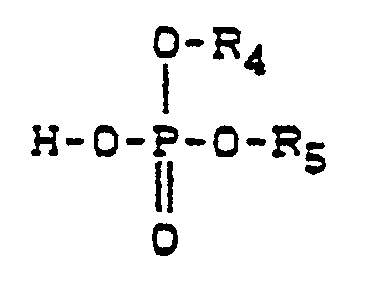
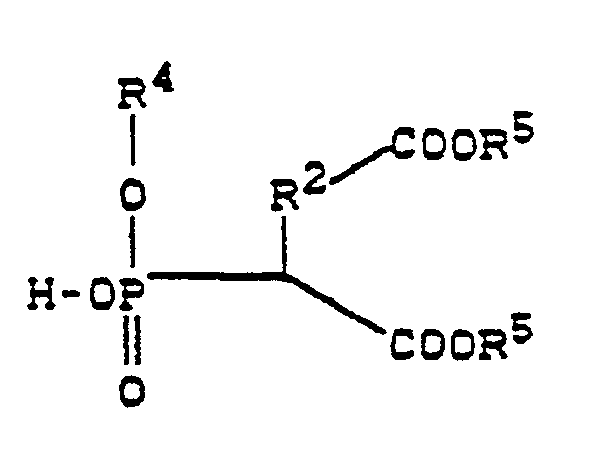
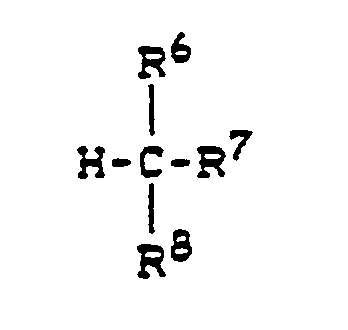
- the suspension developer according to the invention contains a Bronsted acid which has at least one hydrocarbon radical having 6 to 24 carbon atoms, preferably in an amount such that the basic nitrogen-containing vinylaromatic units of the block copolymer are wholly or partly in neutralized form.
- the added Bronsted acid creates or increases a positive charge on the toner particles.
- the Bronsted acids are generally used in amounts of 0.01 to 10% by weight, preferably 0.1 to 5% by weight, based on the solids content of the suspension developer according to the invention.
- the amount used is such that the basic nitrogen-containing vinylaromatic units contained in the block copolymer are completely or partially, but preferably only partially, neutralized.
- the extent of the positive toner charge can be adjusted in a simple manner via the type and the amount of Bronsted acid.
- fixing agents are incorporated into the developer.
- Suitable fixing substances are resins which are said to be compatible with the binder of the photoconductive recording material, e.g. with the binder of a photoconductive zinc oxide layer, so that good adhesion of the generated image to the base is obtained after development.
- suitable resins are esters of hydrogenated rosin and long-oil oil, "rosin-modified phenol-formaldehyde resin, pentaerythritol esters of rosin, glycerol esters of hydrogenated rosin, ethyl cellulose, various alkyl resins, polyacrylic and polymethacrylic resin, polystyrene, poly (vinyl acetate).
- Specific examples of such resins can be found in the literature on electrostatographic suspension developers; e.g. in DE-PS 699 157 and in GB-PS 1 151 141.
- the suspension developers according to the invention can be prepared using conventional dispersion methods.
- toner concentrate composed of carrier liquid, pigment and polymer with a content of 5 to 50% by weight, preferably 10 to 25% by weight of solid, which can be adjusted to the use concentrations of 0.05 to by adding further carrier liquid 2%, preferably 0.1 to 1% is diluted.
- the block copolymer used according to the invention can be treated by a pretreatment, e.g. can be applied to the pigment by melting or by precipitation from solutions. However, it is also possible to add the block copolymer to the carrier liquid from which it is absorbed onto the pigment by adsorption.
- K from the table is equal to the second cumulant divided by the square of the first cumulant from the cumulant analysis of the autocorrelation function of the scattered laser light (Koppel, DE, J. Chem. Phys. 57, 11 (1972) 4814-4820) and is a measure of the distribution width of the particle size distribution.
- the K values of samples 2, 4 and 6 correspond to values found for almost monodisperse latex dispersions.
- Samples 2, 4 and 6 from Example 2 are added with 0.5 to 1% by weight of zinc mono (2-butyl) octyl phosphate (ZOP), based on the pigment, as the charge-determining substance.
- ZOP zinc mono (2-butyl) octyl phosphate
- X E is the conductivity of the entire developer
- X M is the conductivity of the liquid phase of the developer after separation of the pigment particles by centrifugation.
- the very low conductivity of the liquid phase compared to the conductivity of the entire developer is of particular advantage in terms of application technology.
- suspension developers obtained after the addition of 1% by weight of ZOP, based on the amount of pigment show a strong tendency towards sedimentation and at the same time provide moderately tinted images with insufficient resolution.
Landscapes
- Chemical & Material Sciences (AREA)
- Physics & Mathematics (AREA)
- General Physics & Mathematics (AREA)
- Inorganic Chemistry (AREA)
- Health & Medical Sciences (AREA)
- Chemical Kinetics & Catalysis (AREA)
- Medicinal Chemistry (AREA)
- Polymers & Plastics (AREA)
- Organic Chemistry (AREA)
- Liquid Developers In Electrophotography (AREA)
- Developing Agents For Electrophotography (AREA)
Claims (8)



Applications Claiming Priority (2)
| Application Number | Priority Date | Filing Date | Title |
|---|---|---|---|
| DE19853531381 DE3531381A1 (de) | 1985-09-03 | 1985-09-03 | Elektrostatischer suspensionsentwickler |
| DE3531381 | 1985-09-03 |
Publications (3)
| Publication Number | Publication Date |
|---|---|
| EP0213568A2 EP0213568A2 (fr) | 1987-03-11 |
| EP0213568A3 EP0213568A3 (en) | 1988-07-27 |
| EP0213568B1 true EP0213568B1 (fr) | 1990-09-19 |
Family
ID=6279994
Family Applications (1)
| Application Number | Title | Priority Date | Filing Date |
|---|---|---|---|
| EP86111621A Expired - Lifetime EP0213568B1 (fr) | 1985-09-03 | 1986-08-22 | Développateur de suspension électrostatographique |
Country Status (4)
| Country | Link |
|---|---|
| US (1) | US4665011A (fr) |
| EP (1) | EP0213568B1 (fr) |
| JP (1) | JPS6256972A (fr) |
| DE (2) | DE3531381A1 (fr) |
Families Citing this family (6)
| Publication number | Priority date | Publication date | Assignee | Title |
|---|---|---|---|---|
| US4891286A (en) * | 1988-11-21 | 1990-01-02 | Am International, Inc. | Methods of using liquid tower dispersions having enhanced colored particle mobility |
| US4957844A (en) * | 1989-03-31 | 1990-09-18 | Dximaging | Liquid electrostatic developer containing multiblock polymers |
| US5106717A (en) * | 1990-05-02 | 1992-04-21 | Dximaging | Ab diblock copolymers as toner particle dispersants for electrostatic liquid developers |
| US5298833A (en) * | 1992-06-22 | 1994-03-29 | Copytele, Inc. | Black electrophoretic particles for an electrophoretic image display |
| US6828358B2 (en) | 2000-11-10 | 2004-12-07 | Samsung Electronics Co., Ltd. | Liquid inks comprising treated colorant particles |
| JP2012113167A (ja) * | 2010-11-25 | 2012-06-14 | Sanyo Chem Ind Ltd | 電子写真用液体現像液 |
Family Cites Families (9)
| Publication number | Priority date | Publication date | Assignee | Title |
|---|---|---|---|---|
| US2543844A (en) * | 1945-08-27 | 1951-03-06 | Phillips Petroleum Co | Plasticizing synthetic rubber with a reaction product of an alkyl mercaptan and a rubbery diolefin polymer |
| GB828814A (en) * | 1955-10-28 | 1960-02-24 | Goodyear Tire & Rubber | Improvements in or relating to elastomeric addition products |
| US3567798A (en) * | 1967-02-28 | 1971-03-02 | Shell Oil Co | Block copolymers containing certain polar end blocks |
| GB1266545A (fr) * | 1968-06-01 | 1972-03-08 | ||
| JPS5413981B2 (fr) * | 1973-11-05 | 1979-06-04 | ||
| US3891721A (en) * | 1973-11-15 | 1975-06-24 | Goodyear Tire & Rubber | Block polymers of styrene-butadiene-2-vinylpyridine |
| US4476210A (en) * | 1983-05-27 | 1984-10-09 | Xerox Corporation | Dyed stabilized liquid developer and method for making |
| DE3412085A1 (de) * | 1984-03-31 | 1985-10-17 | Agfa-Gevaert Ag, 5090 Leverkusen | Elektrostatographischer suspensionsentwickler |
| DE3473185D1 (en) * | 1984-10-02 | 1988-09-08 | Agfa Gevaert Nv | Liquid developer for development of electrostatic images |
-
1985
- 1985-09-03 DE DE19853531381 patent/DE3531381A1/de not_active Withdrawn
-
1986
- 1986-08-22 US US06/899,437 patent/US4665011A/en not_active Expired - Fee Related
- 1986-08-22 DE DE8686111621T patent/DE3674296D1/de not_active Expired - Fee Related
- 1986-08-22 EP EP86111621A patent/EP0213568B1/fr not_active Expired - Lifetime
- 1986-09-03 JP JP61206064A patent/JPS6256972A/ja active Pending
Also Published As
| Publication number | Publication date |
|---|---|
| DE3674296D1 (de) | 1990-10-25 |
| EP0213568A3 (en) | 1988-07-27 |
| DE3531381A1 (de) | 1987-03-12 |
| JPS6256972A (ja) | 1987-03-12 |
| US4665011A (en) | 1987-05-12 |
| EP0213568A2 (fr) | 1987-03-11 |
Similar Documents
| Publication | Publication Date | Title |
|---|---|---|
| DE3138999C2 (fr) | ||
| DE69121279T2 (de) | Flüssiger elektrophotographischer Entwickler mit Säure enthaltenden Polyesterharzen | |
| EP0157269B1 (fr) | Suspension de développement pour l'électro-photographie | |
| EP0168748B1 (fr) | Suspension de développement pour l'électro-photographie et son procédé de fabrication | |
| DE3650588T2 (de) | Elektrophotographischer Toner | |
| EP0102025B1 (fr) | Développateur électrostatographique à sec et son procédé de fabrication | |
| DE2815093A1 (de) | Entwickler fuer elektrostatische bilder | |
| DE2512112C3 (de) | Elektrophotographischer Suspensionsentwickler | |
| DE2333850C2 (de) | Elektrostatographischer Suspensionsentwickler | |
| DE4016564A1 (de) | Harzzusammensetzungen fuer elektrophotographische toner | |
| DE2936042C2 (de) | Elektrophotographischer Suspensionsentwickler | |
| EP0213568B1 (fr) | Développateur de suspension électrostatographique | |
| DE2502933C2 (de) | Elektrostatographischer Suspensionsentwickler | |
| DE3624209A1 (de) | Nicht-waessrige kunstharzdispersion und diese enthaltender elektrophotographischer entwickler | |
| DE2334353C2 (de) | Positiv arbeitender elektrostatographischer Suspensionsentwickler | |
| DE2452499C2 (de) | Verfahren zur Herstellung eines elektrostatographischen Suspensionsentwicklers | |
| DE19611731A1 (de) | Ladungsregler, Tonerbinderzusammensetzung und elektrophotographischer Toner | |
| EP0168747B1 (fr) | Suspension de développement pour l'électro-photographie et son procédé de fabrication | |
| DE3000900C2 (fr) | ||
| DE3339662C2 (de) | Verfahren zur Herstellung eines elektrofotografischen Suspensionsentwicklers und dessen Verwendung für die Herstellung von elektrofotografischen Druckformen | |
| EP0200067A2 (fr) | Suspension de développement pour l'électrophotographie et son procédé de fabrication | |
| DE2853608A1 (de) | Entwickler fuer die elektrostatische photographie | |
| DE3147177A1 (de) | Metallische pigmente fuer farben bzw. lacke | |
| DE69609176T2 (de) | Bindemittelharz, verfahren zu seiner herstellung und zusammensetzungen damit | |
| DE3616047C2 (fr) |
Legal Events
| Date | Code | Title | Description |
|---|---|---|---|
| PUAI | Public reference made under article 153(3) epc to a published international application that has entered the european phase |
Free format text: ORIGINAL CODE: 0009012 |
|
| 17P | Request for examination filed |
Effective date: 19860822 |
|
| AK | Designated contracting states |
Kind code of ref document: A2 Designated state(s): BE DE FR GB |
|
| RAP1 | Party data changed (applicant data changed or rights of an application transferred) |
Owner name: AGFA-GEVAERT AG |
|
| PUAL | Search report despatched |
Free format text: ORIGINAL CODE: 0009013 |
|
| AK | Designated contracting states |
Kind code of ref document: A3 Designated state(s): BE DE FR GB |
|
| 17Q | First examination report despatched |
Effective date: 19891222 |
|
| GRAA | (expected) grant |
Free format text: ORIGINAL CODE: 0009210 |
|
| AK | Designated contracting states |
Kind code of ref document: B1 Designated state(s): BE DE FR GB |
|
| ET | Fr: translation filed | ||
| REF | Corresponds to: |
Ref document number: 3674296 Country of ref document: DE Date of ref document: 19901025 |
|
| GBT | Gb: translation of ep patent filed (gb section 77(6)(a)/1977) | ||
| PLBE | No opposition filed within time limit |
Free format text: ORIGINAL CODE: 0009261 |
|
| STAA | Information on the status of an ep patent application or granted ep patent |
Free format text: STATUS: NO OPPOSITION FILED WITHIN TIME LIMIT |
|
| PG25 | Lapsed in a contracting state [announced via postgrant information from national office to epo] |
Ref country code: GB Effective date: 19910822 |
|
| PG25 | Lapsed in a contracting state [announced via postgrant information from national office to epo] |
Ref country code: BE Effective date: 19910831 |
|
| 26N | No opposition filed | ||
| BERE | Be: lapsed |
Owner name: AGFA-GEVAERT A.G. Effective date: 19910831 |
|
| GBPC | Gb: european patent ceased through non-payment of renewal fee | ||
| PG25 | Lapsed in a contracting state [announced via postgrant information from national office to epo] |
Ref country code: FR Effective date: 19920430 |
|
| PG25 | Lapsed in a contracting state [announced via postgrant information from national office to epo] |
Ref country code: DE Effective date: 19920501 |
|
| REG | Reference to a national code |
Ref country code: FR Ref legal event code: ST |