EP0213617B1 - Stimulant pour les mouvements de contraction du système digestif - Google Patents
Stimulant pour les mouvements de contraction du système digestif Download PDFInfo
- Publication number
- EP0213617B1 EP0213617B1 EP86111939A EP86111939A EP0213617B1 EP 0213617 B1 EP0213617 B1 EP 0213617B1 EP 86111939 A EP86111939 A EP 86111939A EP 86111939 A EP86111939 A EP 86111939A EP 0213617 B1 EP0213617 B1 EP 0213617B1
- Authority
- EP
- European Patent Office
- Prior art keywords
- compound
- reference example
- hemiketal
- anhydroerythromycin
- formula
- Prior art date
- Legal status (The legal status is an assumption and is not a legal conclusion. Google has not performed a legal analysis and makes no representation as to the accuracy of the status listed.)
- Expired - Lifetime
Links
- 0 C1CC*CC1 Chemical compound C1CC*CC1 0.000 description 3
Classifications
-
- C—CHEMISTRY; METALLURGY
- C07—ORGANIC CHEMISTRY
- C07H—SUGARS; DERIVATIVES THEREOF; NUCLEOSIDES; NUCLEOTIDES; NUCLEIC ACIDS
- C07H17/00—Compounds containing heterocyclic radicals directly attached to hetero atoms of saccharide radicals
- C07H17/04—Heterocyclic radicals containing only oxygen as ring hetero atoms
- C07H17/08—Hetero rings containing eight or more ring members, e.g. erythromycins
Definitions
- the present invention relates to a stimulant for contractile motion of the digestive tract of mammals.
- the digestive tract consists of the stomach, the duodenum, the small intestine, etc., and plays an important role in the digestion of food taken from the mouth.
- the contructile motion of the digestive tract is essential in order to perform the digestion smoothly.
- the autonomous nerve system and digestive tract hormones function effectively to induce contraction of the digestive tract not only immediately after the intake of foods but also in a state where the digestive tract is empty, when such contraction has been considered absent.
- the movement in such empty digestive tract is transmitted from the stomach to the duodenum and to the small intestine, and plays an important role for cleaning the digestive tract, thus preparing for next intake of foods (Z. Itoh, "Iden", 33 , 29, 1979).
- a stimulant for contraction of the digestive tract is expected to induce a normal movement of the digestive tract, in a human with weakened function of the digestive tract, thereby a healthy body being maintained.
- Motilin is already known as a digestive tract hormone for stimulating the contraction of the digestive tract. This substance is a peptide, consisting of 22 amino acids and extracted by J. C. Brown in 1966 from the mucous membrane of a pig duodenum (J. C. Brown et al., Gastroenterology, 50 , 333, 1966), and is already synthesized chemically (E. Wünsch et al., Zeitschrift für Naturforsch, 28C , 235, 1973).
- the present invention provides:
- the acyl radical alkanoyl and aroyl represented by R1, R2, or R5 in the foregoing formula is an acyl radical derived from a carboxylic acid, which can be a monocarboxylic or polycarboxylic acid, and a saturated or unsaturated carboxylic acid.
- a saturated or unsaturated acyl radical containing 1 to 20 carbon atoms such as formyl, acetyl, propionyl, butyryl, isobutyryl, valeryl, isovaleryl, hexanoyl, pivaloyl, lauroyl, myristoyl, palmitoyl, stearoyl, acryloyl, propioloyl, methacryloyl etc.
- aryl carboxylic acid include benzene carboxylic acid, and naphthalene carboxylic acid.
- a dicarboxylic acyl radical which can be a saturated or unsaturated acyl radical containing 2 to 6 carbon atoms, which may optionally be esterified, such as oxalo, carboxyacetyl, 3-carboxypropionyl, cis-3-carboxyacryloyl, trans-3-carboxyacryloyl, cis-3-methyl-3-carboxyacryloyl, are preferred.
- the sulfonic acyl (alkylsulfonyl, arylsulfonyl and aralkylsulfonyl represented by R1, R2 or R5 in the above formula) is an acyl radical derived from a sulfonic acid, represented for examply by the general formula R14SO2- wherein R14 stands for an alkyl, aryl or aralkyl radical.
- R14 stands for an alkyl, aryl or aralkyl radical.
- the alkyl radical preferably contains for example 1 to 6 carbon atoms, and may be linear or branched.
- alkyl radicals are methyl, ethyl, propyl, isopropyl, butyl, isobutyl, sec-butyl, tert-butyl, n-pentyl and n-hexyl.
- aryl radical include phenyl and naphthyl.
- the aryl radical may have a substituent and examples of said substituent include a lower alkyl radical (such as methyl), a lower alkoxy radical (such as methoxy), a halogen atom (such as fluorine, chlorine, and bromine).
- An example of said aralkyl is 2-phenethyl.
- the phosphoric acyl (di-alkyloxylphosphoryl, di-aryloxyphosphoryl, and di-aralkyloxyphosphoryl represented by R1 in the above formula) is an acyl radical derived from phosphoric acid, represented, for example, by a general formula (R16O)2PO- wherein R16 stands for an alkyl, aryl or aralkyl radical.
- R16 stands for an alkyl, aryl or aralkyl radical.
- the alkyl radical preferably contains for example, 1 to 6 carbon atoms and can be linear or branched.
- alkyl radicals examples include methyl, ethyl, propyl, isopropyl, butyl, isobutyl, sec-butyl, tert-butyl, n-pentyl and n-hexyl.
- aryl radical examples include phenyl, tolyl and naphthyl.
- the aralkyl radical can be an aryl alkyl radical, wherein the aryl can be the above-mentioned aryl, while the alkyl preferably contains 1 to 3 carbon atoms, and there can be mentioned, for example, methyl, ethyl or propyl.
- the substituent in the acyl radical which may be substituted, represented by R1, R2, and R5, can be, for example, a halogen atom, an alkoxy or alkylthio radical.
- halogen atoms are chlorine, bromine, fluorine and iodine.
- alkoxy radical there can be mentioned radicals containing 1 to 4 carbon atoms, such as methoxy, ethoxy, propoxy and butoxy.
- alkylthio radical there can be mentioned radicals containing, 1 to 4 carbon atoms, such as, methylthio, ethylthio, propylthio, isopropylthio, butylthio, isobutylthio, sec-butylthio and tert-butylthio.
- the C1 ⁇ 6 alkanoyl radical represented by R6 in the foregoing formula can be a monocarboxylic acyl or polycarboxylic acyl radical, such as, formyl, acetyl, propionyl, butyryl, isobutyryl, valeryl, isovaleryl, hexanoyl, oxalo, carboxyacetyl or 3-carboxypropionyl.
- the alkyl radical in the alkyl radical which may be substituted preferably contains 1 to 3 carbon atoms, and can be linear or branched.
- the alkyl radicals include methyl, ethyl, propyl and isopropyl.
- the substituent is preferably an alkoxy radical containing 1 to 3 carbon atoms or an alkoxyalkoxy radical containing 2 to 6 carbon atoms, and examples of the alkoxy radicals include methoxy, ethoxy and propoxy, while examples of the alkoxyalkoxy radicals include methoxyethoxy, methoxypropoxy, methoxybutoxy, methoxypentyloxy, ethoxyethoxy, ethoxypropoxy, ethoxybutoxy and propoxypropoxy.
- the alkyl radical which is represented by R6 and may have an alkylthio substituent can be methyl.
- the alkylthio as the substituent may include a radical represented by the general formula R17S-, wherein R17 is a lower alkyl radical.
- the lower alkyl radical preferably contains 1 to 3 carbon atoms, such as methyl, ethyl or propyl.
- the alkyl radical represented by R8 may contain 1 to 6 carbon atoms, preferably 1 to 3 carbon atoms, and examples thereof include methyl, ethyl and propyl.
- the aryl radical represented by R8 is, for example, phenyl, tolyl or naphthyl.
- the alkyl radical containing 1 to 6 carbon atoms can be linear or branched, and examples thereof include methyl, ethyl, propyl, isopropyl, butyl, isobutyl, sec-butyl, tert-butyl, n-pentyl and n-hexyl.
- a linear or branched radical containing 1 to 3 carbon atoms such as methyl, ethyl, propyl or isopropyl.
- examples for the C1 ⁇ 6 alkyl radical represented by R b or R d are methyl, ethyl, propyl, isopropyl, butyl, isobutyl, sec-butyl, pentyl, isopentyl and hexyl.
- Examples for the C1 ⁇ 6 alkyl radical represented by R e or R f which may have substituents, are methyl, ethyl, propyl, isopropyl, butyl, isobutyl, pentyl and hexyl.
- Examples for the C2 ⁇ 6 alkenyl radical represented by R e or R f are vinyl, allyl, 2-butenyl, methylallyl, 3-butenyl, 2-pentenyl, 4-pentenyl, and 5-hexenyl.
- Examples for the C2 ⁇ 6 alkynyl radical represented by R e or R f are ethynyl, propargyl, 2-butyn-1-yl, 3-butyn-1-yl, 3-butyn-2-yl, 1-pentyn-3-yl, 3-pentyn-1-yl, 4-pentyn-2-yl, and 3-hexyn-1-yl.
- substituents in the foregoing alkyl, radical, which may be substituted include, for example, hydroxy, C3 ⁇ 6cycloalkyl.
- examples of the halogen anions represented by X ⁇ include iodido ion, bromo ion and chloro ion.
- R1 is a hydrogen atom or an alkyl carboxylic acyl radical having 1 to 5 carbon atoms
- R2 is a hydrogen atom, an alkyl carboxylic acyl radical having 1 to 5 carbon atoms, or an alkyl sulfonic acyl radical having 1 to 5 carbon atoms
- R a is a quaternary ammonium salt
- both R5 and R6 are hydrogen, or at least one of R5 and R6 is an alkyl acyl radical having 1 to 5 carbon atoms or an alkyl sulfonic acyl radical.
- R a is preferable to be a quaternary ammonium salt.
- R d and R e form together with adjacent nitrogen atom a cyclic alkylamino radical of 5 to 7 members such as pyrrolidine, piperidine, hexamethyleneimine and the like, or both R d and R e are alkyl radicals having 1 to 5 carbon atoms and R f is an alkyl radical having 1 to 5 carbon atoms, an alkenyl or alkynyl radical having 2 to 6 carbon atoms.
- X of the quaternary ammonium salt there are preferably mentioned chlorine, bromine and iodine.
- the compound (1) of the present invention can be prepared according to the following method.
- a compound which may be protected represented by the following formula, is reacted with an acylating, alkylating, boronating, carbonating, sulfinylating or ketalizing agent, followed by the removal of protection, if necessary, whereby the compound [1] can be prepared: wherein R a has the same meanings as defined above, A' represents the formula: (wherein Z'' represent the formula or the formula R11 and R12 have the same meanings as defined above).
- the compound [1] can be prepared by subjecting a compound represented by the following formula to N-alkylation, N-alkenylation or N-alkynylation reaction: wherein R1, R2, R11, R12 and Z have the same meanings as defined above, R g represents -NH-R b (wherein R b has the same meaning as defined above) or the formula (wherein R d and R e have the same meanings as defined above).
- the compound [1] can be prepared by subjecting the compound [2] to a alrealy known reaction, namely by reacting with an acylating, alkylating, boronating, carbonating, sulfinylating or ketalyzing agent, followed by the removal of protection, if necessary.
- the acylating agent employable in the acylation is a reactive derivative of a carboxylic acid capable of introducing a carboxylic acyl radical, such as an acid halide, an acid anhydride, an amide compound, an active ester or an active thioester.
- a carboxylic acyl radical such as an acid halide, an acid anhydride, an amide compound, an active ester or an active thioester.
- acid halides examples include acid chloride and acid bromide.
- Such acid anhydrides include mixed anhydrides of monoalkyl carbonic acid, mixed anhydrides of aliphatic carboxylic acids such as acetic acid, pivalic acid, valeric acid, isovaleric acid, trichloroacetic acid, mixed anhydrides of aromatic carboxylic acids such as benzoic acid, and symmetric acid anhydrides.
- amide compounds there can be used compounds wherein an acyl radical is bonded to a nitrogen atom in a ring, such as a pyrazole, imidazole, 4-substituted imidazole, dimethylpyrazole or benzotriazole.
- active esters examples include methyl ester, ethyl ester, methoxymethyl ester, propargyl ester, 4-nitrophenyl ester, 2,4-dinitrophenyl ester, trichlorophenyl ester, pentachlorophenyl ester, mesylphenyl ester, and esters with 1-hydroxy-1H-2-pyridone, N-hydroxysuccinimide or N-hydroxyphthalimide.
- active thioesters examples include thioesters with heterocyclic thiols such as 2-pyridylthiol or 2-benzothiazolylthiol.
- the above-mentioned reactive derivatives are suitably selected according to the kind of the carboxylic acid.
- carboxyl radicals except one, are preferably protected in the form of esters.
- the acylating agent can also be a reactive derivative of a sulfonic acid capable of introducing a sulfonic acyl radical, for example an acid halide such as methane sulfonyl chloride, benzylsulfonyl chloride or paratoluene sulfonyl chloride, or a symmetric acid anhydride such as methane sulfonic anhydride or paratoluene sulfonic anhydride.
- an acid halide such as methane sulfonyl chloride, benzylsulfonyl chloride or paratoluene sulfonyl chloride
- a symmetric acid anhydride such as methane sulfonic anhydride or paratoluene sulfonic anhydride.
- the alkylating agent employable for the alkylation at the 4''- or 11- position can for example be a corresponding alkyl halide (for example chloride, bromide or iodide), and that employable for the alkylation at the 12- position can for example be dimethyl sulfoxide.
- a corresponding alkyl halide for example chloride, bromide or iodide
- that employable for the alkylation at the 12- position can for example be dimethyl sulfoxide.
- Example of the boronating agents employable in the boronation reaction are alkylboric acids (such as ethylboric acid) and arylboric acids (such as phenylboric acid).
- Examples of the carbonating agents employable in the carbonation reaction are ethylene carbonate, carbonyl diimidazole and thiocarbonyl diimidazole.
- Examples of the sulfinylating agents employable in the sulfinylation reaction is ethylene sulfite.
- Examples of the ketalyzing agents employable in the ketalyzation reaction are 2-methoxypropene, 2,2-dimethoxypropane, 1,1-dimethoxycyclohexane, N,N-dimethylformamide dimethylacetal, and N,N-dimethylacetamide dimethylacetal.
- the amount of said acylating agent varies according to the number of acyl radicals to be introduced.
- the solvent to be employed in the acylation is not limited as long as it does not react with the acylating agent, but is preferably dichloromethane, ether, pyridine, and chloroform.
- bases are tertiary amines such as triethylamine, diisopropylethylamine and tribenzylamine, and inorganic salts such as potassium carbonate.
- the reaction temperature is O o C to 80 o C, and the reaction time is 10 minutes to 2 weeks.
- the amount of the acylating agent varies according to the number of acyl radicals to be introduced.
- Examples of the solvents to be employed in the acylation are pyridine, chloroform, ether and dichloromethane.
- Examples of the bases are tertiary amines such as pyridine, tribenzylamine and diisopropylethylamine.
- the reaction temperature is O o C to 50 o C, and the reaction time is 10 minutes to 2 days.
- the amount of alkylating agent in the alkylation reaction varies according to the number of alkyl radicals to be introduced.
- Examples of the solvents to be employed in the alkylation reaction are chloroform, dimethyl sulfoxide, dimethyl formamide, ether and ethanol.
- the reaction temperature is 0 o C to 80 o C, and the reaction time is about 15 minutes to 1 week.
- Examples of the base to be employed in the alkylation at the 4''- or 11- position are tertiary amines such as diisopropylethylamine or pyridine, sodium hydride and potassium hydride.
- the boronating agent is preferably employed in an equivalent amount or in excess (2 - 3 times in molar ratio).
- the solvents to be employed in the boronation reaction are benzene, toluene and ether.
- the reaction temperature is 80 o C to 130 o C, and the reaction time is 1 hour to 5 hours.
- the carbonating agent is preferably employed in a 2 - 10 times excess amount, in molar ratio, according to the kind thereof.
- the solvent to be employed in the carbonation reaction are benzene and toluene.
- the reaction temperature is 25 o C to 130 o C, and the reaction time is 30 minutes to 1 day.
- the base to be employed can be an inorganic salt such as potassium carbonate.
- the sulfinylating agent is preferably employed in a samll excess (2 - 3 times in molar ratio).
- the solvents to be employed in the sulfinylation are methanol and ethanol.
- the reaction temperature is 20 o C to 30 o C, and the reaction time is 2 days to 3 days.
- the base to be employed in said sulfinylation can be an inorganic salt such as potassium carbonate.
- the ketalization reaction should preferably be carried out according to the ketal exchange reaction by using the compound of the corresponding formula (wherein R9 and R10 have the same meanings as defined above, R represents a lower alkyl radical such as methyl, ethyl) as the ketalyzing agent.
- the reaction solvent there can be employed halogenated hydrocarbons such as chloroform, ethers such as tetrahydrofuran, and amides such as dimethylformamide, and it is also possible to use the ketalyzing agent itself as the solvent.
- the ketalating agent may be used usually in slight excess (2 times mols) to a great excess (100 times mols), but the amount is preferably 2 to 4 times excess in the case of the latter ketalyzing agent.
- a strong acid salt of pyridine such as pyridinium chloride
- the combination of the latter ketalyzing agent and pyridineum chloride is preferred.
- the reaction may be conducted preferably at a temperature of O o C to the boiling point of the solvent, more preferably at around room temperature (15 o C to 25 o C).
- the reaction time may be from several hours to 72 hours, usually 12 to 24 hours.
- a compound subjected to the acetylation at the 2'- position as explained above is agitated with an acylating agent and a base in large excess for 15 minutes to overnight at room temperature, then treated in the usual manner and purified by silica gel chromatography to obtain a 2'-O-acetyl-4''-O-acylated compound.
- the desired compound is obtained by allowing a methanolic solution of the above-mentioned compound to stand for 1 to 2 days at room temperature, and distilling off methanol under a reduced pressure, followed by purification by silica gel chromatography.
- a 2'-O-acetyl-4''-formylated compound obtained in the above-explained manner is agitated with large excesses of an acylating agent and a base for several hours to several days at room temperature to about 70 o C to obtain a 2'-O-acetyl-4''-formyl-11- acylated compound, which is then heated under reflux for about 3 hours to 3 days in methanol to obtain the desired compound.
- a 2'-O-acetylated compound obtained in the above-explained manner is agitated overnight with trimethylchlorosilane and tribenzylamine and treated in the usual manner to obtain a 2'-O-acetyl-11, 4''-di-O-silylated compound.
- a dichloroethane solution of the compound is agitated with large excesses of an acylating agent and a base for two days at 75 - 80 o C to obtain a 2'-O-acetyl-11, 4''-di-O-silyl-12-O-acylated compound, which is treated in the usual manner and subjected to methanolysis to obtain the desired compound.
- the compound [2] is reacted with excessive amounts of benzyloxycarbonyl chloride and sodium hydrogen carbonate, and the 3'-dimethylamino radical are protected by, in the latter case, by methyl radical of it by the acyl. It is then dissolved in dimethyl formamide and reacted with an alkylating agent and a base under cooling with ice. The product is then dissolved in water and ethanol, then subjected to hydrogenolysis in the presence of a palladium-carbon catalyst, and hydrogenated in the presence of formaldehyde to obtain the desired compound.
- Preferred examples of the protecting radicals are acetyl for the 2'- position, formyl and silyl for the 4'-position, and acetyl and silyl for the 11- position.
- a compound [2] having a protective radicals can be prepared in processes similar to that explained above.
- the removal of the protective radical can be suitably achieved in the usual manner, for example, by a method using a base (alkaline hydrolysis), a method using hydrazine or a reduction method, according to the kind of the protective radicals.
- a base alkaline hydrolysis
- a method using hydrazine or a reduction method according to the kind of the protective radicals.
- a base there can be employed, depending on the kind of the protective radicals and other conditions, for example, a hydroxide of an alkaline metal such as sodium, potassium or lithium or an alkali earth metal such as calcium or magnesium, an inorganic base such as a carbonate, a metal alkoxide, an organic amine, an organic base such as quaternary ammonium salt, or a basic ion exchange resin.
- said solvent is usually a hydrophilic organic solvent, water or a mixture thereof.
- the reduction method is conducted, for example, in the presence of a reducing metal catalyst, depending on the kind of protective radicals and other conditions, and the examples of such catalyst employable in catalytic reduction include platinum catalysts such as platinum sponge, platinum asbestos, platinum black, platinum oxide and colloidal platinum: palladium catalysts such as palladium sponge, palladium black, palladium oxide, palladium on barium sulfate, palladium on barium carbonate, palladium on activated carbon, colloidal palladium and palladium on silica gel; reduced nickel, nickel oxide, Raney nickel and Urushibara nickel.
- the reduction method is usually conducted in a solvent, which is usually composed of an alcohol such as methanol, ethanol, propyl alcohol or isopropyl alcohol, or ethyl acetate.
- the method using a base or the reduction method is usually conducted under cooling or under heating.
- an organic acid such as acetic acid, pyridinium chloride or pyridinium paratoluene sulfonate.
- the reaction temperature is O o C to 30 o C
- the reaction time is 30 minutes to 1 hour
- the range of pH in reaction is 1 to 6.
- the solvent employable in the reaction is, for example, acetic acid, chloroform, dichloromethane or ether, and the reaction is preferably conducted under agitation.
- the reaction is carried out by reacting a corresponding ketone or aldehyde to the compound [5'] under the reduction conditions.
- catalytic reduction can be used [see R. K. Clark Jr. and M. Flyfelder, ANTIBIOTICS AND CHEMOTHERAPY, 7 , 483 (1957)].
- the catalyst usable therefor may be those as described in the previous item of reductive deprotection, particularly preferable being palladium black, palladium carbon, and Raney nickel.
- the reaction can be preferably carried out in alcohols (such as methanol and ethanol), ethers (such as tetrahydrofuran and dimethoxyethane) and aqueous mixtures thereof, in the presence of hydrogen gas, under ice cooling to 80 o C, preferably around room temperature.
- alcohols such as methanol and ethanol
- ethers such as tetrahydrofuran and dimethoxyethane
- aqueous mixtures thereof in the presence of hydrogen gas, under ice cooling to 80 o C, preferably around room temperature.
- reduction by use of a metal hydride may also be used.
- metal hydride sodium borohydride, sodium cyanoborohydride are preferred.
- the reaction is carried out preferably in a solvent such as alcohols (e.g. methanol and ethanol), ethers (e.g. tetrahydrofuran and dimethoxyethane), nitriles (e.g. acetonitrile) and aqueous mixtures thereof, more preferably while maintaining the pH of the reaction mixture at neutral to weakly acidic (pH 3 to 6), and it is preferable for control of the pH, to add a buffer solution or mineral acid (such as hydrochloric acid), an organic acid (such as acetic acid) or an aqueous solution thereof.
- a solvent such as alcohols (e.g. methanol and ethanol), ethers (e.g. tetrahydrofuran and dimethoxyethane), nitriles (e.g. acetonitrile) and aqueous mixtures thereof, more preferably while maintaining the pH of the reaction mixture at neutral to weakly acidic (pH 3 to 6), and it is preferable
- the amount of the metal hydride used is varied, depending on the carbonyl compound used, but it is a slight excess over to 100 times the theoretical amount, preferably a slight excess to 10 times thereof, and it is added suitably with the progress of the reaction.
- the reaction is carried out at -20 o C to 80 o C, preferably at O o C to 30 o C.
- the compound [1'] can also be synthesized by allowing the compound [5'] to react with, for example, corresponding alkyl, alkenyl or alkynyl halide, an ester, trioxonium salt, in the presence of a base.
- bases examples include sodium hydroxide, potassium hydroxide, sodium hydrogen carbonate, potassium carbonate, butyl lithium phenyl lithium and sodium hydride.
- halogen atoms in the halide include chlorine, bromine and iodine, particularly preferably iodine.
- esters examples include sulfate esters.
- trioxonium salts include trimethyloxonium fluoroborate, and triethyloxonium fluoroborate.
- reaction reagents are each 1 to 100 mol equivalent, preferably 2 to 25 mol equivalent per 1 mol of the starting compound.
- solvents to be used in the reaction include preferably halogenated hydrocarbons (such as chloroform and dichloromethane), ethers (such as ethyl ether and tetrahydrofuran), esters (such as ethyl acetate), and alcohols (such as methanol and ethanol).
- halogenated hydrocarbons such as chloroform and dichloromethane
- ethers such as ethyl ether and tetrahydrofuran
- esters such as ethyl acetate
- alcohols such as methanol and ethanol
- the reaction is carried out under ice cooling (O o C) to the boiling point of the solvent (to 100 o C), preferably at room temperature (15 to 25 o C) to 80 o C.
- the reaction time is 2 to 48 hours.
- reagents to be used in the reaction include corresponding alkyl, alkenyl or alkynyl halides, esters, and trioxonium salts.
- halogen atoms in the halides include chlorine, bromine and iodine, particularly preferably iodine.
- esters examples include sulfate esters.
- trioxonium salts are trimethyloxonium fluoroborate, and triethyloxonium fluorobrate.
- the reaction reagent is used in an amount of 1 to 100 mol equivalent, preferably 2 to 25 mol equivalent per one mol of the starting compound.
- the solvent to be used in the reaction include, for example, haloganated hydrocarbons (such as chloroform and dichloromethane), ethers (such as ethyl ether and tetrahydrofuran), esters (such as ethyl acetate), alcohols (such as methanol and ethanol).
- haloganated hydrocarbons such as chloroform and dichloromethane
- ethers such as ethyl ether and tetrahydrofuran
- esters such as ethyl acetate
- alcohols such as methanol and ethanol
- the reaction is carried out under ice cooling (O o C) to the boiling point of the solvent (100 o C), preferably at room temperature (15 to 25 o C) to 80 o C.
- the reaction time is 2 to 48 hours.
- the quaternization can be conducted before or after the foregoing acylation reaction and the like, preferably thereafter.
- the product can be isolated by filtration of the precipitate formed by addition of an ether to obtain the desired products as a salt of the anion from the reagent used in quaternization.
- reaction mixture is subjected to column chromatography with silica gel or ion exchange resin, using, for example, a mixture of chloroform-metanol added with conc. aqueous ammonia, a compound with hydroxide ion (OH ⁇ ) as the anion can be obtained.
- silica gel or ion exchange resin using, for example, a mixture of chloroform-metanol added with conc. aqueous ammonia, a compound with hydroxide ion (OH ⁇ ) as the anion can be obtained.
- the anions of the compound thus obtained can be exchanged with other anions by a conventional means.
- the starting compound [5'] can be prepared by treating, for example, de(N-methyl)erythromycin A or bis-[de(N-methyl)] erythromycin A [E. H. Flynn, et al., Journal of the American Chemical Society, 77 , 3104 (1955), Japanese Laid-open Patent Application No. 9129/1972] under acidic conditions.
- the compound [1] thus obtained can be isolated and purified in per se already known methods, for example concentration, pH alteration, solvent-transformation, solvent extraction, lyophilization, crystallization, recrystallization, distillation, and chromatography.
- the compound [1] may form a salt with an acid.
- acids include organic acids (for example, ethylsuccinic acid, glycopeptonic acid, stearic acid, propionic acid, succinic acid, lactic acid, trifluoroacetic acid, acetic acid, methanesulfonic acid, paratoluenesulfonic acid, and benzenesulfonic acid) and mineral acids (for example, sulfuric acid, hydrochloric acid, hydriodic acid, phosphoric acid, nitric acid).
- the raw material for preparing the compound [1] can be prepared, for example, by methods reported by W. Slawinski et al., Journal of the Royal Netherlands Chemical Society, 94 236, 1975; V. C. Stephens et at., Antibiotics Annual, 1958-1959 , 346; P. H. Jones et al., Journal of Medicinal Chemistry, 15 , 631, 1972; J. Tadanier et al., Journal of Organic Chemistry, 39 , 2495, 1974; A. Banaszek et al., Roczniki Chemi, 43 , 763, 1969; C. W. Pettinga et al., Journal of the American Chemical Sodiety, 76 , 569, 1954; P. F.
- anhydroerythromycin A can be prepared according to the methods reported by P. Kurath, et al., Experientia, 27 , 362 (1971), K. Krowichki and A. Zamojski, The Journal of Antibiotics, 26 , 569 (1973), while 9-dihydroerythromycin A 6,9-epoxide and 9-dihydroerythromycin B 6,9-epoxide can be prepared according to the methods reported in Japanese Laid-open Patent Application No. 1588/1974.
- the compound [1] or its salt has an excellent effect on stimulating the gastrointestinal contraction. Also, no lethal case was observed when the compound (55) described later is orally administered to mouse at a dose of 2300 mg/kg. Accordingly, the compound [1] be considered to be low in toxicity.
- the compound [1] shows an excellent effect for stimulating the gastrointestinal contraction with a low toxicity, and the preparation of the present invention containing the compound [1] can therefore be utilized as a gastrointestinal contractive motion stimulant for the therapy of digestive malfunctions (nausea, vomiting, want of apetite in gastritis, gastric ulcer, duodenal ulcer, diseases in gallbladder and biliary tract) in mammals (mouse, rat, dog, cow, pig, man).
- the digestive tract contractive motion stimulant of the present invention can be administered orally or non-orally to the above-mentioned mammals.
- the daily dose thereof in case of oral administration, is 0.0001 - 100 mg/kg in the form of the compound [1], and, in case of non-oral administration, for example, intravenous injection, is 0.00001 - 10 mg/kg.
- a compound (32) induces an extremely strong contraction in the stomach, duodenum and small intestine in dog, by an intravenous administration of a dose of 1.0 mg/kg.
- the contractile motion is comparable to the strongest one in the gastrointestinal contraction in normal dog.
- a reduced dose in the order of 3 ⁇ g/kg induces, instead continuous strong contraction, a contractile motion of an identical pattern with that of the natural contraction inter digestive state.
- the digestive tract contractile motion stimulant of the present invention can be formed into various preparations, containing the compound [1] and additional components, such as emulsion, hydrated mixture, tablet, solution, powder, granules, capsule, and pill.
- additional components include pharmacologically permitted vehicle, disintegrator, lubricant, binder, dispersant, and plasticizer.
- the examples of vehicles are lcactose, glucose and white sugar; those of disintegrators are starch, sodium alginate, agar powder and carboxymethyl cellulose calcium; those of lubricants are magnesium stearate, talc and liquid paraffin; those of binders are syrup, gelatin solution, ethanol and polyvinyl alcohol; those of dispersants are methyl cellulose, ethyl cellulose and shellac; and those of plasticizers are glycerin and starch.
- the gastrointestinal motion was measured in the following manner (Z. Itoh, Nihon Heikatsu-kin Gakkai Zasshi, 13 , 33, 1976).
- a crossbreed adult dog of a weight of 10-15 kg was anesthethized and the abdominal cavity was opened, and force transducers were chronically sutured on the serosa of the gastrointestinal tract such as gastric body, gastric antrum, duodenum, jejunum, in directions capable of recording the contraction of circular muscles.
- the lead wires were extracted from the back and fixed to the skin. The experiment could be started 5 days after recovery from such operation, and a dog prepared in this manner can be subjected to experiments for 6 months.
- the force transducer when subjected to a bending stress by the contraction of the gastrointestinal tract where the transducer is sutured, allows to record the wave form corresponding to the applied force, on a pen-recording oscillograph, and this method allows to measure the nature and magnitude of the contraction.
- the dog was maintained in an experimental cage, and the wave form of contraction can be immediately recorded by connecting the wires of the transducer to the polygraph.
- the gastrointestinal contractive motion can be divided, from the pattern of contraction, into the in one a period after food intake and it in an interdigestive period.
- the experiments were conducted, during the interdigestive period and in an inactive period lacking the contraction in the stomach.
- the sample was injected through a silicone tube placed in advance in the superior vena cava over 10 seconds.
- the sample was dissolved in physiological saline to a total volume of 10 ml, and was slowly injected intravenously for a period of 10 seconds.
- GMSA gastrointestinal motor stimulating activity
- the obtained ethyl acetate solution was washed with the saturated agueous solution of sodium hydrogen carbonate, then with the saturated agueous solution of sodium chloride, then dried with anhydrous sodium sulfate, and the solvent was distilled off to obtain a crude product.
- Example 18 235 mg of the compound 21 obtained in Example 18 was dissolved in 1 ml of dry pyridine, and agitated with 0.5 ml butyric anhydride for 2 days at room temperature.
- the reaction solution was diluted with 30 ml of ethyl acetate, then washed with the saturated aqueous solution of sodium hydrogen carbonate and with the saturated aqueous solution of sodium chloride, dried with anhydrous sodium sulfate and the solvent was distilled off to obtain a crude product.
- a crude product obtained by removing the solvent by distillation was purified by silica gel column chromatography (developed by a 50 : 1 : 0.01 mixture of chloroform, methanol and concentrated aqueous ammonia) to obtain 40 mg (yield 52%) of 11-O-methane-sulfonyl-4''-O-formyl-8,9-anhydroerythromycin A 6,9-hemiketal (compound 25) in white powder.
- Example 16 150 mg of the compound 1 was dissolved in 2 ml of dry pyridine, and 46 ⁇ l of methanesulfonyl chloride was added thereto under agitation and under cooling with ice. After completion of the addition, agitation was continued for 1 hour under cooling with ice, and then for 2 hours at room temperature. The same process as in Example 16 was thereafter conducted to obtain 123 mg (yield 78%) of 11,4''-di-O-methanesulfonyl-8,9-anhydroerythromycin A 6,9-hemiketal (compound 26) in which powder.
- the crude produce was purified by silica gel column chromatography (Merck Art 7734 silica gel 20 g.; eluting solvent chloroform-methanol (50 : 1)), to obtain 173 mg of 11,2',4''-tri-O-acetyl-12-O-methylthiomethyl-8,9-anhydroerythromycin A 6,9-hemiketal (compound 46) as white powder.
- NH4OH 30 : 1 : 0.01, to obtain 194 mg (94.0%) of 11,12-O-isopropylidene-8,9-anhydroerythromycin A 6,9-hemiketal (compound 54) as colorless powder.
- Rf value 0.14 (CHCl3 : CH3OH : conc.
- NH4OH 10 : 1 : 0.01), high mass : 755.4856 (calcd. for C40H69NO12 : 755.4815).
- Table 8 Compound No. R1 R2 R5 R6 R e R f X 55 H H H H CH3 CH3 I 56 H H CH3CO CH3CO CH3 CH3 I 58 H H CH3SO2 H CH3 CH3 I 59 H CHO CH3SO2 H CH3 CH3 I 60 H H H H CH3CH2 CH3 I 61 H H H H CH3CH2CH2 CH3 I 62 CH3CO H H H CH3 CH3 I
- the concentrate was diluted with 30 ml of ethyl acetate and washed with saturated aqueous sodium chloride solution, followed by drying over anhydrous sodium sulfate.
- the crude product obtained by evaporation of the solvent was purified by silica gel chromatography [developing solvent: chloroform-methanol-conc. aqueous ammonia (10 : 1 : 0.1)] to obtain 91 mg (yield 57%) of 11-O-valeryl-8,9-anhydroerythromycin A 6,9-hemiketal (compound 73) in white powder.
- 11-O-ethylerythromycin A (reference: Japanese Laid-open Patent Publication No. 192294/1982) was treated in the same manner as in Reference Example 96 to obtain 102 mg (yield 84%) of 11-O-ethyl-8,9-anhydroerythromycin A 6,9-hemiketal (compound 107) in white powder.
- aqueous ammonia 50 : 1 : 0.01, to obtain 65 mg (yield 55%) of 11-O-propionyl-12-O-acetyl-8,9-anhydroerythromycin A 6,9-hemiketal (compound 108) in white powder.
- aqueous ammonia 50 : 1 : 0.1) to obtain 337 mg (yield 30%) of diallyl-bis-(de(N-methyl))-8,9-anhydroerythromycin A 6,9-hemiketal (compound 123) in white powder and 256 mg (yield 24%) of allyl-bis-(de(N-methyl))-8,9-anhydroerythromycin A 6,9-hemiketal (compound 124) in white powder.
- a capsule preparation is formed by sufficiently mixing the following components of the following amounts and filling the same in a No.3 capsule: 11,12-di-O-acetyl-8,9-anhydroerythromycin A-6,9-hemiketal [Compound (32)] 1.5 mg Lactobionic acid 0.75 mg Lactose 96.25 mg Magnesium stearate 1 mg per capsule 99.5 mg
- a tablet is given three times a day before each meal.
- this preparation is divided into 10 portions, and three administrations are given a day, one portion each time.
- a capsule preparation is formed by sufficiently mixing the following components of the following amounts and filling the same in a No.3 capsule: 11-O-methanesulfonyl-8,9-anhydroerythromycin A-6,9-hemiketal [Compound (57)] 1.5 mg Lactobionic acid 0.75 mg Lactose 96.25 mg Magnesium stearate 1 mg per capsule 99.5 mg
- a tablet is given three times a day before each meal.
- this preparation is divided into 10 portions, and three administrations are given a day, one portion each time.
- a capsule preparation is formed by sufficiently mixing the above components of the above amounts and filling the same in a No.3 capsule.
- the above components of the above amounts are formed as a flat table, with slated edges, of a diameter of 6.5 mm, according to the Japanese Pharmacopoeia, General Rule 14, Tablet Preparation.
- a tablet is given three time a day before each meal.
- the above components of the above amounts are formed as a flat table, with slanted edges, of a diameter of 6.5 mm, according to the Japanese Pharmacopoeia, General Rule 14, Tablet Preparation.
- a tablet is given three times a day before each meal.
- the compound [1] has an excellent effect of stimulating the gastrointestinal contractive motion, and the preparation of the present invention containing this compound can be advantageously used as a digestive tract contractile motion stimulant.
Landscapes
- Chemical & Material Sciences (AREA)
- Organic Chemistry (AREA)
- Engineering & Computer Science (AREA)
- Health & Medical Sciences (AREA)
- Biochemistry (AREA)
- Biotechnology (AREA)
- General Health & Medical Sciences (AREA)
- Genetics & Genomics (AREA)
- Molecular Biology (AREA)
- Life Sciences & Earth Sciences (AREA)
- Pharmaceuticals Containing Other Organic And Inorganic Compounds (AREA)
- Medicines Containing Material From Animals Or Micro-Organisms (AREA)
- Surgical Instruments (AREA)
Claims (21)
- Utilisation d'un composé de formule [1]

R² représente un atome d'hydrogène un groupe alcanoyle, aroyle, alkylsulfonyle, aralkylsulfonyle (les radicaux aliphatiques et aromatiques desdits groupes acyle et sulfonyle étant non substitués ou substitués par un atome d'halogène, un groupe alcoxy ou alkylthio) ou alkyle (non substitué ou substitué par un groupe alcoxyalcoxy en C₂₋₆ ou alcoxy en C₁₋₃)
Z représente un groupe de formule
R⁵ représente un atome d'hydrogène un groupe alcanoyle, aroyle, alkylsulfonyle, arylsulfonyle, aralkylsulfonyle (les radicaux aliphatiques et aromatiques desdits groupes acyle et sulfonyle étant non substitués ou substitués par un atome d'halogène, un groupe alcoxy ou alkylthio) ou alkyle (non substitué ou substitué par un groupe alcoxyalcoxy en C₂₋₆ ou alcoxy en C₁₋₃), et R⁶ représente un atome d'hydrogène, un groupe alcanoyle en C₁₋₆, ou alkyle (non substitué ou substitué par un groupe alkylthio)],
Y représente un groupe de formule B-R⁸ (dans laquelle R⁸ représente un alkyle ou aryle), >C=O, >S=O, >C=S, ou un groupe de formule :
Ra représente un composé de formule :
Rb représente un hydrogène ou un groupe alkyle en C₁₋₆ et
Rc représente un hydrogène, un groupe alcényle en C₂₋₆, alcynyle en C₂₋₆ ou alkyle en C₂₋₆ (lesdits résidus étant non substitués ou substitués par une fonction hydroxyle), ou
Rb et Rc forment ensemble avec l'atome d'azote auquel ils sont attachés un radical alkylamino cyclique comportant de 4 à 7 chaînons), ou
Rd représente un groupe alkyle en C₁₋₆,
Re et Rf, identiques ou différents, représentent chacun un groupe alkyle en C₁₋₆ (non substitué ou substitué par un substituant choisi parmi les groupes hydroxy, carboxy, cyano, halogène, cycloalkyle en C₃₋₆ et alcoxycarbonyle en C₁₋₄), alcényle en C₂₋₆ ou alcynyle en C₂₋₆, ou
Re et Rf forment ensemble avec l'atome d'azote auquel ils sont attachés un radical alkylamino cyclique comportant de 4 à 7 chaînons),
X⁻ représente un anion halogénure], et
R¹¹ et R¹² représentent un atome d'hydrogène ou forment ensemble une liaison chimique,
à condition que Y ne soit pas un groupe >C=O, lorsque Ra est un radical triméthylammonium, R¹¹ et R¹² forment une liaison chimique, et R¹ et R² représentent un atome d'hydrogène,
ou un sel d'un tel composé,
pour la préparation d'un médicament pour le traitement d'un disfonctionnement digestif. - Utilisation conforme à la revendication 1, dans laquelle R¹ dans la formule [1] est un hydrogène ou un groupe alcanoyle en C₁₋₅.
- Utilisation conforme à la revendication 1 et 2, dans laquelle R² dans la formule [1] est un hydrogène, un groupe alcanoyle en C₁₋₅ ou alkylsulfonyle en C₁₋₅.
- Utilisation conforme à une quelconque des revendications 1 à 3, dans laquelle Z dans la formule [1] représente un groupe de formule

- Utilisation conforme à la revendication 4, dans laquelle R⁵ et R⁶ représentent chacun un atome d'hydrogène ou un groupe alcanoyle en C₁₋₅.
- Utilisation conforme à une quelconque des revendications 1 à 5, dans laquelle Y dans la formule [1] représente un groupe
>S=O, >C=O, >C=S, >B-Ph ou
- Utilisation conforme à une quelconque des revendications 1 à 6, dans laquelle Ra dans la formule [1] représente un groupe de formule

- Utilisation conforme à la revendication 7, dans laquelle Ra représente un groupe N-méthyl-N-éthylamino.
- Utilisation conforme à une quelconque des revendications 1 à 6, dans laquelle Ra dans la formule [1] représente un groupe de formule

- Utilisation conforme à la revendication 9, dans laquelle Rd et Re représentent chacun un groupe méthyle.
- Utilisation conforme à la revendication 9, dans laquelle Rf représente un groupe alkyle en C₁₋₆ pouvant être substitué par un groupe hydroxy, carboxy, alcoxycarbonyle en C₁₋₄, cyano ou cycloalkyle en C₃₋₆ ou un atome d'halogène.
- Utilisation conforme à la revendication 9, dans laquelle Rf représente un groupe alcényle en C₂₋₆ ou alcynyle en C₂₋₆.
- Utilisation conforme à la revendication 8, dans laquelle Rd, Re et l'atome d'azote adjacent forment un radical alkylamino cyclique comportant de 5 à 7 chaînons.
- Utilisation conforme à la revendication 1, dans laquelle le médicament contient un composé de formule :

R¹ représente un atome d'hydrogène,
R² représente un atome d'hydrogène,
Z représente un groupe de formule
Ra représente un groupe de fomule
Ra représente un groupe de formule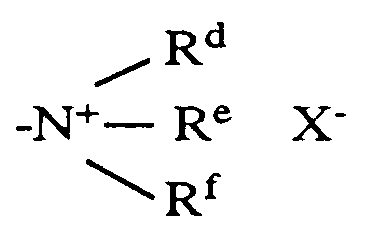
ou Re et Rf forment avec l'atome d'azote adjacent un groupe pyrrolidine ou pipéridine,
X⁻ représente un anion halogénure, et
R¹¹ et R¹² forment ensemble une liaison chimique,
ou un sel d'un tel composé. - Utilisation conforme à la revendication 14, dans laquelle Ra dans la formule [1] représente une groupe N-méthyl-N-isopropylamino.
- Utilisation conforme à la revendication 14, dans laquelle Ra dans la formule [1] est un groupe de formule :

ou Re et Rf forment avec l'atome d'azote adjacent un groupe pyrrolidine ou pipéridine,
X⁻ représente un anion halogénure. - Utilisation conforme à la revendication 16, dans laquelle Re et Rf dans la formule [1] forment avec l'atome d'azote adjacent un groupe pyrrolidine ou pipéridine.
- Utilisation conforme à la revendication 1, dans laquelle le composé de formule [1] est choisi parmi le 6,9-hémi-cétal de N-éthyl-dé(N-méthyl)-8,9-anhydroérythromycine A, le bromure de N-propargyl-6,9-hémi-cétal de 8,9-anhydroérythromycine A, le chlorure de N-propargyl-6,9-hémi-cétal de 8,9-anhydroérythromycine A, le bromure de N-éthyl-6,9-hémi-cétal de 8,9-anhydroérythromycine A, le bromure de N-2-hydroxyéthyl-6,9-hémi-cétal de 8,9-anhydroérythromycine A, le N-isopropyl-dé(N-méthyl)-6,9-hémi-cétal de 8,9-anhydroérythromycine A, et le bromure de N-allyl-6,9-hémicétal de 8,9-anhydroérythromycine.
- Utilisation du composé bromure de N, N, N,-tripropargyl-bis-(dé(N-méthyl)-6,9-hémicétal-8,9-anhydroérythromycine A pour préparer un médicament pour le traitement du disfonctionnement digestif.
- Utilisation conforme à une quelconque des revendications 1 - 19, dans laquelle le médicament contient en outre un composant additionnel pharméceutiquement acceptable.
- Utilisation conforme à la revendication 20, dans laquelle les composants additionnels pharmaceutiquement acceptables englobent les véhicules, les agents de délitement, les lubrifiants, les liants, les dipersants, les plastifiants.
Applications Claiming Priority (6)
| Application Number | Priority Date | Filing Date | Title |
|---|---|---|---|
| JP19095885 | 1985-08-31 | ||
| JP190958/85 | 1985-08-31 | ||
| JP4141386 | 1986-02-28 | ||
| JP41413/86 | 1986-02-28 | ||
| JP12473986 | 1986-05-31 | ||
| JP124739/86 | 1986-05-31 |
Publications (3)
| Publication Number | Publication Date |
|---|---|
| EP0213617A2 EP0213617A2 (fr) | 1987-03-11 |
| EP0213617A3 EP0213617A3 (en) | 1990-09-05 |
| EP0213617B1 true EP0213617B1 (fr) | 1994-08-10 |
Family
ID=27290806
Family Applications (1)
| Application Number | Title | Priority Date | Filing Date |
|---|---|---|---|
| EP86111939A Expired - Lifetime EP0213617B1 (fr) | 1985-08-31 | 1986-08-28 | Stimulant pour les mouvements de contraction du système digestif |
Country Status (4)
| Country | Link |
|---|---|
| US (1) | US5008249A (fr) |
| EP (1) | EP0213617B1 (fr) |
| AT (1) | ATE109661T1 (fr) |
| DE (1) | DE3650020T2 (fr) |
Cited By (2)
| Publication number | Priority date | Publication date | Assignee | Title |
|---|---|---|---|---|
| US7091196B2 (en) | 2002-09-26 | 2006-08-15 | Rib-X Pharmaceuticals, Inc. | Bifunctional heterocyclic compounds and methods of making and using same |
| US8202843B2 (en) | 2004-02-27 | 2012-06-19 | Rib-X Pharmaceuticals, Inc. | Macrocyclic compounds and methods of making and using the same |
Families Citing this family (18)
| Publication number | Priority date | Publication date | Assignee | Title |
|---|---|---|---|---|
| WO1990011288A1 (fr) * | 1989-03-28 | 1990-10-04 | Abbott Laboratories | Derives d'erythromycine |
| DK0579770T3 (da) * | 1991-04-09 | 1996-11-04 | Abbott Lab | Makrocycliske lactamprokinetika |
| US5523418A (en) * | 1991-04-09 | 1996-06-04 | Abbott Laboratories | Macrocyclic lactam prokinetic agents |
| DK0623021T3 (da) * | 1992-01-21 | 1999-02-08 | Abbott Lab | 4"-deoxyerythromycinderivater |
| US5470961A (en) * | 1992-03-19 | 1995-11-28 | Takeda Chemical Ind., Ltd. | 14 and/or 15-hydroxy 6,9 hemiacetal erythromycin derivatives |
| MY113693A (en) * | 1992-05-26 | 2002-05-31 | Chugai Pharmaceutical Co Ltd | Erythromycin derivatives having an enterokinesis stimulating action |
| ZA966601B (en) * | 1995-08-03 | 1997-02-19 | Chugai Pharmaceutical Co Ltd | Process for producing erythromycin derivatives. |
| US5712253A (en) * | 1996-06-18 | 1998-01-27 | Abbott Laboratories | Macrocyclic 13-membered ring derivatives of erythromycins A and B |
| DK1633774T3 (da) | 2003-06-18 | 2010-05-25 | Tranzyme Pharma Inc | Makrocykliske motilinreceptorantagonister |
| US7407941B2 (en) * | 2003-08-26 | 2008-08-05 | Pfizer, Inc. | N-desmethyl-N-substituted-11-deoxyerythromycin compounds |
| US20050113319A1 (en) * | 2003-08-26 | 2005-05-26 | Christopher Carreras | 11-Deoxy-6,9-ether erythromycin compounds |
| US7211568B2 (en) * | 2003-12-18 | 2007-05-01 | Kosan Biosciences Incorporated | 9-Desoxoerythromycin compounds as prokinetic agents |
| US7582611B2 (en) * | 2005-05-24 | 2009-09-01 | Pfizer Inc. | Motilide compounds |
| JP2009518396A (ja) * | 2005-12-08 | 2009-05-07 | ファイザー・インク | エリスロマイシン化合物の3’−ジメチルアミノ基を脱メチルする方法 |
| EP2431380A3 (fr) | 2006-09-11 | 2013-07-03 | Tranzyme Pharma, Inc. | Antagoniste macrocyclique du récepteur de motiline pour le traitement des troubles de dysmotilité gastro-intestinale |
| CA2670482C (fr) * | 2006-12-05 | 2011-10-11 | Pfizer Inc. | Polymorphes du type motilide |
| US20080287371A1 (en) * | 2007-05-17 | 2008-11-20 | Tranzyme Pharma Inc. | Macrocyclic antagonists of the motilin receptor for modulation of the migrating motor complex |
| US8790621B2 (en) | 2010-04-12 | 2014-07-29 | Iowa State University Research Foundation, Inc. | Nanoparticles and nanoparticle compositions |
Family Cites Families (3)
| Publication number | Priority date | Publication date | Assignee | Title |
|---|---|---|---|---|
| CA969176A (en) * | 1972-03-22 | 1975-06-10 | Paul Kurath | 6,9-oxygen bridged erythromycin derivatives |
| US3884904A (en) * | 1973-06-21 | 1975-05-20 | Abbott Lab | 11-Substituted erythromycin B derivatives |
| JPS6187625A (ja) * | 1984-10-05 | 1986-05-06 | Satoshi Omura | 消化管収縮運動促進剤 |
-
1986
- 1986-08-25 US US06/899,985 patent/US5008249A/en not_active Expired - Lifetime
- 1986-08-28 EP EP86111939A patent/EP0213617B1/fr not_active Expired - Lifetime
- 1986-08-28 AT AT86111939T patent/ATE109661T1/de not_active IP Right Cessation
- 1986-08-28 DE DE3650020T patent/DE3650020T2/de not_active Expired - Fee Related
Cited By (3)
| Publication number | Priority date | Publication date | Assignee | Title |
|---|---|---|---|---|
| US7091196B2 (en) | 2002-09-26 | 2006-08-15 | Rib-X Pharmaceuticals, Inc. | Bifunctional heterocyclic compounds and methods of making and using same |
| US7335753B2 (en) | 2002-09-26 | 2008-02-26 | Rib-X Pharmaceuticals, Inc. | Bifunctional heterocyclic compounds and methods of making and using same |
| US8202843B2 (en) | 2004-02-27 | 2012-06-19 | Rib-X Pharmaceuticals, Inc. | Macrocyclic compounds and methods of making and using the same |
Also Published As
| Publication number | Publication date |
|---|---|
| US5008249A (en) | 1991-04-16 |
| EP0213617A2 (fr) | 1987-03-11 |
| ATE109661T1 (de) | 1994-08-15 |
| EP0213617A3 (en) | 1990-09-05 |
| DE3650020D1 (de) | 1994-09-15 |
| DE3650020T2 (de) | 1995-02-16 |
Similar Documents
| Publication | Publication Date | Title |
|---|---|---|
| EP0213617B1 (fr) | Stimulant pour les mouvements de contraction du système digestif | |
| EP0215355B1 (fr) | Dérivé d'érythromycine et son procédé de préparation | |
| US4474768A (en) | N-Methyl 11-aza-10-deoxo-10-dihydro-erytromycin A, intermediates therefor | |
| EP0638585B1 (fr) | Derive de 5-o-desosaminylerythronolide a | |
| JP3334980B2 (ja) | 新規なエリスロマイシン誘導体、それらの製造法及びそれらの薬剤としての用途 | |
| ES2294641T3 (es) | Nuevos derivados de eritromicina. | |
| JPH0140038B2 (fr) | ||
| AU656462B2 (en) | 4"-deoxyerythromycin derivatives | |
| PL89006B1 (en) | Antibiotic derivatives of kanamycin [us3781268a] | |
| AU2006300215A1 (en) | Novel dihydropseudoerythromycin derivatives | |
| US5175150A (en) | Erythromycin derivative | |
| HK1010054B (en) | 4"-deoxyerythromycin derivatives | |
| EP0087905B1 (fr) | 4"-Epi erythromycine A et ses dérivés utilisables comme agents antibactériens | |
| DE68921719T2 (de) | Amphotericin B Derivate. | |
| KR0153478B1 (ko) | 에스큘레틴 유도체 그의 제조방법, 그의 용도 및 약한 조성물 | |
| WO1997021416A2 (fr) | Glycoconjugues de substances opiacees | |
| EP1181298A1 (fr) | Nouveaux lactames 8a et 9a a 15 elements | |
| CA2164152C (fr) | Composes de la classe des secomacrolides et des secoazalides; methode de preparation | |
| CA1312862C (fr) | Derive d'erythromycine et son procede de preparation | |
| CA2259784C (fr) | Quinolinone (glycoside), procede de production et agent anti-allergene | |
| KR850000963B1 (ko) | N-메틸 11-아자-10-데옥소-10-디하이드로 에리스로마이신 a 및 그 중간체의 제조방법 | |
| JPS63307894A (ja) | 環縮小マクロライド系抗生物質 | |
| EP0132026B1 (fr) | Ethers cycliques à activité antibactérielle, de 9-déoxy-9a-aza-9a-homoérythromycine et produits intermédiaires | |
| JPS6399016A (ja) | 消化管収縮運動促進剤 | |
| US20050164958A1 (en) | O-alkyl macrolide and azalide derivatives and regioselective process for their preparation |
Legal Events
| Date | Code | Title | Description |
|---|---|---|---|
| PUAI | Public reference made under article 153(3) epc to a published international application that has entered the european phase |
Free format text: ORIGINAL CODE: 0009012 |
|
| AK | Designated contracting states |
Kind code of ref document: A2 Designated state(s): AT BE CH DE FR GB IT LI LU NL SE |
|
| PUAL | Search report despatched |
Free format text: ORIGINAL CODE: 0009013 |
|
| AK | Designated contracting states |
Kind code of ref document: A3 Designated state(s): AT BE CH DE FR GB IT LI LU NL SE |
|
| 17P | Request for examination filed |
Effective date: 19910216 |
|
| 17Q | First examination report despatched |
Effective date: 19920622 |
|
| GRAA | (expected) grant |
Free format text: ORIGINAL CODE: 0009210 |
|
| PGFP | Annual fee paid to national office [announced via postgrant information from national office to epo] |
Ref country code: LU Payment date: 19940801 Year of fee payment: 9 |
|
| AK | Designated contracting states |
Kind code of ref document: B1 Designated state(s): AT BE CH DE FR GB IT LI LU NL SE |
|
| REF | Corresponds to: |
Ref document number: 109661 Country of ref document: AT Date of ref document: 19940815 Kind code of ref document: T |
|
| ET | Fr: translation filed | ||
| ITF | It: translation for a ep patent filed | ||
| PGFP | Annual fee paid to national office [announced via postgrant information from national office to epo] |
Ref country code: NL Payment date: 19940831 Year of fee payment: 9 |
|
| REF | Corresponds to: |
Ref document number: 3650020 Country of ref document: DE Date of ref document: 19940915 |
|
| EAL | Se: european patent in force in sweden |
Ref document number: 86111939.4 |
|
| PLBE | No opposition filed within time limit |
Free format text: ORIGINAL CODE: 0009261 |
|
| STAA | Information on the status of an ep patent application or granted ep patent |
Free format text: STATUS: NO OPPOSITION FILED WITHIN TIME LIMIT |
|
| 26N | No opposition filed | ||
| PG25 | Lapsed in a contracting state [announced via postgrant information from national office to epo] |
Ref country code: LU Free format text: LAPSE BECAUSE OF NON-PAYMENT OF DUE FEES Effective date: 19950828 |
|
| PG25 | Lapsed in a contracting state [announced via postgrant information from national office to epo] |
Ref country code: NL Effective date: 19960301 |
|
| NLV4 | Nl: lapsed or anulled due to non-payment of the annual fee |
Effective date: 19960301 |
|
| REG | Reference to a national code |
Ref country code: GB Ref legal event code: IF02 |
|
| PGFP | Annual fee paid to national office [announced via postgrant information from national office to epo] |
Ref country code: FR Payment date: 20040715 Year of fee payment: 19 |
|
| PGFP | Annual fee paid to national office [announced via postgrant information from national office to epo] |
Ref country code: BE Payment date: 20040716 Year of fee payment: 19 |
|
| PGFP | Annual fee paid to national office [announced via postgrant information from national office to epo] |
Ref country code: AT Payment date: 20040727 Year of fee payment: 19 |
|
| PGFP | Annual fee paid to national office [announced via postgrant information from national office to epo] |
Ref country code: SE Payment date: 20040813 Year of fee payment: 19 |
|
| PGFP | Annual fee paid to national office [announced via postgrant information from national office to epo] |
Ref country code: GB Payment date: 20040825 Year of fee payment: 19 |
|
| PGFP | Annual fee paid to national office [announced via postgrant information from national office to epo] |
Ref country code: CH Payment date: 20040830 Year of fee payment: 19 |
|
| PGFP | Annual fee paid to national office [announced via postgrant information from national office to epo] |
Ref country code: DE Payment date: 20040914 Year of fee payment: 19 |
|
| PG25 | Lapsed in a contracting state [announced via postgrant information from national office to epo] |
Ref country code: IT Free format text: LAPSE BECAUSE OF NON-PAYMENT OF DUE FEES;WARNING: LAPSES OF ITALIAN PATENTS WITH EFFECTIVE DATE BEFORE 2007 MAY HAVE OCCURRED AT ANY TIME BEFORE 2007. THE CORRECT EFFECTIVE DATE MAY BE DIFFERENT FROM THE ONE RECORDED. Effective date: 20050828 Ref country code: GB Free format text: LAPSE BECAUSE OF NON-PAYMENT OF DUE FEES Effective date: 20050828 Ref country code: AT Free format text: LAPSE BECAUSE OF NON-PAYMENT OF DUE FEES Effective date: 20050828 |
|
| PG25 | Lapsed in a contracting state [announced via postgrant information from national office to epo] |
Ref country code: SE Free format text: LAPSE BECAUSE OF NON-PAYMENT OF DUE FEES Effective date: 20050829 |
|
| PG25 | Lapsed in a contracting state [announced via postgrant information from national office to epo] |
Ref country code: LI Free format text: LAPSE BECAUSE OF NON-PAYMENT OF DUE FEES Effective date: 20050831 Ref country code: CH Free format text: LAPSE BECAUSE OF NON-PAYMENT OF DUE FEES Effective date: 20050831 Ref country code: BE Free format text: LAPSE BECAUSE OF NON-PAYMENT OF DUE FEES Effective date: 20050831 |
|
| PG25 | Lapsed in a contracting state [announced via postgrant information from national office to epo] |
Ref country code: DE Free format text: LAPSE BECAUSE OF NON-PAYMENT OF DUE FEES Effective date: 20060301 |
|
| REG | Reference to a national code |
Ref country code: CH Ref legal event code: PL |
|
| EUG | Se: european patent has lapsed | ||
| GBPC | Gb: european patent ceased through non-payment of renewal fee |
Effective date: 20050828 |
|
| PG25 | Lapsed in a contracting state [announced via postgrant information from national office to epo] |
Ref country code: FR Free format text: LAPSE BECAUSE OF NON-PAYMENT OF DUE FEES Effective date: 20060428 |
|
| REG | Reference to a national code |
Ref country code: FR Ref legal event code: ST Effective date: 20060428 |
|
| BERE | Be: lapsed |
Owner name: *KITASATO KENKYUSHO Effective date: 20050831 |