EP0214778A1 - Organische Peroxyde, tauglich zur Polymerisationsregulierung - Google Patents
Organische Peroxyde, tauglich zur Polymerisationsregulierung Download PDFInfo
- Publication number
- EP0214778A1 EP0214778A1 EP86306322A EP86306322A EP0214778A1 EP 0214778 A1 EP0214778 A1 EP 0214778A1 EP 86306322 A EP86306322 A EP 86306322A EP 86306322 A EP86306322 A EP 86306322A EP 0214778 A1 EP0214778 A1 EP 0214778A1
- Authority
- EP
- European Patent Office
- Prior art keywords
- group
- polymerization
- carbon atoms
- groups
- organic peroxide
- Prior art date
- Legal status (The legal status is an assumption and is not a legal conclusion. Google has not performed a legal analysis and makes no representation as to the accuracy of the status listed.)
- Granted
Links
- 150000001451 organic peroxides Chemical class 0.000 title claims description 49
- PPBRXRYQALVLMV-UHFFFAOYSA-N Styrene Chemical compound C=CC1=CC=CC=C1 PPBRXRYQALVLMV-UHFFFAOYSA-N 0.000 claims abstract description 49
- VVQNEPGJFQJSBK-UHFFFAOYSA-N Methyl methacrylate Chemical compound COC(=O)C(C)=C VVQNEPGJFQJSBK-UHFFFAOYSA-N 0.000 claims abstract description 11
- 239000003505 polymerization initiator Substances 0.000 claims description 43
- 125000004432 carbon atom Chemical group C* 0.000 claims description 28
- 125000002496 methyl group Chemical group [H]C([H])([H])* 0.000 claims description 27
- 125000004435 hydrogen atom Chemical group [H]* 0.000 claims description 21
- 239000000178 monomer Substances 0.000 claims description 18
- 125000000217 alkyl group Chemical group 0.000 claims description 14
- 125000001495 ethyl group Chemical group [H]C([H])([H])C([H])([H])* 0.000 claims description 12
- 125000000753 cycloalkyl group Chemical group 0.000 claims description 7
- 125000001449 isopropyl group Chemical group [H]C([H])([H])C([H])(*)C([H])([H])[H] 0.000 claims description 5
- 125000003710 aryl alkyl group Chemical group 0.000 claims description 4
- 125000001309 chloro group Chemical group Cl* 0.000 claims description 4
- 125000005843 halogen group Chemical group 0.000 claims description 4
- 125000002252 acyl group Chemical group 0.000 claims description 3
- 125000003545 alkoxy group Chemical group 0.000 claims description 3
- 229910052801 chlorine Inorganic materials 0.000 claims description 3
- 125000000816 ethylene group Chemical group [H]C([H])([*:1])C([H])([H])[*:2] 0.000 claims 2
- 125000001436 propyl group Chemical group [H]C([*])([H])C([H])([H])C([H])([H])[H] 0.000 claims 2
- 125000002914 sec-butyl group Chemical group [H]C([H])([H])C([H])([H])C([H])(*)C([H])([H])[H] 0.000 claims 2
- 125000001246 bromo group Chemical group Br* 0.000 claims 1
- 125000003011 styrenyl group Chemical group [H]\C(*)=C(/[H])C1=C([H])C([H])=C([H])C([H])=C1[H] 0.000 claims 1
- 238000006116 polymerization reaction Methods 0.000 abstract description 112
- 229920000642 polymer Polymers 0.000 abstract description 66
- 125000003118 aryl group Chemical group 0.000 abstract description 16
- BVKZGUZCCUSVTD-UHFFFAOYSA-L Carbonate Chemical compound [O-]C([O-])=O BVKZGUZCCUSVTD-UHFFFAOYSA-L 0.000 abstract description 14
- 125000000864 peroxy group Chemical group O(O*)* 0.000 abstract description 13
- 239000006188 syrup Substances 0.000 abstract description 9
- 235000020357 syrup Nutrition 0.000 abstract description 9
- 239000011347 resin Substances 0.000 abstract description 7
- 229920005989 resin Polymers 0.000 abstract description 7
- 239000007870 radical polymerization initiator Substances 0.000 abstract description 2
- 230000001105 regulatory effect Effects 0.000 abstract description 2
- UHOVQNZJYSORNB-UHFFFAOYSA-N Benzene Chemical group C1=CC=CC=C1 UHOVQNZJYSORNB-UHFFFAOYSA-N 0.000 description 54
- 238000006243 chemical reaction Methods 0.000 description 52
- 150000001875 compounds Chemical class 0.000 description 34
- 239000000243 solution Substances 0.000 description 31
- 230000000052 comparative effect Effects 0.000 description 28
- VZGDMQKNWNREIO-UHFFFAOYSA-N tetrachloromethane Chemical compound ClC(Cl)(Cl)Cl VZGDMQKNWNREIO-UHFFFAOYSA-N 0.000 description 28
- 238000004519 manufacturing process Methods 0.000 description 24
- SXNBFCBMCAYEAB-UHFFFAOYSA-N tert-butylperoxy phenyl carbonate Chemical compound CC(C)(C)OOOC(=O)OC1=CC=CC=C1 SXNBFCBMCAYEAB-UHFFFAOYSA-N 0.000 description 19
- HEMHJVSKTPXQMS-UHFFFAOYSA-M Sodium hydroxide Chemical compound [OH-].[Na+] HEMHJVSKTPXQMS-UHFFFAOYSA-M 0.000 description 13
- 238000001030 gas--liquid chromatography Methods 0.000 description 13
- 239000000126 substance Substances 0.000 description 13
- RTZKZFJDLAIYFH-UHFFFAOYSA-N Diethyl ether Chemical compound CCOCC RTZKZFJDLAIYFH-UHFFFAOYSA-N 0.000 description 12
- KDGNCLDCOVTOCS-UHFFFAOYSA-N (2-methylpropan-2-yl)oxy propan-2-yl carbonate Chemical compound CC(C)OC(=O)OOC(C)(C)C KDGNCLDCOVTOCS-UHFFFAOYSA-N 0.000 description 11
- 150000003254 radicals Chemical class 0.000 description 11
- 238000000862 absorption spectrum Methods 0.000 description 10
- -1 alkyl mercaptan Chemical compound 0.000 description 10
- 238000000655 nuclear magnetic resonance spectrum Methods 0.000 description 10
- AHWALFGBDFAJAI-UHFFFAOYSA-N phenyl carbonochloridate Chemical compound ClC(=O)OC1=CC=CC=C1 AHWALFGBDFAJAI-UHFFFAOYSA-N 0.000 description 10
- OKKJLVBELUTLKV-UHFFFAOYSA-N Methanol Chemical compound OC OKKJLVBELUTLKV-UHFFFAOYSA-N 0.000 description 9
- 238000010521 absorption reaction Methods 0.000 description 9
- 230000000694 effects Effects 0.000 description 9
- 239000007788 liquid Substances 0.000 description 9
- 239000000203 mixture Substances 0.000 description 9
- 125000001997 phenyl group Chemical group [H]C1=C([H])C([H])=C(*)C([H])=C1[H] 0.000 description 9
- JUJWROOIHBZHMG-UHFFFAOYSA-N Pyridine Chemical compound C1=CC=NC=C1 JUJWROOIHBZHMG-UHFFFAOYSA-N 0.000 description 8
- 239000007864 aqueous solution Substances 0.000 description 8
- 239000012043 crude product Substances 0.000 description 8
- 238000000034 method Methods 0.000 description 8
- CIHOLLKRGTVIJN-UHFFFAOYSA-N tert‐butyl hydroperoxide Chemical compound CC(C)(C)OO CIHOLLKRGTVIJN-UHFFFAOYSA-N 0.000 description 8
- 238000000354 decomposition reaction Methods 0.000 description 7
- 238000005227 gel permeation chromatography Methods 0.000 description 7
- 150000002978 peroxides Chemical class 0.000 description 7
- QIIPQYDSKRYMFG-UHFFFAOYSA-M phenyl carbonate Chemical compound [O-]C(=O)OC1=CC=CC=C1 QIIPQYDSKRYMFG-UHFFFAOYSA-M 0.000 description 7
- XLYOFNOQVPJJNP-UHFFFAOYSA-N water Substances O XLYOFNOQVPJJNP-UHFFFAOYSA-N 0.000 description 7
- 238000012662 bulk polymerization Methods 0.000 description 6
- 239000003208 petroleum Substances 0.000 description 6
- 239000006185 dispersion Substances 0.000 description 5
- 239000003999 initiator Substances 0.000 description 5
- VEXZGXHMUGYJMC-UHFFFAOYSA-N Hydrochloric acid Chemical compound Cl VEXZGXHMUGYJMC-UHFFFAOYSA-N 0.000 description 4
- CSNNHWWHGAXBCP-UHFFFAOYSA-L Magnesium sulfate Chemical compound [Mg+2].[O-][S+2]([O-])([O-])[O-] CSNNHWWHGAXBCP-UHFFFAOYSA-L 0.000 description 4
- PMZURENOXWZQFD-UHFFFAOYSA-L Sodium Sulfate Chemical compound [Na+].[Na+].[O-]S([O-])(=O)=O PMZURENOXWZQFD-UHFFFAOYSA-L 0.000 description 4
- XYLMUPLGERFSHI-UHFFFAOYSA-N alpha-Methylstyrene Chemical class CC(=C)C1=CC=CC=C1 XYLMUPLGERFSHI-UHFFFAOYSA-N 0.000 description 4
- QVGXLLKOCUKJST-UHFFFAOYSA-N atomic oxygen Chemical compound [O] QVGXLLKOCUKJST-UHFFFAOYSA-N 0.000 description 4
- 150000004649 carbonic acid derivatives Chemical class 0.000 description 4
- 238000007334 copolymerization reaction Methods 0.000 description 4
- 239000013078 crystal Substances 0.000 description 4
- MMCOUVMKNAHQOY-UHFFFAOYSA-L oxido carbonate Chemical compound [O-]OC([O-])=O MMCOUVMKNAHQOY-UHFFFAOYSA-L 0.000 description 4
- 229910052760 oxygen Inorganic materials 0.000 description 4
- 239000001301 oxygen Substances 0.000 description 4
- UMJSCPRVCHMLSP-UHFFFAOYSA-N pyridine Natural products COC1=CC=CN=C1 UMJSCPRVCHMLSP-UHFFFAOYSA-N 0.000 description 4
- 238000010526 radical polymerization reaction Methods 0.000 description 4
- 229910052938 sodium sulfate Inorganic materials 0.000 description 4
- 235000011152 sodium sulphate Nutrition 0.000 description 4
- 238000003756 stirring Methods 0.000 description 4
- 125000000999 tert-butyl group Chemical group [H]C([H])([H])C(*)(C([H])([H])[H])C([H])([H])[H] 0.000 description 4
- HJUGFYREWKUQJT-UHFFFAOYSA-N tetrabromomethane Chemical compound BrC(Br)(Br)Br HJUGFYREWKUQJT-UHFFFAOYSA-N 0.000 description 4
- 238000012546 transfer Methods 0.000 description 4
- QEQBMZQFDDDTPN-UHFFFAOYSA-N (2-methylpropan-2-yl)oxy benzenecarboperoxoate Chemical compound CC(C)(C)OOOC(=O)C1=CC=CC=C1 QEQBMZQFDDDTPN-UHFFFAOYSA-N 0.000 description 3
- XRXANEMIFVRKLN-UHFFFAOYSA-N 2-hydroperoxy-2-methylbutane Chemical compound CCC(C)(C)OO XRXANEMIFVRKLN-UHFFFAOYSA-N 0.000 description 3
- HEDRZPFGACZZDS-MICDWDOJSA-N Trichloro(2H)methane Chemical compound [2H]C(Cl)(Cl)Cl HEDRZPFGACZZDS-MICDWDOJSA-N 0.000 description 3
- 239000003708 ampul Substances 0.000 description 3
- 230000033228 biological regulation Effects 0.000 description 3
- 230000007423 decrease Effects 0.000 description 3
- WNAHIZMDSQCWRP-UHFFFAOYSA-N dodecane-1-thiol Chemical compound CCCCCCCCCCCCS WNAHIZMDSQCWRP-UHFFFAOYSA-N 0.000 description 3
- 239000011521 glass Substances 0.000 description 3
- 238000002844 melting Methods 0.000 description 3
- 230000008018 melting Effects 0.000 description 3
- VLKZOEOYAKHREP-UHFFFAOYSA-N n-Hexane Chemical compound CCCCCC VLKZOEOYAKHREP-UHFFFAOYSA-N 0.000 description 3
- 239000002904 solvent Substances 0.000 description 3
- KUTGFWMYIGCCDP-UHFFFAOYSA-N (2,4-dimethylphenyl) 2-methylbutan-2-ylperoxy carbonate Chemical compound CCC(C)(C)OOOC(=O)OC1=CC=C(C)C=C1C KUTGFWMYIGCCDP-UHFFFAOYSA-N 0.000 description 2
- CKUDEWYBJUIZHC-UHFFFAOYSA-N (2,5-dimethyl-5-phenoxycarbonylperoxyhexan-2-yl)oxy phenyl carbonate Chemical compound C=1C=CC=CC=1OC(=O)OOC(C)(C)CCC(C)(C)OOC(=O)OC1=CC=CC=C1 CKUDEWYBJUIZHC-UHFFFAOYSA-N 0.000 description 2
- SSIZLKDLDKIHEV-UHFFFAOYSA-N 2,6-dibromophenol Chemical compound OC1=C(Br)C=CC=C1Br SSIZLKDLDKIHEV-UHFFFAOYSA-N 0.000 description 2
- AQJFATAFTQCRGC-UHFFFAOYSA-N 2-Chloro-4-methylphenol Chemical compound CC1=CC=C(O)C(Cl)=C1 AQJFATAFTQCRGC-UHFFFAOYSA-N 0.000 description 2
- BZGMEGUFFDTCNP-UHFFFAOYSA-N 2-hydroperoxy-2-methylpentane Chemical compound CCCC(C)(C)OO BZGMEGUFFDTCNP-UHFFFAOYSA-N 0.000 description 2
- CRBJBYGJVIBWIY-UHFFFAOYSA-N 2-isopropylphenol Chemical compound CC(C)C1=CC=CC=C1O CRBJBYGJVIBWIY-UHFFFAOYSA-N 0.000 description 2
- ASHGTJPOSUFTGB-UHFFFAOYSA-N 3-methoxyphenol Chemical compound COC1=CC=CC(O)=C1 ASHGTJPOSUFTGB-UHFFFAOYSA-N 0.000 description 2
- LKVFCSWBKOVHAH-UHFFFAOYSA-N 4-Ethoxyphenol Chemical compound CCOC1=CC=C(O)C=C1 LKVFCSWBKOVHAH-UHFFFAOYSA-N 0.000 description 2
- OMPJBNCRMGITSC-UHFFFAOYSA-N Benzoylperoxide Chemical compound C=1C=CC=CC=1C(=O)OOC(=O)C1=CC=CC=C1 OMPJBNCRMGITSC-UHFFFAOYSA-N 0.000 description 2
- FAPWRFPIFSIZLT-UHFFFAOYSA-M Sodium chloride Chemical compound [Na+].[Cl-] FAPWRFPIFSIZLT-UHFFFAOYSA-M 0.000 description 2
- 239000003513 alkali Substances 0.000 description 2
- VVUBWCWVDFCEOP-UHFFFAOYSA-N benzene;styrene Chemical compound C1=CC=CC=C1.C=CC1=CC=CC=C1 VVUBWCWVDFCEOP-UHFFFAOYSA-N 0.000 description 2
- 235000019400 benzoyl peroxide Nutrition 0.000 description 2
- 230000015572 biosynthetic process Effects 0.000 description 2
- 239000007795 chemical reaction product Substances 0.000 description 2
- 238000003776 cleavage reaction Methods 0.000 description 2
- 238000007796 conventional method Methods 0.000 description 2
- RWGFKTVRMDUZSP-UHFFFAOYSA-N cumene Chemical compound CC(C)C1=CC=CC=C1 RWGFKTVRMDUZSP-UHFFFAOYSA-N 0.000 description 2
- RLSSMJSEOOYNOY-UHFFFAOYSA-N m-cresol Chemical compound CC1=CC=CC(O)=C1 RLSSMJSEOOYNOY-UHFFFAOYSA-N 0.000 description 2
- 229910052943 magnesium sulfate Inorganic materials 0.000 description 2
- 235000019341 magnesium sulphate Nutrition 0.000 description 2
- 239000011259 mixed solution Substances 0.000 description 2
- QWVGKYWNOKOFNN-UHFFFAOYSA-N o-cresol Chemical compound CC1=CC=CC=C1O QWVGKYWNOKOFNN-UHFFFAOYSA-N 0.000 description 2
- 230000009965 odorless effect Effects 0.000 description 2
- 239000012044 organic layer Substances 0.000 description 2
- NWVVVBRKAWDGAB-UHFFFAOYSA-N p-methoxyphenol Chemical compound COC1=CC=C(O)C=C1 NWVVVBRKAWDGAB-UHFFFAOYSA-N 0.000 description 2
- 150000004978 peroxycarbonates Chemical class 0.000 description 2
- 230000007017 scission Effects 0.000 description 2
- JRVKFYMWXSDYEF-UHFFFAOYSA-N (2,4-dimethylphenyl) carbonochloridate Chemical compound CC1=CC=C(OC(Cl)=O)C(C)=C1 JRVKFYMWXSDYEF-UHFFFAOYSA-N 0.000 description 1
- YUDHCLDEGIYBFR-UHFFFAOYSA-N (2,5-dimethyl-5-phenoxycarbonylperoxyhex-3-yn-2-yl)oxy phenyl carbonate Chemical compound C=1C=CC=CC=1OC(=O)OOC(C)(C)C#CC(C)(C)OOC(=O)OC1=CC=CC=C1 YUDHCLDEGIYBFR-UHFFFAOYSA-N 0.000 description 1
- HHRQQKZGRTXSHV-UHFFFAOYSA-N (2-butan-2-ylphenyl) carbonochloridate Chemical compound CCC(C)C1=CC=CC=C1OC(Cl)=O HHRQQKZGRTXSHV-UHFFFAOYSA-N 0.000 description 1
- NOUSBNASWIIRGD-UHFFFAOYSA-N (2-butan-2-ylphenyl) tert-butylperoxy carbonate Chemical compound CCC(C)C1=CC=CC=C1OC(=O)OOOC(C)(C)C NOUSBNASWIIRGD-UHFFFAOYSA-N 0.000 description 1
- PACHGVCDFBIVDA-UHFFFAOYSA-N (2-propan-2-ylphenyl) carbonochloridate Chemical compound CC(C)C1=CC=CC=C1OC(Cl)=O PACHGVCDFBIVDA-UHFFFAOYSA-N 0.000 description 1
- RYWGPCLTVXMMHO-UHFFFAOYSA-N (4-chlorophenyl) carbonochloridate Chemical compound ClC(=O)OC1=CC=C(Cl)C=C1 RYWGPCLTVXMMHO-UHFFFAOYSA-N 0.000 description 1
- HFZWRUODUSTPEG-UHFFFAOYSA-N 2,4-dichlorophenol Chemical compound OC1=CC=C(Cl)C=C1Cl HFZWRUODUSTPEG-UHFFFAOYSA-N 0.000 description 1
- OVSFWWFFFDUCBX-UHFFFAOYSA-N 2,4-dimethylphenol;2,6-dimethylphenol Chemical compound CC1=CC=C(O)C(C)=C1.CC1=CC=CC(C)=C1O OVSFWWFFFDUCBX-UHFFFAOYSA-N 0.000 description 1
- JGBAASVQPMTVHO-UHFFFAOYSA-N 2,5-dihydroperoxy-2,5-dimethylhexane Chemical compound OOC(C)(C)CCC(C)(C)OO JGBAASVQPMTVHO-UHFFFAOYSA-N 0.000 description 1
- XMNIXWIUMCBBBL-UHFFFAOYSA-N 2-(2-phenylpropan-2-ylperoxy)propan-2-ylbenzene Chemical compound C=1C=CC=CC=1C(C)(C)OOC(C)(C)C1=CC=CC=C1 XMNIXWIUMCBBBL-UHFFFAOYSA-N 0.000 description 1
- OEPOKWHJYJXUGD-UHFFFAOYSA-N 2-(3-phenylmethoxyphenyl)-1,3-thiazole-4-carbaldehyde Chemical compound O=CC1=CSC(C=2C=C(OCC=3C=CC=CC=3)C=CC=2)=N1 OEPOKWHJYJXUGD-UHFFFAOYSA-N 0.000 description 1
- MTIDYGLTAOZOGU-UHFFFAOYSA-N 2-bromo-4-methylphenol Chemical compound CC1=CC=C(O)C(Br)=C1 MTIDYGLTAOZOGU-UHFFFAOYSA-N 0.000 description 1
- VADKRMSMGWJZCF-UHFFFAOYSA-N 2-bromophenol Chemical compound OC1=CC=CC=C1Br VADKRMSMGWJZCF-UHFFFAOYSA-N 0.000 description 1
- ISPYQTSUDJAMAB-UHFFFAOYSA-N 2-chlorophenol Chemical compound OC1=CC=CC=C1Cl ISPYQTSUDJAMAB-UHFFFAOYSA-N 0.000 description 1
- MVRPPTGLVPEMPI-UHFFFAOYSA-N 2-cyclohexylphenol Chemical compound OC1=CC=CC=C1C1CCCCC1 MVRPPTGLVPEMPI-UHFFFAOYSA-N 0.000 description 1
- MIRQGKQPLPBZQM-UHFFFAOYSA-N 2-hydroperoxy-2,4,4-trimethylpentane Chemical compound CC(C)(C)CC(C)(C)OO MIRQGKQPLPBZQM-UHFFFAOYSA-N 0.000 description 1
- NZJIUGSNYJJJGZ-UHFFFAOYSA-N 2-methylbutan-2-ylperoxy phenyl carbonate Chemical compound CCC(C)(C)OOOC(=O)OC1=CC=CC=C1 NZJIUGSNYJJJGZ-UHFFFAOYSA-N 0.000 description 1
- UTRXNYSXXGZKCM-UHFFFAOYSA-N 2-methylpentan-2-ylperoxy phenyl carbonate Chemical compound CCCC(C)(C)OOOC(=O)OC1=CC=CC=C1 UTRXNYSXXGZKCM-UHFFFAOYSA-N 0.000 description 1
- GQLSEYOOXBRDFZ-UHFFFAOYSA-N 2-pyridin-3-ylpyrrolidine-1-carbaldehyde Chemical compound O=CN1CCCC1C1=CC=CN=C1 GQLSEYOOXBRDFZ-UHFFFAOYSA-N 0.000 description 1
- NGFPWHGISWUQOI-UHFFFAOYSA-N 2-sec-butylphenol Chemical compound CCC(C)C1=CC=CC=C1O NGFPWHGISWUQOI-UHFFFAOYSA-N 0.000 description 1
- MNOJRWOWILAHAV-UHFFFAOYSA-N 3-bromophenol Chemical compound OC1=CC=CC(Br)=C1 MNOJRWOWILAHAV-UHFFFAOYSA-N 0.000 description 1
- HORNXRXVQWOLPJ-UHFFFAOYSA-N 3-chlorophenol Chemical compound OC1=CC=CC(Cl)=C1 HORNXRXVQWOLPJ-UHFFFAOYSA-N 0.000 description 1
- TXFPEBPIARQUIG-UHFFFAOYSA-N 4'-hydroxyacetophenone Chemical compound CC(=O)C1=CC=C(O)C=C1 TXFPEBPIARQUIG-UHFFFAOYSA-N 0.000 description 1
- YHZQOKUDQQISEW-UHFFFAOYSA-N 4-Cumylphenol Natural products C1=CC(C(C)C)=CC=C1C1=CC=C(O)C=C1 YHZQOKUDQQISEW-UHFFFAOYSA-N 0.000 description 1
- GPOQODYGMUTOQL-UHFFFAOYSA-N 4-bromo-3-methylphenol Chemical compound CC1=CC(O)=CC=C1Br GPOQODYGMUTOQL-UHFFFAOYSA-N 0.000 description 1
- WXNZTHHGJRFXKQ-UHFFFAOYSA-N 4-chlorophenol Chemical compound OC1=CC=C(Cl)C=C1 WXNZTHHGJRFXKQ-UHFFFAOYSA-N 0.000 description 1
- LXBHHIZIQVZGFN-UHFFFAOYSA-N 4-hydroxy-3-methylacetophenone Chemical compound CC(=O)C1=CC=C(O)C(C)=C1 LXBHHIZIQVZGFN-UHFFFAOYSA-N 0.000 description 1
- ISAVYTVYFVQUDY-UHFFFAOYSA-N 4-tert-Octylphenol Chemical compound CC(C)(C)CC(C)(C)C1=CC=C(O)C=C1 ISAVYTVYFVQUDY-UHFFFAOYSA-N 0.000 description 1
- QHPQWRBYOIRBIT-UHFFFAOYSA-N 4-tert-butylphenol Chemical compound CC(C)(C)C1=CC=C(O)C=C1 QHPQWRBYOIRBIT-UHFFFAOYSA-N 0.000 description 1
- NLHHRLWOUZZQLW-UHFFFAOYSA-N Acrylonitrile Chemical compound C=CC#N NLHHRLWOUZZQLW-UHFFFAOYSA-N 0.000 description 1
- VGGSQFUCUMXWEO-UHFFFAOYSA-N Ethene Chemical compound C=C VGGSQFUCUMXWEO-UHFFFAOYSA-N 0.000 description 1
- 239000005977 Ethylene Substances 0.000 description 1
- VZCYOOQTPOCHFL-OWOJBTEDSA-N Fumaric acid Natural products OC(=O)\C=C\C(O)=O VZCYOOQTPOCHFL-OWOJBTEDSA-N 0.000 description 1
- MHAJPDPJQMAIIY-UHFFFAOYSA-N Hydrogen peroxide Chemical compound OO MHAJPDPJQMAIIY-UHFFFAOYSA-N 0.000 description 1
- ISWSIDIOOBJBQZ-UHFFFAOYSA-N Phenol Chemical compound OC1=CC=CC=C1 ISWSIDIOOBJBQZ-UHFFFAOYSA-N 0.000 description 1
- XTXRWKRVRITETP-UHFFFAOYSA-N Vinyl acetate Chemical compound CC(=O)OC=C XTXRWKRVRITETP-UHFFFAOYSA-N 0.000 description 1
- BZHJMEDXRYGGRV-UHFFFAOYSA-N Vinyl chloride Chemical compound ClC=C BZHJMEDXRYGGRV-UHFFFAOYSA-N 0.000 description 1
- 101100020289 Xenopus laevis koza gene Proteins 0.000 description 1
- NWELYPUIMHLNRF-UHFFFAOYSA-N [2,5-dimethyl-5-(4-methylphenoxy)carbonylperoxyhexan-2-yl]oxy (4-methylphenyl) carbonate Chemical compound C1=CC(C)=CC=C1OC(=O)OOC(C)(C)CCC(C)(C)OOC(=O)OC1=CC=C(C)C=C1 NWELYPUIMHLNRF-UHFFFAOYSA-N 0.000 description 1
- UHWICZHSXASESH-UHFFFAOYSA-N [5-(4-chlorophenoxy)carbonylperoxy-2,5-dimethylhexan-2-yl]oxy (4-chlorophenyl) carbonate Chemical compound C=1C=C(Cl)C=CC=1OC(=O)OOC(C)(C)CCC(C)(C)OOC(=O)OC1=CC=C(Cl)C=C1 UHWICZHSXASESH-UHFFFAOYSA-N 0.000 description 1
- 125000005396 acrylic acid ester group Chemical group 0.000 description 1
- 239000000654 additive Substances 0.000 description 1
- 230000002411 adverse Effects 0.000 description 1
- 125000004183 alkoxy alkyl group Chemical group 0.000 description 1
- 239000012736 aqueous medium Substances 0.000 description 1
- 239000007900 aqueous suspension Substances 0.000 description 1
- 125000001797 benzyl group Chemical group [H]C1=C([H])C([H])=C(C([H])=C1[H])C([H])([H])* 0.000 description 1
- FSTRGOSTJXVFGV-UHFFFAOYSA-N bis(4-chlorophenyl) carbonate Chemical compound C1=CC(Cl)=CC=C1OC(=O)OC1=CC=C(Cl)C=C1 FSTRGOSTJXVFGV-UHFFFAOYSA-N 0.000 description 1
- 238000011088 calibration curve Methods 0.000 description 1
- 239000003086 colorant Substances 0.000 description 1
- 230000001276 controlling effect Effects 0.000 description 1
- YQHLDYVWEZKEOX-UHFFFAOYSA-N cumene hydroperoxide Chemical compound OOC(C)(C)C1=CC=CC=C1 YQHLDYVWEZKEOX-UHFFFAOYSA-N 0.000 description 1
- 238000006114 decarboxylation reaction Methods 0.000 description 1
- 230000003247 decreasing effect Effects 0.000 description 1
- 238000011161 development Methods 0.000 description 1
- 239000000839 emulsion Substances 0.000 description 1
- 238000010528 free radical solution polymerization reaction Methods 0.000 description 1
- 239000001530 fumaric acid Substances 0.000 description 1
- 230000020169 heat generation Effects 0.000 description 1
- 229920006158 high molecular weight polymer Polymers 0.000 description 1
- 238000001746 injection moulding Methods 0.000 description 1
- 101150015049 ktrA gene Proteins 0.000 description 1
- 125000000040 m-tolyl group Chemical group [H]C1=C([H])C(*)=C([H])C(=C1[H])C([H])([H])[H] 0.000 description 1
- 125000005397 methacrylic acid ester group Chemical group 0.000 description 1
- 239000003607 modifier Substances 0.000 description 1
- 239000003960 organic solvent Substances 0.000 description 1
- QBDSZLJBMIMQRS-UHFFFAOYSA-N p-Cumylphenol Chemical compound C=1C=C(O)C=CC=1C(C)(C)C1=CC=CC=C1 QBDSZLJBMIMQRS-UHFFFAOYSA-N 0.000 description 1
- 150000002989 phenols Chemical class 0.000 description 1
- 229920003023 plastic Polymers 0.000 description 1
- 239000004033 plastic Substances 0.000 description 1
- 229920003229 poly(methyl methacrylate) Polymers 0.000 description 1
- 238000012545 processing Methods 0.000 description 1
- AOJFQRQNPXYVLM-UHFFFAOYSA-N pyridin-1-ium;chloride Chemical compound [Cl-].C1=CC=[NH+]C=C1 AOJFQRQNPXYVLM-UHFFFAOYSA-N 0.000 description 1
- 239000002994 raw material Substances 0.000 description 1
- 230000009257 reactivity Effects 0.000 description 1
- 238000001953 recrystallisation Methods 0.000 description 1
- 239000011780 sodium chloride Substances 0.000 description 1
- NFZXWBKBPGTHSG-UHFFFAOYSA-N tert-butylperoxy (2-propan-2-ylphenyl) carbonate Chemical compound CC(C)C1=CC=CC=C1OC(=O)OOOC(C)(C)C NFZXWBKBPGTHSG-UHFFFAOYSA-N 0.000 description 1
- PTFMVKUSBOXXTL-UHFFFAOYSA-N tert-butylperoxy (3-methylphenyl) carbonate Chemical compound CC1=CC=CC(OC(=O)OOOC(C)(C)C)=C1 PTFMVKUSBOXXTL-UHFFFAOYSA-N 0.000 description 1
- JOFVSWKPMLWLGJ-UHFFFAOYSA-N tert-butylperoxy (4-chlorophenyl) carbonate Chemical compound CC(C)(C)OOOC(=O)OC1=CC=C(Cl)C=C1 JOFVSWKPMLWLGJ-UHFFFAOYSA-N 0.000 description 1
- 238000005979 thermal decomposition reaction Methods 0.000 description 1
- VZCYOOQTPOCHFL-UHFFFAOYSA-N trans-butenedioic acid Natural products OC(=O)C=CC(O)=O VZCYOOQTPOCHFL-UHFFFAOYSA-N 0.000 description 1
- 238000006276 transfer reaction Methods 0.000 description 1
- 125000000391 vinyl group Chemical group [H]C([*])=C([H])[H] 0.000 description 1
- 229920002554 vinyl polymer Polymers 0.000 description 1
Images


Classifications
-
- C—CHEMISTRY; METALLURGY
- C07—ORGANIC CHEMISTRY
- C07C—ACYCLIC OR CARBOCYCLIC COMPOUNDS
- C07C409/00—Peroxy compounds
- C07C409/38—Peroxy compounds the —O—O— group being bound between a >C=O group and a carbon atom, not further substituted by oxygen atoms, i.e. esters of peroxy acids
Definitions
- the present invention relates to an organic peroxide having a polymerization-regulating ability, and more particularly relates to a peroxy aryl carbonate having a polymerization-regulating ability in the radical polymerization or copolymerization reaction of unsaturated monomers and further having a polymerization-initiating ability for the reaction.
- the first, second and third terms of the right side are terms based on the chain transfer reactions of the polymer radical to the unsaturated monomer, polymerization initiator and polymerization regulator, respectively; and the fourth term of the right side is a term based on the termination reaction between polymer radicals.
- the polymerization degree decreases with the increase of the polymerization rate, and further decreases with increasing the concentration of the polymerization regulator. Accordingly, the polymerization degree of a polymer to be formed is generally regulated by changing the polymerization rate or by adding to the polymerization system a polymerization regulator having a known chain transfer constant represented by ktrA/kp.
- Japanese Patent Laid-open Application No. 52,886/73 discloses that, when alkyl mercaptan and carbon tetrabromide are used, the polymerization degree of the resulting polymer is decreased and the polymer solution has a very low relative viscosity.
- Belgian Patent No. 660383 discloses that a peroxy carbonate represented by the following general formula (II) wherein R represents a tert-alkyl group or a tert-aralkyl group; and R represents an alkyl group, an aralkyl group, an aryl group or an alkoxyalkyl group, can be utilized as a polymerization initiator for unsaturated monomer.
- R represents a tert-alkyl group or a tert-aralkyl group
- R represents an alkyl group, an aralkyl group, an aryl group or an alkoxyalkyl group
- the polymerization-regulating technique which uses conventional polymerization initiator and polymerization regulator has several drawbacks, which are as follows.
- the styrene resin is demanded to have excellent formability due to the development of a precise and high-speedy injection molding machine.
- the polymerization initiator is used in a larger amount in order to lower the molecular weight of the resulting polymer, the resulting polymer has a poor mechanical property due to the formation of low molecular weight polymer. Therefore, it is a very important problem to produce a polymer having a uniform molecular weight.
- the resulting polymer is poor in the thermal stability, and hence the polymer colors and decomposes noticeably at its processing temperature and is poor in the practical value of the formed article.
- the unpleasant odor of the alkyl mercaptan causes serious troubles in the use, and further unreacted alkyl mercaptan remaining in the resulting polymer affects adversely on the polymer.
- the present invention provides an organic peroxide free from the above described drawbacks.
- R 1 and R 2 represent hydrogen atoms, halogen atoms, or same
- the organic peroxide of the present invention can be produced by a conventional method, and that, when a polymerization reaction of an unsaturated monomer is carried out by the use of this peroxy aryl carbonate as a polymerization initiator, a polymer having a polymerization degree, which is remarkably lower than a polymer obtained by the use of the conventional polymerization initiator, can be obtained at the same polymerization rate, and hence that the peroxy aryl carbonate is effective for controlling the polymerization.
- the organic peroxides of the present invention include carbonates of a hydroperoxide such as tert-butyl hydroperoxide, tert-amyl hydroperoxide, tert-hexyl hydroperoxide or 1,1,3,3-tetramethylbutyl hydroperoxide, with phenol or a phenol derivative such as 2-methylphenol, 3-methylphenol, 2,4-dimethylphenol 2,6-dimethylphenol, 2-isopropylphenol, 2-sec-butylphenol, 4-tert-butylphenol, 4-(1,1,3,3-tetramethylbutyl)phenol, 4-cumylphenol, 2-cyclohexylphenol, 2-chlorophenol, 3-chlorophenol, 4-chlorophenol, 2,4-dichlorophenol, 2-bromophenol, 3-bromophenol, 2,6-dibromophenol, 3-methoxyphenol, 4-methoxyphenol, 4-ethoxyphenol, 4-acetylphenol, 2-chloro-4-methylphenol, 2-bromo
- These peroxy aryl carbonates are generally colorless liquids or white crystals and are odorless. Concrete properties of these carbonates are illustrated in the Examples. These carbonates are selected from the viewpoint of both the polymerization-regulating ability of the carbonate itself and the easiness in obtaining the raw materials for the production of the carbonates.
- the organic peroxide can be obtained by reacting an aryl chloroformate represented by the following general formula (III) wherein R 1 and R 2 have the same meanings as those in the above described general formula (I), with a tert-alkyl hydroperoxide represented by the following general formula (IV) wherein R 3 , R 4 , R 5 and 2 have the same meanings as those in the above described general formula (I), at a temperature of from -30°C to +40°C in the presence of an alkali or tert-amine.
- the tert-aralkylperoxy aryl carbonate which is included with the scope of the peroxy carbonates represented by the general formula (II) in the above described Belgian Patent No. 660383 and corresponds to the case where R represents a tert-aralkyl group and R' represents an aryl group in the general formula (II), has a peculiar reactivity, and can not be produced according to the above described method.
- the chemical structure of the organic peroxide of the present invention can be determined by the infrared absorption spectrum and nuclear magnetic resonance spectrum, the purity thereof can be determined by the gas-liquid chromatography (GLC) and by the amount of active oxygens, and the thermal decomposition behavior thereof can be determined by the decomposition rate constant and half-life period.
- the organic peroxide of the present invention has a half-life period within the range of 1-20 hours and is a peroxide having an intermediate- or high-temperature activity, which exhibits substantially the same decomposition activity as that of a conventional polymerization initiator such as t-butylperoxy isopropyl carbonate.
- organic peroxide of the present invention is poor in safety and decomposes explosively such as other peroxides.
- the organic peroxides can be used in a stable form, that is, in a diluted state with an organic solvent, in a hydrated state, in a water- emulsion state or in a water-suspension state.
- the organic peroxide of the present invention is useful as a radical polymerization or copolymerization initiator for unsaturated monomers, which has a polymerization-regulating ability.
- the unsaturated monomers include radically polymerizable or copolymerizable vinyl-type and ethylene-type unsaturated monomers, such as ethylene, vinyl chloride, vinyl acetate, acrylonitrile, vinylidene chloride, acrylic acid ester, methacrylic acid ester, fumaric acid ester, styrene and the like.
- the organic peroxide of the present invention is used in an amount of 0.00005-0.2 mole based on 1 mole of the unsaturated monomer, and can be used for the production of various polymers ranging from a low molecular weight polymer called as oligomer to a high molecular weight polymer called as plastics.
- the use amount is less than the lower limit of the above described range, the organic peroxide can not exhibit fully its effect, and even when the use amount is larger than the upper limit of the above described range, the organic peroxide does not show a remarkable effect, and furthermore the use of an excessively large amount of the organic peroxide is not economic.
- the polymerization or copolymerization of the unsaturated monomers by the use of the organic peroxide of the present invention can be carried out by any of vinyl polymerization methods known at present using a radical polymerization initiator, that is, by any of bulk polymerization method, solution polymerization method and aqueous medium polymerization method.
- a radical polymerization initiator that is, by any of bulk polymerization method, solution polymerization method and aqueous medium polymerization method.
- the organic peroxide of the present invention can be used in combination with one or more of other polymerization initiator, polymerization regulator and other polymerization additives.
- the organic peroxide of the present invention exhibits a behavior considerably different from that of a conventional polymerization initiator which satisfies the above described formula (2) of polymerization rate.
- the organic peroxide of the present invention when used as a polymerization initiator, a polymer having a polymerization degree considerably lower than that of a polymer obtained by the use of a conventional polymerization initiator can be obtained at the same polymerization rate.
- the polymerization reaction mechanism in the use of the polymerization initiator of the present invention is probably as follows.
- cleavage of -0-0- bond occurs first according to the following formula (3) to form two kinds of active radicals, which act to initiate polymerizations of unsaturated monomers.
- a decarboxylation reaction occurs according to the formula (4) to form an inert radical, which is so stable not to initiate a polymerization reaction.
- the use of a conventional polymerization initiator does not form such inert radical, and therefore the chain reaction terminates due to the termination reaction between polymer radicals.
- the inert radical reacts with a polymer radical according to the formula (5) to terminate the chain reaction. Accordingly, the organic peroxide of the present invention probably exhibits a polymerization-regulating ability contrary to the conventional terminaton reaction between polymer radicals.
- the organic peroxide of the present invention has a polymerization-regulating ability due to the above described particular action, and hence the organic peroxide has the following various merits.
- the organic peroxide of the present invention has also a polymerization-initating ability, and hence the use of the organic peroxide can shorten the time required for completing the polymerization reaction as compared with the use of a conventional polymerization regulator.
- the organic peroxide of the present invention is odorless and can be easily handled.
- a syrup having a proper viscosity and a high polymer content can be stably produced, but the syrup is very low in the content of residual organic peroxide, which is a cause of gelatinization in the post stage of the polymerization.
- the organic peroxide of the present invention has the above described excellent properties, and hence the organic peroxide is used -as an important polymerization modifier in the polymer chemical industry.
- the reaction solution was washed with 150 ml of a 5% aqueous solution of hydrochloric acid once at 5°C for 5 minutes, with 100 mQ of a 10% aqueous solution of sodium hyroxide once at 5°C for 5 minutes, and with 150 ml of water twice, each at 10°C for 5 minutes, and then dried with a small amount of sodium sulfate.
- the solvent was removed under reduced pressure from the dried solution to obtain 30.5 g (yield: 70%) of a crude product having a GLC (gas-liquid chromatography) purity of 94%.
- the crude product was recrystallized by using petroleum ether to obtain a white crystal having a melting point of 30°C, which had an active oxygen content of 7.51% (theoretical value: 7.61%) and a GLC purity of 99%.
- the chemical shift of proton in the nuclear magnetic resonance spectrum (in carbon tetrachloride solution) of the compound was represented by the ⁇ value
- the signal of proton of -C(CH 3 ) group appeared at a 6 of 1.4 ppm (9H)
- the signal of proton of benzene ring appeared at a 6 of 7.3 ppm (5H). Therefore, the compound was identified to be t-butylperoxy phenyl carbonate.
- a reaction was carried out in the same manner as described in Example 1, except that t-amyl hydroperoxide was used in place of t-butyl hydroperoxide used in Example 1, to obtain 47.5 g (yield: 54%) of a crude product.
- the crude product was purified through a recrystallization by using methanol to obtain a colorless liquid at room temperature, which had an active oxygen content of 6.79% (theoretical value: 7.13%) and a GLC purity of 95%.
- reaction solution was further added 1.0 g (0.013 mol) of pyridine and 7.0 g (0.058 mol) of phenyl chloroformate, and the reaction was further continued for 1 hour to complete the reaction.
- the reaction solution was washed at 20°C with 300 ml of water once, 300 ml of a 2% aqueous solution of sodium hydroxide once, and further 300 ml of water thrice, and then dried with a small amount of sodium sulfate.
- the solvent was removed from the reaction mass under reduced pressure to obtain 32.0 g (yield: 55%) of a compound which was a colorless liquid at room temperature and had a GLC purity of 94%.
- a reaction was carried out in the same manner as described in Example 1, except that 2-isopropylphenyl chloroformate was used in place of phenyl chloroformate used in Example 1, to obtain 30.9 g (yield: 54%) of a crude product having a GLC purity of 88%.
- the crude product was recrystallized by the use of methanol to obtain a compound having a GLC purity of 95%, which was a colorless liquid at room temperature.
- a reaction was carried out in the same manner as described in Example 1, except that 2-sec-butylphenyl chloroformate was used in place of phenyl chloroformate used in Example 1, to obtain 43.9 g (yield: 72%) of a compound having a GLC purity of 88%, which was a colorless liquid at room temperature.
- a reaction was carried out in the same manner as described in Example 1, except that 3-methylphenyl chloroformate was used in place of phenyl chloroformate used in Example 1, to obtain 35.2 g (yield: 73%) of a compound having a GLC purity of 93%, which was a colorless liquid at room temperature.
- a reaction was carried out in the same manner as described in Example 1, except that t-amyl hydroperoxide and 2,4-dimethylphenyl chloroformate were used in place of t-butyl hydroperoxide and phenyl chloroformate used in Example 1, to obtain 35.7 g (yield: 65%) of a compound having a GLC purity of 92%, which was a colorless liquid at room temperature.
- Example 2 A reaction was carried out in the same manner as described in Example 1, except that 4-chlorophenyl chloroformate was used in place of phenyl chloroformate used in Example 1, to obtain 30.9 g (yield: 58%) of a compound having an active oxygen content of 5.99% (theoretical value: 6.54%).
- the compound was a white crystal and had a melting point of 39-41°C.
- reaction solution was washed with 500 mQ of a 5% aqueous solution of hydrochloric acid once at 5°C for 3 minutes, with 300 ml of a 10% aqueous solution of sodium hydroxide once at 5°C for 5 minutes and further with 500 ml of water twice, each at 5°C for 10 minutes, and then dried with a small amount of sodium sulfate.
- the solvent was removed from the reaction mass to obtain 45.0 g of a crude product.
- the crude product was recrystallized by using methanol to obtain 10.0 g of a white crystal having a melting point of 53°C, which had an active oxygen content of 7.57% (theoretical value: 7.65%).
- the organic peroxides obtained in Examples 1-10 were thermally decomposed at 100°C in a cumene solution in a peroxide concentration of 0.02 mol/1 to measure the decomposition rate constant and half-life period of the organic peroxides. Further, the decomposition rate constant and half-life period of conventional polymerization initiators of t-butylperoxy isopropyl carbonate and t-butylperoxy benzoate were measured in the same manner as described above. The results are shown in Table 1 altogether as Examples 1-19 and Reference examples 1 and 2, respectively. It can be seen from Table 1 that the peroxy aryl carbonate of the present invention has substantially the same decomposition behavior as that of a conventional polymerization initiator of peroxy isopropyl carbonate.
- t-Butylperoxy phenyl carbonate obtained in Example 1 and styrene were weighed such that the resulting styrene solution or styrene-benzene mixed solution has concentrations of t-butylperoxy phenyl carbonate and styrene shown in Table 2.
- Into a glass ampule was charged 5 mQ of the solution and deaerated by the freeze-thaw method and then heat-sealed under vacuum. Each glass ampule was placed in a thermostat kept at 100°C to polymerize styrene.
- the reaction mass was sampled every predetermined hours, and the conversion of monomer to polymer and number-average polymerization degree were measured by means of a high speed liquid chromatograph, HLC-802A, made by Toyo Soda Kogyo K.K.
- the conversion and number-average polymerization degree were calculated by using a calibration curve previously prepared by using a standard substance.
- the polymerization rate and number-average polymerization degree were measured under the conditions of conversion of 10% or less. The obtained results are shown in Table 2 as Examples 20-24.
- the value of Rp 2 /([C][M] 2 ) is substantially constant value of about 2 ⁇ 10 -7 , and satisfies the above described polymerization rate formula (2).
- the use of t-butylperoxy phenyl carbonate does not satisfy the above described formula (2) and the value of Rp 2 /([C][M] 2 ) decreases with increasing of the value of [C]/[M]. This means that the peroxy aryl carbonate exhibits a peculiar polymerization behavior different from the polymerization behavior of a conventional polymerization initiator and acts on a polymerization reaction along the above described reaction formulae (3)-(5).
- a bulk polymerization of styrene was carried out at 100°C for 120 minutes according to Example 20 by using peroxides shown in the following Table 4, each in a peroxide concentration of 0.05 mol/l, in place of t-butylperoxy phenyl carbonate of 0.013 mol/2 in Example 20.
- the resulting conversion, number-average polymerization degree and polymerization rate of the above polymerization reactions are shown in Table 4 as Examples 25-33.
- polymerization reactions were carried out according to Example 25 by using a conventional polymerization initiators of t-butylperoxy isopropyl carbonate or t-butylperoxy benzoate.
- Example 20 Polymerizations of styrene were carried out according to Example 20 by using each of t-butylperoxy phenyl carbonate, t-butylperoxy isopropyl carbonate and t-butylperoxy benzoate in a peroxide concentration of 0.05 mol/Q in place of t-butylperoxy phenyl carbonate of 0.013 mol/Q in Example 20. These polymerizations are referred to as Example 34 and Comparative examples 8 and 9, respectively.
- the conversion curves in the polymerizations are shown in Fig. 1, and the GPC (abbreviation of gel permeation chromatography) curves of the finally obtained polymers are shown in Fig. 2.
- the number-average molecular weight and the dispersion index (which is represented by the ratio of number-average molecular weight to weight-average molecular weight) of the finally obtained polymer were calculated from the GPC curve shown in Fig. 2, the number-average molecular weight and the dispersion index of the finally obtained polymer in Example 34 were found to be 90,000 and 2.4, respectively, those of the finally obtained polymer in Comparative example 8 were found to be 120,000 and 2.8 respectively and those of the finally obtained polymer in Comparative example 9 were found to be 140,000 and 3.0 respectively.
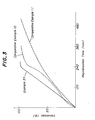
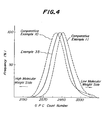
- Polymerizations of styrene were carried out according to Comparative example 9 by adding additionally to the polymerization system t-butylperoxy phenyl carbonate, n-dodecyl mercaptan or a-methylstyrene dimer, each being kept to 0.05 mol/Q concentration. These polymerizations are referred to as Example 35 and Comparative examples 10 and 11, respectively.
- the conversion curves in the polymerizations are shown in Fig. 3 and the GPC curves of the finally obtained polymers are shown in Fig. 4.
- Example 34 which uses t-butylperoxy phenyl carbonate, is shorter in the time required for completing the polymerization reaction and is more excellent in the linearity than the polymerization reactions in Comparative examples 10 and 11, which use a conventional polymerization regulator of n-dodecylmercaptan or a-methylstyrene dimer. Therefore, the use of t-butylperoxy phenyl carbonate can regulate effectively and easily a polymerization reaction.
- the number-average molecular weight and dispersion index of the finally obtained polymer in Example 35 which are calculated from the GPC curve shown in Fig. 4, are 74,000 and 2.4 respectively, those of the finally obtained polymer in Comparative example 10 are 60,000 and 4.8 respectively, and those of the finally obtained polymer in Comparative example 11 are 44,000 and 2.5 respectively. It can be seen from these results that the polymer obtained by the use of t-butylperoxy phenyl carbonate is equal or superior in the uniformity of the molecular weight distribution to the polymer obtained by the use of a conventional polymerization regulator.
- the resulting polymer has a noticeably non-uniform molecular weight distribution, while when a-methylstyrene dimer having a small chain transfer constant of 0.3 is used, a large amount of the a-methylstyrene dimer remains in the polymer and is troublesome.
Landscapes
- Chemical & Material Sciences (AREA)
- Organic Chemistry (AREA)
- Organic Low-Molecular-Weight Compounds And Preparation Thereof (AREA)
- Polymerization Catalysts (AREA)
Applications Claiming Priority (4)
| Application Number | Priority Date | Filing Date | Title |
|---|---|---|---|
| JP18162385A JPS6243404A (ja) | 1985-08-21 | 1985-08-21 | 重合調整能を有する重合開始剤 |
| JP181623/85 | 1985-08-21 | ||
| JP18162485A JPS6242963A (ja) | 1985-08-21 | 1985-08-21 | 有機過酸化物 |
| JP181624/85 | 1985-08-21 |
Publications (3)
| Publication Number | Publication Date |
|---|---|
| EP0214778A1 true EP0214778A1 (de) | 1987-03-18 |
| EP0214778B1 EP0214778B1 (de) | 1990-05-09 |
| EP0214778B2 EP0214778B2 (de) | 1993-11-24 |
Family
ID=26500731
Family Applications (1)
| Application Number | Title | Priority Date | Filing Date |
|---|---|---|---|
| EP86306322A Expired - Lifetime EP0214778B2 (de) | 1985-08-21 | 1986-08-15 | Organische Peroxyde, tauglich zur Polymerisationsregulierung |
Country Status (3)
| Country | Link |
|---|---|
| US (2) | US4929747A (de) |
| EP (1) | EP0214778B2 (de) |
| DE (1) | DE3671015D1 (de) |
Families Citing this family (2)
| Publication number | Priority date | Publication date | Assignee | Title |
|---|---|---|---|---|
| NO912922L (no) * | 1990-09-05 | 1992-03-06 | Atochem North America | Peroksyder for polymeriseringsreaksjoner. |
| KR20080025366A (ko) | 2005-04-29 | 2008-03-20 | 텐딕스 디벨롭먼트, 엘엘씨 | 래디얼 임펄스 엔진, 펌프 및 압축기 시스템과 관련 동작방법 |
Citations (3)
| Publication number | Priority date | Publication date | Assignee | Title |
|---|---|---|---|---|
| DE1301533B (de) * | 1964-03-18 | 1969-08-21 | Pittsburgh Plate Glass Co | Verfahren zur Herstellung von Mischpolymerisaten aus alpha,beta-ungesaettigten Carbonsaeureamiden oder -estern |
| DE2528492A1 (de) * | 1974-07-05 | 1976-01-22 | Akzo Gmbh | Perester zur initiierung chemischer reaktionen |
| US4526726A (en) * | 1982-09-30 | 1985-07-02 | Ppg Industries, Inc. | Tertiaryalkyl peroxycarbonates |
Family Cites Families (2)
| Publication number | Priority date | Publication date | Assignee | Title |
|---|---|---|---|---|
| US3326859A (en) * | 1964-03-18 | 1967-06-20 | Pittsburgh Plate Glass Co | Polymerization method using peroxycarbonate catalyst |
| US4071579A (en) * | 1974-07-05 | 1978-01-31 | Akzona Incorporated | Novel peresters suitable for initiating the polymerization or copolymerization of ethylenically unsaturated compounds |
-
1986
- 1986-08-13 US US06/895,995 patent/US4929747A/en not_active Expired - Fee Related
- 1986-08-15 DE DE8686306322T patent/DE3671015D1/de not_active Expired - Lifetime
- 1986-08-15 EP EP86306322A patent/EP0214778B2/de not_active Expired - Lifetime
-
1988
- 1988-11-14 US US07/270,214 patent/US5008353A/en not_active Expired - Fee Related
Patent Citations (3)
| Publication number | Priority date | Publication date | Assignee | Title |
|---|---|---|---|---|
| DE1301533B (de) * | 1964-03-18 | 1969-08-21 | Pittsburgh Plate Glass Co | Verfahren zur Herstellung von Mischpolymerisaten aus alpha,beta-ungesaettigten Carbonsaeureamiden oder -estern |
| DE2528492A1 (de) * | 1974-07-05 | 1976-01-22 | Akzo Gmbh | Perester zur initiierung chemischer reaktionen |
| US4526726A (en) * | 1982-09-30 | 1985-07-02 | Ppg Industries, Inc. | Tertiaryalkyl peroxycarbonates |
Also Published As
| Publication number | Publication date |
|---|---|
| US5008353A (en) | 1991-04-16 |
| EP0214778B1 (de) | 1990-05-09 |
| US4929747A (en) | 1990-05-29 |
| DE3671015D1 (de) | 1990-06-13 |
| EP0214778B2 (de) | 1993-11-24 |
Similar Documents
| Publication | Publication Date | Title |
|---|---|---|
| US6235857B1 (en) | Control of molecular weight and end-group functionality in polymers | |
| AU719016B2 (en) | Novel poly(monoperoxycarbonates) | |
| EP0500575B1 (de) | Kontrolle des molekulargewichts und der endgruppenfunktionalität in polymeren unter verwendung ungesättigter peroxide als kettenübertragungsmittel | |
| US5708104A (en) | Allyl peroxide chain transfer agents | |
| JP5066322B2 (ja) | 発泡性スチレンポリマーの製法 | |
| EP0214778B1 (de) | Organische Peroxyde, tauglich zur Polymerisationsregulierung | |
| US5210164A (en) | Organic peroxide having a polymerization-regulating ability | |
| US4119657A (en) | Novel peroxycarbonate | |
| US3222327A (en) | Peroxide catalysts and polymerization processes employing the same | |
| US3743630A (en) | Styrene polymerization with ring substituted alkyl perbenzoates and new branched chain alkyl perbenzoates | |
| US4658001A (en) | Peroxycarbonate group-containing copolymer and method for manufacture thereof | |
| US3418301A (en) | Ethylene/haloethyl ester copolymers | |
| US4455412A (en) | Process for polymerization using monoperoxyoxalic acid diesters | |
| EP0553185B1 (de) | Allyl-peroxyketale als kettenübertragungsmittel | |
| US5612430A (en) | Process for molecular weight regulation in (co)polymers | |
| KR960006409B1 (ko) | 에스테르형 중합체성 퍼옥시드류 | |
| US4847232A (en) | Liquid peroxidic compositions | |
| US5674958A (en) | Process for (co)polymerizing vinyl monomers | |
| JPH0150699B2 (de) | ||
| US6034263A (en) | Control of molecular weight and end group functionality in polymers using unsaturated peroxy compounds as chain transfer agents | |
| US5698648A (en) | Control of Molecular weight and end group functionality in polymers using unsaturated peroxy compounds as chain transfer agents | |
| US3816476A (en) | Addition reaction involving diperoxy-fumarate and compounds having diperoxysuccinyl groups | |
| US5075495A (en) | 1-phenylcyclohexylperoxy neoalkanoates and use thereof | |
| EP0266966A2 (de) | Peroxymonocarbonat | |
| US3431278A (en) | Phenyl vinylene oxalates |
Legal Events
| Date | Code | Title | Description |
|---|---|---|---|
| PUAI | Public reference made under article 153(3) epc to a published international application that has entered the european phase |
Free format text: ORIGINAL CODE: 0009012 |
|
| AK | Designated contracting states |
Kind code of ref document: A1 Designated state(s): DE FR GB IT NL |
|
| 17P | Request for examination filed |
Effective date: 19870908 |
|
| 17Q | First examination report despatched |
Effective date: 19881007 |
|
| GRAA | (expected) grant |
Free format text: ORIGINAL CODE: 0009210 |
|
| AK | Designated contracting states |
Kind code of ref document: B1 Designated state(s): DE FR GB IT NL |
|
| ITF | It: translation for a ep patent filed | ||
| REF | Corresponds to: |
Ref document number: 3671015 Country of ref document: DE Date of ref document: 19900613 |
|
| ET | Fr: translation filed | ||
| ITTA | It: last paid annual fee | ||
| PLBI | Opposition filed |
Free format text: ORIGINAL CODE: 0009260 |
|
| 26 | Opposition filed |
Opponent name: AKZO N.V. Effective date: 19910204 |
|
| NLR1 | Nl: opposition has been filed with the epo |
Opponent name: AKZO N.V. |
|
| PUAH | Patent maintained in amended form |
Free format text: ORIGINAL CODE: 0009272 |
|
| STAA | Information on the status of an ep patent application or granted ep patent |
Free format text: STATUS: PATENT MAINTAINED AS AMENDED |
|
| 27A | Patent maintained in amended form |
Effective date: 19931124 |
|
| AK | Designated contracting states |
Kind code of ref document: B2 Designated state(s): DE FR GB IT NL |
|
| ITF | It: translation for a ep patent filed | ||
| ET3 | Fr: translation filed ** decision concerning opposition | ||
| NLR2 | Nl: decision of opposition | ||
| NLR3 | Nl: receipt of modified translations in the netherlands language after an opposition procedure | ||
| PGFP | Annual fee paid to national office [announced via postgrant information from national office to epo] |
Ref country code: GB Payment date: 19960806 Year of fee payment: 11 |
|
| PGFP | Annual fee paid to national office [announced via postgrant information from national office to epo] |
Ref country code: FR Payment date: 19960809 Year of fee payment: 11 |
|
| PGFP | Annual fee paid to national office [announced via postgrant information from national office to epo] |
Ref country code: DE Payment date: 19960823 Year of fee payment: 11 |
|
| PGFP | Annual fee paid to national office [announced via postgrant information from national office to epo] |
Ref country code: NL Payment date: 19960828 Year of fee payment: 11 |
|
| PG25 | Lapsed in a contracting state [announced via postgrant information from national office to epo] |
Ref country code: GB Free format text: LAPSE BECAUSE OF NON-PAYMENT OF DUE FEES Effective date: 19970815 |
|
| PG25 | Lapsed in a contracting state [announced via postgrant information from national office to epo] |
Ref country code: NL Free format text: LAPSE BECAUSE OF NON-PAYMENT OF DUE FEES Effective date: 19980301 |
|
| GBPC | Gb: european patent ceased through non-payment of renewal fee |
Effective date: 19970815 |
|
| PG25 | Lapsed in a contracting state [announced via postgrant information from national office to epo] |
Ref country code: FR Free format text: LAPSE BECAUSE OF NON-PAYMENT OF DUE FEES Effective date: 19980430 |
|
| PG25 | Lapsed in a contracting state [announced via postgrant information from national office to epo] |
Ref country code: DE Free format text: LAPSE BECAUSE OF NON-PAYMENT OF DUE FEES Effective date: 19980501 |
|
| NLV4 | Nl: lapsed or anulled due to non-payment of the annual fee |
Effective date: 19980301 |
|
| REG | Reference to a national code |
Ref country code: FR Ref legal event code: ST |
|
| PG25 | Lapsed in a contracting state [announced via postgrant information from national office to epo] |
Ref country code: IT Free format text: LAPSE BECAUSE OF NON-PAYMENT OF DUE FEES Effective date: 20050815 |
|
| PLAB | Opposition data, opponent's data or that of the opponent's representative modified |
Free format text: ORIGINAL CODE: 0009299OPPO |