EP0216596A2 - Dithiophosphonates, their preparation and use as anti-oxidants - Google Patents
Dithiophosphonates, their preparation and use as anti-oxidants Download PDFInfo
- Publication number
- EP0216596A2 EP0216596A2 EP86307141A EP86307141A EP0216596A2 EP 0216596 A2 EP0216596 A2 EP 0216596A2 EP 86307141 A EP86307141 A EP 86307141A EP 86307141 A EP86307141 A EP 86307141A EP 0216596 A2 EP0216596 A2 EP 0216596A2
- Authority
- EP
- European Patent Office
- Prior art keywords
- general formula
- acid
- salt
- group
- alkyl
- Prior art date
- Legal status (The legal status is an assumption and is not a legal conclusion. Google has not performed a legal analysis and makes no representation as to the accuracy of the status listed.)
- Withdrawn
Links
Classifications
-
- C—CHEMISTRY; METALLURGY
- C10—PETROLEUM, GAS OR COKE INDUSTRIES; TECHNICAL GASES CONTAINING CARBON MONOXIDE; FUELS; LUBRICANTS; PEAT
- C10M—LUBRICATING COMPOSITIONS; USE OF CHEMICAL SUBSTANCES EITHER ALONE OR AS LUBRICATING INGREDIENTS IN A LUBRICATING COMPOSITION
- C10M137/00—Lubricating compositions characterised by the additive being an organic non-macromolecular compound containing phosphorus
- C10M137/12—Lubricating compositions characterised by the additive being an organic non-macromolecular compound containing phosphorus having a phosphorus-to-carbon bond
- C10M137/14—Lubricating compositions characterised by the additive being an organic non-macromolecular compound containing phosphorus having a phosphorus-to-carbon bond containing sulfur
-
- C—CHEMISTRY; METALLURGY
- C07—ORGANIC CHEMISTRY
- C07F—ACYCLIC, CARBOCYCLIC OR HETEROCYCLIC COMPOUNDS CONTAINING ELEMENTS OTHER THAN CARBON, HYDROGEN, HALOGEN, OXYGEN, NITROGEN, SULFUR, SELENIUM OR TELLURIUM
- C07F9/00—Compounds containing elements of Groups 5 or 15 of the Periodic Table
- C07F9/02—Phosphorus compounds
- C07F9/28—Phosphorus compounds with one or more P—C bonds
- C07F9/38—Phosphonic acids [RP(=O)(OH)2]; Thiophosphonic acids ; [RP(=X1)(X2H)2(X1, X2 are each independently O, S or Se)]
- C07F9/40—Esters thereof
- C07F9/4003—Esters thereof the acid moiety containing a substituent or a structure which is considered as characteristic
- C07F9/4021—Esters of aromatic acids (P-C aromatic linkage)
-
- C—CHEMISTRY; METALLURGY
- C08—ORGANIC MACROMOLECULAR COMPOUNDS; THEIR PREPARATION OR CHEMICAL WORKING-UP; COMPOSITIONS BASED THEREON
- C08K—Use of inorganic or non-macromolecular organic substances as compounding ingredients
- C08K5/00—Use of organic ingredients
- C08K5/49—Phosphorus-containing compounds
- C08K5/5398—Phosphorus bound to sulfur
-
- C—CHEMISTRY; METALLURGY
- C09—DYES; PAINTS; POLISHES; NATURAL RESINS; ADHESIVES; COMPOSITIONS NOT OTHERWISE PROVIDED FOR; APPLICATIONS OF MATERIALS NOT OTHERWISE PROVIDED FOR
- C09K—MATERIALS FOR MISCELLANEOUS APPLICATIONS, NOT PROVIDED FOR ELSEWHERE
- C09K15/00—Anti-oxidant compositions; Compositions inhibiting chemical change
- C09K15/04—Anti-oxidant compositions; Compositions inhibiting chemical change containing organic compounds
- C09K15/32—Anti-oxidant compositions; Compositions inhibiting chemical change containing organic compounds containing two or more of boron, silicon, phosphorus, selenium, tellurium or a metal
-
- C—CHEMISTRY; METALLURGY
- C09—DYES; PAINTS; POLISHES; NATURAL RESINS; ADHESIVES; COMPOSITIONS NOT OTHERWISE PROVIDED FOR; APPLICATIONS OF MATERIALS NOT OTHERWISE PROVIDED FOR
- C09K—MATERIALS FOR MISCELLANEOUS APPLICATIONS, NOT PROVIDED FOR ELSEWHERE
- C09K15/00—Anti-oxidant compositions; Compositions inhibiting chemical change
- C09K15/04—Anti-oxidant compositions; Compositions inhibiting chemical change containing organic compounds
- C09K15/32—Anti-oxidant compositions; Compositions inhibiting chemical change containing organic compounds containing two or more of boron, silicon, phosphorus, selenium, tellurium or a metal
- C09K15/322—Anti-oxidant compositions; Compositions inhibiting chemical change containing organic compounds containing two or more of boron, silicon, phosphorus, selenium, tellurium or a metal containing only phosphorus
- C09K15/324—Anti-oxidant compositions; Compositions inhibiting chemical change containing organic compounds containing two or more of boron, silicon, phosphorus, selenium, tellurium or a metal containing only phosphorus containing phosphorus and sulfur
-
- C—CHEMISTRY; METALLURGY
- C10—PETROLEUM, GAS OR COKE INDUSTRIES; TECHNICAL GASES CONTAINING CARBON MONOXIDE; FUELS; LUBRICANTS; PEAT
- C10M—LUBRICATING COMPOSITIONS; USE OF CHEMICAL SUBSTANCES EITHER ALONE OR AS LUBRICATING INGREDIENTS IN A LUBRICATING COMPOSITION
- C10M2223/00—Organic non-macromolecular compounds containing phosphorus as ingredients in lubricant compositions
- C10M2223/02—Organic non-macromolecular compounds containing phosphorus as ingredients in lubricant compositions having no phosphorus-to-carbon bonds
- C10M2223/04—Phosphate esters
- C10M2223/045—Metal containing thio derivatives
-
- C—CHEMISTRY; METALLURGY
- C10—PETROLEUM, GAS OR COKE INDUSTRIES; TECHNICAL GASES CONTAINING CARBON MONOXIDE; FUELS; LUBRICANTS; PEAT
- C10N—INDEXING SCHEME ASSOCIATED WITH SUBCLASS C10M RELATING TO LUBRICATING COMPOSITIONS
- C10N2010/00—Metal present as such or in compounds
- C10N2010/02—Groups 1 or 11
-
- C—CHEMISTRY; METALLURGY
- C10—PETROLEUM, GAS OR COKE INDUSTRIES; TECHNICAL GASES CONTAINING CARBON MONOXIDE; FUELS; LUBRICANTS; PEAT
- C10N—INDEXING SCHEME ASSOCIATED WITH SUBCLASS C10M RELATING TO LUBRICATING COMPOSITIONS
- C10N2010/00—Metal present as such or in compounds
- C10N2010/04—Groups 2 or 12
-
- C—CHEMISTRY; METALLURGY
- C10—PETROLEUM, GAS OR COKE INDUSTRIES; TECHNICAL GASES CONTAINING CARBON MONOXIDE; FUELS; LUBRICANTS; PEAT
- C10N—INDEXING SCHEME ASSOCIATED WITH SUBCLASS C10M RELATING TO LUBRICATING COMPOSITIONS
- C10N2010/00—Metal present as such or in compounds
- C10N2010/12—Groups 6 or 16
Definitions
- This invention relates to certain novel dithiophosphonates derived from hindered phenols, a simple method for their preparation and their use as anti-oxidants for example in lubricants and/or plastics materials.
- Metal salts of phosphorous acids such dithiophosphoric acid are well known additives for use in hydrocarbon compositions such as plastics, resins, paints, lubricants, fuels and greases where they are used to promote resistance to degradation due to heat or oxidation. It is desirable for such materials to have good thermal and oxidative stability.
- Dialkyldithiophosphonates such as the zinc salts of the general formula: are known wherein R is an alkyl radical and R' is an alkyl radical or a hydrogen atom.
- US 3401185 describes metal salts of the phosphorus acid of the general formula: wherein one R is selected from the class consisting of hydrocarbon, hydrocarbon-oxy, and XH radicals and the other R is a hydrocarbon radical and X is oxygen or sulphur.
- one of the R groups is a hydrocarbon group the salt will be a dithiophosphonate, and example 4 of US 3401185, prepares a phosphonic acid by reaction of phosphorus pentasulphide and polybutylene which is thereafter steam-blown.
- this invention provides dithiophosphonic acid derivatives of the general formula: wherein Ar is a hindered phenol group, R1 is a hydrocarbyl radical and X1 is sulphur, oxygen or a group NR2 where each R is hydrogen or a hydrocarbyl group.
- the invention also provides salts of the acid derivatives of general formula (IV) with metals or amines, and S-alkyl derivatives, for example formed with olefinically unsaturated materials such as styrene, diethylmaleate, and isobutylene.
- the invention also provides a process for the preparation of the acid derivatives of general formula (IV) in which a thiophosphine sulphide of the general formula: [Ar-PS2] 2 (V) (wherein Ar is as defined hereinbefore) is reacted with an appropriate compound of the formula R1X1H to form the desired acid of general formula (IV).
- the thiophosphine sulphide V may in turn be prepared by reacting the appropriate hindered phenol compound of the general formula ArH with phosphorus pentasulphide.
- the group Ar is derived from the class of phenols known as hindered phenols - that is to say, phenols in which the phenyl nucleus is substituted so as to restrict access to the hydroxyl group.
- Typical of such hindered phenols are the 2,6-di-substituted phenols, particularly where the substituent groups are bulky substituents such as branched alkyl groups.
- a particularly preferred group of hindered phenols is the 2,6-di-t-alkyl-phenols such as 2,6-di-t-butyl-phenol.
- the thiophosphine sulphide of general formula (V) is formed.
- This reaction is preferably carried out in a solvent such as an aromatic hydrocarbon and examples of suitable hydrocarbons include xylenes.
- the reaction is preferably carried out at elevated temperature, typically at from 60° - 250°C, preferably from 100° - 200°C, and most preferably in the range of 120° - 160°C.
- the thiophosphine sulphide may be isolated from the reaction mixture by filtration before being used in the following step, but may also be used directly without any purification.
- the thiophosphine sulphide of general formula (V) is reacted with a compound of the general formula R1X1H .
- the thiophosphine sulphide may be reacted with an alcohol to form a monoester, a thiol to form a monothioester, or a primary or secondary amine.
- the compound of general formula R1X1H is also selected so as to introduce the desired group R1 into the acid of general formula (IV).
- This group R1 is a hydrocarbyl group and is preferably an alkyl group having from one to 30 carbon atoms or a phenyl group. The choice of R1 is made having regard to the intended function of the product of the invention.
- R1 should be a higher alkyl group having 10 or more carbon atoms preferably 12 or more carbon atoms, to obtain a liquid product with the desired oil solubility.
- R1 is a lower alkyl group the product will tend to be solid and will be more useful in applications such as compounding with solid organic material such as rubbers and plastics materials.
- Suitable higher alcohols with which the thiophosphine sulphide may be reacted are those obtained from oxo reactions carried out on olefins.
- Commercially available oxo alcohols are generally in the form of mixtures which may also be used satisfactorily in the process of this invention.
- Preferred alcohol mixtures are C 4/5 alcohols, C 9/10/11 alcohols and C 12/13 alcohols.
- the reaction is conveniently carried out by slurrying the thiophosphine sulphide with the compound R1X1H, preferably with heating. Typically the reaction mixture is heated to a temperature of 40° - 100°C, preferably 50° - 80°C.
- the formed compound of general formula (IV) may be separated from the reaction mixture, or used as it is for the following step of converting this material into its salt or adduct.
- Salt formation may effected by reacting the acid of general formula (IV) with an appropriate basic compound of the selected metal, or with an amine.
- S-alkyl derivatives are formed by reacting the acid in a similar manner with the selected unsaturated material, or by reacting a metal salt of the acid with and alkyl halide such as the bromide.
- the salt or derivative formation is preferably carried out by warming to an elevated temperature of from 40° - 100°C preferably 50° - 80°C. It is possible to use a promoter in the form of a metal salt, where the metal in the promoter is preferably the same as the metal in the salt-forming base.
- Preferred salts of the acid derivative of general formula IV are those formed with metals such as lithium, potassium, sodium, aluminium, barium, calcium, strontium, magnesium, zinc, iron, cobalt, nickel, cadmium or molybdenum, although other alkaline metals, alkaline earth metals and transition metals may be employed.
- the basic metal compound will be an oxide, hydroxide, hydride, carbonate, bicarbonate, sulphide, lithoxide, ethoxide or phenoxide of the metal but the most frequently used compounds are the oxides, carbonates and hydroxides of zinc, barium, calcium, cadmium, copper, molybdenum, nickel, cobalt, lithium, sodium of magnesium.
- the invention extends to the use of salts and adducts of the acid derivative of general formula IV as anti-oxidants in hydrocarbon compositions, that is to methods of reducing oxidative degradation of such compositions by incorporating effective amounts of such salts and adducts therein.
- a preferred class of compounds of the invention are the metal salts of the acid derivative of general formula IV wherein Ar is a 2,6-di-t-butyl-phenol group.
- the phenol itself is a known anti-oxidant and it is a surprising feature of the invention that salts of this compound have particularly remarkable anti-oxidant activity as well as offering advantages in other areas which may include anti-wear and corrosion inhibition properties in lubricant compositions.
- the materials of this preferred class are useful in oxidation and light stabilisation of plastics materials, in particular homopolymers and copolymers based on ethylene and/or propylene.
- the metal salts chosen may also be dictated by end use of the material.
- Zinc and copper salts, as well as alkaline metal and alkaline earth metal salts, may be particularly useful in lubricant compositions, while transition metal salts and particularly nickel salts may be useful in anti-oxidants for plastics materials.
- the salts of the acid derivatives of general formula IV are used in lubricant compositions they are usually present in an amount of from 0.01 to 10 wt % of the total lubricant composition, preferably from 0.1 to 5 wt %.
- the lubricating oil in which they are used may be any suitable mineral or synthetic oil with lubricating viscosity which would normally be selected according to the use of the lubricant.
- the salts of the invention will normally first be formed into an additive concentrate in the form of an oil solution containing 10 to 90 wt % of the salt of the invention in a lubricating oil, which may be diluted with further oil to form a lubricating composition.
- the diluent in such concentrates may be any inert diluent, but is normally a lubricating oil to facilitate mixture to form a lubricant composition.
- additives may be present in the concentrates or lubricating formulations and these additives include detergents, inhibitors, anti-rust additives, foam inhibitors, corrosion inhibitors, metal deactivators, pour point depressants, anti-wear additives, anti-oxidants, dispersants, viscosity index improvers, surfactants, demulsifiers and copper corrosion inhibitors/sulphur scavengers such as trialkyl and triaryl phosphites, thiadiazoles and benzotriazoles. It is believed to be within the competence of one skilled in the art to select appropriate additives for a lubricant composition. However, it is believed that the compounds of the invention are particularly suitable for use in lubricant additives and provide particularly effective antioxidant properties.
- the salts and adducts of the invention When used in other hydrocarbon polymer compositions such as plastics (eg polypropylene, polyethylene) and rubbers (eg ethylene-propylene copolymers and EPDM terpolymers), the salts and adducts of the invention will typically be employed at a rate of 0.1 to 50 wt % of the hydrocarbon composition, preferably from 0.1 to 10 wt % of the composition.
- Such master batches can then be readily formulated into the finished hydrocarbon composition:
- the crude dithiophosphonic acid (1539g) was added over 6 hours to a slurry of ZnO (121g, 25% excess) and ZnCl2 (3g) in diluent oil (200g) at 70°C.
- the reaction mixture was allowed to heat soak for 1 hour at 70°C then allowed to stand 16 hours. Filtration through Special Speedflow and Superaid gave 1644 g zinc salt (92%).
- the crude dithiophosphonic acid was reacted with tri-n-butylamine under conditions similar to those as described for step (ii) to form the amine salt.
- the copper salt was prepared by reacting the crude dithiophosphonic acid with cuprous oxide under similar conditions, as described for step (ii).
- Isobutanol (11g) was added to the product of Example 2 (40g) in chlorobenzene (300 cm3) as solvent under nitrogen at 70°C. After the mixture was soaked at 70°C for 1.5 hours the chlorobenzene was removed giving a white solid (95% yield) of the formula: referred to herein as i-BuDTPA
- Example 4 The acid formed in Example 4 was dissolved in chlorobenzene (xylene or toluene can also be used) and NH3 gas was bubbled through for 20 minutes. A white solid crystallised out in 100% yield of the formula:
- TPS (50g) as prepared in Example 2 was dissolved in xylene (200cm3) under nitrogen and heated to 100°C.
- Thiophenol (18.5g, 2 mols) was added dropwise. The mixture was heat-soaked for one hour when the colour changed from yellow to colourless. The solution was filtered and the trithiophosphonic acid recrystallised. Analysis: Found C% 59.6 H% 6.48 Theory C% 58.5 H% 6.58 The acid was dissolved in xylene and NH3 gas bubbled through for 20 minutes. The ammonium salt was formed as white precipitate and filtered.
- CuCl2 was dissolved in water and added to a suspension of the ammonium salt in xylene. A yellow solid floated to the top of the aqueous phase and was filtered, washed with water and methanol and dried to yield the copper salt of the trithiophosphonic acid.
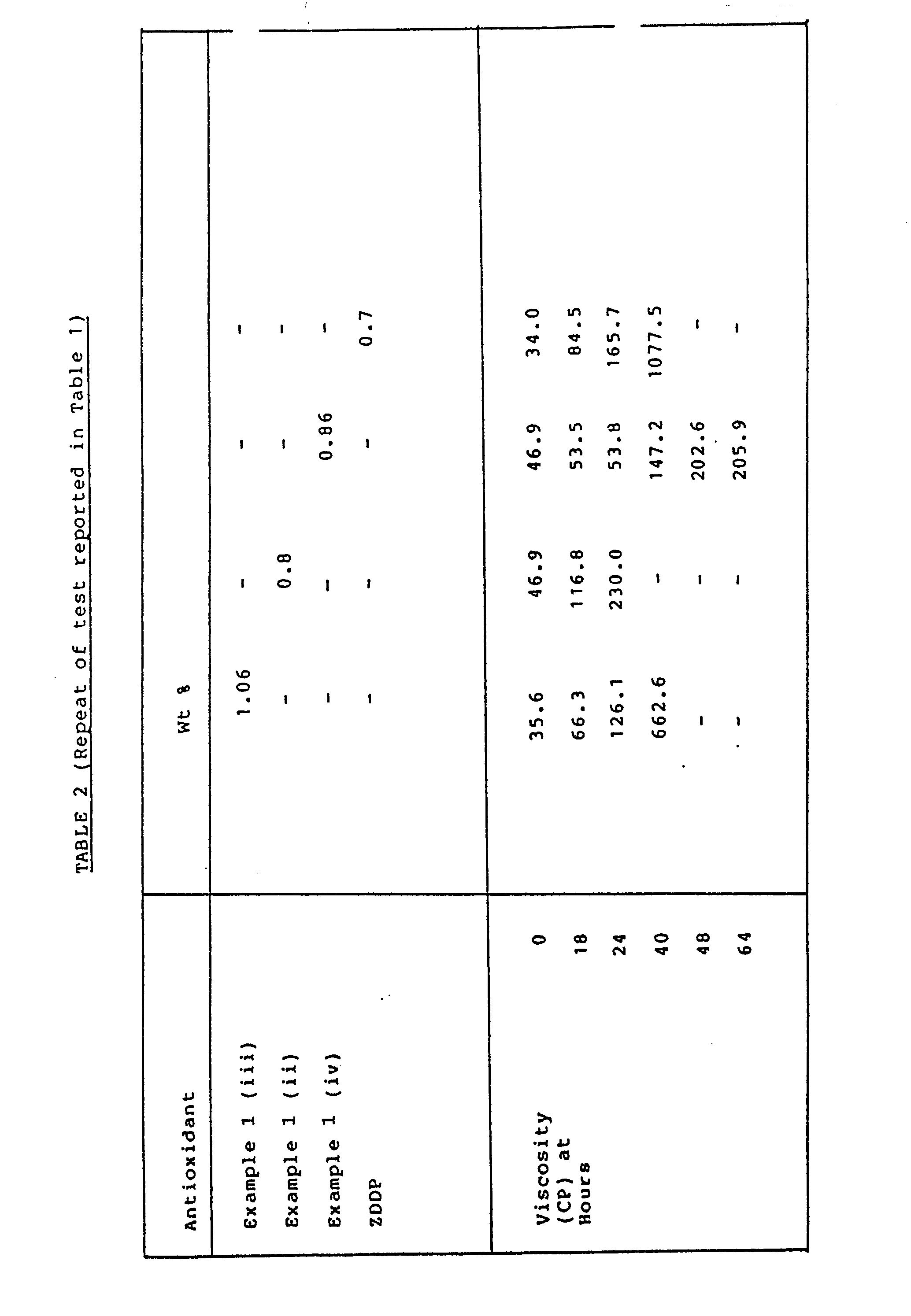
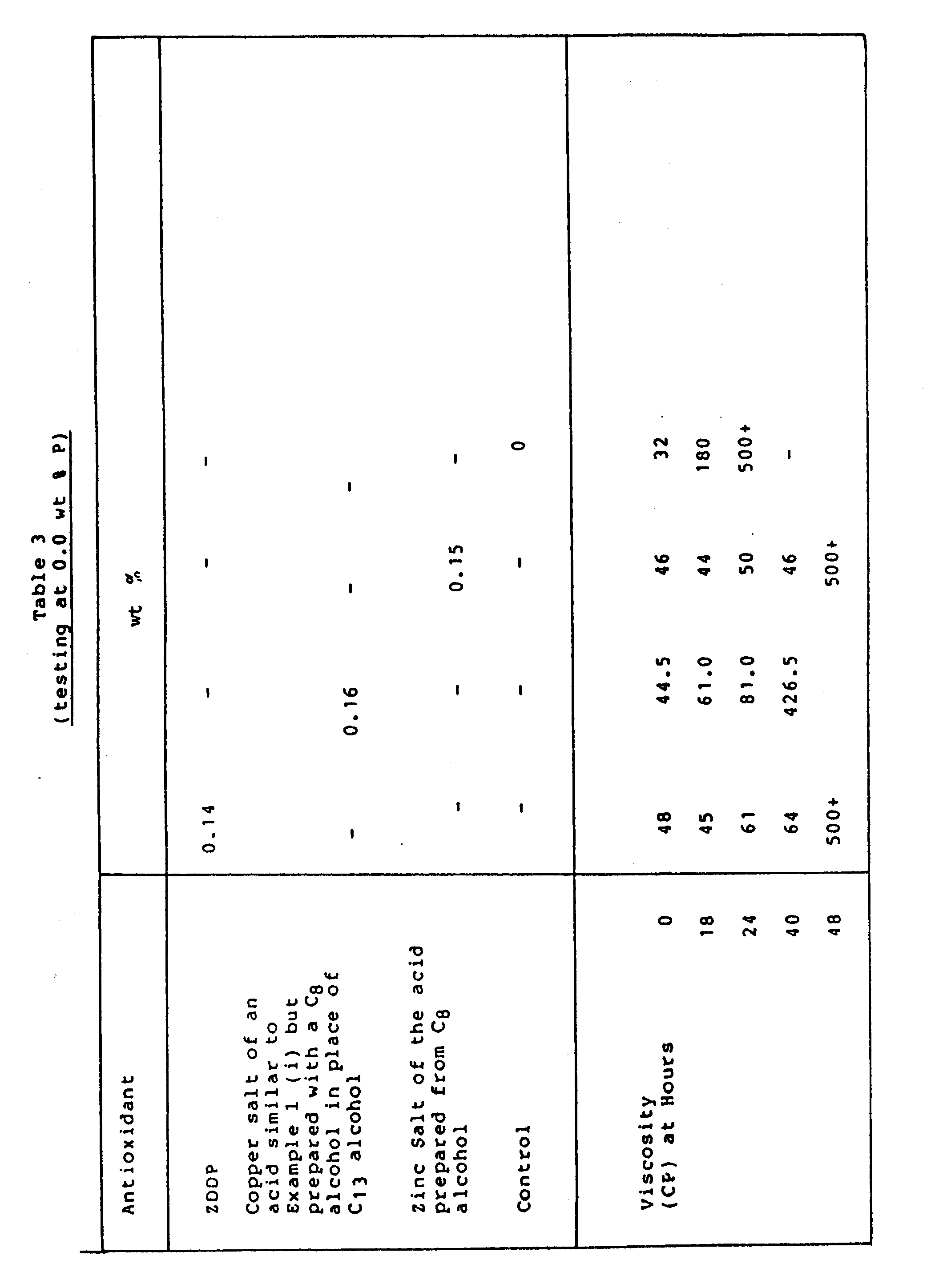
- a test lubricating oil was prepared containing a major amount of a mineral lubricating oil and 4.5 wt % of a dispersant concentrate comprising a polyisobutenyl succinic anhydride reacted with polyethylene amine and then borated, and 1.0 wt % of a 400 TBN (Total Base Number) magnesium sulphonate containing 9.2 wt % magnesium. To this was added a compound of the invention in an amount such as to give a phosphorus level of 0.05 wt % in the lubricating oil composition - unless otherwise stated.
- This oil composition further containing 40 parts per million of iron as ferric acetylacetonate was measured by passing 1.7 litres of air per minutes through the sample at 165 °C and determining the viscosity at 40 °C intervals up to 64 hours on a Ferranti-Shirley cone-on-plate-viscometer. In this test the oil composition is just about to turn solid at ambient temperature when a viscosity of about 500 centipoise is reached.
- the oxidation stability of the oil composition containing compounds of the invention was compared with oil compositions containing conventional antioxidants including a zinc dialkyl dithiophosphate in which the alkyl groups are a mixture of C4 and C5 alkyl radicals prepared by reacting P2S5 with a mixture of about 65% isobutyl alcohol and 35% amyl alcohol (hereinafter referred to as "ZDDP") and a commercially available hindered phenol Ethyl 702, available from Ethyl Corporation.
- ZDDP zinc dialkyl dithiophosphate in which the alkyl groups are a mixture of C4 and C5 alkyl radicals prepared by reacting P2S5 with a mixture of about 65% isobutyl alcohol and 35% amyl alcohol
- ZDDP commercially available hindered phenol Ethyl 702
Landscapes
- Chemical & Material Sciences (AREA)
- Organic Chemistry (AREA)
- Engineering & Computer Science (AREA)
- Chemical Kinetics & Catalysis (AREA)
- Health & Medical Sciences (AREA)
- Materials Engineering (AREA)
- General Chemical & Material Sciences (AREA)
- Polymers & Plastics (AREA)
- Medicinal Chemistry (AREA)
- Oil, Petroleum & Natural Gas (AREA)
- Life Sciences & Earth Sciences (AREA)
- Biochemistry (AREA)
- General Health & Medical Sciences (AREA)
- Molecular Biology (AREA)
- Compositions Of Macromolecular Compounds (AREA)
- Anti-Oxidant Or Stabilizer Compositions (AREA)
- Lubricants (AREA)
Abstract
Description
- This invention relates to certain novel dithiophosphonates derived from hindered phenols, a simple method for their preparation and their use as anti-oxidants for example in lubricants and/or plastics materials.
- Metal salts of phosphorous acids such dithiophosphoric acid are well known additives for use in hydrocarbon compositions such as plastics, resins, paints, lubricants, fuels and greases where they are used to promote resistance to degradation due to heat or oxidation. It is desirable for such materials to have good thermal and oxidative stability.
Dialkyldithiophosphonates such as the zinc salts of the general formula: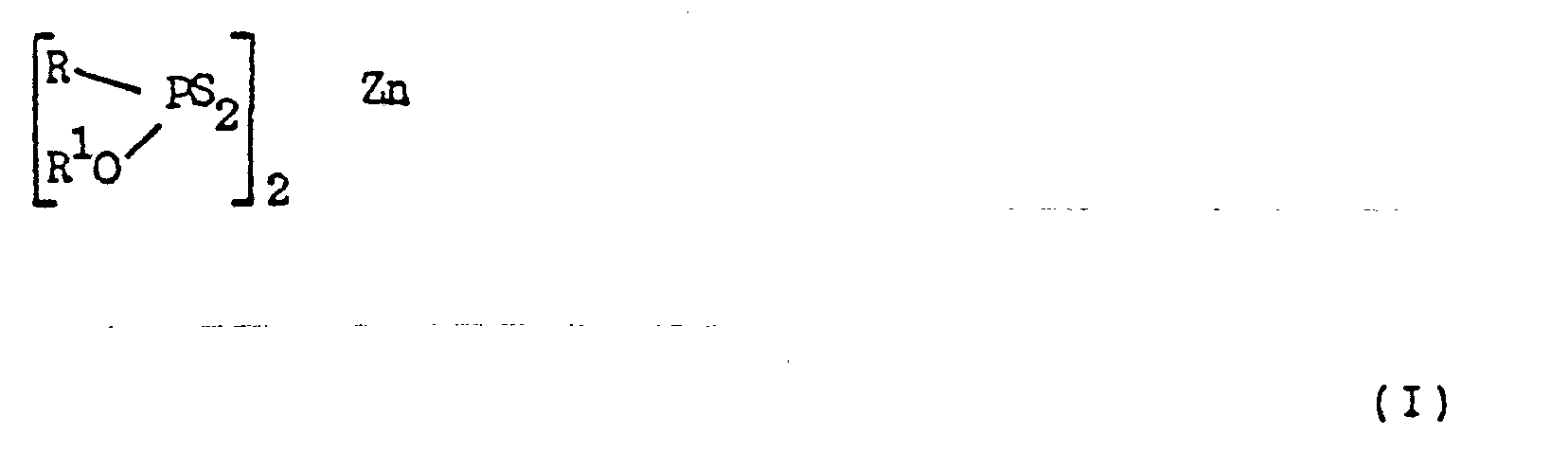
- Such compounds have good anti-oxidant activity and better thermal stability than the corresponding dithiophosphate of the general formula:

- However, the synthesis of compounds of general formula (I) is expensive and complex which makes them unsuitable for commercial application.
- US 3401185 describes metal salts of the phosphorus acid of the general formula:

- It has now been found that a new class of dithiophosphonate derivatives may be prepared simply and show excellent anti-oxidant activity.
- Accordingly, in one aspect this invention provides dithiophosphonic acid derivatives of the general formula:

- The invention also provides a process for the preparation of the acid derivatives of general formula (IV) in which a thiophosphine sulphide of the general formula:
[Ar-PS₂] ₂ (V)
(wherein Ar is as defined hereinbefore) is reacted with an appropriate compound of the formula R₁X₁H to form the desired acid of general formula (IV).
The thiophosphine sulphide V may in turn be prepared by reacting the appropriate hindered phenol compound of the general formula ArH with phosphorus pentasulphide. It is a feature of the invention that the group Ar is derived from the class of phenols known as hindered phenols - that is to say, phenols in which the phenyl nucleus is substituted so as to restrict access to the hydroxyl group. Typical of such hindered phenols are the 2,6-di-substituted phenols, particularly where the substituent groups are bulky substituents such as branched alkyl groups. This surprisingly gives the dual advantages of enabling the acid derivative of general formula IV to be prepared by a relatively simple process, and enabling the provision of products which, in the form of salts have shown excellent anti-oxidant activity. - A particularly preferred group of hindered phenols is the 2,6-di-t-alkyl-phenols such as 2,6-di-t-butyl-phenol.
- By reacting the hindered phenol compound with phosphorus pentasulphide, the thiophosphine sulphide of general formula (V) is formed. This reaction is preferably carried out in a solvent such as an aromatic hydrocarbon and examples of suitable hydrocarbons include xylenes. The reaction is preferably carried out at elevated temperature, typically at from 60° - 250°C, preferably from 100° - 200°C, and most preferably in the range of 120° - 160°C. The thiophosphine sulphide may be isolated from the reaction mixture by filtration before being used in the following step, but may also be used directly without any purification.
- In the next step the thiophosphine sulphide of general formula (V) is reacted with a compound of the general formula R₁X₁H . The thiophosphine sulphide may be reacted with an alcohol to form a monoester, a thiol to form a monothioester, or a primary or secondary amine. The compound of general formula R₁X₁H is also selected so as to introduce the desired group R₁ into the acid of general formula (IV). This group R₁ is a hydrocarbyl group and is preferably an alkyl group having from one to 30 carbon atoms or a phenyl group. The choice of R₁ is made having regard to the intended function of the product of the invention.
- If it is desired to have a liquid product, which is frequently desirable for lubricant applications, R₁ should be a higher alkyl group having 10 or more carbon atoms preferably 12 or more carbon atoms, to obtain a liquid product with the desired oil solubility. When R₁ is a lower alkyl group the product will tend to be solid and will be more useful in applications such as compounding with solid organic material such as rubbers and plastics materials.
- Suitable higher alcohols with which the thiophosphine sulphide may be reacted are those obtained from oxo reactions carried out on olefins. Commercially available oxo alcohols are generally in the form of mixtures which may also be used satisfactorily in the process of this invention. Preferred alcohol mixtures are C4/5 alcohols, C9/10/11 alcohols and C12/13 alcohols.
- In general, the preferred substituents R₁ in thiols and amines will be chosen with the same considerations in mind.
- The reaction is conveniently carried out by slurrying the thiophosphine sulphide with the compound R₁X₁H, preferably with heating. Typically the reaction mixture is heated to a temperature of 40° - 100°C, preferably 50° - 80°C.
- The formed compound of general formula (IV) may be separated from the reaction mixture, or used as it is for the following step of converting this material into its salt or adduct. Salt formation may effected by reacting the acid of general formula (IV) with an appropriate basic compound of the selected metal, or with an amine.
- S-alkyl derivatives are formed by reacting the acid in a similar manner with the selected unsaturated material, or by reacting a metal salt of the acid with and alkyl halide such as the bromide.
- In each case the salt or derivative formation is preferably carried out by warming to an elevated temperature of from 40° - 100°C preferably 50° - 80°C. It is possible to use a promoter in the form of a metal salt, where the metal in the promoter is preferably the same as the metal in the salt-forming base.
- Preferred salts of the acid derivative of general formula IV, are those formed with metals such as lithium, potassium, sodium, aluminium, barium, calcium, strontium, magnesium, zinc, iron, cobalt, nickel, cadmium or molybdenum, although other alkaline metals, alkaline earth metals and transition metals may be employed. Typically, the basic metal compound will be an oxide, hydroxide, hydride, carbonate, bicarbonate, sulphide, lithoxide, ethoxide or phenoxide of the metal but the most frequently used compounds are the oxides, carbonates and hydroxides of zinc, barium, calcium, cadmium, copper, molybdenum, nickel, cobalt, lithium, sodium of magnesium.
- The invention extends to the use of salts and adducts of the acid derivative of general formula IV as anti-oxidants in hydrocarbon compositions, that is to methods of reducing oxidative degradation of such compositions by incorporating effective amounts of such salts and adducts therein. A preferred class of compounds of the invention are the metal salts of the acid derivative of general formula IV wherein Ar is a 2,6-di-t-butyl-phenol group. The phenol itself is a known anti-oxidant and it is a surprising feature of the invention that salts of this compound have particularly remarkable anti-oxidant activity as well as offering advantages in other areas which may include anti-wear and corrosion inhibition properties in lubricant compositions.
- The materials of this preferred class are useful in oxidation and light stabilisation of plastics materials, in particular homopolymers and copolymers based on ethylene and/or propylene.
- The metal salts chosen may also be dictated by end use of the material. Zinc and copper salts, as well as alkaline metal and alkaline earth metal salts, may be particularly useful in lubricant compositions, while transition metal salts and particularly nickel salts may be useful in anti-oxidants for plastics materials.
- When the salts of the acid derivatives of general formula IV are used in lubricant compositions they are usually present in an amount of from 0.01 to 10 wt % of the total lubricant composition, preferably from 0.1 to 5 wt %. The lubricating oil in which they are used may be any suitable mineral or synthetic oil with lubricating viscosity which would normally be selected according to the use of the lubricant. The salts of the invention will normally first be formed into an additive concentrate in the form of an oil solution containing 10 to 90 wt % of the salt of the invention in a lubricating oil, which may be diluted with further oil to form a lubricating composition. The diluent in such concentrates may be any inert diluent, but is normally a lubricating oil to facilitate mixture to form a lubricant composition.
- Other additives may be present in the concentrates or lubricating formulations and these additives include detergents, inhibitors, anti-rust additives, foam inhibitors, corrosion inhibitors, metal deactivators, pour point depressants, anti-wear additives, anti-oxidants, dispersants, viscosity index improvers, surfactants, demulsifiers and copper corrosion inhibitors/sulphur scavengers such as trialkyl and triaryl phosphites, thiadiazoles and benzotriazoles. It is believed to be within the competence of one skilled in the art to select appropriate additives for a lubricant composition. However, it is believed that the compounds of the invention are particularly suitable for use in lubricant additives and provide particularly effective antioxidant properties.
- When used in other hydrocarbon polymer compositions such as plastics (eg polypropylene, polyethylene) and rubbers (eg ethylene-propylene copolymers and EPDM terpolymers), the salts and adducts of the invention will typically be employed at a rate of 0.1 to 50 wt % of the hydrocarbon composition, preferably from 0.1 to 10 wt % of the composition. However, it is frequently convenient to use the salt or adducts of the invention in a master batch or concentrate in which it is present in an amount from 10 to 90 wt % in combination with a solid diluent material such as the hydrocarbon in which it will ultimately be used. Such master batches can then be readily formulated into the finished hydrocarbon composition:
- The following examples and test results illustrate the invention.
- 2,6-di-t-butylphenol (675g, 3.3 moles) and P₂S₅ (333 g, 1.5 moles) were heated in xylene (400 ml) at 140°C for 3.5 hours, by which time 51.2g H₂S (100% had been evolved. The reaction mixture was cooled to 70°C and tridecanol (635g,3.2 moles) added over 45 mins. Heating was continued for a further 1.5 hrs at 70°C. The reaction mixture was cooled and a grey solid (47g Found P, 23.0; S, 60.42) was filtered off. The filtrate (1540g) had TAN = 86 mgKOH/g (Theory 112 mg KOH/g).
- The crude dithiophosphonic acid (1539g) was added over 6 hours to a slurry of ZnO (121g, 25% excess) and ZnCl₂ (3g) in diluent oil (200g) at 70°C. The reaction mixture was allowed to heat soak for 1 hour at 70°C then allowed to stand 16 hours. Filtration through Special Speedflow and Superaid gave 1644 g zinc salt (92%). A further 440g of diluent oil was added to give a 70% a.i. product (Found: Zn, 4.9; P, 4.1; S; Zn/P = 1.19.
- The crude dithiophosphonic acid was reacted with tri-n-butylamine under conditions similar to those as described for step (ii) to form the amine salt.
- The copper salt was prepared by reacting the crude dithiophosphonic acid with cuprous oxide under similar conditions, as described for step (ii).
- P₂S₅(110g), 2,6-di-t-butylphenol (206g) and chlorobenzene (300 cm³) were heated to 155°C under nitrogen for 6 hours with stirring. On cooling, yellow 2,6-di-t-butylphenol thiophosphine sulphide crystallised out (yield = 88%)
- 30.7g of the product of Example 2 and 15.4g of n-butylamine were added to toluene (200 ml), and heated to 50°C for 1 hour. The product was recovered by stripping off the toluene.
- Isobutanol (11g) was added to the product of Example 2 (40g) in chlorobenzene (300 cm³) as solvent under nitrogen at 70°C. After the mixture was soaked at 70°C for 1.5 hours the chlorobenzene was removed giving a white solid (95% yield) of the formula:

- The acid formed in Example 4 was dissolved in chlorobenzene (xylene or toluene can also be used) and NH₃ gas was bubbled through for 20 minutes. A white solid crystallised out in 100% yield of the formula:

- Cuprous oxide (10.9g, 1.7 mols) was added slowly to the I-Bu DTPA (30g 1 mol) in chlorobenzene (250cm³) at 80°C. After 2 hour heat soak, the solution was cooled and unreacted CuO filtered off. Chlorobenzene was removed on a rotary evaporator. An orange coloured oil remained which was treated with methanol to give a yellow solid (40% yield) of the formula:

- TPS (50g) as prepared in Example 2 was dissolved in xylene (200cm³) under nitrogen and heated to 100°C. Thiophenol (18.5g, 2 mols) was added dropwise. The mixture was heat-soaked for one hour when the colour changed from yellow to colourless. The solution was filtered and the trithiophosphonic acid recrystallised.

Theory C% 58.5 H% 6.58
The acid was dissolved in xylene and NH₃ gas bubbled through for 20 minutes. The ammonium salt was formed as white precipitate and filtered.
CuCl₂ was dissolved in water and added to a suspension of the ammonium salt in xylene. A yellow solid floated to the top of the aqueous phase and was filtered, washed with water and methanol and dried to yield the copper salt of the trithiophosphonic acid. - A test lubricating oil was prepared containing a major amount of a mineral lubricating oil and 4.5 wt % of a dispersant concentrate comprising a polyisobutenyl succinic anhydride reacted with polyethylene amine and then borated, and 1.0 wt % of a 400 TBN (Total Base Number) magnesium sulphonate containing 9.2 wt % magnesium. To this was added a compound of the invention in an amount such as to give a phosphorus level of 0.05 wt % in the lubricating oil composition - unless otherwise stated. The oxidation stability of this oil composition further containing 40 parts per million of iron as ferric acetylacetonate was measured by passing 1.7 litres of air per minutes through the sample at 165 °C and determining the viscosity at 40 °C intervals up to 64 hours on a Ferranti-Shirley cone-on-plate-viscometer. In this test the oil composition is just about to turn solid at ambient temperature when a viscosity of about 500 centipoise is reached.
The oxidation stability of the oil composition containing compounds of the invention was compared with oil compositions containing conventional antioxidants including a zinc dialkyl dithiophosphate in which the alkyl groups are a mixture of C₄ and C₅ alkyl radicals prepared by reacting P₂S₅ with a mixture of about 65% isobutyl alcohol and 35% amyl alcohol (hereinafter referred to as "ZDDP") and a commercially available hindered phenol Ethyl 702, available from Ethyl Corporation. The results are given in the following tables.
Claims (19)

(Ar-PS₂)₂ (V)
(wherein Ar is as defined in claim 1) with an appropriate compound of the formula R₁X₁H (wehrein R₁ and X₁ are as defined in claim 1) to form the desired acid of general formula IV.
Applications Claiming Priority (2)
| Application Number | Priority Date | Filing Date | Title |
|---|---|---|---|
| GB858522833A GB8522833D0 (en) | 1985-09-16 | 1985-09-16 | Dithiophosphonates |
| GB8522833 | 1985-09-16 |
Publications (2)
| Publication Number | Publication Date |
|---|---|
| EP0216596A2 true EP0216596A2 (en) | 1987-04-01 |
| EP0216596A3 EP0216596A3 (en) | 1989-04-19 |
Family
ID=10585223
Family Applications (1)
| Application Number | Title | Priority Date | Filing Date |
|---|---|---|---|
| EP86307141A Withdrawn EP0216596A3 (en) | 1985-09-16 | 1986-09-16 | Dithiophosphonates, their preparation and use as anti-oxidants |
Country Status (4)
| Country | Link |
|---|---|
| US (2) | US4900852A (en) |
| EP (1) | EP0216596A3 (en) |
| JP (1) | JPS62116588A (en) |
| GB (1) | GB8522833D0 (en) |
Cited By (3)
| Publication number | Priority date | Publication date | Assignee | Title |
|---|---|---|---|---|
| WO2008061079A3 (en) * | 2006-11-14 | 2008-10-09 | Honeywell Int Inc | Fluorocarbon stabilizers |
| WO2012042227A1 (en) * | 2010-09-30 | 2012-04-05 | Peninsula College Of Medicine And Dentistry, University Of Exeter | Compounds for use in the treatment of plants |
| CN105061639A (en) * | 2015-08-17 | 2015-11-18 | 华南理工大学 | Star macromolecular antioxidant containing seven hindered phenol groups as well as preparation method and application of star macromolecular antioxidant |
Families Citing this family (5)
| Publication number | Priority date | Publication date | Assignee | Title |
|---|---|---|---|---|
| GB8522833D0 (en) * | 1985-09-16 | 1985-10-23 | Exxon Chemical Patents Inc | Dithiophosphonates |
| KR100612278B1 (en) | 2004-05-18 | 2006-08-11 | 삼성에스디아이 주식회사 | Plasma display device |
| GB0424290D0 (en) * | 2004-11-02 | 2004-12-01 | Koninkl Philips Electronics Nv | Method of growing a strained layer |
| CN112694927B (en) * | 2019-10-23 | 2022-07-15 | 中国石油化工股份有限公司 | Anti-rust oil composition and preparation method thereof |
| CN112694934B (en) * | 2019-10-23 | 2022-07-15 | 中国石油化工股份有限公司 | Gear oil composition and preparation method thereof |
Family Cites Families (26)
| Publication number | Priority date | Publication date | Assignee | Title |
|---|---|---|---|---|
| US2708204A (en) * | 1950-08-11 | 1955-05-10 | Shell Dev | Halogen- and phosphorus-containing compounds |
| US3249633A (en) * | 1958-07-23 | 1966-05-03 | Union Carbide Corp | Acrylic acid ester synthesis |
| NL255883A (en) * | 1959-09-15 | |||
| US3055925A (en) * | 1960-05-12 | 1962-09-25 | Gulf Research Development Co | Alkyl lead phosphates |
| NL125300C (en) * | 1961-04-14 | |||
| GB1037017A (en) * | 1963-07-03 | 1966-07-20 | American Cyanamid Co | Dithiophosphinate salts as stabilizers for polyolefins |
| US3347790A (en) * | 1965-07-01 | 1967-10-17 | Lubrizol Corp | Lubricating compositions containing metal salts of acids of phosphorus |
| GB1158989A (en) * | 1966-01-03 | 1969-07-23 | Stauffer Chemical Co | Poly-Alpha-Olefin Compositions containing Organophosphorus Amine Salts. |
| US3558747A (en) * | 1967-01-30 | 1971-01-26 | Ethyl Corp | Dihydrocarbylhydroxyphenyl phosphorus-containing antioxidants |
| US3801681A (en) * | 1970-12-14 | 1974-04-02 | American Cyanamid Co | 3,5-di-t-alkylphenyl phosphonates |
| US3888776A (en) * | 1973-02-12 | 1975-06-10 | Ore Lube Corp | Two-cycle engine oil |
| US3926821A (en) * | 1973-12-12 | 1975-12-16 | Lubrizol Corp | Phosphorus, nitrogen and sulfo-containing additives |
| US3992307A (en) * | 1974-11-04 | 1976-11-16 | Chevron Research Company | Lubricant composition of improved antioxidant properties |
| DE2608699A1 (en) * | 1975-03-10 | 1976-09-23 | Ciba Geigy Ag | PHOSPHONATES, PROCESS FOR THEIR PRODUCTION AND ORGANIC MATERIALS STABILIZED THEREOF |
| US4113634A (en) * | 1977-03-01 | 1978-09-12 | Standard Oil Company (Indiana) | Metal aryl dithiophosphates and their manufacture |
| EP0003058B1 (en) * | 1978-01-09 | 1983-02-16 | Ciba-Geigy Ag | Stabilized polypropylene |
| US4248720A (en) * | 1979-05-03 | 1981-02-03 | Exxon Research & Engineering Co. | Organo molybdenum friction-reducing antiwear additives |
| US4289635A (en) * | 1980-02-01 | 1981-09-15 | The Lubrizol Corporation | Process for preparing molybdenum-containing compositions useful for improved fuel economy of internal combustion engines |
| US4623474A (en) * | 1981-12-10 | 1986-11-18 | Union Oil Company Of California | Oxidation and corrosion inhibitors for boron-containing lubricants |
| US4306984A (en) * | 1980-06-19 | 1981-12-22 | Chevron Research Company | Oil soluble metal (lower) dialkyl dithiophosphate succinimide complex and lubricating oil compositions containing same |
| DE3212675A1 (en) * | 1982-04-05 | 1983-10-06 | Hoechst Ag | METHOD FOR SEPARATING HEAVY METAL COMPOUNDS FROM INTERMEDIATE PRODUCTS OF THE FABRICATION OF PHOSPHOROUS AGENTS |
| US4729848A (en) * | 1983-09-30 | 1988-03-08 | Chevron Research Company | Metal salts of alkyl catechol dithiophosphoric acids and oil compositions containing the salts |
| DE3336500A1 (en) * | 1983-10-07 | 1985-04-25 | Bayer Ag, 5090 Leverkusen | ORGANIC NICKEL COMPOUNDS THE PRODUCTION AND USE THEREOF AS CATALYSTS IN THE POLYMERIZATION OF OLEFINS |
| GB8522833D0 (en) * | 1985-09-16 | 1985-10-23 | Exxon Chemical Patents Inc | Dithiophosphonates |
| US4704217A (en) * | 1986-08-20 | 1987-11-03 | Texaco Inc. | Gasoline crankcase lubricant |
| SU1404510A1 (en) * | 1987-01-09 | 1988-06-23 | Казанский Химико-Технологический Институт Им.С.М.Кирова | 0-ethyl-3,5-ditertbutyl-4-hydroxyphenyldithiophosphonates as antioxidative additive to lubricants |
-
1985
- 1985-09-16 GB GB858522833A patent/GB8522833D0/en active Pending
-
1986
- 1986-09-16 JP JP61217890A patent/JPS62116588A/en active Pending
- 1986-09-16 EP EP86307141A patent/EP0216596A3/en not_active Withdrawn
-
1989
- 1989-05-15 US US07/353,187 patent/US4900852A/en not_active Expired - Fee Related
- 1989-12-19 US US07/452,913 patent/US5064886A/en not_active Expired - Fee Related
Cited By (3)
| Publication number | Priority date | Publication date | Assignee | Title |
|---|---|---|---|---|
| WO2008061079A3 (en) * | 2006-11-14 | 2008-10-09 | Honeywell Int Inc | Fluorocarbon stabilizers |
| WO2012042227A1 (en) * | 2010-09-30 | 2012-04-05 | Peninsula College Of Medicine And Dentistry, University Of Exeter | Compounds for use in the treatment of plants |
| CN105061639A (en) * | 2015-08-17 | 2015-11-18 | 华南理工大学 | Star macromolecular antioxidant containing seven hindered phenol groups as well as preparation method and application of star macromolecular antioxidant |
Also Published As
| Publication number | Publication date |
|---|---|
| EP0216596A3 (en) | 1989-04-19 |
| JPS62116588A (en) | 1987-05-28 |
| US4900852A (en) | 1990-02-13 |
| US5064886A (en) | 1991-11-12 |
| GB8522833D0 (en) | 1985-10-23 |
Similar Documents
| Publication | Publication Date | Title |
|---|---|---|
| EP0811631B1 (en) | Sulfurized phenolic antioxidant composition, method of preparing same, and petroleum products containing same | |
| US4344853A (en) | Functional fluid containing metal salts of esters of hydrocarbyl succinic acid or anhydride with thio-bis-alkanols as antioxidants | |
| US4221673A (en) | Metal phenates | |
| US4066561A (en) | Organometallic compounds and compositions thereof with lubricants | |
| US5514189A (en) | Dithiocarbamate-derived ethers as multifunctional additives | |
| US4900852A (en) | Heavy metal salts of dithiophosphonate compounds | |
| EP1306370A1 (en) | Dithiocarbamates containing alkylthio and hydroxy substituents | |
| US4428848A (en) | Molybdenum derivatives and lubricants containing same | |
| US3888776A (en) | Two-cycle engine oil | |
| US5330663A (en) | Neutral and low overbased alkylphenoxy sulfonate additive compositions | |
| US4919830A (en) | Dithiocarbamate-derived phosphates as antioxidant/antiwear multifunctional additives | |
| EP0611391B1 (en) | Neutral and low overbased alkylphenoxy sulfonate additive compositions | |
| CA2006077A1 (en) | Process for the preparation of organophosphorus derivatives of 2,4-ditert-butylphenol, of 4,4'-dihalomagnesium compounds of biphenyl and the use of the organophosphorus derivatives for the stabilization of plastics, in particular in polyolefin molding compositions | |
| US4248723A (en) | Acetal derivatives as extreme pressure additives for lubricants | |
| US5962380A (en) | Fluorocarbon elastomer compatibility improving agent having wear inhibition effect | |
| WO1992012222A1 (en) | Lubricant adducts and their preparation | |
| US4717492A (en) | Phenolic-containing Mannich base reaction products and lubricant compositions containing same | |
| HK127195A (en) | Lubricant compositions | |
| US4820430A (en) | Copper salts of thiodipropionic acid derivatives as antioxidant additives and lubricant compositions thereof | |
| RU2237705C1 (en) | Multipurpose motor oil additives, lubrication composition, and additive composition | |
| US4436640A (en) | Glycolate dithiophosphoric acids, metal salts thereof and oil compositions containing the salts | |
| US4770799A (en) | Copper salts of hindered phenol substituted succinic anhydride derivatives as antioxidant additives | |
| CA1217450A (en) | Method of preparing metal dithiobenzoates | |
| US3929653A (en) | Lubricant additives | |
| EP0240291A2 (en) | Lubricating oil compositions containing bis-mannich base deposit inhibitors |
Legal Events
| Date | Code | Title | Description |
|---|---|---|---|
| PUAI | Public reference made under article 153(3) epc to a published international application that has entered the european phase |
Free format text: ORIGINAL CODE: 0009012 |
|
| 17P | Request for examination filed |
Effective date: 19861002 |
|
| AK | Designated contracting states |
Kind code of ref document: A2 Designated state(s): BE DE FR GB IT NL |
|
| PUAL | Search report despatched |
Free format text: ORIGINAL CODE: 0009013 |
|
| AK | Designated contracting states |
Kind code of ref document: A3 Designated state(s): BE DE FR GB IT NL |
|
| 17Q | First examination report despatched |
Effective date: 19900518 |
|
| STAA | Information on the status of an ep patent application or granted ep patent |
Free format text: STATUS: THE APPLICATION IS DEEMED TO BE WITHDRAWN |
|
| 18D | Application deemed to be withdrawn |
Effective date: 19920428 |
|
| RIN1 | Information on inventor provided before grant (corrected) |
Inventor name: BROIS, STANLEY JAMES Inventor name: COLCLOUGH, TERENCE |