EP0218209B1 - Promoteur de levure et procédé de préparation d'une protéine hétérologue - Google Patents
Promoteur de levure et procédé de préparation d'une protéine hétérologue Download PDFInfo
- Publication number
- EP0218209B1 EP0218209B1 EP86113675A EP86113675A EP0218209B1 EP 0218209 B1 EP0218209 B1 EP 0218209B1 EP 86113675 A EP86113675 A EP 86113675A EP 86113675 A EP86113675 A EP 86113675A EP 0218209 B1 EP0218209 B1 EP 0218209B1
- Authority
- EP
- European Patent Office
- Prior art keywords
- dna
- promoter
- gap
- yeast
- gene
- Prior art date
- Legal status (The legal status is an assumption and is not a legal conclusion. Google has not performed a legal analysis and makes no representation as to the accuracy of the status listed.)
- Expired
Links
Images


Classifications
-
- C—CHEMISTRY; METALLURGY
- C07—ORGANIC CHEMISTRY
- C07K—PEPTIDES
- C07K14/00—Peptides having more than 20 amino acids; Gastrins; Somatostatins; Melanotropins; Derivatives thereof
- C07K14/005—Peptides having more than 20 amino acids; Gastrins; Somatostatins; Melanotropins; Derivatives thereof from viruses
-
- C—CHEMISTRY; METALLURGY
- C12—BIOCHEMISTRY; BEER; SPIRITS; WINE; VINEGAR; MICROBIOLOGY; ENZYMOLOGY; MUTATION OR GENETIC ENGINEERING
- C12N—MICROORGANISMS OR ENZYMES; COMPOSITIONS THEREOF; PROPAGATING, PRESERVING, OR MAINTAINING MICROORGANISMS; MUTATION OR GENETIC ENGINEERING; CULTURE MEDIA
- C12N15/00—Mutation or genetic engineering; DNA or RNA concerning genetic engineering, vectors, e.g. plasmids, or their isolation, preparation or purification; Use of hosts therefor
- C12N15/09—Recombinant DNA-technology
- C12N15/63—Introduction of foreign genetic material using vectors; Vectors; Use of hosts therefor; Regulation of expression
- C12N15/79—Vectors or expression systems specially adapted for eukaryotic hosts
- C12N15/80—Vectors or expression systems specially adapted for eukaryotic hosts for fungi
- C12N15/81—Vectors or expression systems specially adapted for eukaryotic hosts for fungi for yeasts
-
- C—CHEMISTRY; METALLURGY
- C12—BIOCHEMISTRY; BEER; SPIRITS; WINE; VINEGAR; MICROBIOLOGY; ENZYMOLOGY; MUTATION OR GENETIC ENGINEERING
- C12N—MICROORGANISMS OR ENZYMES; COMPOSITIONS THEREOF; PROPAGATING, PRESERVING, OR MAINTAINING MICROORGANISMS; MUTATION OR GENETIC ENGINEERING; CULTURE MEDIA
- C12N2730/00—Reverse transcribing DNA viruses
- C12N2730/00011—Details
- C12N2730/10011—Hepadnaviridae
- C12N2730/10111—Orthohepadnavirus, e.g. hepatitis B virus
- C12N2730/10122—New viral proteins or individual genes, new structural or functional aspects of known viral proteins or genes
Definitions
- This invention relates to an improved yeast promoter.
- heterologous genes such as HBsAg, IFN- ⁇ , etc. in yeast has been carried out. It is known that the mechanism of control on the yeast promoter is generally a positive control. In connection with this positive control, the existence of an upstream activation site (UAS), which is located several hundreds bases upstream of the initiation point of translation and which functions in a cis-sequence, has been suggested as a controlling factor of the promoter, (see L. Guarente, Cell , 36 , 799 (1984)). It has been found that replacement of the UAS with a different UAS releases the promoter from its normal control system. That is, the promoter comes under the control of the new UAS (see L. Guarente et al., Proc. Natl.
- Yeast promoters include the glyceraldehyde-3-phosphate dehydrogenase (GAP-DH) promoter, which is utilized for a plasmid producing B type hepatitis virus surface antigen (HBsAg).
- GAP-DH glyceraldehyde-3-phosphate dehydrogenase
- HBsAg B type hepatitis virus surface antigen
- Bitler, G.A. & Egan, K.M., Gene , 32 , 263-274 (1984) describes the expression of heterologous genes in Saccharomyces cerevisiae from an expression vector utilizing the GAP-DH gene promoter
- US-PS 468,589 according to JP-A-210888/84 describes a yeast expression vector and a method of its use.
- the HBsAg-producing plasmid pGG5 was constructed using the GAP-DH promoter, the HBsAg structural gene, the GAP-DH terminator, a replication initiator point of E . coli , marker genes (e.g., the ampicillin-resistant gene (Apc) in E . coli and the leucine gene in yeast) and a replication initiator point in yeast.
- marker genes e.g., the ampicillin-resistant gene (Apc) in E . coli and the leucine gene in yeast
- the promoter activity of the GAP-DH promoter can be maintained even if the region above the restriction enzyme site XmnI (-164), which is about 25 bp upstream of TATA box, is deleted.
- the present invention relates to a DNA sequence in the region from the initiator codon of the yeast GAP-DH protein up to -164 bp in the yeast GAP-DH promoter and a process for preparing a heterologous protein using such a promoter.
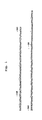
- Figure 1 shows the nucleotide base sequence of the GAP-DH small-sized promoter (from -24 to -164 bp) of the present invention.
- Figures 2(a) and 2(b) illustrate the preparation of plasmid pGG5 carrying thereon the GAP-DH promoter.
- Figure 3 illustrates the preparation of pGL5 and pGL6.
- Figure 4 illustrates the preparation of an HBsAg-producing plasmid carrying thereon the GAP-DH small-sized promoter of the present invention.
- the GAP-DH promoter which can be used in this invention is known, and its base sequence has been disclosed in US-PS 468,589. Therefore, the starting material to be improved can easily be prepared in a known manner, for example, from chromosomal DNA of yeast as shown in Reference Example 1 hereinafter given.
- the GAP-DH promoter gene as isolated or contained in a plasmid can be cleaved by a specific restriction enzyme to effect deletion treatment. Deletion can be carried out upstream of an initiator codon of the GAP-DH protein, and preferably in the vicinity of -164 bp. Suitable restriction enzymes which can be employed include XmnI.
- the GAP-DH promoter gene is further cleaved upstream of the initiator codon in the vicinity of -25 bp with the restriction enzyme to complete the deletion treatment.
- the DNA sequence of the thus small-sized promoter can be determined in accordance with the method of Maxam-Gilbert to obtain a base sequence as shown in Figure 1. This base sequence is equal to the known one but is much smaller in size.
- the small-sized GAP-DH is then inserted into a plasmid and repaired by treating with known restriction enzymes and ligases.
- a gene which encodes a useful physiologically active substance can then be inserted downstream of the thus small-sized GAP-DH promoter to obtain a recombinant plasmid.
- Yeast can then be transformed using the recombined plasmid and then allowed to express the cloned gene product to thereby effectively produce a desired protein.
- Transfection of E . coli by using a phage transfection of E . coli by using a plasmid, plaque hybridization, electrophoresis and recovery of DNA from a gel can be carried out in accordance with the methods described in Molecular Cloning , Cold Spring Harbor Laboratory (1982). Transformation of yeast can be carried out by the method described in Method in Yeast Genetics , Cold Spring Harbor Laboratory (1981).
- the small-sized GAP-DH promoter according to the present invention makes it possible to effectively express a physiologically active substance such as HGsAg, various interferons, thromboplastin activator, urokinase, etc. in yeast.
- a physiologically active substance such as HGsAg, various interferons, thromboplastin activator, urokinase, etc.
- Use of such a small-sized GAP-DH promoter simplifies the recombination operation of DNA.
- the promoter of this invention because it has a reduced size, can advantageously be used to prepare hybrid promoters so as to construct a strong expression promoter system.
- the promoter of this invention maintains promoter activity even in an acetic acid medium.
- DNA having a yeast GAP-DH gene sequence was prepared from yeast chromosomal DNA as follows: Chromosomal DNA was prepared from Saccharomyces cerevisiae , GRF18 (leu, trp, his, met) (J.Oberto & Davison, Gene 40 , 57-65 (1985) according to the method of D.R. Cryer,et al, Method in cell Biology , 18, Chap.3,P39, Academic Press, New York (1975).
- plaques were fixed to a nitrocellulose filter, they were hybridized with synthetic DNA having a DNA sequence (AACGGTTTCGGTAGA) which is the same as that of a portion contained in GAP-DH gene described in J. Biological Chemistry, 254, 19, 9389-9845 (1979) labelled with 32 P to perform screening according to the above-described molecular cloning method (plaque hybridization method).
- AACGGTTTCGGTAGA DNA sequence which is the same as that of a portion contained in GAP-DH gene described in J. Biological Chemistry, 254, 19, 9389-9845 (1979) labelled with 32 P to perform screening according to the above-described molecular cloning method (plaque hybridization method).
- coli , HB101 strain F ⁇ , hsd S20 (r B ⁇ , m B ⁇ ), rec A13, ara -14, pro A2, lac Y1, gal K2, rps L20 (Sm r ), xyl-5, mtl -1, sup E44, ⁇ ) ( Molecular Cloning Cold Spring Habor Laboratory (1982) p.504) was transfected with the plasmid according to the above described molecular cloning method to carry out recloning.
- the plasmid thus obtained by recloning was designated as pGAP301.
- Plasmid vector pGG5 which employs the GAP-DH promoter for expression of HBsAg (B type hepatitis virus surface antigen) in yeast was constructed as shown in Figures 2 and 3. The description will be given referring to these figures.
- the resulting DNA fragment 3 was treated with 1U of DNA polymerase ( Pol I) (Produced by Takara Shuzo Co., Ltd.) and 0.1 ⁇ g of dNTP (deoxy NTP) to make the adhesive terminals smooth.
- Pol I DNA polymerase
- dNTP deoxy NTP
- pGAP301 was completely digested with 3U of Sal I (produced by Takara Shuzo Co., Ltd.) and 3 U of Hin dIII, followed by separation by electrophoresis to prepare a 140 bp DNA fragment 5 containing terminator sequence 4 of GAP-DH gene.
- 1 ⁇ g of pGG2 DNA was digested with 1U of Sal I and 1U of Hin dIII, followed by electrophoresis to prepare a 3.4 kb DNA fragment.
- the resulting 3.4 kb DNA fragment and 140 bp DNA fragment were connected to each other using 5U of T4 DNA ligase, and the resulting plasmid was designated as pGG3.
- pGAP301 was completely digested with 3U of SalI (produced by Takara Shuzo Co., Ltd.) and 30 of Hin dIII, followed by separation by electrophoresis to prepare a 140 bp DNA fragment 5 containing terminator sequence 4 of GAP-DH gene.
- 1 ⁇ g of pGG2 DNA was digested with IV of SalI and 1U of Hin dIII, followed by electrophoresis to prepare a 3.4 kb DNA fragment.
- the resulting 3.4 kb DNA fragment and 140 bp DNA fragment were ligated to each other using 5U of T4 DNA ligase, and the resulting plasmid was designated as pGG3.
- HBsAg exists on DNA capable of self-reproduction within yeast .
- pGG4 is not capable of self-reduplication in yeast. Therefore, 5 ⁇ g of E. coli -yeast shuttle vector pJDB219 (J.D. Beggs, Nature , 275 , 104) DNA was used, and was completely digested with Hin dIII to prepare 3.2 kb DNA fragment. 1 ⁇ g of E. coli plasmid pBR322 DNA was completely digested with Hin dIII and ligated with the 3.2 kb DNA fragment using 5U of T4 DNA ligase to thereby obtain shuttle vector pGL5 having two Hin dIII sites.
- Hin dIII sites of pGL5 was changed to a smooth terminal using DNA polymerase (produced by Takara Shuzo Co., Ltd.) * to thereby prepare plasmid pGL6 having one Hin dIII site (Fig. 3). * according to the method described in Molecular Cloning Cold Spring Harbor Laboratory (1982) p. 113,
- pGL5 had a replication initiator point derived from yeast 2 ⁇ -DNA and LEU2 gene, a marker gene of yeast, on the 3.2 kb Hin dIII DNA fragment and a replication initiator point of E . coli and tetracyclin-resistant gene (Tc), a marker gene of E. coli , on another DNA fragment.
- a yeast replication initiator point and LEU2 gene 2 ug of pGL5 DNA was completely digested with 1U of Hin dIII, followed by electrophoresis to prepare a 3.2 kb fragment.
- Plasmid pGG5 1 ⁇ g of pGG4 DNA was completely digested with 1U of Hin dIII and then ligated with the 3.2 kb DNA fragment using 5U of T4 DNA ligase to prepare plasmid pGG5 (Fig. 2-B).
- vector pGG5 for producing HBsAg in yeast which contained a promoter region having a sufficient length (652 bp) of the GAP-DH promoter, HBsAg gene and GAP-DH terminator (Fig. 2-B).
- the promoter region was successively digested using various restriction enzymes.
- 2 ⁇ g of pGG4 was completely digested with 1U of a restriction enzyme, Xmn 1 (produced by NEB) and 1U of Hin dIII, followed by electrophoresis to prepare a 1.8 kB DNA fragment containing the GAP-DH promoter (-165 bp ⁇ ), HBsAg gene and GAP terminator.
- 1 ⁇ g of pGL6 was completely digested with 1U of Pvu II (produced by Takara Shuzo Co., Ltd) and 1U of Hin dIII, followed by electrophoresis to prepare a 5.6 kb DNA fragment.
- the 1.8 kb DNA fragment and the 5.6 kb DNA fragment were ligated to each other using T4 DNA ligase to obtain a plasmid having the GAP-DH promoter, which was designated as pGG6 (Fig. 4).
- Saccharomyces cerevisiae , GRF18 ( ⁇ , his, leu, trp, met) was transfected with pGG6 and pGG5.
- the resulting transfected yeast was purified, respectively in a leucine-free minimal medium plate comprising 0.7% Yeast Nitrogen Base (Difco), 2% dextrose and 1.5% agar.
- the resulting pGG5 or pGG6/ Saccharomyces cerevisiae , GRF18 of pure line was shake-cultured in a minimal medium having the same composition as used above but containing no agar at 30°C for 2 days to obtain a seed culture.
- 80 ml of the same minimal medium was inoculated with 1% seed culture, followed by cultivation at 30°C for 2 hours.
- the microbial cells were collected by centrifugation, washed with a physiological saline and suspended in a buffer solution comprising 50 mM of tris-HCl (pH 7.5) and 1 mM of EDTA.
- the suspension was treated in an ultrasonic wave generator (UR-200P, manufactured by Tomy Seikosha) at level 10 for 9 minutes under ice-cooling, followed by centrifugation at 0°C at 13,000 x g.
- the resulting supernatant was assayed for HBsAg activity according to an RPHA method using Antihebsel (produced by Green Cross Corporation).
Landscapes
- Life Sciences & Earth Sciences (AREA)
- Health & Medical Sciences (AREA)
- Genetics & Genomics (AREA)
- Chemical & Material Sciences (AREA)
- Organic Chemistry (AREA)
- Engineering & Computer Science (AREA)
- Bioinformatics & Cheminformatics (AREA)
- Mycology (AREA)
- Biotechnology (AREA)
- General Engineering & Computer Science (AREA)
- Molecular Biology (AREA)
- Biophysics (AREA)
- Biomedical Technology (AREA)
- General Health & Medical Sciences (AREA)
- Wood Science & Technology (AREA)
- Zoology (AREA)
- Biochemistry (AREA)
- Physics & Mathematics (AREA)
- Microbiology (AREA)
- Plant Pathology (AREA)
- Virology (AREA)
- Gastroenterology & Hepatology (AREA)
- Medicinal Chemistry (AREA)
- Proteomics, Peptides & Aminoacids (AREA)
- Preparation Of Compounds By Using Micro-Organisms (AREA)
- Micro-Organisms Or Cultivation Processes Thereof (AREA)
Claims (6)
- Séquence d'ADN du promoteur de la glycéraldéhyde-3-phosphate déshydrogénase (GAP-DH) de levure qui est la région en amont du codon d'initiation de la protéine GAP-DH de levure jusqu'à -164 pb.
- Séquence d'ADN selon la revendication 1, dans laquelle ladite région est en amont d'un codon d'initiation depuis au moins -25 pb jusqu'à -164 pb.
- Séquence d'ADN selon la revendication 2, dans laquelle ledit promoteur de GAP-DH présente la séquence suivante :

- Procédé de préparation d'une protéine hétérologue comprenant l'utilisation, comme promoteur, d'une séquence d'ADN du promoteur de GAP-DH de levure, qui est la région en amont du codon d'initiation de la protéine GAP-DH de levure jusqu'à -164 pb.
- Procédé selon la revendication 4, dans lequel ledit promoteur de GAP-DH présente la séquence suivante :

- Procédé selon la revendication 4, dans lequel ladite région est en amont d'un codon d'initiation depuis au moins -25 pb jusqu'à -164 pb.
Applications Claiming Priority (4)
| Application Number | Priority Date | Filing Date | Title |
|---|---|---|---|
| JP21919185 | 1985-10-03 | ||
| JP219191/85 | 1985-10-03 | ||
| JP61021198A JPH0655155B2 (ja) | 1985-10-03 | 1986-02-04 | 蛋白質の製造方法 |
| JP21198/86 | 1986-02-04 |
Publications (3)
| Publication Number | Publication Date |
|---|---|
| EP0218209A2 EP0218209A2 (fr) | 1987-04-15 |
| EP0218209A3 EP0218209A3 (en) | 1988-08-31 |
| EP0218209B1 true EP0218209B1 (fr) | 1992-02-05 |
Family
ID=26358233
Family Applications (1)
| Application Number | Title | Priority Date | Filing Date |
|---|---|---|---|
| EP86113675A Expired EP0218209B1 (fr) | 1985-10-03 | 1986-10-03 | Promoteur de levure et procédé de préparation d'une protéine hétérologue |
Country Status (4)
| Country | Link |
|---|---|
| US (1) | US5021339A (fr) |
| EP (1) | EP0218209B1 (fr) |
| DE (1) | DE3683821D1 (fr) |
| ES (1) | ES2028779T3 (fr) |
Families Citing this family (1)
| Publication number | Priority date | Publication date | Assignee | Title |
|---|---|---|---|---|
| JPH03155791A (ja) * | 1989-11-14 | 1991-07-03 | Green Cross Corp:The | 雑種プロモーター |
Family Cites Families (4)
| Publication number | Priority date | Publication date | Assignee | Title |
|---|---|---|---|---|
| CA1341302C (fr) * | 1983-02-22 | 2001-10-09 | Rae Lyn Burke | Systemes d'expression de la levure avec vecteurs ayant des promoteurs de gapdh ou pyk et synthese de proteine etrangere |
| US4618578A (en) * | 1984-07-17 | 1986-10-21 | Chiron Corporation | Expression of glycoprotein D of herpes simplex virus |
| DE3587759T2 (de) * | 1984-05-11 | 1994-07-07 | Chiron Corp., Emeryville, Calif. | Erhöhte Hefetranskription unter Verwendung einer Hybridkonstruktion der Promotorregion. |
| US4722840A (en) * | 1984-09-12 | 1988-02-02 | Chiron Corporation | Hybrid particle immunogens |
-
1986
- 1986-10-03 ES ES198686113675T patent/ES2028779T3/es not_active Expired - Lifetime
- 1986-10-03 EP EP86113675A patent/EP0218209B1/fr not_active Expired
- 1986-10-03 DE DE8686113675T patent/DE3683821D1/de not_active Expired - Lifetime
-
1989
- 1989-08-24 US US07/397,347 patent/US5021339A/en not_active Expired - Fee Related
Also Published As
| Publication number | Publication date |
|---|---|
| ES2028779T3 (es) | 1992-07-16 |
| EP0218209A3 (en) | 1988-08-31 |
| EP0218209A2 (fr) | 1987-04-15 |
| DE3683821D1 (de) | 1992-03-19 |
| US5021339A (en) | 1991-06-04 |
Similar Documents
| Publication | Publication Date | Title |
|---|---|---|
| CA1291428C (fr) | Promoteur de levures | |
| US4510245A (en) | Adenovirus promoter system | |
| CN1032315C (zh) | 在酵母中生产乙型肝炎病毒蛋白质的方法 | |
| EP0073657A1 (fr) | Préparation d'antigène de surface de l'hépatite B dans une levure | |
| US5650296A (en) | Expression of hepatitis B S and preS2 proteins in Pichia pastoris | |
| JPH0813277B2 (ja) | 酵母雑種ベクターを使用するポリペプチドの製造方法 | |
| JPH03143385A (ja) | 酵母細胞 | |
| US4778761A (en) | Recombinant plasmid inserted with hepatitis B virus gene, yeast transformed with said recombinant plasmid, and production of hepatitis B virus surface antigen | |
| US5627046A (en) | Yeast promoter and its use | |
| EP0228080A2 (fr) | Vecteur navette | |
| JP2615027B2 (ja) | 外来遺伝子の転写を制御するための方法及びハイブリッドプロモーター | |
| EP0399455B1 (fr) | Cellules de levure stablement transformées et leur utilisation pour la production d'albumine | |
| CA1310602C (fr) | Promoteur de la levure et procede pour la preparation de proteines heterologues | |
| EP0218209B1 (fr) | Promoteur de levure et procédé de préparation d'une protéine hétérologue | |
| JP2708154B2 (ja) | 外来遺伝子発現用に改良された酵母菌株 | |
| EP0109560A2 (fr) | Vecteur plasmidique pour levure capable d'expression induite et méthode d'utilisation de ce plasmide | |
| JPH08500007A (ja) | K.ラクチス(K.lactis)のピルビン酸デカルボキシラーゼ遺伝子のプロモーターおよびその使用 | |
| AU605036B2 (en) | Expression of hepatitis B2 pres protein in methylothrophic yeasts | |
| JPH0655155B2 (ja) | 蛋白質の製造方法 | |
| JPH08500008A (ja) | K.ラクチス(K.lactis)リボソームタンパク質RP28の遺伝子のプロモーターおよびその使用 | |
| EP0109559A1 (fr) | Vecteur plasmidique à grande efficacité pour levure et procédé pour son utilisation | |
| EP0216573B1 (fr) | Promoteur de levure et méthode de la production de protéines hétérologues | |
| EP0428141A2 (fr) | Promoteur hybride | |
| US4757021A (en) | Recombinant plasmid and microbial strain transformed by said plasmid | |
| JP2694210B2 (ja) | 酵母発現ベクター |
Legal Events
| Date | Code | Title | Description |
|---|---|---|---|
| PUAI | Public reference made under article 153(3) epc to a published international application that has entered the european phase |
Free format text: ORIGINAL CODE: 0009012 |
|
| AK | Designated contracting states |
Kind code of ref document: A2 Designated state(s): BE CH DE ES FR GB LI NL SE |
|
| PUAL | Search report despatched |
Free format text: ORIGINAL CODE: 0009013 |
|
| AK | Designated contracting states |
Kind code of ref document: A3 Designated state(s): BE CH DE ES FR GB LI NL SE |
|
| 17P | Request for examination filed |
Effective date: 19880927 |
|
| RAP1 | Party data changed (applicant data changed or rights of an application transferred) |
Owner name: GREEN CROSS CORPORATION |
|
| 17Q | First examination report despatched |
Effective date: 19900612 |
|
| GRAA | (expected) grant |
Free format text: ORIGINAL CODE: 0009210 |
|
| AK | Designated contracting states |
Kind code of ref document: B1 Designated state(s): BE CH DE ES FR GB LI NL SE |
|
| REF | Corresponds to: |
Ref document number: 3683821 Country of ref document: DE Date of ref document: 19920319 |
|
| ET | Fr: translation filed | ||
| REG | Reference to a national code |
Ref country code: ES Ref legal event code: FG2A Ref document number: 2028779 Country of ref document: ES Kind code of ref document: T3 |
|
| PLBE | No opposition filed within time limit |
Free format text: ORIGINAL CODE: 0009261 |
|
| STAA | Information on the status of an ep patent application or granted ep patent |
Free format text: STATUS: NO OPPOSITION FILED WITHIN TIME LIMIT |
|
| 26N | No opposition filed | ||
| PGFP | Annual fee paid to national office [announced via postgrant information from national office to epo] |
Ref country code: BE Payment date: 19930831 Year of fee payment: 8 |
|
| PGFP | Annual fee paid to national office [announced via postgrant information from national office to epo] |
Ref country code: SE Payment date: 19930909 Year of fee payment: 8 |
|
| PGFP | Annual fee paid to national office [announced via postgrant information from national office to epo] |
Ref country code: ES Payment date: 19930921 Year of fee payment: 8 |
|
| PGFP | Annual fee paid to national office [announced via postgrant information from national office to epo] |
Ref country code: GB Payment date: 19930930 Year of fee payment: 8 |
|
| PGFP | Annual fee paid to national office [announced via postgrant information from national office to epo] |
Ref country code: DE Payment date: 19931012 Year of fee payment: 8 |
|
| PGFP | Annual fee paid to national office [announced via postgrant information from national office to epo] |
Ref country code: CH Payment date: 19931018 Year of fee payment: 8 |
|
| PGFP | Annual fee paid to national office [announced via postgrant information from national office to epo] |
Ref country code: FR Payment date: 19931028 Year of fee payment: 8 |
|
| PGFP | Annual fee paid to national office [announced via postgrant information from national office to epo] |
Ref country code: NL Payment date: 19931031 Year of fee payment: 8 |
|
| PG25 | Lapsed in a contracting state [announced via postgrant information from national office to epo] |
Ref country code: GB Effective date: 19941003 |
|
| PG25 | Lapsed in a contracting state [announced via postgrant information from national office to epo] |
Ref country code: SE Effective date: 19941004 Ref country code: ES Free format text: LAPSE BECAUSE OF THE APPLICANT RENOUNCES Effective date: 19941004 |
|
| PG25 | Lapsed in a contracting state [announced via postgrant information from national office to epo] |
Ref country code: LI Effective date: 19941031 Ref country code: CH Effective date: 19941031 Ref country code: BE Effective date: 19941031 |
|
| EAL | Se: european patent in force in sweden |
Ref document number: 86113675.2 |
|
| BERE | Be: lapsed |
Owner name: GREEN CROSS CORP. Effective date: 19941031 |
|
| PG25 | Lapsed in a contracting state [announced via postgrant information from national office to epo] |
Ref country code: NL Effective date: 19950501 |
|
| GBPC | Gb: european patent ceased through non-payment of renewal fee |
Effective date: 19941003 |
|
| NLV4 | Nl: lapsed or anulled due to non-payment of the annual fee | ||
| PG25 | Lapsed in a contracting state [announced via postgrant information from national office to epo] |
Ref country code: FR Effective date: 19950630 |
|
| REG | Reference to a national code |
Ref country code: CH Ref legal event code: PL |
|
| PG25 | Lapsed in a contracting state [announced via postgrant information from national office to epo] |
Ref country code: DE Effective date: 19950701 |
|
| EUG | Se: european patent has lapsed |
Ref document number: 86113675.2 |
|
| REG | Reference to a national code |
Ref country code: FR Ref legal event code: ST |
|
| REG | Reference to a national code |
Ref country code: ES Ref legal event code: FD2A Effective date: 20001009 |